Showing posts with label commandments. Show all posts

Wednesday, May 21, 2025

Your Moral Compass. What Is Faith? Help Starving Bees!

.

Your Moral Compass

Your moral compass“Without a belief in God, there is no anchor for absolute moral truths. Russian novelist, writer and philosopher Fyodor Dostoyevsky, in his novel The Brothers Karamazov, wrote, “If God does not exist, everything is permitted.”

For Christians, God’s Word is our guide and our moral compass.

For Christians, God’s Word is our guide and our moral compass. Philosophies attempting to describe what is moral without acknowledging God can be traced back many centuries. When we consider just the past 95 years we find that prior to the 1920s young men would ask parents’ permission to court their daughter, and there was often a chaperone if they went on a date.

The “New Morality” of the 1920s brought about significant change. An emphasis on personal freedom resulted in social conventions being ignored. Women’s clothing became more revealing, and young men and women became more sexually active. In 1930, President Hoover’s White House Conference on Child Health Protection prepared a report emphasizing “social hygiene” as opposed to moral conduct, with the report encouraging youth to have a “healthy sexual lifestyle” (Sex, Youth, and Sex Education: A Reference Handbook, David Campos, p.73). The moral decline continued in the 1940s and 50s with the advancement of the idea that sexual impulses were not to be ignored as long as two individuals consented.

In 2008 The Barna Group, which does research regarding religious faith and culture in America, conducted a survey about moral issues. Founder George Barna, concluded: "The consistent deterioration of the Bible as the source of moral truth has led to a nation where people have become independent judges of right and wrong, basing their choices on feelings and circumstances."

Moral relativism, also known as situational ethics, promotes the belief that what might be the morally right thing for you may not be the right thing for someone else, and there are no absolute moral truths. The Bible, however, warns, “There is a way that seems right to a man, but its end is the way of death” (Proverbs 14:12), and in Romans we read about the consequences of a debased mind (Romans 1:28-32).

The Apostle Paul in his letter to the church at Corinth addressed the results of unrighteous, unjust, immoral conduct, listing those that “will not inherit the kingdom of God” (1 Corinthians 6:9-10). Bible prophecies have also predicted the devastating consequences of decadent immorality in the end time. "For men will be lovers of themselves, lovers of money... without self-control... lovers of pleasure rather than lovers of God" (2 Timothy 3:2-4).

The Seventh Commandment, "You shall not commit adultery" (Exodus 20:14) is focused on protecting marriage. This is the umbrella command for the many biblical laws that forbid illicit sex. The Bible candidly tells of the penalties suffered by Samson, King David, King Solomon and many others when they ignored this commandment.

Jesus Christ, in His prayer to the Father just before His death, clearly stated: “Your word is truth” (John 17:17), and Deuteronomy 30:15-18 tells us God’s instructions are for our good. But although mankind does not have the authority to define right and wrong, God does allow us to choose. Today more than ever it is crucial that parents instill a solid moral compass into the hearts of their children (Deuteronomy 6:6-7). Fathers are specifically instructed to “bring them up in the training and admonition of the Lord” (Ephesians 6:4).

For those who have committed sexual sins, it's vital to understand God's grace, and that He will forgive sin upon sincere repentance (Acts 3:19-21). We can echo the prayer of King David who prayed: "Have mercy upon me, O God... blot out my transgressions... Create in me a clean heart, O God" (Psalm 51:1,10).

Source:  https://www.ucg.org/members/united-news/united-news-november-december-2016/what-your-spiritual-moral-compass

_______

What is faith?

What is faith?“Many think of "faith" as a feeling or a collection of ideas representing our convictions, but although these concepts involve elements of faith, the full definition is much broader. Hebrews 11:1 defines faith as “...being sure of what we hope for and certain of what we do not see" (New International Version).

The New Testament Greek word translated "faith" is pistis, and is also rendered "belief." It basically means "firm persuasion" and "conviction based upon hearing." (Vine's Complete Expository Dictionary of Old and New Testament Words, 1985, "Faith").

It's impossible to have living faith in a God we don't know. The God of the Bible tells us we can develop a relationship with Him, and know what He has planned for us in this life and in the future: "...godliness is profitable for all things, having promise of the life that now is and of that which is to come" (1 Timothy 4:8). Abraham "believed God" and "he did not waver at the promise of God through unbelief, but was strengthened in faith, giving glory to God, and being fully convinced that what He had promised He was also able to [and would] perform" (Romans 4:3 and 20-21).

Faith is more than a conviction. To believe in God is only the starting point of faith. God expects us to act on our belief in Him. As the Apostle James noted: "You believe that there is one God. You do well. Even the demons [fallen angels] believe—and tremble!" (James 2:19). We must come to trust God to involve Himself in our lives and, with His help, do His will. God's Word assures us that "the just shall live by faith" and "we walk by faith, not by sight" when we repent of our sins and begin to live dedicated, godly lives directed by our Savior (Romans 1:17 and 2 Corinthians 5:7).

Our model for living faith should be Jesus Christ. Many other biblical figures also provided wonderful examples of living faith. Hebrews 11 identifies people who long ago lived examples of faith. They believed God and obeyed Him even to death, confident that He would deliver them or resurrect them to eternal life in His Kingdom. "Without faith it is impossible to please Him, for he who comes to God must believe that He is, and that He is a rewarder of those who diligently seek Him" (Hebrews 11:6). This verse describes two aspects of faith. First we must believe God exists and that He is the Almighty Creator of the universe. Then we must believe God will ultimately reward those who humbly, obediently seek Him—trusting the promises He makes in the Bible.

Since faith involves diligently seeking God, we must base our faith on a correct understanding of His Word and the admonition of Jesus Christ: "If you love Me, keep My commandments" (John 14:15). Changing our lives to start obeying God—what the Bible refers to as repentance—is based on the conviction that God will intervene in our lives and ultimately grant us eternal life. Jesus cautions us against the danger of false faith: "Not everyone who says to Me, 'Lord, Lord,' shall enter the kingdom of heaven, but he who does the will of My Father in heaven" (Matthew 7:21). Simply saying "I believe" without making accompanying life-altering changes is not sufficient.

But what about Paul's statement in Ephesians 2:8, "For by grace you have been saved through faith, and that not of yourselves; it is the gift of God"? Was Paul saying there is no need for obedience to God’s commandments? This passage shows us that God's grace—His undeserved favor toward us—is a gift through faith. It includes unmerited forgiveness of sins through accepting the sacrifice of Jesus Christ, who died in our place. No amount of obedience will cancel out our past disobedience. Only the blood of Christ can provide atonement for our sins.

But it is wrong to assume that, since grace is a gift, no actions—good works demonstrating a repentant heart—are needed (James 2:14-26). Living faith requires commitment and evidence of that commitment. James asks this rhetorical question, "What good is it, my brothers, if a man claims to have faith but has no deeds?" (James 2:14, NIV). God does not forgive our sins so we can keep on sinning. He wants us to change. The book of James makes it clear that faith, if unaccompanied by works, is utterly useless. That is why the Apostle Paul wrote, "But I discipline my body and bring it into subjection, lest, when I have preached to others, I myself should become disqualified" (1 Corinthians 9:27).

We are not saved by grace through inactive faith. We exhibit evidence of our faith when we respond obediently to the love of Christ by keeping His commandments. God gave us the Bible to provide hope and instruction through the examples of others (Romans 15:4; 1 Corinthians 10:6; 2 Timothy 3:16). By studying their experiences, we can see real-life examples of faith in action, which will help us to build faith as well.

Source:  https://www.ucg.org/members/united-young-adults/spiritual-growth/vertical-thought-january-march-2004/what-faith

__________

20th of May was National Bee Day. 

Help Starving Bees!

“If you see a bee of any description on the floor or not flying other than on a flowering plant, it is STARVING! You can help.

We are currently well into the 'June Gap' - the time between when the Spring flowering plants stop and the Autumn flowers start producing pollen and nectar.

You can help by mixing two parts sugar to one part water and offering the syrup to the bee. She (and they are mostly ladies) will happily drink from a teaspoon. You'll see her little black tongue as she drinks. It will take about 10 minutes for her to convert the syrup to energy, but she will fly away if you've helped her in time. The feeling you get on seeing her recovery and flight is well worth your time.

PLEASE NOTE - This is a temporary measure and 'First Aid' only. The Bees need diversity in their diet and need to pollinate plants in their search for food. I'm not suggesting we feed sugar to Bees as a regular thing.

NO HONEY PLEASE - Disease can be spread easily from colony to colony through this practice and you will do more damage than good. White sugar and water only please x

They can't thank you, so I will on their behalf.”

Thanks a million xx ��������

__________

Help Feed Starving Bees

I may be small, but my work once helped the world grow. I pollinated the flowers you love, the fruits you eat, the trees that clean your air. My wings carried life from one blossom to another, day after day, season after season.

But now… we are vanishing.

Amazing Story : https://youtu.be/o27HAo1w9D0

The flowers are fewer. The fields are poisoned. The skies are silent. And with every bee that disappears, the Earth loses a little more of its heartbeat.

People say, “It’s just a bee.” But without us, there is no food. No color. No balance. Without us, the future fades.

That’s why I’m reaching out to you—not with fear, but with hope.

Please protect us. Protect the flowers. Protect the wild.
Support those who fight for nature. Share our story. Plant for us. Speak for us. Teach others that we matter.

Because when you protect the bees, you protect your own future too.

Let’s bring life back—one garden, one flower, one act of kindness at a time.

�� With all my tiny heart,
A bee that still believes in you.

________

Around the world, bees are in crisis. Send aid this World Bee Day

“One out of every three bites of food in the United States depends on honeybees. Without their pollination, much of our food supply would be lost. Bees are responsible for over 130 of the fruits and vegetables we love – and we aren’t the only ones who need these plants and crops. Animals and insects everywhere depend on these plants and crops too!

Natural disasters can have devastating effects on ecosystems, destroying crops and leaving pollinators struggling to survive. In the wake of hurricanes, wildfires, and other disasters, beekeepers face a critical challenge: ensuring their hives have enough food to recover. With natural forage wiped out, bees lack the nutrients they need to rebuild their colonies just as spring—their most active season—begins.

According to the American Veterinary Medical Association, commercial beekeepers across the United States are reporting the near or total collapse of their colonies—some seeing 70-100% losses—with the apiary industry calling this the worst bee die-off in U.S. history.

Our partner, Greater Good Charities, provides emergency bee pollen substitute to beekeepers to sustain their hives through natural disasters. So far, they’ve supplied tens of thousands of gallons of syrup and pollen substitute, feeding billions of bees and helping pollinators get back to work.

But there is still work to be done. As flowers bloom and crops begin to grow, bees need your help now more than ever. Donate today to ensure our pollinators thrive through springtime!”

________

9 Best Charities That Help to Save the Bees (Complete 2025 List)

https://impactful.ninja/best-charities-that-save-the-bees/

________

Sunday, September 3, 2023

Christ in the Old Testament. Cause and Effect in Prophecy. Red Meat, TMAO, And Your Heart, By Harvard Health.

.

Prophecies of Christ in the Old Testament

Luke 24:44 

Then He said to them, “These are the words which I spoke to you while I was still with you, that all things must be fulfilled which were written in the Law of Moses and the Prophets and the Psalms concerning Me.”

“The Law, the Prophets and the Psalms designate the three sections of the Hebrew Scriptures we call the Old Testament.

The Holy Bible, Old and New Testaments, make up a seamless, unified whole. Jesus Christ inspired hundreds of Old Testament prophecies that He later fulfilled through His birth, life and death. And there are many more prophecies that will be fulfilled in His second coming.

The Old Testament actually revealed Jesus Christ (see "Jesus in the Old Testament?"), and Jesus Christ then revealed the Father in the New Testament (Luke 10:22; John 14:6-11).

After His resurrection, Jesus “opened their understanding, that they might comprehend the Scriptures” (Luke 24:45). Though much of the Bible is accessible and helpful on many levels, without God’s help we can’t fully comprehend the Scriptures. But with the help of God’s Spirit we can understand “the things of God” that are “spiritually discerned” (1 Corinthians 2:11, 14).”  From: https://lifehopeandtruth.com/bible/blog/prophecies-of-christ-in-the-old-testament/?

For more about how God opens our understanding of the Bible, see our article “How Do You Know You Have the Holy Spirit?”                   From: https://lifehopeandtruth.com/bible/blog/prophecies-of-christ-in-the-old-testament/

_________

Cause and Effect in Prophecy

Deuteronomy 28:1, 15

“Now it shall come to pass, if you diligently obey the voice of the LORD your God, to observe carefully all His commandments which I command you today, that the LORD your God will set you high above all nations of the earth. …

“But it shall come to pass, if you do not obey the voice of the LORD your God, to observe carefully all His commandments and His statutes which I command you today, that all these curses will come upon you and overtake you. …”

Bible prophecy, and the Bible as a whole, teaches us the principle of cause and effect. Obeying God’s good and beneficial laws ultimately leads to wonderful blessings. Disobeying—sinning—ultimately leads to the horrible curses described in Deuteronomy 28.

This is a sure and certain principle—there are predictable consequences to our actions, physically and spiritually.

So why does humanity so easily forget this inevitable truth? Because under the sway of Satan, we have learned to postpone some of the bad consequences, and Satan has used his enormous powers of deception to make the bad look good and the good, bad. He tricks us into thinking there are shortcuts—that we can escape the consequences.

But God wants us to take the long view—to see through the deception to the ultimate reality. He gives us His laws and Bible prophecy so we can see what will cause suffering and what will cause real joy and happiness. Choose life!

Read more about cause and effect in our article “Why Is Our Modern World Under Ancient Curses?” For more about the purposes of Bible prophecy, see “Purpose of Prophecy.”    From: https://lifehopeandtruth.com/bible/blog/cause-and-effect-in-prophecy/?

_________

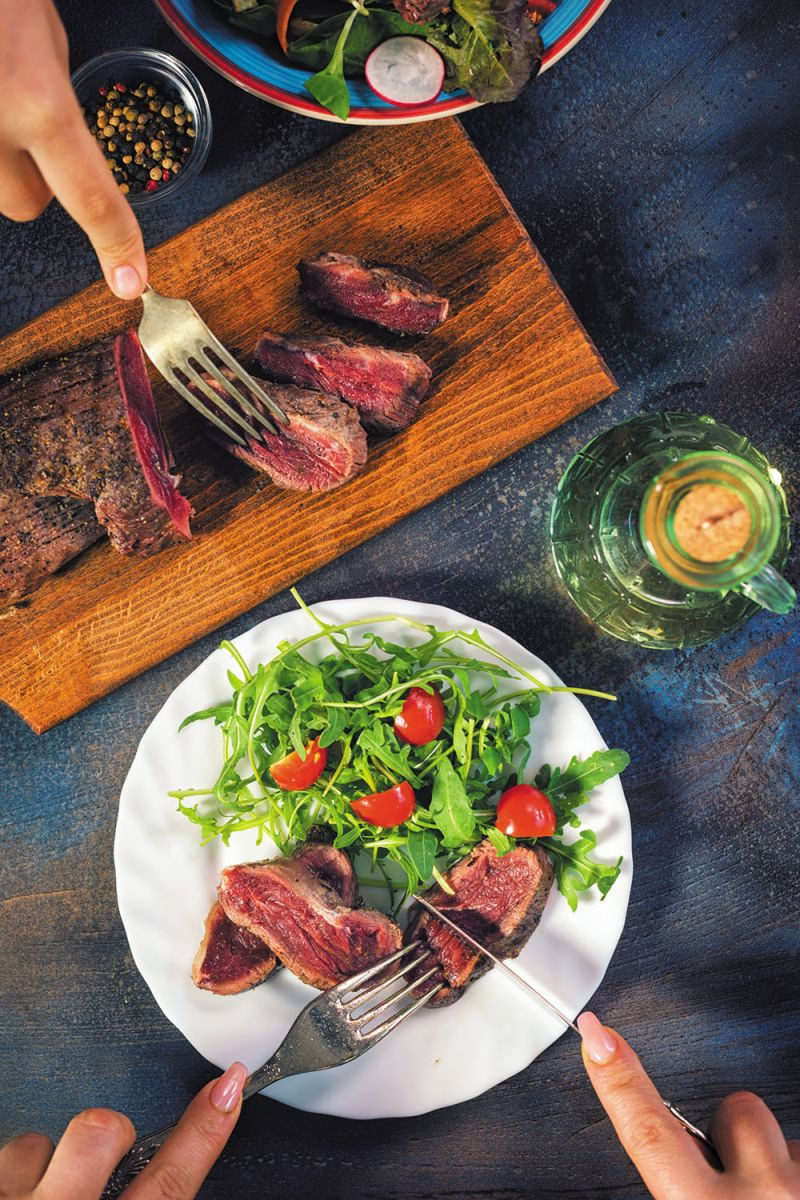
Red Meat, TMAO, And Your Heart.  By Harvard Health.


w0919d16207259570338”A substance called trimethylamine N-oxide, which is produced when your body digests red meat, may raise the risk of cardiovascular problems.

Experts used to think that red meat raised your risk of heart disease simply because it was high in saturated fat. But today that picture has gotten more complicated thanks to the discovery of a metabolite — a substance produced during digestion and metabolism — called trimethylamine N-oxide, or TMAO.

According to a news article published June 11 in JAMA, three recent analyses have linked high blood levels of TMAO with a higher risk for both cardiovascular disease and early death from any cause.

In one of those studies, researchers found that people with higher levels of TMAO in their blood may have more than twice the risk of heart attack, stroke, or other serious cardiovascular problems, compared with people who have lower levels.

Other studies have found links between high TMAO levels and heart failure and chronic kidney disease.”      From: https://www.health.harvard.edu/staying-healthy/red-meat-tmao-and-your-heart

__________

Sunday, July 23, 2023

What’s the Real Source of Contentment? Don’t Miss The Beauty! Pets & Human Lymphoma.

.

What’s the Real Source of Contentment?

What Is the Real Source of Contentment“Why are some of the most prosperous people some of the least satisfied? What is the real secret of satisfaction and contentment?

Where do satisfaction and contentment come from?

Throughout human history, people have been searching for contentment and satisfaction—but when they think they have found it, the feelings have been fleeting and temporary. Mostly people have been looking in all the wrong places.

For example, it is common and seems logical to conclude that if everyone were prosperous, everyone would automatically be content and satisfied. But is having enough to eat and drink with the peace to enjoy it enough to make us lastingly content? Is physical abundance the cause of contentment and satisfaction?

What is the real source of deep, lasting contentment and eternal satisfaction? We’ll see it’s not prosperity that will bring contentment. It’s something much more important.

The satisfaction experiment

How do we know that physical things alone won’t satisfy people? We may know this by personal experience or by learning about others’ experiences.

We can also learn it by reading about it in a book of revealed wisdom. There are verses in the biblical book of Ecclesiastes that tell us:

“The eye is not satisfied with seeing, nor the ear filled with hearing” (1:8).

“All the labor of man is for his mouth, and yet the soul is not satisfied” (6:7).

No matter what we see or hear or taste—whatever we experience with our physical senses—it will be temporary.

King Solomon performed the quintessential experiment on this subject. He recorded his experimental search for happiness and satisfaction in Ecclesiastes 2. In this chapter, we see a man who had it all—who was rich and powerful and had everything he could imagine. Few people in history have had all the blessings he had—and yet he was not satisfied. He decided to try an experiment to see what would really bring him the satisfaction he longed for. He tried humor and wine and song—every type of entertainment. He tried building projects and big fancy homes and gathering all the treasures and luxuries he could.

Solomon summarized his experiment this way: “Whatever my eyes desired I did not keep from them. I did not withhold my heart from any pleasure, for my heart rejoiced in all my labor; and this was my reward from all my labor” (Ecclesiastes 2:10).

Yes, he had some level of rejoicing and reward for what he accomplished. God designed the physical world to give us joy. But Solomon goes on in verse 11 to show the longer-term outcome of his experiment: “Then I looked on all the works that my hands had done and on the labor in which I had toiled; and indeed it was vanity and grasping for the wind. There was no profit under the sun.”

He found it all futile—empty—like trying to grab a handful of wind!

Solomon’s reign was a time of plenty. The people of Israel, and Solomon in particular, were blessed with peace and abundance. But Solomon learned that peace and prosperity are not everything. These physical blessings aren’t what bring ultimate satisfaction and contentment. You can have it all—physically—but still feel empty inside.

The real source of satisfaction

So what does bring true contentment—real satisfaction?

Solomon concluded the book of Ecclesiastes with this moral of the story: “Fear God and keep His commandments, for this is man’s all” (12:13). This is what makes us whole and complete.

Solomon explained it more completely in Proverbs 19:23: “The fear of the LORD leads to life, and he who has it will abide in satisfaction; he will not be visited with evil” (emphasis added).

The main Hebrew and Greek words translated fear in the Bible can have several shades of meaning, but in the context of the fear of the Lord, they convey a positive reverence.

The Hebrew verb yare can mean “to fear, to respect, to reverence” and the Hebrew noun yirah “usually refers to the fear of God and is viewed as a positive quality. This fear acknowledges God’s good intentions. … This fear is produced by God’s Word … and makes a person receptive to wisdom and knowledge” (The Complete Word Study Dictionary: Old Testament).

The fear of the Lord is not talking about a paralyzing terror. The positive fear of the Lord taught in the Bible is a key element in leading us to change. It helps us have a proper, humble perspective of ourselves in relation to our awesome God; it helps us in times of temptation when we need to remember the serious consequences of disobeying God; and it motivates us to become more like our loving Creator.

By doing these things, the fear of the Lord helps us build a strong, loving relationship with God that brings eternal benefits. (Learn more about this in our article “Fear of the Lord: What Does It Mean?”)

When we do put God first—fearing to displease Him and seeking to please Him always—we will be on the way to true and eternal satisfaction. Even in the “Millennium”—the utopian age God promises will spread around the world after Jesus Christ’s second coming—peace and prosperity and physical things won’t be the cause of satisfaction. The real contentment comes from a right relationship with God.

When we do put God first—fearing to displease Him and seeking to please Him always—we will be on the way to true and eternal satisfaction.

God has real and permanent eternal blessings in store—He has things that the human eyes have not seen and that human minds have not even imagined!

Consider some wisdom recorded by King Solomon’s wise and God-fearing father, King David. Psalm 36 starts by talking about those who do not fear God, and how that leads to sin, wickedness and evil. But in verses 7-8 David shows the eternal blessings of a close relationship with God:

“How precious is Your lovingkindness, O God! Therefore the children of men put their trust under the shadow of Your wings. They are abundantly satisfied with the fullness of Your house, and You give them drink from the river of Your pleasures.”

Learn the lessons of King Solomon in Ecclesiastes and recognize that the true source of satisfaction and contentment—now and forever—is a right relationship with our loving God!

Related reading:

_________

Don’t miss the beauty!

“For as long as I can remember, I’ve been continually astounded by the incredible beauty in the world. 

Whether it is a dazzling sunset, a mirror-smooth mountain lake, an undulating field of ripening wheat or palm trees gently swaying on the breeze next to the ocean, these sights have always impressed me, making me want to drink them in completely.  And no photograph I’ve ever taken can really do justice to those beautiful vistas!

Every autumn, my wife and I are struck by the awesome fall colors of the trees on the mountains.  During the fall we’ve had the opportunity to travel a two-lane blacktop road through the Ozark National Forest as we went to visit some church members. We were both greatly impressed with the beauty and majesty of this part of the country—this part of God’s creation! 

Have you ever wondered why God created things of such beauty?  In fact, why did God create beauty at all? 

The theory of evolution would only allow for something to develop (evolve) if there were a useful purpose for it, so what could be the evolutionary purpose of incredible beauty?  From a purely practical standpoint, it would be easier for deciduous trees to have “evolved” for their leaves to simply turn brown and fall off, rather than going through incredible shades of reds and yellows before becoming brown and dropping to the ground.  But they don’t generally work that way.  

Couldn’t the same thing be said about sunrises and sunsets, the aurora borealis (northern lights), gurgling mountain streams, a proud whitetail buck, a strutting wild turkey or a thousand other beautiful sights we may be privileged to witness? 

The world doesn’t have to be this way, but it is—by God’s design!  It seems He purposefully created awesome beauty all around us, rather than making the creation bland or just various shades of gray. He infused color and texture everywhere in creation!

I can only conclude that our loving God appreciates and enjoys beauty.  So, as a special gift, He has given us senses that allow us to enjoy it as well. And it isn’t limited to just sight! He also gave us hearing so we could enjoy a bird singing and beautiful music, as well as give our hearts a stir with loving words from a mate or a child. 

He gave us the sense of taste to enjoy a wonderful meal. And the sense of touch to express love and tenderness to a mate, or to caress the soft coat of a loving and loyal pet.  To my way of thinking, all of these are things of beauty, and they are all around us.

The problem is that we sometimes get so busy with all the things in life, and perhaps so burdened down by the weighty challenges we may be facing, that the beauty of things around us pass by without our even noticing.  It is also so human to become embroiled in all the “negatives” of life that the beautiful is not appreciated.  It seems such a shame to have gifts of beauty all around us, only to miss them. 

I encourage us all to take the time to recognize and appreciate the beauty God has created, and enjoy that gift our Father has given.

Kind regards, and have a great rest of your week,

Tom Clark, for Life, Hope and Truth

_________

Pets & Human Lymphoma

Transcript of video at: https://nutritionfacts.org/video/pets-human-lymphoma/

To see any graphs, charts, graphics, images, and quotes to which Dr. Greger may be referring, watch the above video. This is just an approximation of the audio contributed by veganmontreal.

“Is having a cat or dog associated with a higher or lower risk of developing non-Hodgkin’s lymphoma?

Every year, for example, 60,000 Americans come down with non-Hodgkin’s lymphoma—a blood cancer that goes on to kill about 1 in 3 patients. There’s been a significant rise in incidence in past decades, and no one really knows why.

Some have suspected exposure to the bovine leukemia virus, which infects the majority of herds in this country, and can cause similar tumors in cattle. More than five years ago, we learned that about three-quarters of people tested have been exposed to this virus; likely, through their consumption of meat and dairy products.

The risk may extend beyond those just eating animal products, though. The viral contamination of meat, in general, can give people who handle fresh meat for a living unpleasant conditions, with names like contagious pustular dermatitis. In fact, meat is so laden with viruses that there’s a well-defined medical condition colloquially known as “butcher’s warts,” which affects the hands of those who handle fresh meat—including poultry and fish. Even the wives of butchers appear to be at higher risk for cervical cancer, a cancer definitively associated with wart virus exposure.

So, in the first study of its kind, researchers looked at farm animal exposure as a risk factor for human non-Hodgkin’s lymphoma. To be fair, though, there’s also feline leukemia virus. And a child is likely to have more intimate contact with their family cat or dog, or other pets, than with livestock. Animal contact and cancer risk—harmful, harmless, or helpful? And no matter how this comes out, remember, I’m just the messenger.

In terms of our risk of developing non-Hodgkin’s lymphoma, contact with cows—harmful, harmless, or helpful? Harmful, increases our risk.  What about pig contact? Harmful, harmless, or helpful? Same as cattle; harmful, increases our risk.

What about having a cat? Or three, like we do. Do cats increase our cancer risk, do nothing to our cancer risk, or maybe having cats is even protective against cancer? What do you think? It turns out cats are protective against cancer. In fact, even if you don’t live with a cat now, but did in the past, you seem to be protected against developing lymphoma.

All right, now, for you dog people. Canine companionship—now, or in the past: harmful, harmless, or helpful? Good boy.  And finally, what about other companion animals, like corn-loving hamsters? Rodents in the house—increased risk, no risk, or decreased risk? Decreased risk.”  From: https://nutritionfacts.org/video/pets-human-lymphoma/

________

Sunday, February 5, 2023

Can We Believe God’s Promises? A Life No Longer Fragile. Avoid Sardines With Soybean Oil.

.

Can We Believe God’s Promises?

A star filled night sky.“God does keep His promises, but in ways and over time frames that our finite minds have difficulty comprehending.

Robson Hatsukami Morgan/Unsplash

God promised Abraham, “I will multiply your descendants as the stars of heaven.”

Abraham is one of the most fascinating figures in the Bible. He’s called “the father of the faithful” (see Romans 4:11) because he left his comfortable city life to travel the wilderness with his flocks and herds without a permanent home.

Probably the most remarkable part of Abraham’s story is recorded in Genesis 12:1-3, where God gives him a series of astounding promises: “Now the Lord had said to Abram: ‘Get out of your country, from your family and from your father’s house, to a land that I will show you. I will make you a great nation; I will bless you and make your name great; and you shall be a blessing. I will bless those who bless you, and I will curse him who curses you; and in you all the families of the earth shall be blessed’” (emphasis added throughout).

As Abraham proved his faithful obedience, God expanded those promises. In Genesis 17:16, God assured him regarding his then-childless 90-year-old wife Sarah, “She shall be a mother of nations; kings of peoples shall be from her.”

In Genesis 22:17-18 God further promised Abraham: “I will multiply your descendants as the stars of the heaven and as the sand which is on the seashore; and your descendants shall possess the gate of their enemies. In your seed all the nations of the earth shall be blessed, because you have obeyed My voice.”

So we see that God’s promises to Abraham included, among other things:

•  “All the nations of the earth” would be blessed through him.

•  God would make a great nation of his descendants.

•  “Nations” and “kings of peoples” would come from him through his wife Sarah.

•  His descendants would number “as the stars of the heaven and as the sand which is on the seashore.”

What staggering promises! And more specific promises and prophecies were given to Abraham’s son Isaac, his grandson Jacob (renamed Israel) and his great-grandson Joseph.

But, as Hebrews 11:13 tells us of Abraham and other faithful men and women of God, “These all died in faith, not having received the promises . . .”    Which brings us to the title above: Can We Believe God’s Promises?”

The short answer is absolutely yes! But we need to understand that God operates on a completely different plane from ours as human beings (Isaiah 55:8-9). For Him, “one day is as a thousand years, and a thousand years as one day” (2 Peter 3:8). This “High and Lofty One who inhabits eternity” is not bound by time as we are (Isaiah 57:15). Human possessions and territorial claims are infinitesimal next to a God who says, “All the earth is Mine” (Exodus 19:5) and “Everything under heaven is Mine” (Job 41:11).

God does keep His promises, but in ways and over time frames that our finite minds have difficulty comprehending. This brings us to the theme of this issue, which is the history and biblical importance of the British royal throne and empire—and the major English-speaking nations that emerged from that empire, notably the United States, Canada, Australia and New Zealand.

Less than a century ago the British Empire was the world’s preeminent power. It was truthfully said that it was the empire on which the sun never set—meaning the empire spanned the globe from Europe to Africa to North and South America to Asia to Australia and to many islands in between. For two centuries it was the dominant global power, with a navy that ruled the seas.

But how did a small island nation roughly the size of the U.S. state of Michigan (or Wyoming or Oregon) grow into a world superpower? It seems impossible, but Britain and its colonies dominated the globe for two centuries and ushered in the modern world!

With Britain’s slide from preeminence in the aftermath of World War II, one of its former colonies—the United States—became the new world superpower, a position it has now held for three quarters of a century.

Is there any link between the rise and world dominance of these two powers with the astounding promises made to Abraham almost 4,000 years ago? Those promises were not fulfilled in Abraham’s time, or in the time of the kingdoms of Israel and Judah that were descended from him. But they have been fulfilled—and in ways that are truly amazing and bear testimony to God’s faithfulness and the amazing accuracy of Bible prophecy.

We hope you’ll carefully read this issueand that you’ll be astounded at how we can indeed believe all of God’s promises!”  From: https://www.ucg.org/beyond-today/beyond-today-magazine/can-we-believe-gods-promises

________

A Life No Longer Fragile

“From time to time something happens to remind me how fragile life is. We like to see ourselves as strong, always charging on into the future. During much of our lives, it is almost beyond our comprehension to consider the day when we won’t be here any longer.

But life is fragile, and none of us is too young to carefully consider it. An accident, a sickness, some genetic predisposition or the body simply wearing out, and life comes to an end. God never intended life to go on forever in this body.

He does want us to have life forever, but it will be in a different body! A section of scripture that jumps to mind when I consider the fleeting nature of life is found at the end of the book of Ecclesiastes. Solomon is directing many of his thoughts to the young—and appropriately so.  When we are young there is so much we haven’t experienced, so much we don’t know and so many ways we can get ourselves into a pickle if we don’t have wise counsel from someone older and more experienced. However, nearly everything Solomon writes applies to all of us, no matter our age, including the first 8 verses of Ecclesiastes 12.

He starts by reminding us to remember our Creator in the days of our youth. And there is a tremendous advantage to focusing on a strong and close relationship with God at the beginning of our lives, because it sets a pattern we can continue to follow. And doing so will allow us to avoid so many of the problems we might otherwise stumble right into.

For many of us, we’d be hard pressed to conclude we are any longer in our youth! I don’t think I could qualify any more—but I am as young right now as I’m ever going to be again! So, with that thought in mind, Solomon’s advice is something I should take to heart right now. I need to be sure I have a strong, clear and constant awareness of my Creator, His plan and His direct interaction with me. Over the next few verses Solomon describes very poetically what happens with our bodies.

Eyesight fails (we need glasses, then bifocals, then trifocals, then—I don’t know what comes after that). Hearing fails (we need hearing aids, but we put them off for as long as possible). Strength begins to fail (I know I used to just grab the end of that and pick it up and move it where I wanted. Who added a whole bunch of weight to it now?)

The silver cord, the golden bowl, the pitcher at the fountain are all poetically symbolic of the precious elements God so carefully designed into the human body. We need them all to function so we can live, but at some point these essential parts of us will get sick, get injured or grow old and cease to work.

And we see once again that life is fragile. But even with all his God-given wisdom, Solomon didn’t use that wisdom to stay on the right path of life. He went after everything he could imagine in great excess: entertainment, alcohol and perhaps whatever drugs might have existed then, women, and more women and even more women. And then paganism, as his wives convinced him to try worshipping other gods, and following other practices and leading a life that was contrary to the one set out by his Creator.

Toward the end of his life Solomon had a very bleak and dismal view of life, which he described at the beginning of this book. “‘Vanity of vanities,’ says the Preacher; ‘vanity of vanities, all is vanity’” (Ecclesiastes 1:2). He felt there was not much point in his life.

The world goes round, people come and people go, but nothing amounts to much. What a sad perspective. Yet at the end of this book, he does use his wisdom to give the most important advice in chapter 12 verse 13: “Let us hear the conclusion of the whole matter: Fear God and keep His commandments, for this is man’s all [the King James Version says, ‘this is the whole duty of man’].”

Human life is so fragile, and we never know when, why, where or how ours will come to an end. But our loving and almighty Father in heaven has promised that there is and will be so much more than just this fragile human life. He wants to give us life forever, in a perfect and strong spirit body that will allow us to work with and under Him in His family for eternity!

The knowledge of both those things—the fragility of life and the hope of a wonderful future—should be constant reminders that we must always remember our Creator in whatever stage of life we may be in. Do it now while we can. Don’t let the chance to live uprightly pass us by. Human life is fragile, but life in the Kingdom of God is forever.

Kind regards, and have a great rest of your week,  Tom Clark, for Life, Hope and Truth.”

__________

Avoid Sardines With Soybean Oil

“Avoid Sardines With Soybean Oil…This toxic oil could be hiding in your sardines!

When you do a search on soy, you’re going to find a lot of positive things about it. But, in reality, there are a lot of negative things about soy products.

Soy is GMO, and most of it has been processed using hexane, which is toxic. Soy is also very inflammatory because it’s high in omega-6. Soy has been promoted to menopausal women but, in 25 trials, it was demonstrated that soy didn’t improve hot flashes.

Soy is given to many animals that we then eat. It’s also in oils, salad dressings, processed foods, and more. There is a lot of conflicting information on soy, but many people believe it can lead to a range of serious health problems.

Soy is subsidized, meaning the government will pay farmers to grow soy. 85% of subsidized products go to just 50 multibillionaire CEOs. Overall, it seems like there is a huge push to get people to consume soy because it’s profitable.

But, as a consumer, there are a few things you can do about this problem. If people buy fewer soy products, the market will shift to other products.

What you can do:

1. Be highly selective of what you order at restaurants

2. Read labels and don’t buy products that contain soy

3. Eat at home

4. Consume more omega-3 fats” 

More info in video: https://fb.watch/imAyzFkQOL/

_________

Sunday, January 8, 2023

The Kingdom, the Power and the Glory. Whose Prayers Does God Answer? Scary Seven. What Eating Processed Flour and Vegetable Seed Oils Really Does to You.

.

The Kingdom, the Power and the Glory

The Kingdom, the Power and the Glory“For Yours is the kingdom and the power and the glory forever” is a phrase found at the conclusion of Jesus’ model prayer. What does it mean for us today?
In teaching His disciples how to pray, Jesus explained that these intimate opportunities to address God should most often be done in private. He also taught that our prayers should come from our hearts, using our own words rather than repeating a specific prayer with the exact same words time after time (Matthew 6:5-8). 

To help His disciples know what to pray about, Jesus also provided a model prayer outlining important subjects to include. This model prayer—found in Matthew 6:9-13—is commonly referred to as the Lord’s Prayer.

It is important for us to note that Jesus did not intend for us to repeat the exact words of this outline every time we pray. After all, the biblical examples of Jesus praying show that He used different words as He conveyed His thoughts to the Father under various circumstances.

But this model prayer is helpful for us because it gives us subjects to regularly pray about and a perspective to bear in mind as we communicate with our Heavenly Father. For additional explanation, see our online articles “The Lord’s Prayer” and “Do You Pray the Way Jesus Taught?

With this understanding of Christ’s model prayer in mind, let’s focus on the phrase recorded in the last part of Matthew 6:13, where Jesus concluded: “For Yours is the kingdom and the power and the glory forever. Amen.”

Yours is the kingdom

This part of the phrase repeats a concept included earlier in the model prayer. After addressing our Father in heaven and hallowing (honoring) His name, we are instructed to pray, “Your kingdom come” (Matthew 6:10).

Referencing the Kingdom of God at the beginning of our prayers and again as we conclude them reminds us that the coming Kingdom of God is the overarching story of the Bible. This concept is a foundational principle of Christianity.

The gospel—good news—of the Kingdom of God is what Jesus preached during His earthly ministry (Mark 1:14-15). “Seek first the kingdom of God and His righteousness,” He said (Matthew 6:33).

Faithful believers have their citizenship in this Kingdom, which is currently in heaven (Colossians 1:13; Philippians 3:20). When Christ returns, this Kingdom will be established on earth, and we will reign with Him on earth for 1,000 years (Revelation 1:6; 11:15; 20:6). Eventually, this Kingdom will be delivered to God the Father (1 Corinthians 15:24) and will extend into eternity.

As we pray about the Kingdom of God, we are reminded of and grounded in the purpose for our lives and our future. God doesn’t need to be reminded of His plan, but we do. Praying for the coming Kingdom of God helps us remember that it is a central part of God’s plan for mankind and that we need to be preparing to serve within it.

The power

Because we humans do not see the spirit world, it is easy to overlook the fact that God has all power. Currently, during this present evil age, God has allowed Satan to have power and authority (Luke 4:6; Galatians 1:4). But God remains in control of His plan and retains His overall authority. He gives His ministers power over evil spirits and the opportunity to ask for divine healing of people they anoint (Luke 9:1; 10:19). When Jesus returns to earth, He will remove Satan and use His power to rule over the entire earth (Revelation 11:15).

Faithful Christians receive a small portion of God’s power through the Holy Spirit when they repent of their sins, are baptized, and have hands laid on them for the reception of this gift from God (Acts 1:8). Paul described this Spirit as one of “power and of love and of a sound mind” (2 Timothy 1:7) and listed nine traits that are the “fruit of the Spirit” (Galatians 5:22-23). 

The Holy Spirit empowers us to please God in the way we live (Romans 8:8-9). It also identifies us as children of God and seals us for redemption to eternal life when Christ returns (Romans 8:11, 14, 16; Ephesians 1:13; 4:30).

When God’s plan of salvation for mankind is complete, God will have total control. As Paul explained, “Then comes the end, when He [Jesus Christ] delivers the kingdom to God the Father, when He puts an end to all rule and all authority and power” (1 Corinthians 15:24).

When we close our prayers with a reference to God’s power, we are reminded that He truly does have all power and that, via the power of the Holy Spirit, we can taste “the powers of the age to come” (Hebrews 6:5).

And the glory forever

The Greek word translated “glory” is doxa. It has a broad range of meanings, and in reference to God it includes His “splendor . . . magnificence, excellence, preeminence, dignity, grace . . . majesty” (Thayer’s Greek Definitions). God has an exalted state of glory far above and beyond any other being or thing. 

Jesus was “the brightness of His [God the Father’s] glory” (Hebrews 1:3). The disciples “beheld His glory, the glory as of the only begotten of the Father, full of grace and truth” via the miracles He performed (John 1:14; 2:11).

Referencing God’s glory and the fact that it is permanent—forever—shows honor and respect to our great Creator.

Overall meaning

Earlier, King David, a man after God’s own heart (Acts 13:22), had included these three concepts—God’s rulership of His kingdom, His power and His glory—in a public prayer he gave prior to the inauguration of his son, Solomon, as king over Israel.

“Yours, O LORD, is the greatness, the power and the glory, the victory and the majesty; for all that is in heaven and in earth is Yours; Yours is the kingdom, O LORD, and You are exalted as head over all,” he prayed (1 Chronicles 29:11).

In the model prayer, Jesus instructs us to close our prayers in a similar way. When we pray, “Yours is the kingdom and the power and the glory forever,” we honor God and are reminded of His great plan, power and magnificence.”  From: https://lifehopeandtruth.com/god/prayer-fasting-and-meditation/how-to-pray/kingdom-power-and-glory/?

_______

Whose Prayers Does God Answer?

1 John 3:22

And whatever we ask we receive from Him, because we keep His commandments and do those things that are pleasing in His sight.

“Jesus Christ said, “If you ask anything in My name, I will do it” (John 14:14). That sounds like a blanket promise that could be easily abused. But John clarifies in 1 John 3:22 what Christ meant and why He could say that. His followers would, by definition, be those who strive to obey God’s commandments and to please God. Christians must seek God’s will and so must pray according to God’s will.

It only makes sense. Why would God act like a genie and give us things that wouldn’t be good for us? Why would He reward disobedience to His perfect laws? He wouldn’t.

He wants His followers to learn His will and to ask according to His will. Then He can give “whatever we ask” at the time that He knows is best for us in His eternal plan.”  From: https://lifehopeandtruth.com/bible/blog/whose-prayers-does-god-answer/?

For more about His commandments and pleasing Him, see “The 10 Commandments for Today” and “How to Please God.”

________

scary7-696x595

_______

What Eating Processed Flour and Vegetable Seed Oils Really Does to You

“There are way too many other ingredients in bread with refined flour. It's not whole wheat, it's not whole grain. And because the process did so much, they have to re add all the ingredients. Also, they are called vegetable oils, but many are not from vegetables. They are actually extracted from seeds. Whether it's soy oil, cottonseed oil, corn oil, soybean oil, even canola oil. These are all manufactured oils full of omega six. And these must be avoided whenever we cook, we should not use this oil.”

See video at:  https://www.thefoodflix.com/watch/what-eating-processed-flour-and-vegetable-seed-oils-really-does-to-you_UZlqqj7drKhFk5P.html?lang=dutch

_______


Sunday, January 1, 2023

The Roots and Fruits of New Year’s Eve. Christmas Is Not for Kids! Avoiding Pork Tapeworm Parasites And Epilepsy.

.

The Roots and Fruits of New Year’s Eve

The Roots and Fruits of New Year’s Eve“Some of the customs may seem crazy or quaint, but what are the real origins and results of the New Year’s holiday?


I admit it. I have been up at midnight on New Year’s Eve a few times. Not celebrating exactly. In fact, most of those times I was part of a volunteer security force on the campus where I went to college—which happened to be along the Rose Parade route in Pasadena, California.

Our job was to be alert to criminals, vandals and even people camping out along the parade route and searching for anything they could burn to keep warm. You might be surprised that it gets fairly cool in January in Southern California. Of course, it is much warmer there than in New York’s Times Square (where it averages 33.7 degrees Fahrenheit at midnight) and other northern gathering places where people count down to the new Roman year.

It makes you wonder: How did New Year’s Eve come to be celebrated in the winter and at midnight? Blame it on the ancient Romans.

Julius Caesar, the calendar fixer

Many ancient societies began their new year in the spring. But by the time of Julius Caesar, the Roman calendar was off. Way off. To get the calendar to line up with the seasons, Caesar had to add 90 days!

History.com explains, “Over the centuries, the calendar fell out of sync with the sun, and in 46 B.C. the emperor Julius Caesar decided to solve the problem by consulting with the most prominent astronomers and mathematicians of his time. He introduced the Julian calendar, which closely resembles the more modern Gregorian calendar that most countries around the world use today.

“As part of his reform, Caesar instituted January 1 as the first day of the year, partly to honor the month’s namesake: Janus, the Roman god of beginnings, whose two faces allowed him to look back into the past and forward into the future. Romans celebrated by offering sacrifices to Janus, exchanging gifts with one another, decorating their homes with laurel branches and attending raucous parties.”

Beliefnet.com also notes that New Year’s is associated with the winter solstice and is “an ancient holiday with deep spiritual roots. … Ancient Romans celebrated with six days of carousing that would probably be familiar to us today.”

Customs and superstitions

From its ancient origins, a wide variety of traditions and superstitions have developed around the world. Here is just a sampling.

“In Ecuador, people make dummies, stuffed with straw, to represent the events [and people, such as politicians and pop culture icons] of the past year. These ‘[año] viejo’ effigies are burned at midnight, thus symbolically getting rid of the past” (Beliefnet.com). Some even try to jump through the flames 12 times!

MarthaStewart.com describes another jumping tradition: “Many Danish people celebrate the New Year by jumping off chairs at the stroke of midnight. Leaping is said to banish bad luck and bring good fortune into the new year. They also traditionally throw plates at neighbors’ doors to symbolize their friendship. The person with the most broken plates is said to have the most friends.”

On NPR.org, Maria Fe Martinez describes another Latin American New Year’s tradition: “If you want to have a very lucky year, you have to wear yellow underwear. And if you want to have a very passionate year, you wear red underwear. …

“And you can get them all over town. Like, if you’re driving in your car, you’re going to see a street vendor selling yellow underwear, which is hilarious. Right after Christmas, they show up.”

The International Business Times reports that 44 percent of Americans say they will kiss someone at midnight. But why?

According to Livescience.com, “Puckering up at the stroke of midnight is a venerable tradition with ancient roots. Many cultures considered the transition from the warm to the cold seasons to be an intensely vulnerable time, when evil spirits could run amok, Aveni [author of The Book of the Year: A Brief History of Our Seasonal Holidays] said.

“Many of our traditions, including kissing, originally come from the English tradition of ‘saining,’ or offering blessing or protection, during the period of Yuletide, Aveni said. (Yuletide was originally a pre-Christian Germanic festival that eventually became synonymous with Christmastide in Europe.)”

New Year’s crime rates

In addition to its pagan roots, the fruits of this holiday are not good. For example, according to Allprobailbond.com, “the holidays are the busiest time of year for the bail bond industry.” Why?

“• Increased alcohol consumption. … Driving under the influence is the leading cause for New Year’s Eve arrests. …

“• Increased emotions. Some people are very unhappy during the holidays. Domestic violence often increases during the holiday season as well as self-inflicted wounds. Consumption of alcohol also increases violent acts.”

What does the Bible say?

The Bible gives its own list of meaningful annual celebrations, but Jan. 1 is not on the list. It’s definitely not God’s new year; He set the first month of the year to begin in what we call March or April. The Bible gives its own list of meaningful annual celebrations, but Jan. 1 is not on the list. It’s definitely not God’s new year; He set the first month of the year to begin in what we call March or April (Exodus 12:2; Deuteronomy 16:1). And the Bible warns against getting ensnared by customs that are based on pagan religions. We are not to ask, “How did these nations serve their gods? I will do likewise” (Deuteronomy 12:30).

Superstitions and customs that may seem quaint or harmless to most people today can be repulsive to God who knows their roots and their fruits.

Playing with paganism isn’t cute—it is corrosive to our relationship with the true God. When God calls Himself a jealous God,” it’s actually a sign of His love and desire for the best for us (Deuteronomy 6:14-15).

And consider the apostle Peter’s call to avoid sinful celebrations where there is “lewdness, lusts, drunkenness, revelries, drinking parties, and abominable idolatries” (1 Peter 4:3). Peter acknowledged that our friends may think it strange we no longer party with them, but in the end we must answer to God.

For all these reasons, celebrating the pagan holiday of New Year’s Eve is not pleasing to God.

From Holidays to Holy Days. Download Free BookletLearn more about what God says in our free booklet From Holidays to Holy Days: God’s Plan for You.

_______

Christmas Is Not for Kids

Christmas Is Not for Kids“Christmas traditions focus heavily on children, but they actually teach many negative character lessons. Discover why Christmas is bad for your kids.

Even though Christmas is technically celebrated on Dec. 25 by the majority of the world, people start preparing for it months in advance. Shortly after Thanksgiving children start sending letters off to Santa Claus, who also starts appearing in stores and malls. Parents start shopping for presents on Black Friday and Cyber Monday and may start setting up Christmas trees and lights around the same time. Most popular Christmas traditions revolve around children.

There are many problems with Christmas, which we explain in detail in many of our materials. But many people will counter those reasons with the excuse: “But it’s for the kids!”

Well, here is a proposition that may be surprising: Christmas is not for kids.

Christian parents should keep in mind the instruction to “train up a child in the way he should go” (Proverbs 22:6). When we really analyze Christmas traditions, we discover they teach children lessons that lead them in the wrong direction. 

Four reasons Christmas is not for kids

1. Christmas teaches children it’s okay to lie.

While children should be taught about the birth of Jesus Christ, it shouldn’t be taught alongside a holiday based on many lies about His birth. You can learn about those lies in our article “The Birth of Jesus.” Simply put, if children are taught about Christ’s birth from Christmas, they are being taught a totally inaccurate story of what really happened and when it happened!

But the facts of Christ’s birth aren’t the only lies surrounding Christmas. Christmas traditions emphasize the story of Santa who lives at the North Pole, of elves who make toys for him and of flying reindeer that help him deliver toys to the world’s children in a single night. These are all myths—lies!

Parents teach these lies while also expecting their children to be truthful. They fail to see that “harmless” lies teach children that some lies are acceptable. Instead of teaching myths, it’s much healthier for parents to teach what God says in His Word about lying and why it is forbidden in the 10 Commandments. When parents actively teach the values of truth and honesty, it doesn’t make sense to teach the various Christmas myths.

Christmas Is Not for Kids2. Christmas teaches children greed and selfishness.
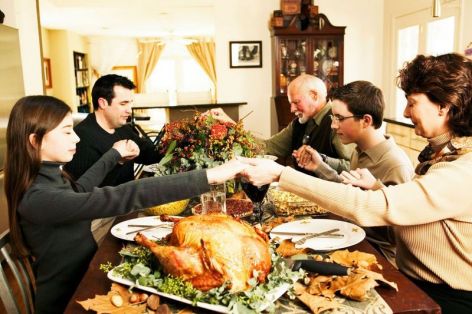

Commercials entice children with the latest toys, electronics and fashion during the Christmas shopping season. The words “I want” and “mine” are often the first words that children learn, but during this time of the year those words are magnified! Children are not really focused on Christ during this season that is supposedly all about Him, but instead on what they will get. This leads to covetousness (which breaks the 10th Commandment). Are we seeing a pattern here?

Jesus warns us, “Beware of covetousness, for one’s life does not consist in the abundance of the things he possesses” (Luke 12:15). Teaching children to give and be content with what they have is a good antithesis of the getting focus of Christmas.

3. Christmas devalues faith.

Millions of children around the world request gifts from Santa Claus and wait for their request to be answered on Christmas morning. Sometimes they are then disappointed by not getting what they asked for and then later learning that Santa really doesn’t exist.

Not only do Christmas traditions ask children to put faith in a nonexistent man, but they also set them up to question God. How can they develop true faith when their original faith was built on a lie?

When we really analyze Christmas traditions, we discover they teach children lessons that lead them in the wrong direction.4. Christmas is used as a bargaining chip.

A 2009 survey by kidsturnscentral.com asked kids, “What does Christmas mean to you?” A 15-year-old in Kansas responded, “A time where we pretend that our good behavior for the day will carry over to the rest of the year.”

Think about it: Christmas teaches children to be good because “Santa Claus is coming to town.” In other words, be good so you will get presents.

According to the Bible, we should choose to do good because it is the right thing to do. Ecclesiastes 12:13 teaches us to “fear God and keep His commandments, for this is man’s all.” Children must be taught that they shouldn’t just obey God to getbut instead because it is the right thing to do all the time.

Teach truth, not lies

Christmas compromises some of the most basic and essential biblical principles: honesty, generosity, and faith. Along with its unbiblical and pagan origins, parents should reconsider exposing children to Christmas and instead teach them how to worship and live according to the Bible.”

We have recently published a parenting resource manual to assist parents who are serious about teaching their children about God’s way of life. You can download free lessons at “Encourage, Equip & Inspire.”

To learn more about improper and proper worship of God, request our free booklet From Holidays to Holy Days: God’s Plan for You.    From: https://lifehopeandtruth.com/relationships/blog/christmas-is-not-for-kids/

________

Avoiding Epilepsy Through Diet

Transcript of YouTube video at: https://nutritionfacts.org/video/avoiding-epilepsy-through-diet/

Below is an approximation of this video’s audio content. To see any graphs, charts, graphics, images, and quotes to which Dr. Greger may be referring, watch the above video.

“Avoiding pork tapeworm parasites (cysticercosis) is not as easy as just avoiding pork!

Another review last year confirmed that pork tapeworms taking residence inside our brains “is a significant public health issue within the United States.” At first, though, clinical diagnosis can be challenging. Initial presentations of the disease are often vague complaints like headaches, weakness, dizziness, high blood pressure.

In terms of treatment, in a series of more than a hundred cases published this year, although antiparasitic deworming drugs were found to be effective, about 10% of victims require brain surgery—what’s called an open craniotomy, where you have to go in and basically just dig ‘em out.

They can get into our muscles, too. This is an X-ray of someone’s leg, and you can see how infested the muscle is. And that’s why we can get it from pork—because it gets into muscles.

But what if you don’t eat pig muscles? Well, to all the smug non-pork-eaters out there, if we can find pork tapeworms in the brains of Orthodox Jews in Brooklyn, we can find pork tapeworms in anyone.

They weren’t sneaking off for schnitzel. It was their pork-eating domestic houseworkers preparing their food. When 1,700 members of the local synagogue were tested, 1% tested positive. The researchers suggested that those “to be employed as domestic workers or food handlers should be screened for tapeworm infection via examination of three stool samples for [tapeworm] eggs.”

So to avoid the #1 cause of adult-onset epilepsy, we may want to not eat pork, and not eat anything made by anyone who eats pork.” 

_____

Sunday, November 13, 2022

Is Thanksgiving Being Replaced? The Sacrifices of Thanksgiving. The Gut-Destroying Toxin You Eat Everyday.

.

Is Thanksgiving Being Replaced?

Saying thanks to God is what Thanksgiving was all about. Is it still?

“Saying thanks to God is what Thanksgiving was all about. Is it still?

This year some U.S. retailers are starting their Christmas sales even earlier than Black Friday—now on Thanksgiving Day. Have our priorities changed?

When I was a child, the American Thanksgiving Day was a big event. We were taught in school about the history of the day and to be thankful to God for our blessings. Even television commercials were focused around family togetherness and being thankful.     But times have changed.

Black Friday becoming Black Thursday?

For years the Christmas shopping season “officially” started the day after Thanksgiving in the United States.

The term “Black Friday” got its name from retailers making their largest profits during the holiday season. Profits put retailers “in the black.” Since Friday was the start of the Christmas season, the name “Black Friday” was born.

In recent years some retailers began opening their doors at 7 a.m. on that Friday. Then it was 6 a.m., then 5 a.m. and then midnight.

Now some retailers are beginning their sales at 8 p.m. on Thursday, the same day as Thanksgiving!

What that means is that some employees will have to be at these stores even earlier than that. They won’t have much of a Thanksgiving.

Black Friday is now Black Thursday.

Is Thanksgiving even important anymore?

When President Abraham Lincoln made Thanksgiving a national holiday, he called it “a day of thanksgiving and praise to our beneficent Father who dwelleth in the heavens” (quotes from the American Presidency Project).

Thanksgiving was originally intended to draw our attention to God, not ourselves. But today many Americans rush through Thanksgiving so they can go shopping and do the things they want to do. Instead of being thankful for the blessings they have, many believe they deserve and are entitled to them.

This completely different mind-set is not what Thanksgiving is supposed to be all about.

Losing sight of God

Concerning America’s wealth, President Lincoln commented that “no human counsel hath devised nor hath any mortal hand worked out these great things. They are the gracious gifts of the Most High God.”

His words sound very similar to what God told the people of Israel more than 3,000 years ago about the blessings Israel’s descendants would receive.

“When you have eaten and are full, then you shall bless the LORD your God for the good land which He has given you. Beware that you do not forget the LORD your God by not keeping His commandments, His judgments, and His statutes which I command you today, lest—when you have eaten and are full, and have built beautiful houses and dwell in them; and when your herds and your flocks multiply, and your silver and gold are multiplied, and all that you have is multiplied; when your heart is lifted up, and you forget the LORD your God who brought you out of the land of Egypt … then you say in your heart, ‘My power and the might of my hand have gained me this wealth’” (Deuteronomy 8:10-17).

For many decades America has been the most blessed nation on earth, and for that we should be thankful to God. But instead of being thankful for what we have, many want to rush out and accumulate more.

“But know this, that in the last days perilous times will come. For men will be lovers of themselves, lovers of money … unthankful … lovers of pleasure rather than lovers of God” (2 Timothy 3:1-4).

“Although they knew God, they did not glorify Him as God, nor were thankful, but became futile in their thoughts. And their foolish hearts were darkened” (Romans 1:21).

Americans have forgotten their heritage. Why else would we replace a day set aside for God with a day set aside for greed? Why are we replacing Thanksgiving with Black Thursday?         Because we have forgotten God.

Let’s remember God

Moses, the leader of ancient Israel, wrote about the heritage of Israel. (To explore the connection between ancient Israel and modern nations such as the United States, Australia, Britain and Canada, see “Who Are the United States and Britain in Prophecy?”)

Moses wrote, “Remember the days of old, consider the years of many generations. Ask your father, and he will show you; your elders, and they will tell you” (Deuteronomy 32:7).

Moses goes on to show how God raised up ancient and modern Israel and blessed them so much that they became the greatest people on earth (verses 10-14).

But as the case is today, Moses also wrote that Israel would forget God because of this wealth (verses 15-18).

Then Moses wrote that because Israel forgets God, God will stop helping them and troubles will come upon Israel (verses 19-26).

God even says, “For they are a nation void of council, nor is there any understanding in them. Oh, that they were wise, that they understood this, that they would consider their latter end!” (verses 28-29).

In light of all the troubles the United States has been experiencing over recent years, we should examine the quality of our relationship with God and our gratitude toward Him.

So before America replaces the meaning of Thanksgiving, let’s remember that the day was intended to pay homage to God, not to ourselves.”       From: https://lifehopeandtruth.com/prophecy/blog/is-thanksgiving-being-replaced/

_______

The Sacrifices of Thanksgiving

Psalm 107:22 

“Let them sacrifice the sacrifices of thanksgiving, and declare His works with rejoicing.”

Leviticus 7 describes a “sacrifice of thanksgiving” that involved offering grain and an animal sacrifice (Leviticus 7:12). This offering was not for sin, but for rejoicing and showing thankfulness to God.

We know from the book of Hebrews that the system of animal sacrifices has been superseded, yet Hebrews still talks about a “sacrifice of praise to God.” This is defined as “the fruit of our lips, giving thanks to His name. But do not forget to do good and to share, for with such sacrifices God is well pleased” (Hebrews 13:15-16).

Praising God, doing good and sharing are sacrifices that continue to please our Creator today.”   For more about thanksgiving, see “In Everything Give Thanks.”

From: https://lifehopeandtruth.com/bible/blog/the-sacrifices-of-thanksgiving/ 

________

The Gut-Destroying Toxin You Eat Everyday

by: Dr. Craig A. Maxwell

Food 211“Since the 1990s, there’s been something different about the food you eat everyday. It still looks the same, it tastes the same but it’s not the same nourishing food your grandparents ate. Lurking deep inside a fresh-grilled ear of corn or your favorite soy-based vegetarian dish could be a gut-destroying toxin. It’s called Bt toxin and what you don’t know about it could seriously affect your health.

What is BT Toxin?

Bacillus thuringiensis (BT) is a gram-positive soil-dwelling bacterium that has been used as an insecticide since the 1920s. When farmers spray their crops with this bacterium or its insecticidal proteins or spores, insects eat it and they die when their intestines Embedded0473fcb4aed4462496a774149673d358explode. When this pesticide is just sprayed on your food, you are able to wash it off. Indeed, the spraying of it on crops, even organic crops, allows it to be washed off. Sunshine also quickly degrades it. When used in this way it is considered effective against pests and harmless to humans, as it is not absorbed into the plant.

Now with the advent of genetically modified crops, it is difficult to avoid this dangerous toxin. This is because biotech giant Monsanto decided to profit from this pesticide by splicing the Bt gene with corn, soybeans, and cotton. Now these plants have Bt toxin genetically inserted in them. It cannot be washed off, and it does not degrade during the growth cycle.

Monsanto describes these new crops as “pest-resistant”, giving unsuspecting consumers the idea that pests somehow smell the Bt pesticides and avoid the crops containing them. No. Nothing could be further from the truth. When any insect takes a bite of a genetically modified Bt toxin crop, the toxin literally splits their guts open and they die. So, why would you want to eat it? Remember, when it was only sprayed on the plant, it was easily washed off or degraded by sunshine.

Terrifying Side Effects of BT Toxin

According to a UK report published in 2004, twelve German dairy cows died a slow and painful death after consuming GMO Bt Toxin corn. Syngenta (a biotech company linked to Monsanto) has been trying to cover up this fact for nearly a decade.

Here are just a few of the side effects of Bt Toxin:

Allergic Reaction

Boy getting shootYour immune system is designed to protect you against toxins and foreign invaders. Bt toxin is a foreign invader, which means the more you eat GMO foods, the worse you’ll feel. You may develop allergic symptoms such as sneezing, coughing, wheezing, watery eyes, asthma, and hives and be unable to figure out what’s causing them.

Developmental Disorders

Studies have proven that animals given feed from GMO crops experienced noticeable alterations in their mood and behavior. Hogs exposed to Bt toxin exhibited cannibalistic behavior while rats who ate it exhibited signs of anti-social behavior, withdrawing from others and aggressively climbing the cage walls.

This has led researchers to believe that Bt toxin and autistic symptoms are closely-related because they seem to interfere with functional digestive development. Children with ASD have a disproportionate amount of gastrointestinal disorders, reinforcing the belief that gut and brain health are very closely connected.

Autoimmune Disease

Less than a hundred years ago, autoimmune diseases were uncommon. Now we live in a society where conditions such as celiac disease, Crohn’s disease, lupus, rheumatoid arthritis, Hashimoto’s thyroiditis and multiple sclerosis are almost commonplace. It’s becoming more unusual now not to have some type of autoimmune dysfunction than it is to be sick! Sick has become the societal norm and pesticides have been cited as one of the primary causes.

Since 80% of your immune system is located in your gut, the last thing you want to do is eat gut-destroying Bt toxins. One of the most alarming facts about Bt toxin GMO foods is their staying power.

iStock_000000970628XSmallEven if you eat a primarily organic diet and “slip up” every once in the while by eating some corn chips laced with Bt toxin, the effects of the toxin can stay with you. Once inside your stomach, these Bt toxins take can over by destroying your natural gut flora and forcing your digestive system into continually producing more of the pesticide!

Severe Food Allergies

Once your immune system begins to go haywire, it will be unable to tell the difference between whole organic food and genetically modified food. Once your healthy gut flora has been destroyed and altered, a condition called leaky gut syndrome will result. In a person with leaky gut syndrome, the intestinal lining is more porous than it should be. This allows toxins, undigested food particles, and bacteria to run unchecked in your bloodstream, causing chronic inflammation and multiple food allergies.

Kidney Disease

Your kidneys are designed to flush toxins from your body. Continually eating genetically modified crops containing Bt toxins may eventually destroy your kidneys.

Infertility

digestive_distress

There is a rising theory among health-conscious individuals that one of the main purposes for the development of GMO crops is population control. When Mike Adams of NaturalNews.com interviewed a biotech scientist known only as “Ed”, the man confirmed that Bt toxins do, in fact, contribute to infertility and that he thought this fact was “awesome!” He went on to say that he believed genetically modified crops were doing humanity a favor because the world is overcrowded.

Cancer

The Institute for Responsible Technology reports 65 serious health risks associated with GMO crops, including cancer development. For example, rats fed potatoes engineered to produce their own insecticide developed precancerous cellular growth in their digestive tract.

Foods Containing Bt Toxin:

Corn – Unless it’s organic, stay away from corn. Over half of the corn grown in the United States is genetically modified to contain Bt toxin.

Soy – Studies have shown that soy is not the health food you have been lead to believe. Up to 90% of soy grown in the United States is genetically modified to contain Bt toxin.

Sugar Beets – In 2012, GMO sugar beets got the green light as well so avoid these and purchase organic beets only.

Diary Products – The milk you pour in your coffee and onto your child’s cereal each day could contain dangerous Bt toxins, as livestock are often fed corn and soybeans which most often contain Bt toxin. Use organic milk instead. Better yet, use organic almond milk.

Squash – Most yellow and zucchini squash is genetically modified and contains Bt toxins.

Cotton – Cotton has been genetically modified to produce Bt toxins. It is pressed into cottonseed oil which is used in vegetable oil and margarine.

Beef-When possible, choose only grass-fed, organic beef. Cattle are often fed Bt toxin-containing feed.

Potatoes-Approved in 1995 by the FDA as the first pesticide-producing crop in the United States.

How to Avoid BT Toxin

The best way to avoid Bt toxins in food is to eat organic whenever possible. When selecting produce, it’s really important to understand what the label numbers mean. A four-digit number beginning with a “4” means it’s been conventionally-grown. A five-digit number that begins with a “9” means it’s organic. A five-digit number beginning with an “8” means it’s genetically-modified and contains harmful Bt toxins.

Also, it is very important to read food labels. Produce isn’t the only thing you have to watch out for. Any food containing corn, soy products, vegetable oil or dairy could potentially contain dangerous Bt toxins. Look for non-GMO or GMO-free foods only.

If you didn’t really understand the dangers about Bt toxins before, you’re not alone. These major biotech corporations will do anything it takes to make sure this critical information doesn’t reach you. Remember, become a label-reader, purchase organic, and look for “non-GMO” food labels. Once you stop unintentionally eating poison, your health will improve by leaps and bounds you never thought possible!                    From: https://www.askdrmaxwell.com/2013/03/the-gut-destroying-toxin-you-eat-everyday/

________