Showing posts with label food labels. Show all posts

Sunday, November 19, 2023

What Does the Bible Say About Loneliness? Vain Worship. Nutrition Facts Missing from the Label. Alzheimer's.

.

What Does the Bible Say About Loneliness?

Illustration of a lone figure to represent the article What Does the Bible Say About Loneliness?“The Bible has stories about people facing loneliness and solutions to loneliness. God understands and cares and doesn’t want us to suffer alone.

Jesus Christ understands what it is like to be alone.

He spent 40 days alone in the wilderness, fasting and preparing to face Satan’s terrible temptations.

And beyond that, during His crucifixion He also endured the utter loneliness that led Him to cry out, “‘Eli, Eli, lama sabachthani?’ that is, ‘My God, My God, why have You forsaken Me?’” (Matthew 27:46).

After an eternity of close contact with God the Father, He suddenly experienced the crushing loneliness of carrying the weight of the world’s sins.

Jesus understands our suffering

But even before that, our Savior was no stranger to rejection and abandonment.

Isaiah 53 expresses the deep isolation and loneliness the Messiah would suffer in addition to the physical torment:

“He is despised and rejected by men, a Man of sorrows and acquainted with grief. And we hid, as it were, our faces from Him; He was despised, and we did not esteem Him” (verse 3).

Jesus knew that even the many people who “believed in His name when they saw the signs which He did” (John 2:23) were not really with Him. He “did not commit Himself to them, because He knew all men, and had no need that anyone should testify of man, for He knew what was in man” (verses 24-25). Such scriptures hint at deep feelings of isolation.

“From that time many of His disciples went back and walked with Him no more. Then Jesus said to the twelve, ‘Do you also want to go away?’” (John 6:66-67).

But the Bible shows He had a different and deeper source of companionship: “The Father has not left Me alone, for I always do those things that please Him” (John 8:29).

Jesus told His disciples, “Indeed the hour is coming, yes, has now come, that you will be scattered, each to his own, and will leave Me alone. And yet I am not alone, because the Father is with Me” (John 16:32).

Jesus faced isolation and rejection, and He is empathetic and compassionate to those facing loneliness. He can “sympathize with our weaknesses” and so we are invited to “come boldly to the throne of grace, that we may obtain mercy and find grace to help in time of need” (Hebrews 4:15-16).

We don’t need to be completely alone, for He has said, “I will never leave you nor forsake you” (Hebrews 13:5).

“It is not good that man should be alone”

From the beginning, God created us to be social creatures. In the creation account, companionship can seem like an afterthought, but it was not. God wants us to know what He knew all along: “It is not good that man should be alone; I will make him a helper comparable to him” (Genesis 2:18).

Putting us in families was always God’s intent. He created us to be like Him. Our families are intended to reflect His family. In fact, the overarching story of the Bible is that God the Father and Jesus, the Son of God, want us to become children of God.

God doesn’t intend for us to be alone. On the night before He was crucified, Jesus said, “I will not leave you orphans; I will come to you” (John 14:18).

And God the Father tells us, “I will be a Father to you, and you shall be My sons and daughters” (2 Corinthians 6:18).

Our relationship with God is the ultimate and most important solution to the problem of loneliness. But that does not minimize the pain of human isolation and loneliness. The Bible tells the story of people of God who experienced the pangs of loneliness.

Elijah felt alone

One of the most poignant examples was the prophet Elijah.

After the adrenaline rush of his contest with the prophets of Baal came the vicious threats of evil Queen Jezebel. Elijah “ran for his life” (1 Kings 19:3). Discouraged and weary, he even begged God to take his life rather than let him suffer what Jezebel had planned for him (verse 4).

But God had other plans. After Elijah came to Mount Horeb and witnessed God’s power, God asked him gently, “What are you doing here, Elijah?” (verse 13).

Elijah’s answer showed how alone he felt: “I have been very zealous for the LORD God of hosts; because the children of Israel have forsaken Your covenant, torn down Your altars, and killed Your prophets with the sword. I alone am left; and they seek to take my life” (verse 10).

God encourages and is pleased by Christian brotherhood and fellowship. God’s response included a list of assignments God had for Elijah. Having a purpose and work to throw himself into would also help Elijah overcome his discouragement.

Included in this work was the opportunity to mentor his successor, Elisha. This close relationship, and the fact that 7,000 people had not bowed to Baal, helped Elijah realize he was not truly alone.

We can ask God to help us to connect with others who serve Him and to work together in accomplishing God’s work.

The author of Psalm 102 felt afflicted and alone

Psalm 102 carries this inscription: “A Prayer of the afflicted, when he is overwhelmed and pours out his complaint before the LORD.”

Though the author is not named, his lament is one that many of us can relate to. His comparisons to lonely birds have touched many hearts:

“I am like a pelican of the wilderness; I am like an owl of the desert. I lie awake, and am like a sparrow alone on the housetop” (verses 6-7).

The psalmist felt the reproach of enemies, but even more troubling was feeling cut off from God because of guilt.

Yet Psalm 102 continues with acknowledgment of God’s mercy and praise for His concern for the afflicted and His willingness to strengthen those in need.

We can pray that God will forgive and help us as well.

Other biblical examples of loneliness

The Bible has many other stories of people who experienced loneliness, whether they were alone or in a crowd.

Hagar and Ishmael wandered in the wilderness of Beersheba (Genesis 21:14). After incurring the wrath of his brother, Jacob set off alone on the long journey to Laban’s home (Genesis 28). After being sold into slavery by his angry brothers, Joseph spent many years far from family and apart from any other believers in God (Genesis 39).

Moses, a prince in Egypt, fled to the desolate wilderness (Exodus 2:15). David had to flee for his life, even ending up in enemy cities. He cried out, “I am lonely and afflicted” (Psalm 25:16, New International Version).

Paul, after being converted, was no longer accepted by his former friends and was feared by his new brethren (Acts 9:26).

And the Bible tells of many who lost husbands, wives, parents or children. God cares deeply about the loneliness and suffering of widows, widowers, orphans and those bereaved of their children.

He’s “a father of the fatherless, a defender of widows” (Psalm 68:5).

Biblical solutions to loneliness

After recounting the misfortune of “one alone, without companion” (Ecclesiastes 4:8), Solomon wrote:

“Two are better than one, because they have a good reward for their labor. For if they fall, one will lift up his companion. But woe to him who is alone when he falls, for he has no one to help him up. Again, if two lie down together, they will keep warm; but how can one be warm alone? Though one may be overpowered by another, two can withstand him. And a threefold cord is not quickly broken” (verses 9-12).

This describes “the obvious benefits of companionship. The intimacy and sharing of life brings relief for the problem of isolation and loneliness” (NKJV Study Bible notes).

Who does the Bible encourage to provide this companionship?

  • Family:

The apostle Paul encouraged families to care for the needs of their own family members across generations.

“But if any widow has children or grandchildren, let them first learn to show piety at home and to repay their parents; for this is good and acceptable before God” (1 Timothy 5:4).

While this passage may be specifically about providing for financial needs, the principle of honoring and caring for family members includes seeking to meet emotional needs as well. Being part of a family should mean having loving support and companionship.

  • Fellow Christians:

All of us should care for those in need:

  • “Pure and undefiled religion before God and the Father is this: to visit orphans and widows in their trouble, and to keep oneself unspotted from the world” (James 1:27).
  • “Therefore, as we have opportunity, let us do good to all, especially to those who are of the household of faith” (Galatians 6:10).
  • “Be kindly affectionate to one another with brotherly love, in honor giving preference to one another” (Romans 12:10).
  • “Distributing to the needs of the saints, given to hospitality” (verse 13).
  • “Rejoice with those who rejoice, and weep with those who weep” (verse 15).

God encourages and is pleased by Christian brotherhood and fellowship. The book of Malachi gives a behind-the-scenes look at God’s response:

“Then those who feared the LORD spoke to one another, and the LORD listened and heard them; so a book of remembrance was written before Him for those who fear the LORD and who meditate on His name” (Malachi 3:16).

Of course, God does not intend for us to just wait for others to reach out to us. We can reach out to others. If you are lonely, you can understand how much other lonely people need friendship. Be that friend, and you can enjoy the benefits as well. Practice the Golden Rule (Luke 6:31).

  • God:

We can ask God for help in building our human relationships. The Bible tells us: “God sets the solitary in families” (Psalm 68:6). This applies to physical families, church families and, ultimately, His family. See “Building Strong Families,” “Christian Fellowship” and related articles.

And we can go to God to develop the most meaningful relationship of all. See more in our articles “Your Best Friend,” “Relationship With God,” “Knowing God as a Loving Father” and “Children of God.”

For more about overcoming loneliness, see “The Loneliness Epidemic” and “How to Make Friends.”  From: https://lifehopeandtruth.com/relationships/friendship/loneliness-epidemic/bible-loneliness/

_________

Vain Worship

Matthew 15:8-9

“These people draw near to Me with their mouth, and honor Me with their lips, but their heart is far from Me. And in vain they worship Me, teaching as doctrines the commandments of men.”

“God warns us not to try to worship Him according to our own ideas or according to nonbiblical practices. He tells us clearly how He wants to be worshipped in His revealed Word, the Holy Bible.

The commandments of men include the human reasoning of the religious leaders seeking to get around God’s clear commands (see verses 3-6 ). But by extension this concept also covers any humanly devised teachings not based on the Bible.”

Seek to worship God according to His 10 Commandments. See “The 10 Commandments for Today.” From: https://lifehopeandtruth.com/bible/blog/vain-worship/?

_________

Phytochemicals: The Nutrition Facts Missing from the Label

Transcript of video at: https://nutritionfacts.org/video/phytochemicals-the-nutrition-facts-missing-from-the-label/ 

To see any graphs, charts, graphics, images, and quotes to which Dr. Greger may be referring, watch the above video. This is just an approximation of the audio contributed by Peter Mellor.

“There are thousands of flavonoid phytonutrients in fruits, vegetables, and other whole plant foods missing from the nutrition labels that may play a role in delaying the onset of Alzheimer’s disease.

It’s one thing to show Alzheimer’s benefits in a petri dish. It’s quite another to show benefit in a human population. That came two years later. About 1,800 people were followed for about eight years. At the beginning of the study, they asked how often everybody drank any kind of juice, and then sat back and watched to see who would get Alzheimer’s. By the end of the study, it appeared that those who drank fruit and vegetable juices had a 76% lower risk of developing Alzheimer’s. They conclude that “fruit and vegetable juices may play an important role in delaying the onset of Alzheimer’s disease.”

What could it be? Here’s the nutrition facts label for purple grape juice, on the left. According to the labels, there’s basically nothing in it. Not even any vitamin C. And indeed, that’s what the study found, even after controlling for antioxidant vitamin intake—vitamin E, vitamin C, beta carotene; still, a quarter the risk of Alzheimers. Based on the nutrition label, you’d think it was just sugar water, practically indistinguishable from Coca Cola. In fact, it’s got even more sugar—nine spoonfuls per cup compared to seven in Coke. But it just looks like sugar water, because the labels don’t list phytonutrients. If they did, the Coke label would remain the same, but the grape juice label would spill down, and roll along the floor like Santa’s list. And this would be like the first page of the list. There are thousands of phytonutrients in fruits and vegetables, missing in junk foods and animals foods, yet never listed on the labels.

The leading candidate class of compounds responsible for the protection against Alzheimer’s are the phenolics, like flavones, and flavonones, and flavonols, which in many cases can rapidly cross the blood-brain barrier. There are more than 5,000 different types of flavonoids in the plants we eat. Research suggests that within minutes of biting into an apple, for example, these phytonutrients are already starting to light up our brain.”  From: https://nutritionfacts.org/video/phytochemicals-the-nutrition-facts-missing-from-the-label/ 

_________

Sunday, July 16, 2023

Problems With Evolution. This Cancer-Causing Chemical May Be Lurking In Your Bread.

.

Problems With Evolution
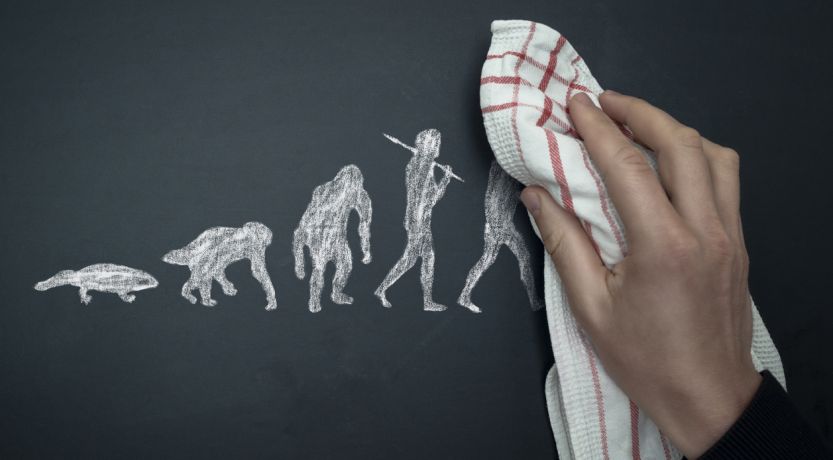
Problems With Evolution“Do evolutionists believe in evolution solely because of science? Or is it rooted in belief in a materialistic philosophy? Consider the problems with evolution.

Over the last couple hundred years an evolutionary worldview has replaced a biblical worldview in Western science and education.

The Bible contains statements that are quite at odds with many of the accepted “truths” of the modern world.

Creation or evolution?

Often, a person must make a fundamental choice, with no wiggle room for compromise: Do I believe that the Bible is the inspired, inerrant Word of God, and do I therefore believe what is stated in the Bible?

Or do I believe what is confidently taught and believed by fallible human beings—including the majority of the elite, the intellectual leaders, the teachers, the powerful and the trendsetters in the world around me?

The Bible asserts that God created everything, and this has significant implications that will make a real difference for each person.

A prime example of the choice a person must make in what to believe is found in the book of the prophet Jeremiah.

“No more shall every man teach his neighbor, and every man his brother, saying, ‘Know the LORD,’ for they all shall know Me, from the least of them to the greatest of them, says the LORD. For I will forgive their iniquity, and their sin I will remember no more.

“Thus says the LORD, who gives the sun for a light by day, the ordinances of the moon and the stars for a light by night, who disturbs the sea, and its waves roar (the LORD of hosts is His name)” (Jeremiah 31:34-35, emphasis added throughout, except where noted).

Here is a description in the Bible of a time when all people in the world will personally know (not just know about, but know) the “LORD.” He is the eternal, uncreated, self-existent Creator God of the Bible. He’s the One who created the sun, moon and stars—the One who is the moral judge of mankind (with the authority and power to forgive the sins of people). Is that believable?

Disbelief in God

In today’s world, a person who believes in the literal truth of all aspects of Jeremiah’s statement is in the minority. What the Bible teaches is contrary to what is considered possible by most people.

Jeremiah’s description is a stark contrast to what is commonly believed in today’s world—when so many people don’t really know God at all—primarily because they have doubts that He even exists! It’s obviously hard to know someone when you don’t even believe, with certainty, that he is real.

But why? The impact of evolution on society

And so we ask, what is it that contributes to so much doubt in so many people’s minds that the God of the Bible even exists—and that someday, everyone will know Him personally?

What is it in today’s world—in the foundation of popular culture, politics, entertainment and especially in education—that causes so much doubt in people’s minds as to whether the Creator God of the Bible even exists?

Answer: the theory of evolution.

This idea is nearly universally taught in modern schools, at all levels. It’s the belief that everything in the universe (including the sun, moon and stars and all life) just came into existence—by sheer chance. It is the idea that everything we can perceive came about by undirected forces with no intelligent planning or purpose—caused by no intelligent and powerful and righteous Creator. Thus, no God would be necessary, and no God would judge mankind for its sins or forgive them.

The theory of evolution permeates the modern world. And yet, the idea of evolution is completely inconsistent with what is revealed in the Bible. Accepting the theory of evolution necessitates disbelieving the Bible—or at minimum engaging in the tortuous mental gymnastics of reinterpreting the clear statements of the Bible in such a way as to squeeze evolution into it.

Theistic evolution?

A significant number of Christian denominations have adopted a belief in theistic evolution, which holds that God’s method of creation was to cleverly design a universe in which everything would naturally evolve. Others hold to a belief in directed evolution, in which God had a hand in guiding the evolutionary process.

But these views assume that the biblical description of creation is allegorical rather than literal. For a discussion on these questions, see our articles “Theistic Evolution,” “Can Christians Believe in Evolution?” “How Long Were the ‘Days’ in Genesis 1?” and “The Gap Theory.”

Creation summary

The Bible states that God created the world and all that is in it by speaking the created realm into existence, and that the majesty of what He made should cause those who observe it to glorify and praise Him.

Here are some summary Bible verses about the creation:

  • “For in six days the LORD made the heavens and the earth, the sea, and all that is in them, and rested the seventh day. Therefore the LORD blessed the Sabbath day and hallowed it” (Exodus 20:11).
  • “By the word of the LORD the heavens were made, and all the host of them by the breath of His mouth. He gathers the waters of the sea together as a heap; He lays up the deep in storehouses. Let all the earth fear the LORD; let all the inhabitants of the world stand in awe of Him. For He spoke, and it was done; He commanded, and it stood fast” (Psalm 33:6-9).
  • “Praise Him, sun and moon; praise Him, all you stars of light! Praise Him, you heavens of heavens, and you waters above the heavens! Let them praise the name of the LORD, for He commanded and they were created” (Psalm 148:3-5).
  • “The heavens declare the glory of God; and the firmament shows His handiwork” (Psalm 19:1).
Evolution summary

Evolution-based teaching presents quite a different story. It is the story that nothing became everything long ago, beginning with a quantum fluctuation—a Big Bang—all matter, energy, time and space emerging from an infinitesimally small compaction. (No real explanation for how this could come into existence without a Creator can be offered.)

Then all sorts of things are hypothesized to have happened that have never been observed, and that violate all known laws of physics. This was followed by stars and galaxies assembling themselves together. Followed much later by non-living chemicals somehow (no one knows how) becoming alive. Followed by single cells mutating and eventually developing, over eons of time, through various intermediate life-forms, into modern human beings.

No scientist has observed any of this happening. But that is the story. And the God of the Bible is not a part of it. It all happened by itself, with no guidance, no intelligence, no purpose. It just happened.

Evolution as a religion

The evolutionary ideology and worldview is much more than a scientific theory. It is, in fact, a religion—a competing religion to the religion of the Bible—with nothing in it but matter and energy and its own set of miracles.

It has its own assumptions, which pointedly invalidate and suppress the conclusions that should be obvious from examining the marvels of the physical world. It flatly contradicts the Bible’s account of the origin of the world. 

In the stark terms of the Bible, the theory of evolution is “foolish” and a “lie” (see Romans 1:25 and surrounding verses).

What greater lie could there be than the one that claims that the ultimate cause of everything that can be seen doesn’t even exist? And yet, it dominates our modern world. Science curricula require the teaching of evolution to all students in much of the world’s formal education system.

But is it based on real science?

Regarding the development of living things, the “Neo-Darwinian Synthesis” is an attempt to update Charles Darwin’s 1859 theory (published in his book On the Origin of Species) with the modern findings of genetics. Darwin’s book sought to explain the variety of life-forms, from simple to complex, through natural processes entirely.

Charles Darwin’s book sought to explain the variety of life-forms, from simple to complex, through natural processes entirely.

No intelligent, wise and powerful Creator God was necessary, according to Darwin. He theorized that unguided and unintelligent forces in nature itself (“natural selection”) would see to it that small differences between life-forms would be “selected” if those differences conveyed some sort of reproductive advantage. And thus those creatures that had somehow been endowed with these advantageous differences would survive, and those without them would die out.

Darwin proposed that in this process, over great periods of time, one sort of creature would gradually develop and gain advantages and turn into another sort of creature.

The source of all those small, cumulative, advantageous changes was unknown to Darwin. In more modern times, evolutionary proponents point to random mutations as a source. The information needed to build and maintain living things is found in the DNA in their cells. When cells divide and when organisms reproduce, this DNA code must be copied. The occasional random errors that take place in this copying process are called mutations.

Thus, the modern theory of biological evolution assumes that life somehow began (no one knows how), and then simple life changed into more and more complex forms of life through mutation and natural selection. All this was theorized to occur gradually, over immense periods of time.

No God was involved in this process. No intelligence. No purpose. Thus, in the theory, there are no divine standards to guide humans morally, or to which they are accountable.

Faith in evolution

Evolution’s advocates acknowledge that it is a religion—and they are zealous for their faith in it.

Michael Ruse, an atheist and evolution-believing professor of philosophy and zoology who taught at the University of Guelph in Canada for 35 years before accepting a position at Florida State University, wrote the following in Canada’s National Post:

“Evolution is promoted by its practitioners as more than mere science. Evolution is promulgated as an ideology, a secular religion—a full-fledged alternative to Christianity, with meaning and morality. I am an ardent evolutionist and an ex-Christian . . .

“The literalists are absolutely right. Evolution is a religion. This was true of evolution in the beginning, and it is true of evolution still today. . . Evolution therefore came into being as a kind of secular ideology, an explicit substitute for Christianity” (“How Evolution Became a Religion: Creationists Correct?” May 13, 2000).

Humanist beliefs oppose Christianity

If there is no Creator God, then man looks to himself as a god—thus the modern philosophy of humanism.

The American Humanist Association listed six “primary beliefs” of humanism in its 2003 Humanist Manifesto III. The second of these beliefs is, “Humans are an integral part of nature, the result of unguided evolutionary change” (“Humanism and Its Aspirations,” American Humanist Association, 2003).

Secular humanists have a zeal to spread their belief in evolution, especially through the public schools. In their zeal, they see it as their mission to eventually win the battle of beliefs and to stand triumphant over the “rotting corpse of Christianity.” They don’t hide their agenda, as seen in the following statement.

“I am convinced that the battle for humankind’s future must be waged and won in the public school classroom by teachers who correctly perceive their role as the proselytizers of a new faith: a religion of humanity that recognizes and respects the spark of what theologians call divinity in every human being. These teachers must embody the same selfless dedication as the most rabid fundamentalist preachers, for they will be ministers of another sort, utilizing a classroom instead of a pulpit to convey humanist values [including a belief in evolution] in whatever subject they teach, regardless of the educational level—preschool day care or large state university.

“The classroom must and will become an arena of conflict between the old and the new—the rotting corpse of Christianity, together with all its adjacent evils and misery, and the new faith of humanism . . .

“It will undoubtedly be a long, arduous, painful struggle replete with much sorrow and many tears, but humanism [and its fundamental principle of evolution] will emerge triumphant. It must if the family of humankind is to survive” (John Dunphy, “A Religion for a New Age,” The Humanist, January-February 1983).

Is it science at all?

So, is this science? Or, is it not an antibiblical, godless philosophy—a religion opposed to Christianity? Is it entirely objective? Do the observations and measurements of the natural world lead scientists inevitably to these conclusions—as summarized in the theory of neo-Darwinism?

Or was an agenda driving the development of the theory of evolution from the start—back to Darwin’s day, and even before?

What do leading proponents of the theory have to say about all of that? Consider the following statements by leading zealous proponents of the modern theory of evolution.

Richard Lewontin, a leading evolutionist, author, geneticist and retired professor of biology at Harvard University, wrote:

“We take the side of science in spite of the patent absurdity of some of its constructs, in spite of its failure to fulfil many of its extravagant promises of health and life, in spite of the tolerance of the scientific community for unsubstantiated just-so stories, because we have a prior commitment, a commitment to materialism.

“It is not that the methods and institutions of science somehow compel us to accept a material explanation of the phenomenal world, but, on the contrary, that we are forced by our a priori adherence to material causes to create an apparatus of investigation and a set of concepts that produce material explanations, no matter how counter-intuitive, no matter how mystifying to the uninitiated. Moreover, that materialism is absolute, for we cannot allow a Divine Foot in the door” (“Billions and Billions of Demons,” The New York Review, Jan. 9, 1997, p. 31, emphasis in original).

Thomas Nagel wrote:

“I want atheism to be true . . . It isn’t just that I don’t believe in God and, naturally, hope that I’m right in my belief. It’s that I hope there is no God! I don’t want there to be a God; I don’t want the universe to be like that. My guess is that this cosmic authority problem is not a rare condition and that it is responsible for much of the scientism and reductionism of our time. One of the tendencies it supports is the ludicrous overuse of evolutionary biology to explain everything about human life, including everything about the human mind . . . This is a somewhat ridiculous situation” (The Last Word, 1997, pp. 130-131).

Professor Nagel is an American intellectual and professed atheist. He is professor of philosophy and law, emeritus, at New York University, where he taught from 1980 to 2016. Later in life, he controversially questioned materialism as the answer for all things, including human consciousness, and in so doing raised the ire of his fellow evolution-believing atheists.

Stephen J. Gould wrote: “The extreme rarity of transitional forms in the fossil record persists as the trade secret of paleontology.”Stephen J. Gould wrote:

“The extreme rarity of transitional forms in the fossil record persists as the trade secret of paleontology . . . To preserve our favored account of evolution by natural selection we view our data as so bad that we never see the very process we profess to study” (“Evolution’s Erratic Pace,” Natural History, May 1977, 86:14).

Dr. Gould was an American paleontologist, evolutionary biologist and historian of science. He admitted that the evidence to support the evolutionary story just isn’t there—certainly not in the fossil record. He was one of the modern world’s most influential and widely read authors on the subject of evolution. Gould taught at Harvard University and worked at the American Museum of Natural History in New York.

D.M.S. Watson said, “Evolution itself is accepted by zoologists not because it has been observed to occur or . . . can be proved by logically coherent evidence to be true, but because the only alternative, special creation, is clearly incredible” (quoted in Herbert Schlossberg, Idols for Destruction: Christian Faith and Its Confrontation With American Society, [1983] 1993, pp. 144-145).

Dr. Watson was a professor of zoology and comparative anatomy at University College, London.

Scott C. Todd wrote, “Most important, it should be made clear in the classroom that science, including evolution, has not disproved God’s existence because it cannot be allowed to consider it (presumably). Even if all the data point to an intelligent designer, such an hypothesis is excluded from science because it is not naturalistic. Of course the scientist, as an individual, is free to embrace a reality that transcends naturalism” (“A View From Kansas on That Evolution Debate,” Nature, Vol. 401, Sept. 30, 1999, p. 423).

This statement by Professor Todd highlights an important modern reality. The term science has been co-opted by the evolutionist academic and intellectual elite to exclude God and the supernatural, by definition!

Playing the game by these rules means that anyone who disbelieves the theory of evolution, and who instead believes the biblical account of creation, is “unscientific.”

Scientific flaws in evolution

Even though evolutionists have defined the Creator God out of the discussion, they are still left with devastating weaknesses in their theory. Other articles on this website address many of these problems. In briefest summary, some of the problems are these.

The links between kinds of creatures are missing.

Darwin’s theory postulates innumerable in-between life-forms as life evolved from single-cell creatures to man. It was true in Darwin’s day, and it remains true today—the fossil record is full of holes. The innumerable missing links are still missing!

The biblical account is true. Each “kind” of creature reproduces after its kind—never changing into a completely different kind (Genesis 1:11-12, 21, 24-25). There is variety within biblical “kinds”—within definite limits of variability—but no evidence has ever been found of one kind giving rise to another. Cows give birth to cows. Fish produce fish. Birds produce birds. Roses generate new roses.

Even among evolutionists this is known and admitted. Harvard Professor Stephen J. Gould wrote, “The absence of fossil evidence for intermediary stages between major transitions in organic design, indeed our inability, even in our imagination, to construct functional intermediates in many cases, has been a persistent and nagging problem for gradualistic accounts of evolution” (“Is a New and General Theory of Evolution Emerging?” Paleobiology, Winter 1980, p. 127).

Life—including the molecular machinery of life at the cellular level—is far too complex and obviously designed to have developed by the unguided process of natural selection acting on random mutations.

The “irreducibly complex” molecular machines in living cells—consisting of many precisely fitted parts, all of which must be present for these biomechanical machines to function—cannot possibly be constructed and “selected” one small step at a time. All the parts have to be present and properly assembled from the start for these machines to support life.

No one has a clue as to how the first life could have come into being, without the biblical Creator.

Though evolutionists may speculate about a chemical soup in ancient oceans, in which certain chemicals randomly attached themselves to each other to make the first living cell, no scientist has been able to reproduce this in a laboratory, or even describe in detail the steps by which it could possibly have happened.

Evolution probability

Even the most optimistic odds are against evolution.

Various researchers have concluded that the odds of chemicals coming together to produce life by chance are vanishingly small. Even evolutionists admit this. British astronomer Sir Fred Hoyle estimated the odds of even one step along the way from chemicals to a living cell by random chance at one in 1040,000 (Fred Hoyle and Chandra Wickramasinghe, Evolution From Space, 1981, p. 148).

One evolutionist, information theorist Hubert Yockey, on the faculty of the University of California at Berkeley, put it this way: “The origin of life by chance in a primeval soup is impossible in probability in the same way that a perpetual [motion] machine is in probability. The extremely small probabilities calculated in this chapter are not discouraging to true believers [i.e., committed evolutionists, those who choose to believe it simply because they want it to be true] . . . [however] a practical person must conclude that life didn’t happen by chance” (Information Theory and Molecular Biology, 1992, p. 257).

Some evolutionists, when honestly considering the impossibility of life beginning on earth from random processes, take the next step and speculate that life then must have begun in outer space. Then it must have somehow arrived on earth via comets or alien spacecraft or other means, then developed further here through Darwinian processes!

Included among the well-known evolutionists who, at some points in their careers, have postulated about some sort of outer space origin for life on earth are Hoyle, Francis Crick (codiscoverer of the structure of DNA), and physicist Stephen Hawking.

The information needed to build and maintain living things is found in their DNA. The occasional random errors that take place when the DNA is copied are called mutations. And mutations are nearly always harmful. 

The thinking here, apparently, is that the odds are so small that it could have begun on earth that it is ridiculous to even consider it, so maybe it started in outer space and was brought to earth. But that doesn’t solve the problem. It only speculates that the incredibly unlikely event of a chance beginning of life here on earth could have better odds somewhere else in the universe—a notion with absolutely no scientific basis.

Mutations and natural selection

Mutations—the alleged source of new genetic information to allow life to develop from single cells into all of today’s the complex organisms—are nearly always degradative, destroying information from the genome, not adding to it.

Mutations harm and set life back, instead of being the engine that pushes it forward. This is the conclusion of many studies. A good summary of this material is found in the recently published book Darwin Devolves, by American biochemist and author Michael Behe (2019).

Natural selection culls out, but doesn’t create.

The very process of natural selection accounts for the elimination and extinction of life-forms that are not “fit” enough for survival, but it has never been shown to lead to upward development of life-forms, beyond fairly strict limits.

Famed evolutionist Lynn Margulis acknowledged as much. “Natural selection eliminates and maybe maintains, but it doesn’t create” (“Discover Interview: Lynn Margulis Says She’s Not Controversial, She’s Right,” discovermagazine.com, June 16, 2011).

This once again vindicates the biblical principle of creatures being able to reproduce within narrow bounds set by God—“after their kind.”

Blind pitiless indifference

Evolution is a religion of despair and one that offers no hope or purpose or cheer.

It’s all so dispiriting. The high priests of the religion of neo-Darwinian evolutionary theory may claim that it is true and liberating, and they do indeed have a zeal to proselytize and spread their religion—especially to young, impressionable minds in school. However, they seem to know that it is an utterly bleak idea.

Cambridge University evolutionary biologist, atheist and author Richard Dawkins put it this way:

“The total amount of suffering per year in the natural world is beyond all decent contemplation . . . It must be so . . . In a universe of blind physical forces and genetic replication, some people are going to get hurt, other people are going to get lucky, and you won’t find any rhyme or reason in it, nor any justice. The universe that we observe has precisely the properties we should expect if there is, at bottom, no design, no purpose, no evil and no good, nothing but blind pitiless indifference” (River Out of Eden: A Darwinian View of Life, p. 131-133, 1995).

Not to be outdone in spreading the anti-cheer of evolutionary theory, atheist professor of evolutionary biology William Provine said:

“There are no gods, no purposeful forces of any kind, no life after death. When I die, I am absolutely certain that I am going to be completely dead. That’s just all—that’s gonna be the end of me. There is no ultimate foundation for ethics, no ultimate meaning in life, and no free will for humans, either” (Darwinism: Science or Naturalistic Philosophy? video, 1994).

Does science prove evolution?

As we have seen, committed and leading evolutionists have arbitrarily and arrogantly redefined “science” in such a way that:

  • It excludes even the possibility of the God of the Bible being the creator of the world.
  • Their “science” thus must support evolution, because it’s the only game in town.

Evolution is their religion and their faith. They choose to believe their theory (and disbelieve the Bible) because they want it that way.

However, as the many quotes in this article have demonstrated, no one need be held mentally captive to the theory of evolution nor feel intimidated into thinking that the evidence for evolution is overwhelming. It isn’t. Precisely the opposite is true.

A sound-minded person has the freedom to choose to believe the truth—that this marvelous world, in all its complexity, is indeed the product of design by a powerful and brilliant Creator—Jeremiah’s LORD.

We can base our religion on truth, instead of the falsehood of evolutionary theory. To do so does not make us ignorant or mean we have to reject the evidence and facts of science.

Evolution and Christianity

What a person chooses to believe is important. The stakes are pretty high.

One evolutionist expressed it in stark terms: “The most devastating thing though that biology did to Christianity was the discovery of biological evolution. Now that we know that Adam and Eve never were real people the central myth of Christianity is destroyed. If there never was an Adam and Eve there never was an original sin. If there never was an original sin there is no need of salvation. If there is no need of salvation there is no need of a savior. And I submit that puts Jesus, historical or otherwise, into the ranks of the unemployed. I think that evolution is absolutely the death knell of Christianity” (Frank Zindler, American atheist, in a debate with William Craig, Atheism vs Christianity video, 1993).

Another atheist evolutionist, the famous historian and science fiction writer H.G. Wells, made the same ominous point long ago.

“For since the creation of the world His invisible attributes are clearly seen, being understood by the things that are made” (Romans 1:20). 

Discussing the undeniable ramifications of the theory of evolution, he wrote, “If all the animals and man had been evolved in this ascendant manner, then there had been no first parents, no Eden and no Fall. And if there had been no fall, then the entire historical fabric of Christianity, the story of the first sin and the reason for an atonement, upon which the current teaching based Christian emotion and morality, collapsed like a house of cards” (The Outline of History—Being a Plain History of Life and Mankind, fourth revision, Vol. 2, 1925, p. 616,).

God has the last word

The words of the apostle Paul, referred to earlier, are appropriate as a concluding summary.

“For the wrath of God is revealed from heaven against all ungodliness and unrighteousness of men, who suppress the truth in unrighteousness, because what may Does God Exist?be known of God is manifest in them, for God has shown it to them. For since the creation of the world His invisible attributes are clearly seen, being understood by the things that are made, even His eternal power and Godhead, so that they are without excuse, because, although they knew God, they did not glorify Him as God, nor were thankful, but became futile in their thoughts, and their foolish hearts were darkened.

“Professing to be wise, they became fools, and changed the glory of the incorruptible God into an image made like corruptible man—and birds and four-footed animals and creeping things . . . [they] exchanged the truth of God for the lie, and worshiped and served the creature rather than the Creator, who is blessed forever. Amen” (Romans 1:18-23, 25).”  From: https://lifehopeandtruth.com/god/is-there-a-god/proof-of-god/problems-with-evolution/?

________

This cancer-causing chemical may be lurking in your bread

Kid eating grilled cheese“Potassium bromate is a possible human carcinogen added to the flour of many packaged baked goods.

  • Potassium bromate is banned in several countries, including Brazil, Canada, the European Union and the United Kingdom.
  • Despite health concerns, potassium bromate is legal for use in the U.S., and the FDA hasn’t reviewed it since at least 1973.

Many packaged baked goods are made with flour that may contain potassium bromate, an additive linked to cancer. The chemical is added to flour to strengthen dough and allow it to rise higher, benefits that have led many U.S. companies to embrace it.

EWG has identified over 130 different products that contain potassium bromate, including Best Choice Wheat Sliced Bread, Gomez Flour Tortillas, Hy Vee Blueberry Crisp and Balducci's Sugar Cookies, among others. The use of this additive in the U.S. is widespread and legal, even though it’s been banned in other countries because of health concerns.

In 1999, the International Agency for Research on Cancer, echoing findings in several studies, determined potassium bromate is a possible human carcinogen.

In ab tests<?XML:NAMESPACE PREFIX = "[default] http://www.w3.org/2000/svg" NS = "http://www.w3.org/2000/svg" />,l animals exposed to it had increased incidences of both benign and malignant tumors in the thyroid and peritoneum, the membrane that lines the abdominal cavity. Later research found that ingesting potassium bromate resulted in significant increases in cancer of the animals’ thyroid, kidneys and other organs.

Because of these health concerns, potassium bromate is not allowed for use in several countries, including the United Kingdom, Canada, Brazil and the European Union. California requires food with potassium bromate to carry a warning label.

Even with plenty of evidence showing potassium bromate’s potential to harm human health, it’s still legal for use in food sold in the U.S.

The food industry has long argued that potassium bromate isn’t a concern in baked products, because in theory the baking process fully converts it into potassium bromide, a similar yet non-carcinogenic chemical. But tests in the U.K. found that potassium bromate remains detectable after baking, with all six unwrapped breads and seven out of 22 packaged breads tested found to have measurable levels.

Potassium bromate was first approved for use in the U.S. by the Food and Drug Administration in the 1960s. In 1973, the FDA announced a planned literature review of the additive, but it’s unclear whether the review was completed, and the chemical hasn't been assessed since.

Absent federal action, California has taken measures to warn residents of potassium bromate’s dangers. The additive has been on the state's Proposition 65 list since 1990, so products containing it must carry a cancer warning. But no other regulatory agency has acted to regulate or remove potassium bromate from grocery store shelves.

Get Your Free Guide: EWG's Guide to Food Additives  Link at: https://www.ewg.org/news-insights/news/2022/05/cancer-causing-chemical-may-be-lurking-your-bread    Stay informed by signing up to receive email tips, action alerts, promotions to support our work and more from EWG. You can opt-out at any time.

Our broken food chemical review system

The U.S. food additive review system fails repeatedly to keep Americans safe and needs an overhaul if it is to protect us from potentially cancer-causing chemicals like potassium bromate.

Congress is considering legislation that aims to break through the regulatory standstill. The Food Chemical Reassessment Act of 2021<?XML:NAMESPACE PREFIX = "[default] http://www.w3.org/2000/svg" NS = "http://www.w3.org/2000/svg" />, introduced by Rep. Jan Schakowsky (D-Ill.), would help bolster our food regulatory system. If enacted, the bill would create an Office of Food Safety Assessment within the FDA to confirm that chemicals that entered the food supply chain through legal loopholes, or were reviewed by the FDA decades ago, are still safe to eat. The bill identifies 10 chemicals for immediate reassessment, including potassium bromate.

While we await the passage of this bill or new federal action, consumers can minimize exposure to potassium bromate by checking food labels and avoiding products that use it. You can also check our Food Scores database to find alternatives without potassium bromate.”     From: https://www.ewg.org/news-insights/news/2022/05/cancer-causing-chemical-may-be-lurking-your-bread

_________

Sunday, February 5, 2023

Can We Believe God’s Promises? A Life No Longer Fragile. Avoid Sardines With Soybean Oil.

.

Can We Believe God’s Promises?

A star filled night sky.“God does keep His promises, but in ways and over time frames that our finite minds have difficulty comprehending.

Robson Hatsukami Morgan/Unsplash

God promised Abraham, “I will multiply your descendants as the stars of heaven.”

Abraham is one of the most fascinating figures in the Bible. He’s called “the father of the faithful” (see Romans 4:11) because he left his comfortable city life to travel the wilderness with his flocks and herds without a permanent home.

Probably the most remarkable part of Abraham’s story is recorded in Genesis 12:1-3, where God gives him a series of astounding promises: “Now the Lord had said to Abram: ‘Get out of your country, from your family and from your father’s house, to a land that I will show you. I will make you a great nation; I will bless you and make your name great; and you shall be a blessing. I will bless those who bless you, and I will curse him who curses you; and in you all the families of the earth shall be blessed’” (emphasis added throughout).

As Abraham proved his faithful obedience, God expanded those promises. In Genesis 17:16, God assured him regarding his then-childless 90-year-old wife Sarah, “She shall be a mother of nations; kings of peoples shall be from her.”

In Genesis 22:17-18 God further promised Abraham: “I will multiply your descendants as the stars of the heaven and as the sand which is on the seashore; and your descendants shall possess the gate of their enemies. In your seed all the nations of the earth shall be blessed, because you have obeyed My voice.”

So we see that God’s promises to Abraham included, among other things:

•  “All the nations of the earth” would be blessed through him.

•  God would make a great nation of his descendants.

•  “Nations” and “kings of peoples” would come from him through his wife Sarah.

•  His descendants would number “as the stars of the heaven and as the sand which is on the seashore.”

What staggering promises! And more specific promises and prophecies were given to Abraham’s son Isaac, his grandson Jacob (renamed Israel) and his great-grandson Joseph.

But, as Hebrews 11:13 tells us of Abraham and other faithful men and women of God, “These all died in faith, not having received the promises . . .”    Which brings us to the title above: “Can We Believe God’s Promises?”

The short answer is absolutely yes! But we need to understand that God operates on a completely different plane from ours as human beings (Isaiah 55:8-9). For Him, “one day is as a thousand years, and a thousand years as one day” (2 Peter 3:8). This “High and Lofty One who inhabits eternity” is not bound by time as we are (Isaiah 57:15). Human possessions and territorial claims are infinitesimal next to a God who says, “All the earth is Mine” (Exodus 19:5) and “Everything under heaven is Mine” (Job 41:11).

God does keep His promises, but in ways and over time frames that our finite minds have difficulty comprehending. This brings us to the theme of this issue, which is the history and biblical importance of the British royal throne and empire—and the major English-speaking nations that emerged from that empire, notably the United States, Canada, Australia and New Zealand.

Less than a century ago the British Empire was the world’s preeminent power. It was truthfully said that it was the empire on which the sun never set—meaning the empire spanned the globe from Europe to Africa to North and South America to Asia to Australia and to many islands in between. For two centuries it was the dominant global power, with a navy that ruled the seas.

But how did a small island nation roughly the size of the U.S. state of Michigan (or Wyoming or Oregon) grow into a world superpower? It seems impossible, but Britain and its colonies dominated the globe for two centuries and ushered in the modern world!

With Britain’s slide from preeminence in the aftermath of World War II, one of its former colonies—the United States—became the new world superpower, a position it has now held for three quarters of a century.

Is there any link between the rise and world dominance of these two powers with the astounding promises made to Abraham almost 4,000 years ago? Those promises were not fulfilled in Abraham’s time, or in the time of the kingdoms of Israel and Judah that were descended from him. But they have been fulfilled—and in ways that are truly amazing and bear testimony to God’s faithfulness and the amazing accuracy of Bible prophecy.

We hope you’ll carefully read this issue—and that you’ll be astounded at how we can indeed believe all of God’s promises!”  From: https://www.ucg.org/beyond-today/beyond-today-magazine/can-we-believe-gods-promises

________

A Life No Longer Fragile

“From time to time something happens to remind me how fragile life is. We like to see ourselves as strong, always charging on into the future. During much of our lives, it is almost beyond our comprehension to consider the day when we won’t be here any longer.

But life is fragile, and none of us is too young to carefully consider it. An accident, a sickness, some genetic predisposition or the body simply wearing out, and life comes to an end. God never intended life to go on forever in this body.

He does want us to have life forever, but it will be in a different body! A section of scripture that jumps to mind when I consider the fleeting nature of life is found at the end of the book of Ecclesiastes. Solomon is directing many of his thoughts to the young—and appropriately so.  When we are young there is so much we haven’t experienced, so much we don’t know and so many ways we can get ourselves into a pickle if we don’t have wise counsel from someone older and more experienced. However, nearly everything Solomon writes applies to all of us, no matter our age, including the first 8 verses of Ecclesiastes 12.

He starts by reminding us to remember our Creator in the days of our youth. And there is a tremendous advantage to focusing on a strong and close relationship with God at the beginning of our lives, because it sets a pattern we can continue to follow. And doing so will allow us to avoid so many of the problems we might otherwise stumble right into.

For many of us, we’d be hard pressed to conclude we are any longer in our youth! I don’t think I could qualify any more—but I am as young right now as I’m ever going to be again! So, with that thought in mind, Solomon’s advice is something I should take to heart right now. I need to be sure I have a strong, clear and constant awareness of my Creator, His plan and His direct interaction with me. Over the next few verses Solomon describes very poetically what happens with our bodies.

Eyesight fails (we need glasses, then bifocals, then trifocals, then—I don’t know what comes after that). Hearing fails (we need hearing aids, but we put them off for as long as possible). Strength begins to fail (I know I used to just grab the end of that and pick it up and move it where I wanted. Who added a whole bunch of weight to it now?)

The silver cord, the golden bowl, the pitcher at the fountain are all poetically symbolic of the precious elements God so carefully designed into the human body. We need them all to function so we can live, but at some point these essential parts of us will get sick, get injured or grow old and cease to work.

And we see once again that life is fragile. But even with all his God-given wisdom, Solomon didn’t use that wisdom to stay on the right path of life. He went after everything he could imagine in great excess: entertainment, alcohol and perhaps whatever drugs might have existed then, women, and more women and even more women. And then paganism, as his wives convinced him to try worshipping other gods, and following other practices and leading a life that was contrary to the one set out by his Creator.

Toward the end of his life Solomon had a very bleak and dismal view of life, which he described at the beginning of this book. “‘Vanity of vanities,’ says the Preacher; ‘vanity of vanities, all is vanity’” (Ecclesiastes 1:2). He felt there was not much point in his life.

The world goes round, people come and people go, but nothing amounts to much. What a sad perspective. Yet at the end of this book, he does use his wisdom to give the most important advice in chapter 12 verse 13: “Let us hear the conclusion of the whole matter: Fear God and keep His commandments, for this is man’s all [the King James Version says, ‘this is the whole duty of man’].”

Human life is so fragile, and we never know when, why, where or how ours will come to an end. But our loving and almighty Father in heaven has promised that there is and will be so much more than just this fragile human life. He wants to give us life forever, in a perfect and strong spirit body that will allow us to work with and under Him in His family for eternity!

The knowledge of both those things—the fragility of life and the hope of a wonderful future—should be constant reminders that we must always remember our Creator in whatever stage of life we may be in. Do it now while we can. Don’t let the chance to live uprightly pass us by. Human life is fragile, but life in the Kingdom of God is forever.

Kind regards, and have a great rest of your week,  Tom Clark, for Life, Hope and Truth.”

__________

Avoid Sardines With Soybean Oil

“Avoid Sardines With Soybean Oil…This toxic oil could be hiding in your sardines!

When you do a search on soy, you’re going to find a lot of positive things about it. But, in reality, there are a lot of negative things about soy products.

Soy is GMO, and most of it has been processed using hexane, which is toxic. Soy is also very inflammatory because it’s high in omega-6. Soy has been promoted to menopausal women but, in 25 trials, it was demonstrated that soy didn’t improve hot flashes.

Soy is given to many animals that we then eat. It’s also in oils, salad dressings, processed foods, and more. There is a lot of conflicting information on soy, but many people believe it can lead to a range of serious health problems.

Soy is subsidized, meaning the government will pay farmers to grow soy. 85% of subsidized products go to just 50 multibillionaire CEOs. Overall, it seems like there is a huge push to get people to consume soy because it’s profitable.

But, as a consumer, there are a few things you can do about this problem. If people buy fewer soy products, the market will shift to other products.

What you can do:

1. Be highly selective of what you order at restaurants

2. Read labels and don’t buy products that contain soy

3. Eat at home

4. Consume more omega-3 fats” 

More info in video: https://fb.watch/imAyzFkQOL/

_________

Saturday, June 5, 2021

I Don’t Want to Be a Burden. Praying People. Top 10 Most HARMFUL Foods People Keep EATING.

.

I Don’t Want to Be a Burden

I Do Not Want to Be a Burden“Many desire to help friends and relatives who are growing older. But sometimes those who have helped so many others are not so welcoming of help themselves.

Growing old is nothing new—it happens to everyone. Accepting help as a person ages is not new either, but neither is it always simple or easy. And yet life often comes full circle with age. After a lifetime of serving, giving to and helping others, it can be a bitter pill to need help ourselves.

The circle of help

The cycle generally goes like this:

Requiring and receiving help: From the moment of birth, a child requires help with virtually everything. Whether it is eating, dressing or being comforted, children are powerless to do much of anything for themselves. Babies happily (for the most part) receive and enjoy all the help, love and attention that comes their way.

Helping others who require help: During the preteen to young adult years, children are taught to help with household chores. They also generally have their introduction to helping other people, often older people like Grandma and Granddad. Whether help is required or not, grandparents enjoy watching these young ones bring them books or drinks, or push their shopping cart.

As children enter adulthood, they’re given many additional opportunities to help people. These include helping friends, neighbors and coworkers, but especially family. Children, parents, grandparents and extended family members may all need help at times. Many adults spend decades helping and giving care as they can.

Requiring and accepting help: However, time marches relentlessly onward, and with age often comes the need to receive help. The need for help may come on gradually or it may come suddenly due to illness or accident. Chores once done with ease may now be too much to handle.

It is not always easy for one who is used to independence to ask for or accept help. Why? And what can be done to foster an environment where genuine help is gracefully accepted and appreciated?

The challenge to put things aside

After many years of a vibrant and active life full of mobility and lending assistance to others, an aging person can find it difficult to suddenly be on the receiving end of help. It was so natural to give help, so why is it hard to accept it?

Aging and needing help may mean a loss of privacy and adjusting to new routines. As a result, a person may feel frightened, frustrated, vulnerable or angry that he or she needs help. After being a help giver for so many years, one who now needs help may feel guilty and worried about becoming a burden to family and friends.

The loss of independence often plays a major role in the reluctance to accept help. People who spend the majority of their lives coming and going as they please never consider that one day they may be unable to do many formerly simple chores without assistance.

One author explains the situation this way: “Our parents spent their entire lives being independent and making their own decisions, as well as a number of decisions for us throughout our lives. It has got to be hard to accept help and even hard to ask for it. I know it is for me, why wouldn’t it be for them?” (“Why Elderly Parents May Not Accept Their Children’s Help”).

The potential loss of independence is real, but it should not prevent a person from accepting help. Most people do not want to be pitied, but we must be careful not to confuse a sincere offer to help with pity.

Another reason older people may refuse to accept help is simple human pride. And with pride comes the potential for hurt feelings. One of the proverbs reads, “When pride comes, then comes shame; but with the humble is wisdom” (Proverbs 11:2).

So how do we get over feelings of being a burden to others? And how do we deal with the natural feelings of hurt pride?

Becoming a cheerful receiver

There are amazing benefits that come to those who serve others. Helping people is voluntarily giving part of your life to others in order to make their lives a little easier or more productive. But most people who have been cheerful helpers will see the day when they must become cheerful receivers of assistance from others who care deeply for them.

The apostle Paul describes the blessings that come to those who reach beyond themselves in an effort to help others. The love and service given are noticed and repaid. He told the brethren in Corinth, “But this I say: He who sows sparingly will also reap sparingly, and he who sows bountifully will also reap bountifully” (2 Corinthians 9:6).

When the time comes, help will most often come from those who were helped in their younger years—children and grandchildren. It should be easier to accept help from relatives you know, love and trust.

But how does one become a cheerful receiver?

Accepting help with a healthy attitude

It begins with humility. The apostle Peter is a great example of a person who learned to grow in humility. On the night of Jesus’ final Passover with the disciples, He washed the feet of each of His disciples to set an example of humble service. Peter, thinking this was not right, initially refused to allow the Messiah to wash his feet. Only after a gentle rebuke from Jesus did he humbly submit to the will of Christ (John 13:5-9). He learned a powerful lesson about serving others as Christ was doing and also about accepting help!

As Peter grew older, he took this valuable lesson and passed it on to others. He knew from hard experience what happens when we allow our pride or our own human reasoning to get in the way. Apparently having learned to both give and receive help, Peter was inspired to write, “Likewise you younger people, submit yourselves to your elders. Yes, all of you be submissive to one another, and be clothed with humility, for ‘God resists the proud, but gives grace to the humble’” (1 Peter 5:5-7).

Those who humbly and joyfully accept help as needed have an opportunity to share with the next generation the help they have received all their lives from a loving God. The concept of being “submissive to one another” leaves a bad taste in the mouths of some. But one aspect of submitting to one another is accepting help as we age—learning to humbly receive help from those who are also submitting in meeting the needs of aging friends and family.

What those who are older can share

God has promised to never leave or forsake those who obey His commands—no matter how old they are. The psalmist was inspired to write, “Now also when I am old and gray-headed, O God, do not forsake me, until I declare Your strength to this generation, Your power to everyone who is to come” (Psalm 71:18).

Those who humbly and joyfully accept help as needed have an opportunity to share with the next generation the help they have received all their lives from a loving God.

Helpers of their joy

Submission, humility and wisdom are key factors in growing old gracefully.

Addressing the congregation in Corinth, the apostle Paul said, “Therefore we do not lose heart. Even though our outward man is perishing, yet the inward man is being renewed day by day” (2 Corinthians 4:16). That inner self is the heart and character of the man.

Simply growing older should not have a negative effect on our core values and character. There are tremendous benefits to cheerfully accepting help when we are “feeling our age.”

1. It provides opportunities for young to learn from old. Yes, there are grumpy and grouchy old people, but there are also happy and considerate elderly people as well.

Paul told his young friend Titus that the older members of the Church still had a responsibility when it came to helping the younger people in the congregation mature. “But as for you, speak the things which are proper for sound doctrine: that the older men be sober, reverent, temperate, sound in faith, in love, in patience; the older women likewise, that they be reverent in behavior, not slanderers, not given to much wine, teachers of good things—that they admonish the young women to love their husbands, to love their children, to be discreet, chaste, homemakers, good, obedient to their own husbands, that the word of God may not be blasphemed” (Titus 2:1-5).

By remaining active in the congregation, the older members have the opportunity to mentor the young adults by modeling for them examples that reflect the sound doctrine established by Jesus Christ and the Church. It takes work to reflect God’s nature, but Paul wanted the older members to help teach these things to the young.

2. It allows others the opportunity to learn how to provide help. Though age will eventually cause one to retire from a job or lose the ability to perform certain types of physical labor, accepting help provides opportunities for others to become effective helpers. If the elderly have been setting a godly example, in time there should be a response from those who’ve watched.

James was inspired to write, “Pure and undefiled religion before God and the Father is this: to visit orphans and widows in their trouble, and to keep oneself unspotted from the world” (James 1:27). The next generation will see the needs of those who are aging and will work to make life a little easier by offering to help physically, financially and even emotionally. Knowing when to accept help allows the next generation to practice pure religion.

3. It helps build relationships between people of all generations. There is a tendency for people to associate primarily with their own age group. Accepting help as you age opens up avenues for people of all ages to help, and it can provide opportunities to create new and lasting relationships, bridging the “generation gap.”

Asking God for help as we age

Vast multitudes followed Jesus Christ when He walked upon the earth, and many sought and gladly accepted His help. The psalmist, realizing that he would require help from God in his later years, made a request: “Do not cast me off in the time of old age; do not forsake me when my strength fails” (Psalm 71:9). Asking for (and accepting) help from God is always the right thing to do, and we should do it daily.

We should also realize that God often uses people to answer those prayers—people who desire to lend a helping hand to serve those who are aging.

God describes those who live their lives in a close relationship with Him this way: “Those who are planted in the house of the LORD shall flourish in the courts of our God. They shall still bear fruit in old age; they shall be fresh and flourishing, to declare that the LORD is upright; He is my rock, and there is no unrighteousness in Him” (Psalm 92:13-15). While God expects those who are older to continue to bear spiritual fruit, this fruit is now more likely to be teaching and encouragement than hard, physical labor.

Growing old is part of God’s design for human beings. But as the years go by and life comes full circle for you, consider your need and responsibility to accept help. There are probably many people who are willing and able to assist when and where they are needed. Having the humility to accept help at the right time is part of how we learn to grow old gracefully.

Find more biblical help in the article “Growing Old Gracefully.”  From:  https://lifehopeandtruth.com/relationships/aging/i-dont-want-to-be-a-burden/

_______

Praying People

“We have a duty to preach the gospel; we need to pray for our leaders so that we have the ability to carry out this commission.

Transcript of YouTube: https://youtu.be/4sQEj3S0obQ

[Steve Myers] “As God's people, we are to be a praying people. There's a section in 1 Timothy 2 that zeroes in on that very thing. 1 Timothy 2 begins with prayer and the importance for all of us to be praying. It says that we should give prayers, supplications, intercessions, and giving of thanks for all men. In fact, it focuses in on something interesting. It then says, in verse 2, that we should pray for kings and all who are in authority. Now, that might take you back just a little bit, but why should I be praying for a king or a president or somebody that's in charge? What would be the point of doing that? Well, the Apostle Paul explains that and he says, that we may lead a quiet and peaceable life in all goodness and reverence.

So part of it is praying for ourselves, that we can have peace, we can meet, and we can worship God. But then he also says something I think that expands that idea, that it's not just for that. But then he says, in verse 4, that God desires all men to be saved and come to the knowledge of the truth.

So, why pray for leaders? Why pray for kings or presidents? Why pray for those that are in authority? Well, its impact on us so that we can have Godly lives, we can have peace, but also so that the Gospel can go out. We can preach the Good News so that God may call people and that Word will go out, not only as a message that people can come to but also as a warning, that we warn this world that ultimately God is in charge.

And so, let's pray. Let's pray for those who are in authority, that we may lead Godly lives, that it may be peaceable as we worship God, but also that His word, that the Gospel of the Kingdom of God and of Jesus Christ will go out in His power, His authority.”  From: https://www.ucg.org/beyond-today/beyond-today-daily/praying-people

______

Top 10 Most HARMFUL Foods People Keep EATING

“Have you noticed when you are trying to eat healthy that everything has extra ingredients in it?  Make sure you don't eat one of these Top 10 Most Harmful Foods People Keep Eating. There are so many food products that, while they may taste delicious, are harmful to your health.”

See YouTube:  https://youtu.be/Hr1lW83qHCs   By  Dr. Sten Ekberg

_______

Friday, January 17, 2014

Arsenic In Rice. From The FDA. Toxic Fruit Juice. Animals Pay Dearly. Irradiated Foods. "Sell By". Lost H-bomb.


For "Foodie Friday":

Toxin Found in Most U.S. Rice Causes Genetic Damage

Discover Magazine: The magazine of science, technology, and the future

bowl of rice

"It’s been more than a decade since scientists first raised an alarm about arsenic levels in rice—an alarm based on the realization that rice plants have a natural ability to absorb the toxic element out of the soil.

Since then study after study has confirmed that rice products contain more arsenic than those of any other grain. In response, consumer health advocates have pushed for regulatory agencies to set a safety standard for rice."  More at: http://blogs.discovermagazine.com/crux/2013/08/02/toxin-found-in-most-u-s-rice-causes-genetic-damage/

______

Five Things You Need To Know About Arsenic In Rice (Before Dinner Time)

1. Pay Attention To Where It’s Grown

image “Rice grown in the Southeastern U.S. had the highest amount of arsenic, according to Consumer Reports, which makes sense given that this is the land where cotton was grown and arsenic was used as a pesticide for decades to combat the boll weevil.

Rice is grown in water, so the presence of arsenic in the soil can be readily transmitted. Even though they’ve done away with arsenic-containing pesticides in the U.S., the arsenic remains in the soil [and other arsenic-containing ingredients in animal feed to prevent disease and promote growth are still permitted]. Once in the soil, the arsenic can come into the roots and into the grain of the rice itself.

Rice grown in California wouldn’t have the same problems — California-grown rice has much lower levels of arsenic, the studies found. And here’s one instance in which buying imports is better: Thai jasmine and Indian basmati had some — but much lower — levels of arsenic (about one-half to one-third the amount).

4. Vary Your Grains
“Use other grains in addition to rice and eat a variety. There can be much lower levels of arsenic in wheat and oats, quinoa, millet, amarynth…

Just like eating a variety of fruits and vegetables is protective, eating a variety of grains is protective too.”  Complete article at: http://commonhealth.wbur.org/2012/10/arsenic-in-rice

______

Arsenic and toxic metals found in baby foods

Baby being fed: Arsenic and toxic metals found in baby foods

"Baby foods used to wean infants off milk have been found to contain "alarming" levels of toxic contaminants including arsenic, lead and cadmium.

Researchers found feeding infants twice a day on the shop-bought baby foods such as rice porridge can increase their exposure to arsenic by up to fifty times when compared to breast feeding alone.

Writing in the journal of Food Chemistry, the scientists from the Unit of Metals and Health at Karolinska Institutet in Stockholm, Sweden, where the research was carried out, said: "Alarmingly, these complementary foods may also introduce high amounts of toxic elements such as arsenic, cadmium, lead and uranium, mainly from their raw materials." More at: http://www.telegraph.co.uk/health/healthnews/8440126/Arsenic-and-toxic-metals-found-in-baby-foods.html

______

Then this from the FDA:

Questions & Answers: Arsenic in Rice and Rice Products

"What is arsenic?
Arsenic is a chemical element present in the environment from both natural and human sources, including erosion of arsenic-containing rocks, volcanic eruptions, contamination from mining and smelting ores and previous or current use of arsenic-containing pesticides.

Are there different types of arsenic?
There are two general types of arsenic compounds in water, food, air and soil: organic and inorganic (these together are referred to as “total arsenic”). The inorganic forms of arsenic are the forms that have been more closely associated with long-term health effects.

How does arsenic get into foods? Do all foods have arsenic?
Arsenic is present in many foods, including grains, fruits and vegetables where it is present due to absorption from the soil and water. While most crops don’t readily take up much arsenic from the ground, rice is different because it takes up arsenic from soil and water more readily than other grains. In addition, some seafood contains high levels of organic arsenic.

Do organic foods have less arsenic than non-organic foods?
Because arsenic is naturally found in the soil and water, it is absorbed by plants regardless of whether they are grown under conventional or organic farming practices. The FDA is unaware of any data that shows a difference in the amount of arsenic found in organic rice versus non-organic rice.

What are “rice products”?
Rice products are foods that contain rice grains or rice-derived ingredients, such as brown rice syrup.

What FDA is Doing About Arsenic in Rice?" 

More at: http://www.fda.gov/Food/FoodborneIllnessContaminants/Metals/ucm319948.htm

_______

Dr. Oz Proves This Fruit Juice Can be Toxic

image "In September, Dr. Oz also discussed this issue on The Dr. Oz Show.  Then Consumer Reports backed it up.(http://www.foxnews.com/health/2011/11/30/consumer-reports-study-backs-dr-ozs-claim-about-arsenic-in-apple-juice/?test=latestnews ) 

He claimed to have tested 50 different brands of apple juice, and found they ALL contained high levels of arsenic. The US Food and Drug Administration (FDA) contested Dr. Oz's findings, stating that his testing was inaccurate because he tested for both inorganic and organic arsenic, the latter of which is considered fairly harmless.

image Arsenic occurs naturally in the environment, and is a common groundwater contaminant. The US EPA limits trace amounts of arsenic in drinking water to 10 parts per billion. However, arsenic is also showing up in food and drinks, for which no safety limits have been set, raising concerns about overexposure through diet, especially for children and pregnant women.

Tests performed by both Consumer Reports and Dr. Oz recently exposed high levels of arsenic in fruit juices, especially apple juice. As a result, Consumer Reports is calling for government standards to limit consumer exposure.

Ten percent of 88 juice samples tested by Consumer Reports had arsenic levels exceeding the U.S. federal drinking-water standard.

Many foods, including chicken, rice, and processed baby foods have also been found to contain high levels of arsenic.

While acutely toxic at high levels, low-level chronic exposure to arsenic can lead to a wide variety of health problems, including gastrointestinal problems, skin discoloration and hyperkeratosis, chronic fatigue syndrome, high blood pressure, diabetes, reproductive problems, reduced IQ and other neurological problems, and various cancers."  Complete article at: http://articles.mercola.com/sites/articles/archive/2012/01/22/toxic-metals-on-fruit-juices.aspx

______

Animal Cruelty Is the Price We Pay imagefor Cheap Meat 

image "If you’re a typical milk cow in America, this is your life. You are raised, like pigs, on a concrete slab in a stall barely bigger than your body. There, you never touch grass or see sun till the day you’re herded to slaughter. A cocktail of drugs, combined with breeding decisions, has grossly distended the size of your udder such that you’d trip over it if allowed to graze, which of course you’re not.

image Your hooves have rotted black from standing in your own shit, your teats are scarred, swollen and leaking pus – infected by mastitis – and you’re sick to the verge of total collapse from giving nearly 22,000 pounds of milk a year. (That’s more than double what your forebears produced just 40 years ago.)

By the time they’ve used you up (typically at four years of age), your bones are so brittle that they often snap beneath you and leave you unable to get off the ground on your own power.

Brittle bones aren’t the only reason cows become nonambulatory. A “downer” cow is an animal unable to stand on its own due to injury or illness; downers are deemed unfit by the federal government for human consumption. They are three times likelier to harbor a potentially deadly strain of E. coli, and at higher risk of carrying salmonella bacteria and transmitting bovine spongiform encephalopathy, or mad cow disease, as it’s quaintly known.

image But before you’re classified as a downer, Big Meat will use every trick up its wizard’s sleeve to keep you on your feet. Workers hit you in the eyes with a cattle prod, or in the groin, if you like that better; stick a fire hose down your throat to get you to stand, a ploy inspired by those who brought you Abu Ghraib; and, if all else fails, they hoist you with a forklift and load you onto a flatbed bound for slaughter.

image In 2007, the Humane Society caught Westland/Hallmark red-handed, and just over two months later it busted the Southern California rendering plant for dumping 37 million pounds of downed-cow beef into the national “low cost or free” school-lunch program.  No, it wasn’t enough merely to pawn toxic meat on an unsuspecting public; the company sold it to the Department of Agriculture for more than $156 million, which approved it for poor kids’ meal trays. That scandal shut the plant down, put Westland/Hallmark out of business and started riots in South Korea, where protesters – fearing exposure to mad cow disease – fought a pending deal to reverse an almost five-year ban on American beef. The total tab for that outrage remains a mystery, but is thought to be in the billions."    Read more: http://www.rollingstone.com/feature/belly-beast-meat-factory-farms-animal-activists

_______

Never Buy Meat, Potatoes or Herbs With This Label on it

radiation in spices"Irradiated herbs, seasonings and spices are exposed to HALF A BILLION chest X-ray's worth of gamma radiation. This information is clearly publicized by the USDA and FDA.

The FDA presently supports the use of Cobalt-60 culled from nuclear reactors on all domestically produced conventional food.

Irradiation leads to the formation of furan, which has been linked to liver toxicity, including carcinogenicity.

irradiation symbol for radiationIrradiated foods must be labeled with the statement "treated with radiation" or "treated by irradiation" and the international symbol for irradiation, the radura.

Irradiated foods contain compounds called 2-alkylcyclobutanones (2-ACBs), which may promote tumor growth and colon cancer; they are found exclusively in irradiated foods.

Irradiation is essentially a very effective medium for masking filthy conditions in slaughterhouses and food processing plants; You can avoid irradiation by choosing locally grown, organic foods as much as possible."

More at: http://articles.mercola.com/sites/articles/archive/2011/11/05/why-are-your-spices--seasonings-exposed-to-half-a-billion-chest-xrays-worth-of-radiation.aspx?

______

Food expired? Don't be so quick to toss it

image "Terms like "sell by," "use by" and "best before" are usually not good indicators of how safe the food is to eat. Rather than referring to when the food is safe to eat, these terms are simply suggestions from the manufacturer for when the food is at its peak quality.

The "sell by" date tells grocery stores how long to offer the product for sale, and food is usually fresh for at least several days after that date.

"Best by" usually speaks to when the food has its best flavor and quality. "Use by" is the last date recommended for use of the product at its peak quality. Confusion over these dates prompts 9 out of 10 Americans to throw away food before they really need to – a waste of taste and money.:  More at: http://www.cnn.com/2013/09/19/health/sell-by-dates-waste-food/

______

On This Day:

H-bomb lost in Spain, Jan 17, 1966:

"On this day, a B-52 bomber collides with a KC-135 jet tanker over Spain's Mediterranean coast, dropping three 70-kiloton hydrogen bombs near the town of Palomares and one in the sea. It was not the first or last accident involving American nuclear bombs.

The bomber was returning to its North Carolina base following a routine airborne alert mission along the southern route of the Strategic Air Command when it attempted to refuel with a jet tanker. The B-52 collided with the fueling boom of the tanker, ripping the bomber open and igniting the fuel. The KC-135 exploded, killing all four of its crew members, but four members of the seven-man B-52 crew managed to parachute to safety.

None of the bombs were armed, but explosive material in two of the bombs that fell to earth exploded upon impact, forming craters and scattering radioactive plutonium over the fields of Palomares. A third bomb landed in a dry riverbed and was recovered relatively intact. The fourth bomb fell into the sea at an unknown location.

Palomares, a remote fishing and farming community, was soon filled with nearly 2,000 U.S. military personnel and Spanish civil guards who rushed to clean up the debris and decontaminate the area. The U.S. personnel took precautions to prevent overexposure to the radiation, but the Spanish workers, who lived in a country that lacked experience with nuclear technology, did not. Eventually some 1,400 tons of radioactive soil and vegetation were shipped to the United States for disposal.

Meanwhile, at sea, 33 U.S. Navy vessels were involved in the search for the lost hydrogen bomb. Using an IBM computer, experts tried to calculate where the bomb might have landed, but the impact area was still too large for an effective search. Finally, an eyewitness account by a Spanish fisherman led the investigators to a one-mile area. On March 15, a submarine spotted the bomb, and on April 7 it was recovered. It was damaged but intact.

Studies on the effects of the nuclear accident on the people of Palomares were limited, but the United States eventually settled some 500 claims by residents whose health was adversely affected. Because the accident happened in a foreign country, it received far more publicity than did the dozen or so similar crashes that occurred within U.S. borders.

As a security measure, U.S. authorities do not announce nuclear weapons accidents, and some American citizens may have unknowingly been exposed to radiation that resulted from aircraft crashes and emergency bomb jettisons. Today, two hydrogen bombs and a uranium core lie in yet undetermined locations in the Wassaw Sound off Georgia, in the Puget Sound off Washington, and in swamplands near Goldsboro, North Carolina."

______

Yesterday:

DSCF0051-001 Ray came over and we set up one more cage in the Grooming Room for the four orphan kittens that I am expecting to arrive soon.

DSCF0059-001 Peeker's cage is still set up in my house, because if he isn't adopted from the Habitat by the end of the month, he will be back here.  He stays in the house and plays with Nala my foster cat, but there are times when he has to be locked up for his own safety.

DSCF0058-001So that is why we had to set up another one in the grooming room, as I don't want to have more than two kittens in each cage.

But first, we carried the cages outside to our wash-bay, sprayed them down with bleach water, rinsed them, and brought them back in when they were dry.

DSCF0056-001 Then we vacuumed and disinfected my four-storey kitty condo and took it into the Grooming Room for them to play on.  The few-months-old kittens have been locked up in cages where they are, but I will be letting them out to have some play times.

As they are not yet in the system, our SPCA boss, Kenya, is going to visit the kittens, to look them over, make sure they are healthy, and get them vaccinated, today.