Showing posts with label fat. Show all posts

Wednesday, July 16, 2025

Your Truth, My Truth or THE Truth? What's Wrong With Our Human Nature? WFPB For Reversing Diabetes.

.

Your truth, my truth or THE truth?

Your truth, my truth or THE truth?“The subtle, philosophical idea that everyone can determine what they believe to be true values challenges the authority of the Bible and insidiously permeates Christian beliefs and standards.

When Bob began his freshman year at university he was not prepared to have his Christian beliefs and values challenged. The philosophical idea that everyone determines his or her own truth was insidiously permeating Bob’s new life and it was so subtle that, at first, he didn’t even realize it was happening. It was something that would challenge his Christianity to its very core.

While exposure to different ideas has always been a part of one's college experience, what many young people don't realize is that their understanding of absolute truth—the kind found in the Bible—is going to be strongly tested when they pursue higher education. The campuses of most public universities today are smorgasbords of ideas. Every imaginable philosophy seems to be represented and debate reigns supreme with the underlying assumption human beings should decide for themselves what is best.

Many people today pride themselves on being able to see things from multiple perspectives. Although this approach provides subject for debate, having flexible positions isn’t good when it comes to Christianity. Isaiah 5:20 tells us: “Woe to those who call evil good, and good evil….Woe to those who are wise in their own eyes, and prudent in their own sight!”  Furthermore, to publicly state something is right or wrong has come to be considered judgmental, which is looked down upon in today’s secular world. Most people have embraced the self-empowering myth that whatever they sincerely believe is true. They have forgotten about God and His Word. Truth has become relative. According to religious pollster George Barna, the majority opinion today is that moral truth depends on the circumstances. In a February 2002 report titled "Americans Are Most Likely to Base Truth on Feelings," Barna wrote:

"In two national surveys… one among adults and one among teenagers, people were asked if they believe that there are moral absolutes that are unchanging or that moral truth is relative to the circumstances. By a 3-to-1 margin (64% vs. 22%) adults said truth is always relative to the person and their situation. The perspective was even more lopsided among teenagers, 83% of whom said moral truth depends on the circumstances, and only 6% of whom said moral truth is absolute."

Confusion about moral absolutes has been a human problem for a long time. In the Garden of Eden, Adam and Eve ate from “the tree of the knowledge of good and evil” (Genesis 2:9). Mankind, following their mistaken example of self-determination apart from God, has generally been confused about good and evil ever since. As Jeremiah exclaimed, "O Lord , I know the way of man is not in himself; it is not in man who walks to direct his own steps" (Jeremiah 10:23).

There is a God who really does know the truth and wants what is best for us because He loves us. The humanistic idea that human beings are capable of determining our own way apart from God just doesn’t square with reality. God alone determines truth which is found in the Bible (John 17:17). Recognizing and practicing the eternal, absolute values of God is what sanctifies and sets apart true Christians.They know Jesus intended Christians to be lights to others rather than accepting or being overwhelmed by the world and its values (Matthew 5:14-16).

________

 What's wrong with our human nature?

What's wrong with our human nature?“When God formed Adam and Eve in the Garden of Eden, they were part of a created order that was "very good" (Genesis 1:31). But in describing their creation as good, God did not mean Adam and Eve were inherently good or were inclined to choose to live God's way.

Initially, Adam and Eve made no choice in terms of good and evil. Their way of thinking and behavior was neutral, but as flesh-and-blood human beings, they had physical drives and material interests common to all mankind. They had desires for self-preservation, for physical pleasures, for appreciation, for learning and for bettering their circumstances. The focus on self in such characteristics was not inherently sinful, but this self-oriented focus could lead to sin if it contradicted God's direction and instructions.

When Satan the devil came onto the scene in the form of a serpent, he wasted no time in tempting the first human beings to sin. He deceived Eve about partaking of the fruit God had forbidden, tempting her to take advantage of her desire to become wise and better her life. Adam was not deceived, but he also submitted to Satan's scheming (Genesis 3:1-24; 1 Timothy 2:14 NKJV). Adam and Eve thus set a pattern the human race that would spring from them would follow—accepting the rule and influence of Satan rather than following God.

From then on, human beings would be led to pursue selfishness and rebel against God's commandments. Children would still be born with a neutral nature but, under the influence of Satan. In a world in which people were deceived into unwittingly following him and his ways, they would very quickly develop the selfish nature of the corrupted human society and culture around them. This tendency to exalt self and disobey God is known as human nature, with the primary motivation being selfishness rather than a desire to obey and please God.

Paul explained that, as "the god of this age," Satan "has blinded the minds of unbelievers, so that they cannot see the light of the gospel" (2 Corinthians 4:4). With the exception of Jesus Christ, "all have sinned and fall short of the glory of God" (Romans 3:23). He described the sorry spiritual condition of the human race in Romans 3:10-18, and reminds Christians that "you once walked according to the course of this world, according to the prince of the power of the air, the spirit who now works in the sons of disobedience, among whom also we all once conducted ourselves…fulfilling the desires of the flesh and of the mind…." (Ephesians 2:2-3). However, as powerful as his influence is, the devil cannot force us to sin. He simply seduces us through our fleshly weaknesses and the wrong ways of thinking he has led us into over time. Following are some of the ways we are easily manipulated by Satan:

1. Our selfish, fleshly desires often get us into trouble: "Now the works of the flesh are evident, which are: adultery, fornication, uncleanness, lewdness, idolatry, sorcery, hatred, contentions, jealousies, outbursts of wrath, selfish ambitions, dissensions, heresies, envy, murders, drunkenness, revelries, and the like…those who practice such things will not inherit the kingdom of God" (Galatians 5:19-21). Paul graphically describes the effect corrupt desires have on human behavior. "Therefore God gave them over in the sinful desires of their hearts to sexual impurity for the degrading of their bodies with one another….Furthermore, just as they did not think it worthwhile to retain the knowledge of God, so God gave them over to a depraved mind, so that they do what ought not to be done. They have become filled with every kind of wickedness, evil, greed and depravity. They are full of envy, murder, strife, deceit and malice. They are gossips, slanderers, God-haters, insolent, arrogant and boastful…. Although they know God's righteous decree that those who do such things deserve death, they not only continue to do these very things but also approve of those who practice them" (Romans 1:24 and 28-32, NIV).

2. Our ingrained deviousness, including self-deception, is a major weakness of the fleshly mind. "The heart is deceitful above all things, and desperately wicked; who can know it?" (Jeremiah 17:9). Subject to Satan's influence, we naturally look for ways to justify our lusts and sinful desires, along with the behaviors arising from them. We deceive ourselves into believing that, since our desires are natural, they can’t be so bad, in spite of the fact that God's Word reminds us "there is a way that seems right to a man, but its end is the way of death" (Proverbs 14:12 and 16:25). Death is the end result of living that wrong way (Romans 6:23).

3. Under the devil's influence we develop the tendency to resent having our selfish desires limited by rules, even God's commandments: "For those who live according to the flesh think about the things of the flesh, but those who live according to the Spirit, about the things of the Spirit….the mind-set of the flesh is death, but the mind-set of the Spirit is life and peace. For the mind-set of the flesh is hostile to God because it does not submit itself to God's law, for it is unable to do so. Those who are in [that is, within control of] the flesh cannot please God" (Romans 8:5-8, HCSB).

Without the positive influence of God's Spirit, our primary inclination is to serve ourselves and resist living according to God's biblical instructions. Satan is a powerful deceiver and manipulator, taking advantage of our self-focused nature by persuading us to give in to our human wants and desires. Because of this Paul warns: "If you live according to the flesh you will die; but if by the Spirit you put to death the deeds of the body, you will live. For as many as are led by the Spirit of God, these are sons of God" (Romans 8:13-14).

_________

Beginner’s Guide to a Whole-Food Plant-Based Diet

“Right off the bat, we want you to know that a whole-food, plant-based lifestyle is NOT a diet of vegetables only.

So if you were hesitant to start because you think you are only going to be eating rabbit food, let’s put those fears to rest.

You, along with tens of millions of people just like you, have taken an important first step to improving your life.

We are grateful that so many people worldwide have helped improve their health, manage their weight, and prevent and reverse chronic diseases through a whole-food, plant-based diet.”

“If you’re new to eating a whole-food plant-based diet, or if you’re just curious, you came to the right spot. It’s worth mentioning that neither whole-food plant-based eating, diet nor a vegan diet are “diets” in the sense of restricting calories. The term is used here as a description of how someone eats on a consistent basis.

What exactly is a whole-food plant-based diet?

First up, following a whole-food plant-based (WFPB for short) diet is different from eating vegan. While neither includes animal-based foods nor foods derived from animal-based ingredients, WFPB goes a step further and removes overly processed foods like oil, junk food, white flour, white sugar, vegan ice cream, vegan cookies from the mix. Why? Because overly processed foods are typically very high in calories but low in nutrition. Calorie density isn’t necessarily a bad thing, but when paired with little or no nutritional value, it’s best to avoid those types of foods. Plus, high quantities of salt, fat, and sugar release super powerful chemicals in our brains that make us crave more and can turn down our body’s natural satiation signals, meaning it’s easy to eat way more of those foods more often than we intend.

What should you eat when following a WFPB diet?

When you eat a whole-food plant-based diet, you’ll find yourself enjoying:

  • Vegetables
  • Whole grains
  • Beans & legumes
  • Fruit
  • Nuts
  • Seeds
  • Herbs & spices
  • Minimally processed plant based ingredients like tofu, tempeh, unsweetened plant milk, and sprouted grain bread

whole-food plant-based diet food groups chart

Benefits of whole-food plant-based eating

Whether your motivation to eat more plants is to boost your immune system and your overall health, drop some pounds, get off your diabetes medication, help protect the environment, or animal welfare, it’s never too late to start, and there are no prerequisites. You simply start where you’re at and ease into it however you like.

Reverse diabetes

Lower your A1C and manage your blood glucose by harnessing the power of plants. A whole-food plant-based diet can help you find joy in eating again while reversing diabetes. We’ve seen it happen for countless members.” 

Dr. Elina Tomski reverses pre-diabetes with a whole-food plant-based diet >

More at: https://cleanfooddirtygirl.com/beginners-guide-to-a-whole-food-plant-based-diet/

_________

    Thursday, May 1, 2025

    Is The Spirit World Real? 19 Foods Banned Abroad, But Not in America.

    .

    Is the spirit world real?

    Is the spirit world real?“In Western cultures today there is a growing fascination with the occult and Satanism, despite the traditional Christian teaching that Satan represents consummate evil.


    (Photo: Envato)

    If we believe the Bible, we know Satan is not only very real and powerful, but God clearly commands us not to get involved with him or the occult. However statistics show Satanism and Wicca are among the fastest-growing religions in the western world. A increasing number of people deny Satan, demons and a spirit world exist, and therefore regard participating in Wicca or Gothic culture as a harmless expression of personal taste.

    The Internet is a ready source of "how-to" information for those interested in Satanism, Wicca or other aspects of Gothic culture. There are also a growing number of movies focussing on witchcraft, demonism and any number of "horror" themes. Books can also be checked out of the public libraries on how to cast spells or how to be a witch. Add to this tarot cards, Ouija boards, palm readers and psychic hotlines.

    Wicca, from an Old English word for “witch,” incorporates many of the trappings of ancient British witchcraft practices. It is an umbrella group or movement that gathers under its fold very different beliefs and practices— but is at its core a thinly disguised type of old-fashioned witchcraft. We should not consult with people associated with these spirits in spite of any stated intentions to help us. God’s Word is clear: “Give no regard to mediums and familiar spirits; do not seek after them, to be defiled by them: I am the Lord your God” (Leviticus 19:31).

    The Bible reveals Satan is a very real spirit being, who was originally created as "Lucifer," which means "light bringer." In the beginning of God’s creation there was no sin, evil, or disharmony, until Lucifer chose to rebel against his Creator (Isaiah 14:12-15). Ezekiel wrote of him, saying, "You were perfect in your ways from the day you were created, till iniquity was found in you" (Ezekiel 28:15).

    When this very first sin took place, Lucifer, whose name was then changed to Satan (which means "adversary"), convinced a number of the angels to rebel against God with him. Together they fought God and lost. Satan and the rebellious angels, now known as demons, have been restrained on earth since that time (Job 1:7). Instead of being the "light bringer," Satan came to be known as a ruler of darkness (Ephesians 6:12).

    Satan and his demons have not given up their goal of trying to destroy whatever God creates, as we can see by the example of Adam and Eve (Genesis 3:1-6). They cannot take control of a human being against his or her will, but we can inadvertently allow ourselves to be influenced. When Israel came into the Promised Land, God warned them not to allow anyone to practice witchcraft, cast spells or try to talk with the dead (Deuteronomy 18:9-14). Put in terms of today's practices, this would include tarot cards, Ouija boards, palm reading, horoscopes and psychics. It would also include filling our minds with music, books and movies about the occult.

    In Matthew 4 we read Satan even tried to get Jesus Christ to fall for his perverted reasoning. After showing Him all the kingdoms of the earth and their wealth and power, Satan said, "All these things I will give You if You will fall down and worship me" (Matthew 4:9).

    Perhaps the most powerful way in which Satan influences human beings is through his power to broadcast attitudes, and from this no one is immune. He is described as the "prince of the power of the air" (Ephesians 2:2). The devil cannot make us do anything, but he can make something sound or feel so appealing that you are willing to choose to do it. In Ephesians 6:12 (NIV) we are told: "For our struggle is not against flesh and blood, but against the rulers, against the authorities, against the powers of this dark world and against the spiritual forces of evil in the heavenly realms."

    We struggle with ourselves, with the unrighteous influences of our society and with the powerful attitudes and temptations presented to us by Satan and his demons. Temptation worked effectively against Adam and Eve, and it can work just as effectively against us. The Apostle James gives very solid instruction about how to resist Satan and his influences: "Therefore submit to God. Resist the devil and he will flee from you. Draw near to God and He will draw near to you. Cleanse your hands, you sinners; and purify your hearts, you double-minded" (James 4:7-8).

    We must come to know God through prayer and Bible study and learn to think as He does (Psalm 51:10). We are told to resist the devil, and remove ourselves from situations and activities that promote witchcraft and the occult.”

    From:   https://www.ucg.org/vertical-thought/is-the-spirit-world-real

    _________

    19 Foods Banned Abroad, But Not in America

    “If "you are what you eat" is true, what does that say about America's eating habits? Numerous popular American dishes are packed with potentially harmful ingredients, leading to bans in other nations. Discover 19 American favorites that have been rejected worldwide. 

    1. Froot Loops

    Banned in: France, Austria, Norway and Finland

    Why it's banned: A glance at Kellogg's Froot Loops' ingredients might explain why the colorful cereals of our childhood are banned in many European countries.

    The American breakfast staple is packed with food dyes such as yellow 5 and red 40, which are considered harmful. Many scientific studies link these artificial colors with the inhibition of cell development.

    The sugary cereal also contains soybean,  cottonseed oil, and hydrogenated coconut — all considered dangerous and banned in the above mentioned countries.

    2. US chicken

    Banned in: European Union

    Why it's banned: Chlorine-washed chicken doesn't sound very appetizing, does it?

    In the U.S, the chicken is routinely washed in a chlorine solution before it is market ready.

    This antimicrobial treatment reduces the possibility of salmonella contamination and other bacteria that can lead to foodborne illness. This is also the main reason the European Union has had a ban on American chicken since 1997.

    The EU is not concerned about chlorine consumption per se. Rather, it questions why the chicken must go through deep cleaning in the first place. The EU thinks there should be a "high level of safety throughout the food chain, from farm to fork," not only cleaning the meat heavily at the end of the process to compensate for insufficient hygiene standards earlier.

    3. Mountain Dew

    Banned in:  The European Union and Japan

    Why it's banned: We all know Mountain Dew is not the healthiest of drinks. But, if you still “do the Dew,” you might want to know the lemon-lime drink contains Brominated Vegetable Oil (BVO).

    This food additive banned in Japan and the European Union contains bromine, the element found in flame retardants.

    According to CDC, the consumption of bromine can lead to a number of health problems such as headaches, memory loss, and impaired balance and coordination. It’s also bad for the skin.

    PepsiCo announced in 2014 that the dangerous chemical would be removed from its soft drinks. However, BVO wasn't removed from Mountain Dew's list of ingredients until 2020.

    4. US milk

    Banned in: Australia, New Zealand, Canada, Japan, and the EU

    Why it's banned: Got rBGH? That's what Europe, Canada, and many other countries are asking about milk produced in the United States, where dairy cows are fed with a synthetic man-made growth hormone rBGH to increase milk production.

    Developed by the agricultural biotech corporation Monsanto, recombinant bovine growth hormone rBGH, also known as rBST, was approved by the Food and Drug Administration (FDA) in 1993, allowing companies to produce vast amounts of cheaper milk in awful conditions at factory farms.

    As one could imagine, drinking hormone-enriched milk cannot be the healthiest option. Studies have found that cows treated with rBGH produce milk that contains elevated levels of insulin-like growth factor-1 (IFG-1), which can increase the risk of breast cancer and other cancer types.

    Luckily, according to a 2014 report by the USDA, the practice is decreasing as only 9.7 percent of U.S. dairy operations were using rbGH.

    Still is highly recommended to stick with organic milk or one that says "does not contain rBGH.

    5. Farmed salmon

    Banned in: Austria and New Zealand

    Why it's banned: Salmon is a go-to meal for many Americans, who enjoy the meaty flavor and health benefits of the omega-3-packed fish. However, the bad news here is there is a big chance that the salmon you are eating is farmed-raised.

    Around two-thirds of salmon eaten by U.S. consumers comes from farms, and the other third is wild-caught. Salmon farming has long been scrutinized by sustainability advocates because of the harsh conditions in which the fish are raised.

    Farm-raised salmon are kept in crowded cages and are fed with fed processed fish feed and all kinds of dangerous chemicals like methyl mercury and dioxins. Additionally, the fish are given a lot of antibiotics and other drugs that are not safe for humans to consume.

    6. Maraschino cherries

    Banned in: Norway, Finland, France, Austria, the U.K

    Why it's banned: It turns out America's favorite cocktail garnish is actually a forbidden fruit in some countries.

    Maraschino cherry, the syrupy sweet fruit, was invented during the Prohibition era to garnish virgin cocktails. Actually, the American maraschino cherry is an imitation of a Croatian delicacy made of Marasca cherries.

    What the American version of the sweetened cherry has extra is the artificial food dye Red #40 to give that picture-perfect touch. Red #40 is one of the most widely used food dyes, as well as one of the most controversial. The dye is thought to be linked to allergies, migraine, and mental disorders in children.

    7. US apples

    Banned in: the European Union

    Why it's banned: While apples are supposed to keep the doctor away, that's not exactly the case for those produced in the U.S.

    American apples are treated with diphenylamine (DPA), a potentially carcinogenic compound used to keep the fruit from turning brown. It's this chemical that gives the apples you see in the supermarket that glow.

    European food safety regulators banned the fruit in 2014 because the chemicals have been linked to various cancers.

    Now, how do you like them apples?

    8. Little Debbie Swiss Rolls

    Banned in: Norway and Austria

    Why it's banned: Little Debbie's smiling face isn't welcome in some countries, as the tasty snack contains food dyes that are a big no-no.

    Little Debbie's Swiss Rolls contain artificial food color dyes yellow 5 and red 40, which are considered to be carcinogenic.

    The European Union requires products with these dyes to include warning labels saying "the coloring agents may have an adverse effect on activity and attention in children." But come, countries like Norway and Austria just outright banned the snack.

    In the United States, no such warning is required.

    9. US breakfast cereal brands

    Banned in: Japan, the European Union

    Why it's banned: Breakfast may be the most important meal of the day, but not if you are having cereals like Rice Krispies, Honey Bunches of Oats and Frosted Flakes.

    These breakfast cereals brands contain Butylated hydroxytoluene, or BHT, a lab-made flavor enhancer that has carcinogenic properties. It's banned in Japan and the European Union.

    A number of processed foods, such as chewing gum and frozen foods, contain this preservative.

    9. Instant mashed potatoes

    Banned in: the Europe Union, Japan, Australia

    Why it's banned: This one is easy. It's mashed potatoes in a box. Of course, there is something off.

    Instant Mashed Potatoes like Hungry Jack come with a side of Butylated Hydroxyanisole (BHA). This preservative is also found in rubber and wax food packaging. So, it's definitely not something you would want in your body.

    Although it's widely used in the U.S., it's banned in Japan, Australia, and the European Union, because it has been linked with cancer.

    10. US prepackaged ground beef

    Banned in: the European Union

    Why it's banned: Pink slime is definitely not something you want in your burger. Yet, there is a good chance that the prepackaged ground beef you bought for your next barbecue contains pink slime.

    According to an ABC News exposé from 2012, around 70% of ground beef sold in U.S. supermarkets contained pink slime - a meat by-product used as a filler in ground beef to reduce fat content.

    If you are wondering "what’s the beef?" with pink slime, it is prepared with ammonia gas, an anti-microbial agent which is dangerous for consumption.

    The FDA approved the pink goo for human consumption in the U.S. back in 2001.

    11. Ritz Crackers

    Banned in: Switzerland, Austria, Hungary, Iceland, Norway and Denmark.

    Why it's banned: Ritz crackers are a must-have for any cheese board, right? Well, in Europe, you’ll have to look for a different brand as the salty snack is nowhere to be found.

    Apparently, Ritz crackers contain high levels of sodium—hydrogenated cottonseed oil, a trans fat associated with cardiovascular diseases.

    The FDA has actually deemed these types of oils to be "not generally recognized as safe," but certain loopholes allow them to continue to be used in products.

    12. US pork

    Banned in: the European Union, Russia, and China

    Why it's banned: If you were wondering why pigs in the U.S. are much bigger than those in the rest of the world, ractopamine is your answer.

    American pigs are given ractopamine, an animal feed additive used to speed up weight gain and increase carcass leanness in finishing swine.

    The additive is linked to major health issues both in animals and humans, explaining why it is banned in more than 160 countries.

    Next time you are craving some pork chops, opt for organic meat. (Or eat beef!)

    13. Coffee-mate

    Banned in: Austria, Hungary, and multiple Scandinavian countries,

    Why it's banned: Shelf-stable coffee creamer that can make your coffee taste like vanilla or caramel maybe sounds perfect, but don’t expect to find it in Europe.

    Creamers like Coffee Mate are generally made from sugar, stabilizers and bunch of flavorings. However, what makes the product a big no-no in several European countries are hydrogenated soybean and cottonseed oils found in this non-dairy product

    Hydrogenated oils are packed with trans fats. Many studies have shown that trans fat is the worst type of fat because it raises bad cholesterol and lowers good cholesterol, increasing the risk of heart disease, diabetes, heart attack, and stroke.

    So, take your coffee black next time.

    14. Drumstick ice cream

    Banned in: the European Union

    Why it's banned: Don't expect to find Nestle's drumstick ice cream anywhere in Europe. The product has been banned for containing a sneaky ingredient within its cone, and it's not extra chocolate filling.

    The famous ice cream treat contains carrageenan, a seaweed-derived thickening agent used to extend the shelf life of consumer products.

    This food additive has been linked with inflammation and possibly cancer.

    15. Skittles

    Banned in: Norway and the European Union

    Why it's banned: Many of us grew up eating Skittles. But we didn't know that while tasting the rainbow we were also eating food dyes and other harmful additives.

    Artificial colors yellow 5 and yellow 6 are among the listed ingredients of the childhood-favorite snack. These food dyes are often linked with hyperactivity in children and allergic reactions. On top of the food dyes, the colorful candy contains another iffy ingredient that has led to its ban in the European Union in 2022.

    Titanium dioxide is an additive used in consumer products to enhance opacity and brightness. The International Agency for Research on Cancer IARC classified titanium dioxide as possibly carcinogenic to humans after studies showed the substance caused more lung tumors in rats.

    As a result, Europeans from now on will be tasting the duller-hued rainbow of Smarties.

    16. Hawaiian papaya

    Banned in: the European union

    Why it's banned: Hawaiian Papaya was genetically engineered to resist the ringspot virus, which destroyed U.S. crops in the 1990s.

    Although there are many debates about whether or not genetically engineered produce is safe, the European Union isn't taking any chances, making genetically engineered papaya a forbidden fruit.

    17. Twinkies

    Banned in: ​​ Norway, Finland, and Austria.

    Why it's banned: This one is not a shocker as, well. This ultra-processed sponge cake contains yellow 5 coloring to give it its distinctive golden hue.

    Yellow 5 coloring has been linked to allergic reactions such as hives, itching, coughing, and vomiting.

    Food dyes that contain these dyes are required to carry warning labels in the EU, but countries such as Finland, Norway, and Austria have decided not to take that risk.

    18. Arby's sourdough breakfast bread, croissant, and French toast sticks

    Banned in: India, the UK, the European Union

    Why it's banned: A tasty Arby's roast beef has tempted even those with the strongest willpower. Traveling abroad, however, will not require willpower, as many countries have banned the savory sandwiches.

    Arby's American-style bread is banned in some countries because of a toxic ingredient the fast food chain uses in its baked goods.

    Azodicarbonamide, or ACA  is a whitening agent that forms bubbles in foam or vinyl, to lighten and leaven the dough.

    Despite concerns that it's a carcinogen, the FDA still permits its use in the U.S.

    19. Stove Top stuffing

    Banned in: the United Kingdom, Japan, and several European countries.

    Why it's banned: Kraft Stove Top stuffing is a go-to choice for a quick weeknight dinner. But, the problem is the stuffing contains a combination of beta-hydroxy acid (BHA) and butylated hydroxytoluene (BHT).

    Both preservatives are suspected to be carcinogenic and impair blood clotting.

    That’s why the product is banned in the United Kingdom, Japan and some European countries.”

    This article was produced and syndicated by MediaFeed.  See original with pictures at:  https://www.aol.com/lifestyle/19-foods-banned-abroad-not-135700980.html

    _________

    Tuesday, January 21, 2025

    God Rules With Strength and Gentleness. Want to Live to 100? Eat More Beans!

    .

    God Rules With Strength and Gentleness

    Isaiah 40:10-11

    Behold, the Lord GOD shall come with a strong hand, and His arm shall rule for Him; behold, His reward is with Him, and His work before Him. He will feed His flock like a shepherd; He will gather the lambs with His arm, and carry them in His bosom, and gently lead those who are with young.

    “These two verses condense a tremendous amount of information about how God will rule when Jesus Christ returns to establish the Kingdom of God on this earth.

    The book of Revelation explains that as Jesus Christ is coming down to this earth, the armies of the nations of this world will attack Him as if He were an alien invader (Revelation 19:19). Christ’s response to these unprovoked attacks will be with “a strong hand,” as He forcefully puts down the rebellion and makes it clear who is in charge (Revelation 19:20-21).

    But that is just one aspect of Jesus Christ’s rule. Isaiah mentions that He will bring a “reward” with Him for His faithful followers who will then assist Him in “His work” of teaching His way of life to the survivors of the end-time troubles.

    Isaiah 40:11 is a beautiful picture of our all-powerful God gently gathering people like little lambs and feeding and caring for them.

    God is both strong and gentle at the right times. He wants us to learn to follow His lead in this area of life as well.”          Listen to the "Verse by Verse" episode covering this scripture at:  https://lifehopeandtruth.com/bible/blog/god-rules-with-strength-and-gentleness/?

    For more about Isaiah 40, see “God’s Perspective on Prophecy.” For more about how God will rule in the Kingdom of God, see the articles in our “Kingdom of God” section. 

    _________

    It's time to get to know God. Start your 7-day guided Journey.

    ________

    Want to Live to 100? Eat More Beans!

    Eat beans and live 100“Want to know how to live to 100? Eat plenty of beans, says plenty of research studies on the longest-living populations in the world.
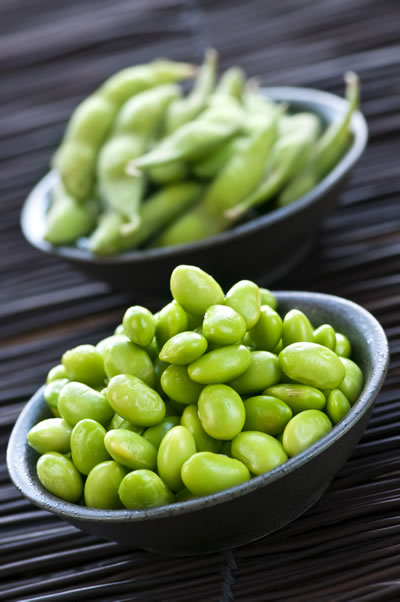
    Campodimele, Italy, a hilltop village south of Rome, has so many centenarians that it’s known in Europe as the “Village of Longevity.” Daily, its citizens enjoy a diet full of beans like lentils, chickpeas, and white beans.

    How to live to 100

    A few years ago, scientists identified five groups of long-lived elderly people (aged 70 and older) – Japanese in Japan, Swedes in Sweden, Anglo-Celtic people in Australia, and Greeks in both Greece and Australia – and observed them for the next seven years, tracking their health status and food choices among nine different categories: vegetables, legumes, fruits, nuts, cereals, dairy products, meat, fish, and monounsaturated fats. A total of 785 elderly people were followed.

    Eating Beans May Help You Live To 100Nowadays, there are many tasty varieties of beans on the market, not only staples like garbanzos but also choices like cranberry, cannellini, and fava beans. Eat beans and live longer, maybe even live to 100.

    The researchers found that legumes were the most important dietary predictor of survival among the elderly, “regardless of their ethnicity,” they wrote.* For every 20-gram increase in daily legume intake (20 grams is about three-quarters of an ounce), “there is a 7 to 8% reduction in mortality hazard ratio.”

    You’d be hard-pressed to find a more perfect food than beans. They are an excellent source of protein, vitamins, minerals, and complex carbohydrates. They’re very low in fat and virtually sodium-free. Plus, they’re filling.

    And fiber? Even the lowest-fiber bean puts most other foods to shame. A cup of high-fiber beans, like pinto or black beans, tallies up 16 grams of fiber.You’d have to eat about eight slices of whole-wheat bread to get the same amount of fiber. And it’s primarily cholesterol-reducing soluble fiber, which makes beans an excellent heart-healthy alternative to meat.

    Bean prep these days has gotten so much easier, thanks to the ready availability of cans of already-cooked beans, and you can find many “no salt added” varieties, which is really wonderful for keeping blood pressure under control. If all you can find is salted varieties, get rid of some of the salt by rinsing the beans through a colander.

    Here are some simple tips for how to get more beans into your life (and how to live to 100):
    • Toss a handful of beans into your salads (try the rich, buttery flavor of cannellini  beans)
    • Stir beans into your pasta sauces or soups. Make an easy, sensational bean soup by combining canned white beans, any vegetables you already have, low-sodium chicken stock, and chopped fresh Italian parsley. Season with no-salt-added Italian blend seasonings and 1 tablespoon of low-sodium soy sauce. Bring to a boil and simmer for about 15 minutes.
    • Fold beans, like black and pinto beans, into corn tortillas with salsa, shredded nonfat jalapeno cheese, and shredded lettuce.
    • Puree beans for dips. For a zesty Mexican-style dip, combine pinto beans, chopped red onion, fresh cilantro leaves, and lime juice in a food processor and blend. Whip up your own delicious and inexpensive hummus dip in a processor with just five ingredients: two garlics, one can of no-salt-added garbanzo beans, three-quarter teaspoon sesame oil, two tablespoons plain nonfat yogurt, and two tablespoons fresh lemon juice.
    Source:   https://www.pritikin.com/your-health/healthy-living/eating-right/539-want-to-live-to-be-100-eat-more-beans.html

    * Asia Pacific Journal of Clinical Nutrition, 2004; 13 (S): S126.

    _________

    Sunday, June 9, 2024

    Pentecost and God’s Gifts. PENTECOST PROVES THE SABBATH. Why Meat Is Bad For You- In 60 Seconds.

    .

    shavuot.png[7]Pentecost, Shavout, will start on the evening of Sat. 15th. June this year, and end on evening of 16th.

    For in depth look at the festival:

    https://thebiblicalnutritionist.com/why-christians-celebrate-shavuot/

    _________

    Pentecost and God’s Gifts

    Acts 2:38-39

    Then Peter said to them, “Repent, and let every one of you be baptized in the name of Jesus Christ for the remission of sins; and you shall receive the gift of the Holy Spirit. For the promise is to you and to your children, and to all who are afar off, as many as the Lord our God will call.”

    “Peter’s call to action also provides a list of some of God’s greatest gifts.

    The basic idea of repentance is “a reversal of thinking which changes one’s life” (The Nelson Study Bible, note on Matthew 3:2). When we see how our sins have gone against God’s perfect law, and that Jesus Christ gave His life to pay for our death penalty, it is only right to have godly sorrow and a fervent desire to change. But even repentance is a gift from God (Romans 2:4).

    It's time to get to know God. Start your 7-day guided Journey.After repenting, God wants us to demonstrate our commitment through water baptism, a symbol of the death of our old person. This is followed by God’s gift of forgiveness of sins and the gift of God’s Holy Spirit—a seed of spiritual life, a lifeline to God, a connection to the spiritual vine. Through the Holy Spirit, God makes available so many other priceless gifts.

    So, while Peter called on new believers to take action in this passage, it is really God whose acts of giving make the difference.

    For more about responding to God’s call to repent and be baptized, download our free booklet Change Your Life!”  From: https://lifehopeandtruth.com/bible/blog/pentecost-and-gods-gifts/

    _________

    PENTECOST PROVES THE SABBATH

    “In Leviticus chapter 23, God revealed a series of celebrations to be observed throughout the year. One of them is called Pentecost. It also goes by other names such as Shavuot, the Feast of Weeks, and First fruits (of the wheat harvest). It is a unique festival in two aspects. Firstly, it is the only holy day that does not fall on a specific day of the Hebrew Calendar. Instead, we must calculate its timing. Secondly, we must know when the weekly Sabbath occurs.

    The verses about this celebration are found in Leviticus chapter 23:15-22. We will look at a few of these verses: “15 And you shall count for yourselves from the day after the Sabbath, from the day that you brought the sheaf of the wave offering: seven Sabbaths shall be completed. 16 Count fifty days to the day after the seventh Sabbath; then you shall offer a new grain offering to the Lord…21 And you shall proclaim on the same day that it is a holy convocation to you. You shall do no customary work on it. It shall be a statute forever in all your dwellings throughout your generations.”

    Notice that Pentecost is the day after the seventh weekly Sabbath from Unleavened Bread. This means it always occurs on the first day of the week. Any church body who celebrates Pentecost on Sunday is acknowledging that the true Sabbath is from Friday sunset to Saturday sunset. This includes the Catholic Church. Some of their authors and clergy have admitted this!

    John Laux, an author of textbooks for Catholic schools, wrote: “If we consulted the Bible only, we should still have to keep holy the Sabbath Day, that is, Saturday, with the Jews, instead of Sunday…” (Laux, p 51).

    John Gibbons, a Catholic Cardinal, wrote: “But you may read the Bible from Genesis to Revelation, and you will not find a single line authorizing the sanctification of Sunday. The Scriptures enforce the religious observance of Saturday, a day which we never sanctify” (Gibbons, pp 72-73).

    The Catholic Church acknowledges the timing of the Biblical Sabbath. Any church that celebrates Pentecost on Sunday reflects the same belief. Pentecost proves the Sabbath.”

    Kelly McDonald, Jr, BSA President, www.biblesabbath.org

    ________

    Why Meat Is Bad For You- In 60 Seconds

    The Vegan Activist

    “We have been told that animal flesh is an essential part of a healthy diet, but meat consumption has been associated with almost all the major diseases. Meat is high in fat, saturated fat and cholesterol, which will increase the risk of heart disease and can cause other serious health problems like diabetes. It is high in animal-protein, which is far too acidic for the human body and has been linked to kidney disease, cancer and osteoporosis.

    Most meat also contains antibiotics and growth hormones, like oestrogen and testosterone, which can promote cancer growth. And fish is often contaminated with mercury, which is toxic, and can cause brain damage, and may also contribute to atrial fibrillation and fatal heart attack risk. Fortunately, there is no need to consume meat or other animal products, and a wholefoods, plant-based diet can provide all the essential nutrients for long-term health.”        

    RESEARCH REFERENCED: http://www.pcrm.org/health/health-top... http://cebp.aacrjournals.org/content/... http://nutritionfacts.org/topics/merc... http://nutritionfacts.org/video/uproo...   YouTube: / @theveganactivist

    ________

    Sunday, April 21, 2024

    Feasts in the Bible: Why Should They Matter to Christians? Q & A About the Christian Passover. The Role of Processed Foods in the Obesity Epidemic.

    .

    Feasts in the Bible: Why Should They Matter to Christians?

    Feasts in the Bible: Why Should They Matter to Christians?“Leviticus 23 records the “feasts of the Lord.” What are these feasts? Though often dismissed as “Jewish” holidays, are they also relevant to Christians?
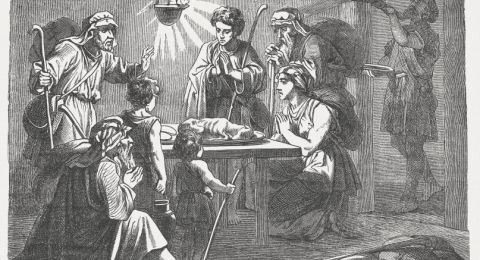
    God commanded Moses, “The feasts of the LORD, which you shall proclaim to be holy convocations, these are My feasts” (Leviticus 23:2; emphasis added).

    The word feasts in this passage means appointed times, specific observances God has designated as holy, or set apart. Their holiness comes from the tremendous spiritual significance God has attached to each.

    These seven biblical feasts build upon one another in meaning and progressively reveal how God will save the world. 

    Do you know what they are and what they mean?

    1. Passover

    As the first of God’s seven annual feasts, Passover sets the stage for every major event to follow. This foundational feast directs our attention to the need for blood to be shed in order for us to be saved from the penalty of death.

    It is a feast that commemorates the perfect sacrifice of the Son of God.

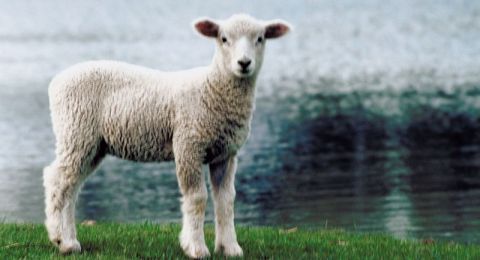
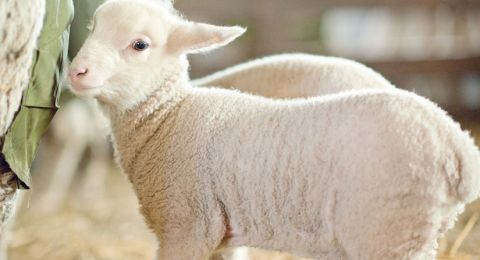
    • Historical: God devastated the Egyptians by killing all their firstborns, but He spared the Israelites through a sacrificial substitute. Passover was observed annually as a reminder of how the Israelites were saved from death by putting the blood of a lamb on their doorposts (Exodus 12:26-27).
    • Fulfillment: The sacrifice of Jesus Christ, “our Passover,” makes entrance into the New Covenant possible (1 Corinthians 5:7; Luke 22:20). Christians are to continue observing this day as a reminder of how the Savior’s sacrifice provides redemption from sins and eternal death (Hebrews 9:12).

    To learn more about this biblical feast, read “Passover: What Did Jesus Do for You?

    More at: https://lifehopeandtruth.com/god/blog/feasts-in-the-bible-why-should-they-matter-to-christians/?

    _______

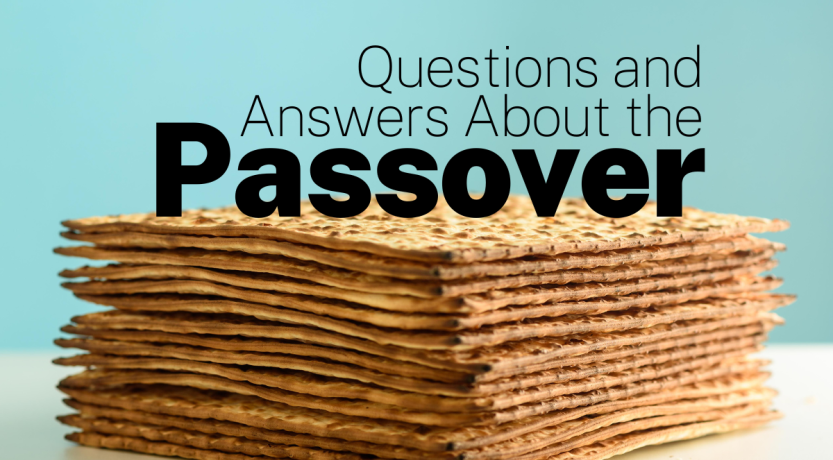
    Questions and Answers About the Christian Passover

    “This evening, many Christians will gather to observe the New Covenant Passover. This festival may seem mysterious to many. In this blog post, we address six frequently asked questions about the New Testament Passover.”

    Transcript of:  https://hubs.la/Q02twqnM0 

    “Most Christians believe Passover is a Jewish holiday. But should Christians observe Passover? This post covers this and other questions about the Christian Passover.Questions and Answers About the Christian Passover

    If you look at your calendar for March or April, you will probably see “Passover” marked. Most people think of Passover as just a Jewish national holiday that celebrates Israel’s departure from Egypt, as told in the book of Exodus. The Ten Commandments, the 1956 movie starring Charlton Heston and Yul Brynner, is often shown on network TV around this time of year.

    This may be the extent of your knowledge about the Passover. It is largely ignored in Christianity, which observes other spring holidays such as Easter, Lent and Good Friday.

    (To learn about the problems with Easter, read our article “Is Easter Pagan?”)

    But did you know that the Passover is found throughout the Bible—both in the Old Testament and New Testament? So why don’t most Christians celebrate Passover? Should they?

    This post will answer some frequently asked questions about the Passover.

    Passover Question 1: What does Passover commemorate? Doesn’t it celebrate the Israelites being “passed over” and protected from the 10th plague in Egypt?

    Yes, when the Passover was introduced, it commemorated the night God performed the 10th and final plague against ancient Egypt. God caused the firstborn of Egypt to die—a plague that probably took millions of lives throughout the land. God would spare the Israelites from this plague only if they painted lamb’s blood on the doorposts of their dwellings (Exodus 12:7, 12-13).

    Throughout their generations, the Israelites were to celebrate the Passover to remember how God delivered them from slavery in Egypt. That evening, the Israelites were also instructed to prepare a special meal and get ready to leave Egypt the next day (verses 8-11). God declared this observance was “the LORD’S Passover” (verse 11). He commanded them to observe it as “a memorial,” “a feast to the LORD throughout your generations” and “an everlasting ordinance” (verse 14).

    Years later, God reinforced the observance in the formal list of God’s festivals given to Moses: “On the fourteenth day of the first month at twilight is the LORD’S Passover” (Leviticus 23:2, 5).

    Throughout their generations, the Israelites were to celebrate the Passover to remember how God delivered them from slavery in Egypt. This was the original meaning of the observance. Jews around the world understand and observe this.

    These events are also meaningful for Christians, who are called “the Israel of God” (Galatians 6:16) and are delivered from the slavery of sin (Romans 6:7). But, as we will see, the Passover holds even deeper significance for Christians today.

    Passover Question 2: Did Jesus celebrate Passover?

    Yes, Jesus observed the Passover throughout His life.

    Luke records that Jesus and His family observed the Passover faithfully: “His parents went to Jerusalem every year at the Feast of the Passover” (Luke 2:41).

    One of the most famous accounts of Jesus’ childhood—when He got separated from His parents and they frantically looked for Him, eventually discovering Him discussing the Bible in the temple—took place just after Jesus and His family had observed the Passover in Jerusalem (verses 42-50).

    Jesus observed the Passover up until the day He died—literally. He observed the Passover with His disciples the night He was betrayed and arrested (Matthew 26:2, 17-19; Luke 22:15).

    To learn more about the feast days Jesus celebrated throughout His life, read “Hidden in Plain Sight: The Festivals Jesus Celebrated.”

    Passover Question 3: Is there a connection between Jesus and the Passover?

    Yes, the Bible makes a strong link between the Passover and the death of Jesus Christ. Putting the scriptures together, we see that the events of the first Passover foreshadowed Jesus Christ’s death. Notice the following parallels:

    Putting the scriptures together, we see that the events of the first Passover foreshadowed Jesus Christ’s death. The Israelites were in bondage to Egypt (Exodus 1:14). All human beings are in slavery to sin (Romans 6:16-17, 20; 7:23; 2 Peter 2:19).

    The Israelites were spared from death that night only through the sign of the Passover lamb’s blood on their doorposts (Exodus 12:22-23). Christians are freed from death only through Jesus’ shed blood as the “Lamb of God” (John 1:29; Ephesians 1:7; 2:13; Hebrews 9:14, 22; 1 Peter 1:19).

    As a result of the plague against Egypt and the Israelites’ being spared through the Passover lamb’s blood, Israel was freed from slavery and started a new life by coming out of Egypt (Exodus 12:31-41). As a result of Jesus Christ’s sacrifice, Christians can have freedom from the captivity of sin and live a new way of life (Romans 6:4, 6, 18, 22; Ephesians 4:24).

    These are just a few of the parallels between the Exodus Passover and Jesus Christ. It is also important to remember that Jesus observed the Passover on the evening before His crucifixion and that His sacrifice occurred on the daylight portion of the Feast of Passover (Matthew 26:18-19).

    But perhaps no scripture proves the link better than 1 Corinthians 5:7: “For indeed Christ, our Passover, was sacrificed for us.”

    To learn more about the connection between Jesus and the Passover, read “Passover: What Did Jesus Do for You?” and “Why Is Jesus Called the Lamb of God?

    Passover Question 4: Did the early Church observe the Passover?

    Yes, the New Testament is very clear that Christians in the early Church observed the Passover.

    We must first understand that they didn’t observe it in the same way Israel did in the past. At His last Passover, Jesus Christ instituted new symbols to reflect His sacrifice for sins. These new symbols were a new element He added to the Passover for New Covenant Christians.

    We read about the institution of the New Covenant Passover in Matthew 26.

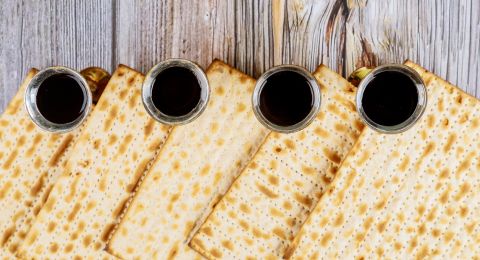
    Unleavened bread now symbolized the “body” of Jesus Christ (verse 26).

    Wine now symbolized Jesus’ “blood” (verse 28).

    Jesus commanded His disciples to “do this in remembrance of Me” (Luke 22:19). He also instituted a foot-washing ceremony to teach His people the importance of humility and service (John 13:3-15). (To learn more about the meaning behind washing feet, read “What Is the Meaning of John 13:14—“Wash One Another’s Feet”?”)

    The Bible shows us that the early Church continued observing the Passover in obedience to Christ (1 Corinthians 5:7-8; 11:23-26). Today, Christians around the world observe the New Testament Passover in March or April (on the 14th day of Nisan on the Hebrew calendar) to remember and commemorate Jesus Christ’s death and its significance to our lives.

    In 2024 the New Covenant Passover ceremony will be observed after the sun sets on April 21 (on the Gregorian calendar). 

    You can learn about the dates of the biblical festivals for the next few years at “Festival Calendar.”

    The fact that early Christians observed the Passover on the 14th of Nisan is a generally recognized historical fact. Unfortunately, the Roman Church eventually substituted Good Friday and Easter Sunday for the biblical Passover—a change that is still accepted and practiced by the majority of mainstream Christianity today.

    To learn more about the change from Passover to Easter, read our article “Christian Festivals.”

    Passover Question 5: Isn’t the Christian ceremony of bread and wine called the Lord’s Supper or Communion?

    This name, “The Lord’s Supper,” is a common title given to partaking of bread and wine in the Protestant community. Some denominations call this ceremony Eucharist (Greek for “give thanks”) or Communion (Latin for “fellowship” or “sharing”). There is much variance in how these ceremonies are kept. Some keep these ceremonies weekly; some, monthly; some, quarterly; and others, annually.

    But none of these names are the biblical name for the ceremony Jesus instituted on the last evening of His life. The Gospels are very clear that He was observing the Passover (Matthew 26:18; Mark 14:14; Luke 22:8).

    If you read through each Gospel record of this evening, you will notice that Jesus specifically said He was changing the symbols of the bread and wine—but He never said He was changing the name from Passover to anything else.

    The Lord’s Supper? If you search the Bible, you will find the phrase “The Lord’s Supper” is only used once (in 1 Corinthians 11:20). But when you actually read the verse, you may be surprised that the verse is actually saying not to use that title for the observance. “Therefore when you come together in one place, it is not to eat the Lord’s Supper” (verse 20, emphasis added).

    The apostle Paul was correcting the Corinthian congregation for not properly keeping the Passover ceremony with reverence and solemnity. These Christians were coming to the Passover and selfishly eating their own food while others went hungry. Some were even getting drunk (verse 21).

    So, instead of calling this observance “the Lord’s Supper,” Paul was actually reminding them that it wasn’t! They were to come together to solemnly partake of the bread and wine symbols—not to eat supper (verses 27-29).

    Communion? The title “Communion” is taken from 1 Corinthians 10:16: “The cup of blessing which we bless, is it not the communion [the “fellowship” or “sharing”] of the blood of Christ?” This is not a designation of a title for the event, but a statement that the symbols of bread and wine are necessary to have a relationship, or fellowship, with Jesus Christ. The Passover is necessary for truly knowing and having a relationship with Jesus Christ.

    To learn more about the proper name for this important observance, read “The Last Supper or Passover?

    Passover Question 6: How do you observe Passover as a Christian?

    As we have seen, the New Testament shows that Jesus Christ instituted new symbols for the Passover on the night He was betrayed and arrested. Those symbols are foot washing, unleavened bread and wine. In order to keep the Passover as a Christian in the 21st century, there are four basic requirements for baptized members of the Church of God:

    • Observe it on the same night Jesus observed it, on the anniversary of the night of His betrayal and arrest. That is the evening of the 14th of Nisan on the Hebrew calendar. In 2024, that corresponds to the evening after the sun sets on April 21. (April 22 is the daylight portion of the Passover in 2024.)
    • Wash the feet of another baptized Christian also observing the Passover.
    • Eat a small, broken piece of unleavened bread that symbolizes Christ’s broken and beaten body.
    • Drink a sip of red wine that symbolizes Christ’s shed blood.

    The ideal way to observe the Passover is with other converted Christians who are partaking of the Passover in a ceremony conducted by a minister of Jesus Christ. 

    For more insight on keeping the Passover today, read “Should Christians Celebrate the Passover?

    Finding more answers about the Christian Passover

    If you are just learning about the Passover, we hope these answers have been helpful and informative. We encourage you to continue studying the origins of the popular holidays celebrated in the spring (in the northern hemisphere) and the deep meaning of the festivals found in the Bible.”  From: https://lifehopeandtruth.com/god/blog/questions-and-answers-about-the-passover/?

    ___________

    The Role of Processed Foods in the Obesity Epidemic

    “The rise in the U.S. calorie supply responsible for the obesity epidemic wasn’t just about more food but a different kind of food.”

    Transcript of video at: https://nutritionfacts.org/video/the-role-of-processed-foods-in-the-obesity-epidemic/?

    Below is an approximation of this video’s audio content. To see any graphs, charts, graphics, images, and quotes to which Dr. Greger may be referring, watch the above video.

    “The rise in the number of calories provided the U.S. food supply since the 1970s is more than sufficient to explain the entire obesity epidemic. Similar spikes in calorie surplus were noted in developed countries around the world in parallel with, and presumed primarily responsible for, the expanding waistlines of their populations. By the year 2000, the United States was producing, after taking exports into account, 3,900 calories for every man, woman, and child—nearly twice as much as many people need.

    It wasn’t always this way. The number of calories in the food supply actually declined over the first half of the twentieth century, only starting its upward climb to unprecedented heights in the 1970s. The drop in the first half of the century was attributed to the reduction in hard manual labor. The population had decreased energy needs, so they ate decreased energy diets. They didn’t need all the extra calories. But then, the so-called energy balance flipping point occurred, when the “move less, stay lean” phase that existed throughout most of the century turned into the “eat more, gain weight” phase that plagues us to this day. So, what changed?

    What happened in the 1970s was a revolution in the food industry. In the 1960s, most food was prepared and cooked in the home. The average “not working” wife spent hours a day cooking and cleaning up after meals. (The husband averaged nine minutes.) But then, a mixed blessing transformation took place. Technological advances in food preservation and packaging enabled manufacturers to mass-prepare and distribute food for ready consumption. The metamorphosis has been compared to what happened a century before in the industrial revolution, with the mass production and supply of manufactured goods. This time they were just mass-producing food. Using new preservatives, artificial flavors, and techniques such as deep freezing and vacuum packaging, food corporations could take advantage of economies of scale to mass produce ready-made, durable, palatable edibles that offer an enormous commercial advantage over fresh and perishable foods.

    Think ye of the Twinkie. With enough time and effort, any ambitious cook could create a cream-filled cake, but now they are available around every corner for less than a dollar––or delivered straight to your door for 30 cents! If every time someone wanted a Twinkie, they had to bake it themselves, they’d probably eat a lot less Twinkies. The packaged food sector is now a multi-trillion dollar industry.

    Or, consider the humble potato. We’ve long been a nation of potato-eaters, but they were largely baked or boiled. Anyone who’s made fries from scratch knows what a pain it is, with all the peeling, cutting, and splattering. But with sophisticated machinations of mechanization, french fry production became centralized, and could be shipped at -40o to any fast food deep fat fryer or frozen food section in the country to become America’s favorite vegetable. Nearly all the increase in potato consumption in recent decades has been in the form of french fries and potato chips.

    Cigarette production offers a compelling parallel. Up until automated rolling machines were invented, cigarettes had to be rolled by hand. It took 50 workers to produce the number of cigarettes a machine could make in a minute. The price plunged, and production leapt into the billions. Cigarette smoking went from relatively uncommon to almost everywhere. In the 20th century, the average per capita cigarette consumption rose from 54 a year to 4,345 cigarettes a year by the time of the 1964 Surgeon General’s report. The average American went from smoking about one cigarette a week to a half-pack a day.

    Tobacco itself was just as addictive before and after mass marketing. What changed was cheap, easy access. French fries have always been tasty, but they went from being rare, even in restaurants, to omnipresent access around every and each corner (likely next to the gas station where you can get your Twinkies and cigarettes).

    The first Twinkie dates back to 1930, though, and Ore-Ida started selling frozen french fries in the 1950s. There has to be more to the story than just technological innovation…which we’ll explore, next.:  From: https://nutritionfacts.org/video/the-role-of-processed-foods-in-the-obesity-epidemic/?

    _________

    LEARN MORE

    __________

    Tuesday, March 5, 2024

    5 Things Christ Will Undo and Redo at His Return. Should Christians Keep Mardi Gras? How does Plant-Based Eating Benefit Your Health?

    .

    5 Things Christ Will Undo and Redo at His Return

    5 Things Christ Will Undo and Redo at His Return “Mankind has done much damage to this earth, but God has a plan to fix man’s many mistakes. What will Christ “undo” and “redo” when He returns to earth?

    As a software developer, I consider “undo” to be an essential tool, and I use it often. When making changes to software, I occasionally realize I made a mistake. The easiest way to fix that mistake is to undo the changes I made and go back and do it right. I am fortunate to use an editor that remembers changes I made even after it has been closed.

    Wouldn’t life be great if we could undo our past mistakes and have a redo? Though life doesn’t provide us such an option, God has a plan that will undo the damage we humans have done to this earth, to one another and to ourselves. His plan is in motion and soon will be evident to all mankind when Jesus Christ returns to earth to establish God’s Kingdom here.

    Under Christ’s perfect government, mankind will learn to “redo” life, but this time following the perfect laws of God.

    Let’s consider some of the major things that will be undone and redone after Christ’s return.

    1. Swords and plowshares

    Undo: War between nations.

    Redo: Peaceful, mutually beneficial relationships between nations.

    After Christ returns, He will teach the nations His law, which is based on love Just before Christ returns to the earth, there will be a period of intense worldwide warfare when people will be beating “plowshares into swords” and “pruning hooks into spears” (Joel 3:10). This is ancient language describing implements of food production (which sustains life) being turned into implements of warfare (which destroys life).

    But after Christ returns, He will teach the nations His law, which is based on love (2 John 1:6). When godly love is understood and practiced on an international level, the nations will turn “swords [back] into plowshares” and “spears [back] into pruning hooks” (Micah 4:3).

    2. Food shortages

    Undo: Hunger and malnutrition affecting millions of people.

    Redo: An abundance of food where everyone’s needs are met.

    As we covered above, after Christ returns, the nations will no longer devote their economic resources to warfare and defense, but will instead redirect their economies to food production. Christ will restore an emphasis on agriculture that will allow the nations to sustain healthy populations. The prophet Amos foresaw a world where the “plowman shall overtake the reaper” (Amos 9:13).

    3. Dangerous animals

    Undo: The instinctual nature in many wild animals that makes them dangerous to humans and each other.

    Redo: A transformed nature of wild animals that makes them docile, tame and harmless.

    In the creation described in the first two chapters of Genesis, there was perfect harmony between the animals and mankind. But when Adam and Eve sinned and were kicked out of the Garden of Eden, they found many wild animals were now hostile to human beings. Christ will change the violent natures of animals so they will dwell safety with one another and with mankind (Isaiah 11:6-9).

    4. Knowledge of God

    Undo: Rejection of God and His laws.

    Redo: Acceptance of God and His laws in every aspect of life.

    In the book of Romans, the apostle Paul described the current state of humanity as being in rebellion against God (Romans 1:28). But Christ will make God’s beneficial laws undeniable. He will lead an educational system based on the ways of God. It will eventually lead to the knowledge of God covering the earth “as the waters cover the sea” (Isaiah 11:9). The prophet Jeremiah foresaw a time when everyone will know God (Jeremiah 31:34).

    5. God’s Sabbath and festivals

    Undo: Ignorance of God’s Sabbath and festivals.

    Redo: Knowledge and observance of the Sabbath and festivals.

    Within God’s law are holy times: the weekly Sabbath (Exodus 20:8-11) and annual festivals (Leviticus 23). Not only are these days when we are to worship God, they also reveal the major stages of His plan. These days will be observed by the entire world after Christ returns (Isaiah 66:23, ZechariaThe Mystery of the Kingdom free bookleth 14:16).

    This covered just a few aspects of our world that will be undone and redone after Jesus Christ returns. To learn more about this future time, download our free booklet The Mystery of the Kingdom.   From: https://lifehopeandtruth.com/prophecy/blog/5-things-christ-will-undo-and-redo-at-his-return/?

    ________

    Should Christians Keep Mardi Gras?

    Transcript of video at: https://www.ucg.org/beyond-today/beyond-today-dailys/should-christians-keep-mardi-gras

    Mardi Gras has its roots in religious tradition. But what does the Bible say?

    [Steve Myers] “Colorful costumes and masks and pageantry. That's all surrounding Mardi Gras. Mardi Gras is one of those traditions where...    sometimes I'll talk about the fact that it reminds me of the three Ds. There's dancing in the streets, there's drunkenness and debauchery. That kinda categorizes Fat Tuesday. That's literally what the term Mardi Gras means. Religiously it's called Shrove Tuesday because that's the day before Lent. Lent of course being more of a Catholic kind of a tradition that's rooted in pagan holidays. And what would happen at Lent is that you would give up something for Lent. And so before you give something up, you certainly want to overindulge and fatten up and, you know, get into food and drink and all those things so that you can then put that behind you and repent for the rest of this religious season.

    But when you really think about the implications of that religiously, it's really ridiculous. In modern carnival traditions and celebrations all around the world and whether it's in New Orleans or Rio or Nice, France. These are areas where they'll often celebrate for weeks, leading up to that time. When we lived in New Orleans for a while, I remember they talk about Fat Tuesday, and then instead of Ash Wednesday, they'd call it Trash Wednesday because there was so much junk leftover from these Mardi Gras celebrations. Well, is that something we should have any part in? These Catholic traditions that are not really based in the Bible at all. I mean, there's a couple of interesting aspects when you consider this. I was thinking of the passage that's found in Romans 13:13. It says the basic things. As Christians it says, "Let's walk properly in the day, not in revelry or drunkenness."

    Of course on TV, they'll show the parties and the fun but they don't show all of those types of things because that would certainly take away from the tourism of all those areas of the world. Romans goes on, "don't walk in lewdness and lust, not in strife and envy." And it's kind of a reminder, those are the things we should give up, but that's not good enough. This whole aspect of Mardi Gras and Lent, I think it is something that miss directs us to what the truth of God's word really is. Yes, we've got to give up lewdness and drunkenness and revelry and all those types of things that are against God's way of life. But Romans points out, it's not just about giving something up. We have to put something on and so verse 14 in Romans 13 says, "Put on the Lord Jesus Christ, make no provision for the flesh to fulfill its lust."

    And so that's an important aspect of Christianity, true Christianity. We not only put off those things that are wrong, but we've got to take it a step farther. We've got to put on everything that's right. So when you begin to hear about Mardi Gras celebrations, and all of those types of things in this upcoming Lent season that this religious world will keep, remember, it's not rooted in the Bible. In fact, let it remind you of the fact we need to put off the ways of the world, but more importantly then, put on Jesus Christ.”  From: https://www.ucg.org/beyond-today/beyond-today-dailys/should-christians-keep-mardi-gras

    ________

    How does Plant-Based Eating Benefit Your Health?

    father holding broccoli high-five daughter

    Whether you’re considering eating less meat or giving it up entirely, the benefits are clear: less risk of disease and improved health and well-being. Consuming less meat decreases the risk of:

    Meat is often loaded with cholesterol and saturated fat, which have starring roles in poor heart health. And processed meats, including deli meat, bacon and sausage, often have too much sodium and other additives, and should be limited. However, if you want to include meat into your eating plan, choose lean meats. Be sure to include skinless poultry, seafood, fish, beans, nuts and legumes, too, because they are healthy sources of protein.

    Diets or eating styles that do not or restrict meat include:

    • Vegan — entirely plant-based, excluding meat, fish, dairy, eggs, honey and any product that comes from an animal.
    • Vegetarians — a plant-based diet, but may include dairy and eggs.
    • Flexitarian — a vegetarian diet that sometimes indulges in meat or fish but mostly sticks to plant foods.
    • Plant-based — a style of cooking and eating that emphasizes plant-based foods but is not strictly limited to them. Meat may be included, but it’s usually not the main feature of the meal.

    Lean protein

    Not eating meat does not mean you can’t get enough protein in your diet. In fact, many people eat more than enough protein, especially from animal foods. There are plenty of other foods that can provide you with protein, such as tofu, edamame, quinoa, sorghum, lentils, chickpeas and most beans and legumes. And there are many good sources of protein from vegetables, too, including artichokes, asparagus, broccoli, Brussels sprouts, collards, corn, peppers, spinach, sweet potatoes and turnip greens. Did you know that every plant we eat has some protein in it? So, the more vegetables you eat, the more protein you’ll consume.

    Not all plant-based diets are healthy

    Don’t replace meats with highly processed meat substitutes or “vegan junk food.” Instead choose high-quality, nutrient-dense plant-based foods. A recent study showed that eating primarily these types of food, such as vegetables, fruits, whole grains, beans, legumes and nuts, was associated with a lower risk of death from cardiovascular diseases. The researchers concluded that even if you’ve eaten a poor diet for half your life, adding more healthy plant foods as an adult can help reduce your risk.

    Making the switch

    Going plant-based is not as difficult as you may think. In fact, getting started can be as easy as 1-2-3!

    1. Search for some vegetarian recipes that are easy to prepare and sound appealing to you and your family.
    2. Choose ingredients and flavors you know your family will enjoy.
    3. Try meatless Mondays! Experiment with a meatless meal once a week, then add more days as you get used to it.”          

    Written by American Heart Association editorial staff and reviewed by science and medicine advisors. See our editorial

    From: https://www.heart.org/en/healthy-living/healthy-eating/eat-smart/nutrition-basics/how-does-plant-forward-eating-benefit-your-health

    _________