Showing posts with label Thanksgiving. Show all posts

Sunday, December 1, 2024

“In Everything Give Thanks” (Really?)

.

“In Everything Give Thanks” (Really?)

“Paul wrote some inspiring and beautiful sentiments, such as, “In everything give thanks.” But is that literally realistic?

“In Everything Give Thanks” (Really?)Paul exhorts us to give thanks in everything. Really? Everything? Christians experience some truly awful, unfair and distressing things. Terminal illnesses. Accidents. Deaths of loved ones. Financial hardships. Trials and temptations of all kinds.

Did Paul mean to give thanks for these things?

The context of “in everything give thanks”

Soon after Paul had established the congregation in Thessalonica, he was driven from town by threats of an angry mob. His first letter to the Thessalonians was written soon after this to answer questions and encourage the young church facing persecution and mourning the loss of members who had died.

Paul set the tone by letting the Thessalonians know that he gave “thanks to God always for you all” (1 Thessalonians 1:2).

Part of Paul’s concluding exhortation included:

“Rejoice always, pray without ceasing, in everything give thanks; for this is the will of God in Christ Jesus for you” (5:16-18; see also our articles “Four Ways to Find Joy in Trials” and “Pray Without Ceasing”).

Thanks in, not necessarily thanks for

Paul said to give thanks “in everything”—in every situation. That doesn’t mean we must immediately feel gratitude for the bad things that happen to us.

For example, Job blessed God in spite of his terrible trials, not for them (Job 1:13-22).

King David, also, in the midst of feeling overwhelmed with trials (Psalm 69:1-2) still said, “I will praise the name of God with a song, and will magnify Him with thanksgiving” (verse 30).

How do we give thanks in everything?

See the eternal benefit of trials

Even our trials can help develop our Christian character, making us more like God and preparing us for our eternal destiny.

Trials produce perseverance, character and hope (Romans 5:3-4). They are the crucible for refining genuine faith (1 Peter 1:6-8). They allow the growth of the fruit of righteousness (Hebrews 12:11).

Focus on the gifts from the Giver of every good gift

All of the good things we have are ultimately from God, but we can so easily take them for granted in the good times. Paul encourages us to pray with thanksgiving and focus on the positive (Philippians 4:6-8).

And lifting our eyes to focus on our Creator and His future plans for us can help us transcend our current troubles. We can’t fully imagine what wonders God has in store, but His Holy Spirit can help give us a vision of the wonderful future.

God is the Giver of “every good gift and every perfect gift” (James 1:17). He wants to give us forgiveness, His Spirit and eternal life (John 3:16-17; Acts 2:38). He wants us to serve the rest of humanity with Him (Revelation 5:10). He wants us to be His children and to experience joy and pleasures forevermore (1 John How to Pray. Download Free Booklet3:1-2; Psalm 16:11)!

The ultimate perspective

Paul put things in perspective: “For our light affliction, which is but for a moment, is working for us a far more exceeding and eternal weight of glory” (2 Corinthians 4:17; see also Romans 8:31-39).

The comparatively short time trials afflict us now is nothing compared to living forever as God’s children!

Study more in our articles “What Is the Real Purpose of Life?” and “Praise God.” From: https://lifehopeandtruth.com/life/christian-living/in-everything-give-thanks-really/?

________

Wednesday, November 22, 2023

Should Every Day Be a Day of Thanksgiving?

.

Should Every Day Be a Day of Thanksgiving?

“The Thanksgiving holiday is widely publicized and celebrated by millions of Americans. But shouldn’t we be thankful every day?

I plan to eat very well this Thanksgiving, as I do every Thanksgiving. I will indulge myself in mashed potatoes and gravy, savor the sweet potato casserole, and eat a week’s worth of protein in turkey. Don’t even get me started on the pies.

Calories don’t count on Thanksgiving, right?

There are many things people do on Thanksgiving besides just eating. Some spend extra time with family members they don’t normally get to see, go around the table listing things each person is thankful for, and (hopefully) begin the meal with a prayer thanking God for His many blessings.

Those are all good things, right?

Is Thanksgiving more than food and football?

But there are also other things people do on this day that aren’t always so positive: extreme overeating (bordering on gluttony), watching football on TV more than speaking to one another, or rushing out to beat others to the best shopping deals.

For many, Thanksgiving is just about food and entertainment. It’s even commonly called “Turkey Day,” as if it’s a day to celebrate an avian life-form. It’s become more about enjoying blessings than giving thanks for them.

Admittedly, it may be unfair to try to stuff (pun intended) an enormous ongoing personal responsibility into just one day out of the year. Is there more to thankfulness than just this one day of the year?

What thanksgiving actually is

The Bible has a lot to say about thanksgiving—that is, the act and mind-set of thankfulness. From God’s perspective, thanksgiving isn’t the fourth Thursday in November; it is a constant way of thinking that God wants us to practice every day.

By giving thanks to God in prayer, we show Him that we acknowledge that all the good things we have in life did not just randomly show up on our doorstep—but are from Him In addition, modern science has shown that being a thankful person is connected to better mental and physical health.

That’s why we should be practicing thanksgiving 365 days a year (and, yes, that also includes the fourth Thursday of November).

One of the primary ways to practice thanksgiving daily is to give thanks to God for what He has given us every day in our prayers.

Studying the Psalms (many of which are actual prayers recorded for us to learn from) can teach us many ways we can integrate thanksgiving into our prayers. (For example, see Psalm 26:7; 50:14; 69:30; 95:2; 100:4; 107:22; 116:17; 147:7; and so many more.)

By giving thanks to God in prayer, we show Him that we acknowledge that all the good things we have in life did not just randomly show up on our doorstep—but are from Him.

Here are some things we can give thanks to God for regularly:

Practical tips on being thankful

So what are some practical ways we can expand thanksgiving from a one-day-a-year thing to an ongoing practice in our life?

  1. Every day in prayer, give thanks to God for blessings we have. Don’t let a single prayer go by without giving God thanks for something He has done (or provided) for us. 
  2. Every day in our conversations, thank someone for something he or she did (or said) that brought something positive into our life or the lives of others. People positively impact us every day, but we don’t always acknowledge it. Start acknowledging it!
  3. Consider blessings we have that we don’t think about often. We can put our stress and difficulties in perspective by actively thinking about all the blessings we have received. Some people find it helpful to write those blessings down in a list. When we look at our list, we will probably find blessings that millions (maybe billions!) of people on the planet do not have. That shouldn’t make us feel better about ourselves. Quite to the contrary, it should help us realize that thanksgiving is designed to lead us to be merciful and giving to others.
  • Are you thankful for consistent electricity? Remember, more than a billion people can’t say the same.
  • Are you thankful for having two loving parents alive? Remember how many billions of people can’t say this, and how many desperately would want this to be true.
  • Are you thankful for a big Thanksgiving dinner in November? Remember how many billions of people in the world will never eat a meal like that in their lives.

Each of us probably has unlimited things to be thankful for!

The benefits of being thankful

Thanksgiving is a way of thinking and a constant action God is looking for in all of us. It helps us to realize God’s power and working in our lives, and it should remind us to be merciful, kind and generous to others. It actually improves our mental and physical well-being. 

Thanksgiving is not just a day in November; it is a way of life. Let’s live it.”  From: https://lifehopeandtruth.com/life/blog/should-every-day-be-a-day-of-thanksgiving/?

__________

Sunday, November 12, 2023

Dangerous Emotions: Pride. Thanksgiving Is More Biblical Than Christmas. It’s Time to Ban These Toxic Chemicals from Our Food.

.

Overcoming Dangerous Emotions: Pride

Overcoming Pride“The world doesn’t recognize pride as a problem, so how do we overcome something so sly and seemingly harmless?

It is easier to see pride in others than to recognize it in ourselves.      

One of the hardest things to recognize and confront in ourselves as Christians is our pride. For some of us, it has become a major part of our lives, sometimes without our even knowing.

The Bible warns time and time again against pride creeping into our lives. Perhaps the most well-known warning is in Proverbs 16:18: Pride goes before destruction, and a haughty spirit before a fall (emphasis added throughout).

Pride is different from the other emotions discussed in this series (with the possible exception of anger) because we don’t feel that anything is wrong with us. When overwhelmed with other emotions, we know for sure that something is wrong and we need to change. When overwhelmed with pride, we usually think that we are just fine, but it’s just that everyone else has to change.

How do we recognize pride, and how do we combat it once we know we have a problem?

Why is pride spiritually dangerous?

God expects Christians to be confident and strong in their beliefs and actions. However, the Bible is full of warnings against pride, which can manifest itself as undue confidence and strength in ourselves—not in God.

Pride can lead us to:

  • Seek recognition to exalt ourselves.
  • Treat others unfairly.
  • Accept no responsibility for wrongdoing.
  • Speak constantly without listening.
  • Be only concerned with ourselves.

These are all actions that we know from the Bible are not Christlike. The apostle John warns, “For all that is in the world—the lust of the flesh, the lust of the eyes, and the pride of life—is not of the Father but is of the world” (1 John 2:16).

Notice 1 Peter 5:5: “Likewise you younger people, submit yourselves to your elders. Yes, all of you be submissive to one another, and be clothed with humility, for God resists the proud, but gives grace to the humble.’”

Pride makes it impossible to be clothed with humility. Christians cannot fool themselves into excusing their pride, since the Bible plainly says that God will resist the proud. Pride hinders our demonstration of the spiritual fruits of love and goodness, so our thinking must change.

Identify the cause of prideful thinking

Until we admit to ourselves that we have a problem, we will make no progress in overcoming pride. How do we know if we have a problem with pride?

Some possible questions to ask ourselves to find out and then identify the cause could be: “How often do I admit I was wrong?” “Why is it so hard for me to admit when I’m wrong?” “How often do I need to be seen or heard by others to feel good?” “Why do I want others to see or hear me?” “How many of my Facebook posts are directed toward me and my opinions?” “Why do I have to talk about myself and my opinions so much to others?” “How much do I brag about my accomplishments or do things so others will see me doing them?” “Why do I need others to validate me?”

Analyze and compare the prideful thinking to reality

When we start to really examine our thoughts, it is shocking how easily pride can be found. When we examine our motives honestly, we may find thoughts like: “That was my idea, but no one is giving me credit.” “I’ll just keep talking since everyone else here is so boring.” “I don’t need your help! I can do this on my own, thank you very much.” “I’m the man! Look at me, everybody!” You are telling ME what to do? How dare you!”

Though we may never “say” these thoughts, in an honest evaluation we may find that we definitely think them or act on them.

We can justify and rationalize our prideful thoughts, but when we write them down and truly look at them, we will see they are so very shallow, arrogant, boastful, self-centered and jealous.

How do such prideful thoughts compare with reality?

  1. Is it fair/rational to believe that we know everything about every subject ever discussed? Is it fair/rational to believe we have to constantly let everyone know what an “expert” we are?
  2. Is it fair/rational to think that expressing our opinions about everything and dominating the conversation is a good thing? God tells us: “For in the multitude of dreams and many words there is also vanity. But fear God” (Ecclesiastes 5:7). “In the multitude of words sin is not lacking, but he who restrains his lips is wise” (Proverbs 10:19).
  3. Is it fair/rational to think that we are too good to need help from other people or too “whatever” to be associated with certain people or activities? Is it fair/rational to think that our talents, achievements or wealth in this life are solely through our own strength and excellence, rather than from God?
Replace the irrational with rational

The first place to start is to continually remind ourselves that God created us from dust. God remembers that we are dust, so we have to as well. Without going to the other extreme (self-degradation), we must always keep rational thoughts in our head about our limitations and our total reliance on God.

Our irrational desires of wanting more and more attention for ourselves must be replaced with godly desires of giving more attention to others. Instead of asking, “How can I make myself look good?” we can ask, “How can I build up others through recognizing and praising them for their good qualities, and sometimes through self-sacrifice for them?”

Satan wants us to think of ourselves only, while God wants us to have as much concern for others as we do for ourselves (Leviticus 19:18).

What if I’ve already lost control?

If we have a wonderfully clear moment in which we realize we are being prideful, we can immediately pray to God, thanking Him for showing us something that many people never see in themselves. We then can start backing away from the “me, me, me” mentality and move closer to the “love for others as much as we love the self” attitude, clearly demonstrated by Jesus Christ.

Satan wants us to continually believe we have no problem in the area of pride, but after we examine our thoughts and seek God’s help, we can move toward gaining control and overcoming pride.

This is the seventh in an eight part series on Overcoming Dangerous Emotions. To read part 6, see “Overcoming Depression.” To continue the series, see part 8 “The First Month.”

From: https://lifehopeandtruth.com/change/blog/overcoming-pride/

________

Three reasons why Thanksgiving is more biblical than Christmas:

“America just largely ignored its most biblical holiday: Thanksgiving.

Christmas shopping ad campaigns like Black Friday, Cyber Monday, Green Tuesday—even Black Friday Month—dominated advertising and even news coverage at the end of November. But so little attention was given to Thanksgiving.

Some Christians denounce the commercializing of the religious meaning of Christmas, but sadly, they miss many vital points of truth

1. Jesus Christ did give thanks to God the Father.

When He fed the 4,000 and the 5,000 hungry men plus women and children, Jesus gave thanks and blessed the food (Matthew 15:30-39; John 6:1-14). At the end of His ministry He specifically thanked God for the unleavened bread and wine of the Passover ceremony that commemorated the sacrifice of His own life for our sins (Luke 22:14-23).

The principle of thanking God for all our physical and spiritual blessings and for life itself is woven throughout the Bible. As national holidays America’s and Canada’s Thanksgiving Days are based on honoring the blessings that God has given their people. ( Is Thanksgiving Rooted in a Biblical Festival? )

2. Jesus Christ did not command that His birthday be observed.

Part of developing Christianity decided to observe Christ’s day of birth, but "Christ-mass," as it came to be called, was not widely observed until A.D. 354! However, Jesus, His disciples and the apostles did not observe His birthday.

Instead of His day of birth, Christ commanded His followers to observe the day of His death—the Passover (1 Corinthians 11:26). Unfortunately, Christianity long ago rejected the Passover and substituted Easter—a day named after and honoring the pagan fertility goddess Ishtar. This is something that Jesus doesn’t approve of!  ( Easter: Masking a Biblical Truth )

3. Jesus Christ was not born on December 25.

Despite the popular idea, the shepherds did not stay out at night with their flocks in mid-winter. It got too cold for that during winter near Bethlehem! Also, the Christmas-observing part of Christianity had no clear idea when He was born, so they suggested dates from all over the calendar during the early centuries after Christ.

However, had they more carefully read the details in the Bible, those early church leaders could have found that although the exact day of His birth is not revealed, Jesus of Nazareth was born in the autumn—not in the winter. ( Biblical Evidence Shows Jesus Wasn't Born on December 25 )”         From: https://www.ucg.org/beyond-today/blogs/thanksgiving-vs-christmas

________

It’s Time to Ban These Toxic Chemicals from Our Food

November 6, 2023

“Phthalates, a type of chemical used in food packaging and production materials, can leach into food and drinks and cause serious harm to human health. For years, the FDA has illegally ignored Earthjustice’s petition to ban these chemicals. In 2021, we sued to force the FDA to decide on banning phthalates. Last year it declined to do so, so we need your help in telling the FDA to get these hormone-disrupting chemicals out of our food.

This case is part of Earthjustice’s broader fight to remove toxic, dangerous products from our daily lives.

Phthalates cause harm — and they’re everywhere.

  • Phthalates leach from plastic wrapping into the foods they touch. They’re especially likely to leach into fatty foods like cheeses and meats. (Click here for a full list.)
  • In 2017, for example, lab testing found phthalates in 10 varieties of macaroni and cheese powders.
  • Even at low levels, phthalates can interfere with human hormones. Animal studies have linked phthalates to a host of serious health concerns, including birth defects, allergies and damage to the male genitals.
  • Phthalates also harm the developing brain, leading to reduced IQ and attention and behavior disorders in children.
  • Babies, young people, people of color in all age groups, and economically insecure people all face heightened risks of serious health problems from phthalate exposure.
  • More than 75 percent of Americans have phthalates in their bodies, according to the CDC.

The FDA has delayed measures for regulating phthalates for years.

  • Federal law prohibits the use of chemical additives in food unless the available scientific evidence demonstrates that they will not harm human health. This mandate also applies to chemicals used in food packaging and food-production materials if the chemicals are expected to migrate into food — as is the case with phthalates.
  • Yet the FDA allows 30 different types of phthalates to be used in food packaging and processing equipment.
  • In 2016, a coalition of advocacy groups petitioned FDA to ban phthalates as food additives.
  • Alongside the petition, the FDA received an overwhelming response from nearly 200,000 people, all of whom strongly urged the agency to withdraw its approval for phthalates in food.
  • Many commenters were concerned about the effects phthalates have on children — and rightly so. Others mentioned their battles with cancer and other diseases, and their desire to spare others similar pain.
  • Despite a legal mandate to make a final decision within 180 days, FDA sat on the petition for years.

The FDA’s decision means phthalate contamination will continue.

  • Advocates sued the FDA in federal court in December 2021, forcing the agency to finally make a decision.
  • In May 2022, the FDA declined to ban phthalates in food packaging. At the same time, the agency acknowledged that its safety assessment for food-contact uses of phthalates is out of date and requested new information from the public.

Top scientists agree we already have all the data we need. Tell the FDA to get phthalates out of our food once and for all! 

Take phthalates out of our food”

?  See more at: https://earthjustice.org/brief/2023/its-time-to-ban-these-toxic-chemicals-from-our-food

__________  

Tuesday, October 3, 2023

Is Karma in the Bible? Feast of Tabernacles? An Attitude of Gratitude. Bacon & Botulism

.

Is Karma in the Bible?

“In recent years, the Eastern concept of karma has become popular in Western culture. Can the idea of karma be harmonized with the Bible? Is karma biblical?” 

Is Karma in the Bible?

“Cause and effect is not karma

However, the Bible does teach the principle of cause and effect, which some incorrectly confuse with karma. There are two basic kinds of cause and effect:

1. Cause and effect by God’s blessings or punishment. The Bible is clear that God has the power to bless and punish. God told Israel He’d bless them if they obeyed and curse them if they rebelled (Leviticus 26; Deuteronomy 28). He exercised that authority with ancient Israel and will punish the nations in the end time for their wickedness and refusal to repent (Revelation 16:8-9).

God also promises to bless those who seek and obey Him (Psalm 1:1-2; Proverbs 10:6; James 1:25). But those blessings aren’t always immediately visible. Many seemingly innocent people have suffered hard lives throughout history (John 16:33; Hebrews 11; James 1:2-3). But the Bible promises that ultimately “all things work together for good” for God’s faithful people (Romans 8:28).

The Bible also shows that God is extremely merciful and is not constantly doling out physical punishment based on what we deserve (Matthew 5:45; Hebrews 2:1-4). In fact, considering the state of our world’s morality, we should be immensely thankful God doesn’t operate through karma.

2. Cause and effect through natural consequences. Both the Bible and common sense show that cause and effect operate naturally in our lives. The Bible expresses it this way: “Whatever a man sows, that he will also reap” (Galatians 6:7). In simple terms, decisions and actions often have natural consequences.

No amount of good deeds can offset our sins and save us from the death penalty. Forgiveness of sin can only occur through repentance and the blood of Jesus Christ. Much of the book of Proverbs is about cause and effect. For example, the natural consequence of being lazy is poverty, while diligence and hard work lead to financial stability (Proverbs 6:9-11; 10:4; 13:4; 20:13; 24:30-34).

These natural consequences aren’t determined by mysterious karmic energies, but by simple cause and effect. Practicing biblical principles positions a person for success because God’s ways work. However, in a world guided by Satan and human nature, sometimes the righteous suffer because of the sins of others (John 16:33; Romans 8:18; 1 Peter 3:17).

The Bible also shows that in this life sometimes the wicked do prosper for a time (Psalm 73:3; Jeremiah 12:1-3).

Though the Bible clearly teaches the principle of cause and effect, it is not a biblical equivalent to karma.

Why is the idea of karma dangerous?

Karma is clearly a man-made belief foreign to the Bible. Consider three reasons the idea of karma is spiritually dangerous and deceptive:

1. Karma replaces the all-powerful God with the universe. The power behind karma is usually described as the universe. Chopra.com describes it this way: “The Universe will bring back whatever acts you committed or feeling you caused in another person.” This worldview credits the physical creation as the ultimate arbiter of morality and reward and punishment.

But the Bible shows God created the universe (Genesis 1:1; Isaiah 42:5). God, not the universe or energy, is the “rewarder of those who diligently seek Him” (Hebrews 11:6). Jesus Christ, not the universe or karma, will ultimately “judge the world in righteousness” (Acts 17:31).

Karma is another way mankind has deceptively credited the creation with power that belongs only to God (Romans 1:25).

2. Karma contradicts biblical repentance. Many believe that “bad karma” can be erased only by outweighing it with “good karma.” This idea contradicts the biblical teaching on sin.

The Bible teaches that the ultimate penalty of sin is death—not physical curses (Romans 6:23). No amount of good deeds can offset our sins and save us from the death penalty. Forgiveness of sin can only occur through repentance and the blood of Jesus Christ (Acts 3:19; 1 John 1:7). A Christian must absolutely strive to obey God, but not as an attempt to outweigh the bad on the scales of karma.

Some sins do have ongoing physical consequences, but thankfully, after God forgives us, we no longer have to worry about the ultimate consequences of our sins.

3. Karma distorts the proper motivation for doing good. Karma is just one of many man-made attempts to encourage people to live morally. It plays on human nature by incentivizing doing good to avoid bad things coming back upon us later.

At its core, the concept of karma is driven by selfishness.

The Bible, on the other hand, teaches that morality is defined by God and should be driven by selflessness. Jesus taught that our ultimate motivation should be love—for God first and then for other human beings (Matthew 22:36-39). Paul described the proper motivation for everything we do this way: “The purpose of the commandment is love from a pure heart, from a good conscience, and from sincere faith” (1 Timothy 1:5).

Christians shouldn’t do good to avoid bad things coming on them. Christians should do good out of genuine love because it’s the right thing to do—regardless of the consequences.

So, is karma in the Bible? No. Karma is unbiblical and contradicts God’s Word in multiple ways.”      This is the last part of article at:  https://lifehopeandtruth.com/change/the-church/world-religions/karma-in-bible/?

______

Why Would You Observe the Feast of Tabernacles?

This year, Sukkot starts on the evening of Friday, 29 Sept and ends on Friday, 6 Oct 2023.

“The Feast of Tabernacles (Sukkot) represents the peace, prosperity and righteousness of the coming Kingdom of God, but how is it relevant to the Christians today?”

Transcript of video at: https://www.ucg.org/beyond-today/beyond-today-daily/why-would-you-observe-the-feast-of-tabernacles

[Steve Myers] Someone asked me the other day, "Why would you observe the Feast of Tabernacles? Is that a Christian thing?" Absolutely, it is. We follow the example of the New Testament Church. The church in the 1st Century kept and observed, celebrated, the Feast of Tabernacles. So, what is this feast? Well, it's definitely listed in Scripture as one of the feasts of the Lord. (Lev. 23:1-44) I don't know if you've ever checked that out, but it's the feast that God has established. It's one of His Holy Days. And so, for a period of time, we celebrate the Feast of Tabernacles for seven days. A complete festival. 

Seven is often a number of completeness because it represents that time, in God's plan, that has a deep spiritual meaning. Jesus Christ will return to this earth, 1 Thessalonians 4 spells that out completely, 1 Corinthians 15 as well. And so, the Feast of Tabernacles is representing that time when Christ will return as King of kings and Lord of lords. I know you've probably heard those classic choral selections that sing about that. He's King of kings and Lord of lords and He is returning. Well, the Feast of Tabernacles points to that time that Christ will literally come back to earth.

We can read about that in Revelation 5. Revelation 5, in fact, beginning in verse 10, it tells us, "He has made us kings and priests to our God, and we shall reign on earth." Christ will return and annihilate the kingdoms of man. Mankind will no longer be in charge. There will no longer be chaos and confusion in this world. Jesus Christ will establish righteous godly government. And for a thousand years, He will reign on this earth.

Perhaps you've even prayed about this symbolic meaning of the Feast of Tabernacles. You know, that model prayer, sometimes call the Lord's Prayer that Christ taught the disciples to pray. Perhaps you've said that prayer or parts of that prayer. It has that part that says, "Thy kingdom come, thy will be done." Christ will come back and establish His kingdom. It will come. And, of course, the rest of that prayer says, "On earth as it is in heaven." So the Feast of Tabernacles pictures that amazing time of peace and prosperity and righteous government that Christ Himself will come and establish right on this earth.

Check out The Feast of Tabernacles, find out the deep spiritual meaning behind God's purpose and His plan, and this vital step in His plan for salvation for all mankind.” From: https://www.ucg.org/beyond-today/beyond-today-daily/why-would-you-observe-the-feast-of-tabernacles

________

An Attitude of Gratitude: Sukkot for Christians

“In a festival similar to Thanksgiving, the Biblical feast of Sukkot (pronounced sue-COAT) gives us a chance to focus on our blessings from God and His desire to be with His people. Also called the Feast of Booths, Tabernacles, or Ingathering, it’s one of the seven commanded feasts in Leviticus 23.”  More at: https://hebrewrootsmom.com/an-attitude-of-gratitude-sukkot-for-christians/

_________

Bacon & Botulism

Transcript of video at: https://nutritionfacts.org/video/bacon-and-botulism/

“The nitrite preservatives in processed meats such as bologna, bacon, ham, and hot dogs form carcinogenic nitrosamines, but also reduce the growth of botulism bacteria—forcing regulators to strike a balance between consumers risking cancer, or a deadly form of food poisoning.

There are literally hundreds of studies on the link between cancer and cured meats like bologna, bacon, ham, and hot dogs. But just for a taste, just over the last year or so, processed meat consumption was significantly associated with bladder cancer, endometrial cancer, prostate cancer, thyroid cancer, and then all the way down the digestive tract: throat cancer, esophageal cancer, more esophageal cancer, more esophageal cancer and stomach cancer, colon cancer, and rectal cancer. And then, for a ten-for-one deal, processed meat was significantly related to the risk of stomach, colon, rectal, pancreatic, lung, prostate, testicular, kidney, more bladder cancer—and leukemia, as well. That’s why the official recommendation is to try to “avoid processed meats” entirely.

With concern over the potential danger of nitrosamines growing, consumer groups, such as the Center for Science in the Public Interest, a wonderful group, petitioned the USDA as far back as 1972 to ban, or at least greatly reduce, the nitrite in cured meats. The USDA denied the petition, citing nitrite’s role in the prevention of botulism bacteria that can grow inside vacuum-packed meats. They had to weigh the risk of cancer with the risk of consumers getting a deadly food poisoning bacteria from lunchmeat.

You know, in 2011, the National Pork Board officially changed their quarter-century old slogan from “Pork: the other white meat” to “Pork: Be Inspired.” Maybe for bacon, they should have considered the tagline: “Cancer or Botulism, take your pick.” From: https://nutritionfacts.org/video/bacon-and-botulism/

To see any graphs, charts, graphics, images, and quotes to which Dr. Greger may be referring, watch the above video. This is just an approximation of the audio contributed by MaryAnn Allison.

__________

Sunday, January 1, 2023

The Roots and Fruits of New Year’s Eve. Christmas Is Not for Kids! Avoiding Pork Tapeworm Parasites And Epilepsy.

.

The Roots and Fruits of New Year’s Eve

The Roots and Fruits of New Year’s Eve“Some of the customs may seem crazy or quaint, but what are the real origins and results of the New Year’s holiday?

I admit it. I have been up at midnight on New Year’s Eve a few times. Not celebrating exactly. In fact, most of those times I was part of a volunteer security force on the campus where I went to college—which happened to be along the Rose Parade route in Pasadena, California.

Our job was to be alert to criminals, vandals and even people camping out along the parade route and searching for anything they could burn to keep warm. You might be surprised that it gets fairly cool in January in Southern California. Of course, it is much warmer there than in New York’s Times Square (where it averages 33.7 degrees Fahrenheit at midnight) and other northern gathering places where people count down to the new Roman year.

It makes you wonder: How did New Year’s Eve come to be celebrated in the winter and at midnight? Blame it on the ancient Romans.

Julius Caesar, the calendar fixer

Many ancient societies began their new year in the spring. But by the time of Julius Caesar, the Roman calendar was off. Way off. To get the calendar to line up with the seasons, Caesar had to add 90 days!

History.com explains, “Over the centuries, the calendar fell out of sync with the sun, and in 46 B.C. the emperor Julius Caesar decided to solve the problem by consulting with the most prominent astronomers and mathematicians of his time. He introduced the Julian calendar, which closely resembles the more modern Gregorian calendar that most countries around the world use today.

“As part of his reform, Caesar instituted January 1 as the first day of the year, partly to honor the month’s namesake: Janus, the Roman god of beginnings, whose two faces allowed him to look back into the past and forward into the future. Romans celebrated by offering sacrifices to Janus, exchanging gifts with one another, decorating their homes with laurel branches and attending raucous parties.”

Beliefnet.com also notes that New Year’s is associated with the winter solstice and is “an ancient holiday with deep spiritual roots. … Ancient Romans celebrated with six days of carousing that would probably be familiar to us today.”

Customs and superstitions

From its ancient origins, a wide variety of traditions and superstitions have developed around the world. Here is just a sampling.

“In Ecuador, people make dummies, stuffed with straw, to represent the events [and people, such as politicians and pop culture icons] of the past year. These ‘[año] viejo’ effigies are burned at midnight, thus symbolically getting rid of the past” (Beliefnet.com). Some even try to jump through the flames 12 times!

MarthaStewart.com describes another jumping tradition: “Many Danish people celebrate the New Year by jumping off chairs at the stroke of midnight. Leaping is said to banish bad luck and bring good fortune into the new year. They also traditionally throw plates at neighbors’ doors to symbolize their friendship. The person with the most broken plates is said to have the most friends.”

On NPR.org, Maria Fe Martinez describes another Latin American New Year’s tradition: “If you want to have a very lucky year, you have to wear yellow underwear. And if you want to have a very passionate year, you wear red underwear. …

“And you can get them all over town. Like, if you’re driving in your car, you’re going to see a street vendor selling yellow underwear, which is hilarious. Right after Christmas, they show up.”

The International Business Times reports that 44 percent of Americans say they will kiss someone at midnight. But why?

According to Livescience.com, “Puckering up at the stroke of midnight is a venerable tradition with ancient roots. Many cultures considered the transition from the warm to the cold seasons to be an intensely vulnerable time, when evil spirits could run amok, Aveni [author of The Book of the Year: A Brief History of Our Seasonal Holidays] said.

“Many of our traditions, including kissing, originally come from the English tradition of ‘saining,’ or offering blessing or protection, during the period of Yuletide, Aveni said. (Yuletide was originally a pre-Christian Germanic festival that eventually became synonymous with Christmastide in Europe.)”

New Year’s crime rates

In addition to its pagan roots, the fruits of this holiday are not good. For example, according to Allprobailbond.com, “the holidays are the busiest time of year for the bail bond industry.” Why?

“• Increased alcohol consumption. … Driving under the influence is the leading cause for New Year’s Eve arrests. …

“• Increased emotions. Some people are very unhappy during the holidays. Domestic violence often increases during the holiday season as well as self-inflicted wounds. Consumption of alcohol also increases violent acts.”

What does the Bible say?

The Bible gives its own list of meaningful annual celebrations, but Jan. 1 is not on the list. It’s definitely not God’s new year; He set the first month of the year to begin in what we call March or April. The Bible gives its own list of meaningful annual celebrations, but Jan. 1 is not on the list. It’s definitely not God’s new year; He set the first month of the year to begin in what we call March or April (Exodus 12:2; Deuteronomy 16:1). And the Bible warns against getting ensnared by customs that are based on pagan religions. We are not to ask, “How did these nations serve their gods? I will do likewise” (Deuteronomy 12:30).

Superstitions and customs that may seem quaint or harmless to most people today can be repulsive to God who knows their roots and their fruits.

Playing with paganism isn’t cute—it is corrosive to our relationship with the true God. When God calls Himself a jealous God,” it’s actually a sign of His love and desire for the best for us (Deuteronomy 6:14-15).

And consider the apostle Peter’s call to avoid sinful celebrations where there is “lewdness, lusts, drunkenness, revelries, drinking parties, and abominable idolatries” (1 Peter 4:3). Peter acknowledged that our friends may think it strange we no longer party with them, but in the end we must answer to God.

For all these reasons, celebrating the pagan holiday of New Year’s Eve is not pleasing to God.

From Holidays to Holy Days. Download Free BookletLearn more about what God says in our free booklet From Holidays to Holy Days: God’s Plan for You.

_______

Christmas Is Not for Kids

Christmas Is Not for Kids“Christmas traditions focus heavily on children, but they actually teach many negative character lessons. Discover why Christmas is bad for your kids.

Even though Christmas is technically celebrated on Dec. 25 by the majority of the world, people start preparing for it months in advance. Shortly after Thanksgiving children start sending letters off to Santa Claus, who also starts appearing in stores and malls. Parents start shopping for presents on Black Friday and Cyber Monday and may start setting up Christmas trees and lights around the same time. Most popular Christmas traditions revolve around children.

There are many problems with Christmas, which we explain in detail in many of our materials. But many people will counter those reasons with the excuse: “But it’s for the kids!”

Well, here is a proposition that may be surprising: Christmas is not for kids.

Christian parents should keep in mind the instruction to “train up a child in the way he should go” (Proverbs 22:6). When we really analyze Christmas traditions, we discover they teach children lessons that lead them in the wrong direction. 

Four reasons Christmas is not for kids

1. Christmas teaches children it’s okay to lie.

While children should be taught about the birth of Jesus Christ, it shouldn’t be taught alongside a holiday based on many lies about His birth. You can learn about those lies in our article “The Birth of Jesus.” Simply put, if children are taught about Christ’s birth from Christmas, they are being taught a totally inaccurate story of what really happened and when it happened!

But the facts of Christ’s birth aren’t the only lies surrounding Christmas. Christmas traditions emphasize the story of Santa who lives at the North Pole, of elves who make toys for him and of flying reindeer that help him deliver toys to the world’s children in a single night. These are all myths—lies!

Parents teach these lies while also expecting their children to be truthful. They fail to see that “harmless” lies teach children that some lies are acceptable. Instead of teaching myths, it’s much healthier for parents to teach what God says in His Word about lying and why it is forbidden in the 10 Commandments. When parents actively teach the values of truth and honesty, it doesn’t make sense to teach the various Christmas myths.

Christmas Is Not for Kids2. Christmas teaches children greed and selfishness.

Commercials entice children with the latest toys, electronics and fashion during the Christmas shopping season. The words “I want” and “mine” are often the first words that children learn, but during this time of the year those words are magnified! Children are not really focused on Christ during this season that is supposedly all about Him, but instead on what they will get. This leads to covetousness (which breaks the 10th Commandment). Are we seeing a pattern here?

Jesus warns us, “Beware of covetousness, for one’s life does not consist in the abundance of the things he possesses” (Luke 12:15). Teaching children to give and be content with what they have is a good antithesis of the getting focus of Christmas.

3. Christmas devalues faith.

Millions of children around the world request gifts from Santa Claus and wait for their request to be answered on Christmas morning. Sometimes they are then disappointed by not getting what they asked for and then later learning that Santa really doesn’t exist.

Not only do Christmas traditions ask children to put faith in a nonexistent man, but they also set them up to question God. How can they develop true faith when their original faith was built on a lie?

When we really analyze Christmas traditions, we discover they teach children lessons that lead them in the wrong direction.4. Christmas is used as a bargaining chip.

A 2009 survey by kidsturnscentral.com asked kids, “What does Christmas mean to you?” A 15-year-old in Kansas responded, “A time where we pretend that our good behavior for the day will carry over to the rest of the year.”

Think about it: Christmas teaches children to be good because “Santa Claus is coming to town.” In other words, be good so you will get presents.

According to the Bible, we should choose to do good because it is the right thing to do. Ecclesiastes 12:13 teaches us to “fear God and keep His commandments, for this is man’s all.” Children must be taught that they shouldn’t just obey God to getbut instead because it is the right thing to do all the time.

Teach truth, not lies

Christmas compromises some of the most basic and essential biblical principles: honesty, generosity, and faith. Along with its unbiblical and pagan origins, parents should reconsider exposing children to Christmas and instead teach them how to worship and live according to the Bible.”

We have recently published a parenting resource manual to assist parents who are serious about teaching their children about God’s way of life. You can download free lessons at “Encourage, Equip & Inspire.”

To learn more about improper and proper worship of God, request our free booklet From Holidays to Holy Days: God’s Plan for You.    From: https://lifehopeandtruth.com/relationships/blog/christmas-is-not-for-kids/

________

Avoiding Epilepsy Through Diet

Transcript of YouTube video at: https://nutritionfacts.org/video/avoiding-epilepsy-through-diet/

Below is an approximation of this video’s audio content. To see any graphs, charts, graphics, images, and quotes to which Dr. Greger may be referring, watch the above video.

“Avoiding pork tapeworm parasites (cysticercosis) is not as easy as just avoiding pork!

Another review last year confirmed that pork tapeworms taking residence inside our brains “is a significant public health issue within the United States.” At first, though, clinical diagnosis can be challenging. Initial presentations of the disease are often vague complaints like headaches, weakness, dizziness, high blood pressure.

In terms of treatment, in a series of more than a hundred cases published this year, although antiparasitic deworming drugs were found to be effective, about 10% of victims require brain surgery—what’s called an open craniotomy, where you have to go in and basically just dig ‘em out.

They can get into our muscles, too. This is an X-ray of someone’s leg, and you can see how infested the muscle is. And that’s why we can get it from pork—because it gets into muscles.

But what if you don’t eat pig muscles? Well, to all the smug non-pork-eaters out there, if we can find pork tapeworms in the brains of Orthodox Jews in Brooklyn, we can find pork tapeworms in anyone.

They weren’t sneaking off for schnitzel. It was their pork-eating domestic houseworkers preparing their food. When 1,700 members of the local synagogue were tested, 1% tested positive. The researchers suggested that those “to be employed as domestic workers or food handlers should be screened for tapeworm infection via examination of three stool samples for [tapeworm] eggs.”

So to avoid the #1 cause of adult-onset epilepsy, we may want to not eat pork, and not eat anything made by anyone who eats pork.” 

_____

Sunday, November 20, 2022

America’s Forgotten Christian Heritage. When He Had Given Thanks. How Effective Is Chemotherapy?

.

America’s Forgotten Christian Heritage
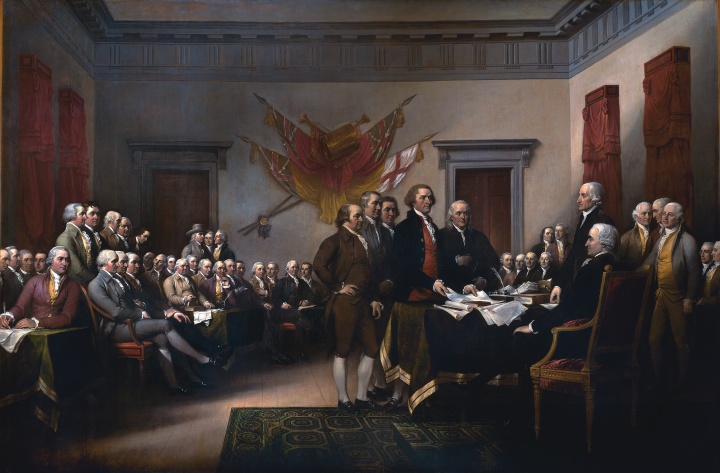
This famous painting in the rotunda of the U.S. Capitol building depicts the presentation of the draft of the Declaration of Independence to Congress on June 28, 1776.“As the U.S. holiday of Thanksgiving comes around again, we are reminded of America’s founding and how far the nation has drifted from the devotion to God on which it was founded.

Paintings courtesy of the Architect of the Capitol 

This famous painting in the rotunda of the U.S. Capitol building depicts the presentation of the draft of the Declaration of Independence to Congress on June 28, 1776.

The wall of the rotunda of the U.S. Capitol Building in Washington, D.C., features a series of eight massive paintings illustrating key events in the founding of America. One of these depicts the Pilgrims who were first on the Speedwell before transferring to join others on its sister ship the Mayflower. Prominent figure William Brewster holds open the Bible to the clear words “The New Testament of Our Lord and Savior Jesus Christ.” Above them on the sail are written the words “God with us,” shortened from the Pilgrim motto, “In God we trust, God with us.”

Of course, “In God we trust” is America’s national motto even today—imprinted on all U.S. currency and coins. Yet new polls reveal that trust in God and in the Bible have plummeted in recent years. But this result has been a long time coming—the end of a leftist, secular humanist agenda to banish God from the public sphere.

For many decades we have seen a concerted effort to play down the role of the Bible and religion in early America. Now things have gone much further, with the nation’s founders denigrated as evil racists. Of course, they were not perfect men, even by the world’s standards. But they established a nation that has overall been a great blessing to the world.

Yet as they would be first to point out, this achievement was not their doing but God’s. They regularly acknowledged Him and, along with the wider populace, sought out His direction and blessing. Let’s take a closer look at the Christian underpinnings of America’s founding and consider the depths to which the nation has now sunk—and what that means for the future.

Restoring the Sovereign

The Pilgrims and other Puritan settlers sought to construct a model Christian society. Conrad Cherry, in his 1971 book God’s New Israel: Religious Interpretations of American Destiny, states: “They believed that, like Israel of old, they had been singled out by God to be an example for the nations (especially for England). With their charter and company in America, the Puritans could in effect construct a republic independent of an English crown that had not allowed them the freedom of their experiment at home” (p. 27).

Setting up and spreading the Kingdom of God, as they understood it, was central to their national purpose. The 1643 Articles of Confederation for Massachusetts, Connecticut, New Plymouth and New Haven declared, “We all came into these parts of America with one and the same end and aim, namely, to advance the kingdom of our Lord Jesus Christ, and to enjoy the liberties of the gospel in purities with peace.”

To this end, the Puritans set up a theonomist state—one based on the laws of God as found in the Bible. The 1644 New Haven Charter was written with the following stated purpose: “that the judicial laws of God, as they were delivered by Moses . . . be a rule to all the courts in this jurisdiction . . .”

Fast-forward a century to the Continental Congress deciding to break away from British rule, the group signing a world-changing document “appealing to the Supreme Judge of the world . . . with a firm reliance on the Protection of Divine Providence.” That document, the Declaration of Independence, meant independence from Great Britain but direct dependence on God.

Unbelievable as it may seem today, the United States of America was formed not as a secular republic but one recognizing God as its unseen Ruler. In The Nature of the American System, R.J. Rushdoony writes: “The concept of a secular state was virtually non-existent in 1776 as well as in 1787, when the Constitution was written, and no less so when the Bill of Rights was adopted. To read the Constitution as the charter for a secular state is to misread history, and to misread it radically. The Constitution was designed to perpetuate a Christian order.”

As the Declaration of Independence was being signed, Samuel Adams, who was the driving individual behind the American cause, stated it clearly: “We have this day restored the Sovereign to whom all men ought to be obedient. He reigns in heaven, and from the rising to the setting of the sun, let His Kingdom come” (quoted by Peter Marshall and David Manuel, The Light and the Glory, 1977). No one in the room objected.

The faith of the Founding Fathers

Many have tried to argue that the Founding Fathers were mostly deists. Deism is the belief in an impersonal God who set everything in motion but does not actively intervene in His creation. However, M.E. Bradford in A Worthy Company proves that up to 52 of the 55 framers of the Constitution were professing Christians.

On July 4, 1821, John Quincy Adams, the sixth president of the United States, declared: “The highest glory of the American Revolution was this: it connected, in one indissoluble bond, the principles of civil government with the principles of Christianity. From the day of the Declaration . . . they [the American people] were bound by the laws of God, which they all, and by the laws of the Gospel, which they nearly all, acknowledged as the rules of their conduct.”

George Washington, the “Father of Our Country,” spoke in his 1789 inaugural address of “my fervent supplications to that Almighty Being who rules over the universe, who presides in the councils of nations, and whose providential aid can supply every human defect, that His benediction may consecrate to the liberties and happiness of the people of the United States a government instituted by themselves for these essential purposes . . .”

In 1787, James Madison, the “Father of the Constitution” and fourth president of the United States, said: “We have staked the whole future of American civilization, not upon the power of government, far from it. We have staked the future . . . upon the capacity of each and all of us to govern ourselves, to sustain ourselves, according to the Ten Commandments of God.”

John Adams, a loud Christian voice in the early United States and its second president, believed that the nation should be governed by the Bible, writing: “Suppose a nation in some distant Region, should take the Bible for their only law Book, and every member should regulate his conduct by the precepts there exhibited. Every member would be obliged in conscience to temperance and frugality and industry, to justice and kindness and charity towards his fellow men, and to piety and love, and reverence towards Almighty God.

“In this commonwealth, no man would impair his health by gluttony, drunkenness, or lust . . . No man would steal or lie or any way defraud his neighbour, but would live in peace and good will with all men—no man would blaspheme his maker or profane his worship, but a rational and manly, a sincere and unaffected piety and devotion, would reign in all hearts. What a Eutopia, what a paradise would this region be” (Diary, Feb. 22, 1756).

The religious views of revolutionary America’s “Renaissance man,” Benjamin Franklin, are fiercely debated today. Many have stated that Franklin died a deist. But this is simply not true. While it’s clear from his Autobiography that he adhered to deism in his early years, he became disenchanted with it later in life.

In his famous speech to the Constitutional Convention on June 28, 1787, Franklin violated a fundamental tenet of deism—God’s non-involvement—when he said: “. . . The longer I live, the more convincing proofs I see of this truth—that God governs in the affairs of men. And if a sparrow cannot fall to the ground without his notice, is it probable that an empire can rise without his aid? We have been assured, sir, in the sacred writings, that ‘except the Lord build the house, they labour in vain that build it.’ I firmly believe this . . .” He followed this with a proposal to hire a clergyman to open every session of Congress with prayer.

It should be noted that none of the Founding Fathers has been so misrepresented as Thomas Jefferson, who’s also charged as being a deist. Yet this is the same Jefferson who concluded his second presidential inaugural address by saying, “I shall need . . . the favor of that Being in whose hands we are, who led our fathers, as Israel of old, from their native land and planted them in a country flowing with all the necessaries and comforts of life.”

In 1815 he stated: “We are not in a world ungoverned by the laws and the power of a Superior Agent. Our efforts are in His hand, and directed by it, and He will give them their effect in His own time.” Clearly both Franklin and Jefferson believed in a personal, intervening God, and they both were supportive of the Christian religion.

Jefferson’s phrase about a “wall of separation between church and state” has been wrested from its context. He was speaking to a Baptist audience and was likely referring to a similar phrase by early Baptist leader Roger Williams—the “wall” referring to protecting the Christian church from the ravages of the world, not protecting the state from influence by Christian principles. The Founding Fathers did not want the establishment of a national state church, but they very much wanted the involvement of God and Christian believers in the governance of the country.

In an 1892 U.S. Supreme Court case, Church of the Holy Trinity v. United States, the justices reached this decision: “Our laws and our institutions must necessarily be based upon and embody the teachings of the Redeemer of mankind. It is impossible that it should be otherwise; and in this sense and to this extent our civilization and our institutions are emphatically Christian.”

Reaping national blessings—and curses

As a result of so many in early America relying on God, the nation experienced great blessings. We find this principle laid out by God in 1 Samuel 2:30: “. . . Those who honor Me I will honor, and those who despise me shall be lightly esteemed.” But the strong morality and devotion to God that characterized the early United States were not just happenstance. God brought it about as a necessity.

As explained in our free study guide The United States and Britain in Bible Prophecy, America was destined to separate from Great Britain and become a great nation in its own right, helping to fulfill the promises to the biblical patriarch Abraham of national blessings and of being a great blessing to the world (be sure to request your free copy).

This required that America have high moral standards and a devotion to the God of the Bible. God would not pour out His wonderful national blessings on a despicable populace that would misuse and squander all His gifts. Of course, there were problems and sins among the people, but not the widespread immorality and contempt for God we see today.

God turned the hearts of the early Americans toward Him to a significant degree so that He could bless them. We find a similar instance of this in Scripture, when Judah’s King Hezekiah sought to restore the worship of God after a period of idolatry and rebellion. As we’re told, “the hand of God was on Judah to give them singleness of heart to obey the command of the king and the leaders, at the word of the Lord” (2 Chronicles 30:12).

And so God did with the United States—which was richly blessed and in turn became a blessing to the world at large. But that was then. Today many Americans have rejected any sense of godly morality. They have increasingly turned away from Him, rejecting Him from having a role in their lives or society as a whole. Many outright blaspheme Him. So where does that leave America today?

Leviticus 26 and Deuteronomy 28 both start with a list of wonderful blessings that God would bestow on Israel for remaining faithful to Him in obeying His laws. But then these chapters move to list terrible curses for unfaithfulness and disobedience. Be sure to read these chapters with a mind toward where America has been and the road it is now heading down.

The curses read like many of today’s headlines. Many other sobering prophecies foretell terrible destruction to come as a consequence of our national sins. Again, see our free study guide and take heed.

We should pray for the nation and other nations—that all will come to repentance. But realize that they are set on a course they are unlikely to turn from until prophesied end-time calamities strike, which they assuredly will. But you can heed God right now and make sure that you personally are obedient to Him. As He promises, “Those who honor Me I will honor.”

As Thanksgiving approaches, reflect on the amazing origins of America as a God-honoring nation and be thankful for our blessings. But also grieve over the terrible wrongs we see. And pray for the day when the true Kingdom of God will come with the return of Jesus Christ and untold blessings will overflow the world.”  From: https://www.ucg.org/beyond-today/beyond-today-magazine/americas-forgotten-christian-heritage

________

When He Had Given Thanks

John 6:11

And Jesus took the loaves, and when He had given thanks He distributed them to the disciples, and the disciples to those sitting down; and likewise of the fish, as much as they wanted.

“Giving thanks for our food has a long history. Here Jesus Christ, the Son of God, not only gave thanks for the five barley loaves and two small fish, He gave a miracle that multiplied this lad’s lunch into enough food to feed thousands! This is the only miracle of Christ that is recorded in all four Gospels.

Every meal we eat is a gift from God and a reminder of the miracles of creation. So it is only fitting that we follow Christ’s example of thanking God for the food He provides.”

For more about the miracles Jesus Christ performed, see our article “Miracles of Jesus.” For more about praying as Jesus did, see “Do You Pray the Way Jesus Taught?

From: https://lifehopeandtruth.com/bible/blog/when-he-had-given-thanks/

________

How Effective Is Chemotherapy?

“Most chemo drugs are approved by the FDA without evidence of benefit on survival or quality of life.

Transcript of YouTube at:  https://nutritionfacts.org/video/how-effective-is-chemotherapy/

Below is an approximation of this video’s audio content. To see any graphs, charts, graphics, images, and quotes to which Dr. Greger may be referring, watch the above video.

“Chemotherapy is one of the most common treatments for cancer. How effective is it for improving survival and quality of life? This video, and the next, will answer those questions.

Over the next few decades, the number of new cancer cases will continue to skyrocket. Are we winning the war on cancer? Sadly, in general, no––this despite the introduction of hundreds of new anticancer drugs.

The war on cancer has been likened to the war on terror. No matter how many drone strikes you do, it’s nearly impossible to kill all the bad guys, and no matter how precise the bombing, one must always consider the collateral damage. The toxicity from cancer therapy can be debilitating, and not just health-wise. There’s also the “financial toxicity.”

Patented anticancer drugs are priced at up to nearly a thousand dollars a day. Even with health insurance, the average cost to patients for stage IV breast cancer, for example, can run $190,000. It’s bad enough to be fighting for your life without bankrupting your family at the same time; it’s a problem still common to this day.

Who can forget the apocryphal story of Walter White, working two jobs with health insurance, and still couldn’t afford his cancer care. Now, not everyone is willing to start their own meth lab, but many are willing to go for broke. A large proportion of cancer patients reported their willingness to declare bankruptcy or sell their homes to pay for treatment. I mean, look, aren’t the high prices justified if new and innovative treatments offer significant benefits to patients? But you may be shocked to find out that many FDA-approved cancer drugs might lack clinical benefit.

Wait, then how did they become FDA-approved? “Most approvals of cancer drugs are based on flimsy or untested surrogate endpoints, and postmarketing studies rarely validate the efficacy and safety of these drugs on patient-centered endpoints.” Let me explain what that means. New chemo drugs are increasingly approved just based on so-called surrogate endpoints, which means instead of looking at what we really care about—survival or quality of life—they approve drugs based on things like “response rate” or tumor shrinkage. But who cares if the tumor shrinks, if it doesn’t actually extend your quantity or quality of life? It’s kind of counterintuitive, but just seeing a tumor shrink on a CT scan or MRI is not necessarily correlated with improvements in survival or symptoms. In fact, most studies that have actually followed people out found low correlations with survival. The most recent comprehensive analysis found 90 percent of studies of such validation trials found little correlation with overall survival.

Of 36 new chemo drugs approved by the FDA based on these kinds of surrogate endpoints, once they were actually put to the test in the real world, only 1 in 7 was actually shown to extend life, and half explicitly flopped, and the rest remain untested, revealing “that most cancer drug approvals have not been shown to, or do not, improve clinically relevant endpoints.” “Exorbitant drug prices are bad enough for treatments that work, but charging vulnerable patients for drugs without evidence that they actually improve patients’ survival and quality of life is unconscionable.”

Why doesn’t the FDA require proof that chemo drugs actually benefit patients before approving them? Drug companies say that requiring randomized, controlled trials with meaningful measures would take too long, but the study time reduction using surrogate endpoints rather than overall survival is estimated at just 11 months. So, instead of it taking 7.3 years to come to market, on average, it would take 8.2 years. Yes, we want to get these drugs out as soon as possible, but only if they’re actually going to help people.

Do cancer drugs improve survival or quality of life? “You don’t need to know, according to our broken regulatory system.” And things aren’t much better over in Europe. A systematic evaluation of chemo drug approvals showed that most entered the market without evidence of benefit on survival or quality of life. And even years later, there was still no conclusive evidence that these drugs offered any benefit, and when they did, the gains were often marginal.

That’s why you see editorials in the Journal of the National Cancer Institute referencing Hans Christian Andersen, the author of the tale of The Emperor’s New Clothes. “These studies all converge on a singular conclusion: only a minority of new cancer drugs approved by US and European regulatory authorities in recent years deliver clinically meaningful benefits to patients;” in fact, some cancer-related deaths may be hastened, or even caused, by the toxic effects of chemotherapy rather than the cancer itself. Based on a review of tens of thousands of cancer patients, in as many as 27 percent of cases the cancer treatment itself caused or hastened death. Okay, but it might be worth that risk if the potential benefit is large enough.”  From: https://nutritionfacts.org/video/how-effective-is-chemotherapy/

See Fighting the Ten Hallmarks of Cancer with Food and How Not to Die from Cancer.

And that’s the subject of my next video:  How Much Does Chemotherapy Improve Survival?   https://nutritionfacts.org/video/how-much-does-chemotherapy-improve-survival/

_________

Sunday, November 13, 2022

Is Thanksgiving Being Replaced? The Sacrifices of Thanksgiving. The Gut-Destroying Toxin You Eat Everyday.

.

Is Thanksgiving Being Replaced?

Saying thanks to God is what Thanksgiving was all about. Is it still?

“Saying thanks to God is what Thanksgiving was all about. Is it still?

This year some U.S. retailers are starting their Christmas sales even earlier than Black Friday—now on Thanksgiving Day. Have our priorities changed?

When I was a child, the American Thanksgiving Day was a big event. We were taught in school about the history of the day and to be thankful to God for our blessings. Even television commercials were focused around family togetherness and being thankful.     But times have changed.

Black Friday becoming Black Thursday?

For years the Christmas shopping season “officially” started the day after Thanksgiving in the United States.

The term “Black Friday” got its name from retailers making their largest profits during the holiday season. Profits put retailers “in the black.” Since Friday was the start of the Christmas season, the name “Black Friday” was born.

In recent years some retailers began opening their doors at 7 a.m. on that Friday. Then it was 6 a.m., then 5 a.m. and then midnight.

Now some retailers are beginning their sales at 8 p.m. on Thursday, the same day as Thanksgiving!

What that means is that some employees will have to be at these stores even earlier than that. They won’t have much of a Thanksgiving.

Black Friday is now Black Thursday.

Is Thanksgiving even important anymore?

When President Abraham Lincoln made Thanksgiving a national holiday, he called it “a day of thanksgiving and praise to our beneficent Father who dwelleth in the heavens” (quotes from the American Presidency Project).

Thanksgiving was originally intended to draw our attention to God, not ourselves. But today many Americans rush through Thanksgiving so they can go shopping and do the things they want to do. Instead of being thankful for the blessings they have, many believe they deserve and are entitled to them.

This completely different mind-set is not what Thanksgiving is supposed to be all about.

Losing sight of God

Concerning America’s wealth, President Lincoln commented that “no human counsel hath devised nor hath any mortal hand worked out these great things. They are the gracious gifts of the Most High God.”

His words sound very similar to what God told the people of Israel more than 3,000 years ago about the blessings Israel’s descendants would receive.

“When you have eaten and are full, then you shall bless the LORD your God for the good land which He has given you. Beware that you do not forget the LORD your God by not keeping His commandments, His judgments, and His statutes which I command you today, lest—when you have eaten and are full, and have built beautiful houses and dwell in them; and when your herds and your flocks multiply, and your silver and gold are multiplied, and all that you have is multiplied; when your heart is lifted up, and you forget the LORD your God who brought you out of the land of Egypt … then you say in your heart, ‘My power and the might of my hand have gained me this wealth’” (Deuteronomy 8:10-17).

For many decades America has been the most blessed nation on earth, and for that we should be thankful to God. But instead of being thankful for what we have, many want to rush out and accumulate more.

“But know this, that in the last days perilous times will come. For men will be lovers of themselves, lovers of money … unthankful … lovers of pleasure rather than lovers of God” (2 Timothy 3:1-4).

“Although they knew God, they did not glorify Him as God, nor were thankful, but became futile in their thoughts. And their foolish hearts were darkened” (Romans 1:21).

Americans have forgotten their heritage. Why else would we replace a day set aside for God with a day set aside for greed? Why are we replacing Thanksgiving with Black Thursday?         Because we have forgotten God.

Let’s remember God

Moses, the leader of ancient Israel, wrote about the heritage of Israel. (To explore the connection between ancient Israel and modern nations such as the United States, Australia, Britain and Canada, see “Who Are the United States and Britain in Prophecy?”)

Moses wrote, “Remember the days of old, consider the years of many generations. Ask your father, and he will show you; your elders, and they will tell you” (Deuteronomy 32:7).

Moses goes on to show how God raised up ancient and modern Israel and blessed them so much that they became the greatest people on earth (verses 10-14).

But as the case is today, Moses also wrote that Israel would forget God because of this wealth (verses 15-18).

Then Moses wrote that because Israel forgets God, God will stop helping them and troubles will come upon Israel (verses 19-26).

God even says, “For they are a nation void of council, nor is there any understanding in them. Oh, that they were wise, that they understood this, that they would consider their latter end!” (verses 28-29).

In light of all the troubles the United States has been experiencing over recent years, we should examine the quality of our relationship with God and our gratitude toward Him.

So before America replaces the meaning of Thanksgiving, let’s remember that the day was intended to pay homage to God, not to ourselves.”       From: https://lifehopeandtruth.com/prophecy/blog/is-thanksgiving-being-replaced/

_______

The Sacrifices of Thanksgiving

Psalm 107:22 

“Let them sacrifice the sacrifices of thanksgiving, and declare His works with rejoicing.”

Leviticus 7 describes a “sacrifice of thanksgiving” that involved offering grain and an animal sacrifice (Leviticus 7:12). This offering was not for sin, but for rejoicing and showing thankfulness to God.

We know from the book of Hebrews that the system of animal sacrifices has been superseded, yet Hebrews still talks about a “sacrifice of praise to God.” This is defined as “the fruit of our lips, giving thanks to His name. But do not forget to do good and to share, for with such sacrifices God is well pleased” (Hebrews 13:15-16).

Praising God, doing good and sharing are sacrifices that continue to please our Creator today.”   For more about thanksgiving, see “In Everything Give Thanks.”

From: https://lifehopeandtruth.com/bible/blog/the-sacrifices-of-thanksgiving/ 

________

The Gut-Destroying Toxin You Eat Everyday

by: Dr. Craig A. Maxwell

Food 211“Since the 1990s, there’s been something different about the food you eat everyday. It still looks the same, it tastes the same but it’s not the same nourishing food your grandparents ate. Lurking deep inside a fresh-grilled ear of corn or your favorite soy-based vegetarian dish could be a gut-destroying toxin. It’s called Bt toxin and what you don’t know about it could seriously affect your health.

What is BT Toxin?

Bacillus thuringiensis (BT) is a gram-positive soil-dwelling bacterium that has been used as an insecticide since the 1920s. When farmers spray their crops with this bacterium or its insecticidal proteins or spores, insects eat it and they die when their intestines Embedded0473fcb4aed4462496a774149673d358explode. When this pesticide is just sprayed on your food, you are able to wash it off. Indeed, the spraying of it on crops, even organic crops, allows it to be washed off. Sunshine also quickly degrades it. When used in this way it is considered effective against pests and harmless to humans, as it is not absorbed into the plant.

Now with the advent of genetically modified crops, it is difficult to avoid this dangerous toxin. This is because biotech giant Monsanto decided to profit from this pesticide by splicing the Bt gene with corn, soybeans, and cotton. Now these plants have Bt toxin genetically inserted in them. It cannot be washed off, and it does not degrade during the growth cycle.

Monsanto describes these new crops as “pest-resistant”, giving unsuspecting consumers the idea that pests somehow smell the Bt pesticides and avoid the crops containing them. No. Nothing could be further from the truth. When any insect takes a bite of a genetically modified Bt toxin crop, the toxin literally splits their guts open and they die. So, why would you want to eat it? Remember, when it was only sprayed on the plant, it was easily washed off or degraded by sunshine.

Terrifying Side Effects of BT Toxin

According to a UK report published in 2004, twelve German dairy cows died a slow and painful death after consuming GMO Bt Toxin corn. Syngenta (a biotech company linked to Monsanto) has been trying to cover up this fact for nearly a decade.

Here are just a few of the side effects of Bt Toxin:

Allergic Reaction

Boy getting shootYour immune system is designed to protect you against toxins and foreign invaders. Bt toxin is a foreign invader, which means the more you eat GMO foods, the worse you’ll feel. You may develop allergic symptoms such as sneezing, coughing, wheezing, watery eyes, asthma, and hives and be unable to figure out what’s causing them.

Developmental Disorders

Studies have proven that animals given feed from GMO crops experienced noticeable alterations in their mood and behavior. Hogs exposed to Bt toxin exhibited cannibalistic behavior while rats who ate it exhibited signs of anti-social behavior, withdrawing from others and aggressively climbing the cage walls.

This has led researchers to believe that Bt toxin and autistic symptoms are closely-related because they seem to interfere with functional digestive development. Children with ASD have a disproportionate amount of gastrointestinal disorders, reinforcing the belief that gut and brain health are very closely connected.

Autoimmune Disease

Less than a hundred years ago, autoimmune diseases were uncommon. Now we live in a society where conditions such as celiac disease, Crohn’s disease, lupus, rheumatoid arthritis, Hashimoto’s thyroiditis and multiple sclerosis are almost commonplace. It’s becoming more unusual now not to have some type of autoimmune dysfunction than it is to be sick! Sick has become the societal norm and pesticides have been cited as one of the primary causes.

Since 80% of your immune system is located in your gut, the last thing you want to do is eat gut-destroying Bt toxins. One of the most alarming facts about Bt toxin GMO foods is their staying power.

iStock_000000970628XSmallEven if you eat a primarily organic diet and “slip up” every once in the while by eating some corn chips laced with Bt toxin, the effects of the toxin can stay with you. Once inside your stomach, these Bt toxins take can over by destroying your natural gut flora and forcing your digestive system into continually producing more of the pesticide!

Severe Food Allergies

Once your immune system begins to go haywire, it will be unable to tell the difference between whole organic food and genetically modified food. Once your healthy gut flora has been destroyed and altered, a condition called leaky gut syndrome will result. In a person with leaky gut syndrome, the intestinal lining is more porous than it should be. This allows toxins, undigested food particles, and bacteria to run unchecked in your bloodstream, causing chronic inflammation and multiple food allergies.

Kidney Disease

Your kidneys are designed to flush toxins from your body. Continually eating genetically modified crops containing Bt toxins may eventually destroy your kidneys.

Infertility

digestive_distress

There is a rising theory among health-conscious individuals that one of the main purposes for the development of GMO crops is population control. When Mike Adams of NaturalNews.com interviewed a biotech scientist known only as “Ed”, the man confirmed that Bt toxins do, in fact, contribute to infertility and that he thought this fact was “awesome!” He went on to say that he believed genetically modified crops were doing humanity a favor because the world is overcrowded.

Cancer

The Institute for Responsible Technology reports 65 serious health risks associated with GMO crops, including cancer development. For example, rats fed potatoes engineered to produce their own insecticide developed precancerous cellular growth in their digestive tract.

Foods Containing Bt Toxin:

Corn – Unless it’s organic, stay away from corn. Over half of the corn grown in the United States is genetically modified to contain Bt toxin.

Soy – Studies have shown that soy is not the health food you have been lead to believe. Up to 90% of soy grown in the United States is genetically modified to contain Bt toxin.

Sugar Beets – In 2012, GMO sugar beets got the green light as well so avoid these and purchase organic beets only.

Diary Products – The milk you pour in your coffee and onto your child’s cereal each day could contain dangerous Bt toxins, as livestock are often fed corn and soybeans which most often contain Bt toxin. Use organic milk instead. Better yet, use organic almond milk.

Squash – Most yellow and zucchini squash is genetically modified and contains Bt toxins.

Cotton – Cotton has been genetically modified to produce Bt toxins. It is pressed into cottonseed oil which is used in vegetable oil and margarine.

Beef-When possible, choose only grass-fed, organic beef. Cattle are often fed Bt toxin-containing feed.

Potatoes-Approved in 1995 by the FDA as the first pesticide-producing crop in the United States.

How to Avoid BT Toxin

The best way to avoid Bt toxins in food is to eat organic whenever possible. When selecting produce, it’s really important to understand what the label numbers mean. A four-digit number beginning with a “4” means it’s been conventionally-grown. A five-digit number that begins with a “9” means it’s organic. A five-digit number beginning with an “8” means it’s genetically-modified and contains harmful Bt toxins.

Also, it is very important to read food labels. Produce isn’t the only thing you have to watch out for. Any food containing corn, soy products, vegetable oil or dairy could potentially contain dangerous Bt toxins. Look for non-GMO or GMO-free foods only.

If you didn’t really understand the dangers about Bt toxins before, you’re not alone. These major biotech corporations will do anything it takes to make sure this critical information doesn’t reach you. Remember, become a label-reader, purchase organic, and look for “non-GMO” food labels. Once you stop unintentionally eating poison, your health will improve by leaps and bounds you never thought possible!                    From: https://www.askdrmaxwell.com/2013/03/the-gut-destroying-toxin-you-eat-everyday/

________