Showing posts with label corn. Show all posts

Monday, September 29, 2025

Rahab’s Lie. A Great Blessing. Making America Healthy Again.

.

Rahab’s Lie

Rahab’s lie“When the spies approached Jericho Rahab and the Canaanites had already heard stories of the Red Sea crossing 40 years before. The Israelites had also completely destroyed the Amorites just east of the Jordan (Joshua 2:10) and now they were camped on Jericho's doorstep.

'When the soldiers arrived she did not betray them. ‘There were two men here but I did not know who they were,’ she explained, ‘at dusk before the city gate was closed they left and I don’t know where they are heading.’ (freebibleimages.org)

While most of the people of Jericho were faint with fear, Rahab recognized who was behind the Israelite successes: “I know that the Lord has given you the land...for the Lord your God, He is God in heaven above and on earth beneath” (Joshua 2:9 and 11). Rahab hid the Israelite spies and lied to the king of Jericho (Joshua 2:4-5). Joshua then spared her and her household “because she hid the messengers…” (Joshua 6:25). God also miraculously kept her walls from tumbling down when the other walls surrounding Jericho were reduced to ruble.

Hebrews 11, the faith chapter, tells us the reason why Rahab did this: “By faith the harlot Rahab did not perish with those who do not believe, when she had received the spies with peace” (verse 31). But was it OK for her to lie in those circumstances?

The Nelson Study Bible states: "A lie is a lie, and...Rahab's action was wrong.... Rahab sinned no matter how noble her intentions. Of course, in her case, her sin is understandable because she lacked complete knowledge of the living God. That is, what she did was wrong, but she did not know any better. We must be careful to make a distinction between Rahab's faith and the way Rahab expressed it. The Bible praises Rahab because of her faith in God, not because of her lying. That is, her actions would have been more noble had she protected the spies in some other fashion…" ("In Depth: Lying").

The United Church of God’s Bible Commentary (see the link below) explains it clearly: “Some view the Bible’s praise of Rahab as an endorsement of her lying…. Based on this, they argue that it is okay to lie when it is ‘for a good cause.’ However, that is simply not the case—ever….”

The Israelites accepted Rahab and her family into the nation of Israel (Joshua 6:25). Over time, she would have learned the laws of God and come to serve Him more completely, repudiating the mistakes of her past. She eventually married Salmon, a prominent member of the tribe of Judah. King David would descend from them and eventually Jesus Christ (Ruth 4:20-21).

Lying is never a trivial matter for a Christian: “Who may climb the mountain of the Lord? Who may stand in his holy place? Only those whose hands and hearts are pure, who do not worship idols and never tell lies" (Psalm 24:3-4 NLT). God's law makes it clear that lying is never acceptable (Proverbs 12:22), and we are told God “cannot lie” (Titus 1:2). We should bear in mind that Rahab is commended for her faith (Hebrews 11:31) not her lying and realize that she would grow in faith and the knowledge of God’s way of life.

_________

A Great BlessingA great blessing

“The desire for revenge, retaliation and mudslinging is reflected in our entertainment and society in general. In spite of the fact we are told to forgive, many seek an active or passive form of revenge against their real or perceived enemies.

The sacrifice of Jesus Christ paid the death penalty earned by mankind as a result of sin. "But God demonstrates His own love toward us, in that while we were still sinners, Christ died for us.... when we were enemies we were reconciled to God through the death of His Son..." (Romans 5:8-10). God expects us to develop this same attitude of mercy, graciousness and forgiveness. He will not forgive our sins if we are unforgiving toward others.

"And forgive us our debts, as we forgive our debtors.... For if you forgive men their trespasses, your heavenly Father will also forgive you. But if you do not forgive men their trespasses, neither will your Father forgive your trespasses" (Matthew 6:12,14-15). II Timothy 3:1-4 includes being unforgiving in the list of characteristics people will exhibit in the “perilous times” prevalent in the “last days” just before Jesus Christ returns to earth.

When a woman caught in adultery was brought to Jesus the Scribes and Pharisees demanded: “'Teacher, this woman was caught in adultery...Moses, in the law, commanded us that such should be stoned. But what do You say?'  This they said, testing Him, that they might have something of which to accuse Him.”  Jesus’s response was, “'He who is without sin among you, let him throw a stone at her first.' And…those who heard it, being convicted by their conscience, went out one by one…When Jesus had raised Himself up and saw no one but the woman, He said to her, 'Woman, where are those accusers ... .Has no one condemned you?' She said, 'No one, Lord.' And Jesus said to her, 'Neither do I condemn you; go and sin no more'" (John 8:1-11).

Another example showing Christ expects us to develop a forgiving attitude occurred when Peter asked, “‘…how often shall my brother sin against me, and I forgive him? Up to seven times?' Jesus answered, “…up to seventy times seven'" (Matthew 18:21-22). The Apostles were stunned at this statement and answered, “‘Increase our faith.’” (Luke 17:5).

The parable in Matthew 18:23-35 illustrates the consequences of being unforgiving. The account of the forgiven servant persecuting someone who owed him a pittance in comparison with the amount he had just received forgiveness for is a lesson for us. Christ warned the unforgiving servant his attitude was unacceptable, pointing out: "Should you not also have had compassion on your fellow servant, just as I had pity on you?' (verse 33).

This is not to say we cannot make a judgment regarding other people's actions as to whether or not we should follow their example, but we cannot read minds and hearts. Christ instructs us not to judge others: "Judge not, that you be not judged... First remove the plank from your own eye, and then you will see clearly to remove the speck from your brother's eye" (Matthew 7:1 and 5). Luke 6:36-37 reinforces this admonition: "Judge not, and you shall not be judged. Condemn not, and you shall not be condemned. Forgive, and you will be forgiven" (Luke 6:37).

Proverbs 19:11 states, “it is his [our] glory to pass over a transgression” (King James Version). Jesus' example just before His death sets the standard for us as far as forgiveness is concerned: "When Jesus was being crucified and in agony He prayed: Father, forgive them, for they do not know what they do" (Luke 23:34). When we forgive, we reflect the Father’s love, giving us the opportunity to extend to others the great blessing God has extended to us.

Source: United News (May 2001)   From: https://www.ucg.org/members/united-news/united-news-may-2001/where-do-you-draw-line-sand

________

Here’s My 2 Cents: "Making America Healthy Again"

Dr. Eric Berg says:

“Robert F. Kennedy is receiving a lot of pushback for his ideas on health and reform. As secretary of the Department of Health and Human Services, his ideas would radically change the US healthcare system. In this video, I’m going to share some of the changes I would make to address the current healthcare crisis and improve America’s health.

RFK has the following goals for healthcare reform in America: RFK healthcare policy 1:22 Institutional foods 2:35 Subsidized foods 3:54 Vote for me! 4:25 GRAS 5:00 Food fortification 5:35 Tax money and drugs 6:55 End the rounding rule 7:47 Sun phobia

He will be actively working against big food companies, big chemical companies, and big pharma, so naturally, he’s getting a lot of pushback. The U. S. spends over 4.1 trillion dollars each year on healthcare, yet we’re at the bottom as far as health. Why? Here's what I think can improve America’s health! 

1. Change the institutional foods.  Prepackaged foods are given to people in nursing homes, prisons, schools, hospitals, and other public institutions. These institutional foods are very low-quality, highly processed foods. The health of the people in these institutions would quickly improve by simply removing the refined sugars, starches, and oils from their diets.

2. Address the subsidized foods.  Subsidized foods are paid for by taxpayers. Corn, soy, wheat, sugar, and rice are the most highly subsidized foods. Changing the types of foods that are subsidized and investing in small farmers can significantly improve this problem.

3. Changing GRAS.  “Generally Recognized As Safe” is a term used by the FDA for products that have been safety tested by their own manufacturers. To avoid conflict of interest, these tests should be conducted by third-party independent companies.

4. Change food fortification.  Synthetic folic acid and iron fortification of food can cause serious problems for many people.

5. Disallow tax dollars from being used for drugs.  Every year, 40 billion dollars of taxpayer money is used to pay for medical research to develop new drugs.

6. The rounding rule. If a product contains less than .5 grams of an ingredient, it can be rounded down to 0. This is misleading and should be eliminated. People need to be more aware of what's really in their food. Companies also need to be forced to raise the quality of the ingredients in their products.

7. End sun phobia Sun phobia paired with low RDAs for vitamin D is contributing to massive vitamin D deficiency in the population, putting people at risk for disease.”  More at: https://www.drberg.com/blog/heres-my-2-cents-making-america-healthy-again

__________

Monday, March 31, 2025

What Are Ash Wednesday and Lent? "Making America Healthy Again"

.

What Are Ash Wednesday and Lent? Does the Bible Tell Us to Celebrate These Days?

“The Bible does teach the importance of fasting and self-examination, but it does not teach a 40-day period called Lent or an Ash Wednesday of putting ashes on the forehead.

After Mardi Gras comes Ash Wednesday and 40 days of Lent. Did the early New Testament Church observe these days?

The Bible does not mention Ash Wednesday or Lent, and the early New Testament Church did not observe these days. Here is how the BBC Religion page describes Ash Wednesday and Lent:   

    "Ash Wednesday is the beginning of Lent for Western Christian churches. It's a day of penitence to clean the soul before the Lent fast.

     "Roman Catholic, Anglican, and some other churches hold special services at which worshippers are marked with ashes as a symbol of death and sorrow for sin…

      "The Christian churches that observe Lent in the 21st century (and not all do significantly) use it as a time for prayer and penance. Only a small number of people today fast for the whole of Lent, although some maintain the practice on Ash Wednesday and Good Friday. It is more common these days for believers to surrender a particular vice such as favourite foods or smoking" (BBC).

Lent is counted differently by those of the Western Catholic tradition and those of the Eastern Orthodox tradition.

"      The western church excludes Sundays (which is celebrated as the day of Christ's resurrection) whereas the eastern church includes them. The churches also start Lent on different days. Western churches start Lent on the 7th Wednesday before Easter Day (called Ash Wednesday). Eastern churches start Lent on the Monday of the 7th week before Easter and end it on the Friday 9 days before Easter. Eastern churches call this period the 'Great Lent'" (BBC).

Various biblical events and customs are referred to by those who celebrate these days. The Bible mentions people mourning in sackcloth and ashes. The Bible also talks about repentance and fasting, and the number 40 is prominent in various biblical events.

The justification for the Lenten 40-day preparation for Easter is traditionally based on Jesus' 40-day wilderness fast before His temptation by Satan (Harper's Bible Dictionary, 'Lent'; Matthew 4:1-2; Mark 1:13). The problem with this explanation is that this incident is not connected in any way with Jesus' supposed observance of Easter. The 40-day pre-Easter practice of fasting and penance did not originate in the Bible" (The Good Friday—Easter Sunday Question).

Some have suggested that Lent may be connected to earlier, pagan holidays. In Ezekiel 8:14, the prophet in vision saw women weeping for the pagan god Tammuz.

       "It has been suggested by some scholars that the practice of 'weeping for Tammuz' was the actual origin of Lent, the Roman Catholic 40-day period of abstinence prior to Easter (starting after Mardi Gras, 'Fat Tuesday,' on Ash Wednesday). Consider that the name Easter itself is derived from Ishtar, the ancient Babylonian fertility goddess and Tammuz's mother". (See the Bible commentary on Ezekiel 8 for details.)

The Bible does teach the importance of fasting and self-examination, but it does not teach a 40-day period called Lent or an Ash Wednesday of putting ashes on the forehead. These customs appear to have pagan origins.  We seek to follow the customs and practices of the early New Testament Church as described in the Bible.”

Learn More: "God's Holy Day Plan: The Promise of Hope for All Mankind"              

From: https://www.ucg.org/learn/bible-questions-and-answers/what-are-ash-wednesday-and-lent-does-bible-tell-us-celebrate

_________

"Making America Healthy Again"

Dr. Eric Berg says:

“Robert F. Kennedy is receiving a lot of pushback for his ideas on health and reform. As secretary of the Department of Health and Human Services, his ideas would radically change the US healthcare system. In this video, I’m going to share some of the changes I would make to address the current healthcare crisis and improve America’s health.

RFK has the following goals for healthcare reform in America: 1. Clean up the corruption  2. Get back to science-based evidence   3. End chronic disease

He will be actively working against big food companies, big chemical companies, and big pharma, so naturally, he’s getting a lot of pushback. The U. S. spends over 4.1 trillion dollars each year on healthcare, yet we’re at the bottom as far as health. Why? Here's what I think can improve America’s health!

1. Change the institutional foods Prepackaged foods are given to people in nursing homes, prisons, schools, hospitals, and other public institutions. These institutional foods are very low-quality, highly processed foods. The health of the people in these institutions would quickly improve by simply removing the refined sugars, starches, and oils from their diets.

2. Address the subsidized foods Subsidized foods are paid for by taxpayers. Corn, soy, wheat, sugar, and rice are the most highly subsidized foods. Changing the types of foods that are subsidized and investing in small farmers can significantly improve this problem.

3. Changing GRAS “Generally recognized as safe” is a term used by the FDA for products that have been safety tested by their own manufacturers. To avoid conflict of interest, these tests should be conducted by third-party independent companies.

4. Change food fortification Synthetic folic acid and iron fortification of food can cause serious problems for many people.

5. Disallow tax dollars from being used for drugs Every year, 40 billion dollars of taxpayer money is used to pay for medical research to develop new drugs.

6. The rounding rule.  If a product contains less than .5 grams of an ingredient, it can be rounded down to 0. This is misleading and should be eliminated. People need to be more aware of what's really in their food. Companies also need to be forced to raise the quality of the ingredients in their products.

7. End sun phobia.  Sun phobia paired with low RDAs for vitamin D is contributing to massive vitamin D deficiency in the population, putting people at risk for disease.”  More at: https://www.drberg.com/blog/heres-my-2-cents-making-america-healthy-again

__________

Monday, July 15, 2024

Lessons From A Hurricane. The Role of Taxpayer Subsidies in the Obesity Epidemic.

.

We just got power back from losing it during Hurricane Beryl!!

Lessons from A Hurricane

The most powerful and destructive storms on earth are called hurricanes, typhoons or cyclones, depending on where they occur. 

On Sept. 8, 1900, a very powerful hurricane struck Galveston, Texas, on the Gulf Coast of the United States.

The storm and the storm surge that followed destroyed more than 3,500 homes. The death toll from that storm was around 8,000, making it the worst and deadliest natural disaster in U.S. history—2.5 times deadlier than the 1906 San Francisco earthquake. 

Twenty-eight years later, on Sept. 12 and 13, the Okeechobee hurricane of 1928 plowed through the Caribbean before slamming into Florida, killing a total of 4,000 people, 2,500 of them in the U.S. In Puerto Rico alone, the storm left half a million people homeless.

In 2005, the costliest natural disaster in U.S. history hit the Mississippi and Louisiana coasts. Hurricane Katrina’s storm surge in places was 28 feet above the normal tide. In the end, Katrina was responsible for about 1,400 deaths, and caused $125 billion in damages.

To survive a hurricane or other natural disaster, it’s vital to be prepared. What should one do to be prepared? And, even more important, what spiritual lessons can you and I draw from this process?

Watch the news: Unlike a century ago, today weather satellites and radar can give warnings days in advance of the approach of a hurricane, typhoon or cyclone. Warnings go out several days before, encouraging people to prepare their properties and even evacuate if that is deemed necessary. 

Over a century ago, when the Galveston hurricane struck, it is probable that so many deaths occurred because they had so little warning. By the time they knew how big the storm was, it was too late.

How many times in Scripture are we given the admonition to watch and pray (Luke 21:36) or “take heed; see, I have told you all things beforehand” (Mark 13:23) or “I have told you before it comes” (John 14:29)?

I’ve heard prophecy described as news written in advance. One of the primary purposes of prophecy is to show in advance what will happen, so God’s people can be prepared (Amos 3:7).

Just as we have news stations showing satellite images and tracking storms, so we have prophecies providing written “storm warnings” about the events that are soon to smash through the lives of people in the end time.

Are we watching the “news” of the Bible? Or will we be like the majority of mankind, who will be surprised by the storms at the end of this age (Luke 21:34)?

Stock up on emergency supplies: Emergency preparedness includes having a supply of food that doesn’t need refrigeration, as well as drinking water, protective clothing, flashlights and batteries and, if possible, fuel. 

These are all items a family might need to survive until clean-up crews make it to them and normal utilities and services resume.

Jesus Christ made a similar spiritual point through the parable of the 10 virgins in Matthew 25. In this parable, righteousness and God’s Holy Spirit are likened to the oil needed as fuel for lamps in that time. 

When I was a boy on the farm, we always had kerosene lamps and kept extra kerosene on hand for those times when a storm would knock out power. I did homework by kerosene lamp more than once—and we were glad to have them! 

My wife and I still have some of those same old lamps—and we have spare kerosene also! Because, without oil or kerosene, your lamps are of no help in a crisis.

We are told this is the condition of the Christian who is not diligently working to repent, grow and build righteous character. A Christian must work daily to make sure his or her life is filled with and guided by God’s Spirit. 

When a crisis of faith or a heavy trial comes—and we know it will—we cannot just instantly obtain righteous character out of thin air any more than a man stranded after a storm can just instantly obtain kerosene (or flashlight batteries or food or water) out of thin air. 

Take action—NOW: With the benefit of advanced warning, government officials will begin urging residents to prepare for a storm, board up windows and gather needed supplies. 

If a storm is expected to be severe enough, evacuation warnings and orders will go out. People living in the most vulnerable areas will be urged to get out. 

Sadly, with every powerful storm, there are many people who refuse to leave their homes. With Katrina, some refused to leave until it was too late. 

They thought they were strong enough or prepared enough that they could survive what was coming. In many sad cases, they were wrong. 

Over the years I’ve heard brethren state they will start praying and studying more “after I retire” or “when the kids start school” or “after my business takes off and I don’t have to put so much time into it” or so forth. 

Others feel they are already spiritually mature and strong enough to endure whatever life may throw at them, and they don’t need anything more. Revelation 3:17 indicates this will be a problem Christians must beware of at the end of this age. 

Don’t put off prayer, Bible study and working hard to strengthen your spiritual life. Take action NOW! When the most severe crisis ever to hit mankind comes, we don’t want to be unprepared and without the spiritual resources we need to weather the storm with our faith intact!

Study this further in our online article “How to Prepare for the End Times.”

Kind regards, and have a great rest of your week,

Tom Clark, for Life, Hope & Truth

________  

The Role of Taxpayer Subsidies in the Obesity Epidemic

Transcript of the video at: https://nutritionfacts.org/video/the-role-of-taxpayer-subsidies-in-the-obesity-epidemic/

Below is an approximation of this video’s audio content. To see any graphs, charts, graphics, images, and quotes to which Dr. Greger may be referring, watch the above video.

“Why are U.S. taxpayers giving billions to support the likes of the sugar and livestock industries?

The rise in calorie surplus sufficient to explain the obesity epidemic was less a change in food quantity than in food quality, with an explosion in cheap, high-calorie, low-quality convenience foods. And the federal government very much played a role in making this happen. U.S. taxpayers give billions in subsidies to prop up the likes of the sugar industry; the corn industry and their high-fructose syrup, (HFCS); and soybean production, about half of which is processed into vegetable oil, and the other half used as cheap feed to help make dollar-menu meat. Why do taxpayers give nearly a quarter billion dollars a year to the sorghum industry? When was the last time you sat down to some sorghum? It’s almost all fed to livestock. We’ve created a pricing structure that favors the production of sugars, oil, and animal products.

The farm bill started out as an emergency measure during the Great Depression of the 1930s to protect small farmers, but was weaponized by Big Ag into a cash cow with pork barrel politics—including said producers of cows and pork. From 1970 to 1994, global beef prices dropped more than 60 percent. If it weren’t for taxpayers sweetening the pot with billions of dollars a year, high-fructose corn syrup would cost the soda industry about 12 percent more. (And then we hand them more billions through the “food stamp” program to give sugary drinks to the poor.)

Why is chicken so cheap? After one of the farm bills, corn and soy were subsidized below the cost of production for cheap animal fodder, effectively handing the poultry and pork industry about $10 billion each. That’s not chicken feed—or rather, it is!

This is changing what we eat. Thanks in part to subsidies, dairy, meats, sweets, eggs, oils, and soda were all getting relatively cheaper compared to the overall consumer food price index as the obesity epidemic took off, whereas the relative cost of fresh fruits and vegetables doubled. This may help explain why during about the same period, the percentage of Americans getting even five servings of fruits and vegetables a day dropped from 42 percent to 26 percent. Why not just subsidize produce instead? Because that’s not where the money is.

To understand what is shaping our foodscape today, it is important to understand the significance of differential profit. Whole foods, or minimally processed foods, such as canned beans or tomato paste, are what’s referred to in the food business as “commodities.” They have such slim profit margins. Sometimes they’re even sold at or below cost as “loss leaders” to attract customers in hopes they’ll also buy the “value-added” products. Some of the most profitable for producers and vendors alike are the ultra-processed fatty/sugary/salty concoctions of artificially flavored, artificially colored, and artificially cheap ingredients thanks to taxpayer subsidies.

Different foods reap different returns. Measured in profit per square foot of supermarket selling space, confectionaries like candy bars consistently rank among the most lucrative. The markups are the only healthy thing about them. Fried snacks like potato and corn chips are also highly profitable. PepsiCo’s subsidiary Frito-Lay brags that while their products represented only about 1 percent of total supermarket sales, they may account for more than 10 percent of operating profits for supermarkets, and 40 percent of profit growth.

It’s no surprise, then, that the entire system is geared towards garbage. The rise in the calorie supply wasn’t just more food, but a different kind of food. There’s a dumb dichotomy about the drivers of the obesity epidemic: is it the sugar or is it the fat? They’re both highly subsidized, and they both took off. Along with a significant rise in refined grain products that’s difficult to quantify, the rise in obesity was accompanied by about a 20 percent increase in per capita pounds of added sugars, and a 38 percent increase in added fats.

More than half of all calories consumed by most adults in the United States were found to originate from these subsidized foods, and they appear to be worse off for it. Those eating the most had significantly higher levels of chronic disease risk factors, including elevated cholesterol, inflammation, and body weight.” 

From: https://nutritionfacts.org/video/the-role-of-taxpayer-subsidies-in-the-obesity-epidemic/

_________

Sunday, December 25, 2022

Twelve Christmas Traditions With Pagan Origins

.

Twelve Christmas Traditions With Pagan Origins.


Many Christmas traditions do not derive from the Christian religion.

“Many Christmas traditions do not derive from the Christian religion.

Photo by Annie Spratt on Unsplash

Pagan Christmas Traditions

“Do you celebrate Pagan Christmas traditions? Your first instinct would probably be to say 'No!', but you might be surprised.

Christmas is a time of year steeped in tradition, from the actual day itself to the tree we decorate and the presents we place under it.

Even those people who are not overly religious know that Christmas is a Christian festival, so you would think that it would follow that all the modern Christmas traditions developed as part of early Christian celebrations. Right?

Wrong!

Here we outline 12 Christmas traditions that share origins with the Pagan religion:

  1. Holly
  2. Mistletoe
  3. Ivy
  4. Laurel Wreaths
  5. Odin
  6. Romans Gave Gifts at Saturnia
  7. Wassailing
  8. Green Leaves and Red Berries
  9. Group Singing
  10. The Yule Log
  11. Winter Solstice
  12. Candles

Which Modern Christmas Traditions Have Their Origins in Pagan Festivals?

There are lots of Pagan customs in Christianity. Early Christians adapted their Pagan customs to fit their new Christian beliefs, hiding their original meanings and giving them new ones.

We can thank the Romans and Celts for most of our modern-day Christmas traditions.

Festival of Saturnia

The festival of Saturnalia, an ancient Pagan holiday which honoured the Roman God Saturn, took place every year between the 17th and 24th December. This was basically a week of eating, drinking and giving presents during the Northern Hemisphere's winter solstice.

Likewise, the Celts celebrated the fact that the winter solstice had arrived and rejoiced at the fact that the nights were once more getting lighter and spring was only just around the corner.

Disagreements Around Religious Beliefs

The early Christian church tried very hard to ban Pagan customs and encourage its converts to follow Christ, but the people were not to be convinced. Winter was a dark and depressing time, and they were keen to keep their winter solstice festivities. Eventually, the church realized that they couldn't ban all festivities, so they provided their followers with an alternative option: a festival which honoured the birth of Jesus Christ that eventually gave us the Pagan-originating Christmas traditions that we celebrate today.

Holly With Red Berries

Holly With Red Berries

Photo by Annie Spratt on Unsplash

1. The Pagan Origins of Holly

In Roman mythology, holly was the sacred plant of the god Saturn, and to honor him at the Saturnalia festival, the Romans gave each other gifts of holly wreaths.

When Christians began to celebrate the birth of Jesus, they risked being persecuted for their new religion, and to avoid detection, they would place holly wreaths in their houses. As far as passers-by were concerned, they were celebrating Saturnalia, not Christmas.

The Increasing Popularity of Christmas

Gradually, Christian popularity increased, their customs became commonplace, and holly lost its links to Paganism and became a traditional symbol of Christmas.

Over the centuries, holly has become a symbol of peace and joy, and people often settled disputes under a holly tree.

In Germany, a sprig of holly that was used in church decorations is believed to protect homes from lightning, and in England, farmers decorated their beehives with holly because they believed that at the first Christmas, bees hummed in honor of the baby Jesus.

These beliefs all contributed towards 'decking the halls with boughs of holly' being popular at Christmas.

Wild Druid Mistletoe

Wild Druid Mistletoe

Alexbrn [Public domain]

2. The Druids Beliefs About Mistletoe

Mistletoe was revered as a sacred plant by the Celts, the Norse, and the North American Native Americans.

Druids believed that mistletoe could protect against thunder and lightning. Priests would use a golden sickle to cut a piece of mistletoe from an oak tree, catching the branches before they reached the ground. The mistletoe would then be cut into small pieces and distributed amongst the people.

Mistletoe was also recognized as a druidic symbol of joy and peace. If enemies met each other underneath the woodland mistletoe, they were obliged to put down their weapons and form a truce until the following day.

This is where the custom of hanging a sprig ball of mistletoe from the ceiling and kissing under it originates from.

Ivy was adorned by the Romans.

Ivy was adorned by the Romans.

Photo by v2osk on Unsplash

3. The Roman God Bacchus Wore Ivy

In Roman times, ivy was the symbol of Bacchus, who was the god of wine and revelry. He wore it in his crown, and Pagans believed ivy to be a symbol of eternal life.

Because of the Pagan connotations surrounding ivy, early Christians did not use ivy to decorate the inside of their churches, preferring to use it as an outdoor decoration.

It also plays an important part in a traditional English Christmas but is not so popular in the U.S. The popularity of the Christmas hymn 'The Holly and the Ivy' has helped ivy to become synonymous with Christmas time.

Roman Evergreens

Roman Evergreens

Photo by Jez Timms on Unsplash

4. The Romans Made Laurel Wreaths

Laurel or bay leaves were popular with the Pagan Romans because the leaves were sacred to Apollo, the sun god.

The ancient Romans used decorative wreaths, made from laurel wreaths as a sign of victory, and it is believed that this is where the seasonal hanging of wreaths on doors came from.

In northern Europe, laurel leaves were not commonplace, and instead, evergreen branches were gathered and used to decorate houses at Christmas, either as swags or shaped into wreaths.

Probably the most common evergreen used today is the Christmas tree, whose origins are more Victorian than Pagan, but wreaths and swags still play an important part of our decorating, even though they are nowadays often made from artificial materials.

Father Christmas or Pagan Odin?

Father Christmas or Pagan Odin?

LadyDragonflyCC <3 via photopin cc

5. The Pagan God Odin

Despite the fact that our modern-day image of Father Christmas has largely been shaped by a 1930s Coca-Cola advertising campaign, he most definitely has Pagan roots.

Children all over the world are told that Father Christmas developed from St. Nicholas, but those people that follow Paganism know there is more to the story than that. There was a Pagan god named Odin, often depicted as a chubby old man with a white beard who wore a long flowing cloak.

It is, therefore, a combination of these two characters, and a liberal sprinkling of Coca Cola advertising that has resulted in who we now call Father Christmas or Santa Claus.

Christmas gifts or gifts for Saturnia?

Christmas gifts or gifts for Saturnia?

Photo by freestocks.org on Unsplash

6. The Romans Gave Gifts at Saturnalia

The custom of giving presents at Christmas originated from Saturnalia, the Roman feast of Saturn.

The gifts that the Romans gave to each other were small and given for luck. Charity towards those who were less fortunate was also very popular at this time of year.

The humble beginning of gift-giving has developed over the years and is now a multi-million-pound business, causing many people to say that the art of gift-giving has been replaced by mass consumerism and greed.

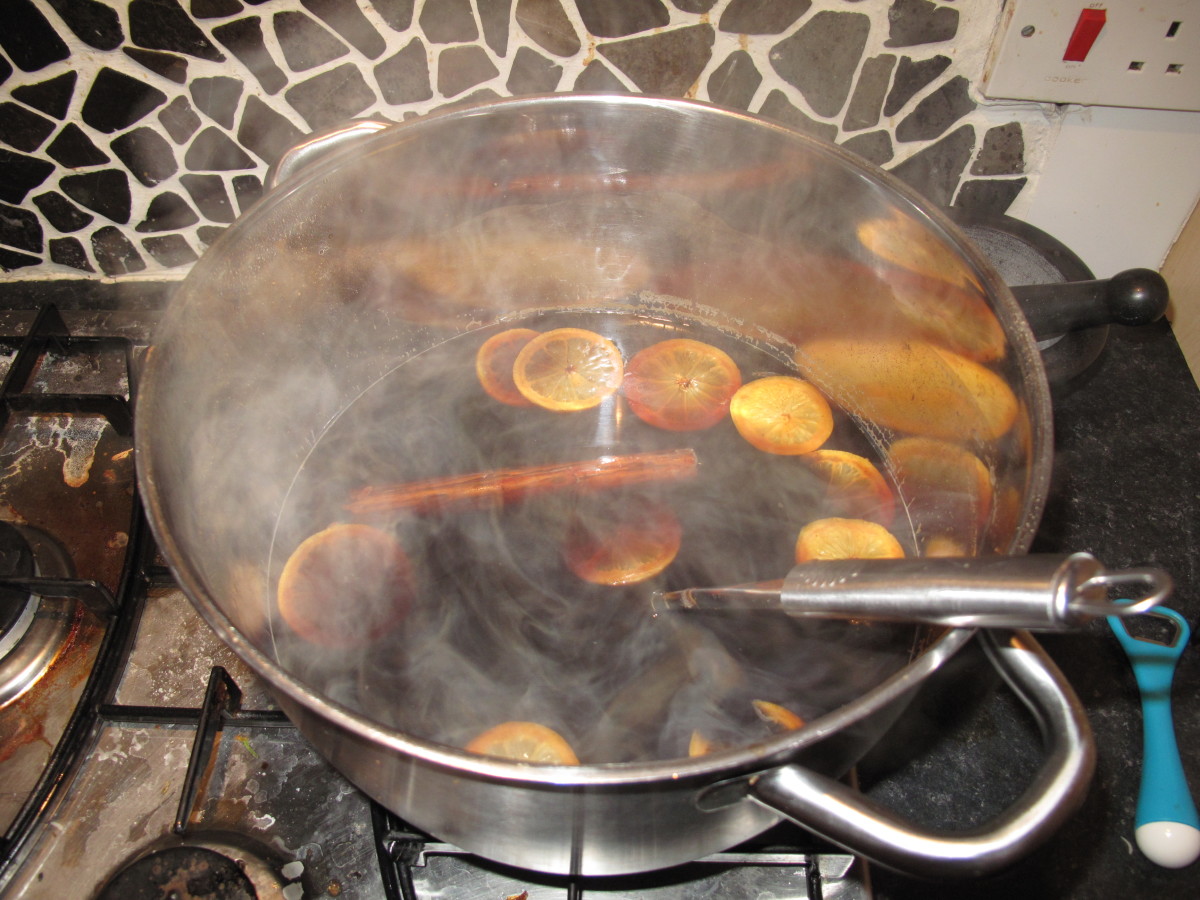
Wassail is a traditional holiday beverage.

Wassail is a traditional holiday beverage.

Jeremy Tarling from London, United Kingdom [CC BY-SA 2.0 (https://creativecommons.org/licenses/by-sa

7. Anglo-Saxon Wassailing

Wassailing is an ancient custom that is not seen very often today.

The word derives from the Anglo-Saxon phrase 'waes hael', which translates to 'good health'.

The wassail drink was originally made from mulled ale, curdled cream, roasted apples, eggs, spices, and sugar, and was served from large silver bowls, may be holding as much as ten gallons.

A modern day alternative to this would be mulled wine, red wine, and spices that is served hot.

Red and green colour theme

Red and green colour theme

8. Pagans Loved Green Leaves and Red Berries

The traditional Christmas colors of red and green are complementary colors that represent fertility.

Pagan-derived decorations that are still seen at Christmas time include the green leaves and red berries of holly, mistletoe and wreaths.

Red and green are the traditional colors for Christmas tree baubles, but in recent years many more colors have become available, often changing yearly with the latest fashions. In recent years, turquoise, pink, purple, and orange have been seen on the best-dressed trees.

Christmas carols or Pagan songs?

Christmas carols or Pagan songs?

infomatique via photopin cc

9. The Pagans Sang at the Winter Solstice

Carols have been sung for thousands of years, but they were not originally Christmas carols.

Originally, they were Pagan songs that were sung at the celebrations surrounding the Winter Solstice festival.

The word 'carol' actually means a song or dance of joy and praise! They were written and sung during all four seasons, but it was only the tradition of singing them at Christmas that survived!

A Yule log is decorated before being burned.

A Yule log is decorated before being burned.

Photo by Wil Stewart on Unsplash

10. Europeans Burned a Yule Log

The Yule log is a reminder of the times when European Pagans would have bonfires during the winter solstice, thereby symbolising the return of the sun with the days starting to get longer again.

Acquiring a Yule Log

The Yule log played a major role in the Yule festivities, with a piece of the previous year's log being saved to start the fire the following year.

Traditionally, it was considered unlucky to buy a log, and instead, it was harvested from the householder's land or received as a gift.

Once brought into the house and placed ceremoniously in the fireplace, it was decorated with greenery, smothered with alcohol, and dusted with flour before being set on fire. The log would then burn all night before smouldering for twelve days.

Yule Log Mythology

Celtic mythology told the stories of the Oak King and Holly King, with the oak representing the time from the winter solstice to the summer solstice and the holly representing the time from the summer solstice to the winter solstice.

Today, Yule logs are often represented by a chocolate-covered Swiss roll cake, sprinkled with icing sugar to represent the flour that was dusted onto the log before burning, and decorated with small plastic sprigs of holly.

11. A Pagan Holiday Adapted to Christianity

Winter Solstice was celebrated all over Europe, and as nobody was really sure when Jesus was actually born, early Christians altered their existing Pagan festivities to celebrate the birth of Jesus Christ during the same time.

In December, the sun appears to rise at the same point on the horizon for the three consecutive days beginning on the 22nd and then miraculously, on the 25th, it appears to move. Our ancient ancestors watched this and celebrated the fact that the days were now beginning to get longer and the dark nights shorter.

It is hard for us to understand how important sunlight was to our ancestors and how it affected their quality of life. Typically people would live and work during daylight hours, so the long and dark winter months must have seemed never-ending.

Also, they would have been relying on their store of grains and crops from the previous summer to tide them over until the following year and would be eager to plant new crops and receive some fresh food to eat.

Roman candles

Roman candles

Photo by Nicola Fioravanti on Unsplash

12. Candles Were Used During Saturnalia

Throughout history, candles have been used to ward off darkness and evil.

The first use of candles in December was during the Roman Saturnalia festival, where tall tapers of wax were offered to Saturn as a symbol of his light and also given as a gift to guests.

The Pagans also used candles during their Yule festivities, with candlelight and bonfires being used to welcome the nights beginning to get lighter.

As Christianity became more widespread, candles were put in the front windows of houses in order to guide Jesus as he went from house to house on Christmas Eve. 

Did You Realize That Pagan Christmas Traditions Are Still Celebrated Today?

From: https://holidappy.com/holidays/twelve-christmas-traditions-with-pagan-origins

________

Some comments:

Krampus on December 20, 2018:

Its amazing how even after reading this, people like delusional Danny over here still don’t get "the reason for the season" - its the roman god Saturn. Not Jesus.

------

Danny on December 19, 2018:

I m a Christian and didn’t realize all the Paganism associated with Christmas. I need to reevaluate how I’m celebrating the holiday. Don’t want to give the enemy no reason to think this is done in its honor. I don’t agree with all the extras man has made Christmas to be. Corporations have become too too greedy not even allowing their employees to spend the day with their families. The true meaning has gotten lost with little hope of ever returning.

-----

Libby on December 19, 2018:

Also, it is believed that ancient Pagans would bring a tree into their home during the winter months to keep the “wood spirits” warm. They would place little gifts on the tree, such as food and bells. It was believed that if a bell was rung, it was an appreciative spirit. So the Christmas tree may actually be a tradition that goes back even longer than Victorian times. It’s only evolved into what it is today.

The pagans were celebrating with an evergreen tree 600 years before Christ was born. See Jer.10

-----

William on December 16, 2018:

I find it interesting how many Christians don't know this information. If one goes back and looks at the history of the Christian faith they will see that most of the holidays they celebrate come from paganism, and not going to start on the wars and blood shed.

_________

See more at: https://historycollection.com/16-pagan-christmas-traditions-that-people-mistakenly-credit-to-christianity/

and: https://www.cbsnews.com/news/the-unexpected-pagan-origins-of-popular-christmas-traditions/

Search “Christmas traditions with pagan roots” and see what shows up!!

_________

Sunday, November 13, 2022

Is Thanksgiving Being Replaced? The Sacrifices of Thanksgiving. The Gut-Destroying Toxin You Eat Everyday.

.

Is Thanksgiving Being Replaced?

Saying thanks to God is what Thanksgiving was all about. Is it still?

“Saying thanks to God is what Thanksgiving was all about. Is it still?

This year some U.S. retailers are starting their Christmas sales even earlier than Black Friday—now on Thanksgiving Day. Have our priorities changed?

When I was a child, the American Thanksgiving Day was a big event. We were taught in school about the history of the day and to be thankful to God for our blessings. Even television commercials were focused around family togetherness and being thankful.     But times have changed.

Black Friday becoming Black Thursday?

For years the Christmas shopping season “officially” started the day after Thanksgiving in the United States.

The term “Black Friday” got its name from retailers making their largest profits during the holiday season. Profits put retailers “in the black.” Since Friday was the start of the Christmas season, the name “Black Friday” was born.

In recent years some retailers began opening their doors at 7 a.m. on that Friday. Then it was 6 a.m., then 5 a.m. and then midnight.

Now some retailers are beginning their sales at 8 p.m. on Thursday, the same day as Thanksgiving!

What that means is that some employees will have to be at these stores even earlier than that. They won’t have much of a Thanksgiving.

Black Friday is now Black Thursday.

Is Thanksgiving even important anymore?

When President Abraham Lincoln made Thanksgiving a national holiday, he called it “a day of thanksgiving and praise to our beneficent Father who dwelleth in the heavens” (quotes from the American Presidency Project).

Thanksgiving was originally intended to draw our attention to God, not ourselves. But today many Americans rush through Thanksgiving so they can go shopping and do the things they want to do. Instead of being thankful for the blessings they have, many believe they deserve and are entitled to them.

This completely different mind-set is not what Thanksgiving is supposed to be all about.

Losing sight of God

Concerning America’s wealth, President Lincoln commented that “no human counsel hath devised nor hath any mortal hand worked out these great things. They are the gracious gifts of the Most High God.”

His words sound very similar to what God told the people of Israel more than 3,000 years ago about the blessings Israel’s descendants would receive.

“When you have eaten and are full, then you shall bless the LORD your God for the good land which He has given you. Beware that you do not forget the LORD your God by not keeping His commandments, His judgments, and His statutes which I command you today, lest—when you have eaten and are full, and have built beautiful houses and dwell in them; and when your herds and your flocks multiply, and your silver and gold are multiplied, and all that you have is multiplied; when your heart is lifted up, and you forget the LORD your God who brought you out of the land of Egypt … then you say in your heart, ‘My power and the might of my hand have gained me this wealth’” (Deuteronomy 8:10-17).

For many decades America has been the most blessed nation on earth, and for that we should be thankful to God. But instead of being thankful for what we have, many want to rush out and accumulate more.

“But know this, that in the last days perilous times will come. For men will be lovers of themselves, lovers of money … unthankful … lovers of pleasure rather than lovers of God” (2 Timothy 3:1-4).

“Although they knew God, they did not glorify Him as God, nor were thankful, but became futile in their thoughts. And their foolish hearts were darkened” (Romans 1:21).

Americans have forgotten their heritage. Why else would we replace a day set aside for God with a day set aside for greed? Why are we replacing Thanksgiving with Black Thursday?         Because we have forgotten God.

Let’s remember God

Moses, the leader of ancient Israel, wrote about the heritage of Israel. (To explore the connection between ancient Israel and modern nations such as the United States, Australia, Britain and Canada, see “Who Are the United States and Britain in Prophecy?”)

Moses wrote, “Remember the days of old, consider the years of many generations. Ask your father, and he will show you; your elders, and they will tell you” (Deuteronomy 32:7).

Moses goes on to show how God raised up ancient and modern Israel and blessed them so much that they became the greatest people on earth (verses 10-14).

But as the case is today, Moses also wrote that Israel would forget God because of this wealth (verses 15-18).

Then Moses wrote that because Israel forgets God, God will stop helping them and troubles will come upon Israel (verses 19-26).

God even says, “For they are a nation void of council, nor is there any understanding in them. Oh, that they were wise, that they understood this, that they would consider their latter end!” (verses 28-29).

In light of all the troubles the United States has been experiencing over recent years, we should examine the quality of our relationship with God and our gratitude toward Him.

So before America replaces the meaning of Thanksgiving, let’s remember that the day was intended to pay homage to God, not to ourselves.”       From: https://lifehopeandtruth.com/prophecy/blog/is-thanksgiving-being-replaced/

_______

The Sacrifices of Thanksgiving

Psalm 107:22 

“Let them sacrifice the sacrifices of thanksgiving, and declare His works with rejoicing.”

Leviticus 7 describes a “sacrifice of thanksgiving” that involved offering grain and an animal sacrifice (Leviticus 7:12). This offering was not for sin, but for rejoicing and showing thankfulness to God.

We know from the book of Hebrews that the system of animal sacrifices has been superseded, yet Hebrews still talks about a “sacrifice of praise to God.” This is defined as “the fruit of our lips, giving thanks to His name. But do not forget to do good and to share, for with such sacrifices God is well pleased” (Hebrews 13:15-16).

Praising God, doing good and sharing are sacrifices that continue to please our Creator today.”   For more about thanksgiving, see “In Everything Give Thanks.”

From: https://lifehopeandtruth.com/bible/blog/the-sacrifices-of-thanksgiving/ 

________

The Gut-Destroying Toxin You Eat Everyday

by: Dr. Craig A. Maxwell

Food 211“Since the 1990s, there’s been something different about the food you eat everyday. It still looks the same, it tastes the same but it’s not the same nourishing food your grandparents ate. Lurking deep inside a fresh-grilled ear of corn or your favorite soy-based vegetarian dish could be a gut-destroying toxin. It’s called Bt toxin and what you don’t know about it could seriously affect your health.

What is BT Toxin?

Bacillus thuringiensis (BT) is a gram-positive soil-dwelling bacterium that has been used as an insecticide since the 1920s. When farmers spray their crops with this bacterium or its insecticidal proteins or spores, insects eat it and they die when their intestines Embedded0473fcb4aed4462496a774149673d358explode. When this pesticide is just sprayed on your food, you are able to wash it off. Indeed, the spraying of it on crops, even organic crops, allows it to be washed off. Sunshine also quickly degrades it. When used in this way it is considered effective against pests and harmless to humans, as it is not absorbed into the plant.

Now with the advent of genetically modified crops, it is difficult to avoid this dangerous toxin. This is because biotech giant Monsanto decided to profit from this pesticide by splicing the Bt gene with corn, soybeans, and cotton. Now these plants have Bt toxin genetically inserted in them. It cannot be washed off, and it does not degrade during the growth cycle.

Monsanto describes these new crops as “pest-resistant”, giving unsuspecting consumers the idea that pests somehow smell the Bt pesticides and avoid the crops containing them. No. Nothing could be further from the truth. When any insect takes a bite of a genetically modified Bt toxin crop, the toxin literally splits their guts open and they die. So, why would you want to eat it? Remember, when it was only sprayed on the plant, it was easily washed off or degraded by sunshine.

Terrifying Side Effects of BT Toxin

According to a UK report published in 2004, twelve German dairy cows died a slow and painful death after consuming GMO Bt Toxin corn. Syngenta (a biotech company linked to Monsanto) has been trying to cover up this fact for nearly a decade.

Here are just a few of the side effects of Bt Toxin:

Allergic Reaction

Boy getting shootYour immune system is designed to protect you against toxins and foreign invaders. Bt toxin is a foreign invader, which means the more you eat GMO foods, the worse you’ll feel. You may develop allergic symptoms such as sneezing, coughing, wheezing, watery eyes, asthma, and hives and be unable to figure out what’s causing them.

Developmental Disorders

Studies have proven that animals given feed from GMO crops experienced noticeable alterations in their mood and behavior. Hogs exposed to Bt toxin exhibited cannibalistic behavior while rats who ate it exhibited signs of anti-social behavior, withdrawing from others and aggressively climbing the cage walls.

This has led researchers to believe that Bt toxin and autistic symptoms are closely-related because they seem to interfere with functional digestive development. Children with ASD have a disproportionate amount of gastrointestinal disorders, reinforcing the belief that gut and brain health are very closely connected.

Autoimmune Disease

Less than a hundred years ago, autoimmune diseases were uncommon. Now we live in a society where conditions such as celiac disease, Crohn’s disease, lupus, rheumatoid arthritis, Hashimoto’s thyroiditis and multiple sclerosis are almost commonplace. It’s becoming more unusual now not to have some type of autoimmune dysfunction than it is to be sick! Sick has become the societal norm and pesticides have been cited as one of the primary causes.

Since 80% of your immune system is located in your gut, the last thing you want to do is eat gut-destroying Bt toxins. One of the most alarming facts about Bt toxin GMO foods is their staying power.

iStock_000000970628XSmallEven if you eat a primarily organic diet and “slip up” every once in the while by eating some corn chips laced with Bt toxin, the effects of the toxin can stay with you. Once inside your stomach, these Bt toxins take can over by destroying your natural gut flora and forcing your digestive system into continually producing more of the pesticide!

Severe Food Allergies

Once your immune system begins to go haywire, it will be unable to tell the difference between whole organic food and genetically modified food. Once your healthy gut flora has been destroyed and altered, a condition called leaky gut syndrome will result. In a person with leaky gut syndrome, the intestinal lining is more porous than it should be. This allows toxins, undigested food particles, and bacteria to run unchecked in your bloodstream, causing chronic inflammation and multiple food allergies.

Kidney Disease

Your kidneys are designed to flush toxins from your body. Continually eating genetically modified crops containing Bt toxins may eventually destroy your kidneys.

Infertility

digestive_distress

There is a rising theory among health-conscious individuals that one of the main purposes for the development of GMO crops is population control. When Mike Adams of NaturalNews.com interviewed a biotech scientist known only as “Ed”, the man confirmed that Bt toxins do, in fact, contribute to infertility and that he thought this fact was “awesome!” He went on to say that he believed genetically modified crops were doing humanity a favor because the world is overcrowded.

Cancer

The Institute for Responsible Technology reports 65 serious health risks associated with GMO crops, including cancer development. For example, rats fed potatoes engineered to produce their own insecticide developed precancerous cellular growth in their digestive tract.

Foods Containing Bt Toxin:

Corn – Unless it’s organic, stay away from corn. Over half of the corn grown in the United States is genetically modified to contain Bt toxin.

Soy – Studies have shown that soy is not the health food you have been lead to believe. Up to 90% of soy grown in the United States is genetically modified to contain Bt toxin.

Sugar Beets – In 2012, GMO sugar beets got the green light as well so avoid these and purchase organic beets only.

Diary Products – The milk you pour in your coffee and onto your child’s cereal each day could contain dangerous Bt toxins, as livestock are often fed corn and soybeans which most often contain Bt toxin. Use organic milk instead. Better yet, use organic almond milk.

Squash – Most yellow and zucchini squash is genetically modified and contains Bt toxins.

Cotton – Cotton has been genetically modified to produce Bt toxins. It is pressed into cottonseed oil which is used in vegetable oil and margarine.

Beef-When possible, choose only grass-fed, organic beef. Cattle are often fed Bt toxin-containing feed.

Potatoes-Approved in 1995 by the FDA as the first pesticide-producing crop in the United States.

How to Avoid BT Toxin

The best way to avoid Bt toxins in food is to eat organic whenever possible. When selecting produce, it’s really important to understand what the label numbers mean. A four-digit number beginning with a “4” means it’s been conventionally-grown. A five-digit number that begins with a “9” means it’s organic. A five-digit number beginning with an “8” means it’s genetically-modified and contains harmful Bt toxins.

Also, it is very important to read food labels. Produce isn’t the only thing you have to watch out for. Any food containing corn, soy products, vegetable oil or dairy could potentially contain dangerous Bt toxins. Look for non-GMO or GMO-free foods only.

If you didn’t really understand the dangers about Bt toxins before, you’re not alone. These major biotech corporations will do anything it takes to make sure this critical information doesn’t reach you. Remember, become a label-reader, purchase organic, and look for “non-GMO” food labels. Once you stop unintentionally eating poison, your health will improve by leaps and bounds you never thought possible!                    From: https://www.askdrmaxwell.com/2013/03/the-gut-destroying-toxin-you-eat-everyday/

________

Monday, June 20, 2022

The Curse of Inflation, A Biblical View. Saying Thank You. Sugar vs. Corn Syrup. Mercury In Corn Syrup.

.

The Curse of Inflation,  A Biblical View

An elderly man looking out a window.“The ramp-up we’re seeing in inflation in the United States is the reaping of a bitter harvest sown by wrong policies. It’s important to understand.
Among those hardest hit by inflation are the ones governments assure us they are dedicated to helping, namely the poor and the elderly.

Prices have been on the rise—whether gasoline, food, electricity, furniture, you name it. Inflation is hitting people’s wallets hard—especially in America, but in other countries as well.

The problem is actually worse than most realize. Real inflation is running much higher than the 7 percent reported in official U.S. government numbers, as calculation methods have changed. A more honest assessment at shadowstats.com reveals that if inflation were measured as it was in 1990 the rate would be 12 percent—or if figured as in 1980 the rate would be 15 percent.

Unemployment is also high. Government statistics put it at 3.4 percent in January, but it also has changed the calculation method for determining unemployment numbers. Going by more reasonable pre-1994 calculation, U.S. unemployment now shockingly stands at around 25 percent!

Another facet of the grim financial outlook is U.S. household debt, which for the first time passed $15 trillion in the third quarter of 2021. And in January 2022 U.S. national debt for the first time exceeded a mind-boggling $30 trillion as part of a dangerous money-creation experiment that is fueling the ramp-up in inflation.

Just what is going on? Where will it ultimately leave us?

The lure of Modern Monetary Theory

The Federal Reserve has gone into overdrive over the past decade in what amounts to creating more and more money out of thin air. We’re told not to worry about any repercussions of this massive money creation and the debt associated with it because of the new economic siren song of Modern Monetary Theory or MMT.

Writing in the American Enterprise Institute publication National Affairs, author Jonathan Hartley explains: “The defining feature of MMT—and what distinguishes it from more established, mainstream economic theories—is its insistence that, so long as a government’s debt is denominated in its own currency, there is no upper limit on the state’s monetary borrowing. In other words, public debt is irrelevant; a country’s central bank can always avoid default by printing more money. Such printing, MMT proponents further argue, can go on without any inflationary consequences” (“The Weakness of Modern Monetary Theory,” Fall 2020).

This especially appeals to those who want to fund an endless array of massively expensive government programs, but it gained wider acceptance as a means to buoy up the economy during Covid lockdowns. While MMT may be convenient, Hartley goes on to say, “MMT’s central claims regarding the harmlessness of deficits, debt, and mass currency production are not only flatly false, they are deeply dangerous” (emphasis added throughout).

He does note that the United States, due to the vastness and richness of its economy and the dollar serving as the world’s reserve currency, is able to borrow enormous sums. But this ultimately comes on the backs of everyone who holds dollars—in both America and around the world. Eventually investors, “no longer believing the government to be solvent, will refuse to buy bonds or lend to the government at manageable interest rates.” America is not there yet, but those calling for endless massive spending are driving the nation steadily to that point.

For years economists have warned that if the United States keeps ballooning up the money supply without commensurate economic growth and productivity, it is inevitable that other global economic powers such as the European Union or China will demand that the dollar be replaced as world reserve currency with the euro or Chinese yuan. This would lead to huge economic problems in America, including the hyperinflation nightmare.

The government is stealing from you

It was reported earlier this year that “U.S. companies are expecting to pay an average 3.4% raise to workers in 2022” (CNBC, Jan. 18, 2022). They’re forced to do so to retain workers, but this does not come close to keeping up with inflation. Likewise a Breitbart headline reads, “UK Wage Hikes Wiped Out to Zero by Soaring Inflation Rate” (Jan. 18, 2022).

Through policies that create inflation, governments are actually stealing from companies and individuals. How does this work? It’s really very simple. By artificially adding more and more money‚ the value of existing dollars is diminished. Therefore virtually everything you buy costs more—sometimes a lot more.

How bad is it? In 2020-2021, the U.S. money supply soared an astonishing 27 percent, the biggest jump in the nation’s history. This was far greater than in response to previous national crises such as the Great Depression (10 percent) and World War II (18 percent). Hundreds of thousands of businesses shut down and tens of millions of Americans were paid to stay home rather than work. The federal government sent “free money” checks to every American, including incarcerated felons. And now Americans are paying the price.

Among those hardest hit are the ones governments assure us they are dedicated to helping, namely the poor and the elderly. But since most of their meager income goes to such basics as food and utilities, inflation is especially devastating to their financial condition.

Besides the massive money creation that gives governments more wealth while diluting how much the money you have is worth, governments must keep interest rates low to finance that huge debt they’ve taken on. This keeps savers—especially those who are trying to preserve their income, such as those in or nearing retirement—from earning interest income and pushes many into gambling with their futures by seeking more dangerous investments just to maintain the same income (“How the Fed Is Driving Savers to Riskier Investments,” The Washington Post, July 1, 2020).

The truth is that the whole concept of fiat currency— money decreed into existence with no tangible basis—constitutes the biggest thieving scheme in history. Such currency manipulation contravenes God’s laws on maintaining honest weights and measures (see Deuteronomy 25:15; Proverbs 11:1; 16:11; 20:23).

God in the Bible repeatedly condemns stealing from others and mistreating the poor and needy (Exodus 20:15; Leviticus 19:11; Deuteronomy 24:14; Psalms 72:4; 82:4; Amos 8:4-6). And He warns against going into debt as a road to enslavement (Proverbs 22:7).

Former U.S. President Thomas Jefferson wrote to his friend John Taylor on May 28, 1816, that “spending money to be paid by posterity, under the name of funding, is but swindling futurity on a large scale.”   Indeed, expanding government debt obligates future generations to repaying debt they never incurred or had any say in creating. Again, it’s pure theft.

Do what you can to prepare

Bible prophecy warns about coming economic upheaval and troubles increasing in the English-speaking nations and the ultimate collapse of the financial system the world over (see our free study guides The United States and Britain in Bible Prophecy and The Book of Revelation Unveiled).

Yet in some ways all will seem to be humming along—until calamity strikes (Matthew 24:38-43).

Do what you can to prepare —to be ready (verse 44). As Proverbs 22:3 and 27:12 tell us, “A prudent person foresees danger and takes precautions. The simpleton goes blindly on and suffers the consequences” (New Living Translation). Of course, humanly we can only do so much. We need God to see us through. Jesus promised that if we seek first the Kingdom of God and God’s righteousness that our physical needs would be provided for—that we would not be destitute (Matthew 6:25-34; compare Psalms 37:25).

The sobering fact we all face is that a reckoning lies ahead. Let us all take God’s warnings seriously and do whatever we can to prepare. Above all, we must prepare spiritually (see Matthew 25:1-13), and God will see us through to the wonderful age beyond today when His laws—including His economic laws—will at last be followed the world over.”    From: https://www.ucg.org/beyond-today/beyond-today-magazine/the-curse-of-inflation-a-biblical-view?

_______

Saying Thank You,  An Attitude of Gratitude

“Being grateful, to God and to those around you, can be beneficial to you, your relationships, and your spiritual life.

Transcript of YouTube: https://youtu.be/yxr96HZQ6jk

[Darris McNeely] “The ability to say, "Thank you," is a very important character trait that every one of us must have, should have. And we should check ourselves on a regular basis to make sure that we are grateful to God, to each other, to those who do good things, kind things to us. Say "Thank you." Have an attitude of gratitude. And this is not just some trivial approach, it really enhances your life. It enhances the quality of relationships that we have.

Christ spoke a parable about it that I have long known about, you have as well, about this attitude of being grateful, saying "Thank you." It happened it says in Luke 17:11, "That as Christ went to Jerusalem, He passed through the midst of Samaria and Galilee," the regions to the north of Jerusalem, He was coming south. "He entered a certain village, and there He met 10 men who were lepers who stood afar off. And they lifted up their voices and said, 'Jesus, Master, have mercy on us'." Leprosy was the scourge of the ancient world, there was no cure for it, very contagious, and those who had it had to be ostracized from the community, and they were begging Christ, "Have mercy on us."

When He saw them, He said to them, "Go show yourselves to the priest." And so it was that as they went, they were cleansed before they even got to the priest, it seems. And one of them, when he saw that he was healed, returned and with a loud voice, glorified God and fell down on his face at his feet, at Christ's feet, giving Him things. And this man was a Samaritan, those who were looked upon as, kind of, inferior by the rest of the Jews at that time. And this was the one who turned back and said, "Thank you," to Christ, he gave him thanks. And in verse 17, Jesus answered and said, "Were there not 10 cleansed, but where are the 9?" The other 9 went on their way. Maybe they went on to the priest, maybe they thought they had to fulfill everything. We're just not told, but only one came back and said, "Thank You." He said, "Were they not found, who returned to give glory to God except this foreigner." And he said to him, "Arise, go your way. Your faith has made you whole."

And so 1 out of 10, 10%, turned back and said, "Thank You," That's fine, what's the lesson for us? Be grateful. Have a spirit that recognizes when someone has done something well, good, a good job, either for us or for someone else, in the office, in the school, in your church, or your community, someone who has helped you, be sure that you say, "Thank you," and show an appreciation and gratitude. It's a Godly trait. It is what Christ called out, and one who was looked down upon by the rest of the community, the Jewish community of the time, say "Thank you." It's a good spirit. It's a good attitude to have.”

________

Sugar vs. Corn Syrup

“Mercury content aside, is high-fructose corn syrup worse than table sugar?

Transcript of YouTube: https://youtu.be/aygf8vNXbJI

“Which is worse: sugar or corn syrup? Three choices: the sugar, the corn syrup, or, they’re both just as bad? Around and around it goes; where it stops, maybe some of you knew. Equally bad.

Now that was kind of a trick question. Regular, baking corn syrup is pure glucose; zero fructose. There’s no corn syrup in soft drinks, either. It’s all high-fructose corn syrup. Now, some of you may have heard the rumor that high-fructose corn syrup may contain mercury.

Let’s assume, for the purposes of this question, that there’s no mercury: pure sugar, versus pure high-fructose corn syrup. Is the sugar worse? Is the high-fructose corn syrup worse? Or, are they still both equally bad?

And the winning loser is—both of them. Table sugar is 50% glucose and 50% fructose, and high-fructose corn syrup is about 45%/55%. It doesn’t matter; it’s all just sugar. The Corn Refiners Association launched a $25 million PR campaign last year, boasting that high-fructose corn syrup is as good for you as sugar. True, but again, how much is that really saying?”

To see any graphs, charts, graphics, images, and quotes to which Dr. Greger may be referring, watch the above video. This is just an approximation of the audio contributed by veganmontreal.” 

More about mercury at: “Mercury in Corn Syrup”  https://nutritionfacts.org/video/mercury-in-corn-syrup/

_______

Sunday, May 1, 2022

Hope in the Bible. What’s the Bible For? Do You Consume These Foods That Ruin Your Liver.

.

Hope in the Bible

Hope in the Bible“Life today can be sorely lacking in hope. But there is a timeless source we can turn to. The hope in the Bible is guaranteed not to disappoint!


When I feel hope fading or even feel hopeless, I know where to turn.

In the world of men, apart from God, there is no real hope (Ephesians 2:12). And this world desperately needs hope! We need hope not just to make it from one challenge, trial or disappointment to another, but to lift our heads and give us direction and meaning.

Real hope empowers us, encourages us and makes life worth living. But where can we find this hope?

God is called the “God of hope” (Romans 15:13). And He gives that hope to us through His inspired Scriptures.  Our go-to source of godly hope is the Holy Bible.

Meaning of hope in the Bible

The Greek word elpis, translated hope in the New Testament, has the connotation “desire of some good with expectation of obtaining it” (The Complete Word Study Dictionary, New Testament, 1992). Hope based on God and His sure promises is vastly different from the fleeting hope of this world.

Human, natural hope “is transient and illusory,” and the “majority of secular thinkers in the ancient world did not regard hope as a virtue.”

“But for the most part the hope with which the Bible is concerned is something very different; and in comparison with it other hope is scarcely recognized as hope.” It is closely tied to faith. Because of what God has done and promised, “the Christian dares to expect future blessings at present invisible (2 Cor. 1:10). The goodness of God is for him never exhausted. The best is still to be. His hope is increased as he reflects on the activities of God in the Scriptures (Rom. 12:12; 15:4)” (New Bible Dictionary, “hope,” 1982).

“That we through the patience and comfort of the Scriptures might have hope”

Paul points to the Bible as our source of hope.

“For whatever things were written before were written for our learning, that we through the patience and comfort of the Scriptures might have hope” (Romans 15:4).

The stories and teachings of the Bible were recorded for many reasons, but here Paul highlights how God inspired them to give us hope.

William Barclay noted about this passage: “The Christian fellowship should be marked by hope. The Christian is always a realist, but never a pessimist. The Christian hope is not a cheap hope. It is not the immature hope which is optimistic because it does not see the difficulties and has not encountered the experiences of life. It might be thought that hope is the prerogative of the young; but the great artists did not think that. When [the painter George Frederic] Watts drew ‘Hope’ he drew her as a battered and bowed figure with one string left upon her lyre. The Christian hope has seen everything and endured everything, and still has not despaired, because it believes in God. It is not hope in the human spirit, in human goodness, in human achievement; it is hope in the power of God” (Daily Study Bible, note on Romans 15:1-6).

Examples of hope in the Bible

Consider the story of Rahab, the harlot in Jericho who had come to believe in the power of the God of Israel. She and all the people of Jericho realized it was hopeless to fight against Israel (Joshua 2:11). But it seems only Rahab chose to believe in the God of Israel. She risked her life to save the Israelite spies, and in turn they promised to protect her and her family, if she put a scarlet cord in the window of her home on the city wall (verses 18, 21).

Interestingly, the word cord is from the Hebrew word tiqva, which is most often translated in its figurative sense as “hope” and “expectation.”

“By faith the harlot Rahab did not perish with those who did not believe,” we’re told in the Faith Chapter. Instead, God gave her hope and a place in the lineage of Jesus Christ (Matthew 1:5).

God’s plan includes saving us from our deadly and deceitful enemy. Instead of death, God offers us the amazing opportunity to become members of His family and to inherit everything with Jesus Christ. The book of Job, which tells the story of a man bereaved of nearly everything he held dear, mentions hope (tiqva) 15 times, but can hardly be considered a hopeful book. Until the last chapter, that is, when God reverses the misfortune.

Mourning for the loss of his children, his possessions and his health, Job cried out, “My days are swifter than a weaver’s shuttle, and are spent without hope” (Job 7:6).

Yet even in the depths of despair, Job expressed hope for the next life:

“If a man dies, shall he live again? All the days of my hard service I will wait, till my change comes. You shall call, and I will answer You; You shall desire the work of Your hands” (14:14-15). Interestingly, the phrase I will wait is from the Hebrew yahal, which is often translated as hope.

Growing in hope—the hope that does not disappoint

Paul tells us that followers of Christ are able to “rejoice in hope of the glory of God” (Romans 5:2). Here again hope is translated from the Greek word elpis, which means “to anticipate, usually with pleasure” (Strong’s Definitions).

Then he outlines the steps that produce more hope.

“And not only that, but we also glory in tribulations, knowing that tribulation produces perseverance; and perseverance, character; and character, hope.

“Now hope does not disappoint, because the love of God has been poured out in our hearts by the Holy Spirit [that] was given to us” (verses 3-5).

Growing in this way is not easy. Enduring troubles in order to have the character of Jesus Christ hurts. It stretches us, toughens us and strengthens us. And it produces hope—real, 100 percent satisfying hope enlivened by the love of God.

God’s loving plan is what gives hope its power.

“As a helmet the hope of salvation”

God’s story for your life is epic and dramatic. God’s plan includes saving us from our deadly and deceitful enemy. Instead of death, God offers us the amazing opportunity to become members of His family and to inherit everything with Jesus Christ. He wants us to live forever in His close, loving family.

Understanding this amazing plan serves as part of our protection from Satan the devil.

“But let us who are of the day be sober, putting on the breastplate of faith and love, and as a helmet the hope of salvation” (1 Thessalonians 5:8).

In his famous list of the armor of God, Paul called this the “helmet of salvation” (Ephesians 6:17). But to the Thessalonians, Paul wrote the more complete description “the hope of salvation.”

Transforming the wonderful promise of salvation into armor to protect our minds requires a healthy dose of hope. We must truly believe that God will save us from eternal death and give us eternal life. That kind of hope can deflect the blows of our enemy who wants to discourage us. The hope of salvation protects our minds.

This helmet allows us to fully engage in the process of transformation God has called us to.

“Christ in you, the hope of glory”

Paul calls God’s plan a mystery that has now been revealed to the saints—to all those God has called out of this world. (For a look at the biblical meaning of saints, see “How to Become a Saint.”)

God wants all those who have been baptized and received the Holy Spirit to understand the transformation He has called us to.

“To them God willed to make known what are the riches of the glory of this mystery among the Gentiles: which is Christ in you, the hope of glory” (Colossians 1:27).

On the night before His crucifixion, Jesus encouraged His followers. He told them, and He tells us, “I will not leave you orphans; I will come to you” (John 14:18). He adds, “If anyone loves Me, he will keep My word; and My Father will love him, and We will come to him and make Our home with him” (verse 23).

Studying the rest of Jesus’ Passover teachings shows that the Father and the Son live in us through the Helper—the Holy Spirit (verse 26).

What does the Bible say about how to receive the Holy Spirit? “Repent, and let every one of you be baptized in the name of Jesus Christ for the remission of sins; and you shall receive the gift of the Holy Spirit” (Acts 2:38).

This process of conversion changes us from the inside. It helps us think and act like Jesus Christ as it writes God’s laws on our hearts and minds (Hebrews 10:16).

Hope is also part of our witness to those around us. If someone wants to understand how we can have hope in these hopeless times, Peter encourages us to be prepared to share the reason. In 1 John 3 the apostle John also points to the transforming power of the hope we have been given. After describing the incredible love the Father has shown us by calling us “children of God” (verse 1) and explaining that when Jesus returns, “we shall be like Him, for we shall see Him as He is” (verse 2), John says:

“And everyone who has this hope in Him purifies himself, just as He is pure” (verse 3).

God’s holiness and purity are major themes throughout the Bible. To truly become like Jesus Christ, we must pursue purity.

William Barclay commented on this verse: “John has just said that the Christian is on the way to seeing God and being like him. There is nothing like a great aim for helping a man to resist temptation” (Daily Study Bible, note on 1 John 3:3-8).

Faith, hope and love

The Bible connects faith, hope and love many times (1 Thessalonians 1:3; 5:8; Galatians 5:5-6; 1 Corinthians 13:13; Hebrews 6:10-12; 1 Peter 1:21-22).

Faith and hope work together, hand in hand. It takes faith in God to have real hope, and it takes godly hope to have real, lasting faith.

Love elevates faith and hope above any selfishness, producing a desire for God’s plan to provide His blessings for everyone.

William Barclay put it this way in his Daily Study Bible: “Faith without love is cold, and hope without love is grim. Love is the fire which kindles faith and it is the light which turns hope into certainty.”

Love’s outgoing nature and eternal qualities makes it the “greatest of these” (1 Corinthians 13:13).

For more on this, see the sidebar “Faith, Hope and Love” in our booklet Finding Hope in a Hopeless World.

Give a reason for the hope

Hope is also part of our witness to those around us. If someone wants to understand how we can have hope in these hopeless times, Peter encourages us to be prepared to share the reason:

“But sanctify the Lord God in your hearts, and always be ready to give a defense to everyone who asks you a reason for the hope that is in you, with meekness and fear” (1 Peter 3:15).” 

From: https://lifehopeandtruth.com/life/plan-of-salvation/hope-for-the-future/hope-in-the-bible/?

_______

What’s the Bible For?

2 Timothy 3:15-17

And that from childhood you have known the Holy Scriptures, which are able to make you wise for salvation through faith which is in Christ Jesus. All Scripture is given by inspiration of God, and is profitable for doctrine, for reproof, for correction, for instruction in righteousness, that the man of God may be complete, thoroughly equipped for every good work.

“The Holy Scriptures available to Timothy as a child would, of course, have been what we call the Old Testament today. The apostle Paul and the New Testament Church held the Old Testament in high esteem and quoted from it often in sermons and writings. The Old Testament revealed much about Jesus Christ, including both His first and second comings, and the salvation that is available because of His sacrifice.

All Scripture, which Peter later showed included Paul’s writings as well (2 Peter 3:16), was breathed—what we call inspired—by God. What is the Bible useful for?

  • Doctrine—teaching us God’s will.
  • Reproof—conviction or proof of wrongdoing.
  • Correction—setting us straight.
  • Instruction in righteousness—disciplining or training.

The Good News Translation puts it this way: All Scripture “is useful for teaching the truth, rebuking error, correcting faults, and giving instruction for right living, so that the person who serves God may be fully qualified and equipped to do every kind of good deed” (verses 16-17).”   For more about what the Bible can do for us, see “Why Study the Bible?       From: https://lifehopeandtruth.com/bible/blog/whats-the-bible-for/?

________

Do You Consume These Foods That Ruin Your Liver.

Excerpts from YouTube: https://youtu.be/1B98PDEe4vU  

“You are as healthy as your liver. Your liver helps you in many different ways, but its main function is to detox poisons. It’s important to be aware of these ingredients in certain foods that ruin your liver, so you can avoid them and keep your liver healthy. The best type of food for the liver is cruciferous vegetables. Be sure to consume cruciferous vegetables regularly to support a healthy liver.

7 ingredients in foods that will ruin your liver:

1. Soy protein isolates Common foods that contain this ingredient: • Diet shakes • Diet powders • Protein bars • Veggie burgers

2. Fructose Common foods that contain this ingredient: • High fructose corn syrup • Fruit • Agave nectar • Table sugar

3. Vegetable fats Common foods that contain this ingredient: • Corn oil • Soy oil • Canola oil • Cottonseed oil

4. Whey protein powder Common foods that contain this ingredient: • Protein powders

5. Maltodextrin Common foods that contain this ingredient: • Protein powders • Certain vitamin supplements • Certain “keto-friendly” foods • Foods that contain fillers or drying agents • Post-workout gels • Splenda • Puddings • Protein bars

6. Aflatoxins Common foods that contain this ingredient: • Peanuts • Corn 7. MSG Common foods that contain this ingredient: • Pork rinds • Fast-food • Chinese food • Cottage cheese • Foods that contain flavor enhancers”

______