Showing posts with label baptize. Show all posts

Tuesday, December 23, 2025

Christmas: The Untold Story (Part 1) (Part 2)

.

Christmas: The untold story (part 1)

Christmas: The untold story (part 1)“Christmas is one of the world’s most popular holidays, celebrated by people of many faiths. Yet the holiday has a strange and convoluted past, one hinted at in such puzzling symbols as decorated trees, holly wreaths and mistletoe.

William Walsh (1854-1919) summarizes the holiday's origins and practices in his book The Story of Santa Klaus: "We remember that the Christmas festival ... is a gradual evolution from times that long antedated the Christian period ... It was overlaid upon heathen festivals, and many of its observances are only adaptations of pagan to Christian ceremonial" (1970, p. 58). 

During the second century B.C. the Greeks practiced rites to honor their god Dionysus (also called Bacchus). The Latin name for this celebration was Bacchanalia, which spread from Greece to Rome. "It was on or about December 21st that the ancient Greeks celebrated what are known to us as the Bacchanalia or festivities in honor of Bacchus, the god of wine. In these festivities the people gave themselves up to songs, dances and other revels which frequently passed the limits of decency and order" (Walsh, p. 65).

In addition to the Bacchanalia, the Romans celebrated the Saturnalia, held "in honor of Saturn, the god of time, [which] began on December 17th and continued for seven days. This also often ended in riot and disorder. Hence the words Bacchanalia and Saturnalia acquired an evil reputation in later times" (p. 65).

Notice the customs surrounding the Saturnalia: "All businesses were closed except those that provided food or revelry. Slaves were made equal to masters or even set over them. Gambling, drinking, and feasting were encouraged. People exchanged gifts, called strenae, from the vegetation goddess Strenia, whom it was important to honor at midwinter ... Men dressed as women or in the hides of animals and caroused in the streets. Candles and lamps were used to frighten the spirits of darkness, which were [considered] powerful at this time of year. At its most decadent and barbaric, Saturnalia may have been the excuse among Roman soldiers in the East for the human sacrifice of the king of the revels" (Gerard and Patricia Del Re, The Christmas Almanac, 1979, p. 16).

"From the Romans also came another Christmas fundamental: the date, December 25. When the Julian calendar was proclaimed in 46 [B.C.], it set into law a practice that was already common: dating the winter solstice as December 25. Later reforms of the calendar would cause the astronomical solstice to migrate to December 21, but the older date's irresistible resonance would remain" (Tom Flynn, The Trouble With Christmas, 1993, p. 42). On the heels of the Saturnalia, the Romans marked December 25 with a celebration called the Brumalia. Bruma is thought to have been contracted from the Latin brevum or brevis, meaning brief or short, denoting the shortest day of the year.

"The time of the winter solstice has always been an important season in the mythology of all peoples. The sun, the giver of life, is at its lowest ebb….It is the time when the forces of chaos that stand against the return of light and life must once again be defeated by the gods. At the low point of the solstice, the people must help the gods through imitative magic and religious ceremonies. The sun begins to return in triumph. The days lengthen and, though winter remains, spring is once again conceivable. For all people, it is a time of great festivity" (The Christmas Almanac, 1979, p. 15).”   From: https://www.ucg.org/learn/bible-study-tools/bible-study-aids/holidays-or-holy-days-does-it-matter-which-days-we-observe/christmas-untold-story

________

Christmas: The untold story (part 2)

Christmas: The untold story (part 2)“During the days of Jesus' Apostles, in the first century, the early Christians had no knowledge of Christmas as we know it. But, as a part of the Roman Empire, they may have noted the Roman observance of the Saturnalia while they themselves persisted in celebrating the customary "feasts of the Lord" (listed in Leviticus 23).

The image is a painting titled "A Roman Feast" (also known as "Saturnalia") by Italian artist Roberto Bompiani, depicting a lively banquet scene during the ancient Roman festival of Saturnalia.

The Encyclopaedia Britannica tells us "the first Christians ... continued to observe the Jewish festivals, though in a new spirit, as commemorations of events which those festivals had foreshadowed" (11th edition, Vol. 8, p. 828, "Easter"). But over the following centuries, new, nonbiblical observances such as Christmas and Easter were gradually introduced into traditional Christianity.

These new days came to be forcibly promoted while the biblical feast days of Apostolic times were systematically rejected. "Christmas, the [purported] festival of the birth of Jesus Christ, was established in connection with a fading of the expectation of Christ's imminent return" (Encyclopaedia Britannica, 15th edition, Macropaedia, Vol. 4, p. 499, "Christianity"). The Christmas celebration shifted Christianity's focus away from Christ's promised return to His birth, something the Bible does not direct Christians to do.

Gerard and Patricia Del Re explain the further evolution of December 25 as an official Roman celebration: " the tradition of celebrating December 25 as Christ's birthday came to the Romans from Persia. Mithra, the Persian god of light and sacred contracts, was born out of a rock on December 25…. and in the third century [274] the unchristian emperor Aurelian established the festival of Dies Invicti Solis, the Day of the Invincible Sun, on December 25.

"Mithra was an embodiment of the sun, so this period of its rebirth was a major day in Mithraism, which had become Rome's latest official religion with the patronage of Aurelian. It is believed that the emperor Constantine adhered to Mithraism up to the time of his conversion to Christianity. He was probably instrumental in seeing that the major feast of his old religion was carried over to his new faith" (The Christmas Almanac, 1979, p. 17).

Although Christmas had been officially established in Rome by the fourth century, later another pagan celebration greatly influenced the many Christmas customs practiced today. That festival was the Teutonic feast of Yule (from the Norse word for "wheel," signifying the cycle of the year). "During this time log-fires were burnt to assist the revival of the sun. Shrines and other sacred places were decorated with such greenery as holly, ivy, and bay, and it was an occasion for feasting and drinking.

"Equally old was the practice of the Druids… to decorate their temples with mistletoe, the fruit of the oak-tree which they considered sacred. Among the German tribes the oak-tree was sacred to Odin, their god of war, and they sacrificed to it until St Boniface, in the eighth century, persuaded them to exchange it for the Christmas tree, a young fir-tree adorned in honour of the Christ child ..." (L.W. Cowie and John Selwyn Gummer, The Christian Calendar, 1974, p.22).

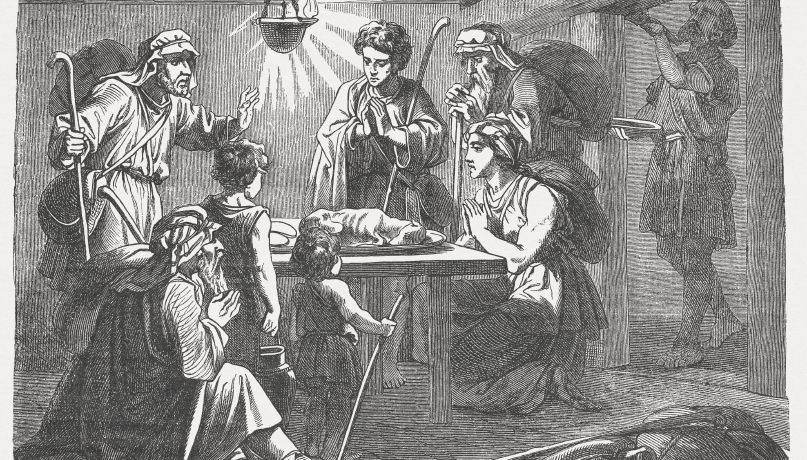
It wasn't long before such non-Christian rites and practices were assimilated into a new church religious holiday supposedly celebrating Christ's birth. William Walsh describes the rationalization behind it: " In order to reconcile fresh converts to the new faith, and to make the breaking of old ties as painless as possible, these relics of paganism were retained under modified forms ...Thus we find that when Pope Gregory [540-604] sent Saint Augustine as a missionary to convert Anglo-Saxon England he directed that so far as possible the saint should accommodate the new and strange Christian rites to the heathen ones with which the natives had been familiar from their birth.... On the very Christmas after his arrival in England Saint Augustine baptized many thousands of converts and permitted their usual December celebration under the new name and with the new meaning" (p. 61).

Even colonial America considered Christmas more of a raucous revelry than a religious occasion: "So tarnished, in fact, was its reputation in colonial America that celebrating Christmas was banned in Puritan New England, where the noted minister Cotton Mather described yuletide merrymaking as ‘an affront unto the grace of God'" (Jeffery Sheler, "In Search of Christmas," U.S. News and World Report, Dec. 23, 1996, p. 56).”  From: https://www.ucg.org/learn/bible-study-tools/bible-study-aids/holidays-or-holy-days-does-it-matter-which-days-we-observe/christmas-untold-story

_________

Sunday, June 29, 2025

Simon The Magician. A Great Blessing. God Cares About What We Eat.

.

Simon The Magician

Simon the Magician“Simon the Magician came from the Middle East, but his religious cult expanded over a wide area perverting the teachings of Jesus Christ. He is mentioned in the book of Acts and founded a counterfeit Christianity promoting false ideas and doctrines.

After Jesus' crucifixion, death and resurrection His followers spread the Gospel message. A disciple named Philip taught in Samaria, an area not far from Jerusalem, and many people began to respond to his message.

During his time in Samaria Philip came in contact with a pagan religious leader known as Simon the Magician, who is described in Acts 8:9-10: “But there was a certain man, called Simon, which beforetime in the same city used sorcery, and bewitched the people of Samaria, giving out that himself was some great one. To whom they all gave heed, from the least to the greatest, saying, "This man is the great power of God.”

Many of Simon's followers believed Philip's message about Jesus as the prophesied Messiah, and were baptized. Even Simon himself professed to be a Christian and he too was baptized (Acts 8:12-13). A short time later the Apostles Peter and John traveled to Samaria to teach the new converts and lay hands upon them so they would receive the Holy Spirit (Acts 8:17-19). When Simon saw the people were given God's Spirit, he offered the Apostles money to give him this power. (This is the origin of the English word ‘simony’, which refers to the selling and buying of religious offices.)

The biblical account doesn't say Simon wanted to give up his false teachings or even change his way of life. What he wanted was power (Acts 8:19). The Apostles knew this and called him a man of “...bitterness, and in the bond of iniquity” rejecting his request (Acts 8:23). After this, Simon Magus (magus means magician or sorcerer) disappears from the biblical account, but he continued to lead his religious cult, adding elements of the teachings of Jesus to his pagan-Jewish mixture, and becoming part of a movement to create a paganized Christianity.

Simon carried his message from city to city, just as Christ’s Apostles spread the true Gospel. He translated the doctrine of grace as license to disobey God’s law. The Encyclopaedia Britannica, 11th edition, Vol. 25, states, in its article titled “Simon Magus,” that he identified with the “Hellenized Gnosticism of Samaria.” The article referred to him as the “Samaritan Messiah” and the “father of all heresy.” The Samaritans had been placed in the land from which the northern kingdom of Israel had been taken captive by the Assyrians. These Samaritans had been brought from Babylon and continued to practice their ancient Babylonian religion, mixed with other religions.

The belief, at the heart of Simon's heresy, was he could receive power from God without changing his ways. The religious movement became known as gnosticism, and in the New Testament this false teaching is referred to as ‘lawlessness’.  Even today many believe the law of God was done away by the sacrifice of Jesus Christ. The Apostle Paul maintained this approach was already gathering momentum during his lifetime, "For the mystery of lawlessness is already at work..." (2 Thessalonians 2:7).

The Ten Commandments define the most basic behaviors of love. Do not steal. Do not lie. Do not murder. 1 John 5:3 very plainly tells us that love is keeping the commandments. In the Sermon on the Mount, Jesus expanded the meaning of the word ‘love’ beyond the simple letter of the law. For example he explained obedience to the commandment "do not murder" entailed learning not to hate, because hatred is the root cause of murder.

Nearly 300 years after Peter confronted Simon, a bishop named Eusebius lamented the Simonian cult still existed: "It is an astonishing fact that this is still the practice of those who to the present day belong to his (this) disgusting sect. Following in…. [Simon's] footsteps they slip into the church like a pestilential and scabby disease, and do the utmost damage to all whom they succeed in smearing with the horrible, deadly poison concealed on them" (The History of the Church by Eusebius.)

Even after Simon died in AD 68 his greatest heresies were still infecting Christianity hundreds of years after he is mentioned in the book of Acts. One of the reasons God inspired Luke to record these events is because Christians will be combating the "mystery of lawlessness" until the return of Jesus Christ. No wonder the Apostle John warns Christians: “Beloved, believe not every spirit, but try the spirits whether they are of God: because many false prophets are gone out into the world” (1 John 4:1)

_______

A Great Blessing

A great blessing“The desire for revenge, retaliation and mudslinging is reflected in our entertainment and society in general. In spite of the fact we are told to forgive, many seek an active or passive form of revenge against their real or perceived enemies.

The sacrifice of Jesus Christ paid the death penalty earned by mankind as a result of sin. "But God demonstrates His own love toward us, in that while we were still sinners, Christ died for us.... when we were enemies we were reconciled to God through the death of His Son..." (Romans 5:8-10). God expects us to develop this same attitude of mercy, graciousness and forgiveness. He will not forgive our sins if we are unforgiving toward others.

"And forgive us our debts, as we forgive our debtors.... For if you forgive men their trespasses, your heavenly Father will also forgive you. But if you do not forgive men their trespasses, neither will your Father forgive your trespasses" (Matthew 6:12,14-15). II Timothy 3:1-4 includes being unforgiving in the list of characteristics people will exhibit in the “perilous times” prevalent in the “last days” just before Jesus Christ returns to earth.

When a woman caught in adultery was brought to Jesus the Scribes and Pharisees demanded: “'Teacher, this woman was caught in adultery...Moses, in the law, commanded us that such should be stoned. But what do You say?' This they said, testing Him, that they might have something of which to accuse Him.” Jesus’s response was, “'He who is without sin among you, let him throw a stone at her first.' And…those who heard it, being convicted by their conscience, went out one by one…When Jesus had raised Himself up and saw no one but the woman, He said to her, 'Woman, where are those accusers ... .Has no one condemned you?' She said, 'No one, Lord.' And Jesus said to her, 'Neither do I condemn you; go and sin no more'" (John 8:1-11).

Another example showing Christ expects us to develop a forgiving attitude occurred when Peter asked, “‘…how often shall my brother sin against me, and I forgive him? Up to seven times?' Jesus answered, “…up to seventy times seven'" (Matthew 18:21-22). The Apostles were stunned at this statement and answered, “‘Increase our faith.’” (Luke 17:5).

The parable in Matthew 18:23-35 illustrates the consequences of being unforgiving. The account of the forgiven servant persecuting someone who owed him a pittance in comparison with the amount he had just received forgiveness for is a lesson for us. Christ warned the unforgiving servant his attitude was unacceptable, pointing out: "Should you not also have had compassion on your fellow servant, just as I had pity on you?' (verse 33).

This is not to say we cannot make a judgment regarding other people's actions as to whether or not we should follow their example, but we cannot read minds and hearts. Christ instructs us not to judge others: "Judge not, that you be not judged... First remove the plank from your own eye, and then you will see clearly to remove the speck from your brother's eye" (Matthew 7:1 and 5). Luke 6:36-37 reinforces this admonition: "Judge not, and you shall not be judged. Condemn not, and you shall not be condemned. Forgive, and you will be forgiven" (Luke 6:37).

Proverbs 19:11 states, “it is his [our] glory to pass over a transgression” (King James Version). Jesus' example just before His death sets the standard for us as far as forgiveness is concerned: "When Jesus was being crucified and in agony He prayed: Father, forgive them, for they do not know what they do" (Luke 23:34). When we forgive, we reflect the Father’s love, giving us the opportunity to extend to others the great blessing God has extended to us.

________

God Cares About What We Eat.

God cares about what we eat“God’s instructions to mankind concerning the food we should eat was an established law of God long before the time of the Mount Sinai covenant (See Leviticus 11 and Deuteronomy 14).

Noah was aware of these laws at the time of the flood. When God told him in Genesis 7:2, “You shall take with you seven…pairs of every kind of clean animal…and one pair of every kind of unclean animal….” He did not explain which creatures were clean and unclean because Noah already knew.

Act 10:13-35 describes a dream the Apostle Peter had ten years after Christ’s crucifixion, in which he initially thought God was instructing him to eat unclean food. It is clear from Peter’s reaction the Apostles did not think Christ had abolished the food laws of Leviticus 11 and Deuteronomy 14. His response was: "Not so, Lord! For I have never eaten anything common or unclean" (Acts 10:14). Peter eventually correctly understood the significance of his dream was that God’s message of salvation applies to all nations, and He was calling people from all races and backgrounds. “...God has shown me that I should not call any man common or unclean (verse 28).” Shortly thereafter Peter baptized the first uncircumcised gentiles God called into the Church (Acts 10:34-35; 45-48).

The account in Mark 7 is also often misunderstood and thought to indicate the food laws in Deuteronomy and Leviticus no longer applied in the New Testament era. However, the topic of discussion here is food in general, as Mark 7:2 points out: “Now when they (the Pharisees) saw some of His disciples eat bread with defiled, that is, with unwashed hands, they found fault." They then asked Jesus, "Why do Your disciples not walk according to the tradition of the elders, but eat bread with unwashed hands?" (verse 5).

In Mark 7:18-19 Jesus explained: “...whatever enters a man from outside cannot defile him because it doesn’t enter his heart, but his stomach, and is eliminated….” Many modern translations of the New Testament erroneously insert additional words into the text of Mark 7:18-19. The New International Version ends verse 19 with the comment: "In saying this, Jesus declared all foods 'clean'." The New King James Version has "thus purifying all foods."   The food laws are not in question here. The disciples were being criticized for not following ceremonial hand-washing procedures and, after decrying the hypocrisy of this and other religious practices, Jesus describes the attitudes that defile us “... out of the heart of men, proceed evil thoughts, adulteries, fornications, murders, thefts, covetousness, wickedness, deceit, licentiousness, an evil eye, blasphemy, pride, foolishness. All these evil things come from within and defile a man" (Mark 7:21-23). Some of these same qualities are listed in Galatians 5:19-21 as "works of the flesh." They are contrasted with the "fruit of the Spirit" which are listed as: "Love, joy, peace, longsuffering, kindness, goodness, faithfulness, gentleness [and] self-control…." (Galatians 5:22-23).

Many also believe Romans 14 tells us Christians are free from all former biblical restrictions regarding the meats they may eat. They cite as proof verse 14 in which Paul wrote, "I know and am convinced by the Lord Jesus that there is nothing unclean of itself; but to him who considers anything to be unclean, to him it is unclean." This approach, however, fails to consider the context of Paul's letter as well as the specific Greek words he used.

The food controversy here was over meat sacrificed to idols. The Romans of the day commonly offered both meat and wine to idols, with portions of the offerings later being sold in the marketplace. Some thought there was nothing wrong with eating this meat, while others had a guilty conscience about it. Paul explained those whose consciences were not troubled by eating meat that might have been ceremonially offered to idols could go ahead and eat it as long as they did not offend others who may believe it was a wrong thing to do. Paul instructs, "..let each be fully convinced in his own mind" (Romans 14:5) because "...whatever is not from faith is sin" (Romans 14:23). (See our article Does Romans 14 Abolish God’s Law About Clean And Unclean Meats for a more detailed explanation of these scriptures and the Greek words Paul used here.)”

_________

Sunday, June 9, 2024

Pentecost and God’s Gifts. PENTECOST PROVES THE SABBATH. Why Meat Is Bad For You- In 60 Seconds.

.

shavuot.png[7]Pentecost, Shavout, will start on the evening of Sat. 15th. June this year, and end on evening of 16th.

For in depth look at the festival:

https://thebiblicalnutritionist.com/why-christians-celebrate-shavuot/

_________

Pentecost and God’s Gifts

Acts 2:38-39

Then Peter said to them, “Repent, and let every one of you be baptized in the name of Jesus Christ for the remission of sins; and you shall receive the gift of the Holy Spirit. For the promise is to you and to your children, and to all who are afar off, as many as the Lord our God will call.”

“Peter’s call to action also provides a list of some of God’s greatest gifts.

The basic idea of repentance is “a reversal of thinking which changes one’s life” (The Nelson Study Bible, note on Matthew 3:2). When we see how our sins have gone against God’s perfect law, and that Jesus Christ gave His life to pay for our death penalty, it is only right to have godly sorrow and a fervent desire to change. But even repentance is a gift from God (Romans 2:4).

It's time to get to know God. Start your 7-day guided Journey.After repenting, God wants us to demonstrate our commitment through water baptism, a symbol of the death of our old person. This is followed by God’s gift of forgiveness of sins and the gift of God’s Holy Spirit—a seed of spiritual life, a lifeline to God, a connection to the spiritual vine. Through the Holy Spirit, God makes available so many other priceless gifts.

So, while Peter called on new believers to take action in this passage, it is really God whose acts of giving make the difference.

For more about responding to God’s call to repent and be baptized, download our free booklet Change Your Life!”  From: https://lifehopeandtruth.com/bible/blog/pentecost-and-gods-gifts/

_________

PENTECOST PROVES THE SABBATH

“In Leviticus chapter 23, God revealed a series of celebrations to be observed throughout the year. One of them is called Pentecost. It also goes by other names such as Shavuot, the Feast of Weeks, and First fruits (of the wheat harvest). It is a unique festival in two aspects. Firstly, it is the only holy day that does not fall on a specific day of the Hebrew Calendar. Instead, we must calculate its timing. Secondly, we must know when the weekly Sabbath occurs.

The verses about this celebration are found in Leviticus chapter 23:15-22. We will look at a few of these verses: “15 And you shall count for yourselves from the day after the Sabbath, from the day that you brought the sheaf of the wave offering: seven Sabbaths shall be completed. 16 Count fifty days to the day after the seventh Sabbath; then you shall offer a new grain offering to the Lord…21 And you shall proclaim on the same day that it is a holy convocation to you. You shall do no customary work on it. It shall be a statute forever in all your dwellings throughout your generations.”

Notice that Pentecost is the day after the seventh weekly Sabbath from Unleavened Bread. This means it always occurs on the first day of the week. Any church body who celebrates Pentecost on Sunday is acknowledging that the true Sabbath is from Friday sunset to Saturday sunset. This includes the Catholic Church. Some of their authors and clergy have admitted this!

John Laux, an author of textbooks for Catholic schools, wrote: “If we consulted the Bible only, we should still have to keep holy the Sabbath Day, that is, Saturday, with the Jews, instead of Sunday…” (Laux, p 51).

John Gibbons, a Catholic Cardinal, wrote: “But you may read the Bible from Genesis to Revelation, and you will not find a single line authorizing the sanctification of Sunday. The Scriptures enforce the religious observance of Saturday, a day which we never sanctify” (Gibbons, pp 72-73).

The Catholic Church acknowledges the timing of the Biblical Sabbath. Any church that celebrates Pentecost on Sunday reflects the same belief. Pentecost proves the Sabbath.”

Kelly McDonald, Jr, BSA President, www.biblesabbath.org

________

Why Meat Is Bad For You- In 60 Seconds

The Vegan Activist

“We have been told that animal flesh is an essential part of a healthy diet, but meat consumption has been associated with almost all the major diseases. Meat is high in fat, saturated fat and cholesterol, which will increase the risk of heart disease and can cause other serious health problems like diabetes. It is high in animal-protein, which is far too acidic for the human body and has been linked to kidney disease, cancer and osteoporosis.

Most meat also contains antibiotics and growth hormones, like oestrogen and testosterone, which can promote cancer growth. And fish is often contaminated with mercury, which is toxic, and can cause brain damage, and may also contribute to atrial fibrillation and fatal heart attack risk. Fortunately, there is no need to consume meat or other animal products, and a wholefoods, plant-based diet can provide all the essential nutrients for long-term health.”        

RESEARCH REFERENCED: http://www.pcrm.org/health/health-top... http://cebp.aacrjournals.org/content/... http://nutritionfacts.org/topics/merc... http://nutritionfacts.org/video/uproo...   YouTube: / @theveganactivist

________

Sunday, August 20, 2023

Effects of Baptism: A Clean Start. Sin’s Payday. Human-Made Stuff Now Outweighs All Life on Earth.

.

Effects of Baptism: A Clean Start

“Is water baptism essential for salvation? God wants 21st-century Christians to understand the effects of baptism in providing a clean start to a new life.

Effects of Baptism: A Clean StartJennifer stood waiting at the steps of the pool, giving her friends and family time to gather around in order to witness her baptism. She had been thinking and praying about this commitment to God for quite some time. And she had gone through a series of counselings with her pastor that helped her understand and further convicted her about the step she was taking.

Jennifer felt good about her decision and was confident that it was the right course of action. It was just about time for her to step into the water and formally make her covenant relationship with God.

Is baptism necessary today?

But was it really necessary for Jennifer to undergo this ancient practice that originated in type under the Old Covenant (Hebrews 9:10)? Must Christians be baptized today to have a clean start?

According to some groups, including Christian Scientists, Quakers, the Salvation Army and Unitarians, the answers to these questions are both “No.”

Those who do not practice baptism vary in their explanations as to why they do not, but in general, they consider baptism to be an outdated ritual that is no longer necessary under the New Covenant. Reasons given often include:

  • What one experiences in his or her heart is what is most important.
  • External actions to reflect one’s inner thoughts are superfluous.
  • The scriptures on baptism are ambiguous.
  • People can live holy lives without being baptized.

So are the Scriptures really that vague? Is there any value to being baptized? What are the effects of baptism? Instead of relying on human opinions and reasoning, let’s see what the biblical record shows.

Christ’s example and instruction on baptism

A quick review of Christ’s actions just before the beginning of His ministry is insightful as a lesson for us today. As we will soon see, Jesus taught that baptism was very important.

When John the Baptist began preaching in the wilderness of Judea, people from “Jerusalem, all Judea, and all the region around the Jordan went out to him and were baptized by him in the Jordan, confessing their sins” (Matthew 3:5-6). Though Jesus had no sins to confess, He asked John to baptize Him (verse 13).     Baptism is far more than a symbolic exercise.

After being baptized, the Spirit of God descended upon Jesus and a voice from heaven said, “This is My beloved Son, in whom I am well pleased” (verse 17).

Why did God the Father make this statement after Jesus was baptized? And, of special concern to us, will the Father be pleased if we are baptized? It seems obvious that He thinks baptism is important!

Scriptures such as 1 Peter 2:21 and 1 John 2:6 show that Christians are to follow the example of Jesus Christ. We are to walk as He walked, do as He did. We are indeed to be baptized as He was. When we follow Christ’s example, God the Father is, no doubt, pleased with us as well.

Jesus’ teaching on baptism was not limited to His personal example. During His earthly ministry, He had His disciples baptize those who believed (John 3:22). It is also insightful to note that Christ’s disciples baptized more people than John the Baptist (John 4:1-2).

After His crucifixion and resurrection, Jesus appeared to His disciples and gave them instructions on how they were to take His message to the world.

Note that His instructions, which are sometimes referred to as the commission of the Church, include baptizing those who respond: “Go therefore and make disciples of all the nations, baptizing them in the name of the Father and of the Son and of the Holy Spirit” (Matthew 28:19, emphasis added throughout).

Jesus also pointedly stated, “He who believes and is baptized will be saved” (Mark 16:16). Christ’s teaching on the importance and effects of baptism is quite clear!

Since Jesus clearly taught baptism, let’s now consider what we learn by following His instruction.

Effects of baptism: what we learn and receive from baptism

Repentance. When people in Peter’s audience on the Day of Pentecost in A.D. 31 asked the apostle what they should do, he told them to “repent, and let every one of you be baptized” (Acts 2:38). Repentance, which is the initial step toward baptism, means changing our way of life because of a change in our thinking. It means that in hindsight, we realize that the way we had been living was not in accordance with God’s good and beneficial laws.

The process of repentance—which we are led to by God (Romans 2:4)—helps us understand the seriousness of sin. It is marked by a strong desire on our part to be forgiven of our sins, to stop sinning and to change our sinful nature (Jeremiah 17:9). It includes the recognition of the value of Christ’s sacrifice—His blood that covers our sins (Ephesians 1:7).

Repentance is part of the message that Jesus told His disciples to preach (Luke 24:47). Why? Because, as Jesus had earlier said, “Unless you repent you will all likewise perish” (Luke 13:3).

To learn more about this important subject, see the articles in the section “Repentance.”

Death, burial and resurrection. After one repents of his or her sins, the next step is to be baptized—which means being immersed in water. This act symbolizes three important concepts.

First, baptism represents the death of the old man—the way we lived before repenting. Paul twice described this concept as being “crucified” with Christ (Romans 6:6; Galatians 2:20).

Next, after someone dies, he is generally buried. Baptism pictures the burial of the old man with all of his sins, which earn one the death penalty. This reminds us to put away the old way of life completely. As Paul explained, “We were buried with Him through baptism into death” (Romans 6:4).

The third concept symbolized by baptism is resurrection. Coming up from under the water after being baptized represents our resurrection to a new life in Christ. As Paul further noted, “If we have been united together in the likeness of His [Christ’s] death, certainly we also shall be in the likeness of His resurrection” (verse 5).

Baptism helps impress these three important concepts within our minds. This physical act helps us realize the spiritual significance of baptism.

For further study, see the article “What Do the Symbols of Baptism Mean?

Forgiveness of sins. Baptism is far more than a symbolic exercise. Indeed, there are two very significant beneficial effects of baptism in addition to the spiritual understanding we gain from obeying Christ’s command to be baptized.

The first is the forgiveness of our sins. Indeed, this is one of the key reasons for being baptized. As Peter said, “Let every one of you be baptized in the name of Jesus Christ for the remission of your sins” (Acts 2:38). Through baptism we accept the sacrifice of Christ, which washes our sins away (Acts 22:16) and gives us a clean start.

Receiving the Holy Spirit. A second important effect of baptism is the opportunity to receive the Holy Spirit. Again, Peter’s teaching was: “Repent, and let every one of you be baptized in the name of Jesus Christ for the remission of sins; and you shall receive the gift of the Holy Spirit” (Acts 2:38).

Baptism, accompanied by the laying on of hands (Acts 19:6), is the way God has established for us to receive this precious gift.

Romans 8 documents several important benefits that come to us because we have God’s Holy Spirit.

First, this power from God allows us to set aside ungodly activities and live “according to the Spirit” (verse 4). When we allow this Spirit to lead us, we are called the “children of God” (verse 16).

Furthermore, having God’s Holy Spirit is our guarantee of eternal life (verses 11, 13, 23).

To learn more about this baptismal promise, see the articles in the LifeHopeandTruth.com section “Holy Spirit.”

Action required: should you be baptized? 

Following the biblical instruction to be baptized underscores an important biblical principle: What we do is very important to God. The true, timeless religion of the Bible calls for physical action—not just knowledge and understanding. As Jesus said, “Not everyone who says to Me, ‘Lord, Lord,’ shall enter the kingdom of heaven, but he who does the will of My Father in heaven” (Matthew 7:21).

The author of Psalm 111 made this insightful observation: “A good understanding have all those who do His commandments” (verse 10). Echoing this principle and the teaching of Jesus, James emphasized that “faith without works is dead” (James 2:20). The actions we take before and during baptism set the stage for continued obedience to God afterwards.

Jennifer’s baptism

After everyone had gathered around, Jennifer was baptized by being completely immersed in the pool. She entered into a covenant relationship with Jesus Christ as her Lord and Savior. She had hands laid on her with a prayer for the receiving of the Holy Spirit, and she has been given a clean start and has begun her spiritual journey toward eternal life as a child of God in His Kingdom.

Looking back on her decision, she says it is the best one she has ever made. The decision to respond to God’s calling to be baptized was a good one for Jennifer. It can be the same for you!

The Teaching of the Apostles About Baptism

Only a few days after receiving the commission to make disciples of all the nations and baptize them, Jesus’ disciples gathered in Jerusalem for the Feast of Pentecost—one of God’s annual festivals (Acts 2:1). It was there on this holy day that the Holy Spirit was poured out on the believers (verses 2-4). Jesus had told His disciples that He would send this special power that proceeds from the Father to them after He left them (John 15:26; 16:7).

Empowered by this special gift from God, Peter—the disciple who had previously denied Christ three times—now publicly explained that Jesus Christ was responsible for sending the Holy Spirit that day (Acts 2:14-33). Peter also advised those who were listening to repent “and let every one of you be baptized in the name of Jesus Christ” (verse 38). Peter didn’t present baptism as simply an option.

The approximately 3,000 people who were baptized following Peter’s preaching also received the Holy Spirit that day (verse 41). As Christ’s apostles preached the gospel of the Kingdom and the Church grew, baptism was the common practice and expectation of those who responded (Acts 8:12, 36, 38; 16:15, 33; 18:8; 19:5; 22:16). When Paul was called by God, he responded by being baptized (Acts 9:18).

Jesus’ disciples taught others as they had been taught by Christ. And this teaching included baptism. When we respond to God, we, too, need to be baptized!”  From: https://lifehopeandtruth.com/change/baptism/a-clean-start/

Looking for the church behind Life, Hope & Truth? See our “Who We Are” page.

________

Sin’s Payday

Romans 6:23

For the wages of sin is death, but the gift of God is eternal life in Christ Jesus our Lord.

“We have all earned eternal death (Romans 3:23), but absolutely nothing we can do will earn us eternal life. It is a free gift God offers to those who humbly repent, showing that we understand the magnitude of our sin, and thankfully believe that God’s way is best (Acts 2:38; 8:37).

Desiring Jesus Christ to live in us and transform our lives is the only reasonable decision we can make when we are offered such a priceless gift (Galatians 2:20; Romans 12:1-2).     Listen to the "Verse by Verse" episode covering this scripture at: https://lifehopeandtruth.com/bible/blog/sins-payday-1/

To learn more about the many deep truths found in this verse, read “What Is the Meaning of Romans 6:23?

Study more about the response God wants from us by downloading the free booklet Change Your Life! and studying the biblical passages it presents about repentance and conversion.”

________

Human-Made Stuff Now Outweighs All Life on Earth

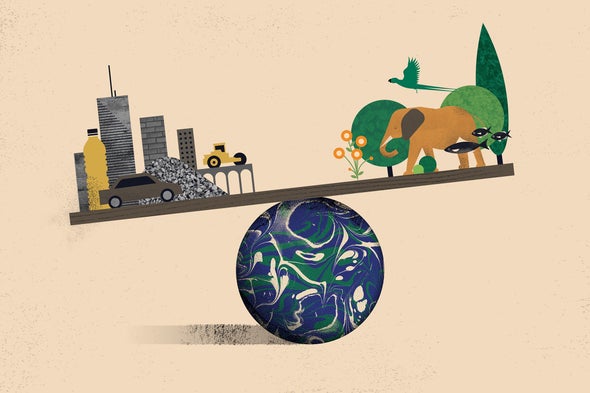
Human-Made Stuff Now Outweighs All Life on Earth“The sheer scale of buildings, infrastructure and other anthropogenic objects underscores our impact on the planet.

  • Global Biomass versus Human-made mass. Credit: Itai Raveh

Humanity has reached a new milestone in its dominance of the planet: human-made objects may now outweigh all of the living beings on Earth.

Roads, houses, shopping malls, fishing vessels, printer paper, coffee mugs, smartphones and all the other infrastructure of daily life now weigh in at approximately 1.1 trillion metric tons—equal to the combined dry weight of all plants, animals, fungi, bacteria, archaea and protists on the planet. The creation of this human-made mass has rapidly accelerated over the past 120 years: Artificial objects have gone from just 3 percent of the world’s biomass in 1900 to on par with it today. And the amount of new stuff being produced every week is equivalent to the average body weight of all 7.7 billion people.

The implications of these findings, published on Wednesday in Nature, are staggering. The world’s plastics alone now weigh twice as much as the planet’s marine and terrestrial animals. Buildings and infrastructure outweigh trees and shrubs. “We cannot hide behind the feeling that we’re just a small species, one out of many,” says study co-author Ron Milo, who researches plant and environmental sciences at the Weizmann Institute of Science in Israel. These numbers should be a wake-up call, he adds. They tell us “something about the responsibility that we have, given that we have become a dominant force,” Milo says.

He and his team had previously published an estimate of the amount of biomass on Earth, which led to the question of how it compared with the mass of artificial objects. Emily Elhacham, then a graduate student at the Weizmann Institute, led the effort to pull together disparate data sets on the flow of materials around the world. The researchers found that human-made, or anthropogenic, mass has doubled every 20 years since 1900. Total biomass remained more stable in that time period, though plant biomass has declined by approximately half since the dawn of agriculture some 12,000 years ago. The team estimates that anthropogenic mass crossed over to exceed biomass this year, plus or minus six years.”  More at: https://www.scientificamerican.com/article/human-made-stuff-now-outweighs-all-life-on-earth/

_________

How Long Does It Take To Decompose…_

Human-Made Materials 

https://blog.therainforestsite.greatergood.com/human-made-mass/?

_________

Sunday, April 2, 2023

Passover: What Did Jesus Do for You? Christ, Our Passover. Why Dairy Might Not Be The Best Choice for Your Health.

.

Passover: What Did Jesus Do for You?

Did Easter replace Passover? Download Our Free Booklet“Jesus knew what He would face: “You know that after two days is the Passover, and the Son of Man will be delivered up to be crucified” (Matthew 26:2).

The spring festivals (found in Leviticus 23) have deep symbolism for Christians today that transcends the sacrificial laws that ended with Christ’s death. The Passover symbolizes the sacrifice of Jesus Christ for our sins. The festival called the Days of Unleavened Bread symbolizes our need to live free of sin, after having our past sins forgiven.

Passover: What Did Jesus Do for You?Just before His betrayal and crucifixion, Jesus asked His disciples to prepare for His final Passover (Matthew 26:18-20). This evening, commemorated since the time of the Exodus from Egypt, involved the sacrifice of an unblemished lamb whose blood protected the Israelites while the firstborn of the Egyptians were slain (Exodus 12:5-7, 12-14).

The New Testament makes clear that this lamb represented Jesus Christ. As John the Baptist had announced about Jesus, “Behold! The Lamb of God who takes away the sin of the world!” (John 1:29).

This last Passover was special, and Jesus taught His disciples new elements that would become the basis of the New Testament Passover service.

First, Jesus Christ set the example of love and service through washing His disciples’ feet (John 13:4-13). Then He told them, “If I then, your Lord and Teacher, have washed your feet, you also ought to wash one another’s feet. For I have given you an example, that you should do as I have done to you” (John 13:14-15).

The symbols of the bread and the wine

After the foot washing, Jesus instituted two deeply meaningful symbols of the New Testament Passover.

“And as they were eating, Jesus took bread, blessed and broke it, and gave it to the disciples and said, ‘Take, eat; this is My body.’ Then He took the cup, and gave thanks, and gave it to them, saying, ‘Drink from it, all of you. For this is My blood of the new covenant, which is shed for many for the remission of sins’” (Matthew 26:26-28).

Paul reminded the Church, both Jews and gentiles, of the vital importance of this memorial that represents Christ’s death and a renewal of our commitment to God made at baptism. Jesus said the bread represented His body. He willingly suffered to take our infirmities and bear our sicknesses (Matthew 8:16-17; Isaiah 53:3-5). Jesus is also the Bread that makes eternal life possible as we allow Him to live in us (Galatians 2:20).

The wine represents His shed blood given for the forgiveness of our sins.

The apostle Paul repeated these Passover instructions about the bread and the wine in 1 Corinthians 11:23-26. He reminded the Church, both Jews and gentiles, of the vital importance of this memorial that represents Christ’s death and a renewal of our commitment to God made at baptism.

Why did Christ have to die

Why did Jesus come to the earth as a human being to die? Because of sin—the destructive thoughts and actions that go against God’s will (1 John 3:4).

God reveals His thinking and way of life throughout the Bible, and especially in His 10 Commandments and His good and beneficial laws that show us how He intends life to be lived. When we break His laws, we bring automatic penalties on ourselves, and especially the penalty of death—eternal death. We have all earned this penalty (Romans 3:23; 6:23).

God, in His perfect eternal justice, must exact the penalty; but in His awesome mercy, Jesus Christ was willing to pay that penalty for us! “For God so loved the world that He gave His only begotten Son, that whoever believes in Him should not perish but have everlasting life” (John 3:16). Christ gave His life so we could repent and be saved (1 Timothy 2:4).

That is the solemn yet joyous message of the annual Passover. This is the first step in God’s plan of salvation. The second step is represented by the second festival, the Feast of Unleavened Bread.”                 

From: https://lifehopeandtruth.com/life/plan-of-salvation/passover/

Do you have more questions about the Christian Passover? Read “Questions and Answers About the Christian Passover.”

_______

Christ, Our Passover

1 Corinthians 5:7

Therefore purge out the old leaven, that you may be a new lump, since you truly are unleavened. For indeed Christ, our Passover, was sacrificed for us.   

“The apostle Paul drew on the lessons of the spring festival season to encourage the Corinthian congregation to remove sin from their lives.

Jesus Christ fulfilled the type of the Passover lamb whose blood protected the Israelite firstborn from death before the exodus from Egypt. After the Passover festival comes the Feast of Unleavened Bread, where yeast and other leavening become a symbol of sin.”

Study more about Passover and the Feast of Unleavened Bread in our free booklet From Holidays to Holy Days: God’s Plan for You.”

Listen to the "Verse by Verse" episode covering this scripture at https://lifehopeandtruth.com/bible/blog/christ-our-passover/?

________

Is Dairy’s Reign Over? (Problems with Dairy and The Dairy Industry)

“Big Dairy is getting desperate. But the demand for plant-based milks keeps going up.  Dairy is declining, as the failure of Big Dairy’s latest campaign Februdairy shows. More people are becoming aware of the problems with dairy and the problems with the dairy industry. Could dairy’s prominence be on its way out?  

Almonds are the new cow. So are cashews. Coconuts. Beans and peas. And pretty much any plant-based ingredients that can be turned into frothy, creamy, and delicious plant-based milk. No cow required.

Consumers are flocking to nondairy milk like cows flock to hay. It’s looking an awful lot like the tide is turning to greener pastures (perhaps because they’re growing nitrogen-fixing peas).

Facing declining sales and waning consumer interest, the dairy industry launched “Februdairy” — a month-long campaign aimed at revitalizing dairy’s increasingly sour image.

This initiative is a response to the growing trend toward plant-based milks and campaigns encouraging plant-based eating, including the popular UK-based Veganuary campaign, which encourages people to try going vegan for January and the rest of the year. In 2018, more than 150,000 people signed up, compared to only several hundred people when it launched in 2014.

This massive rise in plant-powered eating is happening around the world. For example, from 2014 to 2017, there’s been a 600% increase in the number of people identifying as vegans in the U.S.

At a recent dairy industry conference, industry consultant Dr. Jude Capper sounded the alarm, announcing that, “If consumers don’t buy our products — milk, cream, butter, cheese etc — we will not have a dairy industry in five to 10 years.

The Problems With The Dairy Industry — Cruelty to Cows 

The Februdairy campaign’s goal is to continue painting an idealized (and inaccurate) picture of modern dairy farming pushed by the industrial agriculture industry. The campaign intends to feature photos of “happy” cows and other bucolic farm imagery.

But the truth is vastly different. In reality, tens of thousands of animals are living inside giant steel sheds with little or no access to the outdoors.

Once a staple in most homes, the reality today is that cow’s milk comes with a whole host of problems. Cows are, of course, as adorable and lovable as ever. But with the hundreds of millions of them on the planet… well, things get a little complicated.

While a small percentage of modern farms produce milk from cows who are left outside to graze on fresh grass and clover, and perhaps to ponder the logistics and benefits of jumping over the moon, the majority aren’t afforded such luxuries.

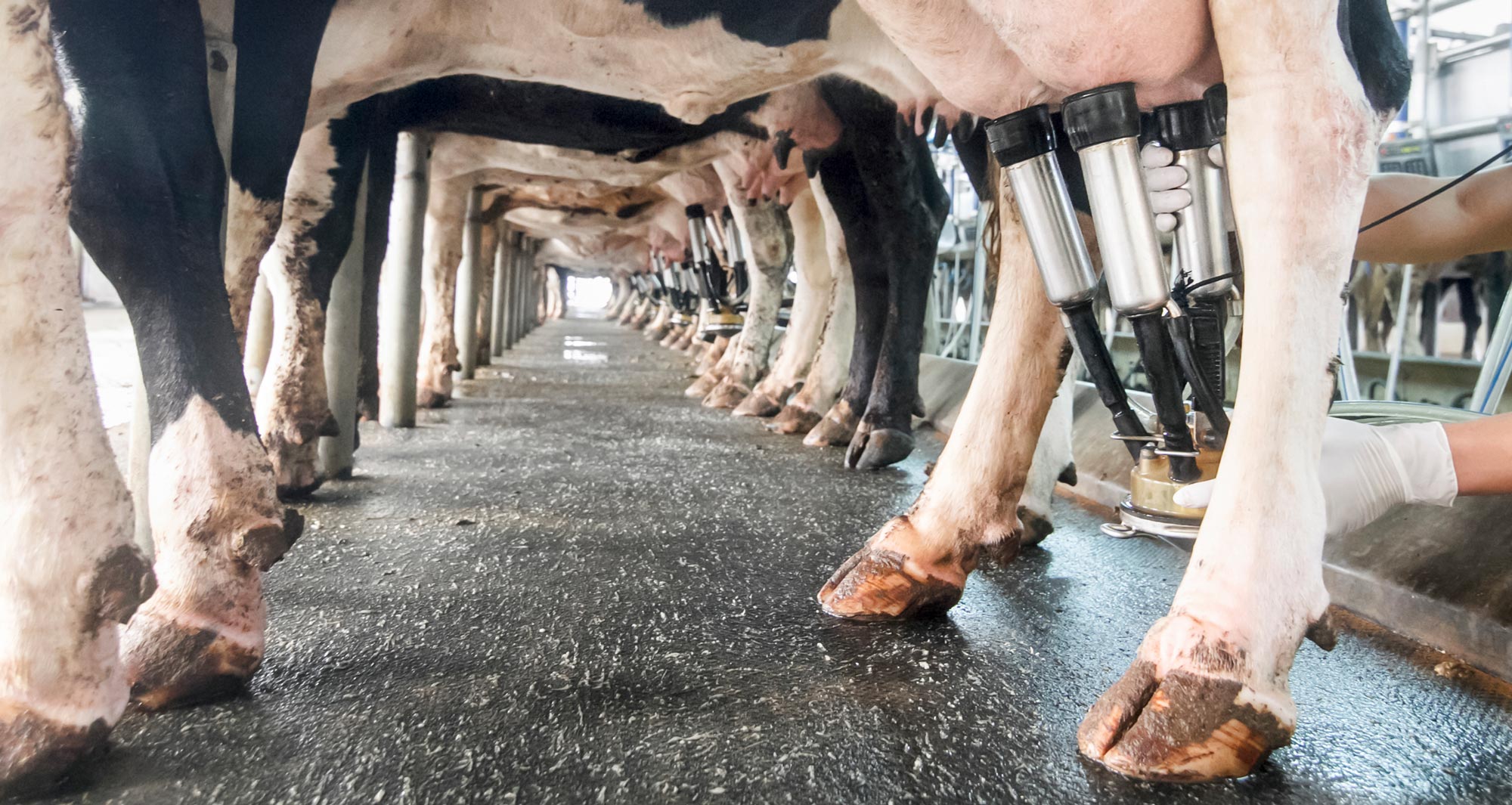
dairy cows being milkedIn the vast majority of dairy operations in the U.S., the truth is, cows do not have happy lives. They spend their time indoors, typically on hard, abrasive concrete floors and frequently connected to a milking apparatus. Most never see a blade of grass.

iStock.com/Toa55

They are artificially impregnated to ensure they continue to produce the maximal quantity of milk. Plus, they are fed antibiotics. And their feed is often contaminated with herbicide and pesticide residues from the genetically modified beans and grains they eat. Some are injected with genetically engineered growth hormones.

Recently, the dairy industry has been called out for its cruel treatment of these gentle animals. Even the #metoo campaign has been used to expose the cruel treatment of dairy cows.

A dairy cow will spend much of her life hooked up to milking machines that limit movement and can cause painful infections in her udder. Her babies are taken away just days after being born so that the milk can be bottled and sold.

Other Problems With The Dairy Industry

The dairy industry is also directly tethered to the notoriously cruel veal industry. Female calves become dairy producers, and male calves are often sent into confinement to be raised for veal meat.

And then there’s dairy’s impact on the planet.

Livestock is responsible for a significant amount of greenhouse gases. The United Nations puts the industry 14.5% of all GHG emissions — slightly more than transportation, which produces about 14% of total GHGs worldwide.

In California, the largest dairy-producing state, water usage for livestock is also of concern. One-quarter of California’s water budget goes toward producing beef and dairy. This is more water than all the businesses and homes in the state.

But the dairy industry does its best to keep all this from consumers. Clever marketing (“Got Milk?”), the prevalence of red barn imagery and toothy cow smiles on dairy labels, and other tactics have long convinced consumers this stuff is healthy and even necessary.

But with U.S. milk consumption down considerably, the dairy industry’s days as a dominant food industry force may be numbered. In fact, numbers from the USDA show that Americans are drinking almost 40% less dairy milk than they did in the 1970s.

The Demand for Plant-Based Milk Is Booming

glass of almond milkiStock.com/naito8

As it turns out, people want more options than just whole, 2%, or skim milk. They want new flavors — and not just chocolate. They want milk varieties that are reinvigorating their taste buds. And they want plants.

Non-dairy milk is the leading driver of the plant-based foods category, growing more than 60% in the last five years to more than $2 billion in sales in 2017.

Sales of dairy are expected to drop by another 11% between 2015 and 2020, as a steady decline continues. On the other hand, nondairy milk sales are expected to continue seeing record-breaking and milk-shaking increases. Dean Foods, a leading dairy producer, experienced a 91% decline in its net income from 2016 to 2017.

Elmhurst Dairy was once a thriving dairy producer, but declining interest and lackluster sales led the company to reinvent itself. Now known as just Elmhurst, the company has dropped cow’s milk for a booming plant-based milk business.

The company is a leading producer of non-dairy nut-milk products, including milk made from almonds, cashews, walnuts, hazelnuts, and peanuts.

Why Dairy Might Not Be The Best Choice for Your Health

The dairy industry has spent millions of dollars touting milk as “nature’s most perfect food.” And it is. For baby calves. But what about for humans?

We are the only species on earth that drinks milk after infancy. And in all the years that humans have been around, we’ve only been drinking the milk of cows for the last few thousand — a minimal portion of our time on this planet.

Dairy milk does have all the nutrition calves need to grow. As a result, it’s full of many important nutrients, and it provides an abundant source of calcium, vitamin D, riboflavin (B2), vitamin B12, potassium, and phosphorus. But since modern milk almost always comes from recently pregnant cows, it also contains hormones that don’t do a human body any “good” at all.

These hormones are thought to be one of the reasons that dairy consumption has been found to be linked to increased rates of acne, and to increased risk of certain cancers — especially prostate cancer.

Many studies have explored the link between dairy products and heart disease. Perhaps the largest of them, conducted by Harvard Chan School researchers and published in the American Journal of Clinical Nutrition in 2016, reported on research done with 43,000 men and 187,000 women.

When calories from full-fat dairy products were replaced with carbohydrates from whole grains, the risk of heart disease dropped by 28%. Replacing dairy products with red meat, on the other hand, led to a 6% increase in heart disease risk.

Does Dairy=Strong Bones?

So what about the belief that milk is necessary for strong bones and the prevention of osteoporosis? Not true.

Clinical research shows that dairy milk has little or no benefit for our bones. For example, the Harvard Nurses’ Health Study, which followed more than 72,000 women for 18 years, showed no protective effect of increased milk consumption on fracture risk.

Most People In The World Can’t Digest Dairy

Another major problem with dairy consumption is lactose intolerance. As infants, our bodies produce a digestive enzyme called lactase, which breaks down lactose from mother’s milk. But as we grow up, many of us lose the ability to do that.

By adulthood, about three-quarters of the world’s population is unable to break down lactose, and there’s a strong racial dimension to lactose intolerance. The only ethnic group on the planet that can usually digest lactose is Caucasians. Most people of African, Asian, Arab, and Indigenous ancestry cannot.

As Caucasian-centric movies, corporations, and even government policies have promoted dairy product consumption around the world, they’ve unintentionally subjected billions of people to significant digestive problems. Lactose intolerance can cause nausea, vomiting, and diarrhea.

More Doctors Are Talking About The Problems with Dairy

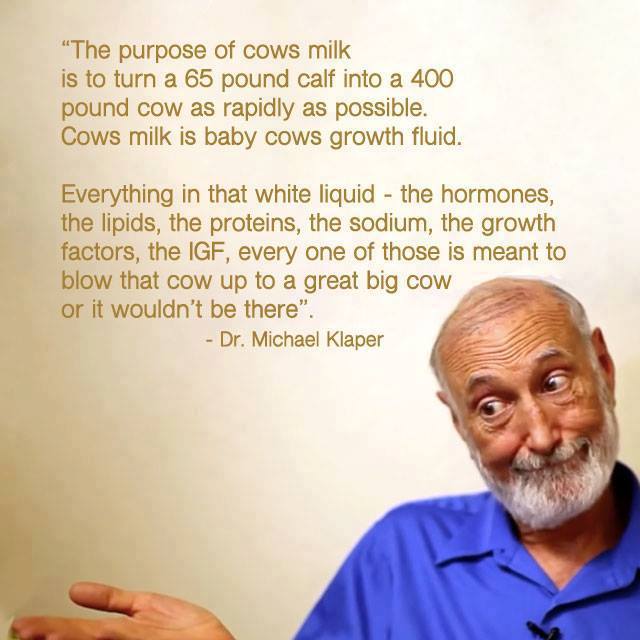
Increasing numbers of doctors and researchers are now recommending against dairy Dr. Michael Klaper on the problems with dairyconsumption. Author and nutritional authority Michael Klaper, MD, said to FRN:

“If there was one substance I could eliminate from the American diet immediately, it would be those substances made from the secretions from the udder of a cow: dairy products.”

Plus, according to 10-time New York Times bestselling author Dr. Mark Hyman, dairy consumption is strongly linked to digestive issues and may even be connected to an increased risk of some types of cancer — including prostate cancer and breast cancer.

Our bodies just weren’t made to digest milk on a regular basis,” Dr. Hyman explains. “Instead, most scientists agree that it’s better for us to get calcium, potassium, protein, and fats from other food sources, like whole plant foods — vegetables, fruits, beans, whole grains, nuts, seeds, and seaweed.”

Neal Barnard, MD, of the Physicians Committee for Responsible Medicine, wrote:

Dairy products are packed with fat and cholesterol and may increase the risk of health problems ranging from asthma to some types of cancer. An elevated risk of prostate cancer incidence and mortality has been associated with dairy consumption and the same may be true for ovarian cancer.”

Hemp milk and seedsSo overall, it seems that for many people, moving away from dairy milk may be a positive step.

Plant-Based Milk Offers Health Benefits — Without The Cruelty

iStock.com/marekuliasz

More at: https://foodrevolution.org/blog/problems-with-dairy/

_______

Sunday, January 15, 2023

10 Questions to Ask Before You Get Married. Living Together Before Marriage. Are Energy Drinks Beneficial?

.

10 Questions to Ask Before You Get Married

10 Questions to Ask Before You Get Married“Whether you have someone special in your life right now or not, here are 10 questions to consider when it comes to choosing your future spouse.

Marriage is a big deal.

In fact, with the exception of your relationship with God, it might be the most important, most life-altering, most far-reaching commitment you’ll ever make in your entire life.

But the decision to commit to God through baptism is a little more clear-cut than the decision to get married. The overall question on the table with baptism is, “Are you going to commit to God’s way of life or not?”  With marriage, there’s the added wrinkle of sorting out who you should make that commitment with, and how you can be sure he or she is the right person, and what you should be looking for to be sure.

What helps with that process is knowing the right questions to ask—which is why we’ve put together this list of 10 important questions to ask about the person you want to spend the rest of your life with.

Is this a comprehensive list of every question you’ll ever have to consider before marriage? Not by a long shot. But it is a place to start—and if you’re willing to answer these 10 questions honestly, they should leave you with a clearer picture of whether or not you’re on the right track.

1. Does he or she show you love and respect?

That might feel like an obvious question, but it’s easy to mistake mutual attraction for mutual love and respect. Just because you like each other doesn’t mean your relationship is anchored by these two essential qualities, so take some time to really think about it.

Paul told the congregation at Ephesus, “Let each one of you in particular so love his own wife as himself, and let the wife see that she respects her husband” (Ephesians 5:33).

We don’t show love and respect by accident. They aren’t things that just happen. To be consistent in these things, we have to be making a daily effort to express them—and to better understand what God says they mean. If the person you want to marry isn’t actively showing you love and respect, then the foundation of your marriage will be crippled from day one.

2. Are you moving toward the same goals?

Amos asked, “Can two walk together, unless they are agreed?” (Amos 3:3). By entering into the marriage covenant with someone, you’re agreeing to walk alongside him or her for the rest of your shared lives.

If you’re each looking toward different destinations in life, your marriage will feel the strain. But if you’re both headed the same direction, working with the same goals in mind and operating by the same values, your relationship will blossom and grow in the process. What do you want out of marriage? What do you want your home life to look like? What are your career goals? If you’re each looking toward different destinations in life, your marriage will feel the strain. But if you’re both headed the same direction, working with the same goals in mind and operating by the same values, your relationship will blossom and grow in the process.

3. How does he or she handle stressful situations?

It’s easy to be the best version of ourselves when life is going well—and in the beginning of a relationship, there will be a lot of easygoing, stress-free moments. It might even seem like things will always be that way—but that’s not how it works. Life will inject stress into your relationship, and it’s important to know how your potential spouse handles it.

Early in our relationship, my (then future) wife and I took a wrong turn during a road trip, which led us to a grid of under-construction city streets. After sunset. In an urban area neither of us had been in before.

It was an eye-opening experience because we both saw how the other handled unexpected stress. We made it out of there alive and (relatively) unscathed, and our budding relationship was stronger because of it.

“He who is slow to anger is better than the mighty,” says the book of Proverbs, “and he who rules his spirit than he who takes a city” (Proverbs 16:32). Marriage works better when the people in it know how to rule their spirits when times get tough—because they will get tough.

4. How does he or she treat others?

One of the most important observations you can make about the person you’d like to marry is how he or she treats others—especially the ones who can’t really do anything about it. Cashiers. Waiters and waitresses. Employees. Total strangers. Anonymous users on the Internet. When there’s no repercussion for being rude or unkind, what kind of personality do you see on display?

Proverbs describes the ideal woman as someone who “extends her hand to the poor, yes, she reaches out her hands to the needy” (Proverbs 31:20), and Jesus gave us the Golden Rule: “Therefore, whatever you want men to do to you, do also to them” (Matthew 7:12). Make sure your potential spouse is someone who extends kindness and compassion to others, even when there’s nothing to gain from it.

5. What if nothing ever changes?

What’s the most annoying trait of your potential spouse-to-be?

Got it? Okay. Now, if that trait never changed—if you knew it was going to stay just as annoying and just as consistent for the rest of your human life—would you still want to marry this person?

It’s a dangerous game to go into marriage expecting your partner to change in a specific way. Sure, life is full of change, but for all you know, that specific trait might stay the same forever or even get worse. And if it does, are you going to be okay with that? Or is that a deal breaker? The marriage covenant is a very permanent thing (Matthew 19:9), so it’s important that we don’t bank on change that might never happen.

6. How focused is he or she on self-improvement?

In contrast to the last question, being a Christian means being committed to change. Following God means seeking out where we’re falling short of His expectations and learning how to do better.

One of the qualities any potential spouse should have is the desire to improve as God reveals areas that need work. Make sure you’re looking to enter into marriage with someone who makes the effort to grow as a Christian.

7.a. Women: Is this a man you can follow and support, even when you disagree with him?

Paul wrote an instruction that can be hard to swallow: “Wives, submit to your own husbands, as to the Lord. For the husband is head of the wife, as also Christ is head of the church; and He is the Savior of the body. Therefore, just as the church is subject to Christ, so let the wives be to their own husbands in everything” (Ephesians 5:22-24).

But there it is. In the marriage relationship, part of the wife’s role is to submit to her husband. Women, that doesn’t mean you’re not allowed to voice your concerns or express your hopes as your husband leads. It doesn’t mean you’re expected to become some kind of mindless slave or you’re expected to submit to things contrary to God’s instruction. But marriage does mean committing to following where your husband leads, even when you think another direction might work better.

Make sure you marry a man you’re not concerned about having to follow.

7.b. Men: Is this a woman whose input you will value and consider, even when you disagree with her?

Paul had something to say to the husbands too: “Husbands, love your wives, just as Christ also loved the church and gave Himself for her” (Ephesians 5:25). It’s that last part that often gets overlooked. Men, our job is to love our wives as Christ loves the Church. That’s a deep kind of love—a love filled with self-sacrifice and unflinching dedication. A husband should make decisions that place higher value on his wife and family than himself.

Even though it’s our responsibility to take the reins of the relationship, we’re not the boss or the dictator. We’re the husband, and we are to give “honor to the wife, as to the weaker vessel, and as being heirs together of the grace of life” (1 Peter 3:7, emphasis added throughout).

Make sure you marry a woman whose thoughts and opinions will help you make better decisions as a leader.

8. What’s his or her relationship with God like?

More tough words from Paul: “Do not be unequally yoked together with unbelievers. For what fellowship has righteousness with lawlessness? And what communion has light with darkness? And what accord has Christ with Belial? Or what part has a believer with an unbeliever? And what agreement has the temple of God with idols? For you are the temple of the living God” (2 Corinthians 6:14-16).

That’s not optional. That’s not a matter of preference. That’s not a suggestion, a hope or a best-case scenario. This goes back to having the same goals. If the person you’re interested in doesn’t believe in God or in living His way of life, how can you expect to walk together?

Or if that belief or that way of life is just something on the back burner, something that gets pushed aside in favor of other things, do you think the command to “grow in the grace and knowledge of our Lord and Savior Jesus Christ” (2 Peter 3:18) is going to be easier or harder for you?

Marry someone whose dedication to living God’s way of life inspires you to do a better job in your own life.

9. Is he or she willing to put God before you?

Ah. Now we’re into really difficult territory. This isn’t the picture Hollywood paints when it talks about romance—or all those inspirational quotes on social media, for that matter. The world around us says that true love is finding someone who makes you the focal point of his or her entire universe, who puts you before anything else.

When we lose sight of who should come first in our life, the other areas of our life are bound to come undone in the process. Marriage is a lot of things, but it shouldn’t be that. Not in a million years.

God was serious when He said, “You shall have no other gods before Me” (Exodus 20:3). It wasn’t a joke. Nothing—nothing, not even your cherished wife or husband—is to come between you and your relationship with God (Deuteronomy 13:6-8).

Jesus also emphasized that God is to come first when He spoke His famous words, “But seek first the kingdom of God and His righteousness, and all these things shall be added to you” (Matthew 6:33).

When we lose sight of who should come first in our life, the other areas of our life are bound to come undone in the process. “All these things”—all the blessings and benefits of life, which include marriage—come second to God.

If you want a successful marriage, make sure you’re looking for someone who will put God first—and you second.

10. What’s your relationship with God like?

But then, all this assumes one very important point—that God matters to you too. That you’re making the effort to put Him first in your life. That you treat others with compassion. That you’re making the effort to improve and grow as a child of God. Because, well, it’s a two-way street—if you’re asking these questions about the person you want to marry, then hopefully the person you want to marry will be asking these same questions about you.

Whether you’ve had someone in mind as you’ve made your way through this list or you’re still searching for that special someone, one of the best things you can do is to start making sure you can measure up to the questions on this list too. It’s a lifelong project, and there’s always room for each of us to continue improving ourselves—both for our own sake and for our spouse’s.

The book of Proverbs tells us that “he who finds a wife finds a good thing, and obtains favor from the LORD” (Proverbs 18:22), and again, “Houses and riches are an inheritance from fathers, but a prudent wife is from the LORD” (Proverbs 19:14).

Marriage, entered into by the right people and for the right reasons, is an incredible blessing from God, and it’s never too early (or too late) to start preparing for it.

Want more? Check out our articles “5 Traits Men Should Look for in a Godly Woman” and “5 Traits Women Should Look for in a Godly Man.”

Sidebar: How You Might Be Ruining Your Marriage Before It Even Starts

In many countries, around 50 percent of all marriages end in divorce.

That’s not a great success rate—especially when you consider that no one enters into marriage with the hope that the relationship will end in shambles.

Unfortunately, there are social norms and decisions people make every day that can make nurturing a healthy marriage increasingly difficult. What’s more, some of these can impact your future marriage long before you have a wedding date (or even a spouse) in mind.

If you want a strong marriage, here are two pitfalls to avoid—and why:

Cohabitation

Moving in together is so common these days that it almost raises an eyebrow when two people decide not to live together before they get married. Most people look at cohabitation as a way to test-drive a marriage—to see if everything is satisfactory before making a big commitment.

Here’s why that’s a problem:

Marriage isn’t about everything working perfectly. In fact, if there’s one thing you can count on in marriage, it’s things not working perfectly. If you’re cohabiting—if you’re just two people living together, bound by nothing more than a feeling of affection—it’s a lot easier to walk away when things get tough.

Marriage—at least the kind of marriage God intended for us to have—is a binding commitment between two people. It’s an agreement that when things get difficult, the husband and the wife will put in the effort to make things work.

You can’t test-drive that kind of commitment.

More than that, God designed the sexual union to exist between a husband and wife exclusively. The Bible says, “Marriage is honorable among all, and the bed undefiled; but fornicators and adulterers God will judge” (Hebrews 13:4). Sex serves as a powerful bond between husband and wife—but the more potential marriages you try and test-drive, the more diluted that bond will be when you finally say, “I do.”

Sexualized content

This one umbrella covers a lot of territory. Yes, we’re talking about outright pornography here, but also anything that uses the idea of sex as a selling point or in a provocative way. That includes everything from sex scenes in popular movies to advertisements that want you to focus less on the product and more on the attractive model displaying it.

Understand that the world is selling you a false (and largely impossible) concept of what sex is and how it works. The more you let that imagery in—the more you believe what the world tells you about how sex should look—the more disappointed and frustrated you’ll be when your own marriage fails to live up to those impossible expectations.

Sex is a fantastic, awesome gift designed by God to bolster and enhance a marriage, which is why Satan is eager to cheapen and trivialize it. You don’t have to be married to negatively impact your future marriage—but the good news is, the opposite is also true. You don’t have to be married to set your future marriage up for success. Making good decisions now—and avoiding the bad ones—can make all the difference later.” From: https://lifehopeandtruth.com/relationships/dating/questions-before-you-get-married/

_______

Living Together Before Marriage.

“More couples are living together before marriage. But statistics show the “cohabitation effect” is not what they expected. What does our Creator say?

Living Together Before Marriage

Despite the fact that individuals who live together before marriage have a greater rate of divorce than those who do not, many who read the statistics simply don’t believe it. They do not believe their chances of divorce increase if they live together before marriage.

Living-together facts

Surveys show that there is a negative “cohabitation effect”couples who live together before marriage “tend to be less satisfied with their marriages—and more likely to divorce—than couples who do not” (Meg Jay, New York Times, “The Downside of Cohabiting Before Marriage,” April 14, 2012).

In spite of this, the majority of people who responded to this article declared they would still choose to live together before marriage. Many expressed the belief that living together before marriage could help them better determine whether they would be happily married. They believe their experiences will be different—they will be the exceptions to the rule.

Some felt there must be something wrong with the statistics because it would only stand to reason that living together before marriage makes sense. After all, you want to be sure your love is strong enough to eventually marry, and the only way to find out is to live together, or so many believe.

Whatever the justification, it seems that living-together relationships don’t often work out. Various surveys tell us that at least 50 percent and up to 70 percent of those who eventually marry have lived with someone else before marriage. The overwhelming reason given for cohabiting before marriage is to test the relationship before making the commitment of marriage.

From a human perspective, the rationale for living together before marriage may make sense. But what if living together really isn’t better for strengthening your future marriage? Let’s ask a few questions to help find the answer.

What are the health risks?

Is having a sexual relationship before marriage healthy?

There are at least 19 million new cases of sexually transmissible diseases in the United States every year. Women are infected two times more often than men.

Other studies show that 80 percent of young people are sexually active before marriage. It is no secret that sexual activity before or outside of marriage brings a high risk of contracting a sexually transmissible disease. By their late teenage years, at least three-fourths of all U.S. teens have had intercourse, and more than two-thirds of all sexually experienced teens have had two or more partners (“Sexual and Reproductive Health: Women and Men,” October 2002, guttmacher.org).

Each year, about 12,000 women get cervical cancer in the United States. Almost all of these cancers are related to the sexually transmitted human papillomavirus (HPV). This cancer often takes years to develop after a woman becomes infected.

Once infected by an STD, your chances of passing it along to a new partner are extremely high! And with so many people having multiple sexual partners, the spread of STDs has become almost epidemic.

And these factors don’t even take into consideration the emotional and psychological issues associated with disease or the impact of unwanted pregnancy. Are these chances you’re willing to take?

Involvement versus commitment

Are you sure you want to live with someone who is not committed?

Are you sure you want to live with someone who is not committed?Living together is involvement. Marriage is commitment. “Studies done by Pamela Smock, an associate professor of sociology at the University of Michigan, reveal that there might be a fundamental difference in the way men and women perceive cohabitation: Women tend to view it as a step before marriage to that partner, whereas men tend to see living together as something they do before making any commitment” (“Living Together: Do Men and Women Perceive It Differently?” ivillage.com).

To illustrate, consider the advice one young man was given by another man: “Why buy the cow if you get the milk free?” Are women compromising their values in search of possible future security, while actually reducing the chances of a committed marriage?

In response to The New York Times article, a male who was only interested in sexual relations stated, “Of course this would be simpler if my girlfriend and me [sic] could just continue as is but, as is always the case (in my relationships) she wants to build a nest for us.” Perhaps this woman should reconsider their relationship altogether!

Couples who moved in together because it was convenient or because they felt they needed a trial period are the ones who tend to get divorced most often if they marry.

Additional consequences of living together before marriage

Have you considered the consequences of having a child out of wedlock?

The Witherspoon Institute, a conservative think tank out of Princeton, New Jersey, issued a report called “Marriage and the Public Good: Ten Principles.” They identify four threats to marriage, including cohabitation arrangements. The report states that these arrangements “are not a good alternative to marriage but are a threat, and they surely do not provide a good environment for the rearing of children.”

Nearly 40 percent of babies born in the United States in 2007 were delivered by unwed mothers, according to data released by the National Center for Health Statistics. The highest percentage was among women 25 to 29 years old. Can you be sure your “significant other” will continue to live with and provide support for the family after a child is born if he isn’t committed enough to marry you?

To learn more about the problems with living together before marriage, read “Is Cohabitation Before Marriage a Good Idea?

Is marriage sacred?

According to some, marriage isn’t a sacred ritual anymore. To them, it is just a man-made step in a relationship, so it shouldn’t matter if people live together before marriage. If evolution did blindly develop these wonderful bodies we call male and female, that might be so.

However, if God—who also designed marriage and family—is our Creator, then we must consider His instructions. His commands forbidding sexual relationships outside of the bonds of marriage are not hard to find or understand (Exodus 20:14; Galatians 5:19; 1 Corinthians 6:18).

Furthermore, if you believe, as the apostle Paul did, that the loving bonds of marriage offer a beautiful analogy of Jesus Christ and the Church (Ephesians 5:31-32), give careful thought. Before living together, seriously think of the consequences—to your emotions, to your health, to your chances of marital success and to your relationship with God.

Most of those who read the foreboding statistics about the cohabitation effect pay no attention. It seems each person feels his or her situation is different—he or she will be one of those who will find true lasting happiness. But our loving Creator knows that is not true. He wants to save us from the negative consequences. How would you explain your choice to Him?

Avoid the cohabitation effect and instead choose the path supported by research. Choose the path ordained and supported by the Creator of all mankind! As one happy husband wrote: “My wife was a great treasure which I had to patiently wait for. She was burned into my heart and mind as this priceless jewel from the start.”

For more on the appropriate relationship before marriage, see the article “Seventh Commandment: You Shall Not Commit Adultery.”   From: https://lifehopeandtruth.com/relationships/marriage/living-together-before-marriage/

________

Are Energy Drinks Beneficial?

“What effects do Red Bull and Monster brand energy drinks have on artery function and athletic performance?

Key Takeaways
  • One can of Red Bull has been shown to increase blood pressure by 3 or 4 points within 90 minutes of consumption. If you have elevated blood pressure day in and day out, that bump means a 20 percent higher risk of dying from a stroke and a 12 percent higher risk of dying from a heart attack.
  • Energy drink manufacturers skirt the FDA’s imposed limit on caffeine in sodas by claiming their beverages are “natural dietary supplements,” not sodas.
  • Despite having the same amount of caffeine as coffee, Red Bull results in significantly higher average blood pressure—about five points higher.
  • Energy drinks may impair artery function and increase risk of our hearts flipping into a fatal rhythm.
  • At greatest risk are families with a history of sudden cardiac death or fainting. Energy drinks may unmask Long QT syndrome, a potentially life-threatening genetic condition.
  • Energy drinks were originally marketed to athletes—very successfully—but researchers found no improvement in endurance or resistance training compared with just sugar water and caffeine or straight caffeine, respectively. Energy drink consumption does seem to increase inflammation, though.
  • Unlike nitrate-rich vegetables, energy drinks raise resting blood pressure, which is the opposite effect of beets and greens, which improve athletic performance and reduce blood pressure at the same time.”        See YouTube video and article at: https://nutritionfacts.org/2022/12/29/are-energy-drinks-beneficial/?

________