Showing posts with label New Year. Show all posts

Tuesday, December 31, 2024

Are New Year Celebrations Pagan in Origin?

.

image

Spike Mafford/Photodisc/Thinkstock

Are New Year Celebrations Pagan in Origin?

“Simply put, the answer is yes—New Year celebrations did originate in paganism.

Much of the symbolism associated with New Year’s celebrations today has very definite pagan origins.

In the earliest days of the Church (the first and second centuries after Christ) there were no such celebrations as Christmas and New Year’s Day.

The New Catholic Encyclopedia states: “According to the hypothesis . . . accepted by most scholars today, the birth of Christ was assigned the date of the winter solstice (December 25 in the Julian [Roman] Calendar, January 6 in the Egyptian), because on this day, as the sun began to return to northern skies, the pagan devotees of Mithra celebrated dies natalis Solis Invicti (birthday of the invincible sun)” (1967, Vol. 3, p. 656).

Those customs carried over in the observance of Christmas (with its many traditions and practices steeped in paganism), and the “birth” of the “new year” of the sun. This is why the Roman calendar in use today designates Jan. 1 as the beginning of the new year as opposed to God’s designation of the spring month of Abib or Nisan on the Hebrew calendar as the beginning of the year (Exodus 12:1-2).

Much of the symbolism associated with New Year’s celebrations today has very definite pagan origins. Kissing at the moment of transition to the next year is rooted in pagan sexual practice and superstition. And evergreen wreaths associated with Christmas were originally part of the pagan Calend celebration of Jan. 1.

Because we live in this secular society and most of the world operates according to the commonly used Roman calendar, it’s common to think of a new calendar year as beginning Jan. 1. Yet involvement in the celebration of that is not appropriate.

That said, one should be careful not to become too judgmental if, for example, someone is viewing a football game or parade at that time of year—as opposed to actually celebrating a New Year festival.

If you’d like to learn more, many resources are available that show the pagan origins of New Year’s Day celebrations. You can find related material in reference encyclopedias and online research resources as well.”  From:  https://www.ucg.org/learn/bible-questions-and-answers/are-new-year-celebrations-pagan-origin

________

Wednesday, January 3, 2024

The Roots and Fruits of New Year’s Eve. God’s Festivals as Shadows of Things to Come. The Fruit Whose Juice Is Healthier

.

The Roots and Fruits of New Year’s Eve
The Roots and Fruits of New Year’s Eve“Some of the customs may seem crazy or quaint, but what are the real origins and results of the New Year’s holiday?

I admit it. I have been up at midnight on New Year’s Eve a few times. Not celebrating exactly. In fact, most of those times I was part of a volunteer security force on the campus where I went to college—which happened to be along the Rose Parade route in Pasadena, California.

Our job was to be alert to criminals, vandals and even people camping out along the parade route and searching for anything they could burn to keep warm. You might be surprised that it gets fairly cool in January in Southern California. Of course, it is much warmer there than in New York’s Times Square (where it averages 33.7 degrees Fahrenheit at midnight) and other northern gathering places where people count down to the new Roman year.

It makes you wonder: How did New Year’s Eve come to be celebrated in the winter and at midnight? Blame it on the ancient Romans.

Julius Caesar, the calendar fixer

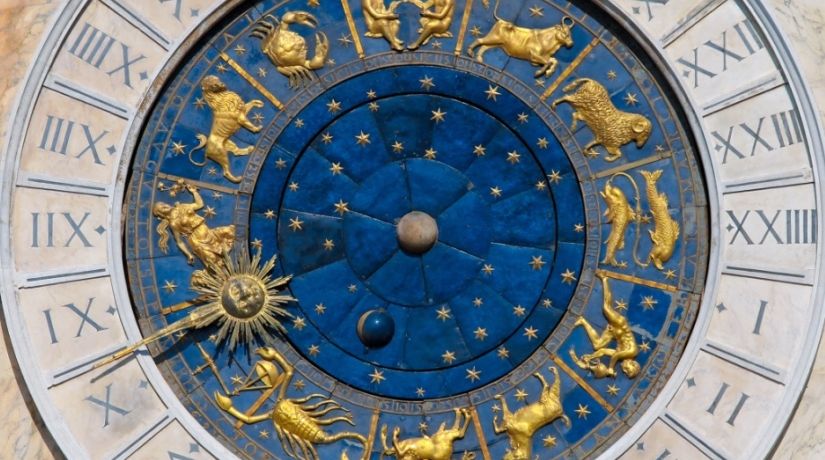
Many ancient societies began their new year in the spring. But by the time of Julius Caesar, the Roman calendar was off. Way off. To get the calendar to line up with the seasons, Caesar had to add 90 days!

History.com explains, “Over the centuries, the calendar fell out of sync with the sun, and in 46 B.C. the emperor Julius Caesar decided to solve the problem by consulting with the most prominent astronomers and mathematicians of his time. He introduced the Julian calendar, which closely resembles the more modern Gregorian calendar that most countries around the world use today.

“As part of his reform, Caesar instituted January 1 as the first day of the year, partly to honor the month’s namesake: Janus, the Roman god of beginnings, whose two faces allowed him to look back into the past and forward into the future. Romans celebrated by offering sacrifices to Janus, exchanging gifts with one another, decorating their homes with laurel branches and attending raucous parties.”

Beliefnet.com also notes that New Year’s is associated with the winter solstice and is “an ancient holiday with deep spiritual roots. … Ancient Romans celebrated with six days of carousing that would probably be familiar to us today.”

Customs and superstitions

From its ancient origins, a wide variety of traditions and superstitions have developed around the world. Here is just a sampling.

“In Ecuador, people make dummies, stuffed with straw, to represent the events [and people, such as politicians and pop culture icons] of the past year. These ‘[año] viejo’ effigies are burned at midnight, thus symbolically getting rid of the past” (Beliefnet.com). Some even try to jump through the flames 12 times!

MarthaStewart.com describes another jumping tradition: “Many Danish people celebrate the New Year by jumping off chairs at the stroke of midnight. Leaping is said to banish bad luck and bring good fortune into the new year. They also traditionally throw plates at neighbors’ doors to symbolize their friendship. The person with the most broken plates is said to have the most friends.”

On NPR.org, Maria Fe Martinez describes another Latin American New Year’s tradition: “If you want to have a very lucky year, you have to wear yellow underwear. And if you want to have a very passionate year, you wear red underwear. …

“And you can get them all over town. Like, if you’re driving in your car, you’re going to see a street vendor selling yellow underwear, which is hilarious. Right after Christmas, they show up.”

The International Business Times reports that 44 percent of Americans say they will kiss someone at midnight. But why?

According to Livescience.com, “Puckering up at the stroke of midnight is a venerable tradition with ancient roots. Many cultures considered the transition from the warm to the cold seasons to be an intensely vulnerable time, when evil spirits could run amok, Aveni [author of The Book of the Year: A Brief History of Our Seasonal Holidays] said.

“Many of our traditions, including kissing, originally come from the English tradition of ‘saining,’ or offering blessing or protection, during the period of Yuletide, Aveni said. (Yuletide was originally a pre-Christian Germanic festival that eventually became synonymous with Christmastide in Europe.)”

New Year’s crime rates

In addition to its pagan roots, the fruits of this holiday are not good. For example, according to Allprobailbond.com, “the holidays are the busiest time of year for the bail bond industry.” Why?

“• Increased alcohol consumption. … Driving under the influence is the leading cause for New Year’s Eve arrests. …

“• Increased emotions. Some people are very unhappy during the holidays. Domestic violence often increases during the holiday season as well as self-inflicted wounds. Consumption of alcohol also increases violent acts.”

What does the Bible say?

The Bible gives its own list of meaningful annual celebrations, but Jan. 1 is not on the list. It’s definitely not God’s new year; He set the first month of the year to begin in what we call March or April. The Bible gives its own list of meaningful annual celebrations, but Jan. 1 is not on the list. It’s definitely not God’s new year; He set the first month of the year to begin in what we call March or April (Exodus 12:2; Deuteronomy 16:1). And the Bible warns against getting ensnared by customs that are based on pagan religions. We are not to ask, “How did these nations serve their gods? I will do likewise” (Deuteronomy 12:30).

Superstitions and customs that may seem quaint or harmless to most people today can be repulsive to God who knows their roots and their fruits.

Playing with paganism isn’t cute—it is corrosive to our relationship with the true God. When God calls Himself a jealous God,” it’s actually a sign of His love and desire for the best for us (Deuteronomy 6:14-15).

And consider the apostle Peter’s call to avoid sinful celebrations where there is “lewdness, lusts, drunkenness, revelries, drinking parties, and abominable idolatries” (1 Peter 4:3). Peter acknowledged that our friends may think it strange we no longer party with them, but in the end we must answer to God.

For all these reasons, celebrating the pagan holiday of New Year’s Eve is not pleasing to God.”

From Holidays to Holy Days. Download Free BookletLearn more about what God says in our free booklet From Holidays to Holy Days: God’s Plan for You 

From: https://lifehopeandtruth.com/life/plan-of-salvation/holy-days-vs-holidays/new-year/new-years-eve/

________

God’s Festivals as Shadows of Things to Come

Colossians 2:16-17

So let no one judge you in food or in drink, or regarding a festival or a new moon or sabbaths, which are a shadow of things to come, but the substance is of Christ.

“In essence, Christians were still enjoying the biblical festivals with eating and drinking, and apparently were being judged by those who believed in philosophies of self-denial. Paul mentions these ascetic ideas later in the chapter: “Do not touch, do not taste, do not handle” (Colossians 2:21).

Some think that when Paul said the festivals are “a shadow of things to come,” it was a put-down. They think Paul was saying the festivals were not important.

But another way to look at these shadows is to see that they help us picture the objects of which they are shadows. For example, the Passover clearly represents the sacrifice of Jesus Christ and foreshadowed that event. Pentecost foreshadowed the coming of the Holy Spirit and the beginning of the New Testament Church.

In the same way, the four fall festivals foreshadow events that have not yet taken place. Learn more about these important events in God’s plan of salvation in our free booklet From Holidays to Holy Days: God’s Plan for You.”   From: https://lifehopeandtruth.com/bible/blog/gods-festivals-as-shadows-of-things-to-come/?

Listen to the "Verse by Verse" episode covering this scripture at: God’s Festivals as Shadows of Things to Come (lifehopeandtruth.com)

(This passage is explained in detail in “Colossians 2:16-17: Did Paul Warn Christians Against Keeping God’s Law?” We encourage you to study that explanation to clear up several misconceptions about this passage.)

________

The Fruit Whose Juice Is Healthier

Transcript of video at: https://nutritionfacts.org/video/the-fruit-whose-juice-is-healthier/

To see any graphs, charts, graphics, images, and quotes to which Dr. Greger may be referring, watch the above video. This is just an approximation of the audio contributed by veganmontreal.

“Can you name a fruit whose processed juice is healthier than just eating the fruit itself?


Here’s the VCEAC of fruits, and their juice. The black bars are the fruit; the white bars are the juice. VCEAC stands for vitamin C equivalent antioxidant capacity.

So, for example, even though apples don’t actually contain 150mg of vitamin C itself, they have other antioxidants that add up to the equivalent of that much antioxidant power. As you can see, across the board, as you go from fruit to juice, the antioxidant capacity is slashed. In fact, the only reason the grape juice was even that high is because it happened to have extra vitamin C added to it—so it kind of cheated.

But wait a second; what is this? A fruit’s juice that has significantly more antioxidants, and even greater phytonutrient availability? And the answer is: tomato juice. About twice the antioxidant power of tomatoes, and five times the phytonutrient lycopene.

And no, it was not a trick question. You may use it as a vegetable, but it is a fruit, because it’s got seeds. Don’t tell that to the Supreme Court, though, who, having nothing better to do, ruled in 1893 that tomatoes were vegetables—though they were only a batch of Justices away from those who ruled Mr. Scott was not a citizen, so I wouldn’t listen to them.

Arkansas decided to have it both ways, declaring tomatoes both the official state fruit, and the official state vegetable.”  From: https://nutritionfacts.org/video/the-fruit-whose-juice-is-healthier/

_________

Sunday, January 1, 2023

The Roots and Fruits of New Year’s Eve. Christmas Is Not for Kids! Avoiding Pork Tapeworm Parasites And Epilepsy.

.

The Roots and Fruits of New Year’s Eve

The Roots and Fruits of New Year’s Eve“Some of the customs may seem crazy or quaint, but what are the real origins and results of the New Year’s holiday?

I admit it. I have been up at midnight on New Year’s Eve a few times. Not celebrating exactly. In fact, most of those times I was part of a volunteer security force on the campus where I went to college—which happened to be along the Rose Parade route in Pasadena, California.

Our job was to be alert to criminals, vandals and even people camping out along the parade route and searching for anything they could burn to keep warm. You might be surprised that it gets fairly cool in January in Southern California. Of course, it is much warmer there than in New York’s Times Square (where it averages 33.7 degrees Fahrenheit at midnight) and other northern gathering places where people count down to the new Roman year.

It makes you wonder: How did New Year’s Eve come to be celebrated in the winter and at midnight? Blame it on the ancient Romans.

Julius Caesar, the calendar fixer

Many ancient societies began their new year in the spring. But by the time of Julius Caesar, the Roman calendar was off. Way off. To get the calendar to line up with the seasons, Caesar had to add 90 days!

History.com explains, “Over the centuries, the calendar fell out of sync with the sun, and in 46 B.C. the emperor Julius Caesar decided to solve the problem by consulting with the most prominent astronomers and mathematicians of his time. He introduced the Julian calendar, which closely resembles the more modern Gregorian calendar that most countries around the world use today.

“As part of his reform, Caesar instituted January 1 as the first day of the year, partly to honor the month’s namesake: Janus, the Roman god of beginnings, whose two faces allowed him to look back into the past and forward into the future. Romans celebrated by offering sacrifices to Janus, exchanging gifts with one another, decorating their homes with laurel branches and attending raucous parties.”

Beliefnet.com also notes that New Year’s is associated with the winter solstice and is “an ancient holiday with deep spiritual roots. … Ancient Romans celebrated with six days of carousing that would probably be familiar to us today.”

Customs and superstitions

From its ancient origins, a wide variety of traditions and superstitions have developed around the world. Here is just a sampling.

“In Ecuador, people make dummies, stuffed with straw, to represent the events [and people, such as politicians and pop culture icons] of the past year. These ‘[año] viejo’ effigies are burned at midnight, thus symbolically getting rid of the past” (Beliefnet.com). Some even try to jump through the flames 12 times!

MarthaStewart.com describes another jumping tradition: “Many Danish people celebrate the New Year by jumping off chairs at the stroke of midnight. Leaping is said to banish bad luck and bring good fortune into the new year. They also traditionally throw plates at neighbors’ doors to symbolize their friendship. The person with the most broken plates is said to have the most friends.”

On NPR.org, Maria Fe Martinez describes another Latin American New Year’s tradition: “If you want to have a very lucky year, you have to wear yellow underwear. And if you want to have a very passionate year, you wear red underwear. …

“And you can get them all over town. Like, if you’re driving in your car, you’re going to see a street vendor selling yellow underwear, which is hilarious. Right after Christmas, they show up.”

The International Business Times reports that 44 percent of Americans say they will kiss someone at midnight. But why?

According to Livescience.com, “Puckering up at the stroke of midnight is a venerable tradition with ancient roots. Many cultures considered the transition from the warm to the cold seasons to be an intensely vulnerable time, when evil spirits could run amok, Aveni [author of The Book of the Year: A Brief History of Our Seasonal Holidays] said.

“Many of our traditions, including kissing, originally come from the English tradition of ‘saining,’ or offering blessing or protection, during the period of Yuletide, Aveni said. (Yuletide was originally a pre-Christian Germanic festival that eventually became synonymous with Christmastide in Europe.)”

New Year’s crime rates

In addition to its pagan roots, the fruits of this holiday are not good. For example, according to Allprobailbond.com, “the holidays are the busiest time of year for the bail bond industry.” Why?

“• Increased alcohol consumption. … Driving under the influence is the leading cause for New Year’s Eve arrests. …

“• Increased emotions. Some people are very unhappy during the holidays. Domestic violence often increases during the holiday season as well as self-inflicted wounds. Consumption of alcohol also increases violent acts.”

What does the Bible say?

The Bible gives its own list of meaningful annual celebrations, but Jan. 1 is not on the list. It’s definitely not God’s new year; He set the first month of the year to begin in what we call March or April. The Bible gives its own list of meaningful annual celebrations, but Jan. 1 is not on the list. It’s definitely not God’s new year; He set the first month of the year to begin in what we call March or April (Exodus 12:2; Deuteronomy 16:1). And the Bible warns against getting ensnared by customs that are based on pagan religions. We are not to ask, “How did these nations serve their gods? I will do likewise” (Deuteronomy 12:30).

Superstitions and customs that may seem quaint or harmless to most people today can be repulsive to God who knows their roots and their fruits.

Playing with paganism isn’t cute—it is corrosive to our relationship with the true God. When God calls Himself a jealous God,” it’s actually a sign of His love and desire for the best for us (Deuteronomy 6:14-15).

And consider the apostle Peter’s call to avoid sinful celebrations where there is “lewdness, lusts, drunkenness, revelries, drinking parties, and abominable idolatries” (1 Peter 4:3). Peter acknowledged that our friends may think it strange we no longer party with them, but in the end we must answer to God.

For all these reasons, celebrating the pagan holiday of New Year’s Eve is not pleasing to God.

From Holidays to Holy Days. Download Free BookletLearn more about what God says in our free booklet From Holidays to Holy Days: God’s Plan for You.

_______

Christmas Is Not for Kids

Christmas Is Not for Kids“Christmas traditions focus heavily on children, but they actually teach many negative character lessons. Discover why Christmas is bad for your kids.

Even though Christmas is technically celebrated on Dec. 25 by the majority of the world, people start preparing for it months in advance. Shortly after Thanksgiving children start sending letters off to Santa Claus, who also starts appearing in stores and malls. Parents start shopping for presents on Black Friday and Cyber Monday and may start setting up Christmas trees and lights around the same time. Most popular Christmas traditions revolve around children.

There are many problems with Christmas, which we explain in detail in many of our materials. But many people will counter those reasons with the excuse: “But it’s for the kids!”

Well, here is a proposition that may be surprising: Christmas is not for kids.

Christian parents should keep in mind the instruction to “train up a child in the way he should go” (Proverbs 22:6). When we really analyze Christmas traditions, we discover they teach children lessons that lead them in the wrong direction. 

Four reasons Christmas is not for kids

1. Christmas teaches children it’s okay to lie.

While children should be taught about the birth of Jesus Christ, it shouldn’t be taught alongside a holiday based on many lies about His birth. You can learn about those lies in our article “The Birth of Jesus.” Simply put, if children are taught about Christ’s birth from Christmas, they are being taught a totally inaccurate story of what really happened and when it happened!

But the facts of Christ’s birth aren’t the only lies surrounding Christmas. Christmas traditions emphasize the story of Santa who lives at the North Pole, of elves who make toys for him and of flying reindeer that help him deliver toys to the world’s children in a single night. These are all myths—lies!

Parents teach these lies while also expecting their children to be truthful. They fail to see that “harmless” lies teach children that some lies are acceptable. Instead of teaching myths, it’s much healthier for parents to teach what God says in His Word about lying and why it is forbidden in the 10 Commandments. When parents actively teach the values of truth and honesty, it doesn’t make sense to teach the various Christmas myths.

Christmas Is Not for Kids2. Christmas teaches children greed and selfishness.

Commercials entice children with the latest toys, electronics and fashion during the Christmas shopping season. The words “I want” and “mine” are often the first words that children learn, but during this time of the year those words are magnified! Children are not really focused on Christ during this season that is supposedly all about Him, but instead on what they will get. This leads to covetousness (which breaks the 10th Commandment). Are we seeing a pattern here?

Jesus warns us, “Beware of covetousness, for one’s life does not consist in the abundance of the things he possesses” (Luke 12:15). Teaching children to give and be content with what they have is a good antithesis of the getting focus of Christmas.

3. Christmas devalues faith.

Millions of children around the world request gifts from Santa Claus and wait for their request to be answered on Christmas morning. Sometimes they are then disappointed by not getting what they asked for and then later learning that Santa really doesn’t exist.

Not only do Christmas traditions ask children to put faith in a nonexistent man, but they also set them up to question God. How can they develop true faith when their original faith was built on a lie?

When we really analyze Christmas traditions, we discover they teach children lessons that lead them in the wrong direction.4. Christmas is used as a bargaining chip.

A 2009 survey by kidsturnscentral.com asked kids, “What does Christmas mean to you?” A 15-year-old in Kansas responded, “A time where we pretend that our good behavior for the day will carry over to the rest of the year.”

Think about it: Christmas teaches children to be good because “Santa Claus is coming to town.” In other words, be good so you will get presents.

According to the Bible, we should choose to do good because it is the right thing to do. Ecclesiastes 12:13 teaches us to “fear God and keep His commandments, for this is man’s all.” Children must be taught that they shouldn’t just obey God to getbut instead because it is the right thing to do all the time.

Teach truth, not lies

Christmas compromises some of the most basic and essential biblical principles: honesty, generosity, and faith. Along with its unbiblical and pagan origins, parents should reconsider exposing children to Christmas and instead teach them how to worship and live according to the Bible.”

We have recently published a parenting resource manual to assist parents who are serious about teaching their children about God’s way of life. You can download free lessons at “Encourage, Equip & Inspire.”

To learn more about improper and proper worship of God, request our free booklet From Holidays to Holy Days: God’s Plan for You.    From: https://lifehopeandtruth.com/relationships/blog/christmas-is-not-for-kids/

________

Avoiding Epilepsy Through Diet

Transcript of YouTube video at: https://nutritionfacts.org/video/avoiding-epilepsy-through-diet/

Below is an approximation of this video’s audio content. To see any graphs, charts, graphics, images, and quotes to which Dr. Greger may be referring, watch the above video.

“Avoiding pork tapeworm parasites (cysticercosis) is not as easy as just avoiding pork!

Another review last year confirmed that pork tapeworms taking residence inside our brains “is a significant public health issue within the United States.” At first, though, clinical diagnosis can be challenging. Initial presentations of the disease are often vague complaints like headaches, weakness, dizziness, high blood pressure.

In terms of treatment, in a series of more than a hundred cases published this year, although antiparasitic deworming drugs were found to be effective, about 10% of victims require brain surgery—what’s called an open craniotomy, where you have to go in and basically just dig ‘em out.

They can get into our muscles, too. This is an X-ray of someone’s leg, and you can see how infested the muscle is. And that’s why we can get it from pork—because it gets into muscles.

But what if you don’t eat pig muscles? Well, to all the smug non-pork-eaters out there, if we can find pork tapeworms in the brains of Orthodox Jews in Brooklyn, we can find pork tapeworms in anyone.

They weren’t sneaking off for schnitzel. It was their pork-eating domestic houseworkers preparing their food. When 1,700 members of the local synagogue were tested, 1% tested positive. The researchers suggested that those “to be employed as domestic workers or food handlers should be screened for tapeworm infection via examination of three stool samples for [tapeworm] eggs.”

So to avoid the #1 cause of adult-onset epilepsy, we may want to not eat pork, and not eat anything made by anyone who eats pork.” 

_____

Sunday, October 24, 2021

What Are You Passionate About? Halloween's Dark Roots. Examine Yourselves. How to Fight Against Cancer.

.

What Are You Passionate About?

What Are You Passionate About?“History and the Bible give us examples of zeal and passion. Are we passionate about the most important things? Or are we being distracted by other passions?
What do you feel strongly about? What lights the fire in your soul and infuses you with focus and energy?

What are you really passionate about in your life?

Give me liberty…

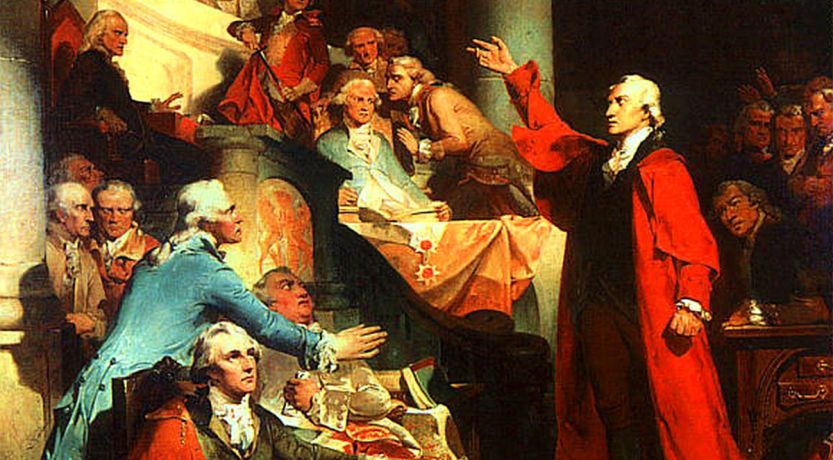
An example of the kind of passion I’m talking about comes from U.S. history. In March of 1775 tensions between the American colonies and Great Britain were high. A man named Patrick Henry stood to address the Virginia legislature and share his view of the situation. It was apparently a rather impromptu speech about the need to separate from the British crown and form their own union—something about which Mr. Henry felt very strongly.

Perhaps you’ve never heard or read the entire thing, but I’ll almost guarantee that our American readers know the last seven words of his fiery and impassioned speech. As he brought his relatively short oration to its crescendo, he thundered out to the audience, “Give me liberty, or give me death!”

Patrick Henry was passionate about the founding of a new nation.

Some common passions

It seems human beings are hardwired to have strong feelings about certain things. Not everyone feels strongly about the same things or in the same way, and certainly not all of our passions are of the same magnitude as founding a new country!

But there are still a lot of different things that fire up the imaginations and passions of people.

A few things people are commonly quite passionate about are fashion, art, music, health and fitness, hobbies, technology, sports and sports teams, hunting and fishing (or anti-hunting and maybe anti-fishing), animal rights and more.

Oddly enough, a few days ago I was talking with someone who was very passionate about animal rights, specifically opossum rights. … Okay, I’ve got to admit that was a new one for me.

On a more somber note, today there are a lot of people who are passionate and even violent about some prickly social issues. And many are very passionate about the political positions and platforms that are intractably connected to all those social issues.

That’s a lot of passion, a lot of emotion! And the chances are very good that you are passionate about some issues too.

So maybe the more important question is: Are you passionate about the right things?

Are you passionate about the right things?

While there is nothing wrong with strong feelings about sports, art, animals or other endeavors in life, there are some things that are more important and that deserve more of our attention than others.

Are we overlooking something infinitely more important that most people miss, yet that we should be passionate about?

“Zeal for Your house”

In the Bible we read an account of when Jesus Christ went up to the temple. He saw people who were doing business, changing money, selling animals to be sacrificed and so forth.

Not only were they doing business on holy ground, but very likely they weren’t being honest and were taking advantage of those who came to the temple to worship and offer sacrifices.

We read in John 2:15-16 that Jesus made a whip of rope, flipped over the money changers’ tables and with zeal drove them all out of the temple! In verse 17 it says, “Then His disciples remembered that it was written, ‘Zeal for Your house has eaten Me up.’” The English Standard Version puts it, “Zeal for your house will consume me.”

Jesus loved people. He was compassionate toward those who were hurting and in need of healing and comfort, and He taught them continually the things that would really make a difference in their lives. He had a passion for people and for serving.

But He was most passionate about the things of God—the standards, values and principles of the great Creator God!

John Gill’s commentary on the Bible points out that Christ’s regard for His Father’s house “was typical of the church of God; and such his concern for his honour, ordinances, and worship, that when he saw the merchandise that was carried on in the temple, his zeal, which was a true and hearty affection for God, … was stirred up in him, and to such a degree that it was like a consuming fire.”

Have we chosen to be passionate about what is really the most important? The standards, values and principles of God stand in stark contrast to those of this present world, which is focused on self-serving interests, immorality and blatant sinfulness. In fact, it is the Kingdom He will bring when He returns that is the only hope for mankind—and He is immensely passionate for that Kingdom!

What about us? How passionate are we for the standards, values and principles of God? Have we chosen to be passionate about what is really the most important?

Enthusiastic about doing good things

Consider the words of the apostle Paul in Titus 2:11-14, as it is translated in God’s Word translation:

After all, God’s saving kindness has appeared for the benefit of all people. It trains us to avoid ungodly lives filled with worldly desires so that we can live self-controlled, moral, and godly lives in this present world.

“At the same time we can expect what we hope for—the appearance of the glory of our great God and Savior, Jesus Christ. He gave himself for us to set us free from every sin and to cleanse us so that we can be his special people who are enthusiastic about doing good things.”

Battling distractions

Most of us want to have that passion, that zeal, that “fire in the belly” for the things of God. But with all the distractions swirling around us, with all the challenges and turmoil in the world, it can be easy for us to lose our focus and allow our greatest level of passion to be given to something else.

We need to make sure we are firmly connected to the Word of God. We must read and study it daily. With prayer and periodic fasting, we should ask God for the passion we need to have as His people. And we can ask Him for the guidance we need to negotiate these challenging times.

If we are immersed in the Word of God, it is harder for other issues to steal all our time and energy!

I am sure we are all passionate about various things. But are we right now passionate about the most important thing? Do we have a Patrick Henry–level of passion for a new Kingdom, the Kingdom of God?”   From: https://lifehopeandtruth.com/life/christian-living/what-are-you-passionate-about/

Learn more in our article “Seek First the Kingdom of God.””

Do you know why you were born?

_______

Halloween's Dark Roots

“In recent years eye-opening materials have been published about the questionable background of Halloween.

In recent years eye-opening materials have been published about the questionable background of Halloween. Consider these excerpts:

"Halloween-a holiday that mixes generic religious beliefs with ancient folk customs-is supposed to be fun. But for many conservative Christians, it has become a dark and spiritually dangerous celebration ... Many are boycotting the bats, witches, goblins and ghouls that symbolize the holiday because they consider such things to be lures in the satanic struggle for human souls ...

"Halloween's pagan roots are real, as are those of Christmas and Easter. Santa Claus comes from an ancient woodland spirit honored by pagans, and Easter's non-Christian ancestry is derived from a Germanic fertility goddess, thus the Easter eggs and Easter bunny ... Halloween was called samhain in the pagan world-part harvest festival, partly a day to honor the dead" (Knight-Ridder/Tribune News Service, Oct. 28, 1993, "Conservative Christians Urge Halloween Alternative").

"The ancient Celtic [Irish, Scottish, Welsh] festival called Samhain is considered by many to be a predecessor of our contemporary Halloween. Samhain was the New Year's Day of the Celts, celebrated on 1 November. It was also a day of the dead, a time when it was believed that the souls of those who had died during the year were allowed access to the land of the dead. It was related to the season: by Samhain, the crops should be harvested and the animals brought in from the distant fields.

"Many traditional beliefs and customs associated with Samhain, most notable that night was the time of the wandering dead, the practice of leaving offerings of food and drink to masked and costumed revelers, and the lighting of bonfires, continued to be practiced on 31 October, known as the Eve of All Saints, the Eve of All Hallows, or Hallow Even. It is the glossing of the name Hallow Even that has given us the name Hallowe'en.

"... The customs associated with Halloween included representations of ghosts and human skeletons-symbols of the dead-and of the devil and other malevolent, evil creatures, such as witches.

"The first week of November is marked in many countries, especially those with a strong Catholic influence, with festivals concerned with death, in a playful but serious way. In Catholic countries we often find some cognate of Halloween associated with All Saints' or All Souls' days.

"... Unlike the American Halloween, in Mexico people build home altars, adorned with religious icons and special breads and other food for the dead. The Day of the Dead incorporates recognition of death as a concept with rituals that remember the deaths of individuals" (Jack Santino, Halloween and Other Festivals of Death and Life, 1994). GN” From: https://www.ucg.org/the-good-news/halloweens-dark-roots

_______

2 Corinthians 13:5

(5) Examine yourselves as to whether you are in the faith. Test yourselves. Do you not know yourselves, that Jesus Christ is in you?—unless indeed you are disqualified.

  • New King James Version

Unless indeed you are disqualified - Disqualified ("reprobates" in the King James Version, Strong's #1384: adókimos) means, according to Vine's, "not standing the test, rejected." It suggests "unacceptable," "disapproved," "unworthy," "spurious," "worthless," "cast away." This word's meaning is illustrated by the following verses:

Romans 1:28: And even as they did not like to retain God in their knowledge, God gave them over to a debased [adókimon] mind, to do those things which are not fitting.

Titus 1:16: They profess to know God, but in works they deny Him, being abominable, disobedient, and disqualified [adókimoi] for every good work.

Hebrews 6:7-8: For the earth which drinks in the rain that often comes upon it, and bears herbs useful for those by whom it is cultivated, receives blessing from God; but if it bears thorns and briars, it is rejected [adókimos] and near to being cursed, whose end is to be burned.

Being disqualified or rejected is the opposite of having Jesus Christ dwell in us; it is being unfit or unworthy of His presence in us. In other words, a disqualified person is cut off from God! This is the worst possible outcome of a Christian's life: to return to a life of sin and have so much pride that he or she rejects salvation and all that comes with it! God's Word clearly shows that it can happen (see Hebrews 6:4-6; 10:26-31)!

Regular self-examination is a proven way to make sure that it does not happen to us!”  From: https://www.theberean.org/index.cfm/main/default/id/6797/ver/NKJV/2-corinthians-13-5.htm    To learn more, see: What Does 'Examine Yourselves' Mean?

_______

How to Fight Against Cancer | 12 Anti-Angiogenic Foods

The Biblical Nutritionist     152K subscribers

“My mom was diagnosed with cancer and the Doctors said there was nothing they could do. Here’s how we fought cancer and gave her 19 more years of adventure and travel with 12 anti-angiogenic foods! 

Cancer touches so many lives, in this video, I share with you my personal story dealing with cancer. Don’t lose hope. I’m on mission to keep you on mission! I want you to be confident in the kitchen so you can feel confident, understand how your body works and understand how much God loves you!”  YouTube:  https://youtu.be/DxKCZ5UvPhI

Also, Watch my video on the importance of Routine Blood Work: https://www.youtube.com/watch?v=dCRiP...

______

Sunday, January 3, 2021

Was 2020 a Wake-Up Call? Good Riddance. He Will Save His People.

.

Was 2020 a Wake-Up Call?

The year 2020 was so chaotic, confusing and destructive, many people look forward to it being over. What can we learn from this year that’s unlike any other?

Was 2020 a Wake-Up Call? For those who’ve had children, the nine months from conception to birth are a period of mystery and awe.

These days some of the mystery is removed by baby apps that keep us informed of the baby’s development week by week.

Toward the final stages of pregnancy, the mother may feel her womb contract and relax. She may think labor is about to start, but it may not be labor pains at all. It could be something called Braxton-Hicks contractions, named after the person who first identified them. They are also called “false labor pains,” but they can be an indication that labor is approaching soon.

The Bible likens the time approaching Jesus’ return to the labor pains of a pregnant woman (1 Thessalonians 5:3). As that time approaches, things will get worse and worse.

Perhaps we can liken events of 2020 to Braxton-Hicks contractions—signs that “labor” is near. Our world has changed rapidly in the last year, and these changes could be an indication that Christ’s return is drawing much closer.

Unprecedented events

We have seen unprecedented events occur all around this year—particularly in the English-speaking nations. Consider the following things that have occurred:

  • In Australia, 12.6 million hectares burned (that’s roughly the equivalent of 31 million acres) in the worst fire season in a century. That’s an area four times the size of Belgium. The fires killed 33 people and over 1 billion animals.
  • In February, Britain was hit with three destructive storms. Storm Dennis, Storm Ciara and Storm Jorge flooded over 3,300 properties in England. It was the wettest February since the U.K. began keeping records.
  • Early in the year, locusts swarmed in massive numbers in Africa, putting 25 million people at risk of food shortages. 
  • On Jan. 31, Britain officially withdrew from the European Union.
  • U.S. President Donald Trump was impeached on Dec. 18, 2019, but acquitted in the U.S. Senate on Feb. 5, 2020, allowing him to finish his term in office.
  • The coronavirus pandemic caused worldwide lockdowns and a massive economic crisis throughout the world. The U.S. borrowed a record $3 trillion in a single quarter, and the U.K. GDP shrank by 21 percent, the biggest drop since GDP was first recorded.
  • Racial tensions erupted as massive protests swept through multiple cities in the U.S. and around the world following the police killing of George Floyd in Minnesota.
  • In August, Louisiana was hit by unprecedented back-to-back hurricanes within 48 hours of each other. Around the same time, California experienced temperatures upward of 130 degrees Fahrenheit (54 degrees Celsius). It is believed to be the highest temperature ever recorded on earth. California was also hit by a freak lightning storm, with nearly 11,000 lightning strikes sparking over 300 fires within a single weekend.
  • Israel, Bahrain and the United Arab Emirates signed historic peace agreements called the Abraham Accords.
  • The United States went through an especially contentious and nasty presidential election year. As of the writing of this blog post, Joe Biden has been declared the winner, but President Donald Trump is refusing to concede, accusing multiple states of massive voter fraud. Geopolitical analyst George Friedman noted: “Beginning in 2020, supporters of one candidate began to despise the supporters of the other candidate with visceral rage . . . Each camp has come to see the other as contemptible.” 
  • In October, Pope Francis made headlines because of a statement that seemed like an endorsement of same-sex civil unions (though the Vatican later clarified that his comments didn’t change the Catholic Church’s teaching on homosexuality). Meanwhile, in November, the Church of England released materials that appear to pave the way for the church approving of same-sex marriages.
  • In early November, Super Typhoon Goni, the most powerful storm of 2020, slammed into the Philippines, killing 20 people and displacing over 350,000.

Students of prophecy probably can’t read this list without thinking of the four horsemen of the Apocalypse—the general signs that Jesus said would be the “beginning of sorrows” (Matthew 24:8).

Could 2020 have been a year of signs that, like Braxton-Hicks pains, signal the real crisis—the coming Great Tribulation—is just around the corner? To learn more about these prophetic signs, read “What Are the Four Horsemen of the Apocalypse?

So, how should we respond to everything we have experienced as a world in 2020?

2020: a wake-up call to act

It is human nature to wait until a crisis hits before taking action and making necessary decisions. How many people have tried to save a marriage just before divorce papers are served? Or only started to eat properly after having a heart attack? Or tried to repair damage done to their family after years of neglect?

God mercifully urges us to seek Him now, but also warns of a time when it will be too late. Prevention is a far better approach than tackling a problem after a crisis hits!

What about seeking God through repentance? Will we wait until the events of prophecy begin to be fulfilled in full force? Or will we use 2020 as a wake-up call to seek God now?

The Great Tribulation will be a time of punishment for the sins of our people (Deuteronomy 31:17-18). We’ll have to endure afflictions caused by sins (Hosea 5:15). But God urges us to “seek the LORD while He may be found, call upon Him while He is near” (Isaiah 55:6).

God mercifully urges us to seek Him now, but also warns of a time when it will be too late (Hosea 5:6).

If you have been putting off truly seeking God and responding to His calling, why not use 2020 as a motivation to act? The real crisis is coming.

If you’re searching for God and His way of life, you may find our article “How to Repent” a good place to start.  From: https://lifehopeandtruth.com/prophecy/blog/was-2020-a-wake-up-call/?

_______

Good Riddance

Transcript of YouTube: https://youtu.be/GjblW6O8iDM

“We are all ready to put 2020 behind us; as we do, lets carry the lessons we've learned with us.

[Darris McNeely] The year 2020 is in the past. And for most of us, it's going to be a year where we probably will say, "Good riddance. We're glad it's in the past."

In the last days of 2020 I lost a few friends and associates, people that I've known in some cases for nearly 50 years, who died. I'm glad that I knew them. You've lost people that you knew as well during the year and probably even some people to the COVID disease.

If you look at the larger world, one thing that really struck me in 2020 was the fact that there were a number of Hall of Fame baseball players who died. And baseball has been my passion to not only play in my youth but to follow throughout the years. And players that I grew up watching pitch and play baseball with and went on to make the Hall of Fame, they died this year. That's life, it goes on and we expect that. I'm glad that I saw them play because the ones that I think about, they played with passion, they played hard, they showed up ready to play ball, no matter what was going on. And I don't always see that today.

I was struck recently by one professional sports player whose team wasn't doing too well in the last days of 2020, and he went on a rant after one game where they were really bad. And he was basically trying to say, "Guys, you're professionals, you're getting paid a lot of money. You need to show up. You need to work hard. You need to practice because people are wanting to enjoy and to see success." I was glad to hear him say what he did. That's why I lament the loss of some good ball players that were like that.

You know, as we look at COVID, at some point, this is all gonna be behind us and we'll probably talk about the time of life before COVID and the time of life after COVID. Before COVID, after COVID. It's been that big. And as we sort it all through, I hope that all of us and myself here I think about where I have been and what I've learned, I hope we are able to put behind so much of this, and having learned certain lessons.

There's a scripture in Philippians 3 that I think all of us should take note of and remember. It says, "Brethren," the Apostle Paul was writing, "I do not count myself to have apprehended. But one thing I do, forgetting those things which are behind and reaching forward to those things which are ahead. I press toward the goal for the prize of the upward call in Christ Jesus." Paul knew when to put things behind and when to reach for the things that are forward.

It's a good lesson for us all to take from Scripture when it comes to the time that we're living in, before COVID, after COVID. Let's reach for the future. Let's reach for better days. And let's do that with the help of God.”  From: https://www.ucg.org/beyond-today/beyond-today-daily/good-riddance 

________

He Will Save His People

Matthew 1:21

“And she will bring forth a Son, and you shall call His name JESUS, for He will save His people from their sins.”

When Joseph discovered that his betrothed wife was pregnant, it seems the only logical conclusion was that she had cheated on him. He didn’t want to make her a public example, so he was planning to try to end their betrothal secretly.

But then an angel appeared to Joseph in a dream, and told him that Mary was pregnant of the Holy Spirit! What an incredible concept to try to wrap your mind around! Then the angel continued with the statement in verse 21.

The New Testament recorded the name in Greek. Jesus is derived from the Greek form of the Hebrew name Joshua, which means “Yahweh is salvation” (New Bible Dictionary, “Jesus Christ, Titles of”). This was not an unusual name, but it had a special meaning in this case. Jesus would save His people from their sins by willingly taking their death penalty upon Himself. Not only that, but He would call on them to repent and lead them out of sin by the Holy Spirit. 

For more about our Lord and Savior, see the section on “Who Is Jesus?”       From:

https://lifehopeandtruth.com/bible/blog/he-will-save-his-people/?

________

Update

Happy, Healthy and Blessed New Year to Y’all.

I am still waiting for my eye surgery, it should be next week.  The weather turned wet and cold, but it’s Texas, so the sun shines to cheer us up every now and then. 

The three of us had our usual Bible study on Friday morning, and Sherry and I went to Sabbath school at the church the next day. But there was only one other person there and we old ‘non-techy’s’ took ages to join the others on Zoom on Sherry’s smart phone, but finally we made it.

June and I, neither of us night drivers, opted not to go to the Torah Bible study in another town because it gets too dark too early in the day.

Wednesday, September 19, 2018

9/11 Attack on Islamic New Year. Church History: Constantine, an Emperor Who Defied God. Update

For “Scripture Sunday”:

Why Hasn't New York Been Attacked Since 9/11?

image“Today marks six years (now 17) since the attacks on America by Islamic jihadists. On that day America woke up to the reality of an enemy intent on destroying our way of life. That we have not suffered another attack of that magnitude is due to the vigilant efforts of the many within the law enforcement, military and government agencies that sprung to the walls that day. Here is one assessment from the Daily Telegraph :

Why has al-Qa’eda not repeated the attacks it staged in New York and Washington six years ago to the day? Because it can’t. That is the only partly reassuring consensus of some of the experts who tried hardest to warn Washington about the danger posed by al-Qa’eda and militant Islam prior to its devastating strikes on September 11.

Richard Clarke, the anti-terrorism adviser to two American presidents, Michael Sheehan, New York’s former deputy police commissioner who headed the State Department’s anti-terrorism effort, and others who sensed the danger long before it became obvious, assert that offensive and defensive measures taken since that terrible day have not only severely degraded al-Qa’eda’s ability to stage another terrorism “spectacular”, but have made American cities and targets less vulnerable.

Thanks to such steps, “we are safer than we were on September 11, 2001,” John Scott Redd, a retired vice-admiral who now leads the intelligence community’s National Counter-terrorism Centre, told anxious legislators on Capitol Hill yesterday. “But we are not safe,” he added. “Nor are we likely to be for a generation or more.”

This is the great danger we face as a nation, that we will forget the dangers that exist. This enemy has not retreated nor can we afford to let down our guard.

For one brief moment in 2001 the nation forgot the issues that divide and drew together in grief, shock and anger. Remember the scene of the congressmen and women standing on the Capitol steps, arms linked and singing God Bless America?  We are far from that poignant moment.” From: https://www.ucg.org/beyond-today/blogs/why-hasnt-new-york-been-attacked-since-911

_________

The 11th. of September is the Islamic New Year.

Islamic New Year celebration (4453839979).jpgMuharram

Islamic New Year celebration in Nawa-I-Barakzayi, Afghanistan (2010)

The Top 4 Reasons September 11th is Significant to Islam

Read: https://onepeterfive.com/the-top-4-reasons-september-11th-is-significant-to-islam/

_________

Another person who thought they were greater than God!

Church History: Constantine, an Emperor Who Defied God

One of the most profound episodes affecting Church history involved Emperor Constantine and his decrees against God’s laws. Yet the Church of God held fast.

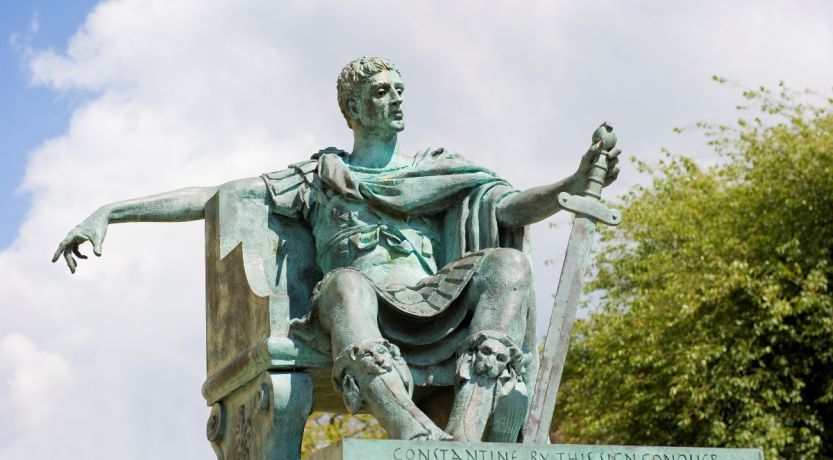
In A.D. 321 Constantine decreed that Sunday would be observed as the Roman day of rest.

Many of the New Testament writers warned that a great deception was coming that would corrupt the true Christianity instituted by Jesus and taught by the apostles

Church History: Constantine, an Emperor Who Defied God

Jesus Christ warned His followers, “Do not think that I came to bring peace on earth. I did not come to bring peace but a sword” (Matthew 10:34). His words have proven true throughout the centuries, and especially during the fourth century in the Roman Empire.

Another article on Church history discusses the loyalty of Polycarp and Polycrates in their defense of the New Testament Passover being kept on the 14th day of the first month of the Hebrew calendar. But persecutions continued against the Church. This article focuses on the decrees Constantine made regarding his interpretation of religious doctrine and the aftermath of his pronouncements.

Persecution toward the Church

In the years prior to Constantine, a number of Roman emperors had persecuted the Church Jesus established. One such campaign was sanctioned by Emperor Trajan after he received a letter from Pliny (A.D. 111-113). Pliny was a young lawyer and governor over the territory of Bithynia and Pontus, along the southern edge of the Black Sea where some in the Church had originally settled (1 Peter 1:1-2).

Following is a portion of Pliny’s letter:

“It is my practice, my lord, to refer to you all matters concerning which I am in doubt. For who can better give guidance to my hesitation or inform my ignorance? I have never participated in trials of Christians. I therefore do not know what offenses it is the practice to punish or investigate, and to what extent. …

“I have observed the following procedure: I interrogated these as to whether they were Christians; those who confessed I interrogated a second and a third time, threatening them with punishment; those who persisted I ordered executed. For I had no doubt that, whatever the nature of their creed, stubbornness and inflexible obstinacy surely deserve to be punished.”

Trajan responded: “You observed proper procedure, my dear Pliny, in sifting the cases of those who had been denounced to you as Christians. For it is not possible to lay down any general rule to serve as a kind of fixed standard. They are not to be sought out; if they are denounced and proved guilty, they are to be punished, with this reservation, that whoever denies that he is a Christian and really proves it—that is, by worshiping our gods—even though he was under suspicion in the past, shall obtain pardon through repentance.”

So, in the early part of the second century, we see persecution directed toward the Christians in the area of Asia Minor. This persecution continued, but the Church of God remained firm and loyal.”

Continued at: https://lifehopeandtruth.com/change/the-church/church-history-constantine/

_______

The faithful held fast

“As a result of these man-made edicts, a large portion of the world has been following false decrees, but not all people changed their beliefs to worship on Sunday. As persecutions over the Sabbath intensified, members of the Church of God migrated to the west, and history reveals that the Church thrived in the Balkans and Eastern Europe. But that is another story for another article.

In the meantime, take time to confirm what the Bible teaches about the seventh-day Sabbath. The following resources can help: “The Sabbath, Sunday, Every Day or No Day at All?” and “Which Day Is the Seventh Day?

_______

Update. 

It has been a hurry-up-and-wait week. First waiting, twice, for the light company to come to make the new mast at the mini-house hot.  When the bucket truck driver arrived he looked it all over, and said that we would have to trim some trees for him to be able to get his bucket through.  I called our Property Owners Assoc. and made sure that it was OK to trim their trees.  He disconnected the power from my old pole to make it safer for us to trim the trees.  Fortunately, as I had sold my gas chain saw because I couldn’t start it, I still have one of those electric Worx tree trimmers with the big jaws.  That made light work of trimming off those branches, but we had to string a heavy duty cord from the main house. 

DSCF2202On the bucket truck’s second trip he hooked the wires to the new mast.  That just makes it live to the main breakers in the new breaker box on the outside of the house.  Then the electrician has to come back to run wires from those breakers through a hole he has made into the inside breaker box.  Zack and I removed the old mast, meter can, breaker box and weatherhead off the little temporary pole, which has been there for 23 years.  Then we dug up the conduit covered wires which went from that pole underground into the mini-house.  The electrician plans to re-use that wire to attach the new outside breaker box to the one inside.   Wire really has gone up in price, no wonder thieves like to steal copper wire out of derelict houses.

As we didn’t have power in the mini-house, we took some shelves outside into the carport and Kilzed and painted them out there.  Then one day I went to Conroe Hospital to visit a church friend and do a bit of shopping.

Zack has a habit of not showing up, so I know that if he doesn’t arrive by 8.00 am that he had to work elsewhere.  He doesn’t have a phone or cable.  But, to his credit, he is always here by 7.30 on Sundays, as there is a religious program on TV that he likes to see, Mannafest with Perry Stone.

On Friday, Preparation Day, as I had planned to go to both the morning church on FM 1097 and the afternoon church on FM 830 on the Saturday Sabbath, I made two separate dishes for the potlucks.  They were both made out of organic chicken, lentils and veggies. The first one was a salad with added apples pieces so that the pastor’s wife wouldn’t have to tend to it, and the second one was a hot dish in a crockpot which I could plug in as soon as I got there. 

The Bible readings were Deut. 16:18-21:9, Isa. 51:12-52:12, John 1:19-29 and Acts 3:22,23.  The Teaching was about Rosh HaShanah, it is a time of prayer and penitence and to be prepared for the coming of the Messiah.

After the service, I stayed a short while to eat a quick bite, talk to my friends and help with the potluck, then drove south to the other church.  The person that I was concerned about at that church, is now in Hospice and did not have chemo nor radiation, he just wishes to go the way God intended with quality, not expensive quantity of life.  The pastor’s Message was about that too. 

Everything is still green even though it has been hot because we have had quite a few humid, rainy days.


Monday, January 1, 2018

New Year: Should Christians Celebrate It? What Would Jesus Do Between Christmas and New Years? Cold Day, Brrr.

Happy New Year and may 2018 bring you everything that you need.

New Year: Should Christians Celebrate It?

“God didn’t begin His year in the dead of winter. So what does He think of the celebration of New Year’s Eve based on the Romans’ calendar and customs?

New Year

What does God think of New Year’s Eve?

Are New Year’s Eve and New Year’s Day celebrations that God approves of? Since God set the first month of the year on the sacred calendar to begin in what we call March or April, obviously it is not God’s new year (Exodus 12:2; Deuteronomy 16:1). And God didn’t command a celebration for that day either.

The origin of New Year

So what is the origin of New Year? “In early times, the ancient Romans gave each other New Year’s gifts of branches from sacred trees. In later years, they gave gold-covered nuts or coins imprinted with pictures of Janus, the god of gates, doors, and beginnings. January was named after Janus, who had two faces—one looking forward and the other looking backward. The Romans also brought gifts to the emperor. The emperors eventually began to demand such gifts. But the Christian church outlawed this custom and certain other pagan New Year’s practices in A.D. 567” (The World Book Encyclopedia, 1990, article “New Year’s Day”).

Not pleasing to God

Today, too often New Year’s Eve is treated as an excuse for drinking too much and lowering moral standards. It is one of the most dangerous times of the year for drunk driving, and every year warnings are given about those who fire guns into the air in celebration—an act that too often turns deadly.

For all these reasons, celebrating the pagan holiday of New Year is not pleasing to God.

You can learn more in the section “Holy Days vs. Holidays.”

_______

What Would Jesus Do Between Christmas and New Years?

 5 comments 

“It's not such an odd question as you might think. Read on and think about it.

A calendar that shows December 25 and January 1.Photos.com

We should be doing what Jesus did during His human life and what He is doing today—His Father's work!

Since He was not born in the dead of winter Christ would not have even thought about celebrating His birthday, nor would anyone else. And New Years? Well, since the Romans used it as a worship of their gods I can’t see that Christ would have been looking for a party to celebrate. So let’s park the question for a minute and look at what the last week of the year becomes in our modern culture.

It seems the last week of December today has become one extended period of celebration, vacation, shopping, eating and, well, just different. Many businesses just shut down completely. Others are understaffed and on short hours as work and people wind down for the year. Someone once said this period of the year would be the best to launch a surprise attack on America since its seems everyone, including many key government people, are on vacation.

So, for me, since I don’t observe Christmas and New Year, and you can’t just ignore completely the impact it has on culture, I have developed a routine during this week that helps me to profitably use the time. This is one of four periods of the year when I reassess my life, priorities, goals and plans. Decisions and plans are made for the next three months and then its back to work. I don’t waste the time even though it is tempting to let down and relax too much. But this holiday period does give me some extra time for reflection.

Recently I noticed something from the life of Christ that made me think that maybe He used this same time of the year to further His work.

In John 10:22-24 we see where He was and what He did.

Now it was the Feast of Dedication in Jerusalem, and it was winter. And Jesus walked in the temple in Solomon’s porch. Then the Jews surrounded Him and said to Him, “How long do You keep us in doubt? If You are the Christ, tell us plainly.”

Historians recognize this was the festival that Jews today call Hannukah—the festival that falls each year in late December. It is a stretch to say that Christ was “celebrating” Hannukah. Better to just read through His answer to the Jews and understand it for what it says.

He essentially told them He was the Son of God, and since they did not believe Him they were not His sheep. They accused Him of blasphemy and tried to stone Him. He escaped but not without challenging them to examine the work He did and make a logical deduction. They couldn’t.  So therefore they rejected Him.

So what should we do between Christmas and New Years? Really, what should we be doing all year long? The answers is simple. We should be doing what Jesus did during His human life and what He is doing today—His Father’s work! We should put first in priority the work God is doing today and continually give ourselves a check to make sure we are aligned with His purpose for our life. We should be doing what Jesus is doing today.

If you don’t know what that is the best starting point can be our booklet, Why Were You Born? Read it online while you have some time off this weekend and challenge yourself to find God’s purpose for your life. It would be the best use of your time now and every week of the year.”

________

It is very cold for these parts, and most people have enough sense to stay indoors today.

Sunday, September 24, 2017

How the Seven Trumpets of Revelation Will Affect Humanity. Seventh Seal Reveals Seven Trumpet Plagues.

For “Scripture Sunday”: Celebrating The Feast of Trumpets -

Rosh Hashanah which means "Head of the Year" or "First of the Year." This is because it falls on the first day of the seventh month of God's sacred calendar.   The Feast of Trumpets is a very special feast day. In many ways, it is a pivotal day.

How the Seven Trumpets of Revelation Will Affect Humanity


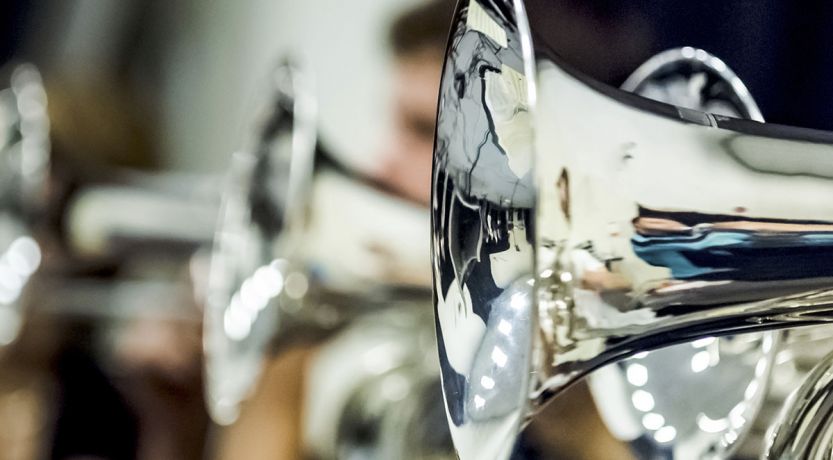
“The book of Revelation speaks of seven successive trumpets that will sound prior to the return of Jesus Christ to earth. What do they represent?

The number seven is an often-repeated number throughout the last book of the Bible, the book of Revelation. This book, which was given to reveal what “must shortly take place” (Revelation 1:1), includes seven churches (verse 4), seven golden lampstands (verse 12), seven stars (verse 16), seven “lamps of fire … which are the seven Spirits of God” (4:5), seven seals (5:1), seven trumpets (8:6), a beast with seven heads and 10 horns (13:1), seven thunders (10:3) and seven last plagues (15:1), which are contained in seven golden bowls (15:6-7).

Seven Trumpets of RevelationThe seven seals, seven trumpets and seven last plagues form an outline of prophetic events that will occur before and at the time of Christ’s return to earth. As our articles “Seven Seals,” “Four Horsemen of the Apocalypse” and “Wrath of God” explain, the first five of the seven seals represent Satan’s wrath against God’s people and mankind in general. The sixth seal announces the wrath of God (Revelation 6:12-16).

The seventh seal represents the Day of the Lord—the major theme of the book of Revelation. This seventh seal includes God’s judgment upon disobedient mankind in the form of seven trumpet plagues (Revelation 8-9) and seven last plagues (Revelation 15-16).

(Our bimonthly Discern magazine covers issues like this regularly. We’d be happy to give you a free subscription to Discern. Digital subscriptions are available worldwide; print subscriptions are currently available in the United States, Canada and much of Europe.)

Seven trumpets and their meaning

When the seventh seal was opened, John saw seven angels with seven trumpets. As each angel blew his trumpet, John saw terrifying plagues unfold, and he used powerful symbolic language to try to describe what he was witnessing.

First Trumpet: Hail and fire mingled with blood will cause all the grass on earth and a third of the trees to be burned up (Revelation 8:7).

Second Trumpet: A great mountainous burning object will be thrown into the earth’s oceans, causing one third of them to become blood, one third of sea life to die and one third of the ships to be destroyed (verses 8-9).

Third Trumpet: John saw a burning star fall from heaven on sources of fresh water, causing the water to become bitter and kill many (verses 10-11).

Fourth Trumpet: The light of the sun, moon and stars upon the earth will be diminished by a third (verse 12).

Fifth Trumpet (also called the first woe): What John could only describe as an unusual type of locust (likely seeing in the vision modern military aircraft) will emerge on the earth that will inflict intensely painful stings upon humans for five months (Revelation 9:1-12).

Sixth Trumpet (also called the second woe): Four angels will be released to kill one-third of the earth’s remaining population via an army of 200 million (verses 13-19).

Seventh Trumpet (also called the third woe): As this trumpet is sounding, voices in heaven will say, “The kingdoms of this world have become the kingdoms of our Lord and of His Christ, and He shall reign forever and ever!” (Revelation 11:15).

Impact of the trumpets

Because of mankind’s disobedience to His holy and beneficial laws, God will bring this severe punishment upon earth’s inhabitants. The effects of the first six trumpets will include an ecological disaster of epic proportion. And as the planet struggles to support life, humans will have to endure such intense pain that they will desire to die (Revelation 9:6); and many will indeed die, as noted in the description of the sixth trumpet (verses 13-19).

While one would think that such intense punishment would cause people to repent of their sins, this will not occur. As the Bible explains, “But the rest of mankind, who were not killed by these plagues, did not repent of the works of their hands, that they should not worship demons, and idols of gold, silver, brass, stone, and wood, which can neither see nor hear nor walk. And they did not repent of their murders or their sorceries or their sexual immorality or their thefts” (Revelation 9:20-21).

Humans are going to be so set on their freedom to break God’s laws that they will be willing to die for their way of life rather than repent. What a truly sad state of deception Satan has perpetrated upon mankind (Revelation 12:9)!

Because people will not repent, seven additional punishments called “the seven last plagues” (Revelation 15:1) will come upon mankind. While these sobering judgments are destined to come upon the inhabitants on earth, our loving God does not desire any to ultimately perish (2 Peter 3:9) and will in due time give every human an opportunity to understand His way of life and choose whether to obey God or not. This opportunity will come during and after a 1,000-year period of time called the Millennium—a time when Satan will be bound and unable to deceive mankind.”

From: https://lifehopeandtruth.com/prophecy/revelation/seven-trumpets/

________

Seventh Seal Reveals Seven Trumpet Plagues

Revelation 8:1-2

“When He opened the seventh seal, there was silence in heaven for about half an hour. And I saw the seven angels who stand before God, and to them were given seven trumpets.

The book of Revelation describes seven seals on a prophetic scroll. When we come to Revelation 8:1-2, the first four seals (also known as the Four Horsemen of the Apocalypse), the fifth seal and the sixth seal have all been opened. Now Jesus Christ opens the seventh and last seal to reveal seven angels and their trumpets. In succession, these seven angels blow their trumpets to announce seven terrible end-time events.

  • First trumpet: Trees and grass struck (Revelation 8:7).
  • Second trumpet: Seas struck (8:8-9).
  • Third trumpet: Fresh waters struck (8:10-11).
  • Fourth trumpet: Sun, moon and stars struck (8:12).
  • Fifth trumpet (first woe): Symbolic locusts torment people for five months (9:1-11).
  • Sixth trumpet (second woe): A 200-million-man army kills one-third of humanity (9:13-21).
  • Seventh trumpet (third woe): Announces the return of Jesus Christ and the seven last plagues (11:15-19; 16:1-21).

Read more in our article “How the Seven Trumpets of Revelation Will Affect Humanity.” These trumpets are tied into the meaning of the fourth of God’s festivals, the Feast of Trumpets.”

From: https://lifehopeandtruth.com/bible/blog/seventh-seal-reveals-seven-trumpet-plagues/

________

Update.

As I haven’t found anyone to hire to help with the remaining little bit of carpentry, plumbing and electrical work in the mini-house, progress there is at a standstill.

One day the folks who originally had the baby kittens came to help me clean up the grooming room.  I couldn’t get those big cages down by myself to clean and vacuum under them, they felt that it was the least that they could do to help.  I was very grateful.  The kittens are now in the Habitiat at Petco on display for adoption. 

The cat that I am taking care of for the folks whose house was damaged in the flood was not taught to stay off tables and counter tops.  I think that should be the first thing in a cat’s etiquette learning.  She is sweet and loving to me, but chases my other foster cat and terrorizes her.  Hopefully she will go home soon. 

My young neighbor, Zach, had lost his job so I hired him to help me one moning, but it was to get Roy’s stuff out of my storage area.  I can’t reach high up, so that is why I needed help to get it and tote it into my green house, which is not being used for plants right now.  All that stuff is now deemed abandoned, as not a word from Roy, so most of it will be donated. 

One day I took Zach for his doctor appointment like I usually do, and then the next day I took him to the food bank and Kroger’s.   Just ordinary life going on except that this week there were two Sabbaths. 

Our church was celebrating The Feast of Trumpets on Friday, so on Thursday I was cooking enough for both Friday and Saturday Sabbaths.  I read somewhere that Apples and honey were good fare for this feast, so I made Apple Crumble Slices.  A mixture of different things including oats, apple sauce, cinnamon and honey are placed on apple slices and put in the oven, and it turned out pretty good.

Because I have a lot of chicken in my freezer, I made organic minced chicken and organic veggies again, and also made some chicken sausage wontons.  So that they wouldn’t fall apart I cooked them in water just before church service started and put them in a crockpot with some Matzo Balls in chicken broth, but they fell apart anyway.   Next time I will use a crispy wonton recipe where they can be kept warm in the oven.  We also had organic beef meatloaf, Chicken à la King, slaw, salad, pie, cookies and a big cake with “Trumpets” written on it.

For the Friday celebration, after Jeff had blown several of the special blasts of the shofar, we sang songs relating to the trumpets and then the Bible readings which were Gen. 22:1-24, Num. 29:1-6 (about the feast) and Jer. 31:2-20 and the Teaching was about Repentance, the main theme of the Feast of Trumpets.  We all had a great time in the dining hall afterwards, even though some had to leave early as it was a weekday.

On Saturday, our regular Sabbath, the readings were Deut. 11:26-17, Isa. 54:11-55:5, and Jer. 7:37-52. The teaching was more about Repentance with the stories from the Bible about the wicked king Jehoram and his nasty end (2 Chron. 21).   Then the king Manasseh who started out really evil in his ways, and how he repented, humbled himself, did away with the false idols and was blessed in the end. (2 Chron.  33).

There was plenty of food left over from the day before, so we all had our fill, plus ‘doggie bags’, and really enjoyed the fellowship.

Then today, Sunday, I went to the Bible study and service at the little church next to our subdivision with Hans, a neighbor, and afterwards several of us went to eat lunch at a local Mexican restaurant, so I really had an enjoyable Christian three days.