Showing posts with label Aspartame. Show all posts

Monday, May 8, 2023

Biblical Conflict Resolution. What Is God’s Dietary Plan? Hospitals Selling Sickness.


Biblical Conflict Resolution

“As interpersonal conflicts increase, how should we best deal with them? What are some of the strategies of biblical conflict resolution?

Biblical Conflict ResolutionFrom the time of Cain and Abel, offenses and conflicts have been incessant human problems. And the Bible warns that in the end time, many will be offended (Matthew 24:10).

Have you ever witnessed someone being offended? Have you ever been offended? Have you ever offended someone else? It is very likely that you have.

Offenses generally produce conflict. The Cambridge Dictionary defines conflict as “an active disagreement between people with opposing opinions or principles.”

And resolving conflict is no easy task! It can be uncomfortable and difficult because of the hard feelings and strong emotions that are involved.

Small offenses may require little more than extending forgiveness to the person who’s committed the offense. Our blog post “Conflict Resolution: Should I Say Something?” explains, “With the majority of small offenses, the best response is usually simply to forgive the offense, recognize we have similarly offended others and bear with the other person in love (Ephesians 4:2).”

The purpose of this article is to explore the situations when a more involved response is needed.

No doubt, you will face conflict at some point in your life. Countless books have been written on this subject, some of which have proven to be very helpful. But, more important, God Himself provides us with some conflict resolution strategies within the Bible, His inspired Word.

What is the lesson of Abigail in the Bible?

The courageous example of Abigail provides a good illustration of an individual with exceptional conflict resolution skills. Her reaction to a very difficult situation—the strategies that she used to address conflict—can help us be prepared to resolve potential conflicts in our own lives.

We find the story in 1 Samuel 2      We will continue to see increased numbers of offenses and conflicts in the world around us, and you will most likely face difficult conflicts in your own personal life. But the Bible provides a way for us to deal with them:  “Now there was a man in Maon whose business was in Carmel, and the man was very rich. He had three thousand sheep and a thousand goats. And he was shearing his sheep in Carmel. The name of the man was Nabal, and the name of his wife Abigail. And she was a woman of good understanding and beautiful appearance; but the man was harsh and evil in his doings” (verses 2-3).

It is here that we’re first introduced to Abigail, along with her husband, Nabal. Verse 3 provides us with a key description of Abigail: She was a woman of “good understanding.” This good understanding was beneficial throughout Abigail’s life, both to her and to those around her.

It is not unreasonable to conclude that being married to a harsh man whose name literally meant “fool” left her vulnerable to moments of conflict.

We have no way of knowing every conflict that Abigail faced, but we are made aware of one significant situation that she faced. This tense situation involved her husband and another man who became extremely angry. Strong emotions and hard feelings often accompany moments of conflict.

David and Nabal

Nabal was a successful businessman; he possessed thousands of animals and was very rich. And while he was shearing his sheep in Carmel, along came David with a band of his men.

As background, it’s important to understand that when Nabal’s shepherds had been working in the fields, David’s men had provided security and protection for Nabal’s men and animals.

So David sent some of his men to remind Nabal of this. They were sent to entreat Nabal to share some supplies with them.

David’s message was, “Therefore let my young men find favor in your eyes, for we come on a feast day. Please give whatever comes to your hand to your servants and to your son David” (verse 8).

They were simply asking this wealthy man to be hospitable, which was the custom at the time. It was not an unreasonable request from David. They were not forcing Nabal’s hand; they were simply asking him to share whatever he was willing to give at this festive time. After all, they had provided some protection for his men and animals.

True to his name, Nabal’s reaction was churlish. He rudely responded with an insult in verses 10-11:

“Who is David, and who is the son of Jesse? There are many servants nowadays who break away each one from his master. Shall I then take my bread and my water and my meat [notice his emphasis on my throughout] that I have killed for my shearers, and give it to men when I do not know where they are from?”

Nabal made it quite clear that he had no intention of sharing anything with David. Not only was he unwilling to share, but he verbally insulted David as well.

Enter conflict. Nabal’s unkind reply greatly offended David and made him angry. He gathered up his men, told them to get their swords, and vowed to kill every male within Nabal’s camp.

Nabal was upset with David for asking him to share, and David was upset with Nabal for being unwilling to share. Nabal incited David by hurling insults, and David threatened to kill all of Nabal’s men.

Abigail and David

Standing in the midst of this very tense conflict was Abigail.

In verses 14-16, Abigail received a quick briefing on what was going on. She was informed of what her husband had done, as well as how David had reacted to Nabal’s conduct. The servants affirmed that David’s men did exactly as they said they had done, describing the men as a “wall [of protection] to us both by night and day.”

“Now therefore, know and consider what you will do” (verse 17).

Abigail was faced with this difficult question. As she faced the possibility of an attack by David, what would she do?

There is certainly no one-size-fits-all solution, but Abigail’s response does provide a few important lessons about biblical conflict resolution.

1. Face the problem—don’t hide from it.

Abigail discerned the situation and acted quickly to address the problem. She didn’t ignore it, hoping that it would go away. She didn’t try to hide from the problem. Abigail faced the matter head-on.

Notice the first four words in verse 18: “Then Abigail made haste.” She quickly gathered a collection of gifts for David and rode out on a donkey to meet him.

“Now when Abigail saw David, she dismounted quickly from the donkey, fell on her face before David, and bowed down to the ground” (verse 23).

Takeaway: When we’re faced with a conflict, we must be willing to address the situation. Avoiding the issue does not help resolve it.

2. Base your response on Scripture.

Abigail did not address the situation by angrily accosting David, but expressed genuine humility instead. When it comes to conflict resolution, there is quite possibly no passage more significant than Proverbs 15:1: “A soft answer turns away wrath, but a harsh word stirs up anger.” (See “Dealing With Difficult People” and “5 Tips for Dealing With Difficult People” for further reading on this topic.)

Through an attitude of humility and incorporating the biblical principle of a soft answer, Abigail’s approach helped defuse David’s anger.

“So she fell at his feet and said: ‘On me, my lord, on me let this iniquity be! And please let your maidservant speak in your ears, and hear the words of your maidservant. Please, let not my lord regard this scoundrel Nabal. For as his name is, so is he: Nabal is his name, and folly is with him! But I, your maidservant, did not see the young men of my lord whom you sent’” (1 Samuel 25:24-25).

She essentially told David, “I didn’t know that any of this had happened. Please forgive us for offending you.” She presented her gift of food, fulfilling what David had wanted in the first place. And she let David know that she knew he was fighting God’s battles (verse 28).

Once she’d softened him up, Abigail provided David with some encouragement to change his mind.

To paraphrase her reply, Abigail said, “Please forgive me. God will reward you and defeat all your enemies. I believe He has restrained you from taking revenge so you won’t have any regrets in the future.”

As you break down Abigail’s response to David, you can clearly see the resulting fruit of a soft answer turning away wrath.

Takeaway: Each situation is unique and may require a modified approach, but our response should always be based upon biblical principles.

3. Seek God’s help and know He is with you.

If we seek God’s help and strive to act as He tells us, we can know that He will be with us (Hebrews 13:5-6).

“Then David said to Abigail: ‘Blessed is the LORD God of Israel, who sent you this day to meet me!’” (1 Samuel 25:32).

That’s an important statement that should not be overlooked. The Lord God of Israel sent Abigail to meet with David. God was with her. She had to do her part as well (see lessons 1 and 2), but God was with her as she faced this conflict. Through Abigail, He helped address and resolve a situation that affected many people.

Takeaway: As we face moments of conflict in our lives, we must recognize that God can be right there with us. (See “God Is There for You” for further reading on this subject.)

Prepare to apply these conflict resolution strategies

We will continue to see increased numbers of offenses and conflicts in the world around us, and you will most likely face difficult conflicts in your own personal life. But the Bible provides a way for us to deal with them.

As you face those tense moments of conflict, let Abigail’s example be a source of encouragement. Resolving conflict is no easy task, but it is attainable.

Learn more in our three-part blog series on conflict resolution, beginning with “Conflict Resolution: Should I Say Something?”  From: https://lifehopeandtruth.com/relationships/friendship/biblical-conflict-resolution/?

Also see: https://lifehopeandtruth.com/relationships/friendship/dealing-with-difficult-people/

________

What Is God’s Dietary Plan?

“Therefore, whether you eat or drink, or whatever you do, do all to the glory of God.” ~1 Corinthians 10:31

Can we glorify God by disobeying His word? Absolutely not. There is but one way to bring glory to God, and that is through obedience to His infallible word! We must decide this one thing, are we going to obey God or man?

“But Peter and the other apostles answered and said: We ought to obey God rather than men.”   ~Acts 5:29

​So, what exactly is a Godly diet? Let’s break this down into some very simple steps, a Godly diet plan for us in the here and now consists first and foremost of eating only clean foods!  This not only refers to God’s do and do not eat list of clean and unclean animals, it also refers to eating foods that are unblemished by man.

Let’s talk just a bit about GMO’s, genetically modified (mutated) organisms. I know this is a tough concept to get our brains wrapped around, so I’m going to be extremely generalized in my explanation of this horrendous condition.

Should I eat

Misguided human beings have messed with God’s perfect foods, and corrupted both plants and animals for monetary gain as well as for power to control their propagation. They have messed with the very core of these creations, better known as the DNA! Click here for a crash course on Genetics and DNA.

God had a perfect plan, a plan that can not be improved on. By messing with and genetically corrupting these organisms, man has recreated God’s creation into what I call “Frankenstein-foods.”  So, without going into anymore boring genetic science, suffice to say, we absolutely should not be consuming any of these genetically mutated Frankenstein-foods. And that leaves us with what is better known as organic foods.

“For the creation was subjected to futility, not willingly, but because of Him who subjected it in hope; because the creation itself also will be delivered from the bondage of corruption into the glorious liberty of the children of God.”   ~Romans 8:20-21

Now for a brief understanding of organic foods versus chemically treated foods. Organic means natural, in other words, foods that are grown as God intended, not genetically modified or sprayed with harmful chemical pesticides (bug-sprays), dangerous herbicides (weed-killers), or chemical fertilizers. We should only eat organically grown foods that have been treated naturally, fertilized with herbivore manure or composted seaweed and vegetation mulch.

Lastly, we need to look at the condition of the foods that we’re consuming. Natural, unprocessed is what God intended for us. Not bleached, over processed, artificially colored, artificially sweetened, artificially preserved, or foods full of any additives, no matter what the purpose might be. A good rule to follow is to read all labels, and if they contain anything you can’t pronounce, don’t eat it!

We were created to eat whole natural organic, non-GMO foods like; fruits and vegetables, nuts and seeds, clean wild-caught fish, and minimal free-range/chicken, grass-fed clean meats and dairy (without steroid, growth hormone or antibiotic injections).

No refined sugar, and absolutely no artificial sweeteners. Only natural, raw honey or plant nectars like agave nectar, real maple syrup, and molasses. No processed and refined chemically preserved anything. If it doesn’t come in, what I refer to as a God wrapper (peeling or skin covering), don’t eat it!

I was recently at a friend’s house one morning, and he asked me if I’d like to join him in a bowl of instant maple flavored oatmeal. He knew my stance on organics, as well as how I felt about GMOs. He protested that it was organic and that oatmeal is very good for you!

I politely declined and tried to explain the difference to him. Yes, organic is good, and yes, oatmeal is good for you as well, however, instant anything is processed and altered to microwave super fast, as well as “maple flavoring” which is just that, artificial flavoring, a man-made chemical substitute for real maple syrup, and is totally unnatural and downright harmful.

I am no longer willing to compromise my beliefs to please others. I will not jeopardize my health, nor will I go against God’s rules for optimal health.  I’m to the point in my life that I don’t care what people think. I no longer care that many of my friends and relatives feel I’ve gone overboard with my dietary restrictions.

“Listen to Me, you who know righteousness, you people in whose heart is My law: do not fear the reproach of men, nor be afraid of their insults.”   ~Isaiah 51:7

​I fully understand that God wants us to be healthy, and that’s the whole reason He made all these dietary rules in the first place. This is overwhelmingly apparent by a number of Biblical facts. First off, God is extremely specific about exactly what we should and should not eat. Secondly, Jesus spent the majority of His adult life healing the sick and lame. As well as the fact that God created us. Who could possibly know better what these organic bodies should consume for fuel?

With that said we must now ask, how can we get as close as possible to what God wants for us? In a nutshell, here it is.

What should we eat...?

  • ​Eat only biblically “clean foods”
  • Eat uncontaminated meats; not treated w/steroids, hormones or antibiotics
  • Eat non-GMOs; foods that have not been genetically altered by man
  • Eat organic foods that have not been chemically treated
  • Eat quantities that reflect Biblical moderation and self-control
  • Eat more raw and live foods like fresh fruits and veggies, nuts and seeds, and less animal, as well as less cooked, refined/over-processed anything

One of the biggest problems with the average American diet isn’t just how much we eat; it’s the percentage of our diet made up of cooked and over-processed foods. Eat more raw, natural foods like fresh fruits and vegetables (remember about the God wrapper) i/e the fresher, the better and the more color, the healthier. Follow God’s rules rather than man’s. The more natural the foods you eat, the healthier you will be!

Anything that isn’t labeled organic has more than likely been treated with dangerous chemical insecticides, herbicides, and fertilizers. As well as animals that are injected with steroids, growth hormones and antibiotics. Anything that isn’t labeled non-GMO has probably been genetically mutated to replicate something it isn’t. Have you ever heard the saying, only God can make a tree? Let that sink in! Man can try to improve on God’s perfection all he wants, but I assure you he will ultimately fail.

The following was a newsflash on the internet that a friend sent me. She commented on how happy she was about this discovery. “Science Confirms Eating Chocolate Cake For Breakfast Is Good For Your Brain And Waistline”  Sadly, I informed her that she was more than old enough to understand that you can’t believe everything you read.

God has given us the ability to discern. This simply means, if it quacks and waddles, it’s a duck! I don’t care what anyone might tell you it is. Use your God-given common sense, if it sounds too good to be true, that’s because it isn’t true.

The thing is, people choose to believe what they want to believe. Yes, it would be great if chocolate cake for breakfast, ice cream for lunch and Krispy Kreme donuts for dinner were good for you, but really, it doesn’t take a nutritional expert to understand that they aren’t.

What shouldn't we eat...?

Besides all of the “unclean foods“ that God tells us to avoid, we also need to use our God-given ability to discern regarding things that are not mentioned in the Bible. For example, GMO’s of any kind, chemically treated foods, over-processed foods, refined foods, artificial preservatives, and toxic chemical additives like aspartame, just to name a few. God created perfect, clean foods—man modified and mutated it into toxic, unclean trash, and sells it as a convenience!

This is what we should be eating!

Additionally, any type of soft drink is extremely unhealthy due to the excessive amount of refined sugar, but diet soda is by far the worst possible choice.

Here are the ingredients in diet coke:

​Carbonated water, caramel coloring, artificial sweetener (Aspartame, or Sucralose for the Splenda version), phosphoric acid, potassium benzoate (to protect taste), sodium (40mg), natural flavors, citric acid, caffeine. GMO: This product includes ingredients sourced from genetically engineered (GE) crops, commonly known as GMOs.

All artificial sweeteners are bad for you—Aspartame being one of the most unhealthy and down-right dangerous choices possible—its absolute poison in every sense of the word. The harmful effects of ingesting this stuff are endless. It can cause seizures, headaches, depression, ADHD, weight gain, dizziness, birth defects, cancer, lupus, Alzheimer’s, MS, and internal bleeds, just to name a few!

Opt to eat the good of the land—the foods that God has created to nourish our bodies—rather than man-made trash and fake foods!

​“If you are willing and obedient, you shall eat the good of the land.”   ~Isaiah 1:19

​Q: Are you ready to accept God’s diet?”  From: https://thetruthmission.org/what-is-gods-dietary-plan/

________

Hospitals Selling Sickness

Transcript of video at: https://nutritionfacts.org/video/hospitals-selling-sickness/

“The movement to remove fast food operations from hospitals parallels the successful movement in the 80s to bar hospital tobacco sales.

The food industry spends billions of advertising. Promotion costs for individual candy bars could run in the tens of millions, and this was years ago. McDonald’s alone spends a billion dollars on advertising every year. Such figures dwarf the National Cancer Institute’s million dollar annual investment promoting fruit and vegetable consumption or the 1.5 spent on cholesterol education. And that McBillion goes a long way.

Children’s food preferences are being molded by McDonald’s even before they learn to tie their shoelaces. By the early age of 3 to 5 years, preschoolers preferred the taste of foods and drinks if they thought they were from McDonald’s. This was true even for carrots. Baby carrots placed on a bag with McDonald’s logo reportedly tasted better.

And then if they get sick, they can continue to eat McDonald’s in the hospital. Nearly 1 in 3 children’s hospitals had a fast food restaurant inside, leading parents to have more positive perceptions of the healthiness of McDonald’s food. Or they can just buy the naming rights altogether: The Ronald McDonald Children’s Hospital.

In teaching hospitals, Krispy Kreme tops the list. Hospitals may wish to revisit the idea of serving high-calorie fast food in the very place where they also care for the most seriously ill.

This is reminiscent of the fight back in the 80s to get tobacco out of hospitals, when public health advocates made radical suggestions like cigarettes should not be sold in the hospital. By working to make our hospitals ultimately smoke-free, we become part of a global campaign to completely eliminate the tobacco scourge. The task is difficult, but so was eradicating smallpox.

Maybe it’s time to stop selling sickness in hospitals.”

To see any graphs, charts, graphics, images, and quotes to which Dr. Greger may be referring, watch the above video. This is just an approximation of the audio contributed by Katie Schloer.

_________

Sunday, January 8, 2023

The Kingdom, the Power and the Glory. Whose Prayers Does God Answer? Scary Seven. What Eating Processed Flour and Vegetable Seed Oils Really Does to You.

.

The Kingdom, the Power and the Glory

The Kingdom, the Power and the Glory“For Yours is the kingdom and the power and the glory forever” is a phrase found at the conclusion of Jesus’ model prayer. What does it mean for us today?
In teaching His disciples how to pray, Jesus explained that these intimate opportunities to address God should most often be done in private. He also taught that our prayers should come from our hearts, using our own words rather than repeating a specific prayer with the exact same words time after time (Matthew 6:5-8). 

To help His disciples know what to pray about, Jesus also provided a model prayer outlining important subjects to include. This model prayer—found in Matthew 6:9-13—is commonly referred to as the Lord’s Prayer.

It is important for us to note that Jesus did not intend for us to repeat the exact words of this outline every time we pray. After all, the biblical examples of Jesus praying show that He used different words as He conveyed His thoughts to the Father under various circumstances.

But this model prayer is helpful for us because it gives us subjects to regularly pray about and a perspective to bear in mind as we communicate with our Heavenly Father. For additional explanation, see our online articles “The Lord’s Prayer” and “Do You Pray the Way Jesus Taught?

With this understanding of Christ’s model prayer in mind, let’s focus on the phrase recorded in the last part of Matthew 6:13, where Jesus concluded: “For Yours is the kingdom and the power and the glory forever. Amen.”

Yours is the kingdom

This part of the phrase repeats a concept included earlier in the model prayer. After addressing our Father in heaven and hallowing (honoring) His name, we are instructed to pray, “Your kingdom come” (Matthew 6:10).

Referencing the Kingdom of God at the beginning of our prayers and again as we conclude them reminds us that the coming Kingdom of God is the overarching story of the Bible. This concept is a foundational principle of Christianity.

The gospel—good news—of the Kingdom of God is what Jesus preached during His earthly ministry (Mark 1:14-15). “Seek first the kingdom of God and His righteousness,” He said (Matthew 6:33).

Faithful believers have their citizenship in this Kingdom, which is currently in heaven (Colossians 1:13; Philippians 3:20). When Christ returns, this Kingdom will be established on earth, and we will reign with Him on earth for 1,000 years (Revelation 1:6; 11:15; 20:6). Eventually, this Kingdom will be delivered to God the Father (1 Corinthians 15:24) and will extend into eternity.

As we pray about the Kingdom of God, we are reminded of and grounded in the purpose for our lives and our future. God doesn’t need to be reminded of His plan, but we do. Praying for the coming Kingdom of God helps us remember that it is a central part of God’s plan for mankind and that we need to be preparing to serve within it.

The power

Because we humans do not see the spirit world, it is easy to overlook the fact that God has all power. Currently, during this present evil age, God has allowed Satan to have power and authority (Luke 4:6; Galatians 1:4). But God remains in control of His plan and retains His overall authority. He gives His ministers power over evil spirits and the opportunity to ask for divine healing of people they anoint (Luke 9:1; 10:19). When Jesus returns to earth, He will remove Satan and use His power to rule over the entire earth (Revelation 11:15).

Faithful Christians receive a small portion of God’s power through the Holy Spirit when they repent of their sins, are baptized, and have hands laid on them for the reception of this gift from God (Acts 1:8). Paul described this Spirit as one of “power and of love and of a sound mind” (2 Timothy 1:7) and listed nine traits that are the “fruit of the Spirit” (Galatians 5:22-23). 

The Holy Spirit empowers us to please God in the way we live (Romans 8:8-9). It also identifies us as children of God and seals us for redemption to eternal life when Christ returns (Romans 8:11, 14, 16; Ephesians 1:13; 4:30).

When God’s plan of salvation for mankind is complete, God will have total control. As Paul explained, “Then comes the end, when He [Jesus Christ] delivers the kingdom to God the Father, when He puts an end to all rule and all authority and power” (1 Corinthians 15:24).

When we close our prayers with a reference to God’s power, we are reminded that He truly does have all power and that, via the power of the Holy Spirit, we can taste “the powers of the age to come” (Hebrews 6:5).

And the glory forever

The Greek word translated “glory” is doxa. It has a broad range of meanings, and in reference to God it includes His “splendor . . . magnificence, excellence, preeminence, dignity, grace . . . majesty” (Thayer’s Greek Definitions). God has an exalted state of glory far above and beyond any other being or thing. 

Jesus was “the brightness of His [God the Father’s] glory” (Hebrews 1:3). The disciples “beheld His glory, the glory as of the only begotten of the Father, full of grace and truth” via the miracles He performed (John 1:14; 2:11).

Referencing God’s glory and the fact that it is permanent—forever—shows honor and respect to our great Creator.

Overall meaning

Earlier, King David, a man after God’s own heart (Acts 13:22), had included these three concepts—God’s rulership of His kingdom, His power and His glory—in a public prayer he gave prior to the inauguration of his son, Solomon, as king over Israel.

“Yours, O LORD, is the greatness, the power and the glory, the victory and the majesty; for all that is in heaven and in earth is Yours; Yours is the kingdom, O LORD, and You are exalted as head over all,” he prayed (1 Chronicles 29:11).

In the model prayer, Jesus instructs us to close our prayers in a similar way. When we pray, “Yours is the kingdom and the power and the glory forever,” we honor God and are reminded of His great plan, power and magnificence.”  From: https://lifehopeandtruth.com/god/prayer-fasting-and-meditation/how-to-pray/kingdom-power-and-glory/?

_______

Whose Prayers Does God Answer?

1 John 3:22

And whatever we ask we receive from Him, because we keep His commandments and do those things that are pleasing in His sight.

“Jesus Christ said, “If you ask anything in My name, I will do it” (John 14:14). That sounds like a blanket promise that could be easily abused. But John clarifies in 1 John 3:22 what Christ meant and why He could say that. His followers would, by definition, be those who strive to obey God’s commandments and to please God. Christians must seek God’s will and so must pray according to God’s will.

It only makes sense. Why would God act like a genie and give us things that wouldn’t be good for us? Why would He reward disobedience to His perfect laws? He wouldn’t.

He wants His followers to learn His will and to ask according to His will. Then He can give “whatever we ask” at the time that He knows is best for us in His eternal plan.”  From: https://lifehopeandtruth.com/bible/blog/whose-prayers-does-god-answer/?

For more about His commandments and pleasing Him, see “The 10 Commandments for Today” and “How to Please God.”

________

scary7-696x595

_______

What Eating Processed Flour and Vegetable Seed Oils Really Does to You

“There are way too many other ingredients in bread with refined flour. It's not whole wheat, it's not whole grain. And because the process did so much, they have to re add all the ingredients. Also, they are called vegetable oils, but many are not from vegetables. They are actually extracted from seeds. Whether it's soy oil, cottonseed oil, corn oil, soybean oil, even canola oil. These are all manufactured oils full of omega six. And these must be avoided whenever we cook, we should not use this oil.”

See video at:  https://www.thefoodflix.com/watch/what-eating-processed-flour-and-vegetable-seed-oils-really-does-to-you_UZlqqj7drKhFk5P.html?lang=dutch

_______


Sunday, May 1, 2022

Hope in the Bible. What’s the Bible For? Do You Consume These Foods That Ruin Your Liver.

.

Hope in the Bible

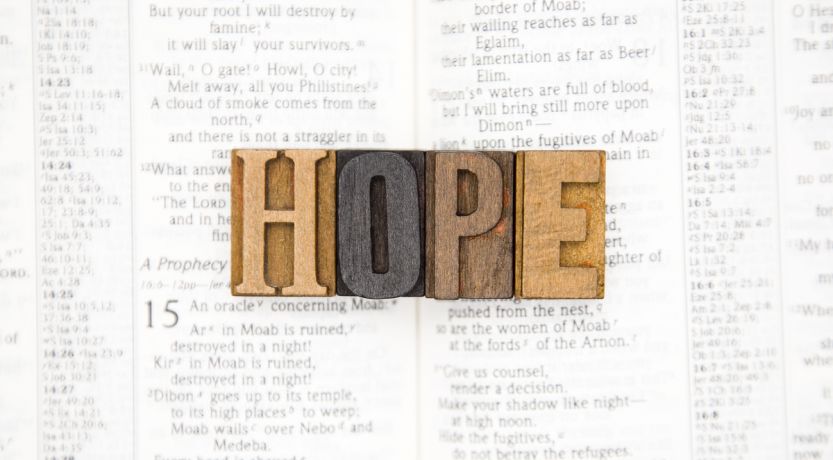
Hope in the Bible“Life today can be sorely lacking in hope. But there is a timeless source we can turn to. The hope in the Bible is guaranteed not to disappoint!

When I feel hope fading or even feel hopeless, I know where to turn.

In the world of men, apart from God, there is no real hope (Ephesians 2:12). And this world desperately needs hope! We need hope not just to make it from one challenge, trial or disappointment to another, but to lift our heads and give us direction and meaning.

Real hope empowers us, encourages us and makes life worth living. But where can we find this hope?

God is called the “God of hope” (Romans 15:13). And He gives that hope to us through His inspired Scriptures.  Our go-to source of godly hope is the Holy Bible.

Meaning of hope in the Bible

The Greek word elpis, translated hope in the New Testament, has the connotation “desire of some good with expectation of obtaining it” (The Complete Word Study Dictionary, New Testament, 1992). Hope based on God and His sure promises is vastly different from the fleeting hope of this world.

Human, natural hope “is transient and illusory,” and the “majority of secular thinkers in the ancient world did not regard hope as a virtue.”

“But for the most part the hope with which the Bible is concerned is something very different; and in comparison with it other hope is scarcely recognized as hope.” It is closely tied to faith. Because of what God has done and promised, “the Christian dares to expect future blessings at present invisible (2 Cor. 1:10). The goodness of God is for him never exhausted. The best is still to be. His hope is increased as he reflects on the activities of God in the Scriptures (Rom. 12:12; 15:4)” (New Bible Dictionary, “hope,” 1982).

“That we through the patience and comfort of the Scriptures might have hope”

Paul points to the Bible as our source of hope.

“For whatever things were written before were written for our learning, that we through the patience and comfort of the Scriptures might have hope” (Romans 15:4).

The stories and teachings of the Bible were recorded for many reasons, but here Paul highlights how God inspired them to give us hope.

William Barclay noted about this passage: “The Christian fellowship should be marked by hope. The Christian is always a realist, but never a pessimist. The Christian hope is not a cheap hope. It is not the immature hope which is optimistic because it does not see the difficulties and has not encountered the experiences of life. It might be thought that hope is the prerogative of the young; but the great artists did not think that. When [the painter George Frederic] Watts drew ‘Hope’ he drew her as a battered and bowed figure with one string left upon her lyre. The Christian hope has seen everything and endured everything, and still has not despaired, because it believes in God. It is not hope in the human spirit, in human goodness, in human achievement; it is hope in the power of God” (Daily Study Bible, note on Romans 15:1-6).

Examples of hope in the Bible

Consider the story of Rahab, the harlot in Jericho who had come to believe in the power of the God of Israel. She and all the people of Jericho realized it was hopeless to fight against Israel (Joshua 2:11). But it seems only Rahab chose to believe in the God of Israel. She risked her life to save the Israelite spies, and in turn they promised to protect her and her family, if she put a scarlet cord in the window of her home on the city wall (verses 18, 21).

Interestingly, the word cord is from the Hebrew word tiqva, which is most often translated in its figurative sense as “hope” and “expectation.”

“By faith the harlot Rahab did not perish with those who did not believe,” we’re told in the Faith Chapter. Instead, God gave her hope and a place in the lineage of Jesus Christ (Matthew 1:5).

God’s plan includes saving us from our deadly and deceitful enemy. Instead of death, God offers us the amazing opportunity to become members of His family and to inherit everything with Jesus Christ. The book of Job, which tells the story of a man bereaved of nearly everything he held dear, mentions hope (tiqva) 15 times, but can hardly be considered a hopeful book. Until the last chapter, that is, when God reverses the misfortune.

Mourning for the loss of his children, his possessions and his health, Job cried out, “My days are swifter than a weaver’s shuttle, and are spent without hope” (Job 7:6).

Yet even in the depths of despair, Job expressed hope for the next life:

“If a man dies, shall he live again? All the days of my hard service I will wait, till my change comes. You shall call, and I will answer You; You shall desire the work of Your hands” (14:14-15). Interestingly, the phrase I will wait is from the Hebrew yahal, which is often translated as hope.

Growing in hope—the hope that does not disappoint

Paul tells us that followers of Christ are able to “rejoice in hope of the glory of God” (Romans 5:2). Here again hope is translated from the Greek word elpis, which means “to anticipate, usually with pleasure” (Strong’s Definitions).

Then he outlines the steps that produce more hope.

“And not only that, but we also glory in tribulations, knowing that tribulation produces perseverance; and perseverance, character; and character, hope.

“Now hope does not disappoint, because the love of God has been poured out in our hearts by the Holy Spirit [that] was given to us” (verses 3-5).

Growing in this way is not easy. Enduring troubles in order to have the character of Jesus Christ hurts. It stretches us, toughens us and strengthens us. And it produces hope—real, 100 percent satisfying hope enlivened by the love of God.

God’s loving plan is what gives hope its power.

“As a helmet the hope of salvation”

God’s story for your life is epic and dramatic. God’s plan includes saving us from our deadly and deceitful enemy. Instead of death, God offers us the amazing opportunity to become members of His family and to inherit everything with Jesus Christ. He wants us to live forever in His close, loving family.

Understanding this amazing plan serves as part of our protection from Satan the devil.

“But let us who are of the day be sober, putting on the breastplate of faith and love, and as a helmet the hope of salvation” (1 Thessalonians 5:8).

In his famous list of the armor of God, Paul called this the “helmet of salvation” (Ephesians 6:17). But to the Thessalonians, Paul wrote the more complete description “the hope of salvation.”

Transforming the wonderful promise of salvation into armor to protect our minds requires a healthy dose of hope. We must truly believe that God will save us from eternal death and give us eternal life. That kind of hope can deflect the blows of our enemy who wants to discourage us. The hope of salvation protects our minds.

This helmet allows us to fully engage in the process of transformation God has called us to.

“Christ in you, the hope of glory”

Paul calls God’s plan a mystery that has now been revealed to the saints—to all those God has called out of this world. (For a look at the biblical meaning of saints, see “How to Become a Saint.”)

God wants all those who have been baptized and received the Holy Spirit to understand the transformation He has called us to.

“To them God willed to make known what are the riches of the glory of this mystery among the Gentiles: which is Christ in you, the hope of glory” (Colossians 1:27).

On the night before His crucifixion, Jesus encouraged His followers. He told them, and He tells us, “I will not leave you orphans; I will come to you” (John 14:18). He adds, “If anyone loves Me, he will keep My word; and My Father will love him, and We will come to him and make Our home with him” (verse 23).

Studying the rest of Jesus’ Passover teachings shows that the Father and the Son live in us through the Helper—the Holy Spirit (verse 26).

What does the Bible say about how to receive the Holy Spirit? “Repent, and let every one of you be baptized in the name of Jesus Christ for the remission of sins; and you shall receive the gift of the Holy Spirit” (Acts 2:38).

This process of conversion changes us from the inside. It helps us think and act like Jesus Christ as it writes God’s laws on our hearts and minds (Hebrews 10:16).

Hope is also part of our witness to those around us. If someone wants to understand how we can have hope in these hopeless times, Peter encourages us to be prepared to share the reason. In 1 John 3 the apostle John also points to the transforming power of the hope we have been given. After describing the incredible love the Father has shown us by calling us “children of God” (verse 1) and explaining that when Jesus returns, “we shall be like Him, for we shall see Him as He is” (verse 2), John says:

“And everyone who has this hope in Him purifies himself, just as He is pure” (verse 3).

God’s holiness and purity are major themes throughout the Bible. To truly become like Jesus Christ, we must pursue purity.

William Barclay commented on this verse: “John has just said that the Christian is on the way to seeing God and being like him. There is nothing like a great aim for helping a man to resist temptation” (Daily Study Bible, note on 1 John 3:3-8).

Faith, hope and love

The Bible connects faith, hope and love many times (1 Thessalonians 1:3; 5:8; Galatians 5:5-6; 1 Corinthians 13:13; Hebrews 6:10-12; 1 Peter 1:21-22).

Faith and hope work together, hand in hand. It takes faith in God to have real hope, and it takes godly hope to have real, lasting faith.

Love elevates faith and hope above any selfishness, producing a desire for God’s plan to provide His blessings for everyone.

William Barclay put it this way in his Daily Study Bible: “Faith without love is cold, and hope without love is grim. Love is the fire which kindles faith and it is the light which turns hope into certainty.”

Love’s outgoing nature and eternal qualities makes it the “greatest of these” (1 Corinthians 13:13).

For more on this, see the sidebar “Faith, Hope and Love” in our booklet Finding Hope in a Hopeless World.

Give a reason for the hope

Hope is also part of our witness to those around us. If someone wants to understand how we can have hope in these hopeless times, Peter encourages us to be prepared to share the reason:

“But sanctify the Lord God in your hearts, and always be ready to give a defense to everyone who asks you a reason for the hope that is in you, with meekness and fear” (1 Peter 3:15).” 

From: https://lifehopeandtruth.com/life/plan-of-salvation/hope-for-the-future/hope-in-the-bible/?

_______

What’s the Bible For?

2 Timothy 3:15-17

And that from childhood you have known the Holy Scriptures, which are able to make you wise for salvation through faith which is in Christ Jesus. All Scripture is given by inspiration of God, and is profitable for doctrine, for reproof, for correction, for instruction in righteousness, that the man of God may be complete, thoroughly equipped for every good work.

“The Holy Scriptures available to Timothy as a child would, of course, have been what we call the Old Testament today. The apostle Paul and the New Testament Church held the Old Testament in high esteem and quoted from it often in sermons and writings. The Old Testament revealed much about Jesus Christ, including both His first and second comings, and the salvation that is available because of His sacrifice.

All Scripture, which Peter later showed included Paul’s writings as well (2 Peter 3:16), was breathed—what we call inspired—by God. What is the Bible useful for?

  • Doctrine—teaching us God’s will.
  • Reproof—conviction or proof of wrongdoing.
  • Correction—setting us straight.
  • Instruction in righteousness—disciplining or training.

The Good News Translation puts it this way: All Scripture “is useful for teaching the truth, rebuking error, correcting faults, and giving instruction for right living, so that the person who serves God may be fully qualified and equipped to do every kind of good deed” (verses 16-17).”   For more about what the Bible can do for us, see “Why Study the Bible?       From: https://lifehopeandtruth.com/bible/blog/whats-the-bible-for/?

________

Do You Consume These Foods That Ruin Your Liver.

Excerpts from YouTube: https://youtu.be/1B98PDEe4vU  

“You are as healthy as your liver. Your liver helps you in many different ways, but its main function is to detox poisons. It’s important to be aware of these ingredients in certain foods that ruin your liver, so you can avoid them and keep your liver healthy. The best type of food for the liver is cruciferous vegetables. Be sure to consume cruciferous vegetables regularly to support a healthy liver.

7 ingredients in foods that will ruin your liver:

1. Soy protein isolates Common foods that contain this ingredient: • Diet shakes • Diet powders • Protein bars • Veggie burgers

2. Fructose Common foods that contain this ingredient: • High fructose corn syrup • Fruit • Agave nectar • Table sugar

3. Vegetable fats Common foods that contain this ingredient: • Corn oil • Soy oil • Canola oil • Cottonseed oil

4. Whey protein powder Common foods that contain this ingredient: • Protein powders

5. Maltodextrin Common foods that contain this ingredient: • Protein powders • Certain vitamin supplements • Certain “keto-friendly” foods • Foods that contain fillers or drying agents • Post-workout gels • Splenda • Puddings • Protein bars

6. Aflatoxins Common foods that contain this ingredient: • Peanuts • Corn 7. MSG Common foods that contain this ingredient: • Pork rinds • Fast-food • Chinese food • Cottage cheese • Foods that contain flavor enhancers”

______

Sunday, April 18, 2021

Is There a God? Folly! The Dangers of Soy Are Real.

.

Is There a God?

Can there be anything more important than answering the question: Is there a God? Truly knowing this answer changes everything!

People grapple in many ways with the question, “Is there a God?”

They may examine the scientific evidence from the physical creation around us. They can point out the fascinating intricacies of human anatomy, such as our eyes or brains, or cite analogies of how a working watch could never accidentally come into being. They can focus on the complexity of our planet earth, its perfect size, distance from the sun, tilt, atmosphere, etc.—all evidence that life could not be a quirk of nature.

All this is good, but it’s not the most vital place to begin exploring the question of God’s existence. Every individual has to first search his or her own heart to see what he or she really wants to find.

The Bible says, “The fool has said in his heart, ‘There is no God’” (Psalm 14:1 ). So we need to begin with what is in the heart. If we are prejudiced against the idea of a Supreme Being, then we will rationalize away even the most convincing of evidence.

The apostle Paul stated that many humans simply do not want to accept the reality of God—they do not like to retain God in their knowledge, he said (Romans 1:28 ). But if you are willing and want to go where the clear evidence leads, this website will explore the evidence. The articles here will help you answer—both intellectually and spiritually—the vitally important question, “Is there a God?”       See:  https://lifehopeandtruth.com/god/who-is-god/?

_________

Folly!   

Transcript of YouTube: https://youtu.be/4R1kfj6F6kY

“The world doesn't see it, but there is much value and many blessings in following God's way.

[Steve Myers] “Back in 1867, the Russian czar was having trouble financially. They decided to sell Alaska. And the United States stepped up and purchased Alaska for just over $7 million. That would be something like two cents an acre, which seemed like a phenomenal deal. But, it actually became known as "Seward's Folly." Seward was Secretary of State at the time. And they thought, "There is nothing there but a bunch of fur-bearing animals." But it turned out much differently, as soon as they saw the vast resources, when the salmon, the fish, the amazing blessings of the timber. And then of course gold was discovered there. And it was an amazing discovery and a tremendous value that initially was thought to be absolute folly.

Now when I consider this particular story about Alaska, sometimes people look at us, as God's people, as foolish. They think that we are absolutely foolish. In fact, I was watching a show the other day where the host said, "Anyone who is a Christian is absolutely ignorant." And oftentimes we get made fun of in this world, and they think of us as foolishness, much like what Paul wrote about in 1 Corinthians.

He wrote about that very fact in 1 Corinthians 1:18. It says there, "The message of the cross is foolishness to those who are perishing, but to us who are being saved it's the power of God." And so oftentimes we're denounced. We're made fun of. We're criticized for trusting God, for having faith, in a faithless world. Don't let it get you down, because really, we're like Alaska in a Christian sense.

There is so much value and blessings in following God. The world doesn't see it. We can take heart. We can take courage. In fact, just a couple of verses later in verse 25, Paul wrote, "The foolishness of God is wiser than men, and the weakness of God is stronger than men." So we can deflect criticism. We can say, "No, this is truth." We can fend off the attacks that come against us as true believers in God, because one day, one day God is going to make that evident.

So stand strong. Don't let it get you down. Recognize that we have the great God of the universe on our side. And God's acquisition is not folly. In fact, when you think about what God's done, we can take confidence. We can have security in knowing that God has made the ultimate purchase, you.”  From: https://www.ucg.org/beyond-today/beyond-today-daily/folly

________

The Dangers of Soy Are Real--and Much Worse Than You Might Think

“Promoting soy foods as health foods while ignoring the dangers of soy and soy derivatives should be considered a crime against humanity. If you think this statement is too extreme, read this article to the end, and then see what you think!

The dangers of soy are thoroughly documented in the scientific literature, which makes it hard to believe that many health and fitness communities and counselors, and most health food stores, still promote soy products as ultra-healthy foods.

Hopefully this harmful misrepresentation of soy foods will begin to change as the dangers of soy become better known.

A Summary of the Dangers of Soy
  • Soybeans and soy products contain high levels of phytic acid, which inhibits assimilation of calcium, magnesium, copper, iron, and zinc.
  • Soaking, sprouting, and long, slow cooking do not neutralize phytic acid.
  • Diets high in phytic acid have been shown to cause growth problems in children.
  • Trypsin inhibitors in soy interfere with protein digestion and may cause pancreatic disorders.
  • Test animals showed stunted growth when fed trypsin inhibitors from soy.
  • The plant estrogens found in soy, called phytoestrogens, disrupt endocrine function, that is, the proper functioning of the glands that produce hormones, and have the potential to cause infertility as well as to promote breast cancer in adult women.
  • Hypothyroidism and thyroid cancer may be caused by soy phytoestrogens.
  • Infant soy formula has been linked to autoimmune thyroid disease.
  • Soy has been found to increase the body's need for vitamin B12 and vitamin D.
  • Fragile soy proteins are exposed to high temperatures during processing in order to make soy protein isolate and textured vegetable protein, making them unsuitable for human digestion.
  • This same process results in the formation of toxic lysinoalanine and highly carcinogenic nitrosamines. (Doesn't sound like anything anyone would want to eat, does it?)
  • MSG, (also called free glutamic acid), a potent neurotoxin, is formed during soy food processing. Many soy products have extra MSG added as well. (See video on the dangers of Aspartame, MSG's chemical first cousin.)
  • Soy foods contain elevated levels of toxic aluminum, which negatively effects the nervous system the kidneys and has been implicated in the onset of Alzheimer's.

If this list of the dangers of soy isn't enough to make you run out the door of your local health food store, keep reading. It gets worse!"  Continued at: http://naturalhealthstrategies.com/dangers-of-soy.html

Here is one more: https://www.westonaprice.org/health-topics/soy-alert/soy-the-dark-side-of-americas-favorite-health-food/

_______