Showing posts with label bees. Show all posts

Wednesday, May 21, 2025

Your Moral Compass. What Is Faith? Help Starving Bees!

.

Your Moral Compass

Your moral compass“Without a belief in God, there is no anchor for absolute moral truths. Russian novelist, writer and philosopher Fyodor Dostoyevsky, in his novel The Brothers Karamazov, wrote, “If God does not exist, everything is permitted.”

For Christians, God’s Word is our guide and our moral compass.

For Christians, God’s Word is our guide and our moral compass. Philosophies attempting to describe what is moral without acknowledging God can be traced back many centuries. When we consider just the past 95 years we find that prior to the 1920s young men would ask parents’ permission to court their daughter, and there was often a chaperone if they went on a date.

The “New Morality” of the 1920s brought about significant change. An emphasis on personal freedom resulted in social conventions being ignored. Women’s clothing became more revealing, and young men and women became more sexually active. In 1930, President Hoover’s White House Conference on Child Health Protection prepared a report emphasizing “social hygiene” as opposed to moral conduct, with the report encouraging youth to have a “healthy sexual lifestyle” (Sex, Youth, and Sex Education: A Reference Handbook, David Campos, p.73). The moral decline continued in the 1940s and 50s with the advancement of the idea that sexual impulses were not to be ignored as long as two individuals consented.

In 2008 The Barna Group, which does research regarding religious faith and culture in America, conducted a survey about moral issues. Founder George Barna, concluded: "The consistent deterioration of the Bible as the source of moral truth has led to a nation where people have become independent judges of right and wrong, basing their choices on feelings and circumstances."

Moral relativism, also known as situational ethics, promotes the belief that what might be the morally right thing for you may not be the right thing for someone else, and there are no absolute moral truths. The Bible, however, warns, “There is a way that seems right to a man, but its end is the way of death” (Proverbs 14:12), and in Romans we read about the consequences of a debased mind (Romans 1:28-32).

The Apostle Paul in his letter to the church at Corinth addressed the results of unrighteous, unjust, immoral conduct, listing those that “will not inherit the kingdom of God” (1 Corinthians 6:9-10). Bible prophecies have also predicted the devastating consequences of decadent immorality in the end time. "For men will be lovers of themselves, lovers of money... without self-control... lovers of pleasure rather than lovers of God" (2 Timothy 3:2-4).

The Seventh Commandment, "You shall not commit adultery" (Exodus 20:14) is focused on protecting marriage. This is the umbrella command for the many biblical laws that forbid illicit sex. The Bible candidly tells of the penalties suffered by Samson, King David, King Solomon and many others when they ignored this commandment.

Jesus Christ, in His prayer to the Father just before His death, clearly stated: “Your word is truth” (John 17:17), and Deuteronomy 30:15-18 tells us God’s instructions are for our good. But although mankind does not have the authority to define right and wrong, God does allow us to choose. Today more than ever it is crucial that parents instill a solid moral compass into the hearts of their children (Deuteronomy 6:6-7). Fathers are specifically instructed to “bring them up in the training and admonition of the Lord” (Ephesians 6:4).

For those who have committed sexual sins, it's vital to understand God's grace, and that He will forgive sin upon sincere repentance (Acts 3:19-21). We can echo the prayer of King David who prayed: "Have mercy upon me, O God... blot out my transgressions... Create in me a clean heart, O God" (Psalm 51:1,10).

Source:  https://www.ucg.org/members/united-news/united-news-november-december-2016/what-your-spiritual-moral-compass

_______

What is faith?

What is faith?“Many think of "faith" as a feeling or a collection of ideas representing our convictions, but although these concepts involve elements of faith, the full definition is much broader. Hebrews 11:1 defines faith as “...being sure of what we hope for and certain of what we do not see" (New International Version).

The New Testament Greek word translated "faith" is pistis, and is also rendered "belief." It basically means "firm persuasion" and "conviction based upon hearing." (Vine's Complete Expository Dictionary of Old and New Testament Words, 1985, "Faith").

It's impossible to have living faith in a God we don't know. The God of the Bible tells us we can develop a relationship with Him, and know what He has planned for us in this life and in the future: "...godliness is profitable for all things, having promise of the life that now is and of that which is to come" (1 Timothy 4:8). Abraham "believed God" and "he did not waver at the promise of God through unbelief, but was strengthened in faith, giving glory to God, and being fully convinced that what He had promised He was also able to [and would] perform" (Romans 4:3 and 20-21).

Faith is more than a conviction. To believe in God is only the starting point of faith. God expects us to act on our belief in Him. As the Apostle James noted: "You believe that there is one God. You do well. Even the demons [fallen angels] believe—and tremble!" (James 2:19). We must come to trust God to involve Himself in our lives and, with His help, do His will. God's Word assures us that "the just shall live by faith" and "we walk by faith, not by sight" when we repent of our sins and begin to live dedicated, godly lives directed by our Savior (Romans 1:17 and 2 Corinthians 5:7).

Our model for living faith should be Jesus Christ. Many other biblical figures also provided wonderful examples of living faith. Hebrews 11 identifies people who long ago lived examples of faith. They believed God and obeyed Him even to death, confident that He would deliver them or resurrect them to eternal life in His Kingdom. "Without faith it is impossible to please Him, for he who comes to God must believe that He is, and that He is a rewarder of those who diligently seek Him" (Hebrews 11:6). This verse describes two aspects of faith. First we must believe God exists and that He is the Almighty Creator of the universe. Then we must believe God will ultimately reward those who humbly, obediently seek Him—trusting the promises He makes in the Bible.

Since faith involves diligently seeking God, we must base our faith on a correct understanding of His Word and the admonition of Jesus Christ: "If you love Me, keep My commandments" (John 14:15). Changing our lives to start obeying God—what the Bible refers to as repentance—is based on the conviction that God will intervene in our lives and ultimately grant us eternal life. Jesus cautions us against the danger of false faith: "Not everyone who says to Me, 'Lord, Lord,' shall enter the kingdom of heaven, but he who does the will of My Father in heaven" (Matthew 7:21). Simply saying "I believe" without making accompanying life-altering changes is not sufficient.

But what about Paul's statement in Ephesians 2:8, "For by grace you have been saved through faith, and that not of yourselves; it is the gift of God"? Was Paul saying there is no need for obedience to God’s commandments? This passage shows us that God's grace—His undeserved favor toward us—is a gift through faith. It includes unmerited forgiveness of sins through accepting the sacrifice of Jesus Christ, who died in our place. No amount of obedience will cancel out our past disobedience. Only the blood of Christ can provide atonement for our sins.

But it is wrong to assume that, since grace is a gift, no actions—good works demonstrating a repentant heart—are needed (James 2:14-26). Living faith requires commitment and evidence of that commitment. James asks this rhetorical question, "What good is it, my brothers, if a man claims to have faith but has no deeds?" (James 2:14, NIV). God does not forgive our sins so we can keep on sinning. He wants us to change. The book of James makes it clear that faith, if unaccompanied by works, is utterly useless. That is why the Apostle Paul wrote, "But I discipline my body and bring it into subjection, lest, when I have preached to others, I myself should become disqualified" (1 Corinthians 9:27).

We are not saved by grace through inactive faith. We exhibit evidence of our faith when we respond obediently to the love of Christ by keeping His commandments. God gave us the Bible to provide hope and instruction through the examples of others (Romans 15:4; 1 Corinthians 10:6; 2 Timothy 3:16). By studying their experiences, we can see real-life examples of faith in action, which will help us to build faith as well.

Source:  https://www.ucg.org/members/united-young-adults/spiritual-growth/vertical-thought-january-march-2004/what-faith

__________

20th of May was National Bee Day. 

Help Starving Bees!

“If you see a bee of any description on the floor or not flying other than on a flowering plant, it is STARVING! You can help.

We are currently well into the 'June Gap' - the time between when the Spring flowering plants stop and the Autumn flowers start producing pollen and nectar.

You can help by mixing two parts sugar to one part water and offering the syrup to the bee. She (and they are mostly ladies) will happily drink from a teaspoon. You'll see her little black tongue as she drinks. It will take about 10 minutes for her to convert the syrup to energy, but she will fly away if you've helped her in time. The feeling you get on seeing her recovery and flight is well worth your time.

PLEASE NOTE - This is a temporary measure and 'First Aid' only. The Bees need diversity in their diet and need to pollinate plants in their search for food. I'm not suggesting we feed sugar to Bees as a regular thing.

NO HONEY PLEASE - Disease can be spread easily from colony to colony through this practice and you will do more damage than good. White sugar and water only please x

They can't thank you, so I will on their behalf.”

Thanks a million xx ��������

__________

Help Feed Starving Bees

I may be small, but my work once helped the world grow. I pollinated the flowers you love, the fruits you eat, the trees that clean your air. My wings carried life from one blossom to another, day after day, season after season.

But now… we are vanishing.

Amazing Story : https://youtu.be/o27HAo1w9D0

The flowers are fewer. The fields are poisoned. The skies are silent. And with every bee that disappears, the Earth loses a little more of its heartbeat.

People say, “It’s just a bee.” But without us, there is no food. No color. No balance. Without us, the future fades.

That’s why I’m reaching out to you—not with fear, but with hope.

Please protect us. Protect the flowers. Protect the wild.
Support those who fight for nature. Share our story. Plant for us. Speak for us. Teach others that we matter.

Because when you protect the bees, you protect your own future too.

Let’s bring life back—one garden, one flower, one act of kindness at a time.

�� With all my tiny heart,
A bee that still believes in you.

________

Around the world, bees are in crisis. Send aid this World Bee Day

“One out of every three bites of food in the United States depends on honeybees. Without their pollination, much of our food supply would be lost. Bees are responsible for over 130 of the fruits and vegetables we love – and we aren’t the only ones who need these plants and crops. Animals and insects everywhere depend on these plants and crops too!

Natural disasters can have devastating effects on ecosystems, destroying crops and leaving pollinators struggling to survive. In the wake of hurricanes, wildfires, and other disasters, beekeepers face a critical challenge: ensuring their hives have enough food to recover. With natural forage wiped out, bees lack the nutrients they need to rebuild their colonies just as spring—their most active season—begins.

According to the American Veterinary Medical Association, commercial beekeepers across the United States are reporting the near or total collapse of their colonies—some seeing 70-100% losses—with the apiary industry calling this the worst bee die-off in U.S. history.

Our partner, Greater Good Charities, provides emergency bee pollen substitute to beekeepers to sustain their hives through natural disasters. So far, they’ve supplied tens of thousands of gallons of syrup and pollen substitute, feeding billions of bees and helping pollinators get back to work.

But there is still work to be done. As flowers bloom and crops begin to grow, bees need your help now more than ever. Donate today to ensure our pollinators thrive through springtime!”

________

9 Best Charities That Help to Save the Bees (Complete 2025 List)

https://impactful.ninja/best-charities-that-save-the-bees/

________

Monday, May 5, 2025

It's Called Irreducible Complexity. What Does It Mean To Be Redeemed? Bee Facts.

.

Biblical Creation's Post

“One of the most difficult things for evolutionists to explain. Yes it's been asked before, but bears repeating.

It's called irreducible complexity. You can't remove one part or the whole thing fails. Also, you have to be fit to survive in the first place. The earth could be 100 trillion years old and that's still not enough time for macro evolution to occur. If you go to any anthropology department and ask them for proof of one kind changing into another kind, they have nothing.

You could give Darwin the benefit of the doubt, but now we have millions of fossils and nothing demonstrates one kind changing into another. The truth of it is it's a religion claiming there is no God and when you get rid of God then you're responsible to no one. It takes a lot of faith, more than I have to believe everything is here by accident.

What a sad way to live to believe you're here by accident, your life has no purpose and when you're gone it will never have mattered you existed. This kind of belief is why kids are destroying kids in school.”

No photo description available.

https://youtu.be/aA-FcnLsF1g

Biblical Creation  ·  From:

odnprsoteS55r21ua3b62c2Ft9,320uua g0hy9mfu23 ir4e0790u3aag8h 

_________

What does it mean to be redeemed?

“In a Psalm of repentance David prayed: "Create in me a clean heart, O God, and renew a steadfast spirit within me" (Psalms 51:10), and in Psalm 69:18 he asked his Creator to "draw near to my soul, and redeem it."

In another Psalm King David exclaimed "When I kept silent, my bones grew old through my groaning all the day long. For day and night Your hand was heavy upon me ...[Finally] I acknowledged my sin to You ...I said, 'I will confess my transgressions to the LORD,' and You forgave the iniquity of my sin" (Psalms 32:3-5).

Redemption is bound up with the sacrifice of Jesus Christ. To redeem is to buy back, whether as a purchase or a ransom price. With regard to Christ's shed blood, redemption essentially means deliverance from death by means of payment of high price. After repentance, which is a firm resolve to turn away from sin, and the admission of our guilt, God promises to totally forgive all our transgressions, because of the sacrifice of Jesus Christ (John 3:16).

David looked ahead to the sacrifice of Jesus Christ, and we are told that Abraham, Isaac and Jacob will be in the Kingdom of God (Matthew 8:11), as they were redeemed in advance by Christ's sacrifice. The Apostle Peter tells us just how high a price Christ paid for our redemption: "... you were not redeemed with corruptible things like silver or gold... but with the precious blood of Christ, as of a lamb without blemish and without spot" (1 Peter 1:18-19), and Paul adds, "... we have redemption through His blood, the forgiveness of sins" (Colossians 1:14).

An important aspect of our redemption lies in the future. The book of Hebrews tells us that "with His own blood He [Christ] entered the Most Holy Place once for all, having obtained eternal redemption" (Hebrews 9:12). This passage introduces us to the concept of eternal redemption—encompassing everlasting life in God's Kingdom.

Jesus spoke of our redemption to eternal life in the prophecy He gave to His disciples on the Mount of Olives shortly before His death. "Then they will see the Son of Man coming in a cloud with power and great glory. Now when these things begin to happen, look up and lift up your heads, because your redemption draws near" (Luke 21:27-28). This occurs at the second coming of Christ when those who have faithfully served God over the centuries, will be resurrected to eternal life (1 Corinthians 15:22-23; 1 Thessalonians 4:16-17).

Redemption cancels out our sins through the blood of Christ and also looks forward to everlasting life in the Kingdom of God, when our physical bodies will be transformed from flesh into spirit (1 Corinthians 15:50-54). In the last book of the Bible the Apostle John quotes the 24 elders (powerful angelic beings residing in heaven) as singing a new song about Christ to His Church. "...You were slain, and with your blood you purchased men for God from every tribe and language and people and nation. You have made them to be a kingdom and priests to serve our God, and they will reign on the earth" (Revelation 5:9-10, NIV).

It is always an important moment when an individual admits their sins to God and firmly resolves to turn away from their former life of sin and strive to obey God. Redemption is eternal in its effects, and ultimately means everlasting life in the Kingdom of God.”

From: https://www.ucg.org/good-news/good-news-magazine-march-april-2005/what-does-it-mean-be-redeemed

_________

Bee Facts.

No photo description available.“Did you know that honey contains a substance that helps the human brain work better?

- Did you know that honey is the ONLY food on earth that can sustain human life alone?

- Did you know that a teaspoon of honey is enough to sustain human life for 24 hours?

- Did you know that propolis produced by bees is the most powerful natural antibiotic?

-Did you know that honey has no expiration date?

- Did you know that to gain 1 kg. treasure, do you need the nectar of more than 1,000,000 flowers?

- Did you know that there is a special wooden spoon for honey, and not a metal one?

-Did you know that bee grazing is the healthiest food in the world?

- Did you know that pollen can have over 1500 colours and shades?

- Did you know that the bodies of the world's great emperors were buried in coffins of gold and then covered with honey to avoid rotting?

- Did you know that bees are the ONLY insects that produce food for humans?

- Did you know that the mother (queen) puts twice her weight in eggs in one day?

- Did you know that bees flap their wings more than 11,000 times per minute?

- Did you know that the only honey that can be enjoyed by people allergic to beekeeping products is manuka honey.

-Did you know that Manuka honey is the best honey for women?

- Did you know that acacia honey is not sweetened?

Did you know that?

A bee lives less than 40 days, visits at least 1000 flowers and produces less than a teaspoon of honey, but for her it is a lifetime!”

THANK YOU BEES, FOR THE DEDICATION... ������

________

Monday, July 3, 2023

Prove Evolution Is False Without The Bible. Living lessons from the Dead Sea. Kids’ Breakfast Cereals as Nutritional Façade.

.

Prove evolution is false without the Bible

Prove evolution is false without the Bible“Charles Darwin's theory of evolution is a biological explanation of how creatures have supposedly "evolved" through natural selection and variation (now known as mutation) over eons of time from the tiny cell to the largest creatures on earth today.



What is taught in classrooms is not mere microevolution—small changes within a species—but macroevolution, the change from one type of creature to another quite distinct life form.

Many who support the theory of evolution therefore believe there is no need for a Creator, since evolution is the mechanism for creating and transforming life. They believe life arose from non-life and evolved from simpler creatures to more complex life forms. The tiny cell eventually became an amoeba, then a lizard, then a monkey, and finally—you!

In this article, in order to remember key points disproving Darwinian evolution the acronym FALSE is used. Some of these points will also disprove the compromise of theistic evolution—the notion God employed macroevolution over eons in forming the creatures we see on earth today.

F for Fossils

A fossil is the preserved remains of a living thing. The fossil record around the earth extends to an average of one mile deep. Below this level there is no evidence of any living creatures. The fossils of the earliest type of complex creatures with hard bodies are called trilobites. No previous ancestors of these arthropods have been found.

Trilobites were similar to some marine "bugs" we see today on the seashore that disappear into the sand when the waves retreat. They had hard shells, all the basic organs, and complex eyes like those of flies, with hundreds of sophisticated lenses connected to the optic nerve. Trilobite fossils are found around the earth, and in all cases the level of rock beneath them does not reveal other creatures with similar features.

As one source states: "The dominant life form was the now-extinct sea creature known as a trilobite, up to a foot long, with a distinctive head and tail, a body made up of several parts, and a complex respiratory system. But although there are many places on earth where 5,000 feet of sedimentary rock stretch unbroken and uniformly beneath the Cambrian [layer], not a single indisputable multi-celled fossil has been found there…Darwin himself said he could give 'no satisfactory answer' to why no fossils had been discovered. Today's scientists are none the wiser" (Francis Hitching, The Neck of the Giraffe, 1982, pp. 26-27).

"If throughout past ages life was actually drifting over in one continual stream from one form to another, it is to be expected that as many samples of the intermediate stages between species should be discovered in fossil condition as of the species themselves…But these missing links are wanting. There are no fossils of creatures whose scales were changing into feathers or whose feet were changing into wings, no fossils of fish getting legs or of reptiles getting hair. The real task of the geological evolutionist…is to find those thousands upon thousands of missing links that connect the many fossil species with one another" (Byron Nelson, After Its Kind, 1970, pp. 60-62).

A for Assumption

When there is no real evidence, assumptions are made. We do see limited changes within species, but we do not see any changes into other species. There is also no evidence of gradual change in the fossil record. Yet evolutionists continue to assume that transitional forms must have existed.

In Darwin's book On the Origin of Species there are some 800 subjective clauses, with uncertainty repeatedly admitted instead of proof. Words such as "could," "perhaps" and "possibly" plague the entire book. Evolution is still called a theory—a possible explanation or assumption—because it is not testable according to the scientific method, as this would require thousands or millions of years.

L for Life

The law of biogenesis as taught in biology class states that only life can produce life. You've probably heard the famous question: Which came first, the chicken or the egg? It's a real dilemma for an evolutionist to answer. An egg comes from a chicken, yet the chicken comes from an egg. How can there be one without the other?

To complicate matters even more, the chicken has to come from a fertilized egg that has the mixture of two different genetic strains from both its parents. So the problem of the origin of life and initial reproduction is still a mystery evolutionary science cannot adequately answer. Yet for someone who believes in special creation by a Creator, there is no dilemma. First God made the male and female chickens, which produced the first fertilized egg.

S for Symbiosis

When one living thing needs another different living thing to survive, it's called a symbiotic relationship. An example of this is the relationship between bees and flowers. The bees need the nectar from some types of flowers, while these flowers need bees to pollinate them. Both depend on the other to survive.

The question for evolutionists is: How did these plants exist without the bees, and how did the bees exist without these plants? Yet if you believe in a Creator who specially created the various forms of life on earth, the answer is simple—both were created at about the same time.

E for Engineering

All living things are exquisitely engineered or designed. A bacterium is as majestically built for its purpose as a human body is for its function. Yet evolution says it's only an illusion of design—that there is no real designer behind it. Living things are multi-functional. They do many complex things at the same time, something evolution with its step-by-step process has never been able to demonstrate.

One example of a living thing with exquisite engineering is the tree. It provides breathable oxygen for us while processing carbon dioxide, which in high amounts in the air would be toxic to us. It supplies wood, housing for birds, roots to limit erosion, fruit and seeds to eat, is biodegradable and gives shade. According to the U.S. Department of Agriculture, "A healthy tree provides a cooling effect equivalent to 10 room-size air conditioners operating 20 hours a day."

How could something so complex arise from a random, undirected evolutionary process? We need more "faith" to believe in blind evolution than in an all-knowing Creator who designed the marvelous tree in the first place! Evolution is F-A-L-S-E and the story of creation in the Bible, our Creator's great book of truth, tells us what really took place.

Source:  The Good News Magazine (Mar-Apr 2012) From: https://www.ucg.org/the-good-news/prove-evolution-is-false-even-without-the-bible

_________

Living lessons from the Dead Sea

“The Dead Sea between Israel and Jordan is aptly named—because it is dead in nearly every sense.  It is a dead end. Several rivers flow into it, but none exit.  Because of the blistering desert sun, water evaporates, leaving minerals behind. The brine that is left is choked with salt, bromide, magnesium chloride, potassium chloride and sulfur.  The salt and mineral content is between 25 and 30 percent—where the average salt level in the oceans is less than 5 percent. No marine life can live in the Dead Sea.  Swimmers regularly enter the sea, and some claim its high mineral content will help cure a variety of skin disorders. But you have to be careful not to splash the water on your face or in your eyes! 

The Dead Sea is the lowest body of water on earth. 

The surface of the Dead Sea is an incredible 1,400 feet below sea level, and it is estimated that in places the bottom extends an additional 1,300 feet down. Standing on its shores, one has a sense of being at the bottom of the earth!  To add to the meaning of its name, some scholars believe the destroyed remains of the cities of Sodom and Gomorrah may lie beneath the Dead Sea.  Those oily, briny waters may therefore cover the graves of thousands, or tens of thousands, of people who provoked the God of creation to take their lives in an onslaught of what the Bible calls fire and brimstone (Genesis 19:24). 

When I stop to evaluate my own spiritual condition, I think back to the time I was baptized. I had come to see that I was nothing, had nothing, and was as spiritually dead and valueless as the waters of the Dead Sea. Apart from God’s grace, and a powerful miracle, I had no hope.  Ezekiel 47:8-10 prophesies of a time when a river will flow from Jerusalem down to the Dead Sea, and its waters will be healed—something unthinkable now. Any fisherman who would launch his boat to fish the Dead Sea today would probably be the subject of scorn. 

But we are told in the future God is going to purify those waters so that fishermen will throw their nets into waters that are teeming with fish!  That’s how you and I become after conversion. God’s Spirit begins to flow into and through our minds, and we are purified and healed.  We become converted and change from people with little or no spiritual value into the children of God, offered eternal life in the Kingdom of God if we will remain faithful to our calling. 

I was able to visit the Dead Sea in 1984, and the memories are still clear. There were salt and mineral formations all around the shores, various shades of yellows and whites, but no life. I remember coming back out of the water with the feeling that I’d been swimming in cooking oil, and needing to shower off before getting back into regular clothes. 

The picture Ezekiel paints of those waters being healed and vibrantly healthy is amazing! Even more amazing is that God intends to restore even the lives of those who died in Sodom and Gomorrah—the ancient towns whose ruins may lay deep beneath the Dead Sea.  Ezekiel 37 talks about a time when those who have died will live again and be offered God’s Holy Spirit (verse 14). Revelation 20:11-12 also talks about this time of judgment. And Jesus talked about Sodom and Gomorrah being in the judgment. They are awaiting this second resurrection, when God will teach them the way to live in peace and happiness.

That healing and restoration is happening now in the minds of those He has called. Looking back to my baptism reminds me where I’ve come from, and the wonderful future God has laid out before me!

I’ve often wondered where I’d be today without God’s calling

Whatever it might have been, my life would be very different from what I have today. I’d never have met my wife, nor most of the people I know today.  Whether I’d be well off or very poor, I don’t know. But I do know that spiritually I’d be of about as much value as the Dead Sea is today.  We are all in the same position, and we should draw great encouragement from this as we press on to lay hold of what Christ Jesus has for us (Philippians 3:12).”

Kind regards, and have a great rest of your week, Tom Clark, for Life, Hope and Truth.

__________

Kids’ Breakfast Cereals as Nutritional Façade

“Plastering front-of-package nutrient claims on cereal boxes is an attempt to distract from the incongruity of feeding our children multicolored marshmallows for breakfast.

Transcript of video at: https://nutritionfacts.org/video/kids-breakfast-cereals-as-nutritional-facade/

Below is an approximation of this video’s audio content. To see any graphs, charts, graphics, images, and quotes to which Dr. Greger may be referring, watch the above video.

“The American Medical Association started warning people about excess sugar consumption over 75 years ago, based in part on our understanding that “sugar supplies nothing in nutrition but calories, and the vitamins provided by other foods are sapped by sugar to liberate these calories.” Hence, added sugars aren’t just empty calories, but like negative nutrition—the more added sugars one consumes, the more nutritionally depleted one may become.

Given the totality of scientific evidence, the FDA decided to make processed food manufacturers declare “added sugars” on the nutrition facts label. The National Yogurt Association was livid, opposing the added sugars declaration, since they needed “added sugars” to increase their products’ palatability. The junk food association questioned the science…whereas the ice cream folks seemed to imply consumers would be too stupid to use it, so, better leave it off. The world’s biggest cereal company, Kellogg’s, took a similar tact, opposing it so as not to confuse the consumer, and should the FDA proceed with such labeling against their objections, added sugars should at most be “communicated in a footnote.” See, their goal is to provide consumers with “useful information so they can make informed choices.” This from a company that describes their Froot Loops as “packed with delicious fruity taste, fruity aroma, and bright colors. Made with whole grains and ‘lightly sweetened,’ a good source of fiber.”

Lightly sweetened? Froot Loops has more sugar than a Krispy Kreme doughnut…. Froot Loops is more than 40% sugar by weight.

The tobacco industry used similar terms, such as “light,” “low,” and “mild” to make their products appear healthier before they were recently barred from doing so. Now, sugar interests are fighting similar battles over whether their “healthy,” “natural,” and “lightly sweetened” terminology is similarly deceptive.

But just look at all those vitamins and minerals they added. That was one of the ways the cereal companies responded to calls for banning sugary cereals. General Mills defended the likes of Franken Berry, Trix, and Lucky Charms for being fortified with essential vitamins. Sir Grapefellow, I learned, was a grape-flavored cereal complete with sweet grape starbit marshmallows––but don’t worry, it was “vitamin charged.”

Sugary breakfast cereals, said Dr. Jean Mayer from Harvard, are not a complete food even if fortified with eight or 10 vitamins. “I think your point is well taken,” replied Senator McGovern, “that these products may be mislabeled, perhaps more correctly called candy vitamins than cereals.”

Plastering nutrient claims on the box can create a “nutritional facade,” acting to distract attention away from unsavory qualities, such as excess sugar content. The majority of parents have been found to misinterpret the meaning of claims commonly used on children’s cereals, raising significant public health concerns…. Ironically, cereal boxes bearing low-calorie claims were found to have more calories on average than those without such a claim; so, it’s like the cereal doth protest too much.

Even candy bar companies are getting in on the action, bragging about their protein content because it has some peanuts, but it’s also a candy bar, with 50 grams of sugar, just like Froot Loops could be considered breakfast candy, as the same serving would have 40….

Given research suggesting “consumers believe front-of-package claims, perceive them to be government-endorsed, and use them to ignore the Nutrition Facts Panel” on the back, there’s been a call from nutrition professionals to consider “an outright ban on all front-of-package claims.” The industry’s short-lived Smart Choices label was met with disbelief when it was found adorning qualifying cereals like Froot Loops and Cookie Crisp. The processed food industry spent more than a billion dollars lobbying against the adoption of more informative labeling, a traffic-light approach, railing against the suggestion that “any food [might be] too high in anything.”  From: https://nutritionfacts.org/video/kids-breakfast-cereals-as-nutritional-facade/

________

Sunday, December 25, 2022

Twelve Christmas Traditions With Pagan Origins

.

Twelve Christmas Traditions With Pagan Origins.


Many Christmas traditions do not derive from the Christian religion.

“Many Christmas traditions do not derive from the Christian religion.

Photo by Annie Spratt on Unsplash

Pagan Christmas Traditions

“Do you celebrate Pagan Christmas traditions? Your first instinct would probably be to say 'No!', but you might be surprised.

Christmas is a time of year steeped in tradition, from the actual day itself to the tree we decorate and the presents we place under it.

Even those people who are not overly religious know that Christmas is a Christian festival, so you would think that it would follow that all the modern Christmas traditions developed as part of early Christian celebrations. Right?

Wrong!

Here we outline 12 Christmas traditions that share origins with the Pagan religion:

  1. Holly
  2. Mistletoe
  3. Ivy
  4. Laurel Wreaths
  5. Odin
  6. Romans Gave Gifts at Saturnia
  7. Wassailing
  8. Green Leaves and Red Berries
  9. Group Singing
  10. The Yule Log
  11. Winter Solstice
  12. Candles

Which Modern Christmas Traditions Have Their Origins in Pagan Festivals?

There are lots of Pagan customs in Christianity. Early Christians adapted their Pagan customs to fit their new Christian beliefs, hiding their original meanings and giving them new ones.

We can thank the Romans and Celts for most of our modern-day Christmas traditions.

Festival of Saturnia

The festival of Saturnalia, an ancient Pagan holiday which honoured the Roman God Saturn, took place every year between the 17th and 24th December. This was basically a week of eating, drinking and giving presents during the Northern Hemisphere's winter solstice.

Likewise, the Celts celebrated the fact that the winter solstice had arrived and rejoiced at the fact that the nights were once more getting lighter and spring was only just around the corner.

Disagreements Around Religious Beliefs

The early Christian church tried very hard to ban Pagan customs and encourage its converts to follow Christ, but the people were not to be convinced. Winter was a dark and depressing time, and they were keen to keep their winter solstice festivities. Eventually, the church realized that they couldn't ban all festivities, so they provided their followers with an alternative option: a festival which honoured the birth of Jesus Christ that eventually gave us the Pagan-originating Christmas traditions that we celebrate today.

Holly With Red Berries

Holly With Red Berries

Photo by Annie Spratt on Unsplash

1. The Pagan Origins of Holly

In Roman mythology, holly was the sacred plant of the god Saturn, and to honor him at the Saturnalia festival, the Romans gave each other gifts of holly wreaths.

When Christians began to celebrate the birth of Jesus, they risked being persecuted for their new religion, and to avoid detection, they would place holly wreaths in their houses. As far as passers-by were concerned, they were celebrating Saturnalia, not Christmas.

The Increasing Popularity of Christmas

Gradually, Christian popularity increased, their customs became commonplace, and holly lost its links to Paganism and became a traditional symbol of Christmas.

Over the centuries, holly has become a symbol of peace and joy, and people often settled disputes under a holly tree.

In Germany, a sprig of holly that was used in church decorations is believed to protect homes from lightning, and in England, farmers decorated their beehives with holly because they believed that at the first Christmas, bees hummed in honor of the baby Jesus.

These beliefs all contributed towards 'decking the halls with boughs of holly' being popular at Christmas.

Wild Druid Mistletoe

Wild Druid Mistletoe

Alexbrn [Public domain]

2. The Druids Beliefs About Mistletoe

Mistletoe was revered as a sacred plant by the Celts, the Norse, and the North American Native Americans.

Druids believed that mistletoe could protect against thunder and lightning. Priests would use a golden sickle to cut a piece of mistletoe from an oak tree, catching the branches before they reached the ground. The mistletoe would then be cut into small pieces and distributed amongst the people.

Mistletoe was also recognized as a druidic symbol of joy and peace. If enemies met each other underneath the woodland mistletoe, they were obliged to put down their weapons and form a truce until the following day.

This is where the custom of hanging a sprig ball of mistletoe from the ceiling and kissing under it originates from.

Ivy was adorned by the Romans.

Ivy was adorned by the Romans.

Photo by v2osk on Unsplash

3. The Roman God Bacchus Wore Ivy

In Roman times, ivy was the symbol of Bacchus, who was the god of wine and revelry. He wore it in his crown, and Pagans believed ivy to be a symbol of eternal life.

Because of the Pagan connotations surrounding ivy, early Christians did not use ivy to decorate the inside of their churches, preferring to use it as an outdoor decoration.

It also plays an important part in a traditional English Christmas but is not so popular in the U.S. The popularity of the Christmas hymn 'The Holly and the Ivy' has helped ivy to become synonymous with Christmas time.

Roman Evergreens

Roman Evergreens

Photo by Jez Timms on Unsplash

4. The Romans Made Laurel Wreaths

Laurel or bay leaves were popular with the Pagan Romans because the leaves were sacred to Apollo, the sun god.

The ancient Romans used decorative wreaths, made from laurel wreaths as a sign of victory, and it is believed that this is where the seasonal hanging of wreaths on doors came from.

In northern Europe, laurel leaves were not commonplace, and instead, evergreen branches were gathered and used to decorate houses at Christmas, either as swags or shaped into wreaths.

Probably the most common evergreen used today is the Christmas tree, whose origins are more Victorian than Pagan, but wreaths and swags still play an important part of our decorating, even though they are nowadays often made from artificial materials.

Father Christmas or Pagan Odin?

Father Christmas or Pagan Odin?

LadyDragonflyCC <3 via photopin cc

5. The Pagan God Odin

Despite the fact that our modern-day image of Father Christmas has largely been shaped by a 1930s Coca-Cola advertising campaign, he most definitely has Pagan roots.

Children all over the world are told that Father Christmas developed from St. Nicholas, but those people that follow Paganism know there is more to the story than that. There was a Pagan god named Odin, often depicted as a chubby old man with a white beard who wore a long flowing cloak.

It is, therefore, a combination of these two characters, and a liberal sprinkling of Coca Cola advertising that has resulted in who we now call Father Christmas or Santa Claus.

Christmas gifts or gifts for Saturnia?

Christmas gifts or gifts for Saturnia?

Photo by freestocks.org on Unsplash

6. The Romans Gave Gifts at Saturnalia

The custom of giving presents at Christmas originated from Saturnalia, the Roman feast of Saturn.

The gifts that the Romans gave to each other were small and given for luck. Charity towards those who were less fortunate was also very popular at this time of year.

The humble beginning of gift-giving has developed over the years and is now a multi-million-pound business, causing many people to say that the art of gift-giving has been replaced by mass consumerism and greed.

Wassail is a traditional holiday beverage.

Wassail is a traditional holiday beverage.

Jeremy Tarling from London, United Kingdom [CC BY-SA 2.0 (https://creativecommons.org/licenses/by-sa

7. Anglo-Saxon Wassailing

Wassailing is an ancient custom that is not seen very often today.

The word derives from the Anglo-Saxon phrase 'waes hael', which translates to 'good health'.

The wassail drink was originally made from mulled ale, curdled cream, roasted apples, eggs, spices, and sugar, and was served from large silver bowls, may be holding as much as ten gallons.

A modern day alternative to this would be mulled wine, red wine, and spices that is served hot.

Red and green colour theme

Red and green colour theme

8. Pagans Loved Green Leaves and Red Berries

The traditional Christmas colors of red and green are complementary colors that represent fertility.

Pagan-derived decorations that are still seen at Christmas time include the green leaves and red berries of holly, mistletoe and wreaths.

Red and green are the traditional colors for Christmas tree baubles, but in recent years many more colors have become available, often changing yearly with the latest fashions. In recent years, turquoise, pink, purple, and orange have been seen on the best-dressed trees.

Christmas carols or Pagan songs?

Christmas carols or Pagan songs?

infomatique via photopin cc

9. The Pagans Sang at the Winter Solstice

Carols have been sung for thousands of years, but they were not originally Christmas carols.

Originally, they were Pagan songs that were sung at the celebrations surrounding the Winter Solstice festival.

The word 'carol' actually means a song or dance of joy and praise! They were written and sung during all four seasons, but it was only the tradition of singing them at Christmas that survived!

A Yule log is decorated before being burned.

A Yule log is decorated before being burned.

Photo by Wil Stewart on Unsplash

10. Europeans Burned a Yule Log

The Yule log is a reminder of the times when European Pagans would have bonfires during the winter solstice, thereby symbolising the return of the sun with the days starting to get longer again.

Acquiring a Yule Log

The Yule log played a major role in the Yule festivities, with a piece of the previous year's log being saved to start the fire the following year.

Traditionally, it was considered unlucky to buy a log, and instead, it was harvested from the householder's land or received as a gift.

Once brought into the house and placed ceremoniously in the fireplace, it was decorated with greenery, smothered with alcohol, and dusted with flour before being set on fire. The log would then burn all night before smouldering for twelve days.

Yule Log Mythology

Celtic mythology told the stories of the Oak King and Holly King, with the oak representing the time from the winter solstice to the summer solstice and the holly representing the time from the summer solstice to the winter solstice.

Today, Yule logs are often represented by a chocolate-covered Swiss roll cake, sprinkled with icing sugar to represent the flour that was dusted onto the log before burning, and decorated with small plastic sprigs of holly.

11. A Pagan Holiday Adapted to Christianity

Winter Solstice was celebrated all over Europe, and as nobody was really sure when Jesus was actually born, early Christians altered their existing Pagan festivities to celebrate the birth of Jesus Christ during the same time.

In December, the sun appears to rise at the same point on the horizon for the three consecutive days beginning on the 22nd and then miraculously, on the 25th, it appears to move. Our ancient ancestors watched this and celebrated the fact that the days were now beginning to get longer and the dark nights shorter.

It is hard for us to understand how important sunlight was to our ancestors and how it affected their quality of life. Typically people would live and work during daylight hours, so the long and dark winter months must have seemed never-ending.

Also, they would have been relying on their store of grains and crops from the previous summer to tide them over until the following year and would be eager to plant new crops and receive some fresh food to eat.

Roman candles

Roman candles

Photo by Nicola Fioravanti on Unsplash

12. Candles Were Used During Saturnalia

Throughout history, candles have been used to ward off darkness and evil.

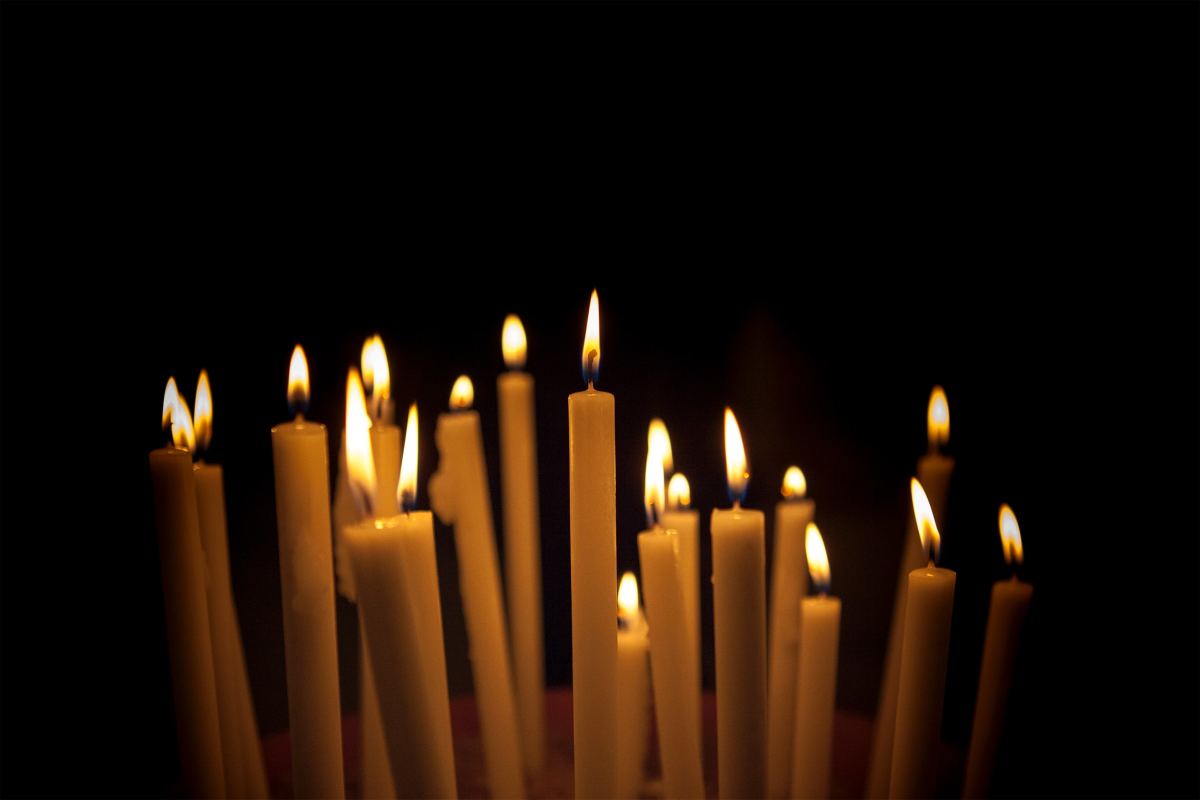
The first use of candles in December was during the Roman Saturnalia festival, where tall tapers of wax were offered to Saturn as a symbol of his light and also given as a gift to guests.

The Pagans also used candles during their Yule festivities, with candlelight and bonfires being used to welcome the nights beginning to get lighter.

As Christianity became more widespread, candles were put in the front windows of houses in order to guide Jesus as he went from house to house on Christmas Eve. 

Did You Realize That Pagan Christmas Traditions Are Still Celebrated Today?

From: https://holidappy.com/holidays/twelve-christmas-traditions-with-pagan-origins

________

Some comments:

Krampus on December 20, 2018:

Its amazing how even after reading this, people like delusional Danny over here still don’t get "the reason for the season" - its the roman god Saturn. Not Jesus.

------

Danny on December 19, 2018:

I m a Christian and didn’t realize all the Paganism associated with Christmas. I need to reevaluate how I’m celebrating the holiday. Don’t want to give the enemy no reason to think this is done in its honor. I don’t agree with all the extras man has made Christmas to be. Corporations have become too too greedy not even allowing their employees to spend the day with their families. The true meaning has gotten lost with little hope of ever returning.

-----

Libby on December 19, 2018:

Also, it is believed that ancient Pagans would bring a tree into their home during the winter months to keep the “wood spirits” warm. They would place little gifts on the tree, such as food and bells. It was believed that if a bell was rung, it was an appreciative spirit. So the Christmas tree may actually be a tradition that goes back even longer than Victorian times. It’s only evolved into what it is today.

The pagans were celebrating with an evergreen tree 600 years before Christ was born. See Jer.10

-----

William on December 16, 2018:

I find it interesting how many Christians don't know this information. If one goes back and looks at the history of the Christian faith they will see that most of the holidays they celebrate come from paganism, and not going to start on the wars and blood shed.

_________

See more at: https://historycollection.com/16-pagan-christmas-traditions-that-people-mistakenly-credit-to-christianity/

and: https://www.cbsnews.com/news/the-unexpected-pagan-origins-of-popular-christmas-traditions/

Search “Christmas traditions with pagan roots” and see what shows up!!

_________

Sunday, June 13, 2021

"We're Mortgaging Our Children's Future!" The Meek’s Inheritance. Mexico Joins Other Countries In Banning Glyphosates While The U.S. Still Allows Their Use.

.

Our Children's Future

“Last week I wrote to you with thoughts about my grandchildren and what family means. I have one additional thought to share about future generations—not only mine, but yours. This thought is driven by reading this week about the trillions of dollars being spent by the American government on vast social and infrastructure programs.

We hear of 9 trillion dollars being asked for government spending. This, on top of many trillions of dollars of government spending from 2020, are all meant to alleviate the economic impact of the COVID-19 pandemic. Much of those vast sums are yet to be spent while more is being requested.

The question many ask is, “Who is going to pay for this?” The answer is multi-dimensional. Increased taxes on the wealthy or corporations may be one solution. Another option is to sell more government-backed bonds on the world financial markets, expecting other nations to loan their money in expectation of a return. China and Saudi Arabia have been two nations, among many others in recent years, who buy American debt. All this has been going on for many years as the United States foreign debt has steadily increased, allowing Americans to enjoy a very high standard of living.

Confidence and trust support this economic house of cards—and the fact that the U.S. dollar is the standard currency of exchange on world markets. This allows you and I to shop at Costco and buy cheap goods from world markets. We can also enjoy a lower cost of fuel, at least for now, for our gas-guzzling vehicles. The American standard of living is very good and very cheap compared to much of the world.

All this puts the future at risk as we continue to borrow trillions of dollars and spend it on projects that do not always return value for the investment. Some one must pay for this. If we, the present generation, do not, then our children and our grandchildren will have to bear that burden. Likely, we will not repay the debt and we will pass it on to the future. We are saying to our children, “Good luck and thank you for doing this for us.” I look at my grandchildren and wonder how all this present spending will impact their lives. I ask myself whether they will have the same standard of living I have enjoyed.

You should ask the same questions. History gives no guarantee that this spending spree can continue without reaping the consequences of inflation, depression and even economic collapse. Given the way modern economies work, America—meaning our grandchildren—is headed for an unprecedented state of economic servitude. It is inescapable given present trends.

In our next issue of Beyond Today magazine, going to press this week, you will read an article explaining in more detail this economic situation. It will show from a biblical perspective how all this is a form of stealing. The article makes the point that government debt has grown so enormous that we are stealing from future generations, leaving it to our children and children’s children to pay back the debt from such profligate spending.

This is the concluding thought from my week with my grandchildren. It is a realistic note from an otherwise enjoyable occasion. We are living in a time of great upheaval and change. Our mission with Beyond Today is to explain the present and offer hope for the future. Our future hope is God’s coming Kingdom. Our present help is His grace through understanding.  We will point you to God’s Word for that help.”

_______

"We're Mortgaging Our Children's Future!"

“Sadly, in our world today, it seems our children are destined to endure pain because of the selfishness and greed of the generation preceding theirs.

"We're mortgaging our children's future!" "We're passing down a mountain of debt to our children and grandchildren!" These sentiments are among the angry shouts of people who are furious with what they denounce as reckless spending by government officials. This is not only happening in the United States. Many other nations are feeling the crush of enormous debt being heaped on them and the generations to come after them by governments bent on trying to spend their way out of the recession.

In America, all anyone needs to do to verify our runaway debt is to take a few minutes to look at the display of the U.S. National Debt Clock.

As of this writing, the current U.S. national debt stands at $12,136,000,000, or $39,380 for every man, woman and child in the United States.

Brian M. Riedl of the Institute for Economic Policy Studies at the Heritage Foundation, wrote: "The new budget spending estimates are alarming and absolutely unsustainable—and are the true cause of these appalling levels of deficit and debt. President Obama has proposed massive tax increases that still cannot keep up with the historic spending increases he has proposed. The result will be highest level of spending—and debt—in American history" ("New Budget Estimates Show Unsustainable Spending and Debt," Aug. 25, 2009).

What does this mean for our children? If we cannot pay this debt, it will not simply go away. It will just be pushed into future years, with billions of dollars in interest piled on top of an already mountainous debt. If we can't afford it now, how will they afford it later? How will they be able to maintain the standard of living their parents and grandparents enjoyed? The simple answer is: They won't. Our children will suffer the consequences of the reckless, out-of-control spending of their parents' generation.

The apostle Paul matter-of-factly states the commonsense wisdom that has been the norm throughout history: "For the children ought not to lay up for the parents, but the parents for the children" (2 Corinthians 12:14).

But, sadly, in our world today, it seems our children are destined to endure pain because of the selfishness and greed of the generation preceding theirs. Our generation has had no hesitation in passing along to our children a financial nightmare that will take great personal sacrifices to repair—if it can be repaired.

Responsible parents should be willing to prevent the suffering of their children and make those personal sacrifices today. Apparently, many are not. How about you? Are you concerned about the consequences of our growing debt? What can you do for your children and grandchildren?

You can help your children and grandchildren by reducing or eliminating your personal debt and managing your finances wisely. Begin by taking a look at your responsibilities as described in the chapter "Financial Security and Peace of Mind" from the free booklet Making Life Work. This article is based on biblical wisdom that is the only real source of financial peace of mind and the hope that we and our children need.”  From: https://www.ucg.org/beyond-today/blogs/were-mortgaging-our-childrens-future

_______

The Meek’s Inheritance

Psalm 37:11

“But the meek shall inherit the earth, and shall delight themselves in the abundance of peace.

God shows a special love for those who are truly meek. He plans to give them the earth and all its abundance, along with peace, because He will be sure that they will not let His blessings go to their heads. They will humbly and thankfully strive to serve the great Creator God always.

Jesus reinforced this concept by repeating it in the Beatitudes in His Sermon on the Mount (Matthew 5:5; see “Blessed Are the Meek”). For more about the Beatitudes, see “Beatitudes: Keys to Real Happiness.”” From: https://lifehopeandtruth.com/bible/blog/the-meeks-inheritance/?

________

Mexico Joins Other Countries In Banning While The U.S. Still Allows Their Use

“Chemical compounds found in Monsanto’s weed killer Roundup, known as glyphosates have been linked to serious human health issues and population decline in key pollinators. Though these chemicals are still approved for use in the United States, Mexico has decided to ban them completely by 2024.

“Given the scientific evidence of glyphosate toxicity, demonstrating the impacts on human health and the environment, the Secretariat of Environment and Natural Resources (SEMARNAT) has taken important steps to gradually reduce the use of this chemical until it achieves a total ban in 2024,” said Dr. Adelita San Vicente Tello, Director General of the Primary Sector and Renewable Natural Resources at SEMARNAT.

As Sustainable Pulse reports, San Vicente Tello announced the initiative following an event organized by the National Autonomous University of Mexico’s (UNAM) Academic Observatory of Society, Environment and Institutions. During the event, leaders were challenged to consider the impact glyphosate will have on the health of the environment and citizens of Mexico”.    From: https://blog.therainforestsite.greatergood.com/glyphosates-mexico/

Sunday, January 26, 2020

What I Learned From Andy Dalton, Quarterback. The Bee’s Knees. Think Before You Act. Update.

What I Learned From Andy Dalton, Quarterback for Cincinnati Bengals

“Andy Dalton’s character and the way he handled adversity deserves to be mentioned. His actions are rare today, especially in sports.

An American football on a grass field.Ben Hershey/Unsplash

We all go through setbacks or even feel like we have been benched. Sometimes we are not treated fairly, but how do we respond?

As we all know we are at the end of the football season, with the Super Bowl just ahead of us. While I do not care for sports at all, this has been an interesting year for the NFL’s Cincinnati Bengals.

The Bengals had a very bad year. With a new coach, Zac Taylor, and with no wins to their credit, it looked like they were headed to their 12th loss, which would had been referred to as the “dirty dozen.”

However, they managed to pull off a win by beating the New York Jets on Sunday, Dec. 1 with an amazing score of 22 to 6. To get to their first win, there were some bumps for the nine-year quarterback Andy Dalton.

Normally I would not be writing about football but Andy Dalton’s character and the way he handled adversity deserves to be mentioned. His actions are rare today and especially in sports.

After a record of 0-8 at the beginning of the season, Dalton was told he would be benched on his birthday. “Happy Birthday Andy, but you have been benched, go eat your cake on your bench,” as I have been kidding with people around me. Of course, it was not a laughing matter for Dalton and I am sure it was humiliating. What was inspiring for me was to watch his amazing example throughout this ordeal.

Dalton did not get mad and quit, instead he got out there, encouraged and worked with the quarterback and his teammates for the next three games. As reported by WCPO Cincinnati, Dalton said he “wanted to be bitter when Cincinnati Bengals coach Zac Taylor benched me during week 9 so the coach could see if rookie Ryan Finley could reinvigorate the offense. It took me a day or two before I realized that was not going to get me anywhere.”

Of course, Dalton had no idea whether he would return to play the lead quarterback for the Bengals. However, he still pushed on and set an outstanding example not only for his team but also for all us to watch. In the face of all the adversity, Dalton kept his faith, his trust in God, and maintained a positive attitude! Even Dalton’s coach, Zac Taylor, who benched the quarterback, noticed Dalton’s attitude.

“Just his veteran leadership, his presence, his character, he stands for all the things you want in a player. And, so for him, when he’s the backup quarterback, he’s thinking ‘I didn’t get to finish with a win.’ You felt terrible for that part of it. So, for him to come back and lead us the way he led us and get this win is just… you know, it says a lot about his character and the adversity he’s overcome,” Bengals coach Zac Taylor said. “He just kept being the leader through it all.”

“I didn’t know why it was happening, but I knew God has a plan for me,” Dalton said. “He has a plan for my family and my life, and I had to trust and believe in that. This is just part of my story and part of something I’m going to be able to relate to people on a different level now than I probably could not have before. Initially it was tough, but I wasn’t going to let the circumstance really get to me.

“At the end of the day, that’s not who I want people to see me to be, and that’s not my character,” he added. “That’s not what God has called me to be.” Dalton relied on his faith to get him through those rough few weeks before he was brought back as quarterback.

We all go through setbacks or even feel like we have been benched like Dalton. Sometimes we are not treated fairly, but how do we respond? Do we continue to trust God knowing that He is in charge of our life no matter what direction or situation we may find ourselves? Dalton had no idea he would ever be playing again for the Bengals. However, when he did come back, he came back with a major win for his team.

Dalton’s faith in God even through adversity reminded me of my favorite scripture found in Jeremiah 29:11: “For I know the plans I have for you,” declares the LORD, “plans to prosper you and not to harm you, plans to give you hope and a future” (New International Version).

While Andy Dalton did not know what his future was when he was benched, he knew that God was in charge of his life. In addition, while going through his trial, he went on to help and encourage his teammates.

Let us all learn from Andy Dalton’s amazing example. To persevere when we have setbacks that we do not understand. To set a positive example for those around us to learn from. To know that God is indeed in charge of our life for our good and for the good of others around us.

Of course, our future is far greater than being a starting quarterback on a football team; as our goal is to be in God’s great Kingdom.

In the meantime, we will have to go through highs and lows before we get there. How will we respond when we are hit with the lows? Always know that God will see you through it. And people are watching to see how we respond.”  From: https://www.ucg.org/beyond-today/blogs/what-i-learned-from-andy-dalton-quarterback-for-cincinnati-bengals

_________

The Bee’s Knees and Cat’s Pajamas

“The cat’s pajamas, the bullfrog’s beard, the elephant’s adenoids, they all pale in comparison to the bee’s knees.

As bees are responsible for at least 70% of the world’s agriculture by way of pollination, a world without bees would largely mean a world where many humans go hungry. It would mean a world where plants are not able to reproduce, and where the animals that eat them would die out in just a few years.

Domestic and imported fruits and vegetables dependent on pollination include

  • avocados
  • soybeans
  • asparagus
  • broccoli
  • celery
  • squash
  • sunflowers for oil
  • cucumbers
  • citrus fruit
  • peaches
  • kiwis
  • cherries
  • cranberries
  • melons

According to Sustain, the Alliance for Better Food and Farming, “for crops such as blueberries and almonds, the honey bee plays an essential role in pollination of commercial crops, with around 80% of the US crop said to be dependent on honey bees. Honey bees can also pollinate clover and alfalfa, which are fed to cattle, so there are implications for the meat and dairy industry too. And that is not to mention the huge range of manufactured food products made from all these ingredients.”

Even as a hypothetical, a planet without bees is a frightening concept, but the fact is, we may be approaching that stage faster than many realize. While dangerous neocontid-based pesticides have increased in use over the last few decades, and agricultural claims around the world expand into lands ripped from nature by clear-cutting and deforestation, the world has meanwhile lost almost 90% of its bees.


As Albert Einstein once said, “If the bees disappear, humans would have 4 years to live.” To that extent, humans better get their five years plans in order, or find a way to save the bees.

As Greenpeace maintains, the latter shouldn’t be considered out of reach. There is still time to save the bees from extinction, despite their dwindling trajectory. The conservation group suggests banning the seven most dangerous pesticides (including nicotine-based substances), preserving wild habitats where bees live, and advocating for ecologically-minded agricultural practices.

Source: Pixabay

The most prolific methods of farming today are also the most detrimental to our environment, Greenpeace reports. Mono-crop planting reduces ecosystem diversity, and in turn, decreases insect populations. Ecological farming involves planting a variety of crops that are complementary to the environment, fertilizing with natural composting systems, rather than harsh chemicals, and leaving out the dangerous pesticides altogether. The yields from such methods may be less than current industrial-scale operations provide, but the long term risks are greatly reduced.

As pollution and the potential for soil loss from wind and water erosion decrease, and pollinating insects find work to be done on farms once more, the bees will have a good reason to return.

Learn more about the implications of a planet without bees in the video below.”

YouTube: https://youtu.be/JilYBVrFiLA

_________ 

Think Before You Act

A run-in with a rattlesnake brought an important lesson about how our brains work.

Transcript of YouTube: https://youtu.be/NsZadMVjqWk

[Gary Petty] “A number of years ago, when my son was a teenager, we were hiking in the Chisos Mountains in Texas, and we had hiked up about 7,000 feet. We’re coming down, we’re both tired, and we’re walking along, both of us have our heads down as we’re walking down this very steep trail, and I suddenly heard a noise. And I stopped. And he ran right into the back of me, because he was looking down also, and he said, “What’s wrong?” And there was a split second, I’m trying to think what’s wrong, and then I realized what it was. And I looked down, and there was about a four-foot rattlesnake rattling and coiled, and I was about to step on it.

Now, what’s interesting there is how the brain works. I actually went afterwards and read a book on how does the brain work, because I didn’t think, “Oh, a rattlesnake.” All I did was feel fear. I heard the rattle, I knew that’s not right, and I felt fear. I then thought, “A rattlesnake.” Now, think about what would have happened if my brain worked the other way. What if the cognitive part stepped in first? And I woulda heard a rattle and said, “Ha, that sounds like a rattlesnake. I wonder if it’s a western rattlesnake or an eastern rattlesnake.” I would have stepped on the rattlesnake. But the fear stopped me. And then the reasoning part of my brain kicked in. It’s amazing because that means we’re designed to survive. You know, when you’re in a car and you’re driving and a guy starts to swerve over, you don’t say, “Hey, look, that guy is swerving into me.” You react, usually out of fear, and then you say, “Wow, he almost swerved into me.” Now, between those two things that happen in your brain, it’s just a millisecond, but it’s very important which happens first. The emotion causes you to react, and then the reasoning tells you what to do.

Here’s the problem. Every time you’re in a confrontation with someone or in conflict or in argument, what’s the first thing that happens? Anger. Feeling the need to defend yourself. Maybe just being resentful. Think of all the things that happen the moment we’re in conflict. What do we do? We have the feeling first, and then what happens is reason kicks in. How many times have you’ve been screaming in your head, “Don’t say that,” but you say it anyway? Because you know, the reasoning part of your brain is saying, “This is wrong. Don’t do this.”

This is one of the most difficult things we all have as human beings, is that little, little split amount of time between emotion and reason. So what we have to learn to do when we’re interacting with each other is, when we have an emotion, a strong negative emotion with somebody, before we say anything, make yourself stop. Now, I’ve met people who do this, and it’s sort of interesting. Because someone will say something, you know it was hurtful, you know it made them angry or it just made them feel bad, and yet, there’s a few seconds where they sort of look down, and you could see they’re thinking. And then they’ll look up and they’ll answer. Now, their answers still may be, “You know, that was wrong. That hurt my feelings,” but there’s a certain edge off of it. And the reason why is they let that little bit of time stretch out. And in stretching it out, they let the reason catch up, and now, they have more control of what they’re actually saying and doing.

This is one of the most important things we need to learn to do. And in that little time, in between the emotion and what happens, the reason kicks in, the biggest thing that could help us is to know the Scripture. Daily reading that Bible so that what happens in between the emotion and the reason and the response is a scriptural answer, a prompt from God that comes into your mind and says, “This is what you should do,” or “Don’t do this,” or “Here’s how you handle this. This is what Jesus would have done.” It’s there. If we’re not in that Bible every day, well, we’re just being driven by that emotion or what’ll happen is we’ll let a little time happen, but we’ll start to use our own reasoning to defend ourselves. We’ll self-deceive ourselves. What we have to do is have the Bible there, have that knowledge, that wisdom from God there, there in our minds so that it pops in and becomes the prompt.

So next time you’re about to get into an argument or someone has really hurt you, and you know, you’re gonna respond with crying or whatever, before you respond, take a few seconds. It’s like they tell children all the time, you know. Put your hands together, take a couple of big breaths. Well, do that mentally. Calm yourself down. And in that time period, let the Bible, let God tell you what to reason and reason out your response. You’re gonna find you’ll have a whole lot less negative conflict. And even if the other person doesn’t do that, you’re gonna have better control of yourself and be happier yourself.”  From: https://www.ucg.org/beyond-today/beyond-today-daily/think-before-you-act

________

Update

Because I have moved, I had to get a new health insurance that is good in Grimes County.  A while ago they sent a nurse to check my blood pressure etc, but they really wanted my doctor to see me.  So on Wednesday I was examined and blood tests were ordered.  So in between walking the dog for sometimes up to 45 minutes before she will pee, and all the other things that one has to do,  I went to the “vampire” and let her (pun intended) take some of my blood.

As I had been so busy with the dog, and other things, I didn’t have time to cook anything for the church potluck, so I bought some different flavored Mexican concha at our local Brookshire Bros. grocery store. Conchas Mexicanas!  https://www.mexicoinmykitchen.com/concha-recipeAs I have mentioned before, our congregation has two simultaneous services, one in English and one in Spanish, but we all eat together in the dining hall.  I cut them up into thin slices and arranged them in a round container, and they were quickly eaten up.

The sermon was about “Resolutions”, and given by an elder, as the pastor wasn’t there for the Sabbath on Saturday.