Showing posts with label trees. Show all posts

Sunday, August 20, 2023

Effects of Baptism: A Clean Start. Sin’s Payday. Human-Made Stuff Now Outweighs All Life on Earth.

.

Effects of Baptism: A Clean Start

“Is water baptism essential for salvation? God wants 21st-century Christians to understand the effects of baptism in providing a clean start to a new life.

Effects of Baptism: A Clean StartJennifer stood waiting at the steps of the pool, giving her friends and family time to gather around in order to witness her baptism. She had been thinking and praying about this commitment to God for quite some time. And she had gone through a series of counselings with her pastor that helped her understand and further convicted her about the step she was taking.

Jennifer felt good about her decision and was confident that it was the right course of action. It was just about time for her to step into the water and formally make her covenant relationship with God.

Is baptism necessary today?

But was it really necessary for Jennifer to undergo this ancient practice that originated in type under the Old Covenant (Hebrews 9:10)? Must Christians be baptized today to have a clean start?

According to some groups, including Christian Scientists, Quakers, the Salvation Army and Unitarians, the answers to these questions are both “No.”

Those who do not practice baptism vary in their explanations as to why they do not, but in general, they consider baptism to be an outdated ritual that is no longer necessary under the New Covenant. Reasons given often include:

  • What one experiences in his or her heart is what is most important.
  • External actions to reflect one’s inner thoughts are superfluous.
  • The scriptures on baptism are ambiguous.
  • People can live holy lives without being baptized.

So are the Scriptures really that vague? Is there any value to being baptized? What are the effects of baptism? Instead of relying on human opinions and reasoning, let’s see what the biblical record shows.

Christ’s example and instruction on baptism

A quick review of Christ’s actions just before the beginning of His ministry is insightful as a lesson for us today. As we will soon see, Jesus taught that baptism was very important.

When John the Baptist began preaching in the wilderness of Judea, people from “Jerusalem, all Judea, and all the region around the Jordan went out to him and were baptized by him in the Jordan, confessing their sins” (Matthew 3:5-6). Though Jesus had no sins to confess, He asked John to baptize Him (verse 13).     Baptism is far more than a symbolic exercise.

After being baptized, the Spirit of God descended upon Jesus and a voice from heaven said, “This is My beloved Son, in whom I am well pleased” (verse 17).

Why did God the Father make this statement after Jesus was baptized? And, of special concern to us, will the Father be pleased if we are baptized? It seems obvious that He thinks baptism is important!

Scriptures such as 1 Peter 2:21 and 1 John 2:6 show that Christians are to follow the example of Jesus Christ. We are to walk as He walked, do as He did. We are indeed to be baptized as He was. When we follow Christ’s example, God the Father is, no doubt, pleased with us as well.

Jesus’ teaching on baptism was not limited to His personal example. During His earthly ministry, He had His disciples baptize those who believed (John 3:22). It is also insightful to note that Christ’s disciples baptized more people than John the Baptist (John 4:1-2).

After His crucifixion and resurrection, Jesus appeared to His disciples and gave them instructions on how they were to take His message to the world.

Note that His instructions, which are sometimes referred to as the commission of the Church, include baptizing those who respond: “Go therefore and make disciples of all the nations, baptizing them in the name of the Father and of the Son and of the Holy Spirit” (Matthew 28:19, emphasis added throughout).

Jesus also pointedly stated, “He who believes and is baptized will be saved” (Mark 16:16). Christ’s teaching on the importance and effects of baptism is quite clear!

Since Jesus clearly taught baptism, let’s now consider what we learn by following His instruction.

Effects of baptism: what we learn and receive from baptism

Repentance. When people in Peter’s audience on the Day of Pentecost in A.D. 31 asked the apostle what they should do, he told them to “repent, and let every one of you be baptized” (Acts 2:38). Repentance, which is the initial step toward baptism, means changing our way of life because of a change in our thinking. It means that in hindsight, we realize that the way we had been living was not in accordance with God’s good and beneficial laws.

The process of repentance—which we are led to by God (Romans 2:4)—helps us understand the seriousness of sin. It is marked by a strong desire on our part to be forgiven of our sins, to stop sinning and to change our sinful nature (Jeremiah 17:9). It includes the recognition of the value of Christ’s sacrifice—His blood that covers our sins (Ephesians 1:7).

Repentance is part of the message that Jesus told His disciples to preach (Luke 24:47). Why? Because, as Jesus had earlier said, “Unless you repent you will all likewise perish” (Luke 13:3).

To learn more about this important subject, see the articles in the section “Repentance.”

Death, burial and resurrection. After one repents of his or her sins, the next step is to be baptized—which means being immersed in water. This act symbolizes three important concepts.

First, baptism represents the death of the old man—the way we lived before repenting. Paul twice described this concept as being “crucified” with Christ (Romans 6:6; Galatians 2:20).

Next, after someone dies, he is generally buried. Baptism pictures the burial of the old man with all of his sins, which earn one the death penalty. This reminds us to put away the old way of life completely. As Paul explained, “We were buried with Him through baptism into death” (Romans 6:4).

The third concept symbolized by baptism is resurrection. Coming up from under the water after being baptized represents our resurrection to a new life in Christ. As Paul further noted, “If we have been united together in the likeness of His [Christ’s] death, certainly we also shall be in the likeness of His resurrection” (verse 5).

Baptism helps impress these three important concepts within our minds. This physical act helps us realize the spiritual significance of baptism.

For further study, see the article “What Do the Symbols of Baptism Mean?

Forgiveness of sins. Baptism is far more than a symbolic exercise. Indeed, there are two very significant beneficial effects of baptism in addition to the spiritual understanding we gain from obeying Christ’s command to be baptized.

The first is the forgiveness of our sins. Indeed, this is one of the key reasons for being baptized. As Peter said, “Let every one of you be baptized in the name of Jesus Christ for the remission of your sins” (Acts 2:38). Through baptism we accept the sacrifice of Christ, which washes our sins away (Acts 22:16) and gives us a clean start.

Receiving the Holy Spirit. A second important effect of baptism is the opportunity to receive the Holy Spirit. Again, Peter’s teaching was: “Repent, and let every one of you be baptized in the name of Jesus Christ for the remission of sins; and you shall receive the gift of the Holy Spirit” (Acts 2:38).

Baptism, accompanied by the laying on of hands (Acts 19:6), is the way God has established for us to receive this precious gift.

Romans 8 documents several important benefits that come to us because we have God’s Holy Spirit.

First, this power from God allows us to set aside ungodly activities and live “according to the Spirit” (verse 4). When we allow this Spirit to lead us, we are called the “children of God” (verse 16).

Furthermore, having God’s Holy Spirit is our guarantee of eternal life (verses 11, 13, 23).

To learn more about this baptismal promise, see the articles in the LifeHopeandTruth.com section “Holy Spirit.”

Action required: should you be baptized? 

Following the biblical instruction to be baptized underscores an important biblical principle: What we do is very important to God. The true, timeless religion of the Bible calls for physical action—not just knowledge and understanding. As Jesus said, “Not everyone who says to Me, ‘Lord, Lord,’ shall enter the kingdom of heaven, but he who does the will of My Father in heaven” (Matthew 7:21).

The author of Psalm 111 made this insightful observation: “A good understanding have all those who do His commandments” (verse 10). Echoing this principle and the teaching of Jesus, James emphasized that “faith without works is dead” (James 2:20). The actions we take before and during baptism set the stage for continued obedience to God afterwards.

Jennifer’s baptism

After everyone had gathered around, Jennifer was baptized by being completely immersed in the pool. She entered into a covenant relationship with Jesus Christ as her Lord and Savior. She had hands laid on her with a prayer for the receiving of the Holy Spirit, and she has been given a clean start and has begun her spiritual journey toward eternal life as a child of God in His Kingdom.

Looking back on her decision, she says it is the best one she has ever made. The decision to respond to God’s calling to be baptized was a good one for Jennifer. It can be the same for you!

The Teaching of the Apostles About Baptism

Only a few days after receiving the commission to make disciples of all the nations and baptize them, Jesus’ disciples gathered in Jerusalem for the Feast of Pentecost—one of God’s annual festivals (Acts 2:1). It was there on this holy day that the Holy Spirit was poured out on the believers (verses 2-4). Jesus had told His disciples that He would send this special power that proceeds from the Father to them after He left them (John 15:26; 16:7).

Empowered by this special gift from God, Peter—the disciple who had previously denied Christ three times—now publicly explained that Jesus Christ was responsible for sending the Holy Spirit that day (Acts 2:14-33). Peter also advised those who were listening to repent “and let every one of you be baptized in the name of Jesus Christ” (verse 38). Peter didn’t present baptism as simply an option.

The approximately 3,000 people who were baptized following Peter’s preaching also received the Holy Spirit that day (verse 41). As Christ’s apostles preached the gospel of the Kingdom and the Church grew, baptism was the common practice and expectation of those who responded (Acts 8:12, 36, 38; 16:15, 33; 18:8; 19:5; 22:16). When Paul was called by God, he responded by being baptized (Acts 9:18).

Jesus’ disciples taught others as they had been taught by Christ. And this teaching included baptism. When we respond to God, we, too, need to be baptized!”  From: https://lifehopeandtruth.com/change/baptism/a-clean-start/

Looking for the church behind Life, Hope & Truth? See our “Who We Are” page.

________

Sin’s Payday

Romans 6:23

For the wages of sin is death, but the gift of God is eternal life in Christ Jesus our Lord.

“We have all earned eternal death (Romans 3:23), but absolutely nothing we can do will earn us eternal life. It is a free gift God offers to those who humbly repent, showing that we understand the magnitude of our sin, and thankfully believe that God’s way is best (Acts 2:38; 8:37).

Desiring Jesus Christ to live in us and transform our lives is the only reasonable decision we can make when we are offered such a priceless gift (Galatians 2:20; Romans 12:1-2).     Listen to the "Verse by Verse" episode covering this scripture at: https://lifehopeandtruth.com/bible/blog/sins-payday-1/

To learn more about the many deep truths found in this verse, read “What Is the Meaning of Romans 6:23?

Study more about the response God wants from us by downloading the free booklet Change Your Life! and studying the biblical passages it presents about repentance and conversion.”

________

Human-Made Stuff Now Outweighs All Life on Earth
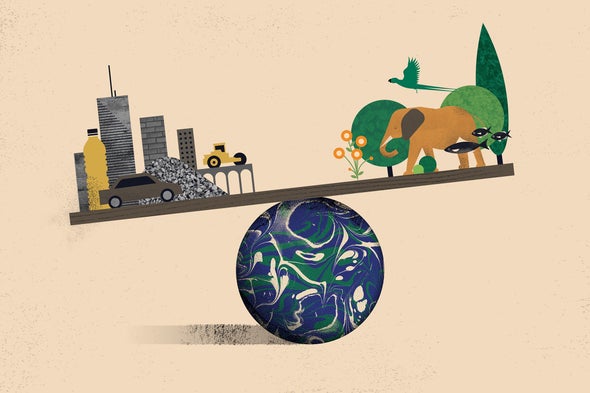
Human-Made Stuff Now Outweighs All Life on Earth“The sheer scale of buildings, infrastructure and other anthropogenic objects underscores our impact on the planet.

  • Global Biomass versus Human-made mass. Credit: Itai Raveh

Humanity has reached a new milestone in its dominance of the planet: human-made objects may now outweigh all of the living beings on Earth.

Roads, houses, shopping malls, fishing vessels, printer paper, coffee mugs, smartphones and all the other infrastructure of daily life now weigh in at approximately 1.1 trillion metric tons—equal to the combined dry weight of all plants, animals, fungi, bacteria, archaea and protists on the planet. The creation of this human-made mass has rapidly accelerated over the past 120 years: Artificial objects have gone from just 3 percent of the world’s biomass in 1900 to on par with it today. And the amount of new stuff being produced every week is equivalent to the average body weight of all 7.7 billion people.

The implications of these findings, published on Wednesday in Nature, are staggering. The world’s plastics alone now weigh twice as much as the planet’s marine and terrestrial animals. Buildings and infrastructure outweigh trees and shrubs. “We cannot hide behind the feeling that we’re just a small species, one out of many,” says study co-author Ron Milo, who researches plant and environmental sciences at the Weizmann Institute of Science in Israel. These numbers should be a wake-up call, he adds. They tell us “something about the responsibility that we have, given that we have become a dominant force,” Milo says.

He and his team had previously published an estimate of the amount of biomass on Earth, which led to the question of how it compared with the mass of artificial objects. Emily Elhacham, then a graduate student at the Weizmann Institute, led the effort to pull together disparate data sets on the flow of materials around the world. The researchers found that human-made, or anthropogenic, mass has doubled every 20 years since 1900. Total biomass remained more stable in that time period, though plant biomass has declined by approximately half since the dawn of agriculture some 12,000 years ago. The team estimates that anthropogenic mass crossed over to exceed biomass this year, plus or minus six years.”  More at: https://www.scientificamerican.com/article/human-made-stuff-now-outweighs-all-life-on-earth/

_________

How Long Does It Take To Decompose…_

Human-Made Materials 

https://blog.therainforestsite.greatergood.com/human-made-mass/?

_________

Sunday, July 23, 2023

What’s the Real Source of Contentment? Don’t Miss The Beauty! Pets & Human Lymphoma.

.

What’s the Real Source of Contentment?

What Is the Real Source of Contentment“Why are some of the most prosperous people some of the least satisfied? What is the real secret of satisfaction and contentment?

Where do satisfaction and contentment come from?

Throughout human history, people have been searching for contentment and satisfaction—but when they think they have found it, the feelings have been fleeting and temporary. Mostly people have been looking in all the wrong places.

For example, it is common and seems logical to conclude that if everyone were prosperous, everyone would automatically be content and satisfied. But is having enough to eat and drink with the peace to enjoy it enough to make us lastingly content? Is physical abundance the cause of contentment and satisfaction?

What is the real source of deep, lasting contentment and eternal satisfaction? We’ll see it’s not prosperity that will bring contentment. It’s something much more important.

The satisfaction experiment

How do we know that physical things alone won’t satisfy people? We may know this by personal experience or by learning about others’ experiences.

We can also learn it by reading about it in a book of revealed wisdom. There are verses in the biblical book of Ecclesiastes that tell us:

“The eye is not satisfied with seeing, nor the ear filled with hearing” (1:8).

“All the labor of man is for his mouth, and yet the soul is not satisfied” (6:7).

No matter what we see or hear or taste—whatever we experience with our physical senses—it will be temporary.

King Solomon performed the quintessential experiment on this subject. He recorded his experimental search for happiness and satisfaction in Ecclesiastes 2. In this chapter, we see a man who had it all—who was rich and powerful and had everything he could imagine. Few people in history have had all the blessings he had—and yet he was not satisfied. He decided to try an experiment to see what would really bring him the satisfaction he longed for. He tried humor and wine and song—every type of entertainment. He tried building projects and big fancy homes and gathering all the treasures and luxuries he could.

Solomon summarized his experiment this way: “Whatever my eyes desired I did not keep from them. I did not withhold my heart from any pleasure, for my heart rejoiced in all my labor; and this was my reward from all my labor” (Ecclesiastes 2:10).

Yes, he had some level of rejoicing and reward for what he accomplished. God designed the physical world to give us joy. But Solomon goes on in verse 11 to show the longer-term outcome of his experiment: “Then I looked on all the works that my hands had done and on the labor in which I had toiled; and indeed it was vanity and grasping for the wind. There was no profit under the sun.”

He found it all futile—empty—like trying to grab a handful of wind!

Solomon’s reign was a time of plenty. The people of Israel, and Solomon in particular, were blessed with peace and abundance. But Solomon learned that peace and prosperity are not everything. These physical blessings aren’t what bring ultimate satisfaction and contentment. You can have it all—physically—but still feel empty inside.

The real source of satisfaction

So what does bring true contentment—real satisfaction?

Solomon concluded the book of Ecclesiastes with this moral of the story: “Fear God and keep His commandments, for this is man’s all” (12:13). This is what makes us whole and complete.

Solomon explained it more completely in Proverbs 19:23: “The fear of the LORD leads to life, and he who has it will abide in satisfaction; he will not be visited with evil” (emphasis added).

The main Hebrew and Greek words translated fear in the Bible can have several shades of meaning, but in the context of the fear of the Lord, they convey a positive reverence.

The Hebrew verb yare can mean “to fear, to respect, to reverence” and the Hebrew noun yirah “usually refers to the fear of God and is viewed as a positive quality. This fear acknowledges God’s good intentions. … This fear is produced by God’s Word … and makes a person receptive to wisdom and knowledge” (The Complete Word Study Dictionary: Old Testament).

The fear of the Lord is not talking about a paralyzing terror. The positive fear of the Lord taught in the Bible is a key element in leading us to change. It helps us have a proper, humble perspective of ourselves in relation to our awesome God; it helps us in times of temptation when we need to remember the serious consequences of disobeying God; and it motivates us to become more like our loving Creator.

By doing these things, the fear of the Lord helps us build a strong, loving relationship with God that brings eternal benefits. (Learn more about this in our article “Fear of the Lord: What Does It Mean?”)

When we do put God first—fearing to displease Him and seeking to please Him always—we will be on the way to true and eternal satisfaction. Even in the “Millennium”—the utopian age God promises will spread around the world after Jesus Christ’s second coming—peace and prosperity and physical things won’t be the cause of satisfaction. The real contentment comes from a right relationship with God.

When we do put God first—fearing to displease Him and seeking to please Him always—we will be on the way to true and eternal satisfaction.

God has real and permanent eternal blessings in store—He has things that the human eyes have not seen and that human minds have not even imagined!

Consider some wisdom recorded by King Solomon’s wise and God-fearing father, King David. Psalm 36 starts by talking about those who do not fear God, and how that leads to sin, wickedness and evil. But in verses 7-8 David shows the eternal blessings of a close relationship with God:

“How precious is Your lovingkindness, O God! Therefore the children of men put their trust under the shadow of Your wings. They are abundantly satisfied with the fullness of Your house, and You give them drink from the river of Your pleasures.”

Learn the lessons of King Solomon in Ecclesiastes and recognize that the true source of satisfaction and contentment—now and forever—is a right relationship with our loving God!

Related reading:

_________

Don’t miss the beauty!

“For as long as I can remember, I’ve been continually astounded by the incredible beauty in the world. 

Whether it is a dazzling sunset, a mirror-smooth mountain lake, an undulating field of ripening wheat or palm trees gently swaying on the breeze next to the ocean, these sights have always impressed me, making me want to drink them in completely.  And no photograph I’ve ever taken can really do justice to those beautiful vistas!

Every autumn, my wife and I are struck by the awesome fall colors of the trees on the mountains.  During the fall we’ve had the opportunity to travel a two-lane blacktop road through the Ozark National Forest as we went to visit some church members. We were both greatly impressed with the beauty and majesty of this part of the country—this part of God’s creation! 

Have you ever wondered why God created things of such beauty?  In fact, why did God create beauty at all? 

The theory of evolution would only allow for something to develop (evolve) if there were a useful purpose for it, so what could be the evolutionary purpose of incredible beauty?  From a purely practical standpoint, it would be easier for deciduous trees to have “evolved” for their leaves to simply turn brown and fall off, rather than going through incredible shades of reds and yellows before becoming brown and dropping to the ground.  But they don’t generally work that way.  

Couldn’t the same thing be said about sunrises and sunsets, the aurora borealis (northern lights), gurgling mountain streams, a proud whitetail buck, a strutting wild turkey or a thousand other beautiful sights we may be privileged to witness? 

The world doesn’t have to be this way, but it is—by God’s design!  It seems He purposefully created awesome beauty all around us, rather than making the creation bland or just various shades of gray. He infused color and texture everywhere in creation!

I can only conclude that our loving God appreciates and enjoys beauty.  So, as a special gift, He has given us senses that allow us to enjoy it as well. And it isn’t limited to just sight! He also gave us hearing so we could enjoy a bird singing and beautiful music, as well as give our hearts a stir with loving words from a mate or a child. 

He gave us the sense of taste to enjoy a wonderful meal. And the sense of touch to express love and tenderness to a mate, or to caress the soft coat of a loving and loyal pet.  To my way of thinking, all of these are things of beauty, and they are all around us.

The problem is that we sometimes get so busy with all the things in life, and perhaps so burdened down by the weighty challenges we may be facing, that the beauty of things around us pass by without our even noticing.  It is also so human to become embroiled in all the “negatives” of life that the beautiful is not appreciated.  It seems such a shame to have gifts of beauty all around us, only to miss them. 

I encourage us all to take the time to recognize and appreciate the beauty God has created, and enjoy that gift our Father has given.

Kind regards, and have a great rest of your week,

Tom Clark, for Life, Hope and Truth

_________

Pets & Human Lymphoma

Transcript of video at: https://nutritionfacts.org/video/pets-human-lymphoma/

To see any graphs, charts, graphics, images, and quotes to which Dr. Greger may be referring, watch the above video. This is just an approximation of the audio contributed by veganmontreal.

“Is having a cat or dog associated with a higher or lower risk of developing non-Hodgkin’s lymphoma?

Every year, for example, 60,000 Americans come down with non-Hodgkin’s lymphoma—a blood cancer that goes on to kill about 1 in 3 patients. There’s been a significant rise in incidence in past decades, and no one really knows why.

Some have suspected exposure to the bovine leukemia virus, which infects the majority of herds in this country, and can cause similar tumors in cattle. More than five years ago, we learned that about three-quarters of people tested have been exposed to this virus; likely, through their consumption of meat and dairy products.

The risk may extend beyond those just eating animal products, though. The viral contamination of meat, in general, can give people who handle fresh meat for a living unpleasant conditions, with names like contagious pustular dermatitis. In fact, meat is so laden with viruses that there’s a well-defined medical condition colloquially known as “butcher’s warts,” which affects the hands of those who handle fresh meat—including poultry and fish. Even the wives of butchers appear to be at higher risk for cervical cancer, a cancer definitively associated with wart virus exposure.

So, in the first study of its kind, researchers looked at farm animal exposure as a risk factor for human non-Hodgkin’s lymphoma. To be fair, though, there’s also feline leukemia virus. And a child is likely to have more intimate contact with their family cat or dog, or other pets, than with livestock. Animal contact and cancer risk—harmful, harmless, or helpful? And no matter how this comes out, remember, I’m just the messenger.

In terms of our risk of developing non-Hodgkin’s lymphoma, contact with cows—harmful, harmless, or helpful? Harmful, increases our risk.  What about pig contact? Harmful, harmless, or helpful? Same as cattle; harmful, increases our risk.

What about having a cat? Or three, like we do. Do cats increase our cancer risk, do nothing to our cancer risk, or maybe having cats is even protective against cancer? What do you think? It turns out cats are protective against cancer. In fact, even if you don’t live with a cat now, but did in the past, you seem to be protected against developing lymphoma.

All right, now, for you dog people. Canine companionship—now, or in the past: harmful, harmless, or helpful? Good boy.  And finally, what about other companion animals, like corn-loving hamsters? Rodents in the house—increased risk, no risk, or decreased risk? Decreased risk.”  From: https://nutritionfacts.org/video/pets-human-lymphoma/

________

Monday, July 3, 2023

Prove Evolution Is False Without The Bible. Living lessons from the Dead Sea. Kids’ Breakfast Cereals as Nutritional Façade.

.

Prove evolution is false without the Bible

Prove evolution is false without the Bible“Charles Darwin's theory of evolution is a biological explanation of how creatures have supposedly "evolved" through natural selection and variation (now known as mutation) over eons of time from the tiny cell to the largest creatures on earth today.



What is taught in classrooms is not mere microevolution—small changes within a species—but macroevolution, the change from one type of creature to another quite distinct life form.

Many who support the theory of evolution therefore believe there is no need for a Creator, since evolution is the mechanism for creating and transforming life. They believe life arose from non-life and evolved from simpler creatures to more complex life forms. The tiny cell eventually became an amoeba, then a lizard, then a monkey, and finally—you!

In this article, in order to remember key points disproving Darwinian evolution the acronym FALSE is used. Some of these points will also disprove the compromise of theistic evolution—the notion God employed macroevolution over eons in forming the creatures we see on earth today.

F for Fossils

A fossil is the preserved remains of a living thing. The fossil record around the earth extends to an average of one mile deep. Below this level there is no evidence of any living creatures. The fossils of the earliest type of complex creatures with hard bodies are called trilobites. No previous ancestors of these arthropods have been found.

Trilobites were similar to some marine "bugs" we see today on the seashore that disappear into the sand when the waves retreat. They had hard shells, all the basic organs, and complex eyes like those of flies, with hundreds of sophisticated lenses connected to the optic nerve. Trilobite fossils are found around the earth, and in all cases the level of rock beneath them does not reveal other creatures with similar features.

As one source states: "The dominant life form was the now-extinct sea creature known as a trilobite, up to a foot long, with a distinctive head and tail, a body made up of several parts, and a complex respiratory system. But although there are many places on earth where 5,000 feet of sedimentary rock stretch unbroken and uniformly beneath the Cambrian [layer], not a single indisputable multi-celled fossil has been found there…Darwin himself said he could give 'no satisfactory answer' to why no fossils had been discovered. Today's scientists are none the wiser" (Francis Hitching, The Neck of the Giraffe, 1982, pp. 26-27).

"If throughout past ages life was actually drifting over in one continual stream from one form to another, it is to be expected that as many samples of the intermediate stages between species should be discovered in fossil condition as of the species themselves…But these missing links are wanting. There are no fossils of creatures whose scales were changing into feathers or whose feet were changing into wings, no fossils of fish getting legs or of reptiles getting hair. The real task of the geological evolutionist…is to find those thousands upon thousands of missing links that connect the many fossil species with one another" (Byron Nelson, After Its Kind, 1970, pp. 60-62).

A for Assumption

When there is no real evidence, assumptions are made. We do see limited changes within species, but we do not see any changes into other species. There is also no evidence of gradual change in the fossil record. Yet evolutionists continue to assume that transitional forms must have existed.

In Darwin's book On the Origin of Species there are some 800 subjective clauses, with uncertainty repeatedly admitted instead of proof. Words such as "could," "perhaps" and "possibly" plague the entire book. Evolution is still called a theory—a possible explanation or assumption—because it is not testable according to the scientific method, as this would require thousands or millions of years.

L for Life

The law of biogenesis as taught in biology class states that only life can produce life. You've probably heard the famous question: Which came first, the chicken or the egg? It's a real dilemma for an evolutionist to answer. An egg comes from a chicken, yet the chicken comes from an egg. How can there be one without the other?

To complicate matters even more, the chicken has to come from a fertilized egg that has the mixture of two different genetic strains from both its parents. So the problem of the origin of life and initial reproduction is still a mystery evolutionary science cannot adequately answer. Yet for someone who believes in special creation by a Creator, there is no dilemma. First God made the male and female chickens, which produced the first fertilized egg.

S for Symbiosis

When one living thing needs another different living thing to survive, it's called a symbiotic relationship. An example of this is the relationship between bees and flowers. The bees need the nectar from some types of flowers, while these flowers need bees to pollinate them. Both depend on the other to survive.

The question for evolutionists is: How did these plants exist without the bees, and how did the bees exist without these plants? Yet if you believe in a Creator who specially created the various forms of life on earth, the answer is simple—both were created at about the same time.

E for Engineering

All living things are exquisitely engineered or designed. A bacterium is as majestically built for its purpose as a human body is for its function. Yet evolution says it's only an illusion of design—that there is no real designer behind it. Living things are multi-functional. They do many complex things at the same time, something evolution with its step-by-step process has never been able to demonstrate.

One example of a living thing with exquisite engineering is the tree. It provides breathable oxygen for us while processing carbon dioxide, which in high amounts in the air would be toxic to us. It supplies wood, housing for birds, roots to limit erosion, fruit and seeds to eat, is biodegradable and gives shade. According to the U.S. Department of Agriculture, "A healthy tree provides a cooling effect equivalent to 10 room-size air conditioners operating 20 hours a day."

How could something so complex arise from a random, undirected evolutionary process? We need more "faith" to believe in blind evolution than in an all-knowing Creator who designed the marvelous tree in the first place! Evolution is F-A-L-S-E and the story of creation in the Bible, our Creator's great book of truth, tells us what really took place.

Source:  The Good News Magazine (Mar-Apr 2012) From: https://www.ucg.org/the-good-news/prove-evolution-is-false-even-without-the-bible

_________

Living lessons from the Dead Sea

“The Dead Sea between Israel and Jordan is aptly named—because it is dead in nearly every sense.  It is a dead end. Several rivers flow into it, but none exit.  Because of the blistering desert sun, water evaporates, leaving minerals behind. The brine that is left is choked with salt, bromide, magnesium chloride, potassium chloride and sulfur.  The salt and mineral content is between 25 and 30 percent—where the average salt level in the oceans is less than 5 percent. No marine life can live in the Dead Sea.  Swimmers regularly enter the sea, and some claim its high mineral content will help cure a variety of skin disorders. But you have to be careful not to splash the water on your face or in your eyes! 

The Dead Sea is the lowest body of water on earth. 

The surface of the Dead Sea is an incredible 1,400 feet below sea level, and it is estimated that in places the bottom extends an additional 1,300 feet down. Standing on its shores, one has a sense of being at the bottom of the earth!  To add to the meaning of its name, some scholars believe the destroyed remains of the cities of Sodom and Gomorrah may lie beneath the Dead Sea.  Those oily, briny waters may therefore cover the graves of thousands, or tens of thousands, of people who provoked the God of creation to take their lives in an onslaught of what the Bible calls fire and brimstone (Genesis 19:24). 

When I stop to evaluate my own spiritual condition, I think back to the time I was baptized. I had come to see that I was nothing, had nothing, and was as spiritually dead and valueless as the waters of the Dead Sea. Apart from God’s grace, and a powerful miracle, I had no hope.  Ezekiel 47:8-10 prophesies of a time when a river will flow from Jerusalem down to the Dead Sea, and its waters will be healed—something unthinkable now. Any fisherman who would launch his boat to fish the Dead Sea today would probably be the subject of scorn. 

But we are told in the future God is going to purify those waters so that fishermen will throw their nets into waters that are teeming with fish!  That’s how you and I become after conversion. God’s Spirit begins to flow into and through our minds, and we are purified and healed.  We become converted and change from people with little or no spiritual value into the children of God, offered eternal life in the Kingdom of God if we will remain faithful to our calling. 

I was able to visit the Dead Sea in 1984, and the memories are still clear. There were salt and mineral formations all around the shores, various shades of yellows and whites, but no life. I remember coming back out of the water with the feeling that I’d been swimming in cooking oil, and needing to shower off before getting back into regular clothes. 

The picture Ezekiel paints of those waters being healed and vibrantly healthy is amazing! Even more amazing is that God intends to restore even the lives of those who died in Sodom and Gomorrah—the ancient towns whose ruins may lay deep beneath the Dead Sea.  Ezekiel 37 talks about a time when those who have died will live again and be offered God’s Holy Spirit (verse 14). Revelation 20:11-12 also talks about this time of judgment. And Jesus talked about Sodom and Gomorrah being in the judgment. They are awaiting this second resurrection, when God will teach them the way to live in peace and happiness.

That healing and restoration is happening now in the minds of those He has called. Looking back to my baptism reminds me where I’ve come from, and the wonderful future God has laid out before me!

I’ve often wondered where I’d be today without God’s calling

Whatever it might have been, my life would be very different from what I have today. I’d never have met my wife, nor most of the people I know today.  Whether I’d be well off or very poor, I don’t know. But I do know that spiritually I’d be of about as much value as the Dead Sea is today.  We are all in the same position, and we should draw great encouragement from this as we press on to lay hold of what Christ Jesus has for us (Philippians 3:12).”

Kind regards, and have a great rest of your week, Tom Clark, for Life, Hope and Truth.

__________

Kids’ Breakfast Cereals as Nutritional Façade

“Plastering front-of-package nutrient claims on cereal boxes is an attempt to distract from the incongruity of feeding our children multicolored marshmallows for breakfast.

Transcript of video at: https://nutritionfacts.org/video/kids-breakfast-cereals-as-nutritional-facade/

Below is an approximation of this video’s audio content. To see any graphs, charts, graphics, images, and quotes to which Dr. Greger may be referring, watch the above video.

“The American Medical Association started warning people about excess sugar consumption over 75 years ago, based in part on our understanding that “sugar supplies nothing in nutrition but calories, and the vitamins provided by other foods are sapped by sugar to liberate these calories.” Hence, added sugars aren’t just empty calories, but like negative nutrition—the more added sugars one consumes, the more nutritionally depleted one may become.

Given the totality of scientific evidence, the FDA decided to make processed food manufacturers declare “added sugars” on the nutrition facts label. The National Yogurt Association was livid, opposing the added sugars declaration, since they needed “added sugars” to increase their products’ palatability. The junk food association questioned the science…whereas the ice cream folks seemed to imply consumers would be too stupid to use it, so, better leave it off. The world’s biggest cereal company, Kellogg’s, took a similar tact, opposing it so as not to confuse the consumer, and should the FDA proceed with such labeling against their objections, added sugars should at most be “communicated in a footnote.” See, their goal is to provide consumers with “useful information so they can make informed choices.” This from a company that describes their Froot Loops as “packed with delicious fruity taste, fruity aroma, and bright colors. Made with whole grains and ‘lightly sweetened,’ a good source of fiber.”

Lightly sweetened? Froot Loops has more sugar than a Krispy Kreme doughnut…. Froot Loops is more than 40% sugar by weight.

The tobacco industry used similar terms, such as “light,” “low,” and “mild” to make their products appear healthier before they were recently barred from doing so. Now, sugar interests are fighting similar battles over whether their “healthy,” “natural,” and “lightly sweetened” terminology is similarly deceptive.

But just look at all those vitamins and minerals they added. That was one of the ways the cereal companies responded to calls for banning sugary cereals. General Mills defended the likes of Franken Berry, Trix, and Lucky Charms for being fortified with essential vitamins. Sir Grapefellow, I learned, was a grape-flavored cereal complete with sweet grape starbit marshmallows––but don’t worry, it was “vitamin charged.”

Sugary breakfast cereals, said Dr. Jean Mayer from Harvard, are not a complete food even if fortified with eight or 10 vitamins. “I think your point is well taken,” replied Senator McGovern, “that these products may be mislabeled, perhaps more correctly called candy vitamins than cereals.”

Plastering nutrient claims on the box can create a “nutritional facade,” acting to distract attention away from unsavory qualities, such as excess sugar content. The majority of parents have been found to misinterpret the meaning of claims commonly used on children’s cereals, raising significant public health concerns…. Ironically, cereal boxes bearing low-calorie claims were found to have more calories on average than those without such a claim; so, it’s like the cereal doth protest too much.

Even candy bar companies are getting in on the action, bragging about their protein content because it has some peanuts, but it’s also a candy bar, with 50 grams of sugar, just like Froot Loops could be considered breakfast candy, as the same serving would have 40….

Given research suggesting “consumers believe front-of-package claims, perceive them to be government-endorsed, and use them to ignore the Nutrition Facts Panel” on the back, there’s been a call from nutrition professionals to consider “an outright ban on all front-of-package claims.” The industry’s short-lived Smart Choices label was met with disbelief when it was found adorning qualifying cereals like Froot Loops and Cookie Crisp. The processed food industry spent more than a billion dollars lobbying against the adoption of more informative labeling, a traffic-light approach, railing against the suggestion that “any food [might be] too high in anything.”  From: https://nutritionfacts.org/video/kids-breakfast-cereals-as-nutritional-facade/

________

Sunday, December 25, 2022

Twelve Christmas Traditions With Pagan Origins

.

Twelve Christmas Traditions With Pagan Origins.


Many Christmas traditions do not derive from the Christian religion.

“Many Christmas traditions do not derive from the Christian religion.

Photo by Annie Spratt on Unsplash

Pagan Christmas Traditions

“Do you celebrate Pagan Christmas traditions? Your first instinct would probably be to say 'No!', but you might be surprised.

Christmas is a time of year steeped in tradition, from the actual day itself to the tree we decorate and the presents we place under it.

Even those people who are not overly religious know that Christmas is a Christian festival, so you would think that it would follow that all the modern Christmas traditions developed as part of early Christian celebrations. Right?

Wrong!

Here we outline 12 Christmas traditions that share origins with the Pagan religion:

  1. Holly
  2. Mistletoe
  3. Ivy
  4. Laurel Wreaths
  5. Odin
  6. Romans Gave Gifts at Saturnia
  7. Wassailing
  8. Green Leaves and Red Berries
  9. Group Singing
  10. The Yule Log
  11. Winter Solstice
  12. Candles

Which Modern Christmas Traditions Have Their Origins in Pagan Festivals?

There are lots of Pagan customs in Christianity. Early Christians adapted their Pagan customs to fit their new Christian beliefs, hiding their original meanings and giving them new ones.

We can thank the Romans and Celts for most of our modern-day Christmas traditions.

Festival of Saturnia

The festival of Saturnalia, an ancient Pagan holiday which honoured the Roman God Saturn, took place every year between the 17th and 24th December. This was basically a week of eating, drinking and giving presents during the Northern Hemisphere's winter solstice.

Likewise, the Celts celebrated the fact that the winter solstice had arrived and rejoiced at the fact that the nights were once more getting lighter and spring was only just around the corner.

Disagreements Around Religious Beliefs

The early Christian church tried very hard to ban Pagan customs and encourage its converts to follow Christ, but the people were not to be convinced. Winter was a dark and depressing time, and they were keen to keep their winter solstice festivities. Eventually, the church realized that they couldn't ban all festivities, so they provided their followers with an alternative option: a festival which honoured the birth of Jesus Christ that eventually gave us the Pagan-originating Christmas traditions that we celebrate today.

Holly With Red Berries

Holly With Red Berries

Photo by Annie Spratt on Unsplash

1. The Pagan Origins of Holly

In Roman mythology, holly was the sacred plant of the god Saturn, and to honor him at the Saturnalia festival, the Romans gave each other gifts of holly wreaths.

When Christians began to celebrate the birth of Jesus, they risked being persecuted for their new religion, and to avoid detection, they would place holly wreaths in their houses. As far as passers-by were concerned, they were celebrating Saturnalia, not Christmas.

The Increasing Popularity of Christmas

Gradually, Christian popularity increased, their customs became commonplace, and holly lost its links to Paganism and became a traditional symbol of Christmas.

Over the centuries, holly has become a symbol of peace and joy, and people often settled disputes under a holly tree.

In Germany, a sprig of holly that was used in church decorations is believed to protect homes from lightning, and in England, farmers decorated their beehives with holly because they believed that at the first Christmas, bees hummed in honor of the baby Jesus.

These beliefs all contributed towards 'decking the halls with boughs of holly' being popular at Christmas.

Wild Druid Mistletoe

Wild Druid Mistletoe

Alexbrn [Public domain]

2. The Druids Beliefs About Mistletoe

Mistletoe was revered as a sacred plant by the Celts, the Norse, and the North American Native Americans.

Druids believed that mistletoe could protect against thunder and lightning. Priests would use a golden sickle to cut a piece of mistletoe from an oak tree, catching the branches before they reached the ground. The mistletoe would then be cut into small pieces and distributed amongst the people.

Mistletoe was also recognized as a druidic symbol of joy and peace. If enemies met each other underneath the woodland mistletoe, they were obliged to put down their weapons and form a truce until the following day.

This is where the custom of hanging a sprig ball of mistletoe from the ceiling and kissing under it originates from.

Ivy was adorned by the Romans.

Ivy was adorned by the Romans.

Photo by v2osk on Unsplash

3. The Roman God Bacchus Wore Ivy

In Roman times, ivy was the symbol of Bacchus, who was the god of wine and revelry. He wore it in his crown, and Pagans believed ivy to be a symbol of eternal life.

Because of the Pagan connotations surrounding ivy, early Christians did not use ivy to decorate the inside of their churches, preferring to use it as an outdoor decoration.

It also plays an important part in a traditional English Christmas but is not so popular in the U.S. The popularity of the Christmas hymn 'The Holly and the Ivy' has helped ivy to become synonymous with Christmas time.

Roman Evergreens

Roman Evergreens

Photo by Jez Timms on Unsplash

4. The Romans Made Laurel Wreaths

Laurel or bay leaves were popular with the Pagan Romans because the leaves were sacred to Apollo, the sun god.

The ancient Romans used decorative wreaths, made from laurel wreaths as a sign of victory, and it is believed that this is where the seasonal hanging of wreaths on doors came from.

In northern Europe, laurel leaves were not commonplace, and instead, evergreen branches were gathered and used to decorate houses at Christmas, either as swags or shaped into wreaths.

Probably the most common evergreen used today is the Christmas tree, whose origins are more Victorian than Pagan, but wreaths and swags still play an important part of our decorating, even though they are nowadays often made from artificial materials.

Father Christmas or Pagan Odin?

Father Christmas or Pagan Odin?

LadyDragonflyCC <3 via photopin cc

5. The Pagan God Odin

Despite the fact that our modern-day image of Father Christmas has largely been shaped by a 1930s Coca-Cola advertising campaign, he most definitely has Pagan roots.

Children all over the world are told that Father Christmas developed from St. Nicholas, but those people that follow Paganism know there is more to the story than that. There was a Pagan god named Odin, often depicted as a chubby old man with a white beard who wore a long flowing cloak.

It is, therefore, a combination of these two characters, and a liberal sprinkling of Coca Cola advertising that has resulted in who we now call Father Christmas or Santa Claus.

Christmas gifts or gifts for Saturnia?

Christmas gifts or gifts for Saturnia?

Photo by freestocks.org on Unsplash

6. The Romans Gave Gifts at Saturnalia

The custom of giving presents at Christmas originated from Saturnalia, the Roman feast of Saturn.

The gifts that the Romans gave to each other were small and given for luck. Charity towards those who were less fortunate was also very popular at this time of year.

The humble beginning of gift-giving has developed over the years and is now a multi-million-pound business, causing many people to say that the art of gift-giving has been replaced by mass consumerism and greed.

Wassail is a traditional holiday beverage.

Wassail is a traditional holiday beverage.

Jeremy Tarling from London, United Kingdom [CC BY-SA 2.0 (https://creativecommons.org/licenses/by-sa

7. Anglo-Saxon Wassailing

Wassailing is an ancient custom that is not seen very often today.

The word derives from the Anglo-Saxon phrase 'waes hael', which translates to 'good health'.

The wassail drink was originally made from mulled ale, curdled cream, roasted apples, eggs, spices, and sugar, and was served from large silver bowls, may be holding as much as ten gallons.

A modern day alternative to this would be mulled wine, red wine, and spices that is served hot.

Red and green colour theme

Red and green colour theme

8. Pagans Loved Green Leaves and Red Berries

The traditional Christmas colors of red and green are complementary colors that represent fertility.

Pagan-derived decorations that are still seen at Christmas time include the green leaves and red berries of holly, mistletoe and wreaths.

Red and green are the traditional colors for Christmas tree baubles, but in recent years many more colors have become available, often changing yearly with the latest fashions. In recent years, turquoise, pink, purple, and orange have been seen on the best-dressed trees.

Christmas carols or Pagan songs?

Christmas carols or Pagan songs?

infomatique via photopin cc

9. The Pagans Sang at the Winter Solstice

Carols have been sung for thousands of years, but they were not originally Christmas carols.

Originally, they were Pagan songs that were sung at the celebrations surrounding the Winter Solstice festival.

The word 'carol' actually means a song or dance of joy and praise! They were written and sung during all four seasons, but it was only the tradition of singing them at Christmas that survived!

A Yule log is decorated before being burned.

A Yule log is decorated before being burned.

Photo by Wil Stewart on Unsplash

10. Europeans Burned a Yule Log

The Yule log is a reminder of the times when European Pagans would have bonfires during the winter solstice, thereby symbolising the return of the sun with the days starting to get longer again.

Acquiring a Yule Log

The Yule log played a major role in the Yule festivities, with a piece of the previous year's log being saved to start the fire the following year.

Traditionally, it was considered unlucky to buy a log, and instead, it was harvested from the householder's land or received as a gift.

Once brought into the house and placed ceremoniously in the fireplace, it was decorated with greenery, smothered with alcohol, and dusted with flour before being set on fire. The log would then burn all night before smouldering for twelve days.

Yule Log Mythology

Celtic mythology told the stories of the Oak King and Holly King, with the oak representing the time from the winter solstice to the summer solstice and the holly representing the time from the summer solstice to the winter solstice.

Today, Yule logs are often represented by a chocolate-covered Swiss roll cake, sprinkled with icing sugar to represent the flour that was dusted onto the log before burning, and decorated with small plastic sprigs of holly.

11. A Pagan Holiday Adapted to Christianity

Winter Solstice was celebrated all over Europe, and as nobody was really sure when Jesus was actually born, early Christians altered their existing Pagan festivities to celebrate the birth of Jesus Christ during the same time.

In December, the sun appears to rise at the same point on the horizon for the three consecutive days beginning on the 22nd and then miraculously, on the 25th, it appears to move. Our ancient ancestors watched this and celebrated the fact that the days were now beginning to get longer and the dark nights shorter.

It is hard for us to understand how important sunlight was to our ancestors and how it affected their quality of life. Typically people would live and work during daylight hours, so the long and dark winter months must have seemed never-ending.

Also, they would have been relying on their store of grains and crops from the previous summer to tide them over until the following year and would be eager to plant new crops and receive some fresh food to eat.

Roman candles

Roman candles

Photo by Nicola Fioravanti on Unsplash

12. Candles Were Used During Saturnalia

Throughout history, candles have been used to ward off darkness and evil.

The first use of candles in December was during the Roman Saturnalia festival, where tall tapers of wax were offered to Saturn as a symbol of his light and also given as a gift to guests.

The Pagans also used candles during their Yule festivities, with candlelight and bonfires being used to welcome the nights beginning to get lighter.

As Christianity became more widespread, candles were put in the front windows of houses in order to guide Jesus as he went from house to house on Christmas Eve. 

Did You Realize That Pagan Christmas Traditions Are Still Celebrated Today?

From: https://holidappy.com/holidays/twelve-christmas-traditions-with-pagan-origins

________

Some comments:

Krampus on December 20, 2018:

Its amazing how even after reading this, people like delusional Danny over here still don’t get "the reason for the season" - its the roman god Saturn. Not Jesus.

------

Danny on December 19, 2018:

I m a Christian and didn’t realize all the Paganism associated with Christmas. I need to reevaluate how I’m celebrating the holiday. Don’t want to give the enemy no reason to think this is done in its honor. I don’t agree with all the extras man has made Christmas to be. Corporations have become too too greedy not even allowing their employees to spend the day with their families. The true meaning has gotten lost with little hope of ever returning.

-----

Libby on December 19, 2018:

Also, it is believed that ancient Pagans would bring a tree into their home during the winter months to keep the “wood spirits” warm. They would place little gifts on the tree, such as food and bells. It was believed that if a bell was rung, it was an appreciative spirit. So the Christmas tree may actually be a tradition that goes back even longer than Victorian times. It’s only evolved into what it is today.

The pagans were celebrating with an evergreen tree 600 years before Christ was born. See Jer.10

-----

William on December 16, 2018:

I find it interesting how many Christians don't know this information. If one goes back and looks at the history of the Christian faith they will see that most of the holidays they celebrate come from paganism, and not going to start on the wars and blood shed.

_________

See more at: https://historycollection.com/16-pagan-christmas-traditions-that-people-mistakenly-credit-to-christianity/

and: https://www.cbsnews.com/news/the-unexpected-pagan-origins-of-popular-christmas-traditions/

Search “Christmas traditions with pagan roots” and see what shows up!!

_________

Tuesday, December 20, 2022

Christmas Before Christ? Christmas: Is It “What You Make It”? Diet and Lifestyle for Cancer Prevention and Survival.

.

Christmas Before Christ?

Santa Claus putting gifts under a Christmas tree.Nastco/iStock/Getty Images Plus

“The pagans were cutting down everlasting trees and decking them with gold and silver many centuries before Christ was born, see Jeremiah 10 which was written in the 6th century BEFORE Christ’s birth!” See Jeremiah 10:2-5

“2 Thus saith the LORD, Learn not the way of the heathen, and be not dismayed at the signs of heaven; for the heathen are dismayed at them.

3 For the customs of the people are vain: for one cutteth a tree out of the forest, the work of the hands of the workman, with the axe.

4 They deck it with silver and with gold; they fasten it with nails and with hammers, that it move not.

5 They are upright as the palm tree, but speak not: they must needs be borne, because they cannot go. Be not afraid of them; for they cannot do evil, neither also is it in them to do good.

“The Surprising Story.  Most people know the Bible doesn’t direct us to celebrate Christmas. Does it make any difference as long as it’s intended to honor God and bring families together?

None of the symbols, traditions or even characters, like Santa Claus, has any basis in biblical teaching. So where did they come from?

At this time of year it’s fairly common to see programs like the one titled “Christmas Unwrapped: The History of Christmas,” which aired on the A&E (Arts & Entertainment) cable television channel. The promo for the program read:

“People all over the world celebrate the birth of Christ on December 25th. But why is the Savior’s nativity marked by gift-giving, and was He really born on that day? And just where did the Christmas tree come from?

“Take an enchanting journey through the history of the world’s favorite holiday to learn the origins of some of the Western world’s most enduring traditions. Trace the emergence of Christmas from pagan festivals like the Roman Saturnalia, which celebrated the winter solstice.”

This program addressed the fact that Santa Claus is fictitious and that Christmas and its trappings emanate from pagan Roman festivals, as many other sources corroborate.

Is there more to these ancient traditions and practices than meets the eye? And, more important, does it make any difference whether we continue in them?

Celebration of the sun god

It may sound odd that any religious celebration with Christ’s name attached to it could predate Christianity. Yet the holiday we know as Christmas long predates Jesus Christ. Elements of the celebration can be traced to ancient Egypt, Babylon and Rome. This fact certainly calls into question the understanding and wisdom of those who, over the millennia, have insisted on perpetuating its observance throughout the Christian world.

Members of the early Church would have been astonished at the customs and practices we associate with Christmas being incorporated into a celebration of Christ’s birth. Not until centuries after them would His name be attached to this popular Roman holiday.

As Alexander Hislop explains in his book The Two Babylons: “It is admitted by the most learned and candid writers of all parties that the day of our Lord’s birth cannot be determined, and that within the Christian Church no such festival as Christmas was ever heard of till the third century, and that not till the fourth century was far advanced did it gain much observance” (1959, pp. 92-93).

As for how Dec. 25 became associated with Christ’s birth, virtually any book on the history of Christmas will explain that this day was celebrated in the Roman Empire as the birthday of the sun god. For example, the book 4000 Years of Christmas says: “For that day was sacred, not only to the pagan Romans but to a religion from Persia which, in those days, was one of Christianity’s strongest rivals. This Persian religion was Mithraism, whose followers worshiped the sun, and celebrated its return to strength on that day” (Earl and Alice Count, 1997, p. 37).

Not only was Dec. 25 honored as the birthday of the sun, but a festival had long been observed among the pagan nations of celebrating the growing amount of daylight after the winter solstice, the shortest day of the year. The precursor of Christmas was in fact an idolatrous winter festival characterized by excess and debauchery that predated Christianity by many centuries.

Pre-Christian practices incorporated

This ancient festival went by different names in various cultures. In Rome it was called the Saturnalia, in honor of Saturn, the Roman god of agriculture. The observance was adopted by early Roman church leaders and given the name of Christ (“Christ mass,” or Christmas) to permit pagans converting to Christianity to continue in their former practices, helping to swell the number of nominal adherents of Christianity.

The tendency on the part of third-century Catholic leadership was to meet paganism halfway—a practice made clear in a bitter lament by the Carthaginian theologian Tertullian.

In A.D. 230 he wrote of the inconsistency of professing Christians, contrasting their compromising practices with the pagans’ strict adherence to their own beliefs: “By us who are strangers to Sabbaths, and new moons, and festivals once acceptable to God [referring to the biblical festivals spelled out in Leviticus 23, which they failed to embrace], the Saturnalia, the feasts of January, the Brumalia, and Matronalia are now frequented; gifts are carried to and fro, new year’s day presents are made with din . . . Oh, how much more faithful are the heathen to THEIR religion, who take special care to adopt no solemnity from the Christians” (Hislop, p. 93, emphasis added throughout).

Failing to make much headway in converting the pagans, the religious leaders of the Roman church began compromising by dressing the heathen customs in Christian-looking garb. But, rather than converting them to the church’s beliefs, the church largely converted to non-Christian customs in its own practices.

Although the early Catholic Church at first opposed this celebration, “the festival was far too strongly entrenched in popular favor to be abolished, and the Church finally granted the necessary recognition, believing that if Christmas could not be suppressed, it should be preserved in honor of the Christian God. Once given a Christian basis the festival became fully established in Europe with many of its pagan elements undisturbed” (Man, Myth & Magic: The Illustrated Encyclopedia of Mythology, Religion, and the Unknown, Richard Cavendish, editor, 1983, Vol. 2, p. 480, “Christmas”).

Celebration wins out over Scripture

Some resisted such spiritually poisonous compromises, but it was not enough: “Upright men strove to stem the tide, but in spite of all their efforts, the apostasy went on, till the Church, with the exception of a small remnant, was submerged under Pagan superstition. That Christmas was originally a Pagan festival is beyond all doubt. The time of the year, and the ceremonies with which it is still celebrated, prove its origin” (Hislop, p. 93).

The aforementioned Tertullian wasn’t alone in objecting to compromise. “As late as 245 Origen, in his eighth homily on Leviticus, repudiates as sinful the very idea of keeping the birthday of Christ as if he were a king Pharaoh” (The Encyclopaedia Britannica, 11th edition, Vol. 6, p. 293, “Christmas”).

Christmas was not made a Roman holiday until 534 (ibid.). It took 300 years for the new name and symbols of Christmas to replace the old names and meaning of the winter festival, a pagan celebration that reaches back so many centuries.

No biblical support for Santa Claus

How did the mythical Santa Claus figure enter the picture? Here, too, many books are available to shed light on the origins of this popular character.

“Santa Claus” is an American corruption of the Dutch form Sinterklaas or Sint-Nicolaas, a figure brought to America by the early Dutch colonists (The Encyclopaedia Britannica, 11th edition, Vol. 19, p. 649, “Nicholas, St.”). This is often said to refer to St. Nicholas, bishop of the city of Myra in southern Asia Minor, a Catholic saint honored on Dec. 6.

He was bishop of Myra in the time of the Roman emperor Diocletian, was persecuted, tortured for the Catholic faith and kept in prison until the more tolerant reign of Constantine (ibid.). Various stories claim a link from Christmas to St. Nicholas, all of them having to do with gift-giving on the eve of St. Nicholas, subsequently transferred to Christmas Day (ibid.). Yet the link is questionable, and other suggestions have been proposed.

In any case, we might wonder how a bishop from the sunny Mediterranean coast of Turkey came to be associated with a red-suited man who lives at the north pole and rides in a sleigh pulled by flying reindeer.

Knowing what we’ve already learned about the ancient pre-Christian origins of Christmas, we shouldn’t be surprised to learn that Santa Claus, too, is nothing but a figure recycled from ancient pagan beliefs.

The trappings associated with him—his fur-trimmed wardrobe, sleigh and reindeer—reveal his connection to the cold climates of the far North. Some sources trace him to the ancient Northern European gods Woden and Thor (Earl and Alice Count, pp. 56-64). Others trace him even farther back in time to the Roman god Saturn and the Greek god Silenus (William Walsh, The Story of Santa Klaus, pp. 70-71).

Was Jesus born in December?

Most Bible scholars who have written on the subject of Jesus’ birth conclude that, based on evidence in the Bible itself and knowledge of the climate of the Holy Land, there is no possible way Christ could have been born anywhere near Dec. 25.

Again we turn to Alexander Hislop: “There is not a word in the Scriptures about the precise day of [Jesus’] birth, or the time of the year when He was born. What is recorded there implies that at what time soever His birth took place, it could not have been on the 25th of December. At the time that the angel announced His birth to the shepherds of Bethlehem, they were feeding their flocks by night in the open fields . . . The climate of Palestine . . . from December to February, is very piercing, and it was not the custom for the shepherds of Judea to watch their flocks in the open fields later than about the end of October” (Hislop, p. 91, emphasis in original).

He goes on to explain that the autumn rains beginning in September or October in Judea would mean that the events surrounding Christ’s birth recorded in the Scriptures could not have taken place later than mid-October, so Jesus’ birth likely took place earlier in the fall (Hislop, p. 92).

Further evidence supporting Jesus’ birth in the autumn is that the Romans were intelligent enough not to set the time for taxation and travel in the winter. And it would have been quite hazardous for Joseph and his expectant wife Mary to have made the trip from Nazareth to his ancestral home of Bethlehem so late in the year. As recorded by Luke, Mary delivered Jesus in Bethlehem during the time of census and taxation—which, again, no rational official would have scheduled for winter.

What difference does it make?

The Bible gives us no reason—and certainly no instruction—to support the myths and fables of Christmas and Santa Claus. They are contrary to the ways of Christ and His holy truth. “Learn not the way of the heathen,” God tells us (Jeremiah 10:2, King James Version).

Professing Christians should examine the background of the Christmas holiday symbols and stop telling their children that Santa Claus and his elves, reindeer and Christmas gift-giving are connected with Jesus Christ. Emphatically they are not! God hates lying (Proverbs 6:16-19; 12:22).

Christ reveals that Satan the devil is the father of lies (John 8:44). Parents should tell their children the truth about God and this world’s contrary and confusing ways. If we don’t, we only perpetuate the notion that it’s acceptable for parents to lie to their children.

God specifically commands His people not to do what early church leaders did when they incorporated idolatrous practices and relabeled them Christian. Before they entered the Promised Land, God gave the Israelites a stern warning to not worship Him with pagan practices: “Take heed to yourself that you are not ensnared to follow them [the inhabitants of the land], . . . and that you do not inquire after their gods, saying, ‘How did these nations serve their gods? I also will do likewise.’

You shall not worship the Lord your God in that way; for every abomination to the Lord which He hates they have done to their gods . . . Whatever I command you, be careful to observe it; you shall not add to it nor take away from it” (Deuteronomy 12:30-32).

Many centuries later the apostle Paul raised up churches in many gentile cities. To the members of the Church of God in Corinth, a Greek city steeped in idolatry, Paul wrote: “. . . What fellowship has righteousness with lawlessness? And what communion has light with darkness? And what accord has Christ with Belial [or Wickedness personified, here in reference to Satan]? Or what part has a believer with an unbeliever? And what agreement has the temple of God with idols?

“For you are the temple of the living God . . . Therefore ‘Come out from among them and be separate, says the Lord. Do not touch what is unclean, and I will receive you.’ . . . Therefore, having these promises, beloved, let us cleanse ourselves from all filthiness of the flesh and spirit, perfecting holiness in the fear of God” (2 Corinthians 6:14-17; 7:1).

Instead of approving of any notion of church members renaming and celebrating customs associated with false gods as now Christian, Paul’s instructions were clear: They were to have nothing to do with such practices. He similarly told Athenians who were steeped in idolatry, “Truly, these times of ignorance God overlooked, but now commands all men everywhere to repent” (Acts 17:30).

God alone has the right to decide the special days on which we are to worship Him. Jesus Christ plainly tells us that “God is Spirit, and those who worship Him must worship in spirit and truth” (John 4:24). We cannot honor God in truth with false practices adopted from the worship of false gods.

Jesus said: “This people honors Me with their lips, but their heart is far from Me. And in vain they worship Me, teaching as doctrines the commandments of men” (Mark 7:6-7). Even if Christians mean well when they observe Christmas, that does not make it okay. God is not amused or pleased!

The knowledge of how to truly honor God the Father and His Son Jesus Christ has been made available to you. Will you live by the revealed truth of God or follow the wayward traditions of mankind?”  From:  https://www.ucg.org/beyond-today/beyond-today-magazine/christmas-before-christ-the-surprising-story

________

Christmas: Is It “What You Make It”?

Christmas: Is It “What You Make It”?“What do Santa and the Bible have in common? Nothing, actually. Christ said that those who worship Him must worship Him “in spirit and truth” (John 4:24). The source of truth is the Bible—not the traditions of ancient pagan religions or humanly devised myths about Christ’s birth.

Some say that Christmas is what you make it. Yet, since it’s supposedly the birthday of Jesus Christ, shouldn’t we ask what His opinion of Christmas is?

“Christmas is what you make it.”

To me, the words coming from the radio were shocking. By themselves, they might have just been an attempt to create the “holiday spirit.” Yet, in the context of the commercial that was playing, those words took on a whole new meaning.

The commercial had discussed the origins of Christmas. It mentioned the fact that Christmas has its roots in paganism (that is, cultures that worshipped gods—often elements of nature—other than the true God), mostly in the ancient Roman festival of Saturnalia (named after the chief Roman god Saturn). The commercial brought up the fact that the Puritans in New England had banned the celebration of the holiday.

With a background like this, how can Christmas just be “what you make it”?

Origins of Christmas

When you look at the origins of Christmas, you quickly realize that the commercial was correct. Christ had nothing to do with the origins of this holiday—the Catholic Church simply attached His name to the holiday in the third century.

Here are a few elements of Christmas and their pagan origins:

  • The date of Dec. 25: This date is not derived from the Bible. In fact, a strictly biblical examination of Christ’s birth strongly rules out December since the census mentioned in Luke 2 would have been unlikely in the rainy winter months and shepherds wouldn’t have kept their flocks out at night during the winter season.

Instead, the date comes from a number of pagan festivals in the ancient world that were based around the winter solstice. Examples of pagan festivals that were held around this time were Dies Natalis Solis Invicti (birth of the invincible sun god), Saturnalia and the birthday celebration of Mithra.

  • Exchange of gifts: Ever wonder why Christ is the only One who doesn’t receive gifts on what’s supposed to be His birthday? The answer lies in a study of the Roman festival of Saturnalia. During this weeklong festival, the often drunk and unruly festivalgoers would exchange gifts. We encourage you to learn more about the customs of Saturnalia.
  • Santa Claus: What does an obese, old man in a bright red suit have to do with the birth of Jesus Christ? Nothing! The modern image of Santa Claus was derived from a figure called Saint Nicholas who lived in Turkey during the third century. Other sources make a link between the name Nicholas and the ungodly Nicolaitans mentioned in Revelation 2:6.
  • The Christmas tree: The evergreen tree was seen as special in pagan religions because it lived (remained green) during the winter months. Interestingly, the Bible even mentions “green trees” in the negative context of pagan worship (Deuteronomy 12:2; 1 Kings 14:23; 2 Kings 16:4; 17:10). Many historical sources trace the tradition of decorating a tree to Germanic paganism, but the Bible shows that a form of this tradition went all the way back to the sixth century B.C. (Jeremiah 10:1-5).

Many of these facts are widely known. In fact, we at Life, Hope & Truth encourage you to research the origins of Christmas further. There are various historical reference books that provide a detailed history of the origin of its pagan customs.

What does Christ think of Christmas?

Since Dec. 25 is celebrated as His birthday, it makes sense to pose the question: What does Jesus Christ make of Christmas?

To answer that question, we have to go to the Bible. When we try to discover what it says about the origins of Christmas, we find that it has no basis in Scripture.

In Deuteronomy 12:29-32 God instructed ancient Israel that they should not incorporate pagan practices and teachings into their worship of Him. Jeremiah 10:1-5 describes an idolatrous custom of using a tree decorated in gold and silver for worship. The description in some English translations seems remarkably similar to modern-day Christmas tree customs. In this passage God specifically says, “Do not learn the way of the Gentiles” (heathens) (verse 2).

Christ said that those who worship Him must worship Him “in spirit and truth” (John 4:24). That means that our worship of Him must be based entirely on truth. The source of truth is the Bible (John 17:17)—not the traditions of ancient pagan religions or humanly devised myths about Christ’s birth.

What will you decide?

Now that you know the origins of Christmas and what the Bible reveals—what will you make of Christmas? Will you just gloss over the history of the day and convince yourself that its popular meaning—giving to the poor, peace and goodwill toward all men—overshadows the pagan, unbiblical origins of the day?

Or will you commit yourself to heeding Christ’s admonition to worship Him in “spirit and truth” (John 4:24)?

In Leviticus 23 God reveals an entirely different set of religious observances—His Holy Days. These days are taught in the Bible and have deep meaning for Christians today.

The question remains: What do you make of Christmas?

To learn more about the origins of popular holidays as well as the true festivals God commands, download our free booklet From Holidays to Holy Days: God’s Plan for You.                            From: https://lifehopeandtruth.com/change/blog/christmas-is-it-what-you-make-it/

_______

Diet and Lifestyle for Cancer Prevention and Survival


Transcript of YouTube: https://nutritionfacts.org/video/diet-and-lifestyle-for-cancer-prevention-and-survival/?

Below is an approximation of this video’s audio content. To see any graphs, charts, graphics, images, and quotes to which Dr. Greger may be referring, watch the above video. 

“Cancer prevalence is predicted to continue to increase, but the good news is that between 30 and 50 percent of the most common cancers might be preventable through diet and lifestyle changes. Take breast cancer, for example, the most common female internal cancer diagnosis in the United States, and the second leading cause of female cancer death after lung cancer. But “there is a growing body of evidence that breast cancer incidence can be reduced with an overall healthy lifestyle, which includes a high-quality diet consisting of fruits, vegetables, whole grains, and legumes”––like beans, split peas, chickpeas, and lentils.

Greater adherence to a more Mediterranean-style diet was associated with a lower risk of cancer mortality, including less breast cancer. An analysis of the individual components of the Mediterranean diet revealed that the protective effects appear to be most attributable to eating more fruits, vegetables, and whole grains, contributing to mounting evidence that a plant-based diet is the most beneficial dietary pattern for breast cancer survivors.

Wait; the same diet that can help you prevent cancer can also help you survive cancer? That’s one of the 10 recommendations from the prestigious American Institute for Cancer Research. After a cancer diagnosis, follow the same recommendations to maintain a healthy weight; exercise; eat a diet rich in four things: whole grains, vegetables, fruit, and beans. But limit fast food and processed junk. And limit consumption of meats, soda, and alcohol.

Okay, but does adherence to these guidelines actually translate into less cancer? Yes, it substantially reduced the risk of total cancer, providing robust evidence that the guidelines for cancer prevention should be widely disseminated in society. About half the folks were failing the healthy weight and physical activity departments, but more than 90 percent were failing on eating enough plant foods, or limiting enough meat and processed junk. But I guess the glass 10 percent full interpretation is that given that many people do not meet the recommendations, there is a great potential for cancer prevention.

Specific to breast cancer risk, women who met most of those recommendations only had half the breast cancer risk, compared to women who only nailed a couple. If you could only do one of those recommendations, limiting animal foods seemed most protective.

Adherence to the recommendations was also associated with higher survival in cancer patients who already have cancer. This was also true for older female cancer survivors, most of whom were suffering from breast cancer.

A good proxy for whole plant food intake is dietary fiber, since it’s not found in animal foods, and is depleted or completely absent in processed foods. And higher dietary fiber consumption was associated with a 37 percent lower risk of dying from all causes put together, and 28 percent lower risk of dying specifically from breast cancer among breast cancer survivors. And it didn’t take much. There was like a 10 percent drop in death risk for every five grams a day increment in dietary fiber intake. That’s just like a cup of oatmeal or broccoli, or a third of a cup of beans. A cancer diagnosis may provide a “teachable moment” for cancer survivors to make positive changes in their health behaviors.

Even more importantly, higher fiber intake may help prevent breast cancer in the first place. Yes, fiber could help directly by feeding your good gut flora, which then produce anti-inflammatory compounds, or it could just be an indicator of total whole plant-food intake.

Adherence to the cancer prevention recommendations isn’t just associated with higher survival in cancer patients and lower risk of dying from cancer, but lower risk of dying overall. That’s the beauty of eating a more plant-based diet. The same diet that’s anti-cancer is also anti-heart disease, and even, apparently, anti-lung disease. Conclusion: Results of this study suggest that following the cancer prevention diet and lifestyle recommendations could significantly increase longevity.”  From: https://nutritionfacts.org/video/diet-and-lifestyle-for-cancer-prevention-and-survival/?

_________