Showing posts with label Israel. Show all posts

Wednesday, October 29, 2025

What Can We Learn From The Biblical Villains? What’s The Problem With Plastic? The Kindest Diet Is Also The Healthiest.

.

Biblical villains: What can we learn from them?

Biblical villains: What can we learn from them?'The Death of Jezebel' by Gustave Doré

“Eight of the Ten Commandments define God’s law by listing wrong actions and thinking we are to avoid. Lessons from the Bible’s villains can help us to learn how to apply God’s law. We can extract good lessons from bad examples.”

Rehoboam

“Rehoboam was the son of Solomon who initially ruled over the united kingdom of Israel in the north and Judah in the south (1 Kings 12). But when he came to power the northern 10 tribes of Israel were already restless and on the verge of seceding.

Rehoboam unwisely took the advice of his peers instead of listening to more experienced older advisors. He raised taxes, and the northern kingdom of Israel split away from the southern kingdom of Judah, resulting in the king losing far more income than all his taxes could have ever gained him. He chose poorly, and everyone suffered because of it.

The lesson to be learned from Rehoboam’s experience is to seek a multitude of counsel (Proverbs 11:14) when making important decisions, and to ask God for discernment.

Queen Jezebel

Queen Jezebel was the wife of King Ahab of the northern kingdom of Israel. She was the daughter of the king of the Phoenician city-state of Sidon and a priestess of the false god Baal (1 Kings 16:29-33), which gave her a great deal of power. She influenced Ahab to worship Baal, which often required human sacrifice, and fought against the true worship of God whenever she could, even calling for the assassination of the prophet Elijah (1 Kings 18:13; 19:2). She also schemed to have a wealthy vineyard owner murdered so that her husband could steal his land (1 Kings 21). Eventually Jezebel was thrown from a window and eaten by dogs after years of corrupting Israel and the king.

As a priestess of Baal, and trying over and over again to destroy the worship of the true God, she was attempting to hold on to and increase what she saw as her source of power. The lesson we can learn from this is not to trust in some other perceived source of power (false gods of our own making)—wealth, authority, weapons, position, etc.—in place of God. If we look to anything other than God for strength, it will ultimately fail.

Saul of Tarsus

There is also a biblical example of a man who was a villain, who then became a biblical hero teaching the truth of God for the rest of his life. His name was Saul of Tarsus, also known as the Apostle Paul. He was initially a fanatical pharisee who saw the teachings of Jesus as blasphemy and Christians as heretics. He had the authority to punish anyone he believed to be a heretic within the Jewish community, and would track them down and prosecute them to the fullest extent of the law—resulting in their imprisonment and sometimes death. He even took part in the death of Stephen “And the witnesses laid down their clothes at the feet of a young man named Saul” (Acts 7:58), while they threw rocks at Stephen until he was bludgeoned to death.

Saul continued to harass the Church and was on his way to the Jewish community in Damascus to arrest members of the faith and send them back to Jerusalem when God intervened and struck him down. Blind and helpless, Saul finally realized he was wrong and that it was futile to fight God. After his spiritual conversion, he went on to preach the truth with the same vigour with which he had previously fought against it (Acts 9). Saul the persecutor became Paul the faithful.

The lesson we can learn from the life of the Apostle Paul is that when God reveals to us we are wrong, we need to humbly respond and make the 180 degree turnaround to do what’s right.”

Beyond Today Bible Commentary (See I Kings chapters 12, 16 and 21 for more information about Rehoboam and Jezebel)

From: https://www.ucg.org/vertical-thought/bible-villains-learning-from-scriptures-bad-examples

_________

What is the problem with plastic?


“Globally, we produce a massive amount of plastic – over 380 million tons every year. It’s everywhere in our daily lives and we’ve become dependent on it. Half of all plastic produced is single-use – meaning it’s thrown away after just one use. Think bottles, bags, straws, cups, and lids. Used for just a few moments, but forever on the planet.

Virtually every piece of plastic that was ever made still exists in some shape or form (with the exception of the small amount that has been incinerated). We thought recycling was the answer but it’s not. Less than 9% of all plastic ever produced has been recycled!

What’s plastics impact?

When plastic enters the ocean, it impacts us all. It’s in the food and water we consume, it’s harming our animals and marine life, and of course, polluting our beautiful planet.

Once at sea, sunlight, wind, and wave action break down plastic waste into small particles, called microplastics. Microplastics have been found in every corner of the globe, from Mount Everest, the highest peak, to the Mariana Trench, the deepest trough. Plastic never fully biodegrades, it just breaks down into these small, toxic, pieces.

Because plastic is so prevalent, there are countless (overwhelming) statistics on its impact. Below are some key facts we feel are important to share – we encourage you to further research the plastic issue as the more aware we are of the problem, the more likely we are to become part of the solution!

Plastic By the Numbers

Millions of marine animals die each year from plastic waste alone.

Plastic pollutes at every step of its journey and it never disappears – breaking up into tiny pieces called microplastics.

Plastic is literally everywhere. It’s in our bloodstreams, the air we breathe, the food we eat, and the water we drink.

Today, more than 99% of plastic is made from fossil fuels.

Less than 9% of all plastic ever produced has been recycled.

What can you do?

Your individual actions, however small, make a difference.

Here are simple ways you can have an impact, starting today!

Say ‘No’ to Single-Use: By refusing to purchase single-use plastic you are showing the big corporations producing the plastic that you want change. Every purchase you make is a vote with your dollar.

Start Conversations: Talk with your friends, families, neighbors, and local businesses, about the plastic issue and how we all can be part of the solution.

Shop Sustainably: One of the biggest impacts you can have is to reduce the amount of plastic you use in your daily life. For almost every plastic product you use, there’s a plastic-free alternative. To help you get started, check out our sustainable products.

_________

The Kindest Diet Is Also The Healthiest.

May be an image of 1 person, steak and text that says 'THE KINDEST DIET IS ALSO THE HEALTHIEST ower cancer Vegetarians have 12% risk and vegans 24% lower cancer risk than meat-eaters, study finds 등 lenen บ้ั fana for mi e ន'

“THE TRUTH IS THAT THE FLESH, MILK & EGGS OF ANY SPECIES IS NOT THE NATURAL FOOD FOR HUMANS, & HARMS THE ANIMALS WE TAKE IT FROM

...and it harms those that still consume animal products, so many have proven this

...an analysis of 79,468 North American Seventh-day Adventists in the Adventist Health Study-2 found that vegetarians had a 12% lower risk of all cancers combined

...and vegans had a 24% lower risk compared to flesh and dairy eaters, showing that dairy is also harmful to our health...the study tracked participants for almost eight years, matching cancer cases to state and provincial registries.

...it found that reduced risk was strongest for colorectal, stomach and lymphoproliferative cancers, with vegan diets showing notable protection against breast cancer in younger women.

...and dairy is also harmful to the mothers we steal it from, as the female cows that are constantly forcibly impregnated die 14 years early because of the abuse of their reproductive powers...and they cry for their babies taken from them so their milk can be stolen, leaving them heart broken.

...those babies are put alone in crates and force fed GMOed replacement and if they are male they are killed within weeks for vile veal.

...while the females are forced to become dairy slaves within months, and abused like their mothers were.

...THERE IS NO REASON TO BE CRUEL & STEAL THE FLESH, EGGS & MILK OF OTHER BEINGS, A PLANT BASED DIET IS THE ONE THAT IS NATURAL FOR US -- Animal Freedom Fighter

The China Study puts the vegan numbers way higher. Check it out!”

_________

Monday, September 29, 2025

Rahab’s Lie. A Great Blessing. Making America Healthy Again.

.

Rahab’s Lie

Rahab’s lie“When the spies approached Jericho Rahab and the Canaanites had already heard stories of the Red Sea crossing 40 years before. The Israelites had also completely destroyed the Amorites just east of the Jordan (Joshua 2:10) and now they were camped on Jericho's doorstep.

'When the soldiers arrived she did not betray them. ‘There were two men here but I did not know who they were,’ she explained, ‘at dusk before the city gate was closed they left and I don’t know where they are heading.’ (freebibleimages.org)

While most of the people of Jericho were faint with fear, Rahab recognized who was behind the Israelite successes: “I know that the Lord has given you the land...for the Lord your God, He is God in heaven above and on earth beneath” (Joshua 2:9 and 11). Rahab hid the Israelite spies and lied to the king of Jericho (Joshua 2:4-5). Joshua then spared her and her household “because she hid the messengers…” (Joshua 6:25). God also miraculously kept her walls from tumbling down when the other walls surrounding Jericho were reduced to ruble.

Hebrews 11, the faith chapter, tells us the reason why Rahab did this: “By faith the harlot Rahab did not perish with those who do not believe, when she had received the spies with peace” (verse 31). But was it OK for her to lie in those circumstances?

The Nelson Study Bible states: "A lie is a lie, and...Rahab's action was wrong.... Rahab sinned no matter how noble her intentions. Of course, in her case, her sin is understandable because she lacked complete knowledge of the living God. That is, what she did was wrong, but she did not know any better. We must be careful to make a distinction between Rahab's faith and the way Rahab expressed it. The Bible praises Rahab because of her faith in God, not because of her lying. That is, her actions would have been more noble had she protected the spies in some other fashion…" ("In Depth: Lying").

The United Church of God’s Bible Commentary (see the link below) explains it clearly: “Some view the Bible’s praise of Rahab as an endorsement of her lying…. Based on this, they argue that it is okay to lie when it is ‘for a good cause.’ However, that is simply not the case—ever….”

The Israelites accepted Rahab and her family into the nation of Israel (Joshua 6:25). Over time, she would have learned the laws of God and come to serve Him more completely, repudiating the mistakes of her past. She eventually married Salmon, a prominent member of the tribe of Judah. King David would descend from them and eventually Jesus Christ (Ruth 4:20-21).

Lying is never a trivial matter for a Christian: “Who may climb the mountain of the Lord? Who may stand in his holy place? Only those whose hands and hearts are pure, who do not worship idols and never tell lies" (Psalm 24:3-4 NLT). God's law makes it clear that lying is never acceptable (Proverbs 12:22), and we are told God “cannot lie” (Titus 1:2). We should bear in mind that Rahab is commended for her faith (Hebrews 11:31) not her lying and realize that she would grow in faith and the knowledge of God’s way of life.

_________

A Great BlessingA great blessing

“The desire for revenge, retaliation and mudslinging is reflected in our entertainment and society in general. In spite of the fact we are told to forgive, many seek an active or passive form of revenge against their real or perceived enemies.

The sacrifice of Jesus Christ paid the death penalty earned by mankind as a result of sin. "But God demonstrates His own love toward us, in that while we were still sinners, Christ died for us.... when we were enemies we were reconciled to God through the death of His Son..." (Romans 5:8-10). God expects us to develop this same attitude of mercy, graciousness and forgiveness. He will not forgive our sins if we are unforgiving toward others.

"And forgive us our debts, as we forgive our debtors.... For if you forgive men their trespasses, your heavenly Father will also forgive you. But if you do not forgive men their trespasses, neither will your Father forgive your trespasses" (Matthew 6:12,14-15). II Timothy 3:1-4 includes being unforgiving in the list of characteristics people will exhibit in the “perilous times” prevalent in the “last days” just before Jesus Christ returns to earth.

When a woman caught in adultery was brought to Jesus the Scribes and Pharisees demanded: “'Teacher, this woman was caught in adultery...Moses, in the law, commanded us that such should be stoned. But what do You say?'  This they said, testing Him, that they might have something of which to accuse Him.”  Jesus’s response was, “'He who is without sin among you, let him throw a stone at her first.' And…those who heard it, being convicted by their conscience, went out one by one…When Jesus had raised Himself up and saw no one but the woman, He said to her, 'Woman, where are those accusers ... .Has no one condemned you?' She said, 'No one, Lord.' And Jesus said to her, 'Neither do I condemn you; go and sin no more'" (John 8:1-11).

Another example showing Christ expects us to develop a forgiving attitude occurred when Peter asked, “‘…how often shall my brother sin against me, and I forgive him? Up to seven times?' Jesus answered, “…up to seventy times seven'" (Matthew 18:21-22). The Apostles were stunned at this statement and answered, “‘Increase our faith.’” (Luke 17:5).

The parable in Matthew 18:23-35 illustrates the consequences of being unforgiving. The account of the forgiven servant persecuting someone who owed him a pittance in comparison with the amount he had just received forgiveness for is a lesson for us. Christ warned the unforgiving servant his attitude was unacceptable, pointing out: "Should you not also have had compassion on your fellow servant, just as I had pity on you?' (verse 33).

This is not to say we cannot make a judgment regarding other people's actions as to whether or not we should follow their example, but we cannot read minds and hearts. Christ instructs us not to judge others: "Judge not, that you be not judged... First remove the plank from your own eye, and then you will see clearly to remove the speck from your brother's eye" (Matthew 7:1 and 5). Luke 6:36-37 reinforces this admonition: "Judge not, and you shall not be judged. Condemn not, and you shall not be condemned. Forgive, and you will be forgiven" (Luke 6:37).

Proverbs 19:11 states, “it is his [our] glory to pass over a transgression” (King James Version). Jesus' example just before His death sets the standard for us as far as forgiveness is concerned: "When Jesus was being crucified and in agony He prayed: Father, forgive them, for they do not know what they do" (Luke 23:34). When we forgive, we reflect the Father’s love, giving us the opportunity to extend to others the great blessing God has extended to us.

Source: United News (May 2001)   From: https://www.ucg.org/members/united-news/united-news-may-2001/where-do-you-draw-line-sand

________

Here’s My 2 Cents: "Making America Healthy Again"

Dr. Eric Berg says:

“Robert F. Kennedy is receiving a lot of pushback for his ideas on health and reform. As secretary of the Department of Health and Human Services, his ideas would radically change the US healthcare system. In this video, I’m going to share some of the changes I would make to address the current healthcare crisis and improve America’s health.

RFK has the following goals for healthcare reform in America: RFK healthcare policy 1:22 Institutional foods 2:35 Subsidized foods 3:54 Vote for me! 4:25 GRAS 5:00 Food fortification 5:35 Tax money and drugs 6:55 End the rounding rule 7:47 Sun phobia

He will be actively working against big food companies, big chemical companies, and big pharma, so naturally, he’s getting a lot of pushback. The U. S. spends over 4.1 trillion dollars each year on healthcare, yet we’re at the bottom as far as health. Why? Here's what I think can improve America’s health! 

1. Change the institutional foods.  Prepackaged foods are given to people in nursing homes, prisons, schools, hospitals, and other public institutions. These institutional foods are very low-quality, highly processed foods. The health of the people in these institutions would quickly improve by simply removing the refined sugars, starches, and oils from their diets.

2. Address the subsidized foods.  Subsidized foods are paid for by taxpayers. Corn, soy, wheat, sugar, and rice are the most highly subsidized foods. Changing the types of foods that are subsidized and investing in small farmers can significantly improve this problem.

3. Changing GRAS.  “Generally Recognized As Safe” is a term used by the FDA for products that have been safety tested by their own manufacturers. To avoid conflict of interest, these tests should be conducted by third-party independent companies.

4. Change food fortification.  Synthetic folic acid and iron fortification of food can cause serious problems for many people.

5. Disallow tax dollars from being used for drugs.  Every year, 40 billion dollars of taxpayer money is used to pay for medical research to develop new drugs.

6. The rounding rule. If a product contains less than .5 grams of an ingredient, it can be rounded down to 0. This is misleading and should be eliminated. People need to be more aware of what's really in their food. Companies also need to be forced to raise the quality of the ingredients in their products.

7. End sun phobia Sun phobia paired with low RDAs for vitamin D is contributing to massive vitamin D deficiency in the population, putting people at risk for disease.”  More at: https://www.drberg.com/blog/heres-my-2-cents-making-america-healthy-again

__________

Sunday, June 29, 2025

Simon The Magician. A Great Blessing. God Cares About What We Eat.

.

Simon The Magician

Simon the Magician“Simon the Magician came from the Middle East, but his religious cult expanded over a wide area perverting the teachings of Jesus Christ. He is mentioned in the book of Acts and founded a counterfeit Christianity promoting false ideas and doctrines.

After Jesus' crucifixion, death and resurrection His followers spread the Gospel message. A disciple named Philip taught in Samaria, an area not far from Jerusalem, and many people began to respond to his message.

During his time in Samaria Philip came in contact with a pagan religious leader known as Simon the Magician, who is described in Acts 8:9-10: “But there was a certain man, called Simon, which beforetime in the same city used sorcery, and bewitched the people of Samaria, giving out that himself was some great one. To whom they all gave heed, from the least to the greatest, saying, "This man is the great power of God.”

Many of Simon's followers believed Philip's message about Jesus as the prophesied Messiah, and were baptized. Even Simon himself professed to be a Christian and he too was baptized (Acts 8:12-13). A short time later the Apostles Peter and John traveled to Samaria to teach the new converts and lay hands upon them so they would receive the Holy Spirit (Acts 8:17-19). When Simon saw the people were given God's Spirit, he offered the Apostles money to give him this power. (This is the origin of the English word ‘simony’, which refers to the selling and buying of religious offices.)

The biblical account doesn't say Simon wanted to give up his false teachings or even change his way of life. What he wanted was power (Acts 8:19). The Apostles knew this and called him a man of “...bitterness, and in the bond of iniquity” rejecting his request (Acts 8:23). After this, Simon Magus (magus means magician or sorcerer) disappears from the biblical account, but he continued to lead his religious cult, adding elements of the teachings of Jesus to his pagan-Jewish mixture, and becoming part of a movement to create a paganized Christianity.

Simon carried his message from city to city, just as Christ’s Apostles spread the true Gospel. He translated the doctrine of grace as license to disobey God’s law. The Encyclopaedia Britannica, 11th edition, Vol. 25, states, in its article titled “Simon Magus,” that he identified with the “Hellenized Gnosticism of Samaria.” The article referred to him as the “Samaritan Messiah” and the “father of all heresy.” The Samaritans had been placed in the land from which the northern kingdom of Israel had been taken captive by the Assyrians. These Samaritans had been brought from Babylon and continued to practice their ancient Babylonian religion, mixed with other religions.

The belief, at the heart of Simon's heresy, was he could receive power from God without changing his ways. The religious movement became known as gnosticism, and in the New Testament this false teaching is referred to as ‘lawlessness’.  Even today many believe the law of God was done away by the sacrifice of Jesus Christ. The Apostle Paul maintained this approach was already gathering momentum during his lifetime, "For the mystery of lawlessness is already at work..." (2 Thessalonians 2:7).

The Ten Commandments define the most basic behaviors of love. Do not steal. Do not lie. Do not murder. 1 John 5:3 very plainly tells us that love is keeping the commandments. In the Sermon on the Mount, Jesus expanded the meaning of the word ‘love’ beyond the simple letter of the law. For example he explained obedience to the commandment "do not murder" entailed learning not to hate, because hatred is the root cause of murder.

Nearly 300 years after Peter confronted Simon, a bishop named Eusebius lamented the Simonian cult still existed: "It is an astonishing fact that this is still the practice of those who to the present day belong to his (this) disgusting sect. Following in…. [Simon's] footsteps they slip into the church like a pestilential and scabby disease, and do the utmost damage to all whom they succeed in smearing with the horrible, deadly poison concealed on them" (The History of the Church by Eusebius.)

Even after Simon died in AD 68 his greatest heresies were still infecting Christianity hundreds of years after he is mentioned in the book of Acts. One of the reasons God inspired Luke to record these events is because Christians will be combating the "mystery of lawlessness" until the return of Jesus Christ. No wonder the Apostle John warns Christians: “Beloved, believe not every spirit, but try the spirits whether they are of God: because many false prophets are gone out into the world” (1 John 4:1)

_______

A Great Blessing

A great blessing“The desire for revenge, retaliation and mudslinging is reflected in our entertainment and society in general. In spite of the fact we are told to forgive, many seek an active or passive form of revenge against their real or perceived enemies.

The sacrifice of Jesus Christ paid the death penalty earned by mankind as a result of sin. "But God demonstrates His own love toward us, in that while we were still sinners, Christ died for us.... when we were enemies we were reconciled to God through the death of His Son..." (Romans 5:8-10). God expects us to develop this same attitude of mercy, graciousness and forgiveness. He will not forgive our sins if we are unforgiving toward others.

"And forgive us our debts, as we forgive our debtors.... For if you forgive men their trespasses, your heavenly Father will also forgive you. But if you do not forgive men their trespasses, neither will your Father forgive your trespasses" (Matthew 6:12,14-15). II Timothy 3:1-4 includes being unforgiving in the list of characteristics people will exhibit in the “perilous times” prevalent in the “last days” just before Jesus Christ returns to earth.

When a woman caught in adultery was brought to Jesus the Scribes and Pharisees demanded: “'Teacher, this woman was caught in adultery...Moses, in the law, commanded us that such should be stoned. But what do You say?' This they said, testing Him, that they might have something of which to accuse Him.” Jesus’s response was, “'He who is without sin among you, let him throw a stone at her first.' And…those who heard it, being convicted by their conscience, went out one by one…When Jesus had raised Himself up and saw no one but the woman, He said to her, 'Woman, where are those accusers ... .Has no one condemned you?' She said, 'No one, Lord.' And Jesus said to her, 'Neither do I condemn you; go and sin no more'" (John 8:1-11).

Another example showing Christ expects us to develop a forgiving attitude occurred when Peter asked, “‘…how often shall my brother sin against me, and I forgive him? Up to seven times?' Jesus answered, “…up to seventy times seven'" (Matthew 18:21-22). The Apostles were stunned at this statement and answered, “‘Increase our faith.’” (Luke 17:5).

The parable in Matthew 18:23-35 illustrates the consequences of being unforgiving. The account of the forgiven servant persecuting someone who owed him a pittance in comparison with the amount he had just received forgiveness for is a lesson for us. Christ warned the unforgiving servant his attitude was unacceptable, pointing out: "Should you not also have had compassion on your fellow servant, just as I had pity on you?' (verse 33).

This is not to say we cannot make a judgment regarding other people's actions as to whether or not we should follow their example, but we cannot read minds and hearts. Christ instructs us not to judge others: "Judge not, that you be not judged... First remove the plank from your own eye, and then you will see clearly to remove the speck from your brother's eye" (Matthew 7:1 and 5). Luke 6:36-37 reinforces this admonition: "Judge not, and you shall not be judged. Condemn not, and you shall not be condemned. Forgive, and you will be forgiven" (Luke 6:37).

Proverbs 19:11 states, “it is his [our] glory to pass over a transgression” (King James Version). Jesus' example just before His death sets the standard for us as far as forgiveness is concerned: "When Jesus was being crucified and in agony He prayed: Father, forgive them, for they do not know what they do" (Luke 23:34). When we forgive, we reflect the Father’s love, giving us the opportunity to extend to others the great blessing God has extended to us.

________

God Cares About What We Eat.

God cares about what we eat“God’s instructions to mankind concerning the food we should eat was an established law of God long before the time of the Mount Sinai covenant (See Leviticus 11 and Deuteronomy 14).

Noah was aware of these laws at the time of the flood. When God told him in Genesis 7:2, “You shall take with you seven…pairs of every kind of clean animal…and one pair of every kind of unclean animal….” He did not explain which creatures were clean and unclean because Noah already knew.

Act 10:13-35 describes a dream the Apostle Peter had ten years after Christ’s crucifixion, in which he initially thought God was instructing him to eat unclean food. It is clear from Peter’s reaction the Apostles did not think Christ had abolished the food laws of Leviticus 11 and Deuteronomy 14. His response was: "Not so, Lord! For I have never eaten anything common or unclean" (Acts 10:14). Peter eventually correctly understood the significance of his dream was that God’s message of salvation applies to all nations, and He was calling people from all races and backgrounds. “...God has shown me that I should not call any man common or unclean (verse 28).” Shortly thereafter Peter baptized the first uncircumcised gentiles God called into the Church (Acts 10:34-35; 45-48).

The account in Mark 7 is also often misunderstood and thought to indicate the food laws in Deuteronomy and Leviticus no longer applied in the New Testament era. However, the topic of discussion here is food in general, as Mark 7:2 points out: “Now when they (the Pharisees) saw some of His disciples eat bread with defiled, that is, with unwashed hands, they found fault." They then asked Jesus, "Why do Your disciples not walk according to the tradition of the elders, but eat bread with unwashed hands?" (verse 5).

In Mark 7:18-19 Jesus explained: “...whatever enters a man from outside cannot defile him because it doesn’t enter his heart, but his stomach, and is eliminated….” Many modern translations of the New Testament erroneously insert additional words into the text of Mark 7:18-19. The New International Version ends verse 19 with the comment: "In saying this, Jesus declared all foods 'clean'." The New King James Version has "thus purifying all foods."   The food laws are not in question here. The disciples were being criticized for not following ceremonial hand-washing procedures and, after decrying the hypocrisy of this and other religious practices, Jesus describes the attitudes that defile us “... out of the heart of men, proceed evil thoughts, adulteries, fornications, murders, thefts, covetousness, wickedness, deceit, licentiousness, an evil eye, blasphemy, pride, foolishness. All these evil things come from within and defile a man" (Mark 7:21-23). Some of these same qualities are listed in Galatians 5:19-21 as "works of the flesh." They are contrasted with the "fruit of the Spirit" which are listed as: "Love, joy, peace, longsuffering, kindness, goodness, faithfulness, gentleness [and] self-control…." (Galatians 5:22-23).

Many also believe Romans 14 tells us Christians are free from all former biblical restrictions regarding the meats they may eat. They cite as proof verse 14 in which Paul wrote, "I know and am convinced by the Lord Jesus that there is nothing unclean of itself; but to him who considers anything to be unclean, to him it is unclean." This approach, however, fails to consider the context of Paul's letter as well as the specific Greek words he used.

The food controversy here was over meat sacrificed to idols. The Romans of the day commonly offered both meat and wine to idols, with portions of the offerings later being sold in the marketplace. Some thought there was nothing wrong with eating this meat, while others had a guilty conscience about it. Paul explained those whose consciences were not troubled by eating meat that might have been ceremonially offered to idols could go ahead and eat it as long as they did not offend others who may believe it was a wrong thing to do. Paul instructs, "..let each be fully convinced in his own mind" (Romans 14:5) because "...whatever is not from faith is sin" (Romans 14:23). (See our article Does Romans 14 Abolish God’s Law About Clean And Unclean Meats for a more detailed explanation of these scriptures and the Greek words Paul used here.)”

_________

Sunday, April 13, 2025

Why Christians Should Keep The Annual Passover. What Does The Feast of Unleavened Bread Mean For Christians?

.

Why Christians should keep the annual Passover.

Why Christians should keep the annual Passover“In ancient Israel the first Passover was a time of deliverance. The blood of the Passover lamb was smeared on the doorposts of those Israelites who put their trust in God, and they were spared (Exodus 12:23), while the firstborn of the Egyptians were slain.

Many years later, during His final Passover with His disciples, Jesus Christ introduced new symbols for the observance of the annual Passover, which commemorate Him as “our Passover, [who] was sacrificed for us” (1 Corinthians 5:7). The observance of the New Testament Passover was revealed as the first step toward salvation, reminding Christians not only of how God delivered ancient Israel, but of our deliverance from sin today.

Only 3½ years after He began His ministry, Jesus of Nazareth was apprehended by the religious authorities at the time of the Passover feast (Matthew 26:2; Mark 14:1). After a brief trial, while mocking and beating Him, they took Jesus before the Roman authorities and accused Him of "perverting the nation…saying that He Himself is Christ, a King" (Luke 23:2).

Pontius Pilate, the Roman governor in Jerusalem, after analyzing the charges, declared to the chief priests and the others present: "...having examined Him in your presence, I have found no fault in this Man ... .no, neither did Herod….I will therefore chastise Him and release Him" (Luke 23:14-16). Pontius Pilate was then faced with angry shouts of, "Away with this Man, and release to us Barabbas [a murderer]" (Luke 23:18), and "Crucify Him, crucify Him!" (Luke 23:21).The priests and the crowd eventually prevailed, and the Roman governor freed a murderer and sentenced an innocent man to death.

God's way of redeeming us from the death penalty without compromising His perfect law was for the penalty to be paid in our place by Jesus Christ, the Son of God: "For God so loved the world that He gave His only begotten Son, that whoever believes in Him should not perish but have everlasting life" (John 3:16). Our sins separated us from God, because through sin we lived hostile to God and His ways (Isaiah 59:1-2; Romans 3:10-12 and 8:7). As sinners we had the death penalty hanging over us: "We know that our old self was crucified with him so that the body of sin might be destroyed, and we might no longer be enslaved to sin" (Romans 6:6, New Revised Standard Version).

In order to observe the first New Testament Passover, when Jesus introduced the symbols of the bread and the wine, Jesus Christ and His disciples assembled on that evening, after sunset, in a large upper room. Assuming the role of a servant, Jesus washed His disciples' feet: "And supper being ended…[Jesus] rose from supper and laid aside His garments, and took a towel…and began to wash the disciples' feet, and to wipe them with the towel ..." (John 13:2-5), instructing them: "If I then, your Lord and Teacher, have washed your feet, you also ought to wash one another's feet. For I have given you an example, that you should do as I have done to you…If you know these things, blessed are you if you do them" (John 13:14-15 and 17).

Then Jesus "took bread, gave thanks and broke it, and gave it to them, saying, 'This is [or 'means,' James Moffatt Translation; i.e., 'represents'] My body which is given for you; do this in remembrance of Me'" (Luke 22:19). He also "took the cup, and gave thanks, and gave it to them, saying, 'Drink from it, all of you. For this is [represents] My blood of the new covenant, which is shed for many for the remission of sins'" (Matthew 26:27-28).

The Bible makes it clear that all who will follow Christ should observe this New Testament Passover in remembrance of His love and sacrifice for our sins and as a reminder of our commitment to Him for what God has done in our lives (1 Corinthians 5:7-8; Luke 22:19-20). The observance of the annual New Testament Passover reminds Christians not only of how God delivered ancient Israel out of Egypt, but of our deliverance out of sin today.”  From: https://www.ucg.org.au/learn/read/bible-insights-weekly/biw-archive/why-christians-should-keep-the-annual-passover

________

What does the Feast of Unleavened Bread mean for Christians?

What does the Feast of Unleavened Bread mean for Christians?“During the spring of each year (March-April in the northern hemisphere), immediately after Passover and before the Feast of Pentecost, another biblical feast is observed—the seven-day Feast of Unleavened Bread (Leviticus 23:6-8; Exodus 12:17-18).

The Exodus from Egypt, which took place immediately after Passover during the Feast of Unleavened Bread (Numbers 33:3), was one of the great events to occur during this time. The crossing of the Red Sea is traditionally assigned to the seventh or last day of Unleavened Bread.

After Israel entered the Promised Land, the miraculous conquest of Jericho also took place during the Days of Unleavened Bread. Other great events occurring during this time of year involved rededicating the people of God to their Creator. 2 Chronicles chapters 29 through 31 describe the religious reform led by Hezekiah, and chapters 34 and 35 tell of the reform by Josiah.

However, one other event that took place during the Days of Unleavened Bread had a much greater impact than any of these, and that was the resurrection of Jesus Christ. John 19:31 tells us He was crucified on the day before a Sabbath. While most people assume this was the regular weekly Sabbath (observed Friday sunset to Saturday sunset), John tells us this Sabbath "was a high day" — a term used for the seven annual Holy Days. A careful reading of the Gospels shows this "high day" was the first day of Unleavened Bread, a Holy Day (Leviticus 23:2, 6-7) that can fall on a weekday.

Jesus remained in the grave for three days and three nights just as He had prophesied (Matthew 12:40), making it impossible to reconcile Jesus' statement in Matthew 12 with a Friday afternoon crucifixion followed by a Sunday morning resurrection. (See "Jesus Wasn't Crucified on Friday—or Resurrected on Sunday!")

Three days and three nights from the time of His entombment, just before the beginning of the first Holy Day of Unleavened Bread, brings us to the sunset at the end of the weekly Sabbath, during the seven-day Feast of Unleavened Bread, as the time Jesus was resurrected. On that Sunday, after His resurrection the day before, Jesus appeared first to Mary Magdalene (John 20:11-18) and then to others.

These Days of Unleavened Bread marked a turning point in the way the spring festival was celebrated. Christians observing these annual festivals would still recall the exodus from Egypt as a type of redemption from sin and release from the bondage of Satan. There would still be an emphasis on eating unleavened bread as a physical reminder we are to become spiritually unleavened by removing sin from our lives. But the core meaning of the Feast of Unleavened Bread is that Jesus Christ, the One who was resurrected during this time, now lives His life in every Christian.

Jesus repeatedly emphasized the importance of His own resurrection. During the last supper, He told the disciples that although He would soon be betrayed, He would live again: "Because I live, you will live also" (John 14:19). He had just promised they would not be left as orphans (verse 18)—that is, spiritually unprotected and vulnerable to Satan. Both the Father and He would live in the hearts and minds of Christians by the indwelling of the Holy Spirit (verses 20-26), empowering us to overcome "the sin which so easily ensnares us" (Hebrews 12:1).

The Apostle Paul encouraged the church there to "keep the feast, not with old leaven, nor with the leaven of malice and wickedness [lingering sinful attitudes], but with the unleavened bread of sincerity and truth"(1 Corinthians 5:8) —a clear reference to the Feast of Unleavened Bread.

The Feast of Unleavened Bread is a festival that helps us focus on replacing sin with righteousness. We are reminded to "...work out your own salvation with fear and trembling" (Philippians 2:12), but the Apostle Paul was not preaching a works-based salvation. In verse 13 he explains "it is God who works in you both to will [that is, to have the desire to overcome] and to do [to act on that desire] for His good pleasure."   From: https://www.ucg.org/the-good-news/what-does-the-feast-of-unleavened-bread-mean-for-christians

_________

Monday, March 17, 2025

Do You Feel Lucky Today?

.

Do You Feel Lucky Today?

“Good luck, bad luck, no luck and even luck that can follow you—is this really what controls your future?

Across the globe the seemingly harmless Irish tradition of having to wear green on March 17 so the luck of the Irish will be with you has saturated our society. What's all the fuss over a man called St. Patrick that has resulted in widespread partying and celebration?

Even more widespread is the concept of luck, a seemingly supernatural force that swings the odds of circumstances in people's favor or against them. Is this acceptable from a biblical perspective? Should we be wishing others "Good luck"?

As St. Patrick's Day comes around, it's a good time to take a hard look at luck.

Irish tradition

Throughout the past 1, 500 or so years, traditions have grown, folklore has spread, and "luck" has sprouted in our everyday language. The leprechaun and icons like the color green, the shamrock and the pot o' gold have all come to be associated with the celebration of St. Patrick's Day.

Legend states that St. Patrick used the shamrock or three-leaved clover to explain the Trinity. Its three leaves supposedly represented the Father, the Son and the Holy Spirit. Eventually, the custom was adopted of wearing a shamrock on his feast day. (The Trinity doctrine, however, is unbiblical—for more information, request our free booklet Is God a Trinity?)

A shamrock is different from a four-leaf clover. According to Celtic tradition, when a four-leaf clover is found, it is said to represent God's grace, with the four leaves standing for faith, hope, love and luck.

Ironically, the real Patrick would probably have frowned on the traditions associated with his feast day—as well as the holiday itself.

What's with luck?

Of course, the concept of luck or fortune is not exclusive to Irish tradition. We find it throughout human history and throughout the world today.

We now hear phrases like "good luck with the job interview," or "good luck on that test." While many deem this merely an expression of hoping for the best outcome, not really believing in luck, others take the concept of luck more seriously.

Some things associated with luck seem harmless, like wishing on a star, shooting stars, wishing wells, lucky trinkets or fairies. But there are underlying issues here that need to be raised.

Over the years luck has become like a god in society. Luck seems to decide things like your fate, car accidents, test scores, the job hunt, pay raises or even the answer you'll be given about that date you want to go on this Saturday night. People believe luck controls things and that it provides different opportunities for different people. Decisions are even based on it. Consider that many skyscrapers have no 13th floor—as 13 is considered unlucky.

No luck with the Bible

Looking to the Bible, we find that it gives no credibility to luck. In the first of the Ten Commandments, God states, "You shall have no other gods before Me" (Exodus 20:3). The intent of His command here is that nothing is to take a higher priority in our lives than Him! This first command warns us to not accept a religion or philosophy that teaches that our life and well-being originate or depend on anything other than the one true God.

As He often does, God colorfully portrays the utter foolishness of making gods of wood and stone, but the biblical nations of ancient Israel and Judah manufactured as many fake deities as the number of cities in the land of Judah (Jeremiah 2:27-28). "See if they can save you in the time of your trouble!" God taunted them and modern mankind (compare verse 28). Today our peoples still trust in worthless and inanimate things to save us—such as weapons, money and even actual idols by seeing power in crosses, religious statues and good luck charms.

God even laments over His people rejecting Him "and offering food and wine to the gods you call ‘Good Luck' and ‘Fate'" (Isaiah 65:11, Contemporary English Version). Any credit to luck is really a form of idolatry.

No luck at all

Maybe you've heard people say, "I know luck doesn't exist, but good luck anyway!" Perhaps they're conceding that there may be luck after all—or maybe they just don't know how else to wish someone well. They could simply say, "Do well" or "All the best." Or they could look to God, saying, "God be with you" or "God bless you" (yet only if He is truly sought).

After all, true power is with God, not with luck. As the Bible tells us: "Lift up your eyes on high, and see who has created these things … by the greatness of His might and the strength of His power; not one is missing … The Creator of the ends of the earth neither faints nor is weary" (Isaiah 40:26-28).

Using luck in our vocabulary and lives may seem harmless. But God is jealous for His people. He truly loves you and desires the best for your future. It does not please Him when we turn to fables and smooth phrases that announce our dependence on anything but Him. Everything we are and have ultimately comes from God. The only reliable assurance that our future is secure lies in our relationship with our Creator, not some ominous luck, wishes, stars or leprechauns.

God beats luck any day

God wants us to understand that we must never direct our worship toward anything He has created, or regard it as the source of our life and blessings. Worship only the Creator—never the creation. He is the sole miracle-working God who provides blessings, hopes and a promised future of eternal life in the Kingdom of God. Rainbows, waterfalls, clovers, stars and the rest of the creation were created for us to enjoy and use as a wonderful and beautiful environment to live in. We don't bow down, pray or make requests to any aspect of the creation.

So where are you placing your trust, faith and hope? That's a vital question for each of us.

God's ultimate plan and desire for us is that we live forever in His eternal family and Kingdom: "Now we are children of God … we know that when He [Jesus Christ] is revealed, we shall be like Him, for we shall see Him as He is" (1 John 3:2).

That is the purpose for which we have been created! Luck has nothing to do with it! Wishing wells, wishing on a star or making a wish when blowing out birthday candles simply skew and corrupt our relationship with our Creator.

There is one source of blessings. There is one way into the Kingdom of God. There is one sacrifice that removes the penalty of our personal sins. God alone is that true source—not luck!

Read the related article "St. Patrick & St. Patrick's Day".  From: https://www.ucg.org/vertical-thought/vertical-thought-january-march-2012/do-you-feel-lucky-today

________

Monday, October 7, 2024

7th October.

.

The Brandenburg Gate is illuminated with the flag of Israel in Berlin, Germany, Monday, Oct. 7, 2024, to mark the anniversary of the Hamas attack on Israel on Oct. 7, 2023.

4e30c69b41165f06607cfb04901b098b.jfif-7th

“It is hereby officially recognized a day of remembrance for the victims of October 7th Hamas attack on Israel,”

_________

Monday, September 9, 2024

Ballads and the Bible.

.

Ballads and the Bible

“Ballads have been an important form of folk music for centuries. Many were originally written as poems and were later set to music. 

Some are laments of love lost. Some are reflections on the twists and turns of life and human nature. Some are written with an intent to teach a moral lesson. And some are poetic and musical descriptions of actual historical events. 

Through music and poetry, a story can be kept alive in the cultural memory of people. As the lyrics and music are repeatedly sung and heard, they are embedded in the minds of the listeners. 

For example, if you are familiar with the five Great Lakes of the United States, you might know that on their bottoms lie the remains of hundreds of old shipwrecks. But how many of them could you name? 

If you can name one, it will likely be the 1975 wreck of the iron ore cargo ship the Edmund Fitzgerald, in which 29 sailors lost their lives. 

Why might we remember this shipwreck? Likely it is because of the folk ballad by Gordon Lightfoot, called “The Wreck of the Edmund Fitzgerald.” The song was played widely in the U.S. and Canada, reaching #2 on the Billboard charts in 1976. You may still occasionally hear it on radio stations that play “golden oldies.” 

When I was growing up, my family had an old vinyl LP with songs of the railroad that I used to love to listen to. Two of the songs from all those years ago that still are in my mind are “The Wreck of the Old 97” and “The Ballad of Casey Jones.” 

Both are folk ballads that describe actual events. Many of you may never have heard of the events or the songs, but there was a time when the songs were quite popular. (Both were recorded by numerous artists, including Johnny Cash.)

Casey Jones died in 1900 trying to avoid a collision with a stalled freight train and save the passengers on his train. He was successful in that no passengers were killed or seriously injured, and he was the only fatality. He was touted as a hero for his sacrifice. 

Southern Railway’s Train 97 accident occurred in September of 1903 as the engineer, pulling a load of U.S. mail that was behind schedule, tried to make up lost time. When the train hit the Stillhouse Trestle near Danville, Virginia, it was going much too fast. The entire train derailed and plunged into the ravine, killing or injuring those onboard. 

These songs, and the events they attempted to immortalize, are quickly fading into the mists of history. So why would I bother to bring them up now? What could they have to do with anything of value to us today?

We may not often think about it, but God has used ballads to embed in the minds of His people events they experienced, as well as His power and might in providing for and saving them. 

Music is a powerful communicator. Once a tune is in my mind, I can recall most of the words, even if I haven’t heard the songs for years. Something about music implants the message in our minds.

In the Bible, most of Exodus 15 is devoted to songs about the deliverance God gave Israel when they crossed the Red Sea. We have the words of both the Song of Moses and the shorter Song of Miriam, although the music itself was lost long ago. 

The same can be said for the Psalms. 

David was a skilled musician, and it seems most, if not all, of the Psalms were set to music. Once again, the original scores are long lost. 

However, today the words of many Psalms have been once again set to music. The music may not sound like the original, but the message carries through.

In fact, each week we sing hymns as part of our worship of God. It is significant that we are singing, and it is also significant what we are singing. 

When we sing hymns with words drawn from the Psalms, we are singing the Bible! If it is a familiar hymn, once the tune comes to mind, we can probably remember most, if not all, of the words. Music is powerful!

The ballads I mentioned at the beginning were written about real events and were intended to embed those events into the cultural memory of people—and they did that for many years. 

Large parts of the Bible were set to music for the same reason, and we can still sing them to our Creator as part of our worship, often directly from the words of Scripture. 

Over the years, some people have told me they “can’t sing” or “don’t have a good voice.” If that is how you feel, consider what we read in Psalm 100:1: “Make a joyful shout to the LORD, all you lands!” The King James Version says, “a joyful noise.” Verse 2 makes it clear the psalmist is talking about singing. 

God nowhere tells us to sing only if we think we have a pleasing voice, but rather to sing joyfully to God with our hearts as part of our worship of Him.

As we do, we ought to consider the words we are singing, because, just like those of a folk ballad, they convey meaning. Reciting events of history or the works of God set to music will embed those truths into our collective consciousness as His people.

Read more in our online articles “Songs of Praise” and “What Does the Bible Say About Music?

Kind regards, and have a great rest of your week,”

Tom Clark, for Life, Hope & Truth

__________

Thursday, June 6, 2024

D-Day and Divine Intervention.

.

D-Day and Divine Intervention

Posted on May 10, 2019 by Tom Robinson
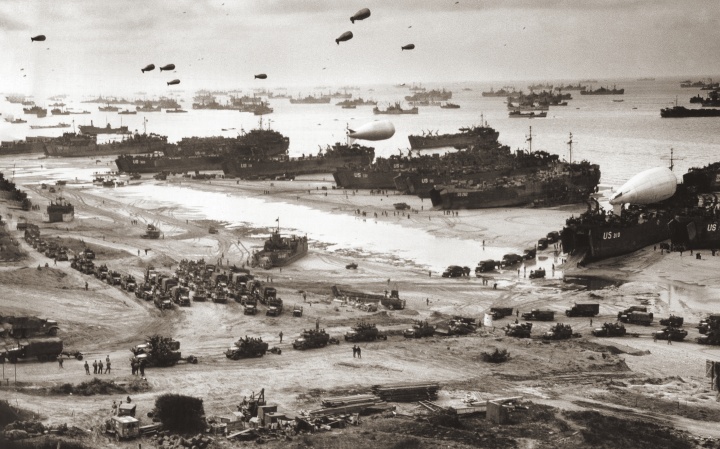
With the Normandy beachhead secured, vast numbers of Allied troops and military vehicles flood ashore.“On this 75th (now 80th) anniversary of D-Day, a crucial event in the push to Allied victory in World War II, we look back on the remarkable miracle of its success—an answer to prayer and the fulfillment of destiny.

Imperial War Museum

With the Normandy beachhead secured, vast numbers of Allied troops and military vehicles flood ashore.

It’s been 75 (now 80) years since D-Day, June 6, 1944, when Western Allied forces during World War II launched the largest invasion in history with nearly 7,000 ships of all sorts and more than 11,000 planes, crossing the English Channel and landing more than 150,000 troops (and more over the days that followed) on the beaches of Normandy to free France and the rest of Europe from Nazi tyranny.

German leader Adolf Hitler had prepared a vast defensive network of artillery, gun emplacements, mines and other deadly obstacles stretching from the west coast of France up to Norway. This “Atlantic Wall” had to be breached for the Allies to press forward and defeat this evil, genocidal regime that with its Axis partners was intent on continuing the carnage of many millions while trying to conquer the world.

Famed war correspondent Ernie Pyle, who arrived at Normandy the day after D-Day, noted that the Allies achieved victory “with every advantage on the enemy’s side and every disadvantage on ours.” Yet, as he wrote, the total Allied casualties “were remarkably low—only a fraction, in fact, of what our commanders had been prepared to accept.” Pyle concluded, “Now that it is all over, it seems to me a pure miracle that we ever took the beach at all.”

What was miraculous about D-Day, and why would God have intervened?

The weather and other surprises—flukes or God’s handiwork?

Gen. Dwight Eisenhower, Supreme Allied Commander (and later U.S. president), said later on the 1952 anniversary of the operation launch: “This day eight years ago, I made the most agonizing decision of my life. If there were nothing else in my life to prove the existence of an almighty and merciful God, the events of the next twenty-four hours did it . . . The greatest break in a terrible outlay of weather occurred the next day and allowed that great invasion to proceed, with losses far below those we had anticipated.”

The Allies had tried to plan for every eventuality, but they had no control over the vital weather. They hoped for good weather to make the 100-mile sea crossing to Europe, as had miraculously occurred in the mass evacuation from Europe at Dunkirk early in the war. What they didn’t realize was that bad weather—the windiest in 20 years—would hand them success beyond all expectation.

D-Day was originally scheduled for June 5 and could only be postponed for the short term to the 6th or 7th, while the tides were still low and the moon was full for visibility (along with clear weather), especially for clearing or avoiding mines in the surf. Otherwise it would have to have been put off a good while later.

With the terrible weather that sprang up on June 5, it looked like the operation was a no-go, but meteorologists reported a break was about to occur in the weather to allow the 17-hour crossing, though there was as yet no sign of any calming. Eisenhower made the agonizing decision for the ships to launch on the 5th (to arrive the next day) in the face of severe winds. As it turned out, the weather was only marginally better on the 6th, yet enough for the invasion to succeed even with weather-related losses.

What really helped win the day was that the Germans could not believe the Allies would cross the English Channel in such awful weather, and they were caught completely unprepared. They had stood alert at low-tide and full-moon days in May, but they now did not see the need. Half the German division commanders and a fourth of the regiment commanders left for war games exercises in Brittany. Field Marshal Erwin Rommel, in charge of the Normandy defenses, decided to travel 500 miles to Germany to celebrate his wife’s birthday. He came back at word of the invasion, but it took him all day—by then too late.

Also, Adolf Hitler and other leaders under him were convinced by Allied ploys and their own theories that the Allied invasion was going to be further east. And when it arrived they assumed it was a diversion, with the real landing to take place elsewhere—a belief that Hitler bizarrely clung to up through August!

Meanwhile, most of the Luftwaffe (German air force) planes based in Normandy had been relocated to Germany to defend against increasing Allied bombing. With that and the bad weather, German planes were not patrolling the English Channel. Moreover, this was the only night the German U-boat submarines did not patrol it. So the Allies encountered hardly any enemy forces on the way.

Confusion among German defenders

A key early step in the invasion was for paratroopers to come in gliders at 100 mph with no guiding lights and to land secretly next to two critical guarded bridges and secure them—to keep the Germans back and prevent the Germans from destroying them so the Allies couldn’t use them. The weather helped in this too, hiding the gliders in the low clouds as they flew by stopwatches until they dropped out at 200 feet, when the pilots could then see.

The first paratroopers to land were stunned, British platoon leader Maj. John Howard later stating: “When we came to our senses, we realized there was no firing. There was no enemy firing. It all seemed quite unbelievable.” The 22 paratroopers trotted over the bridge, the terrified guards dove into the bushes, and the garrison was taken in 10 minutes. But two German tanks arrived, with four more on the way. The paratroopers had only a single anti-tank gun, and with one chance succeeded in hitting the tank right in the middle, setting off all the ammunition inside—the burning tank now blocking the German advance and enabling lost paratroopers to be reoriented.

The Germans were not then able to counterattack there or across the wider area. They now had only two panzer (or tank) divisions near the Normandy landings. Early in the morning, Field Marshal Gerd von Rundstedt ordered these to move in, not believing such a large-scale invasion could be a deception.

But he had to get approval, as these forces were under the German high command. Approval was not given, as Hitler had to give the order, and he was still sleeping—and he didn’t awaken until noon. Hitler’s approval did not come until 4 p.m., and by that time the weather had cleared and Allied aircraft ruled the skies over Normandy, smashing anything that moved on the ground. (Much more could be said of Hitler’s terrible blunders, which some speculate may have resulted from disease or drug and chemical interactions affecting his brain.)

Many remarkable things happened on D-Day. The landing at Utah Beach was actually in the wrong place, but this worked out in the Allies’ favor, as the beach was less defended there. Of course, other places saw far worse fighting. The taking of the Normandy beaches was still horrific, with thousands dead or wounded. Yet the casualty count had been expected to be many times higher. And the victory allowed the liberation of Europe to follow over the next year.

The weather that seemed poised to thwart the Allied cause in reality greatly helped it. And the Nazi leadership was in many ways confounded. Eisenhower and many others saw this as clear help from Almighty God. In fact, newspapers at the time declared the events of D-Day, Dunkirk, El Alamein, the Battle of Britain and a number of other battles to be miraculous, particularly in the wake of widespread prayer to God for deliverance.

U.S. and British leaders and people look to God

Gen. Eisenhower told the troops embarking for Normandy: “The eyes of the world are upon you. The hopes and prayers of liberty-loving people everywhere march with you . . . The tide has turned! The free men of the world are marching together to Victory! I have full confidence in your courage, devotion to duty and skill in battle. We will accept nothing less than full Victory! Good Luck! And let us all beseech the blessing of Almighty God upon this great and noble undertaking.”

British Field Marshal Bernard Montgomery had told the troops, “Let us pray that the Lord, mighty in battle, will give us victory.”

As the forces approached Normandy, U.S. President Franklin Roosevelt took to the airwaves with this call: “In this poignant hour, I ask you to join with me in prayer.”

He publicly prayed: “Almighty God: Our sons, pride of our nation, this day have set upon a mighty endeavor, a struggle to preserve our Republic, our religion, and our civilization, and to set free a suffering humanity . . . They will need Thy blessings. Their road will be long and hard . . .

“They fight not for the lust of conquest. They fight to end conquest. They fight to liberate . . . They yearn but for the end of battle, for their return to the haven of home. Some will never return. Embrace these, Father, and receive them, Thy heroic servants, into Thy kingdom.

“And for us at home . . . help us, Almighty God, to rededicate ourselves in renewed faith in Thee in this hour of great sacrifice.

“Many people have urged that I call the nation into a single day of special prayer. But because the road is long and the desire is great, I ask that our people devote themselves in a continuance of prayer. As we rise to each new day, and again when each day is spent, let words of prayer be on our lips, invoking Thy help to our efforts . . .

“And, O Lord, give us faith. Give us faith in Thee; faith in our sons; faith in each other; faith in our united crusade . . . With Thy blessing, we shall prevail over the unholy forces of our enemy. Help us to conquer the apostles of greed and racial arrogances. Lead us to the saving of our country, and with our sister nations into a world unity that will spell a sure peace—a peace invulnerable to the schemings of unworthy men. And a peace that will let all of men live in freedom, reaping the just rewards of their honest toil.

“Thy will be done, Almighty God. Amen.”

As word of the invasion spread, prayer vigils were quickly organized throughout the country. Many businesses closed for prayer.

“This was the Lord’s doing, and it is marvellous in our eyes”

Britain’s King George VI said in a worldwide radio address on D-Day: “Four years ago our nation and Empire stood alone against an overwhelming enemy, with our backs to the wall. Tested as never before in our history, in God’s providence we survived that test . . .

“Once more a supreme test has to be faced. This time the challenge is not to fight to survive, but to fight to win the final victory for the good cause . . . That we may be worthily matched with this new summons of destiny, I desire solemnly to call my people to prayer and dedication.

“We are not unmindful of our own shortcomings, past and present. We shall ask not that God may do our will, but that we may be enabled to do the will of God; and we dare to believe that God has used our nation and Empire as an instrument for fulfilling His high purpose.

“I hope that throughout the present crisis of the liberation of Europe there may be offered up earnest, continuous and widespread prayer . . .

“If from every place of worship, from home and factory, from men and women of all ages and many races and occupations, our intercessions rise, then, please God, both now and in the future, not remote, the predictions of an ancient psalm may be fulfilled: ‘The Lord will give strength unto His people; the Lord will give His people the blessing of peace.’”

Did God answer this great outpouring of prayer? Many are justifiably convinced that He did.

After the Allies swept triumphantly through France in 1944, Gen. Montgomery felt compelled to say: “Such an historic march of events can seldom have taken place in such a short space of time . . . Let us say to each other, ‘This was the Lord’s doing, and it is marvellous in our eyes.’”

A God who intervenes and answers national prayer

The Bible reveals that God cares about what happens in the affairs of nations and intervenes in working out His overall plan. “For wisdom and might are His. And He changes the times and the seasons; He removes kings and raises up kings” (Daniel 2:20-21)—sometimes to punish sinful nations and rulers (compare Genesis 15:16; Isaiah 10:12)—and also to protect His servant people from annihilation.

He chose the people of Israel to fulfill a very special destiny. In prophesying of the Israelites in the last days, God promised to make Joseph’s descendants through his sons Ephraim and Manasseh the most blessed nations in the world and strengthen them against their enemies (Genesis 49:22-24), declaring that their descendants would “push the peoples to the ends of the earth” (Deuteronomy 33:17). He further said the Israelites would be “like a lion . . . Your hand shall be lifted against your adversaries, and all your enemies shall be cut off” (Micah 5:8-9).

Other verses show that God would also discipline the Israelites through losses to enemies. But He promised that if His people would humble themselves in prayer, He would forgive them and heal their land (2 Chronicles 7:14).

All of this plays a huge part in what happened at D-Day and the various other instances of divine intervention during World War II and in other conflicts. For, as incredible as it may seem, the prophecies regarding end-time Israel have been fulfilled primarily through the United States and Britain and other nations of British descent. In fact, these nations are in large part actually formed of the descendants of Joseph! (Be sure to read our free study guide The United States and Britain in Bible Prophecy for the proof of this identity and heritage.)

Though this truth is unknown to most, many over the last few centuries have had a sense of the promises to Israel applying in some ways to these great Bible-believing nations.

Leaders who recognized the hand of God at work

Observe what Winston Churchill, British Prime Minister at the time of D-Day, said in his memoirs of the First World War regarding an encounter with Scripture just after he took charge of the Royal Navy:

“That night when I went to bed, I saw a large Bible lying on a table in my bedroom. I thought of the peril of Britain, peace-loving, unthinking, little prepared . . . I thought of mighty Germany . . . wave after wave of valiant manhood . . . of the sudden and successful wars by which her power had been set up. I opened the Book at random, and in the 9th Chapter of Deuteronomy I read—

“‘Hear, O Israel: Thou art to . . . possess nations greater and mightier than thyself . . . a people great and tall of whom thou hast heard say, who can stand before the children of Anak!

“‘Understand therefore this day, that the Lord thy God is he which goes over before thee; as a consuming fire . . . Not for thy righteousness, or for the uprightness of thy heart . . . but for the wickedness of these nations the Lord thy God doth drive them out from before thee, and that he may perform the word which the Lord sware unto thy fathers, Abraham, Isaac and Jacob.’

“It seemed a message full of reassurance” (The World Crisis, Mentor edition, 1968, pp. 58-59). Indeed it was.

During the Second World War, the same Churchill, now prime minister, gave a message in 1942 stating: “I sometimes have a feeling of interference. I want to stress that. I have a feeling sometimes that some Guiding Hand has interfered. I have a feeling that we have a Guardian because we have a great Cause, and we shall have that Guardian so long as we serve that Cause faithfully.”

At the victorious conclusion of the war, Churchill led the British House of Commons to “give humble and reverent thanks to Almighty God for our deliverance.”

Harry Truman, U.S. president at the end of World War II, later remarked in 1951: “I do not think that anyone can study the history of this nation without becoming convinced that Divine Providence has played a great part in it. I have the feeling that God has created us and brought us to our present position of power and strength for some great purpose. It is not given to us to know fully what that purpose is.”

Will we continue to look to God?

While these men did not grasp the big picture of what God was working out, they and others at the time still realized who had saved them and seen them through. Do we?

It’s heartrending to contemplate, but it will not be long before the world is plunged into the worst time of trouble ever—far worse than World War II. America and Britain will not then succeed in beating back the enveloping tyranny but, having drifted far from God, will experience devastating defeat and destruction.

Yet, thankfully, a great deliverance will at last come—from the same God. The Father will send Jesus Christ to return to the earth in awesome power. Descending with the hosts of heaven, Jesus will come in divine war, crushing the armies arrayed against Him. Overthrowing the tyranny of wicked men and of Satan behind it all, He will take over the governing of the whole world, then bringing an end to war and guiding mankind into the way of peace.

As we remember D-Day, let’s be grateful for God’s great intervention then and at other times and, humbling ourselves in prayer, continue to trust Him now and for the future deliverance He will ultimately bring.”  From: https://www.ucg.org/beyond-today/beyond-today-magazine/d-day-and-divine-intervention

_________

Sunday, April 21, 2024

Feasts in the Bible: Why Should They Matter to Christians? Q & A About the Christian Passover. The Role of Processed Foods in the Obesity Epidemic.

.

Feasts in the Bible: Why Should They Matter to Christians?

Feasts in the Bible: Why Should They Matter to Christians?“Leviticus 23 records the “feasts of the Lord.” What are these feasts? Though often dismissed as “Jewish” holidays, are they also relevant to Christians?

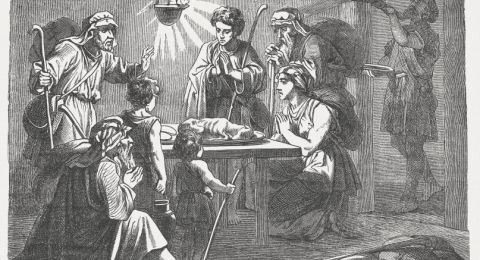
God commanded Moses, “The feasts of the LORD, which you shall proclaim to be holy convocations, these are My feasts” (Leviticus 23:2; emphasis added).

The word feasts in this passage means appointed times, specific observances God has designated as holy, or set apart. Their holiness comes from the tremendous spiritual significance God has attached to each.

These seven biblical feasts build upon one another in meaning and progressively reveal how God will save the world. 

Do you know what they are and what they mean?

1. Passover

As the first of God’s seven annual feasts, Passover sets the stage for every major event to follow. This foundational feast directs our attention to the need for blood to be shed in order for us to be saved from the penalty of death.

It is a feast that commemorates the perfect sacrifice of the Son of God.

  • Historical: God devastated the Egyptians by killing all their firstborns, but He spared the Israelites through a sacrificial substitute. Passover was observed annually as a reminder of how the Israelites were saved from death by putting the blood of a lamb on their doorposts (Exodus 12:26-27).
  • Fulfillment: The sacrifice of Jesus Christ, “our Passover,” makes entrance into the New Covenant possible (1 Corinthians 5:7; Luke 22:20). Christians are to continue observing this day as a reminder of how the Savior’s sacrifice provides redemption from sins and eternal death (Hebrews 9:12).

To learn more about this biblical feast, read “Passover: What Did Jesus Do for You?

More at: https://lifehopeandtruth.com/god/blog/feasts-in-the-bible-why-should-they-matter-to-christians/?

_______

Questions and Answers About the Christian Passover

“This evening, many Christians will gather to observe the New Covenant Passover. This festival may seem mysterious to many. In this blog post, we address six frequently asked questions about the New Testament Passover.”

Transcript of:  https://hubs.la/Q02twqnM0 

“Most Christians believe Passover is a Jewish holiday. But should Christians observe Passover? This post covers this and other questions about the Christian Passover.Questions and Answers About the Christian Passover

If you look at your calendar for March or April, you will probably see “Passover” marked. Most people think of Passover as just a Jewish national holiday that celebrates Israel’s departure from Egypt, as told in the book of Exodus. The Ten Commandments, the 1956 movie starring Charlton Heston and Yul Brynner, is often shown on network TV around this time of year.

This may be the extent of your knowledge about the Passover. It is largely ignored in Christianity, which observes other spring holidays such as Easter, Lent and Good Friday.

(To learn about the problems with Easter, read our article “Is Easter Pagan?”)

But did you know that the Passover is found throughout the Bible—both in the Old Testament and New Testament? So why don’t most Christians celebrate Passover? Should they?

This post will answer some frequently asked questions about the Passover.

Passover Question 1: What does Passover commemorate? Doesn’t it celebrate the Israelites being “passed over” and protected from the 10th plague in Egypt?

Yes, when the Passover was introduced, it commemorated the night God performed the 10th and final plague against ancient Egypt. God caused the firstborn of Egypt to die—a plague that probably took millions of lives throughout the land. God would spare the Israelites from this plague only if they painted lamb’s blood on the doorposts of their dwellings (Exodus 12:7, 12-13).

Throughout their generations, the Israelites were to celebrate the Passover to remember how God delivered them from slavery in Egypt. That evening, the Israelites were also instructed to prepare a special meal and get ready to leave Egypt the next day (verses 8-11). God declared this observance was “the LORD’S Passover” (verse 11). He commanded them to observe it as “a memorial,” “a feast to the LORD throughout your generations” and “an everlasting ordinance” (verse 14).

Years later, God reinforced the observance in the formal list of God’s festivals given to Moses: “On the fourteenth day of the first month at twilight is the LORD’S Passover” (Leviticus 23:2, 5).

Throughout their generations, the Israelites were to celebrate the Passover to remember how God delivered them from slavery in Egypt. This was the original meaning of the observance. Jews around the world understand and observe this.

These events are also meaningful for Christians, who are called “the Israel of God” (Galatians 6:16) and are delivered from the slavery of sin (Romans 6:7). But, as we will see, the Passover holds even deeper significance for Christians today.

Passover Question 2: Did Jesus celebrate Passover?

Yes, Jesus observed the Passover throughout His life.

Luke records that Jesus and His family observed the Passover faithfully: “His parents went to Jerusalem every year at the Feast of the Passover” (Luke 2:41).

One of the most famous accounts of Jesus’ childhood—when He got separated from His parents and they frantically looked for Him, eventually discovering Him discussing the Bible in the temple—took place just after Jesus and His family had observed the Passover in Jerusalem (verses 42-50).

Jesus observed the Passover up until the day He died—literally. He observed the Passover with His disciples the night He was betrayed and arrested (Matthew 26:2, 17-19; Luke 22:15).

To learn more about the feast days Jesus celebrated throughout His life, read “Hidden in Plain Sight: The Festivals Jesus Celebrated.”

Passover Question 3: Is there a connection between Jesus and the Passover?

Yes, the Bible makes a strong link between the Passover and the death of Jesus Christ. Putting the scriptures together, we see that the events of the first Passover foreshadowed Jesus Christ’s death. Notice the following parallels:

Putting the scriptures together, we see that the events of the first Passover foreshadowed Jesus Christ’s death. The Israelites were in bondage to Egypt (Exodus 1:14). All human beings are in slavery to sin (Romans 6:16-17, 20; 7:23; 2 Peter 2:19).

The Israelites were spared from death that night only through the sign of the Passover lamb’s blood on their doorposts (Exodus 12:22-23). Christians are freed from death only through Jesus’ shed blood as the “Lamb of God” (John 1:29; Ephesians 1:7; 2:13; Hebrews 9:14, 22; 1 Peter 1:19).

As a result of the plague against Egypt and the Israelites’ being spared through the Passover lamb’s blood, Israel was freed from slavery and started a new life by coming out of Egypt (Exodus 12:31-41). As a result of Jesus Christ’s sacrifice, Christians can have freedom from the captivity of sin and live a new way of life (Romans 6:4, 6, 18, 22; Ephesians 4:24).

These are just a few of the parallels between the Exodus Passover and Jesus Christ. It is also important to remember that Jesus observed the Passover on the evening before His crucifixion and that His sacrifice occurred on the daylight portion of the Feast of Passover (Matthew 26:18-19).

But perhaps no scripture proves the link better than 1 Corinthians 5:7: “For indeed Christ, our Passover, was sacrificed for us.”

To learn more about the connection between Jesus and the Passover, read “Passover: What Did Jesus Do for You?” and “Why Is Jesus Called the Lamb of God?

Passover Question 4: Did the early Church observe the Passover?

Yes, the New Testament is very clear that Christians in the early Church observed the Passover.

We must first understand that they didn’t observe it in the same way Israel did in the past. At His last Passover, Jesus Christ instituted new symbols to reflect His sacrifice for sins. These new symbols were a new element He added to the Passover for New Covenant Christians.

We read about the institution of the New Covenant Passover in Matthew 26.

Unleavened bread now symbolized the “body” of Jesus Christ (verse 26).

Wine now symbolized Jesus’ “blood” (verse 28).

Jesus commanded His disciples to “do this in remembrance of Me” (Luke 22:19). He also instituted a foot-washing ceremony to teach His people the importance of humility and service (John 13:3-15). (To learn more about the meaning behind washing feet, read “What Is the Meaning of John 13:14—“Wash One Another’s Feet”?”)

The Bible shows us that the early Church continued observing the Passover in obedience to Christ (1 Corinthians 5:7-8; 11:23-26). Today, Christians around the world observe the New Testament Passover in March or April (on the 14th day of Nisan on the Hebrew calendar) to remember and commemorate Jesus Christ’s death and its significance to our lives.

In 2024 the New Covenant Passover ceremony will be observed after the sun sets on April 21 (on the Gregorian calendar). 

You can learn about the dates of the biblical festivals for the next few years at “Festival Calendar.”

The fact that early Christians observed the Passover on the 14th of Nisan is a generally recognized historical fact. Unfortunately, the Roman Church eventually substituted Good Friday and Easter Sunday for the biblical Passover—a change that is still accepted and practiced by the majority of mainstream Christianity today.

To learn more about the change from Passover to Easter, read our article “Christian Festivals.”

Passover Question 5: Isn’t the Christian ceremony of bread and wine called the Lord’s Supper or Communion?

This name, “The Lord’s Supper,” is a common title given to partaking of bread and wine in the Protestant community. Some denominations call this ceremony Eucharist (Greek for “give thanks”) or Communion (Latin for “fellowship” or “sharing”). There is much variance in how these ceremonies are kept. Some keep these ceremonies weekly; some, monthly; some, quarterly; and others, annually.

But none of these names are the biblical name for the ceremony Jesus instituted on the last evening of His life. The Gospels are very clear that He was observing the Passover (Matthew 26:18; Mark 14:14; Luke 22:8).

If you read through each Gospel record of this evening, you will notice that Jesus specifically said He was changing the symbols of the bread and wine—but He never said He was changing the name from Passover to anything else.

The Lord’s Supper? If you search the Bible, you will find the phrase “The Lord’s Supper” is only used once (in 1 Corinthians 11:20). But when you actually read the verse, you may be surprised that the verse is actually saying not to use that title for the observance. “Therefore when you come together in one place, it is not to eat the Lord’s Supper” (verse 20, emphasis added).

The apostle Paul was correcting the Corinthian congregation for not properly keeping the Passover ceremony with reverence and solemnity. These Christians were coming to the Passover and selfishly eating their own food while others went hungry. Some were even getting drunk (verse 21).

So, instead of calling this observance “the Lord’s Supper,” Paul was actually reminding them that it wasn’t! They were to come together to solemnly partake of the bread and wine symbols—not to eat supper (verses 27-29).

Communion? The title “Communion” is taken from 1 Corinthians 10:16: “The cup of blessing which we bless, is it not the communion [the “fellowship” or “sharing”] of the blood of Christ?” This is not a designation of a title for the event, but a statement that the symbols of bread and wine are necessary to have a relationship, or fellowship, with Jesus Christ. The Passover is necessary for truly knowing and having a relationship with Jesus Christ.

To learn more about the proper name for this important observance, read “The Last Supper or Passover?

Passover Question 6: How do you observe Passover as a Christian?

As we have seen, the New Testament shows that Jesus Christ instituted new symbols for the Passover on the night He was betrayed and arrested. Those symbols are foot washing, unleavened bread and wine. In order to keep the Passover as a Christian in the 21st century, there are four basic requirements for baptized members of the Church of God:

  • Observe it on the same night Jesus observed it, on the anniversary of the night of His betrayal and arrest. That is the evening of the 14th of Nisan on the Hebrew calendar. In 2024, that corresponds to the evening after the sun sets on April 21. (April 22 is the daylight portion of the Passover in 2024.)
  • Wash the feet of another baptized Christian also observing the Passover.
  • Eat a small, broken piece of unleavened bread that symbolizes Christ’s broken and beaten body.
  • Drink a sip of red wine that symbolizes Christ’s shed blood.

The ideal way to observe the Passover is with other converted Christians who are partaking of the Passover in a ceremony conducted by a minister of Jesus Christ. 

For more insight on keeping the Passover today, read “Should Christians Celebrate the Passover?

Finding more answers about the Christian Passover

If you are just learning about the Passover, we hope these answers have been helpful and informative. We encourage you to continue studying the origins of the popular holidays celebrated in the spring (in the northern hemisphere) and the deep meaning of the festivals found in the Bible.”  From: https://lifehopeandtruth.com/god/blog/questions-and-answers-about-the-passover/?

___________

The Role of Processed Foods in the Obesity Epidemic

“The rise in the U.S. calorie supply responsible for the obesity epidemic wasn’t just about more food but a different kind of food.”

Transcript of video at: https://nutritionfacts.org/video/the-role-of-processed-foods-in-the-obesity-epidemic/?

Below is an approximation of this video’s audio content. To see any graphs, charts, graphics, images, and quotes to which Dr. Greger may be referring, watch the above video.

“The rise in the number of calories provided the U.S. food supply since the 1970s is more than sufficient to explain the entire obesity epidemic. Similar spikes in calorie surplus were noted in developed countries around the world in parallel with, and presumed primarily responsible for, the expanding waistlines of their populations. By the year 2000, the United States was producing, after taking exports into account, 3,900 calories for every man, woman, and child—nearly twice as much as many people need.

It wasn’t always this way. The number of calories in the food supply actually declined over the first half of the twentieth century, only starting its upward climb to unprecedented heights in the 1970s. The drop in the first half of the century was attributed to the reduction in hard manual labor. The population had decreased energy needs, so they ate decreased energy diets. They didn’t need all the extra calories. But then, the so-called energy balance flipping point occurred, when the “move less, stay lean” phase that existed throughout most of the century turned into the “eat more, gain weight” phase that plagues us to this day. So, what changed?

What happened in the 1970s was a revolution in the food industry. In the 1960s, most food was prepared and cooked in the home. The average “not working” wife spent hours a day cooking and cleaning up after meals. (The husband averaged nine minutes.) But then, a mixed blessing transformation took place. Technological advances in food preservation and packaging enabled manufacturers to mass-prepare and distribute food for ready consumption. The metamorphosis has been compared to what happened a century before in the industrial revolution, with the mass production and supply of manufactured goods. This time they were just mass-producing food. Using new preservatives, artificial flavors, and techniques such as deep freezing and vacuum packaging, food corporations could take advantage of economies of scale to mass produce ready-made, durable, palatable edibles that offer an enormous commercial advantage over fresh and perishable foods.

Think ye of the Twinkie. With enough time and effort, any ambitious cook could create a cream-filled cake, but now they are available around every corner for less than a dollar––or delivered straight to your door for 30 cents! If every time someone wanted a Twinkie, they had to bake it themselves, they’d probably eat a lot less Twinkies. The packaged food sector is now a multi-trillion dollar industry.

Or, consider the humble potato. We’ve long been a nation of potato-eaters, but they were largely baked or boiled. Anyone who’s made fries from scratch knows what a pain it is, with all the peeling, cutting, and splattering. But with sophisticated machinations of mechanization, french fry production became centralized, and could be shipped at -40o to any fast food deep fat fryer or frozen food section in the country to become America’s favorite vegetable. Nearly all the increase in potato consumption in recent decades has been in the form of french fries and potato chips.

Cigarette production offers a compelling parallel. Up until automated rolling machines were invented, cigarettes had to be rolled by hand. It took 50 workers to produce the number of cigarettes a machine could make in a minute. The price plunged, and production leapt into the billions. Cigarette smoking went from relatively uncommon to almost everywhere. In the 20th century, the average per capita cigarette consumption rose from 54 a year to 4,345 cigarettes a year by the time of the 1964 Surgeon General’s report. The average American went from smoking about one cigarette a week to a half-pack a day.

Tobacco itself was just as addictive before and after mass marketing. What changed was cheap, easy access. French fries have always been tasty, but they went from being rare, even in restaurants, to omnipresent access around every and each corner (likely next to the gas station where you can get your Twinkies and cigarettes).

The first Twinkie dates back to 1930, though, and Ore-Ida started selling frozen french fries in the 1950s. There has to be more to the story than just technological innovation…which we’ll explore, next.:  From: https://nutritionfacts.org/video/the-role-of-processed-foods-in-the-obesity-epidemic/?

_________

LEARN MORE

__________