Showing posts with label Santa. Show all posts

Sunday, January 1, 2023

The Roots and Fruits of New Year’s Eve. Christmas Is Not for Kids! Avoiding Pork Tapeworm Parasites And Epilepsy.

.

The Roots and Fruits of New Year’s Eve
The Roots and Fruits of New Year’s Eve“Some of the customs may seem crazy or quaint, but what are the real origins and results of the New Year’s holiday?

I admit it. I have been up at midnight on New Year’s Eve a few times. Not celebrating exactly. In fact, most of those times I was part of a volunteer security force on the campus where I went to college—which happened to be along the Rose Parade route in Pasadena, California.

Our job was to be alert to criminals, vandals and even people camping out along the parade route and searching for anything they could burn to keep warm. You might be surprised that it gets fairly cool in January in Southern California. Of course, it is much warmer there than in New York’s Times Square (where it averages 33.7 degrees Fahrenheit at midnight) and other northern gathering places where people count down to the new Roman year.

It makes you wonder: How did New Year’s Eve come to be celebrated in the winter and at midnight? Blame it on the ancient Romans.

Julius Caesar, the calendar fixer

Many ancient societies began their new year in the spring. But by the time of Julius Caesar, the Roman calendar was off. Way off. To get the calendar to line up with the seasons, Caesar had to add 90 days!

History.com explains, “Over the centuries, the calendar fell out of sync with the sun, and in 46 B.C. the emperor Julius Caesar decided to solve the problem by consulting with the most prominent astronomers and mathematicians of his time. He introduced the Julian calendar, which closely resembles the more modern Gregorian calendar that most countries around the world use today.

“As part of his reform, Caesar instituted January 1 as the first day of the year, partly to honor the month’s namesake: Janus, the Roman god of beginnings, whose two faces allowed him to look back into the past and forward into the future. Romans celebrated by offering sacrifices to Janus, exchanging gifts with one another, decorating their homes with laurel branches and attending raucous parties.”

Beliefnet.com also notes that New Year’s is associated with the winter solstice and is “an ancient holiday with deep spiritual roots. … Ancient Romans celebrated with six days of carousing that would probably be familiar to us today.”

Customs and superstitions

From its ancient origins, a wide variety of traditions and superstitions have developed around the world. Here is just a sampling.

“In Ecuador, people make dummies, stuffed with straw, to represent the events [and people, such as politicians and pop culture icons] of the past year. These ‘[año] viejo’ effigies are burned at midnight, thus symbolically getting rid of the past” (Beliefnet.com). Some even try to jump through the flames 12 times!

MarthaStewart.com describes another jumping tradition: “Many Danish people celebrate the New Year by jumping off chairs at the stroke of midnight. Leaping is said to banish bad luck and bring good fortune into the new year. They also traditionally throw plates at neighbors’ doors to symbolize their friendship. The person with the most broken plates is said to have the most friends.”

On NPR.org, Maria Fe Martinez describes another Latin American New Year’s tradition: “If you want to have a very lucky year, you have to wear yellow underwear. And if you want to have a very passionate year, you wear red underwear. …

“And you can get them all over town. Like, if you’re driving in your car, you’re going to see a street vendor selling yellow underwear, which is hilarious. Right after Christmas, they show up.”

The International Business Times reports that 44 percent of Americans say they will kiss someone at midnight. But why?

According to Livescience.com, “Puckering up at the stroke of midnight is a venerable tradition with ancient roots. Many cultures considered the transition from the warm to the cold seasons to be an intensely vulnerable time, when evil spirits could run amok, Aveni [author of The Book of the Year: A Brief History of Our Seasonal Holidays] said.

“Many of our traditions, including kissing, originally come from the English tradition of ‘saining,’ or offering blessing or protection, during the period of Yuletide, Aveni said. (Yuletide was originally a pre-Christian Germanic festival that eventually became synonymous with Christmastide in Europe.)”

New Year’s crime rates

In addition to its pagan roots, the fruits of this holiday are not good. For example, according to Allprobailbond.com, “the holidays are the busiest time of year for the bail bond industry.” Why?

“• Increased alcohol consumption. … Driving under the influence is the leading cause for New Year’s Eve arrests. …

“• Increased emotions. Some people are very unhappy during the holidays. Domestic violence often increases during the holiday season as well as self-inflicted wounds. Consumption of alcohol also increases violent acts.”

What does the Bible say?

The Bible gives its own list of meaningful annual celebrations, but Jan. 1 is not on the list. It’s definitely not God’s new year; He set the first month of the year to begin in what we call March or April. The Bible gives its own list of meaningful annual celebrations, but Jan. 1 is not on the list. It’s definitely not God’s new year; He set the first month of the year to begin in what we call March or April (Exodus 12:2; Deuteronomy 16:1). And the Bible warns against getting ensnared by customs that are based on pagan religions. We are not to ask, “How did these nations serve their gods? I will do likewise” (Deuteronomy 12:30).

Superstitions and customs that may seem quaint or harmless to most people today can be repulsive to God who knows their roots and their fruits.

Playing with paganism isn’t cute—it is corrosive to our relationship with the true God. When God calls Himself a jealous God,” it’s actually a sign of His love and desire for the best for us (Deuteronomy 6:14-15).

And consider the apostle Peter’s call to avoid sinful celebrations where there is “lewdness, lusts, drunkenness, revelries, drinking parties, and abominable idolatries” (1 Peter 4:3). Peter acknowledged that our friends may think it strange we no longer party with them, but in the end we must answer to God.

For all these reasons, celebrating the pagan holiday of New Year’s Eve is not pleasing to God.

From Holidays to Holy Days. Download Free BookletLearn more about what God says in our free booklet From Holidays to Holy Days: God’s Plan for You.

_______

Christmas Is Not for Kids

Christmas Is Not for Kids“Christmas traditions focus heavily on children, but they actually teach many negative character lessons. Discover why Christmas is bad for your kids.

Even though Christmas is technically celebrated on Dec. 25 by the majority of the world, people start preparing for it months in advance. Shortly after Thanksgiving children start sending letters off to Santa Claus, who also starts appearing in stores and malls. Parents start shopping for presents on Black Friday and Cyber Monday and may start setting up Christmas trees and lights around the same time. Most popular Christmas traditions revolve around children.

There are many problems with Christmas, which we explain in detail in many of our materials. But many people will counter those reasons with the excuse: “But it’s for the kids!”

Well, here is a proposition that may be surprising: Christmas is not for kids.

Christian parents should keep in mind the instruction to “train up a child in the way he should go” (Proverbs 22:6). When we really analyze Christmas traditions, we discover they teach children lessons that lead them in the wrong direction. 

Four reasons Christmas is not for kids

1. Christmas teaches children it’s okay to lie.

While children should be taught about the birth of Jesus Christ, it shouldn’t be taught alongside a holiday based on many lies about His birth. You can learn about those lies in our article “The Birth of Jesus.” Simply put, if children are taught about Christ’s birth from Christmas, they are being taught a totally inaccurate story of what really happened and when it happened!

But the facts of Christ’s birth aren’t the only lies surrounding Christmas. Christmas traditions emphasize the story of Santa who lives at the North Pole, of elves who make toys for him and of flying reindeer that help him deliver toys to the world’s children in a single night. These are all myths—lies!

Parents teach these lies while also expecting their children to be truthful. They fail to see that “harmless” lies teach children that some lies are acceptable. Instead of teaching myths, it’s much healthier for parents to teach what God says in His Word about lying and why it is forbidden in the 10 Commandments. When parents actively teach the values of truth and honesty, it doesn’t make sense to teach the various Christmas myths.

Christmas Is Not for Kids2. Christmas teaches children greed and selfishness.

Commercials entice children with the latest toys, electronics and fashion during the Christmas shopping season. The words “I want” and “mine” are often the first words that children learn, but during this time of the year those words are magnified! Children are not really focused on Christ during this season that is supposedly all about Him, but instead on what they will get. This leads to covetousness (which breaks the 10th Commandment). Are we seeing a pattern here?

Jesus warns us, “Beware of covetousness, for one’s life does not consist in the abundance of the things he possesses” (Luke 12:15). Teaching children to give and be content with what they have is a good antithesis of the getting focus of Christmas.

3. Christmas devalues faith.

Millions of children around the world request gifts from Santa Claus and wait for their request to be answered on Christmas morning. Sometimes they are then disappointed by not getting what they asked for and then later learning that Santa really doesn’t exist.

Not only do Christmas traditions ask children to put faith in a nonexistent man, but they also set them up to question God. How can they develop true faith when their original faith was built on a lie?

When we really analyze Christmas traditions, we discover they teach children lessons that lead them in the wrong direction.4. Christmas is used as a bargaining chip.

A 2009 survey by kidsturnscentral.com asked kids, “What does Christmas mean to you?” A 15-year-old in Kansas responded, “A time where we pretend that our good behavior for the day will carry over to the rest of the year.”

Think about it: Christmas teaches children to be good because “Santa Claus is coming to town.” In other words, be good so you will get presents.

According to the Bible, we should choose to do good because it is the right thing to do. Ecclesiastes 12:13 teaches us to “fear God and keep His commandments, for this is man’s all.” Children must be taught that they shouldn’t just obey God to getbut instead because it is the right thing to do all the time.

Teach truth, not lies

Christmas compromises some of the most basic and essential biblical principles: honesty, generosity, and faith. Along with its unbiblical and pagan origins, parents should reconsider exposing children to Christmas and instead teach them how to worship and live according to the Bible.”

We have recently published a parenting resource manual to assist parents who are serious about teaching their children about God’s way of life. You can download free lessons at “Encourage, Equip & Inspire.”

To learn more about improper and proper worship of God, request our free booklet From Holidays to Holy Days: God’s Plan for You.    From: https://lifehopeandtruth.com/relationships/blog/christmas-is-not-for-kids/

________

Avoiding Epilepsy Through Diet

Transcript of YouTube video at: https://nutritionfacts.org/video/avoiding-epilepsy-through-diet/

Below is an approximation of this video’s audio content. To see any graphs, charts, graphics, images, and quotes to which Dr. Greger may be referring, watch the above video.

“Avoiding pork tapeworm parasites (cysticercosis) is not as easy as just avoiding pork!

Another review last year confirmed that pork tapeworms taking residence inside our brains “is a significant public health issue within the United States.” At first, though, clinical diagnosis can be challenging. Initial presentations of the disease are often vague complaints like headaches, weakness, dizziness, high blood pressure.

In terms of treatment, in a series of more than a hundred cases published this year, although antiparasitic deworming drugs were found to be effective, about 10% of victims require brain surgery—what’s called an open craniotomy, where you have to go in and basically just dig ‘em out.

They can get into our muscles, too. This is an X-ray of someone’s leg, and you can see how infested the muscle is. And that’s why we can get it from pork—because it gets into muscles.

But what if you don’t eat pig muscles? Well, to all the smug non-pork-eaters out there, if we can find pork tapeworms in the brains of Orthodox Jews in Brooklyn, we can find pork tapeworms in anyone.

They weren’t sneaking off for schnitzel. It was their pork-eating domestic houseworkers preparing their food. When 1,700 members of the local synagogue were tested, 1% tested positive. The researchers suggested that those “to be employed as domestic workers or food handlers should be screened for tapeworm infection via examination of three stool samples for [tapeworm] eggs.”

So to avoid the #1 cause of adult-onset epilepsy, we may want to not eat pork, and not eat anything made by anyone who eats pork.” 

_____

Sunday, December 25, 2022

Twelve Christmas Traditions With Pagan Origins

.

Twelve Christmas Traditions With Pagan Origins.


Many Christmas traditions do not derive from the Christian religion.

“Many Christmas traditions do not derive from the Christian religion.

Photo by Annie Spratt on Unsplash

Pagan Christmas Traditions

“Do you celebrate Pagan Christmas traditions? Your first instinct would probably be to say 'No!', but you might be surprised.

Christmas is a time of year steeped in tradition, from the actual day itself to the tree we decorate and the presents we place under it.

Even those people who are not overly religious know that Christmas is a Christian festival, so you would think that it would follow that all the modern Christmas traditions developed as part of early Christian celebrations. Right?

Wrong!

Here we outline 12 Christmas traditions that share origins with the Pagan religion:

  1. Holly
  2. Mistletoe
  3. Ivy
  4. Laurel Wreaths
  5. Odin
  6. Romans Gave Gifts at Saturnia
  7. Wassailing
  8. Green Leaves and Red Berries
  9. Group Singing
  10. The Yule Log
  11. Winter Solstice
  12. Candles

Which Modern Christmas Traditions Have Their Origins in Pagan Festivals?

There are lots of Pagan customs in Christianity. Early Christians adapted their Pagan customs to fit their new Christian beliefs, hiding their original meanings and giving them new ones.

We can thank the Romans and Celts for most of our modern-day Christmas traditions.

Festival of Saturnia

The festival of Saturnalia, an ancient Pagan holiday which honoured the Roman God Saturn, took place every year between the 17th and 24th December. This was basically a week of eating, drinking and giving presents during the Northern Hemisphere's winter solstice.

Likewise, the Celts celebrated the fact that the winter solstice had arrived and rejoiced at the fact that the nights were once more getting lighter and spring was only just around the corner.

Disagreements Around Religious Beliefs

The early Christian church tried very hard to ban Pagan customs and encourage its converts to follow Christ, but the people were not to be convinced. Winter was a dark and depressing time, and they were keen to keep their winter solstice festivities. Eventually, the church realized that they couldn't ban all festivities, so they provided their followers with an alternative option: a festival which honoured the birth of Jesus Christ that eventually gave us the Pagan-originating Christmas traditions that we celebrate today.

Holly With Red Berries

Holly With Red Berries

Photo by Annie Spratt on Unsplash

1. The Pagan Origins of Holly

In Roman mythology, holly was the sacred plant of the god Saturn, and to honor him at the Saturnalia festival, the Romans gave each other gifts of holly wreaths.

When Christians began to celebrate the birth of Jesus, they risked being persecuted for their new religion, and to avoid detection, they would place holly wreaths in their houses. As far as passers-by were concerned, they were celebrating Saturnalia, not Christmas.

The Increasing Popularity of Christmas

Gradually, Christian popularity increased, their customs became commonplace, and holly lost its links to Paganism and became a traditional symbol of Christmas.

Over the centuries, holly has become a symbol of peace and joy, and people often settled disputes under a holly tree.

In Germany, a sprig of holly that was used in church decorations is believed to protect homes from lightning, and in England, farmers decorated their beehives with holly because they believed that at the first Christmas, bees hummed in honor of the baby Jesus.

These beliefs all contributed towards 'decking the halls with boughs of holly' being popular at Christmas.

Wild Druid Mistletoe

Wild Druid Mistletoe

Alexbrn [Public domain]

2. The Druids Beliefs About Mistletoe

Mistletoe was revered as a sacred plant by the Celts, the Norse, and the North American Native Americans.

Druids believed that mistletoe could protect against thunder and lightning. Priests would use a golden sickle to cut a piece of mistletoe from an oak tree, catching the branches before they reached the ground. The mistletoe would then be cut into small pieces and distributed amongst the people.

Mistletoe was also recognized as a druidic symbol of joy and peace. If enemies met each other underneath the woodland mistletoe, they were obliged to put down their weapons and form a truce until the following day.

This is where the custom of hanging a sprig ball of mistletoe from the ceiling and kissing under it originates from.

Ivy was adorned by the Romans.

Ivy was adorned by the Romans.

Photo by v2osk on Unsplash

3. The Roman God Bacchus Wore Ivy

In Roman times, ivy was the symbol of Bacchus, who was the god of wine and revelry. He wore it in his crown, and Pagans believed ivy to be a symbol of eternal life.

Because of the Pagan connotations surrounding ivy, early Christians did not use ivy to decorate the inside of their churches, preferring to use it as an outdoor decoration.

It also plays an important part in a traditional English Christmas but is not so popular in the U.S. The popularity of the Christmas hymn 'The Holly and the Ivy' has helped ivy to become synonymous with Christmas time.

Roman Evergreens

Roman Evergreens

Photo by Jez Timms on Unsplash

4. The Romans Made Laurel Wreaths

Laurel or bay leaves were popular with the Pagan Romans because the leaves were sacred to Apollo, the sun god.

The ancient Romans used decorative wreaths, made from laurel wreaths as a sign of victory, and it is believed that this is where the seasonal hanging of wreaths on doors came from.

In northern Europe, laurel leaves were not commonplace, and instead, evergreen branches were gathered and used to decorate houses at Christmas, either as swags or shaped into wreaths.

Probably the most common evergreen used today is the Christmas tree, whose origins are more Victorian than Pagan, but wreaths and swags still play an important part of our decorating, even though they are nowadays often made from artificial materials.

Father Christmas or Pagan Odin?

Father Christmas or Pagan Odin?

LadyDragonflyCC <3 via photopin cc

5. The Pagan God Odin

Despite the fact that our modern-day image of Father Christmas has largely been shaped by a 1930s Coca-Cola advertising campaign, he most definitely has Pagan roots.

Children all over the world are told that Father Christmas developed from St. Nicholas, but those people that follow Paganism know there is more to the story than that. There was a Pagan god named Odin, often depicted as a chubby old man with a white beard who wore a long flowing cloak.

It is, therefore, a combination of these two characters, and a liberal sprinkling of Coca Cola advertising that has resulted in who we now call Father Christmas or Santa Claus.

Christmas gifts or gifts for Saturnia?

Christmas gifts or gifts for Saturnia?

Photo by freestocks.org on Unsplash

6. The Romans Gave Gifts at Saturnalia

The custom of giving presents at Christmas originated from Saturnalia, the Roman feast of Saturn.

The gifts that the Romans gave to each other were small and given for luck. Charity towards those who were less fortunate was also very popular at this time of year.

The humble beginning of gift-giving has developed over the years and is now a multi-million-pound business, causing many people to say that the art of gift-giving has been replaced by mass consumerism and greed.

Wassail is a traditional holiday beverage.

Wassail is a traditional holiday beverage.

Jeremy Tarling from London, United Kingdom [CC BY-SA 2.0 (https://creativecommons.org/licenses/by-sa

7. Anglo-Saxon Wassailing

Wassailing is an ancient custom that is not seen very often today.

The word derives from the Anglo-Saxon phrase 'waes hael', which translates to 'good health'.

The wassail drink was originally made from mulled ale, curdled cream, roasted apples, eggs, spices, and sugar, and was served from large silver bowls, may be holding as much as ten gallons.

A modern day alternative to this would be mulled wine, red wine, and spices that is served hot.

Red and green colour theme

Red and green colour theme

8. Pagans Loved Green Leaves and Red Berries

The traditional Christmas colors of red and green are complementary colors that represent fertility.

Pagan-derived decorations that are still seen at Christmas time include the green leaves and red berries of holly, mistletoe and wreaths.

Red and green are the traditional colors for Christmas tree baubles, but in recent years many more colors have become available, often changing yearly with the latest fashions. In recent years, turquoise, pink, purple, and orange have been seen on the best-dressed trees.

Christmas carols or Pagan songs?

Christmas carols or Pagan songs?

infomatique via photopin cc

9. The Pagans Sang at the Winter Solstice

Carols have been sung for thousands of years, but they were not originally Christmas carols.

Originally, they were Pagan songs that were sung at the celebrations surrounding the Winter Solstice festival.

The word 'carol' actually means a song or dance of joy and praise! They were written and sung during all four seasons, but it was only the tradition of singing them at Christmas that survived!

A Yule log is decorated before being burned.

A Yule log is decorated before being burned.

Photo by Wil Stewart on Unsplash

10. Europeans Burned a Yule Log

The Yule log is a reminder of the times when European Pagans would have bonfires during the winter solstice, thereby symbolising the return of the sun with the days starting to get longer again.

Acquiring a Yule Log

The Yule log played a major role in the Yule festivities, with a piece of the previous year's log being saved to start the fire the following year.

Traditionally, it was considered unlucky to buy a log, and instead, it was harvested from the householder's land or received as a gift.

Once brought into the house and placed ceremoniously in the fireplace, it was decorated with greenery, smothered with alcohol, and dusted with flour before being set on fire. The log would then burn all night before smouldering for twelve days.

Yule Log Mythology

Celtic mythology told the stories of the Oak King and Holly King, with the oak representing the time from the winter solstice to the summer solstice and the holly representing the time from the summer solstice to the winter solstice.

Today, Yule logs are often represented by a chocolate-covered Swiss roll cake, sprinkled with icing sugar to represent the flour that was dusted onto the log before burning, and decorated with small plastic sprigs of holly.

11. A Pagan Holiday Adapted to Christianity

Winter Solstice was celebrated all over Europe, and as nobody was really sure when Jesus was actually born, early Christians altered their existing Pagan festivities to celebrate the birth of Jesus Christ during the same time.

In December, the sun appears to rise at the same point on the horizon for the three consecutive days beginning on the 22nd and then miraculously, on the 25th, it appears to move. Our ancient ancestors watched this and celebrated the fact that the days were now beginning to get longer and the dark nights shorter.

It is hard for us to understand how important sunlight was to our ancestors and how it affected their quality of life. Typically people would live and work during daylight hours, so the long and dark winter months must have seemed never-ending.

Also, they would have been relying on their store of grains and crops from the previous summer to tide them over until the following year and would be eager to plant new crops and receive some fresh food to eat.

Roman candles

Roman candles

Photo by Nicola Fioravanti on Unsplash

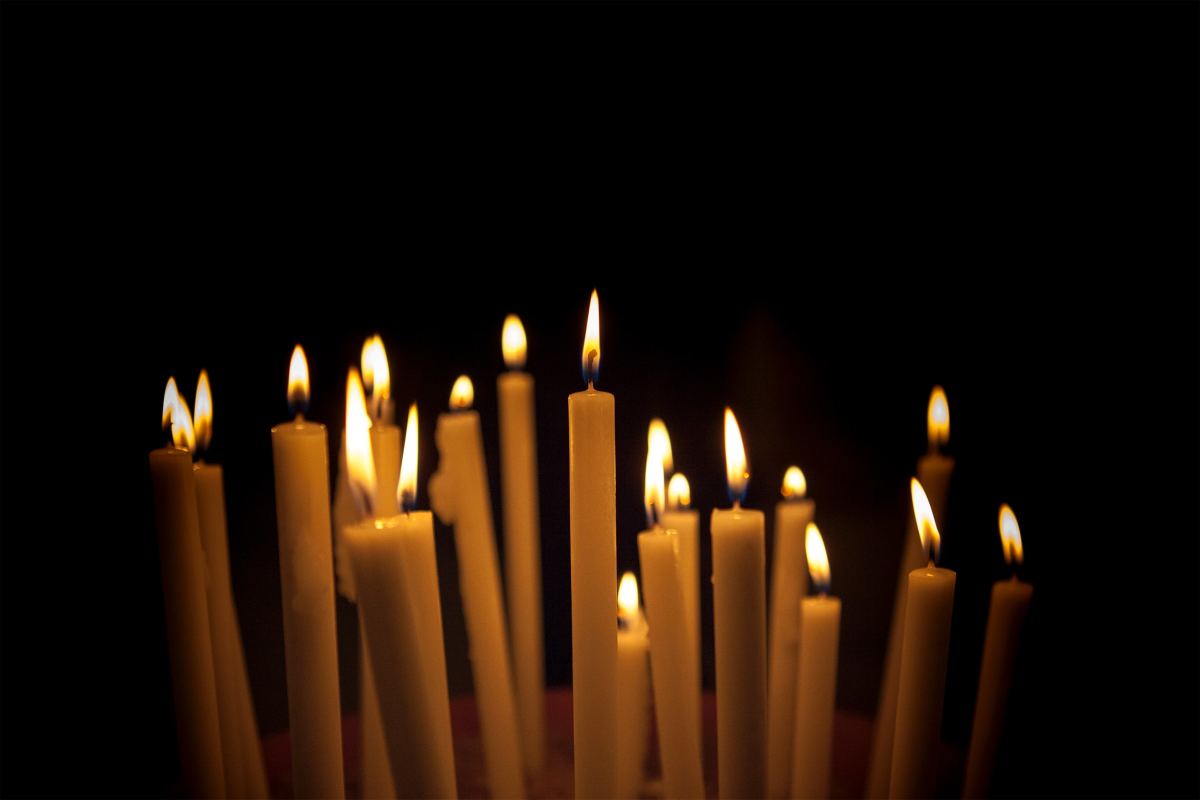
12. Candles Were Used During Saturnalia

Throughout history, candles have been used to ward off darkness and evil.

The first use of candles in December was during the Roman Saturnalia festival, where tall tapers of wax were offered to Saturn as a symbol of his light and also given as a gift to guests.

The Pagans also used candles during their Yule festivities, with candlelight and bonfires being used to welcome the nights beginning to get lighter.

As Christianity became more widespread, candles were put in the front windows of houses in order to guide Jesus as he went from house to house on Christmas Eve. 

Did You Realize That Pagan Christmas Traditions Are Still Celebrated Today?

From: https://holidappy.com/holidays/twelve-christmas-traditions-with-pagan-origins

________

Some comments:

Krampus on December 20, 2018:

Its amazing how even after reading this, people like delusional Danny over here still don’t get "the reason for the season" - its the roman god Saturn. Not Jesus.

------

Danny on December 19, 2018:

I m a Christian and didn’t realize all the Paganism associated with Christmas. I need to reevaluate how I’m celebrating the holiday. Don’t want to give the enemy no reason to think this is done in its honor. I don’t agree with all the extras man has made Christmas to be. Corporations have become too too greedy not even allowing their employees to spend the day with their families. The true meaning has gotten lost with little hope of ever returning.

-----

Libby on December 19, 2018:

Also, it is believed that ancient Pagans would bring a tree into their home during the winter months to keep the “wood spirits” warm. They would place little gifts on the tree, such as food and bells. It was believed that if a bell was rung, it was an appreciative spirit. So the Christmas tree may actually be a tradition that goes back even longer than Victorian times. It’s only evolved into what it is today.

The pagans were celebrating with an evergreen tree 600 years before Christ was born. See Jer.10

-----

William on December 16, 2018:

I find it interesting how many Christians don't know this information. If one goes back and looks at the history of the Christian faith they will see that most of the holidays they celebrate come from paganism, and not going to start on the wars and blood shed.

_________

See more at: https://historycollection.com/16-pagan-christmas-traditions-that-people-mistakenly-credit-to-christianity/

and: https://www.cbsnews.com/news/the-unexpected-pagan-origins-of-popular-christmas-traditions/

Search “Christmas traditions with pagan roots” and see what shows up!!

_________

Tuesday, December 20, 2022

Christmas Before Christ? Christmas: Is It “What You Make It”? Diet and Lifestyle for Cancer Prevention and Survival.

.

Christmas Before Christ?

Santa Claus putting gifts under a Christmas tree.Nastco/iStock/Getty Images Plus

“The pagans were cutting down everlasting trees and decking them with gold and silver many centuries before Christ was born, see Jeremiah 10 which was written in the 6th century BEFORE Christ’s birth!” See Jeremiah 10:2-5

“2 Thus saith the LORD, Learn not the way of the heathen, and be not dismayed at the signs of heaven; for the heathen are dismayed at them.

3 For the customs of the people are vain: for one cutteth a tree out of the forest, the work of the hands of the workman, with the axe.

4 They deck it with silver and with gold; they fasten it with nails and with hammers, that it move not.

5 They are upright as the palm tree, but speak not: they must needs be borne, because they cannot go. Be not afraid of them; for they cannot do evil, neither also is it in them to do good.

“The Surprising Story.  Most people know the Bible doesn’t direct us to celebrate Christmas. Does it make any difference as long as it’s intended to honor God and bring families together?

None of the symbols, traditions or even characters, like Santa Claus, has any basis in biblical teaching. So where did they come from?

At this time of year it’s fairly common to see programs like the one titled “Christmas Unwrapped: The History of Christmas,” which aired on the A&E (Arts & Entertainment) cable television channel. The promo for the program read:

“People all over the world celebrate the birth of Christ on December 25th. But why is the Savior’s nativity marked by gift-giving, and was He really born on that day? And just where did the Christmas tree come from?

“Take an enchanting journey through the history of the world’s favorite holiday to learn the origins of some of the Western world’s most enduring traditions. Trace the emergence of Christmas from pagan festivals like the Roman Saturnalia, which celebrated the winter solstice.”

This program addressed the fact that Santa Claus is fictitious and that Christmas and its trappings emanate from pagan Roman festivals, as many other sources corroborate.

Is there more to these ancient traditions and practices than meets the eye? And, more important, does it make any difference whether we continue in them?

Celebration of the sun god

It may sound odd that any religious celebration with Christ’s name attached to it could predate Christianity. Yet the holiday we know as Christmas long predates Jesus Christ. Elements of the celebration can be traced to ancient Egypt, Babylon and Rome. This fact certainly calls into question the understanding and wisdom of those who, over the millennia, have insisted on perpetuating its observance throughout the Christian world.

Members of the early Church would have been astonished at the customs and practices we associate with Christmas being incorporated into a celebration of Christ’s birth. Not until centuries after them would His name be attached to this popular Roman holiday.

As Alexander Hislop explains in his book The Two Babylons: “It is admitted by the most learned and candid writers of all parties that the day of our Lord’s birth cannot be determined, and that within the Christian Church no such festival as Christmas was ever heard of till the third century, and that not till the fourth century was far advanced did it gain much observance” (1959, pp. 92-93).

As for how Dec. 25 became associated with Christ’s birth, virtually any book on the history of Christmas will explain that this day was celebrated in the Roman Empire as the birthday of the sun god. For example, the book 4000 Years of Christmas says: “For that day was sacred, not only to the pagan Romans but to a religion from Persia which, in those days, was one of Christianity’s strongest rivals. This Persian religion was Mithraism, whose followers worshiped the sun, and celebrated its return to strength on that day” (Earl and Alice Count, 1997, p. 37).

Not only was Dec. 25 honored as the birthday of the sun, but a festival had long been observed among the pagan nations of celebrating the growing amount of daylight after the winter solstice, the shortest day of the year. The precursor of Christmas was in fact an idolatrous winter festival characterized by excess and debauchery that predated Christianity by many centuries.

Pre-Christian practices incorporated

This ancient festival went by different names in various cultures. In Rome it was called the Saturnalia, in honor of Saturn, the Roman god of agriculture. The observance was adopted by early Roman church leaders and given the name of Christ (“Christ mass,” or Christmas) to permit pagans converting to Christianity to continue in their former practices, helping to swell the number of nominal adherents of Christianity.

The tendency on the part of third-century Catholic leadership was to meet paganism halfway—a practice made clear in a bitter lament by the Carthaginian theologian Tertullian.

In A.D. 230 he wrote of the inconsistency of professing Christians, contrasting their compromising practices with the pagans’ strict adherence to their own beliefs: “By us who are strangers to Sabbaths, and new moons, and festivals once acceptable to God [referring to the biblical festivals spelled out in Leviticus 23, which they failed to embrace], the Saturnalia, the feasts of January, the Brumalia, and Matronalia are now frequented; gifts are carried to and fro, new year’s day presents are made with din . . . Oh, how much more faithful are the heathen to THEIR religion, who take special care to adopt no solemnity from the Christians” (Hislop, p. 93, emphasis added throughout).

Failing to make much headway in converting the pagans, the religious leaders of the Roman church began compromising by dressing the heathen customs in Christian-looking garb. But, rather than converting them to the church’s beliefs, the church largely converted to non-Christian customs in its own practices.

Although the early Catholic Church at first opposed this celebration, “the festival was far too strongly entrenched in popular favor to be abolished, and the Church finally granted the necessary recognition, believing that if Christmas could not be suppressed, it should be preserved in honor of the Christian God. Once given a Christian basis the festival became fully established in Europe with many of its pagan elements undisturbed” (Man, Myth & Magic: The Illustrated Encyclopedia of Mythology, Religion, and the Unknown, Richard Cavendish, editor, 1983, Vol. 2, p. 480, “Christmas”).

Celebration wins out over Scripture

Some resisted such spiritually poisonous compromises, but it was not enough: “Upright men strove to stem the tide, but in spite of all their efforts, the apostasy went on, till the Church, with the exception of a small remnant, was submerged under Pagan superstition. That Christmas was originally a Pagan festival is beyond all doubt. The time of the year, and the ceremonies with which it is still celebrated, prove its origin” (Hislop, p. 93).

The aforementioned Tertullian wasn’t alone in objecting to compromise. “As late as 245 Origen, in his eighth homily on Leviticus, repudiates as sinful the very idea of keeping the birthday of Christ as if he were a king Pharaoh” (The Encyclopaedia Britannica, 11th edition, Vol. 6, p. 293, “Christmas”).

Christmas was not made a Roman holiday until 534 (ibid.). It took 300 years for the new name and symbols of Christmas to replace the old names and meaning of the winter festival, a pagan celebration that reaches back so many centuries.

No biblical support for Santa Claus

How did the mythical Santa Claus figure enter the picture? Here, too, many books are available to shed light on the origins of this popular character.

“Santa Claus” is an American corruption of the Dutch form Sinterklaas or Sint-Nicolaas, a figure brought to America by the early Dutch colonists (The Encyclopaedia Britannica, 11th edition, Vol. 19, p. 649, “Nicholas, St.”). This is often said to refer to St. Nicholas, bishop of the city of Myra in southern Asia Minor, a Catholic saint honored on Dec. 6.

He was bishop of Myra in the time of the Roman emperor Diocletian, was persecuted, tortured for the Catholic faith and kept in prison until the more tolerant reign of Constantine (ibid.). Various stories claim a link from Christmas to St. Nicholas, all of them having to do with gift-giving on the eve of St. Nicholas, subsequently transferred to Christmas Day (ibid.). Yet the link is questionable, and other suggestions have been proposed.

In any case, we might wonder how a bishop from the sunny Mediterranean coast of Turkey came to be associated with a red-suited man who lives at the north pole and rides in a sleigh pulled by flying reindeer.

Knowing what we’ve already learned about the ancient pre-Christian origins of Christmas, we shouldn’t be surprised to learn that Santa Claus, too, is nothing but a figure recycled from ancient pagan beliefs.

The trappings associated with him—his fur-trimmed wardrobe, sleigh and reindeer—reveal his connection to the cold climates of the far North. Some sources trace him to the ancient Northern European gods Woden and Thor (Earl and Alice Count, pp. 56-64). Others trace him even farther back in time to the Roman god Saturn and the Greek god Silenus (William Walsh, The Story of Santa Klaus, pp. 70-71).

Was Jesus born in December?

Most Bible scholars who have written on the subject of Jesus’ birth conclude that, based on evidence in the Bible itself and knowledge of the climate of the Holy Land, there is no possible way Christ could have been born anywhere near Dec. 25.

Again we turn to Alexander Hislop: “There is not a word in the Scriptures about the precise day of [Jesus’] birth, or the time of the year when He was born. What is recorded there implies that at what time soever His birth took place, it could not have been on the 25th of December. At the time that the angel announced His birth to the shepherds of Bethlehem, they were feeding their flocks by night in the open fields . . . The climate of Palestine . . . from December to February, is very piercing, and it was not the custom for the shepherds of Judea to watch their flocks in the open fields later than about the end of October” (Hislop, p. 91, emphasis in original).

He goes on to explain that the autumn rains beginning in September or October in Judea would mean that the events surrounding Christ’s birth recorded in the Scriptures could not have taken place later than mid-October, so Jesus’ birth likely took place earlier in the fall (Hislop, p. 92).

Further evidence supporting Jesus’ birth in the autumn is that the Romans were intelligent enough not to set the time for taxation and travel in the winter. And it would have been quite hazardous for Joseph and his expectant wife Mary to have made the trip from Nazareth to his ancestral home of Bethlehem so late in the year. As recorded by Luke, Mary delivered Jesus in Bethlehem during the time of census and taxation—which, again, no rational official would have scheduled for winter.

What difference does it make?

The Bible gives us no reason—and certainly no instruction—to support the myths and fables of Christmas and Santa Claus. They are contrary to the ways of Christ and His holy truth. “Learn not the way of the heathen,” God tells us (Jeremiah 10:2, King James Version).

Professing Christians should examine the background of the Christmas holiday symbols and stop telling their children that Santa Claus and his elves, reindeer and Christmas gift-giving are connected with Jesus Christ. Emphatically they are not! God hates lying (Proverbs 6:16-19; 12:22).

Christ reveals that Satan the devil is the father of lies (John 8:44). Parents should tell their children the truth about God and this world’s contrary and confusing ways. If we don’t, we only perpetuate the notion that it’s acceptable for parents to lie to their children.

God specifically commands His people not to do what early church leaders did when they incorporated idolatrous practices and relabeled them Christian. Before they entered the Promised Land, God gave the Israelites a stern warning to not worship Him with pagan practices: “Take heed to yourself that you are not ensnared to follow them [the inhabitants of the land], . . . and that you do not inquire after their gods, saying, ‘How did these nations serve their gods? I also will do likewise.’

You shall not worship the Lord your God in that way; for every abomination to the Lord which He hates they have done to their gods . . . Whatever I command you, be careful to observe it; you shall not add to it nor take away from it” (Deuteronomy 12:30-32).

Many centuries later the apostle Paul raised up churches in many gentile cities. To the members of the Church of God in Corinth, a Greek city steeped in idolatry, Paul wrote: “. . . What fellowship has righteousness with lawlessness? And what communion has light with darkness? And what accord has Christ with Belial [or Wickedness personified, here in reference to Satan]? Or what part has a believer with an unbeliever? And what agreement has the temple of God with idols?

“For you are the temple of the living God . . . Therefore ‘Come out from among them and be separate, says the Lord. Do not touch what is unclean, and I will receive you.’ . . . Therefore, having these promises, beloved, let us cleanse ourselves from all filthiness of the flesh and spirit, perfecting holiness in the fear of God” (2 Corinthians 6:14-17; 7:1).

Instead of approving of any notion of church members renaming and celebrating customs associated with false gods as now Christian, Paul’s instructions were clear: They were to have nothing to do with such practices. He similarly told Athenians who were steeped in idolatry, “Truly, these times of ignorance God overlooked, but now commands all men everywhere to repent” (Acts 17:30).

God alone has the right to decide the special days on which we are to worship Him. Jesus Christ plainly tells us that “God is Spirit, and those who worship Him must worship in spirit and truth” (John 4:24). We cannot honor God in truth with false practices adopted from the worship of false gods.

Jesus said: “This people honors Me with their lips, but their heart is far from Me. And in vain they worship Me, teaching as doctrines the commandments of men” (Mark 7:6-7). Even if Christians mean well when they observe Christmas, that does not make it okay. God is not amused or pleased!

The knowledge of how to truly honor God the Father and His Son Jesus Christ has been made available to you. Will you live by the revealed truth of God or follow the wayward traditions of mankind?”  From:  https://www.ucg.org/beyond-today/beyond-today-magazine/christmas-before-christ-the-surprising-story

________

Christmas: Is It “What You Make It”?

Christmas: Is It “What You Make It”?“What do Santa and the Bible have in common? Nothing, actually. Christ said that those who worship Him must worship Him “in spirit and truth” (John 4:24). The source of truth is the Bible—not the traditions of ancient pagan religions or humanly devised myths about Christ’s birth.

Some say that Christmas is what you make it. Yet, since it’s supposedly the birthday of Jesus Christ, shouldn’t we ask what His opinion of Christmas is?

“Christmas is what you make it.”

To me, the words coming from the radio were shocking. By themselves, they might have just been an attempt to create the “holiday spirit.” Yet, in the context of the commercial that was playing, those words took on a whole new meaning.

The commercial had discussed the origins of Christmas. It mentioned the fact that Christmas has its roots in paganism (that is, cultures that worshipped gods—often elements of nature—other than the true God), mostly in the ancient Roman festival of Saturnalia (named after the chief Roman god Saturn). The commercial brought up the fact that the Puritans in New England had banned the celebration of the holiday.

With a background like this, how can Christmas just be “what you make it”?

Origins of Christmas

When you look at the origins of Christmas, you quickly realize that the commercial was correct. Christ had nothing to do with the origins of this holiday—the Catholic Church simply attached His name to the holiday in the third century.

Here are a few elements of Christmas and their pagan origins:

  • The date of Dec. 25: This date is not derived from the Bible. In fact, a strictly biblical examination of Christ’s birth strongly rules out December since the census mentioned in Luke 2 would have been unlikely in the rainy winter months and shepherds wouldn’t have kept their flocks out at night during the winter season.

Instead, the date comes from a number of pagan festivals in the ancient world that were based around the winter solstice. Examples of pagan festivals that were held around this time were Dies Natalis Solis Invicti (birth of the invincible sun god), Saturnalia and the birthday celebration of Mithra.

  • Exchange of gifts: Ever wonder why Christ is the only One who doesn’t receive gifts on what’s supposed to be His birthday? The answer lies in a study of the Roman festival of Saturnalia. During this weeklong festival, the often drunk and unruly festivalgoers would exchange gifts. We encourage you to learn more about the customs of Saturnalia.
  • Santa Claus: What does an obese, old man in a bright red suit have to do with the birth of Jesus Christ? Nothing! The modern image of Santa Claus was derived from a figure called Saint Nicholas who lived in Turkey during the third century. Other sources make a link between the name Nicholas and the ungodly Nicolaitans mentioned in Revelation 2:6.
  • The Christmas tree: The evergreen tree was seen as special in pagan religions because it lived (remained green) during the winter months. Interestingly, the Bible even mentions “green trees” in the negative context of pagan worship (Deuteronomy 12:2; 1 Kings 14:23; 2 Kings 16:4; 17:10). Many historical sources trace the tradition of decorating a tree to Germanic paganism, but the Bible shows that a form of this tradition went all the way back to the sixth century B.C. (Jeremiah 10:1-5).

Many of these facts are widely known. In fact, we at Life, Hope & Truth encourage you to research the origins of Christmas further. There are various historical reference books that provide a detailed history of the origin of its pagan customs.

What does Christ think of Christmas?

Since Dec. 25 is celebrated as His birthday, it makes sense to pose the question: What does Jesus Christ make of Christmas?

To answer that question, we have to go to the Bible. When we try to discover what it says about the origins of Christmas, we find that it has no basis in Scripture.

In Deuteronomy 12:29-32 God instructed ancient Israel that they should not incorporate pagan practices and teachings into their worship of Him. Jeremiah 10:1-5 describes an idolatrous custom of using a tree decorated in gold and silver for worship. The description in some English translations seems remarkably similar to modern-day Christmas tree customs. In this passage God specifically says, “Do not learn the way of the Gentiles” (heathens) (verse 2).

Christ said that those who worship Him must worship Him “in spirit and truth” (John 4:24). That means that our worship of Him must be based entirely on truth. The source of truth is the Bible (John 17:17)—not the traditions of ancient pagan religions or humanly devised myths about Christ’s birth.

What will you decide?

Now that you know the origins of Christmas and what the Bible reveals—what will you make of Christmas? Will you just gloss over the history of the day and convince yourself that its popular meaning—giving to the poor, peace and goodwill toward all men—overshadows the pagan, unbiblical origins of the day?

Or will you commit yourself to heeding Christ’s admonition to worship Him in “spirit and truth” (John 4:24)?

In Leviticus 23 God reveals an entirely different set of religious observances—His Holy Days. These days are taught in the Bible and have deep meaning for Christians today.

The question remains: What do you make of Christmas?

To learn more about the origins of popular holidays as well as the true festivals God commands, download our free booklet From Holidays to Holy Days: God’s Plan for You.                            From: https://lifehopeandtruth.com/change/blog/christmas-is-it-what-you-make-it/

_______

Diet and Lifestyle for Cancer Prevention and Survival


Transcript of YouTube: https://nutritionfacts.org/video/diet-and-lifestyle-for-cancer-prevention-and-survival/?

Below is an approximation of this video’s audio content. To see any graphs, charts, graphics, images, and quotes to which Dr. Greger may be referring, watch the above video. 

“Cancer prevalence is predicted to continue to increase, but the good news is that between 30 and 50 percent of the most common cancers might be preventable through diet and lifestyle changes. Take breast cancer, for example, the most common female internal cancer diagnosis in the United States, and the second leading cause of female cancer death after lung cancer. But “there is a growing body of evidence that breast cancer incidence can be reduced with an overall healthy lifestyle, which includes a high-quality diet consisting of fruits, vegetables, whole grains, and legumes”––like beans, split peas, chickpeas, and lentils.

Greater adherence to a more Mediterranean-style diet was associated with a lower risk of cancer mortality, including less breast cancer. An analysis of the individual components of the Mediterranean diet revealed that the protective effects appear to be most attributable to eating more fruits, vegetables, and whole grains, contributing to mounting evidence that a plant-based diet is the most beneficial dietary pattern for breast cancer survivors.

Wait; the same diet that can help you prevent cancer can also help you survive cancer? That’s one of the 10 recommendations from the prestigious American Institute for Cancer Research. After a cancer diagnosis, follow the same recommendations to maintain a healthy weight; exercise; eat a diet rich in four things: whole grains, vegetables, fruit, and beans. But limit fast food and processed junk. And limit consumption of meats, soda, and alcohol.

Okay, but does adherence to these guidelines actually translate into less cancer? Yes, it substantially reduced the risk of total cancer, providing robust evidence that the guidelines for cancer prevention should be widely disseminated in society. About half the folks were failing the healthy weight and physical activity departments, but more than 90 percent were failing on eating enough plant foods, or limiting enough meat and processed junk. But I guess the glass 10 percent full interpretation is that given that many people do not meet the recommendations, there is a great potential for cancer prevention.

Specific to breast cancer risk, women who met most of those recommendations only had half the breast cancer risk, compared to women who only nailed a couple. If you could only do one of those recommendations, limiting animal foods seemed most protective.

Adherence to the recommendations was also associated with higher survival in cancer patients who already have cancer. This was also true for older female cancer survivors, most of whom were suffering from breast cancer.

A good proxy for whole plant food intake is dietary fiber, since it’s not found in animal foods, and is depleted or completely absent in processed foods. And higher dietary fiber consumption was associated with a 37 percent lower risk of dying from all causes put together, and 28 percent lower risk of dying specifically from breast cancer among breast cancer survivors. And it didn’t take much. There was like a 10 percent drop in death risk for every five grams a day increment in dietary fiber intake. That’s just like a cup of oatmeal or broccoli, or a third of a cup of beans. A cancer diagnosis may provide a “teachable moment” for cancer survivors to make positive changes in their health behaviors.

Even more importantly, higher fiber intake may help prevent breast cancer in the first place. Yes, fiber could help directly by feeding your good gut flora, which then produce anti-inflammatory compounds, or it could just be an indicator of total whole plant-food intake.

Adherence to the cancer prevention recommendations isn’t just associated with higher survival in cancer patients and lower risk of dying from cancer, but lower risk of dying overall. That’s the beauty of eating a more plant-based diet. The same diet that’s anti-cancer is also anti-heart disease, and even, apparently, anti-lung disease. Conclusion: Results of this study suggest that following the cancer prevention diet and lifestyle recommendations could significantly increase longevity.”  From: https://nutritionfacts.org/video/diet-and-lifestyle-for-cancer-prevention-and-survival/?

_________

Monday, December 27, 2021

How Much Pagan Is Too Pagan? Commercialized Holidays, Is There an Alternative? Are Acid-Blocking Drugs Safe?

.

How Much Pagan Is Too Pagan?

Christianity in Progress: How Much Pagan Is Too Pagan?“As Christians, how should we approach an activity, tradition or object that has pagan origins? God’s Word gives us a clear path forward.


Bad news:  That thing you love? It has pagan origins.

Worse news:   Pretty much everything has pagan origins.

What does God expect you to do about it?

“Do not inquire about their gods”

Just before the Israelites entered the Promised Land to claim their inheritance, God gave them a warning:

“When the LORD your God cuts off before you the nations whom you go in to dispossess, and you dispossess them and dwell in their land, take care that you be not ensnared to follow them, after they have been destroyed before you, and that you do not inquire about their gods, saying, ‘How did these nations serve their gods?—that I also may do the same.’

“You shall not worship the LORD your God in that way, for every abominable thing that the LORD hates they have done for their gods, for they even burn their sons and their daughters in the fire to their gods” (Deuteronomy 12:29-31, English Standard Version).

The Promised Land was filled with pagan nations who served false gods, and in the names of those gods, the people had done “every abominable thing that the LORD hates” — up to and including the ritual sacrifice of their own flesh and blood. In no uncertain terms, God was letting the Israelites know that foreign religious practices were utterly incompatible with the worship of the one true God.

Worshipping God means worshipping Him the way He wants us to do it. “Everything that I command you, you shall be careful to do. You shall not add to it or take from it” (verse 32, ESV).

The problem with Christmas and Easter

That’s why Christians who study passages like these conclude they aren’t supposed to celebrate holidays like Christmas and Easter.

It’s fairly common knowledge that these holidays are built around a smorgasbord of pagan religious customs. The trees, the lights, the rabbits, the eggs—they’re all pagan practices with a new coat of paint.

The argument in favor of these days is almost always that they’ve been repurposed—that, yes, those customs were pagan once, but now they glorify Jesus Christ.

But God does not accept repurposed worship. He does not accept a new coat of paint on “every abominable thing that the LORD hates.” If we worship Him by willfully adopting repurposed pagan customs, He rejects that worship.

If we persist, He rejects us.

Does God hate groves? What about raisin cakes?

But it’s easy to wonder how far that prohibition extends. Historically, God’s people have always been in the minority—which means that just about everything around us could have a pagan origin.

There are two important principles to extract from God’s instruction in Deuteronomy 12:

  1. Do not incorporate pagan customs of worship into your life.
  2. The worship is the problem. The objects involved might not be.

God said, “Do not inquire about their gods,” and “you shall not worship the LORD your God in that way” (verses 30-31, ESV). Those are the boundary lines. God isn’t telling us to throw out everything pagans have ever touched. He’s telling us to throw out their methods of worship. For example:

Pagans often used groves of trees as sacred sites for the worship of their gods, which often included ritual prostitution (Hosea 4:13-14). Does that mean Christians should avoid orchards or never plant trees of their own? No. God gave His people groves (Joshua 24:13). The trees aren’t the problem—the problem is what the pagans were doing among the trees.

Pagans also baked raisin cakes and gave them as offerings to their gods (Hosea 3:1). Should Christians avoid adding raisins to their baked goods? Again, no. There’s nothing spiritually wrong with adding raisins to cakes. There is something wrong with baking a raisin cake as an offering to God. It’s not the way He tells us to worship Him.

Should Christians avoid yoga or not?

But those are ancient examples. Here’s a more modern one:

Yoga.

Yoga is an incredibly contentious topic in Christian circles. It originated in India and plays an important role in Eastern religions like Buddhism and Hinduism. Practitioners of these religions believe they can use yoga to expand their consciousness, bring their spiritual energies into alignment, overcome suffering, and attain enlightenment and oneness with the ultimate reality of the universe. Many times, these goals are pursued through various stretches.

These are, without a doubt, pagan spiritual practices that Christians should absolutely avoid.

But what about the stretches themselves? Is stretching a problem? Are yoga stretches something Christians should avoid?

The difference between forbidden and acceptable

It’s the same principle as the groves and the raisin cakes:

God has no problem with you stretching your muscles.

He does have a problem with you doing stretches to try and realign your spiritual energy or tap into a cosmic consciousness.

And there’s the dividing line:

Are you including forms of pagan worship in your life, or aren’t you?

Groves are fine. Raisin cakes are fine. Stretching is fine. We don’t avoid eggs just because they play a role in Easter traditions. We don’t avoid gingerbread just because it’s a common part of Christmas.

(Of course, the Bible tells us to be careful not to “wound” or “defile” our consciences. If we’re uncomfortable with something or feel it will send the wrong message to others, we should stay away from it—see 1 Corinthians 8 and Romans 14:23.)

What God does have a problem with and, in fact, forbids is taking those individual pieces and using them the way the pagans did. We don’t worship in the groves. We don’t bake the raisin cakes as offerings to God. We don’t stretch to align our chakras. We don’t paint eggs and try to find them during Easter. And we don’t decorate gingerbread houses for Christmas.

God doesn’t tolerate using those pagan symbols to worship Him.

Next time you discover that something in your life has pagan origins, ask yourself: “Does this thing have its roots in a form of worship God forbids? And if so, am I allowing it to have spiritual influence in my own life?”

If the answer is yes, then our only option is to get rid of it. When it comes to worshipping God, even a little pagan is too much pagan.”

(Read more about this subject in our article “History of Wedding Rings.”)

From: https://lifehopeandtruth.com/life/christian-living/christianity-in-progress/how-much-is-too-pagan/?

Does it Matter Which Holidays You Celebrate?

Suggestions welcome.   This article was written at a reader’s suggestion. If you’d like to suggest a topic for future editions of “Christianity in Progress,” you can do so anonymously at lifehopeandtruth.com/ideas. We look forward to hearing from you!”

________

Commercialized Holidays, Is There an Alternative?

“We sincerely hope that in the very near future you and your children will learn more about God's Holy Days and begin observing them rather than Halloween and other days of pagan origin that are of no value for teaching spiritual truths.

The claim is now circulating that money spent on observing Halloween is second only to that spent on celebrating Christmas.

Actually, all popular holidays are now commercialized. Money is driving this artificial popularity. Without holiday advertising, retail profits would plummet.

But as it is, lots of people spend lots of money on holidays.

For Halloween, mega-bucks are spent on candy, costumes, carnivals, decorations, booze and extravagant high-tech haunted houses.

MSN Money reports (9/15/09), "Halloween is now, behind Christmas, the second biggest retail holiday in America. Americans are expected to spend over $7 billion this year on costumes, candy, attending parties and much more. Over the past three years, the popularity of Halloween has tripled …"

Of all the holidays in the Western world, Halloween—a holiday that celebrates nothing positive or noble—is having the greatest increase in popularity!

Surge in adult partying and masquerading!

Adult partying on Halloween has been rapidly increasing since the 1980's.

Halloween is now the third biggest adult party day of the year—behind only New Year's Eve and Super Bowl Sunday. Money spent on adult costumes may now be surpassing money spent on children's costumes!

For decades, adult partying on Halloween has been popular among those who actively subscribe to in the gay lifestyle. One participant, in an online article titled "Halloween: The Great Gay Holiday" says "Halloween's appeal to the gay, lesbian, bisexual and transgendered communities … has a lot to do with … our propensity for cross-dressing and gender-bending… and our special capacity to have fun. [We] cherish it…" (posted October 27, 2008, The Bilerico Project).

The origin of Halloween

The ancient Celts regarded November 1 as the start of a new year, also as an annual holiday called Samhain.

October 31 was New Year's Eve! That night was considered the night of the dead, when spirits of the wicked dead were believed to haunt the living. People would leave offerings of food and drink at their front doors to appease the unfriendly ghosts and demons. So the origin of "trick or treat" is the pagan belief that evil spirits had the equivalent of a modern protection racket—"you give food or we break your leg!"

Church leaders adopt pagan practices

To Christianize the pagans Roman Christianity took the easy approach of relabeling pagan days and practices! They reasoned that the converts could continue observing their old ways if they used them to honor the God of the Bible. That is how many pagan days and practices acquired Christian labels!

And it is how the pagan festival Samhain came be relabeled as All Saints Day or All Hallows Day. Thus, the night before became All Hallows Even, later contracted to Hallowe'en — and is now just Halloween. Its purpose was to placate the not-so-hallowed spirits—the demonic or evil spirits. That is why a witch's costume is so popular for Halloween evening.

Does it matter to God?

To those who don't consider what God thinks, the origins of Halloween would probably seem irrelevant. What would matter most to them is, "Is it fun?"

But for those who believe in God's Word it's a different story! The Bible says specifically that God detests pagan religious customs (Galatians 4:8-10).

According to the Bible our ultimate destiny depends on pleasing God. And the only real authority on what pleases God is the Bible.

God's Holy Days rather than unholy holidays

Four of God's festivals that God originally gave Old Testament Israel and were kept by Jesus Christ, Paul and the early Church occur in the fall.

These special festivals that have been observed by God's people down through the ages—including members of the United Church of God—are the Feast of Trumpets, the Day of Atonement, the Feast of Tabernacles and the Last Great Day.

God designated these deeply meaningful days to teach important truths about His great master plan as well as for worshipping and enjoying fellowship and wholesome activities with other likeminded believers.

The Day of Atonement pictures, among other things, the momentous time when Christ will remove the worldwide influence of the real evil spirits — Satan and the demons (Revelation 12:9; 18:2; 20:1-3).

We sincerely hope that in the very near future you and your children will learn more about God's Holy Days and begin observing them rather than Halloween and other days of pagan origin that are of no value for teaching spiritual truths.

To get started in that learning process, simply request, download or read online our free, highly informative booklets: Holiday or Holy Days: Does It Matter Which Days We Observe? and Is There Really a Devil?”               From: https://www.ucg.org/beyond-today/blogs/commercialized-holidays-is-there-an-alternative

_______

Are Acid-Blocking Drugs Safe?

Do the benefits outweigh the risks for acid-blocker drugs (proton pump inhibitors like Nexium/Prilosec/Prevacid)? What about baking soda?

See video at: https://nutritionfacts.org/video/are-acid-blocking-drugs-safe/

Below is an approximation of this video’s audio content. To see any graphs, charts, graphics, images, and quotes to which Dr. Greger may be referring, watch the above video.

Dyspepsia is the medical term for upset stomach. After eating, your stomach may hurt, or you feel bloated, nauseous, overly full, belching. “Despite the high prevalence of the disorder, there are no approved treatments for” it in the Western world. This leads people to seek out alternatives like baking soda, which the manufacturer promotes for use for “upset stomach.”

The problem is that “[i]t contains sodium bicarbonate and [therefore] has the potential for significant toxicity when ingested in excessive amounts,” potentially resulting “in serious electrolyte and acid/base imbalances.”

The labels were modified in 1990 to include the warning, “Do not administer to children under age 5,” because of reports of “seizure and respiratory depression.” Even just “a pinch” may be too much for an infant, and even just a few large spoonfuls could be fatal in a child.

Another new addition is the “stomach warning,” stressing the importance of not taking the product “when overly full with food or drink.” Why not? Well, if you’re familiar with scholastic science fair volcanoes, they’re baking soda and vinegar, right? Baking soda and acid, like what’s in your stomach. “This warning was added at the request of the [FDA] because of multiple case reports of spontaneous gastric rupture,” where people’s stomachs burst.

But, exploding stomachs aside, even just sticking to the suggested dose may still cause adverse effects. So, baking soda cannot be recommended, especially in “young children, pregnant women, alcoholics, and those who are on diuretics”—common blood pressure medications sometimes referred to as water pills.

What about acid-blocking drugs like Nexium or Prilosec? They work better than sugar pills, but not by much—helping 31% of dyspepsia sufferers, compared to 26% helped by placebo. In other words, 5% better than nothing. These so-called proton pump inhibitors “have…been extremely lucrative for the pharmaceutical industry,” raking in billions a year, but now that we have these massive computerized databases of patients, we can start to evaluate some of their “possible long term adverse effects.” For example: possible increased pneumonia, bone fractures, intestinal infections, heart disease, kidney failure, “and even all-cause mortality.” “The latest concern [to surface] has been the association between [the use of these drugs] and [the] risk of dementia.”

The problem with all these studies just showing associations, though, is that you can’t prove cause and effect. Maybe taking the drugs didn’t make people sick. Maybe being sick made people take the drugs. So, maybe it’s not that these drugs are the cause of these infections, fractures, death, and dementia; it’s just that they may instead be a marker for being sicker. But, there are potential mechanisms by which these drugs could have some of these effects. For example, here’s the death data. The longer people are exposed to these drugs, the higher their apparent risk of dying prematurely. But, like how could suppressing acid production in the stomach increase mortality, which is mostly like heart disease? Well, suppressing acid isn’t the only thing these drugs do. They may also cause a reduction in nitric oxide synthase, the enzyme that makes the open-sesame molecule that helps keep our arteries healthy.

In terms of dementia, a key event in the development of Alzheimer’s disease is the accumulation of these plaques of a sticky protein called amyloid beta. And if you just stick Alzheimer’s-like cells in a petri dish, and drip on increasing levels of the drug Prevacid, the cells start churning out more amyloid. And the same thing with Prilosec or Losec, Protonix, and Nexium.

Now, just because something happens in a petri dish or mouse model doesn’t mean it happens in a person. But, most studies to date have found this link between dementia risk with the use of these drugs—including the largest such study to date, involving tens of thousands of patients, that concluded that avoiding the chronic use of these drugs “may [help] prevent the development of dementia.” Though an alternative explanation of the link is aluminum exposure, which itself may play a role in dementia. So, maybe those using acid-blocking drugs have heartburn or something, and so are also using more aluminum-containing antacids, and that’s actually the real culprit? We still don’t know.

What we do know is that there’s “an almost cultish faith in [stomach] acid suppression” as some kind of medical panacea, which “has led to progressive escalation of…dosage and potency” of these drugs, all the while “mounting evidence” suggests these drugs may cause a variety of “adverse effects” and are “overprescribed.”

How overprescribed? “[T]he rate of inappropriate use of these drugs” is about half. Half the people on the drugs shouldn’t even be on them. “These rates are…worrying, because they mean that [these drugs] are prescribed for” things they shouldn’t even be prescribed for, meaning there aren’t even proven benefits to outweigh the risks."  From Video at: https://nutritionfacts.org/video/are-acid-blocking-drugs-safe/

_______

Sunday, October 24, 2021

What Are You Passionate About? Halloween's Dark Roots. Examine Yourselves. How to Fight Against Cancer.

.

What Are You Passionate About?

What Are You Passionate About?“History and the Bible give us examples of zeal and passion. Are we passionate about the most important things? Or are we being distracted by other passions?


What do you feel strongly about? What lights the fire in your soul and infuses you with focus and energy?

What are you really passionate about in your life?

Give me liberty…

An example of the kind of passion I’m talking about comes from U.S. history. In March of 1775 tensions between the American colonies and Great Britain were high. A man named Patrick Henry stood to address the Virginia legislature and share his view of the situation. It was apparently a rather impromptu speech about the need to separate from the British crown and form their own union—something about which Mr. Henry felt very strongly.

Perhaps you’ve never heard or read the entire thing, but I’ll almost guarantee that our American readers know the last seven words of his fiery and impassioned speech. As he brought his relatively short oration to its crescendo, he thundered out to the audience, “Give me liberty, or give me death!”

Patrick Henry was passionate about the founding of a new nation.

Some common passions

It seems human beings are hardwired to have strong feelings about certain things. Not everyone feels strongly about the same things or in the same way, and certainly not all of our passions are of the same magnitude as founding a new country!

But there are still a lot of different things that fire up the imaginations and passions of people.

A few things people are commonly quite passionate about are fashion, art, music, health and fitness, hobbies, technology, sports and sports teams, hunting and fishing (or anti-hunting and maybe anti-fishing), animal rights and more.

Oddly enough, a few days ago I was talking with someone who was very passionate about animal rights, specifically opossum rights. … Okay, I’ve got to admit that was a new one for me.

On a more somber note, today there are a lot of people who are passionate and even violent about some prickly social issues. And many are very passionate about the political positions and platforms that are intractably connected to all those social issues.

That’s a lot of passion, a lot of emotion! And the chances are very good that you are passionate about some issues too.

So maybe the more important question is: Are you passionate about the right things?

Are you passionate about the right things?

While there is nothing wrong with strong feelings about sports, art, animals or other endeavors in life, there are some things that are more important and that deserve more of our attention than others.

Are we overlooking something infinitely more important that most people miss, yet that we should be passionate about?

“Zeal for Your house”

In the Bible we read an account of when Jesus Christ went up to the temple. He saw people who were doing business, changing money, selling animals to be sacrificed and so forth.

Not only were they doing business on holy ground, but very likely they weren’t being honest and were taking advantage of those who came to the temple to worship and offer sacrifices.

We read in John 2:15-16 that Jesus made a whip of rope, flipped over the money changers’ tables and with zeal drove them all out of the temple! In verse 17 it says, “Then His disciples remembered that it was written, ‘Zeal for Your house has eaten Me up.’” The English Standard Version puts it, “Zeal for your house will consume me.”

Jesus loved people. He was compassionate toward those who were hurting and in need of healing and comfort, and He taught them continually the things that would really make a difference in their lives. He had a passion for people and for serving.

But He was most passionate about the things of God—the standards, values and principles of the great Creator God!

John Gill’s commentary on the Bible points out that Christ’s regard for His Father’s house “was typical of the church of God; and such his concern for his honour, ordinances, and worship, that when he saw the merchandise that was carried on in the temple, his zeal, which was a true and hearty affection for God, … was stirred up in him, and to such a degree that it was like a consuming fire.”

Have we chosen to be passionate about what is really the most important? The standards, values and principles of God stand in stark contrast to those of this present world, which is focused on self-serving interests, immorality and blatant sinfulness. In fact, it is the Kingdom He will bring when He returns that is the only hope for mankind—and He is immensely passionate for that Kingdom!

What about us? How passionate are we for the standards, values and principles of God? Have we chosen to be passionate about what is really the most important?

Enthusiastic about doing good things

Consider the words of the apostle Paul in Titus 2:11-14, as it is translated in God’s Word translation:

After all, God’s saving kindness has appeared for the benefit of all people. It trains us to avoid ungodly lives filled with worldly desires so that we can live self-controlled, moral, and godly lives in this present world.

“At the same time we can expect what we hope for—the appearance of the glory of our great God and Savior, Jesus Christ. He gave himself for us to set us free from every sin and to cleanse us so that we can be his special people who are enthusiastic about doing good things.”

Battling distractions

Most of us want to have that passion, that zeal, that “fire in the belly” for the things of God. But with all the distractions swirling around us, with all the challenges and turmoil in the world, it can be easy for us to lose our focus and allow our greatest level of passion to be given to something else.

We need to make sure we are firmly connected to the Word of God. We must read and study it daily. With prayer and periodic fasting, we should ask God for the passion we need to have as His people. And we can ask Him for the guidance we need to negotiate these challenging times.

If we are immersed in the Word of God, it is harder for other issues to steal all our time and energy!

I am sure we are all passionate about various things. But are we right now passionate about the most important thing? Do we have a Patrick Henry–level of passion for a new Kingdom, the Kingdom of God?”   From: https://lifehopeandtruth.com/life/christian-living/what-are-you-passionate-about/

Learn more in our article “Seek First the Kingdom of God.””

Do you know why you were born?

_______

Halloween's Dark Roots

“In recent years eye-opening materials have been published about the questionable background of Halloween.

In recent years eye-opening materials have been published about the questionable background of Halloween. Consider these excerpts:

"Halloween-a holiday that mixes generic religious beliefs with ancient folk customs-is supposed to be fun. But for many conservative Christians, it has become a dark and spiritually dangerous celebration ... Many are boycotting the bats, witches, goblins and ghouls that symbolize the holiday because they consider such things to be lures in the satanic struggle for human souls ...

"Halloween's pagan roots are real, as are those of Christmas and Easter. Santa Claus comes from an ancient woodland spirit honored by pagans, and Easter's non-Christian ancestry is derived from a Germanic fertility goddess, thus the Easter eggs and Easter bunny ... Halloween was called samhain in the pagan world-part harvest festival, partly a day to honor the dead" (Knight-Ridder/Tribune News Service, Oct. 28, 1993, "Conservative Christians Urge Halloween Alternative").

"The ancient Celtic [Irish, Scottish, Welsh] festival called Samhain is considered by many to be a predecessor of our contemporary Halloween. Samhain was the New Year's Day of the Celts, celebrated on 1 November. It was also a day of the dead, a time when it was believed that the souls of those who had died during the year were allowed access to the land of the dead. It was related to the season: by Samhain, the crops should be harvested and the animals brought in from the distant fields.

"Many traditional beliefs and customs associated with Samhain, most notable that night was the time of the wandering dead, the practice of leaving offerings of food and drink to masked and costumed revelers, and the lighting of bonfires, continued to be practiced on 31 October, known as the Eve of All Saints, the Eve of All Hallows, or Hallow Even. It is the glossing of the name Hallow Even that has given us the name Hallowe'en.

"... The customs associated with Halloween included representations of ghosts and human skeletons-symbols of the dead-and of the devil and other malevolent, evil creatures, such as witches.

"The first week of November is marked in many countries, especially those with a strong Catholic influence, with festivals concerned with death, in a playful but serious way. In Catholic countries we often find some cognate of Halloween associated with All Saints' or All Souls' days.

"... Unlike the American Halloween, in Mexico people build home altars, adorned with religious icons and special breads and other food for the dead. The Day of the Dead incorporates recognition of death as a concept with rituals that remember the deaths of individuals" (Jack Santino, Halloween and Other Festivals of Death and Life, 1994). GN” From: https://www.ucg.org/the-good-news/halloweens-dark-roots

_______

2 Corinthians 13:5

(5) Examine yourselves as to whether you are in the faith. Test yourselves. Do you not know yourselves, that Jesus Christ is in you?—unless indeed you are disqualified.


  • New King James Version

Unless indeed you are disqualified - Disqualified ("reprobates" in the King James Version, Strong's #1384: adókimos) means, according to Vine's, "not standing the test, rejected." It suggests "unacceptable," "disapproved," "unworthy," "spurious," "worthless," "cast away." This word's meaning is illustrated by the following verses:

Romans 1:28: And even as they did not like to retain God in their knowledge, God gave them over to a debased [adókimon] mind, to do those things which are not fitting.

Titus 1:16: They profess to know God, but in works they deny Him, being abominable, disobedient, and disqualified [adókimoi] for every good work.

Hebrews 6:7-8: For the earth which drinks in the rain that often comes upon it, and bears herbs useful for those by whom it is cultivated, receives blessing from God; but if it bears thorns and briars, it is rejected [adókimos] and near to being cursed, whose end is to be burned.

Being disqualified or rejected is the opposite of having Jesus Christ dwell in us; it is being unfit or unworthy of His presence in us. In other words, a disqualified person is cut off from God! This is the worst possible outcome of a Christian's life: to return to a life of sin and have so much pride that he or she rejects salvation and all that comes with it! God's Word clearly shows that it can happen (see Hebrews 6:4-6; 10:26-31)!

Regular self-examination is a proven way to make sure that it does not happen to us!”  From: https://www.theberean.org/index.cfm/main/default/id/6797/ver/NKJV/2-corinthians-13-5.htm    To learn more, see: What Does 'Examine Yourselves' Mean?

_______

How to Fight Against Cancer | 12 Anti-Angiogenic Foods

The Biblical Nutritionist     152K subscribers

“My mom was diagnosed with cancer and the Doctors said there was nothing they could do. Here’s how we fought cancer and gave her 19 more years of adventure and travel with 12 anti-angiogenic foods! 

Cancer touches so many lives, in this video, I share with you my personal story dealing with cancer. Don’t lose hope. I’m on mission to keep you on mission! I want you to be confident in the kitchen so you can feel confident, understand how your body works and understand how much God loves you!”  YouTube:  https://youtu.be/DxKCZ5UvPhI

Also, Watch my video on the importance of Routine Blood Work: https://www.youtube.com/watch?v=dCRiP...

______