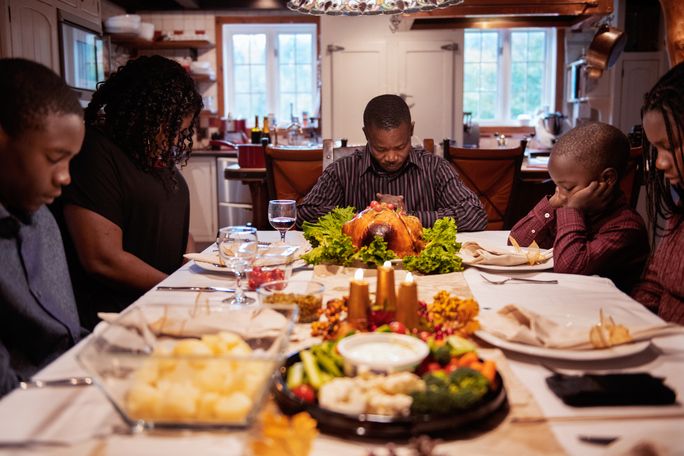
Showing posts with label Thanks. Show all posts

Sunday, December 1, 2024

“In Everything Give Thanks” (Really?)

.

“In Everything Give Thanks” (Really?)

“Paul wrote some inspiring and beautiful sentiments, such as, “In everything give thanks.” But is that literally realistic?

“In Everything Give Thanks” (Really?)Paul exhorts us to give thanks in everything. Really? Everything? Christians experience some truly awful, unfair and distressing things. Terminal illnesses. Accidents. Deaths of loved ones. Financial hardships. Trials and temptations of all kinds.

Did Paul mean to give thanks for these things?

The context of “in everything give thanks”

Soon after Paul had established the congregation in Thessalonica, he was driven from town by threats of an angry mob. His first letter to the Thessalonians was written soon after this to answer questions and encourage the young church facing persecution and mourning the loss of members who had died.

Paul set the tone by letting the Thessalonians know that he gave “thanks to God always for you all” (1 Thessalonians 1:2).

Part of Paul’s concluding exhortation included:

“Rejoice always, pray without ceasing, in everything give thanks; for this is the will of God in Christ Jesus for you” (5:16-18; see also our articles “Four Ways to Find Joy in Trials” and “Pray Without Ceasing”).

Thanks in, not necessarily thanks for

Paul said to give thanks “in everything”—in every situation. That doesn’t mean we must immediately feel gratitude for the bad things that happen to us.

For example, Job blessed God in spite of his terrible trials, not for them (Job 1:13-22).

King David, also, in the midst of feeling overwhelmed with trials (Psalm 69:1-2) still said, “I will praise the name of God with a song, and will magnify Him with thanksgiving” (verse 30).

How do we give thanks in everything?

See the eternal benefit of trials

Even our trials can help develop our Christian character, making us more like God and preparing us for our eternal destiny.

Trials produce perseverance, character and hope (Romans 5:3-4). They are the crucible for refining genuine faith (1 Peter 1:6-8). They allow the growth of the fruit of righteousness (Hebrews 12:11).

Focus on the gifts from the Giver of every good gift

All of the good things we have are ultimately from God, but we can so easily take them for granted in the good times. Paul encourages us to pray with thanksgiving and focus on the positive (Philippians 4:6-8).

And lifting our eyes to focus on our Creator and His future plans for us can help us transcend our current troubles. We can’t fully imagine what wonders God has in store, but His Holy Spirit can help give us a vision of the wonderful future.

God is the Giver of “every good gift and every perfect gift” (James 1:17). He wants to give us forgiveness, His Spirit and eternal life (John 3:16-17; Acts 2:38). He wants us to serve the rest of humanity with Him (Revelation 5:10). He wants us to be His children and to experience joy and pleasures forevermore (1 John How to Pray. Download Free Booklet3:1-2; Psalm 16:11)!

The ultimate perspective

Paul put things in perspective: “For our light affliction, which is but for a moment, is working for us a far more exceeding and eternal weight of glory” (2 Corinthians 4:17; see also Romans 8:31-39).

The comparatively short time trials afflict us now is nothing compared to living forever as God’s children!

Study more in our articles “What Is the Real Purpose of Life?” and “Praise God.” From: https://lifehopeandtruth.com/life/christian-living/in-everything-give-thanks-really/?

________

Sunday, January 28, 2024

Valentine's Day What's Wrong With Showing Love? How do I connect with God? Why did God change our diet?

.

Valentine's Day, What's Wrong With Showing Love?

A bundle of roses.

“Valentine's Day has become a very romantic holiday despite its pagan origins. So what's wrong with celebrating this holiday?

Thinkstock

Valentine's Day is all about showing "love," giving a card or flowers or chocolates to a loved one. All of that's good, right? Wrong.

Valentine's Day is big business. According to the National Retail Foundation, Valentine's Day for 2012 added around $17.6 billion to the U.S. economy—making retail spending for this day the second-largest behind Christmas.

For a lot of people it's the holiday to express your love to someone special. According to Kemberly King, a business instructor at South University, young adults ages 25-34 spend the most on Valentine's Day gifts. Interestingly, men will outspend women—almost 2 to 1—with the biggest categories for all spending being restaurants, candy, romantic getaways and flowers.

A quick Web search for the origins of Valentine's Day will give you the basics of the accepted history of the day. A deeper search will acknowledge its pagan origins. The Good News magazine (sister publication of Vertical Thought) has published a variety of articles on both of these aspects of Valentine's Day. While Valentine's Day is the most promoted holiday after Christmas and Easter even among traditional Christian churches, it is definitely not a holiday with true Christian values.

How can "love" be wrong?

There's nothing wrong in showing love to others—after all, isn't that the most valued Christian characteristic? But what's been lost in how we go about it, and how we worship God for that matter, is whether we are actually following what God teaches in the Bible. It's like an automobile manufacturer tells you to put only gasoline in the fuel tank, but then you decide that diesel fuel is just as good! It just won't work.

Here's a quick review of the background of Valentine's Day—before exploring a deeper point about this holiday.

By most accepted historians, Valentine's Day was an adaptation by the Catholic Church of the ancient pagan Roman celebration of Lupercalia, a fertility festival. The Catholic Church updated and connected it to a "Saint" Valentine sometime late in the third century A.D. (though there is some confusion as to who this person actually was). It really took off commercially as a holiday in the late 1800s, promoted as a day to show your "love" to others—especially romantic love to your special someone.

So what's wrong with that? Here's the problem: Lupercalia was an immoral fertility festival also featuring gluttony and drunkenness. At the end of the festivities young men would draw the name of a young lady from a box and the two were considered a pair (sexually and otherwise) for the coming year.

As a festival Lupercalia was dedicated to the Roman god Pan, recognized as the god of fields, groves and wooded glens—and pictured as having the hindquarters, legs and horns of a goat. This pagan deity was connected to fertility and the season of spring. None of what is connected to the feast of Lupercalia is worthy of a Christian's observance.

But what's wrong with a little paganism?

What about showing love on Valentine's Day if I'm not doing it for pagan reasons? Isn't that okay? No, because the expression of that kind of "love" is still rooted in a former pagan holiday. True Christians must not adopt pagan festivals as holidays, for they are to strive to please God in everything they do.

Even when you think you're innocently observing a holiday like this, you're still advancing the origins and meanings of the day—especially from His perspective, as He certainly knows where it came from. God said not to do this. He told the Israelites entering the pagan land of Canaan:

"When the Lord your God cuts off from before you the nations which you go to dispossess, and you displace them and dwell in their land, take heed to yourself that you are not ensnared to follow them, after they are destroyed from before you, and that you do not inquire after their gods, saying, ‘How did these nations serve their gods? I also will do likewise.' You shall not worship the Lord your God in that way; for every abomination to the Lord which He hates they have done to their gods" (Deuteronomy 12:29-31, emphasis added).

When we merge pagan teachings with what God instructs through the Bible, we weaken the truth and violate God's clear command.

God's way is true love

Showing love as God instructs is not wrong—romantic love included. It's a good thing to express your love toward others through a card, flowers, dinner out or any number of other ways. But don't do it under the trappings of a pagan holiday like Valentine's Day! If someone is special to you, then do those things throughout the year rather than waiting until February 14th.

Our worship of God must first and foremost be according to His truth (John 4:24). Carryovers from pagan worship don't honor Him!

God is personified by the characteristic of love (1 John 4:8). Godly love is genuine outgoing concern for others as God would love them—not as a selfish love. Divine love is reflected in keeping God's commandments (1 John 5:3), including the Ten Commandments and instruction like that in Deuteronomy cited above. True Christians desire to faithfully observe God's own Holy Days (see Leviticus 23 for a list of them). Celebrating holidays like Valentine's Day in opposition to God's instruction does not honor or obey Him—no matter how well intentioned or innocent we believe it to be.

It does matter to God how we worship Him. He expects us to understand the difference between what He has declared holy and the profane teachings, customs and traditions masquerading as godly worship (Ezekiel 22:6).

For a more complete review of comparing traditional religious holidays to God's Holy Days, we recommend that you read our Bible study aid Holidays or Holy Days: Does It Matter Which Days We Observe?”  From: https://www.ucg.org/vertical-thought/valentines-day-whats-wrong-with-showing-love

________

How do I connect with God?

I love those who love me, and those who seek me diligently will find me.” ~ Proverbs 8:17 

“We must be proactive, we must diligently reach out and seek God in order to find Him.  We need to literally make time to get to know Him because without a deliberate, conscious effort it will probably never happen.

How did you get to know your spouse?  You dated, right?  Did you just wake up one day and find yourself in a relationship?  No!  One of you specifically asked the other to go on a date so you could spend time with each other.  It's the only way to have a relationship with anyone, you must spend time with that person.  We get to know God personally through developing a deep, meaningful relationship by spending time with Him...and the best place to find Him is in His holy word.

Q: Why does it seem so hard to find the time?

A: Work, kids, breakfast, school, dance class, Little League, homework, meals, baths, chores, shopping, our social life…on and on!  These things can all get in the way. So now you must ask yourself, what do I want?  A hectic, chaotic life...or the peace found only in Christ?  We must prioritize our lives to include Him, make our daily reading as habitual as breakfast, and create a new habit.  We have to create a habit of going to our Bible, first thing, as soon as we get up every, single morning.

By starting my day off with praise (thanking Him for everything), worship (praying and conversing), and study (reading His Word) my day will always go smoother.  This is the thing that motivates me the most, the knowledge that my entire day will go better if I do this one little thing.

I’m just too busy…

BHave you prayed about it?ut, you might ask, how can I possibly fit one more thing into my already crazy schedule?  You need to start earlier.  Start out by getting up just ten minutes earlier and go directly to your Bible.  No-one is up, it's quiet, and it's just you and God…He will do the rest.  Talk to Him, ask Him to help you…He will.

After you do this for a while you can gradually increase your time.  How long is less important than being consistent every single day.  I try to spend an hour, I call it my power hour!  It’s the most important hour of my day.  This is when I get juiced up with the energy I need to get though the day.

Here's how I start every day.  I get up, go to the living room, sit down on my couch and I pray.  I tell Him I'm sorry for messing up and how grateful I am for another day.  I then tell Him everything that's troubling me.  So often we complain to everyone about all our problems but forget to talk to God about them.

"And whatever things you ask in prayer, believing, you will receive.” ~ Matthew 21:22  bible read me

I then ask Him to guide me through my Bible reading and impress me with the things I need to know today.  I then sing a praise song or two, either one of my favorites or I just Google "praise songs" on YouTube and then sing along while I get a cup of coffee and start my day.

Why you ask, is it so important for me to have this daily devotion time every morning?  Why can't I just pray when I need something or when I have the time?  Ask yourself this one little question to find that answer.  How long would I stay married if I approached my relationship with my spouse in the same manner...  just called him/her when I needed something, or had some time to kill?

We must make our relationship with God our number one priority if we truly want to get closer to Him.  He surely made us His biggest priority.  Just think about what He gave up, how He suffered and died to have us with Him forever.

Make your life easier...

mornings are betterI'm gonna be honest here, some days I'm beat, I don't even feel like getting out of bed, let alone doing this devotional time.  And ya know what…these are the days that I need it the worst.  So I lay in bed and I pray.  I pray for the will to get up and do this.  I ask for the desire to just put one foot in front of the other to make it to the living room.  I then ask for Him to take the lead and help me through.  And He always does just that....and moreover, He's happy to do it.  What parent wouldn't be happy to help their child?

“And you will seek me and find me, when you search for me with all your heart.” ~ Jeremiah 29:13

Now that you know how to find God, how can you grow closer to Him?”

From: https://thetruthmission.org/how-do-i-connect-with-god-2/

__________

Why did God change our diet?

“And the woman said to the serpent, we may eat the fruit of the trees of the garden; but of the fruit of the tree which is in the midst of the garden, God has said, you shall not eat it, nor shall you touch it, lest you die.” ~Genesis 3:2-3

“When you read the above verse, not much has changed. We are still listening to lies, and we are still defying Creator God with our disobedience. How sad is that?

So, why did God change our diet? He didn’t change our diet, per se, but rather added to it as was necessary due to our sin condition. God originally made our bodies to eat specific fruits (in the Garden of Eden). Then, He added vegetables (at the fall of man when Adam & Eve were kicked out of Eden). And finally, He added “clean meats” only after the flood because there were no vegetables or fruits available to eat.

But irregardless of what God has specifically created for us to eat, people still want what they want, they still want what God has told them not to eat! Just like Adam and Eve, they want what God has forbidden!

Shoud we eat a greasy hamburger?People want their fat-filled hotdogs and sausages, ham and cheese, bacon and eggs! They don’t want to hear what the Bible says, nope! However, if we choose to eat these unclean foods; things God has not made for food, we will eventually get sick. We really need to see the big picture here. We need to understand that certain creatures were created solely as environmental filters. If we eat these creatures, we are ingesting the toxins that are in the animals that God created as toxin filters.

Why would God make certain animals, and then tell us not to eat them? Let’s start with the bottom dwellers of the oceans for example. God made these creatures, not for food, but to filter the toxins out of the water. Clams and oysters, for example, filter the micro- contaminants from the water. Shrimp and crabs, lobsters and snails, as well as all the other things that live on the ocean floor, are there for clean up duty. They exist to eat the dead and decaying materials that sink to the bottom of the sea and to filter out the micro-contaminants as well.

Do you want to eat a water filter?What exactly do you really know about these sea creatures? They are bottom dwellers, they troll the bottom of the seabed sustaining themselves on fish waste, as well as dead stuff that sinks to the seafloor. And if all that isn't enough to make you want to stop eating shrimp and crabs, how about the scientific fact that because they are water filters, they are literally chock-full of toxins! And, if that still isn't enough to make you want to give up consuming these nasty little things, how about the fact that God clearly tells us not to eat any environmental filters?

Think of it this way, would we deliberately suck on a pool or aquarium filter? Of course not! Wouldn’t we also have an objection to not wanting to eat a rat or a mouse? Absolutely! But for whatever reason, we’re fine with eating other animals that are equally unclean.

God gives us a very specific list of do’s and dont's when it comes to foods, but we've been conditioned through generations of compromise to be okay with eating these unclean and unhealthy foods. We think we've somehow found a way to overrule God’s perfect plan for us. Crazy, huh?  We need to heed God's dietary commandments for our own good health, and learn how to eat clean!

What are clean and unclean meats…?

These dietary rules can be found in Genesis, Leviticus & Deuteronomy, but are mentioned throughout the Bible. According to the Bible, clean meat is defined as the meat of every animal that has a split, or cloven hoof in two, and chews the cud. Examples of clean meat include the ox (cattle), buffalo, sheep, goat, deer, gazelle, antelope and mountain sheep, just to name a few.

God gave us a long list of what to eat and, and, more importantly, what not to eat! God clearly tells us not to eat swine, in fact, He compares eating pork to eating rats and mice! And yet we continue to eat bacon, ham, sausage and so on. Would we ever eat a rat or a mouse? Of course not! God clearly tells us not to eat these things because they are scavengers, as are pigs as well. Also, they do not have sweat glands which makes them even more toxic because they are incapable of expressing toxins from their bodies.

Seeing God’s word play-out in the Bible is a great way to understand why He did certain things. And even more amazing, is how somethings happened  before God ever mentioned them as laws.

For example, let’s take the story of Noah’s ark. How many of each animal did he take into the ark? Two? That's only partially correct. Genesis 7:2 tells us that God instructed him to take seven of each "clean" animal into the ark, revealing that the distinction between clean and unclean animals actually predates the dietary laws that God gave Moses on Mount Sinai, by centuries. These examples clearly show us that God knew all along what would and wouldn’t be acceptable for us to eat, as well as the fact that He would be adding to our diet. And more importantly, is the fact that the science surrounding these toxins never changes, nor does the law of God!

​“For as many as have sinned without law will also perish without law, and as many as have sinned in the law will be judged by the law for not the hearers of the law are just in the sight of God, but the doers of the law will be justified.”   ~Romans 2:12-13

​Q: Are you ready to eat as God specifies?”  From: https://thetruthmission.org/why-did-god-change-our-diet/

_______

Wednesday, November 22, 2023

Should Every Day Be a Day of Thanksgiving?

.

Should Every Day Be a Day of Thanksgiving?

“The Thanksgiving holiday is widely publicized and celebrated by millions of Americans. But shouldn’t we be thankful every day?

I plan to eat very well this Thanksgiving, as I do every Thanksgiving. I will indulge myself in mashed potatoes and gravy, savor the sweet potato casserole, and eat a week’s worth of protein in turkey. Don’t even get me started on the pies.

Calories don’t count on Thanksgiving, right?

There are many things people do on Thanksgiving besides just eating. Some spend extra time with family members they don’t normally get to see, go around the table listing things each person is thankful for, and (hopefully) begin the meal with a prayer thanking God for His many blessings.

Those are all good things, right?

Is Thanksgiving more than food and football?

But there are also other things people do on this day that aren’t always so positive: extreme overeating (bordering on gluttony), watching football on TV more than speaking to one another, or rushing out to beat others to the best shopping deals.

For many, Thanksgiving is just about food and entertainment. It’s even commonly called “Turkey Day,” as if it’s a day to celebrate an avian life-form. It’s become more about enjoying blessings than giving thanks for them.

Admittedly, it may be unfair to try to stuff (pun intended) an enormous ongoing personal responsibility into just one day out of the year. Is there more to thankfulness than just this one day of the year?

What thanksgiving actually is

The Bible has a lot to say about thanksgiving—that is, the act and mind-set of thankfulness. From God’s perspective, thanksgiving isn’t the fourth Thursday in November; it is a constant way of thinking that God wants us to practice every day.

By giving thanks to God in prayer, we show Him that we acknowledge that all the good things we have in life did not just randomly show up on our doorstep—but are from Him In addition, modern science has shown that being a thankful person is connected to better mental and physical health.

That’s why we should be practicing thanksgiving 365 days a year (and, yes, that also includes the fourth Thursday of November).

One of the primary ways to practice thanksgiving daily is to give thanks to God for what He has given us every day in our prayers.

Studying the Psalms (many of which are actual prayers recorded for us to learn from) can teach us many ways we can integrate thanksgiving into our prayers. (For example, see Psalm 26:7; 50:14; 69:30; 95:2; 100:4; 107:22; 116:17; 147:7; and so many more.)

By giving thanks to God in prayer, we show Him that we acknowledge that all the good things we have in life did not just randomly show up on our doorstep—but are from Him.

Here are some things we can give thanks to God for regularly:

Practical tips on being thankful

So what are some practical ways we can expand thanksgiving from a one-day-a-year thing to an ongoing practice in our life?

  1. Every day in prayer, give thanks to God for blessings we have. Don’t let a single prayer go by without giving God thanks for something He has done (or provided) for us. 
  2. Every day in our conversations, thank someone for something he or she did (or said) that brought something positive into our life or the lives of others. People positively impact us every day, but we don’t always acknowledge it. Start acknowledging it!
  3. Consider blessings we have that we don’t think about often. We can put our stress and difficulties in perspective by actively thinking about all the blessings we have received. Some people find it helpful to write those blessings down in a list. When we look at our list, we will probably find blessings that millions (maybe billions!) of people on the planet do not have. That shouldn’t make us feel better about ourselves. Quite to the contrary, it should help us realize that thanksgiving is designed to lead us to be merciful and giving to others.
  • Are you thankful for consistent electricity? Remember, more than a billion people can’t say the same.
  • Are you thankful for having two loving parents alive? Remember how many billions of people can’t say this, and how many desperately would want this to be true.
  • Are you thankful for a big Thanksgiving dinner in November? Remember how many billions of people in the world will never eat a meal like that in their lives.

Each of us probably has unlimited things to be thankful for!

The benefits of being thankful

Thanksgiving is a way of thinking and a constant action God is looking for in all of us. It helps us to realize God’s power and working in our lives, and it should remind us to be merciful, kind and generous to others. It actually improves our mental and physical well-being. 

Thanksgiving is not just a day in November; it is a way of life. Let’s live it.”  From: https://lifehopeandtruth.com/life/blog/should-every-day-be-a-day-of-thanksgiving/?

__________

Sunday, November 20, 2022

America’s Forgotten Christian Heritage. When He Had Given Thanks. How Effective Is Chemotherapy?

.

America’s Forgotten Christian Heritage
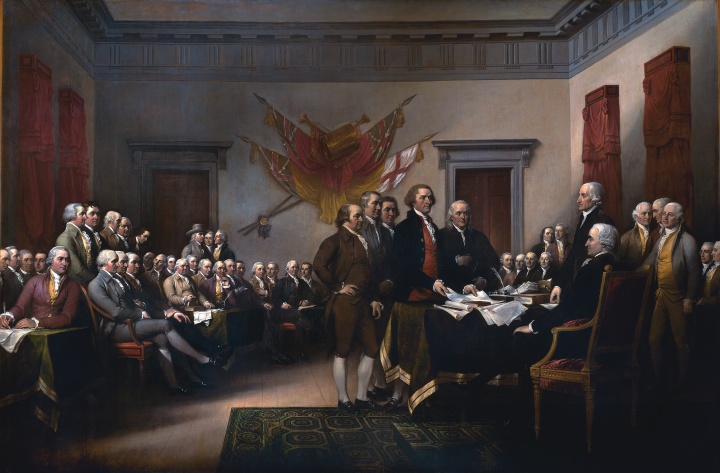
This famous painting in the rotunda of the U.S. Capitol building depicts the presentation of the draft of the Declaration of Independence to Congress on June 28, 1776.“As the U.S. holiday of Thanksgiving comes around again, we are reminded of America’s founding and how far the nation has drifted from the devotion to God on which it was founded.

Paintings courtesy of the Architect of the Capitol 

This famous painting in the rotunda of the U.S. Capitol building depicts the presentation of the draft of the Declaration of Independence to Congress on June 28, 1776.

The wall of the rotunda of the U.S. Capitol Building in Washington, D.C., features a series of eight massive paintings illustrating key events in the founding of America. One of these depicts the Pilgrims who were first on the Speedwell before transferring to join others on its sister ship the Mayflower. Prominent figure William Brewster holds open the Bible to the clear words “The New Testament of Our Lord and Savior Jesus Christ.” Above them on the sail are written the words “God with us,” shortened from the Pilgrim motto, “In God we trust, God with us.”

Of course, “In God we trust” is America’s national motto even today—imprinted on all U.S. currency and coins. Yet new polls reveal that trust in God and in the Bible have plummeted in recent years. But this result has been a long time coming—the end of a leftist, secular humanist agenda to banish God from the public sphere.

For many decades we have seen a concerted effort to play down the role of the Bible and religion in early America. Now things have gone much further, with the nation’s founders denigrated as evil racists. Of course, they were not perfect men, even by the world’s standards. But they established a nation that has overall been a great blessing to the world.

Yet as they would be first to point out, this achievement was not their doing but God’s. They regularly acknowledged Him and, along with the wider populace, sought out His direction and blessing. Let’s take a closer look at the Christian underpinnings of America’s founding and consider the depths to which the nation has now sunk—and what that means for the future.

Restoring the Sovereign

The Pilgrims and other Puritan settlers sought to construct a model Christian society. Conrad Cherry, in his 1971 book God’s New Israel: Religious Interpretations of American Destiny, states: “They believed that, like Israel of old, they had been singled out by God to be an example for the nations (especially for England). With their charter and company in America, the Puritans could in effect construct a republic independent of an English crown that had not allowed them the freedom of their experiment at home” (p. 27).

Setting up and spreading the Kingdom of God, as they understood it, was central to their national purpose. The 1643 Articles of Confederation for Massachusetts, Connecticut, New Plymouth and New Haven declared, “We all came into these parts of America with one and the same end and aim, namely, to advance the kingdom of our Lord Jesus Christ, and to enjoy the liberties of the gospel in purities with peace.”

To this end, the Puritans set up a theonomist state—one based on the laws of God as found in the Bible. The 1644 New Haven Charter was written with the following stated purpose: “that the judicial laws of God, as they were delivered by Moses . . . be a rule to all the courts in this jurisdiction . . .”

Fast-forward a century to the Continental Congress deciding to break away from British rule, the group signing a world-changing document “appealing to the Supreme Judge of the world . . . with a firm reliance on the Protection of Divine Providence.” That document, the Declaration of Independence, meant independence from Great Britain but direct dependence on God.

Unbelievable as it may seem today, the United States of America was formed not as a secular republic but one recognizing God as its unseen Ruler. In The Nature of the American System, R.J. Rushdoony writes: “The concept of a secular state was virtually non-existent in 1776 as well as in 1787, when the Constitution was written, and no less so when the Bill of Rights was adopted. To read the Constitution as the charter for a secular state is to misread history, and to misread it radically. The Constitution was designed to perpetuate a Christian order.”

As the Declaration of Independence was being signed, Samuel Adams, who was the driving individual behind the American cause, stated it clearly: “We have this day restored the Sovereign to whom all men ought to be obedient. He reigns in heaven, and from the rising to the setting of the sun, let His Kingdom come” (quoted by Peter Marshall and David Manuel, The Light and the Glory, 1977). No one in the room objected.

The faith of the Founding Fathers

Many have tried to argue that the Founding Fathers were mostly deists. Deism is the belief in an impersonal God who set everything in motion but does not actively intervene in His creation. However, M.E. Bradford in A Worthy Company proves that up to 52 of the 55 framers of the Constitution were professing Christians.

On July 4, 1821, John Quincy Adams, the sixth president of the United States, declared: “The highest glory of the American Revolution was this: it connected, in one indissoluble bond, the principles of civil government with the principles of Christianity. From the day of the Declaration . . . they [the American people] were bound by the laws of God, which they all, and by the laws of the Gospel, which they nearly all, acknowledged as the rules of their conduct.”

George Washington, the “Father of Our Country,” spoke in his 1789 inaugural address of “my fervent supplications to that Almighty Being who rules over the universe, who presides in the councils of nations, and whose providential aid can supply every human defect, that His benediction may consecrate to the liberties and happiness of the people of the United States a government instituted by themselves for these essential purposes . . .”

In 1787, James Madison, the “Father of the Constitution” and fourth president of the United States, said: “We have staked the whole future of American civilization, not upon the power of government, far from it. We have staked the future . . . upon the capacity of each and all of us to govern ourselves, to sustain ourselves, according to the Ten Commandments of God.”

John Adams, a loud Christian voice in the early United States and its second president, believed that the nation should be governed by the Bible, writing: “Suppose a nation in some distant Region, should take the Bible for their only law Book, and every member should regulate his conduct by the precepts there exhibited. Every member would be obliged in conscience to temperance and frugality and industry, to justice and kindness and charity towards his fellow men, and to piety and love, and reverence towards Almighty God.

“In this commonwealth, no man would impair his health by gluttony, drunkenness, or lust . . . No man would steal or lie or any way defraud his neighbour, but would live in peace and good will with all men—no man would blaspheme his maker or profane his worship, but a rational and manly, a sincere and unaffected piety and devotion, would reign in all hearts. What a Eutopia, what a paradise would this region be” (Diary, Feb. 22, 1756).

The religious views of revolutionary America’s “Renaissance man,” Benjamin Franklin, are fiercely debated today. Many have stated that Franklin died a deist. But this is simply not true. While it’s clear from his Autobiography that he adhered to deism in his early years, he became disenchanted with it later in life.

In his famous speech to the Constitutional Convention on June 28, 1787, Franklin violated a fundamental tenet of deism—God’s non-involvement—when he said: “. . . The longer I live, the more convincing proofs I see of this truth—that God governs in the affairs of men. And if a sparrow cannot fall to the ground without his notice, is it probable that an empire can rise without his aid? We have been assured, sir, in the sacred writings, that ‘except the Lord build the house, they labour in vain that build it.’ I firmly believe this . . .” He followed this with a proposal to hire a clergyman to open every session of Congress with prayer.

It should be noted that none of the Founding Fathers has been so misrepresented as Thomas Jefferson, who’s also charged as being a deist. Yet this is the same Jefferson who concluded his second presidential inaugural address by saying, “I shall need . . . the favor of that Being in whose hands we are, who led our fathers, as Israel of old, from their native land and planted them in a country flowing with all the necessaries and comforts of life.”

In 1815 he stated: “We are not in a world ungoverned by the laws and the power of a Superior Agent. Our efforts are in His hand, and directed by it, and He will give them their effect in His own time.” Clearly both Franklin and Jefferson believed in a personal, intervening God, and they both were supportive of the Christian religion.

Jefferson’s phrase about a “wall of separation between church and state” has been wrested from its context. He was speaking to a Baptist audience and was likely referring to a similar phrase by early Baptist leader Roger Williams—the “wall” referring to protecting the Christian church from the ravages of the world, not protecting the state from influence by Christian principles. The Founding Fathers did not want the establishment of a national state church, but they very much wanted the involvement of God and Christian believers in the governance of the country.

In an 1892 U.S. Supreme Court case, Church of the Holy Trinity v. United States, the justices reached this decision: “Our laws and our institutions must necessarily be based upon and embody the teachings of the Redeemer of mankind. It is impossible that it should be otherwise; and in this sense and to this extent our civilization and our institutions are emphatically Christian.”

Reaping national blessings—and curses

As a result of so many in early America relying on God, the nation experienced great blessings. We find this principle laid out by God in 1 Samuel 2:30: “. . . Those who honor Me I will honor, and those who despise me shall be lightly esteemed.” But the strong morality and devotion to God that characterized the early United States were not just happenstance. God brought it about as a necessity.

As explained in our free study guide The United States and Britain in Bible Prophecy, America was destined to separate from Great Britain and become a great nation in its own right, helping to fulfill the promises to the biblical patriarch Abraham of national blessings and of being a great blessing to the world (be sure to request your free copy).

This required that America have high moral standards and a devotion to the God of the Bible. God would not pour out His wonderful national blessings on a despicable populace that would misuse and squander all His gifts. Of course, there were problems and sins among the people, but not the widespread immorality and contempt for God we see today.

God turned the hearts of the early Americans toward Him to a significant degree so that He could bless them. We find a similar instance of this in Scripture, when Judah’s King Hezekiah sought to restore the worship of God after a period of idolatry and rebellion. As we’re told, “the hand of God was on Judah to give them singleness of heart to obey the command of the king and the leaders, at the word of the Lord” (2 Chronicles 30:12).

And so God did with the United States—which was richly blessed and in turn became a blessing to the world at large. But that was then. Today many Americans have rejected any sense of godly morality. They have increasingly turned away from Him, rejecting Him from having a role in their lives or society as a whole. Many outright blaspheme Him. So where does that leave America today?

Leviticus 26 and Deuteronomy 28 both start with a list of wonderful blessings that God would bestow on Israel for remaining faithful to Him in obeying His laws. But then these chapters move to list terrible curses for unfaithfulness and disobedience. Be sure to read these chapters with a mind toward where America has been and the road it is now heading down.

The curses read like many of today’s headlines. Many other sobering prophecies foretell terrible destruction to come as a consequence of our national sins. Again, see our free study guide and take heed.

We should pray for the nation and other nations—that all will come to repentance. But realize that they are set on a course they are unlikely to turn from until prophesied end-time calamities strike, which they assuredly will. But you can heed God right now and make sure that you personally are obedient to Him. As He promises, “Those who honor Me I will honor.”

As Thanksgiving approaches, reflect on the amazing origins of America as a God-honoring nation and be thankful for our blessings. But also grieve over the terrible wrongs we see. And pray for the day when the true Kingdom of God will come with the return of Jesus Christ and untold blessings will overflow the world.”  From: https://www.ucg.org/beyond-today/beyond-today-magazine/americas-forgotten-christian-heritage

________

When He Had Given Thanks

John 6:11

And Jesus took the loaves, and when He had given thanks He distributed them to the disciples, and the disciples to those sitting down; and likewise of the fish, as much as they wanted.

“Giving thanks for our food has a long history. Here Jesus Christ, the Son of God, not only gave thanks for the five barley loaves and two small fish, He gave a miracle that multiplied this lad’s lunch into enough food to feed thousands! This is the only miracle of Christ that is recorded in all four Gospels.

Every meal we eat is a gift from God and a reminder of the miracles of creation. So it is only fitting that we follow Christ’s example of thanking God for the food He provides.”

For more about the miracles Jesus Christ performed, see our article “Miracles of Jesus.” For more about praying as Jesus did, see “Do You Pray the Way Jesus Taught?

From: https://lifehopeandtruth.com/bible/blog/when-he-had-given-thanks/

________

How Effective Is Chemotherapy?

“Most chemo drugs are approved by the FDA without evidence of benefit on survival or quality of life.

Transcript of YouTube at:  https://nutritionfacts.org/video/how-effective-is-chemotherapy/

Below is an approximation of this video’s audio content. To see any graphs, charts, graphics, images, and quotes to which Dr. Greger may be referring, watch the above video.

“Chemotherapy is one of the most common treatments for cancer. How effective is it for improving survival and quality of life? This video, and the next, will answer those questions.

Over the next few decades, the number of new cancer cases will continue to skyrocket. Are we winning the war on cancer? Sadly, in general, no––this despite the introduction of hundreds of new anticancer drugs.

The war on cancer has been likened to the war on terror. No matter how many drone strikes you do, it’s nearly impossible to kill all the bad guys, and no matter how precise the bombing, one must always consider the collateral damage. The toxicity from cancer therapy can be debilitating, and not just health-wise. There’s also the “financial toxicity.”

Patented anticancer drugs are priced at up to nearly a thousand dollars a day. Even with health insurance, the average cost to patients for stage IV breast cancer, for example, can run $190,000. It’s bad enough to be fighting for your life without bankrupting your family at the same time; it’s a problem still common to this day.

Who can forget the apocryphal story of Walter White, working two jobs with health insurance, and still couldn’t afford his cancer care. Now, not everyone is willing to start their own meth lab, but many are willing to go for broke. A large proportion of cancer patients reported their willingness to declare bankruptcy or sell their homes to pay for treatment. I mean, look, aren’t the high prices justified if new and innovative treatments offer significant benefits to patients? But you may be shocked to find out that many FDA-approved cancer drugs might lack clinical benefit.

Wait, then how did they become FDA-approved? “Most approvals of cancer drugs are based on flimsy or untested surrogate endpoints, and postmarketing studies rarely validate the efficacy and safety of these drugs on patient-centered endpoints.” Let me explain what that means. New chemo drugs are increasingly approved just based on so-called surrogate endpoints, which means instead of looking at what we really care about—survival or quality of life—they approve drugs based on things like “response rate” or tumor shrinkage. But who cares if the tumor shrinks, if it doesn’t actually extend your quantity or quality of life? It’s kind of counterintuitive, but just seeing a tumor shrink on a CT scan or MRI is not necessarily correlated with improvements in survival or symptoms. In fact, most studies that have actually followed people out found low correlations with survival. The most recent comprehensive analysis found 90 percent of studies of such validation trials found little correlation with overall survival.

Of 36 new chemo drugs approved by the FDA based on these kinds of surrogate endpoints, once they were actually put to the test in the real world, only 1 in 7 was actually shown to extend life, and half explicitly flopped, and the rest remain untested, revealing “that most cancer drug approvals have not been shown to, or do not, improve clinically relevant endpoints.” “Exorbitant drug prices are bad enough for treatments that work, but charging vulnerable patients for drugs without evidence that they actually improve patients’ survival and quality of life is unconscionable.”

Why doesn’t the FDA require proof that chemo drugs actually benefit patients before approving them? Drug companies say that requiring randomized, controlled trials with meaningful measures would take too long, but the study time reduction using surrogate endpoints rather than overall survival is estimated at just 11 months. So, instead of it taking 7.3 years to come to market, on average, it would take 8.2 years. Yes, we want to get these drugs out as soon as possible, but only if they’re actually going to help people.

Do cancer drugs improve survival or quality of life? “You don’t need to know, according to our broken regulatory system.” And things aren’t much better over in Europe. A systematic evaluation of chemo drug approvals showed that most entered the market without evidence of benefit on survival or quality of life. And even years later, there was still no conclusive evidence that these drugs offered any benefit, and when they did, the gains were often marginal.

That’s why you see editorials in the Journal of the National Cancer Institute referencing Hans Christian Andersen, the author of the tale of The Emperor’s New Clothes. “These studies all converge on a singular conclusion: only a minority of new cancer drugs approved by US and European regulatory authorities in recent years deliver clinically meaningful benefits to patients;” in fact, some cancer-related deaths may be hastened, or even caused, by the toxic effects of chemotherapy rather than the cancer itself. Based on a review of tens of thousands of cancer patients, in as many as 27 percent of cases the cancer treatment itself caused or hastened death. Okay, but it might be worth that risk if the potential benefit is large enough.”  From: https://nutritionfacts.org/video/how-effective-is-chemotherapy/

See Fighting the Ten Hallmarks of Cancer with Food and How Not to Die from Cancer.

And that’s the subject of my next video:  How Much Does Chemotherapy Improve Survival?   https://nutritionfacts.org/video/how-much-does-chemotherapy-improve-survival/

_________

Sunday, November 13, 2022

Is Thanksgiving Being Replaced? The Sacrifices of Thanksgiving. The Gut-Destroying Toxin You Eat Everyday.

.

Is Thanksgiving Being Replaced?

Saying thanks to God is what Thanksgiving was all about. Is it still?

“Saying thanks to God is what Thanksgiving was all about. Is it still?

This year some U.S. retailers are starting their Christmas sales even earlier than Black Friday—now on Thanksgiving Day. Have our priorities changed?

When I was a child, the American Thanksgiving Day was a big event. We were taught in school about the history of the day and to be thankful to God for our blessings. Even television commercials were focused around family togetherness and being thankful.     But times have changed.

Black Friday becoming Black Thursday?

For years the Christmas shopping season “officially” started the day after Thanksgiving in the United States.

The term “Black Friday” got its name from retailers making their largest profits during the holiday season. Profits put retailers “in the black.” Since Friday was the start of the Christmas season, the name “Black Friday” was born.

In recent years some retailers began opening their doors at 7 a.m. on that Friday. Then it was 6 a.m., then 5 a.m. and then midnight.

Now some retailers are beginning their sales at 8 p.m. on Thursday, the same day as Thanksgiving!

What that means is that some employees will have to be at these stores even earlier than that. They won’t have much of a Thanksgiving.

Black Friday is now Black Thursday.

Is Thanksgiving even important anymore?

When President Abraham Lincoln made Thanksgiving a national holiday, he called it “a day of thanksgiving and praise to our beneficent Father who dwelleth in the heavens” (quotes from the American Presidency Project).

Thanksgiving was originally intended to draw our attention to God, not ourselves. But today many Americans rush through Thanksgiving so they can go shopping and do the things they want to do. Instead of being thankful for the blessings they have, many believe they deserve and are entitled to them.

This completely different mind-set is not what Thanksgiving is supposed to be all about.

Losing sight of God

Concerning America’s wealth, President Lincoln commented that “no human counsel hath devised nor hath any mortal hand worked out these great things. They are the gracious gifts of the Most High God.”

His words sound very similar to what God told the people of Israel more than 3,000 years ago about the blessings Israel’s descendants would receive.

“When you have eaten and are full, then you shall bless the LORD your God for the good land which He has given you. Beware that you do not forget the LORD your God by not keeping His commandments, His judgments, and His statutes which I command you today, lest—when you have eaten and are full, and have built beautiful houses and dwell in them; and when your herds and your flocks multiply, and your silver and gold are multiplied, and all that you have is multiplied; when your heart is lifted up, and you forget the LORD your God who brought you out of the land of Egypt … then you say in your heart, ‘My power and the might of my hand have gained me this wealth’” (Deuteronomy 8:10-17).

For many decades America has been the most blessed nation on earth, and for that we should be thankful to God. But instead of being thankful for what we have, many want to rush out and accumulate more.

“But know this, that in the last days perilous times will come. For men will be lovers of themselves, lovers of money … unthankful … lovers of pleasure rather than lovers of God” (2 Timothy 3:1-4).

“Although they knew God, they did not glorify Him as God, nor were thankful, but became futile in their thoughts. And their foolish hearts were darkened” (Romans 1:21).

Americans have forgotten their heritage. Why else would we replace a day set aside for God with a day set aside for greed? Why are we replacing Thanksgiving with Black Thursday?         Because we have forgotten God.

Let’s remember God

Moses, the leader of ancient Israel, wrote about the heritage of Israel. (To explore the connection between ancient Israel and modern nations such as the United States, Australia, Britain and Canada, see “Who Are the United States and Britain in Prophecy?”)

Moses wrote, “Remember the days of old, consider the years of many generations. Ask your father, and he will show you; your elders, and they will tell you” (Deuteronomy 32:7).

Moses goes on to show how God raised up ancient and modern Israel and blessed them so much that they became the greatest people on earth (verses 10-14).

But as the case is today, Moses also wrote that Israel would forget God because of this wealth (verses 15-18).

Then Moses wrote that because Israel forgets God, God will stop helping them and troubles will come upon Israel (verses 19-26).

God even says, “For they are a nation void of council, nor is there any understanding in them. Oh, that they were wise, that they understood this, that they would consider their latter end!” (verses 28-29).

In light of all the troubles the United States has been experiencing over recent years, we should examine the quality of our relationship with God and our gratitude toward Him.

So before America replaces the meaning of Thanksgiving, let’s remember that the day was intended to pay homage to God, not to ourselves.”       From: https://lifehopeandtruth.com/prophecy/blog/is-thanksgiving-being-replaced/

_______

The Sacrifices of Thanksgiving

Psalm 107:22 

“Let them sacrifice the sacrifices of thanksgiving, and declare His works with rejoicing.”

Leviticus 7 describes a “sacrifice of thanksgiving” that involved offering grain and an animal sacrifice (Leviticus 7:12). This offering was not for sin, but for rejoicing and showing thankfulness to God.

We know from the book of Hebrews that the system of animal sacrifices has been superseded, yet Hebrews still talks about a “sacrifice of praise to God.” This is defined as “the fruit of our lips, giving thanks to His name. But do not forget to do good and to share, for with such sacrifices God is well pleased” (Hebrews 13:15-16).

Praising God, doing good and sharing are sacrifices that continue to please our Creator today.”   For more about thanksgiving, see “In Everything Give Thanks.”

From: https://lifehopeandtruth.com/bible/blog/the-sacrifices-of-thanksgiving/ 

________

The Gut-Destroying Toxin You Eat Everyday

by: Dr. Craig A. Maxwell

Food 211“Since the 1990s, there’s been something different about the food you eat everyday. It still looks the same, it tastes the same but it’s not the same nourishing food your grandparents ate. Lurking deep inside a fresh-grilled ear of corn or your favorite soy-based vegetarian dish could be a gut-destroying toxin. It’s called Bt toxin and what you don’t know about it could seriously affect your health.

What is BT Toxin?

Bacillus thuringiensis (BT) is a gram-positive soil-dwelling bacterium that has been used as an insecticide since the 1920s. When farmers spray their crops with this bacterium or its insecticidal proteins or spores, insects eat it and they die when their intestines Embedded0473fcb4aed4462496a774149673d358explode. When this pesticide is just sprayed on your food, you are able to wash it off. Indeed, the spraying of it on crops, even organic crops, allows it to be washed off. Sunshine also quickly degrades it. When used in this way it is considered effective against pests and harmless to humans, as it is not absorbed into the plant.

Now with the advent of genetically modified crops, it is difficult to avoid this dangerous toxin. This is because biotech giant Monsanto decided to profit from this pesticide by splicing the Bt gene with corn, soybeans, and cotton. Now these plants have Bt toxin genetically inserted in them. It cannot be washed off, and it does not degrade during the growth cycle.

Monsanto describes these new crops as “pest-resistant”, giving unsuspecting consumers the idea that pests somehow smell the Bt pesticides and avoid the crops containing them. No. Nothing could be further from the truth. When any insect takes a bite of a genetically modified Bt toxin crop, the toxin literally splits their guts open and they die. So, why would you want to eat it? Remember, when it was only sprayed on the plant, it was easily washed off or degraded by sunshine.

Terrifying Side Effects of BT Toxin

According to a UK report published in 2004, twelve German dairy cows died a slow and painful death after consuming GMO Bt Toxin corn. Syngenta (a biotech company linked to Monsanto) has been trying to cover up this fact for nearly a decade.

Here are just a few of the side effects of Bt Toxin:

Allergic Reaction

Boy getting shootYour immune system is designed to protect you against toxins and foreign invaders. Bt toxin is a foreign invader, which means the more you eat GMO foods, the worse you’ll feel. You may develop allergic symptoms such as sneezing, coughing, wheezing, watery eyes, asthma, and hives and be unable to figure out what’s causing them.

Developmental Disorders

Studies have proven that animals given feed from GMO crops experienced noticeable alterations in their mood and behavior. Hogs exposed to Bt toxin exhibited cannibalistic behavior while rats who ate it exhibited signs of anti-social behavior, withdrawing from others and aggressively climbing the cage walls.

This has led researchers to believe that Bt toxin and autistic symptoms are closely-related because they seem to interfere with functional digestive development. Children with ASD have a disproportionate amount of gastrointestinal disorders, reinforcing the belief that gut and brain health are very closely connected.

Autoimmune Disease

Less than a hundred years ago, autoimmune diseases were uncommon. Now we live in a society where conditions such as celiac disease, Crohn’s disease, lupus, rheumatoid arthritis, Hashimoto’s thyroiditis and multiple sclerosis are almost commonplace. It’s becoming more unusual now not to have some type of autoimmune dysfunction than it is to be sick! Sick has become the societal norm and pesticides have been cited as one of the primary causes.

Since 80% of your immune system is located in your gut, the last thing you want to do is eat gut-destroying Bt toxins. One of the most alarming facts about Bt toxin GMO foods is their staying power.

iStock_000000970628XSmallEven if you eat a primarily organic diet and “slip up” every once in the while by eating some corn chips laced with Bt toxin, the effects of the toxin can stay with you. Once inside your stomach, these Bt toxins take can over by destroying your natural gut flora and forcing your digestive system into continually producing more of the pesticide!

Severe Food Allergies

Once your immune system begins to go haywire, it will be unable to tell the difference between whole organic food and genetically modified food. Once your healthy gut flora has been destroyed and altered, a condition called leaky gut syndrome will result. In a person with leaky gut syndrome, the intestinal lining is more porous than it should be. This allows toxins, undigested food particles, and bacteria to run unchecked in your bloodstream, causing chronic inflammation and multiple food allergies.

Kidney Disease

Your kidneys are designed to flush toxins from your body. Continually eating genetically modified crops containing Bt toxins may eventually destroy your kidneys.

Infertility

digestive_distress

There is a rising theory among health-conscious individuals that one of the main purposes for the development of GMO crops is population control. When Mike Adams of NaturalNews.com interviewed a biotech scientist known only as “Ed”, the man confirmed that Bt toxins do, in fact, contribute to infertility and that he thought this fact was “awesome!” He went on to say that he believed genetically modified crops were doing humanity a favor because the world is overcrowded.

Cancer

The Institute for Responsible Technology reports 65 serious health risks associated with GMO crops, including cancer development. For example, rats fed potatoes engineered to produce their own insecticide developed precancerous cellular growth in their digestive tract.

Foods Containing Bt Toxin:

Corn – Unless it’s organic, stay away from corn. Over half of the corn grown in the United States is genetically modified to contain Bt toxin.

Soy – Studies have shown that soy is not the health food you have been lead to believe. Up to 90% of soy grown in the United States is genetically modified to contain Bt toxin.

Sugar Beets – In 2012, GMO sugar beets got the green light as well so avoid these and purchase organic beets only.

Diary Products – The milk you pour in your coffee and onto your child’s cereal each day could contain dangerous Bt toxins, as livestock are often fed corn and soybeans which most often contain Bt toxin. Use organic milk instead. Better yet, use organic almond milk.

Squash – Most yellow and zucchini squash is genetically modified and contains Bt toxins.

Cotton – Cotton has been genetically modified to produce Bt toxins. It is pressed into cottonseed oil which is used in vegetable oil and margarine.

Beef-When possible, choose only grass-fed, organic beef. Cattle are often fed Bt toxin-containing feed.

Potatoes-Approved in 1995 by the FDA as the first pesticide-producing crop in the United States.

How to Avoid BT Toxin

The best way to avoid Bt toxins in food is to eat organic whenever possible. When selecting produce, it’s really important to understand what the label numbers mean. A four-digit number beginning with a “4” means it’s been conventionally-grown. A five-digit number that begins with a “9” means it’s organic. A five-digit number beginning with an “8” means it’s genetically-modified and contains harmful Bt toxins.

Also, it is very important to read food labels. Produce isn’t the only thing you have to watch out for. Any food containing corn, soy products, vegetable oil or dairy could potentially contain dangerous Bt toxins. Look for non-GMO or GMO-free foods only.

If you didn’t really understand the dangers about Bt toxins before, you’re not alone. These major biotech corporations will do anything it takes to make sure this critical information doesn’t reach you. Remember, become a label-reader, purchase organic, and look for “non-GMO” food labels. Once you stop unintentionally eating poison, your health will improve by leaps and bounds you never thought possible!                    From: https://www.askdrmaxwell.com/2013/03/the-gut-destroying-toxin-you-eat-everyday/

________

Sunday, February 20, 2022

What Does God Say About Taxes? To Give Repentance and Forgiveness of Sins. Top 10 Most HARMFUL Foods People Keep EATING.

.

“Render Unto Caesar”: What Does God Say About Taxes?

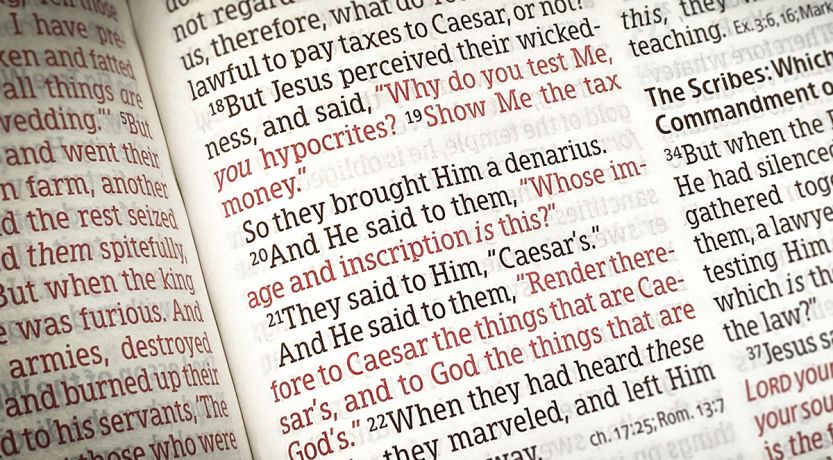
“Render Unto Caesar”: What Does God Say About Taxes? Matthew 22:18-21"Tax time is something that most of us dread—working our way through those forms and paying our taxes! What does God say about paying taxes?


  What did Jesus Christ say about taxes in Matthew 22:18-21? 

It’s been said that two things are certain in life: death and taxes, neither of which people look forward to. Soon after the turn of the year millions of us in the United States start to work on something that is about as much fun as having a tooth pulled.

According to RandomHistory.com, there is no known civilization in history that did not tax. Even the very first known civilization, the Sumerians, recorded their tax history on clay cones.

Taxes are what some call a “necessary evil.” After all, we daily use services that make life more convenient or safe. We drive on roads or highways with signs and lights that regulate traffic flow. We’re thankful to have the services of emergency personnel when there’s an accident or dangerous situation.

Taxes in the Bible?

We’re admonished to come out of this world and not participate in some of its systems, such as politics. Does that include the paying of taxes?

Early in the Gospel record, we find Joseph and Mary submitting to a decree by the emperor of Rome to register their names. Normally, taxation followed such a registering of a household.

“And it came to pass in those days that a decree went out from Caesar Augustus that all the world should be registered. This census first took place while Quirinius was governing Syria. So all went to be registered, everyone to his own city. Joseph also went up from Galilee, out of the city of Nazareth, into Judea, to the city of David, which is called Bethlehem, because he was of the house and lineage of David, to be registered with Mary, his betrothed wife, who was with child” (Luke 2:1-5).

We can see that the stepfather of the future Savior of mankind was willing to pay taxes, even to one of the most ruthless governments in history. And God used Joseph’s willingness to obey to fulfill the prophecy that the Messiah would be born in Bethlehem.

“Render unto Caesar” 

During Jesus’ ministry, the Pharisees tried to trap Him by getting Him and the disciples in trouble with the authorities about paying taxes.

“Then the Pharisees went and plotted how they might entangle Him in His talk. And they sent to Him their disciples with the Herodians, saying, ‘Teacher, we know that You are true, and teach the way of God in truth; nor do You care about anyone, for You do not regard the person of men. Tell us, therefore, what do You think? Is it lawful to pay taxes to Caesar, or not?’” (Matthew 22:15-17).

Notice His response was an admonition to pay taxes:

“But Jesus perceived their wickedness, and said, ‘Why do you test Me, you hypocrites? Show Me the tax money.’ So they brought Him a denarius. And He said to them, ‘Whose image and inscription is this?’ They said to Him, ‘Caesar’s.’ And He said to them, ‘Render therefore to Caesar the things that are Caesar’s, and to God the things that are God’s’” (Matthew 22:18-21).

Jesus wisely avoided their trap and showed the need to pay both taxes to the civil government (represented by Caesar) and tithes to God.

“Taxes to whom taxes are due”

After Jesus’ death and the beginning of His Church, this same teaching continued.

The Roman Empire was not always just in its rulings, but it did provide some semblance of law and order. The apostle Paul exhorted Christians to submit to the laws and authority of the civil government.

“Let every soul be subject to the governing authorities. For there is no authority except from God, and the authorities that exist are appointed by God. Therefore whoever resists the authority resists the ordinance of God, and those who resist will bring judgment on themselves” (Romans 13:1-2).

He went on to say, “Therefore you must be subject, not only because of wrath but also for conscience’ sake. For because of this you also pay taxes, for they are God’s ministers attending continually to this very thing. Render therefore to all their due: taxes to whom taxes are due, customs to whom customs, fear to whom fear, honor to whom honor” (verses 5-7).

As we benefit from many of the services provided by man’s government that are paid for out of our taxes, it is only right that we help pay for these. While we now live in this world, under its governments, we should abide by its laws so long as they do not conflict with the higher laws of God and our worship of God (Acts 5:29).

Pay your taxes and give thanks to God

When we complete our tax returns, in many cases we need to include a check to pay the remaining taxes due.

I’d like to suggest that when you do so, you read what God inspired Moses to record, and then give thanks to God.

You might be thinking, “What! I’m paying all these taxes, and you’re suggesting I give God thanks?” But consider if there are parallels between what the nation of Israel experienced and the blessing you have received.

God freed a nation of people who were slaves in the land of Egypt and brought them to a land to receive for their own. He told them that if they would obey and serve Him, that He would bless them abundantly. Once they began to enjoy those bountiful blessing, they were to acknowledge the One who had given them the blessings by taking some of the produce of the land to His priests.

“And it shall be, when you come into the land which the LORD your God is giving you as an inheritance, and you possess it and dwell in it, that you shall take some of the first of all the produce of the ground, which you shall bring from your land that the LORD your God is giving you, and put it in a basket and go to the place where the LORD your God chooses to make His name abide. And you shall go to the one who is priest in those days, and say to him, ‘I declare today to the LORD your God that I have come to the country which the LORD swore to our fathers to give us.’

“Then the priest shall take the basket out of your hand and set it down before the altar of the LORD your God” (Deuteronomy 26:1-4).

And then the one bringing the offering was to reflect on how God had delivered and blessed him.

“And you shall answer and say before the LORD your God: ‘My father was a Syrian, about to perish, and he went down to Egypt and dwelt there, few in number; and there he became a nation, great, mighty, and populous. But the Egyptians mistreated us, afflicted us, and laid hard bondage on us. Then we cried out to the LORD God of our fathers, and the LORD heard our voice and looked on our affliction and our labor and our oppression. So the LORD brought us out of Egypt with a mighty hand and with an outstretched arm, with great terror and with signs and wonders. He has brought us to this place and has given us this land, “a land flowing with milk and honey”; and now, behold, I have brought the firstfruits of the land which you, O LORD, have given me.’

“Then you shall set it before the LORD your God, and worship before the LORD your God” (verses 5-10).

Though we can view the paying of taxes as a negative thing, we need to realize it is because we have received an income and blessings that we can and should pay what we owe.

Many don’t have to pay taxes

A number of years ago, a fellow minister and I were traveling down a highway in Nigeria. We came to a section where there were some Nigerian women and children standing just off the edge of the pavement in ragged clothes with their hands stretched out. The minister I was with, who had been there several times before, asked our driver to stop. He then took a handful of coins to pass out the window to them.

I learned they were lepers trying to get a little money for food from the passing cars.

So, as you take care of your annual tax responsibility, take a few minutes to express your thanks to God for your physical blessings and pray for the coming of God’s Kingdom when all the world will enjoy much greater blessing under the government of Jesus Christ. These poor lepers didn’t have to pay any taxes.

A few years later, I was in the impoverished African country of Zimbabwe conducting a religious meeting with a group of its citizens who were members of the Church of God, a Worldwide Association. In this group was a younger widow living in a hut with only a dirt floor. Her meager possessions consisted of only a few pots and pans. Her husband had died in the past year. She was left alone to take care of her four young children.

She timidly raised her hand and asked a question that was on her mind. In that culture, a dowry was part of marriages and would be set aside so that if something happened to the husband, there would be something for the widow to survive on. But it was very important to her that she live a life that was right before God. She asked if she should tithe on the dowry her husband had left her. I informed her this was not be tithable income.

She also didn’t pay taxes.

Such stories could continue without end. Multiple millions today live on an income less than $100 a year. Those of us in the Western world who face what we see as an onerous task each year of tax preparation and payment should realize how many people would happily trade places with us—thankful to have income on which to pay taxes.

Be thankful

Though few understand it, most of us in the English-speaking world enjoy the abundance of national blessings because of God’s promises to Abraham and his descendants. (For more on this, download our booklet The United States, Britain and the Commonwealth in Prophecy.) Compared to so many around the earth, we are tremendously blessed and would be viewed by them as quite wealthy.

One of the prophecies directed to Abraham’s descendants speaks of the loss of those blessings because they failed to obey and give thanks to the One who gives us these blessings.

“Moreover all these curses shall come upon you and pursue and overtake you, until you are destroyed, because you did not obey the voice of the LORD your God, to keep His commandments and His statutes which He commanded you.

“And they shall be upon you for a sign and a wonder, and on your descendants forever. Because you did not serve the LORD your God with joy and gladness of heart, for the abundance of everything, therefore you shall serve your enemies, whom the LORD will send against you, in hunger, in thirst, in nakedness, and in need of everything; and He will put a yoke of iron on your neck until He has destroyed you” (Deuteronomy 28:45-48).

So, as you take care of your annual tax responsibility, take a few minutes to express your thanks to God for your physical blessings and pray for the coming of God’s Kingdom when all the world will enjoy much greater blessing under the government of Jesus Christ.” From:  https://lifehopeandtruth.com/relationships/finances/render-unto-caesar-taxes/?

_______

To Give Repentance and Forgiveness of Sins

Acts 5:29-32

“But Peter and the other apostles answered and said: “We ought to obey God rather than men. The God of our fathers raised up Jesus whom you murdered by hanging on a tree. Him God has exalted to His right hand to be Prince and Savior, to give repentance to Israel and forgiveness of sins. And we are His witnesses to these things, and so also is the Holy Spirit whom God has given to those who obey Him.”

“The dramatic story in Acts 4 and 5 is amazing testimony to the inspiration and power of God through His Spirit. First, Peter and John were arrested and severely threatened to not preach in Jesus’ name (Acts 4:18-21). Then apparently all the apostles were imprisoned and miraculously released by an angel (Acts 5:17-20).

Instead of going into hiding, they obeyed the command of the angel to go preach in the temple again (Acts 5:20-21). The officers and the Jewish council didn’t know what to make of the fact the prison was still locked and the guards were still guarding the empty cells. It seems they didn’t know that the apostles had escaped.

Peter and the other apostles were hauled before the council again and spoke boldly. Peter not only accused the council of murder, he proclaimed that Jesus was on the right hand of God and is our Savior. As a result of Jesus’ sacrifice, God grants repentance and is willing to forgive our sins. Jesus Himself had explained that God’s great love makes this possible, as we covered in our commentary on John 3:16.

Not only were the apostles witnesses concerning Jesus Christ’s actions and words, the miracles performed through the power of God’s Holy Spirit also gave witness that He is the Son of God. God gave His Spirit to those who repented and were baptized (Acts 2:38)—to those who committed to obeying Him, which by implication the Jewish council had not.”

Read about how God saved the apostles from the anger of the Sanhedrin in Acts 5:33-42. And read more about the Holy Spirit in “How Do You Know You Have the Holy Spirit?” and “Is the Holy Spirit a Person?

_______

Top 10 Most HARMFUL Foods People Keep EATING

"Have you noticed when you are trying to eat healthy that everything has extra ingredients in it? Make sure you don't eat one of these Top 10 Most Harmful Foods People Keep Eating. There are so many food products that, while they may taste delicious, are harmful to your health."

See why on YouTube: https://youtu.be/Hr1lW83qHCs

1. Canned soup  2. white bread and wheat bread  3. canned tuna  4. diet soda  5. potato chips  6. fake maple syrup  7. margarine  8. energy drinks  9. fruit juice  10. deli meats.

________


Thursday, November 25, 2021

What’s In Your Thanksgiving? Imagine! Thankful for God’s Goodness and Mercy. "Health Food" vs. Healthy Food!

.

"What’s In Your Thanksgiving?

What are you thankful for this year? With the U.S. holiday upon us, it’s beneficial to stop and collect your thoughts on this most wonderful of American traditions. It has been a long year with a lot of bad news and continued fallout from COVID-19. Turning our mind and heart to God in grateful thanksgiving for what we do have is about the best we could do to calibrate a positive orientation.

I am thankful to know God has a purpose for this life we share on earth. That knowledge grounds me, anchors me in a reality that is unshakeable.

I am thankful for a family I love and who have shaped my adult life in every positive way—a wife, children and grandchildren with whom I share every important, rich experience.

I am thankful I live in the United States of America. Here I have guaranteed religious liberty to worship according to my conscience. That is the reason the pilgrims came in 1620 seeking a refuge to worship God without compulsion from another authority—whether civil or religious.

That point is long forgotten today when we come to this great national day of Thanksgiving. Religious liberty was at the heart of the foundation of America. The nation may not have always lived up to its ideals as it dealt with the native Indian tribes or the imposition of slavery into the culture. But the founding principles of America were personal freedom and religious liberty.

At a time when the nation’s history is being rewritten by a false narrative, and a culture war is upending gender identity and race relations, it is vital to reset our minds on the liberty embedded in the American ideal.

God’s hand is behind the founding of America. From the incredible geographic features of a resource-laden land situated behind two great oceans for protection, to a history replete with miraculous events—which in retrospect point to God’s involvement, America is a unique story in history.

We chronicle this amazing story in our Bible study guide, The United States and Britain in Bible Prophecy. There is a chapter that talks about God’s promise to Abraham and how He has kept that promise into our modern age. These are facts of history and the Bible, which impact the headlines affecting us today. You cannot understand the reason for our present turmoil without knowing the divine plan that impacts America.

I encourage you to take time to read this chapter from the study guide: “Two Nations that Changed the World.” It will stimulate you to read more in this booklet.

Thanksgiving is a great time to pause and consider the purpose of God in this world. Part of giving thanks is to acknowledge He is the God of history. Be thankful for what is provided for all of us in this blessed nation." From: https://us1.campaign-archive.com/?e=72c729d811&u=1d04480cefc2e7c4492fe4a04&id=6d0c0b1cf6

_______

“Imagine that you woke up today, and everything was gone.  EVERYTHING!
Everything except; that which you expressed gratitude for yesterday.  
What would you have?
Your house?  Your family?  Your pets?  Running water?  Food?  Community?”

________

Thankful for God’s Goodness and Mercy

1 Chronicles 16:34

“Oh, give thanks to the LORD, for He is good! For His mercy endures forever.

On the joyous day that David brought the Ark of the Covenant into Jerusalem, he “delivered this psalm into the hand of Asaph and his brethren, to thank the LORD” (1 Chronicles 16:7). This theme of thankfulness for God’s goodness and mercy is found throughout the Psalms (see Psalms 106:1 and 107:1, for example).

Psalm 107 goes on to give examples of how God displays His mercy to sinners who cry out to Him: “Then they cried out to the LORD in their trouble, and He saved them out of their distresses. He brought them out of darkness and the shadow of death, and broke their chains in pieces. Oh, that men would give thanks to the LORD for His goodness, and for His wonderful works to the children of men!” (Psalm 107:13-15)."  From: https://lifehopeandtruth.com/bible/blog/thankful-for-gods-goodness-and-mercy/?

_______

Unthankful to Our Creator

Romans 1:21

“Because, although they knew God, they did not glorify Him as God, nor were thankful, but became futile in their thoughts, and their foolish hearts were darkened.

In the early chapters of Romans, Paul shows the sinfulness of all men, gentiles and Jews. This verse follows the powerful statement that “His invisible attributes are clearly seen, being understood by the things that are made, even His eternal power and Godhead, so that they are without excuse” (verse 20). God’s creation itself is proof that God exists, so even those without any biblical background are without excuse.

But the gentiles of Paul’s day put God out of their minds and didn’t give Him glory or show Him thanks. Many people today follow this same poor example. Ingratitude is a hallmark of human nature and especially of this end-time perilous age (as Paul mentions in 2 Timothy 3:2; see our article “Unthankfulness: A Sign of Perilous Times).”

Psalm 100, “a Psalm of Thanksgiving,” provides the cure for this common ailment. “Know that the LORD, He is God; it is He who has made us, and not we ourselves. … Enter into His gates with thanksgiving, and into His courts with praise. Be thankful to Him, and bless His name” (Psalm 100:3-4).”

For more about gratitude, see “In Everything Give Thanks” and our magazine article “‘In Everything Give Thanks’ (Really?).”  From: https://lifehopeandtruth.com/bible/blog/unthankful-to-our-creator/?

_______

"Health Food" vs. Healthy Food -- How to read labels

“Do you know how to read food labels? Maybe you THOUGHT you did. Truth is, you probably don't. But Jeff Novick, MS, RD -- of the McDougall program -- does. And in his full talk he shows the 3 easy steps you MUST know if you ever buy foods at any supermarket or "health" food store.

In this online excerpt, Novick -- who used to be a food service manager at Kraft Foods -- exposes one of the dirty secrets major food corporations use to deceive consumers. It's no accident labels are so confusing! High-protein/low-carb diet proponents claim that the US started eating "low-fat" foods 20 years ago and yet still gained weight, "proving" that the low-fat diet wasn't effective.

But that's nonsense, as Novick demonstrates in his talk. The foods weren't/aren't low-fat at all. Food companies use sleight of hand to make them appear that way. Novick shows how to cut through the nonsense of food labeling to see what you need to see, and understand what you're really getting. This is an excerpt from Novick's 80-minute talk at the VegSource 2007 Healthy Lifestyle Expo, and part of a 12-part series of top health expert presentations.

In his full fascinating and entertaining presentation, Novick teachers the "three easy rules" for cutting through the b.s. and quickly understanding food labels, to know exactly what you're getting. After watching his talk, you'll never look at packaged food the same!” YouTube: https://youtu.be/yd9XnyNGXGs

_______