Showing posts with label meat. Show all posts

Friday, August 15, 2025

Danger, Fake News. Heeding an Alarm: The Texas Tragedy Still Haunts Us. The Same Diet That’s Anti-Cancer Is Also Anti-Heart Disease And Anti-Lung Disease.

.

image

Fake News in the Church? It Started in a Garden...

“Fake news isn’t new.

In fact, the very first fake news story was broadcast in the Garden of Eden when Satan told Eve:
“You will not surely die...” (Genesis 3:4)

That was a lie — and it’s been spreading ever since.

Christ called Satan the father of lies (John 8:44), and to this day, he remains the invisible broadcaster behind every slander, whisper, distortion, and deception — including many that make their way right into the Church of God.

In a world trained to doubt everything and mock everyone, the spirit of fake news has crept in among God’s people — not just through media, but in our conversations, our comments, our posts, and even our fellowship.

Let’s be real:
Gossip, rumors, harsh opinions, character assassinations — these are all modern forms of false witness, and they violate the Ninth Commandment:

“You shall not bear false witness against your neighbor.” (Exodus 20:16)

Even if something is “technically” true, if it’s told with the intent to damage, divide, or discourage — it becomes spiritual fake news.

God hates it.

“A lying tongue… a false witness who speaks lies… and one who sows discord among brethren.” (Proverbs 6:16–19)

It’s easy to fall into it.
We’ve all heard it — maybe we’ve even spread it.

That’s why we must wake up and take spiritual inventory.

Christ didn’t just speak truth — He was the Truth (John 14:6).
As His followers, we must reflect that same Spirit of truth — in our words, our tone, our posts, and even in our private conversations.

So ask yourself:

Do I speak negatively about others?

Do I pass on things I haven’t personally confirmed?

Do I allow cynicism or distrust to shape my attitude in the Church?

Cynicism isn’t harmless. It damages your faith and erodes others’. It causes stumbling — and Christ warned that causing a brother to stumble is no small thing (Matthew 18:6).

This isn’t about being naïve. It’s about being spiritually responsible.
We must not become the carriers of a spiritual virus that Satan uses to weaken the Church from within.

So here’s the challenge:

▸ Don’t engage in or pass along gossip
▸Speak well of others when possible — and stay silent when it’s not
▸Change the subject when others veer negative
Choose your words — and your thoughts — carefully

“Let all that you do be done with love.” (1 Corinthians 16:14)
“To him who overcomes I will grant to sit with Me on My throne.” (Revelation 3:21)

You were called to truth — not just to know it, but to live it.

Let’s overcome the spirit of fake news — and be vessels of faith, clarity, and peace.

With sincerity and encouragement in Christ,
Bob Schenfield

__________

Heeding an Alarm: The Texas Tragedy Still Haunts Us

“Have you ever heard an emergency alarm sound and ignored it?  I have.
I remember the alarm system when I was young in my hometown. A weather alert would come on the television or the radio. Those were the only two systems we had. Because my mother had once experienced a tornado, and we had a next-door neighbor who took the alarms seriously and came knocking on our door, we took it seriously. We would go to our basement until the alarm passed.

Recently, I visited my hometown. One night, storms came through, spawning tornadoes, and the tornado alarms went off. The town now has a system of very loud alarms. When the alarms sounded my wife and I did nothing. We turned over and went back to sleep. Fortunately, nothing occurred. I am alive to write this piece.

I am still digesting the recent flooding tragedy in south Texas along the Guadalupe River. Every time I think of the young girls who were swept away in the dark of night, I grieve for their families. The whole incident haunts us. The region will take a long time to recover. Parents and family of the dead will never fully recover.

Could the devastating loss of life have been prevented? Had it occurred in daylight, rather than the early hours of morning when all were asleep, the number of casualties would certainly have been reduced. It happened when it did, when people were sleeping and evidently the only alarm system was on people’s cell phones. When you are asleep it is difficult to hear and heed an alarm.

I read that Kerr County, Texas, where this occurred is about the size of the state of Rhode Island (1,107 square miles) and only has 54,000 inhabitants. Rhode Island has more than a million people. Emergency services were likely tailored to the size and resources of the population. They proved inadequate.

What do we learn from this tragedy?

I will pay more attention to the sounding of an alarm, whether it is a tornado, fire or other emergency. It is the right thing to do. One day danger will strike. If we prepare even a small amount, it can save a life.

I have thought about the biblical references to the coming of the Lord as a “thief in the night.”  This phrase is used in four locations in the New Testament. Revelation 16:15 says, “Behold, I am coming as a thief. Blessed is he who watches, and keeps his garments, lest he walk naked and they see his shame.” (Luke 21:34; 1 Thessalonians 5:4; 2 Peter 3:10; Revelation 3:3).

The metaphor is striking—“a thief in the night.”  While we sleep—when we are least able to hear and respond to danger.
These scriptures refer to spiritual watchfulness.
The events of the Day of the Lord will begin suddenly. Spiritual deception is high. World events suddenly shift. These biblical references speak to preparedness, alertness and righteous works.
My lack of reaction to a local alarm tells me I may need to study these scriptures again.
There is much to learn.” From: https://mailchi.mp/ucg/heeding-an-alarm-texas-tragedy?e=72c729d811

__________

The same diet that’s anti-cancer is also anti-heart disease and anti-lung disease.

“Following cancer prevention guidelines for lifestyle and diet may increase longevity.

Adherence to cancer prevention recommendations isn’t just associated with higher survival in cancer patients and lower risk of dying from cancer, but lower risk of dying overall. That’s the beauty of eating a more plant-based diet.

Thirty to 50 percent of common cancers are preventable with diet and lifestyle. We have the power to change our health destiny.

A healthy lifestyle that includes a diet rich in fruits, vegetables, whole grains, and legumes may help reduce the number of breast cancer incidences, for example.

The American Institute for Cancer Research recommendations include maintaining a healthy weight, exercising, and eating a diet rich in whole grains, vegetables, fruits, and beans, while limiting fast food, processed junk, meats, soda, and alcohol.

Specific to breast cancer, those who met most of those recommendations only had half the risk, compared to individuals who only met a couple. If you could only do one of those recommendations, limiting animal foods seems most protective. Adherence to the recommendations is also associated with higher survival in people who already have cancer.

Higher dietary fiber consumption was associated with a 37 percent lower risk of dying from all causes put together and a 28 percent lower risk of dying specifically from breast cancer among breast cancer survivors––and it didn’t take much. There was about a 10 percent drop in death risk for every increment of 5 daily grams of dietary fiber. That’s like a cup of oatmeal or broccoli, or just a third of a cup of beans.

Watch the video “Diet and Lifestyle for Cancer Prevention and Survival” at see.nf/3O4GyAa

_______

Sunday, June 9, 2024

Pentecost and God’s Gifts. PENTECOST PROVES THE SABBATH. Why Meat Is Bad For You- In 60 Seconds.

.

shavuot.png[7]Pentecost, Shavout, will start on the evening of Sat. 15th. June this year, and end on evening of 16th.

For in depth look at the festival:

https://thebiblicalnutritionist.com/why-christians-celebrate-shavuot/

_________

Pentecost and God’s Gifts

Acts 2:38-39

Then Peter said to them, “Repent, and let every one of you be baptized in the name of Jesus Christ for the remission of sins; and you shall receive the gift of the Holy Spirit. For the promise is to you and to your children, and to all who are afar off, as many as the Lord our God will call.”

“Peter’s call to action also provides a list of some of God’s greatest gifts.

The basic idea of repentance is “a reversal of thinking which changes one’s life” (The Nelson Study Bible, note on Matthew 3:2). When we see how our sins have gone against God’s perfect law, and that Jesus Christ gave His life to pay for our death penalty, it is only right to have godly sorrow and a fervent desire to change. But even repentance is a gift from God (Romans 2:4).

It's time to get to know God. Start your 7-day guided Journey.After repenting, God wants us to demonstrate our commitment through water baptism, a symbol of the death of our old person. This is followed by God’s gift of forgiveness of sins and the gift of God’s Holy Spirit—a seed of spiritual life, a lifeline to God, a connection to the spiritual vine. Through the Holy Spirit, God makes available so many other priceless gifts.

So, while Peter called on new believers to take action in this passage, it is really God whose acts of giving make the difference.

For more about responding to God’s call to repent and be baptized, download our free booklet Change Your Life!”  From: https://lifehopeandtruth.com/bible/blog/pentecost-and-gods-gifts/

_________

PENTECOST PROVES THE SABBATH

“In Leviticus chapter 23, God revealed a series of celebrations to be observed throughout the year. One of them is called Pentecost. It also goes by other names such as Shavuot, the Feast of Weeks, and First fruits (of the wheat harvest). It is a unique festival in two aspects. Firstly, it is the only holy day that does not fall on a specific day of the Hebrew Calendar. Instead, we must calculate its timing. Secondly, we must know when the weekly Sabbath occurs.

The verses about this celebration are found in Leviticus chapter 23:15-22. We will look at a few of these verses: “15 And you shall count for yourselves from the day after the Sabbath, from the day that you brought the sheaf of the wave offering: seven Sabbaths shall be completed. 16 Count fifty days to the day after the seventh Sabbath; then you shall offer a new grain offering to the Lord…21 And you shall proclaim on the same day that it is a holy convocation to you. You shall do no customary work on it. It shall be a statute forever in all your dwellings throughout your generations.”

Notice that Pentecost is the day after the seventh weekly Sabbath from Unleavened Bread. This means it always occurs on the first day of the week. Any church body who celebrates Pentecost on Sunday is acknowledging that the true Sabbath is from Friday sunset to Saturday sunset. This includes the Catholic Church. Some of their authors and clergy have admitted this!

John Laux, an author of textbooks for Catholic schools, wrote: “If we consulted the Bible only, we should still have to keep holy the Sabbath Day, that is, Saturday, with the Jews, instead of Sunday…” (Laux, p 51).

John Gibbons, a Catholic Cardinal, wrote: “But you may read the Bible from Genesis to Revelation, and you will not find a single line authorizing the sanctification of Sunday. The Scriptures enforce the religious observance of Saturday, a day which we never sanctify” (Gibbons, pp 72-73).

The Catholic Church acknowledges the timing of the Biblical Sabbath. Any church that celebrates Pentecost on Sunday reflects the same belief. Pentecost proves the Sabbath.”

Kelly McDonald, Jr, BSA President, www.biblesabbath.org

________

Why Meat Is Bad For You- In 60 Seconds

The Vegan Activist

“We have been told that animal flesh is an essential part of a healthy diet, but meat consumption has been associated with almost all the major diseases. Meat is high in fat, saturated fat and cholesterol, which will increase the risk of heart disease and can cause other serious health problems like diabetes. It is high in animal-protein, which is far too acidic for the human body and has been linked to kidney disease, cancer and osteoporosis.

Most meat also contains antibiotics and growth hormones, like oestrogen and testosterone, which can promote cancer growth. And fish is often contaminated with mercury, which is toxic, and can cause brain damage, and may also contribute to atrial fibrillation and fatal heart attack risk. Fortunately, there is no need to consume meat or other animal products, and a wholefoods, plant-based diet can provide all the essential nutrients for long-term health.”        

RESEARCH REFERENCED: http://www.pcrm.org/health/health-top... http://cebp.aacrjournals.org/content/... http://nutritionfacts.org/topics/merc... http://nutritionfacts.org/video/uproo...   YouTube: / @theveganactivist

________

Sunday, May 26, 2024

Memorial Day: A Day of Remembrance. Does Grilled Meat Cause Cancer? Avoiding Cooked Meat Carcinogens.

.

Memorial Day: A Day of Remembrance

 Memorial Day: A Day of Remembrance“Memorial Day helps us remember those who have died in war. It can also help us long for the day when true peace will come to this war-torn world.
On Memorial Day Americans will honor those who died fighting in the many wars that have marked this nation’s nearly 248-year history. Flowers will be placed on the graves of the dead, and ceremonies will take place around the country to honor those who gave their lives in defense of this country.

Prayers will also be offered up for the safety of those actively serving in harm’s way.

As we honor those who sacrificed their lives in war, we might ask ourselves, will war or the threat of war always be with us?

A brief history of Memorial Day

Memorial Day was proclaimed in 1868 (three years after the Civil War) by General John Logan and was first observed on May 30 of that year when flowers were placed on the graves of Union and Confederate soldiers at Arlington National Cemetery. More Americans were killed fighting the Civil War than both world wars combined.

After World War I the holiday was changed to honor Americans who died fighting in any war. It is now celebrated on the last Monday in May.

Most have deep respect for the young men and women who willingly laid their lives on the line for the security of their families and country.

Sometimes in today’s ungodly world, it seems that there is no alternative to war.

The terrible toll of war

Though war is glorified in movies and video games, in reality it exacts a terrible toll on nations as well as individuals.

An age is coming when mankind will learn to live at peace with one another  Marriage and family life are disrupted when a soldier has to leave for months at a time. Fathers and mothers are often deprived of the joy of being with their children in the most formative years of their lives.

Bodies and minds are often scarred beyond repair by the carnage of war. Parents’ and grandparents’ hearts are torn apart by news of the sudden and tragic ending of the lives of their children and grandchildren in some far-off place.

To learn why wars occur, read “Why Does God Allow War?

Neither shall they learn war anymore

Thankfully, an age is coming when mankind will learn to live at peace with one another; when the disputes between nations will not be resolved on the battlefield, but by a just and righteous world government led by Jesus Christ, the King of Kings.

The Bible speaks of a future time following the return of Jesus Christ when there will no longer be a need for war colleges or warfare.

The World To Come Booklet“Now it shall come to pass in the latter days that the mountain of the LORD’s house shall be established on the top of the mountains, and shall be exalted above the hills; and peoples shall flow to it. Many nations shall come and say, ‘Come, and let us go up to the mountain of the LORD, to the house of the God of Jacob; He will teach us His ways, and we shall walk in His paths.’ For out of Zion the law shall go forth, and the word of the LORD from Jerusalem.

“He shall judge between many peoples, and rebuke strong nations afar off; they shall beat their swords into plowshares, and their spears into pruning hooks; nation shall not lift up sword against nation, neither shall they learn war anymore. But everyone shall sit under his vine and under his fig tree, and no one shall make them afraid; for the mouth of the LORD of hosts has spoken” (Micah 4:1-4).

The Bible also shows that the millions of young men and women who have died in wars down through the centuries will rise and live again. Their story is not over! (To learn more, read “What Are the Resurrections?”).

There are no greater truths to focus on during Memorial Day than the coming peace of the Kingdom of God and the resurrection of all those who have died through the ages!”

Watch this video presentation to learn more about the biblical hope of a better world to come at:  https://lifehopeandtruth.com/prophecy/blog/memorial-day-a-day-of-remembrance/

___________

Memorial Day: Reflections on War

“In the United States, every year in late May is the national holiday of Memorial Day. 

For many people, I suppose it is just another three-day weekend with time for outdoor activities, family gatherings and backyard barbecues.  

But the origins of this holiday are more sobering and are worth pausing to consider. 

The origins go back to the time immediately following the American Civil War (1861 to 1865) and the desire to commemorate those who died in the war.  

With American fighting American, the toll on the young nation was tremendous—over 600,000 dead before it was all over.

There were several key battles of the Civil War that were fought near where I live in Arkansas, including the Battle of Dripping Springs, the Battle of Pea Ridge and the Battle of Prairie Grove. And up around Springfield, Missouri, was the Battle of Wilson’s Creek.  

There is a small, rather old cemetery in the middle of a pasture across the road from our house.  

Some of the headstones that can still be read date back to the late 1700s, and there are a number marking the graves of young men who died in the mid 1860s—very likely killed in what is sometimes called the War Between the States.  

The observance of Memorial Day began in the mid 1860s in honor of the soldiers who died on both sides of the war. And over the years the holiday was expanded to include those who died in every war the U.S. has become involved with since.  

When I was a boy, most of my relatives called it Decoration Day, and I remember quite a few years when we spent much of the day driving from cemetery to cemetery, placing flowers on the graves of family members—not just soldiers, but all family members.

It is sobering to consider the history all around where I am privileged to live. 

From the cemetery across the road, to the sites of the battles that raged, I am reminded of the lives that were ended here. Each of those young men probably believed he was fighting for a just cause.  

And the military history of the United States is not unique. War, destruction, hatred and death have been ever-present and dominant themes throughout all human history. 

So much history, so much suffering, misery, waste and death. So many hopes and dreams destroyed; so many lives shattered. 

There is no way to know or even begin to count how many tears were shed so long ago over every one of those graves.  

It reminds me of a passage of scripture I’ve read at every funeral I’ve ever conducted.  

In speaking of the hope of the wonderful future that will come to pass, the apostle John recorded: “Behold, the tabernacle of God is with men, and He will dwell with them, and they shall be His people. God Himself will be with them and be their God. And God will wipe away every tear from their eyes; there shall be no more death, nor sorrow, nor crying. There shall be no more pain, for the former things have passed away” (Revelation 21:3-4).  

Bible prophecy is very clear that wars will continue up until the return of Jesus Christ to earth. In fact, Christ Himself warned that wars will become so intense that if the Father would not send Him back to earth when He will, all human life would be destroyed (Matthew 24:22). (Read more about how peace will come in our online article “How World Peace Will Come.”) 

Considering our human history of war and suffering should motivate us to pray more earnestly for the circumstances where we can live our faith in peace (1 Timothy 2:1-2). 

But we also have the hope of a future where our Creator will once and for all “wipe away every tear.” 

Kind regards, and have a great rest of your week,

Tom Clark, for Life, Hope & Truth

_________

Does Grilled Meat Cause Cancer?

“Studies have found that eating grilled meat or chicken may increase your risk of developing cancer.23

The problem comes down to carcinogens, cancer-causing substances which may be formed as part of the grilling process. The amino acids, sugars, and creatine in meats react at high temperatures forming heterocyclic amines.

Heterocyclic amines (HAs) are human carcinogens found on any meat cooked at high temperatures, whether on a grill or in a pan or under the broiler. The grilling is part of the problem, but the other is simply the heat. Pan-frying meats at high temperatures (over 300 F) also increases cancer risk.4

A group of chemicals called polycyclic aromatic hydrocarbons (PAHs) are also linked to cancer.5 PAHs form when the meat juices drip onto the coals or other heating surfaces and flare up in flames and smoke. They stick to meat and are only found on grilled or smoked meat.6

HAs and PAHs are mutagenic—they cause changes in the DNA of cells in the laboratory that could lead to cells becoming cancerous. The most important factor in PAH production appears to be the incomplete combustion of fats that drip on the grill.7

We don't have any direct studies on humans which show that HAs and PAHs cause cancer, but animal studies have found an increased risk of cancer in exposed animals.5 Population studies on people, in turn, have found an increased risk of some cancers in people who eat larger quantities of grilled and well-done meats.3

While most studies have focused on grilled meat and the incidence of cancer, a 2017 study found that women with breast cancer had lower survival rates if they consumed greater amounts of grilled, barbecued, or smoked meats.8

Limit Processed Meats

As for the hot dogs, you may want to take a pass. We know that, of all meats, processed meats likely confer the most cancer risk.13

Since you will already be limiting both the frequency and portion size of the meats you eat, it might be best to save those portions for cuts of non-processed meats you can genuinely savor, such as a good (but marinated) steak.

Summary

We know that high cooking temperatures and smoke put mutagenic chemicals into and onto the meat. Yet, there are several measures you can take to reduce the number of heterocyclic amines and other carcinogens in the meat you eat. These measures include marinating meat, cooking at lower temperatures, raising the grill rack, and more.

A Word From Verywell

Keep in mind that just like everything in life, moderation is key. You still can enjoy grilled meats, but just do so in moderation and when cooked at low temperatures. That said, women who have had breast cancer may want to limit the amount of grilled, barbecued, and smoked meats they consume, even if they take the measures above to reduce carcinogens.

Can eating too much grilled food cause cancer?
Yes, there is an increased risk of cancer from eating an excessive amount of grilled meat. This is due to heterocyclic amines (HAs) and polycyclic aromatic hydrocarbons (PAHs). These substances are carcinogens (cause cancer) formed as part of the grilling process.”  From: https://www.verywellhealth.com/is-grilled-meat-a-cancer-risk-514039

_______

Avoiding Cooked Meat Carcinogens

Image Credit: rhodes / Flickr. This image has been modified.

“When the muscles of mammals, fish, or birds are cooked at high temperatures carcinogenic chemicals called heterocyclic amines are created that may increase the risk of breast, colon, lung, pancreatic, and prostate cancer (see my last post Estrogens in Cooked Meat). Risky cooking methods don’t just include barbequing, frying, and grilling. Even just baking chicken at around 350o F for 15 minutes leads to significant production of these cancer-causing compounds.

In my video Estrogenic Cooked Meat Carcinogens I showed that these cooked meat carcinogens may stimulate breast cancer cell growth nearly as much as pure estrogen. In PhIP: The Three Strikes Breast Carcinogen I showed that these chemicals may promote breast cancer invasiveness even more than estrogen.

How do you decrease your exposure to these chemicals? As you can see in my 3-min. video Reducing Cancer Risk in Meateaters, fried bacon and fish are the worst, though skinless chicken breast might lead to the greatest exposure given its popularity.  If there are carcinogens in roasted chicken, what about roasted coffee? See Coffee and Cancer.

Women who consume meat very well done, appear to be at nearly 5 times higher risk for breast cancer compared to women who consumed their meats rare or medium done. This, however, raises the so-called “paradox” of preparing meat noted by the Harvard Health Letter. Well-cooked and you risk cancer; undercooked and you risk E. coli food poisoning.

Eating boiled meat—not broiled, but boiled in water—is probably the safest. Studies show if you eat meat that never goes above 212 degrees Fahrenheit, both your urine and feces damage DNA significantly less than if you eat meat dry cooked at higher temperatures.  A similar study where they compared the excretion of carcinogens formed in processed meats can be found in Prevention Is Better Than Cured Meat.

PhIP is also found in cigarette smoke, diesel fumes, and incinerator ash, but because the highest levels in food are found in common meats, toxicologists lament “Exposure to PhIP is difficult to avoid because of its presence in many commonly consumed cooked meats, particularly chicken, beef and fish.”  But if you’re able to somehow dodge those meats (and don’t suck on a cigarette, tailpipe, or incinerator smokestack) maybe it’s not so difficult to avoid after all.

The levels of heterocyclic amines flowing through one’s body may drop to zero after refraining from eating meat for just 24 hours. If you practice Meatless Mondays, by Tuesday, morning urine levels of PhIP and MeIQx—one the most potent mutagens ever tested—become undetectable. There are, however, ways even vegetarians may be exposed: cigarette smoke, eggs, cheese, and the popular sports supplement creatine. See my 4-min video Heterocyclic Amines in Eggs, Cheese, and Creatine? for details.

Caution may also be necessary with athletic protein supplementation. See Heavy Metals in Protein Powder Supplements. In general, Some Dietary Supplements May Be More Than a Waste of Money.

Heterocyclic amines are not the only class of meat carcinogens also found in cigarette smoke. See my video When Nitrites Go Bad. While the body can detox itself of both nitrosamines and these cooked meat chemicals within hours or days, some pollutants found in meat can persist in the body. See How Fast Can Children Detoxify from PCBs?”  From: https://nutritionfacts.org/blog/avoiding-cooked-meat-carcinogens/

_________

Sunday, March 24, 2024

Why Did Jesus Stay Around For 40 Days? Christ Offered One Sacrifice for Sins Forever. Cancer-Causing NDMA in Medications and Meat.

.

  • “Q:Why did Jesus stay around for 40 days after He came back from the grave, instead of going immediately into heaven? This came up in our Bible class the other day and no one seemed to have an answer.


A: One reason Jesus stayed on earth for 40 days after His resurrection instead of ascending immediately into heaven was to demonstrate to His followers that He truly was alive.

After all, they knew the Roman authorities had put Jesus to death, and that His body had been taken down from the cross and sealed in a tomb. And when that happened, they were filled with despair and fear; many even went into hiding. They had believed Jesus was the promised Messiah—and now their hopes were shattered. They had forgotten His promise that He would return from the grave, and they felt they had no future.

But when Jesus appeared among them after the resurrection, their lives were changed. The greatest miracle in all history had just taken place: Jesus Christ was alive! During those 40 days, He appeared to various groups of disciples, proving beyond doubt to them that he had been raised from the dead by the power of God. Over two decades later, the Apostle Paul wrote that “he appeared to more than five hundred of the brothers at the same time, most of whom are still living” (1 Corinthians 15:6).

Another reason, however, why Jesus stayed on earth then was to teach His disciples, and prepare them for the task of telling the world about Christ. Is your faith in the risen Christ, and are you seeking to share His message of salvation with others?”  From: https://billygraham.org/answer/why-did-jesus-stay-around-for-40-days-after-he-came-back-from-the-grave-instead-of-going-immediately-into-heaven/

Jesus left His followers with an assignment: “Go therefore and make disciples of all nations” (Matthew 28:19). Wondering if that command is still relevant?

MORE STORIES

_________

Christ Offered One Sacrifice for Sins Forever

Hebrews 10:12

“But this Man, after He had offered one sacrifice for sins forever, sat down at the right hand of God.

 The book of Hebrews shows how the Old Testament sacrificial system was designed to point to the perfect sacrifice of Jesus Christ. The priests of the tribe of Levi were told to regularly offer animal sacrifices. These sacrifices were to remind the people that sin requires the shedding of blood.

Sin offerings of animals, though a costly reminder of sin, did not remove the sins or the death penalty we each earn by sin. Hebrews 10:4 explains, “For it is not possible that the blood of bulls and goats could take away sins.” The animal sacrifices were a symbol of the true sacrifice—Jesus Christ.

As the Son of God and Creator, Jesus Christ’s life is worth far more than the lives of all humans who will ever live. His one death more than paid the death penalty for all who will repent and seek forgiveness.

For more about the perfect sacrifice of Jesus Christ and what our response should be to it, see “What Is Repentance?

Listen to the "Verse by Verse" episode covering this scripture at: https://lifehopeandtruth.com/bible/blog/christ-offered-one-sacrifice-for-sins-forever/?

New Call-to-action

________

Cancer-Causing NDMA in Medications (Zantac, Metformin) and Meat

Transcript of video at: https://nutritionfacts.org/video/cancer-causing-ndma-in-medications-zantac-metformin-and-meat/

Below is an approximation of this video’s audio content. To see any graphs, charts, graphics, images, and quotes to which Dr. Greger may be referring, watch the above video.

“Billion-dollar drugs pulled from the market for carcinogenic contamination less than that found in a single serving of grilled chicken.

In 2018, one of the bestselling blood pressure drugs, valsartan—sold as Diovan—was found to be contaminated by the “probably carcinogenic” nitrosamine known as N-nitrosodimethylamine (NDMA). It’s believed that approximately 20 million people worldwide were prescribed the drug tainted with this contaminant whose cancer risk has been shown to exceed that of many known potent carcinogens, including asbestos, benzo[a]pyrene, and PCBs.

The U.S. Food and Drug Administration (FDA) estimated that taking the drug for a few years could cause cancer in as many as 1 in 8,000 people, whereas the European equivalent of the FDA estimated the cancer risk could be as high as 1 in 5,000. It is unlikely, researchers wrote in this Spring 2019 paper, that drugs like valsartan are a unique case. And indeed, a few months later, the FDA announced it had found NDMA in ranitidine.

Ranitidine, the acid reflux drug sold as Zantac, is one of the most prescribed drugs on the planet, in addition to being sold over the counter. Give people a single tablet and the amount of NDMA flowing through their bodies jumps up more than a hundred-fold.

Then in 2020, some formulations of metformin, a popular diabetes drug sold as Glucophage, were found to be contaminated. The finding of NDMA in common medicines led the FDA to call for the immediate withdrawal of all Zantac from store shelves, yanking the drug from the market because their testing showed NDMA levels could in some circumstances exceed the acceptable daily intake limit of 96 nanograms per day. It was so bad that the FDA found levels of this carcinogenic contaminant NDMA in Zantac similar to the levels you would expect to be exposed to if you ate grilled or smoked meats!

Wait, what?

NDMA has not only been found in contaminating drugs. It is a known byproduct from pesticide manufacturing, leather tanning, and tire plants, and is found in multiple foods and beverages, including processed meat and beer. Now that we know NDMA can transfer through the placenta, this may explain the relationship between maternal cured meat consumption during pregnancy and the risk of childhood brain tumors. For example, hot dog consumption during pregnancy may increase childhood brain tumor risk by 33 percent or sausage consumption may increase it by 44 percent. Bacon consumption may increase childhood brain tumor odds by 60 or 70 percent. But it’s not just processed meat. Researchers have found it in poultry products as well.

A single serving of chicken contains more than 100 nanograms of NDMA. Remember how the FDA said the acceptable daily intake limit is 96 nanograms per day? Half of a chicken breast contains 110.

Now, raw poultry doesn’t have any; it’s the cooking process. In fact, the dry-heat cooking of meat, like broiling or grilling, even creates airborne NDMA, releasing this very potent carcinogenic compound into the air. So, even if you’re only getting a salad or something in a charcoal grill restaurant, just being indoors where meat is being cooked could pose a significant cancer risk.

These nitrosamines are also found in cigarette smoke, and pressure was put on the tobacco industry to try to remove them, arguing that there is simply no logical reason why a removable carcinogen should be allowed to remain in a consumer product. That’s the same reason Zantac was yanked from store shelves.

Okay, so let me get this straight.

One of the best-selling drugs in history was pulled from the market—a drug that brought in billions of dollars—because it contained a probable carcinogen that exceeded the acceptable daily limit, but there may be more of the contaminant in a single serving of chicken! So, my question is: why aren’t they pulling the poultry off the shelves as well?”  From: https://nutritionfacts.org/video/cancer-causing-ndma-in-medications-zantac-metformin-and-meat/

________

Sunday, March 17, 2024

Do You Feel Lucky Today? St. Patrick's Day. How to Keep Yourself Off the Operating Table.

.

Do You Feel Lucky Today?

Do You Feel Lucky Today?Photos.com

“Good luck, bad luck, no luck and even luck that can follow you—is this really what controls your future?

Across the globe the seemingly harmless Irish tradition of having to wear green on March 17 so the luck of the Irish will be with you has saturated our society. What's all the fuss over a man called St. Patrick that has resulted in widespread partying and celebration?

Even more widespread is the concept of luck, a seemingly supernatural force that swings the odds of circumstances in people's favor or against them. Is this acceptable from a biblical perspective? Should we be wishing others "Good luck"?

As St. Patrick's Day comes around, it's a good time to take a hard look at luck.

Irish tradition

Throughout the past 1, 500 or so years, traditions have grown, folklore has spread, and "luck" has sprouted in our everyday language. The leprechaun and icons like the color green, the shamrock and the pot o' gold have all come to be associated with the celebration of St. Patrick's Day.

Legend states that St. Patrick used the shamrock or three-leaved clover to explain the Trinity. Its three leaves supposedly represented the Father, the Son and the Holy Spirit. Eventually, the custom was adopted of wearing a shamrock on his feast day. (The Trinity doctrine, however, is unbiblical—for more information, request our free booklet Is God a Trinity?)

A shamrock is different from a four-leaf clover. According to Celtic tradition, when a four-leaf clover is found, it is said to represent God's grace, with the four leaves standing for faith, hope, love and luck.

Ironically, the real Patrick would probably have frowned on the traditions associated with his feast day—as well as the holiday itself.

What's with luck?

Of course, the concept of luck or fortune is not exclusive to Irish tradition. We find it throughout human history and throughout the world today.

We now hear phrases like "good luck with the job interview," or "good luck on that test." While many deem this merely an expression of hoping for the best outcome, not really believing in luck, others take the concept of luck more seriously.

Some things associated with luck seem harmless, like wishing on a star, shooting stars, wishing wells, lucky trinkets or fairies. But there are underlying issues here that need to be raised.

Over the years luck has become like a god in society. Luck seems to decide things like your fate, car accidents, test scores, the job hunt, pay raises or even the answer you'll be given about that date you want to go on this Saturday night. People believe luck controls things and that it provides different opportunities for different people. Decisions are even based on it. Consider that many skyscrapers have no 13th floor—as 13 is considered unlucky.

No luck with the Bible

Looking to the Bible, we find that it gives no credibility to luck. In the first of the Ten Commandments, God states, "You shall have no other gods before Me" (Exodus 20:3). The intent of His command here is that nothing is to take a higher priority in our lives than Him! This first command warns us to not accept a religion or philosophy that teaches that our life and well-being originate or depend on anything other than the one true God.

As He often does, God colorfully portrays the utter foolishness of making gods of wood and stone, but the biblical nations of ancient Israel and Judah manufactured as many fake deities as the number of cities in the land of Judah (Jeremiah 2:27-28). "See if they can save you in the time of your trouble!" God taunted them and modern mankind (compare verse 28). Today our peoples still trust in worthless and inanimate things to save us—such as weapons, money and even actual idols by seeing power in crosses, religious statues and good luck charms.

God even laments over His people rejecting Him "and offering food and wine to the gods you call ‘Good Luck' and ‘Fate'" (Isaiah 65:11, Contemporary English Version). Any credit to luck is really a form of idolatry.

No luck at all

Maybe you've heard people say, "I know luck doesn't exist, but good luck anyway!" Perhaps they're conceding that there may be luck after all—or maybe they just don't know how else to wish someone well. They could simply say, "Do well" or "All the best." Or they could look to God, saying, "God be with you" or "God bless you" (yet only if He is truly sought).

After all, true power is with God, not with luck. As the Bible tells us: "Lift up your eyes on high, and see who has created these things … by the greatness of His might and the strength of His power; not one is missing … The Creator of the ends of the earth neither faints nor is weary" (Isaiah 40:26-28).

Using luck in our vocabulary and lives may seem harmless. But God is jealous for His people. He truly loves you and desires the best for your future. It does not please Him when we turn to fables and smooth phrases that announce our dependence on anything but Him. Everything we are and have ultimately comes from God. The only reliable assurance that our future is secure lies in our relationship with our Creator, not some ominous luck, wishes, stars or leprechauns.

God beats luck any day

God wants us to understand that we must never direct our worship toward anything He has created, or regard it as the source of our life and blessings. Worship only the Creator—never the creation. He is the sole miracle-working God who provides blessings, hopes and a promised future of eternal life in the Kingdom of God. Rainbows, waterfalls, clovers, stars and the rest of the creation were created for us to enjoy and use as a wonderful and beautiful environment to live in. We don't bow down, pray or make requests to any aspect of the creation.

So where are you placing your trust, faith and hope? That's a vital question for each of us.

God's ultimate plan and desire for us is that we live forever in His eternal family and Kingdom: "Now we are children of God … we know that when He [Jesus Christ] is revealed, we shall be like Him, for we shall see Him as He is" (1 John 3:2).

That is the purpose for which we have been created! Luck has nothing to do with it! Wishing wells, wishing on a star or making a wish when blowing out birthday candles simply skew and corrupt our relationship with our Creator.

There is one source of blessings. There is one way into the Kingdom of God. There is one sacrifice that removes the penalty of our personal sins. God alone is that true source—not luck!”  From: Do You Feel Lucky Today? | United Church of God (ucg.org)

_________

St. Patrick & St. Patrick's Day

“Who was this Patrick guy, anyway? Known as the patron saint of Ireland, he's an almost mythological figure in the Christian world, with tall tales of his legendary exploits known far and wide.

Theologian and historian James Moffatt said, “So much legend and fiction has been written about him that one is almost led to believe that there were two individuals—the real Patrick and the fictitious Patrick” ( The Church in Scotland , 1882, p. 140).

There are few hard facts about Patrick’s life, but we can draw some reasonable conclusions from what we do know.

Patrick is credited with establishing the Roman Catholic Church throughout Ireland. But does history match tradition? Moffatt commented, “He should not be placed where certain historians seem determined to assign him … He was in no way connected with the type of Christianity which developed in Italy” (ibid).

As it turns out, Patrick probably wasn’t even Catholic! His belief system was evidently quite different than that of continental Europe.

It’s probable that Patrick even honored God’s seventh day Sabbath! “It seems to have been customary in the Celtic churches of early times, in Ireland as well as Scotland, to keep Saturday, the Jewish Sabbath, as a day of rest from labor” (ibid).

Other historical records and Patrick’s own writings reveal him to have been closer to biblical instruction than to traditional Christianity. Part of the Bible’s teaching includes rejecting the use of pagan practices in the worship of the true God (Deuteronomy 12:29-32).

The real Patrick likely wouldn’t even have approved of observing his own namesake holiday! This holiday on March 17 was supposedly to commemorate his death, but that date was in fact the time of the Roman Bacchanalia—celebrating the god of wine and partying. It seems the pagan party goes on in another guise. Bear that in mind when March 17 comes around. Forget the leprechauns, and put God first!” Read the related article “Do You Feel Lucky Today? above.

_________

How to Keep David Letterman (and yourself) Off the Operating Table

by Caldwell B. Esselstyn, Jr., MD    March 1, 2011

“Last Friday night Barbara Walters television special highlighted six celebrities and their thoughts and emotions surrounding their open heart surgery.  Barbara Walters, Robin Williams, and Charlie Rose had valve surgery, while President Clinton, Regis Philbin, and David Letterman had bypass surgery for coronary artery disease.  Few would challenge that the stage of illness of these celebrities did not require surgical intervention. The real eye-opener of the show was David Letterman’s remark that he fully expected a second bypass operation in the future.  The sober resignation to an inevitable recurrence is what we must challenge vigorously.

Let’s be clear: coronary artery disease is a food borne illness and need never exist.  If the gifted surgeons identified in the television special had opened their offices in rural China, the Papua Highlands of New Guinea, Central Africa or among the Tarahumara Indians of Northern Mexico, they would need to take on second jobs.  Why all the empty waiting rooms? These cultures have a plant based nutrition no coronary artery disease, and no need for bypass surgeons or stents.

The key to our vascular health is the innermost single layer of endothelial cells which line our blood vessels. Those cells produce nitric oxide molecules, which smooth blood flow, enlarge blood vessels on demand, inhibit inflammation in the blood vessel wall, and most importantly prevent the formation of blockages or plaque.

So how does nitric oxide fail?

Every time we eat a western diet of oils, dairy, meat, fish, poultry, and caffeine in coffee we injure our endothelial cells and deplete our protective level of nitric oxide.  Autopsies of 20 year olds dying of accidents, homicides, and suicides confirm coronary artery disease is now ubiquitous (albeit still in an early stage.)  Continued nutritional insult to endothelial cells leads to plaque blockages, chest pain, heart attacks, strokes, and the need for stents and bypass surgery. Cardiologists agree these procedures are a temporary patch job and have nothing to do with the cause of the disease.

What about cholesterol?  Cholesterol is an innocent bystander in plant based populations with healthy uninjured endothelium and copious amounts of nitric oxide.  Once nitric oxide levels fall with the introduction of the western diet, the endothelial tissues become sticky allowing cholesterol to burrow into the vessel wall, creating plaque buildup and blockages, and impeding blood flow.

Lowering cholesterol is helpful, but the key is to avoid eating foods that further injure the endothelium.  That has been the focus of our counseling goal with patients since 1985.  It is also why we have been able to successfully treat this disease through dietary intervention in hundreds of patients with the technique described in my book, Prevent and Reverse Heart Disease.   With this dietary approach the endothelium can rapidly recover its nitric oxide production, halt disease progression, and often achieve significant disease reversal.  As a result, patients rarely require stents or bypasses.

Note to David Letterman: Your fate is on your fork.

Why don’t physicians offer the plant based nutrition option to their patients?

1.    They are not taught nutrition and are unfamiliar with the efficacy of a plant based approach.
2.    They don’t have time for patient nutritional counseling.
3.    They often lack the skill set for behavioral modification.
4.    Insurance support for counseling is sparse.
5.    The status quo offers a handsome income stream.

The cure for the coronary artery disease epidemic is not a pill, a procedure, or an operation.  The cure is to empower the public with nutritional literacy and to make each individual the locus of control when it comes to protecting their health and vanquishing this food borne illness.

Since the time of Hippocrates there has been a covenant of trust between the physician and the patient. Informing patients of the causes of their disease is a crucial part of that trust. In the case of coronary artery disease, that conversation is not taking place. While stents and bypass surgery may be lifesaving in an emergency, all too often at the first sign of disease, these invasive procedures are employed, with all the associated morbidity and mortality.

We perform 1.2 million stents annually in the United States, with a mortality of 1% and procedural heart attack rate of 4%. This translates to 12,000 deaths  and 48,000 heart attacks every year.  We perform 500,000 bypass operations with a mortality rate of 3% and similar procedural stroke rate.  This totals 15,000 deaths and 15,000 strokes annually.  Over a decade these procedures result in 270,000 deaths, 480,000 heart attacks, and 150,000 strokes.

More than forty years ago brilliant pioneers set the interventional mode of cardiology treatment in motion.  Back then it was all we had.  However, today with an understanding of this disease causation we have the powerful option to halt and prevent this epidemic. This can never happen while symptomatic therapy reaps enormous financial rewards. Change would also be disruptive for powerful institutions.  The USDA (United States Department of Agriculture), which subsidizes the animal food industry, constructs a food pyramid for the public every five years laden with nutrition suggestions that further promote, rather than prevent, disease.  The $5 billion stent and $25 billion statin drug industry are hardly anxious to see this epidemic go away.  Few interventional cardiologists or cardiac surgeons are seeking fewer patients.

As heart-warming as Barbara Walters’ television special on celebrity heart surgery was, just imagine a one-hour primetime special devoted to educating the public that coronary artery disease—our number one killer—need never exist and that our fate is in our hands.  Maybe David Letterman could host.”  From: https://www.dresselstyn.com/site/letterman/

________

Tuesday, March 5, 2024

5 Things Christ Will Undo and Redo at His Return. Should Christians Keep Mardi Gras? How does Plant-Based Eating Benefit Your Health?

.

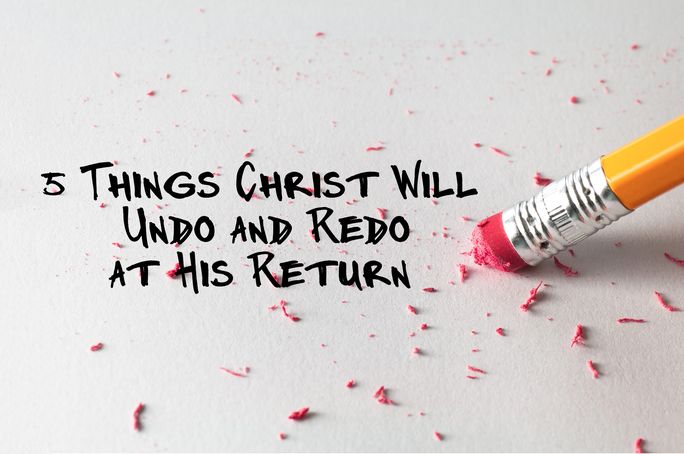
5 Things Christ Will Undo and Redo at His Return

5 Things Christ Will Undo and Redo at His Return “Mankind has done much damage to this earth, but God has a plan to fix man’s many mistakes. What will Christ “undo” and “redo” when He returns to earth?
As a software developer, I consider “undo” to be an essential tool, and I use it often. When making changes to software, I occasionally realize I made a mistake. The easiest way to fix that mistake is to undo the changes I made and go back and do it right. I am fortunate to use an editor that remembers changes I made even after it has been closed.

Wouldn’t life be great if we could undo our past mistakes and have a redo? Though life doesn’t provide us such an option, God has a plan that will undo the damage we humans have done to this earth, to one another and to ourselves. His plan is in motion and soon will be evident to all mankind when Jesus Christ returns to earth to establish God’s Kingdom here.

Under Christ’s perfect government, mankind will learn to “redo” life, but this time following the perfect laws of God.

Let’s consider some of the major things that will be undone and redone after Christ’s return.

1. Swords and plowshares

Undo: War between nations.

Redo: Peaceful, mutually beneficial relationships between nations.

After Christ returns, He will teach the nations His law, which is based on love Just before Christ returns to the earth, there will be a period of intense worldwide warfare when people will be beating “plowshares into swords” and “pruning hooks into spears” (Joel 3:10). This is ancient language describing implements of food production (which sustains life) being turned into implements of warfare (which destroys life).

But after Christ returns, He will teach the nations His law, which is based on love (2 John 1:6). When godly love is understood and practiced on an international level, the nations will turn “swords [back] into plowshares” and “spears [back] into pruning hooks” (Micah 4:3).

2. Food shortages

Undo: Hunger and malnutrition affecting millions of people.

Redo: An abundance of food where everyone’s needs are met.

As we covered above, after Christ returns, the nations will no longer devote their economic resources to warfare and defense, but will instead redirect their economies to food production. Christ will restore an emphasis on agriculture that will allow the nations to sustain healthy populations. The prophet Amos foresaw a world where the “plowman shall overtake the reaper” (Amos 9:13).

3. Dangerous animals

Undo: The instinctual nature in many wild animals that makes them dangerous to humans and each other.

Redo: A transformed nature of wild animals that makes them docile, tame and harmless.

In the creation described in the first two chapters of Genesis, there was perfect harmony between the animals and mankind. But when Adam and Eve sinned and were kicked out of the Garden of Eden, they found many wild animals were now hostile to human beings. Christ will change the violent natures of animals so they will dwell safety with one another and with mankind (Isaiah 11:6-9).

4. Knowledge of God

Undo: Rejection of God and His laws.

Redo: Acceptance of God and His laws in every aspect of life.

In the book of Romans, the apostle Paul described the current state of humanity as being in rebellion against God (Romans 1:28). But Christ will make God’s beneficial laws undeniable. He will lead an educational system based on the ways of God. It will eventually lead to the knowledge of God covering the earth “as the waters cover the sea” (Isaiah 11:9). The prophet Jeremiah foresaw a time when everyone will know God (Jeremiah 31:34).

5. God’s Sabbath and festivals

Undo: Ignorance of God’s Sabbath and festivals.

Redo: Knowledge and observance of the Sabbath and festivals.

Within God’s law are holy times: the weekly Sabbath (Exodus 20:8-11) and annual festivals (Leviticus 23). Not only are these days when we are to worship God, they also reveal the major stages of His plan. These days will be observed by the entire world after Christ returns (Isaiah 66:23, ZechariaThe Mystery of the Kingdom free bookleth 14:16).

This covered just a few aspects of our world that will be undone and redone after Jesus Christ returns. To learn more about this future time, download our free booklet The Mystery of the Kingdom.   From: https://lifehopeandtruth.com/prophecy/blog/5-things-christ-will-undo-and-redo-at-his-return/?

________

Should Christians Keep Mardi Gras?

Transcript of video at: https://www.ucg.org/beyond-today/beyond-today-dailys/should-christians-keep-mardi-gras

Mardi Gras has its roots in religious tradition. But what does the Bible say?

[Steve Myers] “Colorful costumes and masks and pageantry. That's all surrounding Mardi Gras. Mardi Gras is one of those traditions where...    sometimes I'll talk about the fact that it reminds me of the three Ds. There's dancing in the streets, there's drunkenness and debauchery. That kinda categorizes Fat Tuesday. That's literally what the term Mardi Gras means. Religiously it's called Shrove Tuesday because that's the day before Lent. Lent of course being more of a Catholic kind of a tradition that's rooted in pagan holidays. And what would happen at Lent is that you would give up something for Lent. And so before you give something up, you certainly want to overindulge and fatten up and, you know, get into food and drink and all those things so that you can then put that behind you and repent for the rest of this religious season.

But when you really think about the implications of that religiously, it's really ridiculous. In modern carnival traditions and celebrations all around the world and whether it's in New Orleans or Rio or Nice, France. These are areas where they'll often celebrate for weeks, leading up to that time. When we lived in New Orleans for a while, I remember they talk about Fat Tuesday, and then instead of Ash Wednesday, they'd call it Trash Wednesday because there was so much junk leftover from these Mardi Gras celebrations. Well, is that something we should have any part in? These Catholic traditions that are not really based in the Bible at all. I mean, there's a couple of interesting aspects when you consider this. I was thinking of the passage that's found in Romans 13:13. It says the basic things. As Christians it says, "Let's walk properly in the day, not in revelry or drunkenness."

Of course on TV, they'll show the parties and the fun but they don't show all of those types of things because that would certainly take away from the tourism of all those areas of the world. Romans goes on, "don't walk in lewdness and lust, not in strife and envy." And it's kind of a reminder, those are the things we should give up, but that's not good enough. This whole aspect of Mardi Gras and Lent, I think it is something that miss directs us to what the truth of God's word really is. Yes, we've got to give up lewdness and drunkenness and revelry and all those types of things that are against God's way of life. But Romans points out, it's not just about giving something up. We have to put something on and so verse 14 in Romans 13 says, "Put on the Lord Jesus Christ, make no provision for the flesh to fulfill its lust."

And so that's an important aspect of Christianity, true Christianity. We not only put off those things that are wrong, but we've got to take it a step farther. We've got to put on everything that's right. So when you begin to hear about Mardi Gras celebrations, and all of those types of things in this upcoming Lent season that this religious world will keep, remember, it's not rooted in the Bible. In fact, let it remind you of the fact we need to put off the ways of the world, but more importantly then, put on Jesus Christ.”  From: https://www.ucg.org/beyond-today/beyond-today-dailys/should-christians-keep-mardi-gras

________

How does Plant-Based Eating Benefit Your Health?

father holding broccoli high-five daughter

Whether you’re considering eating less meat or giving it up entirely, the benefits are clear: less risk of disease and improved health and well-being. Consuming less meat decreases the risk of:

Meat is often loaded with cholesterol and saturated fat, which have starring roles in poor heart health. And processed meats, including deli meat, bacon and sausage, often have too much sodium and other additives, and should be limited. However, if you want to include meat into your eating plan, choose lean meats. Be sure to include skinless poultry, seafood, fish, beans, nuts and legumes, too, because they are healthy sources of protein.

Diets or eating styles that do not or restrict meat include:

  • Vegan — entirely plant-based, excluding meat, fish, dairy, eggs, honey and any product that comes from an animal.
  • Vegetarians — a plant-based diet, but may include dairy and eggs.
  • Flexitarian — a vegetarian diet that sometimes indulges in meat or fish but mostly sticks to plant foods.
  • Plant-based — a style of cooking and eating that emphasizes plant-based foods but is not strictly limited to them. Meat may be included, but it’s usually not the main feature of the meal.

Lean protein

Not eating meat does not mean you can’t get enough protein in your diet. In fact, many people eat more than enough protein, especially from animal foods. There are plenty of other foods that can provide you with protein, such as tofu, edamame, quinoa, sorghum, lentils, chickpeas and most beans and legumes. And there are many good sources of protein from vegetables, too, including artichokes, asparagus, broccoli, Brussels sprouts, collards, corn, peppers, spinach, sweet potatoes and turnip greens. Did you know that every plant we eat has some protein in it? So, the more vegetables you eat, the more protein you’ll consume.

Not all plant-based diets are healthy

Don’t replace meats with highly processed meat substitutes or “vegan junk food.” Instead choose high-quality, nutrient-dense plant-based foods. A recent study showed that eating primarily these types of food, such as vegetables, fruits, whole grains, beans, legumes and nuts, was associated with a lower risk of death from cardiovascular diseases. The researchers concluded that even if you’ve eaten a poor diet for half your life, adding more healthy plant foods as an adult can help reduce your risk.

Making the switch

Going plant-based is not as difficult as you may think. In fact, getting started can be as easy as 1-2-3!

  1. Search for some vegetarian recipes that are easy to prepare and sound appealing to you and your family.
  2. Choose ingredients and flavors you know your family will enjoy.
  3. Try meatless Mondays! Experiment with a meatless meal once a week, then add more days as you get used to it.”          

Written by American Heart Association editorial staff and reviewed by science and medicine advisors. See our editorial

From: https://www.heart.org/en/healthy-living/healthy-eating/eat-smart/nutrition-basics/how-does-plant-forward-eating-benefit-your-health

_________

Tuesday, February 20, 2024

What Does Your Appearance Say About You? Slaves of Sin or Slaves of Righteousness? What You Should Know About Plant-Based Diets.

.

What Does Your Appearance Say About You?

What does your appearance say about you?“While sitting in a waiting room, waiting for an eye exam, an elderly gentleman walked in whose appearance caught my eye. He had a nice suit on with a very nice wool overcoat. His shoes where so shiny you could probably see yourself in them. I can assure you I did not try. I thought to myself, this guy is rich, probably a CEO. As I looked around the room, everyone else was dressed in their jeans and one lady even had holes in her jeans. When I looked at the other people in the room, and how they were dressed, I certainly was not left with the same impression as I with the immaculate dressed elderly gentleman.

It made me think about our appearance. We know that God looks at the heart, and that is what is most important. But, our appearance leaves a message in others peoples minds. What does our appearance say about us? What is the first impression that people see when they see you? Does appearance mean anything? Is your appearance modest? Do we strive to wear our very best for the occasion? The main question we should also ask is does our appearance represent God? We are representative of God in our behavior and in our dress. We should dress as Ambassadors for the coming Kingdom of God. We should dress to honor God.

You do not have to spend a lot of money to look well dressed. Many thrift or second hand stores have great clothing for a low budget. You can find great quality clothes at these second hand shops. I know after seeing this gentleman it made me want to try harder and dress better because I know our appearance projects an image of us and of God, especially if they know we are Christians.

We want our appearance to project a high quality person, a representative of God! So always remember when you get ready to go somewhere what does your and my appearance say to others and am I representing God as an Ambassador?” From: https://www.ucg.org/beyond-today/blogs/what-does-your-appearance-say-about-you#comments.  Yes, there are lots of comments to read about this, too!

_________

Slaves of Sin or Slaves of Righteousness?

Romans 6:15-16

What then? Shall we sin because we are not under law but under grace? Certainly not! Do you not know that to whom you present yourselves slaves to obey, you are that one’s slaves whom you obey, whether of sin leading to death, or of obedience leading to righteousness?

“The apostle Paul, after describing in Romans 5 the incredible sacrifice of Jesus Christ to pay the penalty of our sins and make possible the free gift of forgiveness and eternal life, saw the need to explain more fully.

We can do nothing to “earn” forgiveness or eternal life, but that doesn’t mean that God wants us to continue sinning. Obviously if God hates sin so much that He requires the death penalty for sin, He does not want us to go back to doing it. Sin causes pain and suffering and death. Obeying God’s law produces right relationships and life.

Paul points out that humans must choose whom they will serve: either sin leading to death or obedience to God’s good and righteous law, which leads to being right with God. Those are the only two choices; and as God said long before, He wants us to choose obedience and “choose life” (Deuteronomy 30:16-19).

For more about sin and God’s law, see “The 10 Commandments for Today.” From: https://lifehopeandtruth.com/bible/blog/slaves-of-sin-or-slaves-of-righteousness/?

________

What You Should Know About Plant-Based Diets

eating veggies in a buddha bowl“Learn the pros, cons and safe ways to remove meat products from your diet ​

Thinking about trying out a plant-based diet and want to know more? Here, dietitians Kate Patton, MEd, RD, CSSD, LD, and Julia Zumpano, RD, LD, explore some details that can help you decide if it’s right for you — and if so, how to jump right in.

What is a plant-based diet?

These vegan-like diets eliminate all animal products, including meat, poultry, fish, eggs, dairy and honey. As the name suggests, everything you eat — including whole grains, fruits, vegetables, legumes, nuts and seeds — is derived from plants.

Are plant-based diets healthy?

Research reflects that following a plant-based diet has significant health benefits as long as you do it correctly.

“No matter when you start, a diet that is focused on plant foods will help you work toward the prevention of many illnesses and feeling better overall,” Zumpano says.

If followed properly, a whole foods, plant-based diet limits the use of oils, added sugars and processed foods, leaving only whole foods to provide nutrition. This maximizes nutrient intake and virtually eliminates foods that can lead to poor health outcomes.

These diets are low in saturated fat, free of cholesterol, and rich in fiber, vitamins, minerals and antioxidants.

Research also reveals that following this type of diet will lower your risks of:

  • Heart disease.
  • Hypertension (high blood pressure).
  • Diabetes.
  • Digestive disease.
  • Colon and breast cancers.
  • Obesity.

Studies also show that a plant-based diet can help to lower body weight and reduce your LDL cholesterol.

The cons of a plant-based diet

Following a plant-based diet means saying goodbye to all animal products — including lean meat and dairy products such as milk, yogurt, cheese and ice cream.

“That’s easier said than done for many of us,” Patton says. “But when you have the right guidelines and wrap in changes over time, replacing animal products in your diet is possible.”

Another thing to note — if you don’t plan your plant-based diet correctly, you may not meet all your protein, vitamin and mineral needs. And you won’t feel or look your best if you develop a nutritional deficiency. But there are easy ways to make sure you’re getting the nutrients you need.

How to get enough protein

You’ll want to make sure that your diet includes enough protein to maintain muscle mass, strong bones and healthy skin. The following foods are packed with protein:

  • Beans, lentils and split peas.
  • Quinoa.
  • Fermented Soy products like tempeh, tofu, soybeans and soy milk.
  • Nuts and seeds.
How to get enough vitamins and minerals

You’ll also need to get adequate calcium and vitamin D in your diet to ensure healthy bones. This won’t be difficult if you:

  • Drink a milk alternative such as soy, almond, rice or hemp milk, which contain both calcium and the vitamin D needed to absorb it.
  • Eat plenty of dark green leafy lettuce and beans which contain calcium.
  • Eat mushrooms and fortified cereals which contain vitamin D. If you aren’t consuming fortified foods on a consistent basis you’ll need to take a vitamin D supplement. Sunlight is another source of vitamin D.

You’ll also need enough zinc in your diet to support a healthy immune system, enough iron to maintain energy and immunity and enough vitamin B12 to produce red blood cells and prevent anemia. This means you’ll want to:

  • Eat whole grains, beans and fortified cereals for zinc and iron.
  • Eat fortified cereals and soy products to get your vitamin B12.
  • Nutritional yeast is also a great source of vitamin B12.
How to get started on a plant-based diet  …………..
Continued at: https://health.clevelandclinic.org/is-a-plant-based-diet-right-for-you

__________

Monday, December 25, 2023

You Don't Have to Know. The Christmas Shopping Season. Animal Protein Intake and IGF-1 Production.

.

You Don't Have to Know

a surface of gray stones slightly covered with water“Anyone can choose to humbly ask God for ways to serve when they see someone who may be struggling.

Aaron Burden/Unsplash

Encourage an open and healing connection with others so they may feel understood and supported.

Have you ever seen a situation in which you wanted to do something but were afraid you might say or do something wrong or unhelpful? I have.

Admittedly, there can be situations that may not be our business. If that is the case, realize it quickly and leave it alone, an issue for another time. But there may be times you encounter a situation where your heart is moved to help, but you are not sure how.

I had four brothers, one of whom was born with Down Syndrome and a number of even more challenging conditions. I was his legal guardian for the last 35 years of his life. It was difficult for my parents and later for me to deal with countless situations that involved difficult, binding decisions. When I see people in similar situations, I cannot turn away. I recall that Proverbs instructs: “Rescue those who are unjustly sentenced to die; save them as they stagger to their death. Don’t excuse yourself by saying, ‘Look, we didn’t know.’ For God understands all hearts, and he sees you. He who guards your soul knows you knew. He will repay all people as their actions deserve” (Proverbs 24:11-12, New Living Translation). This reminds us how important it is to be aware of serious situations of which we may be able to help, versus living in denial of the fact that I could do something to make the situation better.

I have been blessed to meet families in Church at Feast of Tabernacles sites etc., that, like me, faced similar challenging situations. Each time I was moved to action by considering the difficult times they faced as their lot in life. As I reached out to them, I experienced some feelings of nervousness but was able to overcome the apprehension by focusing on their needs and offering to serve.

It may seem easier to approach these situations with understanding and sensitivity when you’ve already had a similar experience. But, the fact is, anyone can choose to humbly ask God for ways to serve when they see someone who may be struggling.

I suggest your perspective should be: “I don't have to know or have the answers, just ask.” You could say something like, “How are you, really? But, if you’d rather not share, that’s fine.” Or you could say, “You appear to be distressed.” This may open a door and lead to meaningful conversation and additional ways to help and serve.

At the Feast of Tabernacles one year, I was saddened to hear one family tell me that they were rarely asked by brethren how they were getting along. It struck me how important it is to reach out and show true care and concern for others.

When faced with these circumstances, start by giving your ears and your heart, right then and there. Ask God to help you serve if you can (Proverbs 3:27-28). Don’t minimize or judge them, but encourage an open and healing connection so they may feel understood and supported (Proverbs 18:13). You can also make it a point not to ignore other family members who may feel neglected because of the necessary care and attention given to one family member. For me, reaching out resulted in that family feeling encouraged and comfortable enough to talk for a number of hours, sharing their situation.

People, in and out of Church struggle with many isolating and lonely battles. If you prove to someone that you are a “safe place” to trust and to share with, and you sense it is the appropriate time, you could use Fred Rogers’ simple but powerful question, “What’s the matter?” There may be potential here for fulfilling Galatians 6:2 to, “Bear one another’s burdens, and so fulfill the law of Christ.”

A good way to learn how some of your brothers and sisters are working through serious difficulties is to visit the Breaking Free blog at ucg.org. They have much to share that may help in breaking the silence that typically surrounds issues of overcoming.

We await the return of Jesus Christ, the Mighty God and Counselor (Isaiah 9:6), who will begin to create a safe place when He returns to earth. As His helpers and “princes” (Isaiah 32:1), we will become hiding places and “shelters” (Isaiah 32:2), for those who live through the Great Tribulation. So, as we look forward to that time ahead, let’s be present for others today by choosing to “just ask.” From: https://www.ucg.org/beyond-today/blogs/breaking-free/you-dont-have-to-know

________

Matthew 2:11

(11) And when they had come into the house, they saw the young Child with Mary His mother, and fell down and worshiped Him. And when they had opened their treasures, they presented gifts to Him: gold, frankincense, and myrrh.

“When it comes to the "most important" part of all in this Christmas observance—the Christmas shopping season—the buying and exchanging of gifts—many will exclaim triumphantly, "Well, at least the Bible tells us to do that! Didn't the wise men give gifts, when Christ was born?"

Again, we are due for some surprises, when we learn the plain truth. First, let us look at the historic origin of trading gifts back and forth, then see exactly what the Bible does say about it.

From the Bibliotheca Sacra, volume 12, pages 153-155, we quote, "The interchange of presents between friends is alike characteristic of Christmas and the Saturnalia, and must have been adopted by Christians from the Pagans, as the admonition of Tertullian plainly shows."

The fact is, this custom fastened upon people of exchanging gifts with friends and relatives at the Christmas season has not a single trace of Christianity about it, strange though that may seem! This does not celebrate Christ's birthday or honor it or Him! Suppose someone you love has a birthday. You want to honor that person on his or her birthday. Would you lavishly buy gifts for everyone else, trading gifts back and forth with all your other friends and loved ones, but ignore completely any gift for the one whose birthday you are honoring? Rather absurd, when viewed in that light, is it not?

Yet this is exactly what people the world over are doing! They honor a day that is not Christ's birthday by spending every dime they can scrape together—even spending what they cannot afford—in buying presents to trade back and forth among friends and relatives.

Now consider what the Bible says about giving gifts when Christ was born. It is in Matthew 2:1-11. "Now when Jesus was born in Bethlehem of Judea in the days of Herod the king, behold there came wise men from the east to Jerusalem, saying, Where is he that is born King of the Jews?' . . . And when they were come into the house, they saw the young child with Mary His mother, and fell down, and worshipped him: and when they had opened their treasures, they presented unto HIM gifts; gold and frankincense, and myrrh."

Notice, they inquired for the child Jesus, who was born King of the Jews! Now why did they present gifts to Him? Because it was His birthday? Not at all, because they came several days or weeks after the date of His birth! Was it to set an example for us, today, to trade gifts back and forth among ourselves? No, notice carefully! They did not exchange gifts among themselves, but "they presented unto Him gifts." They gave their gifts to Christ, not to their friends, relatives, or one another!

Why? Let me quote from the Adam Clarke Commentary, volume 5, page 46: "Verse 11. (They presented unto him gifts.) The people of the East never approach the presence of kings and great personages, without a present in their hands. The custom is often noticed in the Old Testament, and still prevails in the East, and in some of the newly discovered South Sea Islands."

There it is! They were not instituting a new Christian custom of exchanging gifts with friends to honor Christ's birthday. They were following an old and ancient eastern custom of presenting gifts to a king when they come into his presence. They were approaching Him, born King of the Jews, in person. Therefore custom required they present gifts—even as the Queen of Sheba brought gifts to Solomon—even as many people today take a gift along when they visit the White House for an appointment with the President.

No, the custom of trading gifts back and forth does not stem from this scriptural incident at all, but rather, as quoted from history above, it is the continuance of an ancient pagan custom.”

To learn more, see:
The Plain Truth About Christmas 

Related Topics:
Christ's Birth
Christ's Birth Not In December
Christ's Birth Not In Winter
Christmas
Christmas, Pagan Origins of 

From: https://www.theberean.org/index.cfm/main/default/id/6337/ver/nkjv/matthew-2-11.htm

________

Protein Intake and IGF-1 Production

Transcript of video at: https://nutritionfacts.org/video/protein-intake-and-igf-1-production/

“Animal protein consumption triggers the release of the cancer-promoting growth hormone IGF-1.

What is the mechanism by which our diet can affect our levels of this cancer-promoting growth hormone IGF-1? Imagine you’re a kid with some Tinkertoys. Then, Christmas comes early, and you get one of those huge sets dumped down in front of you. All excited with this new load of building raw materials, you may really start scaling up. And basically, it’s the same thing with your liver and Insulin-like Growth Factor 1.

When you dump a load of protein on your body, your liver’s like whoa, look at all this. What are we going to do with all? We can’t just waste it; we’ve got to do something with it. Let’s just start growing stuff; add a few new additions, maybe a new wing. So your liver decides to start pumping out IGF-1 to tell all the cells in the body, it’s growin’ time! Be fruitful and multiply. Spare no expense, go crazy—look how much excess protein we got to work with!

The problem, of course, is that some of the new additions may be tumors. When you’re a fully grown adult, cell growth is something we want to slow down—not accelerate. So one might imagine the goal would be to maintain adequate, but non-excessive, overall protein intake—but wait a second.

Studies have found no association between total protein intake and IGF-1 levels. Doesn’t that just go against everything I just said? Ah, but these studies didn’t take into account animal versus plant protein.

In this study of meat-eaters, vegetarians, and vegans, they found no significant difference in IGF levels between people eating lots of protein, compared to people eating less protein. But before ditching the theory that excessive protein intake boosts the levels of IGF-1, they decided to break it down into animal protein versus plant protein.

Higher IGF-1 levels were just associated with animal protein intake. In fact, the plant protein seemed to decrease IGF-1 levels. So, no wonder there was no net effect of total protein intake. Animal protein appears to send a much different signal to our livers than most plant proteins. So even those vegans eating the same amount of protein as meat-eaters still had lower levels of the cancer-promoting hormone, IGF-1.

So, it’s apparently not about excessive protein in general, but animal protein in particular.” From: https://nutritionfacts.org/video/protein-intake-and-igf-1-production/

To see any graphs, charts, graphics, images, and quotes to which Dr. Greger may be referring watch the above video. This is just an approximation of the audio contributed by Kerry Skinner.

__________