Showing posts with label Animals. Show all posts

Tuesday, December 23, 2025

Christmas: The Untold Story (Part 1) (Part 2)

.

Christmas: The untold story (part 1)

Christmas: The untold story (part 1)“Christmas is one of the world’s most popular holidays, celebrated by people of many faiths. Yet the holiday has a strange and convoluted past, one hinted at in such puzzling symbols as decorated trees, holly wreaths and mistletoe.

William Walsh (1854-1919) summarizes the holiday's origins and practices in his book The Story of Santa Klaus: "We remember that the Christmas festival ... is a gradual evolution from times that long antedated the Christian period ... It was overlaid upon heathen festivals, and many of its observances are only adaptations of pagan to Christian ceremonial" (1970, p. 58). 

During the second century B.C. the Greeks practiced rites to honor their god Dionysus (also called Bacchus). The Latin name for this celebration was Bacchanalia, which spread from Greece to Rome. "It was on or about December 21st that the ancient Greeks celebrated what are known to us as the Bacchanalia or festivities in honor of Bacchus, the god of wine. In these festivities the people gave themselves up to songs, dances and other revels which frequently passed the limits of decency and order" (Walsh, p. 65).

In addition to the Bacchanalia, the Romans celebrated the Saturnalia, held "in honor of Saturn, the god of time, [which] began on December 17th and continued for seven days. This also often ended in riot and disorder. Hence the words Bacchanalia and Saturnalia acquired an evil reputation in later times" (p. 65).

Notice the customs surrounding the Saturnalia: "All businesses were closed except those that provided food or revelry. Slaves were made equal to masters or even set over them. Gambling, drinking, and feasting were encouraged. People exchanged gifts, called strenae, from the vegetation goddess Strenia, whom it was important to honor at midwinter ... Men dressed as women or in the hides of animals and caroused in the streets. Candles and lamps were used to frighten the spirits of darkness, which were [considered] powerful at this time of year. At its most decadent and barbaric, Saturnalia may have been the excuse among Roman soldiers in the East for the human sacrifice of the king of the revels" (Gerard and Patricia Del Re, The Christmas Almanac, 1979, p. 16).

"From the Romans also came another Christmas fundamental: the date, December 25. When the Julian calendar was proclaimed in 46 [B.C.], it set into law a practice that was already common: dating the winter solstice as December 25. Later reforms of the calendar would cause the astronomical solstice to migrate to December 21, but the older date's irresistible resonance would remain" (Tom Flynn, The Trouble With Christmas, 1993, p. 42). On the heels of the Saturnalia, the Romans marked December 25 with a celebration called the Brumalia. Bruma is thought to have been contracted from the Latin brevum or brevis, meaning brief or short, denoting the shortest day of the year.

"The time of the winter solstice has always been an important season in the mythology of all peoples. The sun, the giver of life, is at its lowest ebb….It is the time when the forces of chaos that stand against the return of light and life must once again be defeated by the gods. At the low point of the solstice, the people must help the gods through imitative magic and religious ceremonies. The sun begins to return in triumph. The days lengthen and, though winter remains, spring is once again conceivable. For all people, it is a time of great festivity" (The Christmas Almanac, 1979, p. 15).”   From: https://www.ucg.org/learn/bible-study-tools/bible-study-aids/holidays-or-holy-days-does-it-matter-which-days-we-observe/christmas-untold-story

________

Christmas: The untold story (part 2)

Christmas: The untold story (part 2)“During the days of Jesus' Apostles, in the first century, the early Christians had no knowledge of Christmas as we know it. But, as a part of the Roman Empire, they may have noted the Roman observance of the Saturnalia while they themselves persisted in celebrating the customary "feasts of the Lord" (listed in Leviticus 23).

The image is a painting titled "A Roman Feast" (also known as "Saturnalia") by Italian artist Roberto Bompiani, depicting a lively banquet scene during the ancient Roman festival of Saturnalia.

The Encyclopaedia Britannica tells us "the first Christians ... continued to observe the Jewish festivals, though in a new spirit, as commemorations of events which those festivals had foreshadowed" (11th edition, Vol. 8, p. 828, "Easter"). But over the following centuries, new, nonbiblical observances such as Christmas and Easter were gradually introduced into traditional Christianity.

These new days came to be forcibly promoted while the biblical feast days of Apostolic times were systematically rejected. "Christmas, the [purported] festival of the birth of Jesus Christ, was established in connection with a fading of the expectation of Christ's imminent return" (Encyclopaedia Britannica, 15th edition, Macropaedia, Vol. 4, p. 499, "Christianity"). The Christmas celebration shifted Christianity's focus away from Christ's promised return to His birth, something the Bible does not direct Christians to do.

Gerard and Patricia Del Re explain the further evolution of December 25 as an official Roman celebration: " the tradition of celebrating December 25 as Christ's birthday came to the Romans from Persia. Mithra, the Persian god of light and sacred contracts, was born out of a rock on December 25…. and in the third century [274] the unchristian emperor Aurelian established the festival of Dies Invicti Solis, the Day of the Invincible Sun, on December 25.

"Mithra was an embodiment of the sun, so this period of its rebirth was a major day in Mithraism, which had become Rome's latest official religion with the patronage of Aurelian. It is believed that the emperor Constantine adhered to Mithraism up to the time of his conversion to Christianity. He was probably instrumental in seeing that the major feast of his old religion was carried over to his new faith" (The Christmas Almanac, 1979, p. 17).

Although Christmas had been officially established in Rome by the fourth century, later another pagan celebration greatly influenced the many Christmas customs practiced today. That festival was the Teutonic feast of Yule (from the Norse word for "wheel," signifying the cycle of the year). "During this time log-fires were burnt to assist the revival of the sun. Shrines and other sacred places were decorated with such greenery as holly, ivy, and bay, and it was an occasion for feasting and drinking.

"Equally old was the practice of the Druids… to decorate their temples with mistletoe, the fruit of the oak-tree which they considered sacred. Among the German tribes the oak-tree was sacred to Odin, their god of war, and they sacrificed to it until St Boniface, in the eighth century, persuaded them to exchange it for the Christmas tree, a young fir-tree adorned in honour of the Christ child ..." (L.W. Cowie and John Selwyn Gummer, The Christian Calendar, 1974, p.22).

It wasn't long before such non-Christian rites and practices were assimilated into a new church religious holiday supposedly celebrating Christ's birth. William Walsh describes the rationalization behind it: " In order to reconcile fresh converts to the new faith, and to make the breaking of old ties as painless as possible, these relics of paganism were retained under modified forms ...Thus we find that when Pope Gregory [540-604] sent Saint Augustine as a missionary to convert Anglo-Saxon England he directed that so far as possible the saint should accommodate the new and strange Christian rites to the heathen ones with which the natives had been familiar from their birth.... On the very Christmas after his arrival in England Saint Augustine baptized many thousands of converts and permitted their usual December celebration under the new name and with the new meaning" (p. 61).

Even colonial America considered Christmas more of a raucous revelry than a religious occasion: "So tarnished, in fact, was its reputation in colonial America that celebrating Christmas was banned in Puritan New England, where the noted minister Cotton Mather described yuletide merrymaking as ‘an affront unto the grace of God'" (Jeffery Sheler, "In Search of Christmas," U.S. News and World Report, Dec. 23, 1996, p. 56).”  From: https://www.ucg.org/learn/bible-study-tools/bible-study-aids/holidays-or-holy-days-does-it-matter-which-days-we-observe/christmas-untold-story

_________

Wednesday, October 29, 2025

What Can We Learn From The Biblical Villains? What’s The Problem With Plastic? The Kindest Diet Is Also The Healthiest.

.

Biblical villains: What can we learn from them?

Biblical villains: What can we learn from them?'The Death of Jezebel' by Gustave Doré

“Eight of the Ten Commandments define God’s law by listing wrong actions and thinking we are to avoid. Lessons from the Bible’s villains can help us to learn how to apply God’s law. We can extract good lessons from bad examples.”

Rehoboam

“Rehoboam was the son of Solomon who initially ruled over the united kingdom of Israel in the north and Judah in the south (1 Kings 12). But when he came to power the northern 10 tribes of Israel were already restless and on the verge of seceding.

Rehoboam unwisely took the advice of his peers instead of listening to more experienced older advisors. He raised taxes, and the northern kingdom of Israel split away from the southern kingdom of Judah, resulting in the king losing far more income than all his taxes could have ever gained him. He chose poorly, and everyone suffered because of it.

The lesson to be learned from Rehoboam’s experience is to seek a multitude of counsel (Proverbs 11:14) when making important decisions, and to ask God for discernment.

Queen Jezebel

Queen Jezebel was the wife of King Ahab of the northern kingdom of Israel. She was the daughter of the king of the Phoenician city-state of Sidon and a priestess of the false god Baal (1 Kings 16:29-33), which gave her a great deal of power. She influenced Ahab to worship Baal, which often required human sacrifice, and fought against the true worship of God whenever she could, even calling for the assassination of the prophet Elijah (1 Kings 18:13; 19:2). She also schemed to have a wealthy vineyard owner murdered so that her husband could steal his land (1 Kings 21). Eventually Jezebel was thrown from a window and eaten by dogs after years of corrupting Israel and the king.

As a priestess of Baal, and trying over and over again to destroy the worship of the true God, she was attempting to hold on to and increase what she saw as her source of power. The lesson we can learn from this is not to trust in some other perceived source of power (false gods of our own making)—wealth, authority, weapons, position, etc.—in place of God. If we look to anything other than God for strength, it will ultimately fail.

Saul of Tarsus

There is also a biblical example of a man who was a villain, who then became a biblical hero teaching the truth of God for the rest of his life. His name was Saul of Tarsus, also known as the Apostle Paul. He was initially a fanatical pharisee who saw the teachings of Jesus as blasphemy and Christians as heretics. He had the authority to punish anyone he believed to be a heretic within the Jewish community, and would track them down and prosecute them to the fullest extent of the law—resulting in their imprisonment and sometimes death. He even took part in the death of Stephen “And the witnesses laid down their clothes at the feet of a young man named Saul” (Acts 7:58), while they threw rocks at Stephen until he was bludgeoned to death.

Saul continued to harass the Church and was on his way to the Jewish community in Damascus to arrest members of the faith and send them back to Jerusalem when God intervened and struck him down. Blind and helpless, Saul finally realized he was wrong and that it was futile to fight God. After his spiritual conversion, he went on to preach the truth with the same vigour with which he had previously fought against it (Acts 9). Saul the persecutor became Paul the faithful.

The lesson we can learn from the life of the Apostle Paul is that when God reveals to us we are wrong, we need to humbly respond and make the 180 degree turnaround to do what’s right.”

Beyond Today Bible Commentary (See I Kings chapters 12, 16 and 21 for more information about Rehoboam and Jezebel)

From: https://www.ucg.org/vertical-thought/bible-villains-learning-from-scriptures-bad-examples

_________

What is the problem with plastic?


“Globally, we produce a massive amount of plastic – over 380 million tons every year. It’s everywhere in our daily lives and we’ve become dependent on it. Half of all plastic produced is single-use – meaning it’s thrown away after just one use. Think bottles, bags, straws, cups, and lids. Used for just a few moments, but forever on the planet.

Virtually every piece of plastic that was ever made still exists in some shape or form (with the exception of the small amount that has been incinerated). We thought recycling was the answer but it’s not. Less than 9% of all plastic ever produced has been recycled!

What’s plastics impact?

When plastic enters the ocean, it impacts us all. It’s in the food and water we consume, it’s harming our animals and marine life, and of course, polluting our beautiful planet.

Once at sea, sunlight, wind, and wave action break down plastic waste into small particles, called microplastics. Microplastics have been found in every corner of the globe, from Mount Everest, the highest peak, to the Mariana Trench, the deepest trough. Plastic never fully biodegrades, it just breaks down into these small, toxic, pieces.

Because plastic is so prevalent, there are countless (overwhelming) statistics on its impact. Below are some key facts we feel are important to share – we encourage you to further research the plastic issue as the more aware we are of the problem, the more likely we are to become part of the solution!

Plastic By the Numbers

Millions of marine animals die each year from plastic waste alone.

Plastic pollutes at every step of its journey and it never disappears – breaking up into tiny pieces called microplastics.

Plastic is literally everywhere. It’s in our bloodstreams, the air we breathe, the food we eat, and the water we drink.

Today, more than 99% of plastic is made from fossil fuels.

Less than 9% of all plastic ever produced has been recycled.

What can you do?

Your individual actions, however small, make a difference.

Here are simple ways you can have an impact, starting today!

Say ‘No’ to Single-Use: By refusing to purchase single-use plastic you are showing the big corporations producing the plastic that you want change. Every purchase you make is a vote with your dollar.

Start Conversations: Talk with your friends, families, neighbors, and local businesses, about the plastic issue and how we all can be part of the solution.

Shop Sustainably: One of the biggest impacts you can have is to reduce the amount of plastic you use in your daily life. For almost every plastic product you use, there’s a plastic-free alternative. To help you get started, check out our sustainable products.

_________

The Kindest Diet Is Also The Healthiest.

May be an image of 1 person, steak and text that says 'THE KINDEST DIET IS ALSO THE HEALTHIEST ower cancer Vegetarians have 12% risk and vegans 24% lower cancer risk than meat-eaters, study finds 등 lenen บ้ั fana for mi e ន'

“THE TRUTH IS THAT THE FLESH, MILK & EGGS OF ANY SPECIES IS NOT THE NATURAL FOOD FOR HUMANS, & HARMS THE ANIMALS WE TAKE IT FROM

...and it harms those that still consume animal products, so many have proven this

...an analysis of 79,468 North American Seventh-day Adventists in the Adventist Health Study-2 found that vegetarians had a 12% lower risk of all cancers combined

...and vegans had a 24% lower risk compared to flesh and dairy eaters, showing that dairy is also harmful to our health...the study tracked participants for almost eight years, matching cancer cases to state and provincial registries.

...it found that reduced risk was strongest for colorectal, stomach and lymphoproliferative cancers, with vegan diets showing notable protection against breast cancer in younger women.

...and dairy is also harmful to the mothers we steal it from, as the female cows that are constantly forcibly impregnated die 14 years early because of the abuse of their reproductive powers...and they cry for their babies taken from them so their milk can be stolen, leaving them heart broken.

...those babies are put alone in crates and force fed GMOed replacement and if they are male they are killed within weeks for vile veal.

...while the females are forced to become dairy slaves within months, and abused like their mothers were.

...THERE IS NO REASON TO BE CRUEL & STEAL THE FLESH, EGGS & MILK OF OTHER BEINGS, A PLANT BASED DIET IS THE ONE THAT IS NATURAL FOR US -- Animal Freedom Fighter

The China Study puts the vegan numbers way higher. Check it out!”

_________

Wednesday, September 10, 2025

What Are These Stones, Sep 11, 2013. Throwing Stones. Not Only a Matter of Diet.

.

What Are These Stones?    Sep 11, 2013

“The twelve-year old SUV is still with me. The day I registered it for the plates was the day America was attacked in New York and Washington by terrorists. 9/11. The day we all remember.

I had purchased the car three weeks earlier and decided that morning was the time to go to the motor vehicle bureau and finish the registration process. When I returned home my wife met me at the door with the news about the attacks. In between phone calls from family and friends who wanted to discuss it I was glued to my television the remainder of the day.

This year's anniversary was almost forgotten. The passage of time has a way of removing significance from a day or an event. Had I not looked at the news alert in my inbox I might have forgotten this day. But I look out my window and see my SUV and remember the event. An aging motor vehicle reminds me of an event that took nearly three thousand lives and shocked a nation. In a pathetic way it is a memorial, and memorials are important since they help us remember.

In the book of Joshua, God told the people to erect a memorial of twelve stones to remember how they crossed over the dry land of the Jordan River by His grace. Whenever, they or their children looked upon and asked about their purpose they were to say, "Israel crossed over this Jordan on dry land" (Joshua 4:21-22). A pile of rocks were to remind them God acts in history and among nations. Whatever it takes.

Maybe that's another reason to keep my twelve-year old SUV around. It is still giving good service and function. And it acts as a reminder of a day and an event with deep meaning and significance in American history. We should not forget.”

10 year anniversary 9/11   From: https://www.ucg.org/learn/blogs/what-are-these-stones

_________

Throwing Stones

Throwing stones“We all have a responsibility to use our words wisely. The Bible contains clear warnings about the dangers of gossip, and emphasizes it should be avoided. Gossip and listening to gossip has the power to shape false perceptions and destroy lives.

When the author of this article, Robert Berendt, visited a friend he was reminded of the importance of not slandering and gossiping about others. During their conversation his friend showed him a smooth stone he carried all the time. He explained he carried it to remind himself not to throw stones at others. Robert thought it was a great idea and has been carrying his own little stone ever since.

John 8:1-11 relates the instance of the woman who was caught in adultery. She was brought before Jesus Christ by those who wanted to stone her to death for her sin (Deuteronomy 22:22). Although Jesus knew she was guilty, it must have been an enormous relief to her when He said He did not condemn her, and her accusers left. When Jesus wrote in the dust and announced he who was without sin could cast the first stone, her accusers realized they had also sinned and needed to be forgiven.

Robert went on to explain he had decided to keep a stone in his pocket because he realized he had also sinned, and that Jesus had died for his sins when He could have just as easily condemned him. All of us seem to be ready to give advice or tell people how things should be done long before we are asked. We also often deflect criticism of ourselves by judging others. It seems to make us feel better when we can find flaws in another person. Perhaps our own flaws seem smaller then. Jesus spoke to this in Matthew 7:3-4 when He stated we should be sure our own eyes are clear before we reach out to remove a speck from someone else’s eye.

Words can destroy lives just as surely as the biggest rock thrown at them. One often hears of young people who have been bullied and pushed aside to the point that they despair of life. Proverbs 25:18 speaks to the damage words can do, comparing our words to a club, sword or sharp arrow. While Proverbs 16:27-28 tells us words have the power to separate the closest friends and that ungodly men dig up evil about others.

In Genesis we read that although Adam and Eve both sinned, they could not admit they were to blame. Eve blamed the serpent, Adam blamed Eve and, in a way, both blamed God. Nowhere in the account is the self-examination and repentance seen that God seeks.

By looking into what is taught in the Bible we should learn to curb our often wayward tongues in our interactions with others. Proverbs 16:21-24 outlines the goals we should have in order to add “health to the bones” of others. God’s Word is His mirror, which when we study it reveals our true selves and should motivate us to change (James 1:23-24).”

From:  https://www.ucg.org/watch/beyond-today/virtual-christian-magazine-june-2008/throwing-stones

_________

Not Only a Matter of Diet

“From cover to cover, from Genesis to Revelation, nowhere in the Bible do we find an example of a servant of God or follower of Jesus Christ eating the flesh of an unclean animal.

If at any time the distinctions between clean and unclean meats had ceased to exist, shouldn’t that have been made clear in the Bible through the example of God’s servants?

On the contrary, well into the time of the early Church we find Christ’s followers scrupulously avoiding eating animal flesh that God had revealed as being unclean (Acts 10:14; 11:8). Prophecies of the time of the end make the same distinctions (Revelation 18:2; Isaiah 66:15-17).

But there’s more to the matter than diet. A thorough study of the Bible helps us understand other dimensions to the significance of the distinctions between clean and unclean meats.

God’s Word describes the flesh of unclean animals as an “abomination” (Leviticus 11:10-13, 20, 23, 41-42) and “detestable” (Deuteronomy 14:3)—and in that light we are warned against consuming such meat (Leviticus 11:43). Strong language, but the lesson is that we need to accept all aspects of the Bible, including the basic food laws in Leviticus 11 and Deuteronomy 14.

In instituting the sacrificial system for ancient Israel, God commanded many specific sacrifices involving animals. Nowhere, however, does He command or allow the sacrifice of an unclean animal, nor is there a record of any of God’s servants ever sacrificing such an animal to Him.

Such a sacrifice would have joined the holy with that which God had designated unclean and defiled. It would have been simply unthinkable to a true servant of God because it would have been an affront to the Creator Himself.”  From: https://www.ucg.org/learn/bible-study-aids/what-does-bible-teach-about-clean-and-unclean-meats/what-does-bible-teach-6

________

Wednesday, July 16, 2025

Your Truth, My Truth or THE Truth? What's Wrong With Our Human Nature? WFPB For Reversing Diabetes.

.

Your truth, my truth or THE truth?

Your truth, my truth or THE truth?“The subtle, philosophical idea that everyone can determine what they believe to be true values challenges the authority of the Bible and insidiously permeates Christian beliefs and standards.

When Bob began his freshman year at university he was not prepared to have his Christian beliefs and values challenged. The philosophical idea that everyone determines his or her own truth was insidiously permeating Bob’s new life and it was so subtle that, at first, he didn’t even realize it was happening. It was something that would challenge his Christianity to its very core.

While exposure to different ideas has always been a part of one's college experience, what many young people don't realize is that their understanding of absolute truth—the kind found in the Bible—is going to be strongly tested when they pursue higher education. The campuses of most public universities today are smorgasbords of ideas. Every imaginable philosophy seems to be represented and debate reigns supreme with the underlying assumption human beings should decide for themselves what is best.

Many people today pride themselves on being able to see things from multiple perspectives. Although this approach provides subject for debate, having flexible positions isn’t good when it comes to Christianity. Isaiah 5:20 tells us: “Woe to those who call evil good, and good evil….Woe to those who are wise in their own eyes, and prudent in their own sight!”  Furthermore, to publicly state something is right or wrong has come to be considered judgmental, which is looked down upon in today’s secular world. Most people have embraced the self-empowering myth that whatever they sincerely believe is true. They have forgotten about God and His Word. Truth has become relative. According to religious pollster George Barna, the majority opinion today is that moral truth depends on the circumstances. In a February 2002 report titled "Americans Are Most Likely to Base Truth on Feelings," Barna wrote:

"In two national surveys… one among adults and one among teenagers, people were asked if they believe that there are moral absolutes that are unchanging or that moral truth is relative to the circumstances. By a 3-to-1 margin (64% vs. 22%) adults said truth is always relative to the person and their situation. The perspective was even more lopsided among teenagers, 83% of whom said moral truth depends on the circumstances, and only 6% of whom said moral truth is absolute."

Confusion about moral absolutes has been a human problem for a long time. In the Garden of Eden, Adam and Eve ate from “the tree of the knowledge of good and evil” (Genesis 2:9). Mankind, following their mistaken example of self-determination apart from God, has generally been confused about good and evil ever since. As Jeremiah exclaimed, "O Lord , I know the way of man is not in himself; it is not in man who walks to direct his own steps" (Jeremiah 10:23).

There is a God who really does know the truth and wants what is best for us because He loves us. The humanistic idea that human beings are capable of determining our own way apart from God just doesn’t square with reality. God alone determines truth which is found in the Bible (John 17:17). Recognizing and practicing the eternal, absolute values of God is what sanctifies and sets apart true Christians.They know Jesus intended Christians to be lights to others rather than accepting or being overwhelmed by the world and its values (Matthew 5:14-16).

________

 What's wrong with our human nature?

What's wrong with our human nature?“When God formed Adam and Eve in the Garden of Eden, they were part of a created order that was "very good" (Genesis 1:31). But in describing their creation as good, God did not mean Adam and Eve were inherently good or were inclined to choose to live God's way.


Initially, Adam and Eve made no choice in terms of good and evil. Their way of thinking and behavior was neutral, but as flesh-and-blood human beings, they had physical drives and material interests common to all mankind. They had desires for self-preservation, for physical pleasures, for appreciation, for learning and for bettering their circumstances. The focus on self in such characteristics was not inherently sinful, but this self-oriented focus could lead to sin if it contradicted God's direction and instructions.

When Satan the devil came onto the scene in the form of a serpent, he wasted no time in tempting the first human beings to sin. He deceived Eve about partaking of the fruit God had forbidden, tempting her to take advantage of her desire to become wise and better her life. Adam was not deceived, but he also submitted to Satan's scheming (Genesis 3:1-24; 1 Timothy 2:14 NKJV). Adam and Eve thus set a pattern the human race that would spring from them would follow—accepting the rule and influence of Satan rather than following God.

From then on, human beings would be led to pursue selfishness and rebel against God's commandments. Children would still be born with a neutral nature but, under the influence of Satan. In a world in which people were deceived into unwittingly following him and his ways, they would very quickly develop the selfish nature of the corrupted human society and culture around them. This tendency to exalt self and disobey God is known as human nature, with the primary motivation being selfishness rather than a desire to obey and please God.

Paul explained that, as "the god of this age," Satan "has blinded the minds of unbelievers, so that they cannot see the light of the gospel" (2 Corinthians 4:4). With the exception of Jesus Christ, "all have sinned and fall short of the glory of God" (Romans 3:23). He described the sorry spiritual condition of the human race in Romans 3:10-18, and reminds Christians that "you once walked according to the course of this world, according to the prince of the power of the air, the spirit who now works in the sons of disobedience, among whom also we all once conducted ourselves…fulfilling the desires of the flesh and of the mind…." (Ephesians 2:2-3). However, as powerful as his influence is, the devil cannot force us to sin. He simply seduces us through our fleshly weaknesses and the wrong ways of thinking he has led us into over time. Following are some of the ways we are easily manipulated by Satan:

1. Our selfish, fleshly desires often get us into trouble: "Now the works of the flesh are evident, which are: adultery, fornication, uncleanness, lewdness, idolatry, sorcery, hatred, contentions, jealousies, outbursts of wrath, selfish ambitions, dissensions, heresies, envy, murders, drunkenness, revelries, and the like…those who practice such things will not inherit the kingdom of God" (Galatians 5:19-21). Paul graphically describes the effect corrupt desires have on human behavior. "Therefore God gave them over in the sinful desires of their hearts to sexual impurity for the degrading of their bodies with one another….Furthermore, just as they did not think it worthwhile to retain the knowledge of God, so God gave them over to a depraved mind, so that they do what ought not to be done. They have become filled with every kind of wickedness, evil, greed and depravity. They are full of envy, murder, strife, deceit and malice. They are gossips, slanderers, God-haters, insolent, arrogant and boastful…. Although they know God's righteous decree that those who do such things deserve death, they not only continue to do these very things but also approve of those who practice them" (Romans 1:24 and 28-32, NIV).

2. Our ingrained deviousness, including self-deception, is a major weakness of the fleshly mind. "The heart is deceitful above all things, and desperately wicked; who can know it?" (Jeremiah 17:9). Subject to Satan's influence, we naturally look for ways to justify our lusts and sinful desires, along with the behaviors arising from them. We deceive ourselves into believing that, since our desires are natural, they can’t be so bad, in spite of the fact that God's Word reminds us "there is a way that seems right to a man, but its end is the way of death" (Proverbs 14:12 and 16:25). Death is the end result of living that wrong way (Romans 6:23).

3. Under the devil's influence we develop the tendency to resent having our selfish desires limited by rules, even God's commandments: "For those who live according to the flesh think about the things of the flesh, but those who live according to the Spirit, about the things of the Spirit….the mind-set of the flesh is death, but the mind-set of the Spirit is life and peace. For the mind-set of the flesh is hostile to God because it does not submit itself to God's law, for it is unable to do so. Those who are in [that is, within control of] the flesh cannot please God" (Romans 8:5-8, HCSB).

Without the positive influence of God's Spirit, our primary inclination is to serve ourselves and resist living according to God's biblical instructions. Satan is a powerful deceiver and manipulator, taking advantage of our self-focused nature by persuading us to give in to our human wants and desires. Because of this Paul warns: "If you live according to the flesh you will die; but if by the Spirit you put to death the deeds of the body, you will live. For as many as are led by the Spirit of God, these are sons of God" (Romans 8:13-14).

_________

Beginner’s Guide to a Whole-Food Plant-Based Diet

“Right off the bat, we want you to know that a whole-food, plant-based lifestyle is NOT a diet of vegetables only.

So if you were hesitant to start because you think you are only going to be eating rabbit food, let’s put those fears to rest.

You, along with tens of millions of people just like you, have taken an important first step to improving your life.

We are grateful that so many people worldwide have helped improve their health, manage their weight, and prevent and reverse chronic diseases through a whole-food, plant-based diet.”

“If you’re new to eating a whole-food plant-based diet, or if you’re just curious, you came to the right spot. It’s worth mentioning that neither whole-food plant-based eating, diet nor a vegan diet are “diets” in the sense of restricting calories. The term is used here as a description of how someone eats on a consistent basis.

What exactly is a whole-food plant-based diet?

First up, following a whole-food plant-based (WFPB for short) diet is different from eating vegan. While neither includes animal-based foods nor foods derived from animal-based ingredients, WFPB goes a step further and removes overly processed foods like oil, junk food, white flour, white sugar, vegan ice cream, vegan cookies from the mix. Why? Because overly processed foods are typically very high in calories but low in nutrition. Calorie density isn’t necessarily a bad thing, but when paired with little or no nutritional value, it’s best to avoid those types of foods. Plus, high quantities of salt, fat, and sugar release super powerful chemicals in our brains that make us crave more and can turn down our body’s natural satiation signals, meaning it’s easy to eat way more of those foods more often than we intend.

What should you eat when following a WFPB diet?

When you eat a whole-food plant-based diet, you’ll find yourself enjoying:

  • Vegetables
  • Whole grains
  • Beans & legumes
  • Fruit
  • Nuts
  • Seeds
  • Herbs & spices
  • Minimally processed plant based ingredients like tofu, tempeh, unsweetened plant milk, and sprouted grain bread

whole-food plant-based diet food groups chart

Benefits of whole-food plant-based eating

Whether your motivation to eat more plants is to boost your immune system and your overall health, drop some pounds, get off your diabetes medication, help protect the environment, or animal welfare, it’s never too late to start, and there are no prerequisites. You simply start where you’re at and ease into it however you like.

Reverse diabetes

Lower your A1C and manage your blood glucose by harnessing the power of plants. A whole-food plant-based diet can help you find joy in eating again while reversing diabetes. We’ve seen it happen for countless members.” 

Dr. Elina Tomski reverses pre-diabetes with a whole-food plant-based diet >

More at: https://cleanfooddirtygirl.com/beginners-guide-to-a-whole-food-plant-based-diet/

_________

    Monday, July 15, 2024

    Lessons From A Hurricane. The Role of Taxpayer Subsidies in the Obesity Epidemic.

    .

    We just got power back from losing it during Hurricane Beryl!!

    Lessons from A Hurricane

    The most powerful and destructive storms on earth are called hurricanes, typhoons or cyclones, depending on where they occur. 

    On Sept. 8, 1900, a very powerful hurricane struck Galveston, Texas, on the Gulf Coast of the United States.

    The storm and the storm surge that followed destroyed more than 3,500 homes. The death toll from that storm was around 8,000, making it the worst and deadliest natural disaster in U.S. history—2.5 times deadlier than the 1906 San Francisco earthquake. 

    Twenty-eight years later, on Sept. 12 and 13, the Okeechobee hurricane of 1928 plowed through the Caribbean before slamming into Florida, killing a total of 4,000 people, 2,500 of them in the U.S. In Puerto Rico alone, the storm left half a million people homeless.

    In 2005, the costliest natural disaster in U.S. history hit the Mississippi and Louisiana coasts. Hurricane Katrina’s storm surge in places was 28 feet above the normal tide. In the end, Katrina was responsible for about 1,400 deaths, and caused $125 billion in damages.

    To survive a hurricane or other natural disaster, it’s vital to be prepared. What should one do to be prepared? And, even more important, what spiritual lessons can you and I draw from this process?

    Watch the news: Unlike a century ago, today weather satellites and radar can give warnings days in advance of the approach of a hurricane, typhoon or cyclone. Warnings go out several days before, encouraging people to prepare their properties and even evacuate if that is deemed necessary. 

    Over a century ago, when the Galveston hurricane struck, it is probable that so many deaths occurred because they had so little warning. By the time they knew how big the storm was, it was too late.

    How many times in Scripture are we given the admonition to watch and pray (Luke 21:36) or “take heed; see, I have told you all things beforehand” (Mark 13:23) or “I have told you before it comes” (John 14:29)?

    I’ve heard prophecy described as news written in advance. One of the primary purposes of prophecy is to show in advance what will happen, so God’s people can be prepared (Amos 3:7).

    Just as we have news stations showing satellite images and tracking storms, so we have prophecies providing written “storm warnings” about the events that are soon to smash through the lives of people in the end time.

    Are we watching the “news” of the Bible? Or will we be like the majority of mankind, who will be surprised by the storms at the end of this age (Luke 21:34)?

    Stock up on emergency supplies: Emergency preparedness includes having a supply of food that doesn’t need refrigeration, as well as drinking water, protective clothing, flashlights and batteries and, if possible, fuel. 

    These are all items a family might need to survive until clean-up crews make it to them and normal utilities and services resume.

    Jesus Christ made a similar spiritual point through the parable of the 10 virgins in Matthew 25. In this parable, righteousness and God’s Holy Spirit are likened to the oil needed as fuel for lamps in that time. 

    When I was a boy on the farm, we always had kerosene lamps and kept extra kerosene on hand for those times when a storm would knock out power. I did homework by kerosene lamp more than once—and we were glad to have them! 

    My wife and I still have some of those same old lamps—and we have spare kerosene also! Because, without oil or kerosene, your lamps are of no help in a crisis.

    We are told this is the condition of the Christian who is not diligently working to repent, grow and build righteous character. A Christian must work daily to make sure his or her life is filled with and guided by God’s Spirit. 

    When a crisis of faith or a heavy trial comes—and we know it will—we cannot just instantly obtain righteous character out of thin air any more than a man stranded after a storm can just instantly obtain kerosene (or flashlight batteries or food or water) out of thin air. 

    Take action—NOW: With the benefit of advanced warning, government officials will begin urging residents to prepare for a storm, board up windows and gather needed supplies. 

    If a storm is expected to be severe enough, evacuation warnings and orders will go out. People living in the most vulnerable areas will be urged to get out. 

    Sadly, with every powerful storm, there are many people who refuse to leave their homes. With Katrina, some refused to leave until it was too late. 

    They thought they were strong enough or prepared enough that they could survive what was coming. In many sad cases, they were wrong. 

    Over the years I’ve heard brethren state they will start praying and studying more “after I retire” or “when the kids start school” or “after my business takes off and I don’t have to put so much time into it” or so forth. 

    Others feel they are already spiritually mature and strong enough to endure whatever life may throw at them, and they don’t need anything more. Revelation 3:17 indicates this will be a problem Christians must beware of at the end of this age. 

    Don’t put off prayer, Bible study and working hard to strengthen your spiritual life. Take action NOW! When the most severe crisis ever to hit mankind comes, we don’t want to be unprepared and without the spiritual resources we need to weather the storm with our faith intact!

    Study this further in our online article “How to Prepare for the End Times.”

    Kind regards, and have a great rest of your week,

    Tom Clark, for Life, Hope & Truth

    ________  

    The Role of Taxpayer Subsidies in the Obesity Epidemic

    Transcript of the video at: https://nutritionfacts.org/video/the-role-of-taxpayer-subsidies-in-the-obesity-epidemic/

    Below is an approximation of this video’s audio content. To see any graphs, charts, graphics, images, and quotes to which Dr. Greger may be referring, watch the above video.

    “Why are U.S. taxpayers giving billions to support the likes of the sugar and livestock industries?

    The rise in calorie surplus sufficient to explain the obesity epidemic was less a change in food quantity than in food quality, with an explosion in cheap, high-calorie, low-quality convenience foods. And the federal government very much played a role in making this happen. U.S. taxpayers give billions in subsidies to prop up the likes of the sugar industry; the corn industry and their high-fructose syrup, (HFCS); and soybean production, about half of which is processed into vegetable oil, and the other half used as cheap feed to help make dollar-menu meat. Why do taxpayers give nearly a quarter billion dollars a year to the sorghum industry? When was the last time you sat down to some sorghum? It’s almost all fed to livestock. We’ve created a pricing structure that favors the production of sugars, oil, and animal products.

    The farm bill started out as an emergency measure during the Great Depression of the 1930s to protect small farmers, but was weaponized by Big Ag into a cash cow with pork barrel politics—including said producers of cows and pork. From 1970 to 1994, global beef prices dropped more than 60 percent. If it weren’t for taxpayers sweetening the pot with billions of dollars a year, high-fructose corn syrup would cost the soda industry about 12 percent more. (And then we hand them more billions through the “food stamp” program to give sugary drinks to the poor.)

    Why is chicken so cheap? After one of the farm bills, corn and soy were subsidized below the cost of production for cheap animal fodder, effectively handing the poultry and pork industry about $10 billion each. That’s not chicken feed—or rather, it is!

    This is changing what we eat. Thanks in part to subsidies, dairy, meats, sweets, eggs, oils, and soda were all getting relatively cheaper compared to the overall consumer food price index as the obesity epidemic took off, whereas the relative cost of fresh fruits and vegetables doubled. This may help explain why during about the same period, the percentage of Americans getting even five servings of fruits and vegetables a day dropped from 42 percent to 26 percent. Why not just subsidize produce instead? Because that’s not where the money is.

    To understand what is shaping our foodscape today, it is important to understand the significance of differential profit. Whole foods, or minimally processed foods, such as canned beans or tomato paste, are what’s referred to in the food business as “commodities.” They have such slim profit margins. Sometimes they’re even sold at or below cost as “loss leaders” to attract customers in hopes they’ll also buy the “value-added” products. Some of the most profitable for producers and vendors alike are the ultra-processed fatty/sugary/salty concoctions of artificially flavored, artificially colored, and artificially cheap ingredients thanks to taxpayer subsidies.

    Different foods reap different returns. Measured in profit per square foot of supermarket selling space, confectionaries like candy bars consistently rank among the most lucrative. The markups are the only healthy thing about them. Fried snacks like potato and corn chips are also highly profitable. PepsiCo’s subsidiary Frito-Lay brags that while their products represented only about 1 percent of total supermarket sales, they may account for more than 10 percent of operating profits for supermarkets, and 40 percent of profit growth.

    It’s no surprise, then, that the entire system is geared towards garbage. The rise in the calorie supply wasn’t just more food, but a different kind of food. There’s a dumb dichotomy about the drivers of the obesity epidemic: is it the sugar or is it the fat? They’re both highly subsidized, and they both took off. Along with a significant rise in refined grain products that’s difficult to quantify, the rise in obesity was accompanied by about a 20 percent increase in per capita pounds of added sugars, and a 38 percent increase in added fats.

    More than half of all calories consumed by most adults in the United States were found to originate from these subsidized foods, and they appear to be worse off for it. Those eating the most had significantly higher levels of chronic disease risk factors, including elevated cholesterol, inflammation, and body weight.” 

    From: https://nutritionfacts.org/video/the-role-of-taxpayer-subsidies-in-the-obesity-epidemic/

    _________

    Sunday, June 9, 2024

    Pentecost and God’s Gifts. PENTECOST PROVES THE SABBATH. Why Meat Is Bad For You- In 60 Seconds.

    .

    shavuot.png[7]Pentecost, Shavout, will start on the evening of Sat. 15th. June this year, and end on evening of 16th.

    For in depth look at the festival:

    https://thebiblicalnutritionist.com/why-christians-celebrate-shavuot/

    _________

    Pentecost and God’s Gifts

    Acts 2:38-39

    Then Peter said to them, “Repent, and let every one of you be baptized in the name of Jesus Christ for the remission of sins; and you shall receive the gift of the Holy Spirit. For the promise is to you and to your children, and to all who are afar off, as many as the Lord our God will call.”

    “Peter’s call to action also provides a list of some of God’s greatest gifts.

    The basic idea of repentance is “a reversal of thinking which changes one’s life” (The Nelson Study Bible, note on Matthew 3:2). When we see how our sins have gone against God’s perfect law, and that Jesus Christ gave His life to pay for our death penalty, it is only right to have godly sorrow and a fervent desire to change. But even repentance is a gift from God (Romans 2:4).

    It's time to get to know God. Start your 7-day guided Journey.After repenting, God wants us to demonstrate our commitment through water baptism, a symbol of the death of our old person. This is followed by God’s gift of forgiveness of sins and the gift of God’s Holy Spirit—a seed of spiritual life, a lifeline to God, a connection to the spiritual vine. Through the Holy Spirit, God makes available so many other priceless gifts.

    So, while Peter called on new believers to take action in this passage, it is really God whose acts of giving make the difference.

    For more about responding to God’s call to repent and be baptized, download our free booklet Change Your Life!”  From: https://lifehopeandtruth.com/bible/blog/pentecost-and-gods-gifts/

    _________

    PENTECOST PROVES THE SABBATH

    “In Leviticus chapter 23, God revealed a series of celebrations to be observed throughout the year. One of them is called Pentecost. It also goes by other names such as Shavuot, the Feast of Weeks, and First fruits (of the wheat harvest). It is a unique festival in two aspects. Firstly, it is the only holy day that does not fall on a specific day of the Hebrew Calendar. Instead, we must calculate its timing. Secondly, we must know when the weekly Sabbath occurs.

    The verses about this celebration are found in Leviticus chapter 23:15-22. We will look at a few of these verses: “15 And you shall count for yourselves from the day after the Sabbath, from the day that you brought the sheaf of the wave offering: seven Sabbaths shall be completed. 16 Count fifty days to the day after the seventh Sabbath; then you shall offer a new grain offering to the Lord…21 And you shall proclaim on the same day that it is a holy convocation to you. You shall do no customary work on it. It shall be a statute forever in all your dwellings throughout your generations.”

    Notice that Pentecost is the day after the seventh weekly Sabbath from Unleavened Bread. This means it always occurs on the first day of the week. Any church body who celebrates Pentecost on Sunday is acknowledging that the true Sabbath is from Friday sunset to Saturday sunset. This includes the Catholic Church. Some of their authors and clergy have admitted this!

    John Laux, an author of textbooks for Catholic schools, wrote: “If we consulted the Bible only, we should still have to keep holy the Sabbath Day, that is, Saturday, with the Jews, instead of Sunday…” (Laux, p 51).

    John Gibbons, a Catholic Cardinal, wrote: “But you may read the Bible from Genesis to Revelation, and you will not find a single line authorizing the sanctification of Sunday. The Scriptures enforce the religious observance of Saturday, a day which we never sanctify” (Gibbons, pp 72-73).

    The Catholic Church acknowledges the timing of the Biblical Sabbath. Any church that celebrates Pentecost on Sunday reflects the same belief. Pentecost proves the Sabbath.”

    Kelly McDonald, Jr, BSA President, www.biblesabbath.org

    ________

    Why Meat Is Bad For You- In 60 Seconds

    The Vegan Activist

    “We have been told that animal flesh is an essential part of a healthy diet, but meat consumption has been associated with almost all the major diseases. Meat is high in fat, saturated fat and cholesterol, which will increase the risk of heart disease and can cause other serious health problems like diabetes. It is high in animal-protein, which is far too acidic for the human body and has been linked to kidney disease, cancer and osteoporosis.

    Most meat also contains antibiotics and growth hormones, like oestrogen and testosterone, which can promote cancer growth. And fish is often contaminated with mercury, which is toxic, and can cause brain damage, and may also contribute to atrial fibrillation and fatal heart attack risk. Fortunately, there is no need to consume meat or other animal products, and a wholefoods, plant-based diet can provide all the essential nutrients for long-term health.”        

    RESEARCH REFERENCED: http://www.pcrm.org/health/health-top... http://cebp.aacrjournals.org/content/... http://nutritionfacts.org/topics/merc... http://nutritionfacts.org/video/uproo...   YouTube: / @theveganactivist

    ________

    Sunday, March 24, 2024

    Why Did Jesus Stay Around For 40 Days? Christ Offered One Sacrifice for Sins Forever. Cancer-Causing NDMA in Medications and Meat.

    .

    • “Q:Why did Jesus stay around for 40 days after He came back from the grave, instead of going immediately into heaven? This came up in our Bible class the other day and no one seemed to have an answer.


    A: One reason Jesus stayed on earth for 40 days after His resurrection instead of ascending immediately into heaven was to demonstrate to His followers that He truly was alive.

    After all, they knew the Roman authorities had put Jesus to death, and that His body had been taken down from the cross and sealed in a tomb. And when that happened, they were filled with despair and fear; many even went into hiding. They had believed Jesus was the promised Messiah—and now their hopes were shattered. They had forgotten His promise that He would return from the grave, and they felt they had no future.

    But when Jesus appeared among them after the resurrection, their lives were changed. The greatest miracle in all history had just taken place: Jesus Christ was alive! During those 40 days, He appeared to various groups of disciples, proving beyond doubt to them that he had been raised from the dead by the power of God. Over two decades later, the Apostle Paul wrote that “he appeared to more than five hundred of the brothers at the same time, most of whom are still living” (1 Corinthians 15:6).

    Another reason, however, why Jesus stayed on earth then was to teach His disciples, and prepare them for the task of telling the world about Christ. Is your faith in the risen Christ, and are you seeking to share His message of salvation with others?”  From: https://billygraham.org/answer/why-did-jesus-stay-around-for-40-days-after-he-came-back-from-the-grave-instead-of-going-immediately-into-heaven/

    Jesus left His followers with an assignment: “Go therefore and make disciples of all nations” (Matthew 28:19). Wondering if that command is still relevant?

    MORE STORIES

    _________

    Christ Offered One Sacrifice for Sins Forever

    Hebrews 10:12

    “But this Man, after He had offered one sacrifice for sins forever, sat down at the right hand of God.

     The book of Hebrews shows how the Old Testament sacrificial system was designed to point to the perfect sacrifice of Jesus Christ. The priests of the tribe of Levi were told to regularly offer animal sacrifices. These sacrifices were to remind the people that sin requires the shedding of blood.

    Sin offerings of animals, though a costly reminder of sin, did not remove the sins or the death penalty we each earn by sin. Hebrews 10:4 explains, “For it is not possible that the blood of bulls and goats could take away sins.” The animal sacrifices were a symbol of the true sacrifice—Jesus Christ.

    As the Son of God and Creator, Jesus Christ’s life is worth far more than the lives of all humans who will ever live. His one death more than paid the death penalty for all who will repent and seek forgiveness.

    For more about the perfect sacrifice of Jesus Christ and what our response should be to it, see “What Is Repentance?

    Listen to the "Verse by Verse" episode covering this scripture at: https://lifehopeandtruth.com/bible/blog/christ-offered-one-sacrifice-for-sins-forever/?

    New Call-to-action

    ________

    Cancer-Causing NDMA in Medications (Zantac, Metformin) and Meat

    Transcript of video at: https://nutritionfacts.org/video/cancer-causing-ndma-in-medications-zantac-metformin-and-meat/

    Below is an approximation of this video’s audio content. To see any graphs, charts, graphics, images, and quotes to which Dr. Greger may be referring, watch the above video.

    “Billion-dollar drugs pulled from the market for carcinogenic contamination less than that found in a single serving of grilled chicken.

    In 2018, one of the bestselling blood pressure drugs, valsartan—sold as Diovan—was found to be contaminated by the “probably carcinogenic” nitrosamine known as N-nitrosodimethylamine (NDMA). It’s believed that approximately 20 million people worldwide were prescribed the drug tainted with this contaminant whose cancer risk has been shown to exceed that of many known potent carcinogens, including asbestos, benzo[a]pyrene, and PCBs.

    The U.S. Food and Drug Administration (FDA) estimated that taking the drug for a few years could cause cancer in as many as 1 in 8,000 people, whereas the European equivalent of the FDA estimated the cancer risk could be as high as 1 in 5,000. It is unlikely, researchers wrote in this Spring 2019 paper, that drugs like valsartan are a unique case. And indeed, a few months later, the FDA announced it had found NDMA in ranitidine.

    Ranitidine, the acid reflux drug sold as Zantac, is one of the most prescribed drugs on the planet, in addition to being sold over the counter. Give people a single tablet and the amount of NDMA flowing through their bodies jumps up more than a hundred-fold.

    Then in 2020, some formulations of metformin, a popular diabetes drug sold as Glucophage, were found to be contaminated. The finding of NDMA in common medicines led the FDA to call for the immediate withdrawal of all Zantac from store shelves, yanking the drug from the market because their testing showed NDMA levels could in some circumstances exceed the acceptable daily intake limit of 96 nanograms per day. It was so bad that the FDA found levels of this carcinogenic contaminant NDMA in Zantac similar to the levels you would expect to be exposed to if you ate grilled or smoked meats!

    Wait, what?

    NDMA has not only been found in contaminating drugs. It is a known byproduct from pesticide manufacturing, leather tanning, and tire plants, and is found in multiple foods and beverages, including processed meat and beer. Now that we know NDMA can transfer through the placenta, this may explain the relationship between maternal cured meat consumption during pregnancy and the risk of childhood brain tumors. For example, hot dog consumption during pregnancy may increase childhood brain tumor risk by 33 percent or sausage consumption may increase it by 44 percent. Bacon consumption may increase childhood brain tumor odds by 60 or 70 percent. But it’s not just processed meat. Researchers have found it in poultry products as well.

    A single serving of chicken contains more than 100 nanograms of NDMA. Remember how the FDA said the acceptable daily intake limit is 96 nanograms per day? Half of a chicken breast contains 110.

    Now, raw poultry doesn’t have any; it’s the cooking process. In fact, the dry-heat cooking of meat, like broiling or grilling, even creates airborne NDMA, releasing this very potent carcinogenic compound into the air. So, even if you’re only getting a salad or something in a charcoal grill restaurant, just being indoors where meat is being cooked could pose a significant cancer risk.

    These nitrosamines are also found in cigarette smoke, and pressure was put on the tobacco industry to try to remove them, arguing that there is simply no logical reason why a removable carcinogen should be allowed to remain in a consumer product. That’s the same reason Zantac was yanked from store shelves.

    Okay, so let me get this straight.

    One of the best-selling drugs in history was pulled from the market—a drug that brought in billions of dollars—because it contained a probable carcinogen that exceeded the acceptable daily limit, but there may be more of the contaminant in a single serving of chicken! So, my question is: why aren’t they pulling the poultry off the shelves as well?”  From: https://nutritionfacts.org/video/cancer-causing-ndma-in-medications-zantac-metformin-and-meat/

    ________

    Tuesday, March 5, 2024

    5 Things Christ Will Undo and Redo at His Return. Should Christians Keep Mardi Gras? How does Plant-Based Eating Benefit Your Health?

    .

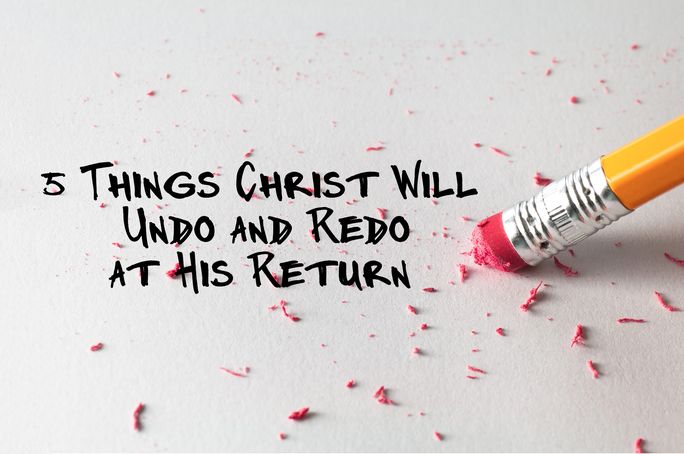
    5 Things Christ Will Undo and Redo at His Return

    5 Things Christ Will Undo and Redo at His Return “Mankind has done much damage to this earth, but God has a plan to fix man’s many mistakes. What will Christ “undo” and “redo” when He returns to earth?

    As a software developer, I consider “undo” to be an essential tool, and I use it often. When making changes to software, I occasionally realize I made a mistake. The easiest way to fix that mistake is to undo the changes I made and go back and do it right. I am fortunate to use an editor that remembers changes I made even after it has been closed.

    Wouldn’t life be great if we could undo our past mistakes and have a redo? Though life doesn’t provide us such an option, God has a plan that will undo the damage we humans have done to this earth, to one another and to ourselves. His plan is in motion and soon will be evident to all mankind when Jesus Christ returns to earth to establish God’s Kingdom here.

    Under Christ’s perfect government, mankind will learn to “redo” life, but this time following the perfect laws of God.

    Let’s consider some of the major things that will be undone and redone after Christ’s return.

    1. Swords and plowshares

    Undo: War between nations.

    Redo: Peaceful, mutually beneficial relationships between nations.

    After Christ returns, He will teach the nations His law, which is based on love Just before Christ returns to the earth, there will be a period of intense worldwide warfare when people will be beating “plowshares into swords” and “pruning hooks into spears” (Joel 3:10). This is ancient language describing implements of food production (which sustains life) being turned into implements of warfare (which destroys life).

    But after Christ returns, He will teach the nations His law, which is based on love (2 John 1:6). When godly love is understood and practiced on an international level, the nations will turn “swords [back] into plowshares” and “spears [back] into pruning hooks” (Micah 4:3).

    2. Food shortages

    Undo: Hunger and malnutrition affecting millions of people.

    Redo: An abundance of food where everyone’s needs are met.

    As we covered above, after Christ returns, the nations will no longer devote their economic resources to warfare and defense, but will instead redirect their economies to food production. Christ will restore an emphasis on agriculture that will allow the nations to sustain healthy populations. The prophet Amos foresaw a world where the “plowman shall overtake the reaper” (Amos 9:13).

    3. Dangerous animals

    Undo: The instinctual nature in many wild animals that makes them dangerous to humans and each other.

    Redo: A transformed nature of wild animals that makes them docile, tame and harmless.

    In the creation described in the first two chapters of Genesis, there was perfect harmony between the animals and mankind. But when Adam and Eve sinned and were kicked out of the Garden of Eden, they found many wild animals were now hostile to human beings. Christ will change the violent natures of animals so they will dwell safety with one another and with mankind (Isaiah 11:6-9).

    4. Knowledge of God

    Undo: Rejection of God and His laws.

    Redo: Acceptance of God and His laws in every aspect of life.

    In the book of Romans, the apostle Paul described the current state of humanity as being in rebellion against God (Romans 1:28). But Christ will make God’s beneficial laws undeniable. He will lead an educational system based on the ways of God. It will eventually lead to the knowledge of God covering the earth “as the waters cover the sea” (Isaiah 11:9). The prophet Jeremiah foresaw a time when everyone will know God (Jeremiah 31:34).

    5. God’s Sabbath and festivals

    Undo: Ignorance of God’s Sabbath and festivals.

    Redo: Knowledge and observance of the Sabbath and festivals.

    Within God’s law are holy times: the weekly Sabbath (Exodus 20:8-11) and annual festivals (Leviticus 23). Not only are these days when we are to worship God, they also reveal the major stages of His plan. These days will be observed by the entire world after Christ returns (Isaiah 66:23, ZechariaThe Mystery of the Kingdom free bookleth 14:16).

    This covered just a few aspects of our world that will be undone and redone after Jesus Christ returns. To learn more about this future time, download our free booklet The Mystery of the Kingdom.   From: https://lifehopeandtruth.com/prophecy/blog/5-things-christ-will-undo-and-redo-at-his-return/?

    ________

    Should Christians Keep Mardi Gras?

    Transcript of video at: https://www.ucg.org/beyond-today/beyond-today-dailys/should-christians-keep-mardi-gras

    Mardi Gras has its roots in religious tradition. But what does the Bible say?

    [Steve Myers] “Colorful costumes and masks and pageantry. That's all surrounding Mardi Gras. Mardi Gras is one of those traditions where...    sometimes I'll talk about the fact that it reminds me of the three Ds. There's dancing in the streets, there's drunkenness and debauchery. That kinda categorizes Fat Tuesday. That's literally what the term Mardi Gras means. Religiously it's called Shrove Tuesday because that's the day before Lent. Lent of course being more of a Catholic kind of a tradition that's rooted in pagan holidays. And what would happen at Lent is that you would give up something for Lent. And so before you give something up, you certainly want to overindulge and fatten up and, you know, get into food and drink and all those things so that you can then put that behind you and repent for the rest of this religious season.

    But when you really think about the implications of that religiously, it's really ridiculous. In modern carnival traditions and celebrations all around the world and whether it's in New Orleans or Rio or Nice, France. These are areas where they'll often celebrate for weeks, leading up to that time. When we lived in New Orleans for a while, I remember they talk about Fat Tuesday, and then instead of Ash Wednesday, they'd call it Trash Wednesday because there was so much junk leftover from these Mardi Gras celebrations. Well, is that something we should have any part in? These Catholic traditions that are not really based in the Bible at all. I mean, there's a couple of interesting aspects when you consider this. I was thinking of the passage that's found in Romans 13:13. It says the basic things. As Christians it says, "Let's walk properly in the day, not in revelry or drunkenness."

    Of course on TV, they'll show the parties and the fun but they don't show all of those types of things because that would certainly take away from the tourism of all those areas of the world. Romans goes on, "don't walk in lewdness and lust, not in strife and envy." And it's kind of a reminder, those are the things we should give up, but that's not good enough. This whole aspect of Mardi Gras and Lent, I think it is something that miss directs us to what the truth of God's word really is. Yes, we've got to give up lewdness and drunkenness and revelry and all those types of things that are against God's way of life. But Romans points out, it's not just about giving something up. We have to put something on and so verse 14 in Romans 13 says, "Put on the Lord Jesus Christ, make no provision for the flesh to fulfill its lust."

    And so that's an important aspect of Christianity, true Christianity. We not only put off those things that are wrong, but we've got to take it a step farther. We've got to put on everything that's right. So when you begin to hear about Mardi Gras celebrations, and all of those types of things in this upcoming Lent season that this religious world will keep, remember, it's not rooted in the Bible. In fact, let it remind you of the fact we need to put off the ways of the world, but more importantly then, put on Jesus Christ.”  From: https://www.ucg.org/beyond-today/beyond-today-dailys/should-christians-keep-mardi-gras

    ________

    How does Plant-Based Eating Benefit Your Health?

    father holding broccoli high-five daughter

    Whether you’re considering eating less meat or giving it up entirely, the benefits are clear: less risk of disease and improved health and well-being. Consuming less meat decreases the risk of:

    Meat is often loaded with cholesterol and saturated fat, which have starring roles in poor heart health. And processed meats, including deli meat, bacon and sausage, often have too much sodium and other additives, and should be limited. However, if you want to include meat into your eating plan, choose lean meats. Be sure to include skinless poultry, seafood, fish, beans, nuts and legumes, too, because they are healthy sources of protein.

    Diets or eating styles that do not or restrict meat include:

    • Vegan — entirely plant-based, excluding meat, fish, dairy, eggs, honey and any product that comes from an animal.
    • Vegetarians — a plant-based diet, but may include dairy and eggs.
    • Flexitarian — a vegetarian diet that sometimes indulges in meat or fish but mostly sticks to plant foods.
    • Plant-based — a style of cooking and eating that emphasizes plant-based foods but is not strictly limited to them. Meat may be included, but it’s usually not the main feature of the meal.

    Lean protein

    Not eating meat does not mean you can’t get enough protein in your diet. In fact, many people eat more than enough protein, especially from animal foods. There are plenty of other foods that can provide you with protein, such as tofu, edamame, quinoa, sorghum, lentils, chickpeas and most beans and legumes. And there are many good sources of protein from vegetables, too, including artichokes, asparagus, broccoli, Brussels sprouts, collards, corn, peppers, spinach, sweet potatoes and turnip greens. Did you know that every plant we eat has some protein in it? So, the more vegetables you eat, the more protein you’ll consume.

    Not all plant-based diets are healthy

    Don’t replace meats with highly processed meat substitutes or “vegan junk food.” Instead choose high-quality, nutrient-dense plant-based foods. A recent study showed that eating primarily these types of food, such as vegetables, fruits, whole grains, beans, legumes and nuts, was associated with a lower risk of death from cardiovascular diseases. The researchers concluded that even if you’ve eaten a poor diet for half your life, adding more healthy plant foods as an adult can help reduce your risk.

    Making the switch

    Going plant-based is not as difficult as you may think. In fact, getting started can be as easy as 1-2-3!

    1. Search for some vegetarian recipes that are easy to prepare and sound appealing to you and your family.
    2. Choose ingredients and flavors you know your family will enjoy.
    3. Try meatless Mondays! Experiment with a meatless meal once a week, then add more days as you get used to it.”          

    Written by American Heart Association editorial staff and reviewed by science and medicine advisors. See our editorial

    From: https://www.heart.org/en/healthy-living/healthy-eating/eat-smart/nutrition-basics/how-does-plant-forward-eating-benefit-your-health

    _________