Showing posts with label mother. Show all posts

Sunday, June 23, 2024

Did Jesus Reaffirm All 10 Commandments? Lipstick Contaminated with Lead?

.

Did Jesus Reaffirm All 10 Commandments?


“Does a Christian have to keep all of the 10 Commandments? Some believe the answer is no—that if Jesus didn’t reinforce a commandment, it’s no longer binding. Is this true?
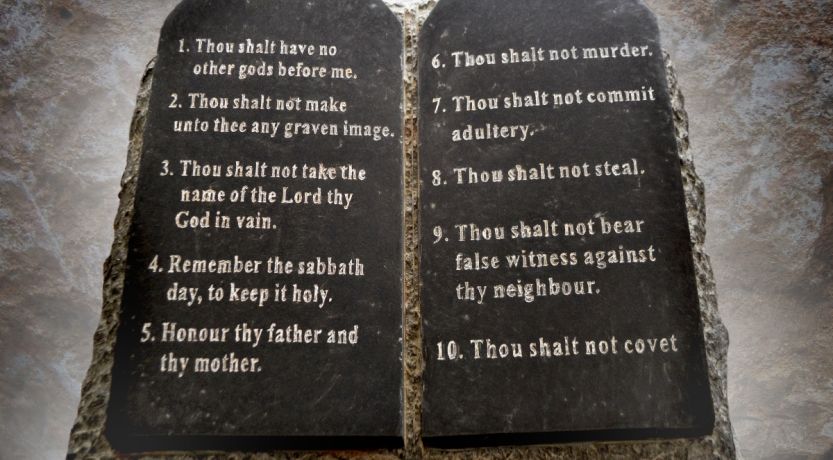
Did Jesus Reaffirm All 10 Commandments?In last month’s column, we asked, “Did Jesus’ Commandments Replace the 10 Commandments?” We looked at the idea that the 10 Commandments were replaced by the simpler new commandment of Jesus to love others. We showed that the new commandment didn’t abolish the 10 Commandments, but was Jesus’ example of how to show love to others. Love has always been the intent of the 10 Commandments.

But there is another common misunderstanding we need to examine: the idea that only the specific commandments Jesus reaffirmed are required for us today.

Let’s take a deeper look at this premise and see if it aligns with what Jesus taught.

Did Jesus need to reaffirm each commandment?

First, consider this: Did Jesus say that only the commandments He specifically mentioned are binding on Christians? That is easy to answer: No. If you read the Gospel accounts, you will find no such statement.

Did Jesus say that all of the Commandments would remain intact and relevant? In fact, He did. Shortly after giving the Beatitudes, Jesus addressed “the Law” and “the Prophets” and whether or not He came to abolish all or parts of them.

Let’s dissect what He said in Matthew 5:17-19:

  • Do not think that I came to destroy the Law or the Prophets. I did not come to destroy but to fulfill” (verse 17).

Jesus plainly said He did not come to “destroy” the law. The Greek word translated destroy (Greek, katalyo) can also be translated “dissolve,” “demolish,” “abrogate” or “deprive of force.” Instead of abolishing the law, He came to fulfill (pleroo) it—which means to “make full,” “fill up” or “accomplish.” Not only did He come to fulfill Old Testament prophecies, He also came to perfectly obey the 10 Commandments and, by doing so, fill them with greater meaning and relevance—just as the Messiah was prophesied to do (Isaiah 42:21).

  • “For assuredly, I say to you, till heaven and earth pass away, one jot or one tittle will by no means pass from the law till all is fulfilled” (Matthew 5:18).

Jesus used this graphic figure of speech to reinforce His previous statement. As long as heaven and earth exist, not the smallest detail (a jot was the smallest letter in the alphabet and a tittle was a small stroke used in writing) would pass away from God’s law. This reinforces every detail of the 10 Commandments. (See also our online article “Did Jesus Fulfill the Law?”)

  • “Whoever therefore breaks one of the least of these commandments, and teaches men so, shall be called least in the kingdom of heaven; but whoever does and teaches them, he shall be called great in the kingdom of heaven” (verse 19).

Jesus made it personal by saying that anyone who knows better yet teaches against any of God’s commandments will not be in God’s Kingdom (compare Matthew 5:20 and 19:17). The Greek word translated “break” means to loose, destroy or dissolve. Sadly, this strongly worded warning applies to many professing Christian leaders who teach their followers that all or parts of the 10 Commandments were abolished.

In these three simple yet powerful verses, Jesus affirmed that the 10 Commandments—every single one of them—were carrying forward into New Covenant times. In these three simple yet powerful verses, Jesus affirmed that the 10 Commandments—every single one of them—were carrying forward into New Covenant times. They would continue to be binding as long as the heaven and earth still existed.

Later in the Sermon on the Mount He singled out two specific commandments (the prohibitions against murder and adultery) to teach about the spiritual intent behind those laws (Matthew 5:21-30). Of course the other eight have deep spiritual meanings as well, but He covered only those two at that time.

Jesus reciting the Commandments

But despite Jesus’ clear words, some still argue that if He didn’t specifically mention a commandment, its relevance to Christians is questionable. But consider Jesus’ discussion with a man identified as “a certain ruler.”

This man asked Jesus, “What shall I do to inherit eternal life?” (Luke 18:18). Jesus answered that the basic starting point was keeping the Commandments, and then He listed five of them: “‘Do not commit adultery,’ ‘Do not murder,’ ‘Do not steal,’ Do not bear false witness,’ ‘Honor your father and your mother’” (Luke 18:20).

Jesus only listed five commandments, so does that mean the other five are irrelevant and nonbinding? That reasoning would mean:

  • We are free to place any other god before the true God (Exodus 20:3).
  • We are free to make and worship idols of anything we wish (verses 4-5).
  • We are free to revile and misuse God’s name as much as we want (verse 7).
  • We are free to do work on the seventh-day Sabbath (verses 8-11).
  • We are free to covet (verse 17).

Sadly, this is taught by some—but in reality, it’s usually only used to zero in on one of the above commandments (the seventh-day Sabbath).

Jesus’ statement in Matthew 5 proves this isn’t true. But still, by listing only five, did Jesus ignore some of the 10 Commandments? Not at all!Download God's 10 Commandments Still Relevant Today

Next time we will take a closer look and discover that the New Testament actually does specifically reinforce every single one of God’s 10 Commandments.

Sidebar: Why Did Jesus List Only Those Five Commandments?

When speaking to the rich ruler, Jesus said that obedience to the Commandments was necessary and then listed five of the 10 Commandments (Luke 18:18-20). Why would He do this? Here are some possibilities.

We don’t know exactly what this man was a “ruler” of, but he could possibly have been a member of the Pharisees (who ruled the synagogues). The Pharisees had developed their own commandments, which were very burdensome and in some cases actually led people to disobey God. Jesus had little regard for their law, which He called “the commandments of men” (Mark 7:6-7).

By listing a few of the 10 Commandments, He was clarifying exactly which commandments were necessary for eternal life: God’s 10 Commandments, not the cumbersome laws of the Pharisees.

But why would He have chosen the five examples He did—adultery, murder, stealing, lying and honoring parents (Luke 18:20)?

One of the major problems with the Pharisees’ laws was that they often led to the abuse and mistreatment of other people. For example, in Matthew 23 Jesus Christ strongly rebuked them for putting unnecessary burdens on people (verse 4), abusing widows (verse 14), neglecting justice and mercy (verse 23) and even being complicit in the murder of righteous men (verse 34-35). In another place, He scolded them for inventing a loophole that allowed them to avoid caring for their elderly parents (Mark 7:11-13).

The main flaw was neglecting to show love to their fellow man.

If the rich ruler was a Pharisee, it would make sense that when Jesus mentioned a few commandments as examples, He chose ones about loving other people (Matthew 22:39). These were five commandments the Pharisees needed to hear. But, of course, that didn’t mean the other commandments dealing with loving God and not coveting were any less important.

In fact, after the man answered that he had obeyed these commandments from childhood, Jesus challenged him to sell his possessions and follow Him—which, it appears, the man was unwilling to do. This demonstrated his unwillingness to fully obey the other commandments to love God and to not covet.”  From: https://lifehopeandtruth.com/bible/10-commandments/the-ten-commandments/did-jesus-reaffirm-all-10-commandments/?

________

Which Is the Great Commandment?

Matthew 22:35-38

Then one of them, a lawyer, asked Him a question, testing Him, and saying, “Teacher, which is the great commandment in the law?” Jesus said to him, “‘You shall love the LORD your God with all your heart, with all your soul, and with all your mind.’ This is the first and great commandment.”

Listen to the "Verse by Verse" episode covering this scripture.

The lawyer seemingly intended this as a trick question with many possible answers that would be considered wrong by those experts who had ranked the laws differently.

But Jesus Christ cut to the core of all the laws to identify what is truly most important. Loving God with all our being means we will seek to please Him and do everything else He asks us to do.It's time to get to know God. Start your 7-day guided Journey.

This first, great commandment summarizes the first four of the 10 Commandments (Exodus 20:1-11) where God explains how to love Him the way He wants to be loved. Human ideas of how to worship God may be well-intentioned, but to be assured we are pleasing God, we must worship and obey Him the way He wants us to.

The first four Commandments, and the entire Bible, show us that way.

Study more about how God wants us to love Him in our article “The Great Commandment.””  From: https://lifehopeandtruth.com/bible/blog/which-is-the-great-commandment/

_________

Lipstick Contaminated with Lead?

“Dozens of lipsticks and lip glosses are put to the test.

“Over the past years, using cosmetic products has increased worldwide at an alarming rate due to unending pursuit for individual beautification…” There’s nothing necessarily wrong with that unless cosmetic products contain ingredients that may be linked to disease—ingredients such as toxic heavy metals like lead.

As you can see at 0:28 in my video Flashback Friday: Is Lipstick Safe Given the Lead Contamination?, lead has been found in a wide range of cosmetic products, from eye shadow to skin cream, and foundation to blush. You may recall that I talked about lead in henna in my video Is Henna Safe?, but in looking at the data, “important warnings can be recognized”: the presence of lead in lipsticks. This is concerning because lipstick wearers may actually swallow a little bit of it. In fact, it has “been estimated that a woman inadvertently ingests 1.8 kg [about 4 lbs] of lipstick during her lifetime.” “Moreover, lipsticks can be used by pregnant women or women of child bearing age.” (I mean, obviously.) Yes, lead is highly toxic, but how much lead can there be in lipstick? Surely, it is “a very minor source….Nonetheless, one should not exclude the fact that lead accumulates in the body due to over time and repetitive lead-containing lipstick or hair dye application, which lead to significant exposure levels.” You don’t really know, though, until you put it to the test.”                      Continued at: https://nutritionfacts.org/blog/lipstick-contaminated-with-lead/?

_________

Sunday, June 16, 2024

PENTECOST. If I Were a Rich Dad. Helping Our Children Grow.

.Feast of Pentecost

FEAST OF PENTECOST

Note to parents

“We encourage you to read through this material with your children to provide an overview of the meaning of the Day of Pentecost and what it pictures in God’s plan. Then choose appropriate material from the supplemental pages that you feel will be helpful in teaching and reinforcing the meaning of this festival.

This solemn ceremony had profound spiritual significance because it depicted Christ’s ascension and acceptance by the Father as the first of the firstfruits of humanity.”

More at: https://lifehopeandtruth.com/uploads/eei/EEI-LessonOverview-WOG-Pentecost.svg

________

If I Were a Rich Dad

If-I-Were-a-Rich-Dad“The book Rich Dad, Poor Dad taps into our desire to understand what the rich know. But I look to a different book to understand fatherhood—and true riches!

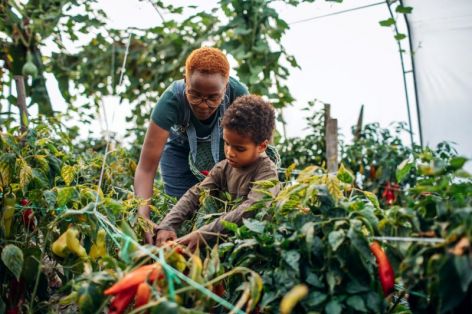

Many years ago on a long road trip taking our kids to summer camp, a friend played an audio book called Rich Dad, Poor Dad. The subtitle of the book is “What the Rich Teach Their Kids About Money That the Poor and Middle Class Do Not!”

The author’s basic theme is that his real dad, a highly educated public servant, constantly complained about being broke, while his best friend’s father constantly enjoyed the finer things in life. The book claims to be a collection of financial lessons he learned from both men. From the parts I heard, it was clear that he had more respect for his “rich dad’s” street sense and his financial goals and choices.

I admit that I didn’t hear the whole book and I remember even less, so I’m not trying to comment on any financial principles the book might espouse. But what stuck with me was the low esteem the author seemed to have for his real dad’s accomplishments in life.

My poor dad

My own father has never been rich, but I have felt richly blessed to have him as my father. My dad was actually doing fairly well financially working for a huge aerospace firm, but when he learned about the biblical Sabbath, he faced a choice between keeping his job or obeying the things he was learning in a best-selling book: the Holy Bible. He chose faith over financial security.

In his new profession as a self-employed house painter, my dad worked hard. He was fair—and more than fair—to his clients. He never wanted to charge more than he thought was reasonable, and he ended up absorbing some losses because he was too nice.

Doing these things did not lead my dad to financial success, but they are admirable qualities of a true and giving Christian. I saw the biblical principles of turning the other cheek and esteeming others better than himself in action (Matthew 5:39; Philippians 2:3).

My rich Dad

As much as I respect and appreciate my poor dad, I also appreciate that he helped introduce me to my rich Dad and His wonderful instruction book. By bringing me up “in the training and admonition of the Lord,” my dad helped me to identify the true riches (Ephesians 6:4).

What are those true riches? The Bible records this breathtaking promise to those God is calling:

“Behold what manner of love the Father has bestowed on us, that we should be called children of God!” (1 John 3:1).

God—the Creator of the entire universe, the owner of all the gold and silver, the most powerful being imaginable—loves us and wants us to be His sons and daughters!

That’s a message that I want to share with my family and friends and everyone!

If I were a rich dad …

I am not considered rich in this society, but I have been blessed in many ways, including living in the United States and having a rewarding job that takes care of my needs. In talking with people from developing countries, I am reminded of how blessed I truly am!

However, I don’t have a large inheritance to pass on to my children in this world. Like Tevye in Fiddler on the Roof, I could wish I were a rich man—at least for the sake of my family.

But most of all, I hope that I have shared with my children what has been entrusted to me—the true riches of a spiritual relationship with God our Father. In the eternal scheme of things, that relationship is far more valuable than all the silver and gold in the universe.

I hope you will want to learn more about my rich Dad and His offer to humans to become His children. There is no priority more important! Please take time now to read more of what the Bible reveals about this wonderful truth in the article “Children of God.”

Happy Father’s Day to my poor dad and my rich Dad!”  From: https://lifehopeandtruth.com/life/blog/if-i-were-a-rich-dad/

_________

Helping Our Children Grow

“How can we create the best environment for teaching and helping our children grow? How can we make a peaceful home for the children God has entrusted to us?

Helping Our Children Grow

All humans start out as sweet, lovable and innocent little babies. They come into this world without emotional baggage or bad habits to break.

Practically everything has to be learned—how to eat, when to sleep, how to use the toilet, crawl, walk, talk, listen, read and so much more—and parents are their first and most important teachers. What and how they learn greatly affects whether they grow up to be wise or foolish.

Many factors influence the minds of our children as they grow up, including their peers, entertainment and the powerful influence of social media. But most studies show that the family still has the strongest effect of all of these.

How we parent our children determines to a great extent their future. It deeply impacts how well they will do on their jobs, the type of person they will choose to marry and the success of that relationship, how they will parent their own children and the relationship they will have with them.

No parent wants to go through the anguish of seeing his or her children choose a path that will destroy their future happiness. So what can we do to ensure our children become successful adults?

“Unless the Lord builds the house”

The foundation of a successful home and family begins even before you marry. What can you do to prepare to be a godly mate and parent? And what kind of person do you want to marry and have as the father or mother of your children?

Solomon wisely noted, “Unless the Lord builds the house, they labor in vain who build it” and “Behold, children are a heritage from the Lord” (Psalm 127:1, 3). A wise person will therefore first seek God’s blessing on his or her marriage. And once you are married and decide to have children, why not first ask God to bless the conception, birth and your parenting efforts?

God blesses us with these little ones, and He is the One who can teach us how to bring them to adulthood successfully.

Two great commandments: principles for how to raise a child

God has not left us without guidelines we can use to provide a more fulfilling life for our children. Certainly there is no guarantee, as children sometimes make bad choices, but applying these guidelines will greatly increase our odds of a good outcome.

The greatest laws of life are also the greatest guides to successful childrearing. Jesus said the entire law of God could be summarized as two great commandments: Love God with all our hearts and love our neighbors as ourselves (Matthew 22:36-39). These two great laws provide the most important framework for steering our children toward a successful, fulfilling life.

When we realize that every human has an awesome potential, including these little ones in our care for a brief period of time, parenting takes on a whole different outlook. What is our purpose in life? What is their future and purpose? It all ties in with our relationship with God and each other.

If God is first in our lives, then He will be our go-to source for the help we need in this most important task of parenting. He will help us create the environment to assist our children in growing into the kind of adults they need to be—people who love God with all their hearts and their neighbors as themselves!

Positive environment for child development

When I think about an environment for growth, an experience from years ago comes to mind.

Indiana is beautiful in the summer; but in the dead of winter, it can be a cold, dreary place. Very few evergreens exist to provide color, and when no snow falls the landscape is a dull gray.

On one of those cloudy days, my wife and I visited a couple who owned a nursery farm. We stepped from our car into the cold north wind and made our way over to some long buildings.

As we stepped through the doors, we were welcomed by a pleasant 72-degree temperature and met with rows and rows of beautiful flowers and many varieties of verdant young vegetable plants.

No matter how cold, snowy and windy it was outside, inside those buildings we found the ideal environment in which plants could thrive. If we create the right environment, we can grow almost anything we want to.

The same is true for children. Give them the right environment, and they will develop the qualities they’ll need for a great future.

We can’t totally insulate our children from all the negative things of this world, but we can create an environment in our homes where they can grow and thrive.

Peaceful home

My wife and I had the goal of making our home a sanctuary for our children. No matter what kind of day they had at school or in the neighborhood, we wanted our home to be a place they would find peace, security, kindness and love. The family environment is what makes a house a home. The world is not always the nicest place, and after a hard day at school or work, we all need a warm place to come home to.

My wife and I had the goal of making our home a sanctuary for our children. No matter what kind of day they had at school or in the neighborhood, we wanted our home to be a place they would find peace, security, kindness and love.

“For God is not the author of confusion but of peace” (1 Corinthians 14:33). Teaching family members to respect others and providing the security of structure for everyone establishes an atmosphere for growth.

A few of the building blocks for creating this kind of environment in the home include:

  • Settling differences without screaming and anger.
  • Having meals together.
  • Viewing television and computer screens less and talking and listening more.
  • Creating family traditions, such as family activity nights and family Bible studies.
  • Reading to children a lot, especially when they are small. They love it! It provides not only a great emotional connector with the parents but it instills in them a desire to learn.

And, of course, the most powerful method of instruction is our example. A picture is worth a thousand words, and a good example of what to do is worth a thousand spoken “don’ts.” 

Above all, it’s vital that we teach our children about God as early as possible and also that they see that God is important to us. They need to know that He is the source of every good and perfect gift we have to enjoy (James 1:17).

Teaching our children

God tells us to teach our children about Him and His instructions for us every day, all through the day, to explain how obeying His laws makes life good for us and others.

“You shall love the LORD your God with all your heart, with all your soul, and with all your strength. And these words which I command you today shall be in your heart. You shall teach them diligently to your children, and shall talk of them when you sit in your house, when you walk by the way, when you lie down, and when you rise up” (Deuteronomy 6:5-7, 24; see also 10:13).

When our children were small, our family was frequently together in the car. On long trips, our children would often ask me to tell them stories. I would make up stories about young heroes and villains, but I always worked in a moral to the story as another way to teach them about honesty, serving others or sacrifice for a good cause.

It can be challenging to find time to teach our children. Thankfully, God gave us the Sabbath command—to cease from our work and play on the seventh day. (For more about this, download our free booklet The Sabbath: A Neglected Gift From God.) My family found that the Sabbath was special time unlike the rest of the week, because it provided great opportunities to enjoy time together and to talk about God’s Word and way of life.

My wife always prepared a nice meal for the beginning of the Sabbath, Friday evening. Our children knew that dessert came after our family Bible study, so they were always excited for the study to begin. We tried to keep it interesting and relevant for their ages and to involve them by making it interactive.

Helping our children grow in discipline and accountability

Rules and discipline are a necessary part of life. If parents don’t require their children to live within the boundaries of correct conduct, life will, and experience can be the harshest disciplinarian. Even God, our Father, disciplines us for our benefit (Hebrews 12:10).

The Bible teaches loving discipline and instructs parents to avoid harsh and unreasonable rules and enforcement (Proverbs 13:24; 22:6; Ephesians 6:4; Colossians 3:21).

Recent research backs up the effectiveness of this loving approach. “A large body of research on attitudes indicates that parental warmth together with reasonable levels of control combine to produce positive child outcomes” (Joan E. Grusec, PhD, and Tanya Danyliuk, BA, “Parents’ Attitudes and Beliefs: Their Impact on Children’s Development”).

Wise parenting, however, looks deeper than just correcting specific infractions. Even more important than wrong actions are the attitudes or motives behind them. Consider what those may be so you can address those when necessary.

There are no perfect parents

No matter how well parents have done, they all say in hindsight, “I made some mistakes. I could have done better.” There are no perfect parents. So don’t get discouraged. Do the best you can with God’s help, and entrust the outcome to Him.

God gave His Son as a gift to the world. Although God’s gift is far above anything we can imagine, there is a way in which He wants us to give our children as a gift as well. He wants us to prepare them to make a contribution to the world—to make it a better place for others!

We encourage you to learn more about what the Bible says about parenting and building a strong family. The articles in the “Parenting” and “Family” sections can help.

Bible Verses About Parenting Responsibilities

The apostle Paul tells us the most important things a parent can teach:

“Fathers, do not provoke your children to wrath [lest they become discouraged, Colossians 3:21 adds], but bring them up in the training and admonition of the Lord” (Ephesians 6:4).

Paul packs a lot into this short instruction to parents.

First, he gives a warning not to be unreasonable, severe or demeaning—not to dishearten them, but to encourage them.

“Bring them up” is from the same Greek word translated “nourishes” in Ephesians 5:29, where Paul points out how much we nourish and cherish our own bodies. It is natural that parents should lovingly feed their children’s bodies and minds.

And what is the main subject of all the training and admonition? It is the way of the Lord. This is the most important thing a parent can teach. How to obey God. How to fear Him, please Him and even become like Him. Why?

Because children are a heritage from the Lord (Psalm 127:3)—He gives them to us to raise, but they are really His.

We must learn the way of the Lord ourselves in order to teach it, but, thankfully, it is all laid out for us in one textbook—the Holy Bible. The Bible gives us the foundational truths that help us—and our children—make sense of all other important truths.

Introduce your children to God through age-appropriate Bible study, prayer, exploring His creation and practical application of biblical principles. As your child sees you live out your faith, he or she will learn how reverence of God leads to wise choices and blessings. Obeying God’s laws brings benefits now—and forever.

Some of those benefits are described in the verses at the beginning of Ephesians 6. Learning to honor parents is a step toward honoring God, and God specifically listed the benefits obeying this Fifth Commandment can bring: “‘Honor your father and mother,’ which is the first commandment with promise: ‘that it may be well with you and you may live long on the earth’” (verses 2-3).

Read more in our articles “How to Help Your Children Build a Relationship With God” and “Fifth Commandment: Honor Your Father and Your Mother.”

Parenting: Instructions Not Included

Even though we might not endorse the film itself, the title to the 2013 movie Instructions Not Included certainly resonates with many new parents!

Many governments require training for teachers, camp directors and child protective services, yet it seems we expect parents to intuitively know what to do. We expect mothers and fathers to learn on the job—and they sure do!

But the biblical expectation is more effective and encouraging. God ideally wanted parents to learn to be parents from their parents. If your parents haven’t given you this training, consider asking them for it. It’s a biblical principle and even if they made some big mistakes, perhaps they learned from those and can now provide meaningful advice within the framework of God’s principles.

If your parents aren’t available or qualified, other family members or wise people you know might step into this role.

Beyond personal experience, it can be helpful to study child development and what parenting “experts” have to teach. But beware of the parenting “fad of the year,” and compare the advice you read with that which has truly stood the test of time—the Bible. God created children and family, and our Heavenly Father truly knows what’s best. For more on Christian parenting, see the biblically based articles in our Life, Hope & Truth “Parenting” section.”  From: https://lifehopeandtruth.com/relationships/parenting/helping-our-children-grow/

_________

Sunday, February 11, 2024

What Is Marriage? 1 & 2. Farmed Fish vs. Wild-Caught.

.

What Is Marriage? 1  (Special thoughts for Valentine’s Day)

What Is Marriage?“The Creator God made humans male and female, and He made the institution of marriage. He tells us why He created it and what marriage is supposed to be.


There is only one original source on earth where you can find out how, when, where and why marriage began. More copies of this book—the Holy Bible—have been published than any other written work, yet it is little understood. But by going to it, you can find an understanding of the meaning of marriage.


Summing up what the Bible teaches about marriage

  1. God designed marriage to be a lifelong, faithful relationship between one man and one woman.
  2. Adam was created first and was initially the lone human. From one of his ribs God lovingly formed a woman and presented her to Adam. They were “one flesh,” and she was the perfect complement to Adam. Together they formed a whole, and together they were able to build a family, having and raising children together.
  3. Because of sin, polygamy and divorce entered. Christ said divorce was only allowed in Israel because of their hardness of heart. While God does provide provisions for a marriage to dissolve under some circumstances, it is an extremely painful experience. God didn’t want His children to hurt one another in that manner.
  4. Through the words of Jesus Christ and the apostles, we can see that God’s perspective of marriage as a loving, monogamous relationship between one man and one woman has not changed. In the New Testament God reaffirms it and shows how very important fidelity within marriage is.

God's Design for Marriage BookletMen and women are different by design, intended to complement each other. And it is only through the marriage relationship that God intended children to be brought into the world—to be raised and taught under the loving, thoughtful care of their mother and father.

If you would like to read further about how to have a happy marriage, this “Marriage” section has many related articles for you to read. You will be glad you did!”  Complete article at: https://lifehopeandtruth.com/relationships/marriage/what-is-marriage/

________

What Is Marriage?  2

“Some topics are more personal than others and tend to trigger more emotional reactions. Food and holidays, for example. Or “is that dress white and gold or blue and black” and, of course, marriage and sexual relations.

Although the Bible has a lot to say about marriage, it never explicitly answers the question, “What is marriage?” Probably for the same reason it doesn’t give a precise definition for travel, war, and sacrifice. Everyone in the Bible’s original audience already knew what marriage was, so why waste expensive paper and ink explaining it.

Our world, on the other hand, has become so full of confusion that we need to spell out even the most basic ideas. So, let me begin at the beginning…

Adam gave names to all livestock and to the birds of the heavens and to every beast of the field, but the man could not find a helper fit for him. So YHWH God caused a deep sleep to fall upon the man, and while he slept took one of his ribs and closed up its place with flesh. And the rib that YHWH God had taken from the man he made into a woman and brought her to the man. Then the man said, “This at last is bone of my bones and flesh of my flesh; she shall be called Woman (ishah), because she was taken out of Man.” Therefore a man shall leave his father and his mother and hold fast to his wife, and they shall become one flesh.      Genesis 2:20-24

This passage gives us the three most important elements of the definition of marriage.

  1. Marriage exists to help a man fulfill his assigned role in Creation.
  2. Marriage is meant to be a lifelong union of a man and woman.
  3. Marriage was instituted by God from the very beginning.

Marriage Exists to Help Man Fulfill His Mission

Although Genesis 1:28 records that the first collective mission of mankind was to be a caretaker over the earth and all life on it, Adam’s first individual assignment was to evaluate all of the other creatures to see if one of them might serve as a special helper for him. Of course, God knew that none of them would, but he had Adam go through this process so that the man would also know. When Adam was satisfied that none of the animals would meet his requirements, God created a woman, whom Adam named Eve.

Adam and most other creatures were created from the ground, but Eve was created directly from Adam. God didn’t create Eve from Adam’s head or foot, but from his side, showing that she wasn’t supposed to rule over him nor be his slave, but was supposed to be a peer. The woman was to be more like the man than any other creature in heaven or earth, a counterpart who would rule over and care for the earth together with him.

Eve wasn’t created to be exactly like Adam, though, or else God would have created another man and made them hermaphrodites or capable of parthenogenesis. Woman shares in the collective purpose of mankind as God’s stewards on earth, but each woman does so primarily by assisting her husband in his individual mission.

For man was not made from woman, but woman from man. Neither was man created for woman, but woman for man.    1 Corinthians 11:8-9 ESV

I know that doesn’t sit well with many people, but it is the plain teaching of Scripture. Eve was created specifically to be a helper for Adam, and Paul asserts that this principle applies within all marriages.

While the original task of humanity was to be a caretaker of God’s creation, the Fall necessitated a change in mission parameters. Our task now is to expand the Kingdom of God through procreation, evangelism, establishing justice, and generally doing good works according to God’s standards of justice and good. How each individual and family participates in this mission varies in as many ways as there are individuals and families, but you can know this with absolute certainty: A woman’s divinely appointed mission will never be at odds with her husband’s.

All kinds of things can prevent us from fulfilling marriage’s full purpose: illness and other circumstances that might be out of our control, the husband isn’t fulfilling his calling, or the wife isn’t fulfilling hers. However, our circumstances and failings can’t change the reason God created marriage.

Marriage Is a Lifelong Union

Genesis 2:24 says that the relationship of Adam and Eve is to be a pattern for all marriages, that a new marriage is inaugurated when a man leaves his father and mother to become one flesh with his wife.

“One flesh” implies that they are united in a way that would be painful and unnatural to separate and Yeshua (Jesus) confirmed this understanding when he said “They are no longer two but one flesh. What therefore God has joined together, let not man separate.” (See Matthew 19:4-6 and Mark 10:6-9.)

“Leaves his father and mother” doesn’t necessarily mean that he physically leaves their dwelling place. The Scriptural example is for extended families normally to live close together, frequently on the same land, and obedience to God’s instructions for the use of the land in Israel requires this. What this statement actually means is that the man steps outside of the nuclear family unit into which he was born and creates a new family still under the broad umbrella of his father’s clan and tribe.

This also doesn’t mean that marriage cannot be ended. God hates both divorce and death, but both happen, whether for good or bad, and both end a marriage. I’ll write more about this another time, but the Torah, Prophets, Yeshua, and Apostles all discuss when it is and is not appropriate to end a marriage. Divorce should be avoided because it breaks something that God didn’t want to be broken, but it is still possible.

Marriage Was Instituted by God

From the very beginning, God intended mankind to be male and female and to be joined in a union that he uses as a metaphor of his relationship with Israel.

Like the Sabbath, marriage was created for mankind’s benefit. Both parties, as well as their children, benefit from the arrangement, especially if it is conducted according to all of God’s instructions. However, also like the Sabbath, God created marriage because it suited his purposes. Every good master provides his servants with the tools necessary to accomplish his assigned tasks. The servant benefits because his job is made easier and more enjoyable. The master benefits because the servant is able to do a better job with greater economy.

Also like the Sabbath, marriage is not a man-made custom and man doesn’t get to define it. People today insist that they can make marriage whatever they want it to be: a man and another man, a woman and herself, and every other perversion one can imagine. Yet, Yeshua said that marriage is “what God has joined together”, so there can be no real question on this score. God makes the rules, not us.

Marriage was the very first government and was created by God to serve as the core of ministry, labor, justice, and civilization. It is a model of God and of our relationship to God and, as God is one (Hebrew echad), man and woman are to be one in spirit and flesh. Marriage benefits us and was created to help us in the work for which we were created, but ultimately both we and marriage belong to God and we have a responsibility to him to protect and honor it.”  From: https://www.americantorah.com/2023/03/27/what-is-marriage/

_______

Farmed Fish vs. Wild-Caught

Transcript of video at: https://nutritionfacts.org/video/farmed-fish-vs-wild-caught-2/

“The levels of industrial pollutants found in aquaculture.

Although the levels of dioxins and PCBs continue to decline, there is one dietary source that still remains a threat: fish. Everything eventually washes into the sea. Yes, we can get some from eating horses, but most of human dioxin exposure comes from eating fish. The World Health Organization puts the tolerable upper daily limit of intake at 1 picogram—one trillionth of a gram. As you can see, just eating dairy and we’re already skirting with the max, and fish takes us straight over the top.

Everyone agrees that the omega-3 fatty acids, like DHA, found in fish, are healthy. But, given the industrial contaminants in fish, as a recent analysis in Food and Chemical Toxicology concludes: “If people choose to get their recommended long-chain omega-3 intake from fish, the majority of consumers would exceed the safety limits for dioxins and dioxin-like substances (like PCBs).”

And, just like with eggs, factory-farmed fish have significantly more dioxins. In fact, for every toxin tested, farmed fish had higher levels of DDT, these other banned pesticides, over ten times more PCBs, and ten times more dioxins than wild-caught fish. Aquaculture fish can be considered farmed and dangerous.”

To see any graphs, charts, graphics, images, and quotes to which Dr. Greger may be referring, watch the above video. This is just an approximation of the audio contributed by Dianne Moore.

_________

Sunday, June 18, 2023

What My Grandfather Taught Me About Being a Father. What Do You Cherish? Can Reflux in Babies Be Treated with Diet?

.

What My Grandfather Taught Me About Being a Father

What My Grandfather Taught Me About Being a Father“My grandfather was a major influence in my life and impacted what kind of father I became years later. Here’s what I learned from him.

More than 30 years ago, our oldest child was born. When this precious little miracle came into our lives, frankly, I was scared to death. I had not been around many babies in my life, so I knew basically nothing about them, and the idea of being responsible for a new little life was overwhelming!

Not only was I quite nervous about holding our baby and way out of my depth when it came to changing a diaper, I was even more unprepared for the lifelong task of being a father! But life doesn’t wait until we feel ready for challenges. Eventually, more children came, and with time and experience, the job became much less daunting.

As a boy growing up, the most stable and beloved man in my life was my maternal grandfather. I spent a lot of time on his farm and even lived there for part of my childhood.

Even though he died several years before I met my wife, the strength and example of this wonderful man taught me a lot about being a dad—not just from things he said, but from how he lived his life.

I’d like to share some of those lessons in this blog post.

Lesson 1: Strength

Grandpa was physically strong. As a teen working with him shoveling corn in a granary, I was certain I could outwork my grandpa, who seemed like an old man.

The strength and example of this wonderful man taught me a lot about being a dad—not just from things he said, but from how he lived his life. So, I started shoveling faster and harder to prove my point. But it wasn’t long until I was sweating, dirty, worn-out and falling further behind! It was amazing how strong that “old” man really was!

But even more impressive than his physical strength was his strength of character. As a preteen, he had broken his back severely in an accident, but he never let it slow him down. He was mentally and emotionally tough—enduring several hard times throughout his life, including the death of a baby.

And, most importantly, he was spiritually tough—remaining faithful to God to the day he died.

Lesson 2: Patience

My grandpa consistently demonstrated untiring patience, no matter the circumstances. That trait was something he taught me when working with livestock.

There are times to yell and holler to stop the animals or herd them in a certain direction, but he also knew when patience, using slower movements and a calm voice, would work much better. 

While working on farm equipment (and on a farm something always needs to be repaired or maintained), I’d sometimes get frustrated and growl at a “stupid wrench” or “stupid bolt.” Grandpa would remind me that the wrench and bolt were neither stupid nor smart, but that I was the one who had the option to be one or the other. Then he’d calmly examine my predicament and teach me a better way to get the job done.

His approach to people was similar. He was patient and able to put people at ease. He always took the time to listen and help people if he could. 

Lesson 3: Reliability

There was never a question in my mind whether Grandpa would be there when I needed him. An example I’ll never forget was with my first car, a rather homely 11-year-old 1967 Plymouth.

Grandfather and Grandson Changing TireOne day, on my way home from work, a back tire blew on my car. Grandpa had taught me how to change a tire, so I jacked up the car and went to work. But the lug nut didn’t want to come off. I figured I would put all my strength into it, but the entire lug bolt twisted off, nut and all! Then I tried another, and got the same result. With only three left, I was in trouble! I walked to the nearest farmhouse to use the phone and called Grandpa.


To my great relief, he pulled up a short time later. He stood and looked at the car for what seemed like a solid minute, then discovered an easy solution for properly removing the remaining bolts.

He was always there for me, and I knew it!

And he wasn’t there just for me. I saw Grandpa stop whatever he was doing when a neighbor came by to ask for help. If a church member needed help, Grandpa would drive two or three hours round-trip to help them. It’s just who he was.

Lesson 4: Integrity

My grandpa was a man of his word. He was always careful about making promises, but once he promised, it was as good as done. Whether it was a promise to help a neighbor, rototill Grandma’s garden or take me fishing—if he said it, he would do it.

I remember a day Grandpa promised to take me fishing as soon as he was done working on the truck. I remember standing near him with my pole, itching to go. Finally, with a sigh, he got up, wiped the grease from his hands, and we went fishing!

As much as he needed to finish the truck, he made good on his promise.

He had integrity, and he expected it from others, too, including me. That was a powerful lesson and example that has continued to impact my life.

The characteristics I learned from my grandfather—strength, patience, reliability and integrity—are all vital for a father to be a good example to his children and grandchildren. As we come to Father’s Day this year, I hope fathers and future fathers can learn from his example—just as I did.” From: https://lifehopeandtruth.com/life/blog/what-my-grandfather-taught-me-about-being-a-father/?

________

What Do You Cherish?

Cherish is a word we don’t hear very much anymore, except perhaps in wedding ceremonies. 

Dictionaries tell us it means to hold dear, treat with tenderness, to nurture or cultivate with care and affection. 

To gain a picture of what it really means, consider two scenarios:  

A man with a very large yard begins to have problems with his old and well-used riding lawn mower. 

The mechanic determines the engine needs to be replaced, but a new engine would cost more than the mower is worth, especially considering that the transmission and all the pulleys, bearings and other moving parts are already well worn from years of use.  So the man decides not to repair the old machine, but to sell it for parts and purchase a new or newer used lawn mower. His decision makes sense.

Another man’s son has a terrible accident on his bicycle, shattering his right arm and elbow. 

The doctor determines surgery is needed to take out bone chips, install a metal rod to strengthen the shattered bone, and this will be followed by months of therapy to ensure the child will eventually regain the full use and range of motion of his arm.  Without giving more than a passing thought to the thousands of dollars this is going to cost, and the time and effort the entire family will put into helping the boy recover, the father immediately agrees to the surgery. Once again, his decision makes sense.

These two scenarios illustrate what we cherish. 

To the man with the riding lawn mower, it was just a tool that he needed to care for his large yard, and it had served well for a number of years.

However, it had reached the end of its useful life, and the man did not cherish it enough to spend all that would have been necessary to bring it to a reasonable working condition.  It was easier, faster and, in the long run, perhaps even less expensive to discard the old one and purchase a new one. 

The son, of course, was cherished deeply.  The father would work as long as needed—years perhaps—to make sure his son had the medical care he needed.  His family would tenderly nurture and encourage the boy through the surgeries and rehabilitation until he regained strength and use of his arm.  They would willingly invest whatever is necessary for the long-term welfare of the boy. 

The world around us far too often treats relationships like the lawn mower rather than the boy. 

If a relationship (marriage, family or friendship) is damaged or at a difficult place, it may seem easier to discard the old one and move on.  We know relationships can’t be fixed by simply buying and installing a new part—much as we might wish it would be that easy!  Relationships have to be healed, nurtured and cared for. And that takes a lot of time and effort. It often involves us admitting some fault as well, which is painful.  So instead, far too many people divorce, quit speaking to each other, ignore each other and seek to find someone else.

The sad reality is that some relationships can’t be repaired, and in some cases, perhaps, should not be.  And relationships are also different in that the lawn mower doesn’t put any effort into getting itself fixed.  Relationships, on the other hand, can rarely if ever be healed without everyone involved putting forth the effort.

It comes down to a matter of what we cherish.

Let me combine this thought with something I read a while back: 

In many homes (including my own), the refrigerator has magnets holding up crayon drawings, a report card or a photograph.  We put them where we can see them every day because they remind us of the child/grandchild/friend who drew that picture, earned that grade or posed for that photo.  It is special because in that sense it reminds us of the one who created it. How we respond to a picture reflects how we feel about the one who drew it or posed for it. 

Bringing this back to relationships, how we treat another human being created in God’s image in many ways reflects how we feel about the Creator.  If we cherish the truth we have, the calling we’ve been given, and the God who loves us so much that He gave His only Son to die in our stead, then let’s be sure we consider how we cherish the relationships we have in our lives.  And let’s be willing to spend the time and effort required to keep them strong, or to heal them.

Here are some additional resources that can help you build stronger relationships:

Kind regards, and have a great rest of your week, Tom Clark, for Life, Hope and Truth

________

Can Reflux in Babies Be Treated with Diet? 

Can we treat the cause of infant reflux with maternal milk elimination?

There has been a longstanding problem among zookeepers: The gorillas were throwing up all of the time. “The practice of regurgitation has never been reported in wild Gorillas but it has unfortunately been accepted as normal by many keepers of captive animals.” What were they feeding them? Gorillas are big, strong animals, so they made sure to feed them a lot of protein—cottage cheese, meat, eggs, and milk—until a zoo in Germany got the radical idea of feeding them their natural diet of “leaves and vegetables.” And, the “change…following the alterations to the diet was astonishing.” Before the change, a silverback had been regurgitating and vomiting during most of the day. But, by the third day of eating what they were supposed to eat, he and the rest of the troop were miraculously cured.

Even just removing milk from the diets of the captive gorillas led to significant improvements. Cow’s milk was “historically considered an essential item in the captive gorilla diet,” but researchers showed that eliminating it may reduce such “undesirable behaviors…and may be a step toward better approximating the natural diet for captive gorillas.” The zookeepers were giving them animal milk after weaning—that is, giving animal milk to adults. Milk is for babies. What’s more, they were giving milk from a bovine to a primate. What were these zookeepers thinking?

I’m reminded of a landmark study I discuss in my video Treating Reflux in Babies with Diet. Eighty-one children presenting with gastroesophageal reflux disease (GERD) were given drugs, and two-thirds got better, but 27 kids did not. So, the researchers eliminated cow’s milk from their diets. Within one month, all 27 were cured.

“Symptoms of acid regurgitation, heartburn or both occur at least once a week in 10–20% of adults belonging to the western world” and up to about 25 percent of all infants. It’s normal for babies to spit up occasionally—that’s not what we’re talking about. It can actually get quite serious. Up to a quarter of “infants present with regurgitation severe enough for parents to seek medical help,” and it may just be that they’re sensitive to cow’s milk. The symptoms of cow’s milk protein allergy “overlap with many symptoms of GERD, or may coexist or complicate GERD,” or reflux. Even if there’s no formal dairy allergy per se, there appears to be some kind of cow’s milk “hypersensitivity” among many infants and children with severe reflux.

There are all sorts of invasive tests, such as sticking pH probes down the baby’s throat, but probably the most practical test in routine pediatric practice is just a trial of a cow’s milk protein elimination diet for two to four weeks in infants with reflux.

The gold standard is what’s called an elimination and rechallenge protocol, where there is a “full resolution of symptoms via strict elimination followed by recurrence [of symptoms] on reintroduction of cow’s milk protein.” Two hundred or so infants diagnosed with reflux were put on a cow’s milk–free diet, then were given the challenge tests. Eighty-five of the 204 infants with reflux were actually suffering from a cow’s milk allergy or hypersensitivity.

So what’s happening? We think our immune system understandably considers the bovine proteins as foreign and attacks, triggering an inflammatory response, which irritates the nerves lining the digestive tract. That then results in abnormalities in the rhythmic contractions of the stomach, triggering the regurgitation. We’re not just talking about formula-fed infants either. Cow’s milk protein allergy “can occur in exclusively breastfed infants,” too, “as intact cow’s milk proteins can be secreted in breast milk.” If the mom drinks milk or eats eggs, the proteins can get into her baby. Cow’s milk protein and other foreign proteins can pass into human breastmilk. So, “breast-fed infants with regurgitation and vomiting may therefore benefit from a trial of withdrawal of cow’s milk and eggs from the maternal diet.”

Indeed, that is now the consensus recommendation of both the North American Society for Pediatric Gastroenterology, Hepatology, and Nutrition and the European Society for Pediatric Gastroenterology, Hepatology, and Nutrition. Anytime you see reflux, the first thing to try is a therapeutic trial of either a cow’s milk protein–free formula or, for infants who are breastfed, a strict maternal cow’s milk protein elimination diet. Then we can potentially treat the cause without using unnecessary medications and certainly before considering anti-reflux surgery.”  From: https://nutritionfacts.org/blog/can-reflux-in-babies-be-treated-with-diet/?

_________

Sunday, February 5, 2023

Can We Believe God’s Promises? A Life No Longer Fragile. Avoid Sardines With Soybean Oil.

.

Can We Believe God’s Promises?

A star filled night sky.“God does keep His promises, but in ways and over time frames that our finite minds have difficulty comprehending.

Robson Hatsukami Morgan/Unsplash

God promised Abraham, “I will multiply your descendants as the stars of heaven.”

Abraham is one of the most fascinating figures in the Bible. He’s called “the father of the faithful” (see Romans 4:11) because he left his comfortable city life to travel the wilderness with his flocks and herds without a permanent home.

Probably the most remarkable part of Abraham’s story is recorded in Genesis 12:1-3, where God gives him a series of astounding promises: “Now the Lord had said to Abram: ‘Get out of your country, from your family and from your father’s house, to a land that I will show you. I will make you a great nation; I will bless you and make your name great; and you shall be a blessing. I will bless those who bless you, and I will curse him who curses you; and in you all the families of the earth shall be blessed’” (emphasis added throughout).

As Abraham proved his faithful obedience, God expanded those promises. In Genesis 17:16, God assured him regarding his then-childless 90-year-old wife Sarah, “She shall be a mother of nations; kings of peoples shall be from her.”

In Genesis 22:17-18 God further promised Abraham: “I will multiply your descendants as the stars of the heaven and as the sand which is on the seashore; and your descendants shall possess the gate of their enemies. In your seed all the nations of the earth shall be blessed, because you have obeyed My voice.”

So we see that God’s promises to Abraham included, among other things:

•  “All the nations of the earth” would be blessed through him.

•  God would make a great nation of his descendants.

•  “Nations” and “kings of peoples” would come from him through his wife Sarah.

•  His descendants would number “as the stars of the heaven and as the sand which is on the seashore.”

What staggering promises! And more specific promises and prophecies were given to Abraham’s son Isaac, his grandson Jacob (renamed Israel) and his great-grandson Joseph.

But, as Hebrews 11:13 tells us of Abraham and other faithful men and women of God, “These all died in faith, not having received the promises . . .”    Which brings us to the title above: Can We Believe God’s Promises?”

The short answer is absolutely yes! But we need to understand that God operates on a completely different plane from ours as human beings (Isaiah 55:8-9). For Him, “one day is as a thousand years, and a thousand years as one day” (2 Peter 3:8). This “High and Lofty One who inhabits eternity” is not bound by time as we are (Isaiah 57:15). Human possessions and territorial claims are infinitesimal next to a God who says, “All the earth is Mine” (Exodus 19:5) and “Everything under heaven is Mine” (Job 41:11).

God does keep His promises, but in ways and over time frames that our finite minds have difficulty comprehending. This brings us to the theme of this issue, which is the history and biblical importance of the British royal throne and empire—and the major English-speaking nations that emerged from that empire, notably the United States, Canada, Australia and New Zealand.

Less than a century ago the British Empire was the world’s preeminent power. It was truthfully said that it was the empire on which the sun never set—meaning the empire spanned the globe from Europe to Africa to North and South America to Asia to Australia and to many islands in between. For two centuries it was the dominant global power, with a navy that ruled the seas.

But how did a small island nation roughly the size of the U.S. state of Michigan (or Wyoming or Oregon) grow into a world superpower? It seems impossible, but Britain and its colonies dominated the globe for two centuries and ushered in the modern world!

With Britain’s slide from preeminence in the aftermath of World War II, one of its former colonies—the United States—became the new world superpower, a position it has now held for three quarters of a century.

Is there any link between the rise and world dominance of these two powers with the astounding promises made to Abraham almost 4,000 years ago? Those promises were not fulfilled in Abraham’s time, or in the time of the kingdoms of Israel and Judah that were descended from him. But they have been fulfilled—and in ways that are truly amazing and bear testimony to God’s faithfulness and the amazing accuracy of Bible prophecy.

We hope you’ll carefully read this issueand that you’ll be astounded at how we can indeed believe all of God’s promises!”  From: https://www.ucg.org/beyond-today/beyond-today-magazine/can-we-believe-gods-promises

________

A Life No Longer Fragile

“From time to time something happens to remind me how fragile life is. We like to see ourselves as strong, always charging on into the future. During much of our lives, it is almost beyond our comprehension to consider the day when we won’t be here any longer.

But life is fragile, and none of us is too young to carefully consider it. An accident, a sickness, some genetic predisposition or the body simply wearing out, and life comes to an end. God never intended life to go on forever in this body.

He does want us to have life forever, but it will be in a different body! A section of scripture that jumps to mind when I consider the fleeting nature of life is found at the end of the book of Ecclesiastes. Solomon is directing many of his thoughts to the young—and appropriately so.  When we are young there is so much we haven’t experienced, so much we don’t know and so many ways we can get ourselves into a pickle if we don’t have wise counsel from someone older and more experienced. However, nearly everything Solomon writes applies to all of us, no matter our age, including the first 8 verses of Ecclesiastes 12.

He starts by reminding us to remember our Creator in the days of our youth. And there is a tremendous advantage to focusing on a strong and close relationship with God at the beginning of our lives, because it sets a pattern we can continue to follow. And doing so will allow us to avoid so many of the problems we might otherwise stumble right into.

For many of us, we’d be hard pressed to conclude we are any longer in our youth! I don’t think I could qualify any more—but I am as young right now as I’m ever going to be again! So, with that thought in mind, Solomon’s advice is something I should take to heart right now. I need to be sure I have a strong, clear and constant awareness of my Creator, His plan and His direct interaction with me. Over the next few verses Solomon describes very poetically what happens with our bodies.

Eyesight fails (we need glasses, then bifocals, then trifocals, then—I don’t know what comes after that). Hearing fails (we need hearing aids, but we put them off for as long as possible). Strength begins to fail (I know I used to just grab the end of that and pick it up and move it where I wanted. Who added a whole bunch of weight to it now?)

The silver cord, the golden bowl, the pitcher at the fountain are all poetically symbolic of the precious elements God so carefully designed into the human body. We need them all to function so we can live, but at some point these essential parts of us will get sick, get injured or grow old and cease to work.

And we see once again that life is fragile. But even with all his God-given wisdom, Solomon didn’t use that wisdom to stay on the right path of life. He went after everything he could imagine in great excess: entertainment, alcohol and perhaps whatever drugs might have existed then, women, and more women and even more women. And then paganism, as his wives convinced him to try worshipping other gods, and following other practices and leading a life that was contrary to the one set out by his Creator.

Toward the end of his life Solomon had a very bleak and dismal view of life, which he described at the beginning of this book. “‘Vanity of vanities,’ says the Preacher; ‘vanity of vanities, all is vanity’” (Ecclesiastes 1:2). He felt there was not much point in his life.

The world goes round, people come and people go, but nothing amounts to much. What a sad perspective. Yet at the end of this book, he does use his wisdom to give the most important advice in chapter 12 verse 13: “Let us hear the conclusion of the whole matter: Fear God and keep His commandments, for this is man’s all [the King James Version says, ‘this is the whole duty of man’].”

Human life is so fragile, and we never know when, why, where or how ours will come to an end. But our loving and almighty Father in heaven has promised that there is and will be so much more than just this fragile human life. He wants to give us life forever, in a perfect and strong spirit body that will allow us to work with and under Him in His family for eternity!

The knowledge of both those things—the fragility of life and the hope of a wonderful future—should be constant reminders that we must always remember our Creator in whatever stage of life we may be in. Do it now while we can. Don’t let the chance to live uprightly pass us by. Human life is fragile, but life in the Kingdom of God is forever.

Kind regards, and have a great rest of your week,  Tom Clark, for Life, Hope and Truth.”

__________

Avoid Sardines With Soybean Oil

“Avoid Sardines With Soybean Oil…This toxic oil could be hiding in your sardines!

When you do a search on soy, you’re going to find a lot of positive things about it. But, in reality, there are a lot of negative things about soy products.

Soy is GMO, and most of it has been processed using hexane, which is toxic. Soy is also very inflammatory because it’s high in omega-6. Soy has been promoted to menopausal women but, in 25 trials, it was demonstrated that soy didn’t improve hot flashes.

Soy is given to many animals that we then eat. It’s also in oils, salad dressings, processed foods, and more. There is a lot of conflicting information on soy, but many people believe it can lead to a range of serious health problems.

Soy is subsidized, meaning the government will pay farmers to grow soy. 85% of subsidized products go to just 50 multibillionaire CEOs. Overall, it seems like there is a huge push to get people to consume soy because it’s profitable.

But, as a consumer, there are a few things you can do about this problem. If people buy fewer soy products, the market will shift to other products.

What you can do:

1. Be highly selective of what you order at restaurants

2. Read labels and don’t buy products that contain soy

3. Eat at home

4. Consume more omega-3 fats” 

More info in video: https://fb.watch/imAyzFkQOL/

_________

Sunday, July 10, 2022

The Founding of the Church. Hope of the Resurrection at the Coming of the Lord. Do Vegetarians, and Vegans, Get Enough Protein?

.

The Founding of the Church

The Founding of the Church"The book of Acts reveals the miracles that marked the Church’s beginning. The story of the start of the Church of God has important lessons for us today.

PDF to print for family reading

Jesus Christ told His followers, “I will build My church, and the gates of Hades shall not prevail against it” (Matthew 16:18). His Church would continue through the ages. It would never die out.

Christ made that statement nearly 2,000 years ago. It remains true today. Christ is still in charge of the Church that He began in the first century (Colossians 1:18). While many things about the Church are fascinating—from its teachings to the work that Christ has assigned it—one event stands out. Let’s look at the beginning of the Church.

Giving the Holy Spirit

After He was raised from the dead, Christ spent 40 days with His disciples. He taught them in detail about the Kingdom of God and further prepared them for the work that was ahead (Acts 1:2-3). Jesus promised that they would soon be empowered by the Holy Spirit to witness of Him “to the ends of the earth” (verse 8).

A key part of this preparation was training the disciples for the next step in God’s plan. The first step was represented by the first of God’s festivals, the Passover. Christ, the Passover Lamb, had sacrificed Himself for our sins. He also taught His disciples to get rid of sin and to obey His commandments (John 14:15). (This represented the meaning of the second of God’s festivals, the Feast of Unleavened Bread.) Now the stage was set for the third phase: the giving of the Holy Spirit.

God’s Church started out small—very small. At first, there were about 120 who were meeting together when a replacement for Judas was chosen (Acts 1:15). After Christ went to be at the Father’s throne, they did what He had told them. They gathered together in Jerusalem for Pentecost, the third of God’s sacred festivals. (For more about the festivals of God, read “Biblical Festivals: Does God Want Us to Celebrate Them? Why?”)

When they were all together, God gave His disciples the Holy Spirit. With it He sent a “sound from heaven as of a rushing, mighty wind” and “tongues as of fire.” These miracles showed everyone there just how important this event was (Acts 2:1-4).

This giving of the Holy Spirit was an essential part of God’s plan for humanity. And it was necessary for God’s people (John 16:7; 1 John 4:13). With the giving of the Holy Spirit on that Day of Pentecost, the New Testament Church of God began.

Drawn by miracles

The sound was so loud that it brought a crowd of people who came to investigate the noise (Acts 2:2, 6).

The crowd was then astonished by a miracle known as “speaking in tongues.” The Jews from around the world were all hearing these supposedly uneducated Galileans speak to them in their own languages and dialects. (For more on the miracle of speaking in tongues, see our article “Speaking in Tongues.”)

The message of the Church

The crowd was curious and eager to know what was going on. So the apostle Peter used the opportunity that God had given them. He gave a powerful sermon on the ministry, death and resurrection of Jesus.

Peter’s message affected some of them deeply. The Bible says it cut them to the heart (Acts 2:37). The Messiah for whom they had been waiting their entire lives had been crucified—and they were responsible! Peter’s sermon started out by explaining from the book of Joel exactly what had taken place (Acts 2:14-21). Then he proved to them from the Bible that Jesus was actually the promised Messiah, but that they had killed Him. He had died for their sins (Acts 2:22-36). Pentecost was a major festival, so Jerusalem was filled with visitors. God had blessed the newly established Church with a chance to preach the good news to people of many different areas—from Rome to Asia to Africa—without leaving Jerusalem (Acts 2:9-11).

Peter’s message affected some of them deeply. The Bible says it cut them to the heart (Acts 2:37). The Messiah for whom they had been waiting their entire lives had been crucified—and they were responsible!

Many responded with an emotional and heartfelt question. They asked, “What shall we do?”

Peter replied, “Repent, and let every one of you be baptized in the name of Jesus Christ for the remission of sins; and you shall receive the gift of the Holy Spirit” (Acts 2:38). Jesus Christ had also preached a message of faith, repentance and baptism (Mark 1:14-15; 16:16).

The Church’s beginning, but not its end

That first day the Church grew with about 3,000 baptisms. And God continued to bless the Church with growth (Acts 2:41, 47). The rest of the book of Acts and the New Testament reveal a story of persecution, miracles and faith in God that can encourage us. It can assure us that God continues to be with His Church today.

While the story of the Church’s beginning is told in the book of Acts, it’s a story that continues today. You can be a part of that story. As we approach the second coming of Christ, you need to decide how you will respond to God’s calling.

The story of the Church’s founding is written and finished. But we can be a part of the Church today and the ongoing story of its work.”  From:  https://lifehopeandtruth.com/bible/bible-study/bible-stories/the-founding-of-the-church/

Read more about the Church, its purpose and your part in it in the article “The Church: What Is It?

_______

Hope of the Resurrection at the Coming of the Lord

1 Thessalonians 4:13-15

“But I do not want you to be ignorant, brethren, concerning those who have fallen asleep, lest you sorrow as others who have no hope. For if we believe that Jesus died and rose again, even so God will bring with Him those who sleep in Jesus. For this we say to you by the word of the Lord, that we who are alive and remain until the coming of the Lord will by no means precede those who are asleep.

The apostle Paul mentions that some Christians had “fallen asleep,” a biblical metaphor for death. To have a member of their congregation die unexpectedly must have had a big impact on the young Church. Paul wanted to instruct them and strengthen their faith and hope. God’s truth about what happens after death gives powerful comfort.

Verses 16 and 17 go on to describe the second coming of Christ, which will be announced by the trumpet of God. At His return, the followers of Jesus Christ who have died will be resurrected first, apparently just shortly before those who are alive are changed to spirit and also meet Christ as He comes through the clouds and then descends to the Mount of Olives. As Zechariah records it, “And in that day His feet will stand on the Mount of Olives, which faces Jerusalem on the east” (Zechariah 14:4).

The hope of the resurrection is a sure hope and real encouragement to Christ’s followers. Of course, there is sorrow at the death of a loved one or friend. But it can be a hopeful sorrow, which is far more comforting than the hopeless sorrow Paul mentions in verse 13.

For more about what the Bible teaches about life after death, see our section on “Life After Death.”      From: https://lifehopeandtruth.com/bible/blog/hope-of-the-resurrection-at-the-coming-of-the-lord/?

________

Do Vegetarians, and Vegans, Get Enough Protein?

"There is a carnivore conspiracy that lots of protein is needed for non meat eaters.

Don’t fall for the protein trap

https://www.google.com/.../im-a-doctor-who-specializes-in...

How Much is Enough Protein?

https://nutritionfacts.org/audio/how-much-is-enough-protein/

The Great Protein Fiasco

https://nutritionfacts.org/video/the-great-protein-fiasco/

Garth Davis M.D.

Proteinaholic: How Our Obsession with Meat Is Killing Us and What We Can Do About It

Too much protein is actually making us sick, fat, and tired, according to Dr. Davis. If you are getting adequate calories in your diet, there is no such thing as protein deficiency

When asked Where do you get your protein?

The response should be:

What do you do to protect from getting too much protein?

“But the truth is most of us are already eating way too much protein”

https://www.pcrm.org/news/protein-myth

“A bodybuilding competitor and mom of two reportedly died June 22 from a protein overdose, according to Perth Now.”

Don’t worry or eat yourself to death over protein

https://www.google.com/.../bodybuilding-mom-dies.../amp/

What Is Protein Poisoning?

“The liver and kidneys play key roles in the metabolism of proteins. When excessive amounts are consumed, it can put the body at risk for increased levels of ammonia, urea, and amino acids in the blood. Although very rare, protein poisoning can be fatal because of these increased levels”

https://www.healthline.com/health/protein-poisoning

https://www.forksoverknives.com/.../vegan-protein.../...

https://nutritionfacts.org/.../increasing-protein.../...

https://knowridge.com/.../popular-protein-powders-may.../

Cell Metabolism.

The study found that people who eat a high-protein diet during middle age are more likely to die of cancer than those who eat less protein.

We studied simple organisms, mice, and humans and provide convincing evidence that a high protein diet - particularly if the proteins are derived from animals - is nearly as bad as smoking for your health," said study researcher Valter Longo, professor of biology at the University of Southern California (USC) and director of the USC Longevity Institute.

The study also found that middle-age people who ate foods rich in animal proteins - including meat, milk and cheese - were 75 percent more likely to die of any cause than those who ate a low-protein diet within the study period.”  From: Forks Over Knives Official Plant-Based Group.

_______