Showing posts with label prayer. Show all posts

Thursday, May 1, 2025

Is The Spirit World Real? 19 Foods Banned Abroad, But Not in America.

.

Is the spirit world real?

Is the spirit world real?“In Western cultures today there is a growing fascination with the occult and Satanism, despite the traditional Christian teaching that Satan represents consummate evil.

(Photo: Envato)

If we believe the Bible, we know Satan is not only very real and powerful, but God clearly commands us not to get involved with him or the occult. However statistics show Satanism and Wicca are among the fastest-growing religions in the western world. A increasing number of people deny Satan, demons and a spirit world exist, and therefore regard participating in Wicca or Gothic culture as a harmless expression of personal taste.

The Internet is a ready source of "how-to" information for those interested in Satanism, Wicca or other aspects of Gothic culture. There are also a growing number of movies focussing on witchcraft, demonism and any number of "horror" themes. Books can also be checked out of the public libraries on how to cast spells or how to be a witch. Add to this tarot cards, Ouija boards, palm readers and psychic hotlines.

Wicca, from an Old English word for “witch,” incorporates many of the trappings of ancient British witchcraft practices. It is an umbrella group or movement that gathers under its fold very different beliefs and practices— but is at its core a thinly disguised type of old-fashioned witchcraft. We should not consult with people associated with these spirits in spite of any stated intentions to help us. God’s Word is clear: “Give no regard to mediums and familiar spirits; do not seek after them, to be defiled by them: I am the Lord your God” (Leviticus 19:31).

The Bible reveals Satan is a very real spirit being, who was originally created as "Lucifer," which means "light bringer." In the beginning of God’s creation there was no sin, evil, or disharmony, until Lucifer chose to rebel against his Creator (Isaiah 14:12-15). Ezekiel wrote of him, saying, "You were perfect in your ways from the day you were created, till iniquity was found in you" (Ezekiel 28:15).

When this very first sin took place, Lucifer, whose name was then changed to Satan (which means "adversary"), convinced a number of the angels to rebel against God with him. Together they fought God and lost. Satan and the rebellious angels, now known as demons, have been restrained on earth since that time (Job 1:7). Instead of being the "light bringer," Satan came to be known as a ruler of darkness (Ephesians 6:12).

Satan and his demons have not given up their goal of trying to destroy whatever God creates, as we can see by the example of Adam and Eve (Genesis 3:1-6). They cannot take control of a human being against his or her will, but we can inadvertently allow ourselves to be influenced. When Israel came into the Promised Land, God warned them not to allow anyone to practice witchcraft, cast spells or try to talk with the dead (Deuteronomy 18:9-14). Put in terms of today's practices, this would include tarot cards, Ouija boards, palm reading, horoscopes and psychics. It would also include filling our minds with music, books and movies about the occult.

In Matthew 4 we read Satan even tried to get Jesus Christ to fall for his perverted reasoning. After showing Him all the kingdoms of the earth and their wealth and power, Satan said, "All these things I will give You if You will fall down and worship me" (Matthew 4:9).

Perhaps the most powerful way in which Satan influences human beings is through his power to broadcast attitudes, and from this no one is immune. He is described as the "prince of the power of the air" (Ephesians 2:2). The devil cannot make us do anything, but he can make something sound or feel so appealing that you are willing to choose to do it. In Ephesians 6:12 (NIV) we are told: "For our struggle is not against flesh and blood, but against the rulers, against the authorities, against the powers of this dark world and against the spiritual forces of evil in the heavenly realms."

We struggle with ourselves, with the unrighteous influences of our society and with the powerful attitudes and temptations presented to us by Satan and his demons. Temptation worked effectively against Adam and Eve, and it can work just as effectively against us. The Apostle James gives very solid instruction about how to resist Satan and his influences: "Therefore submit to God. Resist the devil and he will flee from you. Draw near to God and He will draw near to you. Cleanse your hands, you sinners; and purify your hearts, you double-minded" (James 4:7-8).

We must come to know God through prayer and Bible study and learn to think as He does (Psalm 51:10). We are told to resist the devil, and remove ourselves from situations and activities that promote witchcraft and the occult.”

From:   https://www.ucg.org/vertical-thought/is-the-spirit-world-real

_________

19 Foods Banned Abroad, But Not in America

“If "you are what you eat" is true, what does that say about America's eating habits? Numerous popular American dishes are packed with potentially harmful ingredients, leading to bans in other nations. Discover 19 American favorites that have been rejected worldwide. 

1. Froot Loops

Banned in: France, Austria, Norway and Finland

Why it's banned: A glance at Kellogg's Froot Loops' ingredients might explain why the colorful cereals of our childhood are banned in many European countries.

The American breakfast staple is packed with food dyes such as yellow 5 and red 40, which are considered harmful. Many scientific studies link these artificial colors with the inhibition of cell development.

The sugary cereal also contains soybean,  cottonseed oil, and hydrogenated coconut — all considered dangerous and banned in the above mentioned countries.

2. US chicken

Banned in: European Union

Why it's banned: Chlorine-washed chicken doesn't sound very appetizing, does it?

In the U.S, the chicken is routinely washed in a chlorine solution before it is market ready.

This antimicrobial treatment reduces the possibility of salmonella contamination and other bacteria that can lead to foodborne illness. This is also the main reason the European Union has had a ban on American chicken since 1997.

The EU is not concerned about chlorine consumption per se. Rather, it questions why the chicken must go through deep cleaning in the first place. The EU thinks there should be a "high level of safety throughout the food chain, from farm to fork," not only cleaning the meat heavily at the end of the process to compensate for insufficient hygiene standards earlier.

3. Mountain Dew

Banned in:  The European Union and Japan

Why it's banned: We all know Mountain Dew is not the healthiest of drinks. But, if you still “do the Dew,” you might want to know the lemon-lime drink contains Brominated Vegetable Oil (BVO).

This food additive banned in Japan and the European Union contains bromine, the element found in flame retardants.

According to CDC, the consumption of bromine can lead to a number of health problems such as headaches, memory loss, and impaired balance and coordination. It’s also bad for the skin.

PepsiCo announced in 2014 that the dangerous chemical would be removed from its soft drinks. However, BVO wasn't removed from Mountain Dew's list of ingredients until 2020.

4. US milk

Banned in: Australia, New Zealand, Canada, Japan, and the EU

Why it's banned: Got rBGH? That's what Europe, Canada, and many other countries are asking about milk produced in the United States, where dairy cows are fed with a synthetic man-made growth hormone rBGH to increase milk production.

Developed by the agricultural biotech corporation Monsanto, recombinant bovine growth hormone rBGH, also known as rBST, was approved by the Food and Drug Administration (FDA) in 1993, allowing companies to produce vast amounts of cheaper milk in awful conditions at factory farms.

As one could imagine, drinking hormone-enriched milk cannot be the healthiest option. Studies have found that cows treated with rBGH produce milk that contains elevated levels of insulin-like growth factor-1 (IFG-1), which can increase the risk of breast cancer and other cancer types.

Luckily, according to a 2014 report by the USDA, the practice is decreasing as only 9.7 percent of U.S. dairy operations were using rbGH.

Still is highly recommended to stick with organic milk or one that says "does not contain rBGH.

5. Farmed salmon

Banned in: Austria and New Zealand

Why it's banned: Salmon is a go-to meal for many Americans, who enjoy the meaty flavor and health benefits of the omega-3-packed fish. However, the bad news here is there is a big chance that the salmon you are eating is farmed-raised.

Around two-thirds of salmon eaten by U.S. consumers comes from farms, and the other third is wild-caught. Salmon farming has long been scrutinized by sustainability advocates because of the harsh conditions in which the fish are raised.

Farm-raised salmon are kept in crowded cages and are fed with fed processed fish feed and all kinds of dangerous chemicals like methyl mercury and dioxins. Additionally, the fish are given a lot of antibiotics and other drugs that are not safe for humans to consume.

6. Maraschino cherries

Banned in: Norway, Finland, France, Austria, the U.K

Why it's banned: It turns out America's favorite cocktail garnish is actually a forbidden fruit in some countries.

Maraschino cherry, the syrupy sweet fruit, was invented during the Prohibition era to garnish virgin cocktails. Actually, the American maraschino cherry is an imitation of a Croatian delicacy made of Marasca cherries.

What the American version of the sweetened cherry has extra is the artificial food dye Red #40 to give that picture-perfect touch. Red #40 is one of the most widely used food dyes, as well as one of the most controversial. The dye is thought to be linked to allergies, migraine, and mental disorders in children.

7. US apples

Banned in: the European Union

Why it's banned: While apples are supposed to keep the doctor away, that's not exactly the case for those produced in the U.S.

American apples are treated with diphenylamine (DPA), a potentially carcinogenic compound used to keep the fruit from turning brown. It's this chemical that gives the apples you see in the supermarket that glow.

European food safety regulators banned the fruit in 2014 because the chemicals have been linked to various cancers.

Now, how do you like them apples?

8. Little Debbie Swiss Rolls

Banned in: Norway and Austria

Why it's banned: Little Debbie's smiling face isn't welcome in some countries, as the tasty snack contains food dyes that are a big no-no.

Little Debbie's Swiss Rolls contain artificial food color dyes yellow 5 and red 40, which are considered to be carcinogenic.

The European Union requires products with these dyes to include warning labels saying "the coloring agents may have an adverse effect on activity and attention in children." But come, countries like Norway and Austria just outright banned the snack.

In the United States, no such warning is required.

9. US breakfast cereal brands

Banned in: Japan, the European Union

Why it's banned: Breakfast may be the most important meal of the day, but not if you are having cereals like Rice Krispies, Honey Bunches of Oats and Frosted Flakes.

These breakfast cereals brands contain Butylated hydroxytoluene, or BHT, a lab-made flavor enhancer that has carcinogenic properties. It's banned in Japan and the European Union.

A number of processed foods, such as chewing gum and frozen foods, contain this preservative.

9. Instant mashed potatoes

Banned in: the Europe Union, Japan, Australia

Why it's banned: This one is easy. It's mashed potatoes in a box. Of course, there is something off.

Instant Mashed Potatoes like Hungry Jack come with a side of Butylated Hydroxyanisole (BHA). This preservative is also found in rubber and wax food packaging. So, it's definitely not something you would want in your body.

Although it's widely used in the U.S., it's banned in Japan, Australia, and the European Union, because it has been linked with cancer.

10. US prepackaged ground beef

Banned in: the European Union

Why it's banned: Pink slime is definitely not something you want in your burger. Yet, there is a good chance that the prepackaged ground beef you bought for your next barbecue contains pink slime.

According to an ABC News exposé from 2012, around 70% of ground beef sold in U.S. supermarkets contained pink slime - a meat by-product used as a filler in ground beef to reduce fat content.

If you are wondering "what’s the beef?" with pink slime, it is prepared with ammonia gas, an anti-microbial agent which is dangerous for consumption.

The FDA approved the pink goo for human consumption in the U.S. back in 2001.

11. Ritz Crackers

Banned in: Switzerland, Austria, Hungary, Iceland, Norway and Denmark.

Why it's banned: Ritz crackers are a must-have for any cheese board, right? Well, in Europe, you’ll have to look for a different brand as the salty snack is nowhere to be found.

Apparently, Ritz crackers contain high levels of sodium—hydrogenated cottonseed oil, a trans fat associated with cardiovascular diseases.

The FDA has actually deemed these types of oils to be "not generally recognized as safe," but certain loopholes allow them to continue to be used in products.

12. US pork

Banned in: the European Union, Russia, and China

Why it's banned: If you were wondering why pigs in the U.S. are much bigger than those in the rest of the world, ractopamine is your answer.

American pigs are given ractopamine, an animal feed additive used to speed up weight gain and increase carcass leanness in finishing swine.

The additive is linked to major health issues both in animals and humans, explaining why it is banned in more than 160 countries.

Next time you are craving some pork chops, opt for organic meat. (Or eat beef!)

13. Coffee-mate

Banned in: Austria, Hungary, and multiple Scandinavian countries,

Why it's banned: Shelf-stable coffee creamer that can make your coffee taste like vanilla or caramel maybe sounds perfect, but don’t expect to find it in Europe.

Creamers like Coffee Mate are generally made from sugar, stabilizers and bunch of flavorings. However, what makes the product a big no-no in several European countries are hydrogenated soybean and cottonseed oils found in this non-dairy product

Hydrogenated oils are packed with trans fats. Many studies have shown that trans fat is the worst type of fat because it raises bad cholesterol and lowers good cholesterol, increasing the risk of heart disease, diabetes, heart attack, and stroke.

So, take your coffee black next time.

14. Drumstick ice cream

Banned in: the European Union

Why it's banned: Don't expect to find Nestle's drumstick ice cream anywhere in Europe. The product has been banned for containing a sneaky ingredient within its cone, and it's not extra chocolate filling.

The famous ice cream treat contains carrageenan, a seaweed-derived thickening agent used to extend the shelf life of consumer products.

This food additive has been linked with inflammation and possibly cancer.

15. Skittles

Banned in: Norway and the European Union

Why it's banned: Many of us grew up eating Skittles. But we didn't know that while tasting the rainbow we were also eating food dyes and other harmful additives.

Artificial colors yellow 5 and yellow 6 are among the listed ingredients of the childhood-favorite snack. These food dyes are often linked with hyperactivity in children and allergic reactions. On top of the food dyes, the colorful candy contains another iffy ingredient that has led to its ban in the European Union in 2022.

Titanium dioxide is an additive used in consumer products to enhance opacity and brightness. The International Agency for Research on Cancer IARC classified titanium dioxide as possibly carcinogenic to humans after studies showed the substance caused more lung tumors in rats.

As a result, Europeans from now on will be tasting the duller-hued rainbow of Smarties.

16. Hawaiian papaya

Banned in: the European union

Why it's banned: Hawaiian Papaya was genetically engineered to resist the ringspot virus, which destroyed U.S. crops in the 1990s.

Although there are many debates about whether or not genetically engineered produce is safe, the European Union isn't taking any chances, making genetically engineered papaya a forbidden fruit.

17. Twinkies

Banned in: ​​ Norway, Finland, and Austria.

Why it's banned: This one is not a shocker as, well. This ultra-processed sponge cake contains yellow 5 coloring to give it its distinctive golden hue.

Yellow 5 coloring has been linked to allergic reactions such as hives, itching, coughing, and vomiting.

Food dyes that contain these dyes are required to carry warning labels in the EU, but countries such as Finland, Norway, and Austria have decided not to take that risk.

18. Arby's sourdough breakfast bread, croissant, and French toast sticks

Banned in: India, the UK, the European Union

Why it's banned: A tasty Arby's roast beef has tempted even those with the strongest willpower. Traveling abroad, however, will not require willpower, as many countries have banned the savory sandwiches.

Arby's American-style bread is banned in some countries because of a toxic ingredient the fast food chain uses in its baked goods.

Azodicarbonamide, or ACA  is a whitening agent that forms bubbles in foam or vinyl, to lighten and leaven the dough.

Despite concerns that it's a carcinogen, the FDA still permits its use in the U.S.

19. Stove Top stuffing

Banned in: the United Kingdom, Japan, and several European countries.

Why it's banned: Kraft Stove Top stuffing is a go-to choice for a quick weeknight dinner. But, the problem is the stuffing contains a combination of beta-hydroxy acid (BHA) and butylated hydroxytoluene (BHT).

Both preservatives are suspected to be carcinogenic and impair blood clotting.

That’s why the product is banned in the United Kingdom, Japan and some European countries.”

This article was produced and syndicated by MediaFeed.  See original with pictures at:  https://www.aol.com/lifestyle/19-foods-banned-abroad-not-135700980.html

_________

Sunday, April 20, 2025

Would Jesus celebrate Easter? How Easter Supplanted Passover Observance.

.

Would Jesus celebrate Easter?

Would Jesus celebrate Easter?“Many Christian churches prepare special easter programs commemorating the death and resurrection of Jesus Christ, and parents hide easter eggs so their children can hunt for them on Easter morning. Then there are the Easter sunrise services, when Jesus' miraculous resurrection is supposedly honoured by watching the sun rise in the east.”

Image: Church Easter egg hunt (source: wikimedia commons)

“But can we find any historical or biblical record of Jesus or His disciples celebrating Easter or teaching us to meet to honor His resurrection at sunrise on Easter Sunday—or at any other time, for that matter?

There is no reference to Easter anywhere in the New Testament. In the King James Version of the Bible the word ‘Easter' is used once in Acts 12:4, but it is an erroneous mistranslation. The original Greek word is ‘pascha’, which is correctly translated as Passover in virtually every modern version of the Bible.

The original Apostles, and even the Apostle John, who died near the end of the first century, left no record of celebrating Easter. The Apostle Paul, some 25 years after Jesus' death and resurrection, told the Corinthian church they should continue to keep the Passover as Christ commanded (1 Corinthians 11:23-27). (See also the previous issue of Bible Insights Weekly #324 Why Christians Should Keep The Annual Passover). Paul and Luke, his traveling companion and author of the book of Acts, regularly mention observing the weekly Sabbath day and the annual biblical festivals listed in Leviticus 23, but mention of Easter is conspicuously absent ( 1 Corinthians 5:6-8 and 6:8; Acts 2:1-4; 13:42-44; 17:1-3; 18:4; 20:6 and 16).

Many scholars point out Easter is a pre-Christian religious holiday, observed long before Jesus' human lifetime. Vine's Complete Expository Dictionary of Old and New Testament Words notes: "The term 'Easter' is not of Christian origin. It is another form of Astarte, one of the titles of the Chaldean [Babylonian] goddess, the queen of heaven. The festival of Pasch [Passover] held by Christians in post-apostolic times was a continuation of the Jewish feast…From this Pasch the pagan festival of 'Easter' was quite distinct and was introduced into the apostate Western religion, as part of the attempt to adapt pagan festivals to Christianity" (W.E. Vine, 1985, "Easter").

Alexander Hislop in his book The Two Babylons also explores the origins of Easter. Although his work has been criticized as lacking scholarship, it is heavily footnoted with sources—and much of what he presents can be verified through other historical works. He points out Easter and the practices associated with it can be traced back to pagan rituals. For example "the forty days' abstinence of Lent [a 40-day period of fasting, prayer, and almsgiving observed by many Christian denominations in preparation for Easter] was directly borrowed from the worshippers of the Babylonian goddess" (p. 104). Hislop continues, "Among the pagans this Lent seems to have been an indispensable preliminary to the great annual festival in commemoration of the death and resurrection of Tammuz…." (p. 105). Tammuz was a chief Babylonian deity and husband of the goddess Ishtar, and a great festival was held every spring to celebrate Tammuz's death and supposed resurrection.

One Catholic writer explains how eggs and rabbits came to be connected with Easter: "The egg has become a popular Easter symbol…In ancient Egypt and Persia friends exchanged decorated eggs at the spring equinox, the beginning of their New Year. These eggs were a symbol of fertility for them….Christians of the Near East adopted this tradition, and the Easter egg became a religious symbol. It represented the tomb from which Jesus came forth to new life" (Greg Dues, Catholic Customs and Traditions, 1992, p. 101). Rabbits came to be linked with Easter because they were potent symbols associated with ancient fertility rites.

Not until the Council of Nicaea in 325—almost three centuries after Jesus was crucified and rose again—did Easter replace the Passover, the biblical ceremony Jesus and the Apostle Paul instructed Christians to observe. "A final settlement of the dispute [whether and when to observe Easter or Passover] was one among the other reasons which led Constantine to summon the council of Nicaea in 325….The decision of the council was unanimous that Easter [which they wrongly called Passover] was to be kept on Sunday, and on the same Sunday throughout the world, and 'that none should hereafter follow the blindness of the Jews'" (The Encyclopaedia Britannica, 11th edition, pp. 828-829, "Easter").

Constantine's decision was a fateful turning point for Christianity. Those who remained faithful to the instruction of Jesus and the Apostles would become a persecuted minority as a vastly different set of beliefs and practices—recycled from ancient pre-Christian religions dressed in a Christian cloak—would take hold among the majority.

Easter is a pagan tradition that was involved in the worship of false gods and is abhorrent to God. It is rooted in ancient pre-Christian fertility rites that have nothing to do with Jesus. Scripture does not support this pre-Christian holiday and condemns pagan worship practices even if done to honor the true God (Deuteronomy 12:29-32).

______

How Easter supplanted Passover observance

How Easter supplanted Passover observance“After Adam and Eve rejected God in the Garden of Eden (Genesis 3), humanity looked for other explanations for life with fertility rites and customs being incorporated into religious practices early on in human history.

Forces of nature and seasons that could not be controlled began to be viewed as gods, goddesses and supernatural powers to be worshipped and feared. Man soon created his own gods, contradicting God's instruction against idolatry (Exodus 20:3-6; Deuteronomy 5:7-10). “The most prominent myth to cross cultural lines was that of the fertility cycle. Many pagan cultures believed that the god of fertility died each year during the winter but was reborn…in the spring." (Nelson's New Illustrated Bible Dictionary, 1995, "Gods, Pagan," p. 508).

The Babylonian and Assyrian fertility goddess was Ishtar. She was the goddess of love, and the practice of ritual prostitution became widespread in the fertility cult dedicated to her name. "Associated with Ishtar was the young god Tammuz (Ezek. 8:14)... [who] died annually and was reborn…representing the yearly cycle of the seasons and the crops. This pagan belief later was identified with the pagan gods Baal and Anat in Canaan" (Nelson's New Illustrated Bible Dictionary, "Gods, Pagan," p. 509).

It was believed that Ishtar brought about the rebirth or resurrection of Tammuz in the spring, coinciding with the blossoming of nature. Though Easter was clearly pagan in origin, Christian leaders of the first two centuries concluded it was easier to draw pagan worshippers into Christianity by identifying the time-honored spring resurrection feast of the pagan mystery religions with the resurrection of Christ. Believing that people are free to select their own times and customs of worship, they gradually replaced the biblically commanded Passover with their humanly devised celebration of Easter.

This movement to replace Passover with popular Easter customs was the basis for contention over the next three centuries: "The earliest Christians celebrated the Lord's Passover at the same time as the Jews…[but]...By the middle of the 2nd century, most churches had transferred this celebration to the Sunday after the Jewish feast….[however] certain churches of Asia Minor clung to the older custom, for which they were denounced as ‘judaizing' “(Eusebius, Ecclesiastical History, Book 5, chapters 23-25).

Before A.D. 70 Christianity was "regarded by the Roman government and by the people at large as a branch of the Jewish religion" (Jesse Lyman Hurlbut, The Story of the Christian Church, 1954, p. 34). Christianity and Judaism shared the biblical feast days, although Christians observed them with added meanings introduced by Jesus and the Apostles. However, two Jewish revolts against the Roman Empire, in 64-70 and 132-135, led to widespread persecution of Jews and suppression of Jewish religious practices.

As pressure mounted, some Christians began to abandon beliefs and practices perceived as being too Jewish, such as the weekly Sabbath and instead worshiped on Sunday, the pagan day of the sun, as well as abandoning the Passover in favor of Easter to distance themselves from Jews. The New Catholic Encyclopedia explains: "Originally both observances [Passover and Easter] were allowed, but gradually it was felt incongruous that Christians should celebrate Easter on a Jewish feast, and unity in celebrating the principal Christian feast was called for" (1967, Vol. 5, p. 8, "Easter Controversy"). The first ecumenical Council of Nicaea in 325 decreed that all churches should observe the feast together on a Sunday" (15th edition, Macropaedia, Vol. 4, pp. 604-605, "Church Year").

Two religious leaders of the mid-second century—Polycarp, bishop of Smyrna in Asia Minor, and Anicetus, bishop of Rome—debated this point. Anicetus argued for Easter while Polycarp, a student of the Apostle John, defended observing "the Christian Passover, on the 14th of Nisan…regardless of the day of the week" (Encyclopaedia Britannica, 15th edition, Micropaedia, Vol. 8, p. 94, "Polycarp"). Eusebius said Polycarp did so because this was the way "he had always observed it with John the disciple of our Lord, and the rest of the Apostles, with whom he associated" (Eusebius' Ecclesiastical History, 1995, pp. 210-211).

Several decades later another church leader, Polycrates, argued with a new bishop of Rome, Victor, over the same issue. Eusebius wrote of the continuing debate: “The bishops ... of Asia, persevering in observing the custom handed down to them from their fathers, were headed by Polycrates…."We,' said he, ‘therefore, observe the genuine day; neither adding thereto nor taking therefrom ...For they who are greater than I, have said, ‘we ought to obey God rather than men'" (pp. 207-209).

Regrettably, people's reasoning won out over the directions of God and the example of Jesus Christ and His original disciples. As Easter replaced Passover, not only was a new date selected, but a new theme was introduced. Rather than commemorating Christ's death as directed by the Scriptures (1 Corinthians 11:26), the new holiday was designed to celebrate His resurrection, easily accommodating the pagan fertility symbols. It also helped distinguish the Christian community from the Jews, a major goal of church leaders of the time.

Although Christ's resurrection is an important basis of our hope that we, too, can be resurrected (1 Corinthians 15:17; Romans 5:10), the love of God is primarily expressed to humanity through the crucifixion of Jesus Christ (John 3:16; Hebrews 9:28). His death, through which our sins may be forgiven, is the primary focus of the Passover.”     From: https://www.ucg.org/learn/bible-study-aids/holidays-or-holy-days-does-it-matter-which-days-we-observe/holidays-or-11

_______

Monday, March 31, 2025

What Are Ash Wednesday and Lent? "Making America Healthy Again"

.

What Are Ash Wednesday and Lent? Does the Bible Tell Us to Celebrate These Days?

“The Bible does teach the importance of fasting and self-examination, but it does not teach a 40-day period called Lent or an Ash Wednesday of putting ashes on the forehead.

After Mardi Gras comes Ash Wednesday and 40 days of Lent. Did the early New Testament Church observe these days?

The Bible does not mention Ash Wednesday or Lent, and the early New Testament Church did not observe these days. Here is how the BBC Religion page describes Ash Wednesday and Lent:   

    "Ash Wednesday is the beginning of Lent for Western Christian churches. It's a day of penitence to clean the soul before the Lent fast.

     "Roman Catholic, Anglican, and some other churches hold special services at which worshippers are marked with ashes as a symbol of death and sorrow for sin…

      "The Christian churches that observe Lent in the 21st century (and not all do significantly) use it as a time for prayer and penance. Only a small number of people today fast for the whole of Lent, although some maintain the practice on Ash Wednesday and Good Friday. It is more common these days for believers to surrender a particular vice such as favourite foods or smoking" (BBC).

Lent is counted differently by those of the Western Catholic tradition and those of the Eastern Orthodox tradition.

"      The western church excludes Sundays (which is celebrated as the day of Christ's resurrection) whereas the eastern church includes them. The churches also start Lent on different days. Western churches start Lent on the 7th Wednesday before Easter Day (called Ash Wednesday). Eastern churches start Lent on the Monday of the 7th week before Easter and end it on the Friday 9 days before Easter. Eastern churches call this period the 'Great Lent'" (BBC).

Various biblical events and customs are referred to by those who celebrate these days. The Bible mentions people mourning in sackcloth and ashes. The Bible also talks about repentance and fasting, and the number 40 is prominent in various biblical events.

The justification for the Lenten 40-day preparation for Easter is traditionally based on Jesus' 40-day wilderness fast before His temptation by Satan (Harper's Bible Dictionary, 'Lent'; Matthew 4:1-2; Mark 1:13). The problem with this explanation is that this incident is not connected in any way with Jesus' supposed observance of Easter. The 40-day pre-Easter practice of fasting and penance did not originate in the Bible" (The Good Friday—Easter Sunday Question).

Some have suggested that Lent may be connected to earlier, pagan holidays. In Ezekiel 8:14, the prophet in vision saw women weeping for the pagan god Tammuz.

       "It has been suggested by some scholars that the practice of 'weeping for Tammuz' was the actual origin of Lent, the Roman Catholic 40-day period of abstinence prior to Easter (starting after Mardi Gras, 'Fat Tuesday,' on Ash Wednesday). Consider that the name Easter itself is derived from Ishtar, the ancient Babylonian fertility goddess and Tammuz's mother". (See the Bible commentary on Ezekiel 8 for details.)

The Bible does teach the importance of fasting and self-examination, but it does not teach a 40-day period called Lent or an Ash Wednesday of putting ashes on the forehead. These customs appear to have pagan origins.  We seek to follow the customs and practices of the early New Testament Church as described in the Bible.”

Learn More: "God's Holy Day Plan: The Promise of Hope for All Mankind"              

From: https://www.ucg.org/learn/bible-questions-and-answers/what-are-ash-wednesday-and-lent-does-bible-tell-us-celebrate

_________

"Making America Healthy Again"

Dr. Eric Berg says:

“Robert F. Kennedy is receiving a lot of pushback for his ideas on health and reform. As secretary of the Department of Health and Human Services, his ideas would radically change the US healthcare system. In this video, I’m going to share some of the changes I would make to address the current healthcare crisis and improve America’s health.

RFK has the following goals for healthcare reform in America: 1. Clean up the corruption  2. Get back to science-based evidence   3. End chronic disease

He will be actively working against big food companies, big chemical companies, and big pharma, so naturally, he’s getting a lot of pushback. The U. S. spends over 4.1 trillion dollars each year on healthcare, yet we’re at the bottom as far as health. Why? Here's what I think can improve America’s health!

1. Change the institutional foods Prepackaged foods are given to people in nursing homes, prisons, schools, hospitals, and other public institutions. These institutional foods are very low-quality, highly processed foods. The health of the people in these institutions would quickly improve by simply removing the refined sugars, starches, and oils from their diets.

2. Address the subsidized foods Subsidized foods are paid for by taxpayers. Corn, soy, wheat, sugar, and rice are the most highly subsidized foods. Changing the types of foods that are subsidized and investing in small farmers can significantly improve this problem.

3. Changing GRAS “Generally recognized as safe” is a term used by the FDA for products that have been safety tested by their own manufacturers. To avoid conflict of interest, these tests should be conducted by third-party independent companies.

4. Change food fortification Synthetic folic acid and iron fortification of food can cause serious problems for many people.

5. Disallow tax dollars from being used for drugs Every year, 40 billion dollars of taxpayer money is used to pay for medical research to develop new drugs.

6. The rounding rule.  If a product contains less than .5 grams of an ingredient, it can be rounded down to 0. This is misleading and should be eliminated. People need to be more aware of what's really in their food. Companies also need to be forced to raise the quality of the ingredients in their products.

7. End sun phobia.  Sun phobia paired with low RDAs for vitamin D is contributing to massive vitamin D deficiency in the population, putting people at risk for disease.”  More at: https://www.drberg.com/blog/heres-my-2-cents-making-america-healthy-again

__________

Monday, March 17, 2025

Do You Feel Lucky Today?

.

Do You Feel Lucky Today?

“Good luck, bad luck, no luck and even luck that can follow you—is this really what controls your future?

Across the globe the seemingly harmless Irish tradition of having to wear green on March 17 so the luck of the Irish will be with you has saturated our society. What's all the fuss over a man called St. Patrick that has resulted in widespread partying and celebration?

Even more widespread is the concept of luck, a seemingly supernatural force that swings the odds of circumstances in people's favor or against them. Is this acceptable from a biblical perspective? Should we be wishing others "Good luck"?

As St. Patrick's Day comes around, it's a good time to take a hard look at luck.

Irish tradition

Throughout the past 1, 500 or so years, traditions have grown, folklore has spread, and "luck" has sprouted in our everyday language. The leprechaun and icons like the color green, the shamrock and the pot o' gold have all come to be associated with the celebration of St. Patrick's Day.

Legend states that St. Patrick used the shamrock or three-leaved clover to explain the Trinity. Its three leaves supposedly represented the Father, the Son and the Holy Spirit. Eventually, the custom was adopted of wearing a shamrock on his feast day. (The Trinity doctrine, however, is unbiblical—for more information, request our free booklet Is God a Trinity?)

A shamrock is different from a four-leaf clover. According to Celtic tradition, when a four-leaf clover is found, it is said to represent God's grace, with the four leaves standing for faith, hope, love and luck.

Ironically, the real Patrick would probably have frowned on the traditions associated with his feast day—as well as the holiday itself.

What's with luck?

Of course, the concept of luck or fortune is not exclusive to Irish tradition. We find it throughout human history and throughout the world today.

We now hear phrases like "good luck with the job interview," or "good luck on that test." While many deem this merely an expression of hoping for the best outcome, not really believing in luck, others take the concept of luck more seriously.

Some things associated with luck seem harmless, like wishing on a star, shooting stars, wishing wells, lucky trinkets or fairies. But there are underlying issues here that need to be raised.

Over the years luck has become like a god in society. Luck seems to decide things like your fate, car accidents, test scores, the job hunt, pay raises or even the answer you'll be given about that date you want to go on this Saturday night. People believe luck controls things and that it provides different opportunities for different people. Decisions are even based on it. Consider that many skyscrapers have no 13th floor—as 13 is considered unlucky.

No luck with the Bible

Looking to the Bible, we find that it gives no credibility to luck. In the first of the Ten Commandments, God states, "You shall have no other gods before Me" (Exodus 20:3). The intent of His command here is that nothing is to take a higher priority in our lives than Him! This first command warns us to not accept a religion or philosophy that teaches that our life and well-being originate or depend on anything other than the one true God.

As He often does, God colorfully portrays the utter foolishness of making gods of wood and stone, but the biblical nations of ancient Israel and Judah manufactured as many fake deities as the number of cities in the land of Judah (Jeremiah 2:27-28). "See if they can save you in the time of your trouble!" God taunted them and modern mankind (compare verse 28). Today our peoples still trust in worthless and inanimate things to save us—such as weapons, money and even actual idols by seeing power in crosses, religious statues and good luck charms.

God even laments over His people rejecting Him "and offering food and wine to the gods you call ‘Good Luck' and ‘Fate'" (Isaiah 65:11, Contemporary English Version). Any credit to luck is really a form of idolatry.

No luck at all

Maybe you've heard people say, "I know luck doesn't exist, but good luck anyway!" Perhaps they're conceding that there may be luck after all—or maybe they just don't know how else to wish someone well. They could simply say, "Do well" or "All the best." Or they could look to God, saying, "God be with you" or "God bless you" (yet only if He is truly sought).

After all, true power is with God, not with luck. As the Bible tells us: "Lift up your eyes on high, and see who has created these things … by the greatness of His might and the strength of His power; not one is missing … The Creator of the ends of the earth neither faints nor is weary" (Isaiah 40:26-28).

Using luck in our vocabulary and lives may seem harmless. But God is jealous for His people. He truly loves you and desires the best for your future. It does not please Him when we turn to fables and smooth phrases that announce our dependence on anything but Him. Everything we are and have ultimately comes from God. The only reliable assurance that our future is secure lies in our relationship with our Creator, not some ominous luck, wishes, stars or leprechauns.

God beats luck any day

God wants us to understand that we must never direct our worship toward anything He has created, or regard it as the source of our life and blessings. Worship only the Creator—never the creation. He is the sole miracle-working God who provides blessings, hopes and a promised future of eternal life in the Kingdom of God. Rainbows, waterfalls, clovers, stars and the rest of the creation were created for us to enjoy and use as a wonderful and beautiful environment to live in. We don't bow down, pray or make requests to any aspect of the creation.

So where are you placing your trust, faith and hope? That's a vital question for each of us.

God's ultimate plan and desire for us is that we live forever in His eternal family and Kingdom: "Now we are children of God … we know that when He [Jesus Christ] is revealed, we shall be like Him, for we shall see Him as He is" (1 John 3:2).

That is the purpose for which we have been created! Luck has nothing to do with it! Wishing wells, wishing on a star or making a wish when blowing out birthday candles simply skew and corrupt our relationship with our Creator.

There is one source of blessings. There is one way into the Kingdom of God. There is one sacrifice that removes the penalty of our personal sins. God alone is that true source—not luck!

Read the related article "St. Patrick & St. Patrick's Day".  From: https://www.ucg.org/vertical-thought/vertical-thought-january-march-2012/do-you-feel-lucky-today

________

Sunday, December 1, 2024

“In Everything Give Thanks” (Really?)

.

“In Everything Give Thanks” (Really?)

“Paul wrote some inspiring and beautiful sentiments, such as, “In everything give thanks.” But is that literally realistic?

“In Everything Give Thanks” (Really?)Paul exhorts us to give thanks in everything. Really? Everything? Christians experience some truly awful, unfair and distressing things. Terminal illnesses. Accidents. Deaths of loved ones. Financial hardships. Trials and temptations of all kinds.
Did Paul mean to give thanks for these things?

The context of “in everything give thanks”

Soon after Paul had established the congregation in Thessalonica, he was driven from town by threats of an angry mob. His first letter to the Thessalonians was written soon after this to answer questions and encourage the young church facing persecution and mourning the loss of members who had died.

Paul set the tone by letting the Thessalonians know that he gave “thanks to God always for you all” (1 Thessalonians 1:2).

Part of Paul’s concluding exhortation included:

“Rejoice always, pray without ceasing, in everything give thanks; for this is the will of God in Christ Jesus for you” (5:16-18; see also our articles “Four Ways to Find Joy in Trials” and “Pray Without Ceasing”).

Thanks in, not necessarily thanks for

Paul said to give thanks “in everything”—in every situation. That doesn’t mean we must immediately feel gratitude for the bad things that happen to us.

For example, Job blessed God in spite of his terrible trials, not for them (Job 1:13-22).

King David, also, in the midst of feeling overwhelmed with trials (Psalm 69:1-2) still said, “I will praise the name of God with a song, and will magnify Him with thanksgiving” (verse 30).

How do we give thanks in everything?

See the eternal benefit of trials

Even our trials can help develop our Christian character, making us more like God and preparing us for our eternal destiny.

Trials produce perseverance, character and hope (Romans 5:3-4). They are the crucible for refining genuine faith (1 Peter 1:6-8). They allow the growth of the fruit of righteousness (Hebrews 12:11).

Focus on the gifts from the Giver of every good gift

All of the good things we have are ultimately from God, but we can so easily take them for granted in the good times. Paul encourages us to pray with thanksgiving and focus on the positive (Philippians 4:6-8).

And lifting our eyes to focus on our Creator and His future plans for us can help us transcend our current troubles. We can’t fully imagine what wonders God has in store, but His Holy Spirit can help give us a vision of the wonderful future.

God is the Giver of “every good gift and every perfect gift” (James 1:17). He wants to give us forgiveness, His Spirit and eternal life (John 3:16-17; Acts 2:38). He wants us to serve the rest of humanity with Him (Revelation 5:10). He wants us to be His children and to experience joy and pleasures forevermore (1 John How to Pray. Download Free Booklet3:1-2; Psalm 16:11)!

The ultimate perspective

Paul put things in perspective: “For our light affliction, which is but for a moment, is working for us a far more exceeding and eternal weight of glory” (2 Corinthians 4:17; see also Romans 8:31-39).

The comparatively short time trials afflict us now is nothing compared to living forever as God’s children!

Study more in our articles “What Is the Real Purpose of Life?” and “Praise God.” From: https://lifehopeandtruth.com/life/christian-living/in-everything-give-thanks-really/?

________

Sunday, June 23, 2024

Did Jesus Reaffirm All 10 Commandments? Lipstick Contaminated with Lead?

.

Did Jesus Reaffirm All 10 Commandments?


“Does a Christian have to keep all of the 10 Commandments? Some believe the answer is no—that if Jesus didn’t reinforce a commandment, it’s no longer binding. Is this true?

Did Jesus Reaffirm All 10 Commandments?In last month’s column, we asked, “Did Jesus’ Commandments Replace the 10 Commandments?” We looked at the idea that the 10 Commandments were replaced by the simpler new commandment of Jesus to love others. We showed that the new commandment didn’t abolish the 10 Commandments, but was Jesus’ example of how to show love to others. Love has always been the intent of the 10 Commandments.

But there is another common misunderstanding we need to examine: the idea that only the specific commandments Jesus reaffirmed are required for us today.

Let’s take a deeper look at this premise and see if it aligns with what Jesus taught.

Did Jesus need to reaffirm each commandment?

First, consider this: Did Jesus say that only the commandments He specifically mentioned are binding on Christians? That is easy to answer: No. If you read the Gospel accounts, you will find no such statement.

Did Jesus say that all of the Commandments would remain intact and relevant? In fact, He did. Shortly after giving the Beatitudes, Jesus addressed “the Law” and “the Prophets” and whether or not He came to abolish all or parts of them.

Let’s dissect what He said in Matthew 5:17-19:

  • Do not think that I came to destroy the Law or the Prophets. I did not come to destroy but to fulfill” (verse 17).

Jesus plainly said He did not come to “destroy” the law. The Greek word translated destroy (Greek, katalyo) can also be translated “dissolve,” “demolish,” “abrogate” or “deprive of force.” Instead of abolishing the law, He came to fulfill (pleroo) it—which means to “make full,” “fill up” or “accomplish.” Not only did He come to fulfill Old Testament prophecies, He also came to perfectly obey the 10 Commandments and, by doing so, fill them with greater meaning and relevance—just as the Messiah was prophesied to do (Isaiah 42:21).

  • “For assuredly, I say to you, till heaven and earth pass away, one jot or one tittle will by no means pass from the law till all is fulfilled” (Matthew 5:18).

Jesus used this graphic figure of speech to reinforce His previous statement. As long as heaven and earth exist, not the smallest detail (a jot was the smallest letter in the alphabet and a tittle was a small stroke used in writing) would pass away from God’s law. This reinforces every detail of the 10 Commandments. (See also our online article “Did Jesus Fulfill the Law?”)

  • “Whoever therefore breaks one of the least of these commandments, and teaches men so, shall be called least in the kingdom of heaven; but whoever does and teaches them, he shall be called great in the kingdom of heaven” (verse 19).

Jesus made it personal by saying that anyone who knows better yet teaches against any of God’s commandments will not be in God’s Kingdom (compare Matthew 5:20 and 19:17). The Greek word translated “break” means to loose, destroy or dissolve. Sadly, this strongly worded warning applies to many professing Christian leaders who teach their followers that all or parts of the 10 Commandments were abolished.

In these three simple yet powerful verses, Jesus affirmed that the 10 Commandments—every single one of them—were carrying forward into New Covenant times. In these three simple yet powerful verses, Jesus affirmed that the 10 Commandments—every single one of them—were carrying forward into New Covenant times. They would continue to be binding as long as the heaven and earth still existed.

Later in the Sermon on the Mount He singled out two specific commandments (the prohibitions against murder and adultery) to teach about the spiritual intent behind those laws (Matthew 5:21-30). Of course the other eight have deep spiritual meanings as well, but He covered only those two at that time.

Jesus reciting the Commandments

But despite Jesus’ clear words, some still argue that if He didn’t specifically mention a commandment, its relevance to Christians is questionable. But consider Jesus’ discussion with a man identified as “a certain ruler.”

This man asked Jesus, “What shall I do to inherit eternal life?” (Luke 18:18). Jesus answered that the basic starting point was keeping the Commandments, and then He listed five of them: “‘Do not commit adultery,’ ‘Do not murder,’ ‘Do not steal,’ Do not bear false witness,’ ‘Honor your father and your mother’” (Luke 18:20).

Jesus only listed five commandments, so does that mean the other five are irrelevant and nonbinding? That reasoning would mean:

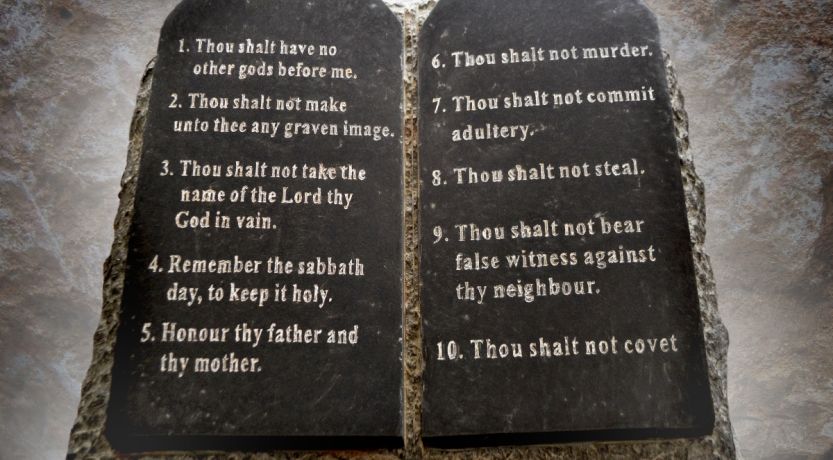
  • We are free to place any other god before the true God (Exodus 20:3).
  • We are free to make and worship idols of anything we wish (verses 4-5).
  • We are free to revile and misuse God’s name as much as we want (verse 7).
  • We are free to do work on the seventh-day Sabbath (verses 8-11).
  • We are free to covet (verse 17).

Sadly, this is taught by some—but in reality, it’s usually only used to zero in on one of the above commandments (the seventh-day Sabbath).

Jesus’ statement in Matthew 5 proves this isn’t true. But still, by listing only five, did Jesus ignore some of the 10 Commandments? Not at all!Download God's 10 Commandments Still Relevant Today

Next time we will take a closer look and discover that the New Testament actually does specifically reinforce every single one of God’s 10 Commandments.

Sidebar: Why Did Jesus List Only Those Five Commandments?

When speaking to the rich ruler, Jesus said that obedience to the Commandments was necessary and then listed five of the 10 Commandments (Luke 18:18-20). Why would He do this? Here are some possibilities.

We don’t know exactly what this man was a “ruler” of, but he could possibly have been a member of the Pharisees (who ruled the synagogues). The Pharisees had developed their own commandments, which were very burdensome and in some cases actually led people to disobey God. Jesus had little regard for their law, which He called “the commandments of men” (Mark 7:6-7).

By listing a few of the 10 Commandments, He was clarifying exactly which commandments were necessary for eternal life: God’s 10 Commandments, not the cumbersome laws of the Pharisees.

But why would He have chosen the five examples He did—adultery, murder, stealing, lying and honoring parents (Luke 18:20)?

One of the major problems with the Pharisees’ laws was that they often led to the abuse and mistreatment of other people. For example, in Matthew 23 Jesus Christ strongly rebuked them for putting unnecessary burdens on people (verse 4), abusing widows (verse 14), neglecting justice and mercy (verse 23) and even being complicit in the murder of righteous men (verse 34-35). In another place, He scolded them for inventing a loophole that allowed them to avoid caring for their elderly parents (Mark 7:11-13).

The main flaw was neglecting to show love to their fellow man.

If the rich ruler was a Pharisee, it would make sense that when Jesus mentioned a few commandments as examples, He chose ones about loving other people (Matthew 22:39). These were five commandments the Pharisees needed to hear. But, of course, that didn’t mean the other commandments dealing with loving God and not coveting were any less important.

In fact, after the man answered that he had obeyed these commandments from childhood, Jesus challenged him to sell his possessions and follow Him—which, it appears, the man was unwilling to do. This demonstrated his unwillingness to fully obey the other commandments to love God and to not covet.”  From: https://lifehopeandtruth.com/bible/10-commandments/the-ten-commandments/did-jesus-reaffirm-all-10-commandments/?

________

Which Is the Great Commandment?

Matthew 22:35-38

Then one of them, a lawyer, asked Him a question, testing Him, and saying, “Teacher, which is the great commandment in the law?” Jesus said to him, “‘You shall love the LORD your God with all your heart, with all your soul, and with all your mind.’ This is the first and great commandment.”

Listen to the "Verse by Verse" episode covering this scripture.

The lawyer seemingly intended this as a trick question with many possible answers that would be considered wrong by those experts who had ranked the laws differently.

But Jesus Christ cut to the core of all the laws to identify what is truly most important. Loving God with all our being means we will seek to please Him and do everything else He asks us to do.It's time to get to know God. Start your 7-day guided Journey.

This first, great commandment summarizes the first four of the 10 Commandments (Exodus 20:1-11) where God explains how to love Him the way He wants to be loved. Human ideas of how to worship God may be well-intentioned, but to be assured we are pleasing God, we must worship and obey Him the way He wants us to.

The first four Commandments, and the entire Bible, show us that way.

Study more about how God wants us to love Him in our article “The Great Commandment.””  From: https://lifehopeandtruth.com/bible/blog/which-is-the-great-commandment/

_________

Lipstick Contaminated with Lead?

“Dozens of lipsticks and lip glosses are put to the test.
“Over the past years, using cosmetic products has increased worldwide at an alarming rate due to unending pursuit for individual beautification…” There’s nothing necessarily wrong with that unless cosmetic products contain ingredients that may be linked to disease—ingredients such as toxic heavy metals like lead.

As you can see at 0:28 in my video Flashback Friday: Is Lipstick Safe Given the Lead Contamination?, lead has been found in a wide range of cosmetic products, from eye shadow to skin cream, and foundation to blush. You may recall that I talked about lead in henna in my video Is Henna Safe?, but in looking at the data, “important warnings can be recognized”: the presence of lead in lipsticks. This is concerning because lipstick wearers may actually swallow a little bit of it. In fact, it has “been estimated that a woman inadvertently ingests 1.8 kg [about 4 lbs] of lipstick during her lifetime.” “Moreover, lipsticks can be used by pregnant women or women of child bearing age.” (I mean, obviously.) Yes, lead is highly toxic, but how much lead can there be in lipstick? Surely, it is “a very minor source….Nonetheless, one should not exclude the fact that lead accumulates in the body due to over time and repetitive lead-containing lipstick or hair dye application, which lead to significant exposure levels.” You don’t really know, though, until you put it to the test.”                      Continued at: https://nutritionfacts.org/blog/lipstick-contaminated-with-lead/?

_________

Thursday, June 6, 2024

D-Day and Divine Intervention.

.

D-Day and Divine Intervention

Posted on May 10, 2019 by Tom Robinson

With the Normandy beachhead secured, vast numbers of Allied troops and military vehicles flood ashore.“On this 75th (now 80th) anniversary of D-Day, a crucial event in the push to Allied victory in World War II, we look back on the remarkable miracle of its success—an answer to prayer and the fulfillment of destiny.

Imperial War Museum

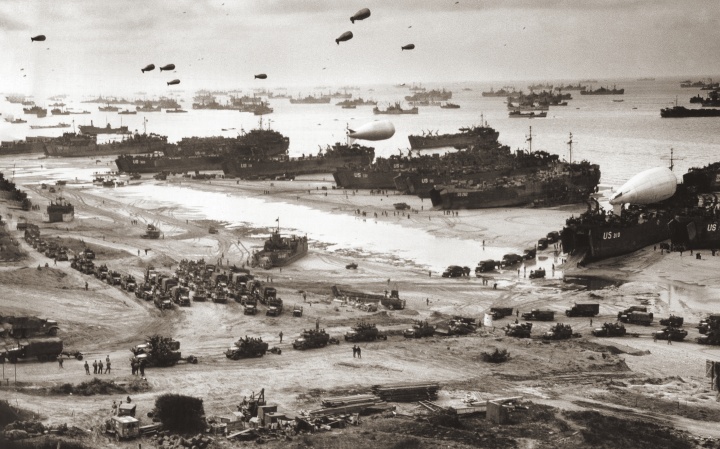
With the Normandy beachhead secured, vast numbers of Allied troops and military vehicles flood ashore.

It’s been 75 (now 80) years since D-Day, June 6, 1944, when Western Allied forces during World War II launched the largest invasion in history with nearly 7,000 ships of all sorts and more than 11,000 planes, crossing the English Channel and landing more than 150,000 troops (and more over the days that followed) on the beaches of Normandy to free France and the rest of Europe from Nazi tyranny.

German leader Adolf Hitler had prepared a vast defensive network of artillery, gun emplacements, mines and other deadly obstacles stretching from the west coast of France up to Norway. This “Atlantic Wall” had to be breached for the Allies to press forward and defeat this evil, genocidal regime that with its Axis partners was intent on continuing the carnage of many millions while trying to conquer the world.

Famed war correspondent Ernie Pyle, who arrived at Normandy the day after D-Day, noted that the Allies achieved victory “with every advantage on the enemy’s side and every disadvantage on ours.” Yet, as he wrote, the total Allied casualties “were remarkably low—only a fraction, in fact, of what our commanders had been prepared to accept.” Pyle concluded, “Now that it is all over, it seems to me a pure miracle that we ever took the beach at all.”

What was miraculous about D-Day, and why would God have intervened?

The weather and other surprises—flukes or God’s handiwork?

Gen. Dwight Eisenhower, Supreme Allied Commander (and later U.S. president), said later on the 1952 anniversary of the operation launch: “This day eight years ago, I made the most agonizing decision of my life. If there were nothing else in my life to prove the existence of an almighty and merciful God, the events of the next twenty-four hours did it . . . The greatest break in a terrible outlay of weather occurred the next day and allowed that great invasion to proceed, with losses far below those we had anticipated.”

The Allies had tried to plan for every eventuality, but they had no control over the vital weather. They hoped for good weather to make the 100-mile sea crossing to Europe, as had miraculously occurred in the mass evacuation from Europe at Dunkirk early in the war. What they didn’t realize was that bad weather—the windiest in 20 years—would hand them success beyond all expectation.

D-Day was originally scheduled for June 5 and could only be postponed for the short term to the 6th or 7th, while the tides were still low and the moon was full for visibility (along with clear weather), especially for clearing or avoiding mines in the surf. Otherwise it would have to have been put off a good while later.

With the terrible weather that sprang up on June 5, it looked like the operation was a no-go, but meteorologists reported a break was about to occur in the weather to allow the 17-hour crossing, though there was as yet no sign of any calming. Eisenhower made the agonizing decision for the ships to launch on the 5th (to arrive the next day) in the face of severe winds. As it turned out, the weather was only marginally better on the 6th, yet enough for the invasion to succeed even with weather-related losses.

What really helped win the day was that the Germans could not believe the Allies would cross the English Channel in such awful weather, and they were caught completely unprepared. They had stood alert at low-tide and full-moon days in May, but they now did not see the need. Half the German division commanders and a fourth of the regiment commanders left for war games exercises in Brittany. Field Marshal Erwin Rommel, in charge of the Normandy defenses, decided to travel 500 miles to Germany to celebrate his wife’s birthday. He came back at word of the invasion, but it took him all day—by then too late.

Also, Adolf Hitler and other leaders under him were convinced by Allied ploys and their own theories that the Allied invasion was going to be further east. And when it arrived they assumed it was a diversion, with the real landing to take place elsewhere—a belief that Hitler bizarrely clung to up through August!

Meanwhile, most of the Luftwaffe (German air force) planes based in Normandy had been relocated to Germany to defend against increasing Allied bombing. With that and the bad weather, German planes were not patrolling the English Channel. Moreover, this was the only night the German U-boat submarines did not patrol it. So the Allies encountered hardly any enemy forces on the way.

Confusion among German defenders

A key early step in the invasion was for paratroopers to come in gliders at 100 mph with no guiding lights and to land secretly next to two critical guarded bridges and secure them—to keep the Germans back and prevent the Germans from destroying them so the Allies couldn’t use them. The weather helped in this too, hiding the gliders in the low clouds as they flew by stopwatches until they dropped out at 200 feet, when the pilots could then see.

The first paratroopers to land were stunned, British platoon leader Maj. John Howard later stating: “When we came to our senses, we realized there was no firing. There was no enemy firing. It all seemed quite unbelievable.” The 22 paratroopers trotted over the bridge, the terrified guards dove into the bushes, and the garrison was taken in 10 minutes. But two German tanks arrived, with four more on the way. The paratroopers had only a single anti-tank gun, and with one chance succeeded in hitting the tank right in the middle, setting off all the ammunition inside—the burning tank now blocking the German advance and enabling lost paratroopers to be reoriented.

The Germans were not then able to counterattack there or across the wider area. They now had only two panzer (or tank) divisions near the Normandy landings. Early in the morning, Field Marshal Gerd von Rundstedt ordered these to move in, not believing such a large-scale invasion could be a deception.

But he had to get approval, as these forces were under the German high command. Approval was not given, as Hitler had to give the order, and he was still sleeping—and he didn’t awaken until noon. Hitler’s approval did not come until 4 p.m., and by that time the weather had cleared and Allied aircraft ruled the skies over Normandy, smashing anything that moved on the ground. (Much more could be said of Hitler’s terrible blunders, which some speculate may have resulted from disease or drug and chemical interactions affecting his brain.)

Many remarkable things happened on D-Day. The landing at Utah Beach was actually in the wrong place, but this worked out in the Allies’ favor, as the beach was less defended there. Of course, other places saw far worse fighting. The taking of the Normandy beaches was still horrific, with thousands dead or wounded. Yet the casualty count had been expected to be many times higher. And the victory allowed the liberation of Europe to follow over the next year.

The weather that seemed poised to thwart the Allied cause in reality greatly helped it. And the Nazi leadership was in many ways confounded. Eisenhower and many others saw this as clear help from Almighty God. In fact, newspapers at the time declared the events of D-Day, Dunkirk, El Alamein, the Battle of Britain and a number of other battles to be miraculous, particularly in the wake of widespread prayer to God for deliverance.

U.S. and British leaders and people look to God

Gen. Eisenhower told the troops embarking for Normandy: “The eyes of the world are upon you. The hopes and prayers of liberty-loving people everywhere march with you . . . The tide has turned! The free men of the world are marching together to Victory! I have full confidence in your courage, devotion to duty and skill in battle. We will accept nothing less than full Victory! Good Luck! And let us all beseech the blessing of Almighty God upon this great and noble undertaking.”

British Field Marshal Bernard Montgomery had told the troops, “Let us pray that the Lord, mighty in battle, will give us victory.”

As the forces approached Normandy, U.S. President Franklin Roosevelt took to the airwaves with this call: “In this poignant hour, I ask you to join with me in prayer.”

He publicly prayed: “Almighty God: Our sons, pride of our nation, this day have set upon a mighty endeavor, a struggle to preserve our Republic, our religion, and our civilization, and to set free a suffering humanity . . . They will need Thy blessings. Their road will be long and hard . . .

“They fight not for the lust of conquest. They fight to end conquest. They fight to liberate . . . They yearn but for the end of battle, for their return to the haven of home. Some will never return. Embrace these, Father, and receive them, Thy heroic servants, into Thy kingdom.

“And for us at home . . . help us, Almighty God, to rededicate ourselves in renewed faith in Thee in this hour of great sacrifice.

“Many people have urged that I call the nation into a single day of special prayer. But because the road is long and the desire is great, I ask that our people devote themselves in a continuance of prayer. As we rise to each new day, and again when each day is spent, let words of prayer be on our lips, invoking Thy help to our efforts . . .

“And, O Lord, give us faith. Give us faith in Thee; faith in our sons; faith in each other; faith in our united crusade . . . With Thy blessing, we shall prevail over the unholy forces of our enemy. Help us to conquer the apostles of greed and racial arrogances. Lead us to the saving of our country, and with our sister nations into a world unity that will spell a sure peace—a peace invulnerable to the schemings of unworthy men. And a peace that will let all of men live in freedom, reaping the just rewards of their honest toil.

“Thy will be done, Almighty God. Amen.”

As word of the invasion spread, prayer vigils were quickly organized throughout the country. Many businesses closed for prayer.

“This was the Lord’s doing, and it is marvellous in our eyes”

Britain’s King George VI said in a worldwide radio address on D-Day: “Four years ago our nation and Empire stood alone against an overwhelming enemy, with our backs to the wall. Tested as never before in our history, in God’s providence we survived that test . . .

“Once more a supreme test has to be faced. This time the challenge is not to fight to survive, but to fight to win the final victory for the good cause . . . That we may be worthily matched with this new summons of destiny, I desire solemnly to call my people to prayer and dedication.

“We are not unmindful of our own shortcomings, past and present. We shall ask not that God may do our will, but that we may be enabled to do the will of God; and we dare to believe that God has used our nation and Empire as an instrument for fulfilling His high purpose.

“I hope that throughout the present crisis of the liberation of Europe there may be offered up earnest, continuous and widespread prayer . . .

“If from every place of worship, from home and factory, from men and women of all ages and many races and occupations, our intercessions rise, then, please God, both now and in the future, not remote, the predictions of an ancient psalm may be fulfilled: ‘The Lord will give strength unto His people; the Lord will give His people the blessing of peace.’”

Did God answer this great outpouring of prayer? Many are justifiably convinced that He did.

After the Allies swept triumphantly through France in 1944, Gen. Montgomery felt compelled to say: “Such an historic march of events can seldom have taken place in such a short space of time . . . Let us say to each other, ‘This was the Lord’s doing, and it is marvellous in our eyes.’”

A God who intervenes and answers national prayer

The Bible reveals that God cares about what happens in the affairs of nations and intervenes in working out His overall plan. “For wisdom and might are His. And He changes the times and the seasons; He removes kings and raises up kings” (Daniel 2:20-21)—sometimes to punish sinful nations and rulers (compare Genesis 15:16; Isaiah 10:12)—and also to protect His servant people from annihilation.

He chose the people of Israel to fulfill a very special destiny. In prophesying of the Israelites in the last days, God promised to make Joseph’s descendants through his sons Ephraim and Manasseh the most blessed nations in the world and strengthen them against their enemies (Genesis 49:22-24), declaring that their descendants would “push the peoples to the ends of the earth” (Deuteronomy 33:17). He further said the Israelites would be “like a lion . . . Your hand shall be lifted against your adversaries, and all your enemies shall be cut off” (Micah 5:8-9).

Other verses show that God would also discipline the Israelites through losses to enemies. But He promised that if His people would humble themselves in prayer, He would forgive them and heal their land (2 Chronicles 7:14).

All of this plays a huge part in what happened at D-Day and the various other instances of divine intervention during World War II and in other conflicts. For, as incredible as it may seem, the prophecies regarding end-time Israel have been fulfilled primarily through the United States and Britain and other nations of British descent. In fact, these nations are in large part actually formed of the descendants of Joseph! (Be sure to read our free study guide The United States and Britain in Bible Prophecy for the proof of this identity and heritage.)

Though this truth is unknown to most, many over the last few centuries have had a sense of the promises to Israel applying in some ways to these great Bible-believing nations.

Leaders who recognized the hand of God at work

Observe what Winston Churchill, British Prime Minister at the time of D-Day, said in his memoirs of the First World War regarding an encounter with Scripture just after he took charge of the Royal Navy:

“That night when I went to bed, I saw a large Bible lying on a table in my bedroom. I thought of the peril of Britain, peace-loving, unthinking, little prepared . . . I thought of mighty Germany . . . wave after wave of valiant manhood . . . of the sudden and successful wars by which her power had been set up. I opened the Book at random, and in the 9th Chapter of Deuteronomy I read—

“‘Hear, O Israel: Thou art to . . . possess nations greater and mightier than thyself . . . a people great and tall of whom thou hast heard say, who can stand before the children of Anak!

“‘Understand therefore this day, that the Lord thy God is he which goes over before thee; as a consuming fire . . . Not for thy righteousness, or for the uprightness of thy heart . . . but for the wickedness of these nations the Lord thy God doth drive them out from before thee, and that he may perform the word which the Lord sware unto thy fathers, Abraham, Isaac and Jacob.’

“It seemed a message full of reassurance” (The World Crisis, Mentor edition, 1968, pp. 58-59). Indeed it was.

During the Second World War, the same Churchill, now prime minister, gave a message in 1942 stating: “I sometimes have a feeling of interference. I want to stress that. I have a feeling sometimes that some Guiding Hand has interfered. I have a feeling that we have a Guardian because we have a great Cause, and we shall have that Guardian so long as we serve that Cause faithfully.”

At the victorious conclusion of the war, Churchill led the British House of Commons to “give humble and reverent thanks to Almighty God for our deliverance.”

Harry Truman, U.S. president at the end of World War II, later remarked in 1951: “I do not think that anyone can study the history of this nation without becoming convinced that Divine Providence has played a great part in it. I have the feeling that God has created us and brought us to our present position of power and strength for some great purpose. It is not given to us to know fully what that purpose is.”

Will we continue to look to God?

While these men did not grasp the big picture of what God was working out, they and others at the time still realized who had saved them and seen them through. Do we?

It’s heartrending to contemplate, but it will not be long before the world is plunged into the worst time of trouble ever—far worse than World War II. America and Britain will not then succeed in beating back the enveloping tyranny but, having drifted far from God, will experience devastating defeat and destruction.

Yet, thankfully, a great deliverance will at last come—from the same God. The Father will send Jesus Christ to return to the earth in awesome power. Descending with the hosts of heaven, Jesus will come in divine war, crushing the armies arrayed against Him. Overthrowing the tyranny of wicked men and of Satan behind it all, He will take over the governing of the whole world, then bringing an end to war and guiding mankind into the way of peace.

As we remember D-Day, let’s be grateful for God’s great intervention then and at other times and, humbling ourselves in prayer, continue to trust Him now and for the future deliverance He will ultimately bring.”  From: https://www.ucg.org/beyond-today/beyond-today-magazine/d-day-and-divine-intervention

_________

Sunday, May 26, 2024

Memorial Day: A Day of Remembrance. Does Grilled Meat Cause Cancer? Avoiding Cooked Meat Carcinogens.

.

Memorial Day: A Day of Remembrance

 Memorial Day: A Day of Remembrance“Memorial Day helps us remember those who have died in war. It can also help us long for the day when true peace will come to this war-torn world.

On Memorial Day Americans will honor those who died fighting in the many wars that have marked this nation’s nearly 248-year history. Flowers will be placed on the graves of the dead, and ceremonies will take place around the country to honor those who gave their lives in defense of this country.

Prayers will also be offered up for the safety of those actively serving in harm’s way.

As we honor those who sacrificed their lives in war, we might ask ourselves, will war or the threat of war always be with us?

A brief history of Memorial Day

Memorial Day was proclaimed in 1868 (three years after the Civil War) by General John Logan and was first observed on May 30 of that year when flowers were placed on the graves of Union and Confederate soldiers at Arlington National Cemetery. More Americans were killed fighting the Civil War than both world wars combined.

After World War I the holiday was changed to honor Americans who died fighting in any war. It is now celebrated on the last Monday in May.

Most have deep respect for the young men and women who willingly laid their lives on the line for the security of their families and country.

Sometimes in today’s ungodly world, it seems that there is no alternative to war.

The terrible toll of war

Though war is glorified in movies and video games, in reality it exacts a terrible toll on nations as well as individuals.

An age is coming when mankind will learn to live at peace with one another  Marriage and family life are disrupted when a soldier has to leave for months at a time. Fathers and mothers are often deprived of the joy of being with their children in the most formative years of their lives.

Bodies and minds are often scarred beyond repair by the carnage of war. Parents’ and grandparents’ hearts are torn apart by news of the sudden and tragic ending of the lives of their children and grandchildren in some far-off place.

To learn why wars occur, read “Why Does God Allow War?

Neither shall they learn war anymore

Thankfully, an age is coming when mankind will learn to live at peace with one another; when the disputes between nations will not be resolved on the battlefield, but by a just and righteous world government led by Jesus Christ, the King of Kings.

The Bible speaks of a future time following the return of Jesus Christ when there will no longer be a need for war colleges or warfare.

The World To Come Booklet“Now it shall come to pass in the latter days that the mountain of the LORD’s house shall be established on the top of the mountains, and shall be exalted above the hills; and peoples shall flow to it. Many nations shall come and say, ‘Come, and let us go up to the mountain of the LORD, to the house of the God of Jacob; He will teach us His ways, and we shall walk in His paths.’ For out of Zion the law shall go forth, and the word of the LORD from Jerusalem.

“He shall judge between many peoples, and rebuke strong nations afar off; they shall beat their swords into plowshares, and their spears into pruning hooks; nation shall not lift up sword against nation, neither shall they learn war anymore. But everyone shall sit under his vine and under his fig tree, and no one shall make them afraid; for the mouth of the LORD of hosts has spoken” (Micah 4:1-4).

The Bible also shows that the millions of young men and women who have died in wars down through the centuries will rise and live again. Their story is not over! (To learn more, read “What Are the Resurrections?”).

There are no greater truths to focus on during Memorial Day than the coming peace of the Kingdom of God and the resurrection of all those who have died through the ages!”

Watch this video presentation to learn more about the biblical hope of a better world to come at:  https://lifehopeandtruth.com/prophecy/blog/memorial-day-a-day-of-remembrance/

___________

Memorial Day: Reflections on War

“In the United States, every year in late May is the national holiday of Memorial Day. 

For many people, I suppose it is just another three-day weekend with time for outdoor activities, family gatherings and backyard barbecues.  

But the origins of this holiday are more sobering and are worth pausing to consider. 

The origins go back to the time immediately following the American Civil War (1861 to 1865) and the desire to commemorate those who died in the war.  

With American fighting American, the toll on the young nation was tremendous—over 600,000 dead before it was all over.

There were several key battles of the Civil War that were fought near where I live in Arkansas, including the Battle of Dripping Springs, the Battle of Pea Ridge and the Battle of Prairie Grove. And up around Springfield, Missouri, was the Battle of Wilson’s Creek.  

There is a small, rather old cemetery in the middle of a pasture across the road from our house.  

Some of the headstones that can still be read date back to the late 1700s, and there are a number marking the graves of young men who died in the mid 1860s—very likely killed in what is sometimes called the War Between the States.  

The observance of Memorial Day began in the mid 1860s in honor of the soldiers who died on both sides of the war. And over the years the holiday was expanded to include those who died in every war the U.S. has become involved with since.  

When I was a boy, most of my relatives called it Decoration Day, and I remember quite a few years when we spent much of the day driving from cemetery to cemetery, placing flowers on the graves of family members—not just soldiers, but all family members.

It is sobering to consider the history all around where I am privileged to live. 

From the cemetery across the road, to the sites of the battles that raged, I am reminded of the lives that were ended here. Each of those young men probably believed he was fighting for a just cause.  

And the military history of the United States is not unique. War, destruction, hatred and death have been ever-present and dominant themes throughout all human history. 

So much history, so much suffering, misery, waste and death. So many hopes and dreams destroyed; so many lives shattered. 

There is no way to know or even begin to count how many tears were shed so long ago over every one of those graves.  

It reminds me of a passage of scripture I’ve read at every funeral I’ve ever conducted.  

In speaking of the hope of the wonderful future that will come to pass, the apostle John recorded: “Behold, the tabernacle of God is with men, and He will dwell with them, and they shall be His people. God Himself will be with them and be their God. And God will wipe away every tear from their eyes; there shall be no more death, nor sorrow, nor crying. There shall be no more pain, for the former things have passed away” (Revelation 21:3-4).  

Bible prophecy is very clear that wars will continue up until the return of Jesus Christ to earth. In fact, Christ Himself warned that wars will become so intense that if the Father would not send Him back to earth when He will, all human life would be destroyed (Matthew 24:22). (Read more about how peace will come in our online article “How World Peace Will Come.”) 

Considering our human history of war and suffering should motivate us to pray more earnestly for the circumstances where we can live our faith in peace (1 Timothy 2:1-2). 

But we also have the hope of a future where our Creator will once and for all “wipe away every tear.” 

Kind regards, and have a great rest of your week,

Tom Clark, for Life, Hope & Truth

_________

Does Grilled Meat Cause Cancer?

“Studies have found that eating grilled meat or chicken may increase your risk of developing cancer.23

The problem comes down to carcinogens, cancer-causing substances which may be formed as part of the grilling process. The amino acids, sugars, and creatine in meats react at high temperatures forming heterocyclic amines.

Heterocyclic amines (HAs) are human carcinogens found on any meat cooked at high temperatures, whether on a grill or in a pan or under the broiler. The grilling is part of the problem, but the other is simply the heat. Pan-frying meats at high temperatures (over 300 F) also increases cancer risk.4

A group of chemicals called polycyclic aromatic hydrocarbons (PAHs) are also linked to cancer.5 PAHs form when the meat juices drip onto the coals or other heating surfaces and flare up in flames and smoke. They stick to meat and are only found on grilled or smoked meat.6

HAs and PAHs are mutagenic—they cause changes in the DNA of cells in the laboratory that could lead to cells becoming cancerous. The most important factor in PAH production appears to be the incomplete combustion of fats that drip on the grill.7

We don't have any direct studies on humans which show that HAs and PAHs cause cancer, but animal studies have found an increased risk of cancer in exposed animals.5 Population studies on people, in turn, have found an increased risk of some cancers in people who eat larger quantities of grilled and well-done meats.3

While most studies have focused on grilled meat and the incidence of cancer, a 2017 study found that women with breast cancer had lower survival rates if they consumed greater amounts of grilled, barbecued, or smoked meats.8

Limit Processed Meats

As for the hot dogs, you may want to take a pass. We know that, of all meats, processed meats likely confer the most cancer risk.13

Since you will already be limiting both the frequency and portion size of the meats you eat, it might be best to save those portions for cuts of non-processed meats you can genuinely savor, such as a good (but marinated) steak.

Summary

We know that high cooking temperatures and smoke put mutagenic chemicals into and onto the meat. Yet, there are several measures you can take to reduce the number of heterocyclic amines and other carcinogens in the meat you eat. These measures include marinating meat, cooking at lower temperatures, raising the grill rack, and more.

A Word From Verywell

Keep in mind that just like everything in life, moderation is key. You still can enjoy grilled meats, but just do so in moderation and when cooked at low temperatures. That said, women who have had breast cancer may want to limit the amount of grilled, barbecued, and smoked meats they consume, even if they take the measures above to reduce carcinogens.

Can eating too much grilled food cause cancer?
Yes, there is an increased risk of cancer from eating an excessive amount of grilled meat. This is due to heterocyclic amines (HAs) and polycyclic aromatic hydrocarbons (PAHs). These substances are carcinogens (cause cancer) formed as part of the grilling process.”  From: https://www.verywellhealth.com/is-grilled-meat-a-cancer-risk-514039

_______

Avoiding Cooked Meat Carcinogens

Image Credit: rhodes / Flickr. This image has been modified.

“When the muscles of mammals, fish, or birds are cooked at high temperatures carcinogenic chemicals called heterocyclic amines are created that may increase the risk of breast, colon, lung, pancreatic, and prostate cancer (see my last post Estrogens in Cooked Meat). Risky cooking methods don’t just include barbequing, frying, and grilling. Even just baking chicken at around 350o F for 15 minutes leads to significant production of these cancer-causing compounds.

In my video Estrogenic Cooked Meat Carcinogens I showed that these cooked meat carcinogens may stimulate breast cancer cell growth nearly as much as pure estrogen. In PhIP: The Three Strikes Breast Carcinogen I showed that these chemicals may promote breast cancer invasiveness even more than estrogen.

How do you decrease your exposure to these chemicals? As you can see in my 3-min. video Reducing Cancer Risk in Meateaters, fried bacon and fish are the worst, though skinless chicken breast might lead to the greatest exposure given its popularity.  If there are carcinogens in roasted chicken, what about roasted coffee? See Coffee and Cancer.

Women who consume meat very well done, appear to be at nearly 5 times higher risk for breast cancer compared to women who consumed their meats rare or medium done. This, however, raises the so-called “paradox” of preparing meat noted by the Harvard Health Letter. Well-cooked and you risk cancer; undercooked and you risk E. coli food poisoning.

Eating boiled meat—not broiled, but boiled in water—is probably the safest. Studies show if you eat meat that never goes above 212 degrees Fahrenheit, both your urine and feces damage DNA significantly less than if you eat meat dry cooked at higher temperatures.  A similar study where they compared the excretion of carcinogens formed in processed meats can be found in Prevention Is Better Than Cured Meat.

PhIP is also found in cigarette smoke, diesel fumes, and incinerator ash, but because the highest levels in food are found in common meats, toxicologists lament “Exposure to PhIP is difficult to avoid because of its presence in many commonly consumed cooked meats, particularly chicken, beef and fish.”  But if you’re able to somehow dodge those meats (and don’t suck on a cigarette, tailpipe, or incinerator smokestack) maybe it’s not so difficult to avoid after all.

The levels of heterocyclic amines flowing through one’s body may drop to zero after refraining from eating meat for just 24 hours. If you practice Meatless Mondays, by Tuesday, morning urine levels of PhIP and MeIQx—one the most potent mutagens ever tested—become undetectable. There are, however, ways even vegetarians may be exposed: cigarette smoke, eggs, cheese, and the popular sports supplement creatine. See my 4-min video Heterocyclic Amines in Eggs, Cheese, and Creatine? for details.

Caution may also be necessary with athletic protein supplementation. See Heavy Metals in Protein Powder Supplements. In general, Some Dietary Supplements May Be More Than a Waste of Money.

Heterocyclic amines are not the only class of meat carcinogens also found in cigarette smoke. See my video When Nitrites Go Bad. While the body can detox itself of both nitrosamines and these cooked meat chemicals within hours or days, some pollutants found in meat can persist in the body. See How Fast Can Children Detoxify from PCBs?”  From: https://nutritionfacts.org/blog/avoiding-cooked-meat-carcinogens/

_________