Showing posts with label beans. Show all posts

Friday, August 15, 2025

Danger, Fake News. Heeding an Alarm: The Texas Tragedy Still Haunts Us. The Same Diet That’s Anti-Cancer Is Also Anti-Heart Disease And Anti-Lung Disease.

.

image

Fake News in the Church? It Started in a Garden...

“Fake news isn’t new.

In fact, the very first fake news story was broadcast in the Garden of Eden when Satan told Eve:
“You will not surely die...” (Genesis 3:4)

That was a lie — and it’s been spreading ever since.

Christ called Satan the father of lies (John 8:44), and to this day, he remains the invisible broadcaster behind every slander, whisper, distortion, and deception — including many that make their way right into the Church of God.

In a world trained to doubt everything and mock everyone, the spirit of fake news has crept in among God’s people — not just through media, but in our conversations, our comments, our posts, and even our fellowship.

Let’s be real:
Gossip, rumors, harsh opinions, character assassinations — these are all modern forms of false witness, and they violate the Ninth Commandment:

“You shall not bear false witness against your neighbor.” (Exodus 20:16)

Even if something is “technically” true, if it’s told with the intent to damage, divide, or discourage — it becomes spiritual fake news.

God hates it.

“A lying tongue… a false witness who speaks lies… and one who sows discord among brethren.” (Proverbs 6:16–19)

It’s easy to fall into it.
We’ve all heard it — maybe we’ve even spread it.

That’s why we must wake up and take spiritual inventory.

Christ didn’t just speak truth — He was the Truth (John 14:6).
As His followers, we must reflect that same Spirit of truth — in our words, our tone, our posts, and even in our private conversations.

So ask yourself:

Do I speak negatively about others?

Do I pass on things I haven’t personally confirmed?

Do I allow cynicism or distrust to shape my attitude in the Church?

Cynicism isn’t harmless. It damages your faith and erodes others’. It causes stumbling — and Christ warned that causing a brother to stumble is no small thing (Matthew 18:6).

This isn’t about being naïve. It’s about being spiritually responsible.
We must not become the carriers of a spiritual virus that Satan uses to weaken the Church from within.

So here’s the challenge:

▸ Don’t engage in or pass along gossip
▸Speak well of others when possible — and stay silent when it’s not
▸Change the subject when others veer negative
▸Choose your words — and your thoughts — carefully

“Let all that you do be done with love.” (1 Corinthians 16:14)
“To him who overcomes I will grant to sit with Me on My throne.” (Revelation 3:21)

You were called to truth — not just to know it, but to live it.

Let’s overcome the spirit of fake news — and be vessels of faith, clarity, and peace.

With sincerity and encouragement in Christ,
Bob Schenfield”

__________

Heeding an Alarm: The Texas Tragedy Still Haunts Us

“Have you ever heard an emergency alarm sound and ignored it?  I have.
I remember the alarm system when I was young in my hometown. A weather alert would come on the television or the radio. Those were the only two systems we had. Because my mother had once experienced a tornado, and we had a next-door neighbor who took the alarms seriously and came knocking on our door, we took it seriously. We would go to our basement until the alarm passed.

Recently, I visited my hometown. One night, storms came through, spawning tornadoes, and the tornado alarms went off. The town now has a system of very loud alarms. When the alarms sounded my wife and I did nothing. We turned over and went back to sleep. Fortunately, nothing occurred. I am alive to write this piece.

I am still digesting the recent flooding tragedy in south Texas along the Guadalupe River. Every time I think of the young girls who were swept away in the dark of night, I grieve for their families. The whole incident haunts us. The region will take a long time to recover. Parents and family of the dead will never fully recover.

Could the devastating loss of life have been prevented? Had it occurred in daylight, rather than the early hours of morning when all were asleep, the number of casualties would certainly have been reduced. It happened when it did, when people were sleeping and evidently the only alarm system was on people’s cell phones. When you are asleep it is difficult to hear and heed an alarm.

I read that Kerr County, Texas, where this occurred is about the size of the state of Rhode Island (1,107 square miles) and only has 54,000 inhabitants. Rhode Island has more than a million people. Emergency services were likely tailored to the size and resources of the population. They proved inadequate.

What do we learn from this tragedy?

I will pay more attention to the sounding of an alarm, whether it is a tornado, fire or other emergency. It is the right thing to do. One day danger will strike. If we prepare even a small amount, it can save a life.

I have thought about the biblical references to the coming of the Lord as a “thief in the night.”  This phrase is used in four locations in the New Testament. Revelation 16:15 says, “Behold, I am coming as a thief. Blessed is he who watches, and keeps his garments, lest he walk naked and they see his shame.” (Luke 21:34; 1 Thessalonians 5:4; 2 Peter 3:10; Revelation 3:3).

The metaphor is striking—“a thief in the night.”  While we sleep—when we are least able to hear and respond to danger.
These scriptures refer to spiritual watchfulness.
The events of the Day of the Lord will begin suddenly. Spiritual deception is high. World events suddenly shift. These biblical references speak to preparedness, alertness and righteous works.
My lack of reaction to a local alarm tells me I may need to study these scriptures again.
There is much to learn.” From: https://mailchi.mp/ucg/heeding-an-alarm-texas-tragedy?e=72c729d811

__________

The same diet that’s anti-cancer is also anti-heart disease and anti-lung disease.

“Following cancer prevention guidelines for lifestyle and diet may increase longevity.

Adherence to cancer prevention recommendations isn’t just associated with higher survival in cancer patients and lower risk of dying from cancer, but lower risk of dying overall. That’s the beauty of eating a more plant-based diet.

Thirty to 50 percent of common cancers are preventable with diet and lifestyle. We have the power to change our health destiny.

A healthy lifestyle that includes a diet rich in fruits, vegetables, whole grains, and legumes may help reduce the number of breast cancer incidences, for example.

The American Institute for Cancer Research recommendations include maintaining a healthy weight, exercising, and eating a diet rich in whole grains, vegetables, fruits, and beans, while limiting fast food, processed junk, meats, soda, and alcohol.

Specific to breast cancer, those who met most of those recommendations only had half the risk, compared to individuals who only met a couple. If you could only do one of those recommendations, limiting animal foods seems most protective. Adherence to the recommendations is also associated with higher survival in people who already have cancer.

Higher dietary fiber consumption was associated with a 37 percent lower risk of dying from all causes put together and a 28 percent lower risk of dying specifically from breast cancer among breast cancer survivors––and it didn’t take much. There was about a 10 percent drop in death risk for every increment of 5 daily grams of dietary fiber. That’s like a cup of oatmeal or broccoli, or just a third of a cup of beans.

Watch the video “Diet and Lifestyle for Cancer Prevention and Survival” at see.nf/3O4GyAa

_______

Wednesday, July 16, 2025

Your Truth, My Truth or THE Truth? What's Wrong With Our Human Nature? WFPB For Reversing Diabetes.

.

Your truth, my truth or THE truth?

Your truth, my truth or THE truth?“The subtle, philosophical idea that everyone can determine what they believe to be true values challenges the authority of the Bible and insidiously permeates Christian beliefs and standards.

When Bob began his freshman year at university he was not prepared to have his Christian beliefs and values challenged. The philosophical idea that everyone determines his or her own truth was insidiously permeating Bob’s new life and it was so subtle that, at first, he didn’t even realize it was happening. It was something that would challenge his Christianity to its very core.

While exposure to different ideas has always been a part of one's college experience, what many young people don't realize is that their understanding of absolute truth—the kind found in the Bible—is going to be strongly tested when they pursue higher education. The campuses of most public universities today are smorgasbords of ideas. Every imaginable philosophy seems to be represented and debate reigns supreme with the underlying assumption human beings should decide for themselves what is best.

Many people today pride themselves on being able to see things from multiple perspectives. Although this approach provides subject for debate, having flexible positions isn’t good when it comes to Christianity. Isaiah 5:20 tells us: “Woe to those who call evil good, and good evil….Woe to those who are wise in their own eyes, and prudent in their own sight!”  Furthermore, to publicly state something is right or wrong has come to be considered judgmental, which is looked down upon in today’s secular world. Most people have embraced the self-empowering myth that whatever they sincerely believe is true. They have forgotten about God and His Word. Truth has become relative. According to religious pollster George Barna, the majority opinion today is that moral truth depends on the circumstances. In a February 2002 report titled "Americans Are Most Likely to Base Truth on Feelings," Barna wrote:

"In two national surveys… one among adults and one among teenagers, people were asked if they believe that there are moral absolutes that are unchanging or that moral truth is relative to the circumstances. By a 3-to-1 margin (64% vs. 22%) adults said truth is always relative to the person and their situation. The perspective was even more lopsided among teenagers, 83% of whom said moral truth depends on the circumstances, and only 6% of whom said moral truth is absolute."

Confusion about moral absolutes has been a human problem for a long time. In the Garden of Eden, Adam and Eve ate from “the tree of the knowledge of good and evil” (Genesis 2:9). Mankind, following their mistaken example of self-determination apart from God, has generally been confused about good and evil ever since. As Jeremiah exclaimed, "O Lord , I know the way of man is not in himself; it is not in man who walks to direct his own steps" (Jeremiah 10:23).

There is a God who really does know the truth and wants what is best for us because He loves us. The humanistic idea that human beings are capable of determining our own way apart from God just doesn’t square with reality. God alone determines truth which is found in the Bible (John 17:17). Recognizing and practicing the eternal, absolute values of God is what sanctifies and sets apart true Christians.They know Jesus intended Christians to be lights to others rather than accepting or being overwhelmed by the world and its values (Matthew 5:14-16).

________

 What's wrong with our human nature?

What's wrong with our human nature?“When God formed Adam and Eve in the Garden of Eden, they were part of a created order that was "very good" (Genesis 1:31). But in describing their creation as good, God did not mean Adam and Eve were inherently good or were inclined to choose to live God's way.

Initially, Adam and Eve made no choice in terms of good and evil. Their way of thinking and behavior was neutral, but as flesh-and-blood human beings, they had physical drives and material interests common to all mankind. They had desires for self-preservation, for physical pleasures, for appreciation, for learning and for bettering their circumstances. The focus on self in such characteristics was not inherently sinful, but this self-oriented focus could lead to sin if it contradicted God's direction and instructions.

When Satan the devil came onto the scene in the form of a serpent, he wasted no time in tempting the first human beings to sin. He deceived Eve about partaking of the fruit God had forbidden, tempting her to take advantage of her desire to become wise and better her life. Adam was not deceived, but he also submitted to Satan's scheming (Genesis 3:1-24; 1 Timothy 2:14 NKJV). Adam and Eve thus set a pattern the human race that would spring from them would follow—accepting the rule and influence of Satan rather than following God.

From then on, human beings would be led to pursue selfishness and rebel against God's commandments. Children would still be born with a neutral nature but, under the influence of Satan. In a world in which people were deceived into unwittingly following him and his ways, they would very quickly develop the selfish nature of the corrupted human society and culture around them. This tendency to exalt self and disobey God is known as human nature, with the primary motivation being selfishness rather than a desire to obey and please God.

Paul explained that, as "the god of this age," Satan "has blinded the minds of unbelievers, so that they cannot see the light of the gospel" (2 Corinthians 4:4). With the exception of Jesus Christ, "all have sinned and fall short of the glory of God" (Romans 3:23). He described the sorry spiritual condition of the human race in Romans 3:10-18, and reminds Christians that "you once walked according to the course of this world, according to the prince of the power of the air, the spirit who now works in the sons of disobedience, among whom also we all once conducted ourselves…fulfilling the desires of the flesh and of the mind…." (Ephesians 2:2-3). However, as powerful as his influence is, the devil cannot force us to sin. He simply seduces us through our fleshly weaknesses and the wrong ways of thinking he has led us into over time. Following are some of the ways we are easily manipulated by Satan:

1. Our selfish, fleshly desires often get us into trouble: "Now the works of the flesh are evident, which are: adultery, fornication, uncleanness, lewdness, idolatry, sorcery, hatred, contentions, jealousies, outbursts of wrath, selfish ambitions, dissensions, heresies, envy, murders, drunkenness, revelries, and the like…those who practice such things will not inherit the kingdom of God" (Galatians 5:19-21). Paul graphically describes the effect corrupt desires have on human behavior. "Therefore God gave them over in the sinful desires of their hearts to sexual impurity for the degrading of their bodies with one another….Furthermore, just as they did not think it worthwhile to retain the knowledge of God, so God gave them over to a depraved mind, so that they do what ought not to be done. They have become filled with every kind of wickedness, evil, greed and depravity. They are full of envy, murder, strife, deceit and malice. They are gossips, slanderers, God-haters, insolent, arrogant and boastful…. Although they know God's righteous decree that those who do such things deserve death, they not only continue to do these very things but also approve of those who practice them" (Romans 1:24 and 28-32, NIV).

2. Our ingrained deviousness, including self-deception, is a major weakness of the fleshly mind. "The heart is deceitful above all things, and desperately wicked; who can know it?" (Jeremiah 17:9). Subject to Satan's influence, we naturally look for ways to justify our lusts and sinful desires, along with the behaviors arising from them. We deceive ourselves into believing that, since our desires are natural, they can’t be so bad, in spite of the fact that God's Word reminds us "there is a way that seems right to a man, but its end is the way of death" (Proverbs 14:12 and 16:25). Death is the end result of living that wrong way (Romans 6:23).

3. Under the devil's influence we develop the tendency to resent having our selfish desires limited by rules, even God's commandments: "For those who live according to the flesh think about the things of the flesh, but those who live according to the Spirit, about the things of the Spirit….the mind-set of the flesh is death, but the mind-set of the Spirit is life and peace. For the mind-set of the flesh is hostile to God because it does not submit itself to God's law, for it is unable to do so. Those who are in [that is, within control of] the flesh cannot please God" (Romans 8:5-8, HCSB).

Without the positive influence of God's Spirit, our primary inclination is to serve ourselves and resist living according to God's biblical instructions. Satan is a powerful deceiver and manipulator, taking advantage of our self-focused nature by persuading us to give in to our human wants and desires. Because of this Paul warns: "If you live according to the flesh you will die; but if by the Spirit you put to death the deeds of the body, you will live. For as many as are led by the Spirit of God, these are sons of God" (Romans 8:13-14).

_________

Beginner’s Guide to a Whole-Food Plant-Based Diet

“Right off the bat, we want you to know that a whole-food, plant-based lifestyle is NOT a diet of vegetables only.

So if you were hesitant to start because you think you are only going to be eating rabbit food, let’s put those fears to rest.

You, along with tens of millions of people just like you, have taken an important first step to improving your life.

We are grateful that so many people worldwide have helped improve their health, manage their weight, and prevent and reverse chronic diseases through a whole-food, plant-based diet.”

“If you’re new to eating a whole-food plant-based diet, or if you’re just curious, you came to the right spot. It’s worth mentioning that neither whole-food plant-based eating, diet nor a vegan diet are “diets” in the sense of restricting calories. The term is used here as a description of how someone eats on a consistent basis.

What exactly is a whole-food plant-based diet?

First up, following a whole-food plant-based (WFPB for short) diet is different from eating vegan. While neither includes animal-based foods nor foods derived from animal-based ingredients, WFPB goes a step further and removes overly processed foods like oil, junk food, white flour, white sugar, vegan ice cream, vegan cookies from the mix. Why? Because overly processed foods are typically very high in calories but low in nutrition. Calorie density isn’t necessarily a bad thing, but when paired with little or no nutritional value, it’s best to avoid those types of foods. Plus, high quantities of salt, fat, and sugar release super powerful chemicals in our brains that make us crave more and can turn down our body’s natural satiation signals, meaning it’s easy to eat way more of those foods more often than we intend.

What should you eat when following a WFPB diet?

When you eat a whole-food plant-based diet, you’ll find yourself enjoying:

  • Vegetables
  • Whole grains
  • Beans & legumes
  • Fruit
  • Nuts
  • Seeds
  • Herbs & spices
  • Minimally processed plant based ingredients like tofu, tempeh, unsweetened plant milk, and sprouted grain bread

whole-food plant-based diet food groups chart

Benefits of whole-food plant-based eating

Whether your motivation to eat more plants is to boost your immune system and your overall health, drop some pounds, get off your diabetes medication, help protect the environment, or animal welfare, it’s never too late to start, and there are no prerequisites. You simply start where you’re at and ease into it however you like.

Reverse diabetes

Lower your A1C and manage your blood glucose by harnessing the power of plants. A whole-food plant-based diet can help you find joy in eating again while reversing diabetes. We’ve seen it happen for countless members.” 

Dr. Elina Tomski reverses pre-diabetes with a whole-food plant-based diet >

More at: https://cleanfooddirtygirl.com/beginners-guide-to-a-whole-food-plant-based-diet/

_________

    Tuesday, January 21, 2025

    God Rules With Strength and Gentleness. Want to Live to 100? Eat More Beans!

    .

    God Rules With Strength and Gentleness

    Isaiah 40:10-11

    Behold, the Lord GOD shall come with a strong hand, and His arm shall rule for Him; behold, His reward is with Him, and His work before Him. He will feed His flock like a shepherd; He will gather the lambs with His arm, and carry them in His bosom, and gently lead those who are with young.

    “These two verses condense a tremendous amount of information about how God will rule when Jesus Christ returns to establish the Kingdom of God on this earth.

    The book of Revelation explains that as Jesus Christ is coming down to this earth, the armies of the nations of this world will attack Him as if He were an alien invader (Revelation 19:19). Christ’s response to these unprovoked attacks will be with “a strong hand,” as He forcefully puts down the rebellion and makes it clear who is in charge (Revelation 19:20-21).

    But that is just one aspect of Jesus Christ’s rule. Isaiah mentions that He will bring a “reward” with Him for His faithful followers who will then assist Him in “His work” of teaching His way of life to the survivors of the end-time troubles.

    Isaiah 40:11 is a beautiful picture of our all-powerful God gently gathering people like little lambs and feeding and caring for them.

    God is both strong and gentle at the right times. He wants us to learn to follow His lead in this area of life as well.”          Listen to the "Verse by Verse" episode covering this scripture at:  https://lifehopeandtruth.com/bible/blog/god-rules-with-strength-and-gentleness/?

    For more about Isaiah 40, see “God’s Perspective on Prophecy.” For more about how God will rule in the Kingdom of God, see the articles in our “Kingdom of God” section. 

    _________

    It's time to get to know God. Start your 7-day guided Journey.

    ________

    Want to Live to 100? Eat More Beans!

    Eat beans and live 100“Want to know how to live to 100? Eat plenty of beans, says plenty of research studies on the longest-living populations in the world.

    Campodimele, Italy, a hilltop village south of Rome, has so many centenarians that it’s known in Europe as the “Village of Longevity.” Daily, its citizens enjoy a diet full of beans like lentils, chickpeas, and white beans.

    How to live to 100

    A few years ago, scientists identified five groups of long-lived elderly people (aged 70 and older) – Japanese in Japan, Swedes in Sweden, Anglo-Celtic people in Australia, and Greeks in both Greece and Australia – and observed them for the next seven years, tracking their health status and food choices among nine different categories: vegetables, legumes, fruits, nuts, cereals, dairy products, meat, fish, and monounsaturated fats. A total of 785 elderly people were followed.

    Eating Beans May Help You Live To 100Nowadays, there are many tasty varieties of beans on the market, not only staples like garbanzos but also choices like cranberry, cannellini, and fava beans. Eat beans and live longer, maybe even live to 100.

    The researchers found that legumes were the most important dietary predictor of survival among the elderly, “regardless of their ethnicity,” they wrote.* For every 20-gram increase in daily legume intake (20 grams is about three-quarters of an ounce), “there is a 7 to 8% reduction in mortality hazard ratio.”

    You’d be hard-pressed to find a more perfect food than beans. They are an excellent source of protein, vitamins, minerals, and complex carbohydrates. They’re very low in fat and virtually sodium-free. Plus, they’re filling.

    And fiber? Even the lowest-fiber bean puts most other foods to shame. A cup of high-fiber beans, like pinto or black beans, tallies up 16 grams of fiber.You’d have to eat about eight slices of whole-wheat bread to get the same amount of fiber. And it’s primarily cholesterol-reducing soluble fiber, which makes beans an excellent heart-healthy alternative to meat.

    Bean prep these days has gotten so much easier, thanks to the ready availability of cans of already-cooked beans, and you can find many “no salt added” varieties, which is really wonderful for keeping blood pressure under control. If all you can find is salted varieties, get rid of some of the salt by rinsing the beans through a colander.

    Here are some simple tips for how to get more beans into your life (and how to live to 100):
    • Toss a handful of beans into your salads (try the rich, buttery flavor of cannellini  beans)
    • Stir beans into your pasta sauces or soups. Make an easy, sensational bean soup by combining canned white beans, any vegetables you already have, low-sodium chicken stock, and chopped fresh Italian parsley. Season with no-salt-added Italian blend seasonings and 1 tablespoon of low-sodium soy sauce. Bring to a boil and simmer for about 15 minutes.
    • Fold beans, like black and pinto beans, into corn tortillas with salsa, shredded nonfat jalapeno cheese, and shredded lettuce.
    • Puree beans for dips. For a zesty Mexican-style dip, combine pinto beans, chopped red onion, fresh cilantro leaves, and lime juice in a food processor and blend. Whip up your own delicious and inexpensive hummus dip in a processor with just five ingredients: two garlics, one can of no-salt-added garbanzo beans, three-quarter teaspoon sesame oil, two tablespoons plain nonfat yogurt, and two tablespoons fresh lemon juice.
    Source:   https://www.pritikin.com/your-health/healthy-living/eating-right/539-want-to-live-to-be-100-eat-more-beans.html

    * Asia Pacific Journal of Clinical Nutrition, 2004; 13 (S): S126.

    _________

    Saturday, March 9, 2024

    Maundy Thursday and Good Friday. Three Days and Three Nights. Increased Lifespan from Beans.

    .

    3 Things You May Not Know About Maundy Thursday and Good Friday

    3 Things You May Not Know About Maundy Thursday and Good FridayDevout Catholics participate in a Good Friday procession.

    “Reflecting on Jesus’ death is sobering. Unfortunately the timing is rarely understood. Do Maundy Thursday and Good Friday fit the timing in the Bible?

    Churches will soon be packed with some of their largest attendances of the year. The “CEOs” (Christmas and Easter Only attendees) will make one of their semiannual appearances for Easter, the most holy observance of the year for mainstream Christianity. Good Friday, which occurs two days before Easter Sunday, is also significant as the most solemn occasion because it recalls the crucifixion of Christ.

    Most professing Christians understand that Jesus died so our sins can be forgiven. What is not common knowledge is the timing of His death, which has been hidden by the establishment of Easter and its closely related observances of Lent, Palm Sunday, Holy Wednesday, Maundy Thursday and Good Friday in lieu of the biblical festivals observed by Jesus, His apostles and the first-century Church.

    If you sincerely want to honor Christ at this time of year, you need to know the real story—the one that shows us the correct timing of His death and how to properly commemorate this event.

    Doesn’t Christ deserve the respect to have the true, biblical history of His death told and remembered on this sobering occasion?

    In that light, here are three important things to know about Maundy Thursday and Good Friday:

    1. Of all the man-made holidays, Maundy Thursday and Good Friday are the only ones that claim to commemorate something Jesus said to commemorate.

    On the evening before His crucifixion, Jesus told His disciples to keep the Passover as an annual festival “in remembrance of Me” (Luke 22:19; 1 Corinthians 11:24-25).

    In teaching the Corinthians to observe this solemn service, Paul told them that through this memorial they would “proclaim the Lord’s death till He comes” (verse 26, emphasis added throughout).

    Jesus never commanded Christians to celebrate His birth or resurrection. Rather, His instruction was for us to memorialize His death—something that Maundy Thursday and Good Friday actually do attempt to do.

    But does that mean you should observe Maundy Thursday and Good Friday?

    2. Maundy Thursday and Good Friday aren’t the biblical names of the observance that commemorates Christ’s death.

    The terms Maundy Thursday and Good Friday appear nowhere in the Bible. But the Bible does talk about another festival to honor Christ’s death: the Passover.

    The New Testament Passover established by Christ Himself includes taking bread and wine. The bread represents His broken body and the wine represents His shed blood (Matthew 26:26-28).

    Churches vary in how often they partake of the symbols of bread and wine. Some take these symbols daily, some monthly and some on Maundy Thursday. But the Bible instructs us to observe it only once a year on a specific day (Leviticus 23:5). When we take the Passover symbols of unleavened bread and wine, we annually “proclaim the Lord’s death till He comes” (1 Corinthians 11:26).

    Observing the Passover is a memorial of Christ’s death. Jesus did not die on many different days throughout the year. He died on only one day, and He observed the Passover on the prescribed evening before the day of His death.

    Passover is the annual festival that reminds us of Christ’s death. To learn more about this observance, see “Passover: What Did Jesus Do for You?” and “Questions and Answers About the Passover.”

    3 Things You May Not Know About Maundy Thursday and Good Friday

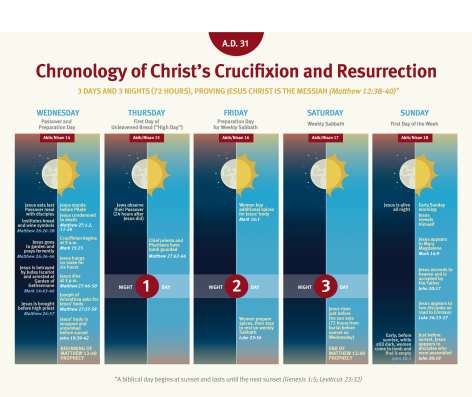
    Download "The Chronology of Christ’s Crucifixion and Resurrection" infographic.

    This chart includes the key events during this momentous week, demonstrating how Jesus’ promise to rise after three days and three nights was fulfilled, proving He is the Messiah.

    3. Jesus didn’t die on a Friday.

    Today documentation is commonly recorded for births and deaths. While we don’t have these same types of records from the first century giving us the exact day of Christ’s death, the Bible does give us enough details to show that Jesus definitely didn’t die on a Friday.

    Let’s begin with the best known facts about Christ’s death. The Bible clearly tells us: “Now after the Sabbath [Saturday], as the first day of the week [Sunday] began to dawn, Mary Magdalene and the other Mary came to see the tomb,” but Jesus was not there because He had risen (Matthew 28:1, 6). So Jesus had already been resurrected by very early Sunday morning.

    The next biblical key to note is that Jesus said, “As Jonah was three days and three nights in the belly of the great fish, so will the Son of Man be three days and three nights in the heart of the earth” (Matthew 12:40). We can also note that Jesus died at about 3 p.m., the ninth hour after sunrise, and was buried that evening shortly before the beginning of a Sabbath (Matthew 27:46-50, 57, 62).

    People have assumed that the Sabbath mentioned in these verses is a Saturday, leading them to the conclusion that Jesus died on a Friday—hence the name Good Friday. But there is a problem with this timeline. There simply are not three days and three nights between Friday evening and Sunday morning. There aren’t even parts of three days and three nights in this time period between Friday evening and Sunday morning (as some have tried to interpret the three days and three nights).

    The biblical fact is, Jesus died on a Wednesday—not on a Friday as many believe. A careful reading of a companion scripture explains this apparent dilemma. John 19:31 tells us that the day Jesus was buried preceded a “high day”—a designation reserved for an annual Sabbath, which could fall on any day of the week and not necessarily Saturday. In fact, Jesus was buried just prior to the beginning of the first day of the Feast of Unleavened Bread—an annual Sabbath.

    The weekday timeline that fits the facts we have noted is easily constructed. Jesus observed the Passover with His disciples on Tuesday evening. He was crucified and died on Wednesday, buried near sunset on Wednesday prior to the beginning of the annual Sabbath called the first day of the Feast of Unleavened Bread, and resurrected three days and three nights later near sundown on Saturday, the weekly Sabbath. When the women arrived at the tomb early Sunday morning, they discovered that He had already been resurrected.

    The fact that there were two Sabbaths during the timeline of Jesus’ burial and resurrection is confirmed by several Bible translations, including the International Standard Version, which translates Matthew 28:1: “After the Sabbaths, around dawn on the first day of the week, Mary Magdalene and the other Mary went to take a look at the burial site.” The annual Sabbath occurred on Thursday that year; the weekly Sabbath, on Saturday.

    The biblical fact is, Jesus died on a Wednesday—not on a Friday as many believe. Interestingly when we look at the years for God’s holy days falling on the days of the week indicated by the Scriptures, we find that Jesus died on the 14th day of the first month of the Hebrew calendar in A.D. 31."   From: https://lifehopeandtruth.com/life/blog/3-things-you-may-not-know-about-maundy-thursday-and-good-friday/

    _________

    Three Days and Three Nights

    Matthew 12:39-40

    But He answered and said to them, “An evil and adulterous generation seeks after a sign, and no sign will be given to it except the sign of the prophet Jonah. For as Jonah was three days and three nights in the belly of the great fish, so will the Son of Man be three days and three nights in the heart of the earth.”

    Listen to the "Verse by Verse" episode covering this scripture.

    In our Fundamental Beliefs “8. Three Days and Three Nights,” we state, “Jesus Christ was raised from the dead by the Father after His body lay for three days and three nights in the grave. The length of time that He was in the grave was the only sign He gave to prove He was the Messiah.”

    Jesus had done many miracles, but still the Pharisees sought “how they might destroy Him” (Matthew 12:14). So Jesus didn’t offer them more miracles as a sign, only this reference to the length of time He would be in the grave.

    Strangely, though, most Christians today do not believe that Christ was literally three days and three nights in the grave as He promised, since it is not possible to count three days and three nights between Good Friday afternoon and Easter Sunday morning.

    For a detailed explanation of the biblical chronology of Christ’s crucifixion and resurrection, including a helpful chart, see “Sign of Jonah: Did Jesus Die Good Friday, Rise on Easter?” From: https://lifehopeandtruth.com/bible/blog/three-days-and-three-nights/

    _________

    Increased Lifespan from Beans

    “The intake of legumes—beans, chickpeas, split peas, and lentils—may be the single most important dietary predictor of a long lifespan. But what about concerns about intestinal gas?”

    Transcript of video at: https://nutritionfacts.org/video/increased-lifespan-from-beans/

    Below is an approximation of this video’s audio content. To see any graphs, charts, graphics, images, and quotes to which Dr. Greger may be referring, watch the above video.

    “Legumes may be “the most important…predictor of survival in older people” from around the globe. They looked at “five [different] cohorts in Japan, Sweden, Greece, and Australia.” And, of all the food factors they looked at, only one was associated with a longer lifespan across the board: legume intake. Whether it was the Japanese eating their soy, the Swedes eating their “brown beans and peas,” or those in the Mediterranean eating “lentils, chickpeas, and white beans,”…”[o]nly for legumes intake was the result plausible, consistent, and statistically significant from [the] data” across all the populations combined. We’re talking an “8% reduction in risk of death for every 20 grams increase in daily legumes intake.” That’s just like two tablespoons’ worth! So, if a can of beans is 250 grams, and you get 8% lower mortality for every 20 grams, maybe, if we eat a can a day, we’ll live forever? Let’s find out!

    If you want to increase your lifespan, eat beans. If, however, you’re suicidal, and want to decrease your lifespan, “A bean-free diet” may increase the risk of death.

    So, having arrived at the one dietary fountain of youth, what’s the #1 reason people aren’t clamoring for them? Fear of flatulence. So, is that the choice we’re left with? Breaking wind or breaking down? Passing gas or passing on? Turns out that “[p]eople’s concerns about excessive flatulence from eating beans may be exaggerated.”

    Add a half-cup of beans every day to people’s diets for months, and what happens? What’s the #1 symptom? Nothing. The vast majority of people experienced no symptoms at all—though a few percent did report increased flatulence. So, it may occur in some individuals. But, “not all people are affected.” Even among those that were, “[s]eventy percent or more of the participants who experienced flatulence felt that it dissipated [no pun intended] by the second or third week of bean consumption”. So, we’ve just got to stick to it.

    And, you know, a small percentage reported increased flatulence on the control diet without any beans. People have preconceived notions about beans, such that “just the expectation of flatulence from eating beans may influence their perceptions of having gas.” They didn’t actually measure farts in this study; they just asked people what their perception of the amount of gas they had was. And, we know from previous studies that you give someone a product labeled to contain something that may cause intestinal distress, and it causes more intestinal distress whether it actually contains the ingredient or not. In other words, “just thinking they were eating [it] caused digestive distress, or the perception of it, to a proportion of persons.”

    So, people thinking beans are going to cause gas may just be more likely to notice the gas they normally have. Either way, it tends to go away; “after a few weeks of daily bean consumption, people perceive that flatulence occurrence returns to normal levels.”

    In this other study, where they added more than a half a cup of kidney beans to people’s daily diets, the research subjects reported that the discomfort they initially felt within the first day or two of adding beans “quickly disappeared.” So, again, stick with it.

    Bottom line (no pun intended!): “An increasing body of research and the [latest] Dietary Guidelines…supports the benefits of a plant-based diet, and legumes specifically, in the reduction of chronic disease risks.” In some people it “may result in more flatulence initially.” However, doctors should emphasize that it “will decrease over time” if we just keep it up.

    And, “the nutritional attributes of beans in the diet outweighs the potential for transitory discomfort. The long-term health benefits of bean consumption are great.” And, indeed, eating beans in the long term may make your term—on Earth—even longer.” From: https://nutritionfacts.org/video/increased-lifespan-from-beans/

    _________

    Tuesday, March 5, 2024

    5 Things Christ Will Undo and Redo at His Return. Should Christians Keep Mardi Gras? How does Plant-Based Eating Benefit Your Health?

    .

    5 Things Christ Will Undo and Redo at His Return

    5 Things Christ Will Undo and Redo at His Return “Mankind has done much damage to this earth, but God has a plan to fix man’s many mistakes. What will Christ “undo” and “redo” when He returns to earth?

    As a software developer, I consider “undo” to be an essential tool, and I use it often. When making changes to software, I occasionally realize I made a mistake. The easiest way to fix that mistake is to undo the changes I made and go back and do it right. I am fortunate to use an editor that remembers changes I made even after it has been closed.

    Wouldn’t life be great if we could undo our past mistakes and have a redo? Though life doesn’t provide us such an option, God has a plan that will undo the damage we humans have done to this earth, to one another and to ourselves. His plan is in motion and soon will be evident to all mankind when Jesus Christ returns to earth to establish God’s Kingdom here.

    Under Christ’s perfect government, mankind will learn to “redo” life, but this time following the perfect laws of God.

    Let’s consider some of the major things that will be undone and redone after Christ’s return.

    1. Swords and plowshares

    Undo: War between nations.

    Redo: Peaceful, mutually beneficial relationships between nations.

    After Christ returns, He will teach the nations His law, which is based on love Just before Christ returns to the earth, there will be a period of intense worldwide warfare when people will be beating “plowshares into swords” and “pruning hooks into spears” (Joel 3:10). This is ancient language describing implements of food production (which sustains life) being turned into implements of warfare (which destroys life).

    But after Christ returns, He will teach the nations His law, which is based on love (2 John 1:6). When godly love is understood and practiced on an international level, the nations will turn “swords [back] into plowshares” and “spears [back] into pruning hooks” (Micah 4:3).

    2. Food shortages

    Undo: Hunger and malnutrition affecting millions of people.

    Redo: An abundance of food where everyone’s needs are met.

    As we covered above, after Christ returns, the nations will no longer devote their economic resources to warfare and defense, but will instead redirect their economies to food production. Christ will restore an emphasis on agriculture that will allow the nations to sustain healthy populations. The prophet Amos foresaw a world where the “plowman shall overtake the reaper” (Amos 9:13).

    3. Dangerous animals

    Undo: The instinctual nature in many wild animals that makes them dangerous to humans and each other.

    Redo: A transformed nature of wild animals that makes them docile, tame and harmless.

    In the creation described in the first two chapters of Genesis, there was perfect harmony between the animals and mankind. But when Adam and Eve sinned and were kicked out of the Garden of Eden, they found many wild animals were now hostile to human beings. Christ will change the violent natures of animals so they will dwell safety with one another and with mankind (Isaiah 11:6-9).

    4. Knowledge of God

    Undo: Rejection of God and His laws.

    Redo: Acceptance of God and His laws in every aspect of life.

    In the book of Romans, the apostle Paul described the current state of humanity as being in rebellion against God (Romans 1:28). But Christ will make God’s beneficial laws undeniable. He will lead an educational system based on the ways of God. It will eventually lead to the knowledge of God covering the earth “as the waters cover the sea” (Isaiah 11:9). The prophet Jeremiah foresaw a time when everyone will know God (Jeremiah 31:34).

    5. God’s Sabbath and festivals

    Undo: Ignorance of God’s Sabbath and festivals.

    Redo: Knowledge and observance of the Sabbath and festivals.

    Within God’s law are holy times: the weekly Sabbath (Exodus 20:8-11) and annual festivals (Leviticus 23). Not only are these days when we are to worship God, they also reveal the major stages of His plan. These days will be observed by the entire world after Christ returns (Isaiah 66:23, ZechariaThe Mystery of the Kingdom free bookleth 14:16).

    This covered just a few aspects of our world that will be undone and redone after Jesus Christ returns. To learn more about this future time, download our free booklet The Mystery of the Kingdom.   From: https://lifehopeandtruth.com/prophecy/blog/5-things-christ-will-undo-and-redo-at-his-return/?

    ________

    Should Christians Keep Mardi Gras?

    Transcript of video at: https://www.ucg.org/beyond-today/beyond-today-dailys/should-christians-keep-mardi-gras

    Mardi Gras has its roots in religious tradition. But what does the Bible say?

    [Steve Myers] “Colorful costumes and masks and pageantry. That's all surrounding Mardi Gras. Mardi Gras is one of those traditions where...    sometimes I'll talk about the fact that it reminds me of the three Ds. There's dancing in the streets, there's drunkenness and debauchery. That kinda categorizes Fat Tuesday. That's literally what the term Mardi Gras means. Religiously it's called Shrove Tuesday because that's the day before Lent. Lent of course being more of a Catholic kind of a tradition that's rooted in pagan holidays. And what would happen at Lent is that you would give up something for Lent. And so before you give something up, you certainly want to overindulge and fatten up and, you know, get into food and drink and all those things so that you can then put that behind you and repent for the rest of this religious season.

    But when you really think about the implications of that religiously, it's really ridiculous. In modern carnival traditions and celebrations all around the world and whether it's in New Orleans or Rio or Nice, France. These are areas where they'll often celebrate for weeks, leading up to that time. When we lived in New Orleans for a while, I remember they talk about Fat Tuesday, and then instead of Ash Wednesday, they'd call it Trash Wednesday because there was so much junk leftover from these Mardi Gras celebrations. Well, is that something we should have any part in? These Catholic traditions that are not really based in the Bible at all. I mean, there's a couple of interesting aspects when you consider this. I was thinking of the passage that's found in Romans 13:13. It says the basic things. As Christians it says, "Let's walk properly in the day, not in revelry or drunkenness."

    Of course on TV, they'll show the parties and the fun but they don't show all of those types of things because that would certainly take away from the tourism of all those areas of the world. Romans goes on, "don't walk in lewdness and lust, not in strife and envy." And it's kind of a reminder, those are the things we should give up, but that's not good enough. This whole aspect of Mardi Gras and Lent, I think it is something that miss directs us to what the truth of God's word really is. Yes, we've got to give up lewdness and drunkenness and revelry and all those types of things that are against God's way of life. But Romans points out, it's not just about giving something up. We have to put something on and so verse 14 in Romans 13 says, "Put on the Lord Jesus Christ, make no provision for the flesh to fulfill its lust."

    And so that's an important aspect of Christianity, true Christianity. We not only put off those things that are wrong, but we've got to take it a step farther. We've got to put on everything that's right. So when you begin to hear about Mardi Gras celebrations, and all of those types of things in this upcoming Lent season that this religious world will keep, remember, it's not rooted in the Bible. In fact, let it remind you of the fact we need to put off the ways of the world, but more importantly then, put on Jesus Christ.”  From: https://www.ucg.org/beyond-today/beyond-today-dailys/should-christians-keep-mardi-gras

    ________

    How does Plant-Based Eating Benefit Your Health?

    father holding broccoli high-five daughter

    Whether you’re considering eating less meat or giving it up entirely, the benefits are clear: less risk of disease and improved health and well-being. Consuming less meat decreases the risk of:

    Meat is often loaded with cholesterol and saturated fat, which have starring roles in poor heart health. And processed meats, including deli meat, bacon and sausage, often have too much sodium and other additives, and should be limited. However, if you want to include meat into your eating plan, choose lean meats. Be sure to include skinless poultry, seafood, fish, beans, nuts and legumes, too, because they are healthy sources of protein.

    Diets or eating styles that do not or restrict meat include:

    • Vegan — entirely plant-based, excluding meat, fish, dairy, eggs, honey and any product that comes from an animal.
    • Vegetarians — a plant-based diet, but may include dairy and eggs.
    • Flexitarian — a vegetarian diet that sometimes indulges in meat or fish but mostly sticks to plant foods.
    • Plant-based — a style of cooking and eating that emphasizes plant-based foods but is not strictly limited to them. Meat may be included, but it’s usually not the main feature of the meal.

    Lean protein

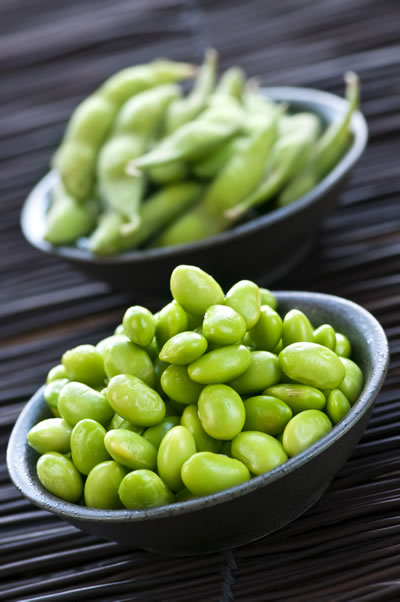
    Not eating meat does not mean you can’t get enough protein in your diet. In fact, many people eat more than enough protein, especially from animal foods. There are plenty of other foods that can provide you with protein, such as tofu, edamame, quinoa, sorghum, lentils, chickpeas and most beans and legumes. And there are many good sources of protein from vegetables, too, including artichokes, asparagus, broccoli, Brussels sprouts, collards, corn, peppers, spinach, sweet potatoes and turnip greens. Did you know that every plant we eat has some protein in it? So, the more vegetables you eat, the more protein you’ll consume.

    Not all plant-based diets are healthy

    Don’t replace meats with highly processed meat substitutes or “vegan junk food.” Instead choose high-quality, nutrient-dense plant-based foods. A recent study showed that eating primarily these types of food, such as vegetables, fruits, whole grains, beans, legumes and nuts, was associated with a lower risk of death from cardiovascular diseases. The researchers concluded that even if you’ve eaten a poor diet for half your life, adding more healthy plant foods as an adult can help reduce your risk.

    Making the switch

    Going plant-based is not as difficult as you may think. In fact, getting started can be as easy as 1-2-3!

    1. Search for some vegetarian recipes that are easy to prepare and sound appealing to you and your family.
    2. Choose ingredients and flavors you know your family will enjoy.
    3. Try meatless Mondays! Experiment with a meatless meal once a week, then add more days as you get used to it.”          

    Written by American Heart Association editorial staff and reviewed by science and medicine advisors. See our editorial

    From: https://www.heart.org/en/healthy-living/healthy-eating/eat-smart/nutrition-basics/how-does-plant-forward-eating-benefit-your-health

    _________

    Sunday, August 27, 2023

    What’s the Bible For? The Biblical Authors. What Is TMAO and How Can We Reduce Our Levels?

    .

    What’s the Bible For?

    2 Timothy 3:15-17

    And that from childhood you have known the Holy Scriptures, which are able to make you wise for salvation through faith which is in Christ Jesus. All Scripture is given by inspiration of God, and is profitable for doctrine, for reproof, for correction, for instruction in righteousness, that the man of God may be complete, thoroughly equipped for every good work.

    “The Holy Scriptures available to Timothy as a child would, of course, have been what we call the Old Testament today. The apostle Paul and the New Testament Church held the Old Testament in high esteem and quoted from it often in sermons and writings. The Old Testament revealed much about Jesus Christ, including both His first and second comings, and the salvation that is available because of His sacrifice.

    All Scripture, which Peter later showed included Paul’s writings as well (2 Peter 3:16), was breathed—what we call inspired—by God. What is the Bible useful for?

    • Doctrine—teaching us God’s will.
    • Reproof—conviction or proof of wrongdoing.
    • Correction—setting us straight.
    • Instruction in righteousness—disciplining or training.

    The Good News Translation puts it this way: All Scripture “is useful for teaching the truth, rebuking error, correcting faults, and giving instruction for right living, so that the person who serves God may be fully qualified and equipped to do every kind of good deed” (verses 16-17).”  

    For more about this passage, see “What Is the Meaning of 2 Timothy 3:16?” For more about what the Bible can do for us, see “Why Study the Bible?”  From: https://lifehopeandtruth.com/bible/blog/whats-the-bible-for/

    ________

    The Author Behind the Biblical Authors

    Revelation 1:19

    “Write the things which you have seen, and the things which are, and the things which will take place after this.”

    The various books that make up the Bible make no secret that though they were written down by dozens of different men, they all were inspired by a single author (2 Timothy 3:16). In Revelation 1:19, Jesus Christ told the apostle John to write down these things that make up the last book of the Bible.

    At the other end of the Bible, we see God telling Moses to write down what He revealed to him (Exodus 34:27). Moses went on to write the first five books of the Bible (the Law or the Pentateuch).

    It’s interesting to note that the One who appeared to Moses is also revealed as the One who became Jesus Christ: “For they drank of that spiritual Rock that followed them, and that Rock was Christ” (1 Corinthians 10:4).

    Jesus Christ, the Word of God (John 1:1), also inspired the written Word of God, from Genesis to Revelation, from Moses to John.”  From: https://lifehopeandtruth.com/bible/blog/the-author-behind-the-biblical-authors/

    For more about the inspiration and accuracy of the Bible, see “Who Wrote the Bible?” “How Do We Know the Bible Is True?” and related articles. 

    ________

    What Is TMAO and How Can We Reduce Our Levels?

    Image Credit: Unsplash. This image has been modified.

    “Trimethylamine oxide, more commonly known as TMAO, is considered the smoking gun of microbiome-disease interactions.

    What Is TMAO?

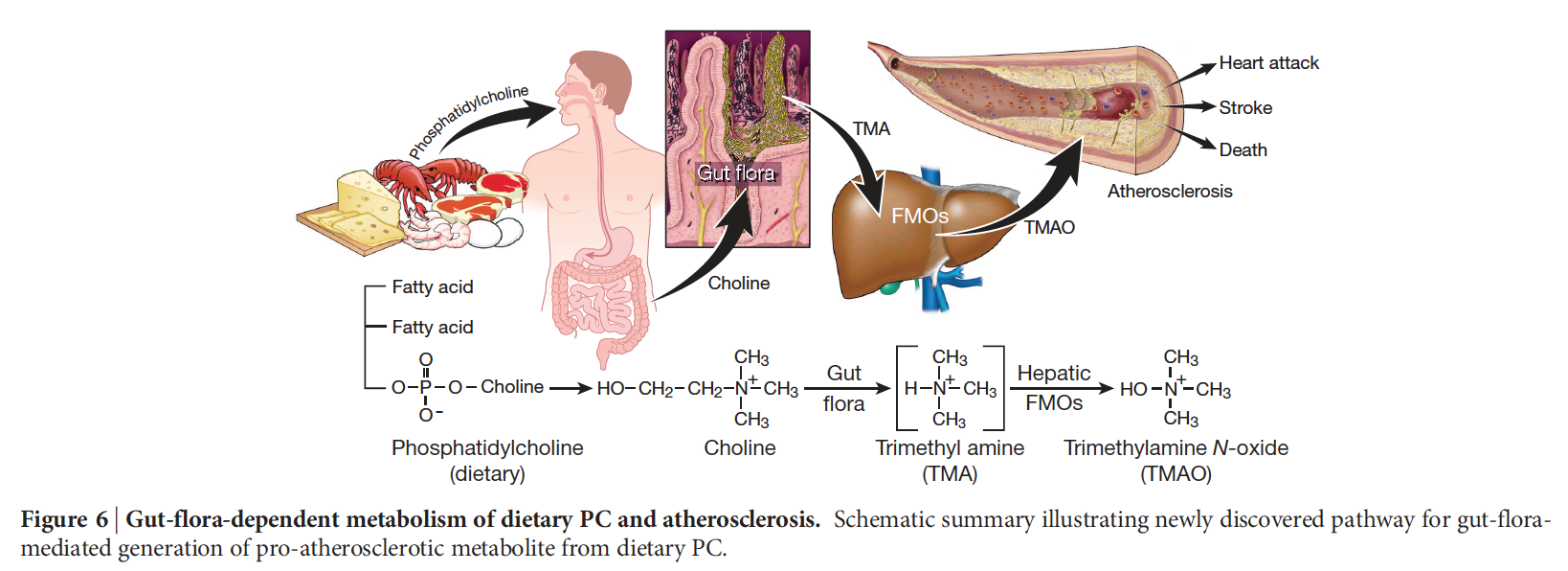
    When we eat foods with high concentrations of choline, a nutrient I discuss in more detail below, certain bacteria in our gut make trimethylamine, or TMA. Our system absorbs the compound, and our liver oxidizes it into TMAO. You can see a graphic illustrating this process below and at 2:19 in my video Egg Industry Response to Choline and TMAO.

    chart showing how liver oxidizes choline into TMAO

    Is TMAO Bad for You?

    TMAO may be a key dietary component of an unhealthy diet that contributes to disease promotion.

    Heart Disease

    Researchers at the Cleveland Clinic screened blood from patients who had either had a heart attack or a stroke and compared the results with those from the blood of people who had not experienced either. Using an array of different technologies, the researchers determined that the more TMAO people had in their blood, the greater the odds they had heart disease and the worse their heart disease was.

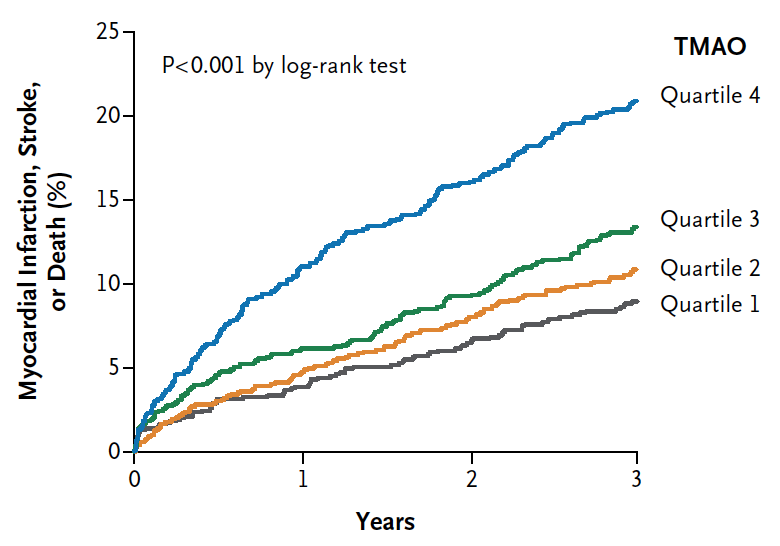
    Four thousand people were followed for three years, and, as you can see in the graph below and at 3:10 in my video Egg Industry Response to Choline and TMAO, those with the highest TMAO levels went on to have significantly more heart attacks, strokes, or even death.

    chart showing correlation between tmao levels and heart disease

    Artery Hardening

    TMAO appears to increase the ability of inflammatory cells within the atherosclerotic plaque in our artery walls to bind to so-called bad LDL cholesterol. By making the inflammatory cells more prone to gobble up cholesterol, TMAO is another piece of the puzzle as to how cholesterol causes heart disease.

    Failing Kidneys

    When researchers followed kidney patients over time and assessed their freedom from death, they found that those with higher TMAO lived significantly shorter lives, even after controlling for kidney function. See more at 4:44 in my video How to Treat Heart Failure and Kidney Failure with Diet.

    Cancer

    We’ve known about the troublesome transformation from choline into trimethylamine (TMA) for more than 40 years, but that was long before we learned about its connection to heart disease. Why were researchers concerned nearly a half-century ago? Because these methylamines might form nitrosamines, which have cancer-causing activity.

    In the Women’s Health Initiative study, women with the highest TMAO levels in their blood had approximately three times greater risk of rectal cancer, suggesting that TMAO levels may serve as a potential predictor of increased colorectal cancer risk.

    Which Foods Increase TMAO Levels?  Carnitine and choline are two components known to facilitate production of TMAO. Where do we get these in our diet?

    Carnitine:  Within 24 hours of consumption of carnitine, certain gut bacteria metabolize it into TMA, which our liver then oxidizes into the TMAO that then circulates throughout our bloodstream. Where can we find carnitine? It is concentrated in red meat, certain energy drinks, and carnitine supplements.
    Choline: As mentioned above, our gut bacteria can turn choline into TMAO, too. Major dietary sources of choline are eggs, milk, and meat, including liver, poultry, shellfish, and fish.  Choline is also present in lecithin supplements.

    Can We Reduce Our TMAO Levels?

    TMAO is a toxic compound that may increase our risk of heart failure, kidney failure, and atherosclerosis, but might there be nutritional or interventional prospects for prevention? That’s the topic of my video How to Reduce Your TMAO Levels.

    Antibiotics and Probiotics

    If our intestinal bacteria and liver can make TMAO from meat, dairy, and eggs, should we destroy our gut flora?

    We could give people antibiotics to eliminate the production of TMAO, but that could also kill our good bacteria and foster the emergence of antibiotic-resistant bacterial strains.

    What about probiotic supplements? If we add good bacteria, might they crowd out the bad bacteria? That doesn’t work. Adding good bacteria doesn’t seem to get rid of the bad.

    A New Methane-Producing Bacterium

    What if we introduce new bacteria that could somehow siphon off the TMA made by the bad bacteria already in our gut? Well, there is a bacterium inside the guts of cows and sheep that turns trimethylamine into methane. Could we use that to get rid of some of the TMA in our gut? We could, but if it didn’t take, if our gut didn’t become colonized by the cow-and-sheep bacterium, we’d have to keep introducing it to our body. In that case, might the fact that Consumer Reports found fecal contamination in every sample of beef it tested be a good thing? Not at all. Methane-producing bacteria may be able to eat up our TMAO, but, unfortunately, these bacteria may be associated with a variety of diseases, from gum disease down to colorectal cancer, as you can see at 2:15 in my video.

    Impairing Our Liver Function

    If we can’t use antibiotics or probiotics to prevent our gut bacteria and liver from making TMAO out of the meat, dairy, and eggs we eat, should we cut down on our liver function?

    That was the billion-dollar strategy employed by Big Pharma to lower our cholesterol. The same foods—meat, dairy, and eggs—raise our cholesterol, and changing our diet may lower it, but that isn’t very profitable. So, Big Pharma developed statin drugs that cripple the enzyme in our liver that makes cholesterol. Should we give that a try to lower our TMAO levels? Why not pharmacologically inhibit the enzymes in our liver that make TMAO and thereby possibly help reduce our risk of cardiovascular disease?

    Trimethylaminuria is a genetic condition in which this enzyme is impaired naturally, so there is a build-up of trimethylamine in the bloodstream. The TMA just doesn’t get oxidized into TMAO. There is a problem, though. TMA is so stinky that it makes you smell like dead fish. So, “given the known adverse effects…from sufferers of fish odor syndrome, the untoward odorous side effects of inhibiting this enzyme make it a less attractive [drug] target.”

    Diet

    Do we have to choose between suffering from heart and kidney disease or smelling like dead fish? If only there were some other way we could stop this process from happening. There is. We could stop eating animal products, which is what those with trimethylaminuria often do to lower their TMA levels.

    About a third of those who complain of bad body odor despite good personal hygiene test positive for the condition, but reducing or eliminating meat, egg, and dairy intake can be a real lifesaver. Given what we know about how toxic TMAO can be, cutting down on animal products may not just save the social lives of people with a rare genetic disorder, but it could help save everyone else’s actual lives.

    Indeed, rather than trying to genetically engineer a bacterium that eats up trimethylamine or ingesting a gut enzyme from cows and sheep to convert it into methane, simply limiting the consumption of foods rich in choline and carnitine, perhaps specifically L-carnitine, may effectively limit the amount of TMAO circulating in our body. The easiest and safest recommendation? Eat more healthfully.

    Our body makes all of the carnitine we need, so we can completely eliminate it from our diet. Choline, on the other hand, is an essential nutrient, so we do need some—but we don’t need to get it from eggs. Thankfully, we can get all we need from fruits, vegetables, beans, and nuts.

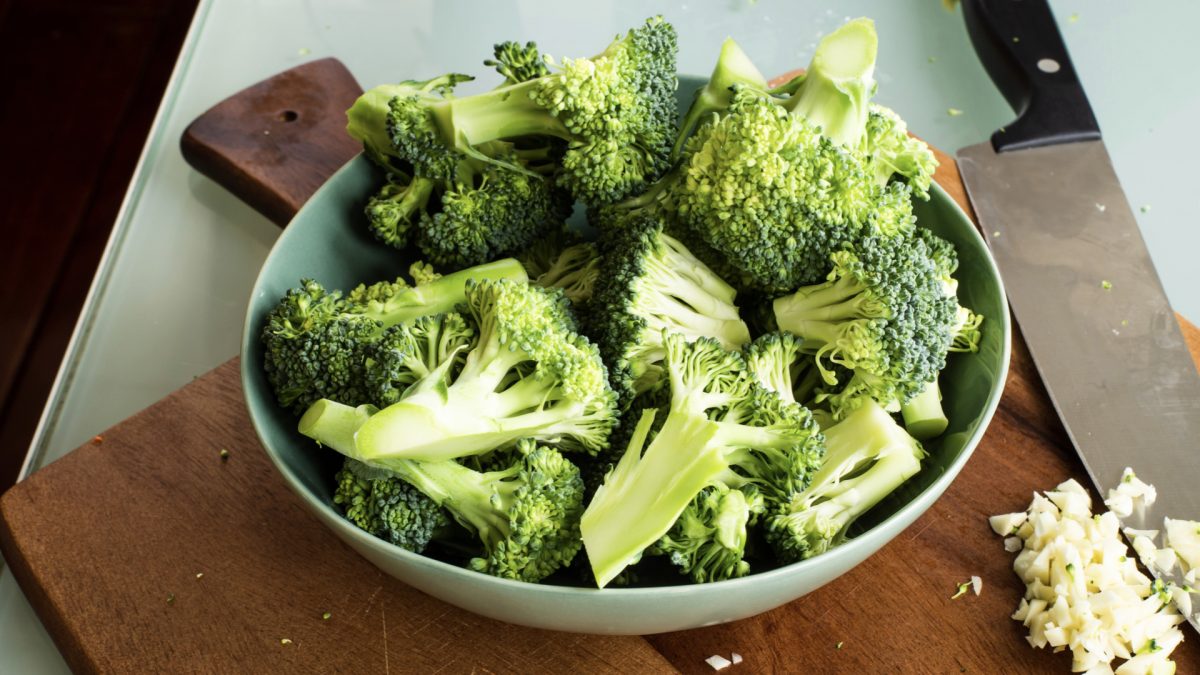
    Can we get too much choline from plants? Do we need to worry about high-choline plant foods, like broccoli? No. In fact, consumption of cruciferous vegetables is associated with a significantly longer life and less cardiovascular disease mortality, as you can see at 5:34 in my video. To see what was going on, researchers took the vegetable highest in choline, brussels sprouts, and had people eat two cups a day for three weeks. What happened? Their TMAO levels actually went down. It turns out that brussels sprouts appear to naturally downregulate the TMAO liver enzyme—not enough to make you stinky, but just enough to drop TMAO.

    Fecal Transplants

    People who eat completely plant-based may not make any TMAO at all—even if they try. You can give a vegan a steak, which contains both choline and carnitine, and there will not even be a bump in TMAO. Why not? Vegetarians and vegans have different gut microbial communities. If we don’t eat steak, then we don’t foster the growth of steak-eating bacteria in our gut. So, forget the cow. How about getting a fecal transplant from a vegan? From a TMAO standpoint, we may not have to eat like a vegan as long as we poop like one.

    Conclusion

    Can you sense my frustration as I read paper after paper proposing ridiculous  strategies for reducing or inhibiting TMAO production? Pills, supplements, and the like may be profitable for Big Pharma, but we already have a safe, simple, and side-effect-free solution: a plant-based diet. 

    And, plant-based eating gives us other benefits:

    For more on TMAO, the smoking gun of diet-microbiome-disease interactions, see:

    In health,   Michael Greger, M.D.”  From: https://nutritionfacts.org/blog/how-to-reduce-your-tmao-levels/

    _______

    Sunday, April 2, 2023

    Passover: What Did Jesus Do for You? Christ, Our Passover. Why Dairy Might Not Be The Best Choice for Your Health.

    .

    Passover: What Did Jesus Do for You?

    Did Easter replace Passover? Download Our Free Booklet“Jesus knew what He would face: “You know that after two days is the Passover, and the Son of Man will be delivered up to be crucified” (Matthew 26:2).

    The spring festivals (found in Leviticus 23) have deep symbolism for Christians today that transcends the sacrificial laws that ended with Christ’s death. The Passover symbolizes the sacrifice of Jesus Christ for our sins. The festival called the Days of Unleavened Bread symbolizes our need to live free of sin, after having our past sins forgiven.
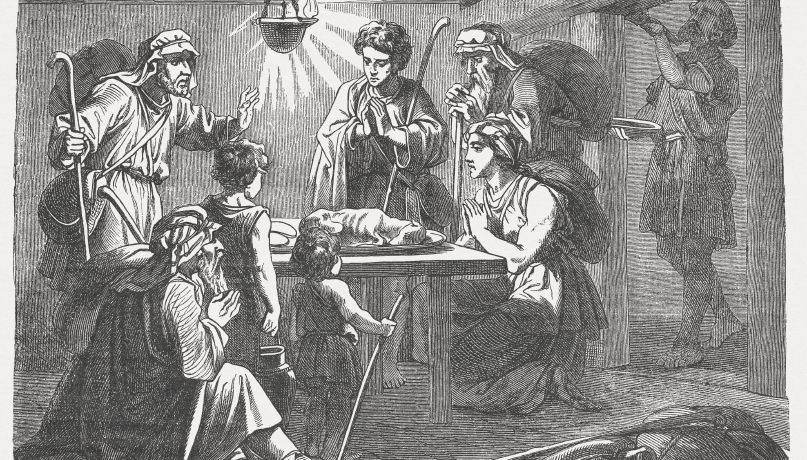
    Passover: What Did Jesus Do for You?Just before His betrayal and crucifixion, Jesus asked His disciples to prepare for His final Passover (Matthew 26:18-20). This evening, commemorated since the time of the Exodus from Egypt, involved the sacrifice of an unblemished lamb whose blood protected the Israelites while the firstborn of the Egyptians were slain (Exodus 12:5-7, 12-14).

    The New Testament makes clear that this lamb represented Jesus Christ. As John the Baptist had announced about Jesus, “Behold! The Lamb of God who takes away the sin of the world!” (John 1:29).

    This last Passover was special, and Jesus taught His disciples new elements that would become the basis of the New Testament Passover service.

    First, Jesus Christ set the example of love and service through washing His disciples’ feet (John 13:4-13). Then He told them, “If I then, your Lord and Teacher, have washed your feet, you also ought to wash one another’s feet. For I have given you an example, that you should do as I have done to you” (John 13:14-15).

    The symbols of the bread and the wine

    After the foot washing, Jesus instituted two deeply meaningful symbols of the New Testament Passover.

    “And as they were eating, Jesus took bread, blessed and broke it, and gave it to the disciples and said, ‘Take, eat; this is My body.’ Then He took the cup, and gave thanks, and gave it to them, saying, ‘Drink from it, all of you. For this is My blood of the new covenant, which is shed for many for the remission of sins’” (Matthew 26:26-28).

    Paul reminded the Church, both Jews and gentiles, of the vital importance of this memorial that represents Christ’s death and a renewal of our commitment to God made at baptism. Jesus said the bread represented His body. He willingly suffered to take our infirmities and bear our sicknesses (Matthew 8:16-17; Isaiah 53:3-5). Jesus is also the Bread that makes eternal life possible as we allow Him to live in us (Galatians 2:20).

    The wine represents His shed blood given for the forgiveness of our sins.

    The apostle Paul repeated these Passover instructions about the bread and the wine in 1 Corinthians 11:23-26. He reminded the Church, both Jews and gentiles, of the vital importance of this memorial that represents Christ’s death and a renewal of our commitment to God made at baptism.

    Why did Christ have to die? 

    Why did Jesus come to the earth as a human being to die? Because of sin—the destructive thoughts and actions that go against God’s will (1 John 3:4).

    God reveals His thinking and way of life throughout the Bible, and especially in His 10 Commandments and His good and beneficial laws that show us how He intends life to be lived. When we break His laws, we bring automatic penalties on ourselves, and especially the penalty of death—eternal death. We have all earned this penalty (Romans 3:23; 6:23).

    God, in His perfect eternal justice, must exact the penalty; but in His awesome mercy, Jesus Christ was willing to pay that penalty for us! “For God so loved the world that He gave His only begotten Son, that whoever believes in Him should not perish but have everlasting life” (John 3:16). Christ gave His life so we could repent and be saved (1 Timothy 2:4).

    That is the solemn yet joyous message of the annual Passover. This is the first step in God’s plan of salvation. The second step is represented by the second festival, the Feast of Unleavened Bread.”                 

    From: https://lifehopeandtruth.com/life/plan-of-salvation/passover/

    Do you have more questions about the Christian Passover? Read “Questions and Answers About the Christian Passover.”

    _______

    Christ, Our Passover

    1 Corinthians 5:7

    Therefore purge out the old leaven, that you may be a new lump, since you truly are unleavened. For indeed Christ, our Passover, was sacrificed for us.   

    “The apostle Paul drew on the lessons of the spring festival season to encourage the Corinthian congregation to remove sin from their lives.

    Jesus Christ fulfilled the type of the Passover lamb whose blood protected the Israelite firstborn from death before the exodus from Egypt. After the Passover festival comes the Feast of Unleavened Bread, where yeast and other leavening become a symbol of sin.”

    Study more about Passover and the Feast of Unleavened Bread in our free booklet From Holidays to Holy Days: God’s Plan for You.”

    Listen to the "Verse by Verse" episode covering this scripture at https://lifehopeandtruth.com/bible/blog/christ-our-passover/?

    ________

    Is Dairy’s Reign Over? (Problems with Dairy and The Dairy Industry)

    “Big Dairy is getting desperate. But the demand for plant-based milks keeps going up.  Dairy is declining, as the failure of Big Dairy’s latest campaign Februdairy shows. More people are becoming aware of the problems with dairy and the problems with the dairy industry. Could dairy’s prominence be on its way out?  

    Almonds are the new cow. So are cashews. Coconuts. Beans and peas. And pretty much any plant-based ingredients that can be turned into frothy, creamy, and delicious plant-based milk. No cow required.

    Consumers are flocking to nondairy milk like cows flock to hay. It’s looking an awful lot like the tide is turning to greener pastures (perhaps because they’re growing nitrogen-fixing peas).

    Facing declining sales and waning consumer interest, the dairy industry launched “Februdairy” — a month-long campaign aimed at revitalizing dairy’s increasingly sour image.

    This initiative is a response to the growing trend toward plant-based milks and campaigns encouraging plant-based eating, including the popular UK-based Veganuary campaign, which encourages people to try going vegan for January and the rest of the year. In 2018, more than 150,000 people signed up, compared to only several hundred people when it launched in 2014.

    This massive rise in plant-powered eating is happening around the world. For example, from 2014 to 2017, there’s been a 600% increase in the number of people identifying as vegans in the U.S.

    At a recent dairy industry conference, industry consultant Dr. Jude Capper sounded the alarm, announcing that, “If consumers don’t buy our products — milk, cream, butter, cheese etc — we will not have a dairy industry in five to 10 years.”

    The Problems With The Dairy Industry — Cruelty to Cows 

    The Februdairy campaign’s goal is to continue painting an idealized (and inaccurate) picture of modern dairy farming pushed by the industrial agriculture industry. The campaign intends to feature photos of “happy” cows and other bucolic farm imagery.

    But the truth is vastly different. In reality, tens of thousands of animals are living inside giant steel sheds with little or no access to the outdoors.

    Once a staple in most homes, the reality today is that cow’s milk comes with a whole host of problems. Cows are, of course, as adorable and lovable as ever. But with the hundreds of millions of them on the planet… well, things get a little complicated.

    While a small percentage of modern farms produce milk from cows who are left outside to graze on fresh grass and clover, and perhaps to ponder the logistics and benefits of jumping over the moon, the majority aren’t afforded such luxuries.
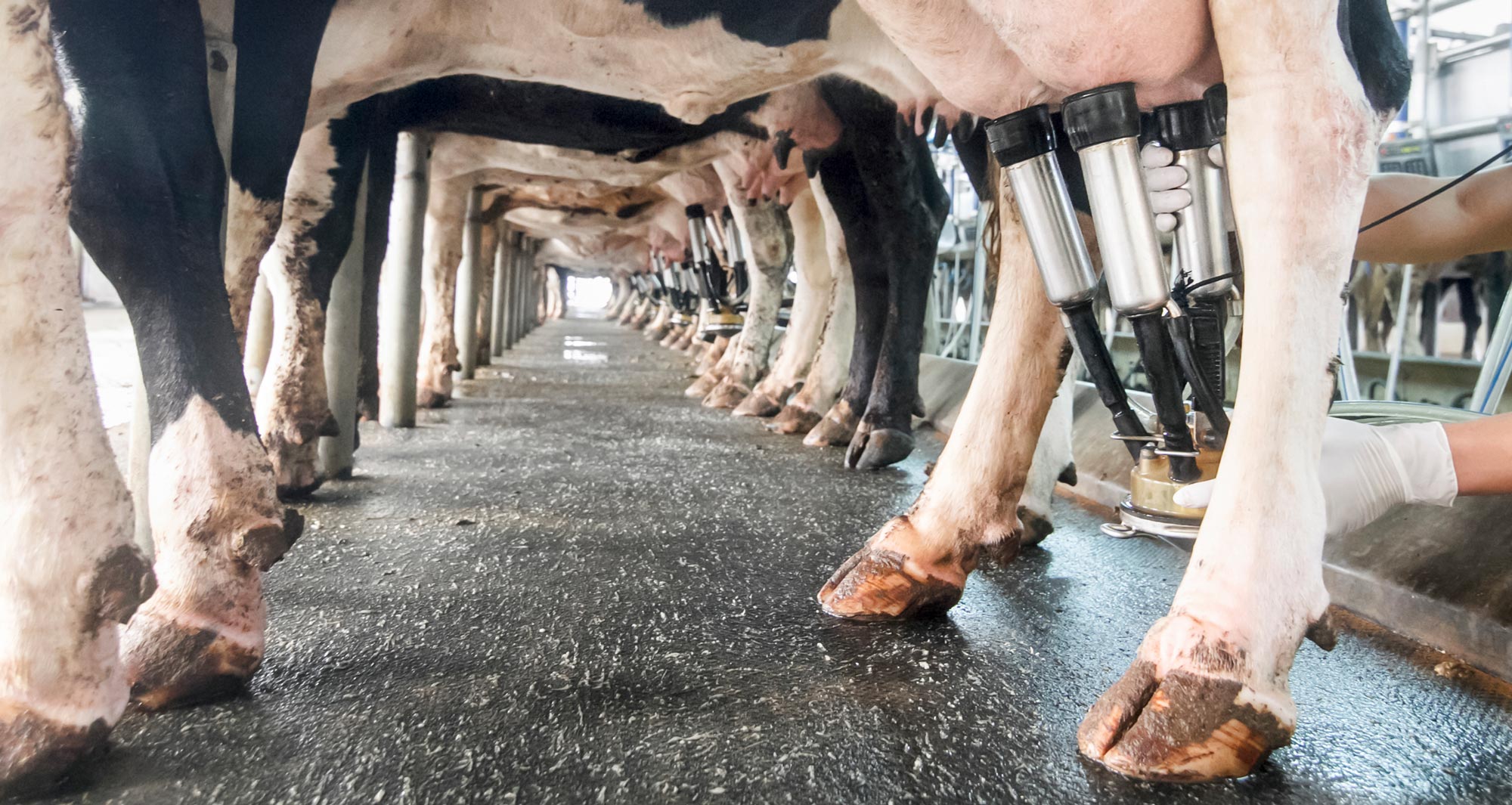
    dairy cows being milkedIn the vast majority of dairy operations in the U.S., the truth is, cows do not have happy lives. They spend their time indoors, typically on hard, abrasive concrete floors and frequently connected to a milking apparatus. Most never see a blade of grass.

    iStock.com/Toa55

    They are artificially impregnated to ensure they continue to produce the maximal quantity of milk. Plus, they are fed antibiotics. And their feed is often contaminated with herbicide and pesticide residues from the genetically modified beans and grains they eat. Some are injected with genetically engineered growth hormones.

    Recently, the dairy industry has been called out for its cruel treatment of these gentle animals. Even the #metoo campaign has been used to expose the cruel treatment of dairy cows.

    A dairy cow will spend much of her life hooked up to milking machines that limit movement and can cause painful infections in her udder. Her babies are taken away just days after being born so that the milk can be bottled and sold.

    Other Problems With The Dairy Industry

    The dairy industry is also directly tethered to the notoriously cruel veal industry. Female calves become dairy producers, and male calves are often sent into confinement to be raised for veal meat.

    And then there’s dairy’s impact on the planet.

    Livestock is responsible for a significant amount of greenhouse gases. The United Nations puts the industry 14.5% of all GHG emissions — slightly more than transportation, which produces about 14% of total GHGs worldwide.

    In California, the largest dairy-producing state, water usage for livestock is also of concern. One-quarter of California’s water budget goes toward producing beef and dairy. This is more water than all the businesses and homes in the state.

    But the dairy industry does its best to keep all this from consumers. Clever marketing (“Got Milk?”), the prevalence of red barn imagery and toothy cow smiles on dairy labels, and other tactics have long convinced consumers this stuff is healthy and even necessary.

    But with U.S. milk consumption down considerably, the dairy industry’s days as a dominant food industry force may be numbered. In fact, numbers from the USDA show that Americans are drinking almost 40% less dairy milk than they did in the 1970s.

    The Demand for Plant-Based Milk Is Booming
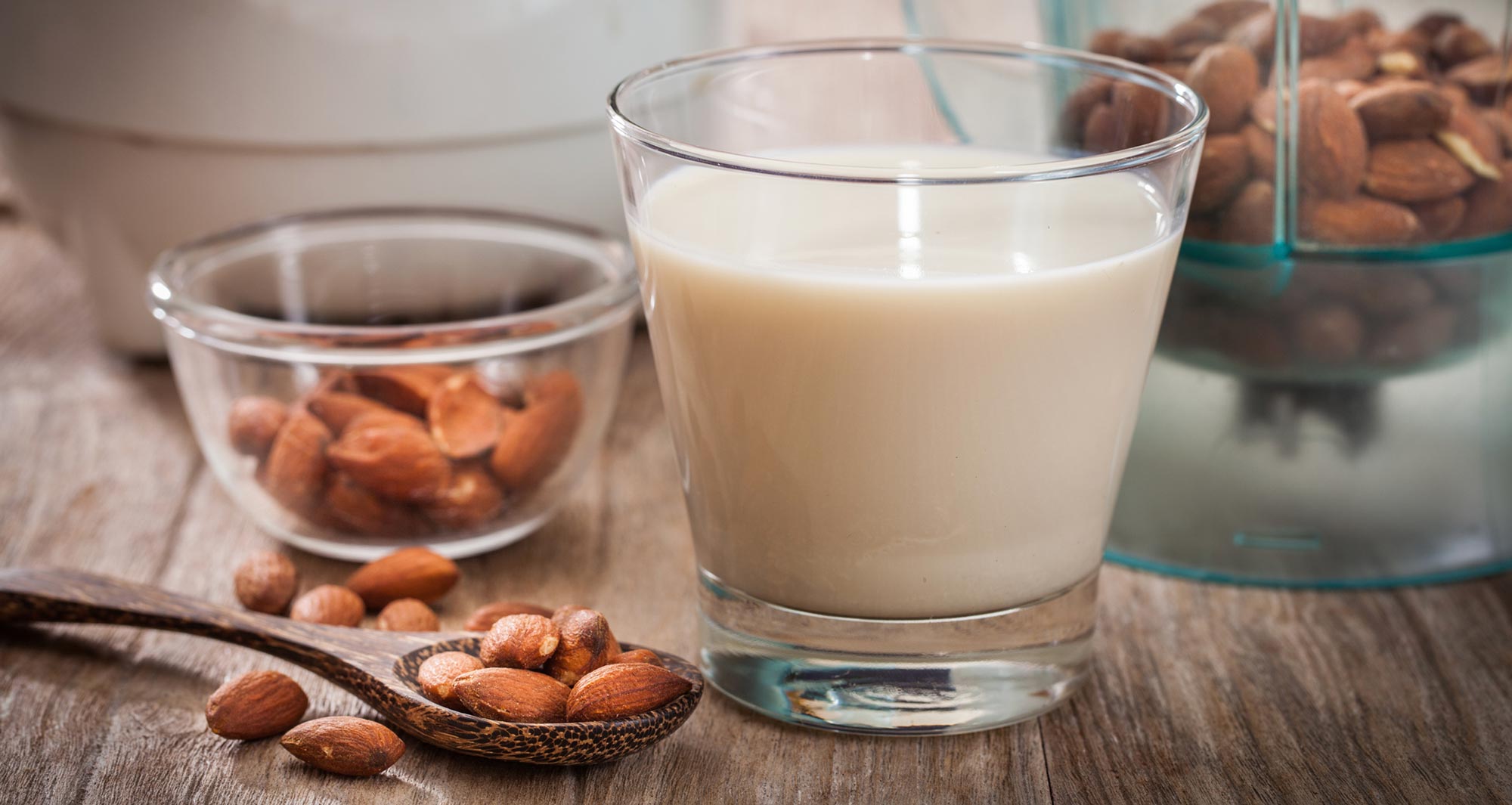
    glass of almond milkiStock.com/naito8

    As it turns out, people want more options than just whole, 2%, or skim milk. They want new flavors — and not just chocolate. They want milk varieties that are reinvigorating their taste buds. And they want plants.

    Non-dairy milk is the leading driver of the plant-based foods category, growing more than 60% in the last five years to more than $2 billion in sales in 2017.

    Sales of dairy are expected to drop by another 11% between 2015 and 2020, as a steady decline continues. On the other hand, nondairy milk sales are expected to continue seeing record-breaking and milk-shaking increases. Dean Foods, a leading dairy producer, experienced a 91% decline in its net income from 2016 to 2017.

    Elmhurst Dairy was once a thriving dairy producer, but declining interest and lackluster sales led the company to reinvent itself. Now known as just Elmhurst, the company has dropped cow’s milk for a booming plant-based milk business.

    The company is a leading producer of non-dairy nut-milk products, including milk made from almonds, cashews, walnuts, hazelnuts, and peanuts.

    Why Dairy Might Not Be The Best Choice for Your Health

    The dairy industry has spent millions of dollars touting milk as “nature’s most perfect food.” And it is. For baby calves. But what about for humans?

    We are the only species on earth that drinks milk after infancy. And in all the years that humans have been around, we’ve only been drinking the milk of cows for the last few thousand — a minimal portion of our time on this planet.

    Dairy milk does have all the nutrition calves need to grow. As a result, it’s full of many important nutrients, and it provides an abundant source of calcium, vitamin D, riboflavin (B2), vitamin B12, potassium, and phosphorus. But since modern milk almost always comes from recently pregnant cows, it also contains hormones that don’t do a human body any “good” at all.

    These hormones are thought to be one of the reasons that dairy consumption has been found to be linked to increased rates of acne, and to increased risk of certain cancers — especially prostate cancer.

    Many studies have explored the link between dairy products and heart disease. Perhaps the largest of them, conducted by Harvard Chan School researchers and published in the American Journal of Clinical Nutrition in 2016, reported on research done with 43,000 men and 187,000 women.

    When calories from full-fat dairy products were replaced with carbohydrates from whole grains, the risk of heart disease dropped by 28%. Replacing dairy products with red meat, on the other hand, led to a 6% increase in heart disease risk.

    Does Dairy=Strong Bones?

    So what about the belief that milk is necessary for strong bones and the prevention of osteoporosis? Not true.

    Clinical research shows that dairy milk has little or no benefit for our bones. For example, the Harvard Nurses’ Health Study, which followed more than 72,000 women for 18 years, showed no protective effect of increased milk consumption on fracture risk.

    Most People In The World Can’t Digest Dairy

    Another major problem with dairy consumption is lactose intolerance. As infants, our bodies produce a digestive enzyme called lactase, which breaks down lactose from mother’s milk. But as we grow up, many of us lose the ability to do that.

    By adulthood, about three-quarters of the world’s population is unable to break down lactose, and there’s a strong racial dimension to lactose intolerance. The only ethnic group on the planet that can usually digest lactose is Caucasians. Most people of African, Asian, Arab, and Indigenous ancestry cannot.

    As Caucasian-centric movies, corporations, and even government policies have promoted dairy product consumption around the world, they’ve unintentionally subjected billions of people to significant digestive problems. Lactose intolerance can cause nausea, vomiting, and diarrhea.

    More Doctors Are Talking About The Problems with Dairy

    Increasing numbers of doctors and researchers are now recommending against dairy Dr. Michael Klaper on the problems with dairyconsumption. Author and nutritional authority Michael Klaper, MD, said to FRN:
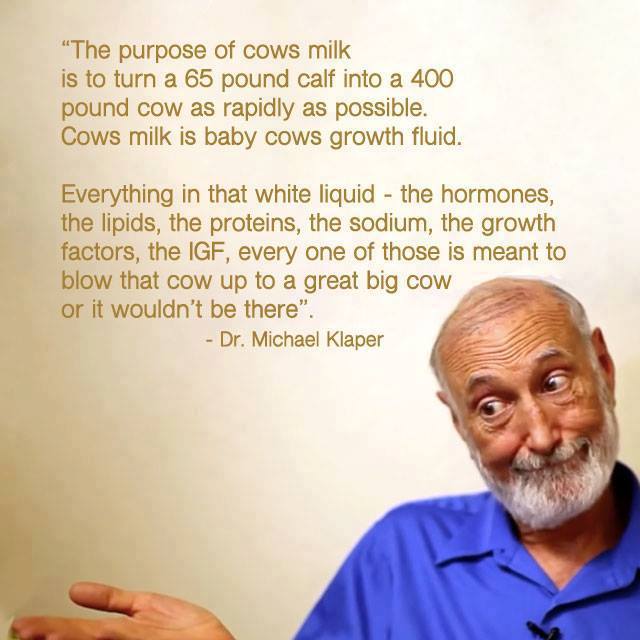
    “If there was one substance I could eliminate from the American diet immediately, it would be those substances made from the secretions from the udder of a cow: dairy products.”

    Plus, according to 10-time New York Times bestselling author Dr. Mark Hyman, dairy consumption is strongly linked to digestive issues and may even be connected to an increased risk of some types of cancer — including prostate cancer and breast cancer.

    “Our bodies just weren’t made to digest milk on a regular basis,” Dr. Hyman explains. “Instead, most scientists agree that it’s better for us to get calcium, potassium, protein, and fats from other food sources, like whole plant foods — vegetables, fruits, beans, whole grains, nuts, seeds, and seaweed.”

    Neal Barnard, MD, of the Physicians Committee for Responsible Medicine, wrote:

    “Dairy products are packed with fat and cholesterol and may increase the risk of health problems ranging from asthma to some types of cancer. An elevated risk of prostate cancer incidence and mortality has been associated with dairy consumption and the same may be true for ovarian cancer.”
    Hemp milk and seedsSo overall, it seems that for many people, moving away from dairy milk may be a positive step.

    Plant-Based Milk Offers Health Benefits — Without The Cruelty

    iStock.com/marekuliasz

    More at: https://foodrevolution.org/blog/problems-with-dairy/

    _______