Showing posts with label taxes. Show all posts

Wednesday, October 29, 2025

What Can We Learn From The Biblical Villains? What’s The Problem With Plastic? The Kindest Diet Is Also The Healthiest.

.

Biblical villains: What can we learn from them?

Biblical villains: What can we learn from them?'The Death of Jezebel' by Gustave Doré

“Eight of the Ten Commandments define God’s law by listing wrong actions and thinking we are to avoid. Lessons from the Bible’s villains can help us to learn how to apply God’s law. We can extract good lessons from bad examples.”

Rehoboam

“Rehoboam was the son of Solomon who initially ruled over the united kingdom of Israel in the north and Judah in the south (1 Kings 12). But when he came to power the northern 10 tribes of Israel were already restless and on the verge of seceding.

Rehoboam unwisely took the advice of his peers instead of listening to more experienced older advisors. He raised taxes, and the northern kingdom of Israel split away from the southern kingdom of Judah, resulting in the king losing far more income than all his taxes could have ever gained him. He chose poorly, and everyone suffered because of it.

The lesson to be learned from Rehoboam’s experience is to seek a multitude of counsel (Proverbs 11:14) when making important decisions, and to ask God for discernment.

Queen Jezebel

Queen Jezebel was the wife of King Ahab of the northern kingdom of Israel. She was the daughter of the king of the Phoenician city-state of Sidon and a priestess of the false god Baal (1 Kings 16:29-33), which gave her a great deal of power. She influenced Ahab to worship Baal, which often required human sacrifice, and fought against the true worship of God whenever she could, even calling for the assassination of the prophet Elijah (1 Kings 18:13; 19:2). She also schemed to have a wealthy vineyard owner murdered so that her husband could steal his land (1 Kings 21). Eventually Jezebel was thrown from a window and eaten by dogs after years of corrupting Israel and the king.

As a priestess of Baal, and trying over and over again to destroy the worship of the true God, she was attempting to hold on to and increase what she saw as her source of power. The lesson we can learn from this is not to trust in some other perceived source of power (false gods of our own making)—wealth, authority, weapons, position, etc.—in place of God. If we look to anything other than God for strength, it will ultimately fail.

Saul of Tarsus

There is also a biblical example of a man who was a villain, who then became a biblical hero teaching the truth of God for the rest of his life. His name was Saul of Tarsus, also known as the Apostle Paul. He was initially a fanatical pharisee who saw the teachings of Jesus as blasphemy and Christians as heretics. He had the authority to punish anyone he believed to be a heretic within the Jewish community, and would track them down and prosecute them to the fullest extent of the law—resulting in their imprisonment and sometimes death. He even took part in the death of Stephen “And the witnesses laid down their clothes at the feet of a young man named Saul” (Acts 7:58), while they threw rocks at Stephen until he was bludgeoned to death.

Saul continued to harass the Church and was on his way to the Jewish community in Damascus to arrest members of the faith and send them back to Jerusalem when God intervened and struck him down. Blind and helpless, Saul finally realized he was wrong and that it was futile to fight God. After his spiritual conversion, he went on to preach the truth with the same vigour with which he had previously fought against it (Acts 9). Saul the persecutor became Paul the faithful.

The lesson we can learn from the life of the Apostle Paul is that when God reveals to us we are wrong, we need to humbly respond and make the 180 degree turnaround to do what’s right.”

Beyond Today Bible Commentary (See I Kings chapters 12, 16 and 21 for more information about Rehoboam and Jezebel)

From: https://www.ucg.org/vertical-thought/bible-villains-learning-from-scriptures-bad-examples

_________

What is the problem with plastic?


“Globally, we produce a massive amount of plastic – over 380 million tons every year. It’s everywhere in our daily lives and we’ve become dependent on it. Half of all plastic produced is single-use – meaning it’s thrown away after just one use. Think bottles, bags, straws, cups, and lids. Used for just a few moments, but forever on the planet.

Virtually every piece of plastic that was ever made still exists in some shape or form (with the exception of the small amount that has been incinerated). We thought recycling was the answer but it’s not. Less than 9% of all plastic ever produced has been recycled!

What’s plastics impact?

When plastic enters the ocean, it impacts us all. It’s in the food and water we consume, it’s harming our animals and marine life, and of course, polluting our beautiful planet.

Once at sea, sunlight, wind, and wave action break down plastic waste into small particles, called microplastics. Microplastics have been found in every corner of the globe, from Mount Everest, the highest peak, to the Mariana Trench, the deepest trough. Plastic never fully biodegrades, it just breaks down into these small, toxic, pieces.

Because plastic is so prevalent, there are countless (overwhelming) statistics on its impact. Below are some key facts we feel are important to share – we encourage you to further research the plastic issue as the more aware we are of the problem, the more likely we are to become part of the solution!

Plastic By the Numbers

Millions of marine animals die each year from plastic waste alone.

Plastic pollutes at every step of its journey and it never disappears – breaking up into tiny pieces called microplastics.

Plastic is literally everywhere. It’s in our bloodstreams, the air we breathe, the food we eat, and the water we drink.

Today, more than 99% of plastic is made from fossil fuels.

Less than 9% of all plastic ever produced has been recycled.

What can you do?

Your individual actions, however small, make a difference.

Here are simple ways you can have an impact, starting today!

Say ‘No’ to Single-Use: By refusing to purchase single-use plastic you are showing the big corporations producing the plastic that you want change. Every purchase you make is a vote with your dollar.

Start Conversations: Talk with your friends, families, neighbors, and local businesses, about the plastic issue and how we all can be part of the solution.

Shop Sustainably: One of the biggest impacts you can have is to reduce the amount of plastic you use in your daily life. For almost every plastic product you use, there’s a plastic-free alternative. To help you get started, check out our sustainable products.

_________

The Kindest Diet Is Also The Healthiest.

May be an image of 1 person, steak and text that says 'THE KINDEST DIET IS ALSO THE HEALTHIEST ower cancer Vegetarians have 12% risk and vegans 24% lower cancer risk than meat-eaters, study finds 등 lenen บ้ั fana for mi e ន'

“THE TRUTH IS THAT THE FLESH, MILK & EGGS OF ANY SPECIES IS NOT THE NATURAL FOOD FOR HUMANS, & HARMS THE ANIMALS WE TAKE IT FROM

...and it harms those that still consume animal products, so many have proven this

...an analysis of 79,468 North American Seventh-day Adventists in the Adventist Health Study-2 found that vegetarians had a 12% lower risk of all cancers combined

...and vegans had a 24% lower risk compared to flesh and dairy eaters, showing that dairy is also harmful to our health...the study tracked participants for almost eight years, matching cancer cases to state and provincial registries.

...it found that reduced risk was strongest for colorectal, stomach and lymphoproliferative cancers, with vegan diets showing notable protection against breast cancer in younger women.

...and dairy is also harmful to the mothers we steal it from, as the female cows that are constantly forcibly impregnated die 14 years early because of the abuse of their reproductive powers...and they cry for their babies taken from them so their milk can be stolen, leaving them heart broken.

...those babies are put alone in crates and force fed GMOed replacement and if they are male they are killed within weeks for vile veal.

...while the females are forced to become dairy slaves within months, and abused like their mothers were.

...THERE IS NO REASON TO BE CRUEL & STEAL THE FLESH, EGGS & MILK OF OTHER BEINGS, A PLANT BASED DIET IS THE ONE THAT IS NATURAL FOR US -- Animal Freedom Fighter

The China Study puts the vegan numbers way higher. Check it out!”

_________

Monday, September 29, 2025

Rahab’s Lie. A Great Blessing. Making America Healthy Again.

.

Rahab’s Lie

Rahab’s lie“When the spies approached Jericho Rahab and the Canaanites had already heard stories of the Red Sea crossing 40 years before. The Israelites had also completely destroyed the Amorites just east of the Jordan (Joshua 2:10) and now they were camped on Jericho's doorstep.

'When the soldiers arrived she did not betray them. ‘There were two men here but I did not know who they were,’ she explained, ‘at dusk before the city gate was closed they left and I don’t know where they are heading.’ (freebibleimages.org)

While most of the people of Jericho were faint with fear, Rahab recognized who was behind the Israelite successes: “I know that the Lord has given you the land...for the Lord your God, He is God in heaven above and on earth beneath” (Joshua 2:9 and 11). Rahab hid the Israelite spies and lied to the king of Jericho (Joshua 2:4-5). Joshua then spared her and her household “because she hid the messengers…” (Joshua 6:25). God also miraculously kept her walls from tumbling down when the other walls surrounding Jericho were reduced to ruble.

Hebrews 11, the faith chapter, tells us the reason why Rahab did this: “By faith the harlot Rahab did not perish with those who do not believe, when she had received the spies with peace” (verse 31). But was it OK for her to lie in those circumstances?

The Nelson Study Bible states: "A lie is a lie, and...Rahab's action was wrong.... Rahab sinned no matter how noble her intentions. Of course, in her case, her sin is understandable because she lacked complete knowledge of the living God. That is, what she did was wrong, but she did not know any better. We must be careful to make a distinction between Rahab's faith and the way Rahab expressed it. The Bible praises Rahab because of her faith in God, not because of her lying. That is, her actions would have been more noble had she protected the spies in some other fashion…" ("In Depth: Lying").

The United Church of God’s Bible Commentary (see the link below) explains it clearly: “Some view the Bible’s praise of Rahab as an endorsement of her lying…. Based on this, they argue that it is okay to lie when it is ‘for a good cause.’ However, that is simply not the case—ever….”

The Israelites accepted Rahab and her family into the nation of Israel (Joshua 6:25). Over time, she would have learned the laws of God and come to serve Him more completely, repudiating the mistakes of her past. She eventually married Salmon, a prominent member of the tribe of Judah. King David would descend from them and eventually Jesus Christ (Ruth 4:20-21).

Lying is never a trivial matter for a Christian: “Who may climb the mountain of the Lord? Who may stand in his holy place? Only those whose hands and hearts are pure, who do not worship idols and never tell lies" (Psalm 24:3-4 NLT). God's law makes it clear that lying is never acceptable (Proverbs 12:22), and we are told God “cannot lie” (Titus 1:2). We should bear in mind that Rahab is commended for her faith (Hebrews 11:31) not her lying and realize that she would grow in faith and the knowledge of God’s way of life.

_________

A Great BlessingA great blessing

“The desire for revenge, retaliation and mudslinging is reflected in our entertainment and society in general. In spite of the fact we are told to forgive, many seek an active or passive form of revenge against their real or perceived enemies.

The sacrifice of Jesus Christ paid the death penalty earned by mankind as a result of sin. "But God demonstrates His own love toward us, in that while we were still sinners, Christ died for us.... when we were enemies we were reconciled to God through the death of His Son..." (Romans 5:8-10). God expects us to develop this same attitude of mercy, graciousness and forgiveness. He will not forgive our sins if we are unforgiving toward others.

"And forgive us our debts, as we forgive our debtors.... For if you forgive men their trespasses, your heavenly Father will also forgive you. But if you do not forgive men their trespasses, neither will your Father forgive your trespasses" (Matthew 6:12,14-15). II Timothy 3:1-4 includes being unforgiving in the list of characteristics people will exhibit in the “perilous times” prevalent in the “last days” just before Jesus Christ returns to earth.

When a woman caught in adultery was brought to Jesus the Scribes and Pharisees demanded: “'Teacher, this woman was caught in adultery...Moses, in the law, commanded us that such should be stoned. But what do You say?'  This they said, testing Him, that they might have something of which to accuse Him.”  Jesus’s response was, “'He who is without sin among you, let him throw a stone at her first.' And…those who heard it, being convicted by their conscience, went out one by one…When Jesus had raised Himself up and saw no one but the woman, He said to her, 'Woman, where are those accusers ... .Has no one condemned you?' She said, 'No one, Lord.' And Jesus said to her, 'Neither do I condemn you; go and sin no more'" (John 8:1-11).

Another example showing Christ expects us to develop a forgiving attitude occurred when Peter asked, “‘…how often shall my brother sin against me, and I forgive him? Up to seven times?' Jesus answered, “…up to seventy times seven'" (Matthew 18:21-22). The Apostles were stunned at this statement and answered, “‘Increase our faith.’” (Luke 17:5).

The parable in Matthew 18:23-35 illustrates the consequences of being unforgiving. The account of the forgiven servant persecuting someone who owed him a pittance in comparison with the amount he had just received forgiveness for is a lesson for us. Christ warned the unforgiving servant his attitude was unacceptable, pointing out: "Should you not also have had compassion on your fellow servant, just as I had pity on you?' (verse 33).

This is not to say we cannot make a judgment regarding other people's actions as to whether or not we should follow their example, but we cannot read minds and hearts. Christ instructs us not to judge others: "Judge not, that you be not judged... First remove the plank from your own eye, and then you will see clearly to remove the speck from your brother's eye" (Matthew 7:1 and 5). Luke 6:36-37 reinforces this admonition: "Judge not, and you shall not be judged. Condemn not, and you shall not be condemned. Forgive, and you will be forgiven" (Luke 6:37).

Proverbs 19:11 states, “it is his [our] glory to pass over a transgression” (King James Version). Jesus' example just before His death sets the standard for us as far as forgiveness is concerned: "When Jesus was being crucified and in agony He prayed: Father, forgive them, for they do not know what they do" (Luke 23:34). When we forgive, we reflect the Father’s love, giving us the opportunity to extend to others the great blessing God has extended to us.

Source: United News (May 2001)   From: https://www.ucg.org/members/united-news/united-news-may-2001/where-do-you-draw-line-sand

________

Here’s My 2 Cents: "Making America Healthy Again"

Dr. Eric Berg says:

“Robert F. Kennedy is receiving a lot of pushback for his ideas on health and reform. As secretary of the Department of Health and Human Services, his ideas would radically change the US healthcare system. In this video, I’m going to share some of the changes I would make to address the current healthcare crisis and improve America’s health.

RFK has the following goals for healthcare reform in America: RFK healthcare policy 1:22 Institutional foods 2:35 Subsidized foods 3:54 Vote for me! 4:25 GRAS 5:00 Food fortification 5:35 Tax money and drugs 6:55 End the rounding rule 7:47 Sun phobia

He will be actively working against big food companies, big chemical companies, and big pharma, so naturally, he’s getting a lot of pushback. The U. S. spends over 4.1 trillion dollars each year on healthcare, yet we’re at the bottom as far as health. Why? Here's what I think can improve America’s health! 

1. Change the institutional foods.  Prepackaged foods are given to people in nursing homes, prisons, schools, hospitals, and other public institutions. These institutional foods are very low-quality, highly processed foods. The health of the people in these institutions would quickly improve by simply removing the refined sugars, starches, and oils from their diets.

2. Address the subsidized foods.  Subsidized foods are paid for by taxpayers. Corn, soy, wheat, sugar, and rice are the most highly subsidized foods. Changing the types of foods that are subsidized and investing in small farmers can significantly improve this problem.

3. Changing GRAS.  “Generally Recognized As Safe” is a term used by the FDA for products that have been safety tested by their own manufacturers. To avoid conflict of interest, these tests should be conducted by third-party independent companies.

4. Change food fortification.  Synthetic folic acid and iron fortification of food can cause serious problems for many people.

5. Disallow tax dollars from being used for drugs.  Every year, 40 billion dollars of taxpayer money is used to pay for medical research to develop new drugs.

6. The rounding rule. If a product contains less than .5 grams of an ingredient, it can be rounded down to 0. This is misleading and should be eliminated. People need to be more aware of what's really in their food. Companies also need to be forced to raise the quality of the ingredients in their products.

7. End sun phobia Sun phobia paired with low RDAs for vitamin D is contributing to massive vitamin D deficiency in the population, putting people at risk for disease.”  More at: https://www.drberg.com/blog/heres-my-2-cents-making-america-healthy-again

__________

Monday, March 31, 2025

What Are Ash Wednesday and Lent? "Making America Healthy Again"

.

What Are Ash Wednesday and Lent? Does the Bible Tell Us to Celebrate These Days?

“The Bible does teach the importance of fasting and self-examination, but it does not teach a 40-day period called Lent or an Ash Wednesday of putting ashes on the forehead.

After Mardi Gras comes Ash Wednesday and 40 days of Lent. Did the early New Testament Church observe these days?

The Bible does not mention Ash Wednesday or Lent, and the early New Testament Church did not observe these days. Here is how the BBC Religion page describes Ash Wednesday and Lent:   

    "Ash Wednesday is the beginning of Lent for Western Christian churches. It's a day of penitence to clean the soul before the Lent fast.

     "Roman Catholic, Anglican, and some other churches hold special services at which worshippers are marked with ashes as a symbol of death and sorrow for sin…

      "The Christian churches that observe Lent in the 21st century (and not all do significantly) use it as a time for prayer and penance. Only a small number of people today fast for the whole of Lent, although some maintain the practice on Ash Wednesday and Good Friday. It is more common these days for believers to surrender a particular vice such as favourite foods or smoking" (BBC).

Lent is counted differently by those of the Western Catholic tradition and those of the Eastern Orthodox tradition.

"      The western church excludes Sundays (which is celebrated as the day of Christ's resurrection) whereas the eastern church includes them. The churches also start Lent on different days. Western churches start Lent on the 7th Wednesday before Easter Day (called Ash Wednesday). Eastern churches start Lent on the Monday of the 7th week before Easter and end it on the Friday 9 days before Easter. Eastern churches call this period the 'Great Lent'" (BBC).

Various biblical events and customs are referred to by those who celebrate these days. The Bible mentions people mourning in sackcloth and ashes. The Bible also talks about repentance and fasting, and the number 40 is prominent in various biblical events.

The justification for the Lenten 40-day preparation for Easter is traditionally based on Jesus' 40-day wilderness fast before His temptation by Satan (Harper's Bible Dictionary, 'Lent'; Matthew 4:1-2; Mark 1:13). The problem with this explanation is that this incident is not connected in any way with Jesus' supposed observance of Easter. The 40-day pre-Easter practice of fasting and penance did not originate in the Bible" (The Good Friday—Easter Sunday Question).

Some have suggested that Lent may be connected to earlier, pagan holidays. In Ezekiel 8:14, the prophet in vision saw women weeping for the pagan god Tammuz.

       "It has been suggested by some scholars that the practice of 'weeping for Tammuz' was the actual origin of Lent, the Roman Catholic 40-day period of abstinence prior to Easter (starting after Mardi Gras, 'Fat Tuesday,' on Ash Wednesday). Consider that the name Easter itself is derived from Ishtar, the ancient Babylonian fertility goddess and Tammuz's mother". (See the Bible commentary on Ezekiel 8 for details.)

The Bible does teach the importance of fasting and self-examination, but it does not teach a 40-day period called Lent or an Ash Wednesday of putting ashes on the forehead. These customs appear to have pagan origins.  We seek to follow the customs and practices of the early New Testament Church as described in the Bible.”

Learn More: "God's Holy Day Plan: The Promise of Hope for All Mankind"              

From: https://www.ucg.org/learn/bible-questions-and-answers/what-are-ash-wednesday-and-lent-does-bible-tell-us-celebrate

_________

"Making America Healthy Again"

Dr. Eric Berg says:

“Robert F. Kennedy is receiving a lot of pushback for his ideas on health and reform. As secretary of the Department of Health and Human Services, his ideas would radically change the US healthcare system. In this video, I’m going to share some of the changes I would make to address the current healthcare crisis and improve America’s health.

RFK has the following goals for healthcare reform in America: 1. Clean up the corruption  2. Get back to science-based evidence   3. End chronic disease

He will be actively working against big food companies, big chemical companies, and big pharma, so naturally, he’s getting a lot of pushback. The U. S. spends over 4.1 trillion dollars each year on healthcare, yet we’re at the bottom as far as health. Why? Here's what I think can improve America’s health!

1. Change the institutional foods Prepackaged foods are given to people in nursing homes, prisons, schools, hospitals, and other public institutions. These institutional foods are very low-quality, highly processed foods. The health of the people in these institutions would quickly improve by simply removing the refined sugars, starches, and oils from their diets.

2. Address the subsidized foods Subsidized foods are paid for by taxpayers. Corn, soy, wheat, sugar, and rice are the most highly subsidized foods. Changing the types of foods that are subsidized and investing in small farmers can significantly improve this problem.

3. Changing GRAS “Generally recognized as safe” is a term used by the FDA for products that have been safety tested by their own manufacturers. To avoid conflict of interest, these tests should be conducted by third-party independent companies.

4. Change food fortification Synthetic folic acid and iron fortification of food can cause serious problems for many people.

5. Disallow tax dollars from being used for drugs Every year, 40 billion dollars of taxpayer money is used to pay for medical research to develop new drugs.

6. The rounding rule.  If a product contains less than .5 grams of an ingredient, it can be rounded down to 0. This is misleading and should be eliminated. People need to be more aware of what's really in their food. Companies also need to be forced to raise the quality of the ingredients in their products.

7. End sun phobia.  Sun phobia paired with low RDAs for vitamin D is contributing to massive vitamin D deficiency in the population, putting people at risk for disease.”  More at: https://www.drberg.com/blog/heres-my-2-cents-making-america-healthy-again

__________

Monday, July 15, 2024

Lessons From A Hurricane. The Role of Taxpayer Subsidies in the Obesity Epidemic.

.

We just got power back from losing it during Hurricane Beryl!!

Lessons from A Hurricane

The most powerful and destructive storms on earth are called hurricanes, typhoons or cyclones, depending on where they occur. 

On Sept. 8, 1900, a very powerful hurricane struck Galveston, Texas, on the Gulf Coast of the United States.

The storm and the storm surge that followed destroyed more than 3,500 homes. The death toll from that storm was around 8,000, making it the worst and deadliest natural disaster in U.S. history—2.5 times deadlier than the 1906 San Francisco earthquake. 

Twenty-eight years later, on Sept. 12 and 13, the Okeechobee hurricane of 1928 plowed through the Caribbean before slamming into Florida, killing a total of 4,000 people, 2,500 of them in the U.S. In Puerto Rico alone, the storm left half a million people homeless.

In 2005, the costliest natural disaster in U.S. history hit the Mississippi and Louisiana coasts. Hurricane Katrina’s storm surge in places was 28 feet above the normal tide. In the end, Katrina was responsible for about 1,400 deaths, and caused $125 billion in damages.

To survive a hurricane or other natural disaster, it’s vital to be prepared. What should one do to be prepared? And, even more important, what spiritual lessons can you and I draw from this process?

Watch the news: Unlike a century ago, today weather satellites and radar can give warnings days in advance of the approach of a hurricane, typhoon or cyclone. Warnings go out several days before, encouraging people to prepare their properties and even evacuate if that is deemed necessary. 

Over a century ago, when the Galveston hurricane struck, it is probable that so many deaths occurred because they had so little warning. By the time they knew how big the storm was, it was too late.

How many times in Scripture are we given the admonition to watch and pray (Luke 21:36) or “take heed; see, I have told you all things beforehand” (Mark 13:23) or “I have told you before it comes” (John 14:29)?

I’ve heard prophecy described as news written in advance. One of the primary purposes of prophecy is to show in advance what will happen, so God’s people can be prepared (Amos 3:7).

Just as we have news stations showing satellite images and tracking storms, so we have prophecies providing written “storm warnings” about the events that are soon to smash through the lives of people in the end time.

Are we watching the “news” of the Bible? Or will we be like the majority of mankind, who will be surprised by the storms at the end of this age (Luke 21:34)?

Stock up on emergency supplies: Emergency preparedness includes having a supply of food that doesn’t need refrigeration, as well as drinking water, protective clothing, flashlights and batteries and, if possible, fuel. 

These are all items a family might need to survive until clean-up crews make it to them and normal utilities and services resume.

Jesus Christ made a similar spiritual point through the parable of the 10 virgins in Matthew 25. In this parable, righteousness and God’s Holy Spirit are likened to the oil needed as fuel for lamps in that time. 

When I was a boy on the farm, we always had kerosene lamps and kept extra kerosene on hand for those times when a storm would knock out power. I did homework by kerosene lamp more than once—and we were glad to have them! 

My wife and I still have some of those same old lamps—and we have spare kerosene also! Because, without oil or kerosene, your lamps are of no help in a crisis.

We are told this is the condition of the Christian who is not diligently working to repent, grow and build righteous character. A Christian must work daily to make sure his or her life is filled with and guided by God’s Spirit. 

When a crisis of faith or a heavy trial comes—and we know it will—we cannot just instantly obtain righteous character out of thin air any more than a man stranded after a storm can just instantly obtain kerosene (or flashlight batteries or food or water) out of thin air. 

Take action—NOW: With the benefit of advanced warning, government officials will begin urging residents to prepare for a storm, board up windows and gather needed supplies. 

If a storm is expected to be severe enough, evacuation warnings and orders will go out. People living in the most vulnerable areas will be urged to get out. 

Sadly, with every powerful storm, there are many people who refuse to leave their homes. With Katrina, some refused to leave until it was too late. 

They thought they were strong enough or prepared enough that they could survive what was coming. In many sad cases, they were wrong. 

Over the years I’ve heard brethren state they will start praying and studying more “after I retire” or “when the kids start school” or “after my business takes off and I don’t have to put so much time into it” or so forth. 

Others feel they are already spiritually mature and strong enough to endure whatever life may throw at them, and they don’t need anything more. Revelation 3:17 indicates this will be a problem Christians must beware of at the end of this age. 

Don’t put off prayer, Bible study and working hard to strengthen your spiritual life. Take action NOW! When the most severe crisis ever to hit mankind comes, we don’t want to be unprepared and without the spiritual resources we need to weather the storm with our faith intact!

Study this further in our online article “How to Prepare for the End Times.”

Kind regards, and have a great rest of your week,

Tom Clark, for Life, Hope & Truth

________  

The Role of Taxpayer Subsidies in the Obesity Epidemic

Transcript of the video at: https://nutritionfacts.org/video/the-role-of-taxpayer-subsidies-in-the-obesity-epidemic/

Below is an approximation of this video’s audio content. To see any graphs, charts, graphics, images, and quotes to which Dr. Greger may be referring, watch the above video.

“Why are U.S. taxpayers giving billions to support the likes of the sugar and livestock industries?

The rise in calorie surplus sufficient to explain the obesity epidemic was less a change in food quantity than in food quality, with an explosion in cheap, high-calorie, low-quality convenience foods. And the federal government very much played a role in making this happen. U.S. taxpayers give billions in subsidies to prop up the likes of the sugar industry; the corn industry and their high-fructose syrup, (HFCS); and soybean production, about half of which is processed into vegetable oil, and the other half used as cheap feed to help make dollar-menu meat. Why do taxpayers give nearly a quarter billion dollars a year to the sorghum industry? When was the last time you sat down to some sorghum? It’s almost all fed to livestock. We’ve created a pricing structure that favors the production of sugars, oil, and animal products.

The farm bill started out as an emergency measure during the Great Depression of the 1930s to protect small farmers, but was weaponized by Big Ag into a cash cow with pork barrel politics—including said producers of cows and pork. From 1970 to 1994, global beef prices dropped more than 60 percent. If it weren’t for taxpayers sweetening the pot with billions of dollars a year, high-fructose corn syrup would cost the soda industry about 12 percent more. (And then we hand them more billions through the “food stamp” program to give sugary drinks to the poor.)

Why is chicken so cheap? After one of the farm bills, corn and soy were subsidized below the cost of production for cheap animal fodder, effectively handing the poultry and pork industry about $10 billion each. That’s not chicken feed—or rather, it is!

This is changing what we eat. Thanks in part to subsidies, dairy, meats, sweets, eggs, oils, and soda were all getting relatively cheaper compared to the overall consumer food price index as the obesity epidemic took off, whereas the relative cost of fresh fruits and vegetables doubled. This may help explain why during about the same period, the percentage of Americans getting even five servings of fruits and vegetables a day dropped from 42 percent to 26 percent. Why not just subsidize produce instead? Because that’s not where the money is.

To understand what is shaping our foodscape today, it is important to understand the significance of differential profit. Whole foods, or minimally processed foods, such as canned beans or tomato paste, are what’s referred to in the food business as “commodities.” They have such slim profit margins. Sometimes they’re even sold at or below cost as “loss leaders” to attract customers in hopes they’ll also buy the “value-added” products. Some of the most profitable for producers and vendors alike are the ultra-processed fatty/sugary/salty concoctions of artificially flavored, artificially colored, and artificially cheap ingredients thanks to taxpayer subsidies.

Different foods reap different returns. Measured in profit per square foot of supermarket selling space, confectionaries like candy bars consistently rank among the most lucrative. The markups are the only healthy thing about them. Fried snacks like potato and corn chips are also highly profitable. PepsiCo’s subsidiary Frito-Lay brags that while their products represented only about 1 percent of total supermarket sales, they may account for more than 10 percent of operating profits for supermarkets, and 40 percent of profit growth.

It’s no surprise, then, that the entire system is geared towards garbage. The rise in the calorie supply wasn’t just more food, but a different kind of food. There’s a dumb dichotomy about the drivers of the obesity epidemic: is it the sugar or is it the fat? They’re both highly subsidized, and they both took off. Along with a significant rise in refined grain products that’s difficult to quantify, the rise in obesity was accompanied by about a 20 percent increase in per capita pounds of added sugars, and a 38 percent increase in added fats.

More than half of all calories consumed by most adults in the United States were found to originate from these subsidized foods, and they appear to be worse off for it. Those eating the most had significantly higher levels of chronic disease risk factors, including elevated cholesterol, inflammation, and body weight.” 

From: https://nutritionfacts.org/video/the-role-of-taxpayer-subsidies-in-the-obesity-epidemic/

_________

Monday, December 11, 2023

When Was Jesus Born? Part 1, 2 & 3. Why You Should Never Eat Pork.

.

When Was Jesus Born? Part 1

Luke 1:5

There was in the days of Herod, the king of Judea, a certain priest named Zacharias, of the division of Abijah. His wife was of the daughters of Aaron, and her name was Elizabeth.

“The Bible does not tell us exactly when Jesus Christ was born. The closest hint, found in this verse, seems to point to Christ’s birth in the fall of the year.

What’s the connection? Verse 36 shows that Jesus Christ was born about six months after John the Baptist was born. And John the Baptist would have been conceived nine months earlier (15 months before Christ’s birth), shortly after his father Zacharias had received a message from an angel while serving at the temple.

When did Zacharias serve at the temple? One source says he probably served one-week stints around mid-May and mid-November. (E.W. Bullinger uses the dates June 13-19.) King David had divided the priests into 24 courses, of which the division of Abijah was the eighth (1 Chronicles 24:10). These divisions each served a week at a time, so that each division served two weeks at the temple each year according to the sacred calendar, in addition to the festivals.

A number of commentators lean toward a May or June date for Zacharias’ meeting with Gabriel. Adding 15 months to that would put Jesus Christ’s birth in perhaps August or September. (If Zacharias met Gabriel around November or December, Christ’s birth would have been in perhaps February or March.)

Either way would not support a Dec. 25 birth date.”

From: https://lifehopeandtruth.com/bible/blog/when-was-jesus-born-part-1/

_______

When Was Jesus Born? Part 2

Luke 2:1 

And it came to pass in those days that a decree went out from Caesar Augustus that all the world should be registered.

“The vast Roman Empire was a structured and expensive government, and this census was “organized to facilitate the collection of taxes” (NKJV Study Bible). In an agrarian society, both tithes and taxes were collected shortly after the fall harvest when the farmer would have sold his crop. Collecting taxes in the winter or any other time is not very effective.

Also, since such a census required people like Joseph to travel back to their ancestral home, it is unlikely the census would have been conducted in the winter time when travel was difficult. This is but one more hint in the text that Jesus Christ’s birth did not occur on Dec. 25. Though the Bible does not give an exact date for His birth, it seems clear that it could not have been in the winter.”

From: https://lifehopeandtruth.com/bible/blog/when-was-jesus-born-part-2/

__________

When Was Jesus Born? Part 3

Luke 2:8 

Now there were in the same country shepherds living out in the fields, keeping watch over their flock by night.

“One commentary states, “As these shepherds had not yet brought home their flocks, it is a presumptive argument that October had not yet commenced, and that, consequently, our Lord was not born on the 25th of December, when no flocks were out in the fields. On this very ground the nativity in December should be given up” (Adam Clarke’s Commentary, note on Luke 2:8).

The Interpreter’s One-Volume Commentary agrees: “These humble pastoral folk are out in the field at night with their flock—a feature of the story which would argue against the birth (of Christ) occurring on Dec. 25 since the weather would not have permitted it” (1971, note on Luke 2:4-7).

For more about why Jesus Christ’s birth could not have been Dec. 25 and how it came to be celebrated that day, see our article “Christmas: Should Christians Celebrate It?”” From: https://lifehopeandtruth.com/bible/blog/when-was-jesus-born-part-3/

_________

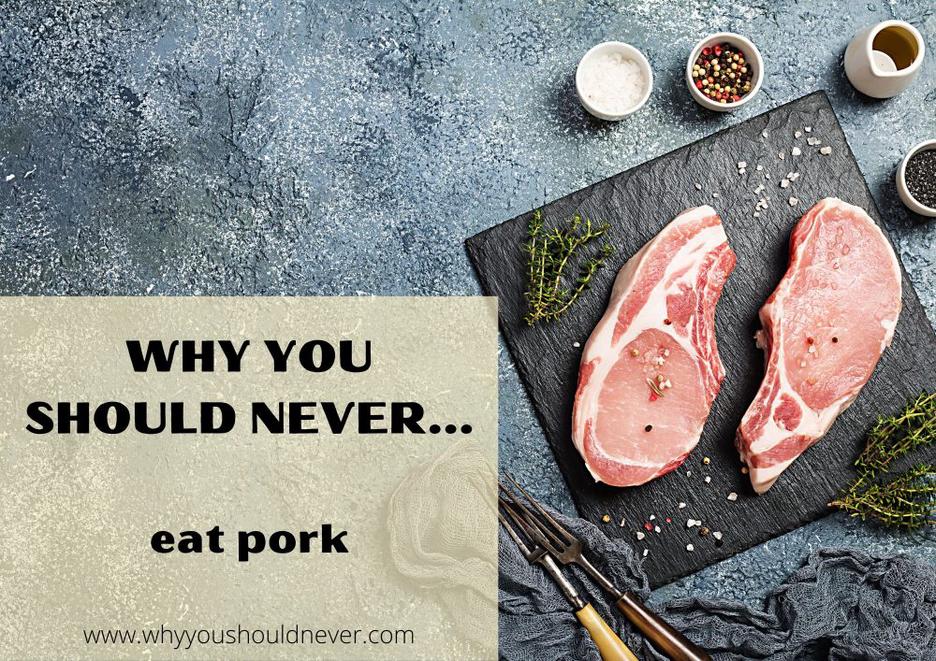
Why You Should Never Eat Pork

Why you should never eat pork9 reasons why you shouldn’t eat pork

“Sausages, bacon, and ham are all popular pork products. And with good reason: they’re delicious! There’s nothing quite like starting your day with a juicy bacon sandwich or enjoying a delicious plate of ham and eggs.

But as with most things that taste great, there’s a downside to eating pork. Pork is, in fact, one of the unhealthiest meats you can eat. In this article, we’re going to discuss why you should seriously consider cutting pork out of your diet altogether.

1. Pork contains parasites

One of the main reasons why you shouldn’t eat pork is because it contains parasites. These parasites can cause disease and even death in humans.

Some of the most common parasites found in pork include roundworms, tapeworms, and trichinosis. Trichinosis is a worm infection that can be passed on to humans from pigs. This infection can cause fever, diarrhea, vomiting, and muscle pain. In severe cases, it can also lead to death.

While cooking pork may kill some of the parasites, it won’t remove all of them.

2. Pork may cause cancer

Another reason to avoid eating pork is that it may contribute to cancer. Pork products contain heterocyclic amines (HCAs) and polycyclic aromatic hydrocarbons (PAHs).

These are both carcinogenic (cancer-causing) compounds that have been linked to an increased risk of various types of cancer, including stomach, colon, and pancreatic cancer.

3. Eating pork can lead to allergies

Some people are allergic to the protein found in pigs. These proteins include pork insulin and pork trypsinogen.

Pork insulin is similar to human insulin and can cause an allergic reaction in some people. Pork trypsinogen is a protein that helps the pig digest its food. This protein has also been known to cause allergic reactions in humans.

4. Pig farming is harmful to the environment

Pig farming is one of the most damaging types of farming to the environment. Pigs produce large amounts of manure, which contains nitrogen and phosphorus.

These substances can pollute the air, water, and soil. In addition, pig farms often use large amounts of antibiotics, which can lead to the development of antibiotic-resistant bacteria. These antibiotics tend to leach into the environment and can contaminate water sources and the earth.

5. Pigs are generally left in unsanitary conditions

Pigs are intelligent animals that can feel pain and suffering. Unfortunately, they’re often kept in unsanitary conditions on factory farms.

These farms confine pigs to small metal cages or pens. The floors of these pens are often slatted, so the waste falls through into a pit below. The pigs are cramped and have no room to move around or exercise.

The conditions on these farms are so bad that pigs often develop sores and ulcers. They also, believe it or not, suffer from anxiety, boredom, and depression.

6. Pigs eat other animals

There’s a somewhat unspoken rule that humans should avoid eating animals that eat other animals. Pigs are one of the few exceptions to this rule.

Pigs are omnivores, which means they’ll eat just about anything. This includes dead animals, feces, and even their own young. As a result, pigs can harbor all sorts of diseases and parasites.

Thus, whatever they eat, you end up eating too.”        From: https://whyyoushouldnever.com/why-you-should-never-eat-pork/

_______

Just like the saying:      You are what you eat, AND WHAT IT ATE!!

_______

What diseases do pigs carry?

“The diseases associated with swine include ringworm, erysipelas, leptospirosis, streptococcosis, campylobacterosis, salmonellosis, cryptosporidiosis, giardiasis, balantidiasis, influenza, infection with pathogenic E. coli, and brucellosis.

Do pigs poop out of their hooves?

In addition to adapted digestive systems that support opportunistic scavenging, pigs can excrete excess toxins through their hooves. So, in the event that they do eat too much garbage, their bodies still have a back-up plan to rid the poison.

Can pig poop make you sick?

It is important to thoroughly wash hands after contact with pigs or their fecal material to avoid infection with diseases that can be spread via fecal-oral contact. Campylobacteriosis is an infection of the intestines caused by a bacterium called Campylobacter.

What happens if a pig bites you?

Pig bites are often severe with a high incidence of infection that is often polymicrobial with organisms including Staphylococcus and Streptococcus spp. (including Streptococcus suis), Haemophilus influenzae, Pasteurella, Actinobacillus and Flavobacterium species.

Why do pigs eat faeces?

Coprophagia is the term for an animal eating excrement—both their own and that of others. Most of them eat feces because it contains some undigested food—and thus vital nutrients—that would otherwise go to waste.  (Rabbits do this, too, that is why they are also an “unclean” meat.)

Do pigs have STDS?

They are responsible for a broad range of diseases in animals and humans. In pigs, Chlamydia suis, Chlamydia abortus, Chlamydia pecorum and Chlamydia psittaci have been isolated.”  From: https://yourwiseadvices.com/how-do-pigs-excrete-toxins/

_______

Sunday, February 20, 2022

What Does God Say About Taxes? To Give Repentance and Forgiveness of Sins. Top 10 Most HARMFUL Foods People Keep EATING.

.

“Render Unto Caesar”: What Does God Say About Taxes?

“Render Unto Caesar”: What Does God Say About Taxes? Matthew 22:18-21"Tax time is something that most of us dread—working our way through those forms and paying our taxes! What does God say about paying taxes?

  What did Jesus Christ say about taxes in Matthew 22:18-21? 

It’s been said that two things are certain in life: death and taxes, neither of which people look forward to. Soon after the turn of the year millions of us in the United States start to work on something that is about as much fun as having a tooth pulled.

According to RandomHistory.com, there is no known civilization in history that did not tax. Even the very first known civilization, the Sumerians, recorded their tax history on clay cones.

Taxes are what some call a “necessary evil.” After all, we daily use services that make life more convenient or safe. We drive on roads or highways with signs and lights that regulate traffic flow. We’re thankful to have the services of emergency personnel when there’s an accident or dangerous situation.

Taxes in the Bible?

We’re admonished to come out of this world and not participate in some of its systems, such as politics. Does that include the paying of taxes?

Early in the Gospel record, we find Joseph and Mary submitting to a decree by the emperor of Rome to register their names. Normally, taxation followed such a registering of a household.

“And it came to pass in those days that a decree went out from Caesar Augustus that all the world should be registered. This census first took place while Quirinius was governing Syria. So all went to be registered, everyone to his own city. Joseph also went up from Galilee, out of the city of Nazareth, into Judea, to the city of David, which is called Bethlehem, because he was of the house and lineage of David, to be registered with Mary, his betrothed wife, who was with child” (Luke 2:1-5).

We can see that the stepfather of the future Savior of mankind was willing to pay taxes, even to one of the most ruthless governments in history. And God used Joseph’s willingness to obey to fulfill the prophecy that the Messiah would be born in Bethlehem.

“Render unto Caesar” 

During Jesus’ ministry, the Pharisees tried to trap Him by getting Him and the disciples in trouble with the authorities about paying taxes.

“Then the Pharisees went and plotted how they might entangle Him in His talk. And they sent to Him their disciples with the Herodians, saying, ‘Teacher, we know that You are true, and teach the way of God in truth; nor do You care about anyone, for You do not regard the person of men. Tell us, therefore, what do You think? Is it lawful to pay taxes to Caesar, or not?’” (Matthew 22:15-17).

Notice His response was an admonition to pay taxes:

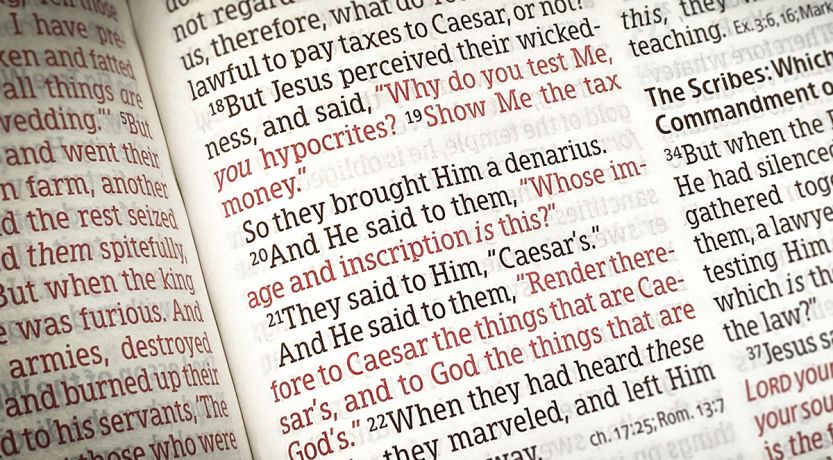
“But Jesus perceived their wickedness, and said, ‘Why do you test Me, you hypocrites? Show Me the tax money.’ So they brought Him a denarius. And He said to them, ‘Whose image and inscription is this?’ They said to Him, ‘Caesar’s.’ And He said to them, ‘Render therefore to Caesar the things that are Caesar’s, and to God the things that are God’s’” (Matthew 22:18-21).

Jesus wisely avoided their trap and showed the need to pay both taxes to the civil government (represented by Caesar) and tithes to God.

“Taxes to whom taxes are due”

After Jesus’ death and the beginning of His Church, this same teaching continued.

The Roman Empire was not always just in its rulings, but it did provide some semblance of law and order. The apostle Paul exhorted Christians to submit to the laws and authority of the civil government.

“Let every soul be subject to the governing authorities. For there is no authority except from God, and the authorities that exist are appointed by God. Therefore whoever resists the authority resists the ordinance of God, and those who resist will bring judgment on themselves” (Romans 13:1-2).

He went on to say, “Therefore you must be subject, not only because of wrath but also for conscience’ sake. For because of this you also pay taxes, for they are God’s ministers attending continually to this very thing. Render therefore to all their due: taxes to whom taxes are due, customs to whom customs, fear to whom fear, honor to whom honor” (verses 5-7).

As we benefit from many of the services provided by man’s government that are paid for out of our taxes, it is only right that we help pay for these. While we now live in this world, under its governments, we should abide by its laws so long as they do not conflict with the higher laws of God and our worship of God (Acts 5:29).

Pay your taxes and give thanks to God

When we complete our tax returns, in many cases we need to include a check to pay the remaining taxes due.

I’d like to suggest that when you do so, you read what God inspired Moses to record, and then give thanks to God.

You might be thinking, “What! I’m paying all these taxes, and you’re suggesting I give God thanks?” But consider if there are parallels between what the nation of Israel experienced and the blessing you have received.

God freed a nation of people who were slaves in the land of Egypt and brought them to a land to receive for their own. He told them that if they would obey and serve Him, that He would bless them abundantly. Once they began to enjoy those bountiful blessing, they were to acknowledge the One who had given them the blessings by taking some of the produce of the land to His priests.

“And it shall be, when you come into the land which the LORD your God is giving you as an inheritance, and you possess it and dwell in it, that you shall take some of the first of all the produce of the ground, which you shall bring from your land that the LORD your God is giving you, and put it in a basket and go to the place where the LORD your God chooses to make His name abide. And you shall go to the one who is priest in those days, and say to him, ‘I declare today to the LORD your God that I have come to the country which the LORD swore to our fathers to give us.’

“Then the priest shall take the basket out of your hand and set it down before the altar of the LORD your God” (Deuteronomy 26:1-4).

And then the one bringing the offering was to reflect on how God had delivered and blessed him.

“And you shall answer and say before the LORD your God: ‘My father was a Syrian, about to perish, and he went down to Egypt and dwelt there, few in number; and there he became a nation, great, mighty, and populous. But the Egyptians mistreated us, afflicted us, and laid hard bondage on us. Then we cried out to the LORD God of our fathers, and the LORD heard our voice and looked on our affliction and our labor and our oppression. So the LORD brought us out of Egypt with a mighty hand and with an outstretched arm, with great terror and with signs and wonders. He has brought us to this place and has given us this land, “a land flowing with milk and honey”; and now, behold, I have brought the firstfruits of the land which you, O LORD, have given me.’

“Then you shall set it before the LORD your God, and worship before the LORD your God” (verses 5-10).

Though we can view the paying of taxes as a negative thing, we need to realize it is because we have received an income and blessings that we can and should pay what we owe.

Many don’t have to pay taxes

A number of years ago, a fellow minister and I were traveling down a highway in Nigeria. We came to a section where there were some Nigerian women and children standing just off the edge of the pavement in ragged clothes with their hands stretched out. The minister I was with, who had been there several times before, asked our driver to stop. He then took a handful of coins to pass out the window to them.

I learned they were lepers trying to get a little money for food from the passing cars.

So, as you take care of your annual tax responsibility, take a few minutes to express your thanks to God for your physical blessings and pray for the coming of God’s Kingdom when all the world will enjoy much greater blessing under the government of Jesus Christ. These poor lepers didn’t have to pay any taxes.

A few years later, I was in the impoverished African country of Zimbabwe conducting a religious meeting with a group of its citizens who were members of the Church of God, a Worldwide Association. In this group was a younger widow living in a hut with only a dirt floor. Her meager possessions consisted of only a few pots and pans. Her husband had died in the past year. She was left alone to take care of her four young children.

She timidly raised her hand and asked a question that was on her mind. In that culture, a dowry was part of marriages and would be set aside so that if something happened to the husband, there would be something for the widow to survive on. But it was very important to her that she live a life that was right before God. She asked if she should tithe on the dowry her husband had left her. I informed her this was not be tithable income.

She also didn’t pay taxes.

Such stories could continue without end. Multiple millions today live on an income less than $100 a year. Those of us in the Western world who face what we see as an onerous task each year of tax preparation and payment should realize how many people would happily trade places with us—thankful to have income on which to pay taxes.

Be thankful

Though few understand it, most of us in the English-speaking world enjoy the abundance of national blessings because of God’s promises to Abraham and his descendants. (For more on this, download our booklet The United States, Britain and the Commonwealth in Prophecy.) Compared to so many around the earth, we are tremendously blessed and would be viewed by them as quite wealthy.

One of the prophecies directed to Abraham’s descendants speaks of the loss of those blessings because they failed to obey and give thanks to the One who gives us these blessings.

“Moreover all these curses shall come upon you and pursue and overtake you, until you are destroyed, because you did not obey the voice of the LORD your God, to keep His commandments and His statutes which He commanded you.

“And they shall be upon you for a sign and a wonder, and on your descendants forever. Because you did not serve the LORD your God with joy and gladness of heart, for the abundance of everything, therefore you shall serve your enemies, whom the LORD will send against you, in hunger, in thirst, in nakedness, and in need of everything; and He will put a yoke of iron on your neck until He has destroyed you” (Deuteronomy 28:45-48).

So, as you take care of your annual tax responsibility, take a few minutes to express your thanks to God for your physical blessings and pray for the coming of God’s Kingdom when all the world will enjoy much greater blessing under the government of Jesus Christ.” From:  https://lifehopeandtruth.com/relationships/finances/render-unto-caesar-taxes/?

_______

To Give Repentance and Forgiveness of Sins

Acts 5:29-32

“But Peter and the other apostles answered and said: “We ought to obey God rather than men. The God of our fathers raised up Jesus whom you murdered by hanging on a tree. Him God has exalted to His right hand to be Prince and Savior, to give repentance to Israel and forgiveness of sins. And we are His witnesses to these things, and so also is the Holy Spirit whom God has given to those who obey Him.”

“The dramatic story in Acts 4 and 5 is amazing testimony to the inspiration and power of God through His Spirit. First, Peter and John were arrested and severely threatened to not preach in Jesus’ name (Acts 4:18-21). Then apparently all the apostles were imprisoned and miraculously released by an angel (Acts 5:17-20).

Instead of going into hiding, they obeyed the command of the angel to go preach in the temple again (Acts 5:20-21). The officers and the Jewish council didn’t know what to make of the fact the prison was still locked and the guards were still guarding the empty cells. It seems they didn’t know that the apostles had escaped.

Peter and the other apostles were hauled before the council again and spoke boldly. Peter not only accused the council of murder, he proclaimed that Jesus was on the right hand of God and is our Savior. As a result of Jesus’ sacrifice, God grants repentance and is willing to forgive our sins. Jesus Himself had explained that God’s great love makes this possible, as we covered in our commentary on John 3:16.

Not only were the apostles witnesses concerning Jesus Christ’s actions and words, the miracles performed through the power of God’s Holy Spirit also gave witness that He is the Son of God. God gave His Spirit to those who repented and were baptized (Acts 2:38)—to those who committed to obeying Him, which by implication the Jewish council had not.”

Read about how God saved the apostles from the anger of the Sanhedrin in Acts 5:33-42. And read more about the Holy Spirit in “How Do You Know You Have the Holy Spirit?” and “Is the Holy Spirit a Person?

_______

Top 10 Most HARMFUL Foods People Keep EATING

"Have you noticed when you are trying to eat healthy that everything has extra ingredients in it? Make sure you don't eat one of these Top 10 Most Harmful Foods People Keep Eating. There are so many food products that, while they may taste delicious, are harmful to your health."

See why on YouTube: https://youtu.be/Hr1lW83qHCs

1. Canned soup  2. white bread and wheat bread  3. canned tuna  4. diet soda  5. potato chips  6. fake maple syrup  7. margarine  8. energy drinks  9. fruit juice  10. deli meats.

________


Sunday, June 13, 2021

"We're Mortgaging Our Children's Future!" The Meek’s Inheritance. Mexico Joins Other Countries In Banning Glyphosates While The U.S. Still Allows Their Use.

.

Our Children's Future

“Last week I wrote to you with thoughts about my grandchildren and what family means. I have one additional thought to share about future generations—not only mine, but yours. This thought is driven by reading this week about the trillions of dollars being spent by the American government on vast social and infrastructure programs.

We hear of 9 trillion dollars being asked for government spending. This, on top of many trillions of dollars of government spending from 2020, are all meant to alleviate the economic impact of the COVID-19 pandemic. Much of those vast sums are yet to be spent while more is being requested.

The question many ask is, “Who is going to pay for this?” The answer is multi-dimensional. Increased taxes on the wealthy or corporations may be one solution. Another option is to sell more government-backed bonds on the world financial markets, expecting other nations to loan their money in expectation of a return. China and Saudi Arabia have been two nations, among many others in recent years, who buy American debt. All this has been going on for many years as the United States foreign debt has steadily increased, allowing Americans to enjoy a very high standard of living.

Confidence and trust support this economic house of cards—and the fact that the U.S. dollar is the standard currency of exchange on world markets. This allows you and I to shop at Costco and buy cheap goods from world markets. We can also enjoy a lower cost of fuel, at least for now, for our gas-guzzling vehicles. The American standard of living is very good and very cheap compared to much of the world.

All this puts the future at risk as we continue to borrow trillions of dollars and spend it on projects that do not always return value for the investment. Some one must pay for this. If we, the present generation, do not, then our children and our grandchildren will have to bear that burden. Likely, we will not repay the debt and we will pass it on to the future. We are saying to our children, “Good luck and thank you for doing this for us.” I look at my grandchildren and wonder how all this present spending will impact their lives. I ask myself whether they will have the same standard of living I have enjoyed.

You should ask the same questions. History gives no guarantee that this spending spree can continue without reaping the consequences of inflation, depression and even economic collapse. Given the way modern economies work, America—meaning our grandchildren—is headed for an unprecedented state of economic servitude. It is inescapable given present trends.

In our next issue of Beyond Today magazine, going to press this week, you will read an article explaining in more detail this economic situation. It will show from a biblical perspective how all this is a form of stealing. The article makes the point that government debt has grown so enormous that we are stealing from future generations, leaving it to our children and children’s children to pay back the debt from such profligate spending.

This is the concluding thought from my week with my grandchildren. It is a realistic note from an otherwise enjoyable occasion. We are living in a time of great upheaval and change. Our mission with Beyond Today is to explain the present and offer hope for the future. Our future hope is God’s coming Kingdom. Our present help is His grace through understanding.  We will point you to God’s Word for that help.”

_______

"We're Mortgaging Our Children's Future!"

“Sadly, in our world today, it seems our children are destined to endure pain because of the selfishness and greed of the generation preceding theirs.

"We're mortgaging our children's future!" "We're passing down a mountain of debt to our children and grandchildren!" These sentiments are among the angry shouts of people who are furious with what they denounce as reckless spending by government officials. This is not only happening in the United States. Many other nations are feeling the crush of enormous debt being heaped on them and the generations to come after them by governments bent on trying to spend their way out of the recession.

In America, all anyone needs to do to verify our runaway debt is to take a few minutes to look at the display of the U.S. National Debt Clock.

As of this writing, the current U.S. national debt stands at $12,136,000,000, or $39,380 for every man, woman and child in the United States.

Brian M. Riedl of the Institute for Economic Policy Studies at the Heritage Foundation, wrote: "The new budget spending estimates are alarming and absolutely unsustainable—and are the true cause of these appalling levels of deficit and debt. President Obama has proposed massive tax increases that still cannot keep up with the historic spending increases he has proposed. The result will be highest level of spending—and debt—in American history" ("New Budget Estimates Show Unsustainable Spending and Debt," Aug. 25, 2009).

What does this mean for our children? If we cannot pay this debt, it will not simply go away. It will just be pushed into future years, with billions of dollars in interest piled on top of an already mountainous debt. If we can't afford it now, how will they afford it later? How will they be able to maintain the standard of living their parents and grandparents enjoyed? The simple answer is: They won't. Our children will suffer the consequences of the reckless, out-of-control spending of their parents' generation.

The apostle Paul matter-of-factly states the commonsense wisdom that has been the norm throughout history: "For the children ought not to lay up for the parents, but the parents for the children" (2 Corinthians 12:14).

But, sadly, in our world today, it seems our children are destined to endure pain because of the selfishness and greed of the generation preceding theirs. Our generation has had no hesitation in passing along to our children a financial nightmare that will take great personal sacrifices to repair—if it can be repaired.

Responsible parents should be willing to prevent the suffering of their children and make those personal sacrifices today. Apparently, many are not. How about you? Are you concerned about the consequences of our growing debt? What can you do for your children and grandchildren?

You can help your children and grandchildren by reducing or eliminating your personal debt and managing your finances wisely. Begin by taking a look at your responsibilities as described in the chapter "Financial Security and Peace of Mind" from the free booklet Making Life Work. This article is based on biblical wisdom that is the only real source of financial peace of mind and the hope that we and our children need.”  From: https://www.ucg.org/beyond-today/blogs/were-mortgaging-our-childrens-future

_______

The Meek’s Inheritance

Psalm 37:11

“But the meek shall inherit the earth, and shall delight themselves in the abundance of peace.

God shows a special love for those who are truly meek. He plans to give them the earth and all its abundance, along with peace, because He will be sure that they will not let His blessings go to their heads. They will humbly and thankfully strive to serve the great Creator God always.

Jesus reinforced this concept by repeating it in the Beatitudes in His Sermon on the Mount (Matthew 5:5; see “Blessed Are the Meek”). For more about the Beatitudes, see “Beatitudes: Keys to Real Happiness.”” From: https://lifehopeandtruth.com/bible/blog/the-meeks-inheritance/?

________

Mexico Joins Other Countries In Banning While The U.S. Still Allows Their Use

“Chemical compounds found in Monsanto’s weed killer Roundup, known as glyphosates have been linked to serious human health issues and population decline in key pollinators. Though these chemicals are still approved for use in the United States, Mexico has decided to ban them completely by 2024.

“Given the scientific evidence of glyphosate toxicity, demonstrating the impacts on human health and the environment, the Secretariat of Environment and Natural Resources (SEMARNAT) has taken important steps to gradually reduce the use of this chemical until it achieves a total ban in 2024,” said Dr. Adelita San Vicente Tello, Director General of the Primary Sector and Renewable Natural Resources at SEMARNAT.

As Sustainable Pulse reports, San Vicente Tello announced the initiative following an event organized by the National Autonomous University of Mexico’s (UNAM) Academic Observatory of Society, Environment and Institutions. During the event, leaders were challenged to consider the impact glyphosate will have on the health of the environment and citizens of Mexico”.    From: https://blog.therainforestsite.greatergood.com/glyphosates-mexico/

Sunday, December 15, 2019

Thanksgiving, Purim and Hanukkah. When Was Jesus Born? Part 1, 2, 3. Update.

For “Scripture Sunday”:

Thanksgiving, Purim and Hanukkah

“Since so many holidays have pagan origins, some have wondered, is there anything wrong with national holidays like Thanksgiving, Purim and Hanukkah? 

Thanksgiving

Since so many religious holidays have pagan roots, some have wondered if all modern holidays are suspect. What about national holidays such as Thanksgiving in the United States and Canada, and the Jewish national holidays of Purim and Hanukkah?

Purim and Hanukkah mentioned in the Bible

Though Purim and Hanukkah are not commanded feasts of the Lord, they are mentioned in the Bible. The book of Esther describes the events that led to the establishment of the festival of Purim, as God saved the Jews from destruction by evil Haman. Hanukkah was also called the Feast of Dedication, mentioned in John 10:22-23. It celebrates the rededication of the temple after it had been defiled by Antiochus Epiphanes.

Days for giving thanks

Both of these holidays were established to give thanks to God, just as the American and Canadian Thanksgiving days are. Though some modern customs of these days may not be pleasing to God, they are not rooted in paganism and do not subvert any of the truths presented in the festivals of God.”    From: https://lifehopeandtruth.com/life/plan-of-salvation/holy-days-vs-holidays/thanksgiving/

________

Daily Bible Verse Blog

When Was Jesus Born?

Luke 1:5

“There was in the days of Herod, the king of Judea, a certain priest named Zacharias, of the division of Abijah. His wife was of the daughters of Aaron, and her name was Elizabeth.

The Bible does not tell us exactly when Jesus Christ was born. The closest hint, found in this verse, seems to point to Christ’s birth in the fall of the year.

What’s the connection? Verse 36 shows that Jesus Christ was born about six months after John the Baptist was born. And John the Baptist would have been conceived nine months earlier (15 months before Christ’s birth), shortly after his father Zacharias had received a message from an angel while serving at the temple.

When did Zacharias serve at the temple? One source says he probably served one-week stints around mid-May and mid-November. (E.W. Bullinger uses the dates June 13-19.) King David had divided the priests into 24 courses, of which the division of Abijah was the eighth (1 Chronicles 24:10). These divisions each served a week at a time, so that each division served two weeks at the temple each year according to the sacred calendar, in addition to the festivals.

A number of commentators lean toward a May or June date for Zacharias’ meeting with Gabriel. Adding 15 months to that would put Jesus Christ’s birth in perhaps August or September. (If Zacharias met Gabriel around November or December, Christ’s birth would have been in perhaps February or March.)

Either way would not support a Dec. 25 birth date.”        From: https://lifehopeandtruth.com/bible/blog/when-was-jesus-born-part-1/

_________

When Was Jesus Born? Part 2

Luke 2:1 

“And it came to pass in those days that a decree went out from Caesar Augustus that all the world should be registered.

The vast Roman Empire was a structured and expensive government, and this census was “organized to facilitate the collection of taxes” (NKJV Study Bible). In an agrarian society, both tithes and taxes were collected shortly after the fall harvest when the farmer would have sold his crop. Collecting taxes in the winter or any other time is not very effective.

Also, since such a census required people like Joseph to travel back to their ancestral home, it is unlikely the census would have been conducted in the winter time when travel was difficult. This is but one more hint in the text that Jesus Christ’s birth did not occur on Dec. 25. Though the Bible does not give an exact date for His birth, it seems clear that it could not have been in the winter.”      From: https://lifehopeandtruth.com/bible/blog/when-was-jesus-born-part-2/?

_________

When Was Jesus Born? Part 3

Luke 2:8

“Now there were in the same country shepherds living out in the fields, keeping watch over their flock by night.

One commentary states, “As these shepherds had not yet brought home their flocks, it is a presumptive argument that October had not yet commenced, and that, consequently, our Lord was not born on the 25th of December, when no flocks were out in the fields. On this very ground the nativity in December should be given up” (Adam Clarke’s Commentary,note on Luke 2:8).

The Interpreter’s One-Volume Commentary agrees: “These humble pastoral folk are out in the field at night with their flock—a feature of the story which would argue against the birth (of Christ) occurring on Dec. 25 since the weather would not have permitted it” (1971, note on Luke 2:4-7).” From: https://lifehopeandtruth.com/bible/blog/when-was-jesus-born-part-3/

For more about why Jesus Christ’s birth could not have been Dec. 25 and how it came to be celebrated that day, see our article “Christmas: Should Christians Celebrate It?

________

Update

Not much seems to have happened this week, but I have been busy every day.  The pastor didn’t show up for the Sunday afternoon Bible study, so we just sat there and talked. The pastor had told one person that he had a family emergency, but they hadn’t passed it on. 

Took a neighbor to Huntsville (TX) just so that I could go to a larger food store to get a few more veggies.  That seemed like a long dreary trip, and not much to look at.

Then on Wednesday drove to Bryan again to the Social Security office and to take Joe,  a neighbor, for their driving test.  Social Security said that they would write to me with their findings.  So we went back into College Station to my daughter’s house and she drew me a map of how to get to a certain used furniture store because I am looking for an armoire type thing, a closet with big drawers underneath.  We found the place, but they didn’t have what I needed, so we went to Walmart, and that store in College Station is B-I-G.  Joe found the tires he needs to get, and they were cheaper than some used ones he had been looking at.  I went in the other direction to the Pharmacy to try to find Cod Liver Oil softgels.  Everybody has Fish Oil Capsules, but not just Cod.  I will have to order them online again.  One really needs an electric chair to get around in that enormous store, I must have done my 10,000 steps that day!

Leaving Walmart, that’s when everything went haywire. We had plenty of time to get to the driving test, if we had only known how to get there!  Joe insisted that Business 6 and Highway 6 were the same thing, so we stopped, started and crawled through dozens of traffics lights in College Station and then Bryan.  I said that we needed to be on Highway 6, but Joe insisted they were the same thing.  By the time we found Highway 6, we went the wrong way and didn’t arrive at the DPS until way after his appointment.  Now he has to look at a video online to get another appointment.

This Sabbath, my neighbor Cherry and I decided to go to a different church, one in Willis. It was a long drive, but worth it. She enjoyed the change, especially the music.  This week they were playing Bible Jeopardy instead of the usual Bible study, and that is always interesting. The sermon was about Nehemiah and how he resisted the temptations offered him, and how we should, too. 

I had made Cheesy Scalloped Potatoes for the church potluck and was told several times that it was very tasty.  I admitted that as I didn’t have the required 2 cups of milk to make it that I had substituted one cup of vegetable broth, maybe that’s what made it a hit. 

We didn’t know how long we would be, so we took Cherry’s West Highland White, (Westie dog), “Travis” with us. He traveled in his big wire cage and when we got there we left the van windows open for him and took him walkies a couple of times.  Thankfully it was a nice, not to hot, not too cold day.