Showing posts with label nuts. Show all posts

Tuesday, March 5, 2024

5 Things Christ Will Undo and Redo at His Return. Should Christians Keep Mardi Gras? How does Plant-Based Eating Benefit Your Health?

.

5 Things Christ Will Undo and Redo at His Return

5 Things Christ Will Undo and Redo at His Return “Mankind has done much damage to this earth, but God has a plan to fix man’s many mistakes. What will Christ “undo” and “redo” when He returns to earth?

As a software developer, I consider “undo” to be an essential tool, and I use it often. When making changes to software, I occasionally realize I made a mistake. The easiest way to fix that mistake is to undo the changes I made and go back and do it right. I am fortunate to use an editor that remembers changes I made even after it has been closed.

Wouldn’t life be great if we could undo our past mistakes and have a redo? Though life doesn’t provide us such an option, God has a plan that will undo the damage we humans have done to this earth, to one another and to ourselves. His plan is in motion and soon will be evident to all mankind when Jesus Christ returns to earth to establish God’s Kingdom here.

Under Christ’s perfect government, mankind will learn to “redo” life, but this time following the perfect laws of God.

Let’s consider some of the major things that will be undone and redone after Christ’s return.

1. Swords and plowshares

Undo: War between nations.

Redo: Peaceful, mutually beneficial relationships between nations.

After Christ returns, He will teach the nations His law, which is based on love Just before Christ returns to the earth, there will be a period of intense worldwide warfare when people will be beating “plowshares into swords” and “pruning hooks into spears” (Joel 3:10). This is ancient language describing implements of food production (which sustains life) being turned into implements of warfare (which destroys life).

But after Christ returns, He will teach the nations His law, which is based on love (2 John 1:6). When godly love is understood and practiced on an international level, the nations will turn “swords [back] into plowshares” and “spears [back] into pruning hooks” (Micah 4:3).

2. Food shortages

Undo: Hunger and malnutrition affecting millions of people.

Redo: An abundance of food where everyone’s needs are met.

As we covered above, after Christ returns, the nations will no longer devote their economic resources to warfare and defense, but will instead redirect their economies to food production. Christ will restore an emphasis on agriculture that will allow the nations to sustain healthy populations. The prophet Amos foresaw a world where the “plowman shall overtake the reaper” (Amos 9:13).

3. Dangerous animals

Undo: The instinctual nature in many wild animals that makes them dangerous to humans and each other.

Redo: A transformed nature of wild animals that makes them docile, tame and harmless.

In the creation described in the first two chapters of Genesis, there was perfect harmony between the animals and mankind. But when Adam and Eve sinned and were kicked out of the Garden of Eden, they found many wild animals were now hostile to human beings. Christ will change the violent natures of animals so they will dwell safety with one another and with mankind (Isaiah 11:6-9).

4. Knowledge of God

Undo: Rejection of God and His laws.

Redo: Acceptance of God and His laws in every aspect of life.

In the book of Romans, the apostle Paul described the current state of humanity as being in rebellion against God (Romans 1:28). But Christ will make God’s beneficial laws undeniable. He will lead an educational system based on the ways of God. It will eventually lead to the knowledge of God covering the earth “as the waters cover the sea” (Isaiah 11:9). The prophet Jeremiah foresaw a time when everyone will know God (Jeremiah 31:34).

5. God’s Sabbath and festivals

Undo: Ignorance of God’s Sabbath and festivals.

Redo: Knowledge and observance of the Sabbath and festivals.

Within God’s law are holy times: the weekly Sabbath (Exodus 20:8-11) and annual festivals (Leviticus 23). Not only are these days when we are to worship God, they also reveal the major stages of His plan. These days will be observed by the entire world after Christ returns (Isaiah 66:23, ZechariaThe Mystery of the Kingdom free bookleth 14:16).

This covered just a few aspects of our world that will be undone and redone after Jesus Christ returns. To learn more about this future time, download our free booklet The Mystery of the Kingdom.   From: https://lifehopeandtruth.com/prophecy/blog/5-things-christ-will-undo-and-redo-at-his-return/?

________

Should Christians Keep Mardi Gras?

Transcript of video at: https://www.ucg.org/beyond-today/beyond-today-dailys/should-christians-keep-mardi-gras

Mardi Gras has its roots in religious tradition. But what does the Bible say?

[Steve Myers] “Colorful costumes and masks and pageantry. That's all surrounding Mardi Gras. Mardi Gras is one of those traditions where...    sometimes I'll talk about the fact that it reminds me of the three Ds. There's dancing in the streets, there's drunkenness and debauchery. That kinda categorizes Fat Tuesday. That's literally what the term Mardi Gras means. Religiously it's called Shrove Tuesday because that's the day before Lent. Lent of course being more of a Catholic kind of a tradition that's rooted in pagan holidays. And what would happen at Lent is that you would give up something for Lent. And so before you give something up, you certainly want to overindulge and fatten up and, you know, get into food and drink and all those things so that you can then put that behind you and repent for the rest of this religious season.

But when you really think about the implications of that religiously, it's really ridiculous. In modern carnival traditions and celebrations all around the world and whether it's in New Orleans or Rio or Nice, France. These are areas where they'll often celebrate for weeks, leading up to that time. When we lived in New Orleans for a while, I remember they talk about Fat Tuesday, and then instead of Ash Wednesday, they'd call it Trash Wednesday because there was so much junk leftover from these Mardi Gras celebrations. Well, is that something we should have any part in? These Catholic traditions that are not really based in the Bible at all. I mean, there's a couple of interesting aspects when you consider this. I was thinking of the passage that's found in Romans 13:13. It says the basic things. As Christians it says, "Let's walk properly in the day, not in revelry or drunkenness."

Of course on TV, they'll show the parties and the fun but they don't show all of those types of things because that would certainly take away from the tourism of all those areas of the world. Romans goes on, "don't walk in lewdness and lust, not in strife and envy." And it's kind of a reminder, those are the things we should give up, but that's not good enough. This whole aspect of Mardi Gras and Lent, I think it is something that miss directs us to what the truth of God's word really is. Yes, we've got to give up lewdness and drunkenness and revelry and all those types of things that are against God's way of life. But Romans points out, it's not just about giving something up. We have to put something on and so verse 14 in Romans 13 says, "Put on the Lord Jesus Christ, make no provision for the flesh to fulfill its lust."

And so that's an important aspect of Christianity, true Christianity. We not only put off those things that are wrong, but we've got to take it a step farther. We've got to put on everything that's right. So when you begin to hear about Mardi Gras celebrations, and all of those types of things in this upcoming Lent season that this religious world will keep, remember, it's not rooted in the Bible. In fact, let it remind you of the fact we need to put off the ways of the world, but more importantly then, put on Jesus Christ.”  From: https://www.ucg.org/beyond-today/beyond-today-dailys/should-christians-keep-mardi-gras

________

How does Plant-Based Eating Benefit Your Health?

father holding broccoli high-five daughter

Whether you’re considering eating less meat or giving it up entirely, the benefits are clear: less risk of disease and improved health and well-being. Consuming less meat decreases the risk of:

Meat is often loaded with cholesterol and saturated fat, which have starring roles in poor heart health. And processed meats, including deli meat, bacon and sausage, often have too much sodium and other additives, and should be limited. However, if you want to include meat into your eating plan, choose lean meats. Be sure to include skinless poultry, seafood, fish, beans, nuts and legumes, too, because they are healthy sources of protein.

Diets or eating styles that do not or restrict meat include:

  • Vegan — entirely plant-based, excluding meat, fish, dairy, eggs, honey and any product that comes from an animal.
  • Vegetarians — a plant-based diet, but may include dairy and eggs.
  • Flexitarian — a vegetarian diet that sometimes indulges in meat or fish but mostly sticks to plant foods.
  • Plant-based — a style of cooking and eating that emphasizes plant-based foods but is not strictly limited to them. Meat may be included, but it’s usually not the main feature of the meal.

Lean protein

Not eating meat does not mean you can’t get enough protein in your diet. In fact, many people eat more than enough protein, especially from animal foods. There are plenty of other foods that can provide you with protein, such as tofu, edamame, quinoa, sorghum, lentils, chickpeas and most beans and legumes. And there are many good sources of protein from vegetables, too, including artichokes, asparagus, broccoli, Brussels sprouts, collards, corn, peppers, spinach, sweet potatoes and turnip greens. Did you know that every plant we eat has some protein in it? So, the more vegetables you eat, the more protein you’ll consume.

Not all plant-based diets are healthy

Don’t replace meats with highly processed meat substitutes or “vegan junk food.” Instead choose high-quality, nutrient-dense plant-based foods. A recent study showed that eating primarily these types of food, such as vegetables, fruits, whole grains, beans, legumes and nuts, was associated with a lower risk of death from cardiovascular diseases. The researchers concluded that even if you’ve eaten a poor diet for half your life, adding more healthy plant foods as an adult can help reduce your risk.

Making the switch

Going plant-based is not as difficult as you may think. In fact, getting started can be as easy as 1-2-3!

  1. Search for some vegetarian recipes that are easy to prepare and sound appealing to you and your family.
  2. Choose ingredients and flavors you know your family will enjoy.
  3. Try meatless Mondays! Experiment with a meatless meal once a week, then add more days as you get used to it.”          

Written by American Heart Association editorial staff and reviewed by science and medicine advisors. See our editorial

From: https://www.heart.org/en/healthy-living/healthy-eating/eat-smart/nutrition-basics/how-does-plant-forward-eating-benefit-your-health

_________

Tuesday, February 20, 2024

What Does Your Appearance Say About You? Slaves of Sin or Slaves of Righteousness? What You Should Know About Plant-Based Diets.

.

What Does Your Appearance Say About You?

What does your appearance say about you?“While sitting in a waiting room, waiting for an eye exam, an elderly gentleman walked in whose appearance caught my eye. He had a nice suit on with a very nice wool overcoat. His shoes where so shiny you could probably see yourself in them. I can assure you I did not try. I thought to myself, this guy is rich, probably a CEO. As I looked around the room, everyone else was dressed in their jeans and one lady even had holes in her jeans. When I looked at the other people in the room, and how they were dressed, I certainly was not left with the same impression as I with the immaculate dressed elderly gentleman.

It made me think about our appearance. We know that God looks at the heart, and that is what is most important. But, our appearance leaves a message in others peoples minds. What does our appearance say about us? What is the first impression that people see when they see you? Does appearance mean anything? Is your appearance modest? Do we strive to wear our very best for the occasion? The main question we should also ask is does our appearance represent God? We are representative of God in our behavior and in our dress. We should dress as Ambassadors for the coming Kingdom of God. We should dress to honor God.

You do not have to spend a lot of money to look well dressed. Many thrift or second hand stores have great clothing for a low budget. You can find great quality clothes at these second hand shops. I know after seeing this gentleman it made me want to try harder and dress better because I know our appearance projects an image of us and of God, especially if they know we are Christians.

We want our appearance to project a high quality person, a representative of God! So always remember when you get ready to go somewhere what does your and my appearance say to others and am I representing God as an Ambassador?” From: https://www.ucg.org/beyond-today/blogs/what-does-your-appearance-say-about-you#comments.  Yes, there are lots of comments to read about this, too!

_________

Slaves of Sin or Slaves of Righteousness?

Romans 6:15-16

What then? Shall we sin because we are not under law but under grace? Certainly not! Do you not know that to whom you present yourselves slaves to obey, you are that one’s slaves whom you obey, whether of sin leading to death, or of obedience leading to righteousness?

“The apostle Paul, after describing in Romans 5 the incredible sacrifice of Jesus Christ to pay the penalty of our sins and make possible the free gift of forgiveness and eternal life, saw the need to explain more fully.

We can do nothing to “earn” forgiveness or eternal life, but that doesn’t mean that God wants us to continue sinning. Obviously if God hates sin so much that He requires the death penalty for sin, He does not want us to go back to doing it. Sin causes pain and suffering and death. Obeying God’s law produces right relationships and life.

Paul points out that humans must choose whom they will serve: either sin leading to death or obedience to God’s good and righteous law, which leads to being right with God. Those are the only two choices; and as God said long before, He wants us to choose obedience and “choose life” (Deuteronomy 30:16-19).

For more about sin and God’s law, see “The 10 Commandments for Today.” From: https://lifehopeandtruth.com/bible/blog/slaves-of-sin-or-slaves-of-righteousness/?

________

What You Should Know About Plant-Based Diets

eating veggies in a buddha bowl“Learn the pros, cons and safe ways to remove meat products from your diet ​
Thinking about trying out a plant-based diet and want to know more? Here, dietitians Kate Patton, MEd, RD, CSSD, LD, and Julia Zumpano, RD, LD, explore some details that can help you decide if it’s right for you — and if so, how to jump right in.

What is a plant-based diet?

These vegan-like diets eliminate all animal products, including meat, poultry, fish, eggs, dairy and honey. As the name suggests, everything you eat — including whole grains, fruits, vegetables, legumes, nuts and seeds — is derived from plants.

Are plant-based diets healthy?

Research reflects that following a plant-based diet has significant health benefits as long as you do it correctly.

“No matter when you start, a diet that is focused on plant foods will help you work toward the prevention of many illnesses and feeling better overall,” Zumpano says.

If followed properly, a whole foods, plant-based diet limits the use of oils, added sugars and processed foods, leaving only whole foods to provide nutrition. This maximizes nutrient intake and virtually eliminates foods that can lead to poor health outcomes.

These diets are low in saturated fat, free of cholesterol, and rich in fiber, vitamins, minerals and antioxidants.

Research also reveals that following this type of diet will lower your risks of:

  • Heart disease.
  • Hypertension (high blood pressure).
  • Diabetes.
  • Digestive disease.
  • Colon and breast cancers.
  • Obesity.

Studies also show that a plant-based diet can help to lower body weight and reduce your LDL cholesterol.

The cons of a plant-based diet

Following a plant-based diet means saying goodbye to all animal products — including lean meat and dairy products such as milk, yogurt, cheese and ice cream.

“That’s easier said than done for many of us,” Patton says. “But when you have the right guidelines and wrap in changes over time, replacing animal products in your diet is possible.”

Another thing to note — if you don’t plan your plant-based diet correctly, you may not meet all your protein, vitamin and mineral needs. And you won’t feel or look your best if you develop a nutritional deficiency. But there are easy ways to make sure you’re getting the nutrients you need.

How to get enough protein

You’ll want to make sure that your diet includes enough protein to maintain muscle mass, strong bones and healthy skin. The following foods are packed with protein:

  • Beans, lentils and split peas.
  • Quinoa.
  • Fermented Soy products like tempeh, tofu, soybeans and soy milk.
  • Nuts and seeds.
How to get enough vitamins and minerals

You’ll also need to get adequate calcium and vitamin D in your diet to ensure healthy bones. This won’t be difficult if you:

  • Drink a milk alternative such as soy, almond, rice or hemp milk, which contain both calcium and the vitamin D needed to absorb it.
  • Eat plenty of dark green leafy lettuce and beans which contain calcium.
  • Eat mushrooms and fortified cereals which contain vitamin D. If you aren’t consuming fortified foods on a consistent basis you’ll need to take a vitamin D supplement. Sunlight is another source of vitamin D.

You’ll also need enough zinc in your diet to support a healthy immune system, enough iron to maintain energy and immunity and enough vitamin B12 to produce red blood cells and prevent anemia. This means you’ll want to:

  • Eat whole grains, beans and fortified cereals for zinc and iron.
  • Eat fortified cereals and soy products to get your vitamin B12.
  • Nutritional yeast is also a great source of vitamin B12.
How to get started on a plant-based diet  …………..
Continued at: https://health.clevelandclinic.org/is-a-plant-based-diet-right-for-you

__________

Sunday, August 27, 2023

What’s the Bible For? The Biblical Authors. What Is TMAO and How Can We Reduce Our Levels?

.

What’s the Bible For?

2 Timothy 3:15-17

And that from childhood you have known the Holy Scriptures, which are able to make you wise for salvation through faith which is in Christ Jesus. All Scripture is given by inspiration of God, and is profitable for doctrine, for reproof, for correction, for instruction in righteousness, that the man of God may be complete, thoroughly equipped for every good work.

“The Holy Scriptures available to Timothy as a child would, of course, have been what we call the Old Testament today. The apostle Paul and the New Testament Church held the Old Testament in high esteem and quoted from it often in sermons and writings. The Old Testament revealed much about Jesus Christ, including both His first and second comings, and the salvation that is available because of His sacrifice.

All Scripture, which Peter later showed included Paul’s writings as well (2 Peter 3:16), was breathed—what we call inspired—by God. What is the Bible useful for?

  • Doctrine—teaching us God’s will.
  • Reproof—conviction or proof of wrongdoing.
  • Correction—setting us straight.
  • Instruction in righteousness—disciplining or training.

The Good News Translation puts it this way: All Scripture “is useful for teaching the truth, rebuking error, correcting faults, and giving instruction for right living, so that the person who serves God may be fully qualified and equipped to do every kind of good deed” (verses 16-17).”  

For more about this passage, see “What Is the Meaning of 2 Timothy 3:16?” For more about what the Bible can do for us, see “Why Study the Bible?”  From: https://lifehopeandtruth.com/bible/blog/whats-the-bible-for/

________

The Author Behind the Biblical Authors

Revelation 1:19

“Write the things which you have seen, and the things which are, and the things which will take place after this.”

The various books that make up the Bible make no secret that though they were written down by dozens of different men, they all were inspired by a single author (2 Timothy 3:16). In Revelation 1:19, Jesus Christ told the apostle John to write down these things that make up the last book of the Bible.

At the other end of the Bible, we see God telling Moses to write down what He revealed to him (Exodus 34:27). Moses went on to write the first five books of the Bible (the Law or the Pentateuch).

It’s interesting to note that the One who appeared to Moses is also revealed as the One who became Jesus Christ: “For they drank of that spiritual Rock that followed them, and that Rock was Christ” (1 Corinthians 10:4).

Jesus Christ, the Word of God (John 1:1), also inspired the written Word of God, from Genesis to Revelation, from Moses to John.”  From: https://lifehopeandtruth.com/bible/blog/the-author-behind-the-biblical-authors/

For more about the inspiration and accuracy of the Bible, see “Who Wrote the Bible?” “How Do We Know the Bible Is True?” and related articles. 

________

What Is TMAO and How Can We Reduce Our Levels?

Image Credit: Unsplash. This image has been modified.

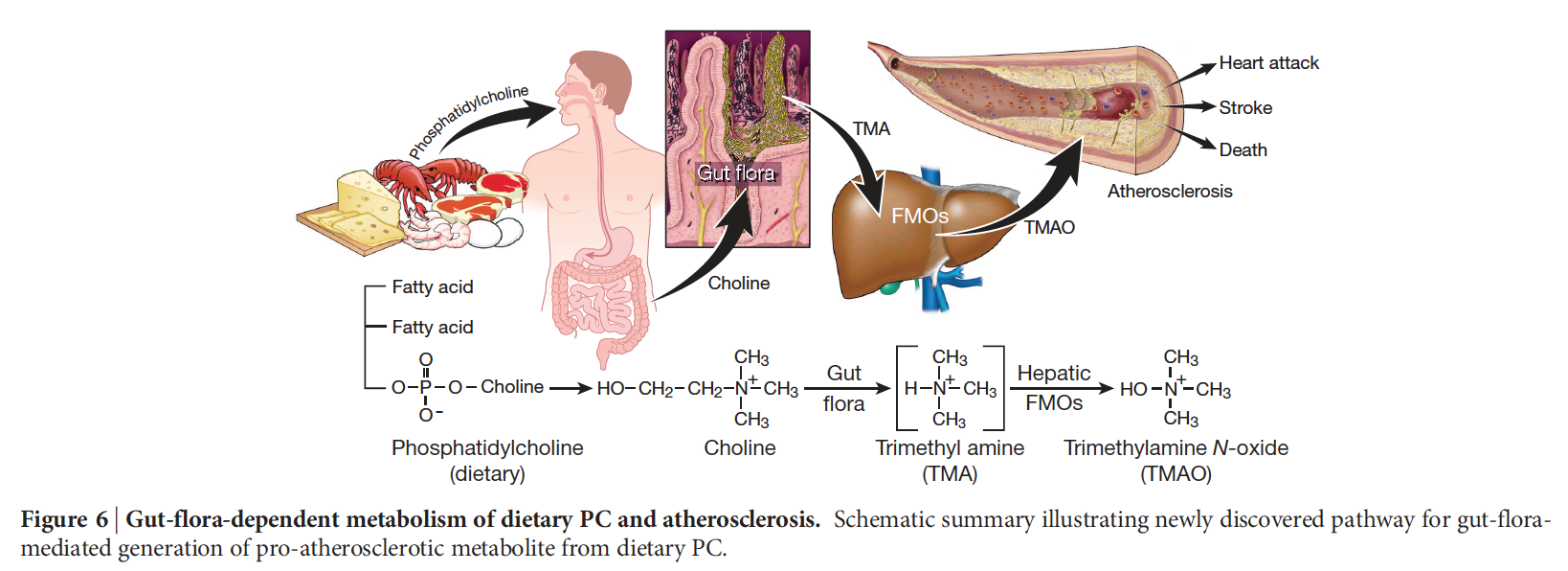
“Trimethylamine oxide, more commonly known as TMAO, is considered the smoking gun of microbiome-disease interactions.

What Is TMAO?

When we eat foods with high concentrations of choline, a nutrient I discuss in more detail below, certain bacteria in our gut make trimethylamine, or TMA. Our system absorbs the compound, and our liver oxidizes it into TMAO. You can see a graphic illustrating this process below and at 2:19 in my video Egg Industry Response to Choline and TMAO.

chart showing how liver oxidizes choline into TMAO

Is TMAO Bad for You?

TMAO may be a key dietary component of an unhealthy diet that contributes to disease promotion.

Heart Disease

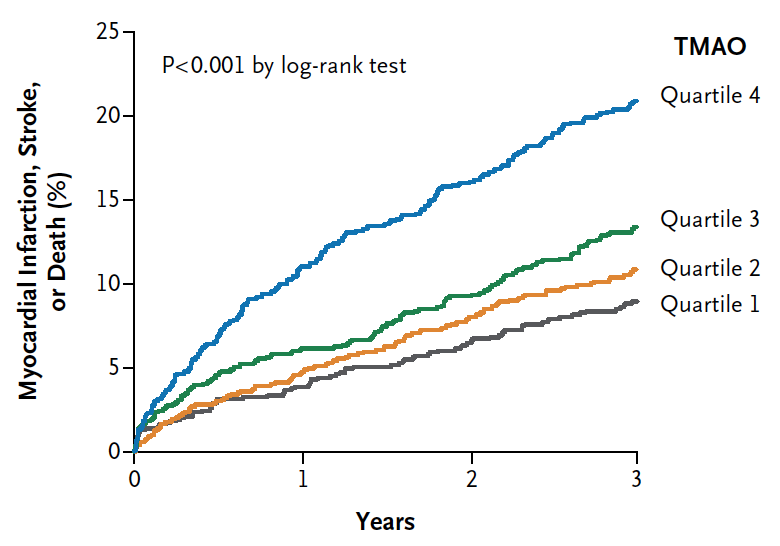
Researchers at the Cleveland Clinic screened blood from patients who had either had a heart attack or a stroke and compared the results with those from the blood of people who had not experienced either. Using an array of different technologies, the researchers determined that the more TMAO people had in their blood, the greater the odds they had heart disease and the worse their heart disease was.

Four thousand people were followed for three years, and, as you can see in the graph below and at 3:10 in my video Egg Industry Response to Choline and TMAO, those with the highest TMAO levels went on to have significantly more heart attacks, strokes, or even death.

chart showing correlation between tmao levels and heart disease

Artery Hardening

TMAO appears to increase the ability of inflammatory cells within the atherosclerotic plaque in our artery walls to bind to so-called bad LDL cholesterol. By making the inflammatory cells more prone to gobble up cholesterol, TMAO is another piece of the puzzle as to how cholesterol causes heart disease.

Failing Kidneys

When researchers followed kidney patients over time and assessed their freedom from death, they found that those with higher TMAO lived significantly shorter lives, even after controlling for kidney function. See more at 4:44 in my video How to Treat Heart Failure and Kidney Failure with Diet.

Cancer

We’ve known about the troublesome transformation from choline into trimethylamine (TMA) for more than 40 years, but that was long before we learned about its connection to heart disease. Why were researchers concerned nearly a half-century ago? Because these methylamines might form nitrosamines, which have cancer-causing activity.

In the Women’s Health Initiative study, women with the highest TMAO levels in their blood had approximately three times greater risk of rectal cancer, suggesting that TMAO levels may serve as a potential predictor of increased colorectal cancer risk.

Which Foods Increase TMAO Levels?  Carnitine and choline are two components known to facilitate production of TMAO. Where do we get these in our diet?

Carnitine:  Within 24 hours of consumption of carnitine, certain gut bacteria metabolize it into TMA, which our liver then oxidizes into the TMAO that then circulates throughout our bloodstream. Where can we find carnitine? It is concentrated in red meat, certain energy drinks, and carnitine supplements.
Choline: As mentioned above, our gut bacteria can turn choline into TMAO, too. Major dietary sources of choline are eggs, milk, and meat, including liver, poultry, shellfish, and fish.  Choline is also present in lecithin supplements.

Can We Reduce Our TMAO Levels?

TMAO is a toxic compound that may increase our risk of heart failure, kidney failure, and atherosclerosis, but might there be nutritional or interventional prospects for prevention? That’s the topic of my video How to Reduce Your TMAO Levels.

Antibiotics and Probiotics

If our intestinal bacteria and liver can make TMAO from meat, dairy, and eggs, should we destroy our gut flora?

We could give people antibiotics to eliminate the production of TMAO, but that could also kill our good bacteria and foster the emergence of antibiotic-resistant bacterial strains.

What about probiotic supplements? If we add good bacteria, might they crowd out the bad bacteria? That doesn’t work. Adding good bacteria doesn’t seem to get rid of the bad.

A New Methane-Producing Bacterium

What if we introduce new bacteria that could somehow siphon off the TMA made by the bad bacteria already in our gut? Well, there is a bacterium inside the guts of cows and sheep that turns trimethylamine into methane. Could we use that to get rid of some of the TMA in our gut? We could, but if it didn’t take, if our gut didn’t become colonized by the cow-and-sheep bacterium, we’d have to keep introducing it to our body. In that case, might the fact that Consumer Reports found fecal contamination in every sample of beef it tested be a good thing? Not at all. Methane-producing bacteria may be able to eat up our TMAO, but, unfortunately, these bacteria may be associated with a variety of diseases, from gum disease down to colorectal cancer, as you can see at 2:15 in my video.

Impairing Our Liver Function

If we can’t use antibiotics or probiotics to prevent our gut bacteria and liver from making TMAO out of the meat, dairy, and eggs we eat, should we cut down on our liver function?

That was the billion-dollar strategy employed by Big Pharma to lower our cholesterol. The same foods—meat, dairy, and eggs—raise our cholesterol, and changing our diet may lower it, but that isn’t very profitable. So, Big Pharma developed statin drugs that cripple the enzyme in our liver that makes cholesterol. Should we give that a try to lower our TMAO levels? Why not pharmacologically inhibit the enzymes in our liver that make TMAO and thereby possibly help reduce our risk of cardiovascular disease?

Trimethylaminuria is a genetic condition in which this enzyme is impaired naturally, so there is a build-up of trimethylamine in the bloodstream. The TMA just doesn’t get oxidized into TMAO. There is a problem, though. TMA is so stinky that it makes you smell like dead fish. So, “given the known adverse effects…from sufferers of fish odor syndrome, the untoward odorous side effects of inhibiting this enzyme make it a less attractive [drug] target.”

Diet

Do we have to choose between suffering from heart and kidney disease or smelling like dead fish? If only there were some other way we could stop this process from happening. There is. We could stop eating animal products, which is what those with trimethylaminuria often do to lower their TMA levels.

About a third of those who complain of bad body odor despite good personal hygiene test positive for the condition, but reducing or eliminating meat, egg, and dairy intake can be a real lifesaver. Given what we know about how toxic TMAO can be, cutting down on animal products may not just save the social lives of people with a rare genetic disorder, but it could help save everyone else’s actual lives.

Indeed, rather than trying to genetically engineer a bacterium that eats up trimethylamine or ingesting a gut enzyme from cows and sheep to convert it into methane, simply limiting the consumption of foods rich in choline and carnitine, perhaps specifically L-carnitine, may effectively limit the amount of TMAO circulating in our body. The easiest and safest recommendation? Eat more healthfully.

Our body makes all of the carnitine we need, so we can completely eliminate it from our diet. Choline, on the other hand, is an essential nutrient, so we do need some—but we don’t need to get it from eggs. Thankfully, we can get all we need from fruits, vegetables, beans, and nuts.

Can we get too much choline from plants? Do we need to worry about high-choline plant foods, like broccoli? No. In fact, consumption of cruciferous vegetables is associated with a significantly longer life and less cardiovascular disease mortality, as you can see at 5:34 in my video. To see what was going on, researchers took the vegetable highest in choline, brussels sprouts, and had people eat two cups a day for three weeks. What happened? Their TMAO levels actually went down. It turns out that brussels sprouts appear to naturally downregulate the TMAO liver enzyme—not enough to make you stinky, but just enough to drop TMAO.

Fecal Transplants

People who eat completely plant-based may not make any TMAO at all—even if they try. You can give a vegan a steak, which contains both choline and carnitine, and there will not even be a bump in TMAO. Why not? Vegetarians and vegans have different gut microbial communities. If we don’t eat steak, then we don’t foster the growth of steak-eating bacteria in our gut. So, forget the cow. How about getting a fecal transplant from a vegan? From a TMAO standpoint, we may not have to eat like a vegan as long as we poop like one.

Conclusion

Can you sense my frustration as I read paper after paper proposing ridiculous  strategies for reducing or inhibiting TMAO production? Pills, supplements, and the like may be profitable for Big Pharma, but we already have a safe, simple, and side-effect-free solution: a plant-based diet. 

And, plant-based eating gives us other benefits:

For more on TMAO, the smoking gun of diet-microbiome-disease interactions, see:

In health,   Michael Greger, M.D.”  From: https://nutritionfacts.org/blog/how-to-reduce-your-tmao-levels/

_______

Sunday, April 23, 2023

The Holy Days They Changed But Couldn’t Kill. Paul Preaches to Jews and Greeks. Foods That Fight Inflammation.

.

The Holy Days They Changed but Couldn’t Kill

“Jesus and the early Church did things that would seem odd today. How—and why—did people stop celebrating the holy days Jesus did? What should you do about it?

The Holy Days They Changed but Couldn't KillIf you belong to a typical mainstream church today and could somehow be transported back nearly 2,000 years to the time of the New Testament Church, wouldn’t that be exciting?


A chasm between Christianity today and the early Church

Actually, you might find it rather disturbing! If you talked with anyone then about your religious doctrines and practices of today, they would quickly characterize you as a heretic! You would be lost, confused, out of place and considered, well … odd!

On the other hand, if members of the early Church could be resurrected and placed into a conventional church today, they, too, would find it completely foreign. That’s because the practices of Christianity today have virtually nothing in common with those of Jesus and the Church He founded.

Continuing your imaginary trip back to the first century, the people of the New Testament Church would be perplexed if you brought up the Trinity, immortal soul, rapture, baptizing infants or baptizing by sprinkling, going to heaven or hell when you die, or a myriad of other doctrines commonly accepted today.

And perhaps your first surprise would be when you showed up on Sunday to worship with them—no one would be there! Easter services—what are you talking about?

Why would the Church of the first century seem so bizarre? It’s because the core teachings of Jesus and the apostles were systematically dismantled and replaced over time with other ideas.

Deception in the Church? Why?

Jesus knew that His adversaries would first kill Him, and then others would follow trying to obliterate or reinterpret His teachings and practices.

In Matthew 24 He spared no words, warning, “Take heed that no one deceives you. For many will come in My name, saying, ‘I am the Christ,’ and will deceive many” (verses 4-5) and, “Many false prophets will rise up and deceive many” (verse 11).

It didn’t take long.

The early Church fights heresy

A common theme in Paul’s, Peter’s, John’s and Jude’s writings is their fight against the heretical changes assailing the early Church. Ironically, in some instances they found their own words were being distorted by these deceivers!

Note Peter’s stunning statement about Paul’s epistles: “Speaking in them of these things, in which are some things hard to understand, which untaught and unstable people twist to their own destruction, as they do also the rest of the Scriptures” (2 Peter 3:16).

Paul wouldn’t recognize the teachings and practices of most churches today, and it’s easy to think he’d be appalled to see how his words have been twisted to justify many of today’s doctrines. But then again, maybe he wouldn’t be surprised.

After all, he’d seen it already. He wrote the Galatians: “I marvel that you are turning away so soon from Him who called you in the grace of Christ, to a different gospel, which is not another; but there are some who trouble you and want to pervert the gospel of Christ” (Galatians 1:6-7).

Jude faced the same battle. He found it “necessary to write to you exhorting you to contend earnestly for the faith which was once for all delivered to the saints” (Jude 1:3).

How the faith slipped away

History is clear on how the faith once delivered was quickly slipping away. Less than a hundred years after Christ, Bishop Sixtus of Rome pushed the Church to rid itself of “Jewish” customs and substitute new ones.

Bishop Victor of Rome sparked a huge controversy by pressing the Church to switch from observing the Passover to Easter Sunday. Victor's agenda eventually prevailed as the Council of Nicaea settled the issue in A.D. 325.  On his heels Bishop Victor of Rome sparked a huge controversy by pressing the Church to switch from observing the Passover (to commemorate Christ’s death) to Easter Sunday (to commemorate His resurrection). He ran into a strong opponent in Polycrates of Ephesus.

The historian Eusebius cites Polycrates’ brave defense in which he lists many names of people faithful to Christ’s teachings.

“All these observed the fourteenth day of the passover according to the Gospel, deviating in no respect, but following the rule of faith,” he wrote. “And I also, Polycrates … and my relatives always observed the day when the people put away the leaven [the biblical Feast of Unleavened Bread]. I, therefore, brethren, who have lived sixty-five years in the Lord, and have met with the brethren throughout the world, and have gone through every Holy Scripture, am not affrighted by terrifying words. For those greater than I have said ‘We ought to obey God rather than man.’”

Victor’s agenda eventually prevailed as the Council of Nicaea settled the issue in A.D. 325.

Behind the scenes: anti-Semitism and rejection of Passover

But why would anyone even be interested in fomenting upset by forcing such doctrinal change in Church practice? Here’s where it gets ugly. Something far more sinister than just new doctrinal ideas was working behind the scenes.

Another driving force had begun heavily influencing people: anti-Semitism. Of course, Jesus was a Jew, as were the apostles! They never thought of the Passover and other biblical holy days as Jewish—they were God’s! But anything related to what some viewed as Jewish would now be targeted.

Constantine, the first Roman emperor to convert to Christianity, brought his hatred of anything Jewish with him, as he revealed in his letter to the delegates at Nicaea:

“It was decreed unworthy to observe that most sacred festival [Passover] in accordance with the practice of the Jews; having sullied their own hands with a heinous crime, such bloodstained men are as one might expect mentally blind. … Let there be nothing in common between you and the detestable mob of Jews! We have received from the Saviour another way. … Let us with one accord take up this course … and so tear ourselves away from that disgusting complicity. For it is surely quite grotesque for them to be able to boast that we would be incapable of keeping these observances without their instruction” (Eusebius, Life of Constantine, 3.18.2-3).

Constantine was wrong. They had not “received from our Saviour another way.” Paul had written in detail about the observance and meaning of the Passover, stating, “For I received from the Lord that which I also delivered to you” (1 Corinthians 11:23). But these church leaders preferred to receive their direction from a Roman emperor rather than a New Testament apostle, and thus institutionalized Easter as “Christian” and marginalized Passover as “Jewish.”

Anti-Semitism and the change of the Sabbath

The Sabbath suffered a similar fate, from a similar motive, as church leaders changed to Sunday observance.

Out of the Council of Laodicea in A.D. 365 came Canon 29, stating: “Christians must not judaize by resting on the Sabbath, but must work on that day, rather honouring the Lord’s Day, and, if they can, resting then as Christians. But if any shall be found to be judaizers, let them be anathema [accursed] from Christ.”

Really? To worship on the same days Jesus did would now make you accursed?

This raises a troubling question: Does doctrinal change of any kind, but especially that of fundamental belief and practice, have any legitimacy when it has been dictated by anti-Semitism?

It is true that certain Jews were a thorn in the side of the Roman Empire, and certain religious factions of the Jews were persecuting Christians (thousands of whom, it should be noted, were Jews!). But if we allow our animosity toward some group to influence our integrity with interpreting the Scriptures, that puts us in conflict with God!

The Lord of the Sabbath and the feasts of the LORD

The Sabbath was not the Jews’—it was God’s! Jesus said, “The Sabbath was made for man [not just the Jews], and not man for the Sabbath.” Furthermore, He “is also Lord of the Sabbath” (Mark 2:27-28).

And centuries earlier, when God gave Israel His holy days, He said: “The feasts of the LORD, which you shall proclaim to be holy convocations, these are My feasts” (Leviticus 23:2, emphasis added throughout). These are the same feasts we find from both history and the Bible that the New Testament Church kept. They were never “Jewish feasts” or the “Jewish Sabbath”—they were, and are, God’s!

So when did He legitimize changing His holy days? Is it okay with Him if humans discard the Fourth Commandment, substituting Sunday for the Sabbath that He created, sanctified and hallowed? Does He care if we trade His holy days and adopt others from non-Christian religions?

History shows that as the years passed there were always small groups of people who said, “Yes, it matters!” Their numbers were small, especially in the face of sometimes horrific persecution, but they steadfastly held to the biblical doctrines and practices of Christ and the New Testament Church. Some even gave their lives, displaying a courage of conviction that would not allow them to compromise the truth.

They recognized when doctrinal changes were unbiblical and when the motives behind them were wrong.

Daniel Augsburger, a professor of historical theology at Andrews University, wrote this in The Sabbath in Scripture and History: “But also, all throughout that period there were groups of people who, either through the example of the Jews or because of their study of the Scriptures, attempted to keep the day that Jesus and the apostles had kept. For obvious reasons we know little about their number or their names, but their presence shows that in every age there were some who attempted to place the Word of God above the traditions of men” (1982, p. 210).

Who has the authority to change biblical doctrine?

All religious practices derive their authority from somewhere. Who molded and shaped what you believe today? If it differs from what the Bible says and what the New Testament Church practiced, does anyone have the authority to make such changes?

Most people just accept what they have been taught. Some try to read meaning into Scripture that justifies their doctrinal position. Others are more honest with history and admit they just changed things.

Thomas Aquinas, for example, one of history’s most influential theologians, wrote, “In the New Law the observance of the Lord’s day took the place of the observance of the Sabbath, not by virtue of the precept but by the institution of the Church and the custom of Christian people.”

The Catholic Virginian offered this admission: “All of us believe many things in regard to religion that we do not find in the Bible. For example, nowhere in the Bible do we find that Christ or the Apostles ordered that the Sabbath be changed from Saturday to Sunday. We have the commandment of God given to Moses to keep holy the Sabbath Day, that is the 7th day of the week, Saturday. Today most Christians keep Sunday because it has been revealed to us by the Church outside the Bible.”

It’s refreshingly honest, but honesty still doesn’t substitute for godly authority.

Today Easter is the holiest time of the year for Christianity, but most worshippers are unaware that their only authority for that day and doctrine is the word of men, not God. Jesus and His apostles’ warnings came true—men did “rise up, speaking perverse things, to draw away the disciples after themselves,” as Paul told the elders at Ephesus (Acts 20:30).

Some of them changed the days Jesus and the Church kept, but they couldn’t fully eradicate them.

Do these changes to God’s holy days matter?

So, does it matter? It comes down to this: Can we claim to worship the Savior who gave His life for us if we follow those who tried to kill His doctrines and practices?

The apostle John said it well: “He who says he abides in Him ought himself also to walk just as He walked” (1 John 2:6). And, “This is love, that we walk according to His commandments. This is the commandment, that as you have heard from the beginning, you should walk in it” (2 John 1:6).”      From:https://lifehopeandtruth.com/life/plan-of-salvation/days-they-changed/

New Call-to-action“For more on God’s festivals and their meaning to Christians today, watch our video series “Feasts of the Lord.” This series of 10 short videos explores God’s plan and what it means for you.”

________

Paul Preaches Every Sabbath to Jews and Greeks

Acts 18:4

“And he reasoned in the synagogue every Sabbath, and persuaded both Jews and Greeks.”

“Paul’s preaching in Athens appears to not have borne much fruit (Acts 17:32-34), but when he came to Corinth, God let him know “I have many people in this city” (Acts 18:10).

Paul worked during the week as a tentmaker alongside Aquila, but every Sabbath he preached and persuaded both those of Jewish background and those who weren’t Jewish (the Greeks or gentiles).

The Bible consistently shows Paul and the other apostles and the New Testament Church continued to observe the seventh-day Sabbath as their day of worship. For more on this, see our article “Did Paul Change the Sabbath Command?””               From: https://lifehopeandtruth.com/bible/blog/paul-preaches-every-sabbath-to-jews-and-greeks/?

________

d30b225a-550a-4c61-bf8f-b628531c3d9a

Foods that fight inflammation

“Doctors are learning that one of the best ways to reduce inflammation lies not in the medicine cabinet, but in the refrigerator.  By following an anti-inflammatory diet you can fight off inflammation for good.

What does an anti-inflammatory diet do? Your immune system becomes activated when your body recognizes anything that is foreign—such as an invading microbe, plant pollen, or chemical. This often triggers a process called inflammation. Intermittent bouts of inflammation directed at truly threatening invaders protect your health.

However, sometimes inflammation persists, day in and day out, even when you are not threatened by a foreign invader. That's when inflammation can become your enemy. Many major diseases that plague us—including cancer, heart disease, diabetes, arthritis, depression, and Alzheimer's—have been linked to chronic inflammation.

One of the most powerful tools to combat inflammation comes not from the pharmacy, but from the grocery store. "Many experimental studies have shown that components of foods or beverages may have anti-inflammatory effects," says Dr. Frank Hu, professor of nutrition and epidemiology in the Department of Nutrition at the Harvard School of Public Health.

Protect yourself from the damage of chronic inflammation.

Science has proven that chronic, low-grade inflammation can turn into a silent killer that contributes to cardiovas­cular disease, cancer, type 2 diabetes and other conditions. Get simple tips to fight inflammation and stay healthy -- from Harvard Medical School experts.

View Protect yourself from the damage of chronic inflammation.Couple running in woods

Choose the right anti-inflammatory foods, and you may be able to reduce your risk of illness. Consistently pick the wrong ones, and you could accelerate the inflammatory disease process.

Foods that cause inflammation

Try to avoid or limit these foods as much as possible:

  • refined carbohydrates, such as white bread and pastries

  • French fries and other fried foods

  • soda and other sugar-sweetened beverages

  • red meat (burgers, steaks) and processed meat (hot dogs, sausage)

  • margarine, shortening, and lard

The health risks of inflammatory foods

Not surprisingly, the same foods on an inflammation diet are generally considered bad for our health, including sodas and refined carbohydrates, as well as red meat and processed meats.

"Some of the foods that have been associated with an increased risk for chronic diseases such as type 2 diabetes and heart disease are also associated with excess inflammation," Dr. Hu says. "It's not surprising, since inflammation is an important underlying mechanism for the development of these diseases."

Unhealthy foods also contribute to weight gain, which is itself a risk factor for inflammation. Yet in several studies, even after researchers took obesity into account, the link between foods and inflammation remained, which suggests weight gain isn't the sole driver. "Some of the food components or ingredients may have independent effects on inflammation over and above increased caloric intake," Dr. Hu says.

Anti-inflammatory foods

An anti-inflammatory diet should include these foods:

  • tomatoes

  • olive oil, avocado oil

  • green leafy vegetables, such as spinach, kale, and collards

  • nuts like almonds and walnuts

  • fatty fish like salmon, mackerel, tuna, and sardines

  • fruits such as strawberries, blueberries, cherries, and oranges”

More at: https://www.health.harvard.edu/staying-healthy/foods-that-fight-inflammation

________