Showing posts with label drunk/druggies. Show all posts

Tuesday, March 5, 2024

5 Things Christ Will Undo and Redo at His Return. Should Christians Keep Mardi Gras? How does Plant-Based Eating Benefit Your Health?

.

5 Things Christ Will Undo and Redo at His Return

5 Things Christ Will Undo and Redo at His Return “Mankind has done much damage to this earth, but God has a plan to fix man’s many mistakes. What will Christ “undo” and “redo” when He returns to earth?

As a software developer, I consider “undo” to be an essential tool, and I use it often. When making changes to software, I occasionally realize I made a mistake. The easiest way to fix that mistake is to undo the changes I made and go back and do it right. I am fortunate to use an editor that remembers changes I made even after it has been closed.

Wouldn’t life be great if we could undo our past mistakes and have a redo? Though life doesn’t provide us such an option, God has a plan that will undo the damage we humans have done to this earth, to one another and to ourselves. His plan is in motion and soon will be evident to all mankind when Jesus Christ returns to earth to establish God’s Kingdom here.

Under Christ’s perfect government, mankind will learn to “redo” life, but this time following the perfect laws of God.

Let’s consider some of the major things that will be undone and redone after Christ’s return.

1. Swords and plowshares

Undo: War between nations.

Redo: Peaceful, mutually beneficial relationships between nations.

After Christ returns, He will teach the nations His law, which is based on love Just before Christ returns to the earth, there will be a period of intense worldwide warfare when people will be beating “plowshares into swords” and “pruning hooks into spears” (Joel 3:10). This is ancient language describing implements of food production (which sustains life) being turned into implements of warfare (which destroys life).

But after Christ returns, He will teach the nations His law, which is based on love (2 John 1:6). When godly love is understood and practiced on an international level, the nations will turn “swords [back] into plowshares” and “spears [back] into pruning hooks” (Micah 4:3).

2. Food shortages

Undo: Hunger and malnutrition affecting millions of people.

Redo: An abundance of food where everyone’s needs are met.

As we covered above, after Christ returns, the nations will no longer devote their economic resources to warfare and defense, but will instead redirect their economies to food production. Christ will restore an emphasis on agriculture that will allow the nations to sustain healthy populations. The prophet Amos foresaw a world where the “plowman shall overtake the reaper” (Amos 9:13).

3. Dangerous animals

Undo: The instinctual nature in many wild animals that makes them dangerous to humans and each other.

Redo: A transformed nature of wild animals that makes them docile, tame and harmless.

In the creation described in the first two chapters of Genesis, there was perfect harmony between the animals and mankind. But when Adam and Eve sinned and were kicked out of the Garden of Eden, they found many wild animals were now hostile to human beings. Christ will change the violent natures of animals so they will dwell safety with one another and with mankind (Isaiah 11:6-9).

4. Knowledge of God

Undo: Rejection of God and His laws.

Redo: Acceptance of God and His laws in every aspect of life.

In the book of Romans, the apostle Paul described the current state of humanity as being in rebellion against God (Romans 1:28). But Christ will make God’s beneficial laws undeniable. He will lead an educational system based on the ways of God. It will eventually lead to the knowledge of God covering the earth “as the waters cover the sea” (Isaiah 11:9). The prophet Jeremiah foresaw a time when everyone will know God (Jeremiah 31:34).

5. God’s Sabbath and festivals

Undo: Ignorance of God’s Sabbath and festivals.

Redo: Knowledge and observance of the Sabbath and festivals.

Within God’s law are holy times: the weekly Sabbath (Exodus 20:8-11) and annual festivals (Leviticus 23). Not only are these days when we are to worship God, they also reveal the major stages of His plan. These days will be observed by the entire world after Christ returns (Isaiah 66:23, ZechariaThe Mystery of the Kingdom free bookleth 14:16).

This covered just a few aspects of our world that will be undone and redone after Jesus Christ returns. To learn more about this future time, download our free booklet The Mystery of the Kingdom.   From: https://lifehopeandtruth.com/prophecy/blog/5-things-christ-will-undo-and-redo-at-his-return/?

________

Should Christians Keep Mardi Gras?

Transcript of video at: https://www.ucg.org/beyond-today/beyond-today-dailys/should-christians-keep-mardi-gras

Mardi Gras has its roots in religious tradition. But what does the Bible say?

[Steve Myers] “Colorful costumes and masks and pageantry. That's all surrounding Mardi Gras. Mardi Gras is one of those traditions where...    sometimes I'll talk about the fact that it reminds me of the three Ds. There's dancing in the streets, there's drunkenness and debauchery. That kinda categorizes Fat Tuesday. That's literally what the term Mardi Gras means. Religiously it's called Shrove Tuesday because that's the day before Lent. Lent of course being more of a Catholic kind of a tradition that's rooted in pagan holidays. And what would happen at Lent is that you would give up something for Lent. And so before you give something up, you certainly want to overindulge and fatten up and, you know, get into food and drink and all those things so that you can then put that behind you and repent for the rest of this religious season.

But when you really think about the implications of that religiously, it's really ridiculous. In modern carnival traditions and celebrations all around the world and whether it's in New Orleans or Rio or Nice, France. These are areas where they'll often celebrate for weeks, leading up to that time. When we lived in New Orleans for a while, I remember they talk about Fat Tuesday, and then instead of Ash Wednesday, they'd call it Trash Wednesday because there was so much junk leftover from these Mardi Gras celebrations. Well, is that something we should have any part in? These Catholic traditions that are not really based in the Bible at all. I mean, there's a couple of interesting aspects when you consider this. I was thinking of the passage that's found in Romans 13:13. It says the basic things. As Christians it says, "Let's walk properly in the day, not in revelry or drunkenness."

Of course on TV, they'll show the parties and the fun but they don't show all of those types of things because that would certainly take away from the tourism of all those areas of the world. Romans goes on, "don't walk in lewdness and lust, not in strife and envy." And it's kind of a reminder, those are the things we should give up, but that's not good enough. This whole aspect of Mardi Gras and Lent, I think it is something that miss directs us to what the truth of God's word really is. Yes, we've got to give up lewdness and drunkenness and revelry and all those types of things that are against God's way of life. But Romans points out, it's not just about giving something up. We have to put something on and so verse 14 in Romans 13 says, "Put on the Lord Jesus Christ, make no provision for the flesh to fulfill its lust."

And so that's an important aspect of Christianity, true Christianity. We not only put off those things that are wrong, but we've got to take it a step farther. We've got to put on everything that's right. So when you begin to hear about Mardi Gras celebrations, and all of those types of things in this upcoming Lent season that this religious world will keep, remember, it's not rooted in the Bible. In fact, let it remind you of the fact we need to put off the ways of the world, but more importantly then, put on Jesus Christ.”  From: https://www.ucg.org/beyond-today/beyond-today-dailys/should-christians-keep-mardi-gras

________

How does Plant-Based Eating Benefit Your Health?

father holding broccoli high-five daughter

Whether you’re considering eating less meat or giving it up entirely, the benefits are clear: less risk of disease and improved health and well-being. Consuming less meat decreases the risk of:

Meat is often loaded with cholesterol and saturated fat, which have starring roles in poor heart health. And processed meats, including deli meat, bacon and sausage, often have too much sodium and other additives, and should be limited. However, if you want to include meat into your eating plan, choose lean meats. Be sure to include skinless poultry, seafood, fish, beans, nuts and legumes, too, because they are healthy sources of protein.

Diets or eating styles that do not or restrict meat include:

  • Vegan — entirely plant-based, excluding meat, fish, dairy, eggs, honey and any product that comes from an animal.
  • Vegetarians — a plant-based diet, but may include dairy and eggs.
  • Flexitarian — a vegetarian diet that sometimes indulges in meat or fish but mostly sticks to plant foods.
  • Plant-based — a style of cooking and eating that emphasizes plant-based foods but is not strictly limited to them. Meat may be included, but it’s usually not the main feature of the meal.

Lean protein

Not eating meat does not mean you can’t get enough protein in your diet. In fact, many people eat more than enough protein, especially from animal foods. There are plenty of other foods that can provide you with protein, such as tofu, edamame, quinoa, sorghum, lentils, chickpeas and most beans and legumes. And there are many good sources of protein from vegetables, too, including artichokes, asparagus, broccoli, Brussels sprouts, collards, corn, peppers, spinach, sweet potatoes and turnip greens. Did you know that every plant we eat has some protein in it? So, the more vegetables you eat, the more protein you’ll consume.

Not all plant-based diets are healthy

Don’t replace meats with highly processed meat substitutes or “vegan junk food.” Instead choose high-quality, nutrient-dense plant-based foods. A recent study showed that eating primarily these types of food, such as vegetables, fruits, whole grains, beans, legumes and nuts, was associated with a lower risk of death from cardiovascular diseases. The researchers concluded that even if you’ve eaten a poor diet for half your life, adding more healthy plant foods as an adult can help reduce your risk.

Making the switch

Going plant-based is not as difficult as you may think. In fact, getting started can be as easy as 1-2-3!

  1. Search for some vegetarian recipes that are easy to prepare and sound appealing to you and your family.
  2. Choose ingredients and flavors you know your family will enjoy.
  3. Try meatless Mondays! Experiment with a meatless meal once a week, then add more days as you get used to it.”          

Written by American Heart Association editorial staff and reviewed by science and medicine advisors. See our editorial

From: https://www.heart.org/en/healthy-living/healthy-eating/eat-smart/nutrition-basics/how-does-plant-forward-eating-benefit-your-health

_________

Sunday, February 26, 2023

Five Foolish Things We Do to Foul Up Our Future. Where Is Lent in the Bible? The Truth About Potassium Bromate.

.

Five Foolish Things We Do to Foul Up Our Future

Five Foolish Things We Do to Foul Up Our Future“There are some human tendencies that create pitfalls on the path to our future. Here are five of the most common and dangerous ones.

I cringe when I hear the words stupid, dumb or foolish. No one wants to hear those words applied to his or her actions or choices. But sometimes, looking back, we see that those words fit. It has nothing to do with intelligence—some of the smartest people do some of the stupidest things.

We all have blind spots. We can’t always see when we are making a colossal mistake.

But God has given us a book of wisdom to help us look past the blind spots to the reality beyond. The warnings of the Bible can help us avoid the traps that so easily ensnare us.

Consider the following five foolish things God wants to help us avoid. With each one we also provide the alternative wise choice and some resources for further learning. As we will see, studying the wisdom of the Bible is the real antidote to foolishness and failure.

1. Following the wrong things

It’s easy to follow the crowd, even if the crowd is confused or leading us into evil. Wise King Solomon warned, “My son, if sinners entice you, do not consent” (Proverbs 1:10). How many young people have been lured with money and precious possessions (verse 13), just to end up in prison—or worse?

It’s even more natural to follow our heart. But the Bible warns, “There is a way that seems right to a man, but its end is the way of death” (Proverbs 14:12).

Worthwhile goals and good actions seem to always be upstream, so just going with the flow won’t get us there.

So, what should we do?

Follow God: “Trust in the Lord with all your heart, and lean not on your own understanding; in all your ways acknowledge Him, and He shall direct your paths” (Proverbs 3:5-6).

Helpful reading: Check out these articles on the Life, Hope & Truth website: “Saying No,” “Temptation: How Does It Occur?” and “The Trouble With Listening to Your Heart.”

2. Blowing up!

How many bad decisions have been made in the heat of anger? As Solomon explained, “Any fool can start a quarrel” and “whoever has no rule over his own spirit is like a city broken down, without walls” (Proverbs 20:3; 25:28). Having a chip on your shoulder can leave you vulnerable—especially to our worst enemy, the devil.

Responding to slights by others can escalate. Even if the first provocation was unintentional, the belligerence can quickly boil over as each mad young man returns fire. (Of course, it’s not just mad men; women can fail at anger management too.)

What does anger do? “When anger is too intense, out of control, misdirected, and overly aggressive, it can lead to poor decision making and problem solving, create problems with relationships and at work, and can even affect your health” (PBS.org from Anger Research Consortium and American Psychological Association sources).

What should we do instead?

Don’t allow anger to cause you to sin. “‘Be angry, and do not sin’: do not let the sun go down on your wrath, nor give place to the devil” (Ephesians 4:26-27). God Himself gets angry (Numbers 25:3), but His anger is always righteous and always under control. We must not allow our anger to explode or to fester, or we will leave an opening for Satan to attack us and lead us into sin.

Helpful reading:What Does the Bible Say About Anger?” and “Overcoming Dangerous Emotions: Anger.”

3. Starting a bad habit

Generally we don’t think we are starting a habit. But giving in once to something that can harm us can make it easier to repeat and repeat and (you get the idea). This is especially true of addictive substances like tobacco and drugs. Other habits can have varying levels of powerful psychological addiction, like gambling, pornography, eating disorders and video game addiction.

Even laziness can become a bad habit. Solomon wrote, “How long will you slumber, O sluggard? When will you rise from your sleep? A little sleep, a little slumber, a little folding of the hands to sleep—so shall your poverty come on you like a prowler, and your need like an armed man” (Proverbs 6:9-11).

The negative results of our habits aren’t always immediately discerned, so we tend to ignore the consequences (Ecclesiastes 8:11). But bad habits of every kind tend to get stronger and harder to break with time, so it is best to avoid them or nip them in the bud as early as possible.

So what should we do instead?

Develop a good habit! Good habits include prayer and Bible study, exercise, a healthy diet, making more good friends and using time productively.

Helpful reading:Freedom From Addictions” series, including “Alcoholism,” “Pornography,” “Smoking,” “Gambling,” “Gaming” and “The First Month of Recovery: What to Expect”; How to Pray; “How to Study the Bible”; and “What Do You Do With All Your Time?

4. Believing lies

From the very beginning, lies have come in attractive packages. The serpent convinced Eve that the delicious-looking (but forbidden) fruit would make her “like God, knowing good and evil” (Genesis 3:5). Humanity has accepted that lie ever since—the lie that we can decide for ourselves what is right and wrong, that we don’t need God to define it for us.

Along with that lie, Satan told Eve that she wouldn’t surely die. Humanity has since swallowed several other similar lies, including the one that humans have an immortal soul and that God was withholding good things from mankind. Humans began believing the liar and mistrusting the truth-teller. That’s a dangerous combination.

If we believe that our mind and feelings are the ultimate source of morality, we will believe other lies, such as: It feels so right, it can’t be wrong.

However, God created us and the laws of the universe, and He really does know what will help us and what will hurt us. He is the source of all truth.

But what about those who say there is no God or who reject the Creator and His laws?

God challenges us to examine the facts: “For since the creation of the world His invisible attributes are clearly seen, being understood by the things that are made, even His eternal power and Godhead, so that they are without excuse. … [They] exchanged the truth of God for the lie” (Romans 1:20, 25, emphasis added throughout). (Study this for yourself in our Life, Hope & Truth article “Intelligent Design: Can Science Answer the Question, Does God Exist?” and the related articles.)

And God strongly warns against falling for a widespread religious deception that rejects His laws in the last days.

“The coming of the lawless one is according to the working of Satan, with all power, signs, and lying wonders, and with all unrighteous deception among those who perish, because they did not receive the love of the truth, that they might be saved. And for this reason God will send them strong delusion, that they should believe the lie, that they all may be condemned who did not believe the truth but had pleasure in unrighteousness” (2 Thessalonians 2:9-12).

So what should we do?

Seek the truth. Jesus defined truth in His prayer to the Father: “Your word is truth” (John 17:17). The entire Bible was inspired by God (2 Timothy 3:16), and God is pleased by those who, like the Bereans, “searched the Scriptures daily to find out whether these things were so” (Acts 17:11).

Helpful reading:What Is Truth?” “How to Find Answers to Your Bible Questions,” “Can You Handle the Truth?” and the biblical warnings about deception in the article “Antichrist.”

5. Committing to something we shouldn’t

Solomon advised against hasty decisions and thoughtless promises.

“Do not be one of those who shakes hands in a pledge, one of those who is surety for debts; if you have nothing with which to pay, why should he take away your bed from under you?” (Proverbs 22:26-27).

Too many people saddle themselves with unmanageable debt early in life. Others jump into other commitments without weighing the long-term consequences, whether it be marriage, military service or some other endeavor that can be difficult to extract oneself out of and have long-lasting effects.

So what does God want us to do?

Take commitment seriously, especially the commitment of marriage and the commitment to God through baptism. God is not against commitment! He just wants us to carefully count the cost and be sure we will follow through on the good commitments we wisely choose to make (Luke 14:28-30, Luke 14:31-33).

Helpful reading:Decision Making: Seven Steps for Making Good, Christian Choices,” “What Is Marriage?” “What Is Baptism?” and Change Your Life!

Perhaps in your study of the wisdom of the Bible you will find many more foolish choices to avoid, and many more wise actions to take. But these five provide a start. Applying these points will help us get on God’s road that leads in the best possible direction: “You will show me the path of life; in Your presence is fullness of joy; at Your right hand are pleasures forevermore” (Psalm 16:11).”  From: https://lifehopeandtruth.com/bible/holy-bible/old-testament/the-writings/proverbs/five-foolish-things/

RELATED ARTICLES

Learn More About The Writings

_________

Where Is Lent in the Bible?

Transcript from Daily Video at: https://youtu.be/ZsLnzmTEegY

“The Bible shows the truth behind popular customs like Lent.

[Steve Myers] “Christianity has now entered the Lenten season. Mardi Gras is passed, Fat Tuesday into Ash Wednesday, and now the Lenten season is recognized by much of the Christian world. But when you check out what your Bible has to say about Lent, you're not gonna find anything. It's a man-made tradition, and when you recognize what God thinks about counterfeiting his way, it's a very serious thing.

There is a powerful passage in the book of Colossians, Colossians 3:23. This is what God inspired Paul to write. "These things indeed have an appearance of wisdom in self-imposed religion, false humility, and neglect of the body, but are of no value against the indulgence of the flesh."

You see the problem with false Christianity, made up Christianity, false traditions, they do a disservice to God and dishonor him. And when you really check out the basis for these practices, you'll find them rooted in false beliefs, paganism.

I hope you'll take some time to check it out. If you'll search on our website, just type in the words "Lent," and you'll find a number of articles where you can get into the details of how Lent is an imposter, how it is fake, how is it a counterfeit to what the true God wants us to observe. So check it out, I think you'll be surprised by what you find.” From: https://www.ucg.org/beyond-today/beyond-today-daily/where-is-lent-in-the-bible

________

The Truth About Potassium Bromate

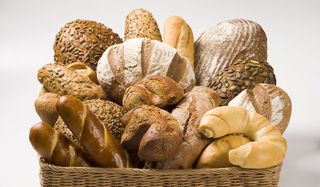
    bread-wheat-gluten-100927-02(Image credit: Viktorfischer | Dreamstime) 

“In 2007, Chinese authorities pulled a batch of imported snack chips from store shelves because they believed the chips contained potassium bromate, a food additive banned in China. The chips' country of origin? The United States.

Potassium bromate is also illegal in the European Union, Canada, Brazil and elsewhere because it causes cancer in rats and mice. In the United States, however, it has remained legal since it was first patented for use in baking bread, in 1914.

Bread dough's beige and shapeless appearance belies the staggering complexity of the molecules that hold it together. Gluten — the wheat protein infamous for its indigestible components that some people have to avoid — is the glue that binds bread dough to itself. (Gluten-free bread relies on other thickening agents such as xanthan gum).

But in order for two gluten molecules to bind to each other, molecular bridges have to form between them.

Such bridges do not form spontaneously. Rather, they're the product of oxidation. Historically, bakers relied on oxygen in the air to form the molecular bridges in dough — they "aged" flour after milling it by exposing it to open air for weeks, and then slowly mixed the flour in dough, all the while allowing ambient oxygen to do the hard work of bridge building.

But potassium bromate is a powerful oxidizing agent that chemically ages flour much faster than open air. Potassium bromate bleaches dough, and enhances its elasticity by strengthening its network of molecular bridges, which makes for the formation of tiny, thin-walled bubbles as the bread rises. The end product is fluffy, soft and unnaturally white.

Ideally, that end product is also entirely devoid of potassium bromate, which changes to potassium bromide, a harmless byproduct, during baking.

In 1982, researchers in Japan published the first of a series of studies showing that potassium bromate causes cancer in the thyroids, kidneys and other body parts of rats and mice.

As a result of these findings, countries around the world banned the additive, but the U.S. Food and Drug Administration held back, in part because the amount of potassium bromate that remains in bread after baking should be negligible: less than 20 parts per billion (ppb).

According to information published by baking industry trade groups, it is "well within the normal production control measures in any modern bakery to ensure that bromate residues are well below 20 ppb."

However, whenever bromated flour isn't baked for long enough or at a high enough temperature, or if too much potassium bromate is added in the first place, this harmful additive can potentially be found in the final product in far greater quantities.

Today, many small and commercial bakeries voluntarily avoid using bromated flour. However, it's still found in many fast food buns and some flours, among other products.

To avoid this additive, check ingredients lists for "potassium bromate" and "bromated flour." Shoppers in California will have an easier time steering clear of potassium bromate: since 1991, California law has required products containing this additive to bear a warning on their labels.

Pass it on: Potassium bromate is an unnecessary and potentially harmful food additive, and should be avoided.” 

From: https://www.livescience.com/36206-truth-potassium-bromate-food-additive.html

_________

Sunday, February 19, 2023

What Is Mardi Gras? Should Christians Celebrate It? The Best Diet for Cancer Patients.

.

Mardi Gras: Should It Be on the Christian Calendar?

“Mardi Gras is marked by wild parades and raucous parties in places like New Orleans and Rio de Janeiro. So in what way is it connected to Christianity?

Mardi Gras-Should It Be on the Christian CalendarHow much do you know about all the various holidays and celebrations throughout the year?

If you study into them, you’ll find a lot of them have religious roots in the ancient pagan world and several more have a circuitous connection to paganism.

What about Mardi Gras?

Mardi Gras is considered to be the culmination of a festive season leading up to Lent (another custom not taught in the Bible but recognized by even more churches). Mardi Gras is purposely designed to commemorate frivolity, carousing and sin, but is considered in many quarters to be part of the Christian calendar.

History of Mardi Gras and its pagan roots

Most historians believe Mardi Gras was brought to the Americas by the French explorer Pierre Le Moyne d’Iberville in 1699, but the origins of Mardi Gras go back much farther. According to History.com, the day was celebrated in some fashion from ancient times:

“According to historians, Mardi Gras dates back thousands of years to pagan celebrations of spring and fertility, including the raucous Roman festivals of Saturnalia and Lupercalia. When Christianity arrived in Rome, religious leaders decided to incorporate these popular local traditions into the new faith, an easier task than abolishing them altogether. As a result, the excess and debauchery of the Mardi Gras season became a prelude to Lent, the 40 days of penance between Ash Wednesday and Easter Sunday.”  Continued at: https://lifehopeandtruth.com/life/plan-of-salvation/holy-days-vs-holidays/mardi-gras/

_______

What Is Mardi Gras? Should Christians Celebrate Mardi Gras (Shrove Tuesday)?

New Orleans during Mardi Gras.busito69/iStock/Thinkstock

“Mardi Gras literally means "Fat Tuesday" in French (called Pancake Tuesday in England) and is associated with the Roman Catholic custom of Lent. But is it taught in the Bible? Would God want Christians to celebrate it?

In places like New Orleans, the period of merrymaking with fancy balls and parades goes on for weeks leading up to Mardi Gras (Fat Tuesday).

The idea behind Mardi Gras or carnival celebrations is that people overindulge before giving up something for Lent, which begins the following day with Ash Wednesday. (Lent is the 40 weekdays from Ash Wednesday to Easter observed by the Roman Catholic, Eastern and some Protestant churches as a period of penitence and fasting.)

The idea of partying before repenting seems to be to get as much revelry and additional sin out of the way before you decide to do anything about it. But that attitude doesn't show a belief that God's way is really right and that sin is really wrong.

Note the following encyclopedia article excerpt:

"Some scholars have noted similarities between modern Mardi Gras celebrations and Lupercalia, a fertility festival held each February in ancient Rome. However, modern Carnival traditions developed in Europe during the Middle Ages (5th century to the 15th century) as part of the ritual calendar of the Roman Catholic Church.

"Today pre-Lenten Carnivals are celebrated predominantly in Roman Catholic communities in Europe and the Americas. Cities famous for their celebrations include Nice, France; Cologne, Germany; and Rio de Janeiro, Brazil. New Orleans, Louisiana, holds the most famous Mardi Gras celebration in the United States. Residents of New Orleans have been celebrating Mardi Gras since the 18th century" ("Mardi Gras," Encarta).

Mardi Gras "is a lively, colorful [not to mention bawdy and debased] celebration held on Shrove Tuesday, the day before Lent begins," says the World Book Encyclopedia. It "goes back to an ancient Roman custom of merrymaking before a period of fast. "In places like New Orleans, the period of merrymaking with fancy balls and parades goes on for weeks leading up to Fat Tuesday itself.

It has been suggested by some scholars that the pagan practice of "weeping for Tammuz" that Ezekiel decried (Ezekiel 8:14) was the actual origin of Lent. Tammuz was a pagan god associated with death and rebirth in nature and the husband of the goddess Ishtar (See the Bible commentary on Ezekiel 8 for details.)

The idea of partying before repenting seems to be to get as much revelry and additional sin out of the way before you decide to do anything about it. But that attitude doesn't show a belief that God's way is really right and that sin is really wrong, harmful and something to be avoided because it wars against us (1 Peter 2:11) and is contrary to God's instruction (Romans 13:13-14). It doesn't show the 100 percent commitment that God wants (Romans 12:1-2).

God says we should always live holy lives and obey His laws because they are good for us (Deuteronomy 10:12-13). Satan is the one who wants us to think that doing wrong things is fun, and his deception has been quite successful (Revelation 12:9; 1 John 2:16).

Neither Mardi Gras nor Lent are commanded in the Bible but come from pre-Christian, pagan customs. What does God think about such pagan customs?

"When the Lord your God cuts off from before you the nations which you go to dispossess…do not inquire after their gods, saying, 'How did these nations serve their gods? I also will do likewise.' You shall not worship the Lord your God in that way; for every abomination to the Lord which He hates they have done to their gods... Whatever I command you, be careful to observe it; you shall not add to it nor take away from it" (Deuteronomy 12:29-32).

The New Testament continues this theme. The apostle Paul addressed the issue of whether outside religious customs and practices had any place among Christians:

"What fellowship has righteousness with lawlessness? And what communion has light with darkness? And what accord has Christ with Belial? Or what part has a believer with an unbeliever? And what agreement has the temple of God with idols? For you are the temple of the living God. As God has said: 'I will dwell in them and walk among them. I will be their God, and they shall be My people.'

"Therefore 'Come out from among them and be separate, says the Lord. Do not touch what is unclean, and I will receive you. I will be a Father to you, and you shall be My sons and daughters, says the Lord Almighty.' Therefore, having these promises, beloved, let us cleanse ourselves from all filthiness of the flesh and spirit, perfecting holiness in the fear of God" (2 Corinthians 6:14–18; 2 Corinthians 7:1).

Instead of renaming some of the pagan customs as Christian or allowing the new converts to retain some of their former practices, Paul commanded them to leave behind all of these forms of worship.

Mardi Gras celebrations have nothing to do with God's commanded Holy Days. On the contrary, they are part of the system from which God's people should separate themselves.” From: https://www.ucg.org/bible-study-tools/bible-questions-and-answers/what-is-mardi-gras-should-christians-celebrate-mardi-gras-shrove-tuesday

For more information, please read our booklet "Holidays or Holy Days: Does It Matter Which Days We Observe?"

________

The Best Diet for Cancer Patients,  What diet should oncologists recommend?

Transcript of video at: https://nutritionfacts.org/video/the-best-diet-for-cancer-patients/?

Below is an approximation of this video’s audio content. To see any graphs, charts, graphics, images, and quotes to which Dr. Greger may be referring, watch the above video.

“Our lifetime risk of developing an invasive cancer, not some superficial skin cancer or ductal carcinoma of the breast, but serious cancer, is about 40 percent. Two in five of us are going to get a cancer diagnosis in our lifetimes. What can we do to reduce our risk? Only about 5 percent of cancers are caused by problem genes we inherited from our parents. The other 95 percent are caused by mutations in our DNA we acquire in our lifetimes. For example, based on a genetic analysis of lung cancer, smokers may acquire an average of one DNA mutation for every 15 cigarettes smoked. Smoking is bad, but the number one cause of these mutations is our diet––and that’s not even including the cancers attributed to obesity.

I’ve got tons of videos on dietary approaches to prevent cancer. But what if you already have it? Well-meaning professionals sometimes counsel cancer patients to “Eat whatever you want.” Given the time constraints that doctors face, it may be understandable that the treating oncologist––the treating cancer doctor––may be reluctant to engage in a conversation about nutrition. But given the critical role that diet may play, perhaps it should be “a critical part of [their] job to be able to answer patients’ questions about nutrition before and after cancer treatment and not default to the unhelpful ‘it doesn’t really matter, eat what you want’ which may not be in the best interest of the patient.”

The official recommendation of the American Institute for Cancer Research, a leading authority on diet and cancer, is that those with cancer should follow the same diet that helps prevent cancer from taking root in the first place. That means more whole grains, vegetables, fruits, and beans, while limiting fast food, processed food, meat, soda, and alcohol. Similar recommendations have been put forth by other cancer authorities: more fruit, vegetables, whole grains, and beans, and less salt, sugar, meat, and alcohol.

Cancer survivors adhering to these guidelines do seem to live significantly longer––or at least older female cancer survivors, the only group in which it’s been looked at so far.

They add that that are certain foods that may be beneficial in cancer care including: beans, berries, cruciferous vegetables, flax seed, garlic, green tea, tomatoes, and others, but emphasize it’s not about a single magic bullet food or component, but the combination of foods in a predominantly plant-based diet.

Here’s how some popular diets used by cancer patients stack up. The so-called alkaline diet gets high marks for being vegetable-focused, and encouraging people to cut down on animal foods. The keto diet does the worst, though they get points for keeping people away from refined grains, alcohol, and soft drinks. Macrobiotic diets win the day, being closest to a whole food, plant-based diet, centered around whole grains, vegetables, and beans, though may not be advising enough fruit. Paleo diets are a mixed bag, with insufficient whole grains, beans, and too much meat. The vegan diet starts out strong, but doesn’t necessarily preclude all manner of vegan junk food. Have any of these diets been put to the test?

I’ve done a video Is Keto an Effective Cancer-Fighting Diet? on the abject failure of the keto diet. The alkaline diet was tried on eleven lung cancer patients. They lived an average of 28 and a half months, which is about 40 percent longer than most patients have historically lived, but there was no direct control group. The only diet proven in a randomized controlled trial to reverse the progression of cancer was Dr. Dean Ornish’s whole food plant-based lifestyle program, which I’ve covered before in my video How Not to Die from Cancer.

Most randomized controlled trials to date on diet and cancer are like this: feasibility studies just to see if we can even get cancer patients to eat healthier, period. Otherwise, what’s the point of even running the study? In one study, researchers did find they could get patients with head and neck cancer to ramp up green leafy and cruciferous vegetable intake to nine cups a week. So, it’s at least something you could test. But we don’t yet have outcome data. But why wait? What’s the downside of trying to eat healthier? It may even save your life another way.

Cardiovascular disease competes with breast cancer as the leading cause of death for older women diagnosed with breast cancer. Researchers followed more than 60,000 women diagnosed with breast cancer over the age of 65 for an average of nine years, by which time half had died. And the number one cause of death was actually cardiovascular disease, edging out the breast cancer. And so, choosing a healthy diet centered around whole plant foods––the only diet ever proven to reverse heart disease in the majority of patients––may save your life, whether you have cancer or not.”  From: https://nutritionfacts.org/video/the-best-diet-for-cancer-patients/?

_______

Sunday, August 21, 2022

How to Gain Control of Your Life When You Feel Helpless. Praying in Jesus’ Name. Avoiding Epilepsy Through Diet.

.

How to Gain Control of Your Life When You Feel Helpless

How to Gain Control of Your Life When You Feel Helpless“Overwhelming feelings of helplessness can have devastating results in our lives. How can we take back control when we feel like everything is out of our hands?

Debilitated by anxiety. Crushed by depression. Enslaved by addiction.

These three things have wreaked great havoc on human beings around the world.

As doctors, scientists and mental health professionals try to identify the causes of these situations that so many find themselves in, a striking theme arises often: helplessness.

In his book Breaking Addiction: A 7-Step Handbook for Ending Any Addiction, Dr. Lance Dodes explains the powerful effect the feeling of helplessness can have on human beings and how it is one of the primary drivers of addiction. This is shown throughout the book through several case studies.

One of the book’s constant themes is that unhealthy, addictive behaviors are often ways people try to take back control of their lives when they feel totally helpless.  

An important takeaway is that when people experience helplessness, it is essential that they try to regain control of their life in a healthy, constructive manner. If not, they will often try to regain a feeling of control through unhealthy behavior.

The same general principle can also apply to anxiety and depression. Anxiety and depression can lock us into unhealthy “shutdown” reactions. The reality is, these reactions never lift the feeling of helplessness. Instead, they often add to the problem and make it worse (Proverbs 12:25). 

For more insight into unhealthy behaviors that can arise when we feel helpless, read our blog post “6 Steps to Overcoming Bad Habits.”   What makes us feel helpless?

What sparks these feelings of helplessness?

Is it that extra work laid on our desks when we are already swamped? Is it that crying baby that wakes us up several times during the night? Is it that feeling that no one listens to us or cares what we think?

Is it the nightmare year 2020 that brought crisis after crisis, all of which were completely out of our control, yet directly affected our daily lives (restrictions, job loss, canceled plans, etc.)?

Whatever it is that makes us feel helpless, too often we retreat into the throes of addiction, depression and anxiety to cope. We must remember we have an adversary, Satan, who wants us to resort to these behaviors. He often uses feelings, such as feeling out of control, to lead people down the path of destructive behavior. To learn more about Satan and his destructive influence, read “Satan: A Profile.”

But there are alternative ways to deal with feelings of helplessness. Let’s look at two healthy ways we can take back control of our lives when we feel helpless.

1. We can strive to do small, healthy actions throughout the day.

When we start to feel helpless, we can try to take small steps to actively take back control of our lives. Here are some small things we can do every day:

  • Choose to pray and study the Bible every day. Try not to let the happenings of life get in the way of these priorities.
  • Choose to reframe circumstances and feelings thrust upon you in a positive light. Choose to be actively in control of your health every day. Try to be physically active and mindfully select what you eat at every meal. Remember that your body is the temple of God’s Holy Spirit, so maintain control of your health (1 Corinthians 6:19).
  • Choose to reframe circumstances and feelings thrust upon you in a positive light. When challenges arise, view them as growth opportunities.
  • Choose to put things that are out of your control into the hands of God. We can do this by regularly praying, “Your will be done” (Matthew 6:10).

2. We can take immediate action when we start experiencing feelings of helplessness.

No matter how well we do at keeping our life under control, there will be times when we’ll feel like we’re losing control. Rather than letting those feelings fester and grow into unhealthy actions later, we can actively take steps to take back control.

Here are some things we can immediately do when those feelings arise:

Pray immediately and take the situation to the God who has ultimate control (Jeremiah 32:27). Instead of harboring anxiety, use it as an impetus to go to God in focused prayer. Prayer is actually one of several pieces of spiritual armor God has given us to deal with challenges like this. Read our article “How to Put on the Armor of God” to learn more about these spiritual tools

Before responding to whatever situation has arisen, take a short break to fully process the situation. Sometimes our knee-jerk reaction can make things worse and cause the situation to get even further outside our control. This could simply involve taking a five-minute walk to collect your thoughts and get control of your feelings. Some people may find journaling helpful.

When something is too much to bear and you need extra support, talk to a trusted friend, mentor or counselor.

The point is this: In order to avoid or fight feelings of helplessness, we have to find things we can proactively do to maintain a sense of control over our lives. This is very important, because if we don’t do something, we can quickly begin to go down a destructive personal path and feel even more helpless. We should also remember that Satan will often try to exploit these feelings and use them to our detriment.”  

Scriptures to read when you feel helpless:

When we feel helpless, one of the first places we can go for help is God’s Word. Here are some scriptures to read and meditate on when you start to develop feelings of helplessness:

  • Job 42:2: “I know that You can do everything, and that no purpose of Yours can be withheld from You.”
  • Psalm 27:14: “Wait on the LORD; be of good courage, and He shall strengthen your heart; wait, I say, on the LORD!”
  • Psalm 56:3: “Whenever I am afraid, I will trust in You.”
  • Psalm 138:7: “Though I walk in the midst of trouble, You will revive me; You will stretch out Your hand against the wrath of my enemies, and Your right hand will save me.”
  • Isaiah 41:10: “Fear not, for I am with you; be not dismayed, for I am your God. I will strengthen you, yes, I will help you, I will uphold you with My righteous right hand.”
  • Romans 8:28: “And we know that all things work together for good to those who love God, to those who are the called according to His purpose.”
  • 1 Corinthians 10:13: “No temptation has overtaken you except such as is common to man; but God is faithful, who will not allow you to be tempted beyond what you are able, but with the temptation will also make the way of escape, that you may be able to bear it.”
  • Philippians 4:6: “Be anxious for nothing, but in everything by prayer and supplication, with thanksgiving, let your requests be made known to God.”
  • 1 Peter 5:7: “Casting all your care upon Him, for He cares for you.”

You can find more helpful scriptures on our “Encouraging Bible Verses” pages.

“Doing something positive is much better than doing nothing    If we often experience feelings of helplessness, we must take steps to take back control. Doing something healthy to regain control will help us avoid allowing unhealthy behaviors to arise in our lives.”

From: https://lifehopeandtruth.com/life/blog/how-to-gain-control-of-your-life-when-you-feel-helpless/

________

Praying in Jesus’ Name

John 14:13-14

“And whatever you ask in My name, that I will do, that the Father may be glorified in the Son. If you ask anything in My name, I will do it.”

“Jesus Christ was willing to entrust His disciples—those who have committed their lives to following and obeying Him—with His name. They could pray to the Father “in Jesus’ name”—and what greater privilege could there be than to approach the Father with the blessing of His beloved Son! It’s like being given His official seal or a blank check with Jesus’ signature on it.

And not only can we ask the Father in Jesus’ name, but Jesus Himself said He would do it!

Of course, a disciple of Jesus Christ will be striving to only ask according to God’s will—according to what is truly best for us and others. We won’t ask selfishly or from sinful motives. As Jesus continues in verse 15: “If you love Me, keep My commandments.” God’s commandments reflect God’s love, providing a foundation for praying according to His will.

For more about properly using Jesus’ name, see “Third Commandment: You Shall Not Take God’s Name in Vain.”  From: https://lifehopeandtruth.com/bible/blog/praying-in-jesus-name/?

______

Avoiding Epilepsy Through Diet

Avoiding pork tapeworm parasites (cysticercosis) is not as easy as just avoiding pork.

Transcript ofhttps://youtu.be/wMMV9aJMzUU

Below is an approximation of this video’s audio content. To see any graphs, charts, graphics, images, and quotes to which Dr. Greger may be referring, watch the above video.

“Another review last year confirmed that pork tapeworms taking residence inside our brains “is a significant public health issue within the United States.” At first, though, clinical diagnosis can be challenging. Initial presentations of the disease are often vague complaints like headaches, weakness, dizziness, high blood pressure.

In terms of treatment, in a series of more than a hundred cases published this year, although antiparasitic deworming drugs were found to be effective, about 10% of victims require brain surgery—what’s called an open craniotomy, where you have to go in and basically just dig ‘em out.

They can get into our muscles, too. This is an X-ray of someone’s leg, and you can see how infested the muscle is. And that’s why we can get it from pork—because it gets into muscles.

But what if you don’t eat pig muscles? Well, to all the smug non-pork-eaters out there, if we can find pork tapeworms in the brains of Orthodox Jews in Brooklyn, we can find pork tapeworms in anyone.

They weren’t sneaking off for schnitzel. It was their pork-eating domestic houseworkers preparing their food. When 1,700 members of the local synagogue were tested, 1% tested positive. The researchers suggested that those “to be employed as domestic workers or food handlers should be screened for tapeworm infection via examination of three stool samples for [tapeworm] eggs.”

So to avoid the #1 cause of adult-onset epilepsy, we may want to not eat pork, and not eat anything made by anyone who eats pork."  From: https://nutritionfacts.org/video/avoiding-epilepsy-through-diet/ 

Also see: Leviticus Chapter 11.

_______

Sunday, May 15, 2022

How to Parent a Teenager. You Can’t Give Too Much Love! Fighting the Ten Hallmarks of Cancer with Food.

.

How to Parent a Teenager

How to Parent a TeenagerThe years in which a young person transitions from childhood to adulthood can be challenging. How should we deal with our children during the teen years?

Teenagers.

Just mentioning the word can cause anxiety for some people. Perhaps it’s because of memories of their own trip through the teen years, or perhaps it reflects experiences with their own children during that stage.

For many, those years of not being a child—but not quite being an adult either—are years of uncertainty, insecurity, learning, pushing boundaries and sometimes outright rebellion.

While adolescence has probably always been a challenging transitional time, it was faced very differently in the past. As the world has changed, the teenage experience has changed.

A better understanding of what those changes are can help us and our children better navigate this developmentally important time.

Adolescents in centuries past

Throughout much of history, adolescents were workers. In fact, children as young as 7 years old were often brought into the workforce. In both towns and farms, children worked beside their parents, doing what was necessary to support the family. As the age of industrialization spread in the 18th and 19th centuries, children began working long hours in factories.

As the standard of living rose in the developed world, educational opportunities began to change. Families were able to survive without their children’s financial contributions, so adolescents often stayed in school longer. Young people could now spend leisure time with peers, and this growing sense of freedom affected the way average teens viewed themselves and the world.

And this brought profound changes to the family.

Evolution of the teenager

It may come as a surprise to some, but prior to World War II, the term teenager was rarely used. In fact, many trace the view of adolescence as a distinct developmental stage to this time period. This newly defined stage of life, combined with a greater level of family income, resulted in other societal changes.

One of those changes in the U.S. and much of the Western world was the availability of the automobile, which provided a degree of freedom and autonomy previously unheard of. Beginning in the 1950s, teenagers suddenly became trendsetters in music, fashion, film and dance.

It became the norm for teenagers to focus on experimentation rather than labor. Teens of the 1960s and 1970s were known for rebellious attitudes and a proclivity for risky behavior that included illegal drugs, abuse of alcohol and a high rate of sexual activity. Parents faced new challenges in helping their teenage children navigate the world and avoid destructive decisions.

But over the last 20 years, the behavior of the average teenager has changed. Recent studies by psychologists like Jean Twenge, professor of psychology at San Diego State University, have revealed profound changes in teenage behavior.

Parents, grandparents and guardians need to be certain they are modeling the kind of behavior they want to see from their teens! According to Dr. Twenge’s research, when compared with teenagers from past decades, 17- and 18-year-olds today are slightly less likely to have tried alcohol and drugs or to have had sex. They are also waiting longer to get a driver’s license or move out of their parents’ homes. On average, they are waiting longer to get married and to have children as well.

Commenting on these findings, the BBC article “Why Teenagers Aren’t What They Used to Be” states, “By many measures, adolescence now continues until around the age of 24 to 25” (Feb. 1, 2022).

What does the modern teen face?

According to studies, the rates of sexual activity and drug and alcohol use among teens have declined since the early 2000s. Smoking has declined by nearly 70 percent among teens. Of course, all of this is good news for teen and parents!

But does this mean modern teens are choosing to refrain from all risky behaviors? Not necessarily.

A slew of studies in recent years reveal teen behaviors have changed, but not always for the better. The reality is that today’s teens have the ability to be involved in activities that didn’t exist for previous generations. The digital age has dramatically changed the fabric of adolescence and is forcing parents to worry about new challenges.

While smoking has declined across all age groups, we can’t ignore the alternative that has appeared: the e-cigarette (commonly known as vaping). Between 2011 and 2019 the use of e-cigarettes among teens rose by 1,800 percent!

With the dramatic rise in vaping, the medical community is now reporting a similar rise in lung problems, heart disease, gum inflammation, and negative impacts on brain development directly tied to use of e-cigarettes.  

The more we learn, the clearer it is that e-cigarettes are not a healthy alternative to smoking.

The impact of smartphones on teens

According to an August 2019 Pew Research Center report, 95 percent of U.S. teenagers have access to a smartphone. These mobile electronic devices have single-handedly revolutionized teenage life. Social media platforms like Facebook, YouTube, Instagram, Twitter, Tumblr and Snapchat—which didn’t exist a generation or two ago—now dominate the life and time of today’s teens.

The cell phone is so embedded in teenage life that an earlier (2018) Pew Research survey found 45 percent of teens say they’re online on a near constant basis!  A 2018 Common Sense Media survey found that 60 percent of teens said they would rather socialize with friends online instead of face to face.

The artificial world of social media has created a heightened obsession with beauty and glamour that the average teen feels unable to attain. This has been linked to increased feelings of discouragement and depression among teens. As a result, a Science Daily study connected the unrealistic images of life shown on social media with a rise in suicides among teenage girls.

Smartphones have also contributed to automobile accidents. Studies show that a texting driver is 20 times more likely to have an accident, and yet 35 percent of teen drivers report responding to text messages when they are behind the wheel!

Access to smartphones has also increased access to pornography. It’s not an overstatement to declare pornography one of the greatest pandemics of our time. The U.S. Department of Justice recently stated: “Never before in the history of telecommunications media in the United States has so much indecent (and obscene) material been so easily accessible by so many minors in so many American homes with so few restrictions.”

Other studies reveal that 93 percent of our sons and 62 percent of our daughters have been exposed to online pornography before the age of 18, with more than half of boys and nearly a third of girls having their first exposure before they’re 13. Over a third of teenage boys reported viewing pornographic videos “too many times to count.”

This issue recently came to the forefront when musician Billie Eilish acknowledged she had viewed explicit content starting at 11 years old and had been negatively affected by it. She described her brain being “destroyed” and suffering nightmares because of it.

Considering that the digital world is only expanding, and creating new challenges as it does so, it’s worth noting that it’s never been more important for parents and teens to be grounded in the eternal standards of God.Another new challenge associated with this is the rise of sexting, or “self porn.” Different studies show different statistics about teens who have sent nude images of themselves by text, email or app, but all of the estimates are alarming. Laws against child pornography seem to have a limited impact.

These are just some of the many challenges that teens face today.

How can a parent respond?

The world of a typical teenager suddenly seems far more complicated than in previous generations. So where does that leave parents and teens who desire to live a godly life? There are several important points for us to keep in mind.

1.  God’s standards don’t change. Parents must keep in mind that no matter where societal trends might go, the solid truth of the Bible never changes! God told the prophet Malachi, “For I am the LORD, I do not change” (Malachi 3:6). And the book of Hebrews declares, “Jesus Christ is the same yesterday, today, and forever” (Hebrews 13:8).

What was sin in the past is still sin today. Our responsibility is to understand the principles our Creator gives us in Scripture and understand how to apply them to modern challenges. Though none of the challenges cited in this article are directly mentioned in the Bible, the core principles of moral purity that they break have always been there.

Considering that the digital world is only expanding, and creating new challenges as it does so, it’s worth noting that it’s never been more important for parents and teens to be grounded in the eternal standards of God.

2.  Stay connected with your children. God instructed Moses to tell the Israelites to teach their children about God’s ways “when you sit in your house, when you walk by the way, when you lie down, and when you rise up” (Deuteronomy 6:7). This instruction must be a constant part of our relationship with our children. Proverbs 22:6 instructs parents to “train up a child in the way he should go, and when he is old he will not depart from it.” 

But when our own lives are flooded with so much to do that we can hardly find time to stop and catch our breath, how can we possibly keep up with what our children are doing? School and a wide range of social activities are only a few of the items on their plate. Is it possible for parents to keep up with all of that?

The number one key is open communication. 

It’s critical to be involved and informed about their lives, their friends, and where and what they do. Although our relationship with our children evolves over time, we must never forget we are first and foremost parents who have their best interests at heart.

If we want to provide counsel and guidance, we must know what they’re facing.

3. Set appropriate boundaries. Teenagers are almost adults, but not quite. So, they will continue to require rules and the motivation to follow them. You will naturally adjust your rules depending on the age and maturity of your teen, but it is essential to establish limits and curfews for them. There are also a wide variety of parental control apps for computers, tablets and smartphones. It would be wise to do research and eventually invest in a program that will set proper boundaries for your teen.

4. Pray for discernment and wisdom. James wrote, “If any of you lacks wisdom, let him ask of God, who gives to all liberally and without reproach, and it will be given to him” (James 1:5). Parents of teens know how much they need wisdom to properly guide and teach their children!

5. Set the right example. In addition to taking the important steps listed above, parents, grandparents and guardians need to be certain they are modeling the kind of behavior they want to see from their teens! We should ask ourselves if we are being honest, if we are trustworthy, if we are living by the moral standards we want our teens to hold. “Do as I say, not as I do” doesn’t work with child-rearing, and it most certainly will not work with teenagers!

The teen years are something everyone must go through. The way society has viewed these years has changed over the centuries, and the influences teens face today are different from those past generations faced. But these years need not be so dreadful for teens and parents.

We all need to focus on the never-changing truths of God to form the foundation for our values and behaviors. There will be challenges, detours and difficult times, but parents can use the Bible as their guide to help their children navigate through their teenage years.”

From: https://lifehopeandtruth.com/relationships/parenting/how-to-parent-a-teenager/?

________

You Can’t Give Too Much Love!

You Can’t Give Too Much Love!“At one time or another most parents will hear warnings of “don’t spoil your child!” It’s helpful to know the real cause of spoiling—and it isn’t love!

Sometimes relatives or acquaintances express concern that parents are giving too much to their child. The feared result is a child who is demanding, pampered and self-centered and expects everyone to cater to his or her whims.

Spoiling happens!

We parents take such admonishments seriously. We’ve all seen spoiled kids, and we know they’re no fun to be around! As well, we realize that, for all they might rake in, spoiled children do not have happy lives.

Many followed the sad (and outrageous) case of Ethan Couch and his “affluenza” defense—that his family’s wealth was responsible for his poor choices that caused the deaths of four people when he drove drunk in 2013 at the age of 16. Couch was sentenced to 10 years of probation and mandatory treatment, which he violated in 2015.

Another case in point: Steven Miner II and his sister Kathryn Miner were raised in a $1.5 million home in a wealthy Chicago suburb. But it seems they didn’t feel they were treated well enough.

In 2009, when Steven was 21 and Kathryn was 18, they filed a lawsuit against their mother for the “emotional distress” they suffered as children from her alleged abuses, such as “failing to take her daughter to a car show, telling her then-7-year-old son to buckle his seat belt or she would contact police, ‘haggling’ over the amount to spend on party dresses and calling her daughter at midnight to ask that she return home from celebrating homecoming.”

A third example would be the sons of Eli, Israel’s high priest before the nation had its first human king. Reading the description of them in 1 Samuel 2, one can’t help but imagine that they were used to getting everything they asked for.

Eli’s timid rebuke had no effect on them at all (verses 23-25), and ultimately God gave this evaluation of Eli’s parenting: “You honor your sons more than Me” (verse 29).

Overindulged

So, yes, we parents should take care not to spoil our children. But what is spoiling caused by? Is it caused by too much time, attention or love?

Is it even possible for us parents to give our children too much time, attention or love?

Child development professionals have concluded that spoiling does come from overindulging, but it is overindulging in permissiveness, low standards and lack of restraint.  Child development professionals have concluded that spoiling does come from overindulging, but it is overindulging in permissiveness, low standards and lack of restraint. It comes from parents giving children material things and privileges as a substitute for their time, attention and love.

As Laurence Steinberg Ph.D., author of The Ten Basic Principles of Good Parenting, writes, “I can think of plenty of children who have suffered because their parents were too busy, too selfish, or too preoccupied to attend to their needs. But I’ve never met a child who was worse off because his parents loved him too much. It is simply not possible to spoil a child with love” (2004, p. 27).

Madeline Levine Ph.D., a clinical psychologist who works with teens in prosperous Marin County, California, has written a book outlining the danger affluence poses to families. Titled The Price of Privilege, the book’s subtitle says a lot: “How Parental Pressure and Material Advantage Are Creating a Generation of Disconnected and Unhappy Kids.”

Levine writes, “Study after study shows that teens want more, not less, time with their parents, yet parents regularly overestimate the amount of time they spend with their teenagers. … Nor a son grieve for gifts not received—except, perhaps, the gift of time and love.”

Let your children know every day that you love them, that they are special to you and that you appreciate them. There’s no danger of spoiling them with love.”  From: https://lifehopeandtruth.com/relationships/parenting/you-cant-give-too-much-love/?

For more foundational principles about parenting, see “Helping Our Children Grow” and “Raising Children: The Early Years.”

_______

From me:  As I was deserted at age 4, I never knew what it was like to be loved by parents and I was sent from place to place until I got out on my own at age 15.  So unfortunately, I didn’t know how to show my children that I loved them.  I figured surely they knew that because I was working so hard trying to support them.  Love is something that should not be quiet, it needs to be told out loud!!   Thank the Lord for your parents and tell them you love them.

_______

Fighting the Ten Hallmarks of Cancer with Food

“The foundation of cancer prevention is plants, not pills

Transcript of YouTube: https://youtu.be/HcAN8BjPjuE

Below is an approximation of this video’s audio content. To see any graphs, charts, graphics, images, and quotes to which Dr. Greger may be referring, watch the above video.

“The vast majority of cancer research is devoted to finding cures, rather than finding new ways to prevent disease.” And the results of these skewed priorities are plain to see: 2021 is the 50th anniversary of Nixon’s declaration of war on cancer, and the death tolls from the most common forms of cancer in the United States have continued unabated.

“We have been looking at the very nature of cancer in the wrong way.” Breast cancer doesn’t begin when a lump is first detected. All the common cancers like lung, colorectal, breast, and prostate (which account for the majority of deaths) have a long latency period—often 20 years or more. So, it’s not like you were healthy, and then one day you got cancer. You haven’t been healthy—you’ve had cancer growing in you for decades. Indeed, there’s a bizarre misperception that people are “healthy” until they have actual symptoms of invasive cancer. But “[t]he barn in which hay is smoldering before it bursts into flames is not a safe place.”

So, what does this professor of pharmacology recommend? Drugs, of course—chemoprevention: putting people on drugs to prevent cancer. Hey, the pharmaceutical industry spends huge amounts of money to promote chemoprevention of heart disease and strokes with statins and blood thinners. So, why shouldn’t people take drugs every day for the rest of their lives to protect against cancer? There has to be a better way.

What about using diet and nutrition to prevent and treat cancer? Okay, but what kind of cancer? There are more than 200 types of cancer. Ah, but they all share the same hallmarks. In a series of papers cited more than 40,000 times in the biomedical literature, ten hallmarks of cancer have been identified.

Increased sensitivity to growth factors; evading your body’s tumor suppressors; dodging your immune system; being able to grow forever; tumor promoting inflammation; the ability to invade and spread and hook up its own blood supply; the accumulation of DNA mutations; disarming the self-destruct mechanisms in place; and hijacking the cell’s metabolism. And yes, of course, there are classes of drugs to try to counter each one—chemotherapy agents designed to target each piece of the cancer puzzle.

Now ideally, there would be drugs able to target multiple hallmarks at the same time, but that’s not how drugs tend to work. And this is one of the major reasons why, in the context of cancer research, there are so many proponents of investigating plant foods, as they can deliver a cocktail of bioactive compounds—bioactive compounds that may target most, if not all, of the hallmarks of cancer. Here’s a sampling of compounds found in fruits and vegetables such as berries, greens, and broccoli, shown to be able to target each of the ten hallmarks of cancer––at least in a petri dish.

Moreover, they fit the characteristics of an ideal chemopreventive agent. If you were to design the perfect candidate, you’d want them to be selective for cancerous or precancerous cells while leaving normal cells alone, be side effect-free, target most types of cancers, be able to be consumed as a part of a daily diet, be conveniently available almost everywhere, and be relatively inexpensive to boot. And plants have all of these. No wonder those eating more plant-based tend to have lower cancer rates.

However, it should be understood that we’re not talking about taking supplements containing extracts or purified phytochemicals, but rather eating whole plant foods themselves; more of a food-system based approach to targeting the hallmarks of cancer.

Foods contain many thousands of substances that lead to vast numbers of possible interactions, yet much of nutritional science has long been directed towards the impact of single dietary components. Yes, this kind of ‘reductionist’ approach can reveal the role of individual nutrients or foods in the development of disease, but let’s think about what the optimal research strategy would be to study the effects of bioactive natural plant compounds on disease prevention. Instead of using isolated phytochemicals in the management of cancer, how about using whole foods, because sometimes the whole can be greater than the sum of its parts, a concept known as food synergy.

Check out this study. The simultaneous inhibition of a series of cancer stages in breast cancer cells using a phytochemical super-cocktail. Two breast cancer cell lines were treated with six different plant compounds individually, and then altogether, at the level you might find in your bloodstream after eating foods like broccoli, grapes, soybeans, and turmeric. And while the compounds were ineffective individually, in combination they significantly suppressed breast cancer cell proliferation by more than 80 percent, inhibited cancer cell migration and invasion, stopped the cancer cells in their tracks, and eventually killed them all off. The plant compounds did all this without having any deleterious effects on the normal noncancerous cells used as control.

No wonder the foundation of cancer prevention, based on an update of the most extensive report on diet and cancer ever published is not pills, but plants. Cut down on alcohol, soda, meat, and processed junk, and center your diet around whole grains, vegetables, fruits, and beans.”   From: https://nutritionfacts.org/video/fighting-the-ten-hallmarks-of-cancer-with-food/?

______