Showing posts with label Ten Commandments. Show all posts

Wednesday, October 29, 2025

What Can We Learn From The Biblical Villains? What’s The Problem With Plastic? The Kindest Diet Is Also The Healthiest.

.

Biblical villains: What can we learn from them?

Biblical villains: What can we learn from them?'The Death of Jezebel' by Gustave Doré

“Eight of the Ten Commandments define God’s law by listing wrong actions and thinking we are to avoid. Lessons from the Bible’s villains can help us to learn how to apply God’s law. We can extract good lessons from bad examples.”

Rehoboam

“Rehoboam was the son of Solomon who initially ruled over the united kingdom of Israel in the north and Judah in the south (1 Kings 12). But when he came to power the northern 10 tribes of Israel were already restless and on the verge of seceding.

Rehoboam unwisely took the advice of his peers instead of listening to more experienced older advisors. He raised taxes, and the northern kingdom of Israel split away from the southern kingdom of Judah, resulting in the king losing far more income than all his taxes could have ever gained him. He chose poorly, and everyone suffered because of it.

The lesson to be learned from Rehoboam’s experience is to seek a multitude of counsel (Proverbs 11:14) when making important decisions, and to ask God for discernment.

Queen Jezebel

Queen Jezebel was the wife of King Ahab of the northern kingdom of Israel. She was the daughter of the king of the Phoenician city-state of Sidon and a priestess of the false god Baal (1 Kings 16:29-33), which gave her a great deal of power. She influenced Ahab to worship Baal, which often required human sacrifice, and fought against the true worship of God whenever she could, even calling for the assassination of the prophet Elijah (1 Kings 18:13; 19:2). She also schemed to have a wealthy vineyard owner murdered so that her husband could steal his land (1 Kings 21). Eventually Jezebel was thrown from a window and eaten by dogs after years of corrupting Israel and the king.

As a priestess of Baal, and trying over and over again to destroy the worship of the true God, she was attempting to hold on to and increase what she saw as her source of power. The lesson we can learn from this is not to trust in some other perceived source of power (false gods of our own making)—wealth, authority, weapons, position, etc.—in place of God. If we look to anything other than God for strength, it will ultimately fail.

Saul of Tarsus

There is also a biblical example of a man who was a villain, who then became a biblical hero teaching the truth of God for the rest of his life. His name was Saul of Tarsus, also known as the Apostle Paul. He was initially a fanatical pharisee who saw the teachings of Jesus as blasphemy and Christians as heretics. He had the authority to punish anyone he believed to be a heretic within the Jewish community, and would track them down and prosecute them to the fullest extent of the law—resulting in their imprisonment and sometimes death. He even took part in the death of Stephen “And the witnesses laid down their clothes at the feet of a young man named Saul” (Acts 7:58), while they threw rocks at Stephen until he was bludgeoned to death.

Saul continued to harass the Church and was on his way to the Jewish community in Damascus to arrest members of the faith and send them back to Jerusalem when God intervened and struck him down. Blind and helpless, Saul finally realized he was wrong and that it was futile to fight God. After his spiritual conversion, he went on to preach the truth with the same vigour with which he had previously fought against it (Acts 9). Saul the persecutor became Paul the faithful.

The lesson we can learn from the life of the Apostle Paul is that when God reveals to us we are wrong, we need to humbly respond and make the 180 degree turnaround to do what’s right.”

Beyond Today Bible Commentary (See I Kings chapters 12, 16 and 21 for more information about Rehoboam and Jezebel)

From: https://www.ucg.org/vertical-thought/bible-villains-learning-from-scriptures-bad-examples

_________

What is the problem with plastic?


“Globally, we produce a massive amount of plastic – over 380 million tons every year. It’s everywhere in our daily lives and we’ve become dependent on it. Half of all plastic produced is single-use – meaning it’s thrown away after just one use. Think bottles, bags, straws, cups, and lids. Used for just a few moments, but forever on the planet.

Virtually every piece of plastic that was ever made still exists in some shape or form (with the exception of the small amount that has been incinerated). We thought recycling was the answer but it’s not. Less than 9% of all plastic ever produced has been recycled!

What’s plastics impact?

When plastic enters the ocean, it impacts us all. It’s in the food and water we consume, it’s harming our animals and marine life, and of course, polluting our beautiful planet.

Once at sea, sunlight, wind, and wave action break down plastic waste into small particles, called microplastics. Microplastics have been found in every corner of the globe, from Mount Everest, the highest peak, to the Mariana Trench, the deepest trough. Plastic never fully biodegrades, it just breaks down into these small, toxic, pieces.

Because plastic is so prevalent, there are countless (overwhelming) statistics on its impact. Below are some key facts we feel are important to share – we encourage you to further research the plastic issue as the more aware we are of the problem, the more likely we are to become part of the solution!

Plastic By the Numbers

Millions of marine animals die each year from plastic waste alone.

Plastic pollutes at every step of its journey and it never disappears – breaking up into tiny pieces called microplastics.

Plastic is literally everywhere. It’s in our bloodstreams, the air we breathe, the food we eat, and the water we drink.

Today, more than 99% of plastic is made from fossil fuels.

Less than 9% of all plastic ever produced has been recycled.

What can you do?

Your individual actions, however small, make a difference.

Here are simple ways you can have an impact, starting today!

Say ‘No’ to Single-Use: By refusing to purchase single-use plastic you are showing the big corporations producing the plastic that you want change. Every purchase you make is a vote with your dollar.

Start Conversations: Talk with your friends, families, neighbors, and local businesses, about the plastic issue and how we all can be part of the solution.

Shop Sustainably: One of the biggest impacts you can have is to reduce the amount of plastic you use in your daily life. For almost every plastic product you use, there’s a plastic-free alternative. To help you get started, check out our sustainable products.

_________

The Kindest Diet Is Also The Healthiest.

May be an image of 1 person, steak and text that says 'THE KINDEST DIET IS ALSO THE HEALTHIEST ower cancer Vegetarians have 12% risk and vegans 24% lower cancer risk than meat-eaters, study finds 등 lenen บ้ั fana for mi e ន'

“THE TRUTH IS THAT THE FLESH, MILK & EGGS OF ANY SPECIES IS NOT THE NATURAL FOOD FOR HUMANS, & HARMS THE ANIMALS WE TAKE IT FROM

...and it harms those that still consume animal products, so many have proven this

...an analysis of 79,468 North American Seventh-day Adventists in the Adventist Health Study-2 found that vegetarians had a 12% lower risk of all cancers combined

...and vegans had a 24% lower risk compared to flesh and dairy eaters, showing that dairy is also harmful to our health...the study tracked participants for almost eight years, matching cancer cases to state and provincial registries.

...it found that reduced risk was strongest for colorectal, stomach and lymphoproliferative cancers, with vegan diets showing notable protection against breast cancer in younger women.

...and dairy is also harmful to the mothers we steal it from, as the female cows that are constantly forcibly impregnated die 14 years early because of the abuse of their reproductive powers...and they cry for their babies taken from them so their milk can be stolen, leaving them heart broken.

...those babies are put alone in crates and force fed GMOed replacement and if they are male they are killed within weeks for vile veal.

...while the females are forced to become dairy slaves within months, and abused like their mothers were.

...THERE IS NO REASON TO BE CRUEL & STEAL THE FLESH, EGGS & MILK OF OTHER BEINGS, A PLANT BASED DIET IS THE ONE THAT IS NATURAL FOR US -- Animal Freedom Fighter

The China Study puts the vegan numbers way higher. Check it out!”

_________

Sunday, June 29, 2025

Simon The Magician. A Great Blessing. God Cares About What We Eat.

.

Simon The Magician

Simon the Magician“Simon the Magician came from the Middle East, but his religious cult expanded over a wide area perverting the teachings of Jesus Christ. He is mentioned in the book of Acts and founded a counterfeit Christianity promoting false ideas and doctrines.

After Jesus' crucifixion, death and resurrection His followers spread the Gospel message. A disciple named Philip taught in Samaria, an area not far from Jerusalem, and many people began to respond to his message.

During his time in Samaria Philip came in contact with a pagan religious leader known as Simon the Magician, who is described in Acts 8:9-10: “But there was a certain man, called Simon, which beforetime in the same city used sorcery, and bewitched the people of Samaria, giving out that himself was some great one. To whom they all gave heed, from the least to the greatest, saying, "This man is the great power of God.”

Many of Simon's followers believed Philip's message about Jesus as the prophesied Messiah, and were baptized. Even Simon himself professed to be a Christian and he too was baptized (Acts 8:12-13). A short time later the Apostles Peter and John traveled to Samaria to teach the new converts and lay hands upon them so they would receive the Holy Spirit (Acts 8:17-19). When Simon saw the people were given God's Spirit, he offered the Apostles money to give him this power. (This is the origin of the English word ‘simony’, which refers to the selling and buying of religious offices.)

The biblical account doesn't say Simon wanted to give up his false teachings or even change his way of life. What he wanted was power (Acts 8:19). The Apostles knew this and called him a man of “...bitterness, and in the bond of iniquity” rejecting his request (Acts 8:23). After this, Simon Magus (magus means magician or sorcerer) disappears from the biblical account, but he continued to lead his religious cult, adding elements of the teachings of Jesus to his pagan-Jewish mixture, and becoming part of a movement to create a paganized Christianity.

Simon carried his message from city to city, just as Christ’s Apostles spread the true Gospel. He translated the doctrine of grace as license to disobey God’s law. The Encyclopaedia Britannica, 11th edition, Vol. 25, states, in its article titled “Simon Magus,” that he identified with the “Hellenized Gnosticism of Samaria.” The article referred to him as the “Samaritan Messiah” and the “father of all heresy.” The Samaritans had been placed in the land from which the northern kingdom of Israel had been taken captive by the Assyrians. These Samaritans had been brought from Babylon and continued to practice their ancient Babylonian religion, mixed with other religions.

The belief, at the heart of Simon's heresy, was he could receive power from God without changing his ways. The religious movement became known as gnosticism, and in the New Testament this false teaching is referred to as ‘lawlessness’.  Even today many believe the law of God was done away by the sacrifice of Jesus Christ. The Apostle Paul maintained this approach was already gathering momentum during his lifetime, "For the mystery of lawlessness is already at work..." (2 Thessalonians 2:7).

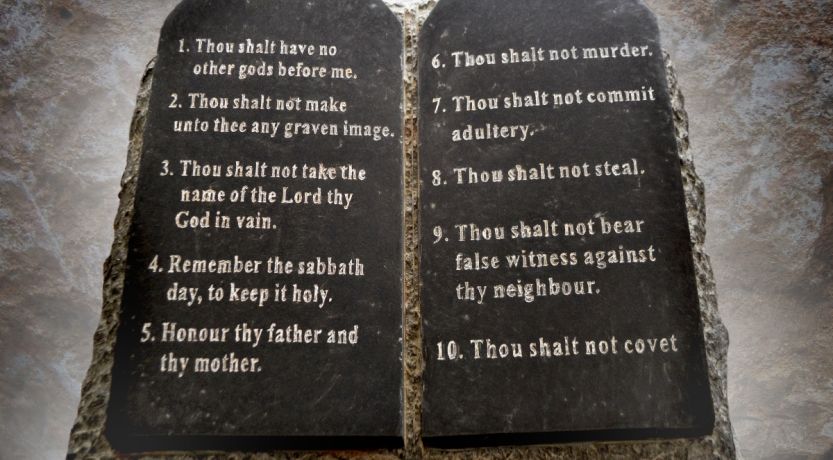
The Ten Commandments define the most basic behaviors of love. Do not steal. Do not lie. Do not murder. 1 John 5:3 very plainly tells us that love is keeping the commandments. In the Sermon on the Mount, Jesus expanded the meaning of the word ‘love’ beyond the simple letter of the law. For example he explained obedience to the commandment "do not murder" entailed learning not to hate, because hatred is the root cause of murder.

Nearly 300 years after Peter confronted Simon, a bishop named Eusebius lamented the Simonian cult still existed: "It is an astonishing fact that this is still the practice of those who to the present day belong to his (this) disgusting sect. Following in…. [Simon's] footsteps they slip into the church like a pestilential and scabby disease, and do the utmost damage to all whom they succeed in smearing with the horrible, deadly poison concealed on them" (The History of the Church by Eusebius.)

Even after Simon died in AD 68 his greatest heresies were still infecting Christianity hundreds of years after he is mentioned in the book of Acts. One of the reasons God inspired Luke to record these events is because Christians will be combating the "mystery of lawlessness" until the return of Jesus Christ. No wonder the Apostle John warns Christians: “Beloved, believe not every spirit, but try the spirits whether they are of God: because many false prophets are gone out into the world” (1 John 4:1)

_______

A Great Blessing

A great blessing“The desire for revenge, retaliation and mudslinging is reflected in our entertainment and society in general. In spite of the fact we are told to forgive, many seek an active or passive form of revenge against their real or perceived enemies.

The sacrifice of Jesus Christ paid the death penalty earned by mankind as a result of sin. "But God demonstrates His own love toward us, in that while we were still sinners, Christ died for us.... when we were enemies we were reconciled to God through the death of His Son..." (Romans 5:8-10). God expects us to develop this same attitude of mercy, graciousness and forgiveness. He will not forgive our sins if we are unforgiving toward others.

"And forgive us our debts, as we forgive our debtors.... For if you forgive men their trespasses, your heavenly Father will also forgive you. But if you do not forgive men their trespasses, neither will your Father forgive your trespasses" (Matthew 6:12,14-15). II Timothy 3:1-4 includes being unforgiving in the list of characteristics people will exhibit in the “perilous times” prevalent in the “last days” just before Jesus Christ returns to earth.

When a woman caught in adultery was brought to Jesus the Scribes and Pharisees demanded: “'Teacher, this woman was caught in adultery...Moses, in the law, commanded us that such should be stoned. But what do You say?' This they said, testing Him, that they might have something of which to accuse Him.” Jesus’s response was, “'He who is without sin among you, let him throw a stone at her first.' And…those who heard it, being convicted by their conscience, went out one by one…When Jesus had raised Himself up and saw no one but the woman, He said to her, 'Woman, where are those accusers ... .Has no one condemned you?' She said, 'No one, Lord.' And Jesus said to her, 'Neither do I condemn you; go and sin no more'" (John 8:1-11).

Another example showing Christ expects us to develop a forgiving attitude occurred when Peter asked, “‘…how often shall my brother sin against me, and I forgive him? Up to seven times?' Jesus answered, “…up to seventy times seven'" (Matthew 18:21-22). The Apostles were stunned at this statement and answered, “‘Increase our faith.’” (Luke 17:5).

The parable in Matthew 18:23-35 illustrates the consequences of being unforgiving. The account of the forgiven servant persecuting someone who owed him a pittance in comparison with the amount he had just received forgiveness for is a lesson for us. Christ warned the unforgiving servant his attitude was unacceptable, pointing out: "Should you not also have had compassion on your fellow servant, just as I had pity on you?' (verse 33).

This is not to say we cannot make a judgment regarding other people's actions as to whether or not we should follow their example, but we cannot read minds and hearts. Christ instructs us not to judge others: "Judge not, that you be not judged... First remove the plank from your own eye, and then you will see clearly to remove the speck from your brother's eye" (Matthew 7:1 and 5). Luke 6:36-37 reinforces this admonition: "Judge not, and you shall not be judged. Condemn not, and you shall not be condemned. Forgive, and you will be forgiven" (Luke 6:37).

Proverbs 19:11 states, “it is his [our] glory to pass over a transgression” (King James Version). Jesus' example just before His death sets the standard for us as far as forgiveness is concerned: "When Jesus was being crucified and in agony He prayed: Father, forgive them, for they do not know what they do" (Luke 23:34). When we forgive, we reflect the Father’s love, giving us the opportunity to extend to others the great blessing God has extended to us.

________

God Cares About What We Eat.

God cares about what we eat“God’s instructions to mankind concerning the food we should eat was an established law of God long before the time of the Mount Sinai covenant (See Leviticus 11 and Deuteronomy 14).

Noah was aware of these laws at the time of the flood. When God told him in Genesis 7:2, “You shall take with you seven…pairs of every kind of clean animal…and one pair of every kind of unclean animal….” He did not explain which creatures were clean and unclean because Noah already knew.

Act 10:13-35 describes a dream the Apostle Peter had ten years after Christ’s crucifixion, in which he initially thought God was instructing him to eat unclean food. It is clear from Peter’s reaction the Apostles did not think Christ had abolished the food laws of Leviticus 11 and Deuteronomy 14. His response was: "Not so, Lord! For I have never eaten anything common or unclean" (Acts 10:14). Peter eventually correctly understood the significance of his dream was that God’s message of salvation applies to all nations, and He was calling people from all races and backgrounds. “...God has shown me that I should not call any man common or unclean (verse 28).” Shortly thereafter Peter baptized the first uncircumcised gentiles God called into the Church (Acts 10:34-35; 45-48).

The account in Mark 7 is also often misunderstood and thought to indicate the food laws in Deuteronomy and Leviticus no longer applied in the New Testament era. However, the topic of discussion here is food in general, as Mark 7:2 points out: “Now when they (the Pharisees) saw some of His disciples eat bread with defiled, that is, with unwashed hands, they found fault." They then asked Jesus, "Why do Your disciples not walk according to the tradition of the elders, but eat bread with unwashed hands?" (verse 5).

In Mark 7:18-19 Jesus explained: “...whatever enters a man from outside cannot defile him because it doesn’t enter his heart, but his stomach, and is eliminated….” Many modern translations of the New Testament erroneously insert additional words into the text of Mark 7:18-19. The New International Version ends verse 19 with the comment: "In saying this, Jesus declared all foods 'clean'." The New King James Version has "thus purifying all foods."   The food laws are not in question here. The disciples were being criticized for not following ceremonial hand-washing procedures and, after decrying the hypocrisy of this and other religious practices, Jesus describes the attitudes that defile us “... out of the heart of men, proceed evil thoughts, adulteries, fornications, murders, thefts, covetousness, wickedness, deceit, licentiousness, an evil eye, blasphemy, pride, foolishness. All these evil things come from within and defile a man" (Mark 7:21-23). Some of these same qualities are listed in Galatians 5:19-21 as "works of the flesh." They are contrasted with the "fruit of the Spirit" which are listed as: "Love, joy, peace, longsuffering, kindness, goodness, faithfulness, gentleness [and] self-control…." (Galatians 5:22-23).

Many also believe Romans 14 tells us Christians are free from all former biblical restrictions regarding the meats they may eat. They cite as proof verse 14 in which Paul wrote, "I know and am convinced by the Lord Jesus that there is nothing unclean of itself; but to him who considers anything to be unclean, to him it is unclean." This approach, however, fails to consider the context of Paul's letter as well as the specific Greek words he used.

The food controversy here was over meat sacrificed to idols. The Romans of the day commonly offered both meat and wine to idols, with portions of the offerings later being sold in the marketplace. Some thought there was nothing wrong with eating this meat, while others had a guilty conscience about it. Paul explained those whose consciences were not troubled by eating meat that might have been ceremonially offered to idols could go ahead and eat it as long as they did not offend others who may believe it was a wrong thing to do. Paul instructs, "..let each be fully convinced in his own mind" (Romans 14:5) because "...whatever is not from faith is sin" (Romans 14:23). (See our article Does Romans 14 Abolish God’s Law About Clean And Unclean Meats for a more detailed explanation of these scriptures and the Greek words Paul used here.)”

_________

Monday, March 17, 2025

Do You Feel Lucky Today?

.

Do You Feel Lucky Today?

“Good luck, bad luck, no luck and even luck that can follow you—is this really what controls your future?

Across the globe the seemingly harmless Irish tradition of having to wear green on March 17 so the luck of the Irish will be with you has saturated our society. What's all the fuss over a man called St. Patrick that has resulted in widespread partying and celebration?

Even more widespread is the concept of luck, a seemingly supernatural force that swings the odds of circumstances in people's favor or against them. Is this acceptable from a biblical perspective? Should we be wishing others "Good luck"?

As St. Patrick's Day comes around, it's a good time to take a hard look at luck.

Irish tradition

Throughout the past 1, 500 or so years, traditions have grown, folklore has spread, and "luck" has sprouted in our everyday language. The leprechaun and icons like the color green, the shamrock and the pot o' gold have all come to be associated with the celebration of St. Patrick's Day.

Legend states that St. Patrick used the shamrock or three-leaved clover to explain the Trinity. Its three leaves supposedly represented the Father, the Son and the Holy Spirit. Eventually, the custom was adopted of wearing a shamrock on his feast day. (The Trinity doctrine, however, is unbiblical—for more information, request our free booklet Is God a Trinity?)

A shamrock is different from a four-leaf clover. According to Celtic tradition, when a four-leaf clover is found, it is said to represent God's grace, with the four leaves standing for faith, hope, love and luck.

Ironically, the real Patrick would probably have frowned on the traditions associated with his feast day—as well as the holiday itself.

What's with luck?

Of course, the concept of luck or fortune is not exclusive to Irish tradition. We find it throughout human history and throughout the world today.

We now hear phrases like "good luck with the job interview," or "good luck on that test." While many deem this merely an expression of hoping for the best outcome, not really believing in luck, others take the concept of luck more seriously.

Some things associated with luck seem harmless, like wishing on a star, shooting stars, wishing wells, lucky trinkets or fairies. But there are underlying issues here that need to be raised.

Over the years luck has become like a god in society. Luck seems to decide things like your fate, car accidents, test scores, the job hunt, pay raises or even the answer you'll be given about that date you want to go on this Saturday night. People believe luck controls things and that it provides different opportunities for different people. Decisions are even based on it. Consider that many skyscrapers have no 13th floor—as 13 is considered unlucky.

No luck with the Bible

Looking to the Bible, we find that it gives no credibility to luck. In the first of the Ten Commandments, God states, "You shall have no other gods before Me" (Exodus 20:3). The intent of His command here is that nothing is to take a higher priority in our lives than Him! This first command warns us to not accept a religion or philosophy that teaches that our life and well-being originate or depend on anything other than the one true God.

As He often does, God colorfully portrays the utter foolishness of making gods of wood and stone, but the biblical nations of ancient Israel and Judah manufactured as many fake deities as the number of cities in the land of Judah (Jeremiah 2:27-28). "See if they can save you in the time of your trouble!" God taunted them and modern mankind (compare verse 28). Today our peoples still trust in worthless and inanimate things to save us—such as weapons, money and even actual idols by seeing power in crosses, religious statues and good luck charms.

God even laments over His people rejecting Him "and offering food and wine to the gods you call ‘Good Luck' and ‘Fate'" (Isaiah 65:11, Contemporary English Version). Any credit to luck is really a form of idolatry.

No luck at all

Maybe you've heard people say, "I know luck doesn't exist, but good luck anyway!" Perhaps they're conceding that there may be luck after all—or maybe they just don't know how else to wish someone well. They could simply say, "Do well" or "All the best." Or they could look to God, saying, "God be with you" or "God bless you" (yet only if He is truly sought).

After all, true power is with God, not with luck. As the Bible tells us: "Lift up your eyes on high, and see who has created these things … by the greatness of His might and the strength of His power; not one is missing … The Creator of the ends of the earth neither faints nor is weary" (Isaiah 40:26-28).

Using luck in our vocabulary and lives may seem harmless. But God is jealous for His people. He truly loves you and desires the best for your future. It does not please Him when we turn to fables and smooth phrases that announce our dependence on anything but Him. Everything we are and have ultimately comes from God. The only reliable assurance that our future is secure lies in our relationship with our Creator, not some ominous luck, wishes, stars or leprechauns.

God beats luck any day

God wants us to understand that we must never direct our worship toward anything He has created, or regard it as the source of our life and blessings. Worship only the Creator—never the creation. He is the sole miracle-working God who provides blessings, hopes and a promised future of eternal life in the Kingdom of God. Rainbows, waterfalls, clovers, stars and the rest of the creation were created for us to enjoy and use as a wonderful and beautiful environment to live in. We don't bow down, pray or make requests to any aspect of the creation.

So where are you placing your trust, faith and hope? That's a vital question for each of us.

God's ultimate plan and desire for us is that we live forever in His eternal family and Kingdom: "Now we are children of God … we know that when He [Jesus Christ] is revealed, we shall be like Him, for we shall see Him as He is" (1 John 3:2).

That is the purpose for which we have been created! Luck has nothing to do with it! Wishing wells, wishing on a star or making a wish when blowing out birthday candles simply skew and corrupt our relationship with our Creator.

There is one source of blessings. There is one way into the Kingdom of God. There is one sacrifice that removes the penalty of our personal sins. God alone is that true source—not luck!

Read the related article "St. Patrick & St. Patrick's Day".  From: https://www.ucg.org/vertical-thought/vertical-thought-january-march-2012/do-you-feel-lucky-today

________

Sunday, June 23, 2024

Did Jesus Reaffirm All 10 Commandments? Lipstick Contaminated with Lead?

.

Did Jesus Reaffirm All 10 Commandments?


“Does a Christian have to keep all of the 10 Commandments? Some believe the answer is no—that if Jesus didn’t reinforce a commandment, it’s no longer binding. Is this true?

Did Jesus Reaffirm All 10 Commandments?In last month’s column, we asked, “Did Jesus’ Commandments Replace the 10 Commandments?” We looked at the idea that the 10 Commandments were replaced by the simpler new commandment of Jesus to love others. We showed that the new commandment didn’t abolish the 10 Commandments, but was Jesus’ example of how to show love to others. Love has always been the intent of the 10 Commandments.

But there is another common misunderstanding we need to examine: the idea that only the specific commandments Jesus reaffirmed are required for us today.

Let’s take a deeper look at this premise and see if it aligns with what Jesus taught.

Did Jesus need to reaffirm each commandment?

First, consider this: Did Jesus say that only the commandments He specifically mentioned are binding on Christians? That is easy to answer: No. If you read the Gospel accounts, you will find no such statement.

Did Jesus say that all of the Commandments would remain intact and relevant? In fact, He did. Shortly after giving the Beatitudes, Jesus addressed “the Law” and “the Prophets” and whether or not He came to abolish all or parts of them.

Let’s dissect what He said in Matthew 5:17-19:

  • Do not think that I came to destroy the Law or the Prophets. I did not come to destroy but to fulfill” (verse 17).

Jesus plainly said He did not come to “destroy” the law. The Greek word translated destroy (Greek, katalyo) can also be translated “dissolve,” “demolish,” “abrogate” or “deprive of force.” Instead of abolishing the law, He came to fulfill (pleroo) it—which means to “make full,” “fill up” or “accomplish.” Not only did He come to fulfill Old Testament prophecies, He also came to perfectly obey the 10 Commandments and, by doing so, fill them with greater meaning and relevance—just as the Messiah was prophesied to do (Isaiah 42:21).

  • “For assuredly, I say to you, till heaven and earth pass away, one jot or one tittle will by no means pass from the law till all is fulfilled” (Matthew 5:18).

Jesus used this graphic figure of speech to reinforce His previous statement. As long as heaven and earth exist, not the smallest detail (a jot was the smallest letter in the alphabet and a tittle was a small stroke used in writing) would pass away from God’s law. This reinforces every detail of the 10 Commandments. (See also our online article “Did Jesus Fulfill the Law?”)

  • “Whoever therefore breaks one of the least of these commandments, and teaches men so, shall be called least in the kingdom of heaven; but whoever does and teaches them, he shall be called great in the kingdom of heaven” (verse 19).

Jesus made it personal by saying that anyone who knows better yet teaches against any of God’s commandments will not be in God’s Kingdom (compare Matthew 5:20 and 19:17). The Greek word translated “break” means to loose, destroy or dissolve. Sadly, this strongly worded warning applies to many professing Christian leaders who teach their followers that all or parts of the 10 Commandments were abolished.

In these three simple yet powerful verses, Jesus affirmed that the 10 Commandments—every single one of them—were carrying forward into New Covenant times. In these three simple yet powerful verses, Jesus affirmed that the 10 Commandments—every single one of them—were carrying forward into New Covenant times. They would continue to be binding as long as the heaven and earth still existed.

Later in the Sermon on the Mount He singled out two specific commandments (the prohibitions against murder and adultery) to teach about the spiritual intent behind those laws (Matthew 5:21-30). Of course the other eight have deep spiritual meanings as well, but He covered only those two at that time.

Jesus reciting the Commandments

But despite Jesus’ clear words, some still argue that if He didn’t specifically mention a commandment, its relevance to Christians is questionable. But consider Jesus’ discussion with a man identified as “a certain ruler.”

This man asked Jesus, “What shall I do to inherit eternal life?” (Luke 18:18). Jesus answered that the basic starting point was keeping the Commandments, and then He listed five of them: “‘Do not commit adultery,’ ‘Do not murder,’ ‘Do not steal,’ Do not bear false witness,’ ‘Honor your father and your mother’” (Luke 18:20).

Jesus only listed five commandments, so does that mean the other five are irrelevant and nonbinding? That reasoning would mean:

  • We are free to place any other god before the true God (Exodus 20:3).
  • We are free to make and worship idols of anything we wish (verses 4-5).
  • We are free to revile and misuse God’s name as much as we want (verse 7).
  • We are free to do work on the seventh-day Sabbath (verses 8-11).
  • We are free to covet (verse 17).

Sadly, this is taught by some—but in reality, it’s usually only used to zero in on one of the above commandments (the seventh-day Sabbath).

Jesus’ statement in Matthew 5 proves this isn’t true. But still, by listing only five, did Jesus ignore some of the 10 Commandments? Not at all!Download God's 10 Commandments Still Relevant Today

Next time we will take a closer look and discover that the New Testament actually does specifically reinforce every single one of God’s 10 Commandments.

Sidebar: Why Did Jesus List Only Those Five Commandments?

When speaking to the rich ruler, Jesus said that obedience to the Commandments was necessary and then listed five of the 10 Commandments (Luke 18:18-20). Why would He do this? Here are some possibilities.

We don’t know exactly what this man was a “ruler” of, but he could possibly have been a member of the Pharisees (who ruled the synagogues). The Pharisees had developed their own commandments, which were very burdensome and in some cases actually led people to disobey God. Jesus had little regard for their law, which He called “the commandments of men” (Mark 7:6-7).

By listing a few of the 10 Commandments, He was clarifying exactly which commandments were necessary for eternal life: God’s 10 Commandments, not the cumbersome laws of the Pharisees.

But why would He have chosen the five examples He did—adultery, murder, stealing, lying and honoring parents (Luke 18:20)?

One of the major problems with the Pharisees’ laws was that they often led to the abuse and mistreatment of other people. For example, in Matthew 23 Jesus Christ strongly rebuked them for putting unnecessary burdens on people (verse 4), abusing widows (verse 14), neglecting justice and mercy (verse 23) and even being complicit in the murder of righteous men (verse 34-35). In another place, He scolded them for inventing a loophole that allowed them to avoid caring for their elderly parents (Mark 7:11-13).

The main flaw was neglecting to show love to their fellow man.

If the rich ruler was a Pharisee, it would make sense that when Jesus mentioned a few commandments as examples, He chose ones about loving other people (Matthew 22:39). These were five commandments the Pharisees needed to hear. But, of course, that didn’t mean the other commandments dealing with loving God and not coveting were any less important.

In fact, after the man answered that he had obeyed these commandments from childhood, Jesus challenged him to sell his possessions and follow Him—which, it appears, the man was unwilling to do. This demonstrated his unwillingness to fully obey the other commandments to love God and to not covet.”  From: https://lifehopeandtruth.com/bible/10-commandments/the-ten-commandments/did-jesus-reaffirm-all-10-commandments/?

________

Which Is the Great Commandment?

Matthew 22:35-38

Then one of them, a lawyer, asked Him a question, testing Him, and saying, “Teacher, which is the great commandment in the law?” Jesus said to him, “‘You shall love the LORD your God with all your heart, with all your soul, and with all your mind.’ This is the first and great commandment.”

Listen to the "Verse by Verse" episode covering this scripture.

The lawyer seemingly intended this as a trick question with many possible answers that would be considered wrong by those experts who had ranked the laws differently.

But Jesus Christ cut to the core of all the laws to identify what is truly most important. Loving God with all our being means we will seek to please Him and do everything else He asks us to do.It's time to get to know God. Start your 7-day guided Journey.

This first, great commandment summarizes the first four of the 10 Commandments (Exodus 20:1-11) where God explains how to love Him the way He wants to be loved. Human ideas of how to worship God may be well-intentioned, but to be assured we are pleasing God, we must worship and obey Him the way He wants us to.

The first four Commandments, and the entire Bible, show us that way.

Study more about how God wants us to love Him in our article “The Great Commandment.””  From: https://lifehopeandtruth.com/bible/blog/which-is-the-great-commandment/

_________

Lipstick Contaminated with Lead?

“Dozens of lipsticks and lip glosses are put to the test.

“Over the past years, using cosmetic products has increased worldwide at an alarming rate due to unending pursuit for individual beautification…” There’s nothing necessarily wrong with that unless cosmetic products contain ingredients that may be linked to disease—ingredients such as toxic heavy metals like lead.

As you can see at 0:28 in my video Flashback Friday: Is Lipstick Safe Given the Lead Contamination?, lead has been found in a wide range of cosmetic products, from eye shadow to skin cream, and foundation to blush. You may recall that I talked about lead in henna in my video Is Henna Safe?, but in looking at the data, “important warnings can be recognized”: the presence of lead in lipsticks. This is concerning because lipstick wearers may actually swallow a little bit of it. In fact, it has “been estimated that a woman inadvertently ingests 1.8 kg [about 4 lbs] of lipstick during her lifetime.” “Moreover, lipsticks can be used by pregnant women or women of child bearing age.” (I mean, obviously.) Yes, lead is highly toxic, but how much lead can there be in lipstick? Surely, it is “a very minor source….Nonetheless, one should not exclude the fact that lead accumulates in the body due to over time and repetitive lead-containing lipstick or hair dye application, which lead to significant exposure levels.” You don’t really know, though, until you put it to the test.”                      Continued at: https://nutritionfacts.org/blog/lipstick-contaminated-with-lead/?

_________

Sunday, March 17, 2024

Do You Feel Lucky Today? St. Patrick's Day. How to Keep Yourself Off the Operating Table.

.

Do You Feel Lucky Today?

Do You Feel Lucky Today?Photos.com

“Good luck, bad luck, no luck and even luck that can follow you—is this really what controls your future?

Across the globe the seemingly harmless Irish tradition of having to wear green on March 17 so the luck of the Irish will be with you has saturated our society. What's all the fuss over a man called St. Patrick that has resulted in widespread partying and celebration?

Even more widespread is the concept of luck, a seemingly supernatural force that swings the odds of circumstances in people's favor or against them. Is this acceptable from a biblical perspective? Should we be wishing others "Good luck"?

As St. Patrick's Day comes around, it's a good time to take a hard look at luck.

Irish tradition

Throughout the past 1, 500 or so years, traditions have grown, folklore has spread, and "luck" has sprouted in our everyday language. The leprechaun and icons like the color green, the shamrock and the pot o' gold have all come to be associated with the celebration of St. Patrick's Day.

Legend states that St. Patrick used the shamrock or three-leaved clover to explain the Trinity. Its three leaves supposedly represented the Father, the Son and the Holy Spirit. Eventually, the custom was adopted of wearing a shamrock on his feast day. (The Trinity doctrine, however, is unbiblical—for more information, request our free booklet Is God a Trinity?)

A shamrock is different from a four-leaf clover. According to Celtic tradition, when a four-leaf clover is found, it is said to represent God's grace, with the four leaves standing for faith, hope, love and luck.

Ironically, the real Patrick would probably have frowned on the traditions associated with his feast day—as well as the holiday itself.

What's with luck?

Of course, the concept of luck or fortune is not exclusive to Irish tradition. We find it throughout human history and throughout the world today.

We now hear phrases like "good luck with the job interview," or "good luck on that test." While many deem this merely an expression of hoping for the best outcome, not really believing in luck, others take the concept of luck more seriously.

Some things associated with luck seem harmless, like wishing on a star, shooting stars, wishing wells, lucky trinkets or fairies. But there are underlying issues here that need to be raised.

Over the years luck has become like a god in society. Luck seems to decide things like your fate, car accidents, test scores, the job hunt, pay raises or even the answer you'll be given about that date you want to go on this Saturday night. People believe luck controls things and that it provides different opportunities for different people. Decisions are even based on it. Consider that many skyscrapers have no 13th floor—as 13 is considered unlucky.

No luck with the Bible

Looking to the Bible, we find that it gives no credibility to luck. In the first of the Ten Commandments, God states, "You shall have no other gods before Me" (Exodus 20:3). The intent of His command here is that nothing is to take a higher priority in our lives than Him! This first command warns us to not accept a religion or philosophy that teaches that our life and well-being originate or depend on anything other than the one true God.

As He often does, God colorfully portrays the utter foolishness of making gods of wood and stone, but the biblical nations of ancient Israel and Judah manufactured as many fake deities as the number of cities in the land of Judah (Jeremiah 2:27-28). "See if they can save you in the time of your trouble!" God taunted them and modern mankind (compare verse 28). Today our peoples still trust in worthless and inanimate things to save us—such as weapons, money and even actual idols by seeing power in crosses, religious statues and good luck charms.

God even laments over His people rejecting Him "and offering food and wine to the gods you call ‘Good Luck' and ‘Fate'" (Isaiah 65:11, Contemporary English Version). Any credit to luck is really a form of idolatry.

No luck at all

Maybe you've heard people say, "I know luck doesn't exist, but good luck anyway!" Perhaps they're conceding that there may be luck after all—or maybe they just don't know how else to wish someone well. They could simply say, "Do well" or "All the best." Or they could look to God, saying, "God be with you" or "God bless you" (yet only if He is truly sought).

After all, true power is with God, not with luck. As the Bible tells us: "Lift up your eyes on high, and see who has created these things … by the greatness of His might and the strength of His power; not one is missing … The Creator of the ends of the earth neither faints nor is weary" (Isaiah 40:26-28).

Using luck in our vocabulary and lives may seem harmless. But God is jealous for His people. He truly loves you and desires the best for your future. It does not please Him when we turn to fables and smooth phrases that announce our dependence on anything but Him. Everything we are and have ultimately comes from God. The only reliable assurance that our future is secure lies in our relationship with our Creator, not some ominous luck, wishes, stars or leprechauns.

God beats luck any day

God wants us to understand that we must never direct our worship toward anything He has created, or regard it as the source of our life and blessings. Worship only the Creator—never the creation. He is the sole miracle-working God who provides blessings, hopes and a promised future of eternal life in the Kingdom of God. Rainbows, waterfalls, clovers, stars and the rest of the creation were created for us to enjoy and use as a wonderful and beautiful environment to live in. We don't bow down, pray or make requests to any aspect of the creation.

So where are you placing your trust, faith and hope? That's a vital question for each of us.

God's ultimate plan and desire for us is that we live forever in His eternal family and Kingdom: "Now we are children of God … we know that when He [Jesus Christ] is revealed, we shall be like Him, for we shall see Him as He is" (1 John 3:2).

That is the purpose for which we have been created! Luck has nothing to do with it! Wishing wells, wishing on a star or making a wish when blowing out birthday candles simply skew and corrupt our relationship with our Creator.

There is one source of blessings. There is one way into the Kingdom of God. There is one sacrifice that removes the penalty of our personal sins. God alone is that true source—not luck!”  From: Do You Feel Lucky Today? | United Church of God (ucg.org)

_________

St. Patrick & St. Patrick's Day

“Who was this Patrick guy, anyway? Known as the patron saint of Ireland, he's an almost mythological figure in the Christian world, with tall tales of his legendary exploits known far and wide.

Theologian and historian James Moffatt said, “So much legend and fiction has been written about him that one is almost led to believe that there were two individuals—the real Patrick and the fictitious Patrick” ( The Church in Scotland , 1882, p. 140).

There are few hard facts about Patrick’s life, but we can draw some reasonable conclusions from what we do know.

Patrick is credited with establishing the Roman Catholic Church throughout Ireland. But does history match tradition? Moffatt commented, “He should not be placed where certain historians seem determined to assign him … He was in no way connected with the type of Christianity which developed in Italy” (ibid).

As it turns out, Patrick probably wasn’t even Catholic! His belief system was evidently quite different than that of continental Europe.

It’s probable that Patrick even honored God’s seventh day Sabbath! “It seems to have been customary in the Celtic churches of early times, in Ireland as well as Scotland, to keep Saturday, the Jewish Sabbath, as a day of rest from labor” (ibid).

Other historical records and Patrick’s own writings reveal him to have been closer to biblical instruction than to traditional Christianity. Part of the Bible’s teaching includes rejecting the use of pagan practices in the worship of the true God (Deuteronomy 12:29-32).

The real Patrick likely wouldn’t even have approved of observing his own namesake holiday! This holiday on March 17 was supposedly to commemorate his death, but that date was in fact the time of the Roman Bacchanalia—celebrating the god of wine and partying. It seems the pagan party goes on in another guise. Bear that in mind when March 17 comes around. Forget the leprechauns, and put God first!” Read the related article “Do You Feel Lucky Today? above.

_________

How to Keep David Letterman (and yourself) Off the Operating Table

by Caldwell B. Esselstyn, Jr., MD    March 1, 2011

“Last Friday night Barbara Walters television special highlighted six celebrities and their thoughts and emotions surrounding their open heart surgery.  Barbara Walters, Robin Williams, and Charlie Rose had valve surgery, while President Clinton, Regis Philbin, and David Letterman had bypass surgery for coronary artery disease.  Few would challenge that the stage of illness of these celebrities did not require surgical intervention. The real eye-opener of the show was David Letterman’s remark that he fully expected a second bypass operation in the future.  The sober resignation to an inevitable recurrence is what we must challenge vigorously.

Let’s be clear: coronary artery disease is a food borne illness and need never exist.  If the gifted surgeons identified in the television special had opened their offices in rural China, the Papua Highlands of New Guinea, Central Africa or among the Tarahumara Indians of Northern Mexico, they would need to take on second jobs.  Why all the empty waiting rooms? These cultures have a plant based nutrition no coronary artery disease, and no need for bypass surgeons or stents.

The key to our vascular health is the innermost single layer of endothelial cells which line our blood vessels. Those cells produce nitric oxide molecules, which smooth blood flow, enlarge blood vessels on demand, inhibit inflammation in the blood vessel wall, and most importantly prevent the formation of blockages or plaque.

So how does nitric oxide fail?

Every time we eat a western diet of oils, dairy, meat, fish, poultry, and caffeine in coffee we injure our endothelial cells and deplete our protective level of nitric oxide.  Autopsies of 20 year olds dying of accidents, homicides, and suicides confirm coronary artery disease is now ubiquitous (albeit still in an early stage.)  Continued nutritional insult to endothelial cells leads to plaque blockages, chest pain, heart attacks, strokes, and the need for stents and bypass surgery. Cardiologists agree these procedures are a temporary patch job and have nothing to do with the cause of the disease.

What about cholesterol?  Cholesterol is an innocent bystander in plant based populations with healthy uninjured endothelium and copious amounts of nitric oxide.  Once nitric oxide levels fall with the introduction of the western diet, the endothelial tissues become sticky allowing cholesterol to burrow into the vessel wall, creating plaque buildup and blockages, and impeding blood flow.

Lowering cholesterol is helpful, but the key is to avoid eating foods that further injure the endothelium.  That has been the focus of our counseling goal with patients since 1985.  It is also why we have been able to successfully treat this disease through dietary intervention in hundreds of patients with the technique described in my book, Prevent and Reverse Heart Disease.   With this dietary approach the endothelium can rapidly recover its nitric oxide production, halt disease progression, and often achieve significant disease reversal.  As a result, patients rarely require stents or bypasses.

Note to David Letterman: Your fate is on your fork.

Why don’t physicians offer the plant based nutrition option to their patients?

1.    They are not taught nutrition and are unfamiliar with the efficacy of a plant based approach.
2.    They don’t have time for patient nutritional counseling.
3.    They often lack the skill set for behavioral modification.
4.    Insurance support for counseling is sparse.
5.    The status quo offers a handsome income stream.

The cure for the coronary artery disease epidemic is not a pill, a procedure, or an operation.  The cure is to empower the public with nutritional literacy and to make each individual the locus of control when it comes to protecting their health and vanquishing this food borne illness.

Since the time of Hippocrates there has been a covenant of trust between the physician and the patient. Informing patients of the causes of their disease is a crucial part of that trust. In the case of coronary artery disease, that conversation is not taking place. While stents and bypass surgery may be lifesaving in an emergency, all too often at the first sign of disease, these invasive procedures are employed, with all the associated morbidity and mortality.

We perform 1.2 million stents annually in the United States, with a mortality of 1% and procedural heart attack rate of 4%. This translates to 12,000 deaths  and 48,000 heart attacks every year.  We perform 500,000 bypass operations with a mortality rate of 3% and similar procedural stroke rate.  This totals 15,000 deaths and 15,000 strokes annually.  Over a decade these procedures result in 270,000 deaths, 480,000 heart attacks, and 150,000 strokes.

More than forty years ago brilliant pioneers set the interventional mode of cardiology treatment in motion.  Back then it was all we had.  However, today with an understanding of this disease causation we have the powerful option to halt and prevent this epidemic. This can never happen while symptomatic therapy reaps enormous financial rewards. Change would also be disruptive for powerful institutions.  The USDA (United States Department of Agriculture), which subsidizes the animal food industry, constructs a food pyramid for the public every five years laden with nutrition suggestions that further promote, rather than prevent, disease.  The $5 billion stent and $25 billion statin drug industry are hardly anxious to see this epidemic go away.  Few interventional cardiologists or cardiac surgeons are seeking fewer patients.

As heart-warming as Barbara Walters’ television special on celebrity heart surgery was, just imagine a one-hour primetime special devoted to educating the public that coronary artery disease—our number one killer—need never exist and that our fate is in our hands.  Maybe David Letterman could host.”  From: https://www.dresselstyn.com/site/letterman/

________

Monday, January 15, 2024

The New Covenant: What Is New About It? Don’t Think Christ Came to Destroy the Law. The Truth About Animal By-Products in Pet Food.

.

The New Covenant: What Is New About It?

The New Covenant“What was the problem with the Old Covenant, and what really changed with the New Covenant? What does the Bible say is new about the New Covenant?

Throughout history, God has made various covenants, or agreements, with human beings. These covenants lay out the terms of the relationship God wants to have with humanity. Two of the key covenants recorded in the Bible are:

  1. The covenant God made with ancient Israel at Mount Sinai, also referred to as the “Old Covenant.”
  2. The “New Covenant,” which was inaugurated by Jesus Christ, and which is the covenant that is in force for spiritual Israel, the Church.

Scripture states that the New Covenant is making the Old Covenant obsolete (Hebrews 8:13). But what does that mean? Did God create an entirely different set of terms for this new agreement? Just what is “new” about the New Covenant?

This article highlights four key changes from the Old Covenant to the New Covenant. Although these four items do not encompass every difference, they illustrate the fundamental distinction between the two agreements.

A change of the sacrificial law

The Bible states that sinners earn the death penalty (Romans 6:23). Forgiveness of those sins requires blood to be shed to satisfy that penalty (Hebrews 9:22). Under the Old Covenant, the Israelites sacrificed animals as sin offerings, shedding the blood of those creatures as God commanded.

However, animal sacrifices were insufficient as substitutes for human beings. The sacrifices did not truly cleanse the Israelites from their wrongdoing, “for it is not possible that the blood of bulls and goats could take away sins” (Hebrews 10:4).

Since animal sacrifices could not blot out sins, why did God require them under the Old Covenant? Because those sacrifices reminded Israel of their sins and pictured the time when removal of the death penalty would truly become possible! God never intended for those sacrifices to be in force permanently! He had a plan in place “from the foundation of the world” to have Jesus Christ make the ultimate sacrifice (Revelation 13:8).

Christ’s sacrifice of Himself made it possible to take “away the sin of the world” (John 1:29). Because He is God, and human beings were created through Him (Colossians 1:16), His life is worth immeasurably more than all other human lives throughout history. Thus, His sacrifice was more than sufficient as total payment for the death penalty we have earned because of sin.

When Christ instituted the New Covenant with His shed blood (Luke 22:20), He made it possible for us to be truly cleansed from sin (Hebrews 9:13-14; 1 John 1:7). The result was that animal sacrifices were no longer required as symbols, because Christ was the ultimate fulfillment of that symbolism. We accept Christ’s sacrifice at baptism. Although we must still repent each time we sin in the future, Christ’s sacrifice is applied upon our repentance—no further sacrifices for our sins are needed (Hebrews 9:24-28; 10:12).

A change of the priesthood

Under the Old Covenant, priests came from the family of Aaron in the tribe of Levi. The high priest was required to offer a sacrifice for the Israelites’ sins each year on the Day of Atonement (Leviticus 16:29-34). He alone was allowed to enter the Most Holy Place (the innermost room) in the tabernacle and to approach the mercy seat—which represented the throne of God.

The Israelites all deserved the death penalty for their sins, and so the high priest’s responsibility was to make intercession for them. Since he was also “subject to weakness,” he understood how easy it was to sin, and he could show compassion for the people (Hebrews 5:1-4).

However, as we saw, the shed blood came from animal sacrifices under this physical system. Thus the priests under the Old Covenant were not able to truly make people right with God, and a change was necessary (Hebrews 7:11-12).

That change came with Jesus Christ’s sacrifice for all humanity, which fulfilled the symbolism of the yearly sin offering on the Day of Atonement. But Christ also filled the role of the high priest by offering Himself. He continues to serve as our High Priest, interceding on our behalf (Hebrews 7:23-28).

Under the New Covenant, Christ does not serve in a physical tabernacle (Hebrews 9:11). Instead, He performs His duties as High Priest in “the true tabernacle” (Hebrews 8:1-2). Today the Church is “the household of God” and “a holy temple” (Ephesians 2:19-22).

Members of the Church are able to draw near to the true mercy seat—the throne of God—as they develop a close and meaningful relationship with the Father. This is made possible because of Christ’s sacrifice and His continuing role as our High Priest (Hebrews 10:19-22).

Due to the change from the Levitical priesthood and the physical tabernacle, the rituals associated with the tabernacle and temple under the Old Covenant are no longer required—including various types of food and drink offerings, as well as ceremonial washings. These physical rituals were only “imposed until the time of reformation” (Hebrews 9:8-10)—which Jesus Christ ushered in with the New Covenant.

Under the New Covenant, God’s people now have a High Priest in Jesus Christ who intercedes for them continually. Since Christ lived as a human being, He understands our weaknesses, can help us when we are tempted, and can show us compassion when we sin. We can therefore be confident in seeking forgiveness when we repent (Hebrews 2:17-18; 4:14-16).

A change of the heart

God gave Israel His eternal laws that define sin—with the 10 Commandments serving as the core of Israel’s responsibility under the Old Covenant (Exodus 34:27-28; Deuteronomy 4:13). However, there was one key problem with this arrangement: Although God’s law was, and is, perfect (Psalm 19:7), the people were not.

God knew in advance that the Israelites were missing something very important. They did not have the necessary heart to be truly obedient to Him (Deuteronomy 5:23-29). The Israelites agreed to obey God because of external motivation. They were afraid of punishment from God (Exodus 20:18-21), but that type of external motivation does not guarantee right behavior! Unless a person is internally convicted to do what is right, it can become far too easy to choose to do what is wrong instead.

Ancient Israel sadly fell into this trap and repeatedly disobeyed God throughout history, despite the fact that they suffered punishment as a result. Time and time again, the Israelites broke the covenant they made with God, illustrating a key flaw in the covenant. The flaw was not with the laws they agreed to obey, but rather with the people themselves (Hebrews 8:7-8)!

The Israelites did not have a heart to truly know God because the time was not yet right for God to give them that heart (Deuteronomy 29:4). But even without a right heart, it was still possible for the Israelites to respond to the correction God gave them when they made wrong choices. Unfortunately, they failed to adjust their behavior in the long run. However, their example provides a powerful lesson to us of how easy it is to sin (1 Corinthians 10:11-12).

Under the New Covenant, God’s people have the opportunity to receive a heart to obey Him. In the Old Testament, God announced that the time would come when His people would have His laws internalized and written on their hearts—when they would truly be able to know Him (Jeremiah 31:31-34; see “What Is the New Covenant in Jeremiah 31:31?”).

When God’s Spirit was made widely available on the Day of Pentecost, that goal became possible. Through the power of the Holy Spirit, Christians become able to think like God (1 Corinthians 2:11, 16). God’s mind—reflected in His law of love—can now be internalized within His people.

A change of promises

Under the Old Covenant, Israel agreed to obey God; and in return, God agreed to treat Israel as “a special treasure” (Exodus 19:5-6). He promised Israel specific blessings, including rain at the appropriate time; victory in battle; freedom from sickness; a fear of Israel among other nations; and such tremendous prosperity that Israel would lend to other nations, not borrow (Leviticus 26:3-13; Deuteronomy 7:12-15; 28:1-14).

These promises were all incredible. But they were also all limited to this physical existence! There was no opportunity under the Old Covenant for the nation of Israel to receive access to the gift of eternal life. Thus, the Israelites could only enjoy the blessings of the Old Covenant during their life span on this earth.

Why was eternal life not offered under the Old Covenant? Because Jesus Christ had not yet come to this earth as humanity’s Savior, and “there is no other name under heaven given among men by which we must be saved” (Acts 4:12). Christ’s sacrifice provided a way for humans who had not lived perfectly (all of us!) to avoid the death penalty. Forgiveness was a key requirement so that human beings could “receive the promise of the eternal inheritance” (Hebrews 9:15)—eternal life (Titus 3:7).

Another necessary missing component is the Holy Spirit. Jesus Christ called it “the Helper” (John 16:7), a “Promise” from God that He gave on the Day of Pentecost (Acts 1:4-5; 2:1-4).

As covered earlier, the Holy Spirit enables God’s laws to be written on our hearts. But beyond that, the Holy Spirit makes it possible for us to be “heirs of God,” so that we can “be glorified together” with Christ (Romans 8:16-17). God’s Spirit serves as a guarantee, or down payment, on our promised inheritance of eternal life in God’s family (Ephesians 1:13-14).

The Holy Spirit was made available to a select few of God’s servants who lived prior to Christ’s inauguration of the New Covenant (1 Peter 1:10-11). However, the vast majority of the Israelites did not have access to that Spirit, and thus did not have access to eternal life. But God intended from the beginning for all human beings to have that opportunity (Titus 1:2)—His purpose is to bring “many sons to glory” (Hebrews 2:10), expanding His family.

Access to salvation under the New Covenant makes this “a better covenant” than the covenant at Mount Sinai, because the New Covenant “was established on better promises” (Hebrews 8:6). Ultimately, all human beings throughout history will have an opportunity for eternal life as part of the New Covenant. Those who become part of God’s family will dwell with Him forever, and there will be no more death (Revelation 21:1-4).

The New Covenant amplifies the terms of the Old Covenant

This article has not covered every difference between the Old and New Covenants. However, the changes we have examined illustrate a consistent trend: Contrary to the belief of many, the New Covenant does not abolish all the terms of the Old Covenant!

Both covenants include provisions for a sacrifice for sin, a priesthood serving in a tabernacle, obedience to God’s laws, and promised blessings from God. However, in each case, the changes in the New Covenant amplify the terms of the Old Covenant!

Under the Old Covenant, God presented the Israelites with two options and told them to “choose life” (Deuteronomy 30:19-20). God offers that same choice today to those whom He calls into the New Covenant. What makes the New Covenant “new” is that it is a far better agreement than the one entered into at Mount Sinai.

Ultimately all humanity will have the opportunity to be part of the New Covenant. But if God is calling you toIt's Not Too Late to Change Your Life. Download Free Booklet be part of that covenant now by helping you to understand His truth, you have a decision to make. Will you choose life—eternal life? The choice is up to you.

For further study on this topic, read the article “Biblical Covenants.”

From: https://lifehopeandtruth.com/bible/covenants/the-new-covenant/?

__________

Don’t Think Christ Came to Destroy the Law

Matthew 5:17-19

“Do not think that I came to destroy the Law or the Prophets. I did not come to destroy but to fulfill. For assuredly, I say to you, till heaven and earth pass away, one jot or one tittle will by no means pass from the law till all is fulfilled. Whoever therefore breaks one of the least of these commandments, and teaches men so, shall be called least in the kingdom of heaven; but whoever does and teaches them, he shall be called great in the kingdom of heaven.”

(Listen to the "Verse by Verse" episode covering this scripture.)

“Some misunderstand Jesus Christ’s mission, feeling He did away with the teachings of the Old Testament and replaced them with new teachings. But Christ made clear that His teachings were a continuation of the teachings He inspired to be a part of the Holy Scriptures.

It was the One who became Jesus Christ who thundered the 10 Commandments from Mount Sinai and spoke to Moses (1 Corinthians 10:4; see “Jesus in the Old Testament?”).

What does it mean to “fulfill” the law? The Greek word translated “fulfill” is pleroo, which means “to make full, to fill to the full” (Vine’s Complete Expository Dictionary of Old and New Testament Words).

Jesus Christ continued in the Sermon on the Mount (Matthew 5, 6 and 7) to expand the meaning of God’s law, to show its spiritual intent. By doing this, He gave fuller understanding and magnified and exalted the law (Isaiah 42:21). He in no way destroyed or annulled it.

In Matthew 5:19 Jesus clearly tells His followers to obey even what someone might consider “one of the least of these commandments.”

The essence of the New Covenant is not a change in the commandments, but the fact that they can be written on our hearts and minds by the Holy Spirit dwelling in Christians (Hebrews 10:16). This allows us to internalize and fully obey God in a way ancient Israel never could.”

For more about God’s commandments, see “The 10 Commandments for Today” and download our free booklet God’s 10 Commandments: Still Relevant Today.: 

From: https://lifehopeandtruth.com/bible/blog/dont-think-christ-came-to-destroy-the-law/?

________

The Truth About Animal By-Products in Pet Food

Animal By-Products | Chickens Awaiting Slaughter

“Animal by-products — what could be more controversial to dog food shoppers than animal by-products?

These common pet food ingredients are loathed by many. Yet they’re accepted… and even revered… by others.

Fans claim animal by-products are nutritionally no different than any other type of meat. And they blame the ingredients’ noted unpopularity on the unsavory mental image they invoke.

Something supporters like to refer to as “the yuck factor”.2

Critics, on the other hand, insist these ingredients are nothing more than inedible waste of inferior nutritional value.

What Are Animal By-Products?

Animal by-products are what’s left of a slaughtered animal after the skeletal muscle meat intended for human consumption has been removed.

Or according to the USDA3

“Animal by-products include all parts of a live animal that are not part of the dressed carcass.”

These processing leftovers (known as offal) include those parts of an animal which have been “rejected for human use and can be expected to be processed into animal feed”.4

For example…

  • Liver
  • Lungs
  • Heads
  • Blood
  • Brains
  • Spleen
  • Kidneys
  • Stomachs
  • Intestines

Giblets (livers, hearts, gizzards and necks) as well as other organs can still be sold as edible meats as they are… or used as ingredients to make hot dogs, bologna and sausage.

Unfit for Human Consumption… OK for Dog Food?

Animal by-products classified as “inedible” and “unfit for human consumption” can still be sold for use in pet food.5

Some inedible waste can be used to produce wet or dry pet food as it is, soon after slaughter…

While other rejected waste can be rendered into meat or poultry meal products.

In any case, keep in mind…

What makes some by-products fit for human consumption (and others not) isn’t always a matter of what they are…

But also, how they’re handled after slaughter.

For example…

By-products that are not refrigerated immediately after slaughter but stored for hours in a hot offal trailer cannot be sold for human consumption…

But they can still be legally used for making pet food.

Turning Inedible Waste into Pet Food

On the other hand…

Rejected waste such as dead farm and zoo animals that have been declared unfit for human consumption can first be rendered into meal ingredients…

And then be used to make pet food.

What Is Rendering?

Rendering is a process similar to making stew… except that the stew is intentionally over-cooked.

With rendering, the idea is to start with a stew of by-products and cook away the water.

Then, skim away the fat and bake the residue.

What you end up with is a concentrated protein powder known as by-product meal.

Feed-Grade vs Pet-Food-Grade

In the specific cases of chicken and poultry, there are 2 grades of by-product meals…

  • Feed grade by-product meal
  • Pet food grade by-product meal

In an important 2003 study6, pet food grade by-product meal was compared to feed grade by-product meal.

The result?

Pet food grade by-product meal was found to be…

  • Higher in protein7
  • Lower in ash
  • More digestible8
  • More consistent9

Bottom line?

All things considered, pet food grade by-product meals are superior to feed grade by-product meals.

Unfortunately, without contacting the manufacturer, there’s no way to know which type of by-product meal is in any dog food.

The 2 Ways to Describe Animal By-Product Meals

Based upon the source of their raw materials, there are two ways to identify by-product meals.

  • Named by-product meals
  • Generic (anonymous) by-product meals

Named by-product meals have one thing in common. They all clearly identify the source species of the by-products that was used to make the meal.

So, on a pet food label…

You’ll find named by-product ingredients like…

  • Chicken by-product meal
  • Turkey by-product meal
  • Poultry by-product meal
  • Beef by-product meal

And although named by-product meals may not be considered the highest quality ingredients, they can be considered acceptable.

The One Type of Animal By-Product You Must Avoid

On the other hand…

Generic by-product meals are different. They do not identify the source of the meat.

Instead, they use vague and non-specific names like…

  • Meat meal
  • Meat and bone meal
  • Meat by-product meal
  • Animal by-product meal

What’s more…

Generic meat meals can also contain

  • Road kill
  • Dead zoo animals
  • Dead on arrival poultry
  • Diseased and dying livestock
  • Euthanized dogs and cats (unlikely today, but still possible)

Because you can never know the source of the meat used to make generic by-product meals, purchase of pet food products containing anonymous names should be avoided.

Nutritional Differences… Real or Imagined?

When comparing animal by-product meals with their “regular” meal counterparts, the differences can be nutritionally insignificant.

For example, in the case of rendered ingredients, the digestibility, biological value and amino acid content of both poultry and poultry by-product meals are nearly identical.10

So, if there’s little nutritional difference between the two, why then do some companies use meat by-products… while others don’t?

The Real Reason Dog Food Companies Use Animal By-Products

There’s one glaring and indisputable reason animal by-products remain so popular with some manufacturers… and not others.

Animal by-products are simply cheaper… notably cheaper than most any other comparable meat product. They’re used for making dog food because they save money. Not because they’re more nutritious.

Why is this important to a pet food shopper?

Although finding animal by-products in a recipe doesn’t guarantee you’ve discovered a good or a bad dog food, their presence must always be considered a reliable clue the food is made with cheaper ingredients.

The Bottom Line

With the sole exception of precisely identified organ meats, two rules will help you navigate the confusing world of meat-based dog food ingredients.

  1. Never pay top dollar for any dog food that lists animal by-products near the top of its ingredients list.
  2. Never buy any dog food containing generic animal by-products sourced from materials a manufacturer fails to clearly identify.”    

From: https://www.dogfoodadvisor.com/choosing-dog-food/animal-by-products/

________