Showing posts with label sin. Show all posts

Monday, September 29, 2025

Rahab’s Lie. A Great Blessing. Making America Healthy Again.

.

Rahab’s Lie

Rahab’s lie“When the spies approached Jericho Rahab and the Canaanites had already heard stories of the Red Sea crossing 40 years before. The Israelites had also completely destroyed the Amorites just east of the Jordan (Joshua 2:10) and now they were camped on Jericho's doorstep.

'When the soldiers arrived she did not betray them. ‘There were two men here but I did not know who they were,’ she explained, ‘at dusk before the city gate was closed they left and I don’t know where they are heading.’ (freebibleimages.org)

While most of the people of Jericho were faint with fear, Rahab recognized who was behind the Israelite successes: “I know that the Lord has given you the land...for the Lord your God, He is God in heaven above and on earth beneath” (Joshua 2:9 and 11). Rahab hid the Israelite spies and lied to the king of Jericho (Joshua 2:4-5). Joshua then spared her and her household “because she hid the messengers…” (Joshua 6:25). God also miraculously kept her walls from tumbling down when the other walls surrounding Jericho were reduced to ruble.

Hebrews 11, the faith chapter, tells us the reason why Rahab did this: “By faith the harlot Rahab did not perish with those who do not believe, when she had received the spies with peace” (verse 31). But was it OK for her to lie in those circumstances?

The Nelson Study Bible states: "A lie is a lie, and...Rahab's action was wrong.... Rahab sinned no matter how noble her intentions. Of course, in her case, her sin is understandable because she lacked complete knowledge of the living God. That is, what she did was wrong, but she did not know any better. We must be careful to make a distinction between Rahab's faith and the way Rahab expressed it. The Bible praises Rahab because of her faith in God, not because of her lying. That is, her actions would have been more noble had she protected the spies in some other fashion…" ("In Depth: Lying").

The United Church of God’s Bible Commentary (see the link below) explains it clearly: “Some view the Bible’s praise of Rahab as an endorsement of her lying…. Based on this, they argue that it is okay to lie when it is ‘for a good cause.’ However, that is simply not the case—ever….”

The Israelites accepted Rahab and her family into the nation of Israel (Joshua 6:25). Over time, she would have learned the laws of God and come to serve Him more completely, repudiating the mistakes of her past. She eventually married Salmon, a prominent member of the tribe of Judah. King David would descend from them and eventually Jesus Christ (Ruth 4:20-21).

Lying is never a trivial matter for a Christian: “Who may climb the mountain of the Lord? Who may stand in his holy place? Only those whose hands and hearts are pure, who do not worship idols and never tell lies" (Psalm 24:3-4 NLT). God's law makes it clear that lying is never acceptable (Proverbs 12:22), and we are told God “cannot lie” (Titus 1:2). We should bear in mind that Rahab is commended for her faith (Hebrews 11:31) not her lying and realize that she would grow in faith and the knowledge of God’s way of life.

_________

A Great BlessingA great blessing

“The desire for revenge, retaliation and mudslinging is reflected in our entertainment and society in general. In spite of the fact we are told to forgive, many seek an active or passive form of revenge against their real or perceived enemies.

The sacrifice of Jesus Christ paid the death penalty earned by mankind as a result of sin. "But God demonstrates His own love toward us, in that while we were still sinners, Christ died for us.... when we were enemies we were reconciled to God through the death of His Son..." (Romans 5:8-10). God expects us to develop this same attitude of mercy, graciousness and forgiveness. He will not forgive our sins if we are unforgiving toward others.

"And forgive us our debts, as we forgive our debtors.... For if you forgive men their trespasses, your heavenly Father will also forgive you. But if you do not forgive men their trespasses, neither will your Father forgive your trespasses" (Matthew 6:12,14-15). II Timothy 3:1-4 includes being unforgiving in the list of characteristics people will exhibit in the “perilous times” prevalent in the “last days” just before Jesus Christ returns to earth.

When a woman caught in adultery was brought to Jesus the Scribes and Pharisees demanded: “'Teacher, this woman was caught in adultery...Moses, in the law, commanded us that such should be stoned. But what do You say?'  This they said, testing Him, that they might have something of which to accuse Him.”  Jesus’s response was, “'He who is without sin among you, let him throw a stone at her first.' And…those who heard it, being convicted by their conscience, went out one by one…When Jesus had raised Himself up and saw no one but the woman, He said to her, 'Woman, where are those accusers ... .Has no one condemned you?' She said, 'No one, Lord.' And Jesus said to her, 'Neither do I condemn you; go and sin no more'" (John 8:1-11).

Another example showing Christ expects us to develop a forgiving attitude occurred when Peter asked, “‘…how often shall my brother sin against me, and I forgive him? Up to seven times?' Jesus answered, “…up to seventy times seven'" (Matthew 18:21-22). The Apostles were stunned at this statement and answered, “‘Increase our faith.’” (Luke 17:5).

The parable in Matthew 18:23-35 illustrates the consequences of being unforgiving. The account of the forgiven servant persecuting someone who owed him a pittance in comparison with the amount he had just received forgiveness for is a lesson for us. Christ warned the unforgiving servant his attitude was unacceptable, pointing out: "Should you not also have had compassion on your fellow servant, just as I had pity on you?' (verse 33).

This is not to say we cannot make a judgment regarding other people's actions as to whether or not we should follow their example, but we cannot read minds and hearts. Christ instructs us not to judge others: "Judge not, that you be not judged... First remove the plank from your own eye, and then you will see clearly to remove the speck from your brother's eye" (Matthew 7:1 and 5). Luke 6:36-37 reinforces this admonition: "Judge not, and you shall not be judged. Condemn not, and you shall not be condemned. Forgive, and you will be forgiven" (Luke 6:37).

Proverbs 19:11 states, “it is his [our] glory to pass over a transgression” (King James Version). Jesus' example just before His death sets the standard for us as far as forgiveness is concerned: "When Jesus was being crucified and in agony He prayed: Father, forgive them, for they do not know what they do" (Luke 23:34). When we forgive, we reflect the Father’s love, giving us the opportunity to extend to others the great blessing God has extended to us.

Source: United News (May 2001)   From: https://www.ucg.org/members/united-news/united-news-may-2001/where-do-you-draw-line-sand

________

Here’s My 2 Cents: "Making America Healthy Again"

Dr. Eric Berg says:

“Robert F. Kennedy is receiving a lot of pushback for his ideas on health and reform. As secretary of the Department of Health and Human Services, his ideas would radically change the US healthcare system. In this video, I’m going to share some of the changes I would make to address the current healthcare crisis and improve America’s health.

RFK has the following goals for healthcare reform in America: RFK healthcare policy 1:22 Institutional foods 2:35 Subsidized foods 3:54 Vote for me! 4:25 GRAS 5:00 Food fortification 5:35 Tax money and drugs 6:55 End the rounding rule 7:47 Sun phobia

He will be actively working against big food companies, big chemical companies, and big pharma, so naturally, he’s getting a lot of pushback. The U. S. spends over 4.1 trillion dollars each year on healthcare, yet we’re at the bottom as far as health. Why? Here's what I think can improve America’s health! 

1. Change the institutional foods.  Prepackaged foods are given to people in nursing homes, prisons, schools, hospitals, and other public institutions. These institutional foods are very low-quality, highly processed foods. The health of the people in these institutions would quickly improve by simply removing the refined sugars, starches, and oils from their diets.

2. Address the subsidized foods.  Subsidized foods are paid for by taxpayers. Corn, soy, wheat, sugar, and rice are the most highly subsidized foods. Changing the types of foods that are subsidized and investing in small farmers can significantly improve this problem.

3. Changing GRAS.  “Generally Recognized As Safe” is a term used by the FDA for products that have been safety tested by their own manufacturers. To avoid conflict of interest, these tests should be conducted by third-party independent companies.

4. Change food fortification.  Synthetic folic acid and iron fortification of food can cause serious problems for many people.

5. Disallow tax dollars from being used for drugs.  Every year, 40 billion dollars of taxpayer money is used to pay for medical research to develop new drugs.

6. The rounding rule. If a product contains less than .5 grams of an ingredient, it can be rounded down to 0. This is misleading and should be eliminated. People need to be more aware of what's really in their food. Companies also need to be forced to raise the quality of the ingredients in their products.

7. End sun phobia Sun phobia paired with low RDAs for vitamin D is contributing to massive vitamin D deficiency in the population, putting people at risk for disease.”  More at: https://www.drberg.com/blog/heres-my-2-cents-making-america-healthy-again

__________

Wednesday, September 10, 2025

What Are These Stones, Sep 11, 2013. Throwing Stones. Not Only a Matter of Diet.

.

What Are These Stones?    Sep 11, 2013

“The twelve-year old SUV is still with me. The day I registered it for the plates was the day America was attacked in New York and Washington by terrorists. 9/11. The day we all remember.

I had purchased the car three weeks earlier and decided that morning was the time to go to the motor vehicle bureau and finish the registration process. When I returned home my wife met me at the door with the news about the attacks. In between phone calls from family and friends who wanted to discuss it I was glued to my television the remainder of the day.

This year's anniversary was almost forgotten. The passage of time has a way of removing significance from a day or an event. Had I not looked at the news alert in my inbox I might have forgotten this day. But I look out my window and see my SUV and remember the event. An aging motor vehicle reminds me of an event that took nearly three thousand lives and shocked a nation. In a pathetic way it is a memorial, and memorials are important since they help us remember.

In the book of Joshua, God told the people to erect a memorial of twelve stones to remember how they crossed over the dry land of the Jordan River by His grace. Whenever, they or their children looked upon and asked about their purpose they were to say, "Israel crossed over this Jordan on dry land" (Joshua 4:21-22). A pile of rocks were to remind them God acts in history and among nations. Whatever it takes.

Maybe that's another reason to keep my twelve-year old SUV around. It is still giving good service and function. And it acts as a reminder of a day and an event with deep meaning and significance in American history. We should not forget.”

10 year anniversary 9/11   From: https://www.ucg.org/learn/blogs/what-are-these-stones

_________

Throwing Stones

Throwing stones“We all have a responsibility to use our words wisely. The Bible contains clear warnings about the dangers of gossip, and emphasizes it should be avoided. Gossip and listening to gossip has the power to shape false perceptions and destroy lives.

When the author of this article, Robert Berendt, visited a friend he was reminded of the importance of not slandering and gossiping about others. During their conversation his friend showed him a smooth stone he carried all the time. He explained he carried it to remind himself not to throw stones at others. Robert thought it was a great idea and has been carrying his own little stone ever since.

John 8:1-11 relates the instance of the woman who was caught in adultery. She was brought before Jesus Christ by those who wanted to stone her to death for her sin (Deuteronomy 22:22). Although Jesus knew she was guilty, it must have been an enormous relief to her when He said He did not condemn her, and her accusers left. When Jesus wrote in the dust and announced he who was without sin could cast the first stone, her accusers realized they had also sinned and needed to be forgiven.

Robert went on to explain he had decided to keep a stone in his pocket because he realized he had also sinned, and that Jesus had died for his sins when He could have just as easily condemned him. All of us seem to be ready to give advice or tell people how things should be done long before we are asked. We also often deflect criticism of ourselves by judging others. It seems to make us feel better when we can find flaws in another person. Perhaps our own flaws seem smaller then. Jesus spoke to this in Matthew 7:3-4 when He stated we should be sure our own eyes are clear before we reach out to remove a speck from someone else’s eye.

Words can destroy lives just as surely as the biggest rock thrown at them. One often hears of young people who have been bullied and pushed aside to the point that they despair of life. Proverbs 25:18 speaks to the damage words can do, comparing our words to a club, sword or sharp arrow. While Proverbs 16:27-28 tells us words have the power to separate the closest friends and that ungodly men dig up evil about others.

In Genesis we read that although Adam and Eve both sinned, they could not admit they were to blame. Eve blamed the serpent, Adam blamed Eve and, in a way, both blamed God. Nowhere in the account is the self-examination and repentance seen that God seeks.

By looking into what is taught in the Bible we should learn to curb our often wayward tongues in our interactions with others. Proverbs 16:21-24 outlines the goals we should have in order to add “health to the bones” of others. God’s Word is His mirror, which when we study it reveals our true selves and should motivate us to change (James 1:23-24).”

From:  https://www.ucg.org/watch/beyond-today/virtual-christian-magazine-june-2008/throwing-stones

_________

Not Only a Matter of Diet

“From cover to cover, from Genesis to Revelation, nowhere in the Bible do we find an example of a servant of God or follower of Jesus Christ eating the flesh of an unclean animal.

If at any time the distinctions between clean and unclean meats had ceased to exist, shouldn’t that have been made clear in the Bible through the example of God’s servants?

On the contrary, well into the time of the early Church we find Christ’s followers scrupulously avoiding eating animal flesh that God had revealed as being unclean (Acts 10:14; 11:8). Prophecies of the time of the end make the same distinctions (Revelation 18:2; Isaiah 66:15-17).

But there’s more to the matter than diet. A thorough study of the Bible helps us understand other dimensions to the significance of the distinctions between clean and unclean meats.

God’s Word describes the flesh of unclean animals as an “abomination” (Leviticus 11:10-13, 20, 23, 41-42) and “detestable” (Deuteronomy 14:3)—and in that light we are warned against consuming such meat (Leviticus 11:43). Strong language, but the lesson is that we need to accept all aspects of the Bible, including the basic food laws in Leviticus 11 and Deuteronomy 14.

In instituting the sacrificial system for ancient Israel, God commanded many specific sacrifices involving animals. Nowhere, however, does He command or allow the sacrifice of an unclean animal, nor is there a record of any of God’s servants ever sacrificing such an animal to Him.

Such a sacrifice would have joined the holy with that which God had designated unclean and defiled. It would have been simply unthinkable to a true servant of God because it would have been an affront to the Creator Himself.”  From: https://www.ucg.org/learn/bible-study-aids/what-does-bible-teach-about-clean-and-unclean-meats/what-does-bible-teach-6

________

Monday, May 5, 2025

It's Called Irreducible Complexity. What Does It Mean To Be Redeemed? Bee Facts.

.

Biblical Creation's Post

“One of the most difficult things for evolutionists to explain. Yes it's been asked before, but bears repeating.

It's called irreducible complexity. You can't remove one part or the whole thing fails. Also, you have to be fit to survive in the first place. The earth could be 100 trillion years old and that's still not enough time for macro evolution to occur. If you go to any anthropology department and ask them for proof of one kind changing into another kind, they have nothing.

You could give Darwin the benefit of the doubt, but now we have millions of fossils and nothing demonstrates one kind changing into another. The truth of it is it's a religion claiming there is no God and when you get rid of God then you're responsible to no one. It takes a lot of faith, more than I have to believe everything is here by accident.

What a sad way to live to believe you're here by accident, your life has no purpose and when you're gone it will never have mattered you existed. This kind of belief is why kids are destroying kids in school.”

No photo description available.

https://youtu.be/aA-FcnLsF1g

Biblical Creation  ·  From:

odnprsoteS55r21ua3b62c2Ft9,320uua g0hy9mfu23 ir4e0790u3aag8h 

_________

What does it mean to be redeemed?

“In a Psalm of repentance David prayed: "Create in me a clean heart, O God, and renew a steadfast spirit within me" (Psalms 51:10), and in Psalm 69:18 he asked his Creator to "draw near to my soul, and redeem it."

In another Psalm King David exclaimed "When I kept silent, my bones grew old through my groaning all the day long. For day and night Your hand was heavy upon me ...[Finally] I acknowledged my sin to You ...I said, 'I will confess my transgressions to the LORD,' and You forgave the iniquity of my sin" (Psalms 32:3-5).

Redemption is bound up with the sacrifice of Jesus Christ. To redeem is to buy back, whether as a purchase or a ransom price. With regard to Christ's shed blood, redemption essentially means deliverance from death by means of payment of high price. After repentance, which is a firm resolve to turn away from sin, and the admission of our guilt, God promises to totally forgive all our transgressions, because of the sacrifice of Jesus Christ (John 3:16).

David looked ahead to the sacrifice of Jesus Christ, and we are told that Abraham, Isaac and Jacob will be in the Kingdom of God (Matthew 8:11), as they were redeemed in advance by Christ's sacrifice. The Apostle Peter tells us just how high a price Christ paid for our redemption: "... you were not redeemed with corruptible things like silver or gold... but with the precious blood of Christ, as of a lamb without blemish and without spot" (1 Peter 1:18-19), and Paul adds, "... we have redemption through His blood, the forgiveness of sins" (Colossians 1:14).

An important aspect of our redemption lies in the future. The book of Hebrews tells us that "with His own blood He [Christ] entered the Most Holy Place once for all, having obtained eternal redemption" (Hebrews 9:12). This passage introduces us to the concept of eternal redemption—encompassing everlasting life in God's Kingdom.

Jesus spoke of our redemption to eternal life in the prophecy He gave to His disciples on the Mount of Olives shortly before His death. "Then they will see the Son of Man coming in a cloud with power and great glory. Now when these things begin to happen, look up and lift up your heads, because your redemption draws near" (Luke 21:27-28). This occurs at the second coming of Christ when those who have faithfully served God over the centuries, will be resurrected to eternal life (1 Corinthians 15:22-23; 1 Thessalonians 4:16-17).

Redemption cancels out our sins through the blood of Christ and also looks forward to everlasting life in the Kingdom of God, when our physical bodies will be transformed from flesh into spirit (1 Corinthians 15:50-54). In the last book of the Bible the Apostle John quotes the 24 elders (powerful angelic beings residing in heaven) as singing a new song about Christ to His Church. "...You were slain, and with your blood you purchased men for God from every tribe and language and people and nation. You have made them to be a kingdom and priests to serve our God, and they will reign on the earth" (Revelation 5:9-10, NIV).

It is always an important moment when an individual admits their sins to God and firmly resolves to turn away from their former life of sin and strive to obey God. Redemption is eternal in its effects, and ultimately means everlasting life in the Kingdom of God.”

From: https://www.ucg.org/good-news/good-news-magazine-march-april-2005/what-does-it-mean-be-redeemed

_________

Bee Facts.

No photo description available.“Did you know that honey contains a substance that helps the human brain work better?

- Did you know that honey is the ONLY food on earth that can sustain human life alone?

- Did you know that a teaspoon of honey is enough to sustain human life for 24 hours?

- Did you know that propolis produced by bees is the most powerful natural antibiotic?

-Did you know that honey has no expiration date?

- Did you know that to gain 1 kg. treasure, do you need the nectar of more than 1,000,000 flowers?

- Did you know that there is a special wooden spoon for honey, and not a metal one?

-Did you know that bee grazing is the healthiest food in the world?

- Did you know that pollen can have over 1500 colours and shades?

- Did you know that the bodies of the world's great emperors were buried in coffins of gold and then covered with honey to avoid rotting?

- Did you know that bees are the ONLY insects that produce food for humans?

- Did you know that the mother (queen) puts twice her weight in eggs in one day?

- Did you know that bees flap their wings more than 11,000 times per minute?

- Did you know that the only honey that can be enjoyed by people allergic to beekeeping products is manuka honey.

-Did you know that Manuka honey is the best honey for women?

- Did you know that acacia honey is not sweetened?

Did you know that?

A bee lives less than 40 days, visits at least 1000 flowers and produces less than a teaspoon of honey, but for her it is a lifetime!”

THANK YOU BEES, FOR THE DEDICATION... ������

________

Thursday, May 1, 2025

Is The Spirit World Real? 19 Foods Banned Abroad, But Not in America.

.

Is the spirit world real?

Is the spirit world real?“In Western cultures today there is a growing fascination with the occult and Satanism, despite the traditional Christian teaching that Satan represents consummate evil.

(Photo: Envato)

If we believe the Bible, we know Satan is not only very real and powerful, but God clearly commands us not to get involved with him or the occult. However statistics show Satanism and Wicca are among the fastest-growing religions in the western world. A increasing number of people deny Satan, demons and a spirit world exist, and therefore regard participating in Wicca or Gothic culture as a harmless expression of personal taste.

The Internet is a ready source of "how-to" information for those interested in Satanism, Wicca or other aspects of Gothic culture. There are also a growing number of movies focussing on witchcraft, demonism and any number of "horror" themes. Books can also be checked out of the public libraries on how to cast spells or how to be a witch. Add to this tarot cards, Ouija boards, palm readers and psychic hotlines.

Wicca, from an Old English word for “witch,” incorporates many of the trappings of ancient British witchcraft practices. It is an umbrella group or movement that gathers under its fold very different beliefs and practices— but is at its core a thinly disguised type of old-fashioned witchcraft. We should not consult with people associated with these spirits in spite of any stated intentions to help us. God’s Word is clear: “Give no regard to mediums and familiar spirits; do not seek after them, to be defiled by them: I am the Lord your God” (Leviticus 19:31).

The Bible reveals Satan is a very real spirit being, who was originally created as "Lucifer," which means "light bringer." In the beginning of God’s creation there was no sin, evil, or disharmony, until Lucifer chose to rebel against his Creator (Isaiah 14:12-15). Ezekiel wrote of him, saying, "You were perfect in your ways from the day you were created, till iniquity was found in you" (Ezekiel 28:15).

When this very first sin took place, Lucifer, whose name was then changed to Satan (which means "adversary"), convinced a number of the angels to rebel against God with him. Together they fought God and lost. Satan and the rebellious angels, now known as demons, have been restrained on earth since that time (Job 1:7). Instead of being the "light bringer," Satan came to be known as a ruler of darkness (Ephesians 6:12).

Satan and his demons have not given up their goal of trying to destroy whatever God creates, as we can see by the example of Adam and Eve (Genesis 3:1-6). They cannot take control of a human being against his or her will, but we can inadvertently allow ourselves to be influenced. When Israel came into the Promised Land, God warned them not to allow anyone to practice witchcraft, cast spells or try to talk with the dead (Deuteronomy 18:9-14). Put in terms of today's practices, this would include tarot cards, Ouija boards, palm reading, horoscopes and psychics. It would also include filling our minds with music, books and movies about the occult.

In Matthew 4 we read Satan even tried to get Jesus Christ to fall for his perverted reasoning. After showing Him all the kingdoms of the earth and their wealth and power, Satan said, "All these things I will give You if You will fall down and worship me" (Matthew 4:9).

Perhaps the most powerful way in which Satan influences human beings is through his power to broadcast attitudes, and from this no one is immune. He is described as the "prince of the power of the air" (Ephesians 2:2). The devil cannot make us do anything, but he can make something sound or feel so appealing that you are willing to choose to do it. In Ephesians 6:12 (NIV) we are told: "For our struggle is not against flesh and blood, but against the rulers, against the authorities, against the powers of this dark world and against the spiritual forces of evil in the heavenly realms."

We struggle with ourselves, with the unrighteous influences of our society and with the powerful attitudes and temptations presented to us by Satan and his demons. Temptation worked effectively against Adam and Eve, and it can work just as effectively against us. The Apostle James gives very solid instruction about how to resist Satan and his influences: "Therefore submit to God. Resist the devil and he will flee from you. Draw near to God and He will draw near to you. Cleanse your hands, you sinners; and purify your hearts, you double-minded" (James 4:7-8).

We must come to know God through prayer and Bible study and learn to think as He does (Psalm 51:10). We are told to resist the devil, and remove ourselves from situations and activities that promote witchcraft and the occult.”

From:   https://www.ucg.org/vertical-thought/is-the-spirit-world-real

_________

19 Foods Banned Abroad, But Not in America

“If "you are what you eat" is true, what does that say about America's eating habits? Numerous popular American dishes are packed with potentially harmful ingredients, leading to bans in other nations. Discover 19 American favorites that have been rejected worldwide. 

1. Froot Loops

Banned in: France, Austria, Norway and Finland

Why it's banned: A glance at Kellogg's Froot Loops' ingredients might explain why the colorful cereals of our childhood are banned in many European countries.

The American breakfast staple is packed with food dyes such as yellow 5 and red 40, which are considered harmful. Many scientific studies link these artificial colors with the inhibition of cell development.

The sugary cereal also contains soybean,  cottonseed oil, and hydrogenated coconut — all considered dangerous and banned in the above mentioned countries.

2. US chicken

Banned in: European Union

Why it's banned: Chlorine-washed chicken doesn't sound very appetizing, does it?

In the U.S, the chicken is routinely washed in a chlorine solution before it is market ready.

This antimicrobial treatment reduces the possibility of salmonella contamination and other bacteria that can lead to foodborne illness. This is also the main reason the European Union has had a ban on American chicken since 1997.

The EU is not concerned about chlorine consumption per se. Rather, it questions why the chicken must go through deep cleaning in the first place. The EU thinks there should be a "high level of safety throughout the food chain, from farm to fork," not only cleaning the meat heavily at the end of the process to compensate for insufficient hygiene standards earlier.

3. Mountain Dew

Banned in:  The European Union and Japan

Why it's banned: We all know Mountain Dew is not the healthiest of drinks. But, if you still “do the Dew,” you might want to know the lemon-lime drink contains Brominated Vegetable Oil (BVO).

This food additive banned in Japan and the European Union contains bromine, the element found in flame retardants.

According to CDC, the consumption of bromine can lead to a number of health problems such as headaches, memory loss, and impaired balance and coordination. It’s also bad for the skin.

PepsiCo announced in 2014 that the dangerous chemical would be removed from its soft drinks. However, BVO wasn't removed from Mountain Dew's list of ingredients until 2020.

4. US milk

Banned in: Australia, New Zealand, Canada, Japan, and the EU

Why it's banned: Got rBGH? That's what Europe, Canada, and many other countries are asking about milk produced in the United States, where dairy cows are fed with a synthetic man-made growth hormone rBGH to increase milk production.

Developed by the agricultural biotech corporation Monsanto, recombinant bovine growth hormone rBGH, also known as rBST, was approved by the Food and Drug Administration (FDA) in 1993, allowing companies to produce vast amounts of cheaper milk in awful conditions at factory farms.

As one could imagine, drinking hormone-enriched milk cannot be the healthiest option. Studies have found that cows treated with rBGH produce milk that contains elevated levels of insulin-like growth factor-1 (IFG-1), which can increase the risk of breast cancer and other cancer types.

Luckily, according to a 2014 report by the USDA, the practice is decreasing as only 9.7 percent of U.S. dairy operations were using rbGH.

Still is highly recommended to stick with organic milk or one that says "does not contain rBGH.

5. Farmed salmon

Banned in: Austria and New Zealand

Why it's banned: Salmon is a go-to meal for many Americans, who enjoy the meaty flavor and health benefits of the omega-3-packed fish. However, the bad news here is there is a big chance that the salmon you are eating is farmed-raised.

Around two-thirds of salmon eaten by U.S. consumers comes from farms, and the other third is wild-caught. Salmon farming has long been scrutinized by sustainability advocates because of the harsh conditions in which the fish are raised.

Farm-raised salmon are kept in crowded cages and are fed with fed processed fish feed and all kinds of dangerous chemicals like methyl mercury and dioxins. Additionally, the fish are given a lot of antibiotics and other drugs that are not safe for humans to consume.

6. Maraschino cherries

Banned in: Norway, Finland, France, Austria, the U.K

Why it's banned: It turns out America's favorite cocktail garnish is actually a forbidden fruit in some countries.

Maraschino cherry, the syrupy sweet fruit, was invented during the Prohibition era to garnish virgin cocktails. Actually, the American maraschino cherry is an imitation of a Croatian delicacy made of Marasca cherries.

What the American version of the sweetened cherry has extra is the artificial food dye Red #40 to give that picture-perfect touch. Red #40 is one of the most widely used food dyes, as well as one of the most controversial. The dye is thought to be linked to allergies, migraine, and mental disorders in children.

7. US apples

Banned in: the European Union

Why it's banned: While apples are supposed to keep the doctor away, that's not exactly the case for those produced in the U.S.

American apples are treated with diphenylamine (DPA), a potentially carcinogenic compound used to keep the fruit from turning brown. It's this chemical that gives the apples you see in the supermarket that glow.

European food safety regulators banned the fruit in 2014 because the chemicals have been linked to various cancers.

Now, how do you like them apples?

8. Little Debbie Swiss Rolls

Banned in: Norway and Austria

Why it's banned: Little Debbie's smiling face isn't welcome in some countries, as the tasty snack contains food dyes that are a big no-no.

Little Debbie's Swiss Rolls contain artificial food color dyes yellow 5 and red 40, which are considered to be carcinogenic.

The European Union requires products with these dyes to include warning labels saying "the coloring agents may have an adverse effect on activity and attention in children." But come, countries like Norway and Austria just outright banned the snack.

In the United States, no such warning is required.

9. US breakfast cereal brands

Banned in: Japan, the European Union

Why it's banned: Breakfast may be the most important meal of the day, but not if you are having cereals like Rice Krispies, Honey Bunches of Oats and Frosted Flakes.

These breakfast cereals brands contain Butylated hydroxytoluene, or BHT, a lab-made flavor enhancer that has carcinogenic properties. It's banned in Japan and the European Union.

A number of processed foods, such as chewing gum and frozen foods, contain this preservative.

9. Instant mashed potatoes

Banned in: the Europe Union, Japan, Australia

Why it's banned: This one is easy. It's mashed potatoes in a box. Of course, there is something off.

Instant Mashed Potatoes like Hungry Jack come with a side of Butylated Hydroxyanisole (BHA). This preservative is also found in rubber and wax food packaging. So, it's definitely not something you would want in your body.

Although it's widely used in the U.S., it's banned in Japan, Australia, and the European Union, because it has been linked with cancer.

10. US prepackaged ground beef

Banned in: the European Union

Why it's banned: Pink slime is definitely not something you want in your burger. Yet, there is a good chance that the prepackaged ground beef you bought for your next barbecue contains pink slime.

According to an ABC News exposé from 2012, around 70% of ground beef sold in U.S. supermarkets contained pink slime - a meat by-product used as a filler in ground beef to reduce fat content.

If you are wondering "what’s the beef?" with pink slime, it is prepared with ammonia gas, an anti-microbial agent which is dangerous for consumption.

The FDA approved the pink goo for human consumption in the U.S. back in 2001.

11. Ritz Crackers

Banned in: Switzerland, Austria, Hungary, Iceland, Norway and Denmark.

Why it's banned: Ritz crackers are a must-have for any cheese board, right? Well, in Europe, you’ll have to look for a different brand as the salty snack is nowhere to be found.

Apparently, Ritz crackers contain high levels of sodium—hydrogenated cottonseed oil, a trans fat associated with cardiovascular diseases.

The FDA has actually deemed these types of oils to be "not generally recognized as safe," but certain loopholes allow them to continue to be used in products.

12. US pork

Banned in: the European Union, Russia, and China

Why it's banned: If you were wondering why pigs in the U.S. are much bigger than those in the rest of the world, ractopamine is your answer.

American pigs are given ractopamine, an animal feed additive used to speed up weight gain and increase carcass leanness in finishing swine.

The additive is linked to major health issues both in animals and humans, explaining why it is banned in more than 160 countries.

Next time you are craving some pork chops, opt for organic meat. (Or eat beef!)

13. Coffee-mate

Banned in: Austria, Hungary, and multiple Scandinavian countries,

Why it's banned: Shelf-stable coffee creamer that can make your coffee taste like vanilla or caramel maybe sounds perfect, but don’t expect to find it in Europe.

Creamers like Coffee Mate are generally made from sugar, stabilizers and bunch of flavorings. However, what makes the product a big no-no in several European countries are hydrogenated soybean and cottonseed oils found in this non-dairy product

Hydrogenated oils are packed with trans fats. Many studies have shown that trans fat is the worst type of fat because it raises bad cholesterol and lowers good cholesterol, increasing the risk of heart disease, diabetes, heart attack, and stroke.

So, take your coffee black next time.

14. Drumstick ice cream

Banned in: the European Union

Why it's banned: Don't expect to find Nestle's drumstick ice cream anywhere in Europe. The product has been banned for containing a sneaky ingredient within its cone, and it's not extra chocolate filling.

The famous ice cream treat contains carrageenan, a seaweed-derived thickening agent used to extend the shelf life of consumer products.

This food additive has been linked with inflammation and possibly cancer.

15. Skittles

Banned in: Norway and the European Union

Why it's banned: Many of us grew up eating Skittles. But we didn't know that while tasting the rainbow we were also eating food dyes and other harmful additives.

Artificial colors yellow 5 and yellow 6 are among the listed ingredients of the childhood-favorite snack. These food dyes are often linked with hyperactivity in children and allergic reactions. On top of the food dyes, the colorful candy contains another iffy ingredient that has led to its ban in the European Union in 2022.

Titanium dioxide is an additive used in consumer products to enhance opacity and brightness. The International Agency for Research on Cancer IARC classified titanium dioxide as possibly carcinogenic to humans after studies showed the substance caused more lung tumors in rats.

As a result, Europeans from now on will be tasting the duller-hued rainbow of Smarties.

16. Hawaiian papaya

Banned in: the European union

Why it's banned: Hawaiian Papaya was genetically engineered to resist the ringspot virus, which destroyed U.S. crops in the 1990s.

Although there are many debates about whether or not genetically engineered produce is safe, the European Union isn't taking any chances, making genetically engineered papaya a forbidden fruit.

17. Twinkies

Banned in: ​​ Norway, Finland, and Austria.

Why it's banned: This one is not a shocker as, well. This ultra-processed sponge cake contains yellow 5 coloring to give it its distinctive golden hue.

Yellow 5 coloring has been linked to allergic reactions such as hives, itching, coughing, and vomiting.

Food dyes that contain these dyes are required to carry warning labels in the EU, but countries such as Finland, Norway, and Austria have decided not to take that risk.

18. Arby's sourdough breakfast bread, croissant, and French toast sticks

Banned in: India, the UK, the European Union

Why it's banned: A tasty Arby's roast beef has tempted even those with the strongest willpower. Traveling abroad, however, will not require willpower, as many countries have banned the savory sandwiches.

Arby's American-style bread is banned in some countries because of a toxic ingredient the fast food chain uses in its baked goods.

Azodicarbonamide, or ACA  is a whitening agent that forms bubbles in foam or vinyl, to lighten and leaven the dough.

Despite concerns that it's a carcinogen, the FDA still permits its use in the U.S.

19. Stove Top stuffing

Banned in: the United Kingdom, Japan, and several European countries.

Why it's banned: Kraft Stove Top stuffing is a go-to choice for a quick weeknight dinner. But, the problem is the stuffing contains a combination of beta-hydroxy acid (BHA) and butylated hydroxytoluene (BHT).

Both preservatives are suspected to be carcinogenic and impair blood clotting.

That’s why the product is banned in the United Kingdom, Japan and some European countries.”

This article was produced and syndicated by MediaFeed.  See original with pictures at:  https://www.aol.com/lifestyle/19-foods-banned-abroad-not-135700980.html

_________

Sunday, April 13, 2025

Why Christians Should Keep The Annual Passover. What Does The Feast of Unleavened Bread Mean For Christians?

.

Why Christians should keep the annual Passover.

Why Christians should keep the annual Passover“In ancient Israel the first Passover was a time of deliverance. The blood of the Passover lamb was smeared on the doorposts of those Israelites who put their trust in God, and they were spared (Exodus 12:23), while the firstborn of the Egyptians were slain.

Many years later, during His final Passover with His disciples, Jesus Christ introduced new symbols for the observance of the annual Passover, which commemorate Him as “our Passover, [who] was sacrificed for us” (1 Corinthians 5:7). The observance of the New Testament Passover was revealed as the first step toward salvation, reminding Christians not only of how God delivered ancient Israel, but of our deliverance from sin today.

Only 3½ years after He began His ministry, Jesus of Nazareth was apprehended by the religious authorities at the time of the Passover feast (Matthew 26:2; Mark 14:1). After a brief trial, while mocking and beating Him, they took Jesus before the Roman authorities and accused Him of "perverting the nation…saying that He Himself is Christ, a King" (Luke 23:2).

Pontius Pilate, the Roman governor in Jerusalem, after analyzing the charges, declared to the chief priests and the others present: "...having examined Him in your presence, I have found no fault in this Man ... .no, neither did Herod….I will therefore chastise Him and release Him" (Luke 23:14-16). Pontius Pilate was then faced with angry shouts of, "Away with this Man, and release to us Barabbas [a murderer]" (Luke 23:18), and "Crucify Him, crucify Him!" (Luke 23:21).The priests and the crowd eventually prevailed, and the Roman governor freed a murderer and sentenced an innocent man to death.

God's way of redeeming us from the death penalty without compromising His perfect law was for the penalty to be paid in our place by Jesus Christ, the Son of God: "For God so loved the world that He gave His only begotten Son, that whoever believes in Him should not perish but have everlasting life" (John 3:16). Our sins separated us from God, because through sin we lived hostile to God and His ways (Isaiah 59:1-2; Romans 3:10-12 and 8:7). As sinners we had the death penalty hanging over us: "We know that our old self was crucified with him so that the body of sin might be destroyed, and we might no longer be enslaved to sin" (Romans 6:6, New Revised Standard Version).

In order to observe the first New Testament Passover, when Jesus introduced the symbols of the bread and the wine, Jesus Christ and His disciples assembled on that evening, after sunset, in a large upper room. Assuming the role of a servant, Jesus washed His disciples' feet: "And supper being ended…[Jesus] rose from supper and laid aside His garments, and took a towel…and began to wash the disciples' feet, and to wipe them with the towel ..." (John 13:2-5), instructing them: "If I then, your Lord and Teacher, have washed your feet, you also ought to wash one another's feet. For I have given you an example, that you should do as I have done to you…If you know these things, blessed are you if you do them" (John 13:14-15 and 17).

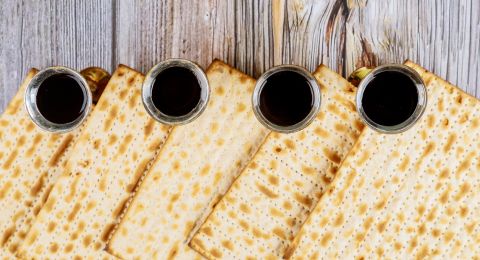
Then Jesus "took bread, gave thanks and broke it, and gave it to them, saying, 'This is [or 'means,' James Moffatt Translation; i.e., 'represents'] My body which is given for you; do this in remembrance of Me'" (Luke 22:19). He also "took the cup, and gave thanks, and gave it to them, saying, 'Drink from it, all of you. For this is [represents] My blood of the new covenant, which is shed for many for the remission of sins'" (Matthew 26:27-28).

The Bible makes it clear that all who will follow Christ should observe this New Testament Passover in remembrance of His love and sacrifice for our sins and as a reminder of our commitment to Him for what God has done in our lives (1 Corinthians 5:7-8; Luke 22:19-20). The observance of the annual New Testament Passover reminds Christians not only of how God delivered ancient Israel out of Egypt, but of our deliverance out of sin today.”  From: https://www.ucg.org.au/learn/read/bible-insights-weekly/biw-archive/why-christians-should-keep-the-annual-passover

________

What does the Feast of Unleavened Bread mean for Christians?

What does the Feast of Unleavened Bread mean for Christians?“During the spring of each year (March-April in the northern hemisphere), immediately after Passover and before the Feast of Pentecost, another biblical feast is observed—the seven-day Feast of Unleavened Bread (Leviticus 23:6-8; Exodus 12:17-18).
The Exodus from Egypt, which took place immediately after Passover during the Feast of Unleavened Bread (Numbers 33:3), was one of the great events to occur during this time. The crossing of the Red Sea is traditionally assigned to the seventh or last day of Unleavened Bread.

After Israel entered the Promised Land, the miraculous conquest of Jericho also took place during the Days of Unleavened Bread. Other great events occurring during this time of year involved rededicating the people of God to their Creator. 2 Chronicles chapters 29 through 31 describe the religious reform led by Hezekiah, and chapters 34 and 35 tell of the reform by Josiah.

However, one other event that took place during the Days of Unleavened Bread had a much greater impact than any of these, and that was the resurrection of Jesus Christ. John 19:31 tells us He was crucified on the day before a Sabbath. While most people assume this was the regular weekly Sabbath (observed Friday sunset to Saturday sunset), John tells us this Sabbath "was a high day" — a term used for the seven annual Holy Days. A careful reading of the Gospels shows this "high day" was the first day of Unleavened Bread, a Holy Day (Leviticus 23:2, 6-7) that can fall on a weekday.

Jesus remained in the grave for three days and three nights just as He had prophesied (Matthew 12:40), making it impossible to reconcile Jesus' statement in Matthew 12 with a Friday afternoon crucifixion followed by a Sunday morning resurrection. (See "Jesus Wasn't Crucified on Friday—or Resurrected on Sunday!")

Three days and three nights from the time of His entombment, just before the beginning of the first Holy Day of Unleavened Bread, brings us to the sunset at the end of the weekly Sabbath, during the seven-day Feast of Unleavened Bread, as the time Jesus was resurrected. On that Sunday, after His resurrection the day before, Jesus appeared first to Mary Magdalene (John 20:11-18) and then to others.

These Days of Unleavened Bread marked a turning point in the way the spring festival was celebrated. Christians observing these annual festivals would still recall the exodus from Egypt as a type of redemption from sin and release from the bondage of Satan. There would still be an emphasis on eating unleavened bread as a physical reminder we are to become spiritually unleavened by removing sin from our lives. But the core meaning of the Feast of Unleavened Bread is that Jesus Christ, the One who was resurrected during this time, now lives His life in every Christian.

Jesus repeatedly emphasized the importance of His own resurrection. During the last supper, He told the disciples that although He would soon be betrayed, He would live again: "Because I live, you will live also" (John 14:19). He had just promised they would not be left as orphans (verse 18)—that is, spiritually unprotected and vulnerable to Satan. Both the Father and He would live in the hearts and minds of Christians by the indwelling of the Holy Spirit (verses 20-26), empowering us to overcome "the sin which so easily ensnares us" (Hebrews 12:1).

The Apostle Paul encouraged the church there to "keep the feast, not with old leaven, nor with the leaven of malice and wickedness [lingering sinful attitudes], but with the unleavened bread of sincerity and truth"(1 Corinthians 5:8) —a clear reference to the Feast of Unleavened Bread.

The Feast of Unleavened Bread is a festival that helps us focus on replacing sin with righteousness. We are reminded to "...work out your own salvation with fear and trembling" (Philippians 2:12), but the Apostle Paul was not preaching a works-based salvation. In verse 13 he explains "it is God who works in you both to will [that is, to have the desire to overcome] and to do [to act on that desire] for His good pleasure."   From: https://www.ucg.org/the-good-news/what-does-the-feast-of-unleavened-bread-mean-for-christians

_________

Sunday, April 21, 2024

Feasts in the Bible: Why Should They Matter to Christians? Q & A About the Christian Passover. The Role of Processed Foods in the Obesity Epidemic.

.

Feasts in the Bible: Why Should They Matter to Christians?

Feasts in the Bible: Why Should They Matter to Christians?“Leviticus 23 records the “feasts of the Lord.” What are these feasts? Though often dismissed as “Jewish” holidays, are they also relevant to Christians?
God commanded Moses, “The feasts of the LORD, which you shall proclaim to be holy convocations, these are My feasts” (Leviticus 23:2; emphasis added).

The word feasts in this passage means appointed times, specific observances God has designated as holy, or set apart. Their holiness comes from the tremendous spiritual significance God has attached to each.

These seven biblical feasts build upon one another in meaning and progressively reveal how God will save the world. 

Do you know what they are and what they mean?

1. Passover

As the first of God’s seven annual feasts, Passover sets the stage for every major event to follow. This foundational feast directs our attention to the need for blood to be shed in order for us to be saved from the penalty of death.

It is a feast that commemorates the perfect sacrifice of the Son of God.

  • Historical: God devastated the Egyptians by killing all their firstborns, but He spared the Israelites through a sacrificial substitute. Passover was observed annually as a reminder of how the Israelites were saved from death by putting the blood of a lamb on their doorposts (Exodus 12:26-27).
  • Fulfillment: The sacrifice of Jesus Christ, “our Passover,” makes entrance into the New Covenant possible (1 Corinthians 5:7; Luke 22:20). Christians are to continue observing this day as a reminder of how the Savior’s sacrifice provides redemption from sins and eternal death (Hebrews 9:12).

To learn more about this biblical feast, read “Passover: What Did Jesus Do for You?

More at: https://lifehopeandtruth.com/god/blog/feasts-in-the-bible-why-should-they-matter-to-christians/?

_______

Questions and Answers About the Christian Passover

“This evening, many Christians will gather to observe the New Covenant Passover. This festival may seem mysterious to many. In this blog post, we address six frequently asked questions about the New Testament Passover.”

Transcript of:  https://hubs.la/Q02twqnM0 

“Most Christians believe Passover is a Jewish holiday. But should Christians observe Passover? This post covers this and other questions about the Christian Passover.Questions and Answers About the Christian Passover

If you look at your calendar for March or April, you will probably see “Passover” marked. Most people think of Passover as just a Jewish national holiday that celebrates Israel’s departure from Egypt, as told in the book of Exodus. The Ten Commandments, the 1956 movie starring Charlton Heston and Yul Brynner, is often shown on network TV around this time of year.

This may be the extent of your knowledge about the Passover. It is largely ignored in Christianity, which observes other spring holidays such as Easter, Lent and Good Friday.

(To learn about the problems with Easter, read our article “Is Easter Pagan?”)

But did you know that the Passover is found throughout the Bible—both in the Old Testament and New Testament? So why don’t most Christians celebrate Passover? Should they?

This post will answer some frequently asked questions about the Passover.

Passover Question 1: What does Passover commemorate? Doesn’t it celebrate the Israelites being “passed over” and protected from the 10th plague in Egypt?

Yes, when the Passover was introduced, it commemorated the night God performed the 10th and final plague against ancient Egypt. God caused the firstborn of Egypt to die—a plague that probably took millions of lives throughout the land. God would spare the Israelites from this plague only if they painted lamb’s blood on the doorposts of their dwellings (Exodus 12:7, 12-13).

Throughout their generations, the Israelites were to celebrate the Passover to remember how God delivered them from slavery in Egypt. That evening, the Israelites were also instructed to prepare a special meal and get ready to leave Egypt the next day (verses 8-11). God declared this observance was “the LORD’S Passover” (verse 11). He commanded them to observe it as “a memorial,” “a feast to the LORD throughout your generations” and “an everlasting ordinance” (verse 14).

Years later, God reinforced the observance in the formal list of God’s festivals given to Moses: “On the fourteenth day of the first month at twilight is the LORD’S Passover” (Leviticus 23:2, 5).

Throughout their generations, the Israelites were to celebrate the Passover to remember how God delivered them from slavery in Egypt. This was the original meaning of the observance. Jews around the world understand and observe this.

These events are also meaningful for Christians, who are called “the Israel of God” (Galatians 6:16) and are delivered from the slavery of sin (Romans 6:7). But, as we will see, the Passover holds even deeper significance for Christians today.

Passover Question 2: Did Jesus celebrate Passover?

Yes, Jesus observed the Passover throughout His life.

Luke records that Jesus and His family observed the Passover faithfully: “His parents went to Jerusalem every year at the Feast of the Passover” (Luke 2:41).

One of the most famous accounts of Jesus’ childhood—when He got separated from His parents and they frantically looked for Him, eventually discovering Him discussing the Bible in the temple—took place just after Jesus and His family had observed the Passover in Jerusalem (verses 42-50).

Jesus observed the Passover up until the day He died—literally. He observed the Passover with His disciples the night He was betrayed and arrested (Matthew 26:2, 17-19; Luke 22:15).

To learn more about the feast days Jesus celebrated throughout His life, read “Hidden in Plain Sight: The Festivals Jesus Celebrated.”

Passover Question 3: Is there a connection between Jesus and the Passover?

Yes, the Bible makes a strong link between the Passover and the death of Jesus Christ. Putting the scriptures together, we see that the events of the first Passover foreshadowed Jesus Christ’s death. Notice the following parallels:

Putting the scriptures together, we see that the events of the first Passover foreshadowed Jesus Christ’s death. The Israelites were in bondage to Egypt (Exodus 1:14). All human beings are in slavery to sin (Romans 6:16-17, 20; 7:23; 2 Peter 2:19).

The Israelites were spared from death that night only through the sign of the Passover lamb’s blood on their doorposts (Exodus 12:22-23). Christians are freed from death only through Jesus’ shed blood as the “Lamb of God” (John 1:29; Ephesians 1:7; 2:13; Hebrews 9:14, 22; 1 Peter 1:19).

As a result of the plague against Egypt and the Israelites’ being spared through the Passover lamb’s blood, Israel was freed from slavery and started a new life by coming out of Egypt (Exodus 12:31-41). As a result of Jesus Christ’s sacrifice, Christians can have freedom from the captivity of sin and live a new way of life (Romans 6:4, 6, 18, 22; Ephesians 4:24).

These are just a few of the parallels between the Exodus Passover and Jesus Christ. It is also important to remember that Jesus observed the Passover on the evening before His crucifixion and that His sacrifice occurred on the daylight portion of the Feast of Passover (Matthew 26:18-19).

But perhaps no scripture proves the link better than 1 Corinthians 5:7: “For indeed Christ, our Passover, was sacrificed for us.”

To learn more about the connection between Jesus and the Passover, read “Passover: What Did Jesus Do for You?” and “Why Is Jesus Called the Lamb of God?

Passover Question 4: Did the early Church observe the Passover?

Yes, the New Testament is very clear that Christians in the early Church observed the Passover.

We must first understand that they didn’t observe it in the same way Israel did in the past. At His last Passover, Jesus Christ instituted new symbols to reflect His sacrifice for sins. These new symbols were a new element He added to the Passover for New Covenant Christians.

We read about the institution of the New Covenant Passover in Matthew 26.

Unleavened bread now symbolized the “body” of Jesus Christ (verse 26).

Wine now symbolized Jesus’ “blood” (verse 28).

Jesus commanded His disciples to “do this in remembrance of Me” (Luke 22:19). He also instituted a foot-washing ceremony to teach His people the importance of humility and service (John 13:3-15). (To learn more about the meaning behind washing feet, read “What Is the Meaning of John 13:14—“Wash One Another’s Feet”?”)

The Bible shows us that the early Church continued observing the Passover in obedience to Christ (1 Corinthians 5:7-8; 11:23-26). Today, Christians around the world observe the New Testament Passover in March or April (on the 14th day of Nisan on the Hebrew calendar) to remember and commemorate Jesus Christ’s death and its significance to our lives.

In 2024 the New Covenant Passover ceremony will be observed after the sun sets on April 21 (on the Gregorian calendar). 

You can learn about the dates of the biblical festivals for the next few years at “Festival Calendar.”

The fact that early Christians observed the Passover on the 14th of Nisan is a generally recognized historical fact. Unfortunately, the Roman Church eventually substituted Good Friday and Easter Sunday for the biblical Passover—a change that is still accepted and practiced by the majority of mainstream Christianity today.

To learn more about the change from Passover to Easter, read our article “Christian Festivals.”

Passover Question 5: Isn’t the Christian ceremony of bread and wine called the Lord’s Supper or Communion?

This name, “The Lord’s Supper,” is a common title given to partaking of bread and wine in the Protestant community. Some denominations call this ceremony Eucharist (Greek for “give thanks”) or Communion (Latin for “fellowship” or “sharing”). There is much variance in how these ceremonies are kept. Some keep these ceremonies weekly; some, monthly; some, quarterly; and others, annually.

But none of these names are the biblical name for the ceremony Jesus instituted on the last evening of His life. The Gospels are very clear that He was observing the Passover (Matthew 26:18; Mark 14:14; Luke 22:8).

If you read through each Gospel record of this evening, you will notice that Jesus specifically said He was changing the symbols of the bread and wine—but He never said He was changing the name from Passover to anything else.

The Lord’s Supper? If you search the Bible, you will find the phrase “The Lord’s Supper” is only used once (in 1 Corinthians 11:20). But when you actually read the verse, you may be surprised that the verse is actually saying not to use that title for the observance. “Therefore when you come together in one place, it is not to eat the Lord’s Supper” (verse 20, emphasis added).

The apostle Paul was correcting the Corinthian congregation for not properly keeping the Passover ceremony with reverence and solemnity. These Christians were coming to the Passover and selfishly eating their own food while others went hungry. Some were even getting drunk (verse 21).

So, instead of calling this observance “the Lord’s Supper,” Paul was actually reminding them that it wasn’t! They were to come together to solemnly partake of the bread and wine symbols—not to eat supper (verses 27-29).

Communion? The title “Communion” is taken from 1 Corinthians 10:16: “The cup of blessing which we bless, is it not the communion [the “fellowship” or “sharing”] of the blood of Christ?” This is not a designation of a title for the event, but a statement that the symbols of bread and wine are necessary to have a relationship, or fellowship, with Jesus Christ. The Passover is necessary for truly knowing and having a relationship with Jesus Christ.

To learn more about the proper name for this important observance, read “The Last Supper or Passover?

Passover Question 6: How do you observe Passover as a Christian?

As we have seen, the New Testament shows that Jesus Christ instituted new symbols for the Passover on the night He was betrayed and arrested. Those symbols are foot washing, unleavened bread and wine. In order to keep the Passover as a Christian in the 21st century, there are four basic requirements for baptized members of the Church of God:

  • Observe it on the same night Jesus observed it, on the anniversary of the night of His betrayal and arrest. That is the evening of the 14th of Nisan on the Hebrew calendar. In 2024, that corresponds to the evening after the sun sets on April 21. (April 22 is the daylight portion of the Passover in 2024.)
  • Wash the feet of another baptized Christian also observing the Passover.
  • Eat a small, broken piece of unleavened bread that symbolizes Christ’s broken and beaten body.
  • Drink a sip of red wine that symbolizes Christ’s shed blood.

The ideal way to observe the Passover is with other converted Christians who are partaking of the Passover in a ceremony conducted by a minister of Jesus Christ. 

For more insight on keeping the Passover today, read “Should Christians Celebrate the Passover?

Finding more answers about the Christian Passover

If you are just learning about the Passover, we hope these answers have been helpful and informative. We encourage you to continue studying the origins of the popular holidays celebrated in the spring (in the northern hemisphere) and the deep meaning of the festivals found in the Bible.”  From: https://lifehopeandtruth.com/god/blog/questions-and-answers-about-the-passover/?

___________

The Role of Processed Foods in the Obesity Epidemic

“The rise in the U.S. calorie supply responsible for the obesity epidemic wasn’t just about more food but a different kind of food.”

Transcript of video at: https://nutritionfacts.org/video/the-role-of-processed-foods-in-the-obesity-epidemic/?

Below is an approximation of this video’s audio content. To see any graphs, charts, graphics, images, and quotes to which Dr. Greger may be referring, watch the above video.

“The rise in the number of calories provided the U.S. food supply since the 1970s is more than sufficient to explain the entire obesity epidemic. Similar spikes in calorie surplus were noted in developed countries around the world in parallel with, and presumed primarily responsible for, the expanding waistlines of their populations. By the year 2000, the United States was producing, after taking exports into account, 3,900 calories for every man, woman, and child—nearly twice as much as many people need.

It wasn’t always this way. The number of calories in the food supply actually declined over the first half of the twentieth century, only starting its upward climb to unprecedented heights in the 1970s. The drop in the first half of the century was attributed to the reduction in hard manual labor. The population had decreased energy needs, so they ate decreased energy diets. They didn’t need all the extra calories. But then, the so-called energy balance flipping point occurred, when the “move less, stay lean” phase that existed throughout most of the century turned into the “eat more, gain weight” phase that plagues us to this day. So, what changed?

What happened in the 1970s was a revolution in the food industry. In the 1960s, most food was prepared and cooked in the home. The average “not working” wife spent hours a day cooking and cleaning up after meals. (The husband averaged nine minutes.) But then, a mixed blessing transformation took place. Technological advances in food preservation and packaging enabled manufacturers to mass-prepare and distribute food for ready consumption. The metamorphosis has been compared to what happened a century before in the industrial revolution, with the mass production and supply of manufactured goods. This time they were just mass-producing food. Using new preservatives, artificial flavors, and techniques such as deep freezing and vacuum packaging, food corporations could take advantage of economies of scale to mass produce ready-made, durable, palatable edibles that offer an enormous commercial advantage over fresh and perishable foods.

Think ye of the Twinkie. With enough time and effort, any ambitious cook could create a cream-filled cake, but now they are available around every corner for less than a dollar––or delivered straight to your door for 30 cents! If every time someone wanted a Twinkie, they had to bake it themselves, they’d probably eat a lot less Twinkies. The packaged food sector is now a multi-trillion dollar industry.

Or, consider the humble potato. We’ve long been a nation of potato-eaters, but they were largely baked or boiled. Anyone who’s made fries from scratch knows what a pain it is, with all the peeling, cutting, and splattering. But with sophisticated machinations of mechanization, french fry production became centralized, and could be shipped at -40o to any fast food deep fat fryer or frozen food section in the country to become America’s favorite vegetable. Nearly all the increase in potato consumption in recent decades has been in the form of french fries and potato chips.

Cigarette production offers a compelling parallel. Up until automated rolling machines were invented, cigarettes had to be rolled by hand. It took 50 workers to produce the number of cigarettes a machine could make in a minute. The price plunged, and production leapt into the billions. Cigarette smoking went from relatively uncommon to almost everywhere. In the 20th century, the average per capita cigarette consumption rose from 54 a year to 4,345 cigarettes a year by the time of the 1964 Surgeon General’s report. The average American went from smoking about one cigarette a week to a half-pack a day.

Tobacco itself was just as addictive before and after mass marketing. What changed was cheap, easy access. French fries have always been tasty, but they went from being rare, even in restaurants, to omnipresent access around every and each corner (likely next to the gas station where you can get your Twinkies and cigarettes).

The first Twinkie dates back to 1930, though, and Ore-Ida started selling frozen french fries in the 1950s. There has to be more to the story than just technological innovation…which we’ll explore, next.:  From: https://nutritionfacts.org/video/the-role-of-processed-foods-in-the-obesity-epidemic/?

_________

LEARN MORE

__________

Sunday, March 31, 2024

Did Jesus Replace the Passover? I’m A Christian, But I Don’t Keep Easter. Are Fortified Children’s Breakfast Cereals Just Candy?

.

This is Easter weekend, but Passover isn’t until the end of next month!!  Starts evening of 22nd. April 2024.

_______

Did Jesus Replace the Passover?


Did Jesus Replace the Passover?
“Did the God of the Old Testament do things that Jesus Christ had to clean up? For example, is the Passover outdated and no longer necessary?

Religious writers of a gnostic bent, past and present, frequently mix truth with error. One of their major themes falsely claims that the Creator God was rather “over the hill,” necessitating a youthful, vigorous Jesus to zoom in to repair the damage and rescue human souls.

In his book Primitive Christianity in Crisis, Alan Knight explains the gnostic approach: “Salvation depends on rejecting both the material world and the God that created it. … The wrathful God of the Old Testament cannot be the same as the true spiritual Father” (third edition, pp. 22, 48).

Is the big story plot of the Bible, “Jesus Christ the Savior replaces a fading Creator God”?

Did Jesus scrap the Creator’s work, or did He build on it, adding the finished structure to the foundation God had laid?

Jesus came to reveal the Father, not replace Him (Matthew 11:27; John 5:37). Could it be that Father and Son have been closely collaborating all along? They are on the same page, with the same goals and same objectives, in complete agreement.

As a case in point, consider the biblical story of the Passover, in the Old Testament and the New.

The Old Testament Passover

In Exodus 12 we read of the Passover being revealed to the Israelites. It was to be observed on the 14th day of the first month of the Hebrew calendar. For each household a lamb was slaughtered, a male without blemish. No bones of the lamb were broken. They smeared the Passover lamb’s blood around the doors of their homes as a sign.

God spared the congregation of Israel as He passed over the blood-stained doors in the night and did not send destruction on their firstborn.

The following day, the 15th of the first month, was a holy day, the first day of the Feast of Unleavened Bread. On that day Israel began leaving Egypt and eating unleavened bread. Israel was finally delivered from their hard bondage in slavery.

Jesus’ New Testament Passover

Some 15 centuries later the Bible records another Passover, this time in the holy city, Jerusalem. Compare this one to that first ancient drama.

  1. A key event of the New Testament is the sacrifice of a human male Passover lamb, Jesus Christ. “For indeed Christ, our Passover, was sacrificed for us” (1 Corinthians 5:7).
  2. Jesus was crucified on the exact same 14th day of the first month, the preparation day before the first day of the Feast of Unleavened Bread, a holy day. “Therefore, because it was the Preparation Day, that the bodies should not remain on the cross on the Sabbath (for that Sabbath was a high day), the Jews asked Pilate that their legs might be broken, and that they might be taken away” (John 19:31).
  3. Jesus’ sacrifice delivered mankind from bondage to sin and death (Romans 8:2).
  4. Jesus was without sin, an unblemished sacrifice (1 Peter 2:22; 1 John 3:5).
  5. None of His bones were broken. “But when they came to Jesus and saw that He was already dead, they did not break His legs” (John 19:33).
  6. Jesus spared all repentant sinners from eternal death, the consequence of our sins. We have been washed in His own blood (Revelation 1:5). Compare this to how the Israelites were saved from the death of the firstborn.
  7. Jesus’ disciples continued to keep the Passover annually to remember His sacrifice and still do even to this day, along with the Feast of Unleavened Bread. “Therefore let us keep the feast, not with old leaven, nor with the leaven of malice and wickedness, but with the unleavened bread of sincerity and truth” (1 Corinthians 5:8, penned some 20-plus years after Jesus ascended).
Finishing touches?

Did Jesus start a new approach with the nonbiblical holidays of Christmas and Easter? Or did He put the finishing touches on the age-old Passover festival to be observed for all time, precisely as the Father and Jesus planned in exact detail from the very beginning?

  • “In the beginning was the Word, and the Word was with God, and the Word was God” (John 1:1).
  • “I and My Father are one,” of one mind and purpose (John 10:30).
  • “O My Father, if this cup cannot pass away from Me unless I drink it, Your will be done” (Matthew 26:42, Jesus prayed this to the Father about His terrible trial that was to commence).

The Bible shows that the first Passover festival of the sacrifice of unblemished lambs back in ancient Egypt was a brilliantly fashioned shadowy precursor of greater things to come centuries later—the sacrifice of Jesus Christ for all sins, for all mankind, for all time (Colossians 2:16-17).

For more about Passover, see “Passover: What Did Jesus Do for You?” For more about God and Jesus, check out the section about God. “  From: https://lifehopeandtruth.com/god/blog/did-jesus-replace-the-passover/

________

I’m a Christian, but I Don’t Keep Easter

“The Bible gives us instructions on how to worship God, Easter is not commanded there, but the Passover is... which will you observe?

Transcript Of video at:  https://www.ucg.org/beyond-today/beyond-today-daily/im-a-christian-but-i-dont-keep-easter

[Darris McNeely]

“I'm a Christian but I don't keep Easter. I'm a Christian, and I keep Passover. Now, when I say the word Passover, you may think, "Well, that's Jewish. How can you be a Christian and keep what you consider think to be a Jewish festival Jewish holiday?" Well, very simply, very easily. I read the Scripture, and I understand what it says and I understand what the Passover of the New Testament really is. And I see instruction for me to keep that and I don't see the instruction for Easter, and a lot of other holidays that have been substituted for God's Festivals. But for a moment, let's just focus on the Passover.

As I speak here, at this time, we're just a few weeks away from keeping the Passover, a very important service for a Christian. One who has given their life to God, to Jesus Christ, accepted His sacrifice and are a disciple. In 1 Corinthians 5, Paul is writing to a Gentile church in the city of Corinth, and he's giving them instructions about their life, but then also about keeping the Festival of the Days of Unleavened Bread. And in verse 7 of 1 Corinthians 5, he tells them, "Purge out the old leaven, that you may be a new lump since you truly are unleavened." Now, that's a reference to putting out the leaven in anticipation of the seven days of unleavened bread, another festival, and keeping that with the unleavened bread of sincerity of truth. And he says, "For indeed, Christ, our Passover, was sacrificed for us." Christ, our Passover.

There are many scriptures that talk about the Passover service. There's certainly Old Testament Scriptures that define what it was in the Old Testament. And there are New Testament Scriptures that define what it means in the New Testament under the New Covenant, how Christ kept it, and how the church was instructed to keep it. And this is one of those and it says that Christ is our Passover, sacrificed for us. In the New Testament Passover, we don't kill a lamb. We don't spread its blood on the doorposts as they did back in Exodus, at the time of the Exodus.

We keep the Passover with the symbols of the body and blood of Jesus Christ, but we keep the Passover. We keep the Passover because it points us to Christ who is our Passover. It's something that you should think about if you haven't before because, from the scriptures, we find that Christ is our Passover. And that's what I keep as a Christian. And I hope it will make you think if you're not already doing it, that that's what you should be doing instead of whatever you may be doing to worship God. Doing it this way is the godly way, the biblical way.”  From: https://www.ucg.org/beyond-today/beyond-today-daily/im-a-christian-but-i-dont-keep-easter

________

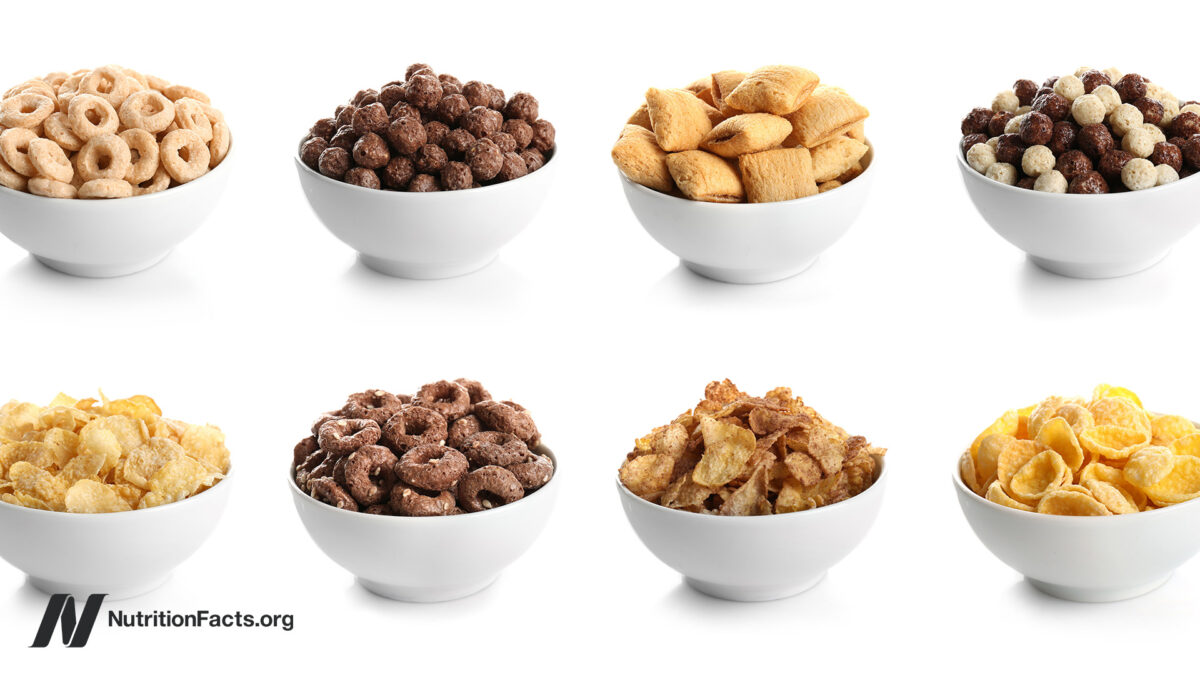
Are Fortified Children’s Breakfast Cereals Just Candy? 

“The industry responds to the charge that breakfast cereals are too sugary.

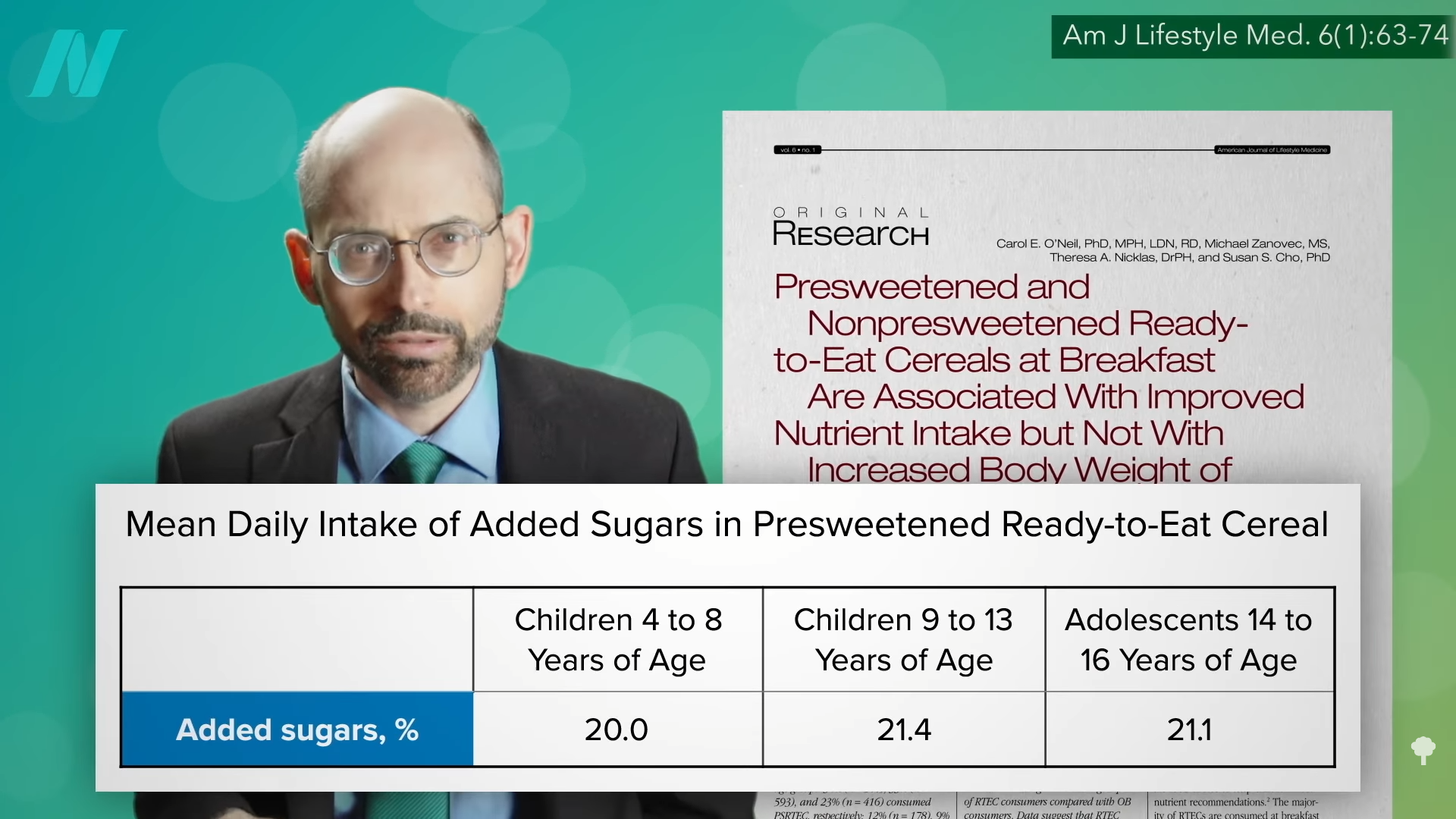
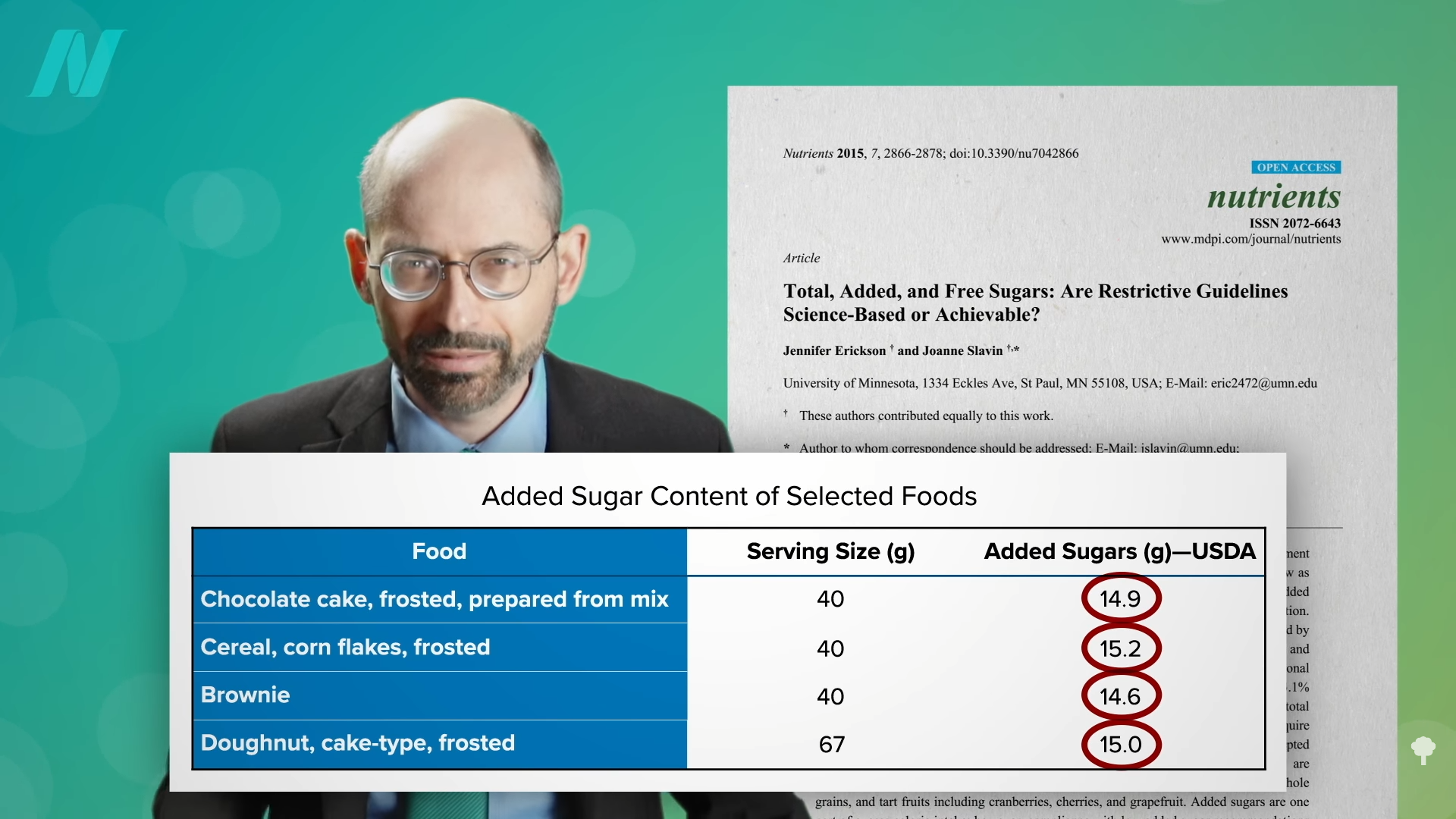
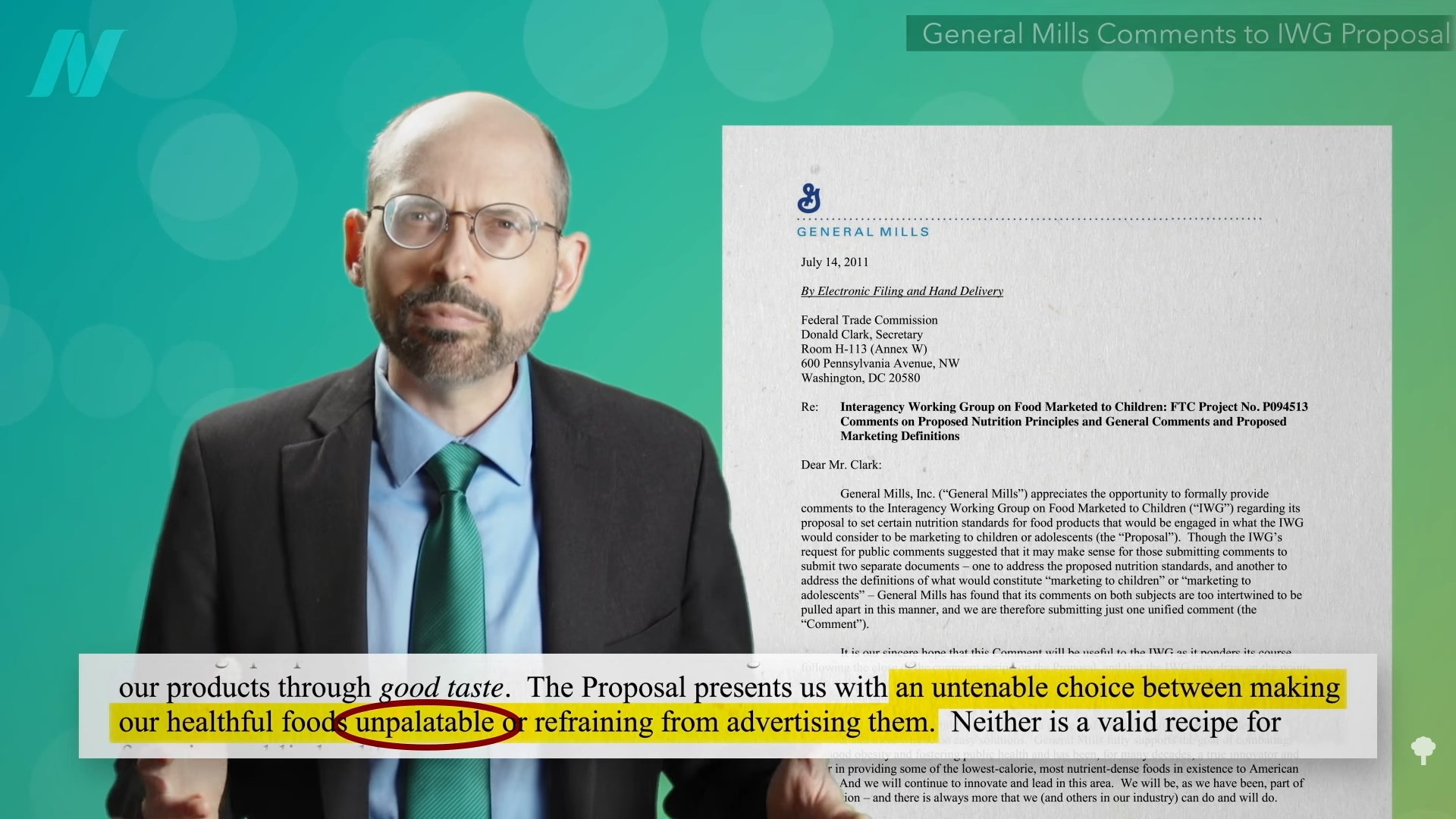
In 1941, the American Medical Association’s Council on Foods and Nutrition was presented with a new product, Vi-Chocolin, a vitamin-fortified chocolate bar, “offered ostensibly as a specialty product of high nutritive value and of some use in medicine, but in reality intended for promotion to the public as a general purpose confection, a vitaminized candy.” Surely, something like that couldn’t happen today, right? Unfortunately, that’s the sugary cereal industry’s business model.

As I discuss in my video Are Fortified Kids’ Breakfast Cereals Healthy or Just Candy?, nutrients are added to breakfast cereals “as a marketing gimmick to “create an aura of healthfulness…If those nutrients were added to soft drinks or candy, would we encourage kids to consume them more often?” Would we feed our kids Coke and Snickers for breakfast? We might as well spray cotton candy with vitamins, too. As one medical journal editorial read, “Adding vitamins and minerals to sugary cereals…is worse than useless. The subtle message accompanying such products is that it is safe to eat more.”

General Mills’ “Grow up strong with Big G kids’ cereals” ad campaign featured products like Lucky Charms, Trix, and Cocoa Puffs. That’s like the dairy industry promoting ice cream as a way to get your calcium. Kids who eat presweetened breakfast cereals may get more than 20 percent of their daily calories from added sugar, as you can see below and at 1:28 in my video.

Most sugar in the American diet comes from beverages like soda, but breakfast cereals represent the third largest food source of added sugars in the diets of children and adolescents, wedged between candy and ice cream. On a per-serving basis, there is more added sugar in a cereal like Frosted Flakes than there is in frosted chocolate cake, a brownie, or even a frosted donut, as you can see below and at 1:48 in my video.

Kellogg’s and General Mills argue that breakfast cereals only contribute a “relatively small amount” of sugar to the diets of children, less than soda, for example. “This is a perfect example of the social psychology phenomenon of ‘diffusion of responsibility.’ This behavior is analogous to each restaurant in the country arguing that it should not be required to ban smoking because it alone contributes only a tiny fraction to Americans’ exposure to secondhand smoke.” In fact, “each source of added sugar…should be reduced.”

The industry argues that most of their cereals have less than 10 grams of sugar per serving, but when Consumer Reports measured how much cereal youngsters actually poured for themselves, they were found to serve themselves about 50 percent more than the suggested serving size for most of the tested cereals. The average portion of Frosted Flakes they poured for themselves contained 18 grams of sugar, which is 4½ teaspoons or 6 sugar packets’ worth. It’s been estimated that a “child eating one serving per day of a children’s cereal containing the average amount of sugar would consume nearly 1,000 teaspoons of sugar in a year.”

General Mills offers the “Mary Poppins defense,” arguing that those spoonsful of sugar can “help the medicine go down” and explaining that “if sugar is removed from bran cereal, it would have the consistency of sawdust.” As you can see below and at 3:17 in my video, a General Mills representative wrote that the company is presented “with an untenable choice between making our healthful foods unpalatable or refraining from advertising them.” If it can’t add sugar to its cereals, they would be unpalatable? If one has to add sugar to a product to make it edible, that should tell us something. That’s a characteristic of so-called ultra-processed foods, where you have to pack them full of things like sugar, salt, and flavorings “to give flavor to foods that have had their [natural] intrinsic flavors processed out of them and to mask any unpleasant flavors in the final product.”

The president of the Cereal Institute argued that without sugary cereals, kids might not eat breakfast at all. (This is similar to dairy industry arguments that removing chocolate milk from school cafeterias may lead to students “no longer purchasing school lunch.”) He also stressed we must consider the alternatives. As Kellogg’s director of nutrition once put it: “I would suggest that Fruit [sic] Loops as a snack are much better than potato chips or a sweet roll.” You know there’s a problem when the only way to make your product look good is to compare it to Pringles and Cinnabon.

Want a healthier option? Check out my video Which Is a Better Breakfast: Cereal or Oatmeal?.

For more on the effects of sugar on the body and if you like these more politically charged videos see the related posts below.

Finally, for some additional videos on cereal, see Kids’ Breakfast Cereals as Nutritional Façade and Ochratoxin in Breakfast Cereals.

Key Takeaways
  • Vi-Chocolin, a vitamin-fortified chocolate bar, was purportedly offered as a product with high nutritive value but was really just vitaminized candy. The sugary cereal industry follows a similar business model.

  • The sugary cereal industry has been criticized for adding nutrients to cereals “as a marketing gimmick,” creating an illusion of health benefits.

  • Children who consume pre-sweetened breakfast cereals may derive more than 20 percent of their daily calories from added sugar. Breakfast cereals rank as the third-largest food source of added sugars in the diets of kids and adolescents, listed between candy and ice cream. On a per-serving basis, a cereal like Frosted Flakes has more added sugar than a frosted chocolate cake, a brownie, or a frosted donut.

  • Kellogg’s and General Mills’ contention that breakfast cereals contribute only a “relatively small amount” of sugar to children’s diets is likened to the social psychology phenomenon of “diffusion of responsibility.”

  • Consumer Reports’ findings reveal that children often pour themselves 50 percent more cereal than the suggested serving size. A child eating a single daily serving of kids’ cereal with the average amount of sugar would consume almost a thousand teaspoons of sugar in one year.

  • The industry argues it has to add sugar to its cereals to make them palatable, which is a characteristic of ultra-processed foods.  From: https://nutritionfacts.org/blog/are-fortified-childrens-breakfast-cereals-just-candy/?

__________