Showing posts with label PCB. Show all posts

Sunday, March 24, 2024

Why Did Jesus Stay Around For 40 Days? Christ Offered One Sacrifice for Sins Forever. Cancer-Causing NDMA in Medications and Meat.

.

  • “Q:Why did Jesus stay around for 40 days after He came back from the grave, instead of going immediately into heaven? This came up in our Bible class the other day and no one seemed to have an answer.


A: One reason Jesus stayed on earth for 40 days after His resurrection instead of ascending immediately into heaven was to demonstrate to His followers that He truly was alive.

After all, they knew the Roman authorities had put Jesus to death, and that His body had been taken down from the cross and sealed in a tomb. And when that happened, they were filled with despair and fear; many even went into hiding. They had believed Jesus was the promised Messiah—and now their hopes were shattered. They had forgotten His promise that He would return from the grave, and they felt they had no future.

But when Jesus appeared among them after the resurrection, their lives were changed. The greatest miracle in all history had just taken place: Jesus Christ was alive! During those 40 days, He appeared to various groups of disciples, proving beyond doubt to them that he had been raised from the dead by the power of God. Over two decades later, the Apostle Paul wrote that “he appeared to more than five hundred of the brothers at the same time, most of whom are still living” (1 Corinthians 15:6).

Another reason, however, why Jesus stayed on earth then was to teach His disciples, and prepare them for the task of telling the world about Christ. Is your faith in the risen Christ, and are you seeking to share His message of salvation with others?”  From: https://billygraham.org/answer/why-did-jesus-stay-around-for-40-days-after-he-came-back-from-the-grave-instead-of-going-immediately-into-heaven/

Jesus left His followers with an assignment: “Go therefore and make disciples of all nations” (Matthew 28:19). Wondering if that command is still relevant?

MORE STORIES

_________

Christ Offered One Sacrifice for Sins Forever

Hebrews 10:12

“But this Man, after He had offered one sacrifice for sins forever, sat down at the right hand of God.

 The book of Hebrews shows how the Old Testament sacrificial system was designed to point to the perfect sacrifice of Jesus Christ. The priests of the tribe of Levi were told to regularly offer animal sacrifices. These sacrifices were to remind the people that sin requires the shedding of blood.

Sin offerings of animals, though a costly reminder of sin, did not remove the sins or the death penalty we each earn by sin. Hebrews 10:4 explains, “For it is not possible that the blood of bulls and goats could take away sins.” The animal sacrifices were a symbol of the true sacrifice—Jesus Christ.

As the Son of God and Creator, Jesus Christ’s life is worth far more than the lives of all humans who will ever live. His one death more than paid the death penalty for all who will repent and seek forgiveness.

For more about the perfect sacrifice of Jesus Christ and what our response should be to it, see “What Is Repentance?”

Listen to the "Verse by Verse" episode covering this scripture at: https://lifehopeandtruth.com/bible/blog/christ-offered-one-sacrifice-for-sins-forever/?

New Call-to-action

________

Cancer-Causing NDMA in Medications (Zantac, Metformin) and Meat

Transcript of video at: https://nutritionfacts.org/video/cancer-causing-ndma-in-medications-zantac-metformin-and-meat/

Below is an approximation of this video’s audio content. To see any graphs, charts, graphics, images, and quotes to which Dr. Greger may be referring, watch the above video.

“Billion-dollar drugs pulled from the market for carcinogenic contamination less than that found in a single serving of grilled chicken.

In 2018, one of the bestselling blood pressure drugs, valsartan—sold as Diovan—was found to be contaminated by the “probably carcinogenic” nitrosamine known as N-nitrosodimethylamine (NDMA). It’s believed that approximately 20 million people worldwide were prescribed the drug tainted with this contaminant whose cancer risk has been shown to exceed that of many known potent carcinogens, including asbestos, benzo[a]pyrene, and PCBs.

The U.S. Food and Drug Administration (FDA) estimated that taking the drug for a few years could cause cancer in as many as 1 in 8,000 people, whereas the European equivalent of the FDA estimated the cancer risk could be as high as 1 in 5,000. It is unlikely, researchers wrote in this Spring 2019 paper, that drugs like valsartan are a unique case. And indeed, a few months later, the FDA announced it had found NDMA in ranitidine.

Ranitidine, the acid reflux drug sold as Zantac, is one of the most prescribed drugs on the planet, in addition to being sold over the counter. Give people a single tablet and the amount of NDMA flowing through their bodies jumps up more than a hundred-fold.

Then in 2020, some formulations of metformin, a popular diabetes drug sold as Glucophage, were found to be contaminated. The finding of NDMA in common medicines led the FDA to call for the immediate withdrawal of all Zantac from store shelves, yanking the drug from the market because their testing showed NDMA levels could in some circumstances exceed the acceptable daily intake limit of 96 nanograms per day. It was so bad that the FDA found levels of this carcinogenic contaminant NDMA in Zantac similar to the levels you would expect to be exposed to if you ate grilled or smoked meats!

Wait, what?

NDMA has not only been found in contaminating drugs. It is a known byproduct from pesticide manufacturing, leather tanning, and tire plants, and is found in multiple foods and beverages, including processed meat and beer. Now that we know NDMA can transfer through the placenta, this may explain the relationship between maternal cured meat consumption during pregnancy and the risk of childhood brain tumors. For example, hot dog consumption during pregnancy may increase childhood brain tumor risk by 33 percent or sausage consumption may increase it by 44 percent. Bacon consumption may increase childhood brain tumor odds by 60 or 70 percent. But it’s not just processed meat. Researchers have found it in poultry products as well.

A single serving of chicken contains more than 100 nanograms of NDMA. Remember how the FDA said the acceptable daily intake limit is 96 nanograms per day? Half of a chicken breast contains 110.

Now, raw poultry doesn’t have any; it’s the cooking process. In fact, the dry-heat cooking of meat, like broiling or grilling, even creates airborne NDMA, releasing this very potent carcinogenic compound into the air. So, even if you’re only getting a salad or something in a charcoal grill restaurant, just being indoors where meat is being cooked could pose a significant cancer risk.

These nitrosamines are also found in cigarette smoke, and pressure was put on the tobacco industry to try to remove them, arguing that there is simply no logical reason why a removable carcinogen should be allowed to remain in a consumer product. That’s the same reason Zantac was yanked from store shelves.

Okay, so let me get this straight.

One of the best-selling drugs in history was pulled from the market—a drug that brought in billions of dollars—because it contained a probable carcinogen that exceeded the acceptable daily limit, but there may be more of the contaminant in a single serving of chicken! So, my question is: why aren’t they pulling the poultry off the shelves as well?”  From: https://nutritionfacts.org/video/cancer-causing-ndma-in-medications-zantac-metformin-and-meat/

________

Sunday, February 11, 2024

What Is Marriage? 1 & 2. Farmed Fish vs. Wild-Caught.

.

What Is Marriage? 1  (Special thoughts for Valentine’s Day)

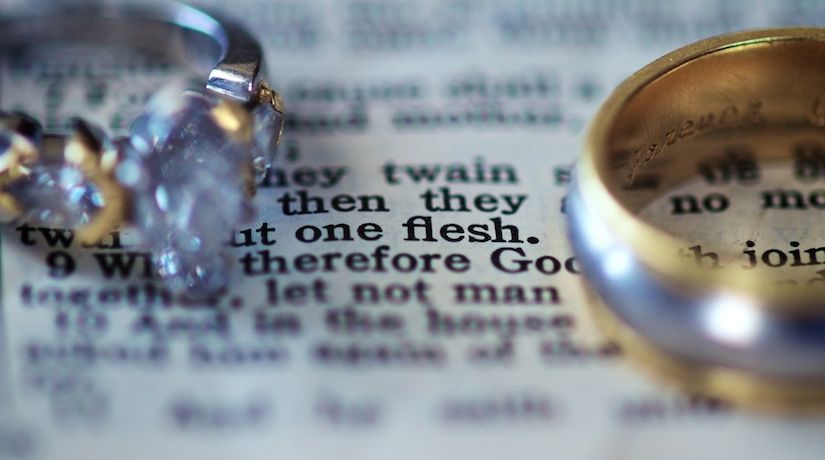
What Is Marriage?“The Creator God made humans male and female, and He made the institution of marriage. He tells us why He created it and what marriage is supposed to be.

There is only one original source on earth where you can find out how, when, where and why marriage began. More copies of this book—the Holy Bible—have been published than any other written work, yet it is little understood. But by going to it, you can find an understanding of the meaning of marriage.


Summing up what the Bible teaches about marriage

  1. God designed marriage to be a lifelong, faithful relationship between one man and one woman.
  2. Adam was created first and was initially the lone human. From one of his ribs God lovingly formed a woman and presented her to Adam. They were “one flesh,” and she was the perfect complement to Adam. Together they formed a whole, and together they were able to build a family, having and raising children together.
  3. Because of sin, polygamy and divorce entered. Christ said divorce was only allowed in Israel because of their hardness of heart. While God does provide provisions for a marriage to dissolve under some circumstances, it is an extremely painful experience. God didn’t want His children to hurt one another in that manner.
  4. Through the words of Jesus Christ and the apostles, we can see that God’s perspective of marriage as a loving, monogamous relationship between one man and one woman has not changed. In the New Testament God reaffirms it and shows how very important fidelity within marriage is.

God's Design for Marriage BookletMen and women are different by design, intended to complement each other. And it is only through the marriage relationship that God intended children to be brought into the world—to be raised and taught under the loving, thoughtful care of their mother and father.

If you would like to read further about how to have a happy marriage, this “Marriage” section has many related articles for you to read. You will be glad you did!”  Complete article at: https://lifehopeandtruth.com/relationships/marriage/what-is-marriage/

________

What Is Marriage?  2

“Some topics are more personal than others and tend to trigger more emotional reactions. Food and holidays, for example. Or “is that dress white and gold or blue and black” and, of course, marriage and sexual relations.

Although the Bible has a lot to say about marriage, it never explicitly answers the question, “What is marriage?” Probably for the same reason it doesn’t give a precise definition for travel, war, and sacrifice. Everyone in the Bible’s original audience already knew what marriage was, so why waste expensive paper and ink explaining it.

Our world, on the other hand, has become so full of confusion that we need to spell out even the most basic ideas. So, let me begin at the beginning…

Adam gave names to all livestock and to the birds of the heavens and to every beast of the field, but the man could not find a helper fit for him. So YHWH God caused a deep sleep to fall upon the man, and while he slept took one of his ribs and closed up its place with flesh. And the rib that YHWH God had taken from the man he made into a woman and brought her to the man. Then the man said, “This at last is bone of my bones and flesh of my flesh; she shall be called Woman (ishah), because she was taken out of Man.” Therefore a man shall leave his father and his mother and hold fast to his wife, and they shall become one flesh.      Genesis 2:20-24

This passage gives us the three most important elements of the definition of marriage.

  1. Marriage exists to help a man fulfill his assigned role in Creation.
  2. Marriage is meant to be a lifelong union of a man and woman.
  3. Marriage was instituted by God from the very beginning.

Marriage Exists to Help Man Fulfill His Mission

Although Genesis 1:28 records that the first collective mission of mankind was to be a caretaker over the earth and all life on it, Adam’s first individual assignment was to evaluate all of the other creatures to see if one of them might serve as a special helper for him. Of course, God knew that none of them would, but he had Adam go through this process so that the man would also know. When Adam was satisfied that none of the animals would meet his requirements, God created a woman, whom Adam named Eve.

Adam and most other creatures were created from the ground, but Eve was created directly from Adam. God didn’t create Eve from Adam’s head or foot, but from his side, showing that she wasn’t supposed to rule over him nor be his slave, but was supposed to be a peer. The woman was to be more like the man than any other creature in heaven or earth, a counterpart who would rule over and care for the earth together with him.

Eve wasn’t created to be exactly like Adam, though, or else God would have created another man and made them hermaphrodites or capable of parthenogenesis. Woman shares in the collective purpose of mankind as God’s stewards on earth, but each woman does so primarily by assisting her husband in his individual mission.

For man was not made from woman, but woman from man. Neither was man created for woman, but woman for man.    1 Corinthians 11:8-9 ESV

I know that doesn’t sit well with many people, but it is the plain teaching of Scripture. Eve was created specifically to be a helper for Adam, and Paul asserts that this principle applies within all marriages.

While the original task of humanity was to be a caretaker of God’s creation, the Fall necessitated a change in mission parameters. Our task now is to expand the Kingdom of God through procreation, evangelism, establishing justice, and generally doing good works according to God’s standards of justice and good. How each individual and family participates in this mission varies in as many ways as there are individuals and families, but you can know this with absolute certainty: A woman’s divinely appointed mission will never be at odds with her husband’s.

All kinds of things can prevent us from fulfilling marriage’s full purpose: illness and other circumstances that might be out of our control, the husband isn’t fulfilling his calling, or the wife isn’t fulfilling hers. However, our circumstances and failings can’t change the reason God created marriage.

Marriage Is a Lifelong Union

Genesis 2:24 says that the relationship of Adam and Eve is to be a pattern for all marriages, that a new marriage is inaugurated when a man leaves his father and mother to become one flesh with his wife.

“One flesh” implies that they are united in a way that would be painful and unnatural to separate and Yeshua (Jesus) confirmed this understanding when he said “They are no longer two but one flesh. What therefore God has joined together, let not man separate.” (See Matthew 19:4-6 and Mark 10:6-9.)

“Leaves his father and mother” doesn’t necessarily mean that he physically leaves their dwelling place. The Scriptural example is for extended families normally to live close together, frequently on the same land, and obedience to God’s instructions for the use of the land in Israel requires this. What this statement actually means is that the man steps outside of the nuclear family unit into which he was born and creates a new family still under the broad umbrella of his father’s clan and tribe.

This also doesn’t mean that marriage cannot be ended. God hates both divorce and death, but both happen, whether for good or bad, and both end a marriage. I’ll write more about this another time, but the Torah, Prophets, Yeshua, and Apostles all discuss when it is and is not appropriate to end a marriage. Divorce should be avoided because it breaks something that God didn’t want to be broken, but it is still possible.

Marriage Was Instituted by God

From the very beginning, God intended mankind to be male and female and to be joined in a union that he uses as a metaphor of his relationship with Israel.

Like the Sabbath, marriage was created for mankind’s benefit. Both parties, as well as their children, benefit from the arrangement, especially if it is conducted according to all of God’s instructions. However, also like the Sabbath, God created marriage because it suited his purposes. Every good master provides his servants with the tools necessary to accomplish his assigned tasks. The servant benefits because his job is made easier and more enjoyable. The master benefits because the servant is able to do a better job with greater economy.

Also like the Sabbath, marriage is not a man-made custom and man doesn’t get to define it. People today insist that they can make marriage whatever they want it to be: a man and another man, a woman and herself, and every other perversion one can imagine. Yet, Yeshua said that marriage is “what God has joined together”, so there can be no real question on this score. God makes the rules, not us.

Marriage was the very first government and was created by God to serve as the core of ministry, labor, justice, and civilization. It is a model of God and of our relationship to God and, as God is one (Hebrew echad), man and woman are to be one in spirit and flesh. Marriage benefits us and was created to help us in the work for which we were created, but ultimately both we and marriage belong to God and we have a responsibility to him to protect and honor it.”  From: https://www.americantorah.com/2023/03/27/what-is-marriage/

_______

Farmed Fish vs. Wild-Caught

Transcript of video at: https://nutritionfacts.org/video/farmed-fish-vs-wild-caught-2/

“The levels of industrial pollutants found in aquaculture.

Although the levels of dioxins and PCBs continue to decline, there is one dietary source that still remains a threat: fish. Everything eventually washes into the sea. Yes, we can get some from eating horses, but most of human dioxin exposure comes from eating fish. The World Health Organization puts the tolerable upper daily limit of intake at 1 picogram—one trillionth of a gram. As you can see, just eating dairy and we’re already skirting with the max, and fish takes us straight over the top.

Everyone agrees that the omega-3 fatty acids, like DHA, found in fish, are healthy. But, given the industrial contaminants in fish, as a recent analysis in Food and Chemical Toxicology concludes: “If people choose to get their recommended long-chain omega-3 intake from fish, the majority of consumers would exceed the safety limits for dioxins and dioxin-like substances (like PCBs).”

And, just like with eggs, factory-farmed fish have significantly more dioxins. In fact, for every toxin tested, farmed fish had higher levels of DDT, these other banned pesticides, over ten times more PCBs, and ten times more dioxins than wild-caught fish. Aquaculture fish can be considered farmed and dangerous.”

To see any graphs, charts, graphics, images, and quotes to which Dr. Greger may be referring, watch the above video. This is just an approximation of the audio contributed by Dianne Moore.

_________

Sunday, July 31, 2016

Teach Little Kids About Money. Thou Shalt Not Covet. Volcanos. Plastic. Update.


For “Scripture Sunday”:

Teach Little Kids About Money

Your child may be too young for an allowance, but he or she’s not too young to be introduced to the all-important right approach to money.

Teach Little Kids About Money

If you’re frugal and restrained in how you use money, your child will be more likely to learn those traits too!

“Ever read the poem “Smart” in Shel Silverstein’s Where the Sidewalk Ends? It begins:


“My dad gave me one dollar bill
’Cause I’m his smartest son,
And I swapped it for two shiny quarters
’Cause two is more than one!”

This “smart” son continued his “upward” trading—exchanging the two quarters for three dimes, and the three dimes for four nickels, and finally the four nickels for five pennies! The poem concludes:

“And then I went and showed my dad,
And he got red in the cheeks
And closed his eyes and shook his head—
Too proud of me to speak!”

One might wonder if perhaps Dad gave his “smartest son” an allowance before he was really ready for it! But even if your child doesn’t yet know the value of different coins or bills, you can still set the stage for him or her to learn how to handle money responsibly.

It all begins with you!

Whether you realize it or not, you’ve probably already begun your child’s lessons on finances. Your example as a parent in handling money is the foundation for every other finance lesson you can teach. The attitude and approach that you have toward money will rub off on your child.

From an early age, your child should see you being a careful shopper. Let him or her help you make your grocery list and talk about how these are the things that your family needs to buy. Let your child see that you plan what things you’re going to buy rather than buying impulsively. Talk about the difference between needs and wants.

As your child grows, you can ask him or her to help you compare items. You can talk about which box of cereal contains more (the size of the box doesn’t always give the answer!), which is healthier for your family and which has the better price. You can also talk about television commercials and how advertisers try to get you to buy their products.

If you’re frugal and restrained in how you use money, your child will be more likely to learn those traits too! And you can model patience in your purchases. Tell your child, “No, I think we’ll wait to get this until it’s on sale.” Remember, if you’re frugal and restrained in how you use money, your child will be more likely to learn those traits too!

Money doesn’t grow on trees: 

Another introductory concept to teach is where money comes from. (It’s not really as obvious as we think!) Explain to your child that people work and that’s how they earn money. And they earn money so that they can buy the things that they need. It’s important to explain that God is the One who gives us good health and makes us able to work and produce. The money we earn is related to our effort and diligence (Proverbs 10:4), but ultimately God is the One who gives wealth (verse 22).

As well, you’ll no doubt need to clear up misunderstandings about credit or debit cards, since it’s easy for children to think of it as free, limitless money. We’re becoming an increasingly cashless society, but make an effort to use cash whenever possible when your child is with you.

When you must use your credit or debit card, give a simple explanation of how it works. A credit card represents money that you’re promising to pay later. A debit card represents money that is going directly from what you’ve put in the bank to the store or restaurant. It may be a while before your child really understands, but keep the explanations coming at regular intervals.

Your child should learn that money is a limited resource. It’s good for your child to hear you say, “We don’t have enough money to buy that.” “We can’t afford that.” Likewise, there should be times when you can say, “We’re saving to buy a (whatever)!” Your child should learn that it’s okay to spend some money now, but it’s also important to save some for later."

More at: http://lifehopeandtruth.com/relationships/parenting/teach-little-kids-about-money/

_______

Thou Shalt Not Covet

Coveting—desiring something we shouldn’t have—is a dangerous trap for people both poor and rich. That’s why God says, “Thou shalt not covet.”

Thou Shalt Not Covet

God gave us the 10 Commandments for our benefit, including the 10th Commandment: “Thou shalt not covet” (Exodus 20:17, King James Version).

To understand God’s law against coveting, it can be helpful to consider an example of the damaging effects of coveting.

Consider Ahab  (1 Kings 16:29-22:40)

It was plain and simple. He wanted it, and he wanted it now! Day after day, he wandered up and down the halls with his mind centered on a prize he simply could not rightfully win. It became such a fixation that he almost became sick over it.

Sadder still, this man did not really need anything—after all, he was a king! With all the treasures in the king’s house, what more could this man want?

When your name is Ahab, king of Israel, there is always something more. In this case it happened to be a vineyard that was next door to his palace. What started out as the pursuit of additional property, quickly turned into an ugly and sinful attitude.

When the negotiation didn’t go his way, King Ahab unleashed his ruthless wife on the hapless neighbor. Queen Jezebel thought nothing of taking what didn’t belong to them, at the cost of their neighbor’s life. And all because King Ahab gave in to the sinful attitude of covetousness.

“I want what you have!” Defining “covet”

Although listed as the last of the 10 Commandments given by God, the act of coveting carries with it the potential for a lifetime of tragedy and heartache. It is easy to reason in one’s mind that coveting is not as bad as murder, stealing or adultery, but make no mistake—coveting, which is a sin in itself, can lead to all of these sins and more!

To covet means to desire wrongfully or inordinately without regard for the rights and property of others. God knows the heart of man and also the intent of the heart (1 Chronicles 28:9). So when He presented the 10 Commandments to the children of Israel, God elaborated on some of the items that should not be coveted.

“You shall not covet your neighbor’s house; you shall not covet your neighbor’s wife, nor his male servant, nor his female servant, nor his ox, nor his donkey, nor anything that is your neighbor’s” (Exodus 20:17).

God knew that a heart that begins to covet is a heart that no longer focuses on Him, but looks inwardly. Coveting begins when the mind harbors an insidious desire to wrongfully obtain something that is forbidden, without due regard for the rights or property of others. Coveting places your thoughts and desires above those of everyone else.

Unfortunately, there have been many horrific examples of this in the world today. The act of coveting has even been made to appear stylish by the motion picture industry, where coveting is at times even glamorized. If a so-called hero or heroine pursues an already married person, “frees” her or him from the bonds of a less-than-affectionate spouse, it is portrayed as acceptable, even the desirable thing to do!

Granting ourselves an excuse to covet

The seeds of coveting sometimes begin with an innocent observation.

In the story of King Arthur and the knights of the round table, for example, the knight Lancelot, who just happened to be King Arthur’s closest friend, made a simple, but inappropriate comment to the king’s fiancée, Guinevere. He said that as long as she lived, he would love no other. Lancelot was intrigued by the future queen’s beauty and found himself attracted to her. But rather than honor the sanctity of marriage, Lancelot and Guinevere began to covet things that weren’t theirs—each other! In the story, their covetous behavior led to adultery and the weakening of a kingdom.

Sadly, incidents just like this are played out all too often today. By using selfish reasoning and motives, people decide to obtain possessions (or someone else’s mate) for their own personal gain. The desire to have what is not theirs grows so powerful that even people who are normally respectful and law-abiding will circumvent laws and rules in order achieve their goal.

Such is the backstory for countless incidents of theft, embezzlement, kidnapping, adultery and even murder. The results of coveting are powerful and destructive.

Coveting is a trap

Covetousness is the trap in which King Ahab found himself snared, as the account recorded in 1 Kings 21 reveals. The vineyard Ahab coveted was owned by a man named Naboth. It was his inheritance, and Naboth told the king of its priceless value to him and his family.

But rather than approach this as a goal he could not achieve, or perhaps as a failed business venture, Ahab chose to sulk and focus on his covetous desires. He was angry with Naboth, and he still wanted his vineyard. In his self-absorbed and immature mind, he demonstrated a behavior we see often in children and sometimes even adults—he began to pout and wallow in self-pity.

Sulking, pouting and self-pity over something we can’t obtain can turn into bitterness. Bitterness can then lead to twisted reasoning that may lead to a sinful action in an attempt to acquire what is coveted. Scripture reveals that Ahab’s covetous behavior led to the death of Naboth. It initially appeared that Ahab got away with his sin, but God ultimately intervened and brought about the demise of Ahab.

Casting down idols

In the Bible, covetousness is described as a type of idolatry. God’s perspective on coveting can be clearly seen in Paul’s instructions to the church in Colossae: “Therefore put to death your members which are on the earth: fornication, uncleanness, passion, evil desire, and covetousness, which is idolatry” (Colossians 3:5, emphasis added throughout).

Why does God say covetousness is idolatry? Because covetousness can become all-consuming. The person or object that is coveted becomes uppermost in the mind and, in the process, becomes an idol. All rules, commandments and laws become trivial in comparison, making it easier and easier to justify irreverent and/or illegal behavior.

Whatever becomes an idol in the mind takes precedence over everything and everyone—including the true God. Covetousness is one of the reasons God will punish the inhabitants of the earth. As Paul wrote in the same passage: “Because of these things the wrath of God is coming upon the sons of disobedience, in which you yourselves once walked when you lived in them” (verses 6-7).

How can we overcome covetousness?

What can be done to escape this sinful trap? In order to break free from this form of idolatry, one must be willing to take the necessary steps to cast down covetous behavior. The first step is controlling and reordering the thoughts of the heart.

King David (who also knew what it was like to struggle with coveting) asked God for His protection when it came to his thoughts. He wrote, “Set a guard, O LORD, over my mouth; keep watch over the door of my lips. Do not incline my heart to any evil thing, to practice wicked works” (Psalm 141:3-4).

In another place David wrote that he would set nothing wicked before his sight (Psalm 101:3).

It is deceptive, because the sin of covetousness rarely looks evil. But in truth it is, and the quicker we understand that, the quicker we will be moved to repent of this sin.

In the process of reordering our thinking, we must move to the other end of the spectrum. The opposite of coveting is looking outwardly—not comparing ourselves with others, but looking for opportunities to give of ourselves in service to others who truly may be less fortunate.

Thankfulness to God

Then, when we do come upon something or someone we admire, we can keep it in the realm of proper admiration by actively giving thanks to God for the blessings He has bestowed on us.

We can take a personal inventory of all that God has given us and dwell on those things. If there is something else we like or would like to have, there is nothing wrong with making our request with a pure and contented heart. Whether it is a new car or a meaningful relationship, God knows what we need. So when our petition is made, we can ask in trust and faith, knowing that God has our best interest at heart.

As the writer of Hebrews so eloquently wrote, “Let your conduct be without covetousness; be content with such things as you have. For He Himself has said, ‘I will never leave you nor forsake you’” (Hebrews 13:5).

God is the giver of good things and promises to be there. He is always ready to hear the fervent prayers of those who diligently seek after Him. Covetousness has no place in the heart of the man or woman who truly desires to seek God. That’s why God said: “Thou shalt not covet.”

From: http://lifehopeandtruth.com/relationships/finances/thou-shalt-not-covet/

For more information, see “Tenth Commandment: You Shall Not Covet.”

_______

Structure of a Volcano


volcano_structure (Small)“Why do we call it a "volcano"? Off the coast of Sicily, in the Mediterranean Sea, there is little island called Vulcano.

A long time ago, the people who lived there believed that Vulcano actually was the chimney on the forge of Vulcan. And Vulcan was the blacksmith of the Roman gods.

A volcano is a mountain. However, they are not formed as other mountains are, by folding and crumpling or by uplift and erosion. Volcanoes, in a sense, build themselves with their own eruptions, including lava, bombs (crusted-over lava blobs), ashflows, and tephra (airborne ash and dust).

Usually, a volcano is a conical hill or mountain built around a vent that connects with reservoirs of molten rock below the surface of the Earth. "Volcano" also might be used to refer to the opening through which molten rock and gases are expelled.”

<<< Click on the numbers to learn more about volcanoes.   Source:USGS    From: http://www.cbsnews.com/htdocs/natural_disasters/volcano/framesource_volcano.html

_______

_______

Update:

Another week has flown by.  More trips to Conroe to get some banking business done with a man who had been in a flood with his Arctic Fox Fifth Wheel, and it had been totalled by the insurance company.  He had added a lot of special features to his, so he was desperately looking for another Arctic Fox so that he could swap them out.  So I sold it to him, but the money came in dribs and drabs, so that meant 4 trips to Conroe in all. 

I went to the Social Security Office to see why they haven’t called me, but there were so many people already there that they were parked on the grass across the street, even though they have a large parking lot.  Phoning them means just about the same wait time as going there, and it seems that one can get more help with a face-to-face talk with a person.

One day, a friend of Roy’s came and dug up a little of the front yard to find the best place to connect the sewer to the guest house.  We found a good place to tie in to it, so I bought a ‘saddle tee’ from the plumbing supply house, but we haven’t had time to do anything more to the guest house.  A water leak on the other side of my meter was fixed by the water company but they had to dig up another part of my front yard. Then the rains came, and it was a muddy mess for a few days.

Another day, Roy had to go to the VA in Houston for his ‘Pre-Op’ instructions ready for his esophagus surgery on Tuesday.  They were pleased that for the first time he has gained a little weight.  I have been making sure that he has some Greek yogurt each morning before he starts work and that he has a good organic lunch before he leaves.   Now he is doing some work on the Fifth Wheel swapping out the items from the flooded one, as it is parked not too far away.  We will be glad when that’s over and we can get back to working on the guest house.

For the Church potluck I made another Dirty Rice, beef, onion, bell pepper dish.  The Bible readings were Deut. 1:1-3:22, Isa. 1:1-27, John 15:1-11.  The Teaching was about “He went to the Temple” and how He prepared the way.  I couldn’t hear it very well over the loud speaker in the kitchen.  Some people had arrived late and brought dishes that needed to be warmed up, and pizzas that needed to be cooked, so I went to the kitchen to help the Pastor’s wife,  she has enough to do without that.   So as not to cause more work on the Sabbath, some of us always bring something in a crockpot that just has to be plugged in.  As the Sabbath is supposed to be a day of rest, it has been made the day before, on Preparation Day.


Friday, September 20, 2013

King Corn. The High Fructose Corn Syrup Conspiracy. Agent Orange, DDT, Aspartame and Monsanto.


For “Foodie Friday”:

King Corn: You Are What You Eat

“When Ian Cheney and his best friend Curt Ellis graduated from college they thought they were done with professors and they supposed to feel like they had their whole lives ahead of them, but they just heard some rather disconcerting news. Some day they were going to die, and maybe sooner than they thought. For the first time in American history their generation was at risk of having a shorter lifespan than their parents. And it was because of what they ate.

So they started to keep track of what they were eating. But they found they needed help making sense of their data.

Hair is a continuous recorder, it’s a tape recorder of diet.

The food that becomes part of your diet will eventually find its way to your hair. So they analyzed their hair and the conclusion was that the carbon in their bodies really originates from corn. We’re talking about the corn that’s been used as material (high fructose corn syrup), which is going into the foods that we use ubiquitously. We also feed animals with corn and that gets turned into their biomass that we consume.

king-corn640x360Ian and Curt had grown up on the coast but for some reason they felt drawn to the Midwest. Maybe it was because a long time before there was corn in their hair, there was corn in their genes. By an incredible coincidence Ian and Curt each had a great grandfather in the same tiny county in rural Iowa. Three generations after their great grandparents left they were moving back, to find out how an acre of corn could get from a field in Iowa into their hair.”

-------

PBS King Corn, Extended Clip

______

King Corn documentary film trailer

“Americans are so “corny” because almost every product in conventional grocery stores – from steaks to chicken breasts to condiments to desserts to tomato sauce to frozen entrees (the list goes on) – is ultimately derived from corn, either in the form of high fructose corn syrup or from corn-based animal feed.  The filmmakers visit cattle feedlots which hold thousands of animals dining on corn-based feed, and learn that too much corn causes the cattle to eventually develop an acidic condition in one of their stomachs, acidosis, that eventually kills them.

After the somewhat shocking discovery about their bodily composition, Ian Cheney and Curt Ellis move to a small county in Iowa where, coincidentally, both had farmer great-grandfathers, in order to find out how they and most other Americans were “made out of corn.” 

The two friends convince an Iowa farmer to lend them an acre of land to plant their crop.  They purchase genetically modified corn for planting, and with the help of their neighbors, some heavy machinery, and lots of chemical fertilizers and herbicides, they end up growing a bumper crop. 

But as Ian and Curt show us, this isn’t your sweet summer corn-on-the-cob we're talking about – it’s corn bred specifically for industrial applications.  The two friends decide to find out what happens to the corn they've grown after it leaves the grain elevator, and find that tracing their crop is easier said than done.  Ultimately, however, they come to the conclusion that their corn is likely destined for one of two American industries: animal feed or corn syrup.”

______

A Conversation with "King Corn" Filmmaker,  Part 1:

“A conversation with filmmaker Curt Ellis about his new documentary "King Corn", the film that may open eyes across America. Surprisingly, corn is present in some form or another, in almost everything on the American plate. And, none more so, than through the food ingredient "high fructose corn syrup" (HFCS). Is it a good idea to have "HFCS" present in so many of our foods without prior public debate, or adequate science to measure its impact on the long-term health of adults, and especially our children? Should our standard meals be unnaturally skewed toward a corn based diet, in the first place?”

_______

A Conversation with 'King Corn' Filmmaker: Part 2

______

Conversation with King Corn Filmmaker Curt Ellis: Part 3

Farming today is not what we may imagine it to be. It's become largely an industrial process, and corn epitomizes this shift in production methods.

http://www.kingcorn.net/

______

King Corn—The Subsidized Crop That Drives Our Fast-Food Nation

“King Corn follows two college buddies as they set out to learn more about corn—how it’s grown, and how it ends up in so many of our foods. What they find raises troubling questions about how we eat—and how we farm

Far from providing us with critical nutrition, US agricultural policies contribute to the declining health of Americans and worsens the out-of-control obesity epidemic

The US farm subsidy program is completely upside down, subsidizing junk food in one federal office, while across the hall another department is funding an anti-obesity campaign

Over the past 15 years, taxpayers have paid corn farmers more than $77 billion in subsidies, and more than 75 percent of farm subsidies are paid to a mere 10 percent of America’s farmers

Making matters worse, the vast majority of American-grown corn is also genetically engineered (GE) to produce Bt toxin (a pesticide that kills bugs by making their stomachs explode), which is then consumed by you.”  Complete article at: http://articles.mercola.com/sites/articles/archive/2013/09/07/king-corn-documentary.aspx

______

The High Fructose Corn Syrup Conspiracy - CBN.com

“The government helped make corn syrup a big hit with manufacturers and consumers. But should moms buy a product laden with it? CBN News investigates the conspiracy of High Fructose Corn Syrup.”

_______

On This day:

U.S. officials defend use of defoliants, Sep 20, 1968:

“U.S. military spokesmen defend the use of defoliants in Vietnam at a news conference in Saigon, claiming that the use of the agents in selected areas of South Vietnam had neither appreciably altered the country's ecology, nor produced any harmful effects on human or animal life.

U.S. Army Huey helicopter spraying Agent Orange over Vietnamese agricultural land

However, a paper released at the same news conference by Dr. Fred T. Shirley, a U.S. Agriculture Department expert, suggested that U.S. officials in Saigon were underestimating the extent of ecological damage caused in Vietnam by defoliating agents and that they had caused "undeniable ecological damage" and that "recovery may take a long time." Defoliation had been used in Vietnam since 1961 to reduce the dense jungle foliage so communist forces could not use it for cover, as well as to deny the enemy use of crops needed for subsistence. 

Beginning in the late 1970s, Vietnam veterans began to cite the herbicides, especially Agent Orange, as the cause of health problems ranging from skin rashes to cancer and birth defects in their children. Similar problems, including an abnormally high incidence of miscarriages and congenital malformations, have been reported among the Vietnamese people who lived in the areas where the defoliate agents were used.”

---------

From me: The evil Monsanto company who puts Round-Up in our food crops, is also the company which manufactured Agent Orange (dioxin), DDT and Aspartame sweetener.  In 2010, Swiss research firm Covalence released its annual ranking of the overall ethical performance of 581 multinational corporations. Monsanto company was ranked the worst. http://en.wikipedia.org/wiki/Monsanto

“When dioxin contaminated material spread on a Missouri farm in 1971, hundreds of birds, 11 cats, 4 dogs and 43 horses died. 

In 1978 the EPA suspended spraying Agent Orange in national forests, due to increases in miscarriages in women living near forests that had been sprayed.

In 1979, 47 railroad workers were exposed to PCBs including dioxin in Missouri when cleaning up a spillage from a damaged tank car that had been filled with these chemicals. All were followed medically for six years. Their initial complaints included fatigue and muscle aches. Two committed suicide.” From: http://www.organicconsumers.org/monsanto/agentorange032102.cfm

images[11] Corn and soy are the most Genetically Engineered crops, that is why it is best to stay away from them unless they have the ‘GMO Free’ label.


_______

Yesterday:

Misty and I went down to Jay’s to pick him up for shopping day.  We had postponed our shopping day until Thursday, as I had a doctor appointment at 11.00am.  As I didn’t know if they would be taking blood for a cholesterol test, I put up with black coffee and water.

While we were gone, Ray came over for a short while and did a couple of odd jobs, but it looked like it was going to rain, so he didn’t stay long.

Jay and I stopped at St. Marks thrift shop, and even though they had ladies summer tops on sale for 50 cents, I didn’t buy anything.  Jay bought a couple of shirts and three pairs of work shoes.

Then a stop at BestBuy to return a cordless phone, and quick look at their clearance items on the way to the clinic.

My insurance company had sent my PCP some questions, so that’s why she wanted to see me.  The nurse took my BP, and said it was good. The questions were quite straight forward.  When did I last have a mammogram, colonoscopy, had I had a heart attack, etc.  Her assistant, probably an intern, listened to my chest and looked in my ears.  My doctor called in a prescription for wax in one of my ears.  She also said that if the swelling didn’t go down on my left knee soon, that she would drain it. 

She pronounced me in good shape, and sent me to the vampire in the Lab to check my cholesterol and vitamin D level.  Jay amused himself by watching the tropical fish in their lovely big aquarium.  For once, we didn’t spend too long at the clinic, probably because Thursday is their least busy day.

We went to Lowes to get more white paint and caulk for the porch and house, plus a good cup of free coffee with fixing's at the contractor’s desk. We are well known there, after all these years.

Jay wanted to eat out, so we went to Denny’s and shared a Grand Slam made of hash browns, wheat pancakes, eggs and turkey bacon.  Next stop was Petsmart to get Misty some organic canned food to mix with her home-cooked organic chicken, beef or bison. 

We went through a lot of rain, but it had hardly rained here and had cleared by the time we got to our local Kroger’s pharmacy.  We took umbrellas in with us, just in case the rain was coming this way, but didn’t need them.  The pharmacy didn’t even have the prescription yet, so I’ll pick it up another day.

Friday, May 31, 2013

Feminine Products Toxic. Food For Thought. "Real Food." GMO Labeling. China Destroys GM Corn. Healthiest Fare. Johnstown Flood.


For “Foodie Friday:

But first this:

Most Feminine Hygiene Products Contain Toxic Ingredients

“When chemicals come in contact with your skin, they are absorbed straight into your bloodstream without filtering of any kind, going directly to your delicate organs

Feminine hygiene products such as tampons and sanitary pads are an oft-ignored source of a variety of potentially toxic ingredients, including genetically modified organisms and pesticides

Manufacturers of tampons and sanitary pads are not required to disclose the ingredients used in their products.

One conventional sanitary pad contains the equivalent of about four plastic bags

A number of plasticizing chemicals have been linked to endocrine disruption and disease processes associated with heart disease and cancer. Conventional tampons and pads may also contain dioxins, synthetic fibers and petrochemical additives

Tampons can react with bacteria in your body to create the ideal environment for bacteria to flourish, triggering potentially fatal toxic shock syndrome (TSS). 

What's Really in Your Sanitary Pads and Tampons?

Naturally Savvy sets Always Infinity and Natracare 100% organic cotton pads on fire. See what happens when they are compared side-by-side. You won't believe it!”

Complete article at: http://articles.mercola.com/sites/articles/archive/2013/05/22/feminine-hygiene-products.aspx

_______

Food For Thought

image

_______

Food For Thought


_______

"Real Food, Patriotism on a Plate”

How our food was changed in 1994.

“Robyn shares her personal story and how it inspired her current path as a "Real Food" evangelist.  Grounded in a successful Wall Street career that was more interested in food as good business than good-for-you, this mother of four was shaken awake by the dangerous allergic reaction of one of her children to a "typical" breakfast.

Her mission to unearth the cause revealed more about the food industry than she could stomach, and impelled her to share her findings with others. Informative and inspiring.”

“Do you know what you are eating? In this extraordinary personal account, Robyn O'Brien tells the story of how she started paying attention to what's in food. The answer may surprise you and it will certainly inspire you to be more deliberate about your food choices.”

_______

Genetic Roulette Movie Trailer

“Are you and your family on the wrong side of a bet?

When the US government ignored repeated warnings by its own scientists and allowed untested genetically modified (GM) crops into our environment and food supply, it was a gamble of unprecedented proportions. The health of all living things and all future generations were put at risk by an infant technology.

After two decades, physicians and scientists have uncovered a grave trend. The same serious health problems found in lab animals, livestock, and pets that have been fed GM foods are now on the rise in the US population. And when people and animals stop eating genetically modified organisms (GMOs), their health improves.

This seminal documentary provides compelling evidence to help explain the deteriorating health of Americans, especially among children, and offers a recipe for protecting ourselves and our future.”

________

GMO A Go Go - Truth about GMOs

“New animated cartoon covers all the basics on why GMOs are dangerous.”

_______

GMO Labeling Laws Advance in Vermont, Maine, Connecticut

“Legislators in three New England states are signaling the biotech industry that they’re ready to go to battle for consumers’ right to know about genetically modified organisms (GMOs).

GMO labeling bills recently cleared hurdles in Vermont, Maine and Connecticut. They still have a way to go before becoming law. But it’s a good sign that despite millions spent on lobbying, and despite threats of lawsuits against states that pass the GMO labeling laws, lawmakers are starting to take a stand.

On May 10, the Vermont House of Representatives passed H.112 by a vote of 99-42. The bill will be taken up by the Senate in January, 2014. On May 14, Maine’s L.D. 718 passed out of the Agriculture, Conservation and Forestry Committee by a vote of 8-5. If passed, the law won’t go into effect until 2018, and then only after four of the nine northeastern states approve similar laws. And on May 21, the Connecticut Senate approved SB 802 by a vote of 35-1. The bill moves next to the Connecticut House.”

More on Vermont    More on Maine    More on Connecticut

_______

Breaking News: China Destroys 3 US Shipments of GM Corn

Breaking News: China Destroys 3 US Shipments of GM Corn“Could the global tide in support of GMOs be turning? A new report reveals that the formerly pro-GMO Chinese government, one of the largest consumers of GMO food crops in the world, is beginning to crack down on GM corn shipments from the US that have not followed appropriate biosafety regulations.

The first two shipments entered Wanzai Port in Zhuhai City on May 7th, and were subsequently destroyed.  The existence of a third shipment was confirmed in a May 19th article appearing on news.china.com.cn titled, "Harbin intercepted a total of 115 kgs of GM corn seeds, which will be destroyed":

"[T]he new government's decisive move to destroy the illegal GMOs "progressive, encouraging, and satisfying". He regards it as a sign that it is keeping its promise to work for the people and the nation.
Mr Li said: "The deeply pro-GMO old government would not have made such a thing public. It would have secretly returned the shipments, or in most cases it would not even have inspected shipments that could contain GM ingredients." More at: http://www.greenmedinfo.com/blog/breaking-news-china-destroys-3-us-shipments-gm-corn-a

_______

How to Find the Healthiest Fare in Meat and Produce Aisles

“Research has shown that pesticides and other agricultural chemicals can cause disruptions to your neurological system and your brain. Your best bet is to buy only organic fruits and vegetables, as synthetic agricultural chemicals are not permissible under the USDA organic rules

For conventional produce, the Environmental Working Group has released its updated annual Shopper’s Guide to Pesticides in Produce, detailing the foods that have the highest and lowest amounts of pesticide residues

Recently published data from tests conducted on supermarket meat samples reveals the presence of several disease-causing bacteria, including the super-hardy antibiotic-resistant versions of salmonella, Campylobacter and E. coli on virtually all types of store bought meats

In a recent analysis of reported food violations spanning 73 countries, China was identified as having the most violations. Excessive pesticide levels were the number one complaint. Chinese seafood was also found to be high in antibiotics and other drugs

The USDA is expected to reduce the number of inspectors in poultry facilities by 75 percent, instead allowing the companies to put all the poultry through an antimicrobial wash, using chlorine and other chemicals. The agency plans to implement the new rules by September 2014.”  Complete article at: http://articles.mercola.com/sites/articles/archive/2013/05/08/ewg-pesticide-guide.aspx  

See: 7 Tips for Cleaning Fruits, Vegetables.

_______

On This Day:

The Johnstown Flood, May 31, 1889:

“In a river valley in central Pennsylvania, heavy rain and a neglected dam lead to a catastrophe in which 2,209 people die and a prosperous city, Johnstown, is nearly wiped off the face of the earth.

Johnstown, located at the confluence of the Little Conemaugh River and Stony Creek, was 14 miles downstream from Lake Conemaugh, a reservoir turned recreational lake that was owned and maintained by the prestigious South Fork Fishing and Hunting Club. The sporting club, which catered to a wealthy clientele from nearby Pittsburgh, included Andrew Carnegie and Henry Clay Frick on its membership rolls. Lake Conemaugh was held back by the South Fork Dam, a large earth-fill dam that was completed by the club in 1881. By 1889, the dam was in dire need of repairs.

When several days of heavy rain struck the area in late May 1889, club officials struggled to reinforce the neglected dam, which was under tremendous pressure from the swollen waters of Lake Conemaugh. The dam began to disintegrate, and on May 31 the lake's water level passed over the top of the dam. Realizing that the dam's collapse was imminent, club officials sent riders down the valley to evacuate area residents. However, flooding was a familiar occurrence in the valley, and few Johnstown residents heeded the riders' desperate warnings. Most just took the same simple precautions they did when Little Conemaugh River flooded: They moved their belongings to the second story of their homes and settled down to wait out the storm.

At 3:10 p.m., the South Fork Dam washed away, drowning several laborers who were struggling to maintain it. Club officials on high ground watched awe-struck as 20 million tons of water went roaring down the valley toward Johnstown. The deluge swept through the communities of South Fork, Mineral Point, Woodvale, and East Conemaugh, accumulating debris, including rocks, trees, houses, barns, railroad cars, animals, and people, both dead and alive. By the time it reached Johnstown, at 4:07 p.m., the flood appeared as a rolling hill of debris more than 30 feet high and nearly half a mile wide. In a terrible swoop, the northern half of the city was swept away, sending some 1,500 demolished Johnstown buildings tumbling down with the roaring torrent.

It took 10 minutes for the waters of Lake Conemaugh to pass through Johnstown, and 2,000 people were drowned or crushed in the torrent. A few survivors were washed up along with numerous corpses several miles down the valley. At the old Stone Bridge in Johnstown, debris piled 40 feet high caught fire, and some 80 huddled survivors of the flood perished in the flames. A total of 2,209 died as a result of the disaster.

Among the survivors of the calamity, there was a scarcely an individual who had not lost a friend or relative in the Johnstown Flood. Despite the great scale of the tragedy, reconstruction of the devastated community began almost immediately, and Clara Barton and the American Red Cross constructed shelters for homeless residents while well-wishers around the country sent tons of relief supplies. The South Fork Fishing and Hunting Club was widely criticized for its failure to maintain the South Fork Dam, but no successful lawsuits were ever brought against the organization.”

_______

Yesterday:

Misty and I went to get Jay and had our walk down there.  Misty has a certain spot there that she prefers to use, so she goes right to it, and then we can carry on with our walk.

When we got back here, we started back on the roof of the screen porch in front of my living room.  Jay had put some white polycarbonate roofing on it, but it is the kind that does not let in any light, so it wasn’t any good for the many aloe plants in there, or for brightening my living room.  If there is no light coming from above, my aloe all grow sideways to the light.  I need something where they will grow straight up to the light. Clear would be too bright in the TX sun, but translucent would be fine.  The roofing company says it lets in 85% of the light, without glare, so that’s what I need. 

Jay was in an funny mood, and I suspect that he fell off the wagon. I didn’t like the way the porch roof was framed, and when Jay really looked at it from the road, and from inside my living room, he didn’t like it either.  He removed the roofing, and reframed the roof, so it is level now.  But we didn’t have time to screw on the new translucent panels.

Finally, someone is supposed to be here to put in a driveway between the two houses, today.

Saturday, May 11, 2013

20 Things a Mother Should Tell Her Son. 'Ring of Fire’. CO2 Concentrations. Tax Havens. Sandy: 6 Months Later. NY Aquarium. Cicadas. Houseplants. Plastic Wrap. Dust Storm. Tubeless Tire.


For “Summary Saturday”, News, Some New, Some Old:

It’s Mother’s Day tomorrow:

20 Things a Mother Should Tell Her Son

1. “Play a sport.  It will teach you how to win honorably, lose gracefully, respect authority, work with others, manage your time and stay out of trouble.   And maybe even throw or catch.
2. You will set the tone for the sexual relationship, so don't take something away from her that you can't give back.
3. Use careful aim when you pee.  Somebody's got to clean that up, you know.
4. Save money when you're young because you're going to need it some day.  
5. Allow me to introduce you to the dishwasher, oven, washing machine, iron, vacuum, mop and broom.  Now please go use them.
6. Pray and be a spiritual leader.
7. Don't ever be a bully and don't ever start a fight, but if some idiot clocks you, please defend yourself.
8. Your knowledge and education is something that nobody can take away from you.
9. Treat women kindly.  Forever is a long time to live alone and it's even longer to live with somebody who hates your guts.
10. Take pride in your appearance.
11. Be strong and tender at the same time.
12. A woman can do everything that you can do.  This includes her having a successful career and you changing diapers at 3 A.M.  Mutual respect is the key to a good relationship.
13. "Yes ma'am" and "yes sir" still go a long way.
14. The reason that they're called "private parts" is because they're "private".  Please do not scratch them in public.
15. Peer pressure is a scary thing.  Be a good leader and others will follow.
16. Bringing her flowers for no reason is always a good idea.
17. Be patriotic.
18. Potty humor isn't the only thing that's humorous. 
19. Please choose your spouse wisely.  My daughter-in-law will be the gatekeeper for me spending time with you and my grandchildren.
20. Remember to call your mother because I might be missing you.”  From: http://www.werdyab.com/2012/04/20-things-mother-should-tell-her-son.html

______

'Ring of fire’ solar eclipse seen in Australia (PHOTOS, VIDEO)

Photo from Twitter/@PaulFox13“People in remote parts of Northern Australia were recently treated to a rare nighttime sight: An annular solar eclipse in which the moon blocks the Sun, leaving a thin 'ring of fire' uncovered.

The annular solar eclipse occurs when the Moon is farther than usual from Earth, making its apparent size in the sky smaller than Sun's apparent size in the sky.”  More at:  http://rt.com/news/australia-annular-solar-eclipse-089/

_______

Atmospheric CO2 Concentrations Surpass 400 PPM Milestone

“Atmospheric concentrations of carbon dioxide surpassed a notable milestone this week.  They reached a daily average above 400 parts per million, reported NOAA, for the first time in human history.  The milestone, hit on May 9, may be symbolic, notes Climate Central, but manmade CO2 emissions from the burning of fossil fuels continue to rise, bringing greater atmospheric warming and exacerbating the effects of climate change.

Research also shows that continued emissions of long-lived greenhouse gases like carbon dioxide will mean "largely irreversible" climate change for 1,000 years even after we curtail emissions.

Atmospheric Co2 ConcentrationsCarbon dioxide pumped into the atmosphere by fossil fuel burning and other human activities is the most significant greenhouse gas (GHG) contributing to climate change. Its concentration has increased every year since scientists started making measurements on the slopes of the Mauna Loa volcano more than five decades ago. The rate of increase has accelerated since the measurements started, from about 0.7 ppm per year in the late 1950s to 2.1 ppm per year during the last 10 years.”  More at: http://researchmatters.noaa.gov/news/Pages/CarbonDioxideatMaunaLoareaches400ppm.aspx

_______

Time to End the Tax Havens

“The only real purpose of these havens is to facilitate tax evasion, money laundering, bribery, and lack of accountability for environmental and social calamities inflicted by international companies.

imagesCA54CC16 Now, a new analysis by a group of international organizations throws this system into sharp relief. Figures from the Enough Food for Everyone IF campaign -- supported by almost 200 organizations including Actionaid, Christian Aid, Oxfam, and Save the Children -- are revealing more about the extent of these havens. There are trillions of dollars tied up in the tax havens, with massive worldwide evasion of tax payments that undermines the budgets of rich and poor countries alike. The IF campaign makes a basic point: poverty can be fought, and austerity overcome, IF taxes are properly paid by those who owe them. Ending the tax havens and their financial secrecy is therefore urgent.

imagesCAIXF5XB The world's most powerful countries have a unique responsibility. They created this destructive system. It's now their job to end it. Taxes worldwide need to be paid. Offshore accounts need to be reported back to the national authorities of the account holders. Banks, hedge funds and non-financial companies need to be domiciled where they can be properly overseen and regulated -- not on small islands that can't possibly oversee these businesses. The politicians need to understand that the public is now on to the game. There is no more time to delay.”  More at: http://www.huffingtonpost.com/jeffrey-sachs/time-to-end-the-tax-haven_b_3241900.html

Enough Food For Everyone IF campaign - IF the G8 were kids

_______

Hurricane Sandy: 6 months later

“Damage left behind by Hurricane Sandy's landfall last October can still be seen along the US East Coast, especially the hard hit beachfront areas in New Jersey, as many communities work to move forward. Dubbed "The Superstorm" and reaching 1,000 miles wide at times, Sandy caused some $50 billion in damage and killed 159 people.”

A home destroyed by Hurricane Sandy is seen on April 26 as it was left by the storm in Mantoloking, N.J. The October 29, 2012, storm moved ashore and caused severe devastation, especially in New Jersey and New York. The hurricane affected the entire US eastern seaboard from Florida to Maine and caused more than fifty billion US dollars in damage, an estimate only surpassed by Hurricane Katrina. It is expected to take years before the most heavily affected areas in New Jersey will fully recover. (Michael Reynolds/European Pressphoto Agency)

Flags decorate a fence on April 25 in Brick, N.J., around the burned remains of more than 60 small bungalows at Camp Osborn which were destroyed last October during Hurricane Sandy. Six months after Sandy devastated the Jersey shore and New York City and pounded coastal areas of New England, the region is dealing with a slow and frustrating, yet often hopeful, recovery. (Mel Evans/Associated Press)    More at:  http://www.boston.com/bigpicture/2013/05/hurricane_sandy_6_months_later.html   and: http://www.nbcnews.com/id/49646622/ns/weather/t/after-views-jersey-shore-towns-damaged-superstorm-sandy/

--------

After Hurricane Sandy, Homeless Still Number In The Thousands In New York, New Jersey

“Six months after Superstorm Sandy devastated the Jersey shore and New York City and pounded coastal areas of New England, the region is dealing with a slow and frustrating, yet often hopeful, recovery. Tens of thousands of people remain homeless. Housing, business, tourism and coastal protection all remain major issues with the summer vacation, and hurricane  seasons almost here again.”  More at: http://www.huffingtonpost.com/2013/04/28/hurricane-sandy-homeless-homelessness_n_3174444.html

---------

Come Back to Coney, NY Aquarium Update

http://e.wcs.org/site/R?i=d33wYjXJhO5CoY2KNbSgnw

Julie Larsen Maher ©WCS

“Did you hear? WCS will reopen its New York Aquarium on Saturday, May 25. The partial reopening comes about 7 months after Hurricane Sandy devastated the 14-acre aquarium campus, severely damaging buildings, exhibits, and the facility's aquatic life support systems. This summer, visitors will be able to see the indoor exhibits of Conservation Hall, including the Coral Triangle of Fiji, Great Lakes of East Africa, and Flooded Forests of the Amazon, as well as the fish of Glover's Reef. Outdoor spaces to reopen include various sections of Sea Cliffs, home to penguins, beloved walrus calf Mitik, and other marine mammals, as well as a fully re-modeled Aquatheater featuring a new sea lion demonstration.”    http://e.wcs.org/site/R?i=VPVDiSR6Mu0M3U17wRBJsg

_______

Detroit Refinery, Owned By Marathon, Reveals Another Side Of The 'Tar Sands Oil' Debate

Detroit Refinery Marathon Tar Sands

The Detroit Marathon Oil Refinery was enhanced last year to process more heavy crude oil. (Getty)

“The debate over the Keystone XL Pipeline has bubbled up again, with the Environmental Protection Agency (EPA) calling the State Department's environmental impact analysis of the proposed project "insufficient." But concerns about the so-called "tar sands" heavy crude oil it would carry aren't restricted to the pipeline's proposed route from Alberta, Canada to Texas.

"We found terrible things. Carcinogens, carbon monoxide, benzene and toluene, which harm the nervous system, methyl ethyl ketone, which can cause blindness. A lot of really bad stuff," she said in a Sierra Club release.”  More at: http://www.huffingtonpost.com/2013/04/26/detroit-refinery-marathon-tar-sands_n_3156341.html

_______

Cicadas Coming to U.S. East Coast This Spring

Every 17 years, millions of cicadas fill the sky to mate—this is the year.

Cicada exoskeletons clustered around a tree.“Normally, periodic cicadas spend their lives in complete darkness underground, sucking the fluid out of the roots of trees and shrubs. At the end of their life, they emerge, breed, and almost instantly die, completing a lifecycle that humans have studied for centuries.

In the process, however, they annoy millions of people with their constant chirping and, of course, the piles of dead cicada bodies on the ground. While some areas may see no cicadas at all, others in the past have seen millions of cicadas in a single acre. (Listen to the cicada’s love song.)”  More at: http://news.nationalgeographic.com/news/2013/03/130329-cicadas-coming-sky-locust-swarm-animal-science/

Mapping Swarmageddon:   “And by "track their whereabouts," we obviously mean AVOID THEM AT ALL COSTS.” http://project.wnyc.org/cicadas/map.html

--------

Here Comes the Buzz

“It may not be as grand as the wildebeest migrations across Africa’s eastern savanna or the march of emperor penguins across miles of Antarctic ice to their inland nesting areas. But it is a wildlife phenomenon not seen elsewhere in the world.”

“Over the next few weeks, as soil temperatures reach a sustained temperature of 64 degrees, cicadas from Connecticut to North Carolina will emerge from their subterranean world for the first time since they burrowed underground as nymphs in 1996, returning in numbers that dwarf those other spectacles. The buzzing of males will be heard in a mating ritual that stretches back to at least the ice age. Then, within six weeks, they will all be dead, hundreds of millions, if not billions, of them, and their progeny will not be seen until 2030.  More at:  http://www.nytimes.com/2013/05/02/opinion/here-comes-the-cicadas-buzz.html

_______

Eight Health Benefits of Houseplants

“Bringing the outdoors inside does more than beautify your space. According to NASA, houseplants are actually good for your health because they grab and filter polluted indoor air. So, next time you have an allergic attack or a raging migraine, try a pot of lilies or a dash of daises before you make a doctor’s appointment.

While some plants are better than others for absorbing pollutants, all plants have properties that are useful for improving indoor air quality. If you're only going to spring for one plant, get a Chrysanthemum. NASA recently confirmed that Chrysanthemums are the best at removing three of the most common indoor air pollutants. For the best results, however, NASA suggests having 14-16 plants in at least six-inch pots. If you purchase larger plants, you don't need as many to harness the same air cleaning power. Here are a few other ways that plants can help improve your health:”    https://brightnest.com/posts/eight-health-benefits-of-houseplants

_______

Is Plastic Wrap Safe?

Question: “I keep hearing contradictory information about the use of plastic wrap. What do you think? Is plastic wrap safe to use? What about in the microwave?”

A: “The issue of greatest concern, however, is whether plastic wrap will leach chemicals into foods when it is used to cover dishes being heated in microwave ovens. It is possible for DEHA to get into foods, particularly fatty foods such as meats and cheeses. For this reason, the U.S. Food and Drug Administration (FDA) advises against using in the microwave any plastic wrap that is not labeled "microwave safe." To earn this designation, a wrap must pass tests that satisfy the agency. (The same goes for plastic containers that come into contact with food.)

If you do use plastic wrap on foods heated in the microwave, be sure that the wrap is placed loosely over the container but doesn't touch the food. Some product labels specify that there should be one inch or more between the wrap and the food in order to prevent the plastic from melting should it come into contact with hot food. Instead of plastic wrap, I advise you to use wax paper or white paper towels. Microwave food only in glass or ceramic containers.”   More at: http://www.drweil.com/drw/u/QAA401234/Is-Plastic-Wrap-Safe.html

_______

On This Day:

Dust storm sweeps from Great Plains across Eastern states, May 11, 1934:

“On this day in 1934, a massive storm sends millions of tons of topsoil flying from across the parched Great Plains region of the United States as far east as New York, Boston and Atlanta.

At the time the Great Plains were settled in the mid-1800s, the land was covered by prairie grass, which held moisture in the earth and kept most of the soil from blowing away even during dry spells. By the early 20th century, however, farmers had plowed under much of the grass to create fields. The U.S. entry into World War I in 1917 caused a great need for wheat, and farms began to push their fields to the limit, plowing under more and more grassland with the newly invented tractor. The plowing continued after the war, when the introduction of even more powerful gasoline tractors sped up the process. During the 1920s, wheat production increased by 300 percent, causing a glut in the market by 1931.

That year, a severe drought spread across the region. As crops died, wind began to carry dust from the over-plowed and over-grazed lands. The number of dust storms reported jumped from 14 in 1932 to 28 in 1933. The following year, the storms decreased in frequency but increased in intensity, culminating in the most severe storm yet in May 1934. Over a period of two days, high-level winds caught and carried some 350 million tons of silt all the way from the northern Great Plains to the eastern seaboard. According to The New York Times, dust "lodged itself in the eyes and throats of weeping and coughing New Yorkers," and even ships some 300 miles offshore saw dust collect on their decks.

The dust storms forced thousands of families from Texas, Arkansas, Oklahoma, Colorado, Kansas and New Mexico to uproot and migrate to California, where they were derisively known as "Okies"--no matter which state they were from. These transplants found life out West not much easier than what they had left, as work was scarce and pay meager during the worst years of the Great Depression.

Another massive storm on April 15, 1935--known as "Black Sunday"--brought even more attention to the desperate situation in the Great Plains region, which reporter Robert Geiger called the "Dust Bowl." That year, as part of its New Deal program, President Franklin D. Roosevelt's administration began to enforce federal regulation of farming methods, including crop rotation, grass-seeding and new plowing methods. This worked to a point, reducing dust storms by up to 65 percent, but only the end of the drought in the fall of 1939 would truly bring relief.”

_______

B.F. Goodrich Co. announces development of tubeless tire, May 11, 1947:

“On this day in 1947, the B.F. Goodrich Company of Akron, Ohio, announces it has developed a tubeless tire, a technological innovation that would make automobiles safer and more efficient.

While Goodrich awaited approval from the U.S. Patent Office, the tubeless tires underwent high-speed road testing, were put in service on a fleet of taxis and were used by Ohio state police cars and a number of privately owned passenger cars.

The testing proved successful, and in 1952, Goodrich won patents for the tire's various features. Within three years, the tubeless tire came standard on most new automobiles. According to an article published in The New York Times in December 1954, "If the results of tests...prove valid in general use, the owner of a 1955 automobile can count on at least 25 per cent more mileage, easier tire changing if he gets caught on a lonely road with a leaky tire, and almost no blowouts." The article quoted Howard N. Hawkes, vice president and general manager of the tire division of the United States Rubber Company, as calling the general adoption of the tubeless tire "one of the most far-reaching changes ever to take place in the tire industry." The radial-ply tire, a tubeless model with walls made of alternating layers--also called plies--of tough rubber cord, was created by Michelin later that decade and is now considered the standard for automobiles in all developed countries.”

_______

Yesterday:

Misty and I went to get Jay, and to take our walk, in raincoats.

The rain didn’t stop Jay and me from working on the roof extension though.  We set up the saw horses in the Puddle Jumper’s carport, so the van and Puddle Jumper both got a good bath out in the rain.  I had picked up some more lumber after I took Holly back to her former foster mom the day before, so we screwed those in place.  Sometimes we had to take a break in the carport when it was more than a drizzle, but that wasn’t for long.

The Mama cat and kittens are doing well.  Mama is very skinny, so Kenya told me to de-worm her for the three mornings that she is here.  We use Strong-T, which gets most worms, so she should start to fill out.  Angela had brought some cheap food for her that I wasn’t going to give to a very skinny Mama who was feeding four kittens.  “Midnight”, I call her “Ni-nite”, appreciated having some better food.  She has even walked around my house, given it a thorough inspection, and sniffed at Misty showing no animosity.  It is great to take care of a ‘normal’ cat for a few days.