Showing posts with label bacon. Show all posts

Tuesday, March 5, 2024

5 Things Christ Will Undo and Redo at His Return. Should Christians Keep Mardi Gras? How does Plant-Based Eating Benefit Your Health?

.

5 Things Christ Will Undo and Redo at His Return
5 Things Christ Will Undo and Redo at His Return “Mankind has done much damage to this earth, but God has a plan to fix man’s many mistakes. What will Christ “undo” and “redo” when He returns to earth?

As a software developer, I consider “undo” to be an essential tool, and I use it often. When making changes to software, I occasionally realize I made a mistake. The easiest way to fix that mistake is to undo the changes I made and go back and do it right. I am fortunate to use an editor that remembers changes I made even after it has been closed.

Wouldn’t life be great if we could undo our past mistakes and have a redo? Though life doesn’t provide us such an option, God has a plan that will undo the damage we humans have done to this earth, to one another and to ourselves. His plan is in motion and soon will be evident to all mankind when Jesus Christ returns to earth to establish God’s Kingdom here.

Under Christ’s perfect government, mankind will learn to “redo” life, but this time following the perfect laws of God.

Let’s consider some of the major things that will be undone and redone after Christ’s return.

1. Swords and plowshares

Undo: War between nations.

Redo: Peaceful, mutually beneficial relationships between nations.

After Christ returns, He will teach the nations His law, which is based on love Just before Christ returns to the earth, there will be a period of intense worldwide warfare when people will be beating “plowshares into swords” and “pruning hooks into spears” (Joel 3:10). This is ancient language describing implements of food production (which sustains life) being turned into implements of warfare (which destroys life).

But after Christ returns, He will teach the nations His law, which is based on love (2 John 1:6). When godly love is understood and practiced on an international level, the nations will turn “swords [back] into plowshares” and “spears [back] into pruning hooks” (Micah 4:3).

2. Food shortages

Undo: Hunger and malnutrition affecting millions of people.

Redo: An abundance of food where everyone’s needs are met.

As we covered above, after Christ returns, the nations will no longer devote their economic resources to warfare and defense, but will instead redirect their economies to food production. Christ will restore an emphasis on agriculture that will allow the nations to sustain healthy populations. The prophet Amos foresaw a world where the “plowman shall overtake the reaper” (Amos 9:13).

3. Dangerous animals

Undo: The instinctual nature in many wild animals that makes them dangerous to humans and each other.

Redo: A transformed nature of wild animals that makes them docile, tame and harmless.

In the creation described in the first two chapters of Genesis, there was perfect harmony between the animals and mankind. But when Adam and Eve sinned and were kicked out of the Garden of Eden, they found many wild animals were now hostile to human beings. Christ will change the violent natures of animals so they will dwell safety with one another and with mankind (Isaiah 11:6-9).

4. Knowledge of God

Undo: Rejection of God and His laws.

Redo: Acceptance of God and His laws in every aspect of life.

In the book of Romans, the apostle Paul described the current state of humanity as being in rebellion against God (Romans 1:28). But Christ will make God’s beneficial laws undeniable. He will lead an educational system based on the ways of God. It will eventually lead to the knowledge of God covering the earth “as the waters cover the sea” (Isaiah 11:9). The prophet Jeremiah foresaw a time when everyone will know God (Jeremiah 31:34).

5. God’s Sabbath and festivals

Undo: Ignorance of God’s Sabbath and festivals.

Redo: Knowledge and observance of the Sabbath and festivals.

Within God’s law are holy times: the weekly Sabbath (Exodus 20:8-11) and annual festivals (Leviticus 23). Not only are these days when we are to worship God, they also reveal the major stages of His plan. These days will be observed by the entire world after Christ returns (Isaiah 66:23, ZechariaThe Mystery of the Kingdom free bookleth 14:16).

This covered just a few aspects of our world that will be undone and redone after Jesus Christ returns. To learn more about this future time, download our free booklet The Mystery of the Kingdom.   From: https://lifehopeandtruth.com/prophecy/blog/5-things-christ-will-undo-and-redo-at-his-return/?

________

Should Christians Keep Mardi Gras?

Transcript of video at: https://www.ucg.org/beyond-today/beyond-today-dailys/should-christians-keep-mardi-gras

Mardi Gras has its roots in religious tradition. But what does the Bible say?

[Steve Myers] “Colorful costumes and masks and pageantry. That's all surrounding Mardi Gras. Mardi Gras is one of those traditions where...    sometimes I'll talk about the fact that it reminds me of the three Ds. There's dancing in the streets, there's drunkenness and debauchery. That kinda categorizes Fat Tuesday. That's literally what the term Mardi Gras means. Religiously it's called Shrove Tuesday because that's the day before Lent. Lent of course being more of a Catholic kind of a tradition that's rooted in pagan holidays. And what would happen at Lent is that you would give up something for Lent. And so before you give something up, you certainly want to overindulge and fatten up and, you know, get into food and drink and all those things so that you can then put that behind you and repent for the rest of this religious season.

But when you really think about the implications of that religiously, it's really ridiculous. In modern carnival traditions and celebrations all around the world and whether it's in New Orleans or Rio or Nice, France. These are areas where they'll often celebrate for weeks, leading up to that time. When we lived in New Orleans for a while, I remember they talk about Fat Tuesday, and then instead of Ash Wednesday, they'd call it Trash Wednesday because there was so much junk leftover from these Mardi Gras celebrations. Well, is that something we should have any part in? These Catholic traditions that are not really based in the Bible at all. I mean, there's a couple of interesting aspects when you consider this. I was thinking of the passage that's found in Romans 13:13. It says the basic things. As Christians it says, "Let's walk properly in the day, not in revelry or drunkenness."

Of course on TV, they'll show the parties and the fun but they don't show all of those types of things because that would certainly take away from the tourism of all those areas of the world. Romans goes on, "don't walk in lewdness and lust, not in strife and envy." And it's kind of a reminder, those are the things we should give up, but that's not good enough. This whole aspect of Mardi Gras and Lent, I think it is something that miss directs us to what the truth of God's word really is. Yes, we've got to give up lewdness and drunkenness and revelry and all those types of things that are against God's way of life. But Romans points out, it's not just about giving something up. We have to put something on and so verse 14 in Romans 13 says, "Put on the Lord Jesus Christ, make no provision for the flesh to fulfill its lust."

And so that's an important aspect of Christianity, true Christianity. We not only put off those things that are wrong, but we've got to take it a step farther. We've got to put on everything that's right. So when you begin to hear about Mardi Gras celebrations, and all of those types of things in this upcoming Lent season that this religious world will keep, remember, it's not rooted in the Bible. In fact, let it remind you of the fact we need to put off the ways of the world, but more importantly then, put on Jesus Christ.”  From: https://www.ucg.org/beyond-today/beyond-today-dailys/should-christians-keep-mardi-gras

________

How does Plant-Based Eating Benefit Your Health?

father holding broccoli high-five daughter

Whether you’re considering eating less meat or giving it up entirely, the benefits are clear: less risk of disease and improved health and well-being. Consuming less meat decreases the risk of:

Meat is often loaded with cholesterol and saturated fat, which have starring roles in poor heart health. And processed meats, including deli meat, bacon and sausage, often have too much sodium and other additives, and should be limited. However, if you want to include meat into your eating plan, choose lean meats. Be sure to include skinless poultry, seafood, fish, beans, nuts and legumes, too, because they are healthy sources of protein.

Diets or eating styles that do not or restrict meat include:

  • Vegan — entirely plant-based, excluding meat, fish, dairy, eggs, honey and any product that comes from an animal.
  • Vegetarians — a plant-based diet, but may include dairy and eggs.
  • Flexitarian — a vegetarian diet that sometimes indulges in meat or fish but mostly sticks to plant foods.
  • Plant-based — a style of cooking and eating that emphasizes plant-based foods but is not strictly limited to them. Meat may be included, but it’s usually not the main feature of the meal.

Lean protein

Not eating meat does not mean you can’t get enough protein in your diet. In fact, many people eat more than enough protein, especially from animal foods. There are plenty of other foods that can provide you with protein, such as tofu, edamame, quinoa, sorghum, lentils, chickpeas and most beans and legumes. And there are many good sources of protein from vegetables, too, including artichokes, asparagus, broccoli, Brussels sprouts, collards, corn, peppers, spinach, sweet potatoes and turnip greens. Did you know that every plant we eat has some protein in it? So, the more vegetables you eat, the more protein you’ll consume.

Not all plant-based diets are healthy

Don’t replace meats with highly processed meat substitutes or “vegan junk food.” Instead choose high-quality, nutrient-dense plant-based foods. A recent study showed that eating primarily these types of food, such as vegetables, fruits, whole grains, beans, legumes and nuts, was associated with a lower risk of death from cardiovascular diseases. The researchers concluded that even if you’ve eaten a poor diet for half your life, adding more healthy plant foods as an adult can help reduce your risk.

Making the switch

Going plant-based is not as difficult as you may think. In fact, getting started can be as easy as 1-2-3!

  1. Search for some vegetarian recipes that are easy to prepare and sound appealing to you and your family.
  2. Choose ingredients and flavors you know your family will enjoy.
  3. Try meatless Mondays! Experiment with a meatless meal once a week, then add more days as you get used to it.”          

Written by American Heart Association editorial staff and reviewed by science and medicine advisors. See our editorial

From: https://www.heart.org/en/healthy-living/healthy-eating/eat-smart/nutrition-basics/how-does-plant-forward-eating-benefit-your-health

_________

Sunday, January 28, 2024

Valentine's Day What's Wrong With Showing Love? How do I connect with God? Why did God change our diet?

.

Valentine's Day, What's Wrong With Showing Love?

A bundle of roses.

“Valentine's Day has become a very romantic holiday despite its pagan origins. So what's wrong with celebrating this holiday?

Thinkstock

Valentine's Day is all about showing "love," giving a card or flowers or chocolates to a loved one. All of that's good, right? Wrong.

Valentine's Day is big business. According to the National Retail Foundation, Valentine's Day for 2012 added around $17.6 billion to the U.S. economy—making retail spending for this day the second-largest behind Christmas.

For a lot of people it's the holiday to express your love to someone special. According to Kemberly King, a business instructor at South University, young adults ages 25-34 spend the most on Valentine's Day gifts. Interestingly, men will outspend women—almost 2 to 1—with the biggest categories for all spending being restaurants, candy, romantic getaways and flowers.

A quick Web search for the origins of Valentine's Day will give you the basics of the accepted history of the day. A deeper search will acknowledge its pagan origins. The Good News magazine (sister publication of Vertical Thought) has published a variety of articles on both of these aspects of Valentine's Day. While Valentine's Day is the most promoted holiday after Christmas and Easter even among traditional Christian churches, it is definitely not a holiday with true Christian values.

How can "love" be wrong?

There's nothing wrong in showing love to others—after all, isn't that the most valued Christian characteristic? But what's been lost in how we go about it, and how we worship God for that matter, is whether we are actually following what God teaches in the Bible. It's like an automobile manufacturer tells you to put only gasoline in the fuel tank, but then you decide that diesel fuel is just as good! It just won't work.

Here's a quick review of the background of Valentine's Day—before exploring a deeper point about this holiday.

By most accepted historians, Valentine's Day was an adaptation by the Catholic Church of the ancient pagan Roman celebration of Lupercalia, a fertility festival. The Catholic Church updated and connected it to a "Saint" Valentine sometime late in the third century A.D. (though there is some confusion as to who this person actually was). It really took off commercially as a holiday in the late 1800s, promoted as a day to show your "love" to others—especially romantic love to your special someone.

So what's wrong with that? Here's the problem: Lupercalia was an immoral fertility festival also featuring gluttony and drunkenness. At the end of the festivities young men would draw the name of a young lady from a box and the two were considered a pair (sexually and otherwise) for the coming year.

As a festival Lupercalia was dedicated to the Roman god Pan, recognized as the god of fields, groves and wooded glens—and pictured as having the hindquarters, legs and horns of a goat. This pagan deity was connected to fertility and the season of spring. None of what is connected to the feast of Lupercalia is worthy of a Christian's observance.

But what's wrong with a little paganism?

What about showing love on Valentine's Day if I'm not doing it for pagan reasons? Isn't that okay? No, because the expression of that kind of "love" is still rooted in a former pagan holiday. True Christians must not adopt pagan festivals as holidays, for they are to strive to please God in everything they do.

Even when you think you're innocently observing a holiday like this, you're still advancing the origins and meanings of the day—especially from His perspective, as He certainly knows where it came from. God said not to do this. He told the Israelites entering the pagan land of Canaan:

"When the Lord your God cuts off from before you the nations which you go to dispossess, and you displace them and dwell in their land, take heed to yourself that you are not ensnared to follow them, after they are destroyed from before you, and that you do not inquire after their gods, saying, ‘How did these nations serve their gods? I also will do likewise.' You shall not worship the Lord your God in that way; for every abomination to the Lord which He hates they have done to their gods" (Deuteronomy 12:29-31, emphasis added).

When we merge pagan teachings with what God instructs through the Bible, we weaken the truth and violate God's clear command.

God's way is true love

Showing love as God instructs is not wrong—romantic love included. It's a good thing to express your love toward others through a card, flowers, dinner out or any number of other ways. But don't do it under the trappings of a pagan holiday like Valentine's Day! If someone is special to you, then do those things throughout the year rather than waiting until February 14th.

Our worship of God must first and foremost be according to His truth (John 4:24). Carryovers from pagan worship don't honor Him!

God is personified by the characteristic of love (1 John 4:8). Godly love is genuine outgoing concern for others as God would love them—not as a selfish love. Divine love is reflected in keeping God's commandments (1 John 5:3), including the Ten Commandments and instruction like that in Deuteronomy cited above. True Christians desire to faithfully observe God's own Holy Days (see Leviticus 23 for a list of them). Celebrating holidays like Valentine's Day in opposition to God's instruction does not honor or obey Him—no matter how well intentioned or innocent we believe it to be.

It does matter to God how we worship Him. He expects us to understand the difference between what He has declared holy and the profane teachings, customs and traditions masquerading as godly worship (Ezekiel 22:6).

For a more complete review of comparing traditional religious holidays to God's Holy Days, we recommend that you read our Bible study aid Holidays or Holy Days: Does It Matter Which Days We Observe?”  From: https://www.ucg.org/vertical-thought/valentines-day-whats-wrong-with-showing-love

________

How do I connect with God?

I love those who love me, and those who seek me diligently will find me.” ~ Proverbs 8:17 

“We must be proactive, we must diligently reach out and seek God in order to find Him.  We need to literally make time to get to know Him because without a deliberate, conscious effort it will probably never happen.

How did you get to know your spouse?  You dated, right?  Did you just wake up one day and find yourself in a relationship?  No!  One of you specifically asked the other to go on a date so you could spend time with each other.  It's the only way to have a relationship with anyone, you must spend time with that person.  We get to know God personally through developing a deep, meaningful relationship by spending time with Him...and the best place to find Him is in His holy word.

Q: Why does it seem so hard to find the time?

A: Work, kids, breakfast, school, dance class, Little League, homework, meals, baths, chores, shopping, our social life…on and on!  These things can all get in the way. So now you must ask yourself, what do I want?  A hectic, chaotic life...or the peace found only in Christ?  We must prioritize our lives to include Him, make our daily reading as habitual as breakfast, and create a new habit.  We have to create a habit of going to our Bible, first thing, as soon as we get up every, single morning.

By starting my day off with praise (thanking Him for everything), worship (praying and conversing), and study (reading His Word) my day will always go smoother.  This is the thing that motivates me the most, the knowledge that my entire day will go better if I do this one little thing.

I’m just too busy…

BHave you prayed about it?ut, you might ask, how can I possibly fit one more thing into my already crazy schedule?  You need to start earlier.  Start out by getting up just ten minutes earlier and go directly to your Bible.  No-one is up, it's quiet, and it's just you and God…He will do the rest.  Talk to Him, ask Him to help you…He will.

After you do this for a while you can gradually increase your time.  How long is less important than being consistent every single day.  I try to spend an hour, I call it my power hour!  It’s the most important hour of my day.  This is when I get juiced up with the energy I need to get though the day.

Here's how I start every day.  I get up, go to the living room, sit down on my couch and I pray.  I tell Him I'm sorry for messing up and how grateful I am for another day.  I then tell Him everything that's troubling me.  So often we complain to everyone about all our problems but forget to talk to God about them.

"And whatever things you ask in prayer, believing, you will receive.” ~ Matthew 21:22  bible read me

I then ask Him to guide me through my Bible reading and impress me with the things I need to know today.  I then sing a praise song or two, either one of my favorites or I just Google "praise songs" on YouTube and then sing along while I get a cup of coffee and start my day.

Why you ask, is it so important for me to have this daily devotion time every morning?  Why can't I just pray when I need something or when I have the time?  Ask yourself this one little question to find that answer.  How long would I stay married if I approached my relationship with my spouse in the same manner...  just called him/her when I needed something, or had some time to kill?

We must make our relationship with God our number one priority if we truly want to get closer to Him.  He surely made us His biggest priority.  Just think about what He gave up, how He suffered and died to have us with Him forever.

Make your life easier...

mornings are betterI'm gonna be honest here, some days I'm beat, I don't even feel like getting out of bed, let alone doing this devotional time.  And ya know what…these are the days that I need it the worst.  So I lay in bed and I pray.  I pray for the will to get up and do this.  I ask for the desire to just put one foot in front of the other to make it to the living room.  I then ask for Him to take the lead and help me through.  And He always does just that....and moreover, He's happy to do it.  What parent wouldn't be happy to help their child?

“And you will seek me and find me, when you search for me with all your heart.” ~ Jeremiah 29:13

Now that you know how to find God, how can you grow closer to Him?”

From: https://thetruthmission.org/how-do-i-connect-with-god-2/

__________

Why did God change our diet?

“And the woman said to the serpent, we may eat the fruit of the trees of the garden; but of the fruit of the tree which is in the midst of the garden, God has said, you shall not eat it, nor shall you touch it, lest you die.” ~Genesis 3:2-3

“When you read the above verse, not much has changed. We are still listening to lies, and we are still defying Creator God with our disobedience. How sad is that?

So, why did God change our diet? He didn’t change our diet, per se, but rather added to it as was necessary due to our sin condition. God originally made our bodies to eat specific fruits (in the Garden of Eden). Then, He added vegetables (at the fall of man when Adam & Eve were kicked out of Eden). And finally, He added “clean meats” only after the flood because there were no vegetables or fruits available to eat.

But irregardless of what God has specifically created for us to eat, people still want what they want, they still want what God has told them not to eat! Just like Adam and Eve, they want what God has forbidden!

Shoud we eat a greasy hamburger?People want their fat-filled hotdogs and sausages, ham and cheese, bacon and eggs! They don’t want to hear what the Bible says, nope! However, if we choose to eat these unclean foods; things God has not made for food, we will eventually get sick. We really need to see the big picture here. We need to understand that certain creatures were created solely as environmental filters. If we eat these creatures, we are ingesting the toxins that are in the animals that God created as toxin filters.

Why would God make certain animals, and then tell us not to eat them? Let’s start with the bottom dwellers of the oceans for example. God made these creatures, not for food, but to filter the toxins out of the water. Clams and oysters, for example, filter the micro- contaminants from the water. Shrimp and crabs, lobsters and snails, as well as all the other things that live on the ocean floor, are there for clean up duty. They exist to eat the dead and decaying materials that sink to the bottom of the sea and to filter out the micro-contaminants as well.

Do you want to eat a water filter?What exactly do you really know about these sea creatures? They are bottom dwellers, they troll the bottom of the seabed sustaining themselves on fish waste, as well as dead stuff that sinks to the seafloor. And if all that isn't enough to make you want to stop eating shrimp and crabs, how about the scientific fact that because they are water filters, they are literally chock-full of toxins! And, if that still isn't enough to make you want to give up consuming these nasty little things, how about the fact that God clearly tells us not to eat any environmental filters?
Think of it this way, would we deliberately suck on a pool or aquarium filter? Of course not! Wouldn’t we also have an objection to not wanting to eat a rat or a mouse? Absolutely! But for whatever reason, we’re fine with eating other animals that are equally unclean.

God gives us a very specific list of do’s and dont's when it comes to foods, but we've been conditioned through generations of compromise to be okay with eating these unclean and unhealthy foods. We think we've somehow found a way to overrule God’s perfect plan for us. Crazy, huh?  We need to heed God's dietary commandments for our own good health, and learn how to eat clean!

What are clean and unclean meats…?

These dietary rules can be found in Genesis, Leviticus & Deuteronomy, but are mentioned throughout the Bible. According to the Bible, clean meat is defined as the meat of every animal that has a split, or cloven hoof in two, and chews the cud. Examples of clean meat include the ox (cattle), buffalo, sheep, goat, deer, gazelle, antelope and mountain sheep, just to name a few.

God gave us a long list of what to eat and, and, more importantly, what not to eat! God clearly tells us not to eat swine, in fact, He compares eating pork to eating rats and mice! And yet we continue to eat bacon, ham, sausage and so on. Would we ever eat a rat or a mouse? Of course not! God clearly tells us not to eat these things because they are scavengers, as are pigs as well. Also, they do not have sweat glands which makes them even more toxic because they are incapable of expressing toxins from their bodies.

Seeing God’s word play-out in the Bible is a great way to understand why He did certain things. And even more amazing, is how somethings happened  before God ever mentioned them as laws.

For example, let’s take the story of Noah’s ark. How many of each animal did he take into the ark? Two? That's only partially correct. Genesis 7:2 tells us that God instructed him to take seven of each "clean" animal into the ark, revealing that the distinction between clean and unclean animals actually predates the dietary laws that God gave Moses on Mount Sinai, by centuries. These examples clearly show us that God knew all along what would and wouldn’t be acceptable for us to eat, as well as the fact that He would be adding to our diet. And more importantly, is the fact that the science surrounding these toxins never changes, nor does the law of God!

​“For as many as have sinned without law will also perish without law, and as many as have sinned in the law will be judged by the law for not the hearers of the law are just in the sight of God, but the doers of the law will be justified.”   ~Romans 2:12-13

​Q: Are you ready to eat as God specifies?”  From: https://thetruthmission.org/why-did-god-change-our-diet/

_______

Monday, December 11, 2023

When Was Jesus Born? Part 1, 2 & 3. Why You Should Never Eat Pork.

.

When Was Jesus Born? Part 1

Luke 1:5

There was in the days of Herod, the king of Judea, a certain priest named Zacharias, of the division of Abijah. His wife was of the daughters of Aaron, and her name was Elizabeth.

“The Bible does not tell us exactly when Jesus Christ was born. The closest hint, found in this verse, seems to point to Christ’s birth in the fall of the year.

What’s the connection? Verse 36 shows that Jesus Christ was born about six months after John the Baptist was born. And John the Baptist would have been conceived nine months earlier (15 months before Christ’s birth), shortly after his father Zacharias had received a message from an angel while serving at the temple.

When did Zacharias serve at the temple? One source says he probably served one-week stints around mid-May and mid-November. (E.W. Bullinger uses the dates June 13-19.) King David had divided the priests into 24 courses, of which the division of Abijah was the eighth (1 Chronicles 24:10). These divisions each served a week at a time, so that each division served two weeks at the temple each year according to the sacred calendar, in addition to the festivals.

A number of commentators lean toward a May or June date for Zacharias’ meeting with Gabriel. Adding 15 months to that would put Jesus Christ’s birth in perhaps August or September. (If Zacharias met Gabriel around November or December, Christ’s birth would have been in perhaps February or March.)

Either way would not support a Dec. 25 birth date.”

From: https://lifehopeandtruth.com/bible/blog/when-was-jesus-born-part-1/

_______

When Was Jesus Born? Part 2

Luke 2:1 

And it came to pass in those days that a decree went out from Caesar Augustus that all the world should be registered.

“The vast Roman Empire was a structured and expensive government, and this census was “organized to facilitate the collection of taxes” (NKJV Study Bible). In an agrarian society, both tithes and taxes were collected shortly after the fall harvest when the farmer would have sold his crop. Collecting taxes in the winter or any other time is not very effective.

Also, since such a census required people like Joseph to travel back to their ancestral home, it is unlikely the census would have been conducted in the winter time when travel was difficult. This is but one more hint in the text that Jesus Christ’s birth did not occur on Dec. 25. Though the Bible does not give an exact date for His birth, it seems clear that it could not have been in the winter.”

From: https://lifehopeandtruth.com/bible/blog/when-was-jesus-born-part-2/

__________

When Was Jesus Born? Part 3

Luke 2:8 

Now there were in the same country shepherds living out in the fields, keeping watch over their flock by night.

“One commentary states, “As these shepherds had not yet brought home their flocks, it is a presumptive argument that October had not yet commenced, and that, consequently, our Lord was not born on the 25th of December, when no flocks were out in the fields. On this very ground the nativity in December should be given up” (Adam Clarke’s Commentary, note on Luke 2:8).

The Interpreter’s One-Volume Commentary agrees: “These humble pastoral folk are out in the field at night with their flock—a feature of the story which would argue against the birth (of Christ) occurring on Dec. 25 since the weather would not have permitted it” (1971, note on Luke 2:4-7).

For more about why Jesus Christ’s birth could not have been Dec. 25 and how it came to be celebrated that day, see our article “Christmas: Should Christians Celebrate It?”” From: https://lifehopeandtruth.com/bible/blog/when-was-jesus-born-part-3/

_________

Why You Should Never Eat Pork

Why you should never eat pork9 reasons why you shouldn’t eat pork

“Sausages, bacon, and ham are all popular pork products. And with good reason: they’re delicious! There’s nothing quite like starting your day with a juicy bacon sandwich or enjoying a delicious plate of ham and eggs.

But as with most things that taste great, there’s a downside to eating pork. Pork is, in fact, one of the unhealthiest meats you can eat. In this article, we’re going to discuss why you should seriously consider cutting pork out of your diet altogether.

1. Pork contains parasites

One of the main reasons why you shouldn’t eat pork is because it contains parasites. These parasites can cause disease and even death in humans.

Some of the most common parasites found in pork include roundworms, tapeworms, and trichinosis. Trichinosis is a worm infection that can be passed on to humans from pigs. This infection can cause fever, diarrhea, vomiting, and muscle pain. In severe cases, it can also lead to death.

While cooking pork may kill some of the parasites, it won’t remove all of them.

2. Pork may cause cancer

Another reason to avoid eating pork is that it may contribute to cancer. Pork products contain heterocyclic amines (HCAs) and polycyclic aromatic hydrocarbons (PAHs).

These are both carcinogenic (cancer-causing) compounds that have been linked to an increased risk of various types of cancer, including stomach, colon, and pancreatic cancer.

3. Eating pork can lead to allergies

Some people are allergic to the protein found in pigs. These proteins include pork insulin and pork trypsinogen.

Pork insulin is similar to human insulin and can cause an allergic reaction in some people. Pork trypsinogen is a protein that helps the pig digest its food. This protein has also been known to cause allergic reactions in humans.

4. Pig farming is harmful to the environment

Pig farming is one of the most damaging types of farming to the environment. Pigs produce large amounts of manure, which contains nitrogen and phosphorus.

These substances can pollute the air, water, and soil. In addition, pig farms often use large amounts of antibiotics, which can lead to the development of antibiotic-resistant bacteria. These antibiotics tend to leach into the environment and can contaminate water sources and the earth.

5. Pigs are generally left in unsanitary conditions

Pigs are intelligent animals that can feel pain and suffering. Unfortunately, they’re often kept in unsanitary conditions on factory farms.

These farms confine pigs to small metal cages or pens. The floors of these pens are often slatted, so the waste falls through into a pit below. The pigs are cramped and have no room to move around or exercise.

The conditions on these farms are so bad that pigs often develop sores and ulcers. They also, believe it or not, suffer from anxiety, boredom, and depression.

6. Pigs eat other animals

There’s a somewhat unspoken rule that humans should avoid eating animals that eat other animals. Pigs are one of the few exceptions to this rule.

Pigs are omnivores, which means they’ll eat just about anything. This includes dead animals, feces, and even their own young. As a result, pigs can harbor all sorts of diseases and parasites.

Thus, whatever they eat, you end up eating too.”        From: https://whyyoushouldnever.com/why-you-should-never-eat-pork/

_______

Just like the saying:      You are what you eat, AND WHAT IT ATE!!

_______

What diseases do pigs carry?

“The diseases associated with swine include ringworm, erysipelas, leptospirosis, streptococcosis, campylobacterosis, salmonellosis, cryptosporidiosis, giardiasis, balantidiasis, influenza, infection with pathogenic E. coli, and brucellosis.

Do pigs poop out of their hooves?

In addition to adapted digestive systems that support opportunistic scavenging, pigs can excrete excess toxins through their hooves. So, in the event that they do eat too much garbage, their bodies still have a back-up plan to rid the poison.

Can pig poop make you sick?

It is important to thoroughly wash hands after contact with pigs or their fecal material to avoid infection with diseases that can be spread via fecal-oral contact. Campylobacteriosis is an infection of the intestines caused by a bacterium called Campylobacter.

What happens if a pig bites you?

Pig bites are often severe with a high incidence of infection that is often polymicrobial with organisms including Staphylococcus and Streptococcus spp. (including Streptococcus suis), Haemophilus influenzae, Pasteurella, Actinobacillus and Flavobacterium species.

Why do pigs eat faeces?

Coprophagia is the term for an animal eating excrement—both their own and that of others. Most of them eat feces because it contains some undigested food—and thus vital nutrients—that would otherwise go to waste.  (Rabbits do this, too, that is why they are also an “unclean” meat.)

Do pigs have STDS?

They are responsible for a broad range of diseases in animals and humans. In pigs, Chlamydia suis, Chlamydia abortus, Chlamydia pecorum and Chlamydia psittaci have been isolated.”  From: https://yourwiseadvices.com/how-do-pigs-excrete-toxins/

_______

Wednesday, November 29, 2023

Does Jerusalem Belong to Israelis or Palestinians? The Human Potential. Avoiding Cholesterol is a No-Brainer.

.

Does Jerusalem Belong to Israelis or Palestinians?

“The status of Jerusalem continues to be a controversial issue dividing the world. Does it belong to Israelis or Palestinians? Or to Someone else?

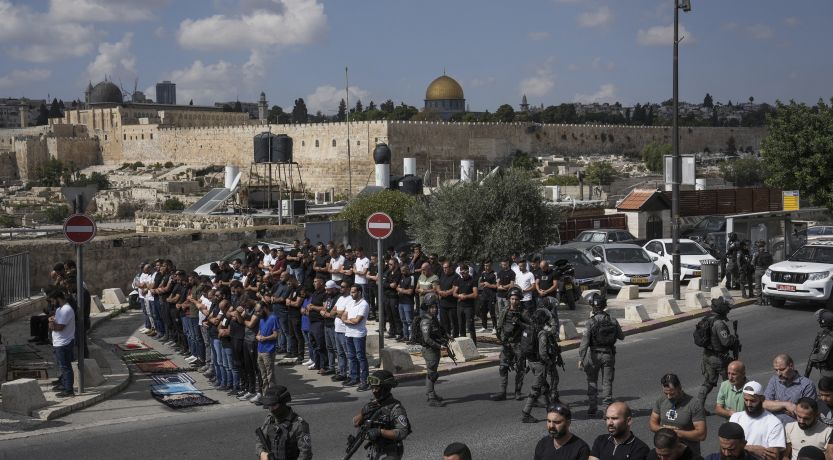
A group of Palestinians pray outside Jerusalem’s Old City while Israeli forces stand guard on Oct. 20, 2023 (AP Photo/Mahmoud Illean).

On Oct. 7, 2023, the terror group Hamas launched what they termed, “Operation Al-Aqsa Deluge.” Their goal was to rid Palestine and Jerusalem of Jews, who, they believe, occupy the territory illegally. Hamas leader Khaled Mash’al called for the Islamic community to join the holy war in the battle for the Al-Aqsa Mosque.

To understand this, we must understand the importance of the Al-Aqsa Mosque in the Islamic faith. Muhammad founded Islam in the seventh century, setting up Mecca and Medina as the two holiest sites in Islam. Both cities are located in modern-day Saudi Arabia.

According to Muslims, Muhammad was miraculously transported from Mecca to Jerusalem, the site of the Al-Aqsa Mosque, which means the “farthest mosque,” where we are told he met Jesus and the prophets and led them in prayer before being taken up to heaven from the site of the Dome of the Rock. 

After Muhammad’s death in 632, his second successor, Omar bin al-Khattab, conquered Jerusalem and built a mosque on the Temple Mount.

He claimed this Jerusalem mosque to be at the location of Muhammad’s night journey. Hence, it became known as the Al-Aqsa Mosque. Because of this, Jerusalem, and the Temple Mount in particular, became the third holiest site in Islam, behind the holy sites of Mecca and Medina. However, readers should understand that the city of Jerusalem is not mentioned by name in the Koran.

The Jewish claim to Jerusalem

The Jews claim Jerusalem as their capital and the Temple Mount as their most holy place of worship, because it was the location where the first and second temples stood.

Due to the nation’s disobedience, God’s presence left the first temple, and the building was destroyed by the Babylonians (Jeremiah 52:12-13; Ezekiel 9:3; 10:4, 18-19; 11:22-23).

The second temple was constructed under the leadership of Ezra, Haggai, Zechariah and Zerubbabel. However, the Romans destroyed the second temple in A.D. 70.

Today, some Jews seek to build a third temple, which the Palestinians and many Muslims believe will be at the expense of the Al-Aqsa Mosque. Some hardline Jewish Orthodox groups do believe the Al-Aqsa Mosque must be destroyed for the third temple to take its place. In many ways, the Al-Aqsa Mosque is the center of the conflict between Palestinians and Israelis.

(To learn of this conflict’s ancient roots, read “What’s Behind the War Between Israel and Hamas?”)

The Christian claim to Jerusalem

For Christians, Jerusalem is holy because it was the birthplace of Christianity. During the Dark Ages, it was the center of many battles between Muslims and Christians.

Prophecy shows that European forces will once again capture Jerusalem, setting off a series of events leading to Christ’s return. Jerusalem was first captured by Christians in the First Crusade (1099) under the leadership of Pope Urban II. But Christian control was soon lost to Muslim forces led by Saladin in 1187.

There were nine crusades, but the Christian forces were largely unsuccessful in their fight the Islamic armies to regain control of Jerusalem.

Though Europe today is largely secular, Bible prophecy shows that European forces fighting under a Christian banner will once again capture Jerusalem, setting off a series of events leading to Christ’s return. Christ warned, “But when you see Jerusalem surrounded by armies, then know that its desolation is near” (Luke 21:20).

To learn more, read “What Is the Abomination of Desolation?

A city of war

With three faiths claiming Jerusalem, it is the most contested city in the world. In recent history, there have been several wars over the city.

At the inception of the modern nation of Israel in 1948, the Arab nations of Lebanon, Syria, Iraq, Jordan and Egypt attacked the fledgling nation, intending to utterly destroy it.

Temple Mount in Jerusalem

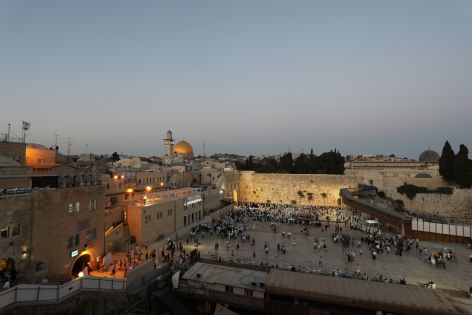
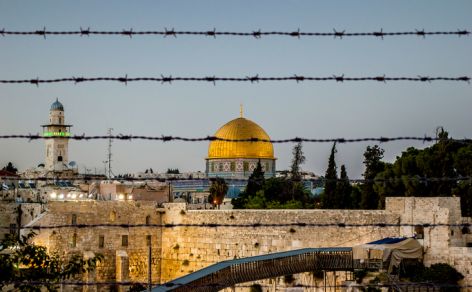
This image shows the three religious sites that are a source of conflict at the Temple Mount: the Dome of the Rock (left), the Western Wall (center) and the Al Aqsa Mosque (right).

The result was a victory for Israel, but Jerusalem remained divided—with West Jerusalem under Israel’s control and East Jerusalem under Jordan’s control.

On June 7, 1967, Israeli forces took control of Jerusalem and the Temple Mount during the Six-Day War.

They declared Jerusalem “the eternal and undivided capital of the Jewish State,” but to ease conflict over the Temple Mount, they appointed the Jordanian Ministry of Religious Endowments (“Waqf”) as the custodians of the holy site, which continues to this day. The Waqf does not allow non-Muslims to pray on the Temple Mount, a status that Jews try to contest.

On Oct. 6, 1973, Egypt and Syria launched the Yom Kippur War, a surprise attack on the solemn Day of Atonement (Yom Kippur). They aimed to regain the territory they lost during the 1967 Six-Day War.

Now, 50 years later, almost to the day (Oct. 7, 2023), on the festival of the Eighth Day (Shemini Atzeret), Hamas launched “Operation Al-Aqsa Deluge” to expel Jews from Israel and Jerusalem.

Contention over the Temple Mount

The Temple Mount is constantly a place of tension. Consider the following headlines:

The Bible calls the city a “very heavy stone for all peoples,” meaning it will be a burdensome problem for all nations that entangle their affairs with the city (Zechariah 12:3). The question remains: Who has the right to call Jerusalem their capital?

To learn more, read “Temple Mount: Its History and Future.”

The rightful owner of Jerusalem

The most popular solution for Jerusalem is known as the two-state solution. A common form of this proposes that Jerusalem be divided and returned to its pre-1967 borders, with West Jerusalem given to Israelis and East Jerusalem given to Palestinians.

Who Does Jerusalem Really Belong To?

Prophecy shows that before Jesus Christ’s return, the nations will be gathered against Jerusalem and the city divided

Bible prophecy shows that before Jesus Christ’s return, the nations will be gathered against Jerusalem and the city divided (Luke 21:20). But it will not be a solution, nor will it be peaceful. Half the city and inhabitants will be “taken” violently (Zechariah 14:2).

Then Christ will return to earth and punish the nations responsible for this (Joel 3:2).

But what happens after that will be a remarkable transformation. Jesus Christ will establish His world capital at Jerusalem! This shows that the holy city does not belong to any one nation or religion—but belongs to God Himself.

In Zechariah 2:12 God says He “shall choose Jerusalem again” (King James Version). Notice the following prophecies that show what He has planned for the city:

The Bible instructs us to “pray for the peace of Jerusalem” (Psalm 122:6). That means the return of Jesus Christ and the establishment of His Kingdom on earth. Only then will it fulfill the meaning of its name:   The City of Peace.””  From: https://lifehopeandtruth.com/prophecy/blog/who-does-jerusalem-really-belong-to/?

________

The Human Potential

Psalm 8:6-8

“You have made him to have dominion over the works of Your hands; You have put all things under his feet, all sheep and oxen—even the beasts of the field, the birds of the air, and the fish of the sea that pass through the paths of the seas.

At creation God gave humanity dominion—rulership—over the earth and the other creatures on it (Genesis 1:26-28). God intended for us to learn proper stewardship of what He gave us, and in the process of tending and keeping it, to grow in godly character. But our first parents chose the way of selfishness and shortsightedness, and humanity ever since has misused its dominion and befouled our planet.

The author of Hebrews shows that God’s intention goes beyond even the earth and its creatures. “For in that He put all in subjection under him, He left nothing that is not put under him. But now we do not yet see all things put under him” (Hebrews 2:8).

God truly meant all things—the whole universe! Jesus Christ came and died that we might be forgiven and offered that wonderful potential as the glorified children of God ( Hebrews 2:9-10 ).”

For more about this awesome potential, see our article on the “Purpose of Life.”  From: https://lifehopeandtruth.com/bible/blog/the-human-potential/

________

Avoiding Cholesterol is a No-Brainer

“Eggs and brains are the two most concentrated sources of cholesterol in the diet.  

Transcript of video at: https://nutritionfacts.org/video/avoiding-cholesterol-is-a-no-brainer/

Below is an approximation of this video’s audio content. To see any graphs, charts, graphics, images, and quotes to which Dr. Greger may be referring, watch the above video.

“The egg industry would rather blame the bacon or hash browns, railing against this myth that eggs are the most concentrated source of dietary cholesterol. And it’s true, they’re right. It is a myth. According to the official USDA nutrient database, in a list of the most concentrated cholesterol sources, eggs are not #1; they’re #2. Brains are #1. Veal brains, cow brains, pig brains, lamb brains, raw pig brains, more veal brains, and then eggs. Then more brains, eggs, brains, brains, eggs, brains, eggs, and eggs. The take-home message? If you’re going to do veal brains? Pan-fried, definitely; not braised.

What about omega-3-rich eggs? “The new type of eggs containing omega-3 fatty acids are still loaded with cholesterol,” the Director of the Stroke Prevention & Atherosclerosis Research Centre notes. “The answer is not to feed flax seed to the chickens, but rather to put it on the cereal and leave the chicken out of the meal!”

The devastating new review published last year implicating egg consumption did not go over easy with the egg industry. They countered that the overly restrictive 200mg upper safety limit for cholesterol intake, that wouldn’t even allow a single egg, is only for people at risk for heart disease—to which the lead researcher replied, “[Most everyone is] at risk of vascular disease—the only ones who could eat [an] egg yolk regularly with impunity would be those who expect to die prematurely from nonvascular causes…” In other words, his famous “The only [people] who should eat eggs regularly are those [dying of] a terminal illness”—because at that point, who cares? You’re going to drop dead anyway.”

In their landmark review, they conclude that waiting until your first stroke, heart attack, or diabetes diagnosis to avoid eggs is too late. They conclude: “Stopping egg consumption after a [heart attack] or stroke would be like quitting smoking after [a diagnosis of] lung cancer: a necessary action, but late.” From: https://nutritionfacts.org/video/avoiding-cholesterol-is-a-no-brainer/

But…….. also see infographic and article all about eggs at: https://www.mercola.com/infographics/egg-nutrition-facts.htm

_________

Tuesday, October 3, 2023

Is Karma in the Bible? Feast of Tabernacles? An Attitude of Gratitude. Bacon & Botulism

.

Is Karma in the Bible?

“In recent years, the Eastern concept of karma has become popular in Western culture. Can the idea of karma be harmonized with the Bible? Is karma biblical?” 

Is Karma in the Bible?

“Cause and effect is not karma

However, the Bible does teach the principle of cause and effect, which some incorrectly confuse with karma. There are two basic kinds of cause and effect:

1. Cause and effect by God’s blessings or punishment. The Bible is clear that God has the power to bless and punish. God told Israel He’d bless them if they obeyed and curse them if they rebelled (Leviticus 26; Deuteronomy 28). He exercised that authority with ancient Israel and will punish the nations in the end time for their wickedness and refusal to repent (Revelation 16:8-9).

God also promises to bless those who seek and obey Him (Psalm 1:1-2; Proverbs 10:6; James 1:25). But those blessings aren’t always immediately visible. Many seemingly innocent people have suffered hard lives throughout history (John 16:33; Hebrews 11; James 1:2-3). But the Bible promises that ultimately “all things work together for good” for God’s faithful people (Romans 8:28).

The Bible also shows that God is extremely merciful and is not constantly doling out physical punishment based on what we deserve (Matthew 5:45; Hebrews 2:1-4). In fact, considering the state of our world’s morality, we should be immensely thankful God doesn’t operate through karma.

2. Cause and effect through natural consequences. Both the Bible and common sense show that cause and effect operate naturally in our lives. The Bible expresses it this way: “Whatever a man sows, that he will also reap” (Galatians 6:7). In simple terms, decisions and actions often have natural consequences.

No amount of good deeds can offset our sins and save us from the death penalty. Forgiveness of sin can only occur through repentance and the blood of Jesus Christ. Much of the book of Proverbs is about cause and effect. For example, the natural consequence of being lazy is poverty, while diligence and hard work lead to financial stability (Proverbs 6:9-11; 10:4; 13:4; 20:13; 24:30-34).

These natural consequences aren’t determined by mysterious karmic energies, but by simple cause and effect. Practicing biblical principles positions a person for success because God’s ways work. However, in a world guided by Satan and human nature, sometimes the righteous suffer because of the sins of others (John 16:33; Romans 8:18; 1 Peter 3:17).

The Bible also shows that in this life sometimes the wicked do prosper for a time (Psalm 73:3; Jeremiah 12:1-3).

Though the Bible clearly teaches the principle of cause and effect, it is not a biblical equivalent to karma.

Why is the idea of karma dangerous?

Karma is clearly a man-made belief foreign to the Bible. Consider three reasons the idea of karma is spiritually dangerous and deceptive:

1. Karma replaces the all-powerful God with the universe. The power behind karma is usually described as the universe. Chopra.com describes it this way: “The Universe will bring back whatever acts you committed or feeling you caused in another person.” This worldview credits the physical creation as the ultimate arbiter of morality and reward and punishment.

But the Bible shows God created the universe (Genesis 1:1; Isaiah 42:5). God, not the universe or energy, is the “rewarder of those who diligently seek Him” (Hebrews 11:6). Jesus Christ, not the universe or karma, will ultimately “judge the world in righteousness” (Acts 17:31).

Karma is another way mankind has deceptively credited the creation with power that belongs only to God (Romans 1:25).

2. Karma contradicts biblical repentance. Many believe that “bad karma” can be erased only by outweighing it with “good karma.” This idea contradicts the biblical teaching on sin.

The Bible teaches that the ultimate penalty of sin is death—not physical curses (Romans 6:23). No amount of good deeds can offset our sins and save us from the death penalty. Forgiveness of sin can only occur through repentance and the blood of Jesus Christ (Acts 3:19; 1 John 1:7). A Christian must absolutely strive to obey God, but not as an attempt to outweigh the bad on the scales of karma.

Some sins do have ongoing physical consequences, but thankfully, after God forgives us, we no longer have to worry about the ultimate consequences of our sins.

3. Karma distorts the proper motivation for doing good. Karma is just one of many man-made attempts to encourage people to live morally. It plays on human nature by incentivizing doing good to avoid bad things coming back upon us later.

At its core, the concept of karma is driven by selfishness.

The Bible, on the other hand, teaches that morality is defined by God and should be driven by selflessness. Jesus taught that our ultimate motivation should be love—for God first and then for other human beings (Matthew 22:36-39). Paul described the proper motivation for everything we do this way: “The purpose of the commandment is love from a pure heart, from a good conscience, and from sincere faith” (1 Timothy 1:5).

Christians shouldn’t do good to avoid bad things coming on them. Christians should do good out of genuine love because it’s the right thing to do—regardless of the consequences.

So, is karma in the Bible? No. Karma is unbiblical and contradicts God’s Word in multiple ways.”      This is the last part of article at:  https://lifehopeandtruth.com/change/the-church/world-religions/karma-in-bible/?

______

Why Would You Observe the Feast of Tabernacles?

This year, Sukkot starts on the evening of Friday, 29 Sept and ends on Friday, 6 Oct 2023.

“The Feast of Tabernacles (Sukkot) represents the peace, prosperity and righteousness of the coming Kingdom of God, but how is it relevant to the Christians today?”

Transcript of video at: https://www.ucg.org/beyond-today/beyond-today-daily/why-would-you-observe-the-feast-of-tabernacles

[Steve Myers] Someone asked me the other day, "Why would you observe the Feast of Tabernacles? Is that a Christian thing?" Absolutely, it is. We follow the example of the New Testament Church. The church in the 1st Century kept and observed, celebrated, the Feast of Tabernacles. So, what is this feast? Well, it's definitely listed in Scripture as one of the feasts of the Lord. (Lev. 23:1-44) I don't know if you've ever checked that out, but it's the feast that God has established. It's one of His Holy Days. And so, for a period of time, we celebrate the Feast of Tabernacles for seven days. A complete festival. 

Seven is often a number of completeness because it represents that time, in God's plan, that has a deep spiritual meaning. Jesus Christ will return to this earth, 1 Thessalonians 4 spells that out completely, 1 Corinthians 15 as well. And so, the Feast of Tabernacles is representing that time when Christ will return as King of kings and Lord of lords. I know you've probably heard those classic choral selections that sing about that. He's King of kings and Lord of lords and He is returning. Well, the Feast of Tabernacles points to that time that Christ will literally come back to earth.

We can read about that in Revelation 5. Revelation 5, in fact, beginning in verse 10, it tells us, "He has made us kings and priests to our God, and we shall reign on earth." Christ will return and annihilate the kingdoms of man. Mankind will no longer be in charge. There will no longer be chaos and confusion in this world. Jesus Christ will establish righteous godly government. And for a thousand years, He will reign on this earth.

Perhaps you've even prayed about this symbolic meaning of the Feast of Tabernacles. You know, that model prayer, sometimes call the Lord's Prayer that Christ taught the disciples to pray. Perhaps you've said that prayer or parts of that prayer. It has that part that says, "Thy kingdom come, thy will be done." Christ will come back and establish His kingdom. It will come. And, of course, the rest of that prayer says, "On earth as it is in heaven." So the Feast of Tabernacles pictures that amazing time of peace and prosperity and righteous government that Christ Himself will come and establish right on this earth.

Check out The Feast of Tabernacles, find out the deep spiritual meaning behind God's purpose and His plan, and this vital step in His plan for salvation for all mankind.” From: https://www.ucg.org/beyond-today/beyond-today-daily/why-would-you-observe-the-feast-of-tabernacles

________

An Attitude of Gratitude: Sukkot for Christians

“In a festival similar to Thanksgiving, the Biblical feast of Sukkot (pronounced sue-COAT) gives us a chance to focus on our blessings from God and His desire to be with His people. Also called the Feast of Booths, Tabernacles, or Ingathering, it’s one of the seven commanded feasts in Leviticus 23.”  More at: https://hebrewrootsmom.com/an-attitude-of-gratitude-sukkot-for-christians/

_________

Bacon & Botulism

Transcript of video at: https://nutritionfacts.org/video/bacon-and-botulism/

“The nitrite preservatives in processed meats such as bologna, bacon, ham, and hot dogs form carcinogenic nitrosamines, but also reduce the growth of botulism bacteria—forcing regulators to strike a balance between consumers risking cancer, or a deadly form of food poisoning.

There are literally hundreds of studies on the link between cancer and cured meats like bologna, bacon, ham, and hot dogs. But just for a taste, just over the last year or so, processed meat consumption was significantly associated with bladder cancer, endometrial cancer, prostate cancer, thyroid cancer, and then all the way down the digestive tract: throat cancer, esophageal cancer, more esophageal cancer, more esophageal cancer and stomach cancer, colon cancer, and rectal cancer. And then, for a ten-for-one deal, processed meat was significantly related to the risk of stomach, colon, rectal, pancreatic, lung, prostate, testicular, kidney, more bladder cancer—and leukemia, as well. That’s why the official recommendation is to try to “avoid processed meats” entirely.

With concern over the potential danger of nitrosamines growing, consumer groups, such as the Center for Science in the Public Interest, a wonderful group, petitioned the USDA as far back as 1972 to ban, or at least greatly reduce, the nitrite in cured meats. The USDA denied the petition, citing nitrite’s role in the prevention of botulism bacteria that can grow inside vacuum-packed meats. They had to weigh the risk of cancer with the risk of consumers getting a deadly food poisoning bacteria from lunchmeat.

You know, in 2011, the National Pork Board officially changed their quarter-century old slogan from “Pork: the other white meat” to “Pork: Be Inspired.” Maybe for bacon, they should have considered the tagline: “Cancer or Botulism, take your pick.” From: https://nutritionfacts.org/video/bacon-and-botulism/

To see any graphs, charts, graphics, images, and quotes to which Dr. Greger may be referring, watch the above video. This is just an approximation of the audio contributed by MaryAnn Allison.

__________

Sunday, September 17, 2023

Why Should Christians Celebrate the Feast of Trumpets? Avoid These Cancer-Causing Foods.

.

Why Should Christians Celebrate the Feast of Trumpets?

Sunrise over the crest of a hill“Prophecies of the end time include trumpet plagues and the return of Jesus Christ at the last trump. What does the Feast of Trumpets mean for Christians today?

Christ's return is announced by the seventh and final trumpet.

The fourth festival of God (after Pentecost) is the Feast of Trumpets (or a "memorial of blowing of trumpets," Leviticus 23:24-25), which falls in September or October. (This year was celebrated 15th-16 Sept. 2023.)  This festival is called Rosh Hashanah by the Jews today. Ancient Israel understood that trumpets were used as a way of announcing special, very important messages (Numbers 10:1-10).

In the New Testament, Jesus Christ reveals that before His return to the earth, there will be the blowing of seven trumpets, announcing progressive stages of the downfall and overthrow of this world's kingdoms, ending with the return of Christ to take possession of the earth. Christ's return is announced by the seventh and final trumpet (Revelation 8:2; Revelation 11:15). This day also pictures the time when faithful Christians will be resurrected to eternal life at the time of the seventh trumpet (1 Corinthians 15:52; 1 Thessalonians 4:16) to reign with Jesus Christ for 1,000 years (Revelation 20:4-6).

Interestingly, it was around this time of year that Jesus was born—not in the dead of winter (see "Biblical Evidence Shows Jesus Wasn't Born on December 25"). And the fall feast season represents the time when Jesus Christ will come to the earth again to reign in glory.

The remaining fall feast days describe steps in the establishment of the prophesied Kingdom of God on earth and judgment of humanity after Christ's return. The Feast of Trumpets is followed by the Day of Atonement.”

For more information, please read our booklet God's Holy Day Plan: The Promise of Hope for All Mankind.”   From: https://www.ucg.org/bible-study-tools/bible-questions-and-answers/why-should-christians-celebrate-the-feast-of-trumpets

_______

Why the Feast of Trumpets?

Transcript of video at: https://www.ucg.org/beyond-today/beyond-today-daily/why-the-feast-of-trumpets

[Darris McNeely] “God's festivals are upon us. The annual Holy Days that God commanded mankind to keep in his name to worship and honor him. The Feast of Trumpets is coming up. The Feast of Trumpets is mentioned back in Leviticus 23. And within that chapter, we have what is called a time of the memorial of the blowing of trumpets, and Leviticus 23, "On the first day of the Sabbath month, a holy convocation and a blowing of trumpets."

Whenever God told his people to blow the trumpets, they were either to come together to be on the move and on the match or to go to war because it was a time of alarm. Trumpets heralded something significant. Now, what does that mean for us today? Well, if we believe in Jesus Christ's return and His promise from His Word of His second coming, then when we turn to 1 Thessalonians 4 we read something about another blowing of trumpets in verse 16 and the announcement of Earth's most significant possibly event that we could ever imagine. Let's read it. 1 Thessalonians 4:16, "For the Lord himself will descend from heaven with a shout, the voice of an Archangel. and with the trumpet of God."

Paul writes here to the church about the sounding of the trumpet of God, not what the men of Israel were to sound. That was just a forerunner, a picture of what this particular event really does show, the trumpet of God sounding with the appearance of Jesus Christ as King of Kings, but here's what happens. "And the dead in Christ will rise first." Paul has comforted the church here with the encouragement that those who have died will rise again and he shows that it's going to happen with a sounding of a trumpet. The Feast of Trumpets points us to the absolute hope, truth, and fact of the resurrection from the dead of those who are described as the dead in Christ. The Bible even elsewhere talks about it as a first resurrection, as one that is what is called also a better resurrection. It will be a glorious time. It will be a time of reunion.

Who in the Bible would you want to sit down and talk to? Which of the saints, which of the great figures of the Bible? Abraham, Noah, David, the Apostle Paul? They'll be in that resurrection. The question for you and I to consider is will we be in that resurrection? That truth, that hope, is a fact of God's word. The Feast of Trumpets points us to that, brings us to that reality. Let's remember that and think about what it means to observe that day in anticipation, the very hope of the resurrection of the dead.”  From: https://www.ucg.org/beyond-today/beyond-today-daily/why-the-feast-of-trumpets

_________

Unexpected foods that could increase risk of cancer | 9 News Australia

“Experts are warning other unexpected foods beyond processed meats like salami, bacon and sausages could put your health at increased risk of cancer.”

________

Avoid These Cancer-Causing Foods

Learn which foods to steer clear of – and which to enjoy – to lower your cancer risk.

U.S. News & World Report

Worst Cancer-Causing Foods

Homemade beef burgers with crispy bacon and vegetables in small pans and glass of wheat beer on rustic serving board over shabby wooden background, top view, copy space, horizontal compositionMore

“Over the last several decades, certain foods have been vilified as being potentially carcinogenic, or capable of causing cancer. So which ones are the biggest culprits? And how can you eat to prevent cancer or reduce the chances of a recurrence if you've been diagnosed?

(GETTY IMAGES)

The list of potentially cancer-causing foods includes:

  • Red and processed meat.
  • Sugar.
  • Alcohol.
  • Processed and packaged foods.
Red and Processed Meat

For the carnivores among us, it's probably tough to hear the news that red meat and processed meat are associated with a higher risk of certain types of cancer. "Red meat is defined as beef, veal, pork, lamb and goat," says Cathy Leman, a dietitian, personal trainer, nutrition therapist, speaker, writer and breast cancer survivor based in Chicago.

"Processed meat refers to meat that has been salted, cured, fermented, smoked or other processes that enhance flavor or improve preservation," she adds. Examples include hot dogs, luncheon meats, ham and bacon.

Jeannette Schenk, senior staff scientist in the cancer prevention program at Fred Hutchinson Cancer Research Center in Seattle, says "there have been many epidemiological studies that have reported an association with high intakes of processed meat and red meat with an increase in cancer incidence and mortality."

According to the American Institute for Cancer Research, a high intake of red meat is defined as more than three servings per week. A single serving of red meat is about 3 to 4 ounces – or one small hamburger, steak or a medium-sized pork chop. Your total weekly consumption, the AICR reports, should be under 350 to 500 grams (about 12 to 18 ounces cooked) each week.

The cancer risk associated with processed meat products is even higher. The International Agency for Research on Cancer, a branch of the World Health Organization, classifies processed meat as a Group 1 carcinogen, meaning that like other Group 1 carcinogens – tobacco, UV radiation and alcohol – research has proven that processed meat can cause cancer in humans. Eating just 50 grams of processed meat each day, the IARC reports, can elevate cancer risk by 18%.   Four strips of bacon or one hot dog contains about 50 grams of processed meat.”  More at: https://health.usnews.com/conditions/cancer/articles/worst-cancer-causing-foods

________

Sunday, May 28, 2023

Why is Shavuot Important? Pentecost For Kids. How Much Cancer Does Lunch Meat Cause?

.

Shavuot in Scripture: Why is Shavuot Important?shavuot

Pentecost is today, Sunday, 28 June, 2023.

“Most Christians today don’t celebrate or are knowledgeable about Jewish (Old Testament) holy days. Yet, there is great benefit to believers in digging into and experiencing the culture and meaning behind the various festivals. Today, we’re looking at why Christians should celebrate Shavuot.

Perhaps you desire to know more or want to connect the Old Testament and New Testament in a way that will help your kids remember it.

Celebrating the Feasts of our Lord is the best teaching tool we as parents and grandparents can use to instill God’s Word, story, and truths in the hearts of our children.

If you have a longing to teach them all that God is and why it matters, this is a great addition to family traditions. I still remember stories that were told to me when I was very young. In fact, in grade school our music teacher was also the music leader at his church. So our musical in 4th grade school was Daniel in the Lion’s Den. I ‘ll never forget those songs or stories.

The same is true today. As we teach God’s Word to our kids – let them sing the stories, read the stories, enact the stories, and celebrate the stories – they too will never forget. I hope you agree that these are great reasons as to why Christians should celebrate Shavuot.

Shavuot In Scripture

Let’s turn to the Bible for a moment. In Scripture, Shavuot is known as “the Feast of Weeks.” Later, in the New Testament, it becomes Pentecost. The following Bible verses show us what the Bible says about this special feast.

Exodus 34:22  You shall celebrate the Feast of Weeks, that is, the first fruits of the wheat harvest, and the Feast of Ingathering at the turn of the year.

Numbers 28:26 ‘Also on the day of the first fruits, when you present a new grain offering to the Lord in your Feast of Weeks, you shall have a holy convocation; you shall do no laborious work.

Deuteronomy 16:10 Then you shall celebrate the Feast of Weeks to the Lord your God with a tribute of a freewill offering of your hand, which you shall give just as the Lord your God blesses you;

Acts 2:1-4 When the day of Pentecost had come, they were all together in one place. And suddenly there came from heaven a noise like a violent rushing wind, and it filled the whole house where they were sitting. And there appeared to them tongues as of fire distributing themselves, and they rested on each one of them.

Now let’s talk about why Shavuot (or Pentecost) matters.

Why Is Shavuot So Important?

Shavuot is one of those favorite stories to relive. God has something important to convey in it and that’s why He set it aside as one of the Feasts of our Lord.

In fact, it was so important that God commanded the Jewish people to come to Jerusalem each year to celebrate Shavuot, also known as the Feast of Weeks.

But why is the festival of Shavuot so important to us today?  Glad you asked.

This is my personal take on Shavuot and why we as Christians should celebrate this Jewish tradition every year.

1. God's Holy Law

god's holy lawShavuot is a reminder of God’s laws (the ten commandments) written on the tablets of stone. It helps to always be reminded of how God delivered the laws on Mt Sinai and read as a family the verses where the experience was recorded.
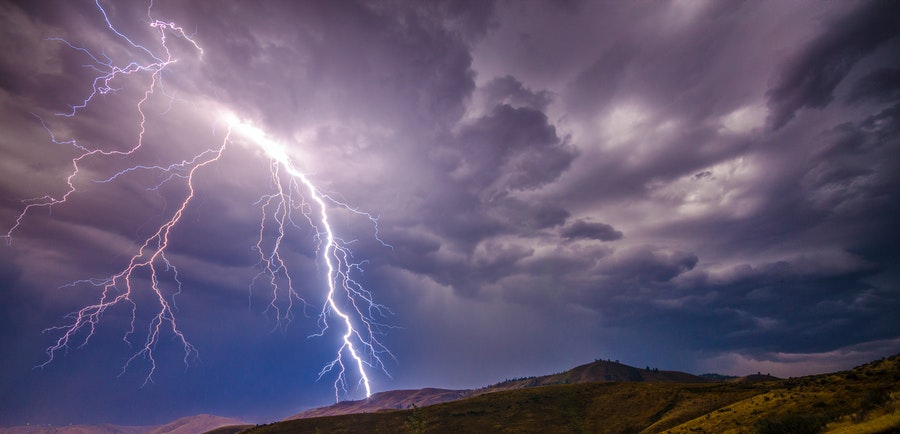
And all the people were watching and hearing the thunder and the lightning flashes, and the sound of the trumpet, and the mountain smoking; and when the people saw it all, they trembled and stood at a distance. Exodus 20:18   Lightning, flashes, thunder, smoke (fire). Things we can all relate to.

Jewish teachings relay that Moses received the Law on the 50th day after Passover. (Exodus 19:1)

We can also note that when Moses came down from the mountain 40 days later, there was a golden calf waiting for him. The people had rebelled against the God who rescued them out of slavery and sustained them day-to-day and created their own god.

The Lord was understandably angry. On that day around 3,000 Israelites were killed.

God is very serious about His Words and His promises!

2. Promise Delivered

We see Shavuot celebrated in the book of Acts as the disciples, who were Jews, plus many more people gathered together.

When the day of Pentecost had come, they were all together in one place. And suddenly a noise like a violent rushing wind came from heaven, and it filled the whole house where they were sitting. And tongues that looked like fire appeared to them, distributing themselves, and a tongue rested on each one of them. And they were all filled with the Holy Spirit and began to speak with different tongues, as the Spirit was giving them the ability to speak out. Acts 2:1-4

This experience told to us by Luke is an example of God delivering on His promise from the book of John.

…but an hour is coming and now is when true worshipers shall worship the Father in spirit and truth for such people the Father seeks to be His worshippers. God is spirit and those who worship him must worship in spirit and truth. John 4:23-4

But the Helper, the Holy Spirit who the father will send in my name he will teach you all things and bring to your remembrance all that I said to you! John 14:26

That is reason enough to celebrate the Feast of Weeks – Shavuot!

We need reminders of what God has given us. We need the Holy Spirit to bring to remembrance all that God’s Word teaches us.

Jesus the Messiah delivered on His promise! And He is still delivering on His promises today.

Shavuot is about deliverance from bondage and also deliverance from the evils of this world. These are amazing promises of the Lord!

The Feast of Weeks is celebrating God’s faithfulness in maintaining His covenant and fulfilling His promises. There’s a distinct connection between fulfilled promises of the Lord and Pentecost, when Shavuot begins, in the early church.

This particular Pentecost, or Shavuot, is when God gave the law written in the hearts of the people through the Holy Spirit.

3. Languages

languagesIn my upbringing, we rarely talked about the early disciples’ Pentecost experience because it brought up the hard-to-answer question about ‘tongues’.
This is not hard to explain when it’s learned in the context and original language of the time.

When God delivered the tablets of stone – the laws – in Exodus 20:18,  it says “the people perceived the thunder and lightning flashes and the sound of the trumpet and the mountain smoking and when the people saw it they trembled and stood at a distance.”

This thundering is each person hearing God’s voice.  The Israelites on the mountain were hearing God speak.

The tongues in Acts are the languages to spread the Gospel to all peoples.  The people outside the room where the disciples were being given the gift of the Holy Spirit heard the Gospel for the first time in their own language.  People traveled from miles around, there would have been people in Jerusalem from all over. Some authorities say there could have been a million people in Jerusalem that day.  The sound coming from the room to the outside was the Gospel and those hearing it were being saved in their own language.  Around 3,000 were saved that day.

It was never about confusion. That’s a misinterpretation. Tongues mean languages. It was and always is about the Gospel. And the people who needed to hear it. Heard it in their language. Today we have the power of the Holy Spirit to share the Gospel with all people. God will supply the words. We are not to let nationalities or languages cause us to hesitate our call.

4. Thanksgiving

Shavuot is a feast of thanksgiving. Thanking God for the harvest, historically wheat and barley. People bring gifts as a sacrifice, gifts from their produce.  We too need to celebrate with a feast of thanksgiving.  Thanking God for the complete assurance of salvation by grace through faith in Christ Jesus.  Gratitude for the gift of the Holy Spirit, who is our helper. Celebrating Shavuot helps us teach our kids about the Holy Spirit and how He guides us on a daily basis.

Are you interested in learning more about the feasts of the Lord and how we can celebrate them?

For free celebration guides, devotionals, decor ideas, activities for kids, and quick, easy teachings on each feast (including Shavuot), click here.

5. Leaven

unleavened bread in the bibleAt Passover, we removed all the leaven from the home. (Leaven represents sin in our lives.)  During Shavuot, we’re given new leaven.  Leaven also means teachings.

Yeshua (Jesus) explained that leaven represents teachings and we are not to learn from the Pharisees, who focus on traditions and doctrines. Instead, we’re to learn from God’s Word. In the first chapter of the Treasures of Healthy Living Bible Study, we discuss how there’s as much to unlearn as there is to learn. As we study scriptures for ourselves and teach our kids to do the same, the Holy Spirit guides us. There are many gifted and blessed teachers we can learn from. Yet the Word is always the final authority.

Celebrate Shavuot

celebrate shavuotAs we celebrate Shavuot, it doesn’t have to be in the traditional Jewish nature.  We celebrate with music, singing, sharing praises, enjoying a feast, fellowship, and reading the story of Ruth with some fun antics added in.  Then we pray for our nation and for Israel.  Consider Acts 2:42-43: They were continually devoting themselves to the apostles teaching and to fellowship to breaking of bread and to prayer. Everyone kept feeling a sense of awe and many wonders and signs were taking place through the apostles.


Later, in chapter 3, a man was healed. And leaping up, he stood and began to walk; and he entered the temple with them, walking and leaping and praising God. And all the people saw him walking and praising God. Acts 3:8-9  This is why we celebrate the Feasts of Our Lord. We are to live in such a way that people say, “Times are hard. Why are you walking and leaping and praising God?”

Our world can be chaotic and worrisome. Just in the most recent times our gas was shut down, we have COVID fear, and bombs are going off in Israel. There are always a host of hard, painful, and tragic things occurring in this broken, fallen world. Yes, I know these things. I don’t ignore them, but I know the God who knows all and loves me beyond all measure. That He is still good and He is still in control.

Therefore, I’m going to walk and leap and praise God. The Bible isn’t just great stories. It’s Jesus in real time. And because of Him, we rejoice in His Word, His revelation, His redemption, and so much more.

Shavuot is another great opportunity to take a break from our normal routines and set aside special time to remember and celebrate God’s faithfulness.

Are you ready to celebrate Shavuot with your family? I hope and pray so!”  From: https://thebiblicalnutritionist.com/why-christians-celebrate-shavuot/

________

See also: https://lifehopeandtruth.com/life/plan-of-salvation/pentecost/from-pentecost-to-pentecostalism/

________

EEI-Logo-600-3

eei-pentecost-header

“Almost 2,000 years ago, on the Day of Pentecost, God gave His Church a powerful gift: His very Spirit.

We may not have visible tongues of fire on our heads today, but

with God’s Spirit we can miraculously transform our hearts and

minds daily and take on God’s character.”

eei-view-lesson

eei-pentecost1

“Learn about the significance of the wave sheaf offering

and its connection to the festival of Pentecost.”

eei-pentecost2

“Refresh your understanding on what it means to be

a “firstfruit” and on what the character of a firstfruit

looks like.”

eei-pentecost3

“Discover the power that can guide and direct us daily,

enabling us to have the mind of Christ.”

eei-view-lesson

“Have a refreshing and joyous Feast of Pentecost!”

Join other parents, grandparents and guardians to discuss how they are using the EEI Parenting Manual to teach their children in our Facebook Group.

From: https://lifehopeandtruth.com/learning-center/youth-development/the-word-of-god/feast-of-pentecost/?

_______

How Much Cancer Does Lunch Meat Cause?

“Why does the leading cancer and diet authority recommend we avoid bacon, ham, hot dogs, sausage, and all other processed meats—including chicken and turkey?

How many years of life are lost to potentially preventable cancers? Every year, more than five million expected years of life are lost to lung cancer, breast cancer, and colorectal cancer alone. Therefore, identifying and improving strategies for prevention of cancer remains a priority, especially since not more than 2% of all human cancer is attributable to purely genetic factors. The rest involve external factors such as our diet.

The most comprehensive summary of evidence on diet and cancer ever compiled recommends we should eat mostly foods of plant origin to help prevent cancer. This means centering one’s diet around plant foods. Not just whole grains and beans every day, but every meal.

And, when it came to foods that may increase cancer risk, they were similarly bold. Unlike many other dietary guidelines that wimp out, and just advise people to “moderate” their intake of bad foods, like eat less candy. The cancer guidelines didn’t mince words when it came to the worst of the worst. For example, don’t just minimize soda intake, avoid it. Don’t just cut back on bacon, ham, hot dogs, sausage, and lunch meats, but avoid processed meats, period, because data do not show any level of intake that can confidently be shown not to be associated with risk.

Processed meat cannot only be thought of as a powerful multi-organ carcinogen, but may increase the risk of heart disease and diabetes. Red meat was bad, but processed meat was worse, and that included white meat, like chicken and turkey slices. So, with more heart disease, cancer, and diabetes, it’s no surprise processed meat consumption has been associated with increased risk of death.

In Europe, they calculated that reduction of processed meat consumption to less than 1/4 a hot dog a day [sic – – should be half a hot dog] would prevent more than 3% of all deaths.

This was the second largest prospective study ever done on diet and cancer, a study of more than 400,000 people. The largest ever, 600,000, was done here in the US, the AARP study. They found the preventable fraction to be much higher, suggesting, for example, that 20% of heart disease deaths among women could be averted if the highest consumers cut down to like less than a half strip of bacon a day.

To see any graphs, charts, graphics, images, and quotes to which Dr. Greger may be referring, watch the above video. This is just an approximation of the audio contributed by Katie Schloer.

DOCTOR'S NOTE

“The World Health Organization recently published a report that puts chicken nuggets, deli turkey slices, bacon and other processed meats in the same category as cigarettes and asbestos: known carcinogens. According to independent research cited by the WHO, the deaths of 34,000 people from cancer every year are attributable to diets high in processed meat, in addition to the 800,000 additional deaths due to cases of diabetes and heart disease. That’s a meat-borne epidemic every year.”  From: https://nutritionfacts.org/video/how-much-cancer-does-lunch-meat-cause/

________

More on processed meat can be found in videos such as:

But cancer risk has been associated with unprocessed meat as well via a variety of potential mechanisms:

_____