Showing posts with label Troops. Show all posts

Thursday, June 6, 2024

D-Day and Divine Intervention.

.

D-Day and Divine Intervention

Posted on May 10, 2019 by Tom Robinson
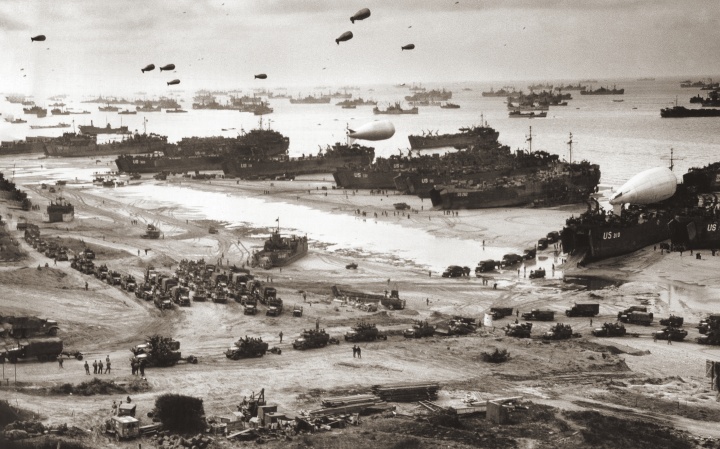
With the Normandy beachhead secured, vast numbers of Allied troops and military vehicles flood ashore.“On this 75th (now 80th) anniversary of D-Day, a crucial event in the push to Allied victory in World War II, we look back on the remarkable miracle of its success—an answer to prayer and the fulfillment of destiny.

Imperial War Museum

With the Normandy beachhead secured, vast numbers of Allied troops and military vehicles flood ashore.

It’s been 75 (now 80) years since D-Day, June 6, 1944, when Western Allied forces during World War II launched the largest invasion in history with nearly 7,000 ships of all sorts and more than 11,000 planes, crossing the English Channel and landing more than 150,000 troops (and more over the days that followed) on the beaches of Normandy to free France and the rest of Europe from Nazi tyranny.

German leader Adolf Hitler had prepared a vast defensive network of artillery, gun emplacements, mines and other deadly obstacles stretching from the west coast of France up to Norway. This “Atlantic Wall” had to be breached for the Allies to press forward and defeat this evil, genocidal regime that with its Axis partners was intent on continuing the carnage of many millions while trying to conquer the world.

Famed war correspondent Ernie Pyle, who arrived at Normandy the day after D-Day, noted that the Allies achieved victory “with every advantage on the enemy’s side and every disadvantage on ours.” Yet, as he wrote, the total Allied casualties “were remarkably low—only a fraction, in fact, of what our commanders had been prepared to accept.” Pyle concluded, “Now that it is all over, it seems to me a pure miracle that we ever took the beach at all.”

What was miraculous about D-Day, and why would God have intervened?

The weather and other surprises—flukes or God’s handiwork?

Gen. Dwight Eisenhower, Supreme Allied Commander (and later U.S. president), said later on the 1952 anniversary of the operation launch: “This day eight years ago, I made the most agonizing decision of my life. If there were nothing else in my life to prove the existence of an almighty and merciful God, the events of the next twenty-four hours did it . . . The greatest break in a terrible outlay of weather occurred the next day and allowed that great invasion to proceed, with losses far below those we had anticipated.”

The Allies had tried to plan for every eventuality, but they had no control over the vital weather. They hoped for good weather to make the 100-mile sea crossing to Europe, as had miraculously occurred in the mass evacuation from Europe at Dunkirk early in the war. What they didn’t realize was that bad weather—the windiest in 20 years—would hand them success beyond all expectation.

D-Day was originally scheduled for June 5 and could only be postponed for the short term to the 6th or 7th, while the tides were still low and the moon was full for visibility (along with clear weather), especially for clearing or avoiding mines in the surf. Otherwise it would have to have been put off a good while later.

With the terrible weather that sprang up on June 5, it looked like the operation was a no-go, but meteorologists reported a break was about to occur in the weather to allow the 17-hour crossing, though there was as yet no sign of any calming. Eisenhower made the agonizing decision for the ships to launch on the 5th (to arrive the next day) in the face of severe winds. As it turned out, the weather was only marginally better on the 6th, yet enough for the invasion to succeed even with weather-related losses.

What really helped win the day was that the Germans could not believe the Allies would cross the English Channel in such awful weather, and they were caught completely unprepared. They had stood alert at low-tide and full-moon days in May, but they now did not see the need. Half the German division commanders and a fourth of the regiment commanders left for war games exercises in Brittany. Field Marshal Erwin Rommel, in charge of the Normandy defenses, decided to travel 500 miles to Germany to celebrate his wife’s birthday. He came back at word of the invasion, but it took him all day—by then too late.

Also, Adolf Hitler and other leaders under him were convinced by Allied ploys and their own theories that the Allied invasion was going to be further east. And when it arrived they assumed it was a diversion, with the real landing to take place elsewhere—a belief that Hitler bizarrely clung to up through August!

Meanwhile, most of the Luftwaffe (German air force) planes based in Normandy had been relocated to Germany to defend against increasing Allied bombing. With that and the bad weather, German planes were not patrolling the English Channel. Moreover, this was the only night the German U-boat submarines did not patrol it. So the Allies encountered hardly any enemy forces on the way.

Confusion among German defenders

A key early step in the invasion was for paratroopers to come in gliders at 100 mph with no guiding lights and to land secretly next to two critical guarded bridges and secure them—to keep the Germans back and prevent the Germans from destroying them so the Allies couldn’t use them. The weather helped in this too, hiding the gliders in the low clouds as they flew by stopwatches until they dropped out at 200 feet, when the pilots could then see.

The first paratroopers to land were stunned, British platoon leader Maj. John Howard later stating: “When we came to our senses, we realized there was no firing. There was no enemy firing. It all seemed quite unbelievable.” The 22 paratroopers trotted over the bridge, the terrified guards dove into the bushes, and the garrison was taken in 10 minutes. But two German tanks arrived, with four more on the way. The paratroopers had only a single anti-tank gun, and with one chance succeeded in hitting the tank right in the middle, setting off all the ammunition inside—the burning tank now blocking the German advance and enabling lost paratroopers to be reoriented.

The Germans were not then able to counterattack there or across the wider area. They now had only two panzer (or tank) divisions near the Normandy landings. Early in the morning, Field Marshal Gerd von Rundstedt ordered these to move in, not believing such a large-scale invasion could be a deception.

But he had to get approval, as these forces were under the German high command. Approval was not given, as Hitler had to give the order, and he was still sleeping—and he didn’t awaken until noon. Hitler’s approval did not come until 4 p.m., and by that time the weather had cleared and Allied aircraft ruled the skies over Normandy, smashing anything that moved on the ground. (Much more could be said of Hitler’s terrible blunders, which some speculate may have resulted from disease or drug and chemical interactions affecting his brain.)

Many remarkable things happened on D-Day. The landing at Utah Beach was actually in the wrong place, but this worked out in the Allies’ favor, as the beach was less defended there. Of course, other places saw far worse fighting. The taking of the Normandy beaches was still horrific, with thousands dead or wounded. Yet the casualty count had been expected to be many times higher. And the victory allowed the liberation of Europe to follow over the next year.

The weather that seemed poised to thwart the Allied cause in reality greatly helped it. And the Nazi leadership was in many ways confounded. Eisenhower and many others saw this as clear help from Almighty God. In fact, newspapers at the time declared the events of D-Day, Dunkirk, El Alamein, the Battle of Britain and a number of other battles to be miraculous, particularly in the wake of widespread prayer to God for deliverance.

U.S. and British leaders and people look to God

Gen. Eisenhower told the troops embarking for Normandy: “The eyes of the world are upon you. The hopes and prayers of liberty-loving people everywhere march with you . . . The tide has turned! The free men of the world are marching together to Victory! I have full confidence in your courage, devotion to duty and skill in battle. We will accept nothing less than full Victory! Good Luck! And let us all beseech the blessing of Almighty God upon this great and noble undertaking.”

British Field Marshal Bernard Montgomery had told the troops, “Let us pray that the Lord, mighty in battle, will give us victory.”

As the forces approached Normandy, U.S. President Franklin Roosevelt took to the airwaves with this call: “In this poignant hour, I ask you to join with me in prayer.”

He publicly prayed: “Almighty God: Our sons, pride of our nation, this day have set upon a mighty endeavor, a struggle to preserve our Republic, our religion, and our civilization, and to set free a suffering humanity . . . They will need Thy blessings. Their road will be long and hard . . .

“They fight not for the lust of conquest. They fight to end conquest. They fight to liberate . . . They yearn but for the end of battle, for their return to the haven of home. Some will never return. Embrace these, Father, and receive them, Thy heroic servants, into Thy kingdom.

“And for us at home . . . help us, Almighty God, to rededicate ourselves in renewed faith in Thee in this hour of great sacrifice.

“Many people have urged that I call the nation into a single day of special prayer. But because the road is long and the desire is great, I ask that our people devote themselves in a continuance of prayer. As we rise to each new day, and again when each day is spent, let words of prayer be on our lips, invoking Thy help to our efforts . . .

“And, O Lord, give us faith. Give us faith in Thee; faith in our sons; faith in each other; faith in our united crusade . . . With Thy blessing, we shall prevail over the unholy forces of our enemy. Help us to conquer the apostles of greed and racial arrogances. Lead us to the saving of our country, and with our sister nations into a world unity that will spell a sure peace—a peace invulnerable to the schemings of unworthy men. And a peace that will let all of men live in freedom, reaping the just rewards of their honest toil.

“Thy will be done, Almighty God. Amen.”

As word of the invasion spread, prayer vigils were quickly organized throughout the country. Many businesses closed for prayer.

“This was the Lord’s doing, and it is marvellous in our eyes”

Britain’s King George VI said in a worldwide radio address on D-Day: “Four years ago our nation and Empire stood alone against an overwhelming enemy, with our backs to the wall. Tested as never before in our history, in God’s providence we survived that test . . .

“Once more a supreme test has to be faced. This time the challenge is not to fight to survive, but to fight to win the final victory for the good cause . . . That we may be worthily matched with this new summons of destiny, I desire solemnly to call my people to prayer and dedication.

“We are not unmindful of our own shortcomings, past and present. We shall ask not that God may do our will, but that we may be enabled to do the will of God; and we dare to believe that God has used our nation and Empire as an instrument for fulfilling His high purpose.

“I hope that throughout the present crisis of the liberation of Europe there may be offered up earnest, continuous and widespread prayer . . .

“If from every place of worship, from home and factory, from men and women of all ages and many races and occupations, our intercessions rise, then, please God, both now and in the future, not remote, the predictions of an ancient psalm may be fulfilled: ‘The Lord will give strength unto His people; the Lord will give His people the blessing of peace.’”

Did God answer this great outpouring of prayer? Many are justifiably convinced that He did.

After the Allies swept triumphantly through France in 1944, Gen. Montgomery felt compelled to say: “Such an historic march of events can seldom have taken place in such a short space of time . . . Let us say to each other, ‘This was the Lord’s doing, and it is marvellous in our eyes.’”

A God who intervenes and answers national prayer

The Bible reveals that God cares about what happens in the affairs of nations and intervenes in working out His overall plan. “For wisdom and might are His. And He changes the times and the seasons; He removes kings and raises up kings” (Daniel 2:20-21)—sometimes to punish sinful nations and rulers (compare Genesis 15:16; Isaiah 10:12)—and also to protect His servant people from annihilation.

He chose the people of Israel to fulfill a very special destiny. In prophesying of the Israelites in the last days, God promised to make Joseph’s descendants through his sons Ephraim and Manasseh the most blessed nations in the world and strengthen them against their enemies (Genesis 49:22-24), declaring that their descendants would “push the peoples to the ends of the earth” (Deuteronomy 33:17). He further said the Israelites would be “like a lion . . . Your hand shall be lifted against your adversaries, and all your enemies shall be cut off” (Micah 5:8-9).

Other verses show that God would also discipline the Israelites through losses to enemies. But He promised that if His people would humble themselves in prayer, He would forgive them and heal their land (2 Chronicles 7:14).

All of this plays a huge part in what happened at D-Day and the various other instances of divine intervention during World War II and in other conflicts. For, as incredible as it may seem, the prophecies regarding end-time Israel have been fulfilled primarily through the United States and Britain and other nations of British descent. In fact, these nations are in large part actually formed of the descendants of Joseph! (Be sure to read our free study guide The United States and Britain in Bible Prophecy for the proof of this identity and heritage.)

Though this truth is unknown to most, many over the last few centuries have had a sense of the promises to Israel applying in some ways to these great Bible-believing nations.

Leaders who recognized the hand of God at work

Observe what Winston Churchill, British Prime Minister at the time of D-Day, said in his memoirs of the First World War regarding an encounter with Scripture just after he took charge of the Royal Navy:

“That night when I went to bed, I saw a large Bible lying on a table in my bedroom. I thought of the peril of Britain, peace-loving, unthinking, little prepared . . . I thought of mighty Germany . . . wave after wave of valiant manhood . . . of the sudden and successful wars by which her power had been set up. I opened the Book at random, and in the 9th Chapter of Deuteronomy I read—

“‘Hear, O Israel: Thou art to . . . possess nations greater and mightier than thyself . . . a people great and tall of whom thou hast heard say, who can stand before the children of Anak!

“‘Understand therefore this day, that the Lord thy God is he which goes over before thee; as a consuming fire . . . Not for thy righteousness, or for the uprightness of thy heart . . . but for the wickedness of these nations the Lord thy God doth drive them out from before thee, and that he may perform the word which the Lord sware unto thy fathers, Abraham, Isaac and Jacob.’

“It seemed a message full of reassurance” (The World Crisis, Mentor edition, 1968, pp. 58-59). Indeed it was.

During the Second World War, the same Churchill, now prime minister, gave a message in 1942 stating: “I sometimes have a feeling of interference. I want to stress that. I have a feeling sometimes that some Guiding Hand has interfered. I have a feeling that we have a Guardian because we have a great Cause, and we shall have that Guardian so long as we serve that Cause faithfully.”

At the victorious conclusion of the war, Churchill led the British House of Commons to “give humble and reverent thanks to Almighty God for our deliverance.”

Harry Truman, U.S. president at the end of World War II, later remarked in 1951: “I do not think that anyone can study the history of this nation without becoming convinced that Divine Providence has played a great part in it. I have the feeling that God has created us and brought us to our present position of power and strength for some great purpose. It is not given to us to know fully what that purpose is.”

Will we continue to look to God?

While these men did not grasp the big picture of what God was working out, they and others at the time still realized who had saved them and seen them through. Do we?

It’s heartrending to contemplate, but it will not be long before the world is plunged into the worst time of trouble ever—far worse than World War II. America and Britain will not then succeed in beating back the enveloping tyranny but, having drifted far from God, will experience devastating defeat and destruction.

Yet, thankfully, a great deliverance will at last come—from the same God. The Father will send Jesus Christ to return to the earth in awesome power. Descending with the hosts of heaven, Jesus will come in divine war, crushing the armies arrayed against Him. Overthrowing the tyranny of wicked men and of Satan behind it all, He will take over the governing of the whole world, then bringing an end to war and guiding mankind into the way of peace.

As we remember D-Day, let’s be grateful for God’s great intervention then and at other times and, humbling ourselves in prayer, continue to trust Him now and for the future deliverance He will ultimately bring.”  From: https://www.ucg.org/beyond-today/beyond-today-magazine/d-day-and-divine-intervention

_________

Sunday, May 26, 2024

Memorial Day: A Day of Remembrance. Does Grilled Meat Cause Cancer? Avoiding Cooked Meat Carcinogens.

.

Memorial Day: A Day of Remembrance

 Memorial Day: A Day of Remembrance“Memorial Day helps us remember those who have died in war. It can also help us long for the day when true peace will come to this war-torn world.

On Memorial Day Americans will honor those who died fighting in the many wars that have marked this nation’s nearly 248-year history. Flowers will be placed on the graves of the dead, and ceremonies will take place around the country to honor those who gave their lives in defense of this country.

Prayers will also be offered up for the safety of those actively serving in harm’s way.

As we honor those who sacrificed their lives in war, we might ask ourselves, will war or the threat of war always be with us?

A brief history of Memorial Day

Memorial Day was proclaimed in 1868 (three years after the Civil War) by General John Logan and was first observed on May 30 of that year when flowers were placed on the graves of Union and Confederate soldiers at Arlington National Cemetery. More Americans were killed fighting the Civil War than both world wars combined.

After World War I the holiday was changed to honor Americans who died fighting in any war. It is now celebrated on the last Monday in May.

Most have deep respect for the young men and women who willingly laid their lives on the line for the security of their families and country.

Sometimes in today’s ungodly world, it seems that there is no alternative to war.

The terrible toll of war

Though war is glorified in movies and video games, in reality it exacts a terrible toll on nations as well as individuals.

An age is coming when mankind will learn to live at peace with one another  Marriage and family life are disrupted when a soldier has to leave for months at a time. Fathers and mothers are often deprived of the joy of being with their children in the most formative years of their lives.

Bodies and minds are often scarred beyond repair by the carnage of war. Parents’ and grandparents’ hearts are torn apart by news of the sudden and tragic ending of the lives of their children and grandchildren in some far-off place.

To learn why wars occur, read “Why Does God Allow War?

Neither shall they learn war anymore

Thankfully, an age is coming when mankind will learn to live at peace with one another; when the disputes between nations will not be resolved on the battlefield, but by a just and righteous world government led by Jesus Christ, the King of Kings.

The Bible speaks of a future time following the return of Jesus Christ when there will no longer be a need for war colleges or warfare.

The World To Come Booklet“Now it shall come to pass in the latter days that the mountain of the LORD’s house shall be established on the top of the mountains, and shall be exalted above the hills; and peoples shall flow to it. Many nations shall come and say, ‘Come, and let us go up to the mountain of the LORD, to the house of the God of Jacob; He will teach us His ways, and we shall walk in His paths.’ For out of Zion the law shall go forth, and the word of the LORD from Jerusalem.

“He shall judge between many peoples, and rebuke strong nations afar off; they shall beat their swords into plowshares, and their spears into pruning hooks; nation shall not lift up sword against nation, neither shall they learn war anymore. But everyone shall sit under his vine and under his fig tree, and no one shall make them afraid; for the mouth of the LORD of hosts has spoken” (Micah 4:1-4).

The Bible also shows that the millions of young men and women who have died in wars down through the centuries will rise and live again. Their story is not over! (To learn more, read “What Are the Resurrections?”).

There are no greater truths to focus on during Memorial Day than the coming peace of the Kingdom of God and the resurrection of all those who have died through the ages!”

Watch this video presentation to learn more about the biblical hope of a better world to come at:  https://lifehopeandtruth.com/prophecy/blog/memorial-day-a-day-of-remembrance/

___________

Memorial Day: Reflections on War

“In the United States, every year in late May is the national holiday of Memorial Day. 

For many people, I suppose it is just another three-day weekend with time for outdoor activities, family gatherings and backyard barbecues.  

But the origins of this holiday are more sobering and are worth pausing to consider. 

The origins go back to the time immediately following the American Civil War (1861 to 1865) and the desire to commemorate those who died in the war.  

With American fighting American, the toll on the young nation was tremendous—over 600,000 dead before it was all over.

There were several key battles of the Civil War that were fought near where I live in Arkansas, including the Battle of Dripping Springs, the Battle of Pea Ridge and the Battle of Prairie Grove. And up around Springfield, Missouri, was the Battle of Wilson’s Creek.  

There is a small, rather old cemetery in the middle of a pasture across the road from our house.  

Some of the headstones that can still be read date back to the late 1700s, and there are a number marking the graves of young men who died in the mid 1860s—very likely killed in what is sometimes called the War Between the States.  

The observance of Memorial Day began in the mid 1860s in honor of the soldiers who died on both sides of the war. And over the years the holiday was expanded to include those who died in every war the U.S. has become involved with since.  

When I was a boy, most of my relatives called it Decoration Day, and I remember quite a few years when we spent much of the day driving from cemetery to cemetery, placing flowers on the graves of family members—not just soldiers, but all family members.

It is sobering to consider the history all around where I am privileged to live. 

From the cemetery across the road, to the sites of the battles that raged, I am reminded of the lives that were ended here. Each of those young men probably believed he was fighting for a just cause.  

And the military history of the United States is not unique. War, destruction, hatred and death have been ever-present and dominant themes throughout all human history. 

So much history, so much suffering, misery, waste and death. So many hopes and dreams destroyed; so many lives shattered. 

There is no way to know or even begin to count how many tears were shed so long ago over every one of those graves.  

It reminds me of a passage of scripture I’ve read at every funeral I’ve ever conducted.  

In speaking of the hope of the wonderful future that will come to pass, the apostle John recorded: “Behold, the tabernacle of God is with men, and He will dwell with them, and they shall be His people. God Himself will be with them and be their God. And God will wipe away every tear from their eyes; there shall be no more death, nor sorrow, nor crying. There shall be no more pain, for the former things have passed away” (Revelation 21:3-4).  

Bible prophecy is very clear that wars will continue up until the return of Jesus Christ to earth. In fact, Christ Himself warned that wars will become so intense that if the Father would not send Him back to earth when He will, all human life would be destroyed (Matthew 24:22). (Read more about how peace will come in our online article “How World Peace Will Come.”) 

Considering our human history of war and suffering should motivate us to pray more earnestly for the circumstances where we can live our faith in peace (1 Timothy 2:1-2). 

But we also have the hope of a future where our Creator will once and for all “wipe away every tear.” 

Kind regards, and have a great rest of your week,

Tom Clark, for Life, Hope & Truth

_________

Does Grilled Meat Cause Cancer?

“Studies have found that eating grilled meat or chicken may increase your risk of developing cancer.23

The problem comes down to carcinogens, cancer-causing substances which may be formed as part of the grilling process. The amino acids, sugars, and creatine in meats react at high temperatures forming heterocyclic amines.

Heterocyclic amines (HAs) are human carcinogens found on any meat cooked at high temperatures, whether on a grill or in a pan or under the broiler. The grilling is part of the problem, but the other is simply the heat. Pan-frying meats at high temperatures (over 300 F) also increases cancer risk.4

A group of chemicals called polycyclic aromatic hydrocarbons (PAHs) are also linked to cancer.5 PAHs form when the meat juices drip onto the coals or other heating surfaces and flare up in flames and smoke. They stick to meat and are only found on grilled or smoked meat.6

HAs and PAHs are mutagenic—they cause changes in the DNA of cells in the laboratory that could lead to cells becoming cancerous. The most important factor in PAH production appears to be the incomplete combustion of fats that drip on the grill.7

We don't have any direct studies on humans which show that HAs and PAHs cause cancer, but animal studies have found an increased risk of cancer in exposed animals.5 Population studies on people, in turn, have found an increased risk of some cancers in people who eat larger quantities of grilled and well-done meats.3

While most studies have focused on grilled meat and the incidence of cancer, a 2017 study found that women with breast cancer had lower survival rates if they consumed greater amounts of grilled, barbecued, or smoked meats.8

Limit Processed Meats

As for the hot dogs, you may want to take a pass. We know that, of all meats, processed meats likely confer the most cancer risk.13

Since you will already be limiting both the frequency and portion size of the meats you eat, it might be best to save those portions for cuts of non-processed meats you can genuinely savor, such as a good (but marinated) steak.

Summary

We know that high cooking temperatures and smoke put mutagenic chemicals into and onto the meat. Yet, there are several measures you can take to reduce the number of heterocyclic amines and other carcinogens in the meat you eat. These measures include marinating meat, cooking at lower temperatures, raising the grill rack, and more.

A Word From Verywell

Keep in mind that just like everything in life, moderation is key. You still can enjoy grilled meats, but just do so in moderation and when cooked at low temperatures. That said, women who have had breast cancer may want to limit the amount of grilled, barbecued, and smoked meats they consume, even if they take the measures above to reduce carcinogens.

Can eating too much grilled food cause cancer?
Yes, there is an increased risk of cancer from eating an excessive amount of grilled meat. This is due to heterocyclic amines (HAs) and polycyclic aromatic hydrocarbons (PAHs). These substances are carcinogens (cause cancer) formed as part of the grilling process.”  From: https://www.verywellhealth.com/is-grilled-meat-a-cancer-risk-514039

_______

Avoiding Cooked Meat Carcinogens

Image Credit: rhodes / Flickr. This image has been modified.

“When the muscles of mammals, fish, or birds are cooked at high temperatures carcinogenic chemicals called heterocyclic amines are created that may increase the risk of breast, colon, lung, pancreatic, and prostate cancer (see my last post Estrogens in Cooked Meat). Risky cooking methods don’t just include barbequing, frying, and grilling. Even just baking chicken at around 350o F for 15 minutes leads to significant production of these cancer-causing compounds.

In my video Estrogenic Cooked Meat Carcinogens I showed that these cooked meat carcinogens may stimulate breast cancer cell growth nearly as much as pure estrogen. In PhIP: The Three Strikes Breast Carcinogen I showed that these chemicals may promote breast cancer invasiveness even more than estrogen.

How do you decrease your exposure to these chemicals? As you can see in my 3-min. video Reducing Cancer Risk in Meateaters, fried bacon and fish are the worst, though skinless chicken breast might lead to the greatest exposure given its popularity.  If there are carcinogens in roasted chicken, what about roasted coffee? See Coffee and Cancer.

Women who consume meat very well done, appear to be at nearly 5 times higher risk for breast cancer compared to women who consumed their meats rare or medium done. This, however, raises the so-called “paradox” of preparing meat noted by the Harvard Health Letter. Well-cooked and you risk cancer; undercooked and you risk E. coli food poisoning.

Eating boiled meat—not broiled, but boiled in water—is probably the safest. Studies show if you eat meat that never goes above 212 degrees Fahrenheit, both your urine and feces damage DNA significantly less than if you eat meat dry cooked at higher temperatures.  A similar study where they compared the excretion of carcinogens formed in processed meats can be found in Prevention Is Better Than Cured Meat.

PhIP is also found in cigarette smoke, diesel fumes, and incinerator ash, but because the highest levels in food are found in common meats, toxicologists lament “Exposure to PhIP is difficult to avoid because of its presence in many commonly consumed cooked meats, particularly chicken, beef and fish.”  But if you’re able to somehow dodge those meats (and don’t suck on a cigarette, tailpipe, or incinerator smokestack) maybe it’s not so difficult to avoid after all.

The levels of heterocyclic amines flowing through one’s body may drop to zero after refraining from eating meat for just 24 hours. If you practice Meatless Mondays, by Tuesday, morning urine levels of PhIP and MeIQx—one the most potent mutagens ever tested—become undetectable. There are, however, ways even vegetarians may be exposed: cigarette smoke, eggs, cheese, and the popular sports supplement creatine. See my 4-min video Heterocyclic Amines in Eggs, Cheese, and Creatine? for details.

Caution may also be necessary with athletic protein supplementation. See Heavy Metals in Protein Powder Supplements. In general, Some Dietary Supplements May Be More Than a Waste of Money.

Heterocyclic amines are not the only class of meat carcinogens also found in cigarette smoke. See my video When Nitrites Go Bad. While the body can detox itself of both nitrosamines and these cooked meat chemicals within hours or days, some pollutants found in meat can persist in the body. See How Fast Can Children Detoxify from PCBs?”  From: https://nutritionfacts.org/blog/avoiding-cooked-meat-carcinogens/

_________

Friday, June 30, 2023

Three Lessons From the Titan Tragedy. Was the United States of America Blessed in Its Geography? Preventing Wrinkles with Diet.

.

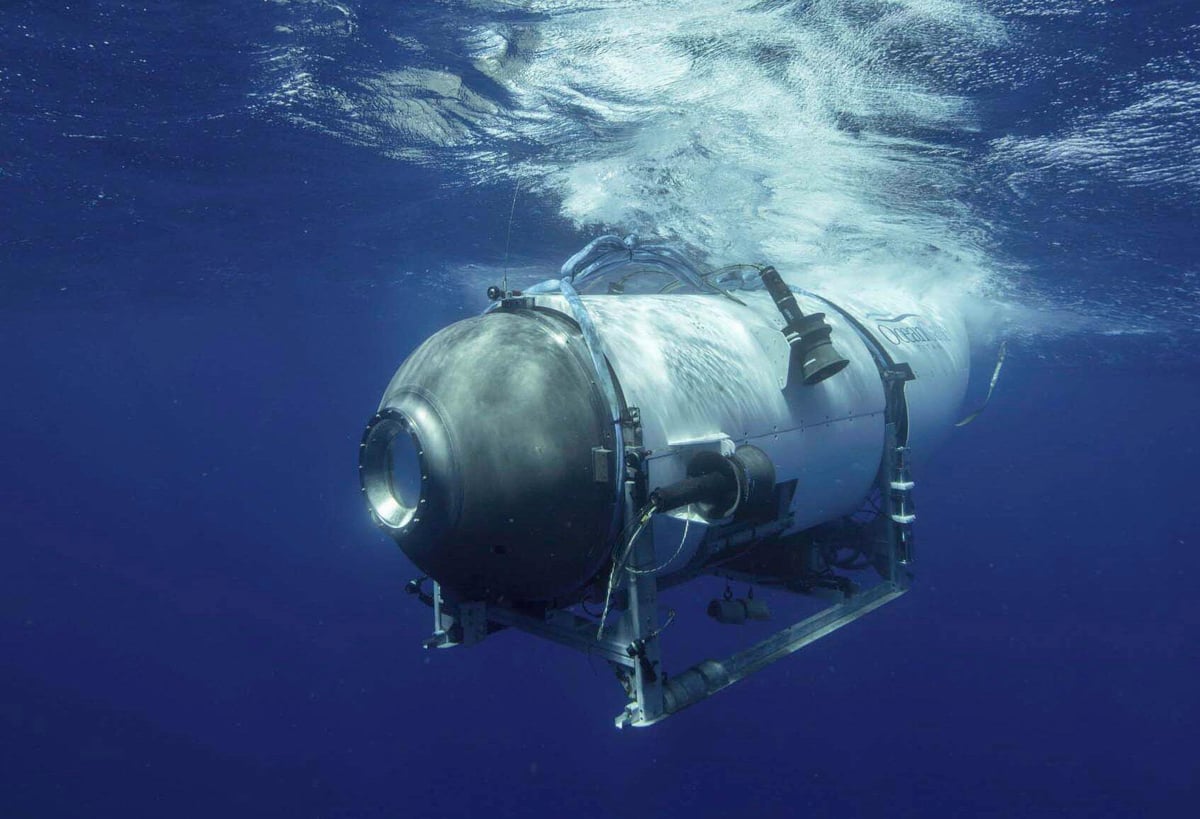
three-lessons-from-the-titan-tragedyThree Lessons From the Titan Tragedy

“The loss of the Titan submersible holds many lessons for Christians today. It is a vivid reminder of where our priorities in life need to be.

On June 18, what started as a routine exploration of the infamous Titanic shipwreck turned deadly. During its dive to the bottom of the North Atlantic, the submersible Titan lost communication and went missing.

Rescuers arrived as quickly as possible to assist in locating the submersible some 12,000 feet below the ocean’s surface.
For four days, the world held its breath and hoped for a miraculous rescue.”   Continue Reading 

From: https://lifehopeandtruth.com/prophecy/blog/three-lessons-from-the-titan-tragedy/?

_________

Was the United States of America Blessed in Its Geography?

Was the United States of America Blessed in Its Geography?“Geography can appear a bit simplistic on the surface. But what happens when we look a little deeper? Was God involved?

On July 4, the United States of America—the world’s most dominant economic and military power—celebrates its Independence Day. This marks the historic date in 1776 when the Declaration of Independence was approved by its Continental Congress.

Although U.S. leadership is being challenged on many fronts, this nation remains one of the leading countries where migrants wish to settle. It is respected as the premier land of personal freedoms and economic opportunity.

But it also evokes hatred among some for the way it has used its power. And also envy, especially from large nations, such as Russia and China, that aspire to global dominance themselves.

The largest nations according to land mass

When one considers the basic geographical features of the U.S. compared to other nations, the facts are pretty basic. In terms of size, Worldometers.info lists the U.S. as the fourth-largest country in the world—just over half the total area of Russia, which is by far the largest country. Canada, the second-largest, and China, the third-largest, have just slightly more territory than the U.S.

If all geography were equal, the nation with the most real estate should lead the world in pretty much everything, and the other nations should fall in line according to their size. But as we will see, not all geography is equal.

The largest nations by population

Before proceeding, we should note that some might wonder if population matters when it comes to determining a nation’s prominence. Worldometers.info lists China as the most populous nation, with a population of more than 1.4 billion, representing 18.5 percent of the world’s population. However, the United Nations predicts that this year India will pass China to become the world’s most populous nation.

Russia, which has the most land, has only the ninth-largest population.

The U.S. is the third-most-populous country, with 331 million people, a pittance in comparison to China and India, and accounts for just over 4 percent of the world’s population. Population clearly isn’t the primary driver of a nation’s prominence.

Geography, on the other hand, makes a huge difference.

Blessed with navigable waterways

To understand how geography helped America become an economic powerhouse, we need to drop back a couple of centuries to note the effect navigable waterways had on agriculture and transportation.

God did not give the people of the United States of America all these blessings so they could simply enjoy their wealth, while forgetting God and exploiting others. God will hold Americans accountable for their sins and for not being a godly example to others. Prior to the industrial age and globalization, the high cost of transportation limited trade and the growth of cities. Unless a commodity had high value, low bulk and was nonperishable, there was little incentive to move it very far. Transporting a relatively inexpensive item long distances could cost more than the product itself. Most trade was generally local, and cities were limited in size when all the food had to be procured nearby.

But costs plummeted when goods were transported via water. Transporting goods on water has been estimated to use 12 times less energy than doing so on land.

The U.S. is immensely blessed with an abundance of navigable inland waterways. Foreign affairs analyst Tim Marshall in his book Prisoners of Geography explains it like this: “The greater Mississippi basin [in the U.S.] has more miles of navigable river than the rest of the world put together. Nowhere else are there so many rivers whose source is not in highland and whose waters run smoothly all the way to the ocean across vast distances.

“The Mississippi, fed by much of the basin river system, begins near Minneapolis and ends 1,800 miles south in the Gulf of Mexico. So the rivers were the natural conduit for ever-increasing trade, leading to a great port and all using waterborne craft that was, and is, many times cheaper than road travel” (pp. 68-69).

And having a river nearby to irrigate crops is also of tremendous benefit when rain is scarce.

Blessed with abundant farmland

When it comes to raising crops, not all land is equally productive. Russia and Canada, for example, have much land in frigid climates that is not as productive as land in temperate climates. Compared to the other larger countries in the world, the U.S. has the bulk of its agricultural real estate in latitudes that are optimal for growing food.

“The United States has more high-quality, temperate-zone, arable farmland than any other country and its entire agricultural supply chain is contained within North America. This makes the United States the world’s largest agricultural producer and exporter” (The End of the World Is Just the Beginning, Peter Zeihan, p. 89).

Blessed with abundant energy

With its abundant natural resources, the U.S. is capable of energy independence. The shale revolution allowed the U.S. to become the world’s largest oil producer. It easily has the potential to supply all of its own needs and export the excess. Using fossil fuels, natural gas and coal, the U.S. has “the lowest unsubsidized electricity costs in the world” (p. 90).

The U.S. is the second-largest solar energy producer in the world. As well, “the positioning of its mountains compared to its coasts gives it more wind power potential than any other country” (p. 90).

Blessed with natural security boundaries

In regard to security, the fewer nations a country has on its borders, the easier it can be to remain at peace. Geography can be of great help as well. The U.S. has great oceans to its east and to its west that would make it difficult for hostile nations to mount a successful invasion.

This unprecedented degree of security has given the U.S. room to maneuver and even a margin for error in international relations and allowed the country to blossom economically.

Challenging weather because of geography

As a negative, the U.S. experiences some of the worst weather catastrophes in the world because of its geography. Science writer Seth Borenstein says, “Blame geography for the U.S. getting hit by stronger, costlier, more varied and frequent extreme weather than anywhere on the planet . . .

“Two oceans, the Gulf of Mexico, the Rocky Mountains, jutting peninsulas like Florida, clashing storm fronts and the jet stream combine to naturally brew the nastiest of weather” (“Why the U.S. Is Leading the World in Extreme Weather Catastrophes,” April 2, 2023).

God determines the boundaries of nations

Nasty weather aside, some would say the U.S. won the lottery in terms of its geography. But it wasn’t luck that gave the U.S. such choice real estate. The Bible reveals that God determines the boundaries of nations.

In addressing first-century intellectuals in Athens, Paul explained who the God of the Bible is. Among other key facts, Paul noted that God “has made from one blood every nation of men to dwell on all the face of the earth, and has determined their preappointed times and the boundaries of their dwellings” (Acts 17:26).

Occasionally the boundaries of nations change, but God remains the sovereign power. Changes are subject to His will and the actions of the people involved (Deuteronomy 28:1; 2 Chronicles 20:6; Daniel 4:35).

So why did God give the U.S. so many geographical blessings?

Blessings to Abraham

Those of us producing Discern magazine believe the reason the U.S. has so many blessings, including those of geography, goes back to promises God made to Abraham almost 4,000 years ago. We believe the territory of the United States was given to descendants of this ancient patriarch.

While space in this article doesn’t permit a thorough explanation, consider just a few of the things the Bible tells us about the descendants of Abraham.

  • God said Abraham’s descendants would grow into a great multitude of people (Genesis 15:5).
  • In the end time some of these peoples would become “a multitude of nations” and others a single great nation (Genesis 48:19).
  • These peoples who would become a multitude of nations and a great single nation were also promised economic prosperity and military strength (Genesis 49:22-26).
  • Moses prophesied the descendants of Joseph would be given immense agricultural blessings that would include “the precious things of heaven, with the dew, and the deep lying beneath . . . with the precious things of the earth and its fullness” (Deuteronomy 33:13, 16).
  • God expected Abraham’s descendants to be a godly example and said that He would bless them for obedience to His law and punish them for disobedience (Deuteronomy 28:1, 15).
  • Eventually, God will bless all peoples and nations through these people (Genesis 12:1-3).

It’s important to note, however, that God did not give the people of the United States of America all these blessings so they could simply enjoy their wealth, while forgetting God and exploiting others. God will hold Americans accountable for their sins and for not being a godly example to others.”  From: https://lifehopeandtruth.com/prophecy/america-in-prophecy/united-states-blessed-in-geography/?

_______

Preventing Wrinkles with Diet

What dietary intervention may significantly protect against wrinkles in the crow’s foot area around the eyes?

Transcript of video at: https://nutritionfacts.org/video/preventing-wrinkles-with-diet/

Below is an approximation of this video’s audio content. To see any graphs, charts, graphics, images, and quotes to which Dr. Greger may be referring, watch the above video.

“Eating healthier can produce healthier skin. But people don’t care about microscopic changes. What about overt, visible-to-the-naked-eye changes?

The extent of facial wrinkles in the crow’s foot area was determined by observation, using the Daniell scale, in 716 women. This is the scoring system they’re talking about; it’s a scale of one through six; six being the worst. So, what seemed to help the most? “In the present study, a higher intake of green and yellow vegetables was associated with decreased facial wrinkling. Those eating less than a serving of green and yellow vegetables averaged a score of three; those eating two or more servings a day, averaged a two.”

What really excited the researchers was the potential for these studies to promote a healthy diet. I mean, eating fruits and vegetables to prevent cancer and heart disease—who cares? But, wrinkles on the other hand…””  From: https://nutritionfacts.org/video/preventing-wrinkles-with-diet/

______

Hi Folks,

I did not have time to post last week, I was very busy moving back to Conroe, TX.  Home again!!

______

Sunday, February 26, 2023

Five Foolish Things We Do to Foul Up Our Future. Where Is Lent in the Bible? The Truth About Potassium Bromate.

.

Five Foolish Things We Do to Foul Up Our Future

Five Foolish Things We Do to Foul Up Our Future“There are some human tendencies that create pitfalls on the path to our future. Here are five of the most common and dangerous ones.

I cringe when I hear the words stupid, dumb or foolish. No one wants to hear those words applied to his or her actions or choices. But sometimes, looking back, we see that those words fit. It has nothing to do with intelligence—some of the smartest people do some of the stupidest things.

We all have blind spots. We can’t always see when we are making a colossal mistake.

But God has given us a book of wisdom to help us look past the blind spots to the reality beyond. The warnings of the Bible can help us avoid the traps that so easily ensnare us.

Consider the following five foolish things God wants to help us avoid. With each one we also provide the alternative wise choice and some resources for further learning. As we will see, studying the wisdom of the Bible is the real antidote to foolishness and failure.

1. Following the wrong things

It’s easy to follow the crowd, even if the crowd is confused or leading us into evil. Wise King Solomon warned, “My son, if sinners entice you, do not consent” (Proverbs 1:10). How many young people have been lured with money and precious possessions (verse 13), just to end up in prison—or worse?

It’s even more natural to follow our heart. But the Bible warns, “There is a way that seems right to a man, but its end is the way of death” (Proverbs 14:12).

Worthwhile goals and good actions seem to always be upstream, so just going with the flow won’t get us there.

So, what should we do?

Follow God: “Trust in the Lord with all your heart, and lean not on your own understanding; in all your ways acknowledge Him, and He shall direct your paths” (Proverbs 3:5-6).

Helpful reading: Check out these articles on the Life, Hope & Truth website: “Saying No,” “Temptation: How Does It Occur?” and “The Trouble With Listening to Your Heart.”

2. Blowing up!

How many bad decisions have been made in the heat of anger? As Solomon explained, “Any fool can start a quarrel” and “whoever has no rule over his own spirit is like a city broken down, without walls” (Proverbs 20:3; 25:28). Having a chip on your shoulder can leave you vulnerable—especially to our worst enemy, the devil.

Responding to slights by others can escalate. Even if the first provocation was unintentional, the belligerence can quickly boil over as each mad young man returns fire. (Of course, it’s not just mad men; women can fail at anger management too.)

What does anger do? “When anger is too intense, out of control, misdirected, and overly aggressive, it can lead to poor decision making and problem solving, create problems with relationships and at work, and can even affect your health” (PBS.org from Anger Research Consortium and American Psychological Association sources).

What should we do instead?

Don’t allow anger to cause you to sin. “‘Be angry, and do not sin’: do not let the sun go down on your wrath, nor give place to the devil” (Ephesians 4:26-27). God Himself gets angry (Numbers 25:3), but His anger is always righteous and always under control. We must not allow our anger to explode or to fester, or we will leave an opening for Satan to attack us and lead us into sin.

Helpful reading:What Does the Bible Say About Anger?” and “Overcoming Dangerous Emotions: Anger.”

3. Starting a bad habit

Generally we don’t think we are starting a habit. But giving in once to something that can harm us can make it easier to repeat and repeat and (you get the idea). This is especially true of addictive substances like tobacco and drugs. Other habits can have varying levels of powerful psychological addiction, like gambling, pornography, eating disorders and video game addiction.

Even laziness can become a bad habit. Solomon wrote, “How long will you slumber, O sluggard? When will you rise from your sleep? A little sleep, a little slumber, a little folding of the hands to sleep—so shall your poverty come on you like a prowler, and your need like an armed man” (Proverbs 6:9-11).

The negative results of our habits aren’t always immediately discerned, so we tend to ignore the consequences (Ecclesiastes 8:11). But bad habits of every kind tend to get stronger and harder to break with time, so it is best to avoid them or nip them in the bud as early as possible.

So what should we do instead?

Develop a good habit! Good habits include prayer and Bible study, exercise, a healthy diet, making more good friends and using time productively.

Helpful reading:Freedom From Addictions” series, including “Alcoholism,” “Pornography,” “Smoking,” “Gambling,” “Gaming” and “The First Month of Recovery: What to Expect”; How to Pray; “How to Study the Bible”; and “What Do You Do With All Your Time?

4. Believing lies

From the very beginning, lies have come in attractive packages. The serpent convinced Eve that the delicious-looking (but forbidden) fruit would make her “like God, knowing good and evil” (Genesis 3:5). Humanity has accepted that lie ever since—the lie that we can decide for ourselves what is right and wrong, that we don’t need God to define it for us.

Along with that lie, Satan told Eve that she wouldn’t surely die. Humanity has since swallowed several other similar lies, including the one that humans have an immortal soul and that God was withholding good things from mankind. Humans began believing the liar and mistrusting the truth-teller. That’s a dangerous combination.

If we believe that our mind and feelings are the ultimate source of morality, we will believe other lies, such as: It feels so right, it can’t be wrong.

However, God created us and the laws of the universe, and He really does know what will help us and what will hurt us. He is the source of all truth.

But what about those who say there is no God or who reject the Creator and His laws?

God challenges us to examine the facts: “For since the creation of the world His invisible attributes are clearly seen, being understood by the things that are made, even His eternal power and Godhead, so that they are without excuse. … [They] exchanged the truth of God for the lie” (Romans 1:20, 25, emphasis added throughout). (Study this for yourself in our Life, Hope & Truth article “Intelligent Design: Can Science Answer the Question, Does God Exist?” and the related articles.)

And God strongly warns against falling for a widespread religious deception that rejects His laws in the last days.

“The coming of the lawless one is according to the working of Satan, with all power, signs, and lying wonders, and with all unrighteous deception among those who perish, because they did not receive the love of the truth, that they might be saved. And for this reason God will send them strong delusion, that they should believe the lie, that they all may be condemned who did not believe the truth but had pleasure in unrighteousness” (2 Thessalonians 2:9-12).

So what should we do?

Seek the truth. Jesus defined truth in His prayer to the Father: “Your word is truth” (John 17:17). The entire Bible was inspired by God (2 Timothy 3:16), and God is pleased by those who, like the Bereans, “searched the Scriptures daily to find out whether these things were so” (Acts 17:11).

Helpful reading:What Is Truth?” “How to Find Answers to Your Bible Questions,” “Can You Handle the Truth?” and the biblical warnings about deception in the article “Antichrist.”

5. Committing to something we shouldn’t

Solomon advised against hasty decisions and thoughtless promises.

“Do not be one of those who shakes hands in a pledge, one of those who is surety for debts; if you have nothing with which to pay, why should he take away your bed from under you?” (Proverbs 22:26-27).

Too many people saddle themselves with unmanageable debt early in life. Others jump into other commitments without weighing the long-term consequences, whether it be marriage, military service or some other endeavor that can be difficult to extract oneself out of and have long-lasting effects.

So what does God want us to do?

Take commitment seriously, especially the commitment of marriage and the commitment to God through baptism. God is not against commitment! He just wants us to carefully count the cost and be sure we will follow through on the good commitments we wisely choose to make (Luke 14:28-30, Luke 14:31-33).

Helpful reading:Decision Making: Seven Steps for Making Good, Christian Choices,” “What Is Marriage?” “What Is Baptism?” and Change Your Life!

Perhaps in your study of the wisdom of the Bible you will find many more foolish choices to avoid, and many more wise actions to take. But these five provide a start. Applying these points will help us get on God’s road that leads in the best possible direction: “You will show me the path of life; in Your presence is fullness of joy; at Your right hand are pleasures forevermore” (Psalm 16:11).”  From: https://lifehopeandtruth.com/bible/holy-bible/old-testament/the-writings/proverbs/five-foolish-things/

RELATED ARTICLES

Learn More About The Writings

_________

Where Is Lent in the Bible?

Transcript from Daily Video at: https://youtu.be/ZsLnzmTEegY

“The Bible shows the truth behind popular customs like Lent.

[Steve Myers] “Christianity has now entered the Lenten season. Mardi Gras is passed, Fat Tuesday into Ash Wednesday, and now the Lenten season is recognized by much of the Christian world. But when you check out what your Bible has to say about Lent, you're not gonna find anything. It's a man-made tradition, and when you recognize what God thinks about counterfeiting his way, it's a very serious thing.

There is a powerful passage in the book of Colossians, Colossians 3:23. This is what God inspired Paul to write. "These things indeed have an appearance of wisdom in self-imposed religion, false humility, and neglect of the body, but are of no value against the indulgence of the flesh."

You see the problem with false Christianity, made up Christianity, false traditions, they do a disservice to God and dishonor him. And when you really check out the basis for these practices, you'll find them rooted in false beliefs, paganism.

I hope you'll take some time to check it out. If you'll search on our website, just type in the words "Lent," and you'll find a number of articles where you can get into the details of how Lent is an imposter, how it is fake, how is it a counterfeit to what the true God wants us to observe. So check it out, I think you'll be surprised by what you find.” From: https://www.ucg.org/beyond-today/beyond-today-daily/where-is-lent-in-the-bible

________

The Truth About Potassium Bromate

    bread-wheat-gluten-100927-02(Image credit: Viktorfischer | Dreamstime) 

“In 2007, Chinese authorities pulled a batch of imported snack chips from store shelves because they believed the chips contained potassium bromate, a food additive banned in China. The chips' country of origin? The United States.

Potassium bromate is also illegal in the European Union, Canada, Brazil and elsewhere because it causes cancer in rats and mice. In the United States, however, it has remained legal since it was first patented for use in baking bread, in 1914.

Bread dough's beige and shapeless appearance belies the staggering complexity of the molecules that hold it together. Gluten — the wheat protein infamous for its indigestible components that some people have to avoid — is the glue that binds bread dough to itself. (Gluten-free bread relies on other thickening agents such as xanthan gum).

But in order for two gluten molecules to bind to each other, molecular bridges have to form between them.

Such bridges do not form spontaneously. Rather, they're the product of oxidation. Historically, bakers relied on oxygen in the air to form the molecular bridges in dough — they "aged" flour after milling it by exposing it to open air for weeks, and then slowly mixed the flour in dough, all the while allowing ambient oxygen to do the hard work of bridge building.

But potassium bromate is a powerful oxidizing agent that chemically ages flour much faster than open air. Potassium bromate bleaches dough, and enhances its elasticity by strengthening its network of molecular bridges, which makes for the formation of tiny, thin-walled bubbles as the bread rises. The end product is fluffy, soft and unnaturally white.

Ideally, that end product is also entirely devoid of potassium bromate, which changes to potassium bromide, a harmless byproduct, during baking.

In 1982, researchers in Japan published the first of a series of studies showing that potassium bromate causes cancer in the thyroids, kidneys and other body parts of rats and mice.

As a result of these findings, countries around the world banned the additive, but the U.S. Food and Drug Administration held back, in part because the amount of potassium bromate that remains in bread after baking should be negligible: less than 20 parts per billion (ppb).

According to information published by baking industry trade groups, it is "well within the normal production control measures in any modern bakery to ensure that bromate residues are well below 20 ppb."

However, whenever bromated flour isn't baked for long enough or at a high enough temperature, or if too much potassium bromate is added in the first place, this harmful additive can potentially be found in the final product in far greater quantities.

Today, many small and commercial bakeries voluntarily avoid using bromated flour. However, it's still found in many fast food buns and some flours, among other products.

To avoid this additive, check ingredients lists for "potassium bromate" and "bromated flour." Shoppers in California will have an easier time steering clear of potassium bromate: since 1991, California law has required products containing this additive to bear a warning on their labels.

Pass it on: Potassium bromate is an unnecessary and potentially harmful food additive, and should be avoided.” 

From: https://www.livescience.com/36206-truth-potassium-bromate-food-additive.html

_________

Sunday, July 31, 2022

How to Prepare for the End Times. God Will Wipe Away Every Tear. Meat Industry Reaction to New Cancer Guidelines.

.

How to Prepare for the End Times

How to Prepare for the End Times“The Bible prophesies many destructive events in the end times. Is there anything we can do to prepare? As Christians, what should our priorities be?


 There is nothing you can physically do to prepare for the end times.

Nothing. Not one single thing.

Here’s a prophecy from the Bible about what the world will look like shortly before the return of Christ. As you read through it, try thinking about what you’d need in order to survive it:

“I looked when He opened the sixth seal, and behold, there was a great earthquake; and the sun became black as sackcloth of hair, and the moon became like blood.

“And the stars of heaven fell to the earth, as a fig tree drops its late figs when it is shaken by a mighty wind.

“Then the sky receded as a scroll when it is rolled up, and every mountain and island was moved out of its place.

“And the kings of the earth, the great men, the rich men, the commanders, the mighty men, every slave and every free man, hid themselves in the caves and in the rocks of the mountains, and said to the mountains and rocks, ‘Fall on us and hide us from the face of Him who sits on the throne and from the wrath of the Lamb! For the great day of His wrath has come, and who is able to stand?’” (Revelation 6:12-17).

Even if you’ve stockpiled enough survival rations to fill an Olympic-sized swimming pool, built a bunker that could withstand a nuclear holocaust and hoarded enough guns and ammo to fend off the standing army of a small country, it won’t be enough.

When “the great day of His wrath has come”—when the earth shakes the mountains and the islands out of place, when stars fall from heaven and the sky recedes like a scroll, when kings and slaves alike cower in fear at the judgment God is raining down on a corrupt earth—all the physical preparation in the world won’t make an ounce of difference.

A quick note about emergency preparedness

Before we go any further, let me clarify something. Even though there’s nothing you can do to physically prepare for the end of the world as we know it, that doesn’t mean it’s a bad idea to prepare for other, less catastrophic emergencies.

The U.S. Department of Homeland Security recommends keeping a disaster supply kit on hand for your family in the event of an emergency that requires you to “survive on your own for several days.” They even offer a checklist you can use as you build your own kit.

Taking steps to make sure your family has what it needs in the wake of a disaster is a good idea. Taking steps to make sure your family can survive the collapse of civilization? Maybe not so much.

Spiritual preparation is what really matters

That said, God does expect us to prepare for the end times—but that’s a spiritual endeavor, not a physical one.

To prepare for the end times, we need to understand what the end times are.

Technically speaking, we’ve been in the “end times” for the last 2,000 years. Peter wrote that Jesus Christ was made manifest “in these last times” (1 Peter 1:20). Paul explained that biblical examples were recorded “for our admonition, upon whom the ends of the ages have come” (1 Corinthians 10:11).

The end times are the final phase of God’s plan before the return of Jesus Christ. They’re the era we’re living in right now—the same era that the early Church existed in as well. (See more in our blog post “Are We Living in the End Times?”)

But, generally, when people talk about the end times, they’re thinking of specific end-time events—the Great Tribulation and the Day of the Lord. The Tribulation is a period of 3½ years immediately preceding the return of Jesus Christ to the earth, and the Day of the Lord often refers to a short but intense period when the world is directly punished by God for its sins, leading into the eternal reign of God.

These are the apocalyptic, cataclysmic events of the end time that we cannot physically prepare for—but that we must spiritually prepare for.

The keys to spiritual preparation

Being prepared for the end times doesn’t require exactly predicting the end times. Paul warned that “the day of the Lord will come like a thief in the night” (1 Thessalonians 5:2, English Standard Version).

We should certainly be aware that the Day of the Lord is coming, and its sudden arrival shouldn’t catch us off guard (1 Peter 5:1-5). But Jesus Himself told His disciples to stay alert, “for you do not know what hour your Lord is coming” (Matthew 24:42), and to “be ready, for the Son of Man is coming at an hour you do not expect” (verse 44).

Just like putting together a disaster supply kit, it’s important to prepare before things get bad. And just as you can refer to a checklist to assemble your own kit, you can also refer to the spiritual checklist God has provided in order to prepare for these big end-time events:

“He has shown you, O man, what is good; and what does the LORD require of you but to do justly, to love mercy, and to walk humbly with your God?” (Micah 6:8).

That’s a short checklist, but it takes a lot of time to tick those boxes. You can put a disaster supply kit together in an afternoon—but doing justly, loving mercy and walking humbly are character attributes that we can spend the rest of our lives refining and perfecting.

God doesn’t expect us to have perfected these attributes before the end-time events unfold. He just expects us to be diligently working on them. Every day gives us new opportunities to be doing just that.

(Read more in our three-part blog series “What Does God Require of You? Do Justly,” “Love Mercy” and “Walk Humbly.”)

What are we preparing for?

In preparing for a disaster, the goal is to survive—to make it safely to the other side of whatever calamity we might experience.

You might say that’s the goal of preparing for end times too—although “making it safely to the other side” looks a little different in this case.

The Bible makes mention of a place in the wilderness where at least some of God’s people will be protected during the events of the Tribulation (Revelation 12:14). Jesus even instructed us to pray for protection during this time: “Watch therefore, and pray always that you may be counted worthy to escape all these things that will come to pass, and to stand before the Son of Man” (Luke 21:36).

But the Bible also talks about martyrs who will be “slain for the word of God and for the testimony which they held” (Revelation 6:9).

Though we should pray and hope we are “counted worthy” to escape the intense suffering of the Great Tribulation, physical survival isn’t the ultimate goal. Standing “before the Son of Man” at His return is. Jesus promised, “This is the will of Him who sent Me, that everyone who sees the Son and believes in Him may have everlasting life; and I will raise him up at the last day” (John 6:40).

Even if we die before or during the final events of the end times, our hope is in a far greater kind of survival. Paul explained that Jesus Christ, at His return, will resurrect and transform His faithful followers as immortal members of the God family: “And as we have borne the image of the man of dust, we shall also bear the image of the heavenly Man” (1 Corinthians 15:49, see also verses 35-55).

Finding Hope in a Hopeless World Booklet

If we do justly, love mercy and walk humbly with God—if we live our lives in accordance with His Word and follow His commands—we can expect to make it safely to the other side of the end times, not as physical human beings, but as the spiritual sons and daughters of God Himself:

“‘They shall be Mine,’ says the LORD of hosts, ‘On the day that I make them My jewels. And I will spare them as a man spares his own son who serves him’” (Malachi 3:17).

God’s plan means hope for everyone

But the story doesn’t end there. When God the Father and Jesus Christ set Their plan in motion, They were “not willing that any should perish” (2 Peter 3:9). In the aftermath of the end-time events, the world’s survivors will need leadership, compassion and guidance.

We will have the privilege of providing all those things as we reign with Christ for a thousand years (Revelation 20:4), teaching the rest of humanity to build their own spiritual survival kits—to do justly, to love mercy and to walk humbly with God.

And one day, when “the dead, small and great” (verse 12) are returned to life and brought before God, we’ll be there too, offering a hope for survival that stretches on into eternity.

That’s why we prepare for the end times—not to survive it physically, but because of the incredible future waiting for us on the other side of it. And in that beautiful future, “there shall be no more death, nor sorrow, nor crying. There shall be no more pain, for the former things have passed away” (Revelation 21:4).

That’s something worth preparing for.”  From: https://lifehopeandtruth.com/life/christian-living/christianity-in-progress/prepare-for-the-end-times/?

Suggestions welcome.   This article was written at a reader’s suggestion. If you’d like to suggest a topic for future editions of “Christianity in Progress,” you can do so anonymously at lifehopeandtruth.com/ideas. We look forward to hearing from you!

_______

God Will Wipe Away Every Tear

Revelation 21:4

“And God will wipe away every tear from their eyes; there shall be no more death, nor sorrow, nor crying. There shall be no more pain, for the former things have passed away.”

“God clearly shows His love for us and His desire for the end of all suffering. The Bible is the story of mankind constantly choosing the way of sin that results in suffering, while our loving God offers forgiveness and a wonderful way of life that results in blessings.

The context of this passage is after the Great White Throne Judgment (Revelation 20:11-12), when every human being will understand the choice God has given, and hopefully the vast majority will accept Christ’s sacrifice and choose to live the way that leads to life. God wants everyone to choose life and to be saved (Deuteronomy 30:19; 1 Timothy 2:4).

After those (hopefully few) who choose death are thrown in the lake of fire, God promises to make all things new. Everyone alive at the time of the new heaven and new earth will have been changed to immortal, spiritual life.

And so at that time when death and pain have become a thing of the past, God will wipe away every tear from their eyes and reveal an eternity of joy to all His children.” From: https://lifehopeandtruth.com/bible/blog/god-will-wipe-away-every-tear/?

For more understanding of the pain and suffering of this current age, see our section on “Why Does God Allow Evil and Suffering?”

_______

Meat Industry Reaction to New Cancer Guidelines

“What was the meat industry’s response to the recommendation by leading cancer charities to stop eating processed meats, such as bacon, ham, hot dogs, sausage, and lunchmeat.” 

To see any graphs, charts, graphics, images, and quotes to which Dr. Greger may be referring, watch the video below. This is just an approximation of the audio contributed by Katie Schloer.

Transcript of YouTube: https://youtu.be/k8SDN4QjEXI

“What was the meat industry’s response to the leading cancer charities’ recommendation to stop eating processed meat—like bacon, ham, hot dogs, sausage, and lunchmeat? They acknowledged that the most recent international cancer prevention guidelines now urge people to avoid processed meat.

It is evident that such a statement represents “a clear and present danger” for the meat industry, reads one response in the journal Meat Science. Processed meat, they say, is a social necessity. How could anyone live without bologna? The challenge for the meat industry is to find a way to maintain the consumption of these convenience products while somehow not damaging public health.

We’re still not sure what it is in processed meat that’s so carcinogenic, but the most probable educated guess for explaining the damaging effect of processed meats involves heme compounds, along with nitrosamine and free radical formation, resulting ultimately in carcinogenic DNA damage.

To reduce the nitrosamines, they could remove the nitrites—something that the industry has been considering for decades, because of the long known toxic effects they cause. The industry adds them to keep the meat pink. There are, evidently, other coloring additives available. Nevertheless, it’s going to be hard to get their industry to change, in view of the positive effects of these substances as preservatives, and desirable flavor and red color-developing ingredients. No one wants green eggs and ham.

It’s like salt reduction in meat products. They’d like to, but one of the biggest barriers to salt replacement within the meat industry is cost, as salt is one of the cheapest food ingredients available. Now, there are a number of taste enhancers they can inject into the meat that can help compensate for the salt reduction, but some leave a bitter aftertaste. So, they can also just inject a patented bitter-blocking chemical that can prevent taste nerve stimulation at the same time—the first of what may become a stream of products that are produced due to the convergence of food technology and biotech.

Or, they could always try adding non-meat materials to the meat. You could add fiber, or resistant starch from beans, that have protective effects against cancer. After all, in the United States, dietary fiber is under-consumed by most adults, indicating that fiber fortification in meat products could have health benefits—failing to note, of course, that their products are one of the reasons the American diet is so deficient in fiber in the first place.

The industry is all in favor of reformulating their products to cause less cancer, but obviously any such optimization has to achieve a healthier product without affecting the hedonic aspects. It is important to realize that nutritional and technological quality in the meat industry are inversely related. An improvement in one will lead to deterioration of the other. They know that consumption of lard is not the best thing in the world—heart disease, being our number one killer and all. However, those downsides are in sharp contrast to the technological qualities of saturated fat, which makes it indispensable in the manufacture of meat products. Otherwise, you just don’t get the same lard consistency. The pigs’ fat doesn’t get hard enough, and, as a result, a fatty smear upon cutting or slicing can be observed on the cutting surface of the knife.”  From: https://nutritionfacts.org/video/meat-industry-reaction-new-cancer-guidelines/

Note: The processed meats mentioned all seem to contain PORK.  (See Leviticus 11)

_______