Showing posts with label cheese. Show all posts

Thursday, May 1, 2025

Is The Spirit World Real? 19 Foods Banned Abroad, But Not in America.

.

Is the spirit world real?

Is the spirit world real?“In Western cultures today there is a growing fascination with the occult and Satanism, despite the traditional Christian teaching that Satan represents consummate evil.

(Photo: Envato)

If we believe the Bible, we know Satan is not only very real and powerful, but God clearly commands us not to get involved with him or the occult. However statistics show Satanism and Wicca are among the fastest-growing religions in the western world. A increasing number of people deny Satan, demons and a spirit world exist, and therefore regard participating in Wicca or Gothic culture as a harmless expression of personal taste.

The Internet is a ready source of "how-to" information for those interested in Satanism, Wicca or other aspects of Gothic culture. There are also a growing number of movies focussing on witchcraft, demonism and any number of "horror" themes. Books can also be checked out of the public libraries on how to cast spells or how to be a witch. Add to this tarot cards, Ouija boards, palm readers and psychic hotlines.

Wicca, from an Old English word for “witch,” incorporates many of the trappings of ancient British witchcraft practices. It is an umbrella group or movement that gathers under its fold very different beliefs and practices— but is at its core a thinly disguised type of old-fashioned witchcraft. We should not consult with people associated with these spirits in spite of any stated intentions to help us. God’s Word is clear: “Give no regard to mediums and familiar spirits; do not seek after them, to be defiled by them: I am the Lord your God” (Leviticus 19:31).

The Bible reveals Satan is a very real spirit being, who was originally created as "Lucifer," which means "light bringer." In the beginning of God’s creation there was no sin, evil, or disharmony, until Lucifer chose to rebel against his Creator (Isaiah 14:12-15). Ezekiel wrote of him, saying, "You were perfect in your ways from the day you were created, till iniquity was found in you" (Ezekiel 28:15).

When this very first sin took place, Lucifer, whose name was then changed to Satan (which means "adversary"), convinced a number of the angels to rebel against God with him. Together they fought God and lost. Satan and the rebellious angels, now known as demons, have been restrained on earth since that time (Job 1:7). Instead of being the "light bringer," Satan came to be known as a ruler of darkness (Ephesians 6:12).

Satan and his demons have not given up their goal of trying to destroy whatever God creates, as we can see by the example of Adam and Eve (Genesis 3:1-6). They cannot take control of a human being against his or her will, but we can inadvertently allow ourselves to be influenced. When Israel came into the Promised Land, God warned them not to allow anyone to practice witchcraft, cast spells or try to talk with the dead (Deuteronomy 18:9-14). Put in terms of today's practices, this would include tarot cards, Ouija boards, palm reading, horoscopes and psychics. It would also include filling our minds with music, books and movies about the occult.

In Matthew 4 we read Satan even tried to get Jesus Christ to fall for his perverted reasoning. After showing Him all the kingdoms of the earth and their wealth and power, Satan said, "All these things I will give You if You will fall down and worship me" (Matthew 4:9).

Perhaps the most powerful way in which Satan influences human beings is through his power to broadcast attitudes, and from this no one is immune. He is described as the "prince of the power of the air" (Ephesians 2:2). The devil cannot make us do anything, but he can make something sound or feel so appealing that you are willing to choose to do it. In Ephesians 6:12 (NIV) we are told: "For our struggle is not against flesh and blood, but against the rulers, against the authorities, against the powers of this dark world and against the spiritual forces of evil in the heavenly realms."

We struggle with ourselves, with the unrighteous influences of our society and with the powerful attitudes and temptations presented to us by Satan and his demons. Temptation worked effectively against Adam and Eve, and it can work just as effectively against us. The Apostle James gives very solid instruction about how to resist Satan and his influences: "Therefore submit to God. Resist the devil and he will flee from you. Draw near to God and He will draw near to you. Cleanse your hands, you sinners; and purify your hearts, you double-minded" (James 4:7-8).

We must come to know God through prayer and Bible study and learn to think as He does (Psalm 51:10). We are told to resist the devil, and remove ourselves from situations and activities that promote witchcraft and the occult.”

From:   https://www.ucg.org/vertical-thought/is-the-spirit-world-real

_________

19 Foods Banned Abroad, But Not in America

“If "you are what you eat" is true, what does that say about America's eating habits? Numerous popular American dishes are packed with potentially harmful ingredients, leading to bans in other nations. Discover 19 American favorites that have been rejected worldwide. 

1. Froot Loops

Banned in: France, Austria, Norway and Finland

Why it's banned: A glance at Kellogg's Froot Loops' ingredients might explain why the colorful cereals of our childhood are banned in many European countries.

The American breakfast staple is packed with food dyes such as yellow 5 and red 40, which are considered harmful. Many scientific studies link these artificial colors with the inhibition of cell development.

The sugary cereal also contains soybean,  cottonseed oil, and hydrogenated coconut — all considered dangerous and banned in the above mentioned countries.

2. US chicken

Banned in: European Union

Why it's banned: Chlorine-washed chicken doesn't sound very appetizing, does it?

In the U.S, the chicken is routinely washed in a chlorine solution before it is market ready.

This antimicrobial treatment reduces the possibility of salmonella contamination and other bacteria that can lead to foodborne illness. This is also the main reason the European Union has had a ban on American chicken since 1997.

The EU is not concerned about chlorine consumption per se. Rather, it questions why the chicken must go through deep cleaning in the first place. The EU thinks there should be a "high level of safety throughout the food chain, from farm to fork," not only cleaning the meat heavily at the end of the process to compensate for insufficient hygiene standards earlier.

3. Mountain Dew

Banned in:  The European Union and Japan

Why it's banned: We all know Mountain Dew is not the healthiest of drinks. But, if you still “do the Dew,” you might want to know the lemon-lime drink contains Brominated Vegetable Oil (BVO).

This food additive banned in Japan and the European Union contains bromine, the element found in flame retardants.

According to CDC, the consumption of bromine can lead to a number of health problems such as headaches, memory loss, and impaired balance and coordination. It’s also bad for the skin.

PepsiCo announced in 2014 that the dangerous chemical would be removed from its soft drinks. However, BVO wasn't removed from Mountain Dew's list of ingredients until 2020.

4. US milk

Banned in: Australia, New Zealand, Canada, Japan, and the EU

Why it's banned: Got rBGH? That's what Europe, Canada, and many other countries are asking about milk produced in the United States, where dairy cows are fed with a synthetic man-made growth hormone rBGH to increase milk production.

Developed by the agricultural biotech corporation Monsanto, recombinant bovine growth hormone rBGH, also known as rBST, was approved by the Food and Drug Administration (FDA) in 1993, allowing companies to produce vast amounts of cheaper milk in awful conditions at factory farms.

As one could imagine, drinking hormone-enriched milk cannot be the healthiest option. Studies have found that cows treated with rBGH produce milk that contains elevated levels of insulin-like growth factor-1 (IFG-1), which can increase the risk of breast cancer and other cancer types.

Luckily, according to a 2014 report by the USDA, the practice is decreasing as only 9.7 percent of U.S. dairy operations were using rbGH.

Still is highly recommended to stick with organic milk or one that says "does not contain rBGH.

5. Farmed salmon

Banned in: Austria and New Zealand

Why it's banned: Salmon is a go-to meal for many Americans, who enjoy the meaty flavor and health benefits of the omega-3-packed fish. However, the bad news here is there is a big chance that the salmon you are eating is farmed-raised.

Around two-thirds of salmon eaten by U.S. consumers comes from farms, and the other third is wild-caught. Salmon farming has long been scrutinized by sustainability advocates because of the harsh conditions in which the fish are raised.

Farm-raised salmon are kept in crowded cages and are fed with fed processed fish feed and all kinds of dangerous chemicals like methyl mercury and dioxins. Additionally, the fish are given a lot of antibiotics and other drugs that are not safe for humans to consume.

6. Maraschino cherries

Banned in: Norway, Finland, France, Austria, the U.K

Why it's banned: It turns out America's favorite cocktail garnish is actually a forbidden fruit in some countries.

Maraschino cherry, the syrupy sweet fruit, was invented during the Prohibition era to garnish virgin cocktails. Actually, the American maraschino cherry is an imitation of a Croatian delicacy made of Marasca cherries.

What the American version of the sweetened cherry has extra is the artificial food dye Red #40 to give that picture-perfect touch. Red #40 is one of the most widely used food dyes, as well as one of the most controversial. The dye is thought to be linked to allergies, migraine, and mental disorders in children.

7. US apples

Banned in: the European Union

Why it's banned: While apples are supposed to keep the doctor away, that's not exactly the case for those produced in the U.S.

American apples are treated with diphenylamine (DPA), a potentially carcinogenic compound used to keep the fruit from turning brown. It's this chemical that gives the apples you see in the supermarket that glow.

European food safety regulators banned the fruit in 2014 because the chemicals have been linked to various cancers.

Now, how do you like them apples?

8. Little Debbie Swiss Rolls

Banned in: Norway and Austria

Why it's banned: Little Debbie's smiling face isn't welcome in some countries, as the tasty snack contains food dyes that are a big no-no.

Little Debbie's Swiss Rolls contain artificial food color dyes yellow 5 and red 40, which are considered to be carcinogenic.

The European Union requires products with these dyes to include warning labels saying "the coloring agents may have an adverse effect on activity and attention in children." But come, countries like Norway and Austria just outright banned the snack.

In the United States, no such warning is required.

9. US breakfast cereal brands

Banned in: Japan, the European Union

Why it's banned: Breakfast may be the most important meal of the day, but not if you are having cereals like Rice Krispies, Honey Bunches of Oats and Frosted Flakes.

These breakfast cereals brands contain Butylated hydroxytoluene, or BHT, a lab-made flavor enhancer that has carcinogenic properties. It's banned in Japan and the European Union.

A number of processed foods, such as chewing gum and frozen foods, contain this preservative.

9. Instant mashed potatoes

Banned in: the Europe Union, Japan, Australia

Why it's banned: This one is easy. It's mashed potatoes in a box. Of course, there is something off.

Instant Mashed Potatoes like Hungry Jack come with a side of Butylated Hydroxyanisole (BHA). This preservative is also found in rubber and wax food packaging. So, it's definitely not something you would want in your body.

Although it's widely used in the U.S., it's banned in Japan, Australia, and the European Union, because it has been linked with cancer.

10. US prepackaged ground beef

Banned in: the European Union

Why it's banned: Pink slime is definitely not something you want in your burger. Yet, there is a good chance that the prepackaged ground beef you bought for your next barbecue contains pink slime.

According to an ABC News exposé from 2012, around 70% of ground beef sold in U.S. supermarkets contained pink slime - a meat by-product used as a filler in ground beef to reduce fat content.

If you are wondering "what’s the beef?" with pink slime, it is prepared with ammonia gas, an anti-microbial agent which is dangerous for consumption.

The FDA approved the pink goo for human consumption in the U.S. back in 2001.

11. Ritz Crackers

Banned in: Switzerland, Austria, Hungary, Iceland, Norway and Denmark.

Why it's banned: Ritz crackers are a must-have for any cheese board, right? Well, in Europe, you’ll have to look for a different brand as the salty snack is nowhere to be found.

Apparently, Ritz crackers contain high levels of sodium—hydrogenated cottonseed oil, a trans fat associated with cardiovascular diseases.

The FDA has actually deemed these types of oils to be "not generally recognized as safe," but certain loopholes allow them to continue to be used in products.

12. US pork

Banned in: the European Union, Russia, and China

Why it's banned: If you were wondering why pigs in the U.S. are much bigger than those in the rest of the world, ractopamine is your answer.

American pigs are given ractopamine, an animal feed additive used to speed up weight gain and increase carcass leanness in finishing swine.

The additive is linked to major health issues both in animals and humans, explaining why it is banned in more than 160 countries.

Next time you are craving some pork chops, opt for organic meat. (Or eat beef!)

13. Coffee-mate

Banned in: Austria, Hungary, and multiple Scandinavian countries,

Why it's banned: Shelf-stable coffee creamer that can make your coffee taste like vanilla or caramel maybe sounds perfect, but don’t expect to find it in Europe.

Creamers like Coffee Mate are generally made from sugar, stabilizers and bunch of flavorings. However, what makes the product a big no-no in several European countries are hydrogenated soybean and cottonseed oils found in this non-dairy product

Hydrogenated oils are packed with trans fats. Many studies have shown that trans fat is the worst type of fat because it raises bad cholesterol and lowers good cholesterol, increasing the risk of heart disease, diabetes, heart attack, and stroke.

So, take your coffee black next time.

14. Drumstick ice cream

Banned in: the European Union

Why it's banned: Don't expect to find Nestle's drumstick ice cream anywhere in Europe. The product has been banned for containing a sneaky ingredient within its cone, and it's not extra chocolate filling.

The famous ice cream treat contains carrageenan, a seaweed-derived thickening agent used to extend the shelf life of consumer products.

This food additive has been linked with inflammation and possibly cancer.

15. Skittles

Banned in: Norway and the European Union

Why it's banned: Many of us grew up eating Skittles. But we didn't know that while tasting the rainbow we were also eating food dyes and other harmful additives.

Artificial colors yellow 5 and yellow 6 are among the listed ingredients of the childhood-favorite snack. These food dyes are often linked with hyperactivity in children and allergic reactions. On top of the food dyes, the colorful candy contains another iffy ingredient that has led to its ban in the European Union in 2022.

Titanium dioxide is an additive used in consumer products to enhance opacity and brightness. The International Agency for Research on Cancer IARC classified titanium dioxide as possibly carcinogenic to humans after studies showed the substance caused more lung tumors in rats.

As a result, Europeans from now on will be tasting the duller-hued rainbow of Smarties.

16. Hawaiian papaya

Banned in: the European union

Why it's banned: Hawaiian Papaya was genetically engineered to resist the ringspot virus, which destroyed U.S. crops in the 1990s.

Although there are many debates about whether or not genetically engineered produce is safe, the European Union isn't taking any chances, making genetically engineered papaya a forbidden fruit.

17. Twinkies

Banned in: ​​ Norway, Finland, and Austria.

Why it's banned: This one is not a shocker as, well. This ultra-processed sponge cake contains yellow 5 coloring to give it its distinctive golden hue.

Yellow 5 coloring has been linked to allergic reactions such as hives, itching, coughing, and vomiting.

Food dyes that contain these dyes are required to carry warning labels in the EU, but countries such as Finland, Norway, and Austria have decided not to take that risk.

18. Arby's sourdough breakfast bread, croissant, and French toast sticks

Banned in: India, the UK, the European Union

Why it's banned: A tasty Arby's roast beef has tempted even those with the strongest willpower. Traveling abroad, however, will not require willpower, as many countries have banned the savory sandwiches.

Arby's American-style bread is banned in some countries because of a toxic ingredient the fast food chain uses in its baked goods.

Azodicarbonamide, or ACA  is a whitening agent that forms bubbles in foam or vinyl, to lighten and leaven the dough.

Despite concerns that it's a carcinogen, the FDA still permits its use in the U.S.

19. Stove Top stuffing

Banned in: the United Kingdom, Japan, and several European countries.

Why it's banned: Kraft Stove Top stuffing is a go-to choice for a quick weeknight dinner. But, the problem is the stuffing contains a combination of beta-hydroxy acid (BHA) and butylated hydroxytoluene (BHT).

Both preservatives are suspected to be carcinogenic and impair blood clotting.

That’s why the product is banned in the United Kingdom, Japan and some European countries.”

This article was produced and syndicated by MediaFeed.  See original with pictures at:  https://www.aol.com/lifestyle/19-foods-banned-abroad-not-135700980.html

_________

Sunday, May 26, 2024

Memorial Day: A Day of Remembrance. Does Grilled Meat Cause Cancer? Avoiding Cooked Meat Carcinogens.

.

Memorial Day: A Day of Remembrance

 Memorial Day: A Day of Remembrance“Memorial Day helps us remember those who have died in war. It can also help us long for the day when true peace will come to this war-torn world.

On Memorial Day Americans will honor those who died fighting in the many wars that have marked this nation’s nearly 248-year history. Flowers will be placed on the graves of the dead, and ceremonies will take place around the country to honor those who gave their lives in defense of this country.

Prayers will also be offered up for the safety of those actively serving in harm’s way.

As we honor those who sacrificed their lives in war, we might ask ourselves, will war or the threat of war always be with us?

A brief history of Memorial Day

Memorial Day was proclaimed in 1868 (three years after the Civil War) by General John Logan and was first observed on May 30 of that year when flowers were placed on the graves of Union and Confederate soldiers at Arlington National Cemetery. More Americans were killed fighting the Civil War than both world wars combined.

After World War I the holiday was changed to honor Americans who died fighting in any war. It is now celebrated on the last Monday in May.

Most have deep respect for the young men and women who willingly laid their lives on the line for the security of their families and country.

Sometimes in today’s ungodly world, it seems that there is no alternative to war.

The terrible toll of war

Though war is glorified in movies and video games, in reality it exacts a terrible toll on nations as well as individuals.

An age is coming when mankind will learn to live at peace with one another  Marriage and family life are disrupted when a soldier has to leave for months at a time. Fathers and mothers are often deprived of the joy of being with their children in the most formative years of their lives.

Bodies and minds are often scarred beyond repair by the carnage of war. Parents’ and grandparents’ hearts are torn apart by news of the sudden and tragic ending of the lives of their children and grandchildren in some far-off place.

To learn why wars occur, read “Why Does God Allow War?

Neither shall they learn war anymore

Thankfully, an age is coming when mankind will learn to live at peace with one another; when the disputes between nations will not be resolved on the battlefield, but by a just and righteous world government led by Jesus Christ, the King of Kings.

The Bible speaks of a future time following the return of Jesus Christ when there will no longer be a need for war colleges or warfare.

The World To Come Booklet“Now it shall come to pass in the latter days that the mountain of the LORD’s house shall be established on the top of the mountains, and shall be exalted above the hills; and peoples shall flow to it. Many nations shall come and say, ‘Come, and let us go up to the mountain of the LORD, to the house of the God of Jacob; He will teach us His ways, and we shall walk in His paths.’ For out of Zion the law shall go forth, and the word of the LORD from Jerusalem.

“He shall judge between many peoples, and rebuke strong nations afar off; they shall beat their swords into plowshares, and their spears into pruning hooks; nation shall not lift up sword against nation, neither shall they learn war anymore. But everyone shall sit under his vine and under his fig tree, and no one shall make them afraid; for the mouth of the LORD of hosts has spoken” (Micah 4:1-4).

The Bible also shows that the millions of young men and women who have died in wars down through the centuries will rise and live again. Their story is not over! (To learn more, read “What Are the Resurrections?”).

There are no greater truths to focus on during Memorial Day than the coming peace of the Kingdom of God and the resurrection of all those who have died through the ages!”

Watch this video presentation to learn more about the biblical hope of a better world to come at:  https://lifehopeandtruth.com/prophecy/blog/memorial-day-a-day-of-remembrance/

___________

Memorial Day: Reflections on War

“In the United States, every year in late May is the national holiday of Memorial Day. 

For many people, I suppose it is just another three-day weekend with time for outdoor activities, family gatherings and backyard barbecues.  

But the origins of this holiday are more sobering and are worth pausing to consider. 

The origins go back to the time immediately following the American Civil War (1861 to 1865) and the desire to commemorate those who died in the war.  

With American fighting American, the toll on the young nation was tremendous—over 600,000 dead before it was all over.

There were several key battles of the Civil War that were fought near where I live in Arkansas, including the Battle of Dripping Springs, the Battle of Pea Ridge and the Battle of Prairie Grove. And up around Springfield, Missouri, was the Battle of Wilson’s Creek.  

There is a small, rather old cemetery in the middle of a pasture across the road from our house.  

Some of the headstones that can still be read date back to the late 1700s, and there are a number marking the graves of young men who died in the mid 1860s—very likely killed in what is sometimes called the War Between the States.  

The observance of Memorial Day began in the mid 1860s in honor of the soldiers who died on both sides of the war. And over the years the holiday was expanded to include those who died in every war the U.S. has become involved with since.  

When I was a boy, most of my relatives called it Decoration Day, and I remember quite a few years when we spent much of the day driving from cemetery to cemetery, placing flowers on the graves of family members—not just soldiers, but all family members.

It is sobering to consider the history all around where I am privileged to live. 

From the cemetery across the road, to the sites of the battles that raged, I am reminded of the lives that were ended here. Each of those young men probably believed he was fighting for a just cause.  

And the military history of the United States is not unique. War, destruction, hatred and death have been ever-present and dominant themes throughout all human history. 

So much history, so much suffering, misery, waste and death. So many hopes and dreams destroyed; so many lives shattered. 

There is no way to know or even begin to count how many tears were shed so long ago over every one of those graves.  

It reminds me of a passage of scripture I’ve read at every funeral I’ve ever conducted.  

In speaking of the hope of the wonderful future that will come to pass, the apostle John recorded: “Behold, the tabernacle of God is with men, and He will dwell with them, and they shall be His people. God Himself will be with them and be their God. And God will wipe away every tear from their eyes; there shall be no more death, nor sorrow, nor crying. There shall be no more pain, for the former things have passed away” (Revelation 21:3-4).  

Bible prophecy is very clear that wars will continue up until the return of Jesus Christ to earth. In fact, Christ Himself warned that wars will become so intense that if the Father would not send Him back to earth when He will, all human life would be destroyed (Matthew 24:22). (Read more about how peace will come in our online article “How World Peace Will Come.”) 

Considering our human history of war and suffering should motivate us to pray more earnestly for the circumstances where we can live our faith in peace (1 Timothy 2:1-2). 

But we also have the hope of a future where our Creator will once and for all “wipe away every tear.” 

Kind regards, and have a great rest of your week,

Tom Clark, for Life, Hope & Truth

_________

Does Grilled Meat Cause Cancer?

“Studies have found that eating grilled meat or chicken may increase your risk of developing cancer.23

The problem comes down to carcinogens, cancer-causing substances which may be formed as part of the grilling process. The amino acids, sugars, and creatine in meats react at high temperatures forming heterocyclic amines.

Heterocyclic amines (HAs) are human carcinogens found on any meat cooked at high temperatures, whether on a grill or in a pan or under the broiler. The grilling is part of the problem, but the other is simply the heat. Pan-frying meats at high temperatures (over 300 F) also increases cancer risk.4

A group of chemicals called polycyclic aromatic hydrocarbons (PAHs) are also linked to cancer.5 PAHs form when the meat juices drip onto the coals or other heating surfaces and flare up in flames and smoke. They stick to meat and are only found on grilled or smoked meat.6

HAs and PAHs are mutagenic—they cause changes in the DNA of cells in the laboratory that could lead to cells becoming cancerous. The most important factor in PAH production appears to be the incomplete combustion of fats that drip on the grill.7

We don't have any direct studies on humans which show that HAs and PAHs cause cancer, but animal studies have found an increased risk of cancer in exposed animals.5 Population studies on people, in turn, have found an increased risk of some cancers in people who eat larger quantities of grilled and well-done meats.3

While most studies have focused on grilled meat and the incidence of cancer, a 2017 study found that women with breast cancer had lower survival rates if they consumed greater amounts of grilled, barbecued, or smoked meats.8

Limit Processed Meats

As for the hot dogs, you may want to take a pass. We know that, of all meats, processed meats likely confer the most cancer risk.13

Since you will already be limiting both the frequency and portion size of the meats you eat, it might be best to save those portions for cuts of non-processed meats you can genuinely savor, such as a good (but marinated) steak.

Summary

We know that high cooking temperatures and smoke put mutagenic chemicals into and onto the meat. Yet, there are several measures you can take to reduce the number of heterocyclic amines and other carcinogens in the meat you eat. These measures include marinating meat, cooking at lower temperatures, raising the grill rack, and more.

A Word From Verywell

Keep in mind that just like everything in life, moderation is key. You still can enjoy grilled meats, but just do so in moderation and when cooked at low temperatures. That said, women who have had breast cancer may want to limit the amount of grilled, barbecued, and smoked meats they consume, even if they take the measures above to reduce carcinogens.

Can eating too much grilled food cause cancer?
Yes, there is an increased risk of cancer from eating an excessive amount of grilled meat. This is due to heterocyclic amines (HAs) and polycyclic aromatic hydrocarbons (PAHs). These substances are carcinogens (cause cancer) formed as part of the grilling process.”  From: https://www.verywellhealth.com/is-grilled-meat-a-cancer-risk-514039

_______

Avoiding Cooked Meat Carcinogens

Image Credit: rhodes / Flickr. This image has been modified.

“When the muscles of mammals, fish, or birds are cooked at high temperatures carcinogenic chemicals called heterocyclic amines are created that may increase the risk of breast, colon, lung, pancreatic, and prostate cancer (see my last post Estrogens in Cooked Meat). Risky cooking methods don’t just include barbequing, frying, and grilling. Even just baking chicken at around 350o F for 15 minutes leads to significant production of these cancer-causing compounds.

In my video Estrogenic Cooked Meat Carcinogens I showed that these cooked meat carcinogens may stimulate breast cancer cell growth nearly as much as pure estrogen. In PhIP: The Three Strikes Breast Carcinogen I showed that these chemicals may promote breast cancer invasiveness even more than estrogen.

How do you decrease your exposure to these chemicals? As you can see in my 3-min. video Reducing Cancer Risk in Meateaters, fried bacon and fish are the worst, though skinless chicken breast might lead to the greatest exposure given its popularity.  If there are carcinogens in roasted chicken, what about roasted coffee? See Coffee and Cancer.

Women who consume meat very well done, appear to be at nearly 5 times higher risk for breast cancer compared to women who consumed their meats rare or medium done. This, however, raises the so-called “paradox” of preparing meat noted by the Harvard Health Letter. Well-cooked and you risk cancer; undercooked and you risk E. coli food poisoning.

Eating boiled meat—not broiled, but boiled in water—is probably the safest. Studies show if you eat meat that never goes above 212 degrees Fahrenheit, both your urine and feces damage DNA significantly less than if you eat meat dry cooked at higher temperatures.  A similar study where they compared the excretion of carcinogens formed in processed meats can be found in Prevention Is Better Than Cured Meat.

PhIP is also found in cigarette smoke, diesel fumes, and incinerator ash, but because the highest levels in food are found in common meats, toxicologists lament “Exposure to PhIP is difficult to avoid because of its presence in many commonly consumed cooked meats, particularly chicken, beef and fish.”  But if you’re able to somehow dodge those meats (and don’t suck on a cigarette, tailpipe, or incinerator smokestack) maybe it’s not so difficult to avoid after all.

The levels of heterocyclic amines flowing through one’s body may drop to zero after refraining from eating meat for just 24 hours. If you practice Meatless Mondays, by Tuesday, morning urine levels of PhIP and MeIQx—one the most potent mutagens ever tested—become undetectable. There are, however, ways even vegetarians may be exposed: cigarette smoke, eggs, cheese, and the popular sports supplement creatine. See my 4-min video Heterocyclic Amines in Eggs, Cheese, and Creatine? for details.

Caution may also be necessary with athletic protein supplementation. See Heavy Metals in Protein Powder Supplements. In general, Some Dietary Supplements May Be More Than a Waste of Money.

Heterocyclic amines are not the only class of meat carcinogens also found in cigarette smoke. See my video When Nitrites Go Bad. While the body can detox itself of both nitrosamines and these cooked meat chemicals within hours or days, some pollutants found in meat can persist in the body. See How Fast Can Children Detoxify from PCBs?”  From: https://nutritionfacts.org/blog/avoiding-cooked-meat-carcinogens/

_________

Sunday, November 12, 2023

Dangerous Emotions: Pride. Thanksgiving Is More Biblical Than Christmas. It’s Time to Ban These Toxic Chemicals from Our Food.

.

Overcoming Dangerous Emotions: Pride

Overcoming Pride“The world doesn’t recognize pride as a problem, so how do we overcome something so sly and seemingly harmless?

It is easier to see pride in others than to recognize it in ourselves.      

One of the hardest things to recognize and confront in ourselves as Christians is our pride. For some of us, it has become a major part of our lives, sometimes without our even knowing.

The Bible warns time and time again against pride creeping into our lives. Perhaps the most well-known warning is in Proverbs 16:18: Pride goes before destruction, and a haughty spirit before a fall (emphasis added throughout).

Pride is different from the other emotions discussed in this series (with the possible exception of anger) because we don’t feel that anything is wrong with us. When overwhelmed with other emotions, we know for sure that something is wrong and we need to change. When overwhelmed with pride, we usually think that we are just fine, but it’s just that everyone else has to change.

How do we recognize pride, and how do we combat it once we know we have a problem?

Why is pride spiritually dangerous?

God expects Christians to be confident and strong in their beliefs and actions. However, the Bible is full of warnings against pride, which can manifest itself as undue confidence and strength in ourselves—not in God.

Pride can lead us to:

  • Seek recognition to exalt ourselves.
  • Treat others unfairly.
  • Accept no responsibility for wrongdoing.
  • Speak constantly without listening.
  • Be only concerned with ourselves.

These are all actions that we know from the Bible are not Christlike. The apostle John warns, “For all that is in the world—the lust of the flesh, the lust of the eyes, and the pride of life—is not of the Father but is of the world” (1 John 2:16).

Notice 1 Peter 5:5: “Likewise you younger people, submit yourselves to your elders. Yes, all of you be submissive to one another, and be clothed with humility, for God resists the proud, but gives grace to the humble.’”

Pride makes it impossible to be clothed with humility. Christians cannot fool themselves into excusing their pride, since the Bible plainly says that God will resist the proud. Pride hinders our demonstration of the spiritual fruits of love and goodness, so our thinking must change.

Identify the cause of prideful thinking

Until we admit to ourselves that we have a problem, we will make no progress in overcoming pride. How do we know if we have a problem with pride?

Some possible questions to ask ourselves to find out and then identify the cause could be: “How often do I admit I was wrong?” “Why is it so hard for me to admit when I’m wrong?” “How often do I need to be seen or heard by others to feel good?” “Why do I want others to see or hear me?” “How many of my Facebook posts are directed toward me and my opinions?” “Why do I have to talk about myself and my opinions so much to others?” “How much do I brag about my accomplishments or do things so others will see me doing them?” “Why do I need others to validate me?”

Analyze and compare the prideful thinking to reality

When we start to really examine our thoughts, it is shocking how easily pride can be found. When we examine our motives honestly, we may find thoughts like: “That was my idea, but no one is giving me credit.” “I’ll just keep talking since everyone else here is so boring.” “I don’t need your help! I can do this on my own, thank you very much.” “I’m the man! Look at me, everybody!” You are telling ME what to do? How dare you!”

Though we may never “say” these thoughts, in an honest evaluation we may find that we definitely think them or act on them.

We can justify and rationalize our prideful thoughts, but when we write them down and truly look at them, we will see they are so very shallow, arrogant, boastful, self-centered and jealous.

How do such prideful thoughts compare with reality?

  1. Is it fair/rational to believe that we know everything about every subject ever discussed? Is it fair/rational to believe we have to constantly let everyone know what an “expert” we are?
  2. Is it fair/rational to think that expressing our opinions about everything and dominating the conversation is a good thing? God tells us: “For in the multitude of dreams and many words there is also vanity. But fear God” (Ecclesiastes 5:7). “In the multitude of words sin is not lacking, but he who restrains his lips is wise” (Proverbs 10:19).
  3. Is it fair/rational to think that we are too good to need help from other people or too “whatever” to be associated with certain people or activities? Is it fair/rational to think that our talents, achievements or wealth in this life are solely through our own strength and excellence, rather than from God?
Replace the irrational with rational

The first place to start is to continually remind ourselves that God created us from dust. God remembers that we are dust, so we have to as well. Without going to the other extreme (self-degradation), we must always keep rational thoughts in our head about our limitations and our total reliance on God.

Our irrational desires of wanting more and more attention for ourselves must be replaced with godly desires of giving more attention to others. Instead of asking, “How can I make myself look good?” we can ask, “How can I build up others through recognizing and praising them for their good qualities, and sometimes through self-sacrifice for them?”

Satan wants us to think of ourselves only, while God wants us to have as much concern for others as we do for ourselves (Leviticus 19:18).

What if I’ve already lost control?

If we have a wonderfully clear moment in which we realize we are being prideful, we can immediately pray to God, thanking Him for showing us something that many people never see in themselves. We then can start backing away from the “me, me, me” mentality and move closer to the “love for others as much as we love the self” attitude, clearly demonstrated by Jesus Christ.

Satan wants us to continually believe we have no problem in the area of pride, but after we examine our thoughts and seek God’s help, we can move toward gaining control and overcoming pride.

This is the seventh in an eight part series on Overcoming Dangerous Emotions. To read part 6, see “Overcoming Depression.” To continue the series, see part 8 “The First Month.”

From: https://lifehopeandtruth.com/change/blog/overcoming-pride/

________

Three reasons why Thanksgiving is more biblical than Christmas:

“America just largely ignored its most biblical holiday: Thanksgiving.

Christmas shopping ad campaigns like Black Friday, Cyber Monday, Green Tuesday—even Black Friday Month—dominated advertising and even news coverage at the end of November. But so little attention was given to Thanksgiving.

Some Christians denounce the commercializing of the religious meaning of Christmas, but sadly, they miss many vital points of truth

1. Jesus Christ did give thanks to God the Father.

When He fed the 4,000 and the 5,000 hungry men plus women and children, Jesus gave thanks and blessed the food (Matthew 15:30-39; John 6:1-14). At the end of His ministry He specifically thanked God for the unleavened bread and wine of the Passover ceremony that commemorated the sacrifice of His own life for our sins (Luke 22:14-23).

The principle of thanking God for all our physical and spiritual blessings and for life itself is woven throughout the Bible. As national holidays America’s and Canada’s Thanksgiving Days are based on honoring the blessings that God has given their people. ( Is Thanksgiving Rooted in a Biblical Festival? )

2. Jesus Christ did not command that His birthday be observed.

Part of developing Christianity decided to observe Christ’s day of birth, but "Christ-mass," as it came to be called, was not widely observed until A.D. 354! However, Jesus, His disciples and the apostles did not observe His birthday.

Instead of His day of birth, Christ commanded His followers to observe the day of His death—the Passover (1 Corinthians 11:26). Unfortunately, Christianity long ago rejected the Passover and substituted Easter—a day named after and honoring the pagan fertility goddess Ishtar. This is something that Jesus doesn’t approve of!  ( Easter: Masking a Biblical Truth )

3. Jesus Christ was not born on December 25.

Despite the popular idea, the shepherds did not stay out at night with their flocks in mid-winter. It got too cold for that during winter near Bethlehem! Also, the Christmas-observing part of Christianity had no clear idea when He was born, so they suggested dates from all over the calendar during the early centuries after Christ.

However, had they more carefully read the details in the Bible, those early church leaders could have found that although the exact day of His birth is not revealed, Jesus of Nazareth was born in the autumn—not in the winter. ( Biblical Evidence Shows Jesus Wasn't Born on December 25 )”         From: https://www.ucg.org/beyond-today/blogs/thanksgiving-vs-christmas

________

It’s Time to Ban These Toxic Chemicals from Our Food

November 6, 2023

“Phthalates, a type of chemical used in food packaging and production materials, can leach into food and drinks and cause serious harm to human health. For years, the FDA has illegally ignored Earthjustice’s petition to ban these chemicals. In 2021, we sued to force the FDA to decide on banning phthalates. Last year it declined to do so, so we need your help in telling the FDA to get these hormone-disrupting chemicals out of our food.

This case is part of Earthjustice’s broader fight to remove toxic, dangerous products from our daily lives.

Phthalates cause harm — and they’re everywhere.

  • Phthalates leach from plastic wrapping into the foods they touch. They’re especially likely to leach into fatty foods like cheeses and meats. (Click here for a full list.)
  • In 2017, for example, lab testing found phthalates in 10 varieties of macaroni and cheese powders.
  • Even at low levels, phthalates can interfere with human hormones. Animal studies have linked phthalates to a host of serious health concerns, including birth defects, allergies and damage to the male genitals.
  • Phthalates also harm the developing brain, leading to reduced IQ and attention and behavior disorders in children.
  • Babies, young people, people of color in all age groups, and economically insecure people all face heightened risks of serious health problems from phthalate exposure.
  • More than 75 percent of Americans have phthalates in their bodies, according to the CDC.

The FDA has delayed measures for regulating phthalates for years.

  • Federal law prohibits the use of chemical additives in food unless the available scientific evidence demonstrates that they will not harm human health. This mandate also applies to chemicals used in food packaging and food-production materials if the chemicals are expected to migrate into food — as is the case with phthalates.
  • Yet the FDA allows 30 different types of phthalates to be used in food packaging and processing equipment.
  • In 2016, a coalition of advocacy groups petitioned FDA to ban phthalates as food additives.
  • Alongside the petition, the FDA received an overwhelming response from nearly 200,000 people, all of whom strongly urged the agency to withdraw its approval for phthalates in food.
  • Many commenters were concerned about the effects phthalates have on children — and rightly so. Others mentioned their battles with cancer and other diseases, and their desire to spare others similar pain.
  • Despite a legal mandate to make a final decision within 180 days, FDA sat on the petition for years.

The FDA’s decision means phthalate contamination will continue.

  • Advocates sued the FDA in federal court in December 2021, forcing the agency to finally make a decision.
  • In May 2022, the FDA declined to ban phthalates in food packaging. At the same time, the agency acknowledged that its safety assessment for food-contact uses of phthalates is out of date and requested new information from the public.

Top scientists agree we already have all the data we need. Tell the FDA to get phthalates out of our food once and for all! 

Take phthalates out of our food”

?  See more at: https://earthjustice.org/brief/2023/its-time-to-ban-these-toxic-chemicals-from-our-food

__________  

Sunday, February 12, 2023

Turkey and Syria: Making Sense of the Tragedy. How Does God Want to be Worshipped? Is Cheese Really Good for Our Health?

.

Powerful Earthquakes Hit Turkey and Syria: Making Sense of the Tragedy

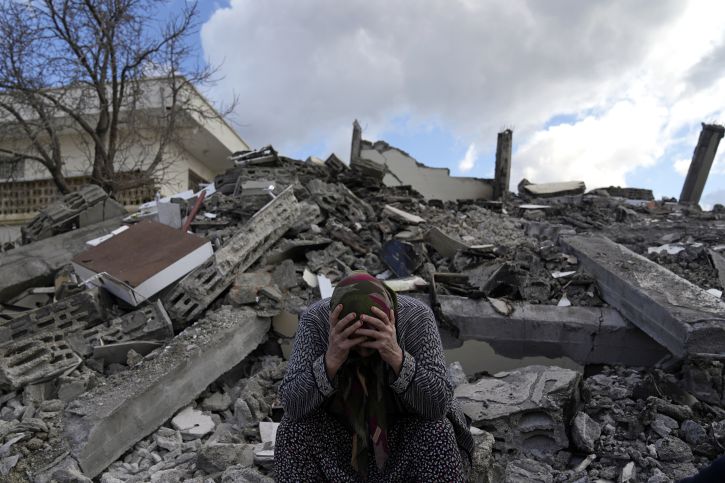
Powerful Earthquakes Hit Turkey and Syria: Making Sense of the TragedyA distraught woman sits on rubble of a building in southern Turkey that was destroyed by the earthquakes of Feb. 6, 2023 (AP Photo/Khalil Hamra). 
“Thousands have died in the recent earthquakes in Turkey and Syria. Life in this region will be impacted for years to come. Why do such tragedies occur?

Thousands of lives were suddenly wiped out when a magnitude 7.8 earthquake and then a magnitude 7.5 earthquake struck southern Turkey and northern Syria on Feb. 6, 2023. As of this writing, the death toll is over 6,000.

With the more than 300 aftershocks and frigid temperatures, this number will undoubtedly rise as more bodies are recovered from the rubble. In an instant, a shaking earth destroyed buildings and roads and buried thousands of unsuspecting people. Over 13,000 people were injured, and tens of thousands were without food, shelter and hope.

Both Turkey and Syria were grossly unprepared for this tragedy. Their buildings were not designed to withstand an earthquake of this magnitude. On top of that, they lack the resources to handle the aftermath of these deadly earthquakes.

Syria is still embroiled in a seemingly unending civil war. The city of Aleppo, home of many displaced refugees, was first ravaged by missiles and is now even more decimated by this natural disaster.

Our thoughts and prayers go out to the families affected by this tragedy. Tragedies like this should remind us how precious life is and how quickly life can be turned upside down. It’s at times like these that we should turn to the Bible. The Bible gives a unique perspective on tragedies, including difficult lessons we should learn.

To learn more about the biblical perspective on tragedies, read “Why Does God Allow Evil and Suffering?

Lessons from the tragedy in Turkey and Syria

Consider these three lessons:

1. This is not God’s world.

Many see tragedies like this as proof that there is no God. They reason that an all-powerful, all-loving God would not allow tragedies like this. But the Bible shows a different way we should look at it. Tragedies don’t occur because God doesn’t care. Ultimately, they are a result of humanity’s rejection of God. Essentially, this is not God’s world!

The suffering and anguish in Turkey and Syria and everywhere else are a result of living in a world cut off from God. When God created Adam and Eve, He placed them in a beautiful garden and interacted directly with them (Genesis 2:8; Genesis 3:8). There were no earthquakes or other natural disasters in this garden. God was there and provided perfect protection and order. All God required of our first parents was that they live by His instructions. If they did, they would live in complete safety and happiness. They would not need to worry about natural disasters.

But when Satan appeared in the form of a serpent, he convinced them to reject God’s instructions and authority over their lives (Genesis 3:1-5). Because of this rejection, dire consequences would follow for them and their descendants. God removed them from the Garden of Eden and let them live in a world without His protection and influence (Genesis 3:23).

All human beings have been given the same free will to choose their own way of living. God warned that rejecting His law would bring suffering and death (Genesis 2:17; Deuteronomy 30:15-20). Satan’s influence currently prevails over this world because man follows his own way over God’s way (2 Corinthians 4:4). The suffering and anguish in Turkey and Syria and everywhere else are a result of living in a world cut off from God.

2. Unless we change, we will all perish.

Jesus Christ commented on two tragedies that occurred in His time on earth. One was the execution of several people by Pontius Pilate (Luke 13:1). Another was the accidental death of 18 people crushed to death by a falling tower (verse 4).

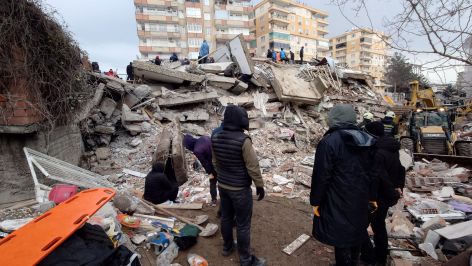
Earthquake damage in Turkey

Turkish citizens searching for survivors in the ruins of a collapsed building in Diyarbakir, Turkey, Feb. 6, 2023 (Voice of America).

Christ used these tragedies to stress an important point. He said that those who died were in the wrong place at the wrong time. God hadn’t singled them out for punishment. The point He drew from these incidents was this: “Unless you repent you will all likewise perish” (verses 3 and 5).

Those who died in the recent disaster did not bring these earthquakes on themselves. The people living in this region weren’t necessarily more guilty of sin than any other people. They were simply in the wrong place at the wrong time.

The point we must take to heart is that we will die eternally if we do not repent of our sins. That is the death we should be most worried about! Those who die in tragedies may have lost their temporary physical lives (which God says He will restore in a resurrection), but if we don’t repent and change, we will perish forever (Romans 6:23).

3. Earthquakes are prophesied to increase and intensify during the last days.

Why are earthquakes (and other natural disasters) continually increasing around the world?

In the Olivet Prophecy, Jesus Christ prophesied that in the last days there would be “earthquakes in various places” (Matthew 24:7). As that time approaches, earthquakes will increase both in intensity and in frequency. Read more in our article “Earthquakes in Bible Prophecy.”

Since the start of the 21st century, not including this recent disaster, there have been 22 major earthquakes (greater than a magnitude 6) causing some 834,000 deaths! Some of the deadliest earthquakes since 1900 have occurred in recent years. These include:

  • The growing number of earthquakes is a sign that the return of Jesus Christ is drawing near. Haiti (Jan. 12, 2010). Magnitude 7; 316,000 people killed. This was the deadliest earthquake of this century.
  • Indonesia (Dec. 26, 2004). Magnitude 9.1; 228,000 people killed in the earthquake and subsequent tsunami. This was the third- largest earthquake since 1900.
  • China (May 12, 2008). Magnitude 7.9; 90,000 people killed or missing and presumed dead.
  • Pakistan (Oct. 8, 2005). Magnitude 7.6; over 86,000 people killed.
  • Iran (Dec. 26, 2003). Magnitude 6.6; 41,000 people killed.

(Since casualty reports in these disasters often vary, the above casualty numbers should be considered approximate.)

As the weeks turn into months, the death toll from the recent earthquakes in Turkey and Syria will undoubtedly rise and possibly cause them to rank among the worst earthquakes in recent times.

The growing number of earthquakes is a sign that the return of Jesus Christ is drawing near. This should motivate us, more than ever, to heed Christ’s warning from point two: repent!

What will you do now?

Why Does God Allow Evil and Suffering?The Bible and history prove this simple statement: A world without God leads to suffering, tragedy and death.

As you see the resulting suffering of this tragedy, ask yourself this question: Do I want to continue to be a part of the suffering that comes from a life cut off from God? Or do I want to have a relationship with Him and live a life that is blessed and happy (Psalm 1) and help prepare for the peaceful world Jesus Christ will bring at His return?”  From: https://lifehopeandtruth.com/prophecy/blog/powerful-earthquakes-hit-turkey-and-syria-making-sense-of-the-tragedy/

To learn more about the future time when natural disasters will end, download our free booklet The World to Come: What It Will Be Like.

  __________

How Does God Want to be Worshipped?

A sunset over a field.Jack Le Roux/Unsplash

“Christ commanded us to worship God in spirit and truth (John 4:24). But how do we worship God? Can we know what pleases Him?

Christ kept the Sabbath Holy all His life, and He was an example for us. 

Yes, in God’s Word we can learn how He wants to be worshipped. Christ Himself said, “If you love Me, keep My commandments” (John 14:15). Those timeless commandments God gave to mankind are key to happiness, peace, abundance and harmony. Just read through any of them and imagine how life would be if all mankind strictly observed just one of those ten!

But, how do we worship God? The first four of the Ten Commandments all have to do with how we respect and honor God. He tells us how to live if we truly love Him and want to “hallow His name.” Those first four are:

1. Have no other gods besides Me.

2. Make unto yourself no graven image of anything in heaven or earth or the water under the earth; you shall not bow down to them nor serve them.

3. You shall not take the name of the Lord your God in vain; and

4. Remember the Sabbath day to keep it holy.

If you believe in Christ, you probably agree with the first three of the Commandments, but do you keep the fourth?

The Sabbath day

On the seventh day of creation God created the Sabbath day for mankind (Genesis 2:2-3). Jesus Christ said the “Sabbath was made for man and not man for the Sabbath” (Mark 2:27) and that He was “Lord of the Sabbath” (Matthew 12:8). Christ kept the Sabbath holy all His life, and He was an example for us. His apostles kept the Sabbath day all their lives—even after Christ died, was resurrected and then ascended into heaven—as did the New Testament Church of God.

God designed the Sabbath to be “Holy time”— a 24-hour period we should remember and set aside to do God’s will. In Leviticus 23, God says that each Sabbath is a “Holy convocation”—a time for His people to assemble before Him (Leviticus 23:1-34).

If we say we worship God and want to please Him, we must do as He says. If we do, He says He will make His home with us. If we don’t, Christ says, “Depart from Me, you who practice lawlessness” (Matthew 7:23).

Do you worship God the way He wants to be worshipped? Living God’s way is a “24-7” life. The Sabbath day is Holy and we must honor Him on that day.

Do you want to worship God as He wants to be worshipped each Sabbath? Then please join us for Sabbath services, even if it is virtually at first, at one of our many locations around the world. If you’d like to talk to someone or want more information, contact us and we will get right back with you.  We encourage you to read our vital booklet on this subject, “Sunset to Sunset: God’s Sabbath Rest.”     From: https://www.ucg.org/bible-study-tools/bible-questions-and-answers/how-does-god-want-to-be-worshipped

________

Is Cheese Really Good for Our Health?

“What is the real story behind the recent studies that show cheese has neutral or positive health effects?

In my series of videos on saturated fat, I talked about a major campaign launched by the global dairy industry to “neutralize the negative image of milk-fat among regulators and health professionals as related to heart disease.” As you can see in my video “Is Cheese Really Bad for You?”, (Is Cheese Really Bad for You? | NutritionFacts.org) that campaign continues to this day with the publication of a meta-analysis demonstrating “neutral [non-harmful] associations between dairy products and cardiovascular and all-cause mortality,” that is, death.

How do we know the dairy industry had anything to do with this study? Well, it was published in a journal that requires authors to disclose financial conflicts of interest. So, what ties were divulged? As you can see at 0:47 in my video: Dairy, dairy, dairy, dairy, dairy, dairy, the fourth largest dairy company in the world, dairy, dairy, milk, beer, soda, McDonald’s, dairy, dairy, dairy, dairy, and more dairy. Oh, and the study itself was “partly funded by…the Global Dairy Platform, Dairy Research Institute and Dairy Australia.” So, there we have it.  More at: https://nutritionfacts.org/2023/01/26/is-cheese-really-good-for-our-health/?

Key Takeaways
  • The dairy industry’s campaign to “neutralize the negative image of milk fat among regulators and health professionals as related to heart disease” continues, and the industry still funds studies like the meta-analysis that purportedly showed that dairy products have non-harmful associations with “cardiovascular and all-cause mortality.”
  • Researchers affiliated with the largest dairy producer in China, thereby one of the largest dairy companies in the world, suggested eating cheese each day isn’t only neutral (non-harmful), but beneficial for our health.
  • Many studies were from Europe where greater cheese consumption is associated with a “higher socioeconomic status” since it is generally more expensive. Higher socioeconomic groups also consume more fruits and vegetables, and have higher education levels and higher paying jobs, all of which are associated with better health outcomes.
  • Higher socioeconomic groups also tend to consume more candies. The candy industry and the U.S. Department of Agriculture have claimed that candy consumers have lower inflammation levels and a 14 percent lower risk of elevated blood pressure.
  • U.S. taxpayer dollars prop up the sugar industry with a billion dollars annually. Similarly, the U.S. government uses tax dollars to buy tens of millions of dollars’ worth of surplus cheese.
  • The U.S. government has been found to collude with the dairy industry to promote their products. “These [checkoff] funds are used to promote junk foods, which contribute to the very diseases our federal government is allegedly trying to prevent. Does it make sense to tell Americans to avoid foods high in salt, sugar, and saturated fat, while engaging in the promotion of those same foods?”  From: https://nutritionfacts.org/2023/01/26/is-cheese-really-good-for-our-health/?

_______

Sunday, October 16, 2022

How God's Festivals Teach Us About Jesus Christ. How Should We Observe God's Festivals? Feast of Tabernacles. The Eighth Day. How Not To Die From Cancer.

.

How God's Festivals Teach Us About Jesus Christ

An open Bible.“The feasts of the Lord, which you shall proclaim to be holy convocations, these are My feasts" (Leviticus 23:2). Here God Almighty says in Scripture that these are His feasts. Why are they important to Him? And why should they be important to every Christian?
The seven annual feasts of God are "a shadow of things to come," and Jesus Christ is at the center of all of them.

The answer is simple but profound: They center around and teach us about God's plan for all mankind and the centrality of Jesus Christ's role in every step toward its completion. Yet for most of traditional Christianity, these biblical feasts are thought to have been kept only by the Jews and are considered meaningless for Christians.

Their meaning in this regard has sadly escaped most Bible readers for the last 2,000 years. Let's take another brief look at each of these festivals and see what they teach us about the Savior of mankind, Jesus Christ, and how He accomplishes God's incredible plan for humanity.”

More at: https://www.ucg.org/bible-study-tools/booklets/gods-holy-day-plan-the-promise-of-hope-for-all-mankind/how-gods-festivals

_______

How Should We Observe God's Festivals?

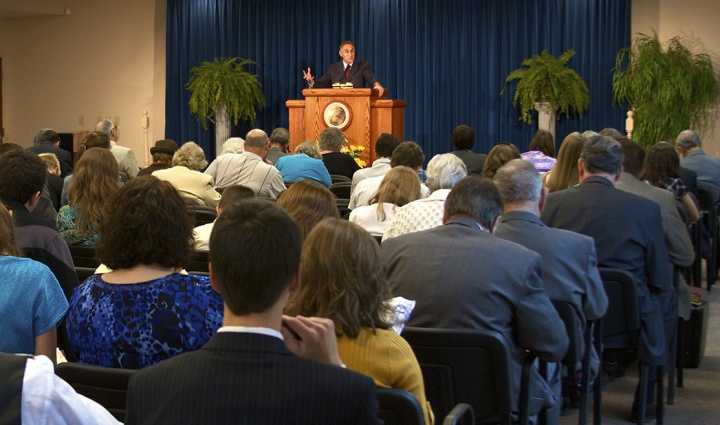
A church congregation listening to a sermon.“How should you observe God's Holy Days?

These festivals are special occasions on which we should gather with other believers. As with the weekly Sabbath, God commands special worship services on each of the Holy Days.

After we come to realize that God's festivals are vitally important to mankind and eminently applicable to our modern world, we should naturally want to learn more about how to observe them.

Where should we celebrate them? Should we keep them at home or in some kind of religious service? What should we do on these days? Does God mind if we do our normal work on these days, or should we reserve them for other purposes? How will the observance of these days affect our families and jobs?

These are all important questions we must consider upon learning about God's festivals. Let's examine some biblical principles we should consider in dealing with these real-life issues.      All different, but all holy..

More at: https://www.ucg.org/bible-study-tools/booklets/gods-holy-day-plan-the-promise-of-hope-for-all-mankind/how-should-we-observe-gods-festivals

_______

The Feast of Tabernacles: Jesus Christ reigns over the entire earth

“The sixth biblical feast, the Feast of Tabernacles. (Going on now) It was originally kept by the Israelites to remind them of all God's miraculous interventions during the 40-year period in the wilderness: "All who are native Israelites shall dwell in booths, that your generations may know that I made the children of Israel dwell in booths when I brought them out of the land of Egypt" (Leviticus 23:42-43).

But what does the Feast of Tabernacles have to do with Jesus Christ? Describing Christ's earthly ministry, the apostle John states that "the Word became flesh and dwelt among us" (John 1:14). The Greek term translated "dwelt" here literally means that He "tabernacled" among us. Just as Jesus Christ as the Creator God of the Old Testament (John 1:1-3, John 1:10; Hebrews 1:2; Colossians 1:16) "tabernacled" with the Israelites in the wilderness, He now did so with His people in His physical life many centuries later.

The apostle Paul says that the Israelites in the wilderness all "drank the same spiritual drink; for they drank from the spiritual rock that accompanied them, and that rock was Christ" (1 Corinthians 10:4, NIV).

At Christ's second coming, He will again "tabernacle" with those who are saved. He will dwell with His people for a thousand years, and this 1,000-year rule of Jesus Christ over the earth is the ultimate fulfillment of this feast. "Blessed and holy is he who has part in the first resurrection. Over such the second death has no power, but they shall be priests of God and of Christ, and shall reign with Him a thousand years" (Revelation 20:6).

So Christ is definitely at the center of this feast too—as the ruler who "tabernacles," or dwells with, His people as He reigns on earth in the Kingdom of God for a thousand years.”  From: From: https://www.ucg.org/bible-study-tools/booklets/gods-holy-day-plan-the-promise-of-hope-for-all-mankind/how-gods-festivals

_______

The Eighth Day: the last judgment 
(This year, 2022,  17th or 18th or 19th October, depending on where you live.)

“The Feast of Tabernacles lasts seven days. Then, on the eighth day, there follows another, separate feast day, the last of the biblical feasts (Leviticus 23:36). What does this day have to do with Jesus Christ?

During Christ's 1,000-year reign, all of mankind will be offered God's Spirit. And beyond that, the Bible reveals there will come a future time when Christ will offer it to those who rise up in a resurrection of the dead from all past ages. In Revelation 20, we read what happens after the Millennium (pictured by the Feast of Tabernacles) is completed:

"Then I saw a great white throne and Him who sat on it, from whose face the earth and the heaven fled away . . . And I saw the dead, small and great, standing before God, and books were opened. And another book was opened, which is the Book of Life. And the dead were judged according to their works, by the things which were written in the books" (Revelation 20:11-12).

This period is also called the White Throne Judgment, and it is Jesus Christ who has been appointed to judge all of mankind (John 5:26-27; Romans 14:10). This does not mean immediate condemnation but an evaluation period, since the Book of Life is opened—meaning an opportunity is opened to receive God's Spirit and have one's name written into it. The apostle Paul writes in Philippians 4:3 of those "who labored with me in the gospel . . . and the rest of my fellow workers, whose names are in the Book of Life."

So Christ will also carry out the central role of this final feast, that of lovingly and mercifully offering the multitudes of the uninformed and the deceived an opportunity for conversion and salvation and then rewarding them according to the life they live.

Thus, the seven annual feasts of God are "a shadow of things to come," and Jesus Christ is at the center of all of them. Yet He has not brought them to ultimate fulfillment; that will only occur in the coming Kingdom of God.

Yes, Christ is our Passover who redeems us. He is the unleavened bread that purifies us and the One who leads us out of sin. He sent the Holy Spirit at Pentecost, through which He lives in us. He is the coming King heralded by the blast of the trumpets. He is the One who will banish Satan and intercede for mankind as High Priest. He will tabernacle with human beings on earth as King of Kings. And finally, He is to judge mankind and offer the great majority an opportunity to have their names written in the Book of Life.

This is why God's Church kept these feasts as shown in the New Testament (see God's Festivals in the New Testament). This is why these holy feasts are still to be kept—to remind us of the central role Jesus Christ has in carrying out the plan of God the Father. Isn't it about time you honored Him and started keeping them yourself?”  Also from: https://www.ucg.org/bible-study-tools/booklets/gods-holy-day-plan-the-promise-of-hope-for-all-mankind/how-gods-festivals

_______

From the book: How Not To Die From Cancer

“Whereas infectious diseases were the primary causes of death during the Age of Pestilence and Famine, our current era of human disease, the Age of Degenerative and Man-Made Diseases, counts lifestyle diseases—heart disease, chronic lung disease, and cancer—as the top killers.

This pandemic of chronic disease has been ascribed in part to the near-universal shift toward a diet dominated by animal-sourced and processed foods—in other words, more meat, dairy, eggs, oils, soda, salt, sugar, and refined grains. China is one of the best-studied examples. There, a transition away from the country’s traditional, plant-based diet was accompanied by a sharp rise in diet-related chronic diseases, such as obesity, diabetes, cardiovascular diseases, and cancer.

The same kind of diet that may help prevent common cancers just so happens to be the same kind of diet that may also help prevent heart disease, type 2 diabetes, and many other leading causes of death. Unlike drugs—which tend to only target specific conditions, can have dangerous side effects, and may only treat the symptoms of disease—a healthy diet can benefit all organ systems at once, has good side effects, and may treat the underlying cause of illness.

That one unifying diet found to best prevent and treat many of these chronic diseases is a whole-food, plant-based diet, defined as an eating pattern that encourages the consumption of unrefined plant foods and discourages meats, dairy products, eggs, and processed foods.

The truth is that adhering to just four simple healthy lifestyle factors can have a strong impact on the prevention of chronic diseases: not smoking, not being obese, getting a half hour of daily exercise, and eating healthier—defined as consuming more fruits, veggies, and whole grains, and less meat. Those four factors alone were found to account for 78 percent of chronic disease risk.

If you start from scratch and manage to tick off all four, you may be able to wipe out more than 90 percent of your risk of developing diabetes, more than 80 percent of your risk of having a heart attack, cut by half your risk of having a stroke, and reduce your overall cancer risk by more than one-third. For some cancers, like our number-two cancer killer, colon cancer, up to 71 percent of cases appear to be preventable through a similar portfolio of simple diet and lifestyle changes."  From: https://nutritionfacts.org/topics/cancer/

“The information on this page has been compiled from Dr. Greger’s research. Sources for each video listed can be found by going to the video’s page and clicking on the Sources Cited tab.      References may also be found at the back of his books.”

See also:   https://nutritionfacts.org/video/how-not-to-die-from-cancer/

________