Showing posts with label Lamb. Show all posts

Sunday, April 13, 2025

Why Christians Should Keep The Annual Passover. What Does The Feast of Unleavened Bread Mean For Christians?

.

Why Christians should keep the annual Passover.

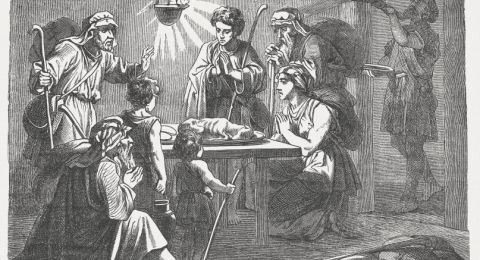
Why Christians should keep the annual Passover“In ancient Israel the first Passover was a time of deliverance. The blood of the Passover lamb was smeared on the doorposts of those Israelites who put their trust in God, and they were spared (Exodus 12:23), while the firstborn of the Egyptians were slain.

Many years later, during His final Passover with His disciples, Jesus Christ introduced new symbols for the observance of the annual Passover, which commemorate Him as “our Passover, [who] was sacrificed for us” (1 Corinthians 5:7). The observance of the New Testament Passover was revealed as the first step toward salvation, reminding Christians not only of how God delivered ancient Israel, but of our deliverance from sin today.

Only 3½ years after He began His ministry, Jesus of Nazareth was apprehended by the religious authorities at the time of the Passover feast (Matthew 26:2; Mark 14:1). After a brief trial, while mocking and beating Him, they took Jesus before the Roman authorities and accused Him of "perverting the nation…saying that He Himself is Christ, a King" (Luke 23:2).

Pontius Pilate, the Roman governor in Jerusalem, after analyzing the charges, declared to the chief priests and the others present: "...having examined Him in your presence, I have found no fault in this Man ... .no, neither did Herod….I will therefore chastise Him and release Him" (Luke 23:14-16). Pontius Pilate was then faced with angry shouts of, "Away with this Man, and release to us Barabbas [a murderer]" (Luke 23:18), and "Crucify Him, crucify Him!" (Luke 23:21).The priests and the crowd eventually prevailed, and the Roman governor freed a murderer and sentenced an innocent man to death.

God's way of redeeming us from the death penalty without compromising His perfect law was for the penalty to be paid in our place by Jesus Christ, the Son of God: "For God so loved the world that He gave His only begotten Son, that whoever believes in Him should not perish but have everlasting life" (John 3:16). Our sins separated us from God, because through sin we lived hostile to God and His ways (Isaiah 59:1-2; Romans 3:10-12 and 8:7). As sinners we had the death penalty hanging over us: "We know that our old self was crucified with him so that the body of sin might be destroyed, and we might no longer be enslaved to sin" (Romans 6:6, New Revised Standard Version).

In order to observe the first New Testament Passover, when Jesus introduced the symbols of the bread and the wine, Jesus Christ and His disciples assembled on that evening, after sunset, in a large upper room. Assuming the role of a servant, Jesus washed His disciples' feet: "And supper being ended…[Jesus] rose from supper and laid aside His garments, and took a towel…and began to wash the disciples' feet, and to wipe them with the towel ..." (John 13:2-5), instructing them: "If I then, your Lord and Teacher, have washed your feet, you also ought to wash one another's feet. For I have given you an example, that you should do as I have done to you…If you know these things, blessed are you if you do them" (John 13:14-15 and 17).

Then Jesus "took bread, gave thanks and broke it, and gave it to them, saying, 'This is [or 'means,' James Moffatt Translation; i.e., 'represents'] My body which is given for you; do this in remembrance of Me'" (Luke 22:19). He also "took the cup, and gave thanks, and gave it to them, saying, 'Drink from it, all of you. For this is [represents] My blood of the new covenant, which is shed for many for the remission of sins'" (Matthew 26:27-28).

The Bible makes it clear that all who will follow Christ should observe this New Testament Passover in remembrance of His love and sacrifice for our sins and as a reminder of our commitment to Him for what God has done in our lives (1 Corinthians 5:7-8; Luke 22:19-20). The observance of the annual New Testament Passover reminds Christians not only of how God delivered ancient Israel out of Egypt, but of our deliverance out of sin today.”  From: https://www.ucg.org.au/learn/read/bible-insights-weekly/biw-archive/why-christians-should-keep-the-annual-passover

________

What does the Feast of Unleavened Bread mean for Christians?

What does the Feast of Unleavened Bread mean for Christians?“During the spring of each year (March-April in the northern hemisphere), immediately after Passover and before the Feast of Pentecost, another biblical feast is observed—the seven-day Feast of Unleavened Bread (Leviticus 23:6-8; Exodus 12:17-18).

The Exodus from Egypt, which took place immediately after Passover during the Feast of Unleavened Bread (Numbers 33:3), was one of the great events to occur during this time. The crossing of the Red Sea is traditionally assigned to the seventh or last day of Unleavened Bread.

After Israel entered the Promised Land, the miraculous conquest of Jericho also took place during the Days of Unleavened Bread. Other great events occurring during this time of year involved rededicating the people of God to their Creator. 2 Chronicles chapters 29 through 31 describe the religious reform led by Hezekiah, and chapters 34 and 35 tell of the reform by Josiah.

However, one other event that took place during the Days of Unleavened Bread had a much greater impact than any of these, and that was the resurrection of Jesus Christ. John 19:31 tells us He was crucified on the day before a Sabbath. While most people assume this was the regular weekly Sabbath (observed Friday sunset to Saturday sunset), John tells us this Sabbath "was a high day" — a term used for the seven annual Holy Days. A careful reading of the Gospels shows this "high day" was the first day of Unleavened Bread, a Holy Day (Leviticus 23:2, 6-7) that can fall on a weekday.

Jesus remained in the grave for three days and three nights just as He had prophesied (Matthew 12:40), making it impossible to reconcile Jesus' statement in Matthew 12 with a Friday afternoon crucifixion followed by a Sunday morning resurrection. (See "Jesus Wasn't Crucified on Friday—or Resurrected on Sunday!")

Three days and three nights from the time of His entombment, just before the beginning of the first Holy Day of Unleavened Bread, brings us to the sunset at the end of the weekly Sabbath, during the seven-day Feast of Unleavened Bread, as the time Jesus was resurrected. On that Sunday, after His resurrection the day before, Jesus appeared first to Mary Magdalene (John 20:11-18) and then to others.

These Days of Unleavened Bread marked a turning point in the way the spring festival was celebrated. Christians observing these annual festivals would still recall the exodus from Egypt as a type of redemption from sin and release from the bondage of Satan. There would still be an emphasis on eating unleavened bread as a physical reminder we are to become spiritually unleavened by removing sin from our lives. But the core meaning of the Feast of Unleavened Bread is that Jesus Christ, the One who was resurrected during this time, now lives His life in every Christian.

Jesus repeatedly emphasized the importance of His own resurrection. During the last supper, He told the disciples that although He would soon be betrayed, He would live again: "Because I live, you will live also" (John 14:19). He had just promised they would not be left as orphans (verse 18)—that is, spiritually unprotected and vulnerable to Satan. Both the Father and He would live in the hearts and minds of Christians by the indwelling of the Holy Spirit (verses 20-26), empowering us to overcome "the sin which so easily ensnares us" (Hebrews 12:1).

The Apostle Paul encouraged the church there to "keep the feast, not with old leaven, nor with the leaven of malice and wickedness [lingering sinful attitudes], but with the unleavened bread of sincerity and truth"(1 Corinthians 5:8) —a clear reference to the Feast of Unleavened Bread.

The Feast of Unleavened Bread is a festival that helps us focus on replacing sin with righteousness. We are reminded to "...work out your own salvation with fear and trembling" (Philippians 2:12), but the Apostle Paul was not preaching a works-based salvation. In verse 13 he explains "it is God who works in you both to will [that is, to have the desire to overcome] and to do [to act on that desire] for His good pleasure."   From: https://www.ucg.org/the-good-news/what-does-the-feast-of-unleavened-bread-mean-for-christians

_________

Tuesday, January 21, 2025

God Rules With Strength and Gentleness. Want to Live to 100? Eat More Beans!

.

God Rules With Strength and Gentleness

Isaiah 40:10-11

Behold, the Lord GOD shall come with a strong hand, and His arm shall rule for Him; behold, His reward is with Him, and His work before Him. He will feed His flock like a shepherd; He will gather the lambs with His arm, and carry them in His bosom, and gently lead those who are with young.

“These two verses condense a tremendous amount of information about how God will rule when Jesus Christ returns to establish the Kingdom of God on this earth.

The book of Revelation explains that as Jesus Christ is coming down to this earth, the armies of the nations of this world will attack Him as if He were an alien invader (Revelation 19:19). Christ’s response to these unprovoked attacks will be with “a strong hand,” as He forcefully puts down the rebellion and makes it clear who is in charge (Revelation 19:20-21).

But that is just one aspect of Jesus Christ’s rule. Isaiah mentions that He will bring a “reward” with Him for His faithful followers who will then assist Him in “His work” of teaching His way of life to the survivors of the end-time troubles.

Isaiah 40:11 is a beautiful picture of our all-powerful God gently gathering people like little lambs and feeding and caring for them.

God is both strong and gentle at the right times. He wants us to learn to follow His lead in this area of life as well.”          Listen to the "Verse by Verse" episode covering this scripture at:  https://lifehopeandtruth.com/bible/blog/god-rules-with-strength-and-gentleness/?

For more about Isaiah 40, see “God’s Perspective on Prophecy.” For more about how God will rule in the Kingdom of God, see the articles in our “Kingdom of God” section. 

_________

It's time to get to know God. Start your 7-day guided Journey.

________

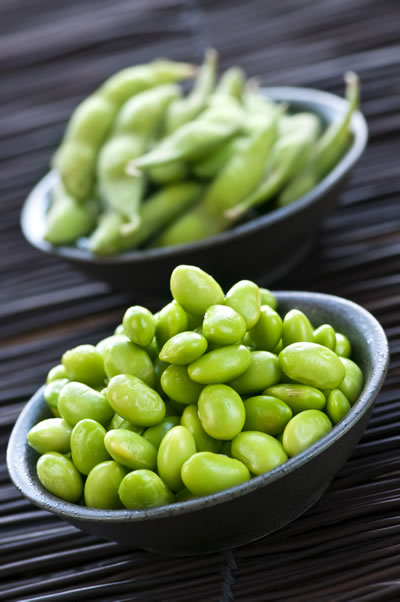
Want to Live to 100? Eat More Beans!

Eat beans and live 100“Want to know how to live to 100? Eat plenty of beans, says plenty of research studies on the longest-living populations in the world.

Campodimele, Italy, a hilltop village south of Rome, has so many centenarians that it’s known in Europe as the “Village of Longevity.” Daily, its citizens enjoy a diet full of beans like lentils, chickpeas, and white beans.

How to live to 100

A few years ago, scientists identified five groups of long-lived elderly people (aged 70 and older) – Japanese in Japan, Swedes in Sweden, Anglo-Celtic people in Australia, and Greeks in both Greece and Australia – and observed them for the next seven years, tracking their health status and food choices among nine different categories: vegetables, legumes, fruits, nuts, cereals, dairy products, meat, fish, and monounsaturated fats. A total of 785 elderly people were followed.

Eating Beans May Help You Live To 100Nowadays, there are many tasty varieties of beans on the market, not only staples like garbanzos but also choices like cranberry, cannellini, and fava beans. Eat beans and live longer, maybe even live to 100.

The researchers found that legumes were the most important dietary predictor of survival among the elderly, “regardless of their ethnicity,” they wrote.* For every 20-gram increase in daily legume intake (20 grams is about three-quarters of an ounce), “there is a 7 to 8% reduction in mortality hazard ratio.”

You’d be hard-pressed to find a more perfect food than beans. They are an excellent source of protein, vitamins, minerals, and complex carbohydrates. They’re very low in fat and virtually sodium-free. Plus, they’re filling.

And fiber? Even the lowest-fiber bean puts most other foods to shame. A cup of high-fiber beans, like pinto or black beans, tallies up 16 grams of fiber.You’d have to eat about eight slices of whole-wheat bread to get the same amount of fiber. And it’s primarily cholesterol-reducing soluble fiber, which makes beans an excellent heart-healthy alternative to meat.

Bean prep these days has gotten so much easier, thanks to the ready availability of cans of already-cooked beans, and you can find many “no salt added” varieties, which is really wonderful for keeping blood pressure under control. If all you can find is salted varieties, get rid of some of the salt by rinsing the beans through a colander.

Here are some simple tips for how to get more beans into your life (and how to live to 100):
  • Toss a handful of beans into your salads (try the rich, buttery flavor of cannellini  beans)
  • Stir beans into your pasta sauces or soups. Make an easy, sensational bean soup by combining canned white beans, any vegetables you already have, low-sodium chicken stock, and chopped fresh Italian parsley. Season with no-salt-added Italian blend seasonings and 1 tablespoon of low-sodium soy sauce. Bring to a boil and simmer for about 15 minutes.
  • Fold beans, like black and pinto beans, into corn tortillas with salsa, shredded nonfat jalapeno cheese, and shredded lettuce.
  • Puree beans for dips. For a zesty Mexican-style dip, combine pinto beans, chopped red onion, fresh cilantro leaves, and lime juice in a food processor and blend. Whip up your own delicious and inexpensive hummus dip in a processor with just five ingredients: two garlics, one can of no-salt-added garbanzo beans, three-quarter teaspoon sesame oil, two tablespoons plain nonfat yogurt, and two tablespoons fresh lemon juice.
Source:   https://www.pritikin.com/your-health/healthy-living/eating-right/539-want-to-live-to-be-100-eat-more-beans.html

* Asia Pacific Journal of Clinical Nutrition, 2004; 13 (S): S126.

_________

Sunday, December 22, 2024

It is Not OK! The Lamb of God

.

460954255_122113445492503299_5515890[2]

_________

The Lamb of God

John 1:29

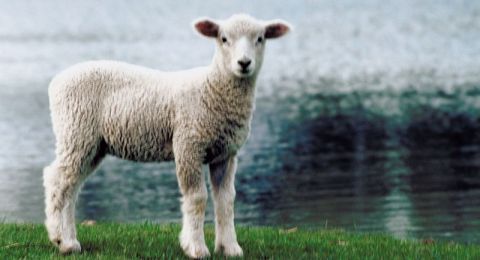
The next day John saw Jesus coming toward him, and said, “Behold! The Lamb of God who takes away the sin of the world!”

The unblemished lambs sacrificed in the Old Testament could not take away sin. They were only a reminder of Jesus Christ’s true purity and innocence. As our Creator (John 1:3), His life is worth far more than all human lives combined. Only His death could pay all the penalties and truly remove sin from those who repent.

The apostle Paul referred to Jesus Christ in a similar way. “For indeed Christ, our Passover, was sacrificed for us” (1 Corinthians 5:7). The Passover lambs, along with all the other sacrificial lambs, represented the sacrifice of Christ.

Study more about the Lamb of God and His sacrifice in our article “Sacrifice of Jesus.”  To listen to the "Verse by Verse" episode covering this scripture go to: https://lifehopeandtruth.com/bible/blog/the-lamb-of-god-1/

________

Sunday, April 21, 2024

Feasts in the Bible: Why Should They Matter to Christians? Q & A About the Christian Passover. The Role of Processed Foods in the Obesity Epidemic.

.

Feasts in the Bible: Why Should They Matter to Christians?

Feasts in the Bible: Why Should They Matter to Christians?“Leviticus 23 records the “feasts of the Lord.” What are these feasts? Though often dismissed as “Jewish” holidays, are they also relevant to Christians?

God commanded Moses, “The feasts of the LORD, which you shall proclaim to be holy convocations, these are My feasts” (Leviticus 23:2; emphasis added).

The word feasts in this passage means appointed times, specific observances God has designated as holy, or set apart. Their holiness comes from the tremendous spiritual significance God has attached to each.

These seven biblical feasts build upon one another in meaning and progressively reveal how God will save the world. 

Do you know what they are and what they mean?

1. Passover

As the first of God’s seven annual feasts, Passover sets the stage for every major event to follow. This foundational feast directs our attention to the need for blood to be shed in order for us to be saved from the penalty of death.

It is a feast that commemorates the perfect sacrifice of the Son of God.

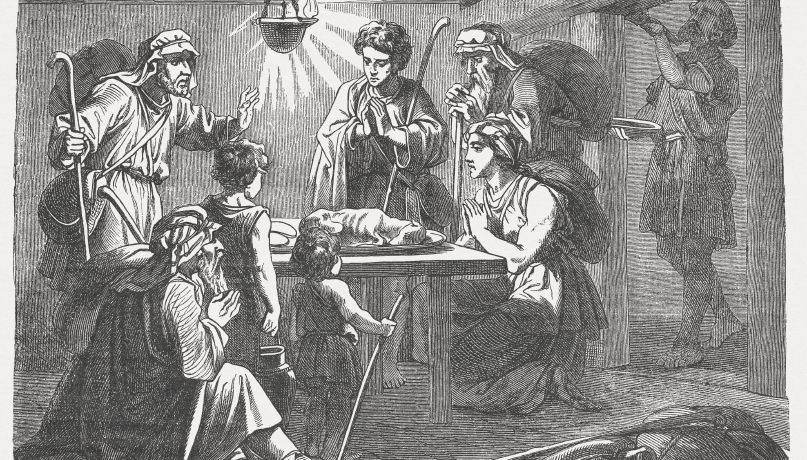
  • Historical: God devastated the Egyptians by killing all their firstborns, but He spared the Israelites through a sacrificial substitute. Passover was observed annually as a reminder of how the Israelites were saved from death by putting the blood of a lamb on their doorposts (Exodus 12:26-27).
  • Fulfillment: The sacrifice of Jesus Christ, “our Passover,” makes entrance into the New Covenant possible (1 Corinthians 5:7; Luke 22:20). Christians are to continue observing this day as a reminder of how the Savior’s sacrifice provides redemption from sins and eternal death (Hebrews 9:12).

To learn more about this biblical feast, read “Passover: What Did Jesus Do for You?

More at: https://lifehopeandtruth.com/god/blog/feasts-in-the-bible-why-should-they-matter-to-christians/?

_______

Questions and Answers About the Christian Passover

“This evening, many Christians will gather to observe the New Covenant Passover. This festival may seem mysterious to many. In this blog post, we address six frequently asked questions about the New Testament Passover.”

Transcript of:  https://hubs.la/Q02twqnM0 

“Most Christians believe Passover is a Jewish holiday. But should Christians observe Passover? This post covers this and other questions about the Christian Passover.Questions and Answers About the Christian Passover

If you look at your calendar for March or April, you will probably see “Passover” marked. Most people think of Passover as just a Jewish national holiday that celebrates Israel’s departure from Egypt, as told in the book of Exodus. The Ten Commandments, the 1956 movie starring Charlton Heston and Yul Brynner, is often shown on network TV around this time of year.

This may be the extent of your knowledge about the Passover. It is largely ignored in Christianity, which observes other spring holidays such as Easter, Lent and Good Friday.

(To learn about the problems with Easter, read our article “Is Easter Pagan?”)

But did you know that the Passover is found throughout the Bible—both in the Old Testament and New Testament? So why don’t most Christians celebrate Passover? Should they?

This post will answer some frequently asked questions about the Passover.

Passover Question 1: What does Passover commemorate? Doesn’t it celebrate the Israelites being “passed over” and protected from the 10th plague in Egypt?

Yes, when the Passover was introduced, it commemorated the night God performed the 10th and final plague against ancient Egypt. God caused the firstborn of Egypt to die—a plague that probably took millions of lives throughout the land. God would spare the Israelites from this plague only if they painted lamb’s blood on the doorposts of their dwellings (Exodus 12:7, 12-13).

Throughout their generations, the Israelites were to celebrate the Passover to remember how God delivered them from slavery in Egypt. That evening, the Israelites were also instructed to prepare a special meal and get ready to leave Egypt the next day (verses 8-11). God declared this observance was “the LORD’S Passover” (verse 11). He commanded them to observe it as “a memorial,” “a feast to the LORD throughout your generations” and “an everlasting ordinance” (verse 14).

Years later, God reinforced the observance in the formal list of God’s festivals given to Moses: “On the fourteenth day of the first month at twilight is the LORD’S Passover” (Leviticus 23:2, 5).

Throughout their generations, the Israelites were to celebrate the Passover to remember how God delivered them from slavery in Egypt. This was the original meaning of the observance. Jews around the world understand and observe this.

These events are also meaningful for Christians, who are called “the Israel of God” (Galatians 6:16) and are delivered from the slavery of sin (Romans 6:7). But, as we will see, the Passover holds even deeper significance for Christians today.

Passover Question 2: Did Jesus celebrate Passover?

Yes, Jesus observed the Passover throughout His life.

Luke records that Jesus and His family observed the Passover faithfully: “His parents went to Jerusalem every year at the Feast of the Passover” (Luke 2:41).

One of the most famous accounts of Jesus’ childhood—when He got separated from His parents and they frantically looked for Him, eventually discovering Him discussing the Bible in the temple—took place just after Jesus and His family had observed the Passover in Jerusalem (verses 42-50).

Jesus observed the Passover up until the day He died—literally. He observed the Passover with His disciples the night He was betrayed and arrested (Matthew 26:2, 17-19; Luke 22:15).

To learn more about the feast days Jesus celebrated throughout His life, read “Hidden in Plain Sight: The Festivals Jesus Celebrated.”

Passover Question 3: Is there a connection between Jesus and the Passover?

Yes, the Bible makes a strong link between the Passover and the death of Jesus Christ. Putting the scriptures together, we see that the events of the first Passover foreshadowed Jesus Christ’s death. Notice the following parallels:

Putting the scriptures together, we see that the events of the first Passover foreshadowed Jesus Christ’s death. The Israelites were in bondage to Egypt (Exodus 1:14). All human beings are in slavery to sin (Romans 6:16-17, 20; 7:23; 2 Peter 2:19).

The Israelites were spared from death that night only through the sign of the Passover lamb’s blood on their doorposts (Exodus 12:22-23). Christians are freed from death only through Jesus’ shed blood as the “Lamb of God” (John 1:29; Ephesians 1:7; 2:13; Hebrews 9:14, 22; 1 Peter 1:19).

As a result of the plague against Egypt and the Israelites’ being spared through the Passover lamb’s blood, Israel was freed from slavery and started a new life by coming out of Egypt (Exodus 12:31-41). As a result of Jesus Christ’s sacrifice, Christians can have freedom from the captivity of sin and live a new way of life (Romans 6:4, 6, 18, 22; Ephesians 4:24).

These are just a few of the parallels between the Exodus Passover and Jesus Christ. It is also important to remember that Jesus observed the Passover on the evening before His crucifixion and that His sacrifice occurred on the daylight portion of the Feast of Passover (Matthew 26:18-19).

But perhaps no scripture proves the link better than 1 Corinthians 5:7: “For indeed Christ, our Passover, was sacrificed for us.”

To learn more about the connection between Jesus and the Passover, read “Passover: What Did Jesus Do for You?” and “Why Is Jesus Called the Lamb of God?

Passover Question 4: Did the early Church observe the Passover?

Yes, the New Testament is very clear that Christians in the early Church observed the Passover.

We must first understand that they didn’t observe it in the same way Israel did in the past. At His last Passover, Jesus Christ instituted new symbols to reflect His sacrifice for sins. These new symbols were a new element He added to the Passover for New Covenant Christians.

We read about the institution of the New Covenant Passover in Matthew 26.

Unleavened bread now symbolized the “body” of Jesus Christ (verse 26).

Wine now symbolized Jesus’ “blood” (verse 28).

Jesus commanded His disciples to “do this in remembrance of Me” (Luke 22:19). He also instituted a foot-washing ceremony to teach His people the importance of humility and service (John 13:3-15). (To learn more about the meaning behind washing feet, read “What Is the Meaning of John 13:14—“Wash One Another’s Feet”?”)

The Bible shows us that the early Church continued observing the Passover in obedience to Christ (1 Corinthians 5:7-8; 11:23-26). Today, Christians around the world observe the New Testament Passover in March or April (on the 14th day of Nisan on the Hebrew calendar) to remember and commemorate Jesus Christ’s death and its significance to our lives.

In 2024 the New Covenant Passover ceremony will be observed after the sun sets on April 21 (on the Gregorian calendar). 

You can learn about the dates of the biblical festivals for the next few years at “Festival Calendar.”

The fact that early Christians observed the Passover on the 14th of Nisan is a generally recognized historical fact. Unfortunately, the Roman Church eventually substituted Good Friday and Easter Sunday for the biblical Passover—a change that is still accepted and practiced by the majority of mainstream Christianity today.

To learn more about the change from Passover to Easter, read our article “Christian Festivals.”

Passover Question 5: Isn’t the Christian ceremony of bread and wine called the Lord’s Supper or Communion?

This name, “The Lord’s Supper,” is a common title given to partaking of bread and wine in the Protestant community. Some denominations call this ceremony Eucharist (Greek for “give thanks”) or Communion (Latin for “fellowship” or “sharing”). There is much variance in how these ceremonies are kept. Some keep these ceremonies weekly; some, monthly; some, quarterly; and others, annually.

But none of these names are the biblical name for the ceremony Jesus instituted on the last evening of His life. The Gospels are very clear that He was observing the Passover (Matthew 26:18; Mark 14:14; Luke 22:8).

If you read through each Gospel record of this evening, you will notice that Jesus specifically said He was changing the symbols of the bread and wine—but He never said He was changing the name from Passover to anything else.

The Lord’s Supper? If you search the Bible, you will find the phrase “The Lord’s Supper” is only used once (in 1 Corinthians 11:20). But when you actually read the verse, you may be surprised that the verse is actually saying not to use that title for the observance. “Therefore when you come together in one place, it is not to eat the Lord’s Supper” (verse 20, emphasis added).

The apostle Paul was correcting the Corinthian congregation for not properly keeping the Passover ceremony with reverence and solemnity. These Christians were coming to the Passover and selfishly eating their own food while others went hungry. Some were even getting drunk (verse 21).

So, instead of calling this observance “the Lord’s Supper,” Paul was actually reminding them that it wasn’t! They were to come together to solemnly partake of the bread and wine symbols—not to eat supper (verses 27-29).

Communion? The title “Communion” is taken from 1 Corinthians 10:16: “The cup of blessing which we bless, is it not the communion [the “fellowship” or “sharing”] of the blood of Christ?” This is not a designation of a title for the event, but a statement that the symbols of bread and wine are necessary to have a relationship, or fellowship, with Jesus Christ. The Passover is necessary for truly knowing and having a relationship with Jesus Christ.

To learn more about the proper name for this important observance, read “The Last Supper or Passover?

Passover Question 6: How do you observe Passover as a Christian?

As we have seen, the New Testament shows that Jesus Christ instituted new symbols for the Passover on the night He was betrayed and arrested. Those symbols are foot washing, unleavened bread and wine. In order to keep the Passover as a Christian in the 21st century, there are four basic requirements for baptized members of the Church of God:

  • Observe it on the same night Jesus observed it, on the anniversary of the night of His betrayal and arrest. That is the evening of the 14th of Nisan on the Hebrew calendar. In 2024, that corresponds to the evening after the sun sets on April 21. (April 22 is the daylight portion of the Passover in 2024.)
  • Wash the feet of another baptized Christian also observing the Passover.
  • Eat a small, broken piece of unleavened bread that symbolizes Christ’s broken and beaten body.
  • Drink a sip of red wine that symbolizes Christ’s shed blood.

The ideal way to observe the Passover is with other converted Christians who are partaking of the Passover in a ceremony conducted by a minister of Jesus Christ. 

For more insight on keeping the Passover today, read “Should Christians Celebrate the Passover?

Finding more answers about the Christian Passover

If you are just learning about the Passover, we hope these answers have been helpful and informative. We encourage you to continue studying the origins of the popular holidays celebrated in the spring (in the northern hemisphere) and the deep meaning of the festivals found in the Bible.”  From: https://lifehopeandtruth.com/god/blog/questions-and-answers-about-the-passover/?

___________

The Role of Processed Foods in the Obesity Epidemic

“The rise in the U.S. calorie supply responsible for the obesity epidemic wasn’t just about more food but a different kind of food.”

Transcript of video at: https://nutritionfacts.org/video/the-role-of-processed-foods-in-the-obesity-epidemic/?

Below is an approximation of this video’s audio content. To see any graphs, charts, graphics, images, and quotes to which Dr. Greger may be referring, watch the above video.

“The rise in the number of calories provided the U.S. food supply since the 1970s is more than sufficient to explain the entire obesity epidemic. Similar spikes in calorie surplus were noted in developed countries around the world in parallel with, and presumed primarily responsible for, the expanding waistlines of their populations. By the year 2000, the United States was producing, after taking exports into account, 3,900 calories for every man, woman, and child—nearly twice as much as many people need.

It wasn’t always this way. The number of calories in the food supply actually declined over the first half of the twentieth century, only starting its upward climb to unprecedented heights in the 1970s. The drop in the first half of the century was attributed to the reduction in hard manual labor. The population had decreased energy needs, so they ate decreased energy diets. They didn’t need all the extra calories. But then, the so-called energy balance flipping point occurred, when the “move less, stay lean” phase that existed throughout most of the century turned into the “eat more, gain weight” phase that plagues us to this day. So, what changed?

What happened in the 1970s was a revolution in the food industry. In the 1960s, most food was prepared and cooked in the home. The average “not working” wife spent hours a day cooking and cleaning up after meals. (The husband averaged nine minutes.) But then, a mixed blessing transformation took place. Technological advances in food preservation and packaging enabled manufacturers to mass-prepare and distribute food for ready consumption. The metamorphosis has been compared to what happened a century before in the industrial revolution, with the mass production and supply of manufactured goods. This time they were just mass-producing food. Using new preservatives, artificial flavors, and techniques such as deep freezing and vacuum packaging, food corporations could take advantage of economies of scale to mass produce ready-made, durable, palatable edibles that offer an enormous commercial advantage over fresh and perishable foods.

Think ye of the Twinkie. With enough time and effort, any ambitious cook could create a cream-filled cake, but now they are available around every corner for less than a dollar––or delivered straight to your door for 30 cents! If every time someone wanted a Twinkie, they had to bake it themselves, they’d probably eat a lot less Twinkies. The packaged food sector is now a multi-trillion dollar industry.

Or, consider the humble potato. We’ve long been a nation of potato-eaters, but they were largely baked or boiled. Anyone who’s made fries from scratch knows what a pain it is, with all the peeling, cutting, and splattering. But with sophisticated machinations of mechanization, french fry production became centralized, and could be shipped at -40o to any fast food deep fat fryer or frozen food section in the country to become America’s favorite vegetable. Nearly all the increase in potato consumption in recent decades has been in the form of french fries and potato chips.

Cigarette production offers a compelling parallel. Up until automated rolling machines were invented, cigarettes had to be rolled by hand. It took 50 workers to produce the number of cigarettes a machine could make in a minute. The price plunged, and production leapt into the billions. Cigarette smoking went from relatively uncommon to almost everywhere. In the 20th century, the average per capita cigarette consumption rose from 54 a year to 4,345 cigarettes a year by the time of the 1964 Surgeon General’s report. The average American went from smoking about one cigarette a week to a half-pack a day.

Tobacco itself was just as addictive before and after mass marketing. What changed was cheap, easy access. French fries have always been tasty, but they went from being rare, even in restaurants, to omnipresent access around every and each corner (likely next to the gas station where you can get your Twinkies and cigarettes).

The first Twinkie dates back to 1930, though, and Ore-Ida started selling frozen french fries in the 1950s. There has to be more to the story than just technological innovation…which we’ll explore, next.:  From: https://nutritionfacts.org/video/the-role-of-processed-foods-in-the-obesity-epidemic/?

_________

LEARN MORE

__________

Sunday, March 31, 2024

Did Jesus Replace the Passover? I’m A Christian, But I Don’t Keep Easter. Are Fortified Children’s Breakfast Cereals Just Candy?

.

This is Easter weekend, but Passover isn’t until the end of next month!!  Starts evening of 22nd. April 2024.

_______

Did Jesus Replace the Passover?


Did Jesus Replace the Passover?

“Did the God of the Old Testament do things that Jesus Christ had to clean up? For example, is the Passover outdated and no longer necessary?

Religious writers of a gnostic bent, past and present, frequently mix truth with error. One of their major themes falsely claims that the Creator God was rather “over the hill,” necessitating a youthful, vigorous Jesus to zoom in to repair the damage and rescue human souls.

In his book Primitive Christianity in Crisis, Alan Knight explains the gnostic approach: “Salvation depends on rejecting both the material world and the God that created it. … The wrathful God of the Old Testament cannot be the same as the true spiritual Father” (third edition, pp. 22, 48).

Is the big story plot of the Bible, “Jesus Christ the Savior replaces a fading Creator God”?

Did Jesus scrap the Creator’s work, or did He build on it, adding the finished structure to the foundation God had laid?

Jesus came to reveal the Father, not replace Him (Matthew 11:27; John 5:37). Could it be that Father and Son have been closely collaborating all along? They are on the same page, with the same goals and same objectives, in complete agreement.

As a case in point, consider the biblical story of the Passover, in the Old Testament and the New.

The Old Testament Passover

In Exodus 12 we read of the Passover being revealed to the Israelites. It was to be observed on the 14th day of the first month of the Hebrew calendar. For each household a lamb was slaughtered, a male without blemish. No bones of the lamb were broken. They smeared the Passover lamb’s blood around the doors of their homes as a sign.

God spared the congregation of Israel as He passed over the blood-stained doors in the night and did not send destruction on their firstborn.

The following day, the 15th of the first month, was a holy day, the first day of the Feast of Unleavened Bread. On that day Israel began leaving Egypt and eating unleavened bread. Israel was finally delivered from their hard bondage in slavery.

Jesus’ New Testament Passover

Some 15 centuries later the Bible records another Passover, this time in the holy city, Jerusalem. Compare this one to that first ancient drama.

  1. A key event of the New Testament is the sacrifice of a human male Passover lamb, Jesus Christ. “For indeed Christ, our Passover, was sacrificed for us” (1 Corinthians 5:7).
  2. Jesus was crucified on the exact same 14th day of the first month, the preparation day before the first day of the Feast of Unleavened Bread, a holy day. “Therefore, because it was the Preparation Day, that the bodies should not remain on the cross on the Sabbath (for that Sabbath was a high day), the Jews asked Pilate that their legs might be broken, and that they might be taken away” (John 19:31).
  3. Jesus’ sacrifice delivered mankind from bondage to sin and death (Romans 8:2).
  4. Jesus was without sin, an unblemished sacrifice (1 Peter 2:22; 1 John 3:5).
  5. None of His bones were broken. “But when they came to Jesus and saw that He was already dead, they did not break His legs” (John 19:33).
  6. Jesus spared all repentant sinners from eternal death, the consequence of our sins. We have been washed in His own blood (Revelation 1:5). Compare this to how the Israelites were saved from the death of the firstborn.
  7. Jesus’ disciples continued to keep the Passover annually to remember His sacrifice and still do even to this day, along with the Feast of Unleavened Bread. “Therefore let us keep the feast, not with old leaven, nor with the leaven of malice and wickedness, but with the unleavened bread of sincerity and truth” (1 Corinthians 5:8, penned some 20-plus years after Jesus ascended).
Finishing touches?

Did Jesus start a new approach with the nonbiblical holidays of Christmas and Easter? Or did He put the finishing touches on the age-old Passover festival to be observed for all time, precisely as the Father and Jesus planned in exact detail from the very beginning?

  • “In the beginning was the Word, and the Word was with God, and the Word was God” (John 1:1).
  • “I and My Father are one,” of one mind and purpose (John 10:30).
  • “O My Father, if this cup cannot pass away from Me unless I drink it, Your will be done” (Matthew 26:42, Jesus prayed this to the Father about His terrible trial that was to commence).

The Bible shows that the first Passover festival of the sacrifice of unblemished lambs back in ancient Egypt was a brilliantly fashioned shadowy precursor of greater things to come centuries later—the sacrifice of Jesus Christ for all sins, for all mankind, for all time (Colossians 2:16-17).

For more about Passover, see “Passover: What Did Jesus Do for You?” For more about God and Jesus, check out the section about God. “  From: https://lifehopeandtruth.com/god/blog/did-jesus-replace-the-passover/

________

I’m a Christian, but I Don’t Keep Easter

“The Bible gives us instructions on how to worship God, Easter is not commanded there, but the Passover is... which will you observe?

Transcript Of video at:  https://www.ucg.org/beyond-today/beyond-today-daily/im-a-christian-but-i-dont-keep-easter

[Darris McNeely]

“I'm a Christian but I don't keep Easter. I'm a Christian, and I keep Passover. Now, when I say the word Passover, you may think, "Well, that's Jewish. How can you be a Christian and keep what you consider think to be a Jewish festival Jewish holiday?" Well, very simply, very easily. I read the Scripture, and I understand what it says and I understand what the Passover of the New Testament really is. And I see instruction for me to keep that and I don't see the instruction for Easter, and a lot of other holidays that have been substituted for God's Festivals. But for a moment, let's just focus on the Passover.

As I speak here, at this time, we're just a few weeks away from keeping the Passover, a very important service for a Christian. One who has given their life to God, to Jesus Christ, accepted His sacrifice and are a disciple. In 1 Corinthians 5, Paul is writing to a Gentile church in the city of Corinth, and he's giving them instructions about their life, but then also about keeping the Festival of the Days of Unleavened Bread. And in verse 7 of 1 Corinthians 5, he tells them, "Purge out the old leaven, that you may be a new lump since you truly are unleavened." Now, that's a reference to putting out the leaven in anticipation of the seven days of unleavened bread, another festival, and keeping that with the unleavened bread of sincerity of truth. And he says, "For indeed, Christ, our Passover, was sacrificed for us." Christ, our Passover.

There are many scriptures that talk about the Passover service. There's certainly Old Testament Scriptures that define what it was in the Old Testament. And there are New Testament Scriptures that define what it means in the New Testament under the New Covenant, how Christ kept it, and how the church was instructed to keep it. And this is one of those and it says that Christ is our Passover, sacrificed for us. In the New Testament Passover, we don't kill a lamb. We don't spread its blood on the doorposts as they did back in Exodus, at the time of the Exodus.

We keep the Passover with the symbols of the body and blood of Jesus Christ, but we keep the Passover. We keep the Passover because it points us to Christ who is our Passover. It's something that you should think about if you haven't before because, from the scriptures, we find that Christ is our Passover. And that's what I keep as a Christian. And I hope it will make you think if you're not already doing it, that that's what you should be doing instead of whatever you may be doing to worship God. Doing it this way is the godly way, the biblical way.”  From: https://www.ucg.org/beyond-today/beyond-today-daily/im-a-christian-but-i-dont-keep-easter

________

Are Fortified Children’s Breakfast Cereals Just Candy? 

“The industry responds to the charge that breakfast cereals are too sugary.

In 1941, the American Medical Association’s Council on Foods and Nutrition was presented with a new product, Vi-Chocolin, a vitamin-fortified chocolate bar, “offered ostensibly as a specialty product of high nutritive value and of some use in medicine, but in reality intended for promotion to the public as a general purpose confection, a vitaminized candy.” Surely, something like that couldn’t happen today, right? Unfortunately, that’s the sugary cereal industry’s business model.

As I discuss in my video Are Fortified Kids’ Breakfast Cereals Healthy or Just Candy?, nutrients are added to breakfast cereals “as a marketing gimmick to “create an aura of healthfulness…If those nutrients were added to soft drinks or candy, would we encourage kids to consume them more often?” Would we feed our kids Coke and Snickers for breakfast? We might as well spray cotton candy with vitamins, too. As one medical journal editorial read, “Adding vitamins and minerals to sugary cereals…is worse than useless. The subtle message accompanying such products is that it is safe to eat more.”

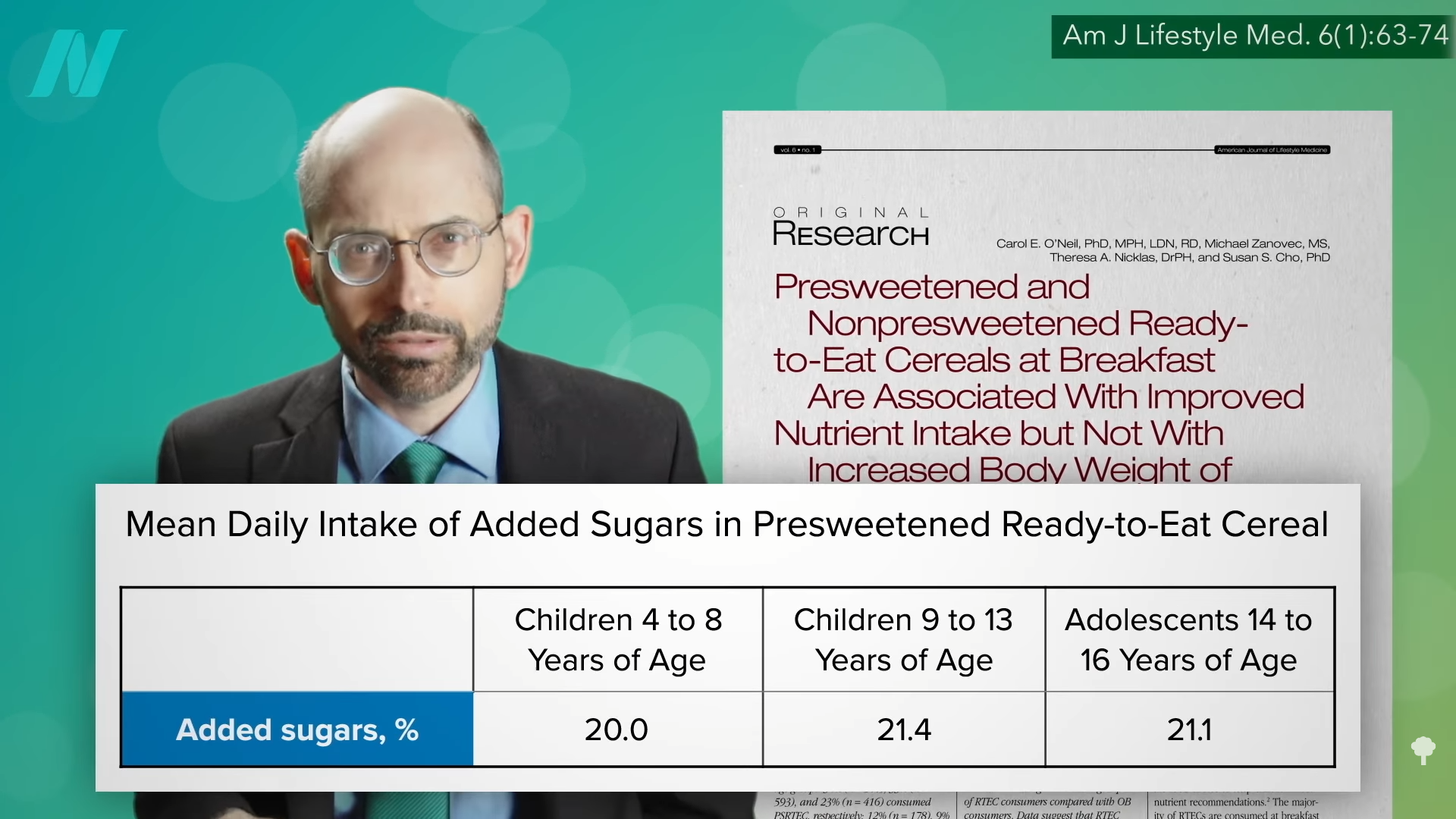
General Mills’ “Grow up strong with Big G kids’ cereals” ad campaign featured products like Lucky Charms, Trix, and Cocoa Puffs. That’s like the dairy industry promoting ice cream as a way to get your calcium. Kids who eat presweetened breakfast cereals may get more than 20 percent of their daily calories from added sugar, as you can see below and at 1:28 in my video.

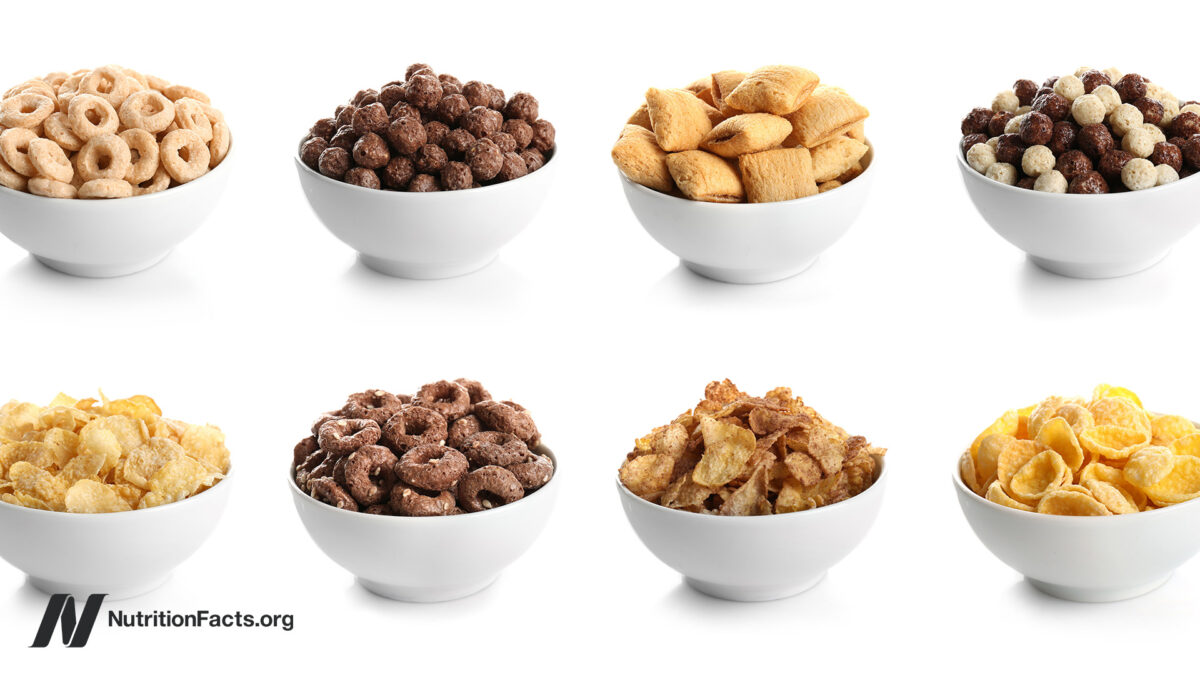
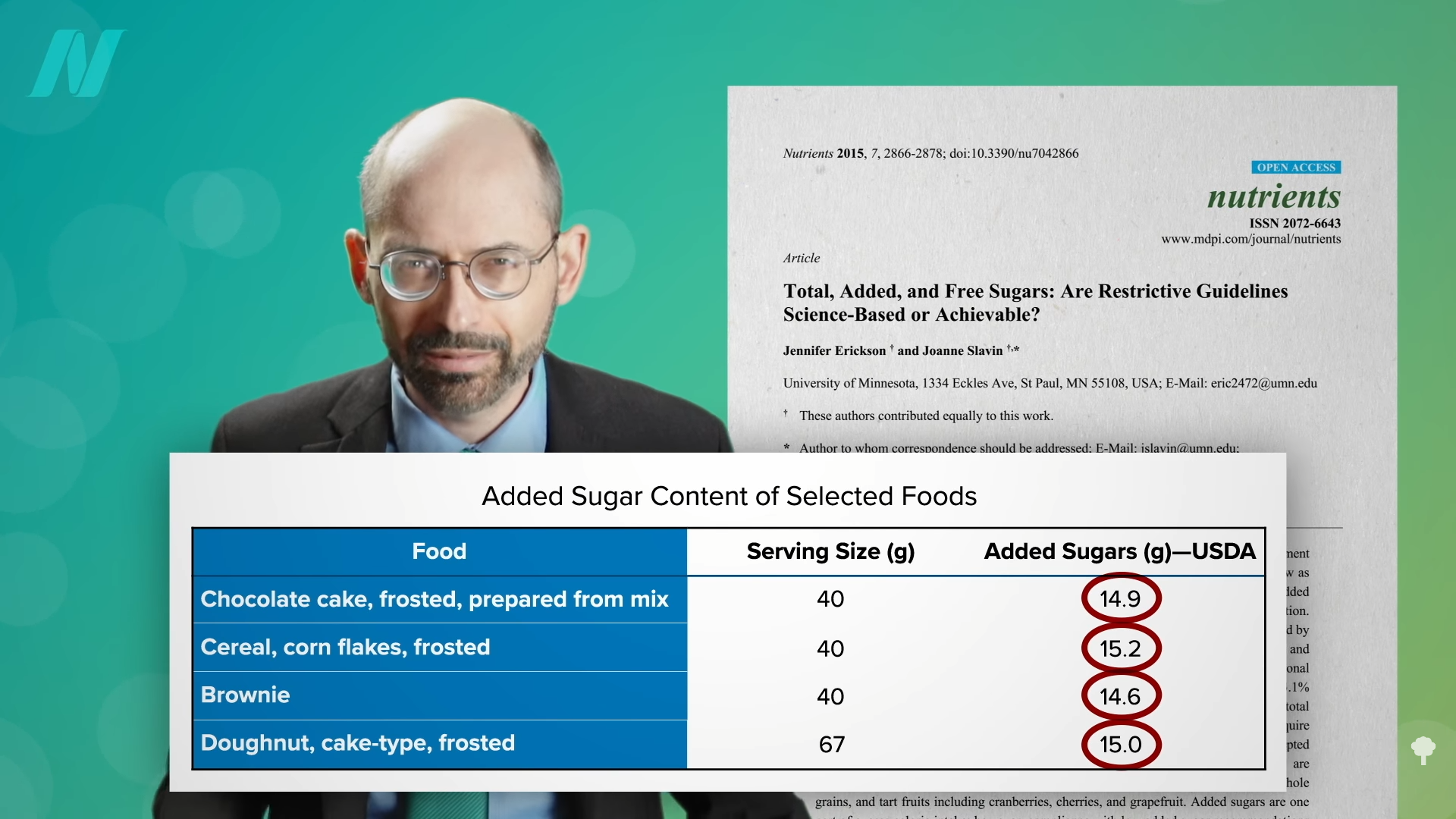
Most sugar in the American diet comes from beverages like soda, but breakfast cereals represent the third largest food source of added sugars in the diets of children and adolescents, wedged between candy and ice cream. On a per-serving basis, there is more added sugar in a cereal like Frosted Flakes than there is in frosted chocolate cake, a brownie, or even a frosted donut, as you can see below and at 1:48 in my video.

Kellogg’s and General Mills argue that breakfast cereals only contribute a “relatively small amount” of sugar to the diets of children, less than soda, for example. “This is a perfect example of the social psychology phenomenon of ‘diffusion of responsibility.’ This behavior is analogous to each restaurant in the country arguing that it should not be required to ban smoking because it alone contributes only a tiny fraction to Americans’ exposure to secondhand smoke.” In fact, “each source of added sugar…should be reduced.”

The industry argues that most of their cereals have less than 10 grams of sugar per serving, but when Consumer Reports measured how much cereal youngsters actually poured for themselves, they were found to serve themselves about 50 percent more than the suggested serving size for most of the tested cereals. The average portion of Frosted Flakes they poured for themselves contained 18 grams of sugar, which is 4½ teaspoons or 6 sugar packets’ worth. It’s been estimated that a “child eating one serving per day of a children’s cereal containing the average amount of sugar would consume nearly 1,000 teaspoons of sugar in a year.”

General Mills offers the “Mary Poppins defense,” arguing that those spoonsful of sugar can “help the medicine go down” and explaining that “if sugar is removed from bran cereal, it would have the consistency of sawdust.” As you can see below and at 3:17 in my video, a General Mills representative wrote that the company is presented “with an untenable choice between making our healthful foods unpalatable or refraining from advertising them.” If it can’t add sugar to its cereals, they would be unpalatable? If one has to add sugar to a product to make it edible, that should tell us something. That’s a characteristic of so-called ultra-processed foods, where you have to pack them full of things like sugar, salt, and flavorings “to give flavor to foods that have had their [natural] intrinsic flavors processed out of them and to mask any unpleasant flavors in the final product.”

The president of the Cereal Institute argued that without sugary cereals, kids might not eat breakfast at all. (This is similar to dairy industry arguments that removing chocolate milk from school cafeterias may lead to students “no longer purchasing school lunch.”) He also stressed we must consider the alternatives. As Kellogg’s director of nutrition once put it: “I would suggest that Fruit [sic] Loops as a snack are much better than potato chips or a sweet roll.” You know there’s a problem when the only way to make your product look good is to compare it to Pringles and Cinnabon.

Want a healthier option? Check out my video Which Is a Better Breakfast: Cereal or Oatmeal?.

For more on the effects of sugar on the body and if you like these more politically charged videos see the related posts below.

Finally, for some additional videos on cereal, see Kids’ Breakfast Cereals as Nutritional Façade and Ochratoxin in Breakfast Cereals.

Key Takeaways
  • Vi-Chocolin, a vitamin-fortified chocolate bar, was purportedly offered as a product with high nutritive value but was really just vitaminized candy. The sugary cereal industry follows a similar business model.

  • The sugary cereal industry has been criticized for adding nutrients to cereals “as a marketing gimmick,” creating an illusion of health benefits.

  • Children who consume pre-sweetened breakfast cereals may derive more than 20 percent of their daily calories from added sugar. Breakfast cereals rank as the third-largest food source of added sugars in the diets of kids and adolescents, listed between candy and ice cream. On a per-serving basis, a cereal like Frosted Flakes has more added sugar than a frosted chocolate cake, a brownie, or a frosted donut.

  • Kellogg’s and General Mills’ contention that breakfast cereals contribute only a “relatively small amount” of sugar to children’s diets is likened to the social psychology phenomenon of “diffusion of responsibility.”

  • Consumer Reports’ findings reveal that children often pour themselves 50 percent more cereal than the suggested serving size. A child eating a single daily serving of kids’ cereal with the average amount of sugar would consume almost a thousand teaspoons of sugar in one year.

  • The industry argues it has to add sugar to its cereals to make them palatable, which is a characteristic of ultra-processed foods.  From: https://nutritionfacts.org/blog/are-fortified-childrens-breakfast-cereals-just-candy/?

__________

Sunday, April 2, 2023

Passover: What Did Jesus Do for You? Christ, Our Passover. Why Dairy Might Not Be The Best Choice for Your Health.

.

Passover: What Did Jesus Do for You?

Did Easter replace Passover? Download Our Free Booklet“Jesus knew what He would face: “You know that after two days is the Passover, and the Son of Man will be delivered up to be crucified” (Matthew 26:2).

The spring festivals (found in Leviticus 23) have deep symbolism for Christians today that transcends the sacrificial laws that ended with Christ’s death. The Passover symbolizes the sacrifice of Jesus Christ for our sins. The festival called the Days of Unleavened Bread symbolizes our need to live free of sin, after having our past sins forgiven.

Passover: What Did Jesus Do for You?Just before His betrayal and crucifixion, Jesus asked His disciples to prepare for His final Passover (Matthew 26:18-20). This evening, commemorated since the time of the Exodus from Egypt, involved the sacrifice of an unblemished lamb whose blood protected the Israelites while the firstborn of the Egyptians were slain (Exodus 12:5-7, 12-14).

The New Testament makes clear that this lamb represented Jesus Christ. As John the Baptist had announced about Jesus, “Behold! The Lamb of God who takes away the sin of the world!” (John 1:29).

This last Passover was special, and Jesus taught His disciples new elements that would become the basis of the New Testament Passover service.

First, Jesus Christ set the example of love and service through washing His disciples’ feet (John 13:4-13). Then He told them, “If I then, your Lord and Teacher, have washed your feet, you also ought to wash one another’s feet. For I have given you an example, that you should do as I have done to you” (John 13:14-15).

The symbols of the bread and the wine

After the foot washing, Jesus instituted two deeply meaningful symbols of the New Testament Passover.

“And as they were eating, Jesus took bread, blessed and broke it, and gave it to the disciples and said, ‘Take, eat; this is My body.’ Then He took the cup, and gave thanks, and gave it to them, saying, ‘Drink from it, all of you. For this is My blood of the new covenant, which is shed for many for the remission of sins’” (Matthew 26:26-28).

Paul reminded the Church, both Jews and gentiles, of the vital importance of this memorial that represents Christ’s death and a renewal of our commitment to God made at baptism. Jesus said the bread represented His body. He willingly suffered to take our infirmities and bear our sicknesses (Matthew 8:16-17; Isaiah 53:3-5). Jesus is also the Bread that makes eternal life possible as we allow Him to live in us (Galatians 2:20).

The wine represents His shed blood given for the forgiveness of our sins.

The apostle Paul repeated these Passover instructions about the bread and the wine in 1 Corinthians 11:23-26. He reminded the Church, both Jews and gentiles, of the vital importance of this memorial that represents Christ’s death and a renewal of our commitment to God made at baptism.

Why did Christ have to die

Why did Jesus come to the earth as a human being to die? Because of sin—the destructive thoughts and actions that go against God’s will (1 John 3:4).

God reveals His thinking and way of life throughout the Bible, and especially in His 10 Commandments and His good and beneficial laws that show us how He intends life to be lived. When we break His laws, we bring automatic penalties on ourselves, and especially the penalty of death—eternal death. We have all earned this penalty (Romans 3:23; 6:23).

God, in His perfect eternal justice, must exact the penalty; but in His awesome mercy, Jesus Christ was willing to pay that penalty for us! “For God so loved the world that He gave His only begotten Son, that whoever believes in Him should not perish but have everlasting life” (John 3:16). Christ gave His life so we could repent and be saved (1 Timothy 2:4).

That is the solemn yet joyous message of the annual Passover. This is the first step in God’s plan of salvation. The second step is represented by the second festival, the Feast of Unleavened Bread.”                 

From: https://lifehopeandtruth.com/life/plan-of-salvation/passover/

Do you have more questions about the Christian Passover? Read “Questions and Answers About the Christian Passover.”

_______

Christ, Our Passover

1 Corinthians 5:7

Therefore purge out the old leaven, that you may be a new lump, since you truly are unleavened. For indeed Christ, our Passover, was sacrificed for us.   

“The apostle Paul drew on the lessons of the spring festival season to encourage the Corinthian congregation to remove sin from their lives.

Jesus Christ fulfilled the type of the Passover lamb whose blood protected the Israelite firstborn from death before the exodus from Egypt. After the Passover festival comes the Feast of Unleavened Bread, where yeast and other leavening become a symbol of sin.”

Study more about Passover and the Feast of Unleavened Bread in our free booklet From Holidays to Holy Days: God’s Plan for You.”

Listen to the "Verse by Verse" episode covering this scripture at https://lifehopeandtruth.com/bible/blog/christ-our-passover/?

________

Is Dairy’s Reign Over? (Problems with Dairy and The Dairy Industry)

“Big Dairy is getting desperate. But the demand for plant-based milks keeps going up.  Dairy is declining, as the failure of Big Dairy’s latest campaign Februdairy shows. More people are becoming aware of the problems with dairy and the problems with the dairy industry. Could dairy’s prominence be on its way out?  

Almonds are the new cow. So are cashews. Coconuts. Beans and peas. And pretty much any plant-based ingredients that can be turned into frothy, creamy, and delicious plant-based milk. No cow required.

Consumers are flocking to nondairy milk like cows flock to hay. It’s looking an awful lot like the tide is turning to greener pastures (perhaps because they’re growing nitrogen-fixing peas).

Facing declining sales and waning consumer interest, the dairy industry launched “Februdairy” — a month-long campaign aimed at revitalizing dairy’s increasingly sour image.

This initiative is a response to the growing trend toward plant-based milks and campaigns encouraging plant-based eating, including the popular UK-based Veganuary campaign, which encourages people to try going vegan for January and the rest of the year. In 2018, more than 150,000 people signed up, compared to only several hundred people when it launched in 2014.

This massive rise in plant-powered eating is happening around the world. For example, from 2014 to 2017, there’s been a 600% increase in the number of people identifying as vegans in the U.S.

At a recent dairy industry conference, industry consultant Dr. Jude Capper sounded the alarm, announcing that, “If consumers don’t buy our products — milk, cream, butter, cheese etc — we will not have a dairy industry in five to 10 years.

The Problems With The Dairy Industry — Cruelty to Cows 

The Februdairy campaign’s goal is to continue painting an idealized (and inaccurate) picture of modern dairy farming pushed by the industrial agriculture industry. The campaign intends to feature photos of “happy” cows and other bucolic farm imagery.

But the truth is vastly different. In reality, tens of thousands of animals are living inside giant steel sheds with little or no access to the outdoors.

Once a staple in most homes, the reality today is that cow’s milk comes with a whole host of problems. Cows are, of course, as adorable and lovable as ever. But with the hundreds of millions of them on the planet… well, things get a little complicated.

While a small percentage of modern farms produce milk from cows who are left outside to graze on fresh grass and clover, and perhaps to ponder the logistics and benefits of jumping over the moon, the majority aren’t afforded such luxuries.

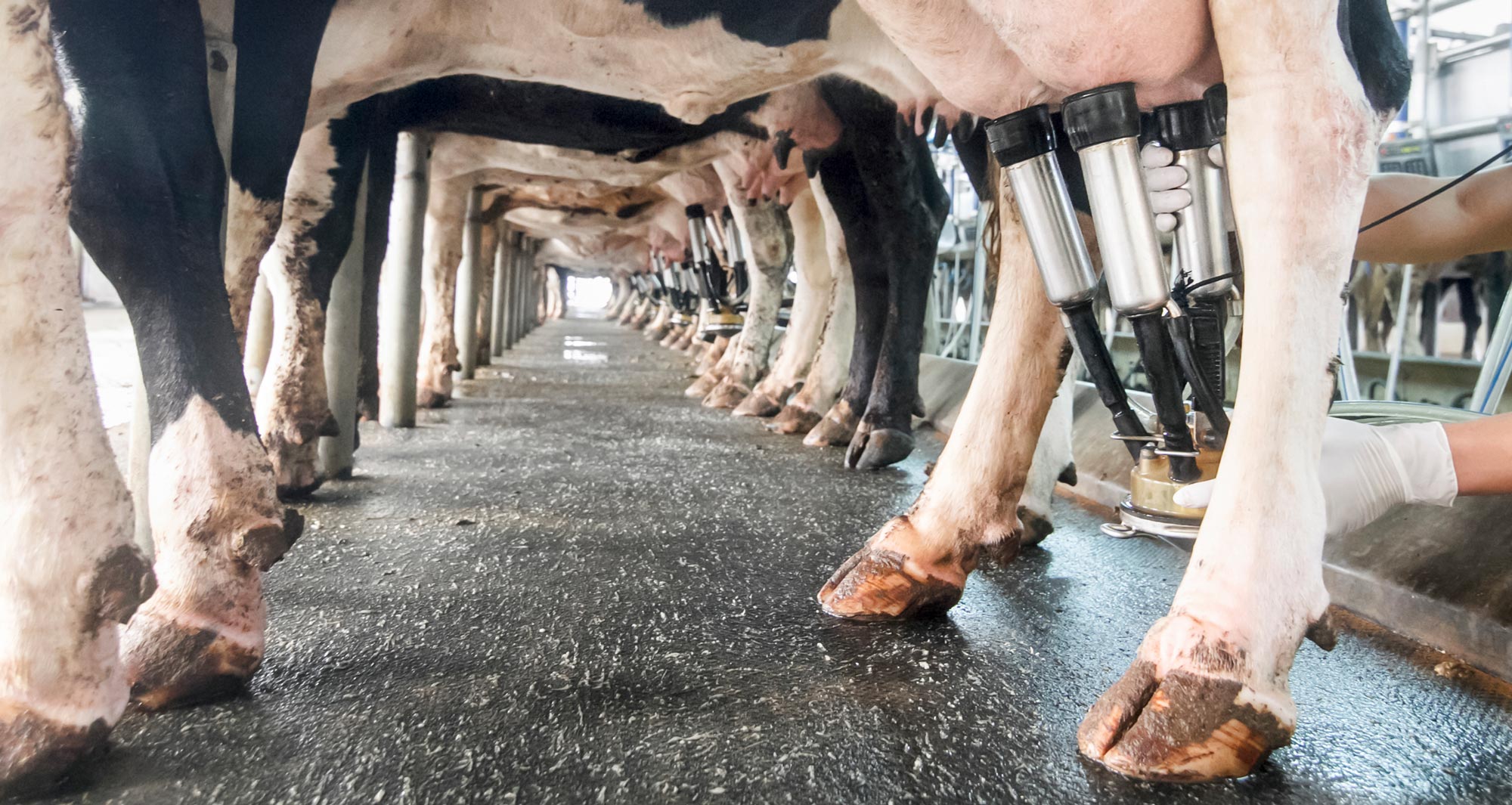
dairy cows being milkedIn the vast majority of dairy operations in the U.S., the truth is, cows do not have happy lives. They spend their time indoors, typically on hard, abrasive concrete floors and frequently connected to a milking apparatus. Most never see a blade of grass.

iStock.com/Toa55

They are artificially impregnated to ensure they continue to produce the maximal quantity of milk. Plus, they are fed antibiotics. And their feed is often contaminated with herbicide and pesticide residues from the genetically modified beans and grains they eat. Some are injected with genetically engineered growth hormones.

Recently, the dairy industry has been called out for its cruel treatment of these gentle animals. Even the #metoo campaign has been used to expose the cruel treatment of dairy cows.

A dairy cow will spend much of her life hooked up to milking machines that limit movement and can cause painful infections in her udder. Her babies are taken away just days after being born so that the milk can be bottled and sold.

Other Problems With The Dairy Industry

The dairy industry is also directly tethered to the notoriously cruel veal industry. Female calves become dairy producers, and male calves are often sent into confinement to be raised for veal meat.

And then there’s dairy’s impact on the planet.

Livestock is responsible for a significant amount of greenhouse gases. The United Nations puts the industry 14.5% of all GHG emissions — slightly more than transportation, which produces about 14% of total GHGs worldwide.

In California, the largest dairy-producing state, water usage for livestock is also of concern. One-quarter of California’s water budget goes toward producing beef and dairy. This is more water than all the businesses and homes in the state.

But the dairy industry does its best to keep all this from consumers. Clever marketing (“Got Milk?”), the prevalence of red barn imagery and toothy cow smiles on dairy labels, and other tactics have long convinced consumers this stuff is healthy and even necessary.

But with U.S. milk consumption down considerably, the dairy industry’s days as a dominant food industry force may be numbered. In fact, numbers from the USDA show that Americans are drinking almost 40% less dairy milk than they did in the 1970s.

The Demand for Plant-Based Milk Is Booming

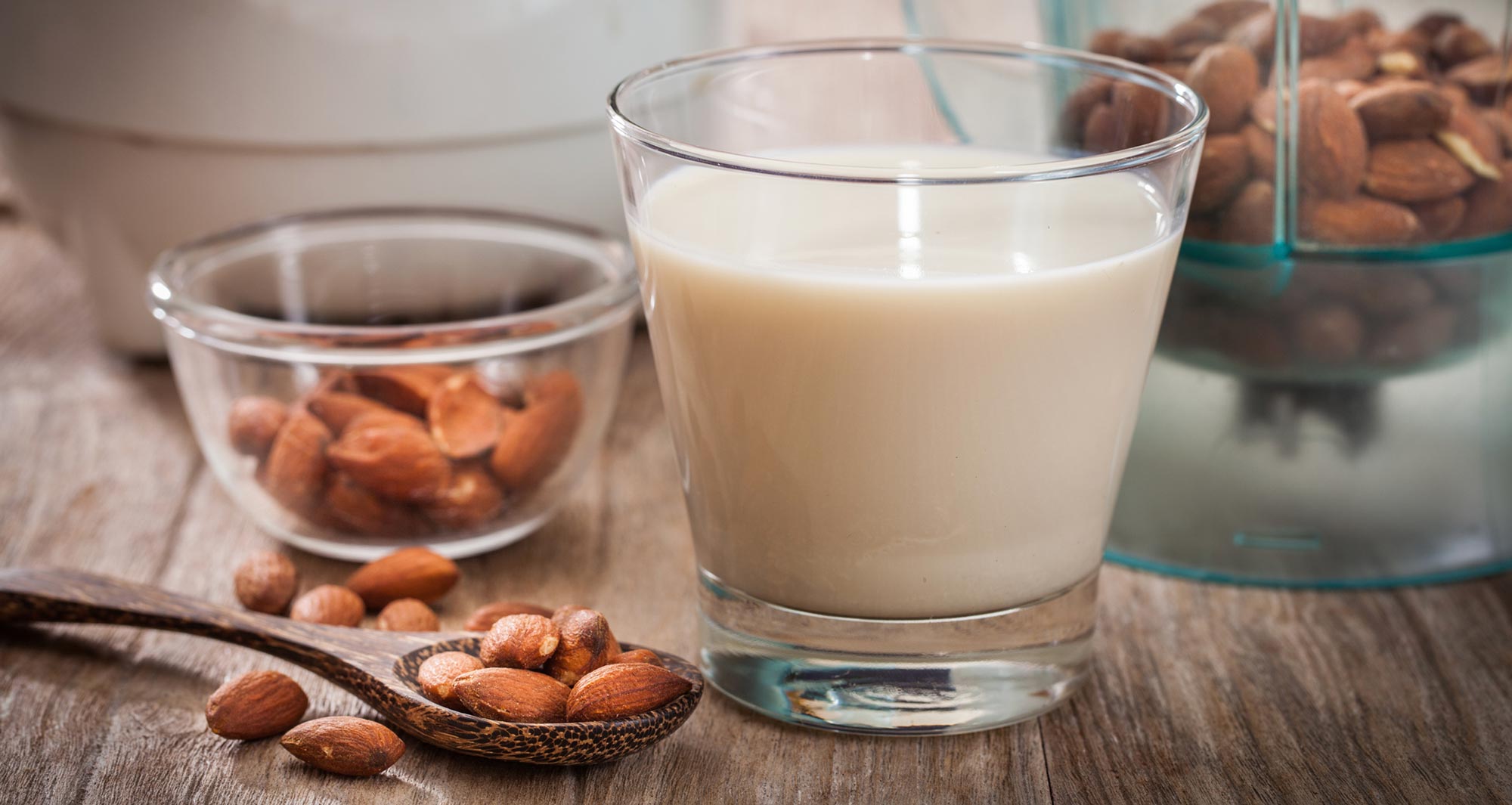
glass of almond milkiStock.com/naito8

As it turns out, people want more options than just whole, 2%, or skim milk. They want new flavors — and not just chocolate. They want milk varieties that are reinvigorating their taste buds. And they want plants.

Non-dairy milk is the leading driver of the plant-based foods category, growing more than 60% in the last five years to more than $2 billion in sales in 2017.

Sales of dairy are expected to drop by another 11% between 2015 and 2020, as a steady decline continues. On the other hand, nondairy milk sales are expected to continue seeing record-breaking and milk-shaking increases. Dean Foods, a leading dairy producer, experienced a 91% decline in its net income from 2016 to 2017.

Elmhurst Dairy was once a thriving dairy producer, but declining interest and lackluster sales led the company to reinvent itself. Now known as just Elmhurst, the company has dropped cow’s milk for a booming plant-based milk business.

The company is a leading producer of non-dairy nut-milk products, including milk made from almonds, cashews, walnuts, hazelnuts, and peanuts.

Why Dairy Might Not Be The Best Choice for Your Health

The dairy industry has spent millions of dollars touting milk as “nature’s most perfect food.” And it is. For baby calves. But what about for humans?

We are the only species on earth that drinks milk after infancy. And in all the years that humans have been around, we’ve only been drinking the milk of cows for the last few thousand — a minimal portion of our time on this planet.

Dairy milk does have all the nutrition calves need to grow. As a result, it’s full of many important nutrients, and it provides an abundant source of calcium, vitamin D, riboflavin (B2), vitamin B12, potassium, and phosphorus. But since modern milk almost always comes from recently pregnant cows, it also contains hormones that don’t do a human body any “good” at all.

These hormones are thought to be one of the reasons that dairy consumption has been found to be linked to increased rates of acne, and to increased risk of certain cancers — especially prostate cancer.

Many studies have explored the link between dairy products and heart disease. Perhaps the largest of them, conducted by Harvard Chan School researchers and published in the American Journal of Clinical Nutrition in 2016, reported on research done with 43,000 men and 187,000 women.

When calories from full-fat dairy products were replaced with carbohydrates from whole grains, the risk of heart disease dropped by 28%. Replacing dairy products with red meat, on the other hand, led to a 6% increase in heart disease risk.

Does Dairy=Strong Bones?

So what about the belief that milk is necessary for strong bones and the prevention of osteoporosis? Not true.

Clinical research shows that dairy milk has little or no benefit for our bones. For example, the Harvard Nurses’ Health Study, which followed more than 72,000 women for 18 years, showed no protective effect of increased milk consumption on fracture risk.

Most People In The World Can’t Digest Dairy

Another major problem with dairy consumption is lactose intolerance. As infants, our bodies produce a digestive enzyme called lactase, which breaks down lactose from mother’s milk. But as we grow up, many of us lose the ability to do that.

By adulthood, about three-quarters of the world’s population is unable to break down lactose, and there’s a strong racial dimension to lactose intolerance. The only ethnic group on the planet that can usually digest lactose is Caucasians. Most people of African, Asian, Arab, and Indigenous ancestry cannot.

As Caucasian-centric movies, corporations, and even government policies have promoted dairy product consumption around the world, they’ve unintentionally subjected billions of people to significant digestive problems. Lactose intolerance can cause nausea, vomiting, and diarrhea.

More Doctors Are Talking About The Problems with Dairy

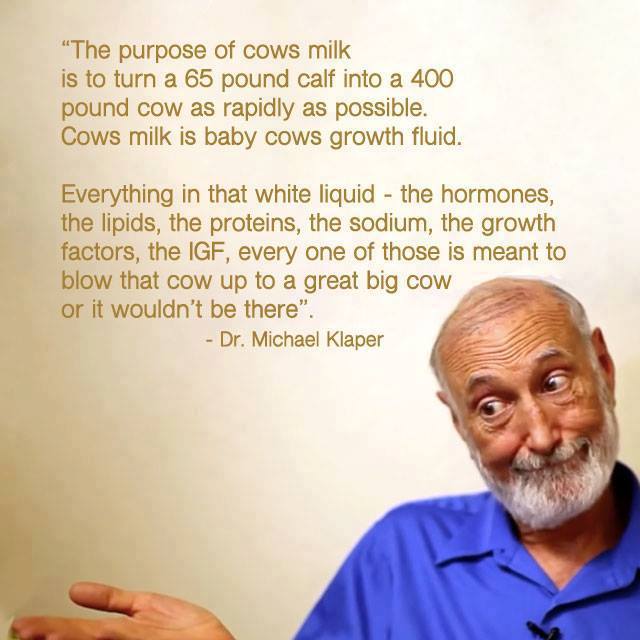
Increasing numbers of doctors and researchers are now recommending against dairy Dr. Michael Klaper on the problems with dairyconsumption. Author and nutritional authority Michael Klaper, MD, said to FRN:

“If there was one substance I could eliminate from the American diet immediately, it would be those substances made from the secretions from the udder of a cow: dairy products.”

Plus, according to 10-time New York Times bestselling author Dr. Mark Hyman, dairy consumption is strongly linked to digestive issues and may even be connected to an increased risk of some types of cancer — including prostate cancer and breast cancer.

Our bodies just weren’t made to digest milk on a regular basis,” Dr. Hyman explains. “Instead, most scientists agree that it’s better for us to get calcium, potassium, protein, and fats from other food sources, like whole plant foods — vegetables, fruits, beans, whole grains, nuts, seeds, and seaweed.”

Neal Barnard, MD, of the Physicians Committee for Responsible Medicine, wrote:

Dairy products are packed with fat and cholesterol and may increase the risk of health problems ranging from asthma to some types of cancer. An elevated risk of prostate cancer incidence and mortality has been associated with dairy consumption and the same may be true for ovarian cancer.”

Hemp milk and seedsSo overall, it seems that for many people, moving away from dairy milk may be a positive step.

Plant-Based Milk Offers Health Benefits — Without The Cruelty

iStock.com/marekuliasz

More at: https://foodrevolution.org/blog/problems-with-dairy/

_______

Sunday, March 26, 2023

Origin of Easter. Should Christians Celebrate Passover? Great Grain Robbery.

.

Origin of Easter

“Where did Easter and its customs come from? The Bible doesn’t mention rabbits or eggs or sunrise services. So what is the origin of Easter?

Origin of EasterWhat is the origin of Easter?

Since Easter is one of the most renowned holidays in the Christian world, why should we be concerned about the origin of Easter?

For centuries, questions have arisen as to the relationship between bunnies and painted eggs and the resurrection of Jesus Christ. The truth of the matter is that Easter has its roots in ancient paganism and polytheism.

The origin of Easter

According to William E. Vine, “The term ‘Easter’ is not of Christian origin. It is another form of Astarte, one of the titles of the Chaldean goddess, the queen of heaven. The festival of Pasch [Passover] held by Christians in post-apostolic times was a continuation of the Jewish feast. … From this Pasch the pagan festival of ‘Easter’ was quite distinct and was introduced into the apostate Western religion, as part of the attempt to adapt pagan festivals to Christianity” (Vine’s Complete Expository Dictionary of Old and New Testament Words, 1997, “Easter”).

Another source states: “As recounted by the English monk Bede, the 7th-8th century ‘father of English history,’ the former pagans in England called April, or the month marking Jesus’s resurrection, ‘Ēosturmōnaþ’—Old English for the ‘Month of Ēostre.’

“According to Bede in his ‘De temporum ratione’ (‘The Reckoning of Time’), the Christian holiday ‘was called after a goddess of theirs named Ēostre, in whose honor feasts were celebrated in that month.’

“Ēostre is variously depicted by scholars as a fertility goddess and a goddess of dawn and light. The dawn connection could explain a linguistic link between Ēostre and the word ‘east.’

“An academic and a Christian missionary, Bede’s reference to Ēostre (or Ostara) is textually unique, to the extent that many throughout the centuries have asserted it was fabricated. It was only in the 1950s that archeological evidence was found supporting his claim of such a goddess in England. But recently, work was done at the University of Leicester on place names and their connections to Ēostre, which, arguably, buttress Bede’s version” (“The Pagan Goddess Behind the Holiday of ‘Easter’,” The Times of Israel, April 5, 2015).

Two Catholic reference works are also open about the etymology of the name “Easter”:

  • “The word Easter, which comes from the Anglo-Saxon, is a term derived from the pagan goddess of the dawn” (The Catholic Encyclopedia, 1987, p. 177).
  • “Etym. Anglo-Saxon Eastre, Teutonic goddess of dawn and spring” (Modern Catholic Dictionary, 1980, p. 175).

Two popular Bible resources, written largely from a Protestant perspective, also note the pagan etymology of “Easter”:

  • “The word Easter is of Saxon origin, Eastra, the goddess of spring, in whose honor sacrifices were offered about Passover time each year. By the 8th century Anglo-Saxons had adopted the name to designate the celebration of Christ’s resurrection” (Unger’s Bible Dictionary, 1966, p. 283).
  • “The term Easter was derived from the Anglo-Saxon ‘Eostre,’ the name of the goddess of spring. In her honor sacrifices were offered at the time of the vernal equinox. By the 8th cent. the term came to be applied to the anniversary of Christ’s resurrection” (The International Standard Bible Encyclopedia, 1982, Vol. 2, p. 6).

The Ancient History Encyclopedia, in its article on “Easter,” supports this explanation of the origin of the holiday’s name and also adds insight into the origins of the eggs and rabbits associated with the holiday:

“There are two possibilities for the source of the term ‘Easter.’ One is that the name comes from the Saxon fertility goddess Eostre (sometimes spelled Eastre or Ostara). The legend goes that Eostre owned an egg-laying rabbit or hare and the story symbolized fertility and life. In the 8th century CE work De temporum ratione, written by an English monk named Bede, the author claims that, during the month of April, the pagan Anglo-Saxon community used to have feasts to honour Eostre, but that custom had died out by the time of his writing, replaced by the Christian celebration of the resurrection of Jesus. Another accepted origin of the term Easter is that it comes from the German ‘Ostern,’ which comes from the Norse word ‘Eostrus,’ meaning ‘Spring.’

“The pagan holidays of the goddess Eostre (or Ostara) celebrated fertility and new life: The egg symbolized perfection and wholeness in its natural state and the rabbit was a symbol of fertility. For many cultures, the beginning of the spring season was a symbol of rebirth. This relates to the fact that after the darkness of winter, nature gains a new strength that was symbolized as the ascent of life from the realm of darkness to the world of light.”

There are hundreds of other websites that discuss the pagan origin of Easter.

Is Easter in the Bible?Should Christians celebrate Easter?

So, what is a Christian to do with the knowledge of the pagan origin of Easter? According to the Bible, God does not want His people to follow or seek after pagan customs.

When ancient Israel entered the Promised Land, God warned them not to seek after the teachings and traditions of the nations that once inhabited the land. He said, “Take heed to yourself that you are not ensnared to follow them, after they are destroyed from before you, and that you do not inquire after their gods, saying, ‘How did these nations serve their gods? I also will do likewise.’ You shall not worship the LORD your God in that way; for every abomination to the LORD which He hates they have done to their gods” (Deuteronomy 12:30-32).

Later, Christ told His disciples: “Well did Isaiah prophesy of you hypocrites, as it is written: ‘This people honors Me with their lips, but their heart is far from Me. And in vain they worship Me, teaching as doctrines the commandments of men.’ For laying aside the commandment of God, you hold the tradition of men” (Mark 7:6-8).

Therefore, anything that has pagan origins must be avoided by Christ’s disciples, no matter what the intent or long-standing tradition.

What the Bible tells us to celebrate

It is also important to note that the Bible nowhere tells us to honor the day of Christ’s resurrection. Instead, God established a command that the Passover should be observed annually to honor Christ’s death. Today, Christians are not to participate in the Easter holiday, but rather in the New Testament Passover, which is the memorial of Jesus Christ’s sacrifice for our sins.

In great solemnity, once a year on the 14th day of the first month on the Hebrew calendar (Leviticus 23:4-5), we are to observe the Lord’s Passover. On that special evening, the apostle Paul instructed the members of the Church to partake of the bread, which symbolizes Christ’s body broken (beaten) for us, and to drink of the wine, which symbolizes the New Covenant in His blood (1 Corinthians 11:23-29).

As to Christ’s resurrection, this occurred exactly three days and three nights after His burial (Matthew 12:39-40; Luke 24:46-47). Christ was crucified on a Wednesday afternoon, buried just before sunset, as Thursday was an annual holy day. He was resurrected three days later on Saturday afternoon (the weekly Sabbath) just before sunset. It must also be noted that on the first day of the week, Mary Magdalene had come to the tomb while it was still dark. Christ had already risen—long before sunrise (John 20:1-2).

So, the story of Christ’s resurrection occurring on Easter Sunday morning (as well as rabbits laying eggs) is a polytheistic myth. Instead of observing Easter or any of its customs, Christians are instructed to observe the biblically authorized holy days of God.”  From: https://lifehopeandtruth.com/life/plan-of-salvation/holy-days-vs-holidays/origin-of-easter/

You can learn more in the section “Holy Days vs. Holidays.”

_______

Should Christians Celebrate Passover?

Should Christians Celebrate Passover?Christ’s command: “Do this in remembrance of Me”

“Should Christians pass over the annual Passover or celebrate it? What are God’s instructions about this often-overlooked festival observed by the early Church?

In much of the religious world, adherents search for meaning, purpose and validation in a familiar cadence of religious festivals.

This concept is common in the professing Christian world as well. Various sects and denominations have adopted a variety of festivals, often borrowed from ancient and pagan cultures. Long ago they affixed biblical or moral themes and proclaimed these days Christian.

Commonly celebrated festivals, ranging from Easter to Christmas, were often lifted directly from preexisting pagan festivities and given Christian-sounding names. (For more information, review our online article “Holy Days vs. Holidays.”)

Students of the Bible, recognizing the contradiction and confusion caused by blending pagan rituals with Christian ideals, are often left unmoored from cultural and family traditions. Yet many would-be Christians still yearn for meaningful religious festivals and practices.

In recent years, this desire has led some Christians to look to Jewish culture for customs and practices to fill this void. One custom adopted by some churches is the traditional Jewish Passover Seder.

The Seder meal

The origin of the formalized Seder meal, with its distinctive, structured rituals, prayers and traditions, is unclear from history. Many scholars assert that the Seder developed after the destruction of the second temple in Jerusalem in A.D. 70, when observant Jews no longer had access to a temple for religious ceremonies. Regardless, the formulaic ritual of the Seder, a central practice in modern Judaism, is not found in the Bible.

For Christians seeking traditions with fewer pagan overtones, the Seder may seem to provide a sense of being close to history. However, in the rush to appropriate the Jewish seder, many Christians overlook or ignore the underlying festival—the annual Passover—which was given by divine instruction.

The first Passover

The Passover was established by God as a central event in His sacred calendar. The Bible sets the stage in Exodus 7-11. God had sent Moses to lead Israel out of slavery in Egypt. To do this, God had brought a series of nine plagues on Egypt. After each plague, Pharaoh still refused to allow the Israelites to leave.

But the 10th plague would crush Egyptian resistance and bring liberty to the enslaved Israelites. God foretold, “All the firstborn in the land of Egypt shall die, from the firstborn of Pharaoh who sits on his throne, even to the firstborn of the female servant who is behind the handmill, and all the firstborn of the animals” (Exodus 11:5).

God made provisions for protecting the children of Israel from this plague. That deliverance was through the Passover. Exodus 12 gives the details of this incredible event. Each household killed a lamb. Blood from the lamb was placed on the doorposts and on the lintel of the dwelling, and the Israelites stayed indoors during that night.

God said, “For I will pass through the land of Egypt on that night, and will strike all the firstborn in the land of Egypt . . . Now the blood shall be a sign for you on the houses where you are. And when I see the blood, I will pass over you; and the plague shall not be on you to destroy you” (Exodus 12:12-13).

It was a dramatic scene. God established the Passover as the first annual festival for His people, to remind them of this divine deliverance (Leviticus 23:4-5). After they settled in the Promised Land, Passover became a pilgrimage festival, with families journeying to Jerusalem to keep this special celebration.

Passover and the other “feasts of the LORD” (verse 2) were touchstones in the national relationship with God. Download our booklet From Holidays to Holy Days: God’s Plan for You for more information on these festivals.

Pass over the Passover?

What about Christians? Should Christians pass over the Passover? Or does God expect Christians to faithfully observe this annual festival?

The answer might surprise you. Most professing Christian denominations largely ignore the Passover. Some communities substitute a weekly or monthly communion ritual. (See our online article “The Last Supper or Passover?” for more details on this practice.)

However, thousands of faithful Christians continue to observe the annual Passover festival in accordance with the New Testament instructions. Exploring these instructions may challenge you to consider observing this festival as well.

Did Jesus celebrate Passover?

By definition, Christians are disciples or students of Jesus Christ. Peter was inspired to comment that Christians should pattern their behavior and practices after the example of Jesus (1 Peter 2:21).

This is where the annual Passover becomes incredibly personal. We all need redemption. In considering whether Christians should observe the Passover, Christ’s personal example carries enormous weight.

While the Bible does not record many details about Jesus’ upbringing, it is clear that Jesus and His physical family kept the annual Passover. For example, Luke records that Jesus’ “parents went to Jerusalem every year at the Feast of the Passover. And when He was twelve years old, they went up to Jerusalem according to the custom of the feast” (Luke 2:41-42).

Jesus continued this annual practice into adulthood. In the last days of His physical life, Jesus again made certain to observe the Passover—modeling this practice for His followers. Jesus told His disciples, “My time is at hand; I will keep the Passover . . . with My disciples” (Matthew 26:18).

The four Gospel writers affirm Christ’s active participation in the annual Passover (Matthew 26; Mark 14; Luke 22; John 13).

There is no doubt about whether Jesus and His disciples celebrated Passover. However, some argue that Passover was observed merely as a cultural practice and was limited to the Jewish people. Does the Bible address this issue?

Christ’s command: “Do this in remembrance of Me”

Those who desire to follow Jesus, as Head of the Church, should carefully consider His plain instructions.

On the last night of His physical life, Jesus gathered with His followers for the annual Passover. This would be a momentous period of transition for His disciples. Jesus, knowing what was coming and understanding the magnitude and impact of His betrayal, arrest and crucifixion, provided guidance, encouragement and admonition to His followers (John 13-17).

Jesus tenderly admonished, “He who has My commandments and keeps them, it is he who loves Me. And he who loves Me will be loved by My Father, and I will love him and manifest Myself to him” (John 14:21). Jesus reminded His followers that one measure of their love for Him was whether they would follow His instructions.

The same is true today. As John wrote, “Now by this we know that we know Him, if we keep His commandments. He who says, ‘I know Him,’ and does not keep His commandments, is a liar, and the truth is not in him” (1 John 2:3-4).

Among Jesus’ instructions is a clear, straightforward command regarding the Passover. On that special evening Jesus instituted new symbols, the bread and wine, for the New Testament Passover observance. In doing so, He said, “Do this in remembrance of Me” (Luke 22:19; 1 Corinthians 11:23-25).

Do this in remembrance of Me. This is more than a suggestion. It is presented as a personal command. It carries the gravity of being directly issued by Jesus. Passover was enshrined as an ordinance in the Christian Church by Jesus Himself. His followers will diligently strive to keep His commands—including this directive to observe the annual Passover.

The Church observes the New Testament Passover

Furthermore, we see that the Church of God plainly observed this festival in the New Testament.

Paul, when writing to the mostly gentile congregation in Corinth, commented, “For indeed Christ, our Passover, was sacrificed for us. Therefore let us keep the feast” (1 Corinthians 5:7-8). Later in the letter, Paul reviewed the practice of observing Passover, affirming the significance and serious nature of this festival of God for the Church community (1 Corinthians 11:17-32).

It should be noted when reading this passage that the Corinthian congregation was well aware of the Passover festival as well as the Days of Unleavened Bread that follow. For more information on the rich meaning and relevance of this second festival, study our online article “The Feast of Unleavened Bread: Pursuing a Life of Righteousness.”

Had the Passover been enshrined as merely a Jewish festival, it would not have been carried forward into the New Testament Church. The Bible records that even congregations largely populated by non-Jews, such as the one in Corinth, were instructed on the importance and necessity of the New Testament Passover.

Rather than being a feast of the Jews, the Bible shows Passover and other festivals belong to the Lord (Leviticus 23:1-2).

There is no hint in the Bible that the Church of God abandoned this special festival.

The meaning of Passover for you

The Bible presents ample evidence that God established the Passover. Jesus and the New Testament Church of God faithfully observed it. Those who observe this festival benefit from the vibrant and resonant meaning embedded in the Passover.

As previously mentioned, for the first Passover in Egypt each Israelite household killed a lamb, placed the blood on the doorposts, and then stayed indoors as the Lord passed over Egypt and brought deliverance and liberty to His people (Exodus 12).

This ancient practice foreshadowed the coming of Jesus and His redemptive sacrifice to enable salvation for the human family.

Jesus, as the Lamb of God, changed the Passover symbols for His followers. Jesus commanded that His disciples take of the unleavened bread and wine representing His broken body and shed blood. This is where the annual Passover becomes incredibly personal. We all need redemption. All humans, other than Jesus, have sinned and earned the penalty of eternal death (Romans 3:23; 6:23). The Passover frames God’s plan to offer redemption to you, me and everyone else who repents of sin.

The apostle Paul explained that Jesus is our Passover (1 Corinthians 5:7). Jesus lived and died, shedding His blood to pay our death penalty, “because in His forbearance God had passed over the sins that were previously committed” (Romans 3:25, emphasis added).

Peter boldly proclaimed that Christians are redeemed “with the precious blood of Christ, as of a lamb without blemish and without spot” (1 Peter 1:19). Read our online article “Sacrifice of Jesus” for a more detailed explanation.

Far from being just an ancient practice, the festival of Passover is relevant for everyone today.

The Passover today

The annual festival of Passover reminds Christians of the spectacular blessing of Christ’s sacrifice. So, how should a Christian observe the Passover today? Should Christians adopt the Jewish seder?

The Bible provides the answer. Jesus, as the Lamb of God, changed the Passover symbols for His followers. Jesus commanded that His disciples take of the unleavened bread and wine representing His broken body and shed blood (Matthew 26:26-29; Mark 14:22-25; Luke 22:14-20). This was to be done annually on the Passover.

The apostle Paul explained that the New Testament Passover is not a festive meal (1 Corinthians 11:20-29). There is no need to appropriate the Jewish seder. Instead, the Passover is a sober occasion whereby Christians, in partaking of the wine and bread, “proclaim the Lord’s death till He comes” (verse 26).

Christians also wash one another’s feet on Passover, following the example and instruction of Jesus (John 13:1-17). More information on this practice is discussed in our online article “Passover and Forgiveness.”

Thousands of faithful disciples of Jesus Christ since the founding of the Church, gather on Passover evening to follow Christ’s guidance and example. As the Old Testament Passover was reserved for those who made the commitment of circumcision (Exodus 12:48), those who have made the commitment of baptism renew their covenant with God at the New Testament Passover.

Did Easter replace Passover? Download Our Free BookletChristians should not pass over this special festival of the Lord. Instead, we should follow the instructions of our Master, the Chief Shepherd and Lamb of God, and observe the New Testament Passover.”  From: https://lifehopeandtruth.com/life/plan-of-salvation/passover/should-christians-celebrate-passover/

_______

Great Grain Robbery

fresh vegetables

(Phytonutrients are chemicals produced by plants. Foods with phytonutrients have antioxidant and anti-inflammatory benefits.)

Transcript of video at: https://nutritionfacts.org/video/great-grain-robbery/

“Milling whole wheat into white flour may cause as much as a 300-fold decrease in phytonutrient content.

In 2007, whole grains were linked to a healthier body weight in people both young and old. Whole grains are the very staples of human civilization. The Aztec empire had amaranth; the Incas had quinoa, Asian empires were built on rice and buckwheat; African empires had millet and teff, and wheat, oats, rye, and barley kept Europe going. You should be able to find any of these whole grains in bulk at your local natural food store. When whole wheat flour is milled into white flour, at least 25 nutrients are removed, and five are chemically replaced to “enrich” it. 

It is the Great Grain Robbery! And that’s just the vitamins and minerals. There’s also a 2- to 300-fold loss in phytonutrient content. So, if we have a choice, never again eat white bread, white pasta, or white rice. Instead, eat the grain, the whole grain, and nothing but.

A healthy body weight is important, but more important than the circumference of our waist is the circumference of our carotid arteries that supply the blood to our brain. Researchers at Wake Forest University followed 1,000 people for five years, and measured the amount of plaque in their carotid arteries.

This is what our blood flow should look like. This is what our blood flow should not look like. Those eating whole grains had a slower progression of their atherosclerotic disease. These were all omnivores who ate meat, so the plaque in their arteries continued to grow, but those eating whole grains had slower growth—slower closing off of their arteries—than those eating just refined grains. To use diet to actually stop the plaque from growing, to reverse the disease, and actually start opening up our arteries, they’d have to have gone on a nearly completely plant-based diet, and eliminated cholesterol and saturated animal fat.”  From: https://nutritionfacts.org/video/great-grain-robbery/

To see any graphs, charts, graphics, images, and quotes to which Dr. Greger may be referring, watch the above video. This is just an approximation of the audio contributed by veganmontreal.

_______