Showing posts with label Passover. Show all posts

Sunday, April 20, 2025

Would Jesus celebrate Easter? How Easter Supplanted Passover Observance.

.

Would Jesus celebrate Easter?

Would Jesus celebrate Easter?“Many Christian churches prepare special easter programs commemorating the death and resurrection of Jesus Christ, and parents hide easter eggs so their children can hunt for them on Easter morning. Then there are the Easter sunrise services, when Jesus' miraculous resurrection is supposedly honoured by watching the sun rise in the east.”

Image: Church Easter egg hunt (source: wikimedia commons)

“But can we find any historical or biblical record of Jesus or His disciples celebrating Easter or teaching us to meet to honor His resurrection at sunrise on Easter Sunday—or at any other time, for that matter?

There is no reference to Easter anywhere in the New Testament. In the King James Version of the Bible the word ‘Easter' is used once in Acts 12:4, but it is an erroneous mistranslation. The original Greek word is ‘pascha’, which is correctly translated as Passover in virtually every modern version of the Bible.

The original Apostles, and even the Apostle John, who died near the end of the first century, left no record of celebrating Easter. The Apostle Paul, some 25 years after Jesus' death and resurrection, told the Corinthian church they should continue to keep the Passover as Christ commanded (1 Corinthians 11:23-27). (See also the previous issue of Bible Insights Weekly #324 Why Christians Should Keep The Annual Passover). Paul and Luke, his traveling companion and author of the book of Acts, regularly mention observing the weekly Sabbath day and the annual biblical festivals listed in Leviticus 23, but mention of Easter is conspicuously absent ( 1 Corinthians 5:6-8 and 6:8; Acts 2:1-4; 13:42-44; 17:1-3; 18:4; 20:6 and 16).

Many scholars point out Easter is a pre-Christian religious holiday, observed long before Jesus' human lifetime. Vine's Complete Expository Dictionary of Old and New Testament Words notes: "The term 'Easter' is not of Christian origin. It is another form of Astarte, one of the titles of the Chaldean [Babylonian] goddess, the queen of heaven. The festival of Pasch [Passover] held by Christians in post-apostolic times was a continuation of the Jewish feast…From this Pasch the pagan festival of 'Easter' was quite distinct and was introduced into the apostate Western religion, as part of the attempt to adapt pagan festivals to Christianity" (W.E. Vine, 1985, "Easter").

Alexander Hislop in his book The Two Babylons also explores the origins of Easter. Although his work has been criticized as lacking scholarship, it is heavily footnoted with sources—and much of what he presents can be verified through other historical works. He points out Easter and the practices associated with it can be traced back to pagan rituals. For example "the forty days' abstinence of Lent [a 40-day period of fasting, prayer, and almsgiving observed by many Christian denominations in preparation for Easter] was directly borrowed from the worshippers of the Babylonian goddess" (p. 104). Hislop continues, "Among the pagans this Lent seems to have been an indispensable preliminary to the great annual festival in commemoration of the death and resurrection of Tammuz…." (p. 105). Tammuz was a chief Babylonian deity and husband of the goddess Ishtar, and a great festival was held every spring to celebrate Tammuz's death and supposed resurrection.

One Catholic writer explains how eggs and rabbits came to be connected with Easter: "The egg has become a popular Easter symbol…In ancient Egypt and Persia friends exchanged decorated eggs at the spring equinox, the beginning of their New Year. These eggs were a symbol of fertility for them….Christians of the Near East adopted this tradition, and the Easter egg became a religious symbol. It represented the tomb from which Jesus came forth to new life" (Greg Dues, Catholic Customs and Traditions, 1992, p. 101). Rabbits came to be linked with Easter because they were potent symbols associated with ancient fertility rites.

Not until the Council of Nicaea in 325—almost three centuries after Jesus was crucified and rose again—did Easter replace the Passover, the biblical ceremony Jesus and the Apostle Paul instructed Christians to observe. "A final settlement of the dispute [whether and when to observe Easter or Passover] was one among the other reasons which led Constantine to summon the council of Nicaea in 325….The decision of the council was unanimous that Easter [which they wrongly called Passover] was to be kept on Sunday, and on the same Sunday throughout the world, and 'that none should hereafter follow the blindness of the Jews'" (The Encyclopaedia Britannica, 11th edition, pp. 828-829, "Easter").

Constantine's decision was a fateful turning point for Christianity. Those who remained faithful to the instruction of Jesus and the Apostles would become a persecuted minority as a vastly different set of beliefs and practices—recycled from ancient pre-Christian religions dressed in a Christian cloak—would take hold among the majority.

Easter is a pagan tradition that was involved in the worship of false gods and is abhorrent to God. It is rooted in ancient pre-Christian fertility rites that have nothing to do with Jesus. Scripture does not support this pre-Christian holiday and condemns pagan worship practices even if done to honor the true God (Deuteronomy 12:29-32).

______

How Easter supplanted Passover observance

How Easter supplanted Passover observance“After Adam and Eve rejected God in the Garden of Eden (Genesis 3), humanity looked for other explanations for life with fertility rites and customs being incorporated into religious practices early on in human history.

Forces of nature and seasons that could not be controlled began to be viewed as gods, goddesses and supernatural powers to be worshipped and feared. Man soon created his own gods, contradicting God's instruction against idolatry (Exodus 20:3-6; Deuteronomy 5:7-10). “The most prominent myth to cross cultural lines was that of the fertility cycle. Many pagan cultures believed that the god of fertility died each year during the winter but was reborn…in the spring." (Nelson's New Illustrated Bible Dictionary, 1995, "Gods, Pagan," p. 508).

The Babylonian and Assyrian fertility goddess was Ishtar. She was the goddess of love, and the practice of ritual prostitution became widespread in the fertility cult dedicated to her name. "Associated with Ishtar was the young god Tammuz (Ezek. 8:14)... [who] died annually and was reborn…representing the yearly cycle of the seasons and the crops. This pagan belief later was identified with the pagan gods Baal and Anat in Canaan" (Nelson's New Illustrated Bible Dictionary, "Gods, Pagan," p. 509).

It was believed that Ishtar brought about the rebirth or resurrection of Tammuz in the spring, coinciding with the blossoming of nature. Though Easter was clearly pagan in origin, Christian leaders of the first two centuries concluded it was easier to draw pagan worshippers into Christianity by identifying the time-honored spring resurrection feast of the pagan mystery religions with the resurrection of Christ. Believing that people are free to select their own times and customs of worship, they gradually replaced the biblically commanded Passover with their humanly devised celebration of Easter.

This movement to replace Passover with popular Easter customs was the basis for contention over the next three centuries: "The earliest Christians celebrated the Lord's Passover at the same time as the Jews…[but]...By the middle of the 2nd century, most churches had transferred this celebration to the Sunday after the Jewish feast….[however] certain churches of Asia Minor clung to the older custom, for which they were denounced as ‘judaizing' “(Eusebius, Ecclesiastical History, Book 5, chapters 23-25).

Before A.D. 70 Christianity was "regarded by the Roman government and by the people at large as a branch of the Jewish religion" (Jesse Lyman Hurlbut, The Story of the Christian Church, 1954, p. 34). Christianity and Judaism shared the biblical feast days, although Christians observed them with added meanings introduced by Jesus and the Apostles. However, two Jewish revolts against the Roman Empire, in 64-70 and 132-135, led to widespread persecution of Jews and suppression of Jewish religious practices.

As pressure mounted, some Christians began to abandon beliefs and practices perceived as being too Jewish, such as the weekly Sabbath and instead worshiped on Sunday, the pagan day of the sun, as well as abandoning the Passover in favor of Easter to distance themselves from Jews. The New Catholic Encyclopedia explains: "Originally both observances [Passover and Easter] were allowed, but gradually it was felt incongruous that Christians should celebrate Easter on a Jewish feast, and unity in celebrating the principal Christian feast was called for" (1967, Vol. 5, p. 8, "Easter Controversy"). The first ecumenical Council of Nicaea in 325 decreed that all churches should observe the feast together on a Sunday" (15th edition, Macropaedia, Vol. 4, pp. 604-605, "Church Year").

Two religious leaders of the mid-second century—Polycarp, bishop of Smyrna in Asia Minor, and Anicetus, bishop of Rome—debated this point. Anicetus argued for Easter while Polycarp, a student of the Apostle John, defended observing "the Christian Passover, on the 14th of Nisan…regardless of the day of the week" (Encyclopaedia Britannica, 15th edition, Micropaedia, Vol. 8, p. 94, "Polycarp"). Eusebius said Polycarp did so because this was the way "he had always observed it with John the disciple of our Lord, and the rest of the Apostles, with whom he associated" (Eusebius' Ecclesiastical History, 1995, pp. 210-211).

Several decades later another church leader, Polycrates, argued with a new bishop of Rome, Victor, over the same issue. Eusebius wrote of the continuing debate: “The bishops ... of Asia, persevering in observing the custom handed down to them from their fathers, were headed by Polycrates…."We,' said he, ‘therefore, observe the genuine day; neither adding thereto nor taking therefrom ...For they who are greater than I, have said, ‘we ought to obey God rather than men'" (pp. 207-209).

Regrettably, people's reasoning won out over the directions of God and the example of Jesus Christ and His original disciples. As Easter replaced Passover, not only was a new date selected, but a new theme was introduced. Rather than commemorating Christ's death as directed by the Scriptures (1 Corinthians 11:26), the new holiday was designed to celebrate His resurrection, easily accommodating the pagan fertility symbols. It also helped distinguish the Christian community from the Jews, a major goal of church leaders of the time.

Although Christ's resurrection is an important basis of our hope that we, too, can be resurrected (1 Corinthians 15:17; Romans 5:10), the love of God is primarily expressed to humanity through the crucifixion of Jesus Christ (John 3:16; Hebrews 9:28). His death, through which our sins may be forgiven, is the primary focus of the Passover.”     From: https://www.ucg.org/learn/bible-study-aids/holidays-or-holy-days-does-it-matter-which-days-we-observe/holidays-or-11

_______

Sunday, April 13, 2025

Why Christians Should Keep The Annual Passover. What Does The Feast of Unleavened Bread Mean For Christians?

.

Why Christians should keep the annual Passover.

Why Christians should keep the annual Passover“In ancient Israel the first Passover was a time of deliverance. The blood of the Passover lamb was smeared on the doorposts of those Israelites who put their trust in God, and they were spared (Exodus 12:23), while the firstborn of the Egyptians were slain.

Many years later, during His final Passover with His disciples, Jesus Christ introduced new symbols for the observance of the annual Passover, which commemorate Him as “our Passover, [who] was sacrificed for us” (1 Corinthians 5:7). The observance of the New Testament Passover was revealed as the first step toward salvation, reminding Christians not only of how God delivered ancient Israel, but of our deliverance from sin today.

Only 3½ years after He began His ministry, Jesus of Nazareth was apprehended by the religious authorities at the time of the Passover feast (Matthew 26:2; Mark 14:1). After a brief trial, while mocking and beating Him, they took Jesus before the Roman authorities and accused Him of "perverting the nation…saying that He Himself is Christ, a King" (Luke 23:2).

Pontius Pilate, the Roman governor in Jerusalem, after analyzing the charges, declared to the chief priests and the others present: "...having examined Him in your presence, I have found no fault in this Man ... .no, neither did Herod….I will therefore chastise Him and release Him" (Luke 23:14-16). Pontius Pilate was then faced with angry shouts of, "Away with this Man, and release to us Barabbas [a murderer]" (Luke 23:18), and "Crucify Him, crucify Him!" (Luke 23:21).The priests and the crowd eventually prevailed, and the Roman governor freed a murderer and sentenced an innocent man to death.

God's way of redeeming us from the death penalty without compromising His perfect law was for the penalty to be paid in our place by Jesus Christ, the Son of God: "For God so loved the world that He gave His only begotten Son, that whoever believes in Him should not perish but have everlasting life" (John 3:16). Our sins separated us from God, because through sin we lived hostile to God and His ways (Isaiah 59:1-2; Romans 3:10-12 and 8:7). As sinners we had the death penalty hanging over us: "We know that our old self was crucified with him so that the body of sin might be destroyed, and we might no longer be enslaved to sin" (Romans 6:6, New Revised Standard Version).

In order to observe the first New Testament Passover, when Jesus introduced the symbols of the bread and the wine, Jesus Christ and His disciples assembled on that evening, after sunset, in a large upper room. Assuming the role of a servant, Jesus washed His disciples' feet: "And supper being ended…[Jesus] rose from supper and laid aside His garments, and took a towel…and began to wash the disciples' feet, and to wipe them with the towel ..." (John 13:2-5), instructing them: "If I then, your Lord and Teacher, have washed your feet, you also ought to wash one another's feet. For I have given you an example, that you should do as I have done to you…If you know these things, blessed are you if you do them" (John 13:14-15 and 17).

Then Jesus "took bread, gave thanks and broke it, and gave it to them, saying, 'This is [or 'means,' James Moffatt Translation; i.e., 'represents'] My body which is given for you; do this in remembrance of Me'" (Luke 22:19). He also "took the cup, and gave thanks, and gave it to them, saying, 'Drink from it, all of you. For this is [represents] My blood of the new covenant, which is shed for many for the remission of sins'" (Matthew 26:27-28).

The Bible makes it clear that all who will follow Christ should observe this New Testament Passover in remembrance of His love and sacrifice for our sins and as a reminder of our commitment to Him for what God has done in our lives (1 Corinthians 5:7-8; Luke 22:19-20). The observance of the annual New Testament Passover reminds Christians not only of how God delivered ancient Israel out of Egypt, but of our deliverance out of sin today.”  From: https://www.ucg.org.au/learn/read/bible-insights-weekly/biw-archive/why-christians-should-keep-the-annual-passover

________

What does the Feast of Unleavened Bread mean for Christians?

What does the Feast of Unleavened Bread mean for Christians?“During the spring of each year (March-April in the northern hemisphere), immediately after Passover and before the Feast of Pentecost, another biblical feast is observed—the seven-day Feast of Unleavened Bread (Leviticus 23:6-8; Exodus 12:17-18).

The Exodus from Egypt, which took place immediately after Passover during the Feast of Unleavened Bread (Numbers 33:3), was one of the great events to occur during this time. The crossing of the Red Sea is traditionally assigned to the seventh or last day of Unleavened Bread.

After Israel entered the Promised Land, the miraculous conquest of Jericho also took place during the Days of Unleavened Bread. Other great events occurring during this time of year involved rededicating the people of God to their Creator. 2 Chronicles chapters 29 through 31 describe the religious reform led by Hezekiah, and chapters 34 and 35 tell of the reform by Josiah.

However, one other event that took place during the Days of Unleavened Bread had a much greater impact than any of these, and that was the resurrection of Jesus Christ. John 19:31 tells us He was crucified on the day before a Sabbath. While most people assume this was the regular weekly Sabbath (observed Friday sunset to Saturday sunset), John tells us this Sabbath "was a high day" — a term used for the seven annual Holy Days. A careful reading of the Gospels shows this "high day" was the first day of Unleavened Bread, a Holy Day (Leviticus 23:2, 6-7) that can fall on a weekday.

Jesus remained in the grave for three days and three nights just as He had prophesied (Matthew 12:40), making it impossible to reconcile Jesus' statement in Matthew 12 with a Friday afternoon crucifixion followed by a Sunday morning resurrection. (See "Jesus Wasn't Crucified on Friday—or Resurrected on Sunday!")

Three days and three nights from the time of His entombment, just before the beginning of the first Holy Day of Unleavened Bread, brings us to the sunset at the end of the weekly Sabbath, during the seven-day Feast of Unleavened Bread, as the time Jesus was resurrected. On that Sunday, after His resurrection the day before, Jesus appeared first to Mary Magdalene (John 20:11-18) and then to others.

These Days of Unleavened Bread marked a turning point in the way the spring festival was celebrated. Christians observing these annual festivals would still recall the exodus from Egypt as a type of redemption from sin and release from the bondage of Satan. There would still be an emphasis on eating unleavened bread as a physical reminder we are to become spiritually unleavened by removing sin from our lives. But the core meaning of the Feast of Unleavened Bread is that Jesus Christ, the One who was resurrected during this time, now lives His life in every Christian.

Jesus repeatedly emphasized the importance of His own resurrection. During the last supper, He told the disciples that although He would soon be betrayed, He would live again: "Because I live, you will live also" (John 14:19). He had just promised they would not be left as orphans (verse 18)—that is, spiritually unprotected and vulnerable to Satan. Both the Father and He would live in the hearts and minds of Christians by the indwelling of the Holy Spirit (verses 20-26), empowering us to overcome "the sin which so easily ensnares us" (Hebrews 12:1).

The Apostle Paul encouraged the church there to "keep the feast, not with old leaven, nor with the leaven of malice and wickedness [lingering sinful attitudes], but with the unleavened bread of sincerity and truth"(1 Corinthians 5:8) —a clear reference to the Feast of Unleavened Bread.

The Feast of Unleavened Bread is a festival that helps us focus on replacing sin with righteousness. We are reminded to "...work out your own salvation with fear and trembling" (Philippians 2:12), but the Apostle Paul was not preaching a works-based salvation. In verse 13 he explains "it is God who works in you both to will [that is, to have the desire to overcome] and to do [to act on that desire] for His good pleasure."   From: https://www.ucg.org/the-good-news/what-does-the-feast-of-unleavened-bread-mean-for-christians

_________

Friday, February 28, 2025

Jesus Wasn't Crucified on Friday or Resurrected on Sunday. The 5 Supplements Pharmacists Would Never Take.

.

Jesus Wasn't Crucified on Friday or Resurrected on Sunday


How long was Jesus in the tomb?“How long was Jesus in the tomb?How can we fit three days and three nights between a Friday afternoon crucifixion and an Easter Sunday sunrise? The fact is, we can't. So what is the truth about when Jesus was crucified and resurrected? How long was Jesus Christ in the tomb?”

UCG.org

“Try as you might, it is impossible to fit three days and three nights between a late Friday burial and a Sunday morning resurrection. The Good Friday–Easter Sunday tradition simply isn’t true or biblical.

About one billion Protestants and another billion Catholics believe that Jesus Christ was crucified and entombed on a Friday afternoon—"Good Friday"—and raised to life again at daybreak on Easter Sunday morning, a day and a half later.

Yet when we compare this to what Jesus Himself said about how long He would be entombed, we find a major contradiction. How long did Jesus say He would be in the grave? "For as Jonah was three days and three nights in the belly of the great fish, so will the Son of Man be three days and three nights in the heart of the earth" (Matthew 12:40).

The key to understanding the timing of Christ's crucifixion and resurrection lies in understanding God's timetable for counting when days begin and end, as well as the timing of His biblical festivals during the spring of the year when these events took place.

The context in which Jesus Christ said these words is important. The scribes and Pharisees were demanding a miraculous sign from Him to prove that He was indeed the long-awaited Messiah. "But He answered and said to them, 'An evil and adulterous generation seeks after a sign, and no sign will be given to it except the sign of the prophet Jonah'" (verse 39).

This was the only sign Jesus gave that He was the promised Messiah: "For as Jonah was three days and three nights in the belly of the great fish, so will the Son of Man be three days and three nights in the heart of the earth" (emphasis added throughout).

Traditional timing doesn't add up

The Gospels are clear that Jesus died and His body was hurriedly placed in the tomb late in the afternoon, just before sundown when a Sabbath began (John 19:30-42).

By the traditional "Good Friday–Easter Sunday" timing, from Friday sundown to Saturday sundown is one night and one day. Saturday night to Sunday daybreak is another night, giving us two nights and one day.

So where do we get another night and two days to equal the three days and three nights Jesus said He would be in the tomb?

This is definitely a problem. Most theologians and religious scholars try to work around it by arguing that any part of a day or night counts as a day or night. Thus, they say, the final few minutes of that Friday afternoon were the first day, all day Saturday was the second day, and the first few minutes of Sunday morning were the third day.

Sounds reasonable, doesn't it?  The trouble is, it doesn't work. This only adds up to three days and two nights, not three days and three nights.

Also, John 20:1 tells us that "on the first day of the week Mary Magdalene went to the tomb early, while it was still dark, and saw that the stone had been taken away from the tomb."

The choice of a Sunday date for Easter is based on the assumption that Christ rose from the grave early on a Sunday morning. The popular belief is that Christ was crucified on a Friday and rose on a Sunday. But neither of these suppositions is true. A close reading of the Bible makes that quite clear.

Did you catch the problem here? John tells us it was still dark when Mary went to the tomb on Sunday morning and found it empty. Jesus was already resurrected well before daybreak. Thus He wasn't in the tomb any of the daylight portion of Sunday, so none of that can be counted as a day.

That leaves us with, at most, part of a day on Friday, all of Friday night, a whole daylight portion on Saturday, and most of Saturday night. That totals one full day and part of another, and one full night and most of another—still at least a full day and a full night short of the time Jesus said He would be in the tomb.

Clearly something doesn't add up. Either Jesus misspoke about the length of time He would be in the tomb, or the "Good Friday–Easter Sunday" timing is not biblical or accurate.

Obviously both cannot be true. So which one is right?

Understanding God's time is the key

The key to understanding the timing of Christ's crucifixion and resurrection lies in understanding God's timetable for counting when days begin and end, as well as the timing of His biblical festivals during the spring of the year when these events took place.

Most people have no idea that the Bible talks about two kinds of Sabbath days—the normal weekly Sabbath day that falls on the seventh day of the week and seven annual Sabbath days.

We first need to realize that God doesn't begin and end days at midnight as we do—that is a humanly devised method of counting time. Genesis 1:5 tells us quite plainly that God counts a day as beginning with the evening (the night portion) and ending at the next evening—"So the evening [nighttime] and the morning [daylight] were the first day." God repeats this formula for the entire six days of creation.

In Leviticus 23, where God lists all of His holy Sabbaths and festivals, He makes it clear that they are to be observed "from evening to evening" (Leviticus 23:32)—in other words, from sunset to sunset, when the sun went down and evening began.

This is why Joseph of Arimathea and Nicodemus, followers of Jesus, hurriedly placed His body in Joseph's nearby tomb just before sundown (John 19:39-42). A Sabbath was beginning at sundown (John 19:31), when work would have to cease.

Two kinds of "Sabbaths" lead to confusion

As John tells us in John 19:31: "Therefore, because it was the Preparation Day, that the bodies [of those crucified] should not remain on the cross on the Sabbath (for that Sabbath was a high day), the Jews asked Pilate that their legs might be broken [to hasten death], and that they might be taken away."

In the Jewish culture of that time, the chores of cooking and housecleaning were done on the day before a Sabbath to avoid working on God's designated day of rest. Thus the day before the Sabbath was commonly called "the preparation day." Clearly the day on which Christ was crucified and His body placed in the tomb was the day immediately preceding a Sabbath.

The question is, which Sabbath?

Most people assume John is speaking of the regular weekly Sabbath day, observed from Friday sunset to Saturday sunset. From John's clear statement here, most people assume Jesus died and was buried on a Friday—thus the traditional belief that Jesus was crucified and died on "Good Friday."

Most people have no idea that the Bible talks about two kinds of Sabbath days—the normal weekly Sabbath day that falls on the seventh day of the week (not to be confused with Sunday, which is the first day of the week), and seven annual Sabbath days, listed in Leviticus 23 and mentioned in various passages throughout the Bible, that could fall on any day of the week.

Because traditional Christianity long ago abandoned these biblical annual Sabbath days (as well as the weekly Sabbath), for many centuries people have failed to recognize what the Gospels plainly tell us about when Jesus Christ was crucified and resurrected—and why "Good Friday–Easter Sunday" never happened that way.

Most people fail to note that John explicitly tells us that the Sabbath that began at sundown immediately after Jesus was entombed was one of these annual Sabbath days. Notice in John 19:31 his explanation that "that Sabbath was a high day" —" high day" being a term used to differentiate the seven annual Sabbaths from the regular weekly Sabbath days.

So what was this "high day" that immediately followed Jesus Christ's hurried entombment?

The Gospels tell us that on the evening before Jesus was condemned and crucified, He kept the Passover with His disciples (Matthew 26:19-20; Mark 14:16-17; Luke 22:13-15). This means He was crucified on the Passover day.

Leviticus 23, which lists God's festivals, tells us that on the day after the Passover a separate festival, the Feast of Unleavened Bread, begins (Leviticus 23:5-6). The first day of this Feast is "a holy convocation" on which "no customary work" is to be done (Leviticus 23:7).

This day is the first of God's annual Sabbaths. This is the "high day" of which John wrote. Several Bible commentaries, encyclopedias and dictionaries note that John is referring to an annual Sabbath here rather than the regular weekly Sabbath day.

Passover began at sundown and ended the following day at sundown, when this annual Sabbath began. Jesus kept the Passover with His disciples, then was arrested later that night. After daybreak the next day He was questioned before Pontius Pilate, crucified, then hurriedly entombed just before the next sunset when the "high day," the first day of the Feast of Unleavened Bread, began.

Leviticus 23 tells us the order and timing of these days, and the Gospels confirm the order of events as they unfolded.

Jesus crucified on Wednesday, not Friday

Several computer software programs exist that enable us to calculate when the Passover and God's other festivals fall in any given year. Those programs show that in A.D. 31, the year of these events, the Passover meal was eaten on Tuesday night and Wednesday sundown marked the beginning of the "high day," the first day of the Feast of Unleavened Bread.

Jesus, then, was crucified and entombed on a Wednesday afternoon, not on Friday.

Try as you might, it is impossible to fit three days and three nights between a late Friday burial and a Sunday morning resurrection. The Good Friday–Easter Sunday tradition simply isn't true or biblical.

Can we find further proof of this in the Gospels? Yes, indeed we can!

Let's turn to a seldom-noticed detail in Mark 16:1: "Now when the Sabbath was past, Mary Magdalene, Mary the mother of James, and Salome bought spices, that they might come and anoint Him."

In that time, if the body of a loved one was placed in a tomb rather than being buried directly in the ground, friends and family would commonly place aromatic spices in the tomb alongside the body to reduce the smell as the remains decayed.

Since Jesus' body was placed in the tomb just before that high-day Sabbath began, the women had no time to buy those spices before the Sabbath. Also, they could not have purchased them on the Sabbath day, as shops were closed. Thus, Mark says, they bought the spices after the Sabbath"when the Sabbath was past."

But notice another revealing detail in Luke 23:55-56: "And the women who had come with [Christ] from Galilee followed after, and they observed the tomb and how His body was laid. Then they returned and prepared spices and fragrant oils. And they rested on the Sabbath according to the commandment."

Do you see a problem here? Mark clearly states that the women bought the spices after the Sabbath—"when the Sabbath was past."  Luke tells us that the women prepared the spices and fragrant oils, after which "they rested on the Sabbath according to the commandment."

So they bought the spices after the Sabbath, and then they prepared the spices before resting on the Sabbath. This is a clear contradiction between these two Gospel accounts—unless two Sabbaths were involved!

Indeed when we understand that two different Sabbaths are mentioned, the problem goes away.

Mark tells us that after the "high day" Sabbath, which began Wednesday evening at sundown and ended Thursday evening at sundown, the women bought the spices to anoint Jesus' body. Luke then tells us that the women prepared the spices—activity which would have taken place on Friday—and that afterward "they rested on the Sabbath [the normal weekly Sabbath day, observed Friday sunset to Saturday sunset] according to the commandment."

By comparing details in both accounts, we can clearly see that two different Sabbaths are mentioned along with a workday in between. The first Sabbath was a "high day"—the first day of the Feast of Unleavened Bread, which fell on a Thursday. The second was the weekly seventh-day Sabbath.

The original Greek in which the Gospels were written also plainly tells us that two Sabbath days were involved in these accounts. In Matthew 28:1, where Matthew writes that the women went to the tomb "after the Sabbath," the word Sabbath here is actually plural and should be translated "Sabbaths." Bible versions such as Alfred Marshall's Interlinear Greek-English New Testament, Green's Literal Translation Young's Literal Translation and Ferrar Fenton's Translation make this clear.

When was Jesus resurrected?

We have seen, then, that Jesus Christ was crucified and entombed on a Wednesday, just before an annual Sabbath began—not the weekly Sabbath. So when was He resurrected?

John 20:1, as noted earlier, tells us that "on the first day of the week Mary Magdalene went to the tomb early, while it was still dark, and saw that the stone had been taken away from the tomb." The sun had not yet risen— "it was still dark," John tells us—when Mary found the tomb empty.

Obviously, then, Jesus was not resurrected at sunrise on Sunday morning. So when did this take place? The answer is plain if we simply read the Gospels—and Jesus Christ's own words—and accept them for what they say.

"For as Jonah was three days and three nights in the belly of the great fish, so will the Son of Man be three days and three nights in the heart of the earth," said Jesus (Matthew 12:40).

As we have proven, Jesus was entombed —placed "in the heart of the earth"—just before sundown on a Wednesday. All we have to do is count forward. One day and one night brings us to Thursday at sundown. Another day and night brings us to Friday at sundown. A third day and night brings us to Saturday at sundown.

According to Jesus Christ's own words He would have been resurrected three days and nights after He was entombed, at around the same time—near sunset. Does this fit with the Scriptures? Yes—as we have seen, He was already risen and the tomb empty when Mary arrived "while it was still dark" on Sunday morning.

While no one was around to witness His resurrection (which took place inside a sealed tomb watched over by armed guards), Jesus Christ's own words and the details recorded in the Gospels show that it had to have happened three days and three nights after His burial, near sunset at the end of the weekly Sabbath.

Try as you might, it is impossible to fit three days and three nights between a late Friday burial and a Sunday morning resurrection. The Good Friday–Easter Sunday tradition simply isn't true or biblical. But when we look at all the details recorded in the Gospels and compare them with Jesus' own words, we can see the truth—and it matches perfectly.

The words of the angel of God, who so startled the women at the empty tomb, are proven true: "Do not be afraid, for I know that you are looking for Jesus, who was crucified. He is not here; he has risen, just as he said" (Matthew 28:5-6, New International Version).

Let's not cling to religious traditions and ideas that aren't supported by Scripture. Be sure that your own beliefs and practices are firmly rooted in the Bible. Are you willing to make a commitment to worship God according to biblical truth rather than human tradition?”  From: https://legacy.ucg.org/the-good-news/jesus-wasnt-crucified-on-friday-or-resurrected-on-sunday-how-long-was-jesus-in-the

_________

The chronology of the crucifixion and resurrection of Jesus Christ

The chronology of the crucifixion and resurrection of Jesus Christ“The following timeline for the crucifixion and resurrection of Jesus Christ accommodates three full nights (Wednesday night, Thursday night and Friday night) and three full daylight periods (Thursday, Friday and Saturday), as well as fitting in with the other details recorded in the Gospels.”

Tuesday

Jesus Christ ate an evening Passover meal with His disciples (at the beginning of Nisan 14, Jewish reckoning) and instituted the New Covenant symbols (Matthew 26:26-28). Jesus was then betrayed by Judas, arrested and during the night brought before the high priest.

Wednesday

Jesus was crucified and died around 3 p.m. (Matthew 27:46-50). This was the preparation day for the annual—not weekly—Sabbath, which began at sunset (Mark 15:42; Luke 23:54; John 19:31). Jesus' body was placed in the tomb just before sunset (Matthew 27:57-60).

Thursday

This was the high-day Sabbath, the first day of the biblical Feast of Unleavened Bread (John 19:31; Leviticus 23:4-7). It is described as the day after the "Day of Preparation" (Matthew 27:62). Wednesday night and the daylight portion of Thursday were the first of three days and nights Jesus' body was in the tomb.

Friday

The high-day annual Sabbath now past, the women bought and prepared spices for anointing Jesus' body before resting on the weekly Sabbath day, which began at Friday sunset (Mark 16:1; Luke 23:56). Thursday night and the daylight portion of Friday marked the second of three days and nights Jesus' body was entombed.

Saturday

The women rested on the weekly Sabbath day, according to the Fourth Commandment (Luke 23:56; Exodus 20:8-11). Jesus rose near sunset, exactly three days and three nights after His body was placed in the tomb, fulfilling the sign of Jonah and authenticating the sign He gave of His messiahship.

Sunday

The women brought the prepared spices early in the morning while it was still dark (Luke 24:1; John 20:1). Jesus had already risen (Matthew 28:1-6; Mark 16:2-6; Luke 24:2-3; John 20:1). He did not rise on Sunday morning, but near sunset the day before— three days and three nights after being put in the tomb, just as He foretold.

From: https://www.ucg.org/the-good-news/the-chronology-of-the-crucifixion-and-resurrection-of-jesus-christ

  • Source: The Good News magazine (Mar-Apr 2013)    
  • The Bible Insights Weekly e-letter is freely available upon request   Yes! Please Subscribe Me

_________

The 5 Supplements Pharmacists Would Never Take

woman consulting with a pharmacistImage Credit: Maskot/Getty Images

“It's your pharmacist's job to know the ins and outs of every medication in the drug store. But they're also a wealth of knowledge when it comes to vitamins and supplements — including the potential risks or downsides you should be aware of.

In fact, there may be some supplements on the drugstore shelf that the pharmacist might recommend avoiding, especially if you haven't consulted with your doctor first. At the top of the list: These five popular picks.

1. Ashwagandha

The traditional Ayurvedic herb is a favorite among health influencers for its potential to relieve stress and anxiety, enhance sleep and support energy levels.

"There is a lot of evidence to support its use; however, the amount in which each individual is able to tolerate varies, and there is not enough research with randomized controlled trials to know exactly how much each person can tolerate," says Sonia Amin Thomas, PharmD, BCOP, interim co-chair of the Department of Pharmacy Practice at PCOM Georgia.

That's problematic because ashwagandha often shows up in products like teas and latte blends, protein powders and even multivitamins — but we just don't have good data on the long-term safety of ashwagandha, Thomas says. And in rare instances, it's been shown to have negative effects on liver and thyroid function, according to the National Institutes of Health (NIH).

That's not to say you need to avoid ashwagandha completely. But it's important to have a conversation with your health care provider about whether it's a healthy choice for you.

2. Kava

Kava powders, tinctures, concentrates and pills abound, with many products claiming this herbal remedy can help ease feelings of anxiety. And indeed, there's some evidence to support that — but kava has also been linked to some harmful side effects, including severe liver toxicity according to the National Center for Complementary and Integrative Health (NCCIH).

That's why Katy Dubinsky, PharmD, CEO of Vitalize, recommends steering clear. "Kava's compounds actively harm liver cells, with the danger growing when one combines them with alcohol or medications that the liver also metabolizes," she says. "In spite of its calming effects, the potential for liver damage is considered a high-risk option."

3. Licorice

Some people turn to licorice root tea for help managing GI problems like bloating or nausea, or to support recovery for bacterial and viral infections. Problem is, "many people buy herbal teas over the counter and don't realize the amount of licorice that might be in each one," Thomas says. And consuming large quantities of licorice for long periods can cause harmful side effects like elevated blood pressure, according to the NCCIH.

Like ashwagandha, supplements with licorice root don't have to be a complete no-go. But you should discuss your use with your doctor first and decide together on how much to take, Thomas says. "My recommendation is to check the ingredients and know exactly how many milligrams you are ingesting," she adds.

4. St. John's Wort

Some people try this herbal remedy as a way to manage mild depression, and it can potentially be effective, notes the Mayo Clinic.

But St. John's wort also has the potential to interact with many types of medications, which could set the stage for harmful side effects, Dubinsky says. Those meds include birth control pills, chemotherapy drugs, cyclosporine, narcotics, heart medications like digoxin and blood thinners like warfarin.

"Birth control pills, blood thinners and chemotherapy drugs can experience reduced effectiveness," when taken alongside St. John' wort, Dubinsky warns.

You also shouldn't take St. John's wort if you're already on antidepressants. The combination could increase your risk for serotonin syndrome, a life-threatening condition that occurs when the brain's levels of the neurotransmitter serotonin get too high and cause symptoms like high blood pressure and rapid heartbeat, warns the NCCIH.

5. Red Yeast Rice

Sometimes touted as a natural cholesterol-lowering alternative to statins, red yeast rice comes with some serious health concerns, Dubinsky says. It's thought to potentially contain monacolin K, which is the same active ingredient in the prescription drug lovastatin. As such, red yeast rice may pose similar side effects to statins, like liver damage and muscle disorders, notes the Mayo Clinic. The risk for liver damage is higher if you drink alcohol or grapefruit juice (or eat grapefruit), according to Mount Sinai.

Monacolin K may also interact with other meds you might be taking, "such as certain antibiotics, the antidepressant nefazodone and drugs for fungal infections as well as HIV infections, along with other cholesterol-lowering medications," Dubinsky says.

Smart Tips for Buying and Taking Supplements

Many supplements can be a part of a healthy diet. But it's important to be thoughtful about what you take. Herbal remedies have different effects at different dosages and on different people. That's paired with the fact that you don't always know what you're actually getting from a given product, say Thomas and Dubinsky.

To reap the benefits of supplements while staying safe, you should:

  • Get the green light from your doctor first.‌ You can talk about the benefits and drawbacks of a given supplement with your current health and medical history in mind. Your doctor may also have recommendations for a specific product or brand that they know is high-quality.
  • Buy certified products.‌ Look for the seal of a third-party certifier like NSF or the United States Pharmacopeia (USP), recommends the Council for Responsible Nutrition (CRN). Verification can indicate that the product has met specific manufacturing standards and contains the ingredients and ingredient amounts listed on its label.
  • Stick with big-name brands from big-name retailers.‌ Major brands sold by long-established vendors (like GNC or The Vitamin Shoppe) are more likely to stand behind their products than some lesser-known brands or retailers.”       From:  https://www.livestrong.com/article/13779211-supplements-pharmacists-would-never-take/

_______


Sunday, December 22, 2024

It is Not OK! The Lamb of God

.

460954255_122113445492503299_5515890[2]

_________

The Lamb of God

John 1:29

The next day John saw Jesus coming toward him, and said, “Behold! The Lamb of God who takes away the sin of the world!”

The unblemished lambs sacrificed in the Old Testament could not take away sin. They were only a reminder of Jesus Christ’s true purity and innocence. As our Creator (John 1:3), His life is worth far more than all human lives combined. Only His death could pay all the penalties and truly remove sin from those who repent.

The apostle Paul referred to Jesus Christ in a similar way. “For indeed Christ, our Passover, was sacrificed for us” (1 Corinthians 5:7). The Passover lambs, along with all the other sacrificial lambs, represented the sacrifice of Christ.

Study more about the Lamb of God and His sacrifice in our article “Sacrifice of Jesus.”  To listen to the "Verse by Verse" episode covering this scripture go to: https://lifehopeandtruth.com/bible/blog/the-lamb-of-god-1/

________

Sunday, April 21, 2024

Feasts in the Bible: Why Should They Matter to Christians? Q & A About the Christian Passover. The Role of Processed Foods in the Obesity Epidemic.

.

Feasts in the Bible: Why Should They Matter to Christians?

Feasts in the Bible: Why Should They Matter to Christians?“Leviticus 23 records the “feasts of the Lord.” What are these feasts? Though often dismissed as “Jewish” holidays, are they also relevant to Christians?
God commanded Moses, “The feasts of the LORD, which you shall proclaim to be holy convocations, these are My feasts” (Leviticus 23:2; emphasis added).

The word feasts in this passage means appointed times, specific observances God has designated as holy, or set apart. Their holiness comes from the tremendous spiritual significance God has attached to each.

These seven biblical feasts build upon one another in meaning and progressively reveal how God will save the world. 

Do you know what they are and what they mean?

1. Passover

As the first of God’s seven annual feasts, Passover sets the stage for every major event to follow. This foundational feast directs our attention to the need for blood to be shed in order for us to be saved from the penalty of death.

It is a feast that commemorates the perfect sacrifice of the Son of God.

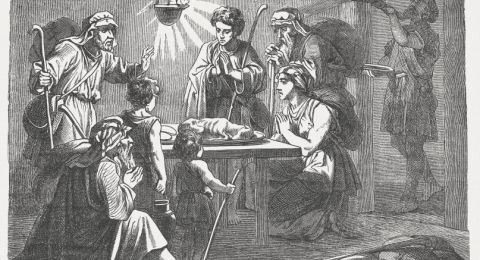
  • Historical: God devastated the Egyptians by killing all their firstborns, but He spared the Israelites through a sacrificial substitute. Passover was observed annually as a reminder of how the Israelites were saved from death by putting the blood of a lamb on their doorposts (Exodus 12:26-27).
  • Fulfillment: The sacrifice of Jesus Christ, “our Passover,” makes entrance into the New Covenant possible (1 Corinthians 5:7; Luke 22:20). Christians are to continue observing this day as a reminder of how the Savior’s sacrifice provides redemption from sins and eternal death (Hebrews 9:12).

To learn more about this biblical feast, read “Passover: What Did Jesus Do for You?

More at: https://lifehopeandtruth.com/god/blog/feasts-in-the-bible-why-should-they-matter-to-christians/?

_______

Questions and Answers About the Christian Passover

“This evening, many Christians will gather to observe the New Covenant Passover. This festival may seem mysterious to many. In this blog post, we address six frequently asked questions about the New Testament Passover.”

Transcript of:  https://hubs.la/Q02twqnM0 

“Most Christians believe Passover is a Jewish holiday. But should Christians observe Passover? This post covers this and other questions about the Christian Passover.Questions and Answers About the Christian Passover

If you look at your calendar for March or April, you will probably see “Passover” marked. Most people think of Passover as just a Jewish national holiday that celebrates Israel’s departure from Egypt, as told in the book of Exodus. The Ten Commandments, the 1956 movie starring Charlton Heston and Yul Brynner, is often shown on network TV around this time of year.

This may be the extent of your knowledge about the Passover. It is largely ignored in Christianity, which observes other spring holidays such as Easter, Lent and Good Friday.

(To learn about the problems with Easter, read our article “Is Easter Pagan?”)

But did you know that the Passover is found throughout the Bible—both in the Old Testament and New Testament? So why don’t most Christians celebrate Passover? Should they?

This post will answer some frequently asked questions about the Passover.

Passover Question 1: What does Passover commemorate? Doesn’t it celebrate the Israelites being “passed over” and protected from the 10th plague in Egypt?

Yes, when the Passover was introduced, it commemorated the night God performed the 10th and final plague against ancient Egypt. God caused the firstborn of Egypt to die—a plague that probably took millions of lives throughout the land. God would spare the Israelites from this plague only if they painted lamb’s blood on the doorposts of their dwellings (Exodus 12:7, 12-13).

Throughout their generations, the Israelites were to celebrate the Passover to remember how God delivered them from slavery in Egypt. That evening, the Israelites were also instructed to prepare a special meal and get ready to leave Egypt the next day (verses 8-11). God declared this observance was “the LORD’S Passover” (verse 11). He commanded them to observe it as “a memorial,” “a feast to the LORD throughout your generations” and “an everlasting ordinance” (verse 14).

Years later, God reinforced the observance in the formal list of God’s festivals given to Moses: “On the fourteenth day of the first month at twilight is the LORD’S Passover” (Leviticus 23:2, 5).

Throughout their generations, the Israelites were to celebrate the Passover to remember how God delivered them from slavery in Egypt. This was the original meaning of the observance. Jews around the world understand and observe this.

These events are also meaningful for Christians, who are called “the Israel of God” (Galatians 6:16) and are delivered from the slavery of sin (Romans 6:7). But, as we will see, the Passover holds even deeper significance for Christians today.

Passover Question 2: Did Jesus celebrate Passover?

Yes, Jesus observed the Passover throughout His life.

Luke records that Jesus and His family observed the Passover faithfully: “His parents went to Jerusalem every year at the Feast of the Passover” (Luke 2:41).

One of the most famous accounts of Jesus’ childhood—when He got separated from His parents and they frantically looked for Him, eventually discovering Him discussing the Bible in the temple—took place just after Jesus and His family had observed the Passover in Jerusalem (verses 42-50).

Jesus observed the Passover up until the day He died—literally. He observed the Passover with His disciples the night He was betrayed and arrested (Matthew 26:2, 17-19; Luke 22:15).

To learn more about the feast days Jesus celebrated throughout His life, read “Hidden in Plain Sight: The Festivals Jesus Celebrated.”

Passover Question 3: Is there a connection between Jesus and the Passover?

Yes, the Bible makes a strong link between the Passover and the death of Jesus Christ. Putting the scriptures together, we see that the events of the first Passover foreshadowed Jesus Christ’s death. Notice the following parallels:

Putting the scriptures together, we see that the events of the first Passover foreshadowed Jesus Christ’s death. The Israelites were in bondage to Egypt (Exodus 1:14). All human beings are in slavery to sin (Romans 6:16-17, 20; 7:23; 2 Peter 2:19).

The Israelites were spared from death that night only through the sign of the Passover lamb’s blood on their doorposts (Exodus 12:22-23). Christians are freed from death only through Jesus’ shed blood as the “Lamb of God” (John 1:29; Ephesians 1:7; 2:13; Hebrews 9:14, 22; 1 Peter 1:19).

As a result of the plague against Egypt and the Israelites’ being spared through the Passover lamb’s blood, Israel was freed from slavery and started a new life by coming out of Egypt (Exodus 12:31-41). As a result of Jesus Christ’s sacrifice, Christians can have freedom from the captivity of sin and live a new way of life (Romans 6:4, 6, 18, 22; Ephesians 4:24).

These are just a few of the parallels between the Exodus Passover and Jesus Christ. It is also important to remember that Jesus observed the Passover on the evening before His crucifixion and that His sacrifice occurred on the daylight portion of the Feast of Passover (Matthew 26:18-19).

But perhaps no scripture proves the link better than 1 Corinthians 5:7: “For indeed Christ, our Passover, was sacrificed for us.”

To learn more about the connection between Jesus and the Passover, read “Passover: What Did Jesus Do for You?” and “Why Is Jesus Called the Lamb of God?

Passover Question 4: Did the early Church observe the Passover?

Yes, the New Testament is very clear that Christians in the early Church observed the Passover.

We must first understand that they didn’t observe it in the same way Israel did in the past. At His last Passover, Jesus Christ instituted new symbols to reflect His sacrifice for sins. These new symbols were a new element He added to the Passover for New Covenant Christians.

We read about the institution of the New Covenant Passover in Matthew 26.

Unleavened bread now symbolized the “body” of Jesus Christ (verse 26).

Wine now symbolized Jesus’ “blood” (verse 28).

Jesus commanded His disciples to “do this in remembrance of Me” (Luke 22:19). He also instituted a foot-washing ceremony to teach His people the importance of humility and service (John 13:3-15). (To learn more about the meaning behind washing feet, read “What Is the Meaning of John 13:14—“Wash One Another’s Feet”?”)

The Bible shows us that the early Church continued observing the Passover in obedience to Christ (1 Corinthians 5:7-8; 11:23-26). Today, Christians around the world observe the New Testament Passover in March or April (on the 14th day of Nisan on the Hebrew calendar) to remember and commemorate Jesus Christ’s death and its significance to our lives.

In 2024 the New Covenant Passover ceremony will be observed after the sun sets on April 21 (on the Gregorian calendar). 

You can learn about the dates of the biblical festivals for the next few years at “Festival Calendar.”

The fact that early Christians observed the Passover on the 14th of Nisan is a generally recognized historical fact. Unfortunately, the Roman Church eventually substituted Good Friday and Easter Sunday for the biblical Passover—a change that is still accepted and practiced by the majority of mainstream Christianity today.

To learn more about the change from Passover to Easter, read our article “Christian Festivals.”

Passover Question 5: Isn’t the Christian ceremony of bread and wine called the Lord’s Supper or Communion?

This name, “The Lord’s Supper,” is a common title given to partaking of bread and wine in the Protestant community. Some denominations call this ceremony Eucharist (Greek for “give thanks”) or Communion (Latin for “fellowship” or “sharing”). There is much variance in how these ceremonies are kept. Some keep these ceremonies weekly; some, monthly; some, quarterly; and others, annually.

But none of these names are the biblical name for the ceremony Jesus instituted on the last evening of His life. The Gospels are very clear that He was observing the Passover (Matthew 26:18; Mark 14:14; Luke 22:8).

If you read through each Gospel record of this evening, you will notice that Jesus specifically said He was changing the symbols of the bread and wine—but He never said He was changing the name from Passover to anything else.

The Lord’s Supper? If you search the Bible, you will find the phrase “The Lord’s Supper” is only used once (in 1 Corinthians 11:20). But when you actually read the verse, you may be surprised that the verse is actually saying not to use that title for the observance. “Therefore when you come together in one place, it is not to eat the Lord’s Supper” (verse 20, emphasis added).

The apostle Paul was correcting the Corinthian congregation for not properly keeping the Passover ceremony with reverence and solemnity. These Christians were coming to the Passover and selfishly eating their own food while others went hungry. Some were even getting drunk (verse 21).

So, instead of calling this observance “the Lord’s Supper,” Paul was actually reminding them that it wasn’t! They were to come together to solemnly partake of the bread and wine symbols—not to eat supper (verses 27-29).

Communion? The title “Communion” is taken from 1 Corinthians 10:16: “The cup of blessing which we bless, is it not the communion [the “fellowship” or “sharing”] of the blood of Christ?” This is not a designation of a title for the event, but a statement that the symbols of bread and wine are necessary to have a relationship, or fellowship, with Jesus Christ. The Passover is necessary for truly knowing and having a relationship with Jesus Christ.

To learn more about the proper name for this important observance, read “The Last Supper or Passover?

Passover Question 6: How do you observe Passover as a Christian?

As we have seen, the New Testament shows that Jesus Christ instituted new symbols for the Passover on the night He was betrayed and arrested. Those symbols are foot washing, unleavened bread and wine. In order to keep the Passover as a Christian in the 21st century, there are four basic requirements for baptized members of the Church of God:

  • Observe it on the same night Jesus observed it, on the anniversary of the night of His betrayal and arrest. That is the evening of the 14th of Nisan on the Hebrew calendar. In 2024, that corresponds to the evening after the sun sets on April 21. (April 22 is the daylight portion of the Passover in 2024.)
  • Wash the feet of another baptized Christian also observing the Passover.
  • Eat a small, broken piece of unleavened bread that symbolizes Christ’s broken and beaten body.
  • Drink a sip of red wine that symbolizes Christ’s shed blood.

The ideal way to observe the Passover is with other converted Christians who are partaking of the Passover in a ceremony conducted by a minister of Jesus Christ. 

For more insight on keeping the Passover today, read “Should Christians Celebrate the Passover?

Finding more answers about the Christian Passover

If you are just learning about the Passover, we hope these answers have been helpful and informative. We encourage you to continue studying the origins of the popular holidays celebrated in the spring (in the northern hemisphere) and the deep meaning of the festivals found in the Bible.”  From: https://lifehopeandtruth.com/god/blog/questions-and-answers-about-the-passover/?

___________

The Role of Processed Foods in the Obesity Epidemic

“The rise in the U.S. calorie supply responsible for the obesity epidemic wasn’t just about more food but a different kind of food.”

Transcript of video at: https://nutritionfacts.org/video/the-role-of-processed-foods-in-the-obesity-epidemic/?

Below is an approximation of this video’s audio content. To see any graphs, charts, graphics, images, and quotes to which Dr. Greger may be referring, watch the above video.

“The rise in the number of calories provided the U.S. food supply since the 1970s is more than sufficient to explain the entire obesity epidemic. Similar spikes in calorie surplus were noted in developed countries around the world in parallel with, and presumed primarily responsible for, the expanding waistlines of their populations. By the year 2000, the United States was producing, after taking exports into account, 3,900 calories for every man, woman, and child—nearly twice as much as many people need.

It wasn’t always this way. The number of calories in the food supply actually declined over the first half of the twentieth century, only starting its upward climb to unprecedented heights in the 1970s. The drop in the first half of the century was attributed to the reduction in hard manual labor. The population had decreased energy needs, so they ate decreased energy diets. They didn’t need all the extra calories. But then, the so-called energy balance flipping point occurred, when the “move less, stay lean” phase that existed throughout most of the century turned into the “eat more, gain weight” phase that plagues us to this day. So, what changed?

What happened in the 1970s was a revolution in the food industry. In the 1960s, most food was prepared and cooked in the home. The average “not working” wife spent hours a day cooking and cleaning up after meals. (The husband averaged nine minutes.) But then, a mixed blessing transformation took place. Technological advances in food preservation and packaging enabled manufacturers to mass-prepare and distribute food for ready consumption. The metamorphosis has been compared to what happened a century before in the industrial revolution, with the mass production and supply of manufactured goods. This time they were just mass-producing food. Using new preservatives, artificial flavors, and techniques such as deep freezing and vacuum packaging, food corporations could take advantage of economies of scale to mass produce ready-made, durable, palatable edibles that offer an enormous commercial advantage over fresh and perishable foods.

Think ye of the Twinkie. With enough time and effort, any ambitious cook could create a cream-filled cake, but now they are available around every corner for less than a dollar––or delivered straight to your door for 30 cents! If every time someone wanted a Twinkie, they had to bake it themselves, they’d probably eat a lot less Twinkies. The packaged food sector is now a multi-trillion dollar industry.

Or, consider the humble potato. We’ve long been a nation of potato-eaters, but they were largely baked or boiled. Anyone who’s made fries from scratch knows what a pain it is, with all the peeling, cutting, and splattering. But with sophisticated machinations of mechanization, french fry production became centralized, and could be shipped at -40o to any fast food deep fat fryer or frozen food section in the country to become America’s favorite vegetable. Nearly all the increase in potato consumption in recent decades has been in the form of french fries and potato chips.

Cigarette production offers a compelling parallel. Up until automated rolling machines were invented, cigarettes had to be rolled by hand. It took 50 workers to produce the number of cigarettes a machine could make in a minute. The price plunged, and production leapt into the billions. Cigarette smoking went from relatively uncommon to almost everywhere. In the 20th century, the average per capita cigarette consumption rose from 54 a year to 4,345 cigarettes a year by the time of the 1964 Surgeon General’s report. The average American went from smoking about one cigarette a week to a half-pack a day.

Tobacco itself was just as addictive before and after mass marketing. What changed was cheap, easy access. French fries have always been tasty, but they went from being rare, even in restaurants, to omnipresent access around every and each corner (likely next to the gas station where you can get your Twinkies and cigarettes).

The first Twinkie dates back to 1930, though, and Ore-Ida started selling frozen french fries in the 1950s. There has to be more to the story than just technological innovation…which we’ll explore, next.:  From: https://nutritionfacts.org/video/the-role-of-processed-foods-in-the-obesity-epidemic/?

_________

LEARN MORE

__________

Saturday, April 13, 2024

How Easter Replaced the Biblical Passover. How Did Passover Become Easter? Does Prevagen Really Work?

.

Our church will be having our Passover meal at sundown around 7.30pm on the 22nd. of April.

________

How Easter Replaced the Biblical Passover

A crown of thorns, nails, hammer and post.Why did Easter replace the Passover?

James Pauls/iStock/Thinkstock

It was easier to draw pagan worshippers into Christianity and maintain their devotion by identifying the time-honored spring resurrection feast of the pagan mystery religions with the resurrection of Christ.

Though Easter was clearly pagan in origin, Christian leaders of the first two centuries after Christ's crucifixion employed the same philosophy in establishing the new holiday that they later applied to Christmas. Believing that people are free to select their own times and customs of worship, they went about gradually replacing the biblically commanded Passover with their humanly devised celebration of Easter.

It was easier to draw pagan worshippers into Christianity and maintain their devotion by identifying the time-honored spring resurrection feast of the pagan mystery religions with the resurrection of Christ.

Anti-Jewish prejudice also seems to have been a major factor in the church leaders' decision to make such changes. According to R.K. Bishop: "The early development of the celebration of Easter and the attendant calendar disputes were largely a result of Christianity's attempt to emancipate itself from Judaism. Sunday had already replaced the Jewish sabbath early in the second century, and despite efforts in Asia Minor to maintain the Jewish passover date of 14 Nisan for Easter [or, rather, the true Passover] (hence the name Quartodecimans [meaning 'Fourteeners']), the Council of Nicaea adopted the annual Sunday following the full moon after the vernal equinox (March 21)" (Walter Elwell, editor, Evangelical Dictionary of Theology, 1984, "Easter").

Before A.D. 70, Christianity was "regarded by the Roman government and by the people at large as a branch of the Jewish religion" (Jesse Lyman Hurlbut, The Story of the Christian Church, 1954, p. 34). Christianity and Judaism shared the biblical feast days, although Christians observed them with added meanings introduced by Jesus and the apostles.

However, two Jewish revolts against the Roman Empire, in 64-70 and 132-135, led to widespread persecution of Jews and suppression of Jewish religious practices. Jews were even driven from Jerusalem and forbidden to return on pain of death. As pressure mounted, some Christians began to abandon beliefs and practices perceived as being too Jewish. Over time many abandoned their weekly Sabbath day of rest and worship in favor of worship on Sunday, the pagan day of the sun, and abandoned the Passover in favor of Easter to distance themselves from Jews.

The New Catholic Encyclopedia explains: "Originally both observances [Passover and Easter] were allowed, but gradually it was felt incongruous that Christians should celebrate Easter on a Jewish feast, and unity in celebrating the principal Christian feast was called for" (1967, Vol. 5, p. 8, "Easter Controversy").”  From: https://www.ucg.org/bible-study-tools/booklets/easter-the-rest-of-the-story/how-easter-replaced-the-biblical-passover

________

How Did Passover Become Easter?

“The early New Testament Church didn’t celebrate Easter. Why not—and what changed? Phil Sandilands discusses the shift from Passover (which God commanded) to Easter (which God NEVER commanded). Discover why Passover is still important to God—and why Easter will never be an acceptable replacement. Watch our latest Life, Hope & Truth Presents video program, “How Did Passover Become Easter?” at: https://lifehopeandtruth.com/videos/series/life-hope-truth-presents/how-passover-became-easter/

________

“I Must by All Means Keep This Coming Feast”

Acts 18:21

[Paul] took leave of them, saying, “I must by all means keep this coming feast in Jerusalem; but I will return again to you, God willing.” And he sailed from Ephesus.

“As we saw in Acts 20:16, the apostle Paul planned his journeys around the biblical festivals. Here in Acts 18:21 he also explains his need to get to Jerusalem for one of the festivals.

Though it is not explicit about which festival, this passage gives more evidence of the continued importance of God’s festivals to the New Testament Church.

For more about the biblical festivals, see the second half of the free booklet From Holidays to Holy Days: God’s Plan for You.”  From: https://lifehopeandtruth.com/bible/blog/i-must-by-all-means-keep-this-coming-feast/

_________

Does Prevagen Really Work?

“Why did the makers of Prevagen settle a class action lawsuit in 2020 with the FTC over deceptive business practices and false advertising? Is Prevagen safe?”

Below is an approximation of this video’s audio content. To see any graphs, charts, graphics, images, and quotes to which Dr. Greger may be referring, watch the above video.

“Over the last twenty years or so, Big Pharma has invested more than a half trillion dollars into dementia treatment research, but so far to little avail. In light of this, many have turned to supplements. An AARP commissioned survey found that 36 percent of those 74 years and older take a supplement for brain health, to the tune of billions of dollars a year. The most commonly marketed brain supplement was one I’d frankly never heard of before: Prevagen.

Prevagen contains a protein derived from a luminescent jellyfish the company claims “has been clinically shown to improve memory.” According to the company website, “A landmark double-blind and placebo controlled trial demonstrated Prevagen improved short-term memory, learning, and delayed recall over 90 days.” But when you actually pull up the study, not only did Prevagen fail to improve memory, learning, or recall over placebo, it failed to show a significant improvement in any of the nine measured cognitive tasks tested.

As an inquiry into Prevagen published by the Center for Science in the Public Interest was titled, “How Can This Memory Supplement Flunk Its One Trial and Still Be Advertised as Effective?” And not just as effective, but the #1 pharmacist recommended brand. Considering the lack of sound clinical evidence, how is that possible? Presumably, they’re just as blitzed with the same kind of advertising as everyone else.

It’s no surprise the supplement didn’t do anything, since the company’s own studies showed the jellyfish protein was rapidly digested by stomach enzymes. Of course, that didn’t stop them from raking in more than $20 million a year. Claiming the “marketers of Prevagen preyed on the fears of older consumers experiencing age-related memory loss,” the Federal Trade Commission and New York State’s Attorney General filed a consumer protection complaint charging the company with making false and unsubstantiated claims. The AARP weighed in, accusing the company of “deceiving millions of aging Americans.”

In a move straight out of the Big Pharma aducanumab playbook, the company went back and conducted more than 30 post hoc analyses of the data, and found a few positive findings on a few tasks for some subgroups. This cherry-picking of subgroups after the fact is a classic example of manipulation, sometimes called “p-hacking” or “data dredging,” that can be described as “placing a bet on a horse after watching the race.”

The makers of Prevagen settled a class action lawsuit in 2020 with the FTC over deceptive business practices and false advertising. Remarkably, though, the settlement allows them to continue to market it, with the court-approved disclaimer that claims are “based on a clinical study of subgroups of individuals …” But with the amount of slicing and dicing of data they did, the chances of finding at least one false positive was estimated at 80 percent.

Prevagen may be more than just a waste of money. The manufacturer was cited for failing to report more than a thousand adverse events related by consumers to the Food and Drug Administration (FDA). Regulators can’t have it both ways, though. If the jellyfish protein is digested away, how can it pose a safety risk? Because dietary supplements are too often adulterated with contaminants. FDA inspectors specifically cited Prevagen’s manufacturing facilities for “objectionable conditions or practices.”

A 2019 survey by Pew found that more than half believed that the Food and Drug Administration requires supplements be tested for safety, but that isn’t true. One study of 24 supplements sold as cognitive performance boosters found that most claimed an ingredient on the label that wasn’t actually in the supplement. And worse, 38 percent contained ingredients not allowed in supplements, like prohibited drugs. Another study of a dozen so-called “brain health supplements” similarly found 8 out of 12 were misbranded (missing an ingredient promised on the label), and 10 out of 12 were deemed adulterated (containing unlisted compounds, for example caffeine in a product that explicitly highlighted all-caps ‘‘DECAFFEINATED’’ on the label). Only 1 of 12 was certified to contain what it said it did. ​​The bottom line for Prevagen—there is no acceptable evidence that it is effective, and patients should be advised not to take it.”  From: https://nutritionfacts.org/video/does-prevagen-really-work/?

________