Showing posts with label rabbits. Show all posts

Sunday, April 20, 2025

Would Jesus celebrate Easter? How Easter Supplanted Passover Observance.

.

Would Jesus celebrate Easter?

Would Jesus celebrate Easter?“Many Christian churches prepare special easter programs commemorating the death and resurrection of Jesus Christ, and parents hide easter eggs so their children can hunt for them on Easter morning. Then there are the Easter sunrise services, when Jesus' miraculous resurrection is supposedly honoured by watching the sun rise in the east.”

Image: Church Easter egg hunt (source: wikimedia commons)

“But can we find any historical or biblical record of Jesus or His disciples celebrating Easter or teaching us to meet to honor His resurrection at sunrise on Easter Sunday—or at any other time, for that matter?

There is no reference to Easter anywhere in the New Testament. In the King James Version of the Bible the word ‘Easter' is used once in Acts 12:4, but it is an erroneous mistranslation. The original Greek word is ‘pascha’, which is correctly translated as Passover in virtually every modern version of the Bible.

The original Apostles, and even the Apostle John, who died near the end of the first century, left no record of celebrating Easter. The Apostle Paul, some 25 years after Jesus' death and resurrection, told the Corinthian church they should continue to keep the Passover as Christ commanded (1 Corinthians 11:23-27). (See also the previous issue of Bible Insights Weekly #324 Why Christians Should Keep The Annual Passover). Paul and Luke, his traveling companion and author of the book of Acts, regularly mention observing the weekly Sabbath day and the annual biblical festivals listed in Leviticus 23, but mention of Easter is conspicuously absent ( 1 Corinthians 5:6-8 and 6:8; Acts 2:1-4; 13:42-44; 17:1-3; 18:4; 20:6 and 16).

Many scholars point out Easter is a pre-Christian religious holiday, observed long before Jesus' human lifetime. Vine's Complete Expository Dictionary of Old and New Testament Words notes: "The term 'Easter' is not of Christian origin. It is another form of Astarte, one of the titles of the Chaldean [Babylonian] goddess, the queen of heaven. The festival of Pasch [Passover] held by Christians in post-apostolic times was a continuation of the Jewish feast…From this Pasch the pagan festival of 'Easter' was quite distinct and was introduced into the apostate Western religion, as part of the attempt to adapt pagan festivals to Christianity" (W.E. Vine, 1985, "Easter").

Alexander Hislop in his book The Two Babylons also explores the origins of Easter. Although his work has been criticized as lacking scholarship, it is heavily footnoted with sources—and much of what he presents can be verified through other historical works. He points out Easter and the practices associated with it can be traced back to pagan rituals. For example "the forty days' abstinence of Lent [a 40-day period of fasting, prayer, and almsgiving observed by many Christian denominations in preparation for Easter] was directly borrowed from the worshippers of the Babylonian goddess" (p. 104). Hislop continues, "Among the pagans this Lent seems to have been an indispensable preliminary to the great annual festival in commemoration of the death and resurrection of Tammuz…." (p. 105). Tammuz was a chief Babylonian deity and husband of the goddess Ishtar, and a great festival was held every spring to celebrate Tammuz's death and supposed resurrection.

One Catholic writer explains how eggs and rabbits came to be connected with Easter: "The egg has become a popular Easter symbol…In ancient Egypt and Persia friends exchanged decorated eggs at the spring equinox, the beginning of their New Year. These eggs were a symbol of fertility for them….Christians of the Near East adopted this tradition, and the Easter egg became a religious symbol. It represented the tomb from which Jesus came forth to new life" (Greg Dues, Catholic Customs and Traditions, 1992, p. 101). Rabbits came to be linked with Easter because they were potent symbols associated with ancient fertility rites.

Not until the Council of Nicaea in 325—almost three centuries after Jesus was crucified and rose again—did Easter replace the Passover, the biblical ceremony Jesus and the Apostle Paul instructed Christians to observe. "A final settlement of the dispute [whether and when to observe Easter or Passover] was one among the other reasons which led Constantine to summon the council of Nicaea in 325….The decision of the council was unanimous that Easter [which they wrongly called Passover] was to be kept on Sunday, and on the same Sunday throughout the world, and 'that none should hereafter follow the blindness of the Jews'" (The Encyclopaedia Britannica, 11th edition, pp. 828-829, "Easter").

Constantine's decision was a fateful turning point for Christianity. Those who remained faithful to the instruction of Jesus and the Apostles would become a persecuted minority as a vastly different set of beliefs and practices—recycled from ancient pre-Christian religions dressed in a Christian cloak—would take hold among the majority.

Easter is a pagan tradition that was involved in the worship of false gods and is abhorrent to God. It is rooted in ancient pre-Christian fertility rites that have nothing to do with Jesus. Scripture does not support this pre-Christian holiday and condemns pagan worship practices even if done to honor the true God (Deuteronomy 12:29-32).

______

How Easter supplanted Passover observance

How Easter supplanted Passover observance“After Adam and Eve rejected God in the Garden of Eden (Genesis 3), humanity looked for other explanations for life with fertility rites and customs being incorporated into religious practices early on in human history.

Forces of nature and seasons that could not be controlled began to be viewed as gods, goddesses and supernatural powers to be worshipped and feared. Man soon created his own gods, contradicting God's instruction against idolatry (Exodus 20:3-6; Deuteronomy 5:7-10). “The most prominent myth to cross cultural lines was that of the fertility cycle. Many pagan cultures believed that the god of fertility died each year during the winter but was reborn…in the spring." (Nelson's New Illustrated Bible Dictionary, 1995, "Gods, Pagan," p. 508).

The Babylonian and Assyrian fertility goddess was Ishtar. She was the goddess of love, and the practice of ritual prostitution became widespread in the fertility cult dedicated to her name. "Associated with Ishtar was the young god Tammuz (Ezek. 8:14)... [who] died annually and was reborn…representing the yearly cycle of the seasons and the crops. This pagan belief later was identified with the pagan gods Baal and Anat in Canaan" (Nelson's New Illustrated Bible Dictionary, "Gods, Pagan," p. 509).

It was believed that Ishtar brought about the rebirth or resurrection of Tammuz in the spring, coinciding with the blossoming of nature. Though Easter was clearly pagan in origin, Christian leaders of the first two centuries concluded it was easier to draw pagan worshippers into Christianity by identifying the time-honored spring resurrection feast of the pagan mystery religions with the resurrection of Christ. Believing that people are free to select their own times and customs of worship, they gradually replaced the biblically commanded Passover with their humanly devised celebration of Easter.

This movement to replace Passover with popular Easter customs was the basis for contention over the next three centuries: "The earliest Christians celebrated the Lord's Passover at the same time as the Jews…[but]...By the middle of the 2nd century, most churches had transferred this celebration to the Sunday after the Jewish feast….[however] certain churches of Asia Minor clung to the older custom, for which they were denounced as ‘judaizing' “(Eusebius, Ecclesiastical History, Book 5, chapters 23-25).

Before A.D. 70 Christianity was "regarded by the Roman government and by the people at large as a branch of the Jewish religion" (Jesse Lyman Hurlbut, The Story of the Christian Church, 1954, p. 34). Christianity and Judaism shared the biblical feast days, although Christians observed them with added meanings introduced by Jesus and the Apostles. However, two Jewish revolts against the Roman Empire, in 64-70 and 132-135, led to widespread persecution of Jews and suppression of Jewish religious practices.

As pressure mounted, some Christians began to abandon beliefs and practices perceived as being too Jewish, such as the weekly Sabbath and instead worshiped on Sunday, the pagan day of the sun, as well as abandoning the Passover in favor of Easter to distance themselves from Jews. The New Catholic Encyclopedia explains: "Originally both observances [Passover and Easter] were allowed, but gradually it was felt incongruous that Christians should celebrate Easter on a Jewish feast, and unity in celebrating the principal Christian feast was called for" (1967, Vol. 5, p. 8, "Easter Controversy"). The first ecumenical Council of Nicaea in 325 decreed that all churches should observe the feast together on a Sunday" (15th edition, Macropaedia, Vol. 4, pp. 604-605, "Church Year").

Two religious leaders of the mid-second century—Polycarp, bishop of Smyrna in Asia Minor, and Anicetus, bishop of Rome—debated this point. Anicetus argued for Easter while Polycarp, a student of the Apostle John, defended observing "the Christian Passover, on the 14th of Nisan…regardless of the day of the week" (Encyclopaedia Britannica, 15th edition, Micropaedia, Vol. 8, p. 94, "Polycarp"). Eusebius said Polycarp did so because this was the way "he had always observed it with John the disciple of our Lord, and the rest of the Apostles, with whom he associated" (Eusebius' Ecclesiastical History, 1995, pp. 210-211).

Several decades later another church leader, Polycrates, argued with a new bishop of Rome, Victor, over the same issue. Eusebius wrote of the continuing debate: “The bishops ... of Asia, persevering in observing the custom handed down to them from their fathers, were headed by Polycrates…."We,' said he, ‘therefore, observe the genuine day; neither adding thereto nor taking therefrom ...For they who are greater than I, have said, ‘we ought to obey God rather than men'" (pp. 207-209).

Regrettably, people's reasoning won out over the directions of God and the example of Jesus Christ and His original disciples. As Easter replaced Passover, not only was a new date selected, but a new theme was introduced. Rather than commemorating Christ's death as directed by the Scriptures (1 Corinthians 11:26), the new holiday was designed to celebrate His resurrection, easily accommodating the pagan fertility symbols. It also helped distinguish the Christian community from the Jews, a major goal of church leaders of the time.

Although Christ's resurrection is an important basis of our hope that we, too, can be resurrected (1 Corinthians 15:17; Romans 5:10), the love of God is primarily expressed to humanity through the crucifixion of Jesus Christ (John 3:16; Hebrews 9:28). His death, through which our sins may be forgiven, is the primary focus of the Passover.”     From: https://www.ucg.org/learn/bible-study-aids/holidays-or-holy-days-does-it-matter-which-days-we-observe/holidays-or-11

_______

Sunday, August 13, 2023

Should a Christian Avoid Euphemisms for God? Avoiding Vain Repetitions in Prayer. Chronic Headaches and Pork Tapeworms.

.

Should a Christian Avoid Euphemisms for God?

Should a Christian Avoid Euphemisms for God?“What is a euphemism? What euphemisms should Christians be concerned about? Do euphemisms for God’s name break the Third Commandment, taking His name in vain?

What is a euphemism?

Webster’s Dictionary has this definition of euphemism: “The use of a less direct word or phrase for one considered offensive.”

Some examples of English euphemisms include “powder your nose” for go to the toilet, “negative cash flow” for broke, and “passed away” for died.

Examples of euphemisms in the Bible

The King James Version says King Saul went into a cave “to cover his feet” (1 Samuel 24:3). This is a euphemism for, how shall we say it, to powder his nose? The New King James Version says “attend to his needs,” which you could say is another English euphemism for defecation.

Many times the Bible describes someone who died as being asleep. For example, Jesus told His disciples, “Our friend Lazarus sleeps, but I go that I may wake him up” (John 11:11). Since they misunderstood, He had to tell them plainly, “Lazarus is dead” (verse 14).

Though sleep is a euphemism for death, we also learn that from God’s perspective, death is like sleep since the dead person is unconscious and God has the power to wake the dead through the resurrection from the dead.

Types of euphemisms

Some euphemisms are considered polite. Some are funny. But some can just be a way to try to say something considered wrong or offensive without being punished.

Alternative swear words, while seeming less offensive or even funny, can still, at their heart, be profanity, swearing or taking God’s name in vain.

Christians and euphemisms

There are many categories of euphemisms, but the two Christians are most concerned with are those that violate the Third Commandment and those that ask God to condemn others. Unfortunately, many who claim to be Christian unknowingly use these types of euphemisms that disobey His instructions.

Euphemisms misusing God’s name

The Third Commandment states, “You shall not take the name of the LORD your God in vain, for the LORD will not hold him guiltless who takes His name in vain” (Exodus 20:7; Deuteronomy 5:11).

“In vain” literally means to use God’s name in an empty or trifling way, without appropriate reverence for God.

In our modern world we hear this commandment violated overtly and frequently all around us, with “God,” “Jesus,” “Christ” or “Lord” uttered merely as filler words, exclamations, expressions of anger or contempt or in conjunction with cursing or profanity. One of the most pervasive abuses of the name of God is the phrase “oh my …!,” which has become so commonplace it now has its own abbreviation (OMG) for text messaging.

In addition to blatantly saying God’s names, there are euphemisms that have modified the same names into less explicit or softened forms; but because they are merely modifications of God’s name(s), they likewise are violations of the intent of the Third Commandment.

The euphemism list below is provided to help you identify common euphemisms for God’s name, in order to avoid inadvertently making irreverent references to God’s holy name. (You can find more information in many dictionaries that include slang words and euphemisms.)

Euphemism list:

Direct Word       Euphemisms

God                    Gol, Golly, Gosh, Gad, ye gad/s, by George, by Jove, Almighty

Jesus or Christ  Geez, Gee, Sheez, Gee-wiz (Jesus-wizard), cripes (Christ), Jeepers, by Jingo, Jeezers, bejeezers (by Jesus)  initials of Jesus Christ, Jiminy Cricket, Jiminy Christmas, Jumpin’ Catfish, Jeepers Creepers, Jeezy Creezy, Judas Christopher, Jason Crisp, etc.

Lord                    Lordy, Lawd, Lawdy

Holy                    Holy is a word that refers to God’s nature, works or anything God is present or involved in. Any use of this word in conjunction with any other word (outside of its correct and proper context) is a violation of the Third Commandment.

Euphemisms for eternal judgment

Another category of euphemisms that is inappropriate for Christians to use is those asking God to condemn (“damn”) a person or thing. Euphemisms for condemn include darn, durn, dang, doggone (a euphemism for both the words “God” and “damn”) and any other combination of these words with euphemisms for God.

Are the words we speak important to God? Jesus Christ said, “But I say to you that for every idle word men may speak, they will give account of it in the day of judgment. For by your words you will be justified, and by your words you will be condemned” (Matthew 12:36-37). While the Bible teaches that Christians should learn to discern good from evil (Hebrews 5:14), it also teaches that we should not condemn others in the sense of trying to determine their ultimate fate. God the Father has given the judgment of mankind to the Son (John 5:22; 2 Corinthians 5:10), and it is His prerogative to judge—not ours.

Referring to this ultimate judgment, Jesus said: “Judge not, and you shall not be judged. Condemn not, and you shall not be condemned. Forgive, and you will be forgiven” (Luke 6:37).

Jesus also cautions us: “For with what judgment you judge, you will be judged; and with the measure you use, it will be measured back to you” (Matthew 7:2) and “Blessed are the merciful, for they shall obtain mercy” (Matthew 5:7).

Every idle word

Are the words we speak important to God? Jesus Christ said, “But I say to you that for every idle word men may speak, they will give account of it in the day of judgment. For by your words you will be justified, and by your words you will be condemned” (Matthew 12:36-37).

Euphemisms that were coined to utter God’s name without proper reverence or to judge another’s ultimate fate are inappropriate for a Christian. “Let no corrupt word proceed out of your mouth, but what is good for necessary edification” (Ephesians 4:29). As lights in a dark world, we are to set the example not only in our conduct, but in pure speech as well.”     From: https://lifehopeandtruth.com/bible/10-commandments/profanity-third-commandment/euphemisms/     LEARN MORE ABOUT 10 COMMANDMENTS

________  

Avoiding Vain Repetitions in Prayer 

Matthew 6:7

“And when you pray, do not use vain repetitions as the heathen do. For they think that they will be heard for their many words.”

“God does not give us prayers to memorize and repeat mindlessly as a ritual. He is not interested in babble and hearing certain syllables intoned repetitiously, as it seems the pagans believed their “gods” did. He wants His followers to “avoid meaningless, repetitive prayers offered under the misconception that mere length will make prayers efficacious” (Zondervan NIV Bible Commentary on Matthew 6:7-8).

God is interested in us having an actual conversation with Him, listening to what He says in the Bible and sharing our thoughts, requests, cares and praise with Him in a focused and meaningful way. Repeating someone else’s words over and over again can’t help but become rote and ritual rather than building the relationship God desires.”    See more about the communication God desires in our articles “How to Avoid Repetitious Prayer” and “How to Pray.”  From: https://lifehopeandtruth.com/bible/blog/avoiding-vain-repetitions-in-prayer/?

_________

Leviticus 11   Clean and Unclean Food

“11 The Lord said to Moses and Aaron, 2 “Say to the Israelites: ‘Of all the animals that live on land, these are the ones you may eat: 3 You may eat any animal that has a divided hoof and that chews the cud.

4 “‘There are some that only chew the cud or only have a divided hoof, but you must not eat them. The camel, though it chews the cud, does not have a divided hoof; it is ceremonially unclean for you. 5 The hyrax, though it chews the cud, does not have a divided hoof; it is unclean for you. 6 The rabbit, though it chews the cud, does not have a divided hoof; it is unclean for you. 7 And the pig, though it has a divided hoof, does not chew the cud; it is unclean for you. 8 You must not eat their meat or touch their carcasses; they are unclean for you.”    From: NIV Bible, but the other Bibles all say the same thing!

_________

Chronic Headaches and Pork Tapeworms

Transcript of video at: https://nutritionfacts.org/video/chronic-headaches-and-pork-tapeworms/

Below is an approximation of this video’s audio content. To see any graphs, charts, graphics, images, and quotes to which Dr. Greger may be referring, watch the above video.

“Chronic headaches such as migraines or “tension” headache symptoms may be a sign of pork tapeworms in the brain.

Neurocysticercosis is the infection of the human central nervous system by pork tapeworm larvae. Little baby pork tapeworms invading one’s brain “has become an increasingly important emerging infection in the United States,” and it is the #1 cause of epilepsy in the world. It is the most common “parasitic disease of the human brain,” and used to only be found throughout the developing world—”with the exception of Muslim countries,” of course. That all changed about 30 years ago, and now it’s increasingly found throughout North America.

Besides seizures, the pork parasites may actually trigger brain tumors, cause an aneurism, or psychiatric manifestations, like depression. But, who wouldn’t be depressed, having worms in their brain? It can also result in dementia. But, the good news is, with deworming drugs, it’s often reversible. Only rarely do you have to open one’s skull, and extract the larvae surgically—once they get into your eyeballs, though, you really do have to remove them, dead or alive.

I’ve talked about pork tapeworms before, but what’s new is that we now know that they may present as chronic headaches—either migraines or so-called tension-headaches—even when the worms in your head are dead. What they think is happening is that our body tries to chip away at their calcified bodies, and it may release bits of them into the rest of the brain, causing inflammation that could be contributing to headaches.

Now, it’s still rare, and even if you live in an endemic area, you can avoid getting infested with an adult tapeworm in the first place by “cooking pork thoroughly.” But what does that mean, exactly? Well, first of all, it’s found in some parts of pig carcasses more than others. And, you can freeze the little suckers to death, no matter how infested the muscles are, by storing pork, cut up into small pieces, for a month at subzero temperatures. Then, cook the meat for more than two hours. That is one well-done pork chop.

The New England Journal of Medicine recently featured a case of some guy who must have had thousands of pork tapeworm larvae wriggling through his muscles. See all those little white streaks? Each one is a baby tapeworm. But that’s why you can get infected by pork, since they get into the muscles. So, cannibals might want to cook for two hours, too.

Not all parasites are associated with meat, though. “An anxious but healthy 32-year-old male physician presented to the family medicine clinic with a sample of suspected parasites from his stools, which had been retrieved from the toilet that same day.” And here they are. They look to be about an inch long. He had previously traveled to India; had Chinese food the night before—who knows what they were. Maybe it was hookworms? “The sample was sent to the microbiology laboratory for analysis. Later that day, the microbiology physician called to report positive identification of Vigna radiata (previously known as Phaseolus aureus) in the stool sample.” Or, “[i]n common parlance,…a bean sprout.” They were bean sprouts!

“The patient was called and gently but firmly informed of the diagnosis. Given the nature of the identified specimen, the information was presented in a non-judgmental, respectful manner so as not to offend the sensibilities or sensitivities of the patient.”

“[Their] parting advice to fellow physicians in cases of this nature would be as follows:…as comical as the findings might seem, try not to laugh!”  From: https://nutritionfacts.org/video/chronic-headaches-and-pork-tapeworms/

_________

Should We Be Concerned About the Effects of Ochratoxin?

“Ochratoxin was detected, for example, in 44 percent of tested pork.

Read article at: https://nutritionfacts.org/video/should-we-be-concerned-about-the-effects-of-ochratoxin/

________

Ochratoxin A in Slaughtered Pigs and Pork Products

“Pigs are the most susceptible animals to OTA exposure as compared to other productive animals [14,15]. High OTA occurrence has been recorded in feed ingredients and finished swine feeds in various countries [16,17,18,19], highlighting the pig exposure to the toxin. OTA can accumulate in several pig tissues, with the highest concentrations found in blood, followed by the kidneys and liver, whereas lower concentrations have been found in muscles and fat [20,21,22,23].

The contamination of pork meat/edible offal with OTA is mainly derived from the consumption of OTA-contaminated feed by the pigs [24,25]. Additionally, the presence of OTA in pork meat products (ham muscle, cured meats, salami or dry-cured ham) could be derived from the direct growth of OTA-producing fungi, such as Penicillium nordicum and Penicillium verrucosum [26,27,28,29,30], or from the addition of OTA-contaminated materials such as contaminated spices [31,32].

Pork meat and meat products are amongst the important sources of chronic dietary exposure to OTA in humans [14]. Nevertheless, the EU has not established maximum OTA levels in pork meat and pork-derived products. Some European countries have adopted regulations or guidelines on OTA concentrations in meat and/or meat products, such as Denmark, Estonia, Romania, Slovakia and Italy [33]. No binding limits on OTA in meat and meat products have been set in the USA, Australia, Canada and Asia [34,35].”  From:  https://www.ncbi.nlm.nih.gov/pmc/articles/PMC8876995/

________    

Sunday, March 26, 2023

Origin of Easter. Should Christians Celebrate Passover? Great Grain Robbery.

.

Origin of Easter

“Where did Easter and its customs come from? The Bible doesn’t mention rabbits or eggs or sunrise services. So what is the origin of Easter?

Origin of EasterWhat is the origin of Easter?

Since Easter is one of the most renowned holidays in the Christian world, why should we be concerned about the origin of Easter?

For centuries, questions have arisen as to the relationship between bunnies and painted eggs and the resurrection of Jesus Christ. The truth of the matter is that Easter has its roots in ancient paganism and polytheism.

The origin of Easter

According to William E. Vine, “The term ‘Easter’ is not of Christian origin. It is another form of Astarte, one of the titles of the Chaldean goddess, the queen of heaven. The festival of Pasch [Passover] held by Christians in post-apostolic times was a continuation of the Jewish feast. … From this Pasch the pagan festival of ‘Easter’ was quite distinct and was introduced into the apostate Western religion, as part of the attempt to adapt pagan festivals to Christianity” (Vine’s Complete Expository Dictionary of Old and New Testament Words, 1997, “Easter”).

Another source states: “As recounted by the English monk Bede, the 7th-8th century ‘father of English history,’ the former pagans in England called April, or the month marking Jesus’s resurrection, ‘Ēosturmōnaþ’—Old English for the ‘Month of Ēostre.’

“According to Bede in his ‘De temporum ratione’ (‘The Reckoning of Time’), the Christian holiday ‘was called after a goddess of theirs named Ēostre, in whose honor feasts were celebrated in that month.’

“Ēostre is variously depicted by scholars as a fertility goddess and a goddess of dawn and light. The dawn connection could explain a linguistic link between Ēostre and the word ‘east.’

“An academic and a Christian missionary, Bede’s reference to Ēostre (or Ostara) is textually unique, to the extent that many throughout the centuries have asserted it was fabricated. It was only in the 1950s that archeological evidence was found supporting his claim of such a goddess in England. But recently, work was done at the University of Leicester on place names and their connections to Ēostre, which, arguably, buttress Bede’s version” (“The Pagan Goddess Behind the Holiday of ‘Easter’,” The Times of Israel, April 5, 2015).

Two Catholic reference works are also open about the etymology of the name “Easter”:

  • “The word Easter, which comes from the Anglo-Saxon, is a term derived from the pagan goddess of the dawn” (The Catholic Encyclopedia, 1987, p. 177).
  • “Etym. Anglo-Saxon Eastre, Teutonic goddess of dawn and spring” (Modern Catholic Dictionary, 1980, p. 175).

Two popular Bible resources, written largely from a Protestant perspective, also note the pagan etymology of “Easter”:

  • “The word Easter is of Saxon origin, Eastra, the goddess of spring, in whose honor sacrifices were offered about Passover time each year. By the 8th century Anglo-Saxons had adopted the name to designate the celebration of Christ’s resurrection” (Unger’s Bible Dictionary, 1966, p. 283).
  • “The term Easter was derived from the Anglo-Saxon ‘Eostre,’ the name of the goddess of spring. In her honor sacrifices were offered at the time of the vernal equinox. By the 8th cent. the term came to be applied to the anniversary of Christ’s resurrection” (The International Standard Bible Encyclopedia, 1982, Vol. 2, p. 6).

The Ancient History Encyclopedia, in its article on “Easter,” supports this explanation of the origin of the holiday’s name and also adds insight into the origins of the eggs and rabbits associated with the holiday:

“There are two possibilities for the source of the term ‘Easter.’ One is that the name comes from the Saxon fertility goddess Eostre (sometimes spelled Eastre or Ostara). The legend goes that Eostre owned an egg-laying rabbit or hare and the story symbolized fertility and life. In the 8th century CE work De temporum ratione, written by an English monk named Bede, the author claims that, during the month of April, the pagan Anglo-Saxon community used to have feasts to honour Eostre, but that custom had died out by the time of his writing, replaced by the Christian celebration of the resurrection of Jesus. Another accepted origin of the term Easter is that it comes from the German ‘Ostern,’ which comes from the Norse word ‘Eostrus,’ meaning ‘Spring.’

“The pagan holidays of the goddess Eostre (or Ostara) celebrated fertility and new life: The egg symbolized perfection and wholeness in its natural state and the rabbit was a symbol of fertility. For many cultures, the beginning of the spring season was a symbol of rebirth. This relates to the fact that after the darkness of winter, nature gains a new strength that was symbolized as the ascent of life from the realm of darkness to the world of light.”

There are hundreds of other websites that discuss the pagan origin of Easter.

Is Easter in the Bible?Should Christians celebrate Easter?

So, what is a Christian to do with the knowledge of the pagan origin of Easter? According to the Bible, God does not want His people to follow or seek after pagan customs.

When ancient Israel entered the Promised Land, God warned them not to seek after the teachings and traditions of the nations that once inhabited the land. He said, “Take heed to yourself that you are not ensnared to follow them, after they are destroyed from before you, and that you do not inquire after their gods, saying, ‘How did these nations serve their gods? I also will do likewise.’ You shall not worship the LORD your God in that way; for every abomination to the LORD which He hates they have done to their gods” (Deuteronomy 12:30-32).

Later, Christ told His disciples: “Well did Isaiah prophesy of you hypocrites, as it is written: ‘This people honors Me with their lips, but their heart is far from Me. And in vain they worship Me, teaching as doctrines the commandments of men.’ For laying aside the commandment of God, you hold the tradition of men” (Mark 7:6-8).

Therefore, anything that has pagan origins must be avoided by Christ’s disciples, no matter what the intent or long-standing tradition.

What the Bible tells us to celebrate

It is also important to note that the Bible nowhere tells us to honor the day of Christ’s resurrection. Instead, God established a command that the Passover should be observed annually to honor Christ’s death. Today, Christians are not to participate in the Easter holiday, but rather in the New Testament Passover, which is the memorial of Jesus Christ’s sacrifice for our sins.

In great solemnity, once a year on the 14th day of the first month on the Hebrew calendar (Leviticus 23:4-5), we are to observe the Lord’s Passover. On that special evening, the apostle Paul instructed the members of the Church to partake of the bread, which symbolizes Christ’s body broken (beaten) for us, and to drink of the wine, which symbolizes the New Covenant in His blood (1 Corinthians 11:23-29).

As to Christ’s resurrection, this occurred exactly three days and three nights after His burial (Matthew 12:39-40; Luke 24:46-47). Christ was crucified on a Wednesday afternoon, buried just before sunset, as Thursday was an annual holy day. He was resurrected three days later on Saturday afternoon (the weekly Sabbath) just before sunset. It must also be noted that on the first day of the week, Mary Magdalene had come to the tomb while it was still dark. Christ had already risen—long before sunrise (John 20:1-2).

So, the story of Christ’s resurrection occurring on Easter Sunday morning (as well as rabbits laying eggs) is a polytheistic myth. Instead of observing Easter or any of its customs, Christians are instructed to observe the biblically authorized holy days of God.”  From: https://lifehopeandtruth.com/life/plan-of-salvation/holy-days-vs-holidays/origin-of-easter/

You can learn more in the section “Holy Days vs. Holidays.”

_______

Should Christians Celebrate Passover?

Should Christians Celebrate Passover?Christ’s command: “Do this in remembrance of Me”

“Should Christians pass over the annual Passover or celebrate it? What are God’s instructions about this often-overlooked festival observed by the early Church?

In much of the religious world, adherents search for meaning, purpose and validation in a familiar cadence of religious festivals.

This concept is common in the professing Christian world as well. Various sects and denominations have adopted a variety of festivals, often borrowed from ancient and pagan cultures. Long ago they affixed biblical or moral themes and proclaimed these days Christian.

Commonly celebrated festivals, ranging from Easter to Christmas, were often lifted directly from preexisting pagan festivities and given Christian-sounding names. (For more information, review our online article “Holy Days vs. Holidays.”)

Students of the Bible, recognizing the contradiction and confusion caused by blending pagan rituals with Christian ideals, are often left unmoored from cultural and family traditions. Yet many would-be Christians still yearn for meaningful religious festivals and practices.

In recent years, this desire has led some Christians to look to Jewish culture for customs and practices to fill this void. One custom adopted by some churches is the traditional Jewish Passover Seder.

The Seder meal

The origin of the formalized Seder meal, with its distinctive, structured rituals, prayers and traditions, is unclear from history. Many scholars assert that the Seder developed after the destruction of the second temple in Jerusalem in A.D. 70, when observant Jews no longer had access to a temple for religious ceremonies. Regardless, the formulaic ritual of the Seder, a central practice in modern Judaism, is not found in the Bible.

For Christians seeking traditions with fewer pagan overtones, the Seder may seem to provide a sense of being close to history. However, in the rush to appropriate the Jewish seder, many Christians overlook or ignore the underlying festival—the annual Passover—which was given by divine instruction.

The first Passover

The Passover was established by God as a central event in His sacred calendar. The Bible sets the stage in Exodus 7-11. God had sent Moses to lead Israel out of slavery in Egypt. To do this, God had brought a series of nine plagues on Egypt. After each plague, Pharaoh still refused to allow the Israelites to leave.

But the 10th plague would crush Egyptian resistance and bring liberty to the enslaved Israelites. God foretold, “All the firstborn in the land of Egypt shall die, from the firstborn of Pharaoh who sits on his throne, even to the firstborn of the female servant who is behind the handmill, and all the firstborn of the animals” (Exodus 11:5).

God made provisions for protecting the children of Israel from this plague. That deliverance was through the Passover. Exodus 12 gives the details of this incredible event. Each household killed a lamb. Blood from the lamb was placed on the doorposts and on the lintel of the dwelling, and the Israelites stayed indoors during that night.

God said, “For I will pass through the land of Egypt on that night, and will strike all the firstborn in the land of Egypt . . . Now the blood shall be a sign for you on the houses where you are. And when I see the blood, I will pass over you; and the plague shall not be on you to destroy you” (Exodus 12:12-13).

It was a dramatic scene. God established the Passover as the first annual festival for His people, to remind them of this divine deliverance (Leviticus 23:4-5). After they settled in the Promised Land, Passover became a pilgrimage festival, with families journeying to Jerusalem to keep this special celebration.

Passover and the other “feasts of the LORD” (verse 2) were touchstones in the national relationship with God. Download our booklet From Holidays to Holy Days: God’s Plan for You for more information on these festivals.

Pass over the Passover?

What about Christians? Should Christians pass over the Passover? Or does God expect Christians to faithfully observe this annual festival?

The answer might surprise you. Most professing Christian denominations largely ignore the Passover. Some communities substitute a weekly or monthly communion ritual. (See our online article “The Last Supper or Passover?” for more details on this practice.)

However, thousands of faithful Christians continue to observe the annual Passover festival in accordance with the New Testament instructions. Exploring these instructions may challenge you to consider observing this festival as well.

Did Jesus celebrate Passover?

By definition, Christians are disciples or students of Jesus Christ. Peter was inspired to comment that Christians should pattern their behavior and practices after the example of Jesus (1 Peter 2:21).

This is where the annual Passover becomes incredibly personal. We all need redemption. In considering whether Christians should observe the Passover, Christ’s personal example carries enormous weight.

While the Bible does not record many details about Jesus’ upbringing, it is clear that Jesus and His physical family kept the annual Passover. For example, Luke records that Jesus’ “parents went to Jerusalem every year at the Feast of the Passover. And when He was twelve years old, they went up to Jerusalem according to the custom of the feast” (Luke 2:41-42).

Jesus continued this annual practice into adulthood. In the last days of His physical life, Jesus again made certain to observe the Passover—modeling this practice for His followers. Jesus told His disciples, “My time is at hand; I will keep the Passover . . . with My disciples” (Matthew 26:18).

The four Gospel writers affirm Christ’s active participation in the annual Passover (Matthew 26; Mark 14; Luke 22; John 13).

There is no doubt about whether Jesus and His disciples celebrated Passover. However, some argue that Passover was observed merely as a cultural practice and was limited to the Jewish people. Does the Bible address this issue?

Christ’s command: “Do this in remembrance of Me”

Those who desire to follow Jesus, as Head of the Church, should carefully consider His plain instructions.

On the last night of His physical life, Jesus gathered with His followers for the annual Passover. This would be a momentous period of transition for His disciples. Jesus, knowing what was coming and understanding the magnitude and impact of His betrayal, arrest and crucifixion, provided guidance, encouragement and admonition to His followers (John 13-17).

Jesus tenderly admonished, “He who has My commandments and keeps them, it is he who loves Me. And he who loves Me will be loved by My Father, and I will love him and manifest Myself to him” (John 14:21). Jesus reminded His followers that one measure of their love for Him was whether they would follow His instructions.

The same is true today. As John wrote, “Now by this we know that we know Him, if we keep His commandments. He who says, ‘I know Him,’ and does not keep His commandments, is a liar, and the truth is not in him” (1 John 2:3-4).

Among Jesus’ instructions is a clear, straightforward command regarding the Passover. On that special evening Jesus instituted new symbols, the bread and wine, for the New Testament Passover observance. In doing so, He said, “Do this in remembrance of Me” (Luke 22:19; 1 Corinthians 11:23-25).

Do this in remembrance of Me. This is more than a suggestion. It is presented as a personal command. It carries the gravity of being directly issued by Jesus. Passover was enshrined as an ordinance in the Christian Church by Jesus Himself. His followers will diligently strive to keep His commands—including this directive to observe the annual Passover.

The Church observes the New Testament Passover

Furthermore, we see that the Church of God plainly observed this festival in the New Testament.

Paul, when writing to the mostly gentile congregation in Corinth, commented, “For indeed Christ, our Passover, was sacrificed for us. Therefore let us keep the feast” (1 Corinthians 5:7-8). Later in the letter, Paul reviewed the practice of observing Passover, affirming the significance and serious nature of this festival of God for the Church community (1 Corinthians 11:17-32).

It should be noted when reading this passage that the Corinthian congregation was well aware of the Passover festival as well as the Days of Unleavened Bread that follow. For more information on the rich meaning and relevance of this second festival, study our online article “The Feast of Unleavened Bread: Pursuing a Life of Righteousness.”

Had the Passover been enshrined as merely a Jewish festival, it would not have been carried forward into the New Testament Church. The Bible records that even congregations largely populated by non-Jews, such as the one in Corinth, were instructed on the importance and necessity of the New Testament Passover.

Rather than being a feast of the Jews, the Bible shows Passover and other festivals belong to the Lord (Leviticus 23:1-2).

There is no hint in the Bible that the Church of God abandoned this special festival.

The meaning of Passover for you

The Bible presents ample evidence that God established the Passover. Jesus and the New Testament Church of God faithfully observed it. Those who observe this festival benefit from the vibrant and resonant meaning embedded in the Passover.

As previously mentioned, for the first Passover in Egypt each Israelite household killed a lamb, placed the blood on the doorposts, and then stayed indoors as the Lord passed over Egypt and brought deliverance and liberty to His people (Exodus 12).

This ancient practice foreshadowed the coming of Jesus and His redemptive sacrifice to enable salvation for the human family.

Jesus, as the Lamb of God, changed the Passover symbols for His followers. Jesus commanded that His disciples take of the unleavened bread and wine representing His broken body and shed blood. This is where the annual Passover becomes incredibly personal. We all need redemption. All humans, other than Jesus, have sinned and earned the penalty of eternal death (Romans 3:23; 6:23). The Passover frames God’s plan to offer redemption to you, me and everyone else who repents of sin.

The apostle Paul explained that Jesus is our Passover (1 Corinthians 5:7). Jesus lived and died, shedding His blood to pay our death penalty, “because in His forbearance God had passed over the sins that were previously committed” (Romans 3:25, emphasis added).

Peter boldly proclaimed that Christians are redeemed “with the precious blood of Christ, as of a lamb without blemish and without spot” (1 Peter 1:19). Read our online article “Sacrifice of Jesus” for a more detailed explanation.

Far from being just an ancient practice, the festival of Passover is relevant for everyone today.

The Passover today

The annual festival of Passover reminds Christians of the spectacular blessing of Christ’s sacrifice. So, how should a Christian observe the Passover today? Should Christians adopt the Jewish seder?

The Bible provides the answer. Jesus, as the Lamb of God, changed the Passover symbols for His followers. Jesus commanded that His disciples take of the unleavened bread and wine representing His broken body and shed blood (Matthew 26:26-29; Mark 14:22-25; Luke 22:14-20). This was to be done annually on the Passover.

The apostle Paul explained that the New Testament Passover is not a festive meal (1 Corinthians 11:20-29). There is no need to appropriate the Jewish seder. Instead, the Passover is a sober occasion whereby Christians, in partaking of the wine and bread, “proclaim the Lord’s death till He comes” (verse 26).

Christians also wash one another’s feet on Passover, following the example and instruction of Jesus (John 13:1-17). More information on this practice is discussed in our online article “Passover and Forgiveness.”

Thousands of faithful disciples of Jesus Christ since the founding of the Church, gather on Passover evening to follow Christ’s guidance and example. As the Old Testament Passover was reserved for those who made the commitment of circumcision (Exodus 12:48), those who have made the commitment of baptism renew their covenant with God at the New Testament Passover.

Did Easter replace Passover? Download Our Free BookletChristians should not pass over this special festival of the Lord. Instead, we should follow the instructions of our Master, the Chief Shepherd and Lamb of God, and observe the New Testament Passover.”  From: https://lifehopeandtruth.com/life/plan-of-salvation/passover/should-christians-celebrate-passover/

_______

Great Grain Robbery

fresh vegetables

(Phytonutrients are chemicals produced by plants. Foods with phytonutrients have antioxidant and anti-inflammatory benefits.)

Transcript of video at: https://nutritionfacts.org/video/great-grain-robbery/

“Milling whole wheat into white flour may cause as much as a 300-fold decrease in phytonutrient content.

In 2007, whole grains were linked to a healthier body weight in people both young and old. Whole grains are the very staples of human civilization. The Aztec empire had amaranth; the Incas had quinoa, Asian empires were built on rice and buckwheat; African empires had millet and teff, and wheat, oats, rye, and barley kept Europe going. You should be able to find any of these whole grains in bulk at your local natural food store. When whole wheat flour is milled into white flour, at least 25 nutrients are removed, and five are chemically replaced to “enrich” it. 

It is the Great Grain Robbery! And that’s just the vitamins and minerals. There’s also a 2- to 300-fold loss in phytonutrient content. So, if we have a choice, never again eat white bread, white pasta, or white rice. Instead, eat the grain, the whole grain, and nothing but.

A healthy body weight is important, but more important than the circumference of our waist is the circumference of our carotid arteries that supply the blood to our brain. Researchers at Wake Forest University followed 1,000 people for five years, and measured the amount of plaque in their carotid arteries.

This is what our blood flow should look like. This is what our blood flow should not look like. Those eating whole grains had a slower progression of their atherosclerotic disease. These were all omnivores who ate meat, so the plaque in their arteries continued to grow, but those eating whole grains had slower growth—slower closing off of their arteries—than those eating just refined grains. To use diet to actually stop the plaque from growing, to reverse the disease, and actually start opening up our arteries, they’d have to have gone on a nearly completely plant-based diet, and eliminated cholesterol and saturated animal fat.”  From: https://nutritionfacts.org/video/great-grain-robbery/

To see any graphs, charts, graphics, images, and quotes to which Dr. Greger may be referring, watch the above video. This is just an approximation of the audio contributed by veganmontreal.

_______

Sunday, March 19, 2023

5 Major Differences Between Passover and Easter. The Christian Passover. Dioxins in U.S. Farm-Raised Fish.

.

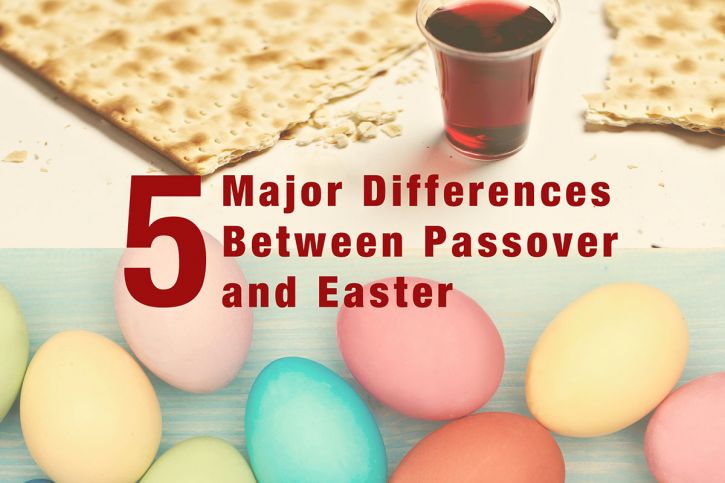
5 Major Differences Between Passover and Easter

5 Major Differences Between Passover and Easter “Most consider Passover a Jewish holiday and Easter a Christian one. But when we compare the biblical Passover with Easter, we find big differences.

If you asked most people what they would associate the words Passover and Easter with, you would probably get something like “Passover is Jewish and Easter is Christian.” But would this basic answer be correct?

There is a big difference between Passover and Easter, but you may be surprised to learn that it isn’t that one is Jewish and one is Christian.

So, what is the difference between Easter and Passover? What do we discover when we compare them to each other: Easter vs. Passover?

Here are five major differences between the biblical Passover and Easter.

Difference 1: Passover’s biblical origin vs. no biblical reference for Easter

The origin of the Passover is found in Exodus 12.

The Israelites had been under harsh slavery to the Egyptian Pharaoh, who had refused to let them go. Because of Pharaoh’s stubbornness, God sent a series of plagues on Egypt and was about to send the 10th and final plague: killing the firstborn of all people and animals. God would spare, or “pass over,” only those who smeared lamb’s blood on their doorway (Exodus 12:12-13).

The day was called the Passover and was to be kept by Israel as a memorial of their deliverance from slavery in Egypt (Exodus 12:14; Leviticus 23:4-5).

What about Easter? You can’t find Easter commanded in the Bible. The word is actually located in Acts 12:4 in the 1611 King James Version, but most scholars recognize it as a clear translation error (modern translations replace it with the word Passover). There are over 70 references to Passover in the Old and New Testaments—but no legitimate references to Easter.

To learn more, read our article “Origin of Easter.”

Difference 2: God-ordained vs. human tradition

One of the significant differences between Passover and Easter is this: The Creator God commanded Passover to be kept by His people. He never commanded anyone to observe Easter to commemorate Christ’s resurrection.

Who commanded Easter’s observance?

It is a historical fact that the Catholic Church commanded Easter’s observance at the Council of Nicaea in A.D. 325. Church leaders did not appeal to scriptural authority, only their own authority, to make the change. Sadly, Christ’s warning against substituting human tradition for the commandments of God was ignored (Matthew 15:3; Mark 7:13).

You can learn more about the history of this change in our article “The Days They Changed but Couldn’t Kill.”

Difference 3: Passover’s fixed day vs. Easter’s movable day

Date of Easter The Council of Nicaea established that Easter would always be celebrated on a Sunday and wouldn’t be tied to the phase of the moon, thus distinguishing it from the biblical Passover.

God ordained the Passover to be kept annually on a specific day: the 14th day of the first month on the Hebrew calendar (Deuteronomy 16:1; Leviticus 23:5).

The Catholic Church persecuted the early Christians who kept the Passover, calling them Quartodecimans (Latin for “14thers”) and Judaizers.

The Passover was so despised that “in 325 CE the Council of Nicaea established that Easter would be held on the first Sunday after the first full moon occurring on or after the vernal equinox. From that point forward, the Easter date depended on the ecclesiastical approximation of March 21 for the vernal equinox” (“Calculating the Easter Date,” timeanddate.com).

This gave Easter a movable date that wouldn’t fall on the Passover. Even then, the Western churches use the Gregorian calendar and the Eastern churches use the Julian calendar, so their dates for Easter differ.

To learn more, read “Festival Calendar: Which Calendar Should We Use?

Difference 4: Passover as a memorial of Jesus’ death vs. Easter as a celebration of His resurrection

Jesus Christ was ordained as the Passover Lamb that would be sacrificed to make freedom from the penalty of sin possible (John 1:29). The Passover of Exodus 12 pointed forward to Christ’s sacrifice 1,500 years later! Just as the Israelites were saved from death by the lamb’s blood, we can be saved from eternal death by Christ’s blood.

The Passover of Exodus 12 pointed forward to Christ’s sacrifice 1,500 years later! At His last Passover, Jesus instituted unleavened bread and wine as new symbols—representing His broken body and blood. He commanded us to “do this in remembrance of Me” (Luke 22:19). The apostle Paul taught us to keep it on the “same night in which He was betrayed”—the evening of the Passover (1 Corinthians 11:23).

To learn more, read “Should Christians Celebrate Passover?

Easter purports to celebrate Christ’s resurrection. The problem is, though His resurrection was essential, Christ never commanded that it be celebrated with an annual observance or holiday. There is also no record of the apostles or early Church celebrating it. Plus, biblical evidence shows Jesus didn’t even rise on a Sunday morning.

Difference 5: Passover symbols vs. Easter symbols

Symbols of the Passover are full of meaning. Jesus Himself is “our Passover” and “sacrificed for us” (1 Corinthians 5:7). The unleavened bread represents His sinless and broken body (Matthew 26:26). The wine represents His blood that was poured out for us (Matthew 26:28). The foot washing represents the humility and serving attitude of Jesus, which we are to emulate (John 13:5-8, 9-11, 12-15).

Every element of the biblical Passover is grounded in deep spiritual meaning.

The primary symbols associated with Easter are eggs and bunnies. But these have deep roots in ancient pagan practices. Bunnies and eggs are ancient fertility symbols that were appropriated years after Christ’s resurrection. Even the name Easter has origins in an ancient pagan goddess.

What does that have to do with Jesus and His sacrifice or His resurrection? To learn more, read “Bunnies Don’t Lay Eggs and Other Reasons to Ditch Easter.”

There are stark differences between Passover and Easter. We hope our readers will deeply consider these differences, reject Easter’s meaningless traditions and take a closer look at the biblical Passover and other “feasts of the Lord” found in the Bible.”   From: https://lifehopeandtruth.com/life/blog/5-major-differences-between-passover-and-easter/

_______

Questions and Answers About the Christian Passover

“Most Christians believe Passover is a Jewish holiday. But should Christians celebrate Passover? This post covers this and other questions about the Christian Passover.

If you look at your calendar for March or April, you will probably see “Passover” marked. Most people think of the Passover as simply a Jewish national holiday commemorating Israel’s departure from Egypt as found in the book of Exodus. Around this season, network television usually airs The Ten Commandments, the epic 1956 film recounting the Exodus starring Charlton Heston and Yul Brynner.

This may be the extent of your knowledge about the Passover. It is largely ignored in Christianity, which observes other spring holidays such as Easter, Lent and Good Friday.

(To learn about the problems with Easter, read our article “Is Easter Pagan?”)

But did you know that the Passover is found throughout the Bible—both in the Old Testament and New Testament? So why don’t most Christians celebrate Passover? Should they?

This post will answer some frequently asked questions about the Passover.

Question 1: What does Passover celebrate? Doesn’t it celebrate the Israelites being “passed over” and protected from the 10th plague in Egypt?

Yes, when the Passover was introduced, it commemorated the night God performed the 10th and final plague against ancient Egypt. God caused the firstborn of Egypt to die—a plague that probably took millions of lives throughout the land. God would spare the Israelites from this plague only if they painted lamb’s blood on the doorposts of their dwellings (Exodus 12:7, 12-13).

Throughout their generations, the Israelites were to celebrate the Passover to remember how God delivered them from slavery in Egypt. That evening, the Israelites were also instructed to prepare a special meal and get ready to leave Egypt the next day (verses 8-11). God declared this observance was “the LORD’S Passover” (verse 11). He commanded them to observe it as “a memorial,” “a feast to the LORD throughout your generations” and “an everlasting ordinance” (verse 14).

Years later, God reinforced the observance in the formal list of God’s festivals given to Moses: “On the fourteenth day of the first month at twilight is the LORD’S Passover” (Leviticus 23:2, 5).

Throughout their generations, the Israelites were to celebrate the Passover to remember how God delivered them from slavery in Egypt. This was the original meaning of the observance. Jews around the world understand and observe this.

These events are also meaningful for Christians, who are called “the Israel of God” (Galatians 6:16) and are delivered from the slavery of sin (Romans 6:7). But, as we will see, the Passover holds even deeper significance for Christians today.

Question 2: Did Jesus celebrate Passover?

Yes, Jesus observed the Passover throughout His life.

Luke records that Jesus and His family observed the Passover faithfully: “His parents went to Jerusalem every year at the Feast of the Passover” (Luke 2:41).

One of the most famous accounts of Jesus’ childhood—when He got separated from His parents and they frantically looked for Him, eventually discovering Him discussing the Bible in the temple—took place just after Jesus and His family had observed the Passover in Jerusalem (verses 42-50).

Jesus observed the Passover up until the day He died—literally. He celebrated the Passover with His disciples the night He was betrayed and arrested (Matthew 26:2, 17-19; Luke 22:15).

To learn more about the feast days Jesus celebrated throughout His life, read “Hidden in Plain Sight: The Festivals Jesus Celebrated.”

Question 3: Is there a connection between Jesus and the Passover?

Yes, the Bible makes a strong link between the Passover and the death of Jesus Christ. Putting the scriptures together, we see that the events of the first Passover foreshadowed Jesus Christ’s death. Notice the following parallels: Putting the scriptures together, we see that the events of the first Passover foreshadowed Jesus Christ’s death.  The Israelites were in bondage to Egypt (Exodus 1:14). All human beings are in slavery to sin (Romans 6:16-17, 20; 7:23; 2 Peter 2:19).

The Israelites were spared from death that night only through the sign of the Passover lamb’s blood on their doorposts (Exodus 12:22-23). Christians are freed from death only through Jesus’ shed blood as the “Lamb of God” (John 1:29; Ephesians 1:7; 2:13; Hebrews 9:14, 22; 1 Peter 1:19).

As a result of the plague against Egypt and the Israelites’ being spared through the Passover lamb’s blood, Israel was freed from slavery and started a new life by coming out of Egypt (Exodus 12:31-41). As a result of Jesus Christ’s sacrifice, Christians can have freedom from the captivity of sin and live a new way of life (Romans 6:4, 6, 18, 22; Ephesians 4:24).

These are just a few of the parallels between the Exodus Passover and Jesus Christ. It is also important to remember that Jesus observed the Passover on the evening before His crucifixion and that His sacrifice occurred on the daylight portion of the Feast of Passover (Matthew 26:18-19). But perhaps no scripture proves the link better than 1 Corinthians 5:7: “For indeed Christ, our Passover, was sacrificed for us.”

To learn more about the connection between Jesus and the Passover, read “Passover: What Did Jesus Do for You?

Question 4: Did the early Church celebrate the Passover?

Yes, the New Testament is very clear that Christians in the early Church celebrated the Passover.

We must first understand that they didn’t observe it in the same way Israel did in the past. At His last Passover, Jesus Christ instituted new symbols to reflect His sacrifice for sins. These new symbols were a new element He added to the Passover for New Covenant Christians.

We read about the institution of the New Covenant Passover in Matthew 26.

Unleavened bread now symbolized the “body” of Jesus Christ (verse 26).

Wine now symbolized Jesus’ “blood” (verse 28).

Jesus commanded His disciples to “do this in remembrance of Me” (Luke 22:19). He also instituted a foot-washing ceremony to teach His people the importance of humility and service (John 13:3-15).

The Bible shows us that the early Church continued observing the Passover in obedience to Christ (1 Corinthians 5:7-8; 11:23-26). Today, Christians around the world observe the New Testament Passover in March or April (on the 14th day of Nisan on the Hebrew calendar) to remember and commemorate Jesus Christ’s death and its significance to our lives. In 2023 the New Covenant Passover ceremony will be observed after the sun sets on April 4 (on the Gregorian calendar). 

You can learn about the dates of the biblical festivals for the next few years at “Festival Calendar.”

The fact that early Christians observed the Passover on the 14th of Nisan is a generally recognized historical fact. Unfortunately, the Roman Church eventually substituted Good Friday and Easter Sunday for the biblical Passover—a change that is still accepted and practiced by the majority of mainstream Christianity today.

To learn more about the change from Passover to Easter, read our article “Christian Festivals.”

Question 5: Isn’t the Christian ceremony of bread and wine called the Lord’s Supper or Communion?

This name, “The Lord’s Supper,” is a common title given to partaking of bread and wine in the Protestant community. Some denominations call this ceremony Eucharist (Greek for “give thanks”) or Communion (Latin for “fellowship” or “sharing”). There is much variance in how these ceremonies are kept. Some keep these ceremonies weekly; some, monthly; some, quarterly; and others, annually.

But none of these names are the biblical name for the ceremony Jesus instituted on the last evening of His life. The Gospels are very clear that He was observing the Passover (Matthew 26:18; Mark 14:14; Luke 22:8).

If you read through each Gospel record of this evening, you will notice that Jesus specifically said He was changing the symbols of the bread and wine—but He never said He was changing the name from Passover to anything else.

If you search the Bible, you will find the phrase “The Lord’s Supper” is only used once (in 1 Corinthians 11:20). But when you actually read the verse, you may be surprised that the verse is actually saying not to use that title for the observance. “Therefore when you come together in one place, it is not to eat the Lord’s Supper” (verse 20, emphasis added).

The apostle Paul was correcting the Corinthian congregation for not properly keeping the Passover ceremony with reverence and solemnity. These Christians were coming to the Passover and selfishly eating their own food while others went hungry. Some were even getting drunk (verse 21). So, instead of calling this observance “the Lord’s Supper,” Paul was actually reminding them that it wasn’t! They were to come together to solemnly partake of the bread and wine symbols—not to eat supper (verses 27-29).

The title “Communion” is taken from 1 Corinthians 10:16: “The cup of blessing which we bless, is it not the communion [the “fellowship” or “sharing”] of the blood of Christ?” This is not a designation of a title for the event, but a statement that the symbols of bread and wine are necessary to have a relationship, or fellowship, with Jesus Christ. The Passover is necessary for truly knowing and having a relationship with Jesus Christ.

To learn more about the proper name for this important observance, read “The Last Supper or Passover?

Question 6: How do you celebrate Passover as a Christian?

As we have seen, the New Testament shows that Jesus Christ instituted new symbols for the Passover on the night He was betrayed and arrested. Those symbols are foot washing, unleavened bread and wine. In order to keep the Passover as a Christian in the 21st century, there are four basic requirements for baptized members of the Church of God:

  • Observe it on the same night Jesus observed it, on the anniversary of the night of His betrayal and arrest. That is the evening of the 14th of Nisan on the Hebrew calendar. In 2023, that corresponds to the evening after the sun sets on April 4. (April 5 is the daylight portion of the Passover in 2023.)
  • Wash the feet of another baptized Christian also observing the Passover.
  • Eat a small, broken piece of unleavened bread that symbolizes Christ’s broken and beaten body.
  • Drink a sip of red wine that symbolizes Christ’s shed blood.

The ideal way to observe the Passover is with other converted Christians who are partaking of the Passover in a ceremony conducted by a minister of Jesus Christ. 

For more insight on keeping the Passover today, read “Should Christians Celebrate the Passover?”  From: https://lifehopeandtruth.com/god/blog/questions-and-answers-about-the-passover/

Originally posted on April 4, 2016; updated on March 13, 2023.

_________

Dioxins in U.S. Farm-Raised Catfish

“Feed contaminated with toxic pollutants thought to originate from sewer sludge fed to chickens and fish results in human dioxin exposure through poultry, eggs, and catfish.

Dioxins are highly toxic pollutants that accumulate in tissue fat. Almost all dioxins found in humans who aren’t working in toxic waste dumps or something are believed to come from food, especially meat, milk, and fish, which account for probably about 95% of human exposure. We tend to only hear about it in the news, though, when there’s some mass poisoning.

In 1957, for example, millions of chickens began dying, and it was blamed on toxic components in certain feed fats. Factory farming was taking off, and the industry needed cheap feed to fatten up the birds, and ended up using a toxic fleshing grease from hide stripping operations in the leather industry that were using dioxin-containing preservatives. A subsequent outbreak in ‘69 resulted from a pipe mix-up at a refinery that was producing both pesticides and animal feed.

In the 1990s, a supermarket survey found the highest concentrations of dioxins in farm-raised catfish. The source of dioxins was determined to be the feed, but that’s surprising, since catfish aren’t fed a lot of animal fat. In fact, that’s one of the reasons people eat catfish; they’re so low on the food chain. Turns out it was dioxin-contaminated clay added to the feed as an anticaking agent, which may have originally come from sewage sludge. The same contaminated feed was fed to chickens, so what may have started out in sewage sludge ended up on the plates of consumers in the form of farm-raised catfish and chicken.

How widespread of a problem did it become? Five percent of U.S. poultry production–that’s people eating hundreds of millions of contaminated chickens. And if it’s in the chickens, it’s in the eggs. Elevated dioxin levels in chicken eggs too. When the source of the feed contamination was identified, the USDA estimated that less than 1% of animal feed was contaminated, but 1% of egg production means over a million eggs a day.

But the catfish were the worst. More than a third of all U.S. farm-raised catfish were found contaminated with dioxins, thanks to that ball clay. So the FDA requested that ball clay not be used in animal feeds. They even asked nice. Dear producer or user of clay products in animal feeds, continued exposure to elevated dioxin levels in animal feed increases the risk of adverse health effects in those consuming animal-derived food products, so we are recommending that the use of ball clay in animal feeds be discontinued. They look forward to the industry’s cooperation.

So how cooperative did the industry end up being? Half a billion pounds of catfish continued to be churned out of US fish farms every year but only recently did the government go back and check. Published in 2013, samples of catfish were collected from all over the country. Dioxins were found in 96% of samples tested. Yeah, but just because catfish are bought in the U.S. doesn’t mean they came from the U.S. And indeed some of the catfish were imported from China or Taiwan, but they were found to be 10 times less contaminated. And indeed, when they checked the feed fed to U.S. catfish, more than half were contaminated, and so it seems likely that mined clay products are still being used in U.S. catfish feeds. Even just small amounts of mineral clays added to fish feeds together with the fact that catfish can be bottom-feeders may lead to higher than acceptable dioxin residues in the final catfish products. Maybe the government should ask nicely again and wait another sixteen years to retest.

The Institute of Medicine suggests strategies to reduce dioxin intake exposure, such as trimming the fat from meat, poultry, and fish and avoiding the recycling of animal fat into gravy, but if almost all dioxin intake comes from animal fat then eating a more plant-based diet could wipe out about 98% of exposure. Thus a vegetarian diet or even just eating more plants might have previously unsuspected health advantages along with the more commonly recognized cardiovascular benefits and decreased cancer risk.”   From: https://nutritionfacts.org/video/dioxins-in-u-s-farm-raised-catfish/

To see any graphs, charts, graphics, images, and quotes to which Dr. Greger may be referring, watch the above video. This is just an approximation of the audio contributed by Katie Schloer.

________

Leviticus 11:9 says not to eat fish that don’t have scales AND fins….I wonder why??

Leviticus 11:9 “Of all the creatures living in the water of the seas and the streams you may eat any that have fins and scales. 10 But all creatures in the seas or streams that do not have fins and scales—whether among all the swarming things or among all the other living creatures in the water—you are to regard as unclean. 11 And since you are to regard them as unclean, you must not eat their meat; you must regard their carcasses as unclean. 12 Anything living in the water that does not have fins and scales is to be regarded as unclean by you.”

It is because they (catfish, shellfish) are bottom feeders and designed to clean up the ocean and river floors of dead and decaying bodies.  Ewww!!

________

Sunday, December 11, 2022

A Biblical Worldview. Do You Face Obstacles, Challenges or Hardships? 13 Reasons Why Eating Pork Is Bad For Your Health.

.

A Biblical Worldview 

“I was recently introduced to a book about the state of religion in America. It’s titled: “American Worldview Inventory 2021-22: The Annual Report on the State of Worldview in the United States.” The author is George Barna of the Cultural Research Center at Arizona Christian University. Barna is known for his surveys of the state of American religion. I was amazed while reading the book to find how the views of many claiming to be Christian, and holding a belief in the Bible, are really at odds with what the Bible teaches.  

Barna’s data reveals that 64% of those who profess to be Christian believe that all faiths are of equal value. This does not square with what the Bible teaches. Acts 4:12 says “Nor is there salvation in any other, for there is no other name under heaven given among men by which we must be saved.” It is very plain. Only in the name of Jesus Christ is there the hope of salvation. You cannot profess to be Christian and deny such specific teaching as this.   

Barna also discovered that no more than 6% of Americans hold a true biblical worldview. A worldview is the frame by which we view the world. To believe the Bible is the Word of God and to live by every Word of God is to live a life based on that book. The Bible must form the view of a Christian’s world. More than 90% of Americans hold a different view. The conclusion of this remarkable study shows that most professing Christians hold a combination of differing incompatible beliefs. The result is a set of beliefs that pose a threat to biblical truth.   

The Bible and biblical teaching have been de-emphasized and minimized out of our schools and out of our Christian lives. This results in what Scripture describes: "For the time will come when they will not endure sound doctrine, but according to their own desires, because they have itching ears, they will heap up for themselves teachers; and they will turn their ears away from the truth and be turned aside to fables” (2 Timothy 4:3-4).    

Barna’s research reveals most Americans think of themselves as a Christian, and a majority still think that Christianity is “kind of” about the Bible. Though many Americans believe they have a “biblical worldview,” very few do. There is a large gulf between what people think the Bible says and what it really does say.

Does what you believe about the Bible square with what the Bible really teaches?

Does your worldview match with what Scripture reveals about the conditions of human nature, this present world and God’s solution for the problems we face every day? Developing such a view is your key to understanding why the world works as it does.

It's time to take another look at the Bible and to ensure you have a correct understanding of what is says. Our study guide, “How to Understand the Bible,” begins with a helpful chapter to begin forming a solid foundation of knowledge about this most important book. Read the introduction now: Introduction: How to Understand the Bible.”     I encourage you to begin that study today.”  From: https://us1.campaign-archive.com/?e=72c729d811&u=1d04480cefc2e7c4492fe4a04&id=544da97e98

________

Do you face obstacles, challenges or hardships that you feel you will never be able to overcome? 

“Is there a difficulty that seems impossible for you to solve, or have you suffered a misfortune you believe will be impossible to ever get past?

So did a young man named Todd Jones, and I want to share part of his story with you.  This is what he faced before he became a most famous voice.  Long before he became famous, Todd was just a young boy, born in Mississippi in 1931, of African, Cherokee, Choctaw and Irish descent. While he was still very young, his family moved all the way to Dublin, Michigan, where he grew up, went to school and later to college.

But life was difficult for Todd, because he had a problem, an obstacle, a serious hardship he had to face: Todd stuttered. I don’t mean just a little. Todd stuttered a LOT! It was so embarrassing and distressing to try to communicate with the spoken word that Todd became very withdrawn, and almost mute. He would attempt to speak only with family and a very few friends who were patient with his terrible stutter. In school he appeared to be withdrawn, sullen and almost never spoke.

However, Todd had a keen sense of observation, and he had a sharp mind. Since the spoken word eluded him, Todd turned to the written word, poetry in particular. He could memorize a poem with little effort, and enjoyed writing poetry as well. As a freshman at Dickerson High School, Todd was drawn to an English teacher by the name of Donald Crouch. Mr. Crouch cared for all his students, but he was especially drawn to Todd. He saw so much potential, and he wanted to find a way to draw out the gifts of this withdrawn and nearly mute young man. Mr. Crouch noticed Todd’s love of poetry, so one day he assigned his students the task of writing an original poem. The subject didn’t matter, so long as it was something they felt passionate about, and the poetry was original. Poetry was their homework that night.

During that time, as a way to help public health, the government began shipping truckloads of Florida citrus fruit to places like Michigan. When a crate of ruby red grapefruit arrived at Todd’s house, he thought it the most beautiful fruit he had ever tasted, and it inspired his poem: “Ode to a Grapefruit.” When Mr. Crouch handed the students’ poems back with grades and his comments, he held one back, and he did something most teachers today would never dare do: he put a young man on the spot. He called on Todd to come to the front and read his poem to the class.

Everyone was stunned. They knew how Todd stuttered. Why would Mr. Crouch do that? How painful would it be for everyone to suffer through Todd reading? Todd was gripped by a cold fear. How could his favorite teacher do something like this to him? When he didn’t move, Mr. Crouch challenged him before the class. “This poem is very good. In fact, I think it is too good to be yours. If it is your poem, prove it by reciting before the class.”   Todd sat accused of being a fraud! 

Now motivated more by anger than fear, Todd stood and recited his poem in a deep, strong voice just as he had written it—clear as a bell, without a single stutter!  Mr. Crouch had noticed when Todd recited poetry, his stutter vanished, and he wanted Todd to see that too. This was the first step in a process that changed Todd’s life. Before he graduated from high school, he joined both the debate team and drama. His new love of the spoken word and performing led him to the University of Michigan School of Music, Theatre and Dance. His career, which spans more than seven decades, took off on Broadway in 1956 when he was cast as the lead in Shakespeare’s Othello. On stage and later on the silver screen his powerful and commanding voice came to be recognized the world over.

Widely regarded as one of the greatest stage and screen actors ever, he has won an Academy Award, three Tony Awards, three Emmy Awards, a Grammy, a Screen Actors Guild Award, a Golden Globe Award, the Screen Actors Guild Lifetime Achievement Award and he has been nominated an additional 18 times for the various awards. He is one of only a handful of actors in history who have won Academy, Emmy, Grammy and Tony Awards. But you don’t know him as Todd, because early in his career he changed his name to the one you probably do know—James Earl Jones. 

He overcame a debilitating stutter to share his voice with the world as the voice of the Star Wars villain Darth Vader, and as Mufasa in the animated movie The Lion King. Do you face challenges and difficulties that you feel you will never be able to get past?  James Earl Jones had Mr. Crouch to prod and help him along. But don’t forget, we also have a lot of people to help us too!

After writing what we often refer to as the “Faith Chapter” of Hebrews 11, the author encourages us with: “Therefore we also, since we are surrounded by so great a cloud of witnesses, let us lay aside every weight, and the sin which so easily ensnares us, and let us run with endurance the race that is set before us” (Hebrews 12:1).

The examples in Scripture, and those we know today, all serve to prod and encourage us to move beyond trials and challenges. Of our ultimate help, the very next verse says, “Looking unto Jesus, the author and finisher of our faith.”  We have the greatest power in the universe on our side, and He wants us to overcome and succeed!  The Father even allowed His Son to die so that we can repent, be forgiven and eventually be born into the family of God!

In Romans 8:31 Paul wrote, “If God is for us, who can be against us?”  What a loss it would have been if an English teacher, Mr. Crouch, had never taken the time to push James Earl Jones to overcome. What a loss it will be if we do not take advantage of all the help offered by our Father, to bring us into His Kingdom! What God has in mind for each of us is something far greater than just being a most famous voice.  Kind regards, and have a great week,   Tom Clark, for Life, Hope and Truth

________

13 Reasons Why Eating Pork Is Bad For Your Health

Here’s 13 reasons why eating pork is not good for your health:

1) A pig is a real garbage gut. It will consume anything, including urine, excrement, dirt, decaying animal flesh, maggots, or decaying vegetables. They will even consume the cancerous growths off different pigs or animals.

dirty pigsImage Source: Pixabay.com

2) The meat and fats of a pig absorbs toxins like a sponge. Their meat can be 30 times more toxic than beef or venison.

3) When consuming beef or venison, it takes 8 to 9 hours to digest the meat. so, what little toxins are in the meat are slowly placed into our system and can be filtered by the liver. But when pork is eaten, it takes most effective 4 hours to digest the meat. We thus get a much higher level of toxins within a shorter time.

4) Unlike other animals, a pig does not sweat or perspire. Perspiration is a means by which toxins are removed from the body. Since a pig does not sweat, the toxins remain within its body and in the meat.

porkImage Source: Pixabay.com

5) Pigs and swine are so toxic or poisonous that you could hardly ever kill them with strychnine or other poisons.

6) Farmers will frequently pen up pigs within a rattlesnake nest due to the fact that the pigs will eat the snakes, and if bitten they will not be harmed by the venom.

7) When a pig is butchered, worms and insects take to its flesh sooner and faster than to other animal’s flesh. In a few days the swine flesh is full of worms.

8) Swine and pigs have over a dozen parasites inside them, inclusive of tapeworms, flukes, worms, and trichinae. There is no safe temperature at which pork can be cooked to ensure that all these parasites, their cysts, and eggs will be killed.

9) Pig meat has a whole lot more fat than beef. A 3 oz T bone steak carries 8.5 grams of fat; a 3 oz pork chop contains 18 grams of fat. A 3 oz beef rib has 11.1 grams of fat; a 3 oz pork spare rib has 23.2 grams of fat.

Eating PorkImage Source: Pixabay.com

10) Cows have a complicated digestive system, having 4(four) stomachs. It thus takes over 24 hours to digest their vegetarian diet causing its food to be purified of toxins. In contrast, the swine’s one stomach takes approximately 4 hours to digest its foul eating regimen, turning its toxic food into flesh.

11) The swine contains about 30 diseases which can easily be passed to humans. This is why God commanded that we aren’t even to touch their carcass. (Leviticus 11:8).

12) The trichinae worm of the swine is microscopically small, and once ingested can lodge itself in our intestines, muscles, spinal cord or the brain. This results in the disease trichinosis. The signs and symptoms are sometimes lacking, however when present they are mistaken for other diseases, inclusive of typhoid, arthritis, rheumatism, gastritis, MS, meningitis, gall bladder trouble, fibromyalgia, or acute alcoholism.

13) The pig is so toxic/poisonous and filthy, that nature had to prepare him a sewer line or canal running down on each leg with an outlet in the bottom of the foot. Out of this hollow oozes pus and dirt, his body cannot pass into its system rapid enough. Some of this pus gets into the meat of the pig."

Leviticus 11 “Now the Lord spoke to Moses and Aaron, saying to them, 2 “Speak to the children of Israel, saying, ‘These are the animals which you may eat among all the animals that are on the earth: 3 Among the animals, whatever divides the hoof, having cloven hooves and chewing the cud—that you may eat. 4 Nevertheless these you shall not eat among those that chew the cud or those that have cloven hooves: the camel, because it chews the cud but does not have cloven hooves, is [a]unclean to you; 5 the [b]rock hyrax, because it chews the cud but does not have cloven hooves, is [c]unclean to you; 6 the hare, because it chews the cud but does not have cloven hooves, is unclean to you; 7 and the swine, though it divides the hoof, having cloven hooves, yet does not chew the cud, is unclean to you. 8 Their flesh you shall not eat, and their carcasses you shall not touch. They are unclean to you.” 

From: https://thepowerfulfacts.com/13-reasons-why-eating-pork-is-bad-for-your-health/

Here is what Joel Osteen says about it, YouTube:   “What Does the Bible Say About Eating Pork.”    https://youtu.be/9DLA_BRO4p4.  

________