Showing posts with label rice. Show all posts

Monday, September 29, 2025

Rahab’s Lie. A Great Blessing. Making America Healthy Again.

.

Rahab’s Lie

Rahab’s lie“When the spies approached Jericho Rahab and the Canaanites had already heard stories of the Red Sea crossing 40 years before. The Israelites had also completely destroyed the Amorites just east of the Jordan (Joshua 2:10) and now they were camped on Jericho's doorstep.

'When the soldiers arrived she did not betray them. ‘There were two men here but I did not know who they were,’ she explained, ‘at dusk before the city gate was closed they left and I don’t know where they are heading.’ (freebibleimages.org)

While most of the people of Jericho were faint with fear, Rahab recognized who was behind the Israelite successes: “I know that the Lord has given you the land...for the Lord your God, He is God in heaven above and on earth beneath” (Joshua 2:9 and 11). Rahab hid the Israelite spies and lied to the king of Jericho (Joshua 2:4-5). Joshua then spared her and her household “because she hid the messengers…” (Joshua 6:25). God also miraculously kept her walls from tumbling down when the other walls surrounding Jericho were reduced to ruble.

Hebrews 11, the faith chapter, tells us the reason why Rahab did this: “By faith the harlot Rahab did not perish with those who do not believe, when she had received the spies with peace” (verse 31). But was it OK for her to lie in those circumstances?

The Nelson Study Bible states: "A lie is a lie, and...Rahab's action was wrong.... Rahab sinned no matter how noble her intentions. Of course, in her case, her sin is understandable because she lacked complete knowledge of the living God. That is, what she did was wrong, but she did not know any better. We must be careful to make a distinction between Rahab's faith and the way Rahab expressed it. The Bible praises Rahab because of her faith in God, not because of her lying. That is, her actions would have been more noble had she protected the spies in some other fashion…" ("In Depth: Lying").

The United Church of God’s Bible Commentary (see the link below) explains it clearly: “Some view the Bible’s praise of Rahab as an endorsement of her lying…. Based on this, they argue that it is okay to lie when it is ‘for a good cause.’ However, that is simply not the case—ever….”

The Israelites accepted Rahab and her family into the nation of Israel (Joshua 6:25). Over time, she would have learned the laws of God and come to serve Him more completely, repudiating the mistakes of her past. She eventually married Salmon, a prominent member of the tribe of Judah. King David would descend from them and eventually Jesus Christ (Ruth 4:20-21).

Lying is never a trivial matter for a Christian: “Who may climb the mountain of the Lord? Who may stand in his holy place? Only those whose hands and hearts are pure, who do not worship idols and never tell lies" (Psalm 24:3-4 NLT). God's law makes it clear that lying is never acceptable (Proverbs 12:22), and we are told God “cannot lie” (Titus 1:2). We should bear in mind that Rahab is commended for her faith (Hebrews 11:31) not her lying and realize that she would grow in faith and the knowledge of God’s way of life.

_________

A Great BlessingA great blessing

“The desire for revenge, retaliation and mudslinging is reflected in our entertainment and society in general. In spite of the fact we are told to forgive, many seek an active or passive form of revenge against their real or perceived enemies.

The sacrifice of Jesus Christ paid the death penalty earned by mankind as a result of sin. "But God demonstrates His own love toward us, in that while we were still sinners, Christ died for us.... when we were enemies we were reconciled to God through the death of His Son..." (Romans 5:8-10). God expects us to develop this same attitude of mercy, graciousness and forgiveness. He will not forgive our sins if we are unforgiving toward others.

"And forgive us our debts, as we forgive our debtors.... For if you forgive men their trespasses, your heavenly Father will also forgive you. But if you do not forgive men their trespasses, neither will your Father forgive your trespasses" (Matthew 6:12,14-15). II Timothy 3:1-4 includes being unforgiving in the list of characteristics people will exhibit in the “perilous times” prevalent in the “last days” just before Jesus Christ returns to earth.

When a woman caught in adultery was brought to Jesus the Scribes and Pharisees demanded: “'Teacher, this woman was caught in adultery...Moses, in the law, commanded us that such should be stoned. But what do You say?'  This they said, testing Him, that they might have something of which to accuse Him.”  Jesus’s response was, “'He who is without sin among you, let him throw a stone at her first.' And…those who heard it, being convicted by their conscience, went out one by one…When Jesus had raised Himself up and saw no one but the woman, He said to her, 'Woman, where are those accusers ... .Has no one condemned you?' She said, 'No one, Lord.' And Jesus said to her, 'Neither do I condemn you; go and sin no more'" (John 8:1-11).

Another example showing Christ expects us to develop a forgiving attitude occurred when Peter asked, “‘…how often shall my brother sin against me, and I forgive him? Up to seven times?' Jesus answered, “…up to seventy times seven'" (Matthew 18:21-22). The Apostles were stunned at this statement and answered, “‘Increase our faith.’” (Luke 17:5).

The parable in Matthew 18:23-35 illustrates the consequences of being unforgiving. The account of the forgiven servant persecuting someone who owed him a pittance in comparison with the amount he had just received forgiveness for is a lesson for us. Christ warned the unforgiving servant his attitude was unacceptable, pointing out: "Should you not also have had compassion on your fellow servant, just as I had pity on you?' (verse 33).

This is not to say we cannot make a judgment regarding other people's actions as to whether or not we should follow their example, but we cannot read minds and hearts. Christ instructs us not to judge others: "Judge not, that you be not judged... First remove the plank from your own eye, and then you will see clearly to remove the speck from your brother's eye" (Matthew 7:1 and 5). Luke 6:36-37 reinforces this admonition: "Judge not, and you shall not be judged. Condemn not, and you shall not be condemned. Forgive, and you will be forgiven" (Luke 6:37).

Proverbs 19:11 states, “it is his [our] glory to pass over a transgression” (King James Version). Jesus' example just before His death sets the standard for us as far as forgiveness is concerned: "When Jesus was being crucified and in agony He prayed: Father, forgive them, for they do not know what they do" (Luke 23:34). When we forgive, we reflect the Father’s love, giving us the opportunity to extend to others the great blessing God has extended to us.

Source: United News (May 2001)   From: https://www.ucg.org/members/united-news/united-news-may-2001/where-do-you-draw-line-sand

________

Here’s My 2 Cents: "Making America Healthy Again"

Dr. Eric Berg says:

“Robert F. Kennedy is receiving a lot of pushback for his ideas on health and reform. As secretary of the Department of Health and Human Services, his ideas would radically change the US healthcare system. In this video, I’m going to share some of the changes I would make to address the current healthcare crisis and improve America’s health.

RFK has the following goals for healthcare reform in America: RFK healthcare policy 1:22 Institutional foods 2:35 Subsidized foods 3:54 Vote for me! 4:25 GRAS 5:00 Food fortification 5:35 Tax money and drugs 6:55 End the rounding rule 7:47 Sun phobia

He will be actively working against big food companies, big chemical companies, and big pharma, so naturally, he’s getting a lot of pushback. The U. S. spends over 4.1 trillion dollars each year on healthcare, yet we’re at the bottom as far as health. Why? Here's what I think can improve America’s health! 

1. Change the institutional foods.  Prepackaged foods are given to people in nursing homes, prisons, schools, hospitals, and other public institutions. These institutional foods are very low-quality, highly processed foods. The health of the people in these institutions would quickly improve by simply removing the refined sugars, starches, and oils from their diets.

2. Address the subsidized foods.  Subsidized foods are paid for by taxpayers. Corn, soy, wheat, sugar, and rice are the most highly subsidized foods. Changing the types of foods that are subsidized and investing in small farmers can significantly improve this problem.

3. Changing GRAS.  “Generally Recognized As Safe” is a term used by the FDA for products that have been safety tested by their own manufacturers. To avoid conflict of interest, these tests should be conducted by third-party independent companies.

4. Change food fortification.  Synthetic folic acid and iron fortification of food can cause serious problems for many people.

5. Disallow tax dollars from being used for drugs.  Every year, 40 billion dollars of taxpayer money is used to pay for medical research to develop new drugs.

6. The rounding rule. If a product contains less than .5 grams of an ingredient, it can be rounded down to 0. This is misleading and should be eliminated. People need to be more aware of what's really in their food. Companies also need to be forced to raise the quality of the ingredients in their products.

7. End sun phobia Sun phobia paired with low RDAs for vitamin D is contributing to massive vitamin D deficiency in the population, putting people at risk for disease.”  More at: https://www.drberg.com/blog/heres-my-2-cents-making-america-healthy-again

__________

Monday, March 31, 2025

What Are Ash Wednesday and Lent? "Making America Healthy Again"

.

What Are Ash Wednesday and Lent? Does the Bible Tell Us to Celebrate These Days?

“The Bible does teach the importance of fasting and self-examination, but it does not teach a 40-day period called Lent or an Ash Wednesday of putting ashes on the forehead.

After Mardi Gras comes Ash Wednesday and 40 days of Lent. Did the early New Testament Church observe these days?

The Bible does not mention Ash Wednesday or Lent, and the early New Testament Church did not observe these days. Here is how the BBC Religion page describes Ash Wednesday and Lent:   

    "Ash Wednesday is the beginning of Lent for Western Christian churches. It's a day of penitence to clean the soul before the Lent fast.

     "Roman Catholic, Anglican, and some other churches hold special services at which worshippers are marked with ashes as a symbol of death and sorrow for sin…

      "The Christian churches that observe Lent in the 21st century (and not all do significantly) use it as a time for prayer and penance. Only a small number of people today fast for the whole of Lent, although some maintain the practice on Ash Wednesday and Good Friday. It is more common these days for believers to surrender a particular vice such as favourite foods or smoking" (BBC).

Lent is counted differently by those of the Western Catholic tradition and those of the Eastern Orthodox tradition.

"      The western church excludes Sundays (which is celebrated as the day of Christ's resurrection) whereas the eastern church includes them. The churches also start Lent on different days. Western churches start Lent on the 7th Wednesday before Easter Day (called Ash Wednesday). Eastern churches start Lent on the Monday of the 7th week before Easter and end it on the Friday 9 days before Easter. Eastern churches call this period the 'Great Lent'" (BBC).

Various biblical events and customs are referred to by those who celebrate these days. The Bible mentions people mourning in sackcloth and ashes. The Bible also talks about repentance and fasting, and the number 40 is prominent in various biblical events.

The justification for the Lenten 40-day preparation for Easter is traditionally based on Jesus' 40-day wilderness fast before His temptation by Satan (Harper's Bible Dictionary, 'Lent'; Matthew 4:1-2; Mark 1:13). The problem with this explanation is that this incident is not connected in any way with Jesus' supposed observance of Easter. The 40-day pre-Easter practice of fasting and penance did not originate in the Bible" (The Good Friday—Easter Sunday Question).

Some have suggested that Lent may be connected to earlier, pagan holidays. In Ezekiel 8:14, the prophet in vision saw women weeping for the pagan god Tammuz.

       "It has been suggested by some scholars that the practice of 'weeping for Tammuz' was the actual origin of Lent, the Roman Catholic 40-day period of abstinence prior to Easter (starting after Mardi Gras, 'Fat Tuesday,' on Ash Wednesday). Consider that the name Easter itself is derived from Ishtar, the ancient Babylonian fertility goddess and Tammuz's mother". (See the Bible commentary on Ezekiel 8 for details.)

The Bible does teach the importance of fasting and self-examination, but it does not teach a 40-day period called Lent or an Ash Wednesday of putting ashes on the forehead. These customs appear to have pagan origins.  We seek to follow the customs and practices of the early New Testament Church as described in the Bible.”

Learn More: "God's Holy Day Plan: The Promise of Hope for All Mankind"              

From: https://www.ucg.org/learn/bible-questions-and-answers/what-are-ash-wednesday-and-lent-does-bible-tell-us-celebrate

_________

"Making America Healthy Again"

Dr. Eric Berg says:

“Robert F. Kennedy is receiving a lot of pushback for his ideas on health and reform. As secretary of the Department of Health and Human Services, his ideas would radically change the US healthcare system. In this video, I’m going to share some of the changes I would make to address the current healthcare crisis and improve America’s health.

RFK has the following goals for healthcare reform in America: 1. Clean up the corruption  2. Get back to science-based evidence   3. End chronic disease

He will be actively working against big food companies, big chemical companies, and big pharma, so naturally, he’s getting a lot of pushback. The U. S. spends over 4.1 trillion dollars each year on healthcare, yet we’re at the bottom as far as health. Why? Here's what I think can improve America’s health!

1. Change the institutional foods Prepackaged foods are given to people in nursing homes, prisons, schools, hospitals, and other public institutions. These institutional foods are very low-quality, highly processed foods. The health of the people in these institutions would quickly improve by simply removing the refined sugars, starches, and oils from their diets.

2. Address the subsidized foods Subsidized foods are paid for by taxpayers. Corn, soy, wheat, sugar, and rice are the most highly subsidized foods. Changing the types of foods that are subsidized and investing in small farmers can significantly improve this problem.

3. Changing GRAS “Generally recognized as safe” is a term used by the FDA for products that have been safety tested by their own manufacturers. To avoid conflict of interest, these tests should be conducted by third-party independent companies.

4. Change food fortification Synthetic folic acid and iron fortification of food can cause serious problems for many people.

5. Disallow tax dollars from being used for drugs Every year, 40 billion dollars of taxpayer money is used to pay for medical research to develop new drugs.

6. The rounding rule.  If a product contains less than .5 grams of an ingredient, it can be rounded down to 0. This is misleading and should be eliminated. People need to be more aware of what's really in their food. Companies also need to be forced to raise the quality of the ingredients in their products.

7. End sun phobia.  Sun phobia paired with low RDAs for vitamin D is contributing to massive vitamin D deficiency in the population, putting people at risk for disease.”  More at: https://www.drberg.com/blog/heres-my-2-cents-making-america-healthy-again

__________

Sunday, October 22, 2023

Does God Have A Plan For My Life? Are We in the Last Days? Why Milk Is Bad For You And Your Bones.

.

Does God Have A Plan For My Life?

A man walking on the Brooklyn Bridge.

Nirmal Rajendharkumar/Unsplash

“One of the top verses searched for on the Internet is Jeremiah 29:11. Why?

What we think would be a great plan for our life may not be what our Father has planned. And it may not be in our best interest.

People use the search bar of their Internet browsers to look up answers for information on every topic imaginable. Its also a very popular way of searching for biblical scriptures.

One of the top verses searched is Jeremiah 29:11: "For I know the thoughts that I think toward you, says the Lord, thoughts of peace and not of evil, to give you a future and a hope."

Why is this verse sought out, searched for and quoted so often?

Jeremiah 29:11 touches upon two powerful desires of the human mind and heart:

1. We want reassurance that God has a plan and purpose for human life. In fact, the very popular New International Version translation reads: "I know the plans I have for you..."

2. We want reassurance God has blessings in store for us.

The verse provides great comfort by confirming that God does indeed have a plan for our life, and that His plan includes wonderful blessings.

But this verse is short on details as to what our Creator's plan entails and what sort of blessings He has in store for us. It is all to easy to take a verse like this and fill in the details on these two points with our own hopes and desires.

What we think would be a great plan for our life may not be what our Father has planned. And it may not be in our best interest. Likewise, our idea of how we would prefer to be blessed may not be the same as what He has mind, and may not help shape us into the sort of person that fits into "the plan."

God plainly tells us that He thinks differently than we do. In Isaiah 55:8-9 we read "'For my thoughts are not your thoughts, neither are your ways my ways,' declares the LORD. 'As the heavens are higher than the earth, so are my ways higher than your ways and my thoughts in your thoughts.'"

Is it possible to know details about God's plan?

Yes, you can know God's amazing plan for your life because it is spelled out in the pages of your own Bible. And you might be surprised that what you actually find in the pages of the Bible is different from what you have been told is there.

To gain deeper understanding of the plan God has for your life, request our free Bible study aid: "Why Were You Born?"

This small but important booklet will carefully walk you through what the scriptures really say about the plans God has in mind for you, plans for good outcomes and a positive future.”  From: https://www.ucg.org/bible-study-tools/bible-questions-and-answers/does-god-have-a-plan-for-my-life?

________

Are We in the Last Days?

Are We in the Last Days?“Many believe the world will go on indefinitely as it always has, but what does the Bible say? Will there be a set of last days? When will the last days be?


Many people would likely back away from you if you were to say that humanity is now in the last days approaching the end of the age spoken of in the Bible.

The book of Revelation focuses on a time when a conglomeration of nations will be united under a government led by two individuals known as the beast and the false prophet, who will capture the hearts and minds of hundreds of millions of people through spectacular miracles, such as calling down fire from heaven. Their reign and existence will ultimately end at Jesus Christ’s second coming (Revelation 17-19).

The period of time when these and other end-of-the-world prophecies will be fulfilled is sometimes called “the last days.”

It’s a time that God’s servants have eagerly anticipated for thousands of years, but for nonbelievers it’s a target for laughter and mockery and simply more reason to believe that Christians are just fanatics who believe in apocalyptic fiction. 

But are those last days real?    More relevant: Are you now living in those last days?

What does the Bible mean by last days? 
Continued at: https://lifehopeandtruth.com/prophecy/end-times/last-days/?

_________

Debunking The Milk Myth: Why Milk Is Bad For You And Your Bones

“Did you know that in Medieval England parents would tie rabbits' feet around their babies’ necks to ward off illness? Doctors would also spit on wounds because saliva was believed to have healing properties.

Indeed, history is replete with unfounded health beliefs, and to everyone’s detriment, the milk myth is among the most tenacious.

Milk is much more than just a drink; it’s a cultural phenomenon that can be traced back thousands of years. And still today, the milk myth resonates loud and clear: in 2001, the average American child consumed 104 quarts of cow’s milk.

Milk depletes the calcium from your bones

The milk myth has spread around the world based on the flawed belief that this protein and calcium-rich drink is essential to support good overall health and bone health in particular at any age. It is easy to understand that the confusion about milk's imaginary benefits stems from the fact that it contains calcium – around 300 mg per cup.

But many scientific studies have shown an assortment of detrimental health effects directly linked to milk consumption. And the most surprising link is that not only do we barely absorb the calcium in cow’s milk (especially if pasteurized), but to make matters worse, it actually increases calcium loss from the bones. What an irony this is!

Here’s how it happens. Like all animal protein, milk acidifies the body pH which in turn triggers a biological correction. You see, calcium is an excellent acid neutralizer and the biggest storage of calcium in the body is – you guessed it… in the bones. So the very same calcium that our bones need to stay strong is utilized to neutralize the acidifying effect of milk. Once calcium is pulled out of the bones, it leaves the body via the urine, so that the surprising net result after this is an actual calcium deficit.

Knowing this, you’ll understand why statistics show that countries with the lowest consumption of dairy products also have the lowest fracture incidence in their population (there’s more on this later).

But the sad truth is that most mainstream health practitioners ignore these proven facts. I know it firsthand because when I was diagnosed with osteoporosis, my doctor recommended that I drink lots of milk in addition to taking Fosamax.

Fortunately, I did neither, because I knew that…

Cow’s milk is custom-designed for calves

Thanks to our creative ingenuity and perhaps related to our ancient survival needs, we adopted the dubious habit of drinking another species’ milk. Nobody can dispute that cow’s milk is an excellent food source for calves. Weighing around 100 pounds at birth, a calf typically gains approximately eight times its weight by the time it is weaned. But unlike humans, once calves are weaned, they never drink milk again. And the same applies to every mammalian species on this planet.

Also, each mammalian species has its own “designer” milk, and cow’s milk is no exception. For example, cow’s milk contains on average three times the amount of protein than human milk which creates metabolic disturbances in humans that have detrimental bone health consequences.

It's important to bear in mind that mother’s milk is excellent nourishment for human babies, but its composition is very different from cow’s milk.

Scientific studies show that milk increases fracture risk

Many scientific studies contradict the conventional wisdom that milk and dairy consumption help reduce osteoporotic fractures. Surprisingly, studies demonstrating that milk and dairy products actually fail to protect bones from fractures outnumber studies that prove otherwise. Even drinking milk from a young age does not protect against future fracture risk but actually increases it. Shattering the “savings account” calcium theory, Cumming and Klineberg report their study findings as follows:

“Consumption of dairy products, particularly at age 20 years, was associated with an increased risk of hip fracture in old age. (“Case-Control Study of Risk Factors for Hip Fractures in the Elderly”. American Journal of Epidemiology. Vol. 139, No. 5, 1994).1

And the 12 year long Harvard Nurses' Health Study found that those who consumed the most calcium from dairy foods broke more bones than those who rarely drank milk. This is a broad study based on 77,761 women aged 34 through 59 years of age.

In the authors’ own words:

“These data do not support the hypothesis that higher consumption of milk or other food sources of calcium by adult women protects against hip or forearm fractures.” (Source: Feskanich D, Willett WC, Stampfer MJ, Colditz GA. Milk, dietary calcium, and bone fractures in women: a 12-year prospective study. American Journal of Public Health. 1997).2

Shocking statistics ignored by mainstream medicine

In the Osteoporosis Reversal Program one of the topics I discuss is the complete disregard of scientific evidence that discredits milk and dairy products as the best source of calcium.

One exception is Amy Lanou Ph.D., nutrition director for the Physicians Committee for Responsible Medicine in Washington, D.C., who states that:

“The countries with the highest rates of osteoporosis are the ones where people drink the most milk and have the most calcium in their diets. The connection between calcium consumption and bone health is actually very weak, and the connection between dairy consumption and bone health is almost nonexistent.”

Surprised? You shouldn’t be, because as I mentioned earlier in this article…

Milk is an acidifying animal protein

Like any other animal derived protein-rich food, milk has a positive potential renal acid load (PRAL) which triggers a protective biological reaction to neutralize all the damaging acidic protein before it reaches the kidneys.

The body is designed for survival, so it sacrifices bone density to protect the kidneys and urinary tract because the latter are essential to survival. And the most readily available source of acid neutralizer is in the bones. So even though milk contains calcium, it ends up sapping your bones of that crucial mineral. But that’s not all because…

Today’s milk is a processed food

Until the end of the 19th century in Europe and the beginning of the 20th century in the US, milk was consumed unpasteurized or raw. Later on, homogenization became the industry’s standard. These processes further alter milk’s chemistry and actually increase its detrimental acidifying effects.

Raw milk advocates claim that if cow’s milk is left “as is” it is a healthy and wholesome drink. It is true that raw milk is less acidifying than processed milk and that pasteurization and homogenization may cause a long list of digestive and other health problems, but I still don’t recommend drinking any kind of cow’s milk.

Nowadays, milking cows are given antibiotics and most are also injected with a genetically engineered form of bovine growth hormone (rBGH). A man-made or synthetic hormone used to artificially increase milk production, rBGH also increases blood levels of the insulin-growth factor 1 (IGF-1) in those who drink it. And higher levels of IGF-1 are linked to several cancers.

This should not be ignored, especially in view of recent information by Samuel Epstein, MD, Professor of Environmental Medicine at the University of Illinois School of Public Health, and Chairman of the Cancer Prevention Coalition. In a press release titled “Monsanto's Hormonal Milk Poses Serious Risks of Breast Cancer, Besides Other Cancers” (June 21, 1998) Dr. Epstein concludes that:

“Drinking rBGH milk would thus be expected to significantly increase IGF-1 blood levels and consequently to increase risks of developing breast cancer and promoting its invasiveness.”

Even though organic milk is from cows that are not given antibiotics or rBHG, if you truly care about your bone health and your overall health, you should…

Avoid drinking cow’s milk

As I explain in the Osteoporosis Reversal Program and contrary to mainstream recommendations, drinking milk and eating lots of dairy products are not the answer to reversing osteoporosis. And while in the Osteoporosis Reversal Program no food is completely off limits, I strongly recommend that you explore the different milk substitute options that I will list for you here.

But first, I’d like to clarify that unsweetened fermented or cultured dairy products such as yogurt, kefir, and sour cream are acid neutral. Yogurt in particular is chock-full of beneficial qualities. As is the case with milk, organic yogurt does not have rBGH, but even several of the most well-known yogurt brands have stopped using the bovine growth hormone (rBGH). You should call your favorite yogurt company to confirm. One more clarification: when I say unsweetened I mean without sugar or any artificial sweetener. However, you can add honey or stevia, a zero calorie plant-derived sweetener that is delicious and alkalizing as well. I like to carry around stevia packets in my purse so that I'm always able to sweeten food or drinks when I'm on the go.

The best milk substitutes

My favorite milk substitute is unsweetened almond milk, not only because it is alkalizing (as almonds are), but also because it's delicious and tastes very similar to milk. I even cook with it!

If almond milk is hard to get, you can also try rice or soy milk. I strongly suggest consuming only organic soy milk to insure it’s not made with genetically modified soy. There is also some controversy about unfermented soy products, so try to use it in moderation.

What Else Haven't They Told You?

What else have you been told about bone health by your doctor or other “experts” that is flat out wrong? What other “facts” (like drinking milk does a body good) are keeping you from optimal health?

Myths like these are a big reason I created the Osteoporosis Reversal Program. To give you the straight scoop on how to deal with osteoporosis the natural way.

I can help you take control of your future.

Learn more about the Osteoporosis Reversal Program here →

And remember, if you ever hear someone ask “Got milk?” smile and think to yourself “No, because I know better!”

And as always, I'd love to hear your thoughts. Share them with me and the rest of our community by leaving a comment below.”

From: https://saveourbones.com/osteoporosis-milk-myth/
_______

Also see: https://med.stanford.edu/news/all-news/2018/08/christopher-gardner-busts-myths-about-milk.html

_______

Sunday, October 23, 2022

The Origin of the Jack-o’-Lantern. Our Dark Side. How to Cook Rice to Lower Arsenic Levels.

.

The Origin of the Jack-o’-Lantern

The Origin of the Jack-o’-Lantern“The jack-o’-lantern is now associated with the holiday of Halloween. Where did this mysterious symbol come from? What should we do with that knowledge?


Where did the jack-o’-lantern come from?

The childhood of many a person has been haunted by a dark, headless figure on a horse holding a flaming jack-o’-lantern. Washington Irving’s classic horror story “The Legend of Sleepy Hollow” has intrigued and terrified millions for over 200 years.

Interestingly, Washington Irving never mentioned his dark rider bearing a jack-o’-lantern. The author only referred to a shattered pumpkin found the morning after the main character’s disappearance. Adaptations of Irving’s story since then have made the famous pumpkin into the glowing jack-o’-lantern that we all imagine today. Since that fateful connection, the pumpkin with a sinister grin has become an integral part of Halloween.

But where exactly did the jack-o’-lantern come from, and what made it fit in so well with this haunting story and the holiday of Halloween?

Why carve up pumpkins?

The origin of the jack-o’-lantern goes back several centuries, starting with pagan customs that predated even the term jack-o’-lantern. In the dark woods of Ireland, England and Scotland, the Celts ruled. In their religion, the shortening days of autumn indicated the merging of the spirit world with our physical world. This merging was believed to fully happen on their holiday of Samhain (pronounced sah-win) on the night of Oct. 31.

Because of this terrifying belief, the Celts prepared for this time when they believed the spirits of the dead wandered the earth. They imagined that some of the spirits just wandered around, while others were vengeful spirits.

People were mostly defenseless against these dreaded spirits, except for the use of costumes and root vegetables such as turnips with carved faces. To add to the effect, they were “then illuminated by coal, wooden embers, or candles as a way to ward off evil spirits” (Merriam-Webster.com, “The History of ‘Jack-O’-Lantern’”). Displaying these ghastly vegetables was said to keep the spirits from visiting a person’s property.

English historian Ronald Hutton states that root vegetables were “hollowed out to act as lanterns and often carved with grotesque faces,” in association with Samhain, later known as Halloween, in the Celtic part of the world (The Stations of the Sun, 1996).

Eventually, the Roman Empire took over and “christianized” this pagan festival of Samhain, creating All Saints’ Day Nov. 1, with All Hallows Eve (Halloween) the night before. As Irish celebrants eventually moved to the United States, some of the ancient practices came with them. In the United States, the pumpkin was abundant and quickly became the vegetable of choice for carving.

But why call it a “jack-o’-lantern”?

There are various ideas about where the name “jack-o’-lantern” comes from. Britannica in its article “Why Do We Carve Pumpkins at Halloween?” states that it started with the Irish tale of Stingy Jack, who tricked the devil. When he died, the story goes, the deceitful Jack was not allowed to go to heaven due to the life that he had lived. The devil, however, wouldn’t allow him to enter his domain either.

Jack-o’-lanterns may appear fun now, but they have a very dark past that involved pagan worship and an attempt to keep roaming spirits away. To God, anything associated with any of those pagan customs cannot be tolerated in any way, shape or form. Destined to restlessly roam the earth forever, the spirit of Jack was given a burning ember by Satan. Placing that ember in a carved-out turnip, Jack wandered the countryside with his ghastly lantern. The superstitious Celts believed that mysterious swamp fires, called ignis fatuus, that actually occurred when decaying matter combusted, were evidence Jack’s spirit was roaming nearby. Over time, “Jack of the Lantern” became shortened to “jack-o’-lantern.”

Carved turnips and other vegetables were placed in the window at night to ward off Jack and other unwanted spirits. Naturally, the ghostly tale of Jack of the Lantern came to be associated with Halloween and added to the allure of the dark holiday.

According to History.com, when the Scots and Irish migrated to the United States, they used the abundant pumpkins to ward off evil spirits and celebrate Halloween (“How Jack O’Lanterns Originated in Irish Myth”).

What does God think of jack-o’-lanterns?

Many today think that jack-o’-lanterns are cute or fun symbols of a holiday celebrated by many Christians, Halloween. (For more about the origin of Halloween, read “Halloween: Should Christians Celebrate It?”) The symbolism in the minds of some has even changed from one of horror and wandering spirits to one of community, according to National Geographic.

Admittedly, very few will set out jack-o’-lanterns this year hoping to scare off evil spirits. Probably no one will do it in honor of Stingy Jack. Does that mean the symbol has been cleaned up and is okay to use?

Some pagan religions, including Wicca, do still use jack-o’-lanterns for their originally intended purpose.

However, the ultimate question is, What does God think of people using jack-o’-lanterns?

God warns us to avoid spirits or anything associated with them (Leviticus 19:31, and Jeremiah 10). He abhors witchcraft and pagan religions, as well as any of the dark arts that delve into an evil spirit world. 

God also has strong words to say about mixing His true religion with false and pagan practices: “Take heed to yourself that you are not ensnared to follow them, after they are destroyed from before you, and that you do not inquire after their gods, saying, ‘How did these nations serve their gods? I also will do likewise.’ You shall not worship the LORD your God in that way; for every abomination to the LORD which He hates they have done to their gods; for they burn even their sons and daughters in the fire to their gods” (Deuteronomy 12:30-31).

Jack-o’-lanterns may appear fun now, but they have a very dark past that involved pagan worship and an attempt to keep roaming spirits away. To God, anything associated with any of those pagan customs cannot be tolerated in any way, shape or form.

God knows the origin of the jack-o’-lantern and will not have anything to do with it. What will you do now that you know the origin of the jack-o’-lantern?”       From: https://lifehopeandtruth.com/life/plan-of-salvation/holy-days-vs-holidays/halloween/origin-jack-o-lantern/

Jeremiah 10

Idols and the True God

10 Hear the word which the Lord speaks to you, O house of Israel.

2 Thus says the Lord:

“Do not learn the way of the Gentiles; Do not be dismayed at the signs of heaven,
For the Gentiles are dismayed at them.
3 For the customs of the peoples are [a]futile; For one cuts a tree from the forest, The work of the hands of the workman, with the ax.
4 They decorate it with silver and gold; They fasten it with nails and hammers, So that it will not topple.
5 They are upright, like a palm tree, And they cannot speak; They must be carried, Because they cannot go by themselves. Do not be afraid of them, For they cannot do evil, Nor can they do any good.”

_______

Our Dark Side


“Marketing experts know there's something strangely appealing about the dark side of human nature—and they are capitalizing on it.

"Get in touch with your dark side," urges Toyota in an ad for the Matrix VCAM.

"Go ahead, indulge your dark side," Nestle says of its dark chocolate caramel Treasures.

Marketing experts know there's something strangely appealing about the dark side of human nature—and they are capitalizing on it.

Goth and Halloween

One example of this strategy is the successful promotion of Goth characters such as Emily the Strange that are rapidly gaining popularity with preteens. As Karyn M. Peterson of Playthings magazine reports, "Fuzzy zombie teddy bears wielding weapons, cuddly-yet-creepy skeletal pets, designer dolls with ghostly death-mask faces—toys and collectibles like these that embrace dark (and even macabre) themes...are increasingly finding younger and younger fans."

Another example is the annual marketing blitz surrounding Halloween. According to Businessweek, "Halloween is the second-biggest holiday behind Christmas in home-decorating sales, and the sixth-biggest retail holiday for overall sales." Between all the parties, TV shows and special events that accompany this holiday, themes of fear and death have now become normalized as entertaining traditions.

Desensitizing games

Does popularizing evil desensitize us to the true nature of the human heart?

A 2007 Iowa State University study of video game players found that even brief exposure to violent media has a measurably desensitizing effect. The authors of this study expressed the following concerns regarding the way popular media is presented to the public over our lifespan:

"Children receive high doses of media violence. It initially is packaged in ways that are not too threatening, with cute cartoon-like characters, a total absence of blood and gore, and other features that make the overall experience a pleasant one, arousing positive emotional reactions that are incongruent with normal negative reactions to violence. Older children consume increasingly threatening and realistic violence, but the increases are gradual and always in a way that is fun. In short, the modern entertainment media landscape could accurately be described as an effective systematic violence desensitization tool."

Desensitization often starts when we are very young, whether through the surrounding culture and related media or via family experiences. This may lead to a decreased appreciation—or even subtle acceptance—of the evil and all too typical violence that permeates the world such as:

  • The attack that occurred in Beijing just after the opening ceremony of the Olympics.
  • The practice of slavery—still a problem all over the globe.
  • Terrorist plots to overthrow entire national or religious cultures.
Cure for a sick heart

How dangerous is our world to us? The common thread among these and other evils we see today is a sick heart—and we're all vulnerable to infection.

"Who can understand the human heart? There is nothing else so deceitful; it is too sick to be healed" (Jeremiah 17:9, Good News Bible).

God says we all have the capacity to deceive ourselves into thinking good is evil, and evil is good. That's a frightening revelation. Given the right circumstances, we have the ability to commit evil and justify doing so. If we desensitize to the point that we can no longer recognize evil, is it possible that we, too, could become agents of evil instead of just spectators?

Our Creator warns us to carefully guard the thoughts and motives of our heart to avoid falling prey to self-deception. With His help and careful vigilance as to what we allow into our minds, we can prevent the dark side of the human heart from controlling our destiny.

To find out more about how to overcome your dark side, read "The Battle for Your Mind."  From: https://www.ucg.org/vertical-thought/our-dark-side

________

How to Cook Rice to Lower Arsenic Levels

Boiling rice like pasta reduces arsenic levels, but how much nutrition is lost?

See video at: https://nutritionfacts.org/video/how-to-cook-rice-to-lower-arsenic-levels/

Below is an approximation of this video’s audio content. To see any graphs, charts, graphics, images, and quotes to which Dr. Greger may be referring, watch the above video.

“Cooking rice in a high water to rice ratio reduces [toxic] arsenic content”—meaning if you boil rice like pasta, and then drain off the water at the end, you can drop arsenic levels in half. 50 to 60 percent of the arsenic gets poured down the drain, whereas the typical way we make rice, boiling the water off like in a rice cooker or pot, doesn’t help. Or, may even make things worse, if the water you’re using to cook the rice has arsenic in it too—a problem that exists for about three million Americans, as about 8% of public water supplies exceed the current legal arsenic limits.

But “cooking rice in excess water [and then discarding] efficiently reduces the amount of [toxic arsenic] in the cooked rice.” Yeah, but how much nutrition are you pouring down the drain when you do that? We didn’t know, until now.

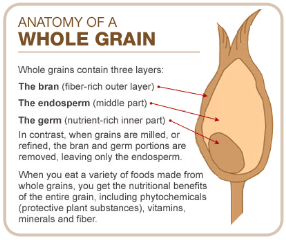
“Unpolished brown rice naturally contains [nutrients] that are lost when the bran layer and germ are removed to make white rice. To compensate, since the 1940s,” white rice has had vitamins and minerals sprayed on it to quote-unquote “enrich it.” That’s why cooking instructions for white rice specifically say don’t rinse it, and cook it “in a minimal amount of water.” In other words, “the opposite” of what you’d do to get rid of some of the arsenic. But brown rice has the nutrients inside, not just sprayed on.

For example, “rinsing [white] rice [—like putting it in a colander under running water—] removes much of the enriched vitamins sprayed onto the [white] rice…surface during manufacture,” removing most of the B vitamins, but has “almost no effect on vitamins in whole-grain brown rice,” because it’s got the nutrition inside. Same thing with iron: rinsing white rice reduces iron levels by like three-fourths, but the iron in brown rice is actually in it; and so, rinsing only reduces the iron concentration in brown rice by like 10%. But rinsing didn’t seem to affect the arsenic levels; so, why bother?

Now, if you really wash the rice, like agitate the uncooked rice in water for three minutes, and then rinse and repeat, you may be able to remove about 10% of the arsenic. And so, this research team recommends washing, as well as boiling in excess water. But I don’t know if the 10% is worth the extra wash time. But, boiling like pasta and then draining the excess water does really cut way down on the arsenic, and while that also takes a whack on the nutrition in white rice, the nutrient loss in brown rice is “significantly less,” as it is not so much enriched as it is rich in nutrition in the first place.

“Cooking brown rice in large amounts of excess water reduces the [toxic arsenic] by almost 60% and only reduces the [iron] content by 5%,” but does reduce “the vitamin content of brown rice by about half.” Here it is graphically. A quick rinse of brown rice before you cook it doesn’t lower arsenic levels, but boiling it instead of cooking to dry, and draining off the excess water drops arsenic levels 40%. That was using like six parts water to one part rice. What if you use even more water, boiling at 10:1 water to rice? A 60% drop in arsenic levels.

With white rice, you can rinse off a little arsenic, but after cooking, you end up with similar final drops in arsenic content. But the iron gets wiped out in white rice by rinsing and cooking, whereas the iron in brown rice stays strong. Similar decrements in the B vitamins with cooking for brown and unrinsed white, but once you rinse white rice, they’re mostly gone before they make it into the pot.

What about percolating rice? We know regular rice cooking doesn’t help, but boiling like pasta and draining does. Steaming doesn’t do much. What about percolating rice as a radical rethink to “optimize [arsenic] removal”? So, they tried like some mad scientist lab set-up, but also just a regular “off-the-shelf coffee percolator.” But instead of putting coffee, they put rice, percolating 20 minutes for white, 30 for brown, and got about a 60% drop in arsenic levels using a 12-to-1 water-to-rice ratio. Here’s where the arsenic levels started and ended up. The squares are the brown rice; circles are the white.

So, raw brown may start out double that of raw white, but after cooking with enough excess water and draining, they end up much closer. Though, 60%, percolating at a 12-to-1 ratio, was about what we got boiling at just 10-to-1; So, I see no reason to buy a percolator.

But, even with that 60%, what does that mean? By boiling and draining a daily serving of rice, we could cut excess cancer risk more than half, from like 165 times the acceptable cancer risk, to only like 66 times the acceptable risk.”  From: https://nutritionfacts.org/video/how-to-cook-rice-to-lower-arsenic-levels/

_________

Tuesday, January 18, 2022

The High Tide of God’s Purpose. The Forerunner Has Entered For Us. Treating Parkinson’s Disease with Diet.

.

The High Tide of God’s Purpose

“There are moments in history when lives converge upon the high tide of God’s purpose for mankind. Such a moment is described in Acts chapter 10, where the lives of the apostle Peter and the Roman centurion named Cornelius meet in the seaside town of Caesarea. There God revealed how Gentiles were to be granted repentance to life and through baptism receive the Holy Spirit, becoming full members of the Body of Christ. God planned this meeting and brought the men together.

I was struck by this story while preparing to teach my weekly Bible class on Acts. Acts is the story of God’s work through His disciples in the early Church. By the power of the Spirit, Christ moved people and events together to accomplish His work. When you trace the events in the text you see ordinary people living righteously, not knowing God was working His purpose. There is a lesson in this for us.

Peter had been visiting disciples along the coastal areas south of Caesarea, where he healed and raised to life saints like Aeneas and Tabitha (Acts 9:32-43). He came to the city of Joppa where he stayed for several days with a man named Simon who operated a tannery business. Peter was making an extensive trip with nothing more in mind but to visit and work with the disciples. God was guiding his steps.

Up the coast a few miles away was the centurion, Cornelius. He was drawn to worship the God of Abraham through contact with the Jews. He gave generously to the Jews and lived a devout life based on the Law. This earned him a good reputation among the Jews. He was moving along the path of conversion. An angel appeared to him instructing him to send his servants to Joppa, a day's journey south, to find Peter.

Peter was on the rooftop of Simon’s home where he had gone to pray, waiting for lunch to be served. He fell into a trance and saw a vision of a sheet coming down from heaven filled with all sorts of animals. A voice commanded him to “kill and eat,” which he refused to do. When this vision concluded, the three servants of Cornelius appeared at the gate of Simon’s home summoning Peter to go with them to Caesarea.

The next day, these two men met—a Roman soldier and a former Jewish fisherman turned apostle of Christ. Both having traveled different paths, they came together to mark an event God had long planned. God poured out His Spirit on Cornelius and on his friends and family, signifying the Gentiles were now also granted repentance leading to eternal life (Acts 11:18). Spiritual salvation through a new covenant with God was now open to all peoples regardless of race and ethnicity.

Two lives met as they rode the tide of God’s plan. Each person having been prepared and moved by God into a place and a moment where lightning struck. God showed His will and history was changed.

What is God doing with your life? How are you responding to His lead as you study truth and learn more of the Bible?”     From: https://us1.campaign-archive.com/?e=72c729d811&u=1d04480cefc2e7c4492fe4a04&id=24ccaf6794

________

Hebrews 6:19-20.   The Forerunner Has Entered For Us.

(19) This hope we have as an anchor of the soul, both sure and steadfast, and which enters the Presence behind the veil, (20) where the forerunner has entered for us, even Jesus, having become High Priest forever according to the order of Melchizedek.
New King James Version    
Change your email Bible version

“This word "forerunner" is the Greek prodromos, used in Scripture only this one time. It means "scout," "guide," or "one sent before a king to prepare the way." The Greeks also used prodromos to mean "firstfruits."

In the story of Daniel Boone, he went first to scout out Kentucky, then later took a party of thirty woodsmen to improve the trail, and after that, even more people followed. Boone was the forerunner, but so were those who went with him to develop the route. That first small group was the firstfruits. Spiritually, Christ has gone ahead, showing us the way, and we, as the firstfruits, improve the trail so that others will someday walk it more easily.

The concept of a forerunner runs throughout the Bible. We could say that Adam was a forerunner, as well as Noah, Abraham, Moses, Elijah, John the Baptist, and of course, Christ. Notice that each of these forerunners had followers—their firstfruits. Adam had Eve and their sons and daughters that followed them. Noah had his wife and family. Abraham had Sarah and Lot, and later were added Ishmael and Isaac, and then Jacob and his children. Moses had Aaron and Miriam and then all the children of Israel. Elijah led to Elisha. John the Baptist proclaimed the coming of Christ, who called His disciples—us.

In other words, we have a part to play as well. It is not the leading role but a supporting one. Nonetheless, it is a necessary part. There is no call for a "big head" here: God could have called someone else or raised up stones, as John the Baptist says in Matthew 3:9. However, He did not; He called us specifically (John 6:44). Therefore, we should not waste our opportunity."  From: https://www.theberean.org/index.cfm/main/default/id/8587/ver/NKJV/hebrews-6-19-20.htm

_______

Treating Parkinson’s Disease with Diet

Transcript of YouTube:  https://youtu.be/fBwU4ElBJxU

Below is an approximation of this video’s audio content. To see any graphs, charts, graphics, images, and quotes to which Dr. Greger may be referring, watch the above video.

“Caffeine consumption, both in Asian and Western populations, appears to protect against the development of Parkinson’s disease. But, what if you already have it? 

A new study found that giving folks the equivalent of about two cups of coffee a day worth of caffeine significantly improved symptoms of the disease. Of course, there’s only so much you can charge for coffee, so drug companies took caffeine, and added a side group so they could patent it into new drugs, which appear to work no better than plain caffeine—which is dramatically cheaper, and probably safer.

Similarly, other plant foods, such as berries, may be protective. And, plant-based diets, in general, may help prevent Parkinson’s. Animal fat and dairy may increase risk, whereas “a plant-based diet dietary pattern may protect against [Parkinson’s disease].” We don’t know if it’s the animal fat per se, though; it could be the animal protein that’s increasing risk, or maybe it’s the dairy, the mercury in fish, the blood-based heme iron, or less of the protective antioxidants in plant foods and plant-based diets. We didn’t know, until recently.

There have been successful case reports, like this one, in which a dietician was struck down with Parkinson’s, and she was able to clear most of her symptoms with a plant-based diet rich in strawberries, whole wheat, and brown rice—rich sources of these two phytonutrients. But, there hasn’t been a formal interventional trial published—until now.

At its root, Parkinson’s is a dopamine-deficiency disease, because of a die-off of dopamine-generating cells in the brain. These cells make dopamine from L-dopa, derived from certain amino acids in our diet. But, just like we saw with the serotonin story, the consumption of animal protein may block the transport of L-dopa into the brain, crowding it out.

So, at first, researchers tried what’s called a “protein redistribution diet.” Let’s basically only let people eat meat for supper, so that patients are hopefully sleeping by the time the negative effects kick in. But researchers didn’t consider cutting out all animal products altogether, until it was discovered that fiber consumption naturally boosts L-dopa levels. So, hey, “a plant-based diet, particularly in its vegan variant, is expected to raise levodopa bioavailability and bring some advantages in the management of [Parkinson’s] disease through two mechanisms: a reduced protein intake and an increased fiber intake…”

That’s why plant protein works best, because that’s where fiber is found. So, they put people on a strictly vegan diet, keeping beans towards the end of the day, and indeed found a significant improvement in symptoms.”

DOCTOR'S NOTE: What about preventing the disease in the first place? See my previous video Preventing Parkinson’s Disease With Diet.”

________

Saturday, September 25, 2021

As in the Days of Noah: Warnings for Today. If God Knows, Why Pray? The Feast of Tabernacles. “The Whiter The Bread, The Sooner You're Dead!”

As in the Days of Noah: Warnings for Today

“Some things never seem to change. This article, “As in the Days of Noah: Warnings for Today,” explains how the violence and evil we see today is nothing new.

The people of Noah’s day were punished for how they were living, and many of these same things are still happening today.

We hope this article helps you recognize the lifestyles and attitudes that God does, and does not, want us to have.”


 “Jesus Christ said that end-time events would be like those during the days of Noah. What were those conditions like, and why should we be concerned?

As in the Days of Noah

Discussing the time near His return to earth, Jesus declared, “As it was in the days of Noah, so it will be also in the days of the Son of Man: They ate, they drank, they married wives, they were given in marriage, until the day that Noah entered the ark, and the flood came and destroyed them all” (Luke 17:26-27).

It appears people thought they were living normal lives during the time Noah lived, just before the Flood. They were oblivious to the impending disaster. So what was Jesus talking about?

Who was Noah?

The Bible says that “Noah was a just man, perfect in his generations” and that he “walked with God” (Genesis 6:9). Noah had three sons, who were named Shem, Ham and Japheth.

When God brought a universal flood upon the earth to destroy all mankind, only Noah and his family were spared. Peter states that God “did not spare the ancient world, but saved Noah, one of eight people, a preacher of righteousness, bringing in the flood on the world of the ungodly” (2 Peter 2:5).

These eight people included Noah, his wife, their three sons and their sons’ wives (Genesis 6:18).

Widespread violence in the days of Noah

Since Jesus said that the last days would parallel the society of Noah’s day, we can look further into God’s Word to learn what He meant. The book of Genesis explains what conditions were like at that time.

Not long after God placed human beings on earth, mankind refused to follow the good and beneficial instructions of God that would have led to stable, happy lives. Instead, they quickly headed toward self-destruction.

Following Adam and Eve’s example of rejecting God’s instructions, humanity became increasingly hostile and corrupt. By the time of Noah, “the LORD saw that the wickedness of man was great in the earth, and that every intent of the thoughts of his heart was only evil continually” (Genesis 6:5).

Because of this, God said that He was “sorry”  that He had created mankind (verse 6) and told Noah, “The end of all flesh has come before Me, for the earth is filled with violence through them; and behold, I will destroy them with the earth” (verse 13).

God’s grieving was not sorrow for making a mistake. God doesn’t make mistakes. God gave His human creation the freedom to choose between right and wrong (Proverbs 1:29-31), and He was grieved in His heart to see how far humanity had fallen from what He originally intended.

What was the meaning of Jesus’ reference to the days of Noah?

Jesus referred to the days of Noah when He was describing what conditions would be like just prior to His return. His point was that people would be unaware of His return to judge mankind. Sadly, the vast majority of the earth’s inhabitants will be living ungodly lives in a world filled with violence when this monumental event occurs.

In His Olivet Discourse (Prophecy) found in Matthew 24, Mark 13 and Luke 21, Jesus described what would be happening on earth before His second coming. The signs of the end of this age include lawlessness abounding, the gospel of the Kingdom being preached and Jerusalem being surrounded by armies (Matthew 24:12-14; Luke 21:20). For further study of Christ’s teaching about the signs of His return, see “Understanding the Olivet Prophecy.”

Noah lived in perilous times 
Continued at: https://lifehopeandtruth.com/prophecy/end-times/as-in-the-days-of-noah/

(Readers, did you catch that?  Our Creator was sorry that he made us!!  Isn’t that a shameful thing?  We need to make Him proud of us!) 

________

If God Knows, Why Pray?

“Matthew 6:8

“Therefore do not be like them. For your Father knows the things you have need of before you ask Him.”

When we pray, it’s important to have in mind who we are praying to. Our great Creator God knows everything. He can read our thoughts. He knows exactly what we think we need and exactly what we truly need. So telling God what we need is not about trying to let Him know something He doesn’t know, or even reminding Him of something. It’s about letting Him know that we realize we depend on Him. It’s about showing thankfulness for what He has given to us and having a humble expectation about what He will give us.

Prayer is an exercise in trying to apply what we know of God’s will. If we understand He wants us and others to have health and to prosper, but that He also and even more importantly wants us to grow in godly character and to prepare for His Kingdom, this will shape our prayers and requests.

The act of praying for God’s will can help us to better understand His will and His eternal plan. And prayer shows God our hearts. This is the kind of communication that builds the relationship God desires to have with us.

For more about this relationship, see “Relationship With God.””  From: https://lifehopeandtruth.com/bible/blog/if-god-knows-why-pray/?

________

Many Christians and Jews are celebrating  The Feast of Tabernacles right now:

“The annual festival, the seven-day Feast of Tabernacles (Leviticus 23:33-36), was celebrated by the ancient Israelites with makeshift shelters, recalling their transitory dwelling when they left Egypt and made their way to the Promised Land.

Also called the Feast of Ingathering (Exodus 23:16;Exodus 34:22), this festival celebrated the late summer and early fall harvest in the land of Israel. In a spiritual sense it represents the great ingathering of God's spiritual harvest of mankind following Christ's return. Indeed, this feast looks forward to the time of the earthly rule of Jesus Christ.

Jesus Himself observed this feast during His ministry and told others to do so as well (John 7:8-14). The Bible even states that instead of being done away, this feast will be observed by the gentile (non-Israelite) nations during Christ's reign over the earth (Zechariah 14:9, Zechariah 14:16-18).

Scripture tells us that the resurrected saints will reign with Christ. Revelation 20:4 says: "And I saw thrones, and they sat on them, and judgment was committed to them . . . And they lived and reigned with Christ for a thousand years" (compare Daniel 7:27).

The wonderful truth is that when Christ returns, true Christians from this age will rule under Him as kings and priests (Revelation 5:10; Revelation 20:6)—leading the rest of the world into God's ways."

The Eighth Day

Immediately following the seven-day Feast of Tabernacles is another Holy Day or Sabbath—referred to in Scripture simply as “the eighth day” (Leviticus 23:36, Leviticus 23:39). This day pictures the most joyful of all events yet to take place in God’s great plan.

We should consider that the celebration of the ingathering of all humanity is not complete with the 1,000-year reign of Christ. For what about all those who died in this age who were not called as part of God’s firstfruits? There will yet remain billions of people from this age who are not saved.

So are they forever lost?"          Excerpts from and more at: https://www.ucg.org/beyond-today/beyond-today-magazine/the-bibles-prophetic-festivals

_______

There is a jingle that goes: "The whiter the bread, the sooner you're dead!”

“Bread has been called the "staff of life." Unfortunately these days most folks consume grain in its refined state and this staple contains little to no nutritive properties and cannot support animal or human life.

Wheat is the key ingredient in the American diet. But after being milled, it is seldom utilized in its whole form with its components intact. Invariably, when we eat wheat, we get it in the form of bread, pies, cakes, cookies, biscuits, spaghetti, cream of wheat, cereals, and other forms that have been treated, heated, fractioned, and fragmented until it is next to impossible to recognize it for what it was originally.

A refined grain, or its product, is made by processing a natural, whole grain so that some or most of the nutrients are lost. Almost all grain products have been refined in some way or another.
White rice, cream of wheat, cookies, and bowls of snap-crackle-and-pop each morning are all examples of refined grain products.

Why are Refined Grain Products Harmful?

REFINED GRAINS AND THEIR FOOD PRODUCTS ARE SUBSTANDARD FOODS FOR SEVERAL REASONS:
  1. They are excessively starchy and high in gluten.
  2. They are practically devoid of natural fiber.
  3. There can be up to approximately 25 different chemicals that are added to refined grains and breads products.
  4. Grains are fumigated.
  5. Bleaching chemicals are used.
  6. Artificial colorings and flavorings are used.
  7. They are nutritionally imbalanced.

Because refined grain products are nutritionally imbalanced, they are responsible for contributing to several degenerative diseases. Calcium leaching from the bones and teeth occurs because of the altered phosphorous-calcium balance in these products. Sugar and refined grain products are primarily responsible for tooth decay in this country, as well as being the major cause of brittle bones in the elderly.

A Loaf of Chemicals

The making of bread and flour products took a real turn for the worse at the end of World War 2. Bakeries in America began using large amounts of chemicals, additives, bleaches, and preservatives.

The millers discovered they could make the flour very white by bleaching it. Other chemical oxidizers are added to bleach and "mature" the flour, such as nitrogen dioxide and azocarbonamide. Are these chemicals dangerous? Well, Germany banned all such oxidizers back in 1958, almost 40 years ago!

The next step in the chemicalization of bread is to add chemical dough conditioners to the dough to enable the resulting bread to stay fresh and soft for a longer period, without getting stale while standing on grocers' shelves.

To give this softness and white-bread texture, mono- and diglycerides are added to the bread dough at the rate of about 1/4 pound per year per person consumption. This makes the bread more squeezable and fluffy. Nobody knows the effects on those that eat such additives.

Some of the chemicals used as dough conditioners are similar to the anti-freeze mix used for automobile radiators. One of the chemicals used as a dough conditioner is polyexy ethelyne monosterate. Workers in factories where this chemical is made have been known to develop skin rashes from the fumes. polyexy ethelyne monosterate is also used in making peanut butter, ice cream, candy, and salad dressings.

The average person eats about 100 pounds or so of commercial bread each year. Besides eating the refined flour, the average person also eats these toxic items in the grain products: 2 pounds of salt, 3 pounds of sugar, 2 pounds of skim milk powder, 2 pounds of yeast, 1 pound of enzyme-activator, 1/2 pound of sulfate, chloride, and bromate chemicals, and 1/4 pound of other food additives. When all of these chemicals and nonfoods are eaten together, a multi-toxic effect occurs that has never been thoroughly studied by scientists.

In Summary

The crux of the situation is that the shelf-life of products are far more important in our economy than the health and well-being of the people. If we are to lean on the "staff of life" for nutrition, we must identify the counterfeit refined grains from the real, whole grains.
In the US, the familiar white flour which is the result of modern refining process is 72% extraction. This means that it has lost 28% of the bulk of the wheat, including half or more of many of the crucial nutrients. So for optimum health, eliminate all refined flour products from your diet and use only whole grains.

8 Healthy Gluten Free Whole Grain Alternatives

  1. Amaranth
  2. Buckwheat
  3. Corn
  4. Millet
  5. Oats (*see below)
  6. Quinoa
  7. Rice
  8. Wild Rice

*Oats are inherently gluten-free, but are frequently contaminated with wheat during growing or processing. Several companies (Bob's Red Mill, Cream Hill Estates, GF Harvest (formerly Gluten Free Oats), Avena Foods (Only Oats), Legacy Valley (Montana Monster Munchies), and Gifts of Nature) currently offer pure, uncontaminated oats. Ask your physician if these oats are acceptable for you.  Source: 
http://wholegrainscouncil.org/...

From: https://www.foodmatters.com/article/why-refined-grains-are-harmful

_______

Saturday, May 22, 2021

What Is God’s Plan for You? Loner. Where Does the Arsenic in Rice, Mushrooms, & Wine Come From? How to Cook Rice to Lower Arsenic Levels.

.

What Is God’s Plan for You?

A question sign in the sky.

robertsrob/iStock/Getty Images Plus

“What is God’s plan for His faithful believers?

The ultimate purpose of human beings is to become part of the family of God.

“Why am I here?” This is the question of the ages, the great mystery of life. Why were you born? Why do you exist? What is the purpose of your life? 

What is God’s plan for you? Many believe they will spend eternity in heaven—but doing what? Playing harps and comparing halos? I’ve never heard a good explanation that makes sense.Such a future seems quite dissatisfying. Due to Covid-19, millions of people have spent the last year bored, shut up in their homes doing little or nothing. Do we really want an eternity of that?

If heaven really is the future of much of the human race, the Bible says very little about it. In fact, I’ve searched the Scriptures repeatedly and can find nothing about what believers will do during a supposed eternity in heaven. And for that matter, the common ideas of halos and feathered wings are nowhere to be found either. (To learn more, download or request our free study guide Heaven and Hell: What Does the Bible Really Teach?)

So, what is God’s plan for His faithful believers? What does He have in store?

What the Bible actually reveals is something far greater than going to heaven to do virtually nothing for eternity. It tells us we can become the literal children of God.

That may sound outlandish to you. But don’t take my word for it. Take the word of the apostle Paul, quoting God in 2 Corinthians 6:18: “I will be a Father to you, and you shall be My sons and daughters, says the Lord Almighty” (emphasis added throughout).

How did Jesus Christ, who came to reveal the Father (Matthew 11:27; Luke 10:22; John 1:18), present Their relationship? As a family—God the Father and Jesus Christ the Son.

God is in the process of creating a family—His own divine family, the God family. And as a God whose nature and character are summed up as “God is love” (1 John 4:8, 16), He wants to see us become part of that family—that means you and me.

What will existence in God’s family be like? Notice the apostle John’s description of Jesus Christ as he saw Him in vision in Revelation 1:12-18 (New Living Translation): “When I turned to see who was speaking to me, I saw seven gold lampstands. And standing in the middle of the lampstands was the Son of Man. He was wearing a long robe with a gold sash across his chest. His head and his hair were white like wool, as white as snow. And his eyes were bright like flames of fire.

“His feet were as bright as bronze refined in a furnace, and his voice thundered like mighty ocean waves. He held seven stars in his right hand, and a sharp two-edged sword came from his mouth [evidently figurative of His speaking the Word of God—Hebrews 4:12]. And his face was as bright as the sun in all its brilliance. When I saw him, I fell at his feet as dead. But he laid his right hand on me and said, ‘Don’t be afraid! I am the First and the Last. I am the living one who died. Look, I am alive forever and ever!’”

This same John tells us in 1 John 3:2 that the glorified children of God will also appear as Christ does when they are resurrected and given eternal life in the family and Kingdom of God! He states, “Beloved, now we are children of God; and it has not yet been revealed what we shall be, but we know that when He is revealed, we shall be like Him, for we shall see Him as he is.” 

This is the kind of glorified existence God promises to His children in the resurrection of the dead to immortal spirit at Christ’s return as described in 1 Corinthians 15:50-54. The ultimate purpose of human beings is to become part of the family of God—so Jesus can be “the firstborn among many brethren,” those raised to glory as He is glorified now (Romans 8:29; Hebrews 2:10).

That is a future we can believe in and build our lives around!”

From: https://www.ucg.org/beyond-today/beyond-today-magazine/what-is-gods-plan-for-you

_______

Loner

“There are times when we must be alone and it serves a purpose. But we need each other and we must appreciate the value in being together.

Transcript of YouTube: https://youtu.be/DRPskJ89hak

[Darris McNeely] “There are times we just want to be alone. We want to be by ourselves to work out whatever difficulty, whatever question, whatever problem that might be working in our lives. But we don't want to let that go too long because there's power, value in being together, working with a group, working with those that are close to you.

There's a story from the aftermath of the death and resurrection of Jesus Christ that helps us to understand this. It's the story of Thomas, the disciple, who for eight days removed himself from the other disciples after Christ was crucified and was not around in the initial appearances that the resurrected Jesus made to His disciples. And then in John's account, John 20:26, we read where Christ came through the wall, literally, into the room where his disciples were. And Thomas was with them. This says it was eight days after the time of the resurrection. And Thomas was doubting all that he had heard from the other disciples about seeing the resurrected Christ.

Christ appeared to them, He said, "Peace be unto you." And He turned to Thomas and He said, "Reach your finger here and look at my hands. Reach your hands here and put it into my side. Do not be unbelieving, but believing." And when Thomas did that, it was all it took. He said, "My Lord and my God," to which Christ said, "Thomas, because you have seen me, you have believed, and blessed are those who have not seen, have not yet believed."

And so, Thomas now was back with the group, back with the other disciples, the other 10 at that particular point in time. And because he had seen Christ, now his faith was restored. But he had doubted for a period of time. And in this is an important lesson for us.

Today, there's reasons for us to be shut down, locked out, quarantined. We've gone through an extended period. And as the world reopens, we need to understand that there is value in the face-to-face contact with family, with friends, even co-workers to be able to communicate, to understand, to be effective.

This lesson from the life of Thomas, who doubted because he had not seen but when he then rejoined with all the others, his faith was strengthened and he went on to do the job as a disciple that Jesus wanted him to do. Being a loner, being apart, can have brief benefit. But, ultimately, we need one another as we develop our relationships that help strengthen the faith that we have in God.”         From: https://www.ucg.org/beyond-today/beyond-today-daily/loner

_______

Where Does the Arsenic in Rice, Mushrooms, & Wine Come From?

“What happens when our crops are grown in soil contaminated with arsenic-based pesticides and arsenic drug-laced chicken manure?”

Transcript of YouTube: https://youtu.be/upYpLFGjG78

Below is an approximation of this video’s audio content. To see any graphs, charts, graphics, images, and quotes to which Dr. Greger may be referring, watch the above video.

“When arsenic-containing drugs are fed to chickens, not only does it grow out into their feathers (which can then be fed back to them as a slaughterhouse byproduct), the arsenic can get into their tissues, and then get into our tissues, explaining why national studies found that those who eat more poultry have tended to have more arsenic flowing through their bodies.

Why would the industry do that? “In modern poultry CAFOs [these concentrated animal feeding operations],” there can be “200,000 birds under one roof.” And so, the floors of these buildings become “covered with feces.” While this so-called factory farming “decreases…costs, [this also] increases the risk of disease…” That’s where arsenic-containing drugs, and other antibiotic feed additives, can come in, to try to cut down the spread of disease in such an unnatural environment—to which you can imagine the smug vegetarians gloating how glad they are they don’t eat chicken. But, what do you think happens to the poop?

The arsenic from the drugs in the feed can get into our crops, into the air, and into the groundwater, and find its way into our bodies, whether we eat meat or not. Yeah, but how much arsenic are we really talking about? Well, we raise billions of chickens every year, and if historically, the vast majority were fed arsenic, then, if you do the math, we’re talking about dumping a half million pounds’ worth of pure arsenic into the environment every year—much of it onto our crops, or shoveled directly into the mouths of other farm animals.

Most of the arsenic in chicken waste is water-soluble; so, there are certainly concerns about it seeping into the groundwater. But if it’s used as a fertilizer, what about our food?

Studies on the levels of arsenic in the U.S. food supply dating back to the 70s identified two foods—fish aside—with the highest levels: chicken and rice, both of which can accumulate arsenic in the same way. Deliver an arsenic–containing drug, like roxarsone, to chickens, and it ends up in their manure, which ends up in the soil, which ends up in our pilaf. “Rice is [now] the primary source of [arsenic] exposure in a nonseafood diet.”

I was surprised to see mushrooms in the top five food sources of arsenic, but then, not so surprised when I found out that “poultry litter [was] commonly used” as a starting material to grow mushrooms in the United States. And, over the years, mushroom arsenic content has rivaled the arsenic concentration in rice, though people tend to eat more rice than mushrooms on a daily basis, and arsenic levels in mushrooms did seem to be dipping, starting about a decade ago, confirmed in this latest 2016 paper that looked at a dozen different types of mushrooms: plain white button mushrooms, cremini, portobello, shiitake, trumpet, oyster, nameko (never heard of it), maitake, alba clamshell, brown clamshell (never heard of either of those either), and chanterelle. Now, only averaging about half what rice is running.

Just like some mushrooms have less arsenic than others, some rice has less. Rice grown in California has 40% less arsenic than rice grown in Arkansas, Louisiana, Mississippi, Missouri, and Texas. Why? Well, arsenic-based pesticides had been used more than a century on millions of acres of cotton fields, noted to be “a dangerous practice” back in 1927. Arsenic pesticides are now effectively banned; so, it’s not a matter of buying organic versus conventional rice, because millions of pounds of arsenic had already been laid down in the soil well before your rice was even planted.

The rice industry is well aware of this. There’s an arsenic-toxicity disorder in rice, called “straighthead,” where if you plant rice in soil too heavily contaminated with arsenic, it doesn’t grow right. So, instead of choosing cleaner cropland, they just developed arsenic-resistant strains. So, now, lots of arsenic can build up in rice without the plant getting hurt. Can the same be said, however, for the rice consumer?

Same story with wine. Decade after decade of arsenic pesticide use, and even though they’ve been banned now, arsenic can still be sucked up from the soil, leading to “the pervasive presence of arsenic in [American] wine [which could] “pose a potential health risk.” Curiously, they sum up by saying “[c]hronic arsenic exposure is known to lower IQ in children.” But if kids are drinking that much wine, arsenic toxicity is probably the least of their worries.”  From: https://nutritionfacts.org/video/Where-Does-the-Arsenic-in-Rice-Mushrooms-and-Wine-Come-From/

________

How to Cook Rice to Lower Arsenic Levels

Boiling rice like pasta reduces arsenic levels, but how much nutrition is lost?

Transcript of YouTube: https://youtu.be/H_Lui1v2A1M

Below is an approximation of this video’s audio content. To see any graphs, charts, graphics, images, and quotes to which Dr. Greger may be referring, watch the above video.

“Cooking rice in a high water to rice ratio reduces [toxic] arsenic content”—meaning if you boil rice like pasta, and then drain off the water at the end, you can drop arsenic levels in half. 50 to 60 percent of the arsenic gets poured down the drain, whereas the typical way we make rice, boiling the water off like in a rice cooker or pot, doesn’t help. Or, may even make things worse, if the water you’re using to cook the rice has arsenic in it too—a problem that exists for about three million Americans, as about 8% of public water supplies exceed the current legal arsenic limits.

But “cooking rice in excess water [and then discarding] efficiently reduces the amount of [toxic arsenic] in the cooked rice.” Yeah, but how much nutrition are you pouring down the drain when you do that? We didn’t know, until now.

“Unpolished brown rice naturally contains [nutrients] that are lost when the bran layer and germ are removed to make white rice. To compensate, since the 1940s,” white rice has had vitamins and minerals sprayed on it to quote-unquote “enrich it.” That’s why cooking instructions for white rice specifically say don’t rinse it, and cook it “in a minimal amount of water.” In other words, “the opposite” of what you’d do to get rid of some of the arsenic. But brown rice has the nutrients inside, not just sprayed on.

For example, “rinsing white rice [—like putting it in a colander under running water—] removes much of the enriched vitamins sprayed onto the [white] rice…surface during manufacture,” removing most of the B vitamins, but has “almost no effect on vitamins in whole-grain brown rice,” because it’s got the nutrition inside. Same thing with iron: rinsing white rice reduces iron levels by like three-fourths, but the iron in brown rice is actually in it; and so, rinsing only reduces the iron concentration in brown rice by like 10%. But rinsing didn’t seem to affect the arsenic levels; so, why bother?

Now, if you really wash the rice, like agitate the uncooked rice in water for three minutes, and then rinse and repeat, you may be able to remove about 10% of the arsenic. And so, this research team recommends washing, as well as boiling in excess water. But I don’t know if the 10% is worth the extra wash time. But, boiling like pasta and then draining the excess water does really cut way down on the arsenic, and while that also takes a whack on the nutrition in white rice, the nutrient loss in brown rice is “significantly less,” as it is not so much enriched as it is rich in nutrition in the first place.

“Cooking brown rice in large amounts of excess water reduces the [toxic arsenic] by almost 60% and only reduces the [iron] content by 5%,” but does reduce “the vitamin content of brown rice by about half.” Here it is graphically. A quick rinse of brown rice before you cook it doesn’t lower arsenic levels, but boiling it instead of cooking to dry, and draining off the excess water drops arsenic levels 40%. That was using like six parts water to one part rice. What if you use even more water, boiling at 10:1 water to rice? A 60% drop in arsenic levels.

With white rice, you can rinse off a little arsenic, but after cooking, you end up with similar final drops in arsenic content. But the iron gets wiped out in white rice by rinsing and cooking, whereas the iron in brown rice stays strong. Similar decrements in the B vitamins with cooking for brown and un-rinsed white, but once you rinse white rice, they’re mostly gone before they make it into the pot.

What about percolating rice? We know regular rice cooking doesn’t help, but boiling like pasta and draining does. Steaming doesn’t do much. What about percolating rice as a radical rethink to “optimize [arsenic] removal”? So, they tried like some mad scientist lab set-up, but also just a regular “off-the-shelf coffee percolator.” But instead of putting coffee, they put rice, percolating 20 minutes for white, 30 for brown, and got about a 60% drop in arsenic levels using a 12-to-1 water-to-rice ratio. Here’s where the arsenic levels started and ended up. The squares are the brown rice; circles are the white.

So, raw brown may start out double that of raw white, but after cooking with enough excess water and draining, they end up much closer. Though, 60%, percolating at a 12-to-1 ratio, was about what we got boiling at just 10-to-1; So, I see no reason to buy a percolator.

But, even with that 60%, what does that mean? By boiling and draining a daily serving of rice, we could cut excess cancer risk more than half, from like 165 times the acceptable cancer risk, to only like 66 times the acceptable risk.” 

DOCTOR'S NOTE

At this point, I can imagine you thinking, Wait, so should we avoid rice or not? I’m getting there. First, I’m just laying out the issue. Here are videos on the latest on the topic, if you’re interested:  See bottom of page at: https://nutritionfacts.org/video/how-to-cook-rice-to-lower-arsenic-levels/

_______