Showing posts with label animal cruelty. Show all posts

Sunday, April 2, 2023

Passover: What Did Jesus Do for You? Christ, Our Passover. Why Dairy Might Not Be The Best Choice for Your Health.

.

Passover: What Did Jesus Do for You?

Did Easter replace Passover? Download Our Free Booklet“Jesus knew what He would face: “You know that after two days is the Passover, and the Son of Man will be delivered up to be crucified” (Matthew 26:2).

The spring festivals (found in Leviticus 23) have deep symbolism for Christians today that transcends the sacrificial laws that ended with Christ’s death. The Passover symbolizes the sacrifice of Jesus Christ for our sins. The festival called the Days of Unleavened Bread symbolizes our need to live free of sin, after having our past sins forgiven.
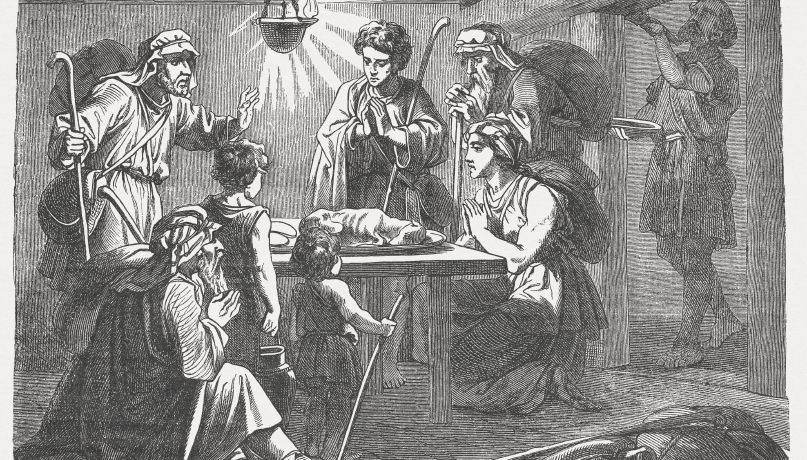
Passover: What Did Jesus Do for You?Just before His betrayal and crucifixion, Jesus asked His disciples to prepare for His final Passover (Matthew 26:18-20). This evening, commemorated since the time of the Exodus from Egypt, involved the sacrifice of an unblemished lamb whose blood protected the Israelites while the firstborn of the Egyptians were slain (Exodus 12:5-7, 12-14).

The New Testament makes clear that this lamb represented Jesus Christ. As John the Baptist had announced about Jesus, “Behold! The Lamb of God who takes away the sin of the world!” (John 1:29).

This last Passover was special, and Jesus taught His disciples new elements that would become the basis of the New Testament Passover service.

First, Jesus Christ set the example of love and service through washing His disciples’ feet (John 13:4-13). Then He told them, “If I then, your Lord and Teacher, have washed your feet, you also ought to wash one another’s feet. For I have given you an example, that you should do as I have done to you” (John 13:14-15).

The symbols of the bread and the wine

After the foot washing, Jesus instituted two deeply meaningful symbols of the New Testament Passover.

“And as they were eating, Jesus took bread, blessed and broke it, and gave it to the disciples and said, ‘Take, eat; this is My body.’ Then He took the cup, and gave thanks, and gave it to them, saying, ‘Drink from it, all of you. For this is My blood of the new covenant, which is shed for many for the remission of sins’” (Matthew 26:26-28).

Paul reminded the Church, both Jews and gentiles, of the vital importance of this memorial that represents Christ’s death and a renewal of our commitment to God made at baptism. Jesus said the bread represented His body. He willingly suffered to take our infirmities and bear our sicknesses (Matthew 8:16-17; Isaiah 53:3-5). Jesus is also the Bread that makes eternal life possible as we allow Him to live in us (Galatians 2:20).

The wine represents His shed blood given for the forgiveness of our sins.

The apostle Paul repeated these Passover instructions about the bread and the wine in 1 Corinthians 11:23-26. He reminded the Church, both Jews and gentiles, of the vital importance of this memorial that represents Christ’s death and a renewal of our commitment to God made at baptism.

Why did Christ have to die

Why did Jesus come to the earth as a human being to die? Because of sin—the destructive thoughts and actions that go against God’s will (1 John 3:4).

God reveals His thinking and way of life throughout the Bible, and especially in His 10 Commandments and His good and beneficial laws that show us how He intends life to be lived. When we break His laws, we bring automatic penalties on ourselves, and especially the penalty of death—eternal death. We have all earned this penalty (Romans 3:23; 6:23).

God, in His perfect eternal justice, must exact the penalty; but in His awesome mercy, Jesus Christ was willing to pay that penalty for us! “For God so loved the world that He gave His only begotten Son, that whoever believes in Him should not perish but have everlasting life” (John 3:16). Christ gave His life so we could repent and be saved (1 Timothy 2:4).

That is the solemn yet joyous message of the annual Passover. This is the first step in God’s plan of salvation. The second step is represented by the second festival, the Feast of Unleavened Bread.”                 

From: https://lifehopeandtruth.com/life/plan-of-salvation/passover/

Do you have more questions about the Christian Passover? Read “Questions and Answers About the Christian Passover.”

_______

Christ, Our Passover

1 Corinthians 5:7

Therefore purge out the old leaven, that you may be a new lump, since you truly are unleavened. For indeed Christ, our Passover, was sacrificed for us.   

“The apostle Paul drew on the lessons of the spring festival season to encourage the Corinthian congregation to remove sin from their lives.

Jesus Christ fulfilled the type of the Passover lamb whose blood protected the Israelite firstborn from death before the exodus from Egypt. After the Passover festival comes the Feast of Unleavened Bread, where yeast and other leavening become a symbol of sin.”

Study more about Passover and the Feast of Unleavened Bread in our free booklet From Holidays to Holy Days: God’s Plan for You.”

Listen to the "Verse by Verse" episode covering this scripture at https://lifehopeandtruth.com/bible/blog/christ-our-passover/?

________

Is Dairy’s Reign Over? (Problems with Dairy and The Dairy Industry)

“Big Dairy is getting desperate. But the demand for plant-based milks keeps going up.  Dairy is declining, as the failure of Big Dairy’s latest campaign Februdairy shows. More people are becoming aware of the problems with dairy and the problems with the dairy industry. Could dairy’s prominence be on its way out?  

Almonds are the new cow. So are cashews. Coconuts. Beans and peas. And pretty much any plant-based ingredients that can be turned into frothy, creamy, and delicious plant-based milk. No cow required.

Consumers are flocking to nondairy milk like cows flock to hay. It’s looking an awful lot like the tide is turning to greener pastures (perhaps because they’re growing nitrogen-fixing peas).

Facing declining sales and waning consumer interest, the dairy industry launched “Februdairy” — a month-long campaign aimed at revitalizing dairy’s increasingly sour image.

This initiative is a response to the growing trend toward plant-based milks and campaigns encouraging plant-based eating, including the popular UK-based Veganuary campaign, which encourages people to try going vegan for January and the rest of the year. In 2018, more than 150,000 people signed up, compared to only several hundred people when it launched in 2014.

This massive rise in plant-powered eating is happening around the world. For example, from 2014 to 2017, there’s been a 600% increase in the number of people identifying as vegans in the U.S.

At a recent dairy industry conference, industry consultant Dr. Jude Capper sounded the alarm, announcing that, “If consumers don’t buy our products — milk, cream, butter, cheese etc — we will not have a dairy industry in five to 10 years.

The Problems With The Dairy Industry — Cruelty to Cows 

The Februdairy campaign’s goal is to continue painting an idealized (and inaccurate) picture of modern dairy farming pushed by the industrial agriculture industry. The campaign intends to feature photos of “happy” cows and other bucolic farm imagery.

But the truth is vastly different. In reality, tens of thousands of animals are living inside giant steel sheds with little or no access to the outdoors.

Once a staple in most homes, the reality today is that cow’s milk comes with a whole host of problems. Cows are, of course, as adorable and lovable as ever. But with the hundreds of millions of them on the planet… well, things get a little complicated.

While a small percentage of modern farms produce milk from cows who are left outside to graze on fresh grass and clover, and perhaps to ponder the logistics and benefits of jumping over the moon, the majority aren’t afforded such luxuries.
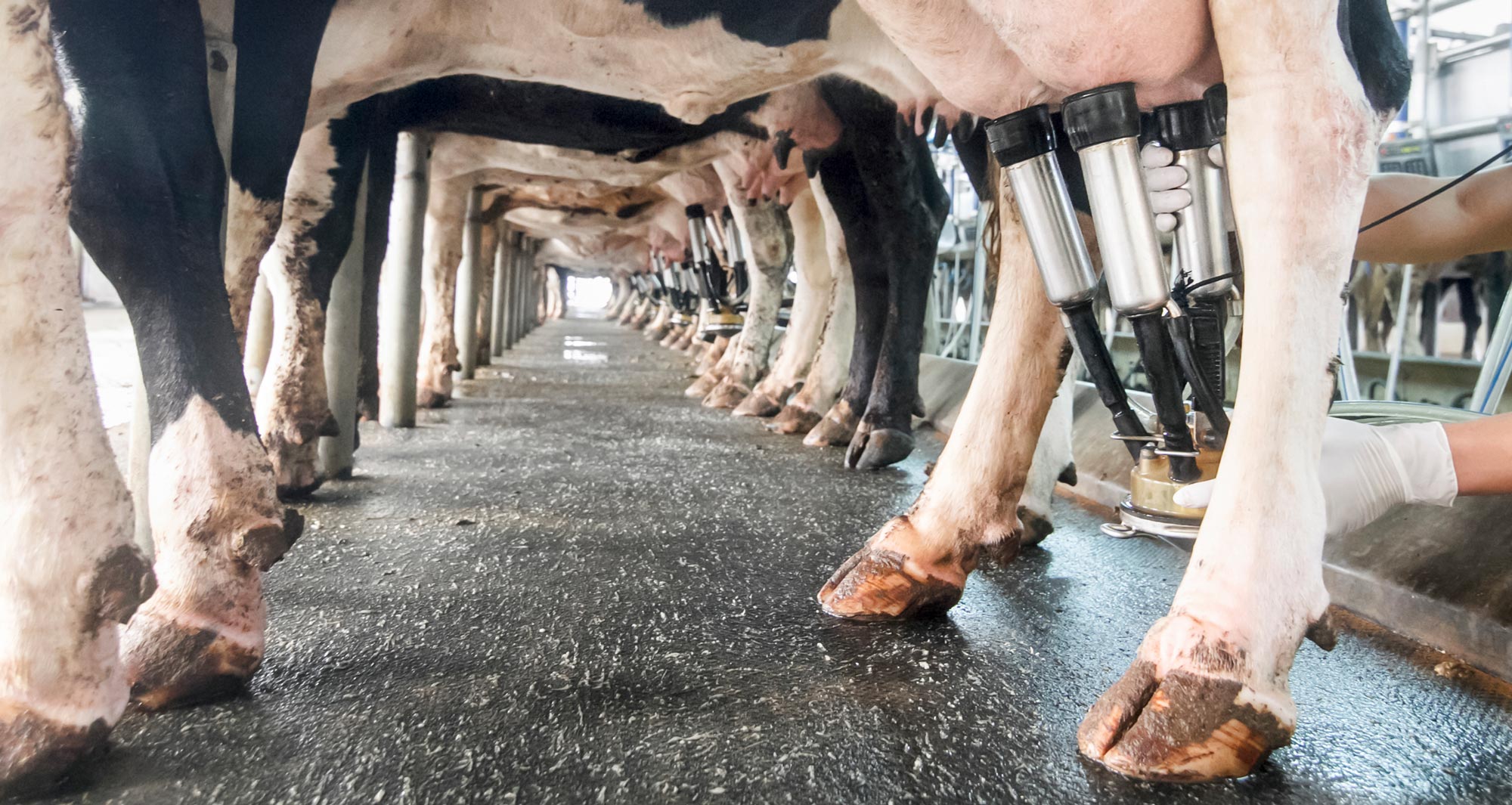
dairy cows being milkedIn the vast majority of dairy operations in the U.S., the truth is, cows do not have happy lives. They spend their time indoors, typically on hard, abrasive concrete floors and frequently connected to a milking apparatus. Most never see a blade of grass.

iStock.com/Toa55

They are artificially impregnated to ensure they continue to produce the maximal quantity of milk. Plus, they are fed antibiotics. And their feed is often contaminated with herbicide and pesticide residues from the genetically modified beans and grains they eat. Some are injected with genetically engineered growth hormones.

Recently, the dairy industry has been called out for its cruel treatment of these gentle animals. Even the #metoo campaign has been used to expose the cruel treatment of dairy cows.

A dairy cow will spend much of her life hooked up to milking machines that limit movement and can cause painful infections in her udder. Her babies are taken away just days after being born so that the milk can be bottled and sold.

Other Problems With The Dairy Industry

The dairy industry is also directly tethered to the notoriously cruel veal industry. Female calves become dairy producers, and male calves are often sent into confinement to be raised for veal meat.

And then there’s dairy’s impact on the planet.

Livestock is responsible for a significant amount of greenhouse gases. The United Nations puts the industry 14.5% of all GHG emissions — slightly more than transportation, which produces about 14% of total GHGs worldwide.

In California, the largest dairy-producing state, water usage for livestock is also of concern. One-quarter of California’s water budget goes toward producing beef and dairy. This is more water than all the businesses and homes in the state.

But the dairy industry does its best to keep all this from consumers. Clever marketing (“Got Milk?”), the prevalence of red barn imagery and toothy cow smiles on dairy labels, and other tactics have long convinced consumers this stuff is healthy and even necessary.

But with U.S. milk consumption down considerably, the dairy industry’s days as a dominant food industry force may be numbered. In fact, numbers from the USDA show that Americans are drinking almost 40% less dairy milk than they did in the 1970s.

The Demand for Plant-Based Milk Is Booming
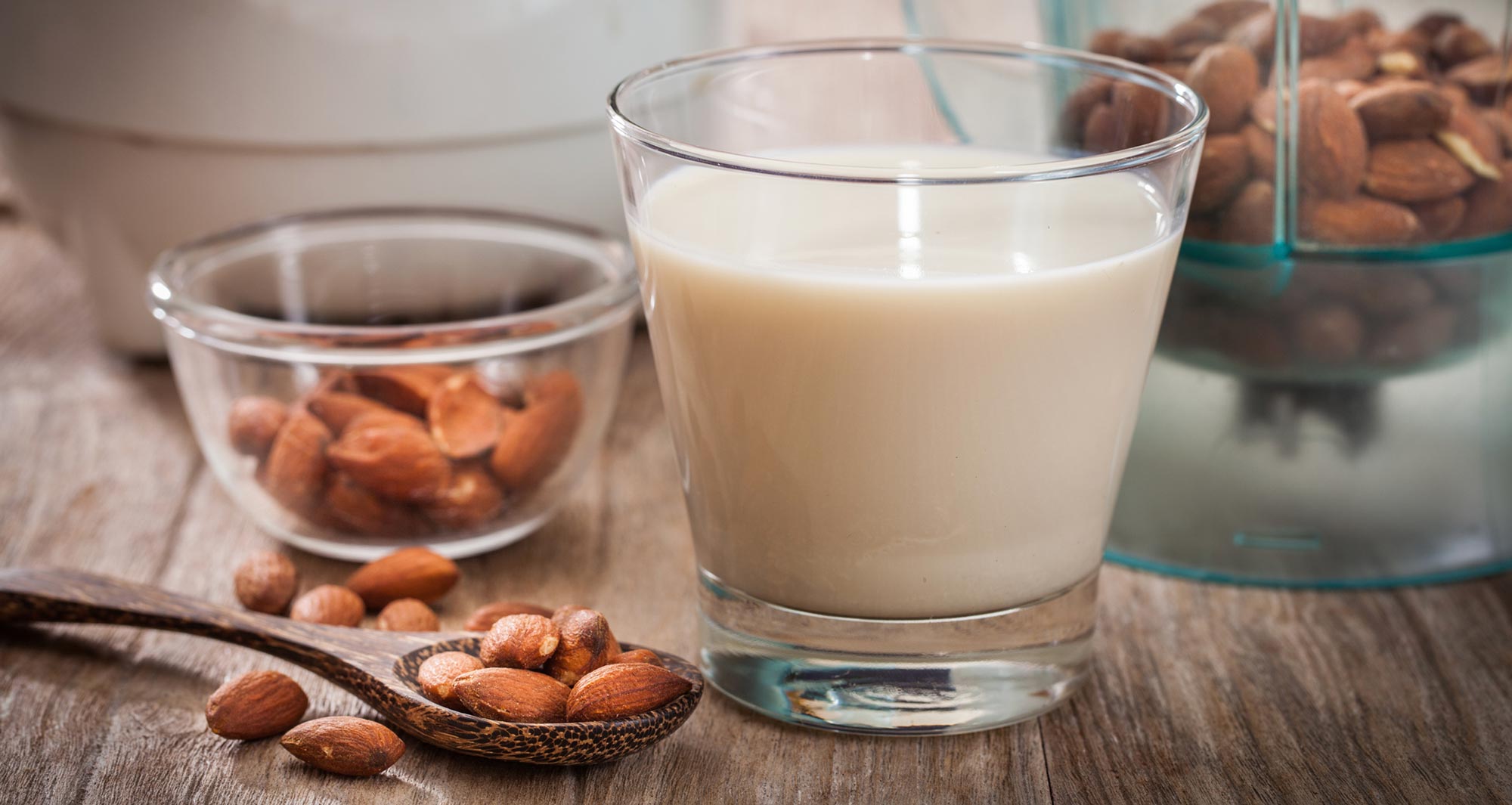
glass of almond milkiStock.com/naito8

As it turns out, people want more options than just whole, 2%, or skim milk. They want new flavors — and not just chocolate. They want milk varieties that are reinvigorating their taste buds. And they want plants.

Non-dairy milk is the leading driver of the plant-based foods category, growing more than 60% in the last five years to more than $2 billion in sales in 2017.

Sales of dairy are expected to drop by another 11% between 2015 and 2020, as a steady decline continues. On the other hand, nondairy milk sales are expected to continue seeing record-breaking and milk-shaking increases. Dean Foods, a leading dairy producer, experienced a 91% decline in its net income from 2016 to 2017.

Elmhurst Dairy was once a thriving dairy producer, but declining interest and lackluster sales led the company to reinvent itself. Now known as just Elmhurst, the company has dropped cow’s milk for a booming plant-based milk business.

The company is a leading producer of non-dairy nut-milk products, including milk made from almonds, cashews, walnuts, hazelnuts, and peanuts.

Why Dairy Might Not Be The Best Choice for Your Health

The dairy industry has spent millions of dollars touting milk as “nature’s most perfect food.” And it is. For baby calves. But what about for humans?

We are the only species on earth that drinks milk after infancy. And in all the years that humans have been around, we’ve only been drinking the milk of cows for the last few thousand — a minimal portion of our time on this planet.

Dairy milk does have all the nutrition calves need to grow. As a result, it’s full of many important nutrients, and it provides an abundant source of calcium, vitamin D, riboflavin (B2), vitamin B12, potassium, and phosphorus. But since modern milk almost always comes from recently pregnant cows, it also contains hormones that don’t do a human body any “good” at all.

These hormones are thought to be one of the reasons that dairy consumption has been found to be linked to increased rates of acne, and to increased risk of certain cancers — especially prostate cancer.

Many studies have explored the link between dairy products and heart disease. Perhaps the largest of them, conducted by Harvard Chan School researchers and published in the American Journal of Clinical Nutrition in 2016, reported on research done with 43,000 men and 187,000 women.

When calories from full-fat dairy products were replaced with carbohydrates from whole grains, the risk of heart disease dropped by 28%. Replacing dairy products with red meat, on the other hand, led to a 6% increase in heart disease risk.

Does Dairy=Strong Bones?

So what about the belief that milk is necessary for strong bones and the prevention of osteoporosis? Not true.

Clinical research shows that dairy milk has little or no benefit for our bones. For example, the Harvard Nurses’ Health Study, which followed more than 72,000 women for 18 years, showed no protective effect of increased milk consumption on fracture risk.

Most People In The World Can’t Digest Dairy

Another major problem with dairy consumption is lactose intolerance. As infants, our bodies produce a digestive enzyme called lactase, which breaks down lactose from mother’s milk. But as we grow up, many of us lose the ability to do that.

By adulthood, about three-quarters of the world’s population is unable to break down lactose, and there’s a strong racial dimension to lactose intolerance. The only ethnic group on the planet that can usually digest lactose is Caucasians. Most people of African, Asian, Arab, and Indigenous ancestry cannot.

As Caucasian-centric movies, corporations, and even government policies have promoted dairy product consumption around the world, they’ve unintentionally subjected billions of people to significant digestive problems. Lactose intolerance can cause nausea, vomiting, and diarrhea.

More Doctors Are Talking About The Problems with Dairy

Increasing numbers of doctors and researchers are now recommending against dairy Dr. Michael Klaper on the problems with dairyconsumption. Author and nutritional authority Michael Klaper, MD, said to FRN:
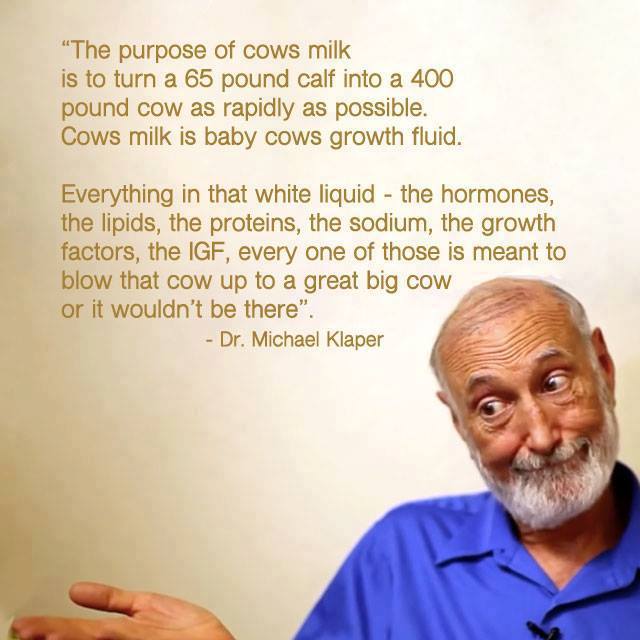
“If there was one substance I could eliminate from the American diet immediately, it would be those substances made from the secretions from the udder of a cow: dairy products.”

Plus, according to 10-time New York Times bestselling author Dr. Mark Hyman, dairy consumption is strongly linked to digestive issues and may even be connected to an increased risk of some types of cancer — including prostate cancer and breast cancer.

Our bodies just weren’t made to digest milk on a regular basis,” Dr. Hyman explains. “Instead, most scientists agree that it’s better for us to get calcium, potassium, protein, and fats from other food sources, like whole plant foods — vegetables, fruits, beans, whole grains, nuts, seeds, and seaweed.”

Neal Barnard, MD, of the Physicians Committee for Responsible Medicine, wrote:

Dairy products are packed with fat and cholesterol and may increase the risk of health problems ranging from asthma to some types of cancer. An elevated risk of prostate cancer incidence and mortality has been associated with dairy consumption and the same may be true for ovarian cancer.”

Hemp milk and seedsSo overall, it seems that for many people, moving away from dairy milk may be a positive step.

Plant-Based Milk Offers Health Benefits — Without The Cruelty

iStock.com/marekuliasz

More at: https://foodrevolution.org/blog/problems-with-dairy/

_______

Sunday, August 1, 2021

How to Pray. The Wheat and the Tares. DAIRY IS SCARY!

How to Pray

How to Pray“The Bible answers the questions: To whom should we pray? When should we pray? How long should our prayers be? Should our prayers be public or private? What or whom should we pray for? Is there a prescribed posture to assume in prayer? The Lord’s Prayer was part of Jesus’ instruction about how to pray.

The pages of the Bible teach us to direct our prayers to God the Father—not Mary or the saints.

If you’re wondering about how to pray an effective prayer, you’re not alone—even a disciple of Jesus asked Him for instructions about how to pray:

“Now it came to pass, as He was praying in a certain place, when He ceased, that one of His disciples said to Him, ‘Lord, teach us to pray, as John also taught his disciples’” (Luke 11:1).

Prayer is our means of communicating with God. As with any personal relationship, interaction with God matures as we spend more time with Him.

As the Lord’s disciple indicated, prayer is something that does not come naturally to us—it’s something we have to be taught. The inspired Word of God provides the answers to some frequently asked questions about how to pray.

Pray to the Father

Jesus was very clear that our prayers are directed to God the Father: “Pray to your Father who is in the secret place” (Matthew 6:6). “In this manner, therefore pray: ‘Our Father in heaven, hallowed be Your name’” (verse 9).

Now that Jesus Christ is in heaven as the Mediator between God and man (1 Timothy 2:5), we pray “in the name of our Lord Jesus Christ” (Ephesians 5:20). Jesus said we can ask the Father for anything in His name (John 14:13-14).

Though Christ was very clear, it is amazing how many churches pray in ways that directly contradict this instruction. Prayers are not to be directed to angels, Mary or any saints!

How often should I pray?

The Bible provides no absolute “prayer schedule,” but we do see many examples of faithful men and women who consistently set aside time each day for prayer.

When should we pray?

The Bible doesn’t prescribe a “correct” time to pray—on the contrary, it shows us that many of God’s people prayed throughout the day and at different times.

In Psalm 55:17 King David said he would pray in the “evening and morning and at noon.” Daniel also prayed three times a day (Daniel 6:10, 13).

There are several references to praying in the middle of the afternoon (“at the ninth hour”) while the 119th Psalm talks about praising God “seven times a day” (Psalm 119:164). Many Christians make it a point to pray at the beginning and end of each day, making sure they “bookend” their days in conversation with God.

There’s no wrong time for prayer—the important thing is that we set aside time to pray regularly. Paul even said to pray “without ceasing”—meaning that prayer should be a regular and consistent part of our daily lives and not something we resort to only at difficult times (1 Thessalonians 5:17).

How long should my prayers be?

The Bible teaches us that God wants to hear from us and that our relationship with Him grows by spending time with Him. God is more concerned with the content of our prayers. Our prayers should be as long as they need to be to say what we need to say and ask what we need to ask.

How long should our prayers be?

How long you pray is a lot like when you choose to pray—the Bible doesn’t offer any specific guidelines for us on those counts.                    Continued at:  https://lifehopeandtruth.com/god/prayer-fasting-and-meditation/how-to-pray/?

_______

The Wheat and the Tares.

Matthew 13:24-30

(24) Another parable He put forth to them, saying: "The kingdom of heaven is like a man who sowed good seed in his field; (25) but while men slept, his enemy came and sowed tares among the wheat and went his way. (26) But when the grain had sprouted and produced a crop, then the tares also appeared. (27) So the servants of the owner came and said to him, "Sir, did you not sow good seed in your field? How then does it have tares?" (28) He said to them, "An enemy has done this." The servants said to him, "Do you want us then to go and gather them up?" (29) But he said, "No, lest while you gather up the tares you also uproot the wheat with them. (30) Let both grow together until the harvest, and at the time of harvest I will say to the reapers, "First gather together the tares and bind them in bundles to burn them, but gather the wheat into my barn."""

Matthew 13:37-40

(37) He answered and said to them: "He who sows the good seed is the Son of Man. (38) The field is the world, the good seeds are the sons of the kingdom, but the tares are the sons of the wicked one. (39) The enemy who sowed them is the devil, the harvest is the end of the age, and the reapers are the angels. (40) Therefore as the tares are gathered and burned in the fire, so it will be at the end of this age.”
New King James Version
Change Bible versions

God has seeded His church with vessels for honor—the wheat—while Satan has sprinkled in his own vessels for dishonor—the tares (see II Timothy 2:20-21). Jesus does not use the imagery of wheat and tares haphazardly to relate this important lesson. Instead, the physical properties of these two different plants reveal a depth to the parable's symbolism that emphasizes how different in quality the wheat is from the tare, and how hard it is to tell them apart.

Wheat, which Christ uses to symbolize His true children, has always been a vital, life-giving substance, possessing both nutrition and healing properties. During most of human history, it has most commonly been used for bread, and it has long been called "the staff of life." Herbert W. Armstrong even proclaimed, "The grain of wheat God causes to grow out of the ground is a perfect food." The matchless quality of wheat serves as a symbol revealing how highly God regards His children.

In contrast, Christ uses the tare to symbolize counterfeits within His church. Tares are weeds diametrically opposite to wheat in all their properties other than appearance. Even the botanical name of the weed, darnel, conveys its detrimental quality. Darnel comes from the French language, meaning "drunkenness," having earned this name as a result of its intoxicating effect when consumed.

When darnel is ground into flour, baked in bread, and consumed while hot, the eater may experience symptoms similar to drunkenness, including trembling, followed by an inability to walk, hindered speech, and vomiting. In addition, darnel is commonly infected by the ergot fungus, which can cause hallucinations when consumed in small doses, but in large doses can do heavy damage to the central nervous system. The Greeks and Romans supposed the darnel and the fungus to cause blindness. The Romans even crafted an insult from darnel, lolio victitare, "to live on darnel," a phrase applied to a dim-sighted or shortsighted person.

The high value and health properties of wheat are opposite to the common and harmful properties of darnel, yet in Christ's parable the owner of the field allows both to grow together. One reason is because wheat and darnel are exact in their appearances during growth. Both plants are lush green and can be distinguished only when they mature and produce fruit: Wheat berries are large and golden, while darnel berries are small and gray. Thus, if the farmer attempted to uproot the tares before maturity, he would wreak havoc on his wheat. Today, modern harvesting equipment easily sifts between the two because of their different sizes.

Spiritual wheat and tares grow alike within God's church, identical in appearance, and to attempt to uproot the tares would result in uprooting some of the wheat as well. Just as the qualitative difference between the mature fruit of wheat and darnel is different, only by the fruit may the brethren be known (Matthew 7:15-20). Even after maturity, God Himself—and no one else—will have the tares removed and will destroy them in the furnace (Matthew 13:30)."  From: https://www.theberean.org/index.cfm/fuseaction/Home.showBerean/BereanID/8075/bblver/NKJV/Matthew-13-24-30.htm

_______

DAIRY IS SCARY! The industry explained in 5 minutes

YouTube: https://youtu.be/UcN7SGGoCNI

Dairy is scary. Please share this video with anyone and everyone who still thinks dairy is just fine!

★ Patreon http://patreon.com/erinjanus ★ Facebook http://facebook.com/erinjanus ★ Instagram http://instagram.com/erinjanus_ ★ Twitter http://twitter.com/erinjanus Take The Dairy Free Challenge http://dairyfreechallenge.com

________

Saturday, February 29, 2020

Should Christians Keep Mardi Gras? Let This Mind Be in You. Acts for Today's Disciples. Update.

.

story.lead_photo.captionPolice stand next to a pickup truck that slammed into a crowd and other vehicles, causing multiple injuries, coming to a stop against a dump truck.  — Police on Sunday identified the intoxicated man who allegedly plowed into a crowd enjoying a Mardi Gras parade. NEW ORLEANS (AP)

Should Christians Keep Mardi Gras?

“Mardi Gras has its roots in religious tradition. But what does the Bible say?

Transcript of YouTube: https://youtu.be/GHrgfdxFKfI

[Steve Myers] “Colorful costumes and masks and pageantry. That’s all surrounding Mardi Gras. Mardi Gras is one of those traditions where…sometimes I’ll talk about the fact that it reminds me of the three Ds. There’s dancing in the streets, there’s drunkenness and debauchery. That kinda categorizes Fat Tuesday. That’s literally what the term Mardi Gras means.

Religiously it’s called Shrove Tuesday because that’s the day before Lent. Lent of course being more of a Catholic kind of a tradition that’s rooted in pagan holidays. And what would happen at Lent is that you would give up something for Lent. And so before you give something up, you certainly want to overindulge and fatten up and, you know, get into food and drink and all those things so that you can then put that behind you and repent for the rest of this religious season.

But when you really think about the implications of that religiously, it’s really ridiculous. In modern carnival traditions and celebrations all around the world and whether it’s in New Orleans or Rio or Nice, France. These are areas where they’ll often celebrate for weeks, leading up to that time. When we lived in New Orleans for a while, I remember they talk about Fat Tuesday, and then instead of Ash Wednesday, they’d call it Trash Wednesday because there was so much junk leftover from these Mardi Gras celebrations. Well, is that something we should have any part in?

These Catholic traditions that are not really based in the Bible at all. I mean, there’s a couple of interesting aspects when you consider this. I was thinking of the passage that’s found in Romans 13:13. It says the basic things. As Christians it says, “Let’s walk properly in the day, not in revelry or drunkenness.”

Of course on TV, they’ll show the parties and the fun but they don’t show all of those types of things because that would certainly take away from the tourism of all those areas of the world. Romans goes on, “don’t walk in lewdness and lust, not in strife and envy.” And it’s kind of a reminder, those are the things we should give up, but that’s not good enough.

This whole aspect of Mardi Gras and Lent, I think it is something that miss directs us to what the truth of God’s word really is. Yes, we’ve got to give up lewdness and drunkenness and revelry and all those types of things that are against God’s way of life. But Romans points out, it’s not just about giving something up. We have to put something on and so verse 14 in Romans 13 says, “Put on the Lord Jesus Christ, make no provision for the flesh to fulfill its lust.”

And so that’s an important aspect of Christianity, true Christianity. We not only put off those things that are wrong, but we’ve got to take it a step farther. We’ve got to put on everything that’s right. So when you begin to hear about Mardi Gras celebrations, and all of those types of things in this upcoming Lent season that this religious world will keep, remember, it’s not rooted in the Bible. In fact, let it remind you of the fact we need to put off the ways of the world, but more importantly then, put on Jesus Christ.”  From: https://www.ucg.org/beyond-today/beyond-today-daily/should-christians-keep-mardi-gras

________

Daily Bible Verse Blog

Let This Mind Be in You

Philippians 2:3-5

Let nothing be done through selfish ambition or conceit, but in lowliness of mind let each esteem others better than himself. Let each of you look out not only for his own interests, but also for the interests of others. Let this mind be in you which was also in Christ Jesus.

The goal of Christian conversion and transformation is to become like Jesus Christ—to think like Him, to love others as He does, to have His mind in us.

Paul lists some of the changes that are necessary for a natural, selfish human mind to become like Jesus Christ’s mind. We must remove selfish ambitions and “empty pride,” replacing them with “lowliness of mind.”

“The Greek word suggests a deep sense of humility. Although the pagan writers used the word negatively, in effect to mean abjectness or groveling, Paul did not. What Paul was calling for was an honest evaluation of one’s own nature. Such an evaluation should always lead to glorification of Christ” (NKJV Study Bible, comment on Philippians 2:3).

Elsewhere Paul says it is not wise to compare ourselves with others (2 Corinthians 10:12). But when we do assess ourselves and do consider others, we should “be severe upon our own faults and charitable in our judgment of others” (Matthew Henry’s Commentary, comment on Philippians 2:1-1”1).

For more about developing the mind of Jesus Christ, see “Christ in Us: How Does He Live in You? From: https://lifehopeandtruth.com/bible/blog/let-this-mind-be-in-you/?

____

Acts for Today's Disciple, Part 6

“A scene from the early days of the Church offers us a lesson about effectiveness for us today.

Transcript of YouTube: https://youtu.be/B-sNfZrgbm0

[Darris McNeely] “One of the things we sometimes ask ourselves in our role as a disciple, a follower of Jesus Christ, how effective are we? Are we really accomplishing something with our obedience, with our works, with our service to people, to God, to His Church?

You know, the story of the Book of Acts and the role of the disciples in the early church can help us come to an answer on that question.

There was a scene in the early days of the church in the fourth chapter of the Book of Acts where persecution begins to come out against the church in its earliest days. Peter and John have healed someone in the temple. And that creates a great deal of following and people are listening to their message about the kingdom and about the resurrection of Jesus Christ and His role as their Savior.

The Sanhedrin, the ruling body of the Jews in the temple, they don’t like it. They bring Peter and John before them and they question them. They then tell that “We’re doing this all in the name of Jesus of Nazareth, the one whom you kill.” The Jewish leaders don’t like it. They kind of give them a little slap on the wrist and say, “Don’t do this anymore.” But they say, “Well, we have to. We will.” They leave. They go back to their followers. And they recount to them what they have done.

And as they’re in a small group setting in Chapter 4, the church kind of rejoices over what has happened, and the fact that the power of God is quite evident in the actions that they are taking. And they make this statement. It is actually a prayer in Acts 4, beginning in verse 27, 28, and 29 here. They say to God, “Lord, now pay attention to their threats and grant to your servants to speak Your message with great courage.”

The disciples were threatened by the Jewish leaders. The disciples are praying to God, “Please give us courage while You extend Your hand to heal, and to bring about miraculous signs and wonders through the name of Your holy servant Jesus.” This was their prayer to God in a collective prayer. When they had prayed, it says, the place where they were assembled together was shaken, and they were filled with the Holy Spirit and began to speak the word of God courageously.

It’s like God took His little finger and just kind of reached down and shook the room that they were all gathered in and praying in to give them an encouragement that, “You’re on the right track. What you’re doing is of Me. I’m supporting it. Keep doing what you’re doing.” And they were encouraged. They were filled with the power of the Holy Spirit.

The disciples in their early days in the church, they were a praying group of people. When they were faced with a difficulty, opposition to what they were doing, they got together, they read Scripture, and they prayed to God. And they were effective. And their works were works of God and God supported that. And there was fruit born from what they did.

When we look at that in our own life, how effective are we? How effective are we in the larger church?

This is a good story to go back to, to recognize the elements of what they did. They supported one another, they read Scripture, and they prayed to God. And that was the core of their plan. That was their strategic plan. And God was behind them at that time. And they were effective. Something to think about, when we worry and wonder about what we’re doing, what you’re doing with your life and your service before God.”  From: https://www.ucg.org/beyond-today/beyond-today-daily/acts-for-todays-disciple-part-6

_______

Update

Bible study on Sunday afternoon was cancelled because the pastor was sick.

Monday was the Brazos Valley Strengthening Relationship seminar’s last meeting, and she brought us some chicken and veggie stew, and we each were given a certificate and gift card for completing the course. This was funded by Texas A&M AgriLife Extension.

Tuesday, my daughter came over here with her two dogs and we took all three to the park.  One of her males, another American Eskimo, came from the same house as my little skittish little Foxie, and they seemed pleased to see each other, but Foxie thought that Wendy’s other dog, a male Aussie Shepherd, was the bee’s knees.  They romped and played the best way they could on leashes, that is until we got back here, then she guarded me and wouldn’t let the other dogs near me. 

On Wednesday, another Aggie, from Family and Community Health A&M University came to give us a preview of a new health program that they are starting here.  We were issued pedometers and now they will be coming twice a week and trying to get these old seniors to walk around the block!  We are supposed to walk 5-10 minutes a day to get into the habit.  I walk quite a bit anyway, exercising the dog.

As I was still feeling a bit droopy from my cold, so I just took cookies to the church potluck.  The sermon was about “It Takes Courage, It Takes Heart”.  About the many examples of people’s courage over the years.  King David, Daniel, Jesus Christ, the negro underground railroad, and he even mentioned my going through the bombing during the war.  I told him later, that it didn’t take any courage, because as a child I didn’t know any different, I just accepted it as a part of life.

Each day is different for little scared Foxie, she will be fine, peeing outside like she should, then she will hear the big trash truck, a noisy train, or people shouting, and she will be all shaky and won’t pee for the rest of the day.

Tuesday, January 29, 2019

Thinking of Getting an Abortion? Are There Examples of Sexual Assault in the Bible? Update.

For “Scripture Sunday”:

Thinking of Getting an Abortion? Don’t Do It!

“If you’re faced with an unwanted pregnancy, please read at least the beginning of this article. “Thirty-Six Couples Wait for Every One Baby Who Is Adopted.”

A fetus in the womb.Lunar Caustic/CC BY-SA 2.0

As God’s children, we should determine to preserve the lives of the unborn, who are also His children, at all costs.

Did you know it’s a crime to destroy an eagle’s egg in the United States? Yet killing an unborn child is permitted. Society today is completely mixed up!

And the scourge of abortion is worldwide. It was reported several years ago that “nearly a third of pregnancies in Europe end in abortion” (Claire Bates, Daily Mail, Jan. 19, 2012). In China the number is an unthinkable 23 million per year (“China Commits ‘Staggering’ 23 Million Abortions Per Year, According to US State Dept.,” LifeSiteNews, April 15, 2016).

How does ending life in this way find such widespread acceptance? Many in favor of abortion make the woeful argument that what is growing in a woman’s womb is not really a human being.

But an unborn child is a human being. It’s not a piece of tissue. “A baby’s heart beats in 22 days, hiccups begin [at] 52 days, organs function 8 weeks after conception—in short … abortion kills a human” (Keith Riler, “Thirty-Six Couples Wait for Every One Baby Who Is Adopted,” LifeNews.com, July 9, 2012). The unborn can even hear and respond to music!

For those facing an unwanted pregnancy, abortion is the wrong answer. We must all learn to seek direction from God—and His forgiveness where we have gone astray—learning to value precious human life as He does.

What does the Bible say?

Society may call the unborn mere “tissue,” but Scripture makes it clear that the unborn is a child. Exodus21:22-23 says regarding expectant mothers: “If men fight, and hurt a woman with child, so that she gives birth prematurely, yet no harm follows, he shall surely be punished accordingly as the woman’s husband imposes on him; and he shall pay as the judges determine. But if any harm follows, then you shall give life for life …” (emphasis added throughout). This meant the death penalty if the woman or the unborn were killed. Some will dispute that, but notice further that the unborn here is called a child.

Now consider Luke 1:1-2, which contains the story of the births of John the Baptist and Jesus Christ. Mary, pregnant with Jesus, encountered her cousin Elizabeth, who was pregnant with John: “And it happened, when Elizabeth heard the greeting of Mary, that the babe [John] leaped in her womb” (Luke1:41). Elizabeth said: “For indeed, as soon as the voice of your greeting sounded in my ears, the babe leaped in my womb for joy” (verse 44). The Greek word translated “babe” here is the same word we find in Luke 2 referring to Christ as “the Babein a manger” (verses 12, 16).

Again, the baby John leapt for joy in his mother’s womb. Clearly he was already a real person while in the womb—as was Jesus. Would it have been okay for John or Jesus to have been aborted then?

So both the Old Testament and the New Testament affirm that the unborn are indeed tiny babies! They have every right to human life!

Disaster at the U.S. Supreme Court

One of the most tragic decisions ever handed down by the U.S. Supreme Court was the January 1973 landmark ruling of Roe v. Wade, which allowed women across the country the “legal” right to abort the young life in their womb. This ruling has been interpreted to mean that the unborn do not have constitutional rights.

How horrific and sad! If the unborn have no constitutional rights, then who will protect the unborn?

The argument that every woman has the right to decide what is best for her own body is quite shallow. Do children in the womb have no rights concerning what is done to their bodies—whether to live or die? Who will speak for them?

Amazingly, “Jane Roe,” the plaintiff in Roe v. Wade whose real name was Norma McCorvey, later had a complete change of heart and came to regret her role in legalizing abortion. She became a Christian pro-life advocate in the mid-1990s and remained involved in campaigning to make abortion illegal until her death in 2017, stating “that her role in the landmark court case was the biggest mistake of her life””

Continued at: https://www.ucg.org/beyond-today/beyond-today-magazine/thinking-of-getting-an-abortion-dont-do-it

________

Are There Examples of Sexual Assault in the Bible?

“God does not condone sexual assault. But this does not prevent man from committing these crimes when they are not living their lives in accordance with God's Law.

An open Bible laying on a table.Aaron Burden/Unsplash

In every situation involving rape or sexual assault in Scripture, there are negative ramifications. God does not condone sexual assault. He expressly forbids it. God loves His children and He has compassion on those who have been affected by this crime.

Recent headlines have seen a resurgence of reports of sexual assault at the hands of powerful men. One such case—the numerous allegations against filmmaker Harvey Weinstein—has propelled and empowered a number of women to come forward with their own stories. The #MeToo movement has gained steam, and over the past months the number of these allegations has increased.

Sexual assault is not a modern issue. Sadly, as King Solomon wrote, “There is nothing new under the sun” (Ecclesiastes 1:9). There are examples of sexual assault and rape found in Scripture, and God is not silent on this topic.

The key passage within the law of God regarding sexual assault is found in Deuteronomy 22:25-27:

“But if a man finds a betrothed young woman in the countryside, and the man forces her and lies with her, then only the man who lay with her shall die. But you shall do nothing to the young woman; there is in the young woman no sin deserving of death, for just as when a man rises against his neighbor and kills him, even so is this matter. For he found her in the countryside, and the betrothed young woman cried out, but there was no one to save her.”

The Hebrew word used in this passage to indicate assault is chazaq, which indicates force, violence or an overpowering of someone. This is by definition not consensual because the individual overpowered the victim. Additional proof of it being non-consensual was the implication that the young woman cried out, but there was no one to save her.

This passage is describing what we would term in our modern vernacular rape, or sexual assault.

What is important to recognize is what this is clearly stating.

1. It’s not the woman’s fault. Notice the phrase: “There is in the young woman no sin deserving of death.” The perpetrator of this crime holds all of the guilt in the described scenario.

2. The perpetrator is to be put to death, just as a man who rose up against his neighbor and killed him. Its punishment was to be equivalent to that of murder.

As a result of these verses, we can conclude that God does not condone sexual assault. Unfortunately, however, this does not prevent man from committing these crimes when they are not living their lives in accordance with the law of God.

The rape of Dinah and the spiral of violence

There are a few more examples of sexual assault in Scripture, all of which brought negative consequences.

One of the first examples is the story of Dinah in Genesis 34. Dinah was one of Jacob’s daughters, born to him by Leah. When Jacob and his family moved to the outskirts of the city of Shechem, Dinah went out to meet with the women of the land. When Shechem, the son of Hamor, saw Dinah, he assaulted her.

His heart was then drawn to her, and he attempted to have his father negotiate for her to be his bride. Ultimately, her brothers, Levi and Simeon tricked Shechem, Hamor and the men of the city to become circumcised so they would be able to intermarry with them. When the men were healing from their circumcisions and in pain, Levi and Simeon set the city to the edge of the sword, killing all of the men in the city as a reprisal for the rape of Dinah.

Levi and Simeon wrongly meted out the death penalty on more than just the perpetrator, and in Genesis 49, when the blessings and curses were given to Jacob’s sons, Levi and Simeon were cursed for their anger, likely referencing this event.

Chaos in the royal family

Another example of sexual assault in the Bible is the story of Tamar and Amnon, children of King David, found in 2 Samuel 13. In the account, Amnon burned with desire for his half-sister Tamar. He was so desirous of her that he made himself ill. He confessed the situation to a confidant, who helped him scheme a plot that would allow Amnon to take advantage of her.

Amnon follows through on the plan, asking Tamar to bring him food that he might eat it from her hand. She unsuspectingly enters his bedroom to feed him in his illness. He then demands that she come to bed with him, to which Tamar responds, “No…don’t force me, for no such thing should be done in Israel. Do not do this disgraceful thing!” (2 Samuel 13:12). She did not consent.

Amnon overpowered and raped Tamar. Afterward, he loathed her and put her away.

Tamar’s blood-brother Absalom caught wind of what happened, telling her to remain quiet about the situation instead of reporting it. He didn’t let on to Amnon that he knew what he had done, but all the while his hatred for him grew. When their father, King David, found out about the situation, he was furious, but didn’t do anything about it. Tamar lived in Absalom’s house in desolation.

Two years later, Absalom exacted revenge, ordering Amnon killed at a gathering for the princes of Israel. David grieved over the murder, and Absalom fled.

This entire episode—Tamar’s rape, Amnon’s murder and Absalom’s part in it—further drove a wedge into the relationship between David and Absalom, eventually resulting in Absalom’s coup, David’s exile and Absalom’s death at the hand of David’s chief military men. Even the division of the nation of Israel into its northern and southern kingdoms has its roots in this conflict between David and Absalom.

In every situation involving rape or sexual assault in Scripture, there are negative ramifications.

God does not condone sexual assault. He expressly forbids it. God loves His children and He has compassion on those who have been affected by this crime.

If you have been a victim of sexual assault, please get help. It’s not your fault. You can go to www.rainn.org , or call 1-800-656-HOPE to receive resources to assist you as you go forward in your healing.”                   From: https://www.ucg.org/bible-study-tools/bible-questions-and-answers/are-there-examples-of-sexual-assault-in-the-bible

______

Update.

The two articles above are in their entirety because I couldn’t find a good place to abbreviate them.  Both rang home to me, because I have been assaulted, impregnated, and therefore thought about abortion, but didn’t do it.

This week has been a bit different.  Now that the 5-piece dinette booth has gone we had a lot of space in the mini-house.  We did bring in an old dropleaf table, just to have one in there to work on, but I wouldn’t want it for a permanent fixture.  Then we moved in a credenza/sideboard that I have for sale, to display it better than out in the storage. 

Tuesday, my neighbor Hans picked me up and we went to the YMCA yoga and exercises.  I had gone with him the week before and joined the Y, but I didn’t do the yoga that time. Each morning I do the Sit-and-Be-Fit exercises on PBS, but as my insurance pays for the Y, and Hans goes there twice a week, I knew it would be a good addition.  But the only problem is that a crowd of them go to the Incredible Pizza Buffet afterwards, which seems self-defeating to me!  Even though I just stuck to the veggies and salads.

One day I helped my friend over at the storage, and he took me to Schlotzky’s, and I just couldn’t believe that they charge over $10 for a sandwich, and people pay it!  But it was still factory-farmed and CAFO food (confined animal feeding operations) and I just can’t stomach eating it, after learning what those poor anumals go through: https://youtu.be/YHBPpv01n-M and for more on this, if you want to watch the movies:

TheTruth About Your Food with FOOD, INC. Filmmaker Robert Kenner https://youtu.be/2Oq24hITFTY

or: H.O.P.E. What You Eat Matters (2018) - Full Documentary

https://youtu.be/FprMvJYnD44    I hope that you will bookmark this page and watch these.  Your good health deserves that, because your health is your most precious asset.

Then you will understand why I would rather just eat the organic food that I have bought and prepared myself to stay healthy in my mid-eighties. 

Jay came on Friday, and we installed some pretty fancy white lattice across the posts of the middle carport at the mini-house, because I keep some stuff that is for sale there, and I don’t want the place to look junky.  I would rather put it out there when I know people are arriving, because I don’t want prospective customers coming into my house.

For the Sabbath potluck, I took Pizza Potatoes and Cheesy Cabbage, but the cold kept a lot of people away, so I ate the left overs, and fed some to Zack.  The Bible readings were Psa. 19, Gen. 41:1-57, Isa. 29:1-16, Rev. 7:1-17 and all of Mat.7. The Teaching was about Memorials, examples were to remember the Sabbath, and when Jesus said to “do this in remembrance of me”, meaning the Bread and Wine on that fateful time before Passover day.

_______

Sunday, November 1, 2015

Tender Mercies of the Wicked. The Can Opener. The Longhorn. Update.


For "Scripture Sunday":

The Tender Mercies of the Wicked?

Proverbs 12:10 "A righteous man regards the life of his animal, but the tender mercies of the wicked are cruel."

image" King Solomon recognized that a righteous person will not only treat his fellow man kindly, but will also care for his animals.


image It seems the implication is that the godly person shows more kindness to animals than a wicked person shows to other people—even on a good day. We should treat animals—and people, especially—with compassion, not cruelty.

For more about practicing kindness, see “Fruit of the Spirit: Kindness.”

_________

The Can Opener

An Amazing Fact: "Did you know it was 48 years after tin cans were first introduced before the can opener was invented? Until then, cans were beaten open with a hammer and chisel. The tin can for preserving food was patented in 1810 by a Londoner, Peter Durand. Only one year before, French confectioner Nicolas Appert had introduced the method of canning food by sealing the heated food tightly inside a glass wine bottle or jar. He could not explain why the food stayed fresh, but his bright idea won him a 12,000-francs prize from Napoleon. Appert helped Napoleon’s army march on its stomach while Durand supplied the Royal Navy with canned food.


But tin canning was not widely adopted until 1846, when a machine was invented that increased can production from six cans an hour to 60. Still, there were no can openers, and the product labels would read: “Cut around on the top with a chisel and hammer.”

image The can opener was finally invented in 1858 by American Ezra Warnet. But the can opener did not become popular for another 10 years until it was given away for free with canned beef.

 
image The well-known double wheel-style opener was invented in 1925, and the easy pop-top lid was invented in France in 1959. Since aluminum cans made their first appearance in America in 1953, some 74 million tons of aluminum cans (about 3 trillion cans) have been produced. Placed end to end, they could stretch to the moon and back about 500 times! Still, about one quarter of all cans are recycled, some 9 million cans every hour. That is good news when you consider that it takes about 200 years for a buried aluminum can to degrade.

Did you know the Bible teaches that no matter how long Christians are buried, when their graves are opened they will come up with new bodies? We are given a sample of what it will be like when we read the story of Lazarus being raised from the dead by Jesus. When Christ stood before the tomb of His dead friend, Jesus asked for the stone blocking the entrance to be rolled away. Notice what happens: “Martha, the sister of him who was dead, said to Him, ‘Lord, by this time there is a stench, for he has been dead four days’” (John 11:39). The Lord does not need a
special gadget to open graves where bodies have turned to dust. At the voice of an archangel and with the trumpet of God, the dead will rise.
KEY BIBLE TEXTS
"For the Lord himself shall descend from heaven with a shout, with the voice of the archangel, and with the trump of God: and the dead in Christ shall rise first" - 1 Thessalonians 4:16

_______

"The Longhorn: Texas Tough"

image "Traveling through the plains in Texas, you’re bound to see the unmistakable silhouette of the famed Texas Longhorn. As our state’s official large mammal, the mascot of our flagship university, and a surviving symbol of the old American West, the Longhorn is ingrained into our way of life as Texans. 

This time of year in particular, we’re reminded of their storied history. Ranchers have just finished showcasing their best stock at the annual Texas State Fair’s Longhorn Show, and in the midst of football season, the orange Longhorn silhouettes seem to be everywhere.

But only 100 years ago, Texas Longhorns were nearly extinct.

When the first cattle set hoof in the New World more than 500 years ago, they surprised the Spanish settlers who brought them by overcoming the challenging terrain and thriving. The previously domesticated cattle from Europe became tough enough to survive droughts and floods, sweltering heat and bone-chilling cold, while grazing easily on whatever land they occupied. Amazingly, the first Longhorns were even resistant to diseases found in the New World.  They lived longer and reproduced more quickly than other breeds; before long, there were millions of Longhorns roaming free, and feral herds quickly found a home in Texas.

As more European settlers made their way to Texas, Longhorns provided a stable source of meat and income no matter the conditions.  A German traveler making his way through Texas in 1848 remarked, “In Texas, cattle live for the sake of man, but in all other countries man lives for the sake of his cattle.”

Longhorns continued to thrive throughout the 19th Century and found themselves increasingly in demand. European investors offered ranchers gold to expand their Longhorn operations, and these ranchers were even exempt from the Confederate draft because of their important role in providing food for soldiers.

But not long after soldiers returned home from the war, Longhorns began to suffer. Once trade relationships were re-established between the former Union and Confederate states, mass disease wiped out herd after herd across New England farms – except the Longhorns. Northern farmers blamed the species and began slaughtering them in masses. Sadly, what they dubbed the ‘Texas Fever’ was actually a disease carried by ticks, not the Longhorns, who were simply immune. 

Demand continued to plummet because Longhorn meat did not produce enough tallow, or animal fat, to be utilized in the manufacturing of increasingly popular items like candles and soap. Moreover, Longhorn meat was hard to keep fresh absent prolonged refrigeration, and as a result wasn’t viable as a commercial product in the 19th Century. As a result, by 1910, Texas Longhorns were almost nowhere to be found.

And if it weren’t for Will C. Barnes, a U.S. Army Signal Corps private turned cattle rancher, Longhorns may have continued down the path to complete extinction. After leaving the military, in 1887 Mr. Barnes led a team of U.S. Forest Service trailblazers across the west and managed to round up 27 surviving pure Texas Longhorns. In 1927, he created a protected home in the Wichita Mountains Wildlife Refuge in Oklahoma, effectively saving the breed and enabling them to once again flourish." 

From John Cornyn's Texas Times Column.

_______

Update:

One flooring company showed just the linoleum that I wanted on their webpage, but when I went there on Friday to order it, they couldn't find it in their samples.  When I was back in front of my computer, I called them and they finally found it.  But it is a commercial flooring and I think he quoted me a wrong price.  So still looking for lino.

Jay and I also went to some thrift shops, and he found some work shoes and shirts.  He keeps on giving his away.  He gets tired of things.

On Saturday we both went to church, and I had made a pumpkin-choc-cinnamon pie in a graham cracker crust, it was decadent, especially as I took some Redi-Whip to go on it.  There weren't many people there as the weather was bad and some come from quite a way away, like Houston.

The Bible readings were Gen. 18:1-22:24, 2 Kings 4:1-37, and James 2:14-20.  The Teaching was about God's Laws.  How every time the people disobeyed his laws and lived carnally, they were punished.  Like the flood, Sodom and Gomorrah, etc. There are lots of laws in the Bible, including dietary laws, and they are all for our own good.

We had to dash between the raindrops from the chapel to the dining hall.  There was a good spread of food including some great corned beef.  We had fun and fellowship while eating the potluck, even though we were a small group that day.

Tuesday, July 7, 2015

Stop The Suffering. Paradise. Update.


Belated Posting:

http://action.humanesociety.org/site/R?i=phlhmZr0j2owVKHfjuUf2g

Quick question, Friend?

"Congress just introduced an important animal welfare bill, and your lawmakers need your input.

Assuming that it’s NOT necessary to conduct animal testing to create gorgeous lipstick and great shaving cream, which of these things do you think we should do?

[A] Drip chemicals into the eyes of rabbits without pain relief;

[B] Force-feed mice large amounts of a chemical to see how much might kill them (also without pain relief);

[C] Kill tens of thousands of animals a year by suffocation, neck-breaking, or decapitation (again, no anesthetics or pain relief); or

[D] Use safe and effective alternatives to animal testing instead.

If you said D, we’re with you! And the animals need us to be with them.

A bipartisan group of lawmakers in the U.S. House of Representatives just introduced the Humane Cosmetics Act (H.R. 2858), which would prohibit animal testing for cosmetics manufactured or sold in the United States.

We’re working hard to keep the pressure on your elected officials to move this bill—and other animal protection measures—forward. But we can’t do it without you. Please donate now to help end cosmetics testing on animals! Your gift will be used to help us work on this and many other legislative fronts of animal protection.

Shocking as it may be, rabbits, guinea pigs, hamsters, and mice are still routinely blinded, poisoned, or even killed just to test new cosmetics products and their ingredients.

http://action.humanesociety.org/site/R?i=IjzcRnl2k5X7ws7Hm5054Q

Why is this still happening? Old habits die hard. These days, modern science has completely eliminated the need to use animals to ensure the safety of products like perfume and hair color. And the FDA doesn’t even require that animal tests are conducted to demonstrate that cosmetics are safe.

But some companies still persist in subjecting animals to hideous practices just to produce nail polish (nail polish they could produce without using animals!).

I’m writing to you today because it doesn’t have to be like this.

Will you please make a gift today—however much you can afford—to help us advocate for this bill and other critical legislation affecting animals?

Animal testing for cosmetics is heartbreaking. A large percentage of the animals used in tests aren’t even covered under the Animal Welfare Act, so while inhumane and unethical, it’s perfectly legal to perform all sorts of crude tests on them without any sort of pain relief whatsoever.

Perhaps worst of all, none of this is even necessary. Non-animal safety tests have been proven to be more effective and less expensive over the long run than animal-centered testing. And more than 600 beauty brands around the world are already using them and the thousands of ingredients already found to be safe to produce quality cosmetics.

It’s clear: humane cosmetics should be the law of the land.

And it can be, but only with your help. Please, make a gift today to help us advocate for the Humane Cosmetics Act and other important bills to defend animals. Your generous donation will also be used to support our lifesaving work in areas like dogfighting, wildlife trafficking, puppy mills, and horse slaughter.

Please, help now. Stop the needless testing. Stop the suffering.

Thank you for all you do for animals."

 http://action.humanesociety.org/site/MessageViewer?em_id=107643.0&dlv_id=110001

_______

Paradise

An Amazing Fact: "Where is the best place in the world to live? According to an annual survey of the Economist Intelligence Unit, Vancouver, British Columbia, has hit the top for the fifth year in a row. Cities are rated in five areas: stability, healthcare, culture and environment, education, and infrastructure. Second place went to Melbourne, Australia, and third to Vienna, Austria.

But wait a minute! The United Nations listed Norway as the most desirable country in the world in which to live, followed by Australia and Iceland. At the bottom of its list are Niger, Afghanistan, and Sierra Leone, especially because of war and AIDs epidemics. Except that CNN reports that International Living magazine voted France, for a fifth year in a row, the best place in the world to live! You can get 12 months of paid maternity leave in France, guaranteed by law. Finally, Forbes shares the research of international human resource consulting company Mercer, which puts Vienna, Austria, at the top. In fact, not one place in the United States makes the list.

So where is paradise? Where is the perfect place to live? It depends. Most people are pretty happy right where they are at this moment. The environment is certainly nicer in some parts of the world than others, though toxins have touched our entire planet wherever you go. The biggest problem with finding the perfect place to live is that any place that has a human being will be imperfect, including your own home—that includes the person who looks back at you from the mirror every morning.

Paul writes about an acquaintance who apparently had a vision of paradise (2 Corinthians 12:4), also known as the garden of Eden. This special place was our first home, but our planet has undergone some changes since God first created the perfect place for us to live. Someday Eden will be restored (Revelation 2:7). When that day comes, we will have no doubts about the best place in the world to live."
KEY BIBLE TEXTS
And the LORD God planted a garden eastward in Eden; and there he put the man whom he had formed. - Genesis 2:8

_______

A Belated Update:

Evicted Ray still hasn't shown up to get his things out of the guest house, so we are having to work around it all.  We did pile some of it up at the end of the living room, but the bedroom and utility room are still cluttered with his stuff.  Legally, I can't get rid of it yet.

Jay is having a hard time staying sober, so I have a new worker, Roy, and he wants to rent the guest house.  He is helping me tear up the floor that was damaged by Ray letting an AC drip down the wall and across the floor under the linoleum for several years. 

We took the middle seats out of my Dodge Grand Caravan, and easily hauled 4x8' sheets of plywood in it.  I can see it is going to be a useful vehicle.

Roy also went to church with me and really enjoyed our little congregation and the fellowship at the potluck afterwards.

The Bible readings were Psa.138,139, Num.22:2-25-9, Micah 5:6-6:8 and 1 Pet. 2.  The Teaching was about Unity, and to humble our hearts.  It was a lovely day.

Sunday, April 12, 2015

Days of Unleavened Bread. Easter Gets Scrapped in the End. What Would Christ Say To Us Now?


For "Scripture Sunday":

Days of Unleavened Bread were kept by Paul and New Testament Church

Commanded in New Testament

   "And now we wish to show a NEW TESTAMENT COMMAND — more plain, more direct, than any we can find for the weekly Sabbath — to keep these annual HOLY DAYS!
  

Observe again Numbers 28:16-17: "...IN the fourteenth day of the first month is the PASSOVER of the Lord. And IN the fifteenth day of this month is the FEAST: seven days shall unleavened bread be eaten."
  

This FEAST was not the 14th, but the 15th. It was the PASSOVER, when the LAMB was killed, the 14th. The daylight part of the 14th was the PREPARATION for the FEAST. (Mat-thew 27:62; Mark 15:42; Luke 23:54; John 19:14.) (NOTE, in Jesus' day the Jews celebrated their Passover one day late according to the tradition of the elders — John 18:28.)
  

Let us get this point thoroughly established in our minds, for if this is true, as it is, THEN ALL OF THESE DAYS ARE STILL BINDING UPON US BY NEW TESTAMENT as well as Old Testament AUTHORITY!
  

Notice Matthew 26:5: The Jews, conspiring to kill Jesus, said: "...Not on the FEAST DAY, lest there be an uproar among the people." They hastened so they could take and kill Him the day before the feast, or on the 14th Nisan.
Mark 14:2 says the same thing. Now to establish that the Feast day was the day after the Passover Festival, and that it was the high-day Sabbath — the day AFTER Jesus was crucified, notice John 13:29: "For some of them thought, because Judas had the bag — was treasurer  -- that Jesus had said unto him, Buy those things that we have need of against the FEAST..." This was at the Passover supper. They thought Jesus was sending Judas out to buy provisions to prepare for the FEAST. Surely this proved the FEAST was the following day — the 15th Nisan, as all these scriptures positively affirm.
   Now let us examine carefully I Corinthians 5:7-8……..

   "It is faithfully recorded in the New Testament that, during the period its history covers, the Church was keeping those days!
  

  In Acts 20:6, "...we sailed away from Philippi AFTER THE DAYS OF UNLEAVENED BREAD..." Paul and companions plainly had observed the Days of Unleavened Bread at Philippi. The Holy Spirit could never have inspired such words otherwise.

  Notice also Acts 12:3-4: "... Then were the days of unleavened bread... intending after PASSOVER [see Greek] to bring him forth to the people." Could the Holy Spirit have inspired the direct affirmation, "Then WERE the days of unleavened bread" if those days had, in God's sight; ceased to exist?

Painting by English artist Margaret Tarrant, 1888-1959.
It illustrates the nature of the coming rule of Messiah.

Notice, it is not any blinded Judaizers, ignorant of what was abolished, making this statement — it is Almighty God saying it through inspiration of the Holy Spirit. This was YEARS after the crucifixion. The Days of Unleavened Bread still existed, or the Holy Spirit could not have inspired "Then WERE the days of unleavened bread." From: http://www.hwalibrary.com/cgi-bin/get/hwa.cgi?action=getmagazine&InfoID=1374675569#.VSrYySvAtSg

_______

THE FIRST AND THE SEVENTH DAYS OF THE FEAST OF UNLEAVENED BREAD
THESE ARE CONSECRATED HIGH HOLY DAYS OR SABBATHS.

"Christians today are only just beginning to get a handle on this matter of the weekly Sabbath and the "high day" Sabbaths, the holy days. Many are beginning to see the vital importance of this as a blood covenant matter. 

Unfortunately they have been led to believe the standard medieval Christian teaching that the seventh day Sabbath is just a Jewish Saturday worship tradition and merely a matter of "the Law of Moses" which should no longer concern us as Christians. In this they are not being given the Biblical truth.

This matter of certain holy days being referred to in scripture as a Sabbath is most important. Christians for the most part, even Biblical Christians are unaware of the importance of these special "high" days and that a Sabbath, a day sanctified and set aside for rest and for devotion to God, can be any day of the week. During the passion year the first day of Unleavened Bread, a Sabbath, happened to come on a Friday. Christians are still kept under an ecclesiastical fog about this. They think a Sabbath must always be the weekly Sabbath, a Saturday. But the fourth commandment also applies to these holy consecrated feast day Sabbaths as well.

"Remember the Sabbath day,
            and keep it holy".
- Exodus 20:8

The fourth commandment still stands. It was a statute given for as long as there are people on this earth. These Old Covenant matters are still important, even though the Church departed from them after the Neo-Platonist allegorizations of holy Scripture by Origen in the third century, the Church going to bed with the Roman Caesar Constantine at the Council of Nicaea in 325 A.D. and the anti-Throne of David (anti-Semitic) Replacement theology spawned by Augustine."

________

Spoiler Alert: Easter Gets Scrapped in the End

"Easter is one of the most important days in modern Christianity. But this holiday is nowhere mentioned in the Bible. Does it meet God’s standard of worship?

Spoiler Alert: Easter Gets Scrapped in the EndI’ll be blunt.

If you believe that the Bible is truly the inspired and inerrant Word of God, then you should think twice about keeping Easter ever again.

And by thinking twice, I mean study the Bible to see just what God’s standard is for how we worship Him.

(Spoiler alert: This may affect your Easter plans next year.)

The problem with Easter

Actually, there is more than just one problem with Easter. The holiday’s incorporation of pagan symbols is one problem. Another reason to not observe this day is its obvious contradiction of the words of Jesus Christ, who stated that He would be entombed for three days and three nights (Matthew 12:40). Easter and Good Friday disagree with Christ’s words by portraying His entombment as one day and two nights. To learn more about this issue, read “Sign of Jonah: Did Jesus Die Good Friday, Rise on Easter?

The root of the problem with Easter is the idea that God gave men authority to add to or adapt His standards of worship.  But at the root of it all, the problem with Easter is the idea that God gave authority to men to add to or adapt His standards of worship.

It’s a historical fact that Catholic leaders adopted Easter (and other holidays) in the third and fourth centuries A.D. to differentiate Christian worship from Jewish worship and to appeal to the pagan masses to convert to Catholicism. To learn more of this history, read “Origin of Easter.”

But what’s the problem with that?

The bottom line is that only God has authority to establish His law, which defines the way He desires to be worshipped and obeyed. That law does not, indeed cannot, change without God’s say-so. Where did God declare that the holy days He established were superseded by holidays devised by men?

Nowhere!!" 

More at: http://lifehopeandtruth.com/god/blog/spoiler-alert-easter-gets-scrapped-in-the-end/ by Jedd Cole 

_______

Seven Last Sayings of Jesus

"All of Christ’s teachings were powerful words of life. But His seven last sayings as He died for us are worthy of intense consideration. They should change our lives.

Seven Last Sayings of Jesus

[From the March/April 2014 issue of Discern.]

"Had you stood in the crowd that day watching Jesus die, you would have heard Him utter seven astounding statements. Remarkable words, not only due to His duress, but because of the deep meaning they conveyed. And in these seven last statements of Christ we find a lasting example of how we must also think and live!

What would Christ say to us now?"

Complete article at: http://lifehopeandtruth.com/god/who-is-jesus/seven-last-sayings-of-jesus/ by Clyde Kilough

_______

Update:

Where did this week go?  Ray had to leave again, and I was volunteered to feed his three cats, as his son was also away.  

A new arrival: I have a new foster-cat, "Phoebe".  She is 17 years old, a tabby with a very long tail, and very skinny.  Her previous Mom was put in a nursing home, and Phoebe couldn't go with her.  Phoebe drinks and drinks water, then pees and pees, and eats and eats, but doesn't put on any weight, so she is going to the vet on Thursday.  She was fed dry food all of her life and that is what damages cat's kidneys.  I have her on canned food now, (the good kind with NO by-products)  so hopefully she will improve.

She is very sweet and purrs every time I go near her, but she stays mostly in the 'cave' in the four storey kitty condo that is in my bathroom.  She has ventured out into the living room, and one time even into the garage.  But that cave is her sanctuary and she feels safe there.  She is very cautious, as she is declawed (how cruel) and isn't able to defend herself.  She makes little growly hisses when she sees Nala, my other foster cat, or BabyGirl my foster dog.  I think she is trying to sound macho. Fortunately, she hasn't developed the habit of biting, that many declawed cats have.

Jay did manage to get away from his disabled mother on Wednesday, so we went shopping.  Not much at the thrift shops, but I did snag a white purse for me, and a nice children's Bible.  It will make a good gift.

Ray didn't go to church as he was visiting with his son, and Jay had to stay with his disabled mother. For the potluck, I made Quinoa and Pine Nuts, http://www.myrecipes.com/recipe/quinoa-toasted-pine-nuts  and also small white lima beans, because I didn't have any red ones!   http://www.forksoverknives.com/recipes/red-beans-quinoa/ .   I had intended to mix them together, but took them in two little crock pots, so people could mix them if they wanted to. Some folks had never had quinoa, (!!) so it gave them the chance to taste it by itself.  It disappeared quicker than the beans.

Of course, there was no leavened bread, or anything with yeast or baking soda in it.  Several people had made unleavened bread with wheat and/or white flour.  Some were really crispy and some were softer, all a matter of choice. 

The Bible readings were Psa. 111, 112, Exo. 14:15-26, Num. 28:16-25, 2 Sam. 22:1-51, and 1 Cor. 5:6,  Mostly about the traditions behind the Passover and Unleavened Bread.

The Teaching was about Amalek, Esau's grandson, who gave the Israelites a lot of grief until the Simeonites finally defeated the Amalekites, and they became a dispossessed people.

"The Defeat of Amalek

While the Jews were still in Rephidim, the Amalekites, a mightily and fierce people, descendants of Esau, and well-trained in the art of warfare, suddenly attacked the people of Israel. It was an unprovoked and cowardly attack upon a tired and weary people, just liberated from slavery, on the way to their homeland.

Moses put his disciple Joshua in charge of the troops who were to fight against the Amalekites. Then Moses, together with his brother Aaron and nephew Hut, went up to a hill, to pray for God's help in the battle. The battle lasted a whole day until the Amalekites were finally defeated and routed. God ordered Moses to record the treacherous attack of the Amalekites for everlasting memory. Together with this memory went an oath to wipe the Amalekites -- the incarnation of all evil -- off the face of the earth. There could be no peace between Israel and Amalek for all time to come."

The potluck was plentiful, even though there were several visitors.  Everyone had a great time chatting and eating in the dining hall.  As my foster dog was enjoying some playtime at a nearby ranch, I was able to stay and help the pastor's wife clear up after the meal.  She is a very sweet old lady, and never complains about how much work it is to feed the congregation each Sabbath.  It is a privilege to help her as much as I can, before and after the potluck.

Oh! Jay and I got the hedge clipped, before it started raining again today!