Showing posts with label Yahweh. Show all posts

Sunday, February 11, 2024

What Is Marriage? 1 & 2. Farmed Fish vs. Wild-Caught.

.

What Is Marriage? 1  (Special thoughts for Valentine’s Day)

What Is Marriage?“The Creator God made humans male and female, and He made the institution of marriage. He tells us why He created it and what marriage is supposed to be.

There is only one original source on earth where you can find out how, when, where and why marriage began. More copies of this book—the Holy Bible—have been published than any other written work, yet it is little understood. But by going to it, you can find an understanding of the meaning of marriage.


Summing up what the Bible teaches about marriage

  1. God designed marriage to be a lifelong, faithful relationship between one man and one woman.
  2. Adam was created first and was initially the lone human. From one of his ribs God lovingly formed a woman and presented her to Adam. They were “one flesh,” and she was the perfect complement to Adam. Together they formed a whole, and together they were able to build a family, having and raising children together.
  3. Because of sin, polygamy and divorce entered. Christ said divorce was only allowed in Israel because of their hardness of heart. While God does provide provisions for a marriage to dissolve under some circumstances, it is an extremely painful experience. God didn’t want His children to hurt one another in that manner.
  4. Through the words of Jesus Christ and the apostles, we can see that God’s perspective of marriage as a loving, monogamous relationship between one man and one woman has not changed. In the New Testament God reaffirms it and shows how very important fidelity within marriage is.

God's Design for Marriage BookletMen and women are different by design, intended to complement each other. And it is only through the marriage relationship that God intended children to be brought into the world—to be raised and taught under the loving, thoughtful care of their mother and father.

If you would like to read further about how to have a happy marriage, this “Marriage” section has many related articles for you to read. You will be glad you did!”  Complete article at: https://lifehopeandtruth.com/relationships/marriage/what-is-marriage/

________

What Is Marriage?  2

“Some topics are more personal than others and tend to trigger more emotional reactions. Food and holidays, for example. Or “is that dress white and gold or blue and black” and, of course, marriage and sexual relations.

Although the Bible has a lot to say about marriage, it never explicitly answers the question, “What is marriage?” Probably for the same reason it doesn’t give a precise definition for travel, war, and sacrifice. Everyone in the Bible’s original audience already knew what marriage was, so why waste expensive paper and ink explaining it.

Our world, on the other hand, has become so full of confusion that we need to spell out even the most basic ideas. So, let me begin at the beginning…

Adam gave names to all livestock and to the birds of the heavens and to every beast of the field, but the man could not find a helper fit for him. So YHWH God caused a deep sleep to fall upon the man, and while he slept took one of his ribs and closed up its place with flesh. And the rib that YHWH God had taken from the man he made into a woman and brought her to the man. Then the man said, “This at last is bone of my bones and flesh of my flesh; she shall be called Woman (ishah), because she was taken out of Man.” Therefore a man shall leave his father and his mother and hold fast to his wife, and they shall become one flesh.      Genesis 2:20-24

This passage gives us the three most important elements of the definition of marriage.

  1. Marriage exists to help a man fulfill his assigned role in Creation.
  2. Marriage is meant to be a lifelong union of a man and woman.
  3. Marriage was instituted by God from the very beginning.

Marriage Exists to Help Man Fulfill His Mission

Although Genesis 1:28 records that the first collective mission of mankind was to be a caretaker over the earth and all life on it, Adam’s first individual assignment was to evaluate all of the other creatures to see if one of them might serve as a special helper for him. Of course, God knew that none of them would, but he had Adam go through this process so that the man would also know. When Adam was satisfied that none of the animals would meet his requirements, God created a woman, whom Adam named Eve.

Adam and most other creatures were created from the ground, but Eve was created directly from Adam. God didn’t create Eve from Adam’s head or foot, but from his side, showing that she wasn’t supposed to rule over him nor be his slave, but was supposed to be a peer. The woman was to be more like the man than any other creature in heaven or earth, a counterpart who would rule over and care for the earth together with him.

Eve wasn’t created to be exactly like Adam, though, or else God would have created another man and made them hermaphrodites or capable of parthenogenesis. Woman shares in the collective purpose of mankind as God’s stewards on earth, but each woman does so primarily by assisting her husband in his individual mission.

For man was not made from woman, but woman from man. Neither was man created for woman, but woman for man.    1 Corinthians 11:8-9 ESV

I know that doesn’t sit well with many people, but it is the plain teaching of Scripture. Eve was created specifically to be a helper for Adam, and Paul asserts that this principle applies within all marriages.

While the original task of humanity was to be a caretaker of God’s creation, the Fall necessitated a change in mission parameters. Our task now is to expand the Kingdom of God through procreation, evangelism, establishing justice, and generally doing good works according to God’s standards of justice and good. How each individual and family participates in this mission varies in as many ways as there are individuals and families, but you can know this with absolute certainty: A woman’s divinely appointed mission will never be at odds with her husband’s.

All kinds of things can prevent us from fulfilling marriage’s full purpose: illness and other circumstances that might be out of our control, the husband isn’t fulfilling his calling, or the wife isn’t fulfilling hers. However, our circumstances and failings can’t change the reason God created marriage.

Marriage Is a Lifelong Union

Genesis 2:24 says that the relationship of Adam and Eve is to be a pattern for all marriages, that a new marriage is inaugurated when a man leaves his father and mother to become one flesh with his wife.

“One flesh” implies that they are united in a way that would be painful and unnatural to separate and Yeshua (Jesus) confirmed this understanding when he said “They are no longer two but one flesh. What therefore God has joined together, let not man separate.” (See Matthew 19:4-6 and Mark 10:6-9.)

“Leaves his father and mother” doesn’t necessarily mean that he physically leaves their dwelling place. The Scriptural example is for extended families normally to live close together, frequently on the same land, and obedience to God’s instructions for the use of the land in Israel requires this. What this statement actually means is that the man steps outside of the nuclear family unit into which he was born and creates a new family still under the broad umbrella of his father’s clan and tribe.

This also doesn’t mean that marriage cannot be ended. God hates both divorce and death, but both happen, whether for good or bad, and both end a marriage. I’ll write more about this another time, but the Torah, Prophets, Yeshua, and Apostles all discuss when it is and is not appropriate to end a marriage. Divorce should be avoided because it breaks something that God didn’t want to be broken, but it is still possible.

Marriage Was Instituted by God

From the very beginning, God intended mankind to be male and female and to be joined in a union that he uses as a metaphor of his relationship with Israel.

Like the Sabbath, marriage was created for mankind’s benefit. Both parties, as well as their children, benefit from the arrangement, especially if it is conducted according to all of God’s instructions. However, also like the Sabbath, God created marriage because it suited his purposes. Every good master provides his servants with the tools necessary to accomplish his assigned tasks. The servant benefits because his job is made easier and more enjoyable. The master benefits because the servant is able to do a better job with greater economy.

Also like the Sabbath, marriage is not a man-made custom and man doesn’t get to define it. People today insist that they can make marriage whatever they want it to be: a man and another man, a woman and herself, and every other perversion one can imagine. Yet, Yeshua said that marriage is “what God has joined together”, so there can be no real question on this score. God makes the rules, not us.

Marriage was the very first government and was created by God to serve as the core of ministry, labor, justice, and civilization. It is a model of God and of our relationship to God and, as God is one (Hebrew echad), man and woman are to be one in spirit and flesh. Marriage benefits us and was created to help us in the work for which we were created, but ultimately both we and marriage belong to God and we have a responsibility to him to protect and honor it.”  From: https://www.americantorah.com/2023/03/27/what-is-marriage/

_______

Farmed Fish vs. Wild-Caught

Transcript of video at: https://nutritionfacts.org/video/farmed-fish-vs-wild-caught-2/

“The levels of industrial pollutants found in aquaculture.

Although the levels of dioxins and PCBs continue to decline, there is one dietary source that still remains a threat: fish. Everything eventually washes into the sea. Yes, we can get some from eating horses, but most of human dioxin exposure comes from eating fish. The World Health Organization puts the tolerable upper daily limit of intake at 1 picogram—one trillionth of a gram. As you can see, just eating dairy and we’re already skirting with the max, and fish takes us straight over the top.

Everyone agrees that the omega-3 fatty acids, like DHA, found in fish, are healthy. But, given the industrial contaminants in fish, as a recent analysis in Food and Chemical Toxicology concludes: “If people choose to get their recommended long-chain omega-3 intake from fish, the majority of consumers would exceed the safety limits for dioxins and dioxin-like substances (like PCBs).”

And, just like with eggs, factory-farmed fish have significantly more dioxins. In fact, for every toxin tested, farmed fish had higher levels of DDT, these other banned pesticides, over ten times more PCBs, and ten times more dioxins than wild-caught fish. Aquaculture fish can be considered farmed and dangerous.”

To see any graphs, charts, graphics, images, and quotes to which Dr. Greger may be referring, watch the above video. This is just an approximation of the audio contributed by Dianne Moore.

_________

Sunday, March 13, 2022

Jewish Sabbath? Or Is the Sabbath a Gift for All? Paul’s Sabbath Custom. Cancer-Causing NDMA in Medications (Zantac, Metformin) and MEAT.

.

Jewish Sabbath? Or Is the Sabbath a Gift for All?

Jewish Sabbath or Is the Sabbath a Gift for All“Is the Sabbath God’s gift for all people, or is the Sabbath just a commandment for the Jews? Who does the Bible say the seventh-day Sabbath is for?

Opinions abound on whether the Sabbath commandment is still in effect for Christians today. Some believe it is no longer necessary to keep this commandment. Some think it is only for Jews.

Others think the day has been changed from the seventh day, Saturday, to the first day, Sunday. Some think the New Testament calls keeping the seventh-day Sabbath bondage and that Christians are now free to observe any day of their choosing.

The truth is, the Sabbath of the Bible is on Saturday. It has never changed.

The Sabbath is a gift

God created the Sabbath on the seventh day of creation week. He blessed the Sabbath day and set it apart, setting the pattern by resting on the seventh day (Genesis 2:3). At that time there were no nations—only Adam and Eve, the ancestors of all humans.

More than 2,000 years later, God reminded the people of Israel about His Sabbath. This occurred after He led them out of slavery in Egypt, but before He gave the 10 Commandments at Mount Sinai.

In giving the children of Israel the miracle of manna to eat, God instructed them to gather a sufficient amount to eat each day since it would spoil if kept overnight.

On the sixth day, however, they were to gather twice as much because on the seventh day there would be none, and on this night, unlike the other nights, the manna would not spoil. God said that this was a test to see if Israel would walk in His law (Exodus 16:4-5).

When some of the people went out to try to gather it on the seventh day, “the LORD said to Moses, ‘How long do you refuse to keep My commandments and My laws? See! For the LORD has given you the Sabbath; therefore He gives you on the sixth day bread for two days. Let every man remain in his place; let no man go out of his place on the seventh day’” (Exodus 16:28-29).

From this passage we see that God gave them the Sabbath. It was a gift!

Jesus Christ added, “The Sabbath was made for man” (Mark 2:27).

The Sabbath is a gift for all people—not just the Israelites.

The Sabbath of the LORD; the Lord of the Sabbath

Listed among the feasts of the Lord—the days upon which God’s people are to assemble to worship Him—we note that the seventh day is “the Sabbath of the LORD” (Leviticus 23:3). It is God’s day—not the exclusive day of a single group of people during a particular time.

And so in the New Testament Jesus is rightly called the “Lord of the Sabbath” (Mark 2:28). God’s seventh-day Sabbath is also the Christian Sabbath.

 While some may bristle at the idea that God commands us to do anything other than love Him, the Bible reveals that God gives us these commands for our good. The fact that God intended the Sabbath to be a blessing for all is also illustrated in that God told the Israelites that the Sabbath was to be a day of rest for all the members of their households, their servants, the foreigners living with them and even their animals. (Exodus 20:10).

So the Sabbath is clearly a gift from God that was intended for everyone!

The Sabbath is a command

In addition to being a gift, the Sabbath is also a command.

In Exodus 20:8, God told the ancient Israelites and us today: “Remember the Sabbath day, to keep it holy. Six days you shall labor and do all your work, but the seventh day is the Sabbath of the LORD your God. In it you shall do no work: you, nor your son, nor your daughter, nor your male servant, nor your female servant, nor your cattle, nor your stranger who is within your gates.

“For in six days the LORD made the heavens and the earth, the sea, and all that is in them, and rested the seventh day. Therefore the LORD blessed the Sabbath day and hallowed it” (Exodus 20:8-11).

As God explained to ancient Israel: “Now it shall come to pass, if you diligently obey the voice of the LORD your God, to observe carefully all His commandments which I command you today, that the LORD your God will set you high above all nations of the earth. And all these blessings shall come upon you and overtake you, because you obey the voice of the LORD your God” (Deuteronomy 28:1-2).

“If you love Me, keep My commandments”

Should Christians keep the Sabbath command? Yes. Obeying God is how we show our love for Him. As Jesus Christ said, “If you love Me, keep My commandments” (John 14:15). The apostle John added: “For this is the love of God, that we keep His commandments. And His commandments are not burdensome” (1 John 5:3).

Jesus, who is in complete agreement with the Father (John 10:30), said, “Not everyone who says to Me, ‘Lord, Lord,’ shall enter the kingdom of heaven, but he who does the will of My Father in heaven” (Matthew 7:21). Obeying God is not optional for those who wish to be in His Kingdom.

Sabbath for all people

In summary, the Sabbath is both a gift and a command for all people, not just the Jews. Because keeping the Sabbath shows love to God, it is an enduring expectation of God for all those who seek Him.  From: https://lifehopeandtruth.com/bible/10-commandments/sabbath/jewish-sabbath/?

_______

Paul’s Sabbath Custom

Acts 17:2

Then Paul, as his custom was, went in to them, and for three Sabbaths reasoned with them from the Scriptures.

As we saw in Acts 13:42-44, the apostle Paul consistently preached on the seventh-day Sabbath, even to the gentiles.

In Thessalonica, Paul continued this custom, preaching on three Sabbath days and teaching why Jesus Christ had to suffer and die. The Bible shows Christ died for our sins—because we have broken God’s commandments (1 John 3:4-5; 5:3). This includes the Fourth Commandment about remembering to keep God’s seventh-day Sabbath holy.

Many think that the Sabbath was changed. Find out what the Bible says in our article “Was the Sabbath Changed to Sunday?” From: https://lifehopeandtruth.com/bible/blog/pauls-sabbath-custom/?

For further study on the Sabbath, read the article “How to Keep the Sabbath as a Christian.”

The Sabbath: A Neglected Gift from God

RELATED ARTICLES

_______

Cancer-Causing NDMA in Medications (Zantac, Metformin) and Meat

Transcript of YouTube video: https://youtu.be/OXo3mbZpdDA

Billion-dollar drugs pulled from the market for carcinogenic contamination less than that found in a single serving of grilled chicken.

In 2018, one of the bestselling blood pressure drugs, valsartan—sold as Diovan—was found to be contaminated by the “probably carcinogenic” nitrosamine known as N-nitrosodimethylamine (NDMA). It’s believed that approximately 20 million people worldwide were prescribed the drug tainted with this contaminant whose cancer risk has been shown to exceed that of many known potent carcinogens, including asbestos, benzo[a]pyrene, and PCBs.

The U.S. Food and Drug Administration (FDA) estimated that taking the drug for a few years could cause cancer in as many as 1 in 8,000 people, whereas the European equivalent of the FDA estimated the cancer risk could be as high as 1 in 5,000. It is unlikely, researchers wrote in this Spring 2019 paper, that drugs like valsartan are a unique case. And indeed, a few months later, the FDA announced it had found NDMA in ranitidine.

Ranitidine, the acid reflux drug sold as Zantac, is one of the most prescribed drugs on the planet, in addition to being sold over the counter. Give people a single tablet and the amount of NDMA flowing through their bodies jumps up more than a hundred-fold.

Then in 2020, some formulations of metformin, a popular diabetes drug sold as Glucophage, were found to be contaminated. The finding of NDMA in common medicines led the FDA to call for the immediate withdrawal of all Zantac from store shelves, yanking the drug from the market because their testing showed NDMA levels could in some circumstances exceed the acceptable daily intake limit of 96 nanograms per day. It was so bad that the FDA found levels of this carcinogenic contaminant NDMA in Zantac similar to the levels you would expect to be exposed to if you ate grilled or smoked meats!

Wait, what?

NDMA has not only been found in contaminating drugs. It is a known byproduct from pesticide manufacturing, leather tanning, and tire plants, and is found in multiple foods and beverages, including processed meat and beer. Now that we know NDMA can transfer through the placenta, this may explain the relationship between maternal cured meat consumption during pregnancy and the risk of childhood brain tumors. For example, hot dog consumption during pregnancy may increase childhood brain tumor risk by 33 percent or sausage consumption may increase it by 44 percent. Bacon consumption may increase childhood brain tumor odds by 60 or 70 percent. But it’s not just processed meat. Researchers have found it in poultry products as well.

A single serving of chicken contains more than 100 nanograms of NDMA. Remember how the FDA said the acceptable daily intake limit is 96 nanograms per day? Half of a chicken breast contains 110.

Now, raw poultry doesn’t have any; it’s the cooking process. In fact, the dry-heat cooking of meat, like broiling or grilling, even creates airborne NDMA, releasing this very potent carcinogenic compound into the air. So, even if you’re only getting a salad or something in a charcoal grill restaurant, just being indoors where meat is being cooked could pose a significant cancer risk.

These nitrosamines are also found in cigarette smoke, and pressure was put on the tobacco industry to try to remove them, arguing that there is simply no logical reason why a removable carcinogen should be allowed to remain in a consumer product. That’s the same reason Zantac was yanked from store shelves.

Okay, so let me get this straight.

One of the best-selling drugs in history was pulled from the market—a drug that brought in billions of dollars—because it contained a probable carcinogen that exceeded the acceptable daily limit, but there may be more of the contaminant in a single serving of chicken! So, my question is: why aren’t they pulling the poultry off the shelves as well?”

Below is an approximation of this video’s audio content. To see any graphs, charts, graphics, images, and quotes to which Dr. Greger may be referring, watch the above video.

_______

Sunday, February 20, 2022

What Does God Say About Taxes? To Give Repentance and Forgiveness of Sins. Top 10 Most HARMFUL Foods People Keep EATING.

.

“Render Unto Caesar”: What Does God Say About Taxes?

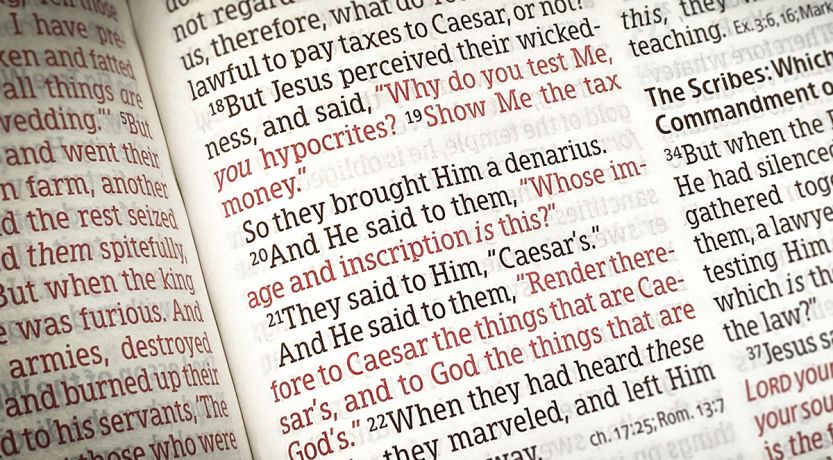
“Render Unto Caesar”: What Does God Say About Taxes? Matthew 22:18-21"Tax time is something that most of us dread—working our way through those forms and paying our taxes! What does God say about paying taxes?
  What did Jesus Christ say about taxes in Matthew 22:18-21? 

It’s been said that two things are certain in life: death and taxes, neither of which people look forward to. Soon after the turn of the year millions of us in the United States start to work on something that is about as much fun as having a tooth pulled.

According to RandomHistory.com, there is no known civilization in history that did not tax. Even the very first known civilization, the Sumerians, recorded their tax history on clay cones.

Taxes are what some call a “necessary evil.” After all, we daily use services that make life more convenient or safe. We drive on roads or highways with signs and lights that regulate traffic flow. We’re thankful to have the services of emergency personnel when there’s an accident or dangerous situation.

Taxes in the Bible?

We’re admonished to come out of this world and not participate in some of its systems, such as politics. Does that include the paying of taxes?

Early in the Gospel record, we find Joseph and Mary submitting to a decree by the emperor of Rome to register their names. Normally, taxation followed such a registering of a household.

“And it came to pass in those days that a decree went out from Caesar Augustus that all the world should be registered. This census first took place while Quirinius was governing Syria. So all went to be registered, everyone to his own city. Joseph also went up from Galilee, out of the city of Nazareth, into Judea, to the city of David, which is called Bethlehem, because he was of the house and lineage of David, to be registered with Mary, his betrothed wife, who was with child” (Luke 2:1-5).

We can see that the stepfather of the future Savior of mankind was willing to pay taxes, even to one of the most ruthless governments in history. And God used Joseph’s willingness to obey to fulfill the prophecy that the Messiah would be born in Bethlehem.

“Render unto Caesar” 

During Jesus’ ministry, the Pharisees tried to trap Him by getting Him and the disciples in trouble with the authorities about paying taxes.

“Then the Pharisees went and plotted how they might entangle Him in His talk. And they sent to Him their disciples with the Herodians, saying, ‘Teacher, we know that You are true, and teach the way of God in truth; nor do You care about anyone, for You do not regard the person of men. Tell us, therefore, what do You think? Is it lawful to pay taxes to Caesar, or not?’” (Matthew 22:15-17).

Notice His response was an admonition to pay taxes:

“But Jesus perceived their wickedness, and said, ‘Why do you test Me, you hypocrites? Show Me the tax money.’ So they brought Him a denarius. And He said to them, ‘Whose image and inscription is this?’ They said to Him, ‘Caesar’s.’ And He said to them, ‘Render therefore to Caesar the things that are Caesar’s, and to God the things that are God’s’” (Matthew 22:18-21).

Jesus wisely avoided their trap and showed the need to pay both taxes to the civil government (represented by Caesar) and tithes to God.

“Taxes to whom taxes are due”

After Jesus’ death and the beginning of His Church, this same teaching continued.

The Roman Empire was not always just in its rulings, but it did provide some semblance of law and order. The apostle Paul exhorted Christians to submit to the laws and authority of the civil government.

“Let every soul be subject to the governing authorities. For there is no authority except from God, and the authorities that exist are appointed by God. Therefore whoever resists the authority resists the ordinance of God, and those who resist will bring judgment on themselves” (Romans 13:1-2).

He went on to say, “Therefore you must be subject, not only because of wrath but also for conscience’ sake. For because of this you also pay taxes, for they are God’s ministers attending continually to this very thing. Render therefore to all their due: taxes to whom taxes are due, customs to whom customs, fear to whom fear, honor to whom honor” (verses 5-7).

As we benefit from many of the services provided by man’s government that are paid for out of our taxes, it is only right that we help pay for these. While we now live in this world, under its governments, we should abide by its laws so long as they do not conflict with the higher laws of God and our worship of God (Acts 5:29).

Pay your taxes and give thanks to God

When we complete our tax returns, in many cases we need to include a check to pay the remaining taxes due.

I’d like to suggest that when you do so, you read what God inspired Moses to record, and then give thanks to God.

You might be thinking, “What! I’m paying all these taxes, and you’re suggesting I give God thanks?” But consider if there are parallels between what the nation of Israel experienced and the blessing you have received.

God freed a nation of people who were slaves in the land of Egypt and brought them to a land to receive for their own. He told them that if they would obey and serve Him, that He would bless them abundantly. Once they began to enjoy those bountiful blessing, they were to acknowledge the One who had given them the blessings by taking some of the produce of the land to His priests.

“And it shall be, when you come into the land which the LORD your God is giving you as an inheritance, and you possess it and dwell in it, that you shall take some of the first of all the produce of the ground, which you shall bring from your land that the LORD your God is giving you, and put it in a basket and go to the place where the LORD your God chooses to make His name abide. And you shall go to the one who is priest in those days, and say to him, ‘I declare today to the LORD your God that I have come to the country which the LORD swore to our fathers to give us.’

“Then the priest shall take the basket out of your hand and set it down before the altar of the LORD your God” (Deuteronomy 26:1-4).

And then the one bringing the offering was to reflect on how God had delivered and blessed him.

“And you shall answer and say before the LORD your God: ‘My father was a Syrian, about to perish, and he went down to Egypt and dwelt there, few in number; and there he became a nation, great, mighty, and populous. But the Egyptians mistreated us, afflicted us, and laid hard bondage on us. Then we cried out to the LORD God of our fathers, and the LORD heard our voice and looked on our affliction and our labor and our oppression. So the LORD brought us out of Egypt with a mighty hand and with an outstretched arm, with great terror and with signs and wonders. He has brought us to this place and has given us this land, “a land flowing with milk and honey”; and now, behold, I have brought the firstfruits of the land which you, O LORD, have given me.’

“Then you shall set it before the LORD your God, and worship before the LORD your God” (verses 5-10).

Though we can view the paying of taxes as a negative thing, we need to realize it is because we have received an income and blessings that we can and should pay what we owe.

Many don’t have to pay taxes

A number of years ago, a fellow minister and I were traveling down a highway in Nigeria. We came to a section where there were some Nigerian women and children standing just off the edge of the pavement in ragged clothes with their hands stretched out. The minister I was with, who had been there several times before, asked our driver to stop. He then took a handful of coins to pass out the window to them.

I learned they were lepers trying to get a little money for food from the passing cars.

So, as you take care of your annual tax responsibility, take a few minutes to express your thanks to God for your physical blessings and pray for the coming of God’s Kingdom when all the world will enjoy much greater blessing under the government of Jesus Christ. These poor lepers didn’t have to pay any taxes.

A few years later, I was in the impoverished African country of Zimbabwe conducting a religious meeting with a group of its citizens who were members of the Church of God, a Worldwide Association. In this group was a younger widow living in a hut with only a dirt floor. Her meager possessions consisted of only a few pots and pans. Her husband had died in the past year. She was left alone to take care of her four young children.

She timidly raised her hand and asked a question that was on her mind. In that culture, a dowry was part of marriages and would be set aside so that if something happened to the husband, there would be something for the widow to survive on. But it was very important to her that she live a life that was right before God. She asked if she should tithe on the dowry her husband had left her. I informed her this was not be tithable income.

She also didn’t pay taxes.

Such stories could continue without end. Multiple millions today live on an income less than $100 a year. Those of us in the Western world who face what we see as an onerous task each year of tax preparation and payment should realize how many people would happily trade places with us—thankful to have income on which to pay taxes.

Be thankful

Though few understand it, most of us in the English-speaking world enjoy the abundance of national blessings because of God’s promises to Abraham and his descendants. (For more on this, download our booklet The United States, Britain and the Commonwealth in Prophecy.) Compared to so many around the earth, we are tremendously blessed and would be viewed by them as quite wealthy.

One of the prophecies directed to Abraham’s descendants speaks of the loss of those blessings because they failed to obey and give thanks to the One who gives us these blessings.

“Moreover all these curses shall come upon you and pursue and overtake you, until you are destroyed, because you did not obey the voice of the LORD your God, to keep His commandments and His statutes which He commanded you.

“And they shall be upon you for a sign and a wonder, and on your descendants forever. Because you did not serve the LORD your God with joy and gladness of heart, for the abundance of everything, therefore you shall serve your enemies, whom the LORD will send against you, in hunger, in thirst, in nakedness, and in need of everything; and He will put a yoke of iron on your neck until He has destroyed you” (Deuteronomy 28:45-48).

So, as you take care of your annual tax responsibility, take a few minutes to express your thanks to God for your physical blessings and pray for the coming of God’s Kingdom when all the world will enjoy much greater blessing under the government of Jesus Christ.” From:  https://lifehopeandtruth.com/relationships/finances/render-unto-caesar-taxes/?

_______

To Give Repentance and Forgiveness of Sins

Acts 5:29-32

“But Peter and the other apostles answered and said: “We ought to obey God rather than men. The God of our fathers raised up Jesus whom you murdered by hanging on a tree. Him God has exalted to His right hand to be Prince and Savior, to give repentance to Israel and forgiveness of sins. And we are His witnesses to these things, and so also is the Holy Spirit whom God has given to those who obey Him.”

“The dramatic story in Acts 4 and 5 is amazing testimony to the inspiration and power of God through His Spirit. First, Peter and John were arrested and severely threatened to not preach in Jesus’ name (Acts 4:18-21). Then apparently all the apostles were imprisoned and miraculously released by an angel (Acts 5:17-20).

Instead of going into hiding, they obeyed the command of the angel to go preach in the temple again (Acts 5:20-21). The officers and the Jewish council didn’t know what to make of the fact the prison was still locked and the guards were still guarding the empty cells. It seems they didn’t know that the apostles had escaped.

Peter and the other apostles were hauled before the council again and spoke boldly. Peter not only accused the council of murder, he proclaimed that Jesus was on the right hand of God and is our Savior. As a result of Jesus’ sacrifice, God grants repentance and is willing to forgive our sins. Jesus Himself had explained that God’s great love makes this possible, as we covered in our commentary on John 3:16.

Not only were the apostles witnesses concerning Jesus Christ’s actions and words, the miracles performed through the power of God’s Holy Spirit also gave witness that He is the Son of God. God gave His Spirit to those who repented and were baptized (Acts 2:38)—to those who committed to obeying Him, which by implication the Jewish council had not.”

Read about how God saved the apostles from the anger of the Sanhedrin in Acts 5:33-42. And read more about the Holy Spirit in “How Do You Know You Have the Holy Spirit?” and “Is the Holy Spirit a Person?

_______

Top 10 Most HARMFUL Foods People Keep EATING

"Have you noticed when you are trying to eat healthy that everything has extra ingredients in it? Make sure you don't eat one of these Top 10 Most Harmful Foods People Keep Eating. There are so many food products that, while they may taste delicious, are harmful to your health."

See why on YouTube: https://youtu.be/Hr1lW83qHCs

1. Canned soup  2. white bread and wheat bread  3. canned tuna  4. diet soda  5. potato chips  6. fake maple syrup  7. margarine  8. energy drinks  9. fruit juice  10. deli meats.

________


Sunday, February 6, 2022

Celebrating Queen Elizabeth II’s 70-Year Reign. British Monarchy and the Bible? NYC Just Made This VEGAN Its Mayor.

.

Celebrating Queen Elizabeth II’s 70-Year Reign

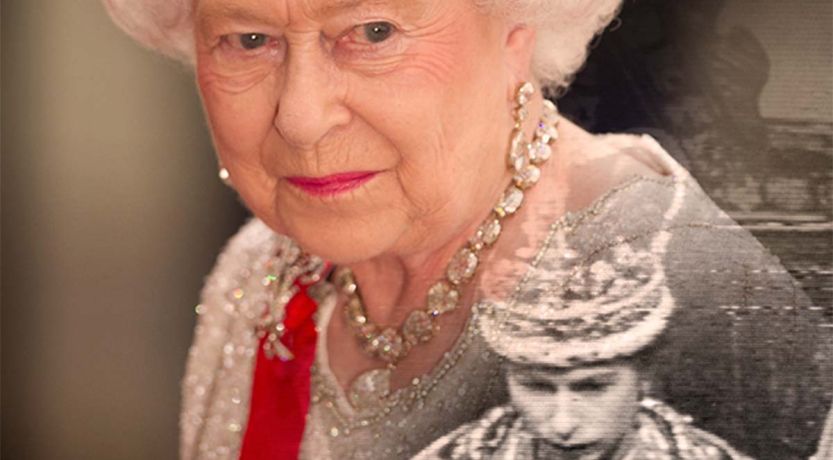
Celebrating Queen Elizabeth II’s 70-Year Reign“Queen Elizabeth II acceded to the throne Feb. 6, 1952. Her devotion to her people and duties are legendary. What can we learn from this remarkable monarch?



Though she came to the throne in February, the official celebrations marking Queen Elizabeth II’s platinum jubilee—70 years of service to the 54 nations making up the Commonwealth today—will be June 2 to 5, 2022.

To many of the 2.4 billion citizens of the Commonwealth, she represents an example of grace, faithfulness, modesty and Christian values. But her life has not been easy.

70 years of service

The length of her reign is indeed special, but even more than how long she has ruled, Queen Elizabeth II stands out as beloved and respected for her behavior and dedication to her people.

In recent years, there have been many critics of royal heritage and privilege, yet in the United Kingdom few would take issue with the devotion with which Queen Elizabeth II has approached her many roles.

Unexpected accession to the throne

Britannica.com provides her full name and title: “Elizabeth Alexandra Mary, officially Elizabeth II, by the Grace of God, of the United Kingdom of Great Britain and Northern Ireland and of her other realms and territories Queen, Head of the Commonwealth, Defender of the Faith.”

Elizabeth was born April 21, 1926, in London, England. As a young girl, she was never expected to rule. Elizabeth was the elder daughter of a younger son of King George V. It seemed the young Elizabeth had little chance of becoming queen until her uncle, Edward VIII, suddenly abdicated on Dec. 11, 1936. Overnight her father became King George VI, and Elizabeth became next in line to the throne.

Elizabeth acceded to the throne after her father’s untimely death on Feb. 6, 1952.

If you would like to read more about Queen Elizabeth’s accession and events in the early part of her reign, please refer to our blog posts “The Queen’s Sapphire Jubilee” and “The Dedicated Queen Turns 90.”

Promise from a princess

On her 21st birthday, in April 1947, Princess Elizabeth broadcast a promise from Cape Town, South Africa, to the Commonwealth. The young princess said, “I declare before you all that my whole life whether it be long or short shall be devoted to your service and the service of our great imperial family to which we all belong.”

She has carried out this promise, becoming perhaps the most traveled ruler in history. Five years ago, the Daily Telegraph estimated her travels had taken her more than 1,032,500 miles (42 times around the earth) as she became familiar with her Commonwealth subjects and rulers.

In 2015 she surpassed Queen Victoria as the longest-reigning monarch in British history.

Whether by choice or accident, the queen took steps that brought the royal family into new territory. Allowing the televising of selected aspects of their domestic life in 1970 and permitting the dissolution of her sister Margaret’s marriage in 1978 brought more attention to what was often portrayed as an obsolete and costly institution.

The decade of the 1990s brought acute criticism on the “royals.” The queen’s eldest son, Prince Charles, separated from the popular icon, Princess Diana. Prince Andrew separated from Sarah, duchess of York. Princess Anne, the queen’s only daughter, divorced. And parts of the royal residence at Windsor Castle were destroyed by fire. Later that decade, Diana died in a car crash in 1997.

In the queen’s golden jubilee year in 2002, she lost her sister Margaret and her mother, the highly respected and loved “Queen Mum,” who died at 104 years of age.

After the marriage of Prince William (Charles’ eldest son from his marriage to Diana) to Kate Middleton, the royal family regained some standing with the public. Both William and his younger brother Harry served in the armed forces. They offered a fresh outlook to those of their generation.

Yet strangely, it was a television series, The Windsors in 2016, that brought back an increasingly positive note to the British royal family.

As constitutional monarch, Queen Elizabeth has interacted with 14 different prime ministers through the years. The first was Winston Churchill, and the list includes Margaret Thatcher and Theresa May, the only two female British prime ministers in history. One of her regular duties has been to open new sessions of Parliament explaining what “my government” plans to accomplish that year.

Queen Elizabeth married her childhood sweetheart, Philip Mountbatten, on Nov. 20, 1947. After 73 years of marriage, Prince Philip, the duke of Edinburgh, died in 2021 just two months before his 100th birthday. He had constantly been by her side during her reign until, at the age of 95, he retired from active engagements in August 2017.

Public engagements now increasingly fall to younger members of the royal family, such as Prince Charles, heir to the throne, and Prince William, his firstborn son. They are increasingly lessening the load on the queen.

Why do her subjects love her?

There are many reasons to honor and love Queen Elizabeth. Most of us only dream of reaching her age of 95 and still being relatively active and healthy. Many look at her example and love for her people and feel love and respect for her as they would for their own mother or grandmother.

As we consider her approach to life and her interaction with others, we note how positive results come from following biblical principles.

Long life, definitely a milestone Elizabeth II has reached, was promised by God to those who honor their parents (Exodus 20:12). I have no doubt she respects the memory of her late father and mother. Perhaps, as governor of the Church of England, she has also followed the scriptural injunction for royalty to be very familiar with the content and practice of God’s Word (Deuteronomy 17:18-20).

Qualities we can emulate

Here are some nuggets we can appreciate from the unprecedented reign of a graceful and patient monarch:

Accept the mantle of responsibility: Initially the young Elizabeth was not expecting to become queen, nor did she understand the many responsibilities that would be laid on her shoulders. Once her father, King George VI, had been crowned in 1936, how aware was 10-year-old Elizabeth that she was in line for royal duties over as many years as God would give her?

Yet by age 21 she was willing to promise, “My whole life whether it be long or short shall be devoted to your service and the service of our great imperial family to which we all belong.”

This should remind us of the Christian’s calling to serve humanity as a whole as a ruler with Jesus Christ at His return (Revelation 5:10; Luke 19:11-19). For Christians, the training to be able to take on such responsibility is happening right now through overcoming the lusts of the flesh and the influence of Satan and his society (Revelation 2:26).

Serve and care: In her many overseas visits and when fulfilling charitable duties in Britain, the queen meets and spends time with people she cares for. They do not live in palaces or own vast estates. Video recordings of her walkabouts show her greeting people and accepting bouquets of wild flowers from children. The queen always shows a genuine, heartfelt interest in those she meets.

We must similarly follow the pure example of Jesus Christ who ate and conversed in the same manner with those who were often treated with disdain (Matthew 9:9-13). Jesus also had a special love for the humble teachability of children and encouraged them to come to Him (Matthew 18:2-5; 19:13-15).

Handle the ups and downs of life with dignity: Queen Elizabeth II has no doubt experienced and learned many lessons from family and regal life during her 70 years of rulership.

With the death of her husband, the queen no longer has the support of perhaps her greatest admirer, Prince Philip. But like her mother, she will “keep calm and carry on.”

Whether royalty or commoner, we all deal with times of sorrow and suffering. But the Bible has good news. Everyone going through these ups and downs of life can know God’s Purpose for You and that a wise and kind Ruler is coming soon who will rule for, not 70, but a thousand years (Revelation 20:4). In fact, we are told there will be no end to His Kingdom and the peace and joy it will bring (Daniel 2:44; Isaiah 9:7).”  From: https://lifehopeandtruth.com/prophecy/12-tribes-of-israel/12-tribes-of-israel-today/queen-elizabeth-ii-70-year-reign/?

_______

Sidebar: Is There a Connection Between the British Monarchy and the Bible?

When the patriarch Jacob bestowed blessings on his 12 sons, he gave a unique blessing to his son Judah: “The scepter shall not depart from Judah” (Genesis 49:10). A scepter is a symbol of royal authority.

That promise began to be fulfilled when God inspired Samuel to anoint a descendant of Judah, David the son of Jesse, as king of Israel (1 Samuel 16). Though not a perfect man, David faithfully reigned over Israel for 40 years and was “a man after [God’s] own heart” (Acts 13:22).

As a result of David’s faithfulness, God entered into a unique covenant with him—often called the Davidic covenant. As a part of this covenant, God promised that He would “establish the throne of his kingdom forever” (2 Samuel 7:13). This covenant was reiterated hundreds of years later by the prophet Jeremiah: “For thus says the LORD: ‘David shall never lack a man to sit on the throne of the house of Israel’” (Jeremiah 33:17). Ultimately, Jesus Christ is prophesied to sit on that throne (Luke 1:31-32).

But students of history understand that the Davidic throne was thought to be destroyed in 586 B.C. when the Babylonians conquered Judah and imprisoned the last Davidic king, Zedekiah, until his death (2 Kings 25:4-7; Jeremiah 52:11). We also read that in an attempt to end the Davidic line, the Babylonian king brutally executed Zedekiah’s sons (2 Kings 25:7).

This was an attempt, no doubt inspired by Satan, to wipe out the Davidic royal line in order to cause God’s covenant with David to fail. But God’s promises and covenants never fail.

The book of Jeremiah provides some fascinating clues as to how this royal line would continue. In two passages in his book, Jeremiah makes a specific note that King Zedekiah’s daughters survived the Babylonian captivity and were taken, along with Jeremiah himself, to Egypt (Jeremiah 41:10; 43:5-6).

There is no more mention of the fate of the king’s daughters in the Bible. Could Jeremiah have included this detail about Zedekiah’s daughters to be a clue as to how David’s royal line would continue? Though historical details from this period are sketchy, some have pointed to the possibility that one of Zedekiah’s daughters could have been transported to Ireland by Jeremiah to be married into another royal line, thus extending the throne of David forward through history.

Could the occupants of the British throne be descended from David through one of King Zedekiah’s daughters? It is interesting that many symbols associated with Ireland and the British throne are similar to symbols associated with the Davidic dynasty.

Though it’s difficult to prove definitively through secular history, this could explain why the British throne has endured through the centuries to this very day.”

To read more about this fascinating subject, see pages 46-53 of our booklet The United States, Britain and the Commonwealth in Prophecy.”

________

NYC Just Made This VEGAN Its Mayor

“Watch this POWERFUL speech where Eric Adams discusses his plant-based journey, and removing processed meat from school menus!”

YouTube: https://youtu.be/w6FRhmF40Ec

________

Tuesday, January 25, 2022

The Good Shepherd. Love Is the Fulfillment of the Law. To Mind Your Own Business. Are EGGS BAD For You? (Real Doctor Reveals The TRUTH)

.

EEI-Logo-600-3

eei-header-thegoodshepherd

“What qualities make for a good leader? Who can we look to for guidance on how to become better shepherds of our children? When it comes to examples of leadership, there is no more excellent example than Jesus Christ Himself, the Good Shepherd.

As Christian parents, we are tasked with raising the next generation in God’s ways. Be inspired by this study as you shepherd the hearts of your children.”

eei-view-lesson-Jan-21-2022-05-35-20-87-PM

eei-1-mountains

Learn how to raise your children on the path of righteousness.

eei-2-motherdaughter

Discover how to guard and guide their hearts.

eei-3-bible

Take direction from the Chief Shepherd and His leadership.

eei-view-lesson-2

From: https://lifehopeandtruth.com/learning-center/youth-development/shepherding-the-heart/introduction/?

_______

Love Is the Fulfillment of the Law

Romans 13:8-10

“Owe no one anything except to love one another, for he who loves another has fulfilled the law. For the commandments, “You shall not commit adultery,” “You shall not murder,” “You shall not steal,” “You shall not bear false witness,” “You shall not covet,” and if there is any other commandment, are all summed up in this saying, namely, “You shall love your neighbor as yourself.” Love does no harm to a neighbor; therefore love is the fulfillment of the law.”

God’s laws show us how to love Him and how to love others. They express His way of life, which is a way of love. So if love is our motivation, we will be obeying and fulfilling God’s law.

Here the apostle Paul quotes five of the 10 Commandments to represent the whole list, especially the ones that show us how to love our neighbors.

Read more about the summary laws Jesus Christ called the great commandments in our article “The Great Commandment.” From: https://lifehopeandtruth.com/bible/blog/love-is-the-fulfillment-of-the-law/?

______

1 Thessalonians 4:11-12

(11) that you also aspire to lead a quiet life, to mind your own business, and to work with your own hands, as we commanded you, (12) that you may walk properly toward those who are outside, and that you may lack nothing.     New King James Version

"Do we lead a quiet life, or are things always in turmoil? Do we live in peace, or is it in constant strife? If we are living in strife and turmoil, what are we doing to contribute to it?

Do we mind our own business, or are we busybodies and meddlers? Do we always want to know what the other person across the fence is doing? Do we always call up somebody for the latest news about what's going on over in this church or with that person and his problem?

Is our "helpfulness" really a guise for poking our nose in where we are not wanted? With some people it is. They serve in order to get the goods on others.

Do we work, or are we lazy? This does not mean just our physical labor for the food we put on our table. It could be spiritual work. It could be our service to one another. Do we work with our own hands, or are people always making allowances for us? Are we living off the goodness of another's heart? Some people think they are owed something. They are victims of circumstance, and so they want everybody to give to them, rather than working for it.

Do we show the same Christian character to our work buddies as we do to the people who sit beside us in church? Paul asks that here in terms of "walk[ing] properly toward those who are outside." Are our lives hypocritical? Do we put on our best character and slip into a chair at church just once each week? Do our acquaintances in the world see Christ in us, or do they see "Joe Six-Pack" who has downed a few too many six packs? Do they see someone who curses a blue streak six days a week, but one day a week, he is the soul of pleasant and wise speech? How do people in the world see us?

Lastly, Paul says, "I urge you that you may lack nothing." He does not mean, "Do we lack a pair of shoes, a new DVD player, or the latest PlayStation game?" What he means is, "Do we lack anything that makes us better Christians, or are we satisfied with ourselves where we stand?" Have we come into the church and accepted God's grace, and then say "Take me as I am, Lord, without one plea"? Or do we know that we lack some quality that would make us better Christians and strive to add it to our characters?" From: https://www.theberean.org/index.cfm/main/default/id/6629/ver/NKJV/1-thessalonians-4-11-12.htm

_______

Are EGGS BAD For You? (Real Doctor Reveals The TRUTH)

“Are Eggs Good For You or Are Eggs Bad For You?

Do eggs cause heart disease, high cholesterol and clog your arteries? Everyone is questioning if eggs are good for you? Then later studies they say eggs are bad for you. Next week they say eggs are good for you. According to the newest article, from JAMA's cholesterol egg study, eggs are bad for you. Every week another food like eggs is switching from good to bad and back. The latest article from JAMA says eggs are bad because they give you high cholesterol and heart disease.

Eggs aren't the only food to have this type of confusion around if they are healthy or unhealthy, so Dr Ekberg explains in a way that you can understand and never be confused again no matter what the studies or experts say. Others are claiming it is an attack against low carb diets such as the ketogenic diet, but that doesn't matter. You will still know the truth after watching this video. Dr Ekberg explains what cholesterol is and does in the body and if eggs are truly bad for you. You will find out the truth about eggs and cholesterol and all about the cholesterol egg myth. Dr Ekberg clears up the confusion around eggs and if they cause heart disease from clogged arteries. Dr Ekberg will answer questions all about eating eggs and cholesterol.”          See YouTube: https://youtu.be/LEjZ5t9EFvI

_______

Monday, December 27, 2021

How Much Pagan Is Too Pagan? Commercialized Holidays, Is There an Alternative? Are Acid-Blocking Drugs Safe?

.

How Much Pagan Is Too Pagan?

Christianity in Progress: How Much Pagan Is Too Pagan?“As Christians, how should we approach an activity, tradition or object that has pagan origins? God’s Word gives us a clear path forward.


Bad news:  That thing you love? It has pagan origins.

Worse news:   Pretty much everything has pagan origins.

What does God expect you to do about it?

“Do not inquire about their gods”

Just before the Israelites entered the Promised Land to claim their inheritance, God gave them a warning:

“When the LORD your God cuts off before you the nations whom you go in to dispossess, and you dispossess them and dwell in their land, take care that you be not ensnared to follow them, after they have been destroyed before you, and that you do not inquire about their gods, saying, ‘How did these nations serve their gods?—that I also may do the same.’

“You shall not worship the LORD your God in that way, for every abominable thing that the LORD hates they have done for their gods, for they even burn their sons and their daughters in the fire to their gods” (Deuteronomy 12:29-31, English Standard Version).

The Promised Land was filled with pagan nations who served false gods, and in the names of those gods, the people had done “every abominable thing that the LORD hates” — up to and including the ritual sacrifice of their own flesh and blood. In no uncertain terms, God was letting the Israelites know that foreign religious practices were utterly incompatible with the worship of the one true God.

Worshipping God means worshipping Him the way He wants us to do it. “Everything that I command you, you shall be careful to do. You shall not add to it or take from it” (verse 32, ESV).

The problem with Christmas and Easter

That’s why Christians who study passages like these conclude they aren’t supposed to celebrate holidays like Christmas and Easter.

It’s fairly common knowledge that these holidays are built around a smorgasbord of pagan religious customs. The trees, the lights, the rabbits, the eggs—they’re all pagan practices with a new coat of paint.

The argument in favor of these days is almost always that they’ve been repurposed—that, yes, those customs were pagan once, but now they glorify Jesus Christ.

But God does not accept repurposed worship. He does not accept a new coat of paint on “every abominable thing that the LORD hates.” If we worship Him by willfully adopting repurposed pagan customs, He rejects that worship.

If we persist, He rejects us.

Does God hate groves? What about raisin cakes?

But it’s easy to wonder how far that prohibition extends. Historically, God’s people have always been in the minority—which means that just about everything around us could have a pagan origin.

There are two important principles to extract from God’s instruction in Deuteronomy 12:

  1. Do not incorporate pagan customs of worship into your life.
  2. The worship is the problem. The objects involved might not be.

God said, “Do not inquire about their gods,” and “you shall not worship the LORD your God in that way” (verses 30-31, ESV). Those are the boundary lines. God isn’t telling us to throw out everything pagans have ever touched. He’s telling us to throw out their methods of worship. For example:

Pagans often used groves of trees as sacred sites for the worship of their gods, which often included ritual prostitution (Hosea 4:13-14). Does that mean Christians should avoid orchards or never plant trees of their own? No. God gave His people groves (Joshua 24:13). The trees aren’t the problem—the problem is what the pagans were doing among the trees.

Pagans also baked raisin cakes and gave them as offerings to their gods (Hosea 3:1). Should Christians avoid adding raisins to their baked goods? Again, no. There’s nothing spiritually wrong with adding raisins to cakes. There is something wrong with baking a raisin cake as an offering to God. It’s not the way He tells us to worship Him.

Should Christians avoid yoga or not?

But those are ancient examples. Here’s a more modern one:

Yoga.

Yoga is an incredibly contentious topic in Christian circles. It originated in India and plays an important role in Eastern religions like Buddhism and Hinduism. Practitioners of these religions believe they can use yoga to expand their consciousness, bring their spiritual energies into alignment, overcome suffering, and attain enlightenment and oneness with the ultimate reality of the universe. Many times, these goals are pursued through various stretches.

These are, without a doubt, pagan spiritual practices that Christians should absolutely avoid.

But what about the stretches themselves? Is stretching a problem? Are yoga stretches something Christians should avoid?

The difference between forbidden and acceptable

It’s the same principle as the groves and the raisin cakes:

God has no problem with you stretching your muscles.

He does have a problem with you doing stretches to try and realign your spiritual energy or tap into a cosmic consciousness.

And there’s the dividing line:

Are you including forms of pagan worship in your life, or aren’t you?

Groves are fine. Raisin cakes are fine. Stretching is fine. We don’t avoid eggs just because they play a role in Easter traditions. We don’t avoid gingerbread just because it’s a common part of Christmas.

(Of course, the Bible tells us to be careful not to “wound” or “defile” our consciences. If we’re uncomfortable with something or feel it will send the wrong message to others, we should stay away from it—see 1 Corinthians 8 and Romans 14:23.)

What God does have a problem with and, in fact, forbids is taking those individual pieces and using them the way the pagans did. We don’t worship in the groves. We don’t bake the raisin cakes as offerings to God. We don’t stretch to align our chakras. We don’t paint eggs and try to find them during Easter. And we don’t decorate gingerbread houses for Christmas.

God doesn’t tolerate using those pagan symbols to worship Him.

Next time you discover that something in your life has pagan origins, ask yourself: “Does this thing have its roots in a form of worship God forbids? And if so, am I allowing it to have spiritual influence in my own life?”

If the answer is yes, then our only option is to get rid of it. When it comes to worshipping God, even a little pagan is too much pagan.”

(Read more about this subject in our article “History of Wedding Rings.”)

From: https://lifehopeandtruth.com/life/christian-living/christianity-in-progress/how-much-is-too-pagan/?

Does it Matter Which Holidays You Celebrate?

Suggestions welcome.   This article was written at a reader’s suggestion. If you’d like to suggest a topic for future editions of “Christianity in Progress,” you can do so anonymously at lifehopeandtruth.com/ideas. We look forward to hearing from you!”

________

Commercialized Holidays, Is There an Alternative?

“We sincerely hope that in the very near future you and your children will learn more about God's Holy Days and begin observing them rather than Halloween and other days of pagan origin that are of no value for teaching spiritual truths.

The claim is now circulating that money spent on observing Halloween is second only to that spent on celebrating Christmas.

Actually, all popular holidays are now commercialized. Money is driving this artificial popularity. Without holiday advertising, retail profits would plummet.

But as it is, lots of people spend lots of money on holidays.

For Halloween, mega-bucks are spent on candy, costumes, carnivals, decorations, booze and extravagant high-tech haunted houses.

MSN Money reports (9/15/09), "Halloween is now, behind Christmas, the second biggest retail holiday in America. Americans are expected to spend over $7 billion this year on costumes, candy, attending parties and much more. Over the past three years, the popularity of Halloween has tripled …"

Of all the holidays in the Western world, Halloween—a holiday that celebrates nothing positive or noble—is having the greatest increase in popularity!

Surge in adult partying and masquerading!

Adult partying on Halloween has been rapidly increasing since the 1980's.

Halloween is now the third biggest adult party day of the year—behind only New Year's Eve and Super Bowl Sunday. Money spent on adult costumes may now be surpassing money spent on children's costumes!

For decades, adult partying on Halloween has been popular among those who actively subscribe to in the gay lifestyle. One participant, in an online article titled "Halloween: The Great Gay Holiday" says "Halloween's appeal to the gay, lesbian, bisexual and transgendered communities … has a lot to do with … our propensity for cross-dressing and gender-bending… and our special capacity to have fun. [We] cherish it…" (posted October 27, 2008, The Bilerico Project).

The origin of Halloween

The ancient Celts regarded November 1 as the start of a new year, also as an annual holiday called Samhain.

October 31 was New Year's Eve! That night was considered the night of the dead, when spirits of the wicked dead were believed to haunt the living. People would leave offerings of food and drink at their front doors to appease the unfriendly ghosts and demons. So the origin of "trick or treat" is the pagan belief that evil spirits had the equivalent of a modern protection racket—"you give food or we break your leg!"

Church leaders adopt pagan practices

To Christianize the pagans Roman Christianity took the easy approach of relabeling pagan days and practices! They reasoned that the converts could continue observing their old ways if they used them to honor the God of the Bible. That is how many pagan days and practices acquired Christian labels!

And it is how the pagan festival Samhain came be relabeled as All Saints Day or All Hallows Day. Thus, the night before became All Hallows Even, later contracted to Hallowe'en — and is now just Halloween. Its purpose was to placate the not-so-hallowed spirits—the demonic or evil spirits. That is why a witch's costume is so popular for Halloween evening.

Does it matter to God?

To those who don't consider what God thinks, the origins of Halloween would probably seem irrelevant. What would matter most to them is, "Is it fun?"

But for those who believe in God's Word it's a different story! The Bible says specifically that God detests pagan religious customs (Galatians 4:8-10).

According to the Bible our ultimate destiny depends on pleasing God. And the only real authority on what pleases God is the Bible.

God's Holy Days rather than unholy holidays

Four of God's festivals that God originally gave Old Testament Israel and were kept by Jesus Christ, Paul and the early Church occur in the fall.

These special festivals that have been observed by God's people down through the ages—including members of the United Church of God—are the Feast of Trumpets, the Day of Atonement, the Feast of Tabernacles and the Last Great Day.

God designated these deeply meaningful days to teach important truths about His great master plan as well as for worshipping and enjoying fellowship and wholesome activities with other likeminded believers.

The Day of Atonement pictures, among other things, the momentous time when Christ will remove the worldwide influence of the real evil spirits — Satan and the demons (Revelation 12:9; 18:2; 20:1-3).

We sincerely hope that in the very near future you and your children will learn more about God's Holy Days and begin observing them rather than Halloween and other days of pagan origin that are of no value for teaching spiritual truths.

To get started in that learning process, simply request, download or read online our free, highly informative booklets: Holiday or Holy Days: Does It Matter Which Days We Observe? and Is There Really a Devil?”               From: https://www.ucg.org/beyond-today/blogs/commercialized-holidays-is-there-an-alternative

_______

Are Acid-Blocking Drugs Safe?

Do the benefits outweigh the risks for acid-blocker drugs (proton pump inhibitors like Nexium/Prilosec/Prevacid)? What about baking soda?

See video at: https://nutritionfacts.org/video/are-acid-blocking-drugs-safe/

Below is an approximation of this video’s audio content. To see any graphs, charts, graphics, images, and quotes to which Dr. Greger may be referring, watch the above video.

Dyspepsia is the medical term for upset stomach. After eating, your stomach may hurt, or you feel bloated, nauseous, overly full, belching. “Despite the high prevalence of the disorder, there are no approved treatments for” it in the Western world. This leads people to seek out alternatives like baking soda, which the manufacturer promotes for use for “upset stomach.”

The problem is that “[i]t contains sodium bicarbonate and [therefore] has the potential for significant toxicity when ingested in excessive amounts,” potentially resulting “in serious electrolyte and acid/base imbalances.”

The labels were modified in 1990 to include the warning, “Do not administer to children under age 5,” because of reports of “seizure and respiratory depression.” Even just “a pinch” may be too much for an infant, and even just a few large spoonfuls could be fatal in a child.

Another new addition is the “stomach warning,” stressing the importance of not taking the product “when overly full with food or drink.” Why not? Well, if you’re familiar with scholastic science fair volcanoes, they’re baking soda and vinegar, right? Baking soda and acid, like what’s in your stomach. “This warning was added at the request of the [FDA] because of multiple case reports of spontaneous gastric rupture,” where people’s stomachs burst.

But, exploding stomachs aside, even just sticking to the suggested dose may still cause adverse effects. So, baking soda cannot be recommended, especially in “young children, pregnant women, alcoholics, and those who are on diuretics”—common blood pressure medications sometimes referred to as water pills.

What about acid-blocking drugs like Nexium or Prilosec? They work better than sugar pills, but not by much—helping 31% of dyspepsia sufferers, compared to 26% helped by placebo. In other words, 5% better than nothing. These so-called proton pump inhibitors “have…been extremely lucrative for the pharmaceutical industry,” raking in billions a year, but now that we have these massive computerized databases of patients, we can start to evaluate some of their “possible long term adverse effects.” For example: possible increased pneumonia, bone fractures, intestinal infections, heart disease, kidney failure, “and even all-cause mortality.” “The latest concern [to surface] has been the association between [the use of these drugs] and [the] risk of dementia.”

The problem with all these studies just showing associations, though, is that you can’t prove cause and effect. Maybe taking the drugs didn’t make people sick. Maybe being sick made people take the drugs. So, maybe it’s not that these drugs are the cause of these infections, fractures, death, and dementia; it’s just that they may instead be a marker for being sicker. But, there are potential mechanisms by which these drugs could have some of these effects. For example, here’s the death data. The longer people are exposed to these drugs, the higher their apparent risk of dying prematurely. But, like how could suppressing acid production in the stomach increase mortality, which is mostly like heart disease? Well, suppressing acid isn’t the only thing these drugs do. They may also cause a reduction in nitric oxide synthase, the enzyme that makes the open-sesame molecule that helps keep our arteries healthy.

In terms of dementia, a key event in the development of Alzheimer’s disease is the accumulation of these plaques of a sticky protein called amyloid beta. And if you just stick Alzheimer’s-like cells in a petri dish, and drip on increasing levels of the drug Prevacid, the cells start churning out more amyloid. And the same thing with Prilosec or Losec, Protonix, and Nexium.

Now, just because something happens in a petri dish or mouse model doesn’t mean it happens in a person. But, most studies to date have found this link between dementia risk with the use of these drugs—including the largest such study to date, involving tens of thousands of patients, that concluded that avoiding the chronic use of these drugs “may [help] prevent the development of dementia.” Though an alternative explanation of the link is aluminum exposure, which itself may play a role in dementia. So, maybe those using acid-blocking drugs have heartburn or something, and so are also using more aluminum-containing antacids, and that’s actually the real culprit? We still don’t know.

What we do know is that there’s “an almost cultish faith in [stomach] acid suppression” as some kind of medical panacea, which “has led to progressive escalation of…dosage and potency” of these drugs, all the while “mounting evidence” suggests these drugs may cause a variety of “adverse effects” and are “overprescribed.”

How overprescribed? “[T]he rate of inappropriate use of these drugs” is about half. Half the people on the drugs shouldn’t even be on them. “These rates are…worrying, because they mean that [these drugs] are prescribed for” things they shouldn’t even be prescribed for, meaning there aren’t even proven benefits to outweigh the risks."  From Video at: https://nutritionfacts.org/video/are-acid-blocking-drugs-safe/

_______