Showing posts with label fishing. Show all posts

Sunday, August 20, 2023

Effects of Baptism: A Clean Start. Sin’s Payday. Human-Made Stuff Now Outweighs All Life on Earth.

.

Effects of Baptism: A Clean Start

“Is water baptism essential for salvation? God wants 21st-century Christians to understand the effects of baptism in providing a clean start to a new life.

Effects of Baptism: A Clean StartJennifer stood waiting at the steps of the pool, giving her friends and family time to gather around in order to witness her baptism. She had been thinking and praying about this commitment to God for quite some time. And she had gone through a series of counselings with her pastor that helped her understand and further convicted her about the step she was taking.

Jennifer felt good about her decision and was confident that it was the right course of action. It was just about time for her to step into the water and formally make her covenant relationship with God.

Is baptism necessary today?

But was it really necessary for Jennifer to undergo this ancient practice that originated in type under the Old Covenant (Hebrews 9:10)? Must Christians be baptized today to have a clean start?

According to some groups, including Christian Scientists, Quakers, the Salvation Army and Unitarians, the answers to these questions are both “No.”

Those who do not practice baptism vary in their explanations as to why they do not, but in general, they consider baptism to be an outdated ritual that is no longer necessary under the New Covenant. Reasons given often include:

  • What one experiences in his or her heart is what is most important.
  • External actions to reflect one’s inner thoughts are superfluous.
  • The scriptures on baptism are ambiguous.
  • People can live holy lives without being baptized.

So are the Scriptures really that vague? Is there any value to being baptized? What are the effects of baptism? Instead of relying on human opinions and reasoning, let’s see what the biblical record shows.

Christ’s example and instruction on baptism

A quick review of Christ’s actions just before the beginning of His ministry is insightful as a lesson for us today. As we will soon see, Jesus taught that baptism was very important.

When John the Baptist began preaching in the wilderness of Judea, people from “Jerusalem, all Judea, and all the region around the Jordan went out to him and were baptized by him in the Jordan, confessing their sins” (Matthew 3:5-6). Though Jesus had no sins to confess, He asked John to baptize Him (verse 13).     Baptism is far more than a symbolic exercise.

After being baptized, the Spirit of God descended upon Jesus and a voice from heaven said, “This is My beloved Son, in whom I am well pleased” (verse 17).

Why did God the Father make this statement after Jesus was baptized? And, of special concern to us, will the Father be pleased if we are baptized? It seems obvious that He thinks baptism is important!

Scriptures such as 1 Peter 2:21 and 1 John 2:6 show that Christians are to follow the example of Jesus Christ. We are to walk as He walked, do as He did. We are indeed to be baptized as He was. When we follow Christ’s example, God the Father is, no doubt, pleased with us as well.

Jesus’ teaching on baptism was not limited to His personal example. During His earthly ministry, He had His disciples baptize those who believed (John 3:22). It is also insightful to note that Christ’s disciples baptized more people than John the Baptist (John 4:1-2).

After His crucifixion and resurrection, Jesus appeared to His disciples and gave them instructions on how they were to take His message to the world.

Note that His instructions, which are sometimes referred to as the commission of the Church, include baptizing those who respond: “Go therefore and make disciples of all the nations, baptizing them in the name of the Father and of the Son and of the Holy Spirit” (Matthew 28:19, emphasis added throughout).

Jesus also pointedly stated, “He who believes and is baptized will be saved” (Mark 16:16). Christ’s teaching on the importance and effects of baptism is quite clear!

Since Jesus clearly taught baptism, let’s now consider what we learn by following His instruction.

Effects of baptism: what we learn and receive from baptism

Repentance. When people in Peter’s audience on the Day of Pentecost in A.D. 31 asked the apostle what they should do, he told them to “repent, and let every one of you be baptized” (Acts 2:38). Repentance, which is the initial step toward baptism, means changing our way of life because of a change in our thinking. It means that in hindsight, we realize that the way we had been living was not in accordance with God’s good and beneficial laws.

The process of repentance—which we are led to by God (Romans 2:4)—helps us understand the seriousness of sin. It is marked by a strong desire on our part to be forgiven of our sins, to stop sinning and to change our sinful nature (Jeremiah 17:9). It includes the recognition of the value of Christ’s sacrifice—His blood that covers our sins (Ephesians 1:7).

Repentance is part of the message that Jesus told His disciples to preach (Luke 24:47). Why? Because, as Jesus had earlier said, “Unless you repent you will all likewise perish” (Luke 13:3).

To learn more about this important subject, see the articles in the section “Repentance.”

Death, burial and resurrection. After one repents of his or her sins, the next step is to be baptized—which means being immersed in water. This act symbolizes three important concepts.

First, baptism represents the death of the old man—the way we lived before repenting. Paul twice described this concept as being “crucified” with Christ (Romans 6:6; Galatians 2:20).

Next, after someone dies, he is generally buried. Baptism pictures the burial of the old man with all of his sins, which earn one the death penalty. This reminds us to put away the old way of life completely. As Paul explained, “We were buried with Him through baptism into death” (Romans 6:4).

The third concept symbolized by baptism is resurrection. Coming up from under the water after being baptized represents our resurrection to a new life in Christ. As Paul further noted, “If we have been united together in the likeness of His [Christ’s] death, certainly we also shall be in the likeness of His resurrection” (verse 5).

Baptism helps impress these three important concepts within our minds. This physical act helps us realize the spiritual significance of baptism.

For further study, see the article “What Do the Symbols of Baptism Mean?

Forgiveness of sins. Baptism is far more than a symbolic exercise. Indeed, there are two very significant beneficial effects of baptism in addition to the spiritual understanding we gain from obeying Christ’s command to be baptized.

The first is the forgiveness of our sins. Indeed, this is one of the key reasons for being baptized. As Peter said, “Let every one of you be baptized in the name of Jesus Christ for the remission of your sins” (Acts 2:38). Through baptism we accept the sacrifice of Christ, which washes our sins away (Acts 22:16) and gives us a clean start.

Receiving the Holy Spirit. A second important effect of baptism is the opportunity to receive the Holy Spirit. Again, Peter’s teaching was: “Repent, and let every one of you be baptized in the name of Jesus Christ for the remission of sins; and you shall receive the gift of the Holy Spirit” (Acts 2:38).

Baptism, accompanied by the laying on of hands (Acts 19:6), is the way God has established for us to receive this precious gift.

Romans 8 documents several important benefits that come to us because we have God’s Holy Spirit.

First, this power from God allows us to set aside ungodly activities and live “according to the Spirit” (verse 4). When we allow this Spirit to lead us, we are called the “children of God” (verse 16).

Furthermore, having God’s Holy Spirit is our guarantee of eternal life (verses 11, 13, 23).

To learn more about this baptismal promise, see the articles in the LifeHopeandTruth.com section “Holy Spirit.”

Action required: should you be baptized? 

Following the biblical instruction to be baptized underscores an important biblical principle: What we do is very important to God. The true, timeless religion of the Bible calls for physical action—not just knowledge and understanding. As Jesus said, “Not everyone who says to Me, ‘Lord, Lord,’ shall enter the kingdom of heaven, but he who does the will of My Father in heaven” (Matthew 7:21).

The author of Psalm 111 made this insightful observation: “A good understanding have all those who do His commandments” (verse 10). Echoing this principle and the teaching of Jesus, James emphasized that “faith without works is dead” (James 2:20). The actions we take before and during baptism set the stage for continued obedience to God afterwards.

Jennifer’s baptism

After everyone had gathered around, Jennifer was baptized by being completely immersed in the pool. She entered into a covenant relationship with Jesus Christ as her Lord and Savior. She had hands laid on her with a prayer for the receiving of the Holy Spirit, and she has been given a clean start and has begun her spiritual journey toward eternal life as a child of God in His Kingdom.

Looking back on her decision, she says it is the best one she has ever made. The decision to respond to God’s calling to be baptized was a good one for Jennifer. It can be the same for you!

The Teaching of the Apostles About Baptism

Only a few days after receiving the commission to make disciples of all the nations and baptize them, Jesus’ disciples gathered in Jerusalem for the Feast of Pentecost—one of God’s annual festivals (Acts 2:1). It was there on this holy day that the Holy Spirit was poured out on the believers (verses 2-4). Jesus had told His disciples that He would send this special power that proceeds from the Father to them after He left them (John 15:26; 16:7).

Empowered by this special gift from God, Peter—the disciple who had previously denied Christ three times—now publicly explained that Jesus Christ was responsible for sending the Holy Spirit that day (Acts 2:14-33). Peter also advised those who were listening to repent “and let every one of you be baptized in the name of Jesus Christ” (verse 38). Peter didn’t present baptism as simply an option.

The approximately 3,000 people who were baptized following Peter’s preaching also received the Holy Spirit that day (verse 41). As Christ’s apostles preached the gospel of the Kingdom and the Church grew, baptism was the common practice and expectation of those who responded (Acts 8:12, 36, 38; 16:15, 33; 18:8; 19:5; 22:16). When Paul was called by God, he responded by being baptized (Acts 9:18).

Jesus’ disciples taught others as they had been taught by Christ. And this teaching included baptism. When we respond to God, we, too, need to be baptized!”  From: https://lifehopeandtruth.com/change/baptism/a-clean-start/

Looking for the church behind Life, Hope & Truth? See our “Who We Are” page.

________

Sin’s Payday

Romans 6:23

For the wages of sin is death, but the gift of God is eternal life in Christ Jesus our Lord.

“We have all earned eternal death (Romans 3:23), but absolutely nothing we can do will earn us eternal life. It is a free gift God offers to those who humbly repent, showing that we understand the magnitude of our sin, and thankfully believe that God’s way is best (Acts 2:38; 8:37).

Desiring Jesus Christ to live in us and transform our lives is the only reasonable decision we can make when we are offered such a priceless gift (Galatians 2:20; Romans 12:1-2).     Listen to the "Verse by Verse" episode covering this scripture at: https://lifehopeandtruth.com/bible/blog/sins-payday-1/

To learn more about the many deep truths found in this verse, read “What Is the Meaning of Romans 6:23?

Study more about the response God wants from us by downloading the free booklet Change Your Life! and studying the biblical passages it presents about repentance and conversion.”

________

Human-Made Stuff Now Outweighs All Life on Earth

Human-Made Stuff Now Outweighs All Life on Earth“The sheer scale of buildings, infrastructure and other anthropogenic objects underscores our impact on the planet.

  • Global Biomass versus Human-made mass. Credit: Itai Raveh

Humanity has reached a new milestone in its dominance of the planet: human-made objects may now outweigh all of the living beings on Earth.

Roads, houses, shopping malls, fishing vessels, printer paper, coffee mugs, smartphones and all the other infrastructure of daily life now weigh in at approximately 1.1 trillion metric tons—equal to the combined dry weight of all plants, animals, fungi, bacteria, archaea and protists on the planet. The creation of this human-made mass has rapidly accelerated over the past 120 years: Artificial objects have gone from just 3 percent of the world’s biomass in 1900 to on par with it today. And the amount of new stuff being produced every week is equivalent to the average body weight of all 7.7 billion people.

The implications of these findings, published on Wednesday in Nature, are staggering. The world’s plastics alone now weigh twice as much as the planet’s marine and terrestrial animals. Buildings and infrastructure outweigh trees and shrubs. “We cannot hide behind the feeling that we’re just a small species, one out of many,” says study co-author Ron Milo, who researches plant and environmental sciences at the Weizmann Institute of Science in Israel. These numbers should be a wake-up call, he adds. They tell us “something about the responsibility that we have, given that we have become a dominant force,” Milo says.

He and his team had previously published an estimate of the amount of biomass on Earth, which led to the question of how it compared with the mass of artificial objects. Emily Elhacham, then a graduate student at the Weizmann Institute, led the effort to pull together disparate data sets on the flow of materials around the world. The researchers found that human-made, or anthropogenic, mass has doubled every 20 years since 1900. Total biomass remained more stable in that time period, though plant biomass has declined by approximately half since the dawn of agriculture some 12,000 years ago. The team estimates that anthropogenic mass crossed over to exceed biomass this year, plus or minus six years.”  More at: https://www.scientificamerican.com/article/human-made-stuff-now-outweighs-all-life-on-earth/

_________

How Long Does It Take To Decompose…_

Human-Made Materials 

https://blog.therainforestsite.greatergood.com/human-made-mass/?

_________

Sunday, June 18, 2023

What My Grandfather Taught Me About Being a Father. What Do You Cherish? Can Reflux in Babies Be Treated with Diet?

.

What My Grandfather Taught Me About Being a Father

What My Grandfather Taught Me About Being a Father“My grandfather was a major influence in my life and impacted what kind of father I became years later. Here’s what I learned from him.

More than 30 years ago, our oldest child was born. When this precious little miracle came into our lives, frankly, I was scared to death. I had not been around many babies in my life, so I knew basically nothing about them, and the idea of being responsible for a new little life was overwhelming!

Not only was I quite nervous about holding our baby and way out of my depth when it came to changing a diaper, I was even more unprepared for the lifelong task of being a father! But life doesn’t wait until we feel ready for challenges. Eventually, more children came, and with time and experience, the job became much less daunting.

As a boy growing up, the most stable and beloved man in my life was my maternal grandfather. I spent a lot of time on his farm and even lived there for part of my childhood.

Even though he died several years before I met my wife, the strength and example of this wonderful man taught me a lot about being a dad—not just from things he said, but from how he lived his life.

I’d like to share some of those lessons in this blog post.

Lesson 1: Strength

Grandpa was physically strong. As a teen working with him shoveling corn in a granary, I was certain I could outwork my grandpa, who seemed like an old man.

The strength and example of this wonderful man taught me a lot about being a dad—not just from things he said, but from how he lived his life. So, I started shoveling faster and harder to prove my point. But it wasn’t long until I was sweating, dirty, worn-out and falling further behind! It was amazing how strong that “old” man really was!

But even more impressive than his physical strength was his strength of character. As a preteen, he had broken his back severely in an accident, but he never let it slow him down. He was mentally and emotionally tough—enduring several hard times throughout his life, including the death of a baby.

And, most importantly, he was spiritually tough—remaining faithful to God to the day he died.

Lesson 2: Patience

My grandpa consistently demonstrated untiring patience, no matter the circumstances. That trait was something he taught me when working with livestock.

There are times to yell and holler to stop the animals or herd them in a certain direction, but he also knew when patience, using slower movements and a calm voice, would work much better. 

While working on farm equipment (and on a farm something always needs to be repaired or maintained), I’d sometimes get frustrated and growl at a “stupid wrench” or “stupid bolt.” Grandpa would remind me that the wrench and bolt were neither stupid nor smart, but that I was the one who had the option to be one or the other. Then he’d calmly examine my predicament and teach me a better way to get the job done.

His approach to people was similar. He was patient and able to put people at ease. He always took the time to listen and help people if he could. 

Lesson 3: Reliability

There was never a question in my mind whether Grandpa would be there when I needed him. An example I’ll never forget was with my first car, a rather homely 11-year-old 1967 Plymouth.

Grandfather and Grandson Changing TireOne day, on my way home from work, a back tire blew on my car. Grandpa had taught me how to change a tire, so I jacked up the car and went to work. But the lug nut didn’t want to come off. I figured I would put all my strength into it, but the entire lug bolt twisted off, nut and all! Then I tried another, and got the same result. With only three left, I was in trouble! I walked to the nearest farmhouse to use the phone and called Grandpa.

To my great relief, he pulled up a short time later. He stood and looked at the car for what seemed like a solid minute, then discovered an easy solution for properly removing the remaining bolts.

He was always there for me, and I knew it!

And he wasn’t there just for me. I saw Grandpa stop whatever he was doing when a neighbor came by to ask for help. If a church member needed help, Grandpa would drive two or three hours round-trip to help them. It’s just who he was.

Lesson 4: Integrity

My grandpa was a man of his word. He was always careful about making promises, but once he promised, it was as good as done. Whether it was a promise to help a neighbor, rototill Grandma’s garden or take me fishing—if he said it, he would do it.

I remember a day Grandpa promised to take me fishing as soon as he was done working on the truck. I remember standing near him with my pole, itching to go. Finally, with a sigh, he got up, wiped the grease from his hands, and we went fishing!

As much as he needed to finish the truck, he made good on his promise.

He had integrity, and he expected it from others, too, including me. That was a powerful lesson and example that has continued to impact my life.

The characteristics I learned from my grandfather—strength, patience, reliability and integrity—are all vital for a father to be a good example to his children and grandchildren. As we come to Father’s Day this year, I hope fathers and future fathers can learn from his example—just as I did.” From: https://lifehopeandtruth.com/life/blog/what-my-grandfather-taught-me-about-being-a-father/?

________

What Do You Cherish?

Cherish is a word we don’t hear very much anymore, except perhaps in wedding ceremonies. 

Dictionaries tell us it means to hold dear, treat with tenderness, to nurture or cultivate with care and affection. 

To gain a picture of what it really means, consider two scenarios:  

A man with a very large yard begins to have problems with his old and well-used riding lawn mower. 

The mechanic determines the engine needs to be replaced, but a new engine would cost more than the mower is worth, especially considering that the transmission and all the pulleys, bearings and other moving parts are already well worn from years of use.  So the man decides not to repair the old machine, but to sell it for parts and purchase a new or newer used lawn mower. His decision makes sense.

Another man’s son has a terrible accident on his bicycle, shattering his right arm and elbow. 

The doctor determines surgery is needed to take out bone chips, install a metal rod to strengthen the shattered bone, and this will be followed by months of therapy to ensure the child will eventually regain the full use and range of motion of his arm.  Without giving more than a passing thought to the thousands of dollars this is going to cost, and the time and effort the entire family will put into helping the boy recover, the father immediately agrees to the surgery. Once again, his decision makes sense.

These two scenarios illustrate what we cherish. 

To the man with the riding lawn mower, it was just a tool that he needed to care for his large yard, and it had served well for a number of years.

However, it had reached the end of its useful life, and the man did not cherish it enough to spend all that would have been necessary to bring it to a reasonable working condition.  It was easier, faster and, in the long run, perhaps even less expensive to discard the old one and purchase a new one. 

The son, of course, was cherished deeply.  The father would work as long as needed—years perhaps—to make sure his son had the medical care he needed.  His family would tenderly nurture and encourage the boy through the surgeries and rehabilitation until he regained strength and use of his arm.  They would willingly invest whatever is necessary for the long-term welfare of the boy. 

The world around us far too often treats relationships like the lawn mower rather than the boy. 

If a relationship (marriage, family or friendship) is damaged or at a difficult place, it may seem easier to discard the old one and move on.  We know relationships can’t be fixed by simply buying and installing a new part—much as we might wish it would be that easy!  Relationships have to be healed, nurtured and cared for. And that takes a lot of time and effort. It often involves us admitting some fault as well, which is painful.  So instead, far too many people divorce, quit speaking to each other, ignore each other and seek to find someone else.

The sad reality is that some relationships can’t be repaired, and in some cases, perhaps, should not be.  And relationships are also different in that the lawn mower doesn’t put any effort into getting itself fixed.  Relationships, on the other hand, can rarely if ever be healed without everyone involved putting forth the effort.

It comes down to a matter of what we cherish.

Let me combine this thought with something I read a while back: 

In many homes (including my own), the refrigerator has magnets holding up crayon drawings, a report card or a photograph.  We put them where we can see them every day because they remind us of the child/grandchild/friend who drew that picture, earned that grade or posed for that photo.  It is special because in that sense it reminds us of the one who created it. How we respond to a picture reflects how we feel about the one who drew it or posed for it. 

Bringing this back to relationships, how we treat another human being created in God’s image in many ways reflects how we feel about the Creator.  If we cherish the truth we have, the calling we’ve been given, and the God who loves us so much that He gave His only Son to die in our stead, then let’s be sure we consider how we cherish the relationships we have in our lives.  And let’s be willing to spend the time and effort required to keep them strong, or to heal them.

Here are some additional resources that can help you build stronger relationships:

Kind regards, and have a great rest of your week, Tom Clark, for Life, Hope and Truth

________

Can Reflux in Babies Be Treated with Diet? 

Can we treat the cause of infant reflux with maternal milk elimination?

There has been a longstanding problem among zookeepers: The gorillas were throwing up all of the time. “The practice of regurgitation has never been reported in wild Gorillas but it has unfortunately been accepted as normal by many keepers of captive animals.” What were they feeding them? Gorillas are big, strong animals, so they made sure to feed them a lot of protein—cottage cheese, meat, eggs, and milk—until a zoo in Germany got the radical idea of feeding them their natural diet of “leaves and vegetables.” And, the “change…following the alterations to the diet was astonishing.” Before the change, a silverback had been regurgitating and vomiting during most of the day. But, by the third day of eating what they were supposed to eat, he and the rest of the troop were miraculously cured.

Even just removing milk from the diets of the captive gorillas led to significant improvements. Cow’s milk was “historically considered an essential item in the captive gorilla diet,” but researchers showed that eliminating it may reduce such “undesirable behaviors…and may be a step toward better approximating the natural diet for captive gorillas.” The zookeepers were giving them animal milk after weaning—that is, giving animal milk to adults. Milk is for babies. What’s more, they were giving milk from a bovine to a primate. What were these zookeepers thinking?

I’m reminded of a landmark study I discuss in my video Treating Reflux in Babies with Diet. Eighty-one children presenting with gastroesophageal reflux disease (GERD) were given drugs, and two-thirds got better, but 27 kids did not. So, the researchers eliminated cow’s milk from their diets. Within one month, all 27 were cured.

“Symptoms of acid regurgitation, heartburn or both occur at least once a week in 10–20% of adults belonging to the western world” and up to about 25 percent of all infants. It’s normal for babies to spit up occasionally—that’s not what we’re talking about. It can actually get quite serious. Up to a quarter of “infants present with regurgitation severe enough for parents to seek medical help,” and it may just be that they’re sensitive to cow’s milk. The symptoms of cow’s milk protein allergy “overlap with many symptoms of GERD, or may coexist or complicate GERD,” or reflux. Even if there’s no formal dairy allergy per se, there appears to be some kind of cow’s milk “hypersensitivity” among many infants and children with severe reflux.

There are all sorts of invasive tests, such as sticking pH probes down the baby’s throat, but probably the most practical test in routine pediatric practice is just a trial of a cow’s milk protein elimination diet for two to four weeks in infants with reflux.

The gold standard is what’s called an elimination and rechallenge protocol, where there is a “full resolution of symptoms via strict elimination followed by recurrence [of symptoms] on reintroduction of cow’s milk protein.” Two hundred or so infants diagnosed with reflux were put on a cow’s milk–free diet, then were given the challenge tests. Eighty-five of the 204 infants with reflux were actually suffering from a cow’s milk allergy or hypersensitivity.

So what’s happening? We think our immune system understandably considers the bovine proteins as foreign and attacks, triggering an inflammatory response, which irritates the nerves lining the digestive tract. That then results in abnormalities in the rhythmic contractions of the stomach, triggering the regurgitation. We’re not just talking about formula-fed infants either. Cow’s milk protein allergy “can occur in exclusively breastfed infants,” too, “as intact cow’s milk proteins can be secreted in breast milk.” If the mom drinks milk or eats eggs, the proteins can get into her baby. Cow’s milk protein and other foreign proteins can pass into human breastmilk. So, “breast-fed infants with regurgitation and vomiting may therefore benefit from a trial of withdrawal of cow’s milk and eggs from the maternal diet.”

Indeed, that is now the consensus recommendation of both the North American Society for Pediatric Gastroenterology, Hepatology, and Nutrition and the European Society for Pediatric Gastroenterology, Hepatology, and Nutrition. Anytime you see reflux, the first thing to try is a therapeutic trial of either a cow’s milk protein–free formula or, for infants who are breastfed, a strict maternal cow’s milk protein elimination diet. Then we can potentially treat the cause without using unnecessary medications and certainly before considering anti-reflux surgery.”  From: https://nutritionfacts.org/blog/can-reflux-in-babies-be-treated-with-diet/?

_________

Sunday, October 24, 2021

What Are You Passionate About? Halloween's Dark Roots. Examine Yourselves. How to Fight Against Cancer.

.

What Are You Passionate About?

What Are You Passionate About?“History and the Bible give us examples of zeal and passion. Are we passionate about the most important things? Or are we being distracted by other passions?


What do you feel strongly about? What lights the fire in your soul and infuses you with focus and energy?

What are you really passionate about in your life?

Give me liberty…

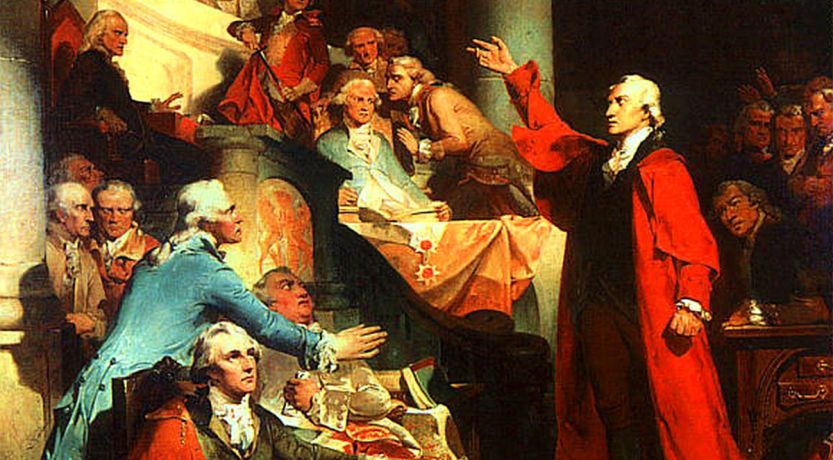
An example of the kind of passion I’m talking about comes from U.S. history. In March of 1775 tensions between the American colonies and Great Britain were high. A man named Patrick Henry stood to address the Virginia legislature and share his view of the situation. It was apparently a rather impromptu speech about the need to separate from the British crown and form their own union—something about which Mr. Henry felt very strongly.

Perhaps you’ve never heard or read the entire thing, but I’ll almost guarantee that our American readers know the last seven words of his fiery and impassioned speech. As he brought his relatively short oration to its crescendo, he thundered out to the audience, “Give me liberty, or give me death!”

Patrick Henry was passionate about the founding of a new nation.

Some common passions

It seems human beings are hardwired to have strong feelings about certain things. Not everyone feels strongly about the same things or in the same way, and certainly not all of our passions are of the same magnitude as founding a new country!

But there are still a lot of different things that fire up the imaginations and passions of people.

A few things people are commonly quite passionate about are fashion, art, music, health and fitness, hobbies, technology, sports and sports teams, hunting and fishing (or anti-hunting and maybe anti-fishing), animal rights and more.

Oddly enough, a few days ago I was talking with someone who was very passionate about animal rights, specifically opossum rights. … Okay, I’ve got to admit that was a new one for me.

On a more somber note, today there are a lot of people who are passionate and even violent about some prickly social issues. And many are very passionate about the political positions and platforms that are intractably connected to all those social issues.

That’s a lot of passion, a lot of emotion! And the chances are very good that you are passionate about some issues too.

So maybe the more important question is: Are you passionate about the right things?

Are you passionate about the right things?

While there is nothing wrong with strong feelings about sports, art, animals or other endeavors in life, there are some things that are more important and that deserve more of our attention than others.

Are we overlooking something infinitely more important that most people miss, yet that we should be passionate about?

“Zeal for Your house”

In the Bible we read an account of when Jesus Christ went up to the temple. He saw people who were doing business, changing money, selling animals to be sacrificed and so forth.

Not only were they doing business on holy ground, but very likely they weren’t being honest and were taking advantage of those who came to the temple to worship and offer sacrifices.

We read in John 2:15-16 that Jesus made a whip of rope, flipped over the money changers’ tables and with zeal drove them all out of the temple! In verse 17 it says, “Then His disciples remembered that it was written, ‘Zeal for Your house has eaten Me up.’” The English Standard Version puts it, “Zeal for your house will consume me.”

Jesus loved people. He was compassionate toward those who were hurting and in need of healing and comfort, and He taught them continually the things that would really make a difference in their lives. He had a passion for people and for serving.

But He was most passionate about the things of God—the standards, values and principles of the great Creator God!

John Gill’s commentary on the Bible points out that Christ’s regard for His Father’s house “was typical of the church of God; and such his concern for his honour, ordinances, and worship, that when he saw the merchandise that was carried on in the temple, his zeal, which was a true and hearty affection for God, … was stirred up in him, and to such a degree that it was like a consuming fire.”

Have we chosen to be passionate about what is really the most important? The standards, values and principles of God stand in stark contrast to those of this present world, which is focused on self-serving interests, immorality and blatant sinfulness. In fact, it is the Kingdom He will bring when He returns that is the only hope for mankind—and He is immensely passionate for that Kingdom!

What about us? How passionate are we for the standards, values and principles of God? Have we chosen to be passionate about what is really the most important?

Enthusiastic about doing good things

Consider the words of the apostle Paul in Titus 2:11-14, as it is translated in God’s Word translation:

After all, God’s saving kindness has appeared for the benefit of all people. It trains us to avoid ungodly lives filled with worldly desires so that we can live self-controlled, moral, and godly lives in this present world.

“At the same time we can expect what we hope for—the appearance of the glory of our great God and Savior, Jesus Christ. He gave himself for us to set us free from every sin and to cleanse us so that we can be his special people who are enthusiastic about doing good things.”

Battling distractions

Most of us want to have that passion, that zeal, that “fire in the belly” for the things of God. But with all the distractions swirling around us, with all the challenges and turmoil in the world, it can be easy for us to lose our focus and allow our greatest level of passion to be given to something else.

We need to make sure we are firmly connected to the Word of God. We must read and study it daily. With prayer and periodic fasting, we should ask God for the passion we need to have as His people. And we can ask Him for the guidance we need to negotiate these challenging times.

If we are immersed in the Word of God, it is harder for other issues to steal all our time and energy!

I am sure we are all passionate about various things. But are we right now passionate about the most important thing? Do we have a Patrick Henry–level of passion for a new Kingdom, the Kingdom of God?”   From: https://lifehopeandtruth.com/life/christian-living/what-are-you-passionate-about/

Learn more in our article “Seek First the Kingdom of God.””

Do you know why you were born?

_______

Halloween's Dark Roots

“In recent years eye-opening materials have been published about the questionable background of Halloween.

In recent years eye-opening materials have been published about the questionable background of Halloween. Consider these excerpts:

"Halloween-a holiday that mixes generic religious beliefs with ancient folk customs-is supposed to be fun. But for many conservative Christians, it has become a dark and spiritually dangerous celebration ... Many are boycotting the bats, witches, goblins and ghouls that symbolize the holiday because they consider such things to be lures in the satanic struggle for human souls ...

"Halloween's pagan roots are real, as are those of Christmas and Easter. Santa Claus comes from an ancient woodland spirit honored by pagans, and Easter's non-Christian ancestry is derived from a Germanic fertility goddess, thus the Easter eggs and Easter bunny ... Halloween was called samhain in the pagan world-part harvest festival, partly a day to honor the dead" (Knight-Ridder/Tribune News Service, Oct. 28, 1993, "Conservative Christians Urge Halloween Alternative").

"The ancient Celtic [Irish, Scottish, Welsh] festival called Samhain is considered by many to be a predecessor of our contemporary Halloween. Samhain was the New Year's Day of the Celts, celebrated on 1 November. It was also a day of the dead, a time when it was believed that the souls of those who had died during the year were allowed access to the land of the dead. It was related to the season: by Samhain, the crops should be harvested and the animals brought in from the distant fields.

"Many traditional beliefs and customs associated with Samhain, most notable that night was the time of the wandering dead, the practice of leaving offerings of food and drink to masked and costumed revelers, and the lighting of bonfires, continued to be practiced on 31 October, known as the Eve of All Saints, the Eve of All Hallows, or Hallow Even. It is the glossing of the name Hallow Even that has given us the name Hallowe'en.

"... The customs associated with Halloween included representations of ghosts and human skeletons-symbols of the dead-and of the devil and other malevolent, evil creatures, such as witches.

"The first week of November is marked in many countries, especially those with a strong Catholic influence, with festivals concerned with death, in a playful but serious way. In Catholic countries we often find some cognate of Halloween associated with All Saints' or All Souls' days.

"... Unlike the American Halloween, in Mexico people build home altars, adorned with religious icons and special breads and other food for the dead. The Day of the Dead incorporates recognition of death as a concept with rituals that remember the deaths of individuals" (Jack Santino, Halloween and Other Festivals of Death and Life, 1994). GN” From: https://www.ucg.org/the-good-news/halloweens-dark-roots

_______

2 Corinthians 13:5

(5) Examine yourselves as to whether you are in the faith. Test yourselves. Do you not know yourselves, that Jesus Christ is in you?—unless indeed you are disqualified.

  • New King James Version

Unless indeed you are disqualified - Disqualified ("reprobates" in the King James Version, Strong's #1384: adókimos) means, according to Vine's, "not standing the test, rejected." It suggests "unacceptable," "disapproved," "unworthy," "spurious," "worthless," "cast away." This word's meaning is illustrated by the following verses:

Romans 1:28: And even as they did not like to retain God in their knowledge, God gave them over to a debased [adókimon] mind, to do those things which are not fitting.

Titus 1:16: They profess to know God, but in works they deny Him, being abominable, disobedient, and disqualified [adókimoi] for every good work.

Hebrews 6:7-8: For the earth which drinks in the rain that often comes upon it, and bears herbs useful for those by whom it is cultivated, receives blessing from God; but if it bears thorns and briars, it is rejected [adókimos] and near to being cursed, whose end is to be burned.

Being disqualified or rejected is the opposite of having Jesus Christ dwell in us; it is being unfit or unworthy of His presence in us. In other words, a disqualified person is cut off from God! This is the worst possible outcome of a Christian's life: to return to a life of sin and have so much pride that he or she rejects salvation and all that comes with it! God's Word clearly shows that it can happen (see Hebrews 6:4-6; 10:26-31)!

Regular self-examination is a proven way to make sure that it does not happen to us!”  From: https://www.theberean.org/index.cfm/main/default/id/6797/ver/NKJV/2-corinthians-13-5.htm    To learn more, see: What Does 'Examine Yourselves' Mean?

_______

How to Fight Against Cancer | 12 Anti-Angiogenic Foods

The Biblical Nutritionist     152K subscribers

“My mom was diagnosed with cancer and the Doctors said there was nothing they could do. Here’s how we fought cancer and gave her 19 more years of adventure and travel with 12 anti-angiogenic foods! 

Cancer touches so many lives, in this video, I share with you my personal story dealing with cancer. Don’t lose hope. I’m on mission to keep you on mission! I want you to be confident in the kitchen so you can feel confident, understand how your body works and understand how much God loves you!”  YouTube:  https://youtu.be/DxKCZ5UvPhI

Also, Watch my video on the importance of Routine Blood Work: https://www.youtube.com/watch?v=dCRiP...

______

Saturday, August 8, 2020

A Time to Listen. NO HUNTING ON SUNDAY. Such a Time as This. Update.

.

A Time to Listen

“In today’s world it seems everyone is quick to share an opinion. With the current turmoil over race relations, should we be doing more sharing or more listening?

A Time to Listen Few times in U.S. history have we witnessed such an explosion of turmoil, anger and division. A nation that has proudly presented itself to the world as the “land of the free” finds itself reeling in shock at the nightly displays of mayhem, rioting, looting and wanton destruction.

There are virtually no voices trying to justify or minimize the brutality of George Floyd’s murder. There are many voices supporting peaceful demonstrations while decrying the rioting and senseless violence (which so often erupts amid attempts at constructive protest).

There are voices calling for an end to racism, for peace, for greater accountability and better training of police, and for criminal justice reform. And sadly, there are even voices hurling blame at one group or another, voices fanning the flames of anger and voices screaming at anyone who disagrees.

If there is anything America never seems to lack, it’s voices.

Social media has given massive platforms to anyone with an opinion, regardless of its validity or how it’s expressed. If you can think it, write it or say it, you will have no limitation on sharing it with the entire Internet universe.

To be fair, this blog is not that different, so why should you pay any attention to it?

For one reason, because I’m not seeking to tell you what you should think. I’m just asking a question.

But to understand the question, we need a little background from a source most people aren’t considering right now. It is the biblical book of Job, one of the oldest stories in written literature. The book tells Job’s story and offers many thought-provoking lessons.

The tragic experience of Job

As the story unfolds, Job, a very prosperous man, suffers a series of sudden and tragic personal catastrophes. In one day he loses all his children and possessions, and is left with virtually nothing. As if that weren’t enough, in short order he is stricken with a painful and debilitating skin disease that leaves him sitting in a pile of soft ashes for relief.

His wife, who has obviously lost everything too (except her health), is so distraught at her husband’s suffering that she tells him he would be better off dead.

But most important of all in Job’s story is that he was described as a righteous man whose life pleased God (Job 1:8). Not only were all of his physical blessings stripped from him, but he also felt like he had lost the most important relationship in his life. How could God allow this to happen after Job had worked so hard to live his life the right way? (Job asked questions of God, but never cursed or rejected Him, Job 2:9-10.)

At this point, Job is visited by three of his friends. We should probably put quotation marks around “friends”—but that’s getting ahead of the story.

"...let every man be swift to hear, slow to speak, slow to wrath..." - James 1:19  Job’s friends are so shocked by his appearance that they are speechless for a while. But after hearing Job’s lamentation about his condition (Job 3), they each shared with him their opinion and advice. They were convinced that God would not allow this to happen to Job unless he was guilty of some major hidden sin. They accused him of everything they could imagine, and each time Job showed he was innocent.

But the “facts” didn’t shut them up. They were so convinced that they were correct, so totally convinced of the rightness of their own arguments, that they just kept bludgeoning the suffering man with useless advice.

Finally, in frustration, Job said to them: “Miserable comforters are you all!” (Job 16:2).

They were all so eager to share their opinion that no one seemed to listen to Job, or to really seek God’s perspective.

Could we be guilty of the same thing?

Do we listen?

I’m a white man. My parents tried to teach me that racial prejudice was wrong. But my parents were products of the 1930s and ’40s, and their ideas of racial equality were far from what we would accept today.

How much do I really understand about the experience of men and women of color in today’s America? Am I quick to give my voice—my opinion, my perspective—without first listening?

Let me repeat that—really listening. Listening to understand. 

When I was in my late 20s, I had a black friend who was a few years older than me. One day as we were talking, he began to share some of his experiences as a young black man growing up in the 1950s on the border of Arkansas and Mississippi. I had no idea such things happened in this country. After all, they didn’t happen in “my world,” where all policemen were my friends, neighborhoods were safe, and life was generally lived without much fear.

Through the years, other men and women have shared their stories with me, not out of anger, but to help me understand. I will be forever grateful to all of them for trusting me with their experiences and helping to open my eyes.

I now find myself a little slower to offer good-sounding platitudes until I take the time to listen and try to understand first.

Have you ever sat with someone who feels abused, marginalized, frustrated, angry, hopeless and just listened to understand? Really listened, without (or at least before) offering your perspective, solutions or experiences? For that matter, how many of us have spent time with a police officer and asked him or her what it is like to be a first responder on the front lines every day?

Instead of being “miserable comforters,” like’s Job’s so-called friends, maybe it’s time to do a little more listening and a little less sharing of our “humble” opinions.

We just might learn something.”  From: https://lifehopeandtruth.com/life/blog/a-time-to-listen/?

_________

NO HUNTING ON

“As a sportsman, I was disappointed when, upon moving to North Carolina, I encountered the "Sunday law."  No deer hunting on Sunday.  Period.  As a Sabbath-keeper, this has brought me no little consternation!  I will not hunt on Saturday, and according to the laws of the State, I may not hunt on Sunday.  That leaves Monday through Friday – not ideal for getting in quality hunting time.

But far beyond my own personal pain, this brings up a bigger question: "Why rest on Sunday at all?" Most Christians believe that "Sunday rest" originated in the Bible. What honest truth-seekers are shocked to find is there is absolutely no biblical command to rest on Sunday. None. So, why do some rest on Sunday if the Bible doesn't command it?

Good question.

The answer is right in front of our faces. In fact, the newspaper in our hometown recently ran a story, "Pray or play?" with the answer. On page 8E of the article, the editors reproduced the widely recognized edict by the Roman emperor Constantine in 321AD. It reads thus:

On the venerable day of the Sun let the magistrates and people residing in cities rest, and let all workshops be closed. In the country, however, persons engaged in agriculture may freely and lawfully continue their pursuits because it often happens that another day is not suitable for grain-sowing or vine planting; lest by neglecting the proper moment for such operations the bounty of heaven should be lost (The Charlotte Observer, January 10, 2009).

So, where did "rest on Sunday" come from? A Roman emperor? Certainly not the Bible. In fact, if we honestly look at Scripture, the only day ever spoken of as a rest day is the seventh. Take a look at a few examples:

"Work shall be done for six days, but the seventh is the Sabbath of rest" (Exodus 31:15).

"The seventh day is a Sabbath of solemn rest, a holy convocation. You shall do no work on it" (Leviticus 23:3).

"The seventh day is the Sabbath of the Lord your God. In it you shall do no work" (Deuteronomy 5:14).

Interestingly, resting on the seventh day of the week was commanded as a way of following God's example. He rested on day seven after the six days of Creation. Christians who observe the weekly Sabbath – by worshipping and resting – are acknowledging the Creation many millennia ago!

"Six days you shall labor and do all your work, but the seventh day is the Sabbath of the Lord your God … For in six days the Lord made the heavens and the earth, the sea, and all that is in them, and rested the seventh day. Therefore the Lord blessed the Sabbath day and hallowed it" (Exodus 20:9-11).

So, which day do you rest on? We challenge you to ask yourself "Why?" Is it because of tradition, traced back to the edict of an unconverted Roman Emperor? Or do you obey what you find written in your Bible? (For additional help in your study, be sure to read our free booklet, Which Day is the Christian Sabbath?)

Sabbath-keeping is actually the wave of the future! The book of Isaiah foretells a coming day when all nations will observe God's Holy Days, including the weekly Sabbath. That prophecy is found in Isaiah:

"'And it shall come to pass that from one New Moon to another, and from one Sabbath to another, all flesh shall come to worship before Me,' says the Lord" (Isaiah 66:23).

I'm looking forward to that day, when people everywhere will worship – and enjoy the revitalizing rest of the Sabbath – together in harmony and unity.

Until then, you may find me hunting on Monday, Tuesday, Wednesday, Thursday or Friday – but not on Saturday.

And – at least in North Carolina – never on Sunday.” From: https://www.tomorrowsworld.org/commentary/no-hunting-on-sunday

_________

Such a Time as This

“God called you during a unique time in mankind’s history, and He will help us accomplish our roles.

Transcript of YouTube: https://youtu.be/ne7jWuRf2PI

[Steve Myers] We certainly live in challenging times. There are tumultuous things going on all around us. But it’s not unique. These types of occurrences happen throughout history. Biblically speaking, I think of the example of Queen Esther. You probably know the story, the Jews had been taken into captivity. The Persian king ruled the world, the empire at that day.

Well, Queen Esther was a Jew. Her Uncle Mordecai encouraged her at a critical point when an evil advisor, Haman, wanted to kill all the Jews. He convinced the king to make an edict, that it was okay if they did that. Who was going to stand up and defend the truth, defend the Jews, save the Jews? What could Queen Esther do? You couldn’t even approach the king without an invitation.

Well, Mordecai confronted Esther and told her this was her time to stand up, to stand strong, to exhibit her faith. And in the book of Esther, here’s what Mordecai says to her, “If you remain completely silent at this time, relief and deliverance will arise for the Jews from another place. But you and your father’s house will perish. Yet who knows whether you have come to the kingdom for such a time as this, for such a time as this.”

For such a time as this, well, Esther certainly stood up, she heeded Mordecai’s advice. And ultimately, the Jews were saved, for such a time as this. Well, we live in such a time. We live in a time where we must stand for the truth. We must not accept the things that are against God. We must stand for the truth of the Word of God. And that’s gonna take courage.

That’s gonna take a faith, and we may feel maybe a little like Esther did it first, that we can’t do it. How can I stand up against the odds? How can I maintain my faith in God? How can I have the resolve, the commitment to stand up, no matter what, no matter what challenges I face, to stand for the truth, to stand for righteousness, to stand for the faith that God has given me?

We’ve gotta put God to the test and put our faith in Him, because there’s no doubt we all will face times like this. And we need to turn to God and look to Him for His guidance, for His confidence. He lives in us, and we can draw on the power of God’s Holy Spirit to do what’s right, no matter what. We’ve been called for such a time as this, to be that shining light to this world, that no matter what any qualities are going out there, we stand for what’s right.

We do what’s right. We live what’s right. We strive to think what’s right, no matter what. And so God gives us the means to be able to do that because we have not been given a spirit of fear, but we’ve been given the Holy Spirit, a spirit of power and love, and right-thinking, sound thinking, wholesome thinking. And so we can be that shining light in this dark world, and we don’t have to fear. We don’t have to fear the Hamans that are out there in this world.

Yes, they stand against us, but with the power of God behind us, we can stand true. There’s a great passage over in Isaiah 41:10, it says this, “Fear not, I am with you.” That’s God telling us that. “Be not dismayed for I am your God, I will strengthen you. Yes, I will help you. I will uphold you with my righteous right hand.” Now, we know we can’t do it on our own. We have to put our full trust in God. So let’s do just that because we live in difficult times, but perhaps we’ve been called for such a time as this.”    From: https://www.ucg.org/beyond-today/beyond-today-daily/such-a-time-as-this

________

Update.

We are really not too hampered by the Covid 19 rules here. We must be muzzled when in buildings, and no gatherings of a lot of people, but going to the stores as usual, though definitely distancing in the stores.

My injured daughter was moved out of the hospital to rehab, and we hope and pray that she will continue to improve.  I can’t visit her because of the Covid thing though.

The masked beautician trimmed my hair and it seems to be business as usual there.

Animal Control trapped 4 of the stray cats, so that just leaves 3, but they are not trapping here any more because they don’t have room for them. One of the remaining ones, “Sox”, a tabby with white feet, we are going to try to socialize and have him fixed and vaccinated, so he can be our official apartment mouser.

At my check-up at the doctor’s office, we distanced and wore our masks. He is going to research some things and see me again in a couple of weeks.

As usual, Sherry and I prepared for the Sabbath School Bible study on Friday morning, and as we missed the fellowship of the good folks at church we asked if we could be there for it. There weren’t many there, and we all “distanced”, but it was great to be around them today.

Sunday, April 28, 2019

The Chumps Who Had to Move the Tabernacle. A Special Night. Update

For “Scripture Sunday”:

The Chumps Who Had to Move the Tabernacle

April 5, 2019 Sabbath Thought

“The Israelites spent 40 years wandering through the wilderness on their way to the Promised Land.

That’s 40 years of setting up camp and taking down camp.

Forty. Years. Every time God told them to move, it was a process. Setting up. Taking down. Setting up. Taking down. Setting up…

And on and on and on.

I’m sure that got old fast. I get tired of setting up and taking down tents after just one camping trip, and that’s with a modern, lightweight tent held up by those fancy fiberglass rods that practically put themselves together. The Hebrew text isn’t super definitive on the point, but I feel confident in saying those weren’t the kind of tents the Israelites were using.

But you know who had it worse than the average Israelite?

The Levites. In addition to worrying about their own tents, they had to move the tabernacle—the ornately designed, beautifully crafted holy place that served as both a physical reminder of the presence of God and as the centerpiece of the Israelite camp. For forty years, the Levites were responsible for taking it apart and putting it back together. Every board, every socket, every curtain, every cord, every pillar—the Levites were the ones who had to load them up and make sure everything made it to the next campsite in the right order at the right time (Numbers 10:13-28).

Setting up. Taking down. Setting up. Taking down. Setting up…

These guys were the hyoid bone of Israel.  The hyoid bone is not a bone we talk about very often—or ever, honestly. It’s not very big or very obvious, but I promise you, you’d notice if it went missing.

The hyoid is a unique bone because it isn’t directly anchored to the other bones of your skeleton. It’s the odd U-shaped bone you can feel at the top of your throat, and it’s technically floating—attached via ligaments to the muscles at the floor of your mouth, your tongue, your larynx, your epiglottis, and your pharynx.

All these attachments mean that your hyoid plays an important role in some everyday activities you probably don’t think twice (or even once) about doing—activities like swallowing, speaking, and breathing. (Like I said, you’d notice if it went missing.)

And yet, important as it is, when’s the last time you heard someone make a comment of appreciation about their hyoid bone? We talk about other, more “in the spotlight” bones and organs far more often—ribs, knees, lungs, neck, stomach, eyes, sometimes even smaller bits like metacarpals and little ear bones—but I don’t think I’ve ever heard the hyoid bone get any attention. In fact, I’ll be honest—until I started writing this blog, I didn’t even know what that bone was even called, much less what functions it performed.

But then, it doesn’t need me to know about it, does it? However much (or little) you know about your hyoid, it’s there, every day, doing its job and making sure you can do those simple little inconsequential things like breathing and swallowing.

When most of us talk about the Levites, we’re usually talking about the Levitical priesthood, but the priesthood is actually a much smaller sliver of a much larger pie.

Broadly speaking, the tribe of Levi can be subdivided into the primary family groups—the sons of Kohath (Kohathites), the sons of Gershon (Gershonites), and the sons of Merari (Merarites). Each of those family clans was responsible for part of the tabernacle when it was time to move camp. The Kohathites moved the holy items of the sanctuary (but only after the priests had covered them), the Gershonites took care of things like the curtains and screens, as well as the coverings of the tabernacle itself, and the Merarites were responsible for the structural elements of the tabernacle—all the boards, pillars, sockets, and bars that held everything together (Numbers 4:1-33).

The priests of the tabernacle—the ones who actually performed the sacrifices on behalf of Israel—were from a much narrower lineage. All the priests were sons of Moses’s brother Aaron, who was himself a Kohathite (Numbers 18:1, 7).

The rest of the tribe of Levi—the Gershonites, the Merarites, and the remaining Kohathites—were tasked with serving as support for the priests as they ministered before God on behalf of Israel (Numbers 18:2-6). But only the priests were allowed to come near “the articles of the sanctuary and the altar” (Numbers 18:3)—for anyone else, including the other Levites, it was a death sentence.

It’s not surprising that the priests tend to take the spotlight over their Levitical brethren. They were the ones who made the sacrifices that pointed toward the ultimate sacrifice of Jesus Christ. They were the ones who interacted with the holy things inside the tabernacle. The high priest was the one who stood before the ark of the covenant on the day of Atonement to make intercession for God’s people.

In so many ways, they were the stars of the show. They were the intercessors; they were the judges; they were the middlemen between the nation of Israel and its God.

But the rest of the Levites?” Continued at: https://sabbaththoughts.com/the-chumps-who-had-to-move-the-tabernacle/

________

A Special Night

“The Exodus story contains an instruction to keep a special night called the “Night to Be Much Observed.”

YouTube: https://youtu.be/2nOBW9jnHDI

Transcript

[Steve Myers] “Most are familiar with the story of the ancient Israelites coming out of Egypt. Pharaoh finally lets the people go after the Passover when so many of the first born died that weren’t protected by the blood. Something interesting happens the very next night and it’s recorded for us in Exodus 12:42. And what it tells us is that it says that this night is a night of solemn observance to the Lord for bringing them out of the land of Egypt. It’s a night of the Lord a solemn observance for ll of the children of Israel throughout their generations.

Now what’s interesting about this passage in English it says a night of solemn observance but literally, it means a night of vigil, a night of watching. And as they were coming out of Egypt this is the first day of unleavened bread. This is the time that they’re leaving symbolically sin, the sin of Egypt, that representation of what his world is like even today. They are leaving that behind as God is vigilantly watching over them. Now, not only that they are to be vigilant, they’re not to go back to Egypt, they’re not to bring sin out with them. And so God’s reminding them, in fact, He’s reminding us today as well, we keep this night to be much observed, a night of solemn observance, a night of vigilance to keep sin out of our lives. So what a great reminder for us let’s leave the Egypt of sin this world behind. Let’s look to God as he’s watching vigilantly over us and let us be vigilant to keep sin out of our lives.” From: https://www.ucg.org/beyond-today/beyond-today-daily/a-special-night

_______

Update.

My back/hip still hampers me, it isn’t fixed right yet.  Still no word on where or when I can have the bone scan so that the chiropractors will know that I won’t break if they try to adjust my back.  But the pain doesn’t stop me from trying to get things done. 

Zack and I worked on the 31’ Holiday Rambler travel trailer that I had bought. It is in my friend Chris’ horse pasture, so I have to let her know when we are going over there so that she can move her horses into a different pasture, and open the gate. She is very interested in the repairing of this trailer, so she likes to help.  This week we managed to get the bed out of the rear bedroom and tear out the carpet, which Chris burned for us.  The trash man won’t take carpet unless you grease his palm, and it is illegal to burn it here. We started to rip out the kitchen counter, but we needed different tools with us.

So we concentrated on doing something with the vintage motor home that we call “Pugsy” that is at my place.  We took down the drapes so that I could wash them, and vacuumed it out.  I am thinking about listing it on eBay. It has more cupboards, cabinets and drawers of any camper that I have seen, and yet it is only 20’ long. Years ago, sometimes I used to drive it to work, and my daughter, son-in-law and I used to take it on fishing trips at Lake Livingston. I can’t drive it anymore, because the brake and accelerator are on each side of the steering column, and my left knee isn’t strong enough anymore, even though it does have power brakes.  It is a 1968 all fiberglass Venture made in Banning CA.  In the 70’s, Starcraft bought the fiberglass mold and made some motor homes that look like it.

The man who was supposed to buy my place has been trying to buy it for less, so he came here with a contractor to get bids on what he wanted to do with the houses.  Like ripping out the bathtubs and installing showers.  I guess he doesn’t have kids.  How do you bathe small children comfortably in a shower?  I said “man who WAS”, because I never expect it to go through. I might hear from him again, but I doubt it.

On Saturday, for the last day of ‘The Feast of Unleavened Bread’ potluck at the church I made another Gefilte Fish loaf with organic veggies and some more Unleavened Almond bread and took some salad.  There was lots of food and everyone enjoyed our time together.

The Bible readings were Psa. 114, (The “After Passover Psalm”) Psa. 115, Exo. 13:17-14:31, Isa. 46:3-13, Col.1:15-23, and all of Matt. 15. The Teaching was about “First Fruits” We ate unleavened bread for the last day.

Sunday, May 21, 2017

Building Strong Families. Leaving a Legacy for Your Grandchildren. Update.

For "Scripture Sunday":   More about families.

Building Strong Families


"In 1979 the Pittsburgh Pirates professional baseball team surprised many by winning the World Series. It was a close-knit team and, to reflect this, they adopted the popular Sister Sledge song “We Are Family” to describe their strength and unity. The phrase The Family was stenciled on the dugout roof and on signs, bumper stickers and T-shirts everywhere. Family became the team identity.
Similarly, the traditional family can also be described as a team—hopefully a unified, supportive team. However, we all know that some teams are not very good when it comes to working together during difficult times, and it is not unheard of for players to blame each other for ongoing problems.
Sadly, the same can often be said of individual families. What must we do to strengthen and sustain our families?

Marriage and family under attack

Dramatic shifts in the culture and in the definitions of marriage and family have impacted many people today. It wasn’t that long ago that marriage was widely appreciated as an institution uniting a man and a woman as a team to share the task of raising children. Bringing children into the world and teaching, protecting and providing for them was seen as the primary tasks of parents.
But dramatic societal shifts have changed the composition of many families. Commenting on the results of the 2010 U.S. Census, The New York Times reported that “married couples represented just 48 percent of American households in 2010. … This was slightly less than in 2000, but far below the 78 percent of households occupied by married couples in 1950. What is more, just a fifth of households were traditional families—married couples with children—down from about a quarter a decade ago, and from 43 percent in 1950.”
The impact on children is equally dramatic. The New York Times article continued, “W. Bradford Wilcox, the director of the National Marriage Project at the University of Virginia, argues that the retreat from marriage is bad for society because it means less security for children. ‘It’s troubling because those kids are much more likely to be exposed to instability, complex family relations and poverty,’ he said” (“Married Couples Are No Longer a Majority, Census Finds,” May 26, 2011).
Because of the frequency of divorce and the various “alternative” family structures, the concept of a strong marriage and family may seem unrealistic or unattainable to many children today. The State of Our Unions, an annual report on marriage and family in the United States by the National Marriage Project, reveals disturbing and profound changes in this dramatic cultural shift and its impact on children. The U.S. statistics reported in the National Marriage Project’s 2012 “Social Indicators of Marital Health and Well-Being” are shocking:
  • Today 40 percent of all children and 72 percent of African-American children are born out of wedlock.
  • The number of cohabiting couples who live with children today is more than 15 times what it was in 1960. And today, 40 percent of all children will spend some time in a cohabiting household while growing up.
  • Roughly 1 million children each year experience parental divorce and its aftermath.
The shift away from nuclear families corresponds directly with attitudes among young adults, less than half of whom today believe it is wrong to have a child outside of marriage.
According to Stephanie J. Ventura of the National Center for Health Statistics, about 1.7 million babies were born to unmarried women in 2007, a 26 percent increase from 1.4 million in 2002 and more than double the number in 1980. Unmarried women accounted for 39.7 percent of all U.S. births in 2007—up from 34 percent in 2002 and more than double the percentage in 1980.
So what does it take to build strong, intact families today?
_______

Leaving a Legacy for Your Grandchildren


"My grandparents didn’t leave me much of an inheritance; they didn’t have much to give. But every now and then I open a small plastic bag from a box in my office and examine a few rare coins—old silver dollars Grandpa used to give me, one every birthday.
The 1922 Peace Dollar, I found out recently, might be worth as much as $25 … but I’ll never sell it. The memories that coin evokes are worth far more than that—they are priceless. It’s amazing how many warm remembrances of a grandfather’s influence a little round piece of metal can evoke more than 50 years later.
All of my grandparents have been gone for decades, and they died without many physical goods to leave to their children and grandchildren. But they all left an inheritance of better things, possessions that I hope to pass on to my grandchildren.

The greatest inheritances

“A good man leaves an inheritance to his children’s children,” Solomon told his son (Proverbs 13:22). Interestingly, grandparenting is one of the few stations in life where the playing field is level. That is, the poor and prosperous alike can pass on the greatest inheritances of all—wisdom, love, encouragement, memories and lessons learned.
“Grandparents should play the same role in the family as an elder statesman can in the government of a country,” is the way British author Erin Pizzey describes it. “They have the experience and knowledge that comes from surviving a great many years of life’s battles and the wisdom, hopefully, to recognize how their grandchildren can benefit from this” (Geoff Dench, ed., Grandmothers: The Changing Culture,p. 6).

A grandparent’s influence

Grandparents are in a stage of life that a child’s parents have not yet experienced, and it enables them to contribute in unique ways to a child’s development. Life usually slows down a little more for grandparents, and they’ve had more time to process life itself. God intended it to be that way and instructs grandparents to fill a special role in influencing the young ones.
Moses talked to the Israelites about this: “Take heed to yourself, and diligently keep yourself, lest you forget the things your eyes have seen, and lest they depart from your heart all the days of your life. And teach them to your children and your grandchildren” (Deuteronomy 4:9).
While the primary influence on a child is to be the parents, this first- and third-generation relationship offers a different level of teaching that can greatly supplement—without supplanting—the parents’ responsibilities.

A beautiful picture   

_______

Update:

This week we cut the holes out for the sink and the stove in the kitchen of the mini-house (guest house).  It looks a lot better with them in place.  We also installed some more of the upper cabinets.
On Tuesday I saw an Ear,Nose and Throat doctor about my sinuses.  I have had trouble with them for years.  I have a prescription that may not even start to make them feel better for a month.  We will see.

Early Wednesday morning, while it was still dark, I could see emergency flashing lights in the road behind my house.  I walked to the back yard and the road was blocked both ways with firetrucks, ambulances, and lots of police cars.  There were news choppers overhead, too.  A dark colored truck was in the ditch, a damaged police car and a damaged F250 in the road.  I got dressed, and the phone rang.  It was Roy, my helper, telling me that was his friend, Ronald, who had been in the dark colored truck. He was coming to pick up Roy so that they could go down to our boat ramp and do a little fishing before work.  Because a police car was involved there was a very thorough investigation with surveyors and camera, so it was quite a while before we were allowed to pick up all the fishing tackle, ice chests, folding chairs and other items that had bounced out of  Ronald's truck. The policeman had facial lacerations and was released from the hospital. Ronald has two broken legs, both kidneys and his spleen lacerated, and all his ribs broken.  It was mid-morning by the time we got that done and Jody was too shaken by it all, so we didn't work that day.

 Here is what it said on Montgomery Country Police Reporter.


6:45 a.m.
Around 5:30 a.m. Wednesday, a DPS Trooper and a civilian were struck on Calvary Road near Amblewood in the Willis area. The Trooper was attempting to assist the civilian in pushing his disabled vehicle off of the roadway when they were struck by a third driver. The trooper and the civilian, an older man, were transported by ambulance to Conroe Regional medical center. The civilian has serious but non-life-threatening injuries. The Trooper was also injured but not as seriously as the civilian.
It is unknown at this time whether the driver of the vehicle that struck the pair was injured.
Calvary Road is CLOSED in both directions in the area of the crash as it remains under investigation.
-------
One day we had an Internet outage, and my computer got a wild hair.  Suddenly I couldn't load AOL or go to a lot of my favorite sites, and a message would pop up saying that the sites wouldn't load correctly. Well, I have to be able to get to my mail to see messages from potential customers, so I had to go through Internet Explorer. It made me login in everywhere.   That is when I began to appreciate AOL and the many short cuts that it offers. The Carousel and the Little Red Heart, if you have had AOL you know what I mean.  ( I also get free Lifelok,  Legal Assistance and well as other things that come with the $11 a month fee.)  It is the only mail service that I have found that has a 'search' within the mail folders, and I use that a lot. I know most don't like AOL, but I do.  So I have had to switch to my other computer which won't load Open Live Writer.   That's why the blog looks different this time.

Thursday and Friday we got a bit more work done around here, and then I took Roy and his other fishing buddy to see Ronald in CCU.  He was conscious, and seemed to be in OK spirits, only hurting a lot.   But at the same time, my friend from church, Ann, was in ICU, and she wasn't conscious.  She had been taken to the hospital the night before because she suddenly came down with a lot of seizures, so they were keeping her sedated.  Please keep these two in your prayers.  Thank you.
Every day we should be thankful for our health and strength.  I know I am.

I have a lot of chicken in my freezer, but I am just not crazy about chicken because I was forced to eat it when I was young.  I don't buy it, it is given to me, so I often make it into dishes for the church potluck.  This time I made Chicken Breasts with Farro and Veggies.  I also took some Sweet Multi-grain Mountain Rolls, they are always well received, as they are so soft and easy to eat.  I arrived early so that I could help the pastor's wife as her knee is still hurting.

The Bible readings were Lev. 19:1-20:27, Eze. 20:2-26 and Matt. 5:38-48. and the Teaching was about the Temptations and Tests In The Life of A Believer.

I was supposed to stop and get a few things from the hardware store on the way home, but the van had finally cooled down, and there was no way that I wanted to park it again on such a warm day.