Showing posts with label Holy Days. Show all posts

Tuesday, October 29, 2024

It’s All Pagan Tradition. Acrylamide in Table Olives

.

· ·May be an image of text

“Don’t dabble in it. Don’t do it for the kids. Don’t keep one and get rid of the others. It’s all pagan tradition. Who cares where it comes from? Who cares if it’s different than it once was? Who cares if it’s not as bad as something else?

It’s pagan. If you are trying to be pagan then carry on…If not then walk away. All the way.

YHWH (Our Lord) has given you many great things to celebrate. Things that actually honor Him and give Him due glory and praise. Why would you want to choose pagan things over His things? And yes it is choosing theirs over His. You can’t have both.

Either own the holidays as pagan and yourself as pagan too or else surrender them all to Yeshua and follow Him in celebrating the Holidays of YHWH.”

Question Everything”

templecrier.com/paganism

_______

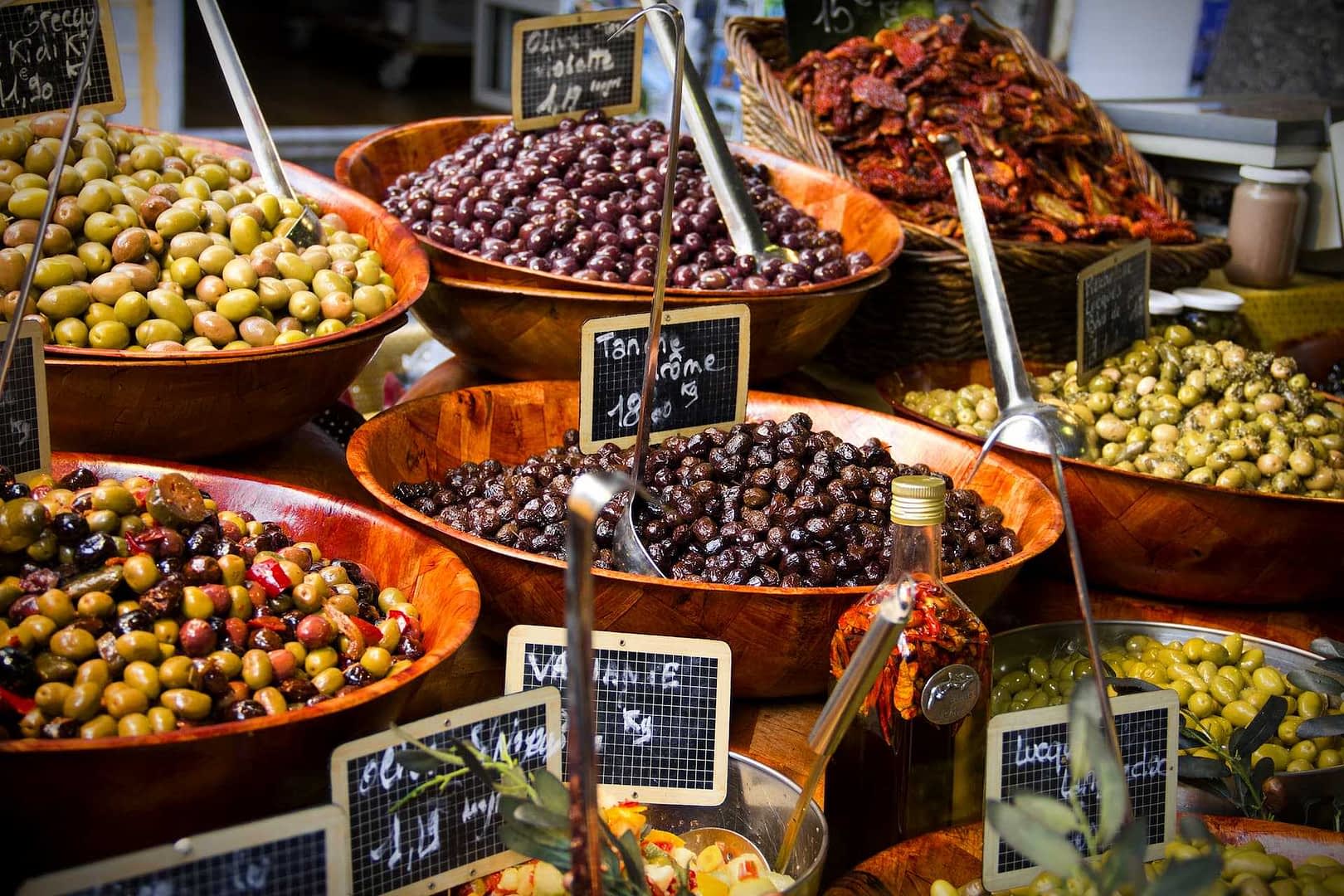
Researchers Find Ways to Reduce Acrylamide in Table Olives

“A recent study conducted by Extremadura’s provincial government in Spain has identified some strategies to mitigate the presence of acrylamide during the industrial processing of black olives.

Acrylamide is a compound found in carbohydrate-rich foods after being heated. The International Agency for Research on Cancer considers the compound carcinogenic.

The study provides different strategies that, without imposing any additional cost in its manufacture, upgrade the processing of Californian-style black ripe olives by removing acrylamide from the final product.- Daniel Martín-Vertedor and Antonio Fernández, researchers, Junta de Extremadura

According to the researchers, acrylamide generation in table olives is evident in larger quantities in Californian-style black ripe olives. The compound develops as a result of oxidation after thermal sterilization occurs during the table olive production process.

The amount of acrylamide in table olives is dependent on many factors such as how olives are processed, thermal sterilization conditions, packaging methods that may or may not involve the use of brine and cooking.

The researchers conducted their study using Hojiblanca olives, a common Spanish variety with an intermediary level of acrylamide content.

By changing different phases of the production process – olive maturation stage, length of storage period and type of washing treatment – the researchers were able to lower levels of acrylamide and thus improve the quality of the table olives.

“Applying these mitigation measures at industrial scale, black table olives consumers will intake a significatively minor quantity of this toxic compound,” Daniel Martín-Vertedor and Antonio Fernández, the two lead researchers on the project, told Olive Oil Times.

“Therefore, this type of table olive elaboration can be more present in the human diet, taking advantage of the benefits of table olives,” they added.

The researchers used olives harvested at two different points of maturation: the green and yellow-green stages. Olives harvested at the yellow-green maturation stage – when they are one step closer to veraison – had higher levels of acrylamides.

Furthermore, green olives stored for 21 months presented the lowest acrylamide levels. Acrylamide levels also lowered by 18 percent when the olives were sprayed with water before rinsing. Washing the olives with water heated to 25 ºC for 40 minutes also led to a 36-percent reduction in the chemical.

However, following treatment with lye, which is commonly used to remove the compound responsible for the bitter taste of table olives, acrylamide levels increased. Pitted olives retained the lowest levels of the chemical, followed by unpitted olives and sliced olives.

The researchers further found that table olives canned in brine with higher concentrations of salt after the production process also increased the acrylamide content. However, this was not observed in olives stored in other liquids.”  More at: https://www.oliveoiltimes.com/health-news/researchers-find-ways-to-reduce-acrylamide-in-table-olives/97968

Also see: The major food sources of acrylamide are French fries and potato chips; crackers, bread, and cookies; breakfast cereals; canned black olives; prune juice; and coffee.  From: https://www.cancer.gov/about-cancer/causes-prevention/risk/diet/acrylamide-fact-sheet

__________

Sunday, December 17, 2023

Would Jesus Celebrate Christmas? 50 Years Without Christmas. Seeing Red No. 3: Coloring to Dye For.

.

Would Jesus Celebrate Christmas?

Would Jesus Celebrate Christmas?“People around the world celebrate Jesus’ birth on Dec. 25. However, this date held no particular significance to Jesus Himself. But other days did.

For millions of Christians around the world, the only time of the year they go to church is Christmas and Easter. These are sometimes called CEOs (Christmas and Easter Only attendees).

According to the Hartford Institute for Religion Research, only 20 percent of American Christians actually attend church on a weekly basis. (The number is even lower in Europe.) Many churches report that their attendance nearly doubles on Christmas, and there is a significant spike in Google searches for “church” in late December.

Why do people who normally don’t go to church show up on Christmas?

Well, only those people can really answer that, but it’s likely because they see it as a special celebration of Christ’s birth, so they want to do what they believe honors Him.

But consider this question: Does Christmas hold the same significance to Jesus Himself?

Missing from the Bible

To answer any question about Jesus Christ, our first (and really only) logical source is the Bible—particularly the four Gospels and the later writings of His contemporaries. When you study those documents, it’s striking that the most prominent celebration associated with Christianity is totally absent. Nobody—not Jesus, not Peter, not John, not Paul—gives any hint that he had ever celebrated Jesus’ birth in December (or any month).

Some people believe it is okay to celebrate holidays originally rooted in paganism because they have now been Christianized. But is God okay with this? That is not to say that the Bible doesn’t talk about Jesus’ birth, but it actually gives very few details about it. It is only covered in the Gospels of Matthew and Luke (Mark and John never discuss it). But if you read Matthew 1-2 and Luke 2 closely, you discover there are only a few verses that directly discuss the actual day of His birth (Matthew 1:25; Luke 2:7-16). The rest of these sections describe events that surrounded His birth, but did not actually occur on the same day.

What is typically called “the Christmas story” inaccurately squeezes almost all the events described in Matthew 2 and Luke 2 into one single day in late December.

For instance, the common perception is that three wise men visited the infant Jesus on the night of His birth. But the wise men actually didn’t arrive until much later, when the family was living in a house and Jesus was no longer a newborn (Matthew 2:11). And the Bible doesn’t say there were three wise men (verse 1). To learn more about the myths surrounding His birth, read “The Birth of Jesus: Myths and Misperceptions.”

What did Jesus celebrate?

But if Jesus didn’t celebrate the most popular religious holidays of today, did He celebrate anything? Yes. In fact, the New Testament provides a lot of details about the religious days He observed.

Throughout His life, Jesus faithfully observed the Sabbath on the seventh day of the week. It was such a regular part of His life that Luke described it as “His custom” (Luke 4:16). No matter where He was, from Jerusalem to Galilee, He always rested and would attend the synagogue to hear and read the Scriptures and sometimes teach (verses 17-21).

Jesus grew up in a family that faithfully observed the biblical holy days rooted in the Old Testament scriptures (Leviticus 23). For example, Luke records that His family “went to Jerusalem every year at the Feast of the Passover” (Luke 2:41).

Every year!

This wasn’t just to keep the feast known as the Passover. It included the two holy days that fall in a week’s time—the first and seventh days of the Feast of Unleavened Bread (verse 43; see also Leviticus 23:4-8). He also observed the other festivals taught in Leviticus 23. John 7, for example, provides an account of the last Feast of Tabernacles Jesus kept as a human being.

The early Church continued to follow His example by observing these special days. Our online article “Christian Festivals” highlights many scriptures that show the early Christians observed the same days Jesus did.

Follow Christ

One of Discern’s primary purposes is to help our readers discover Bible truths that are not widely understood or practiced. That’s why we write about the biblical holy days so often. These days were established by God and were a major part of Jesus’ life when He walked the earth. Yet most mainstream Christians ignore these biblically sanctioned days and instead keep unbiblical holidays like Christmas—which are man-made and based on ancient pagan worship. Consider that Christmas was first mentioned in A.D. 336—more than 300 years after Christ’s lifetime!

Some people believe it is okay to celebrate holidays originally rooted in paganism because they have now been Christianized. But is God okay with this? The truth is, God has never given people permission to appropriate paganism and redefine it as worshipping Him. In fact, He commanded in no uncertain terms that they never do that (Deuteronomy 12:29-31; Jeremiah 10:1-5; 2 Corinthians 6:17).

One of the apostle Paul’s most succinct and memorable lines is found in 1 Corinthians 11:1: “Imitate me, just as I also imitate Christ.”

In this short sentence, Paul captures the essence of what real Christianity is. When it comes to how you worship God, will you imitate the example of Jesus by observing the biblical festivals He observed? Or will you celebrate holidays invented by men?

To learn more about the problems with Christmas, read a past Christ vs. Christianity article “Jesus Christ vs. Christmas.”

Sidebar: Is Christmas Christian? Four Questions to Consider

Does it matter which holidays you celebrate? Most assume Christmas is a Christian holiday, even though it has been secularized and is celebrated by millions of non-Christians. Here are four questions to consider about Christmas. The answers may lead you to reconsider giving this holiday a “Christian” label.

  1. Is it Christian to celebrate Christ’s birth on the birthday of an ancient sun god?
  2. Is it Christian to keep ancient pagan worship practices alive by calling them Christian?
  3. Is it Christian to lie to children about a mythical figure’s existence?
  4. Is it Christian to ignore the festivals sanctioned in the Bible and instead keep holidays taught nowhere in the Bible?

These questions are addressed in our InSights blog post “Four Reasons Christmas Is Not Christian.”  From: https://lifehopeandtruth.com/life/plan-of-salvation/holy-days-vs-holidays/christmas/would-jesus-celebrate-christmas/

_______

50 Years Without Christmas

“Two years ago was a special Christmas for me.

It was the 50th consecutive year that I’ve been without it. Yes, a golden anniversary of not having something!

I remember it well. When you are 11 years old, it’s no small thing if your parents make the life-changing decision that it is intellectually dishonest, scripturally untruthful and spiritually hypocritical to celebrate Christmas.

Researching the facts was the easy part—history has never hidden the pagan origins of Christmas and how its customs became integrated into the church by powerful people who called themselves Christians but whose practices bore little resemblance to those of the Christians of the Bible.

The “Christ vs. Christianity” column on pages 28-30 gives a great summary of what the Bible clearly does say, and does not say, about God’s view of such behavior. The bottom line is that the pro-Christmas argument can never revolve around the historical or biblical facts; its only defense is human rationalizing and justifying.

It wasn’t hard to see the truth

Even as a child, I didn’t find it hard to clearly see the truth of the matter. Maybe I was more primed to accept it, since the memories of having been lied to about Santa Claus were still fairly fresh in my young head.

At any rate, it really wasn’t all that hard for me to stop celebrating Christmas. That we weren’t going to keep Christmas anymore was much more difficult for others than it was for us! I saw my grandparents all the time throughout the year, but one would have thought their world was coming apart when we announced that we were quietly bowing out of the Christmas scene!

Despite some of those challenges, from year one I never missed Christmas.

Those closest to us, though, adjusted after a while when they realized that we hadn’t turned into religious nuts. They found that we still loved Jesus, that we still loved them, and that, because we loved them, we would continue to give and receive gifts at other times of the year … just not at Christmas.

Others were less charitable

Other folks were sometimes less charitable. Through abandoning Christmas, I learned one of my early lessons about “freedom of religion”—it’s a nice notion, but in reality it usually comes with a price, such as having to deal with the hurts of other people ridiculing and badgering you.

It’s funny how the least tolerant were the most religious. Maybe they felt our decision tacitly challenged them to defend their own beliefs. Some people, when they cannot defend the biblically indefensible, resort to personal attacks. But through it all you learn other lessons you will need later in life, such as standing by the courage of your convictions.

Never missed it

Despite some of those challenges, from year one I never missed Christmas. Maybe it was the way my parents engaged me in the discovery process. I don’t remember the exact conversations we had about it, but I do remember coming to comprehend the core issue that I mentioned earlier: Mixing Christianity and Christmas just isn’t being honest with the truth. 

And isn’t honesty, sincerity and truth supposed to be a cornerstone of our relationship with God? Isn’t that one of the most important gifts we can give to our children?”    Clyde Kilough, Editor.  From: https://lifehopeandtruth.com/discern/nov-dec-2014/50-years-without-christmas/

_________

Seeing Red No. 3: Coloring to Dye For

(Lot of red going around at this time of year!!)

Transcript of video at: https://nutritionfacts.org/video/seeing-red-no-3-coloring-to-dye-for/

Below is an approximation of this video’s audio content. To see any graphs, charts, graphics, images, and quotes to which Dr. Greger may be referring, watch the above video.

“The artificial food coloring Red No. 3 has yet to be banned—despite its purported role in causing thousands of cases of thyroid cancer.

Fifteen million pounds of food dyes are sold every year in the U.S. Why? “Foods are artificially colored to make unattractive mixtures of basic ingredients and food additives acceptable to consumers.” See, food colorings are added to countless processed food products to “conceal the absence of fruits, vegetables, or other ingredients, and make the food ‘appear better or of greater value than it [actually] is.’” Otherwise, cherry popsicles might actually look like they have no cherries in them!

I’ve talked about the role of food dyes in causing ADH symptoms in kids. But, what about their role in cancer?

Due to cancer concerns, Red dye #1 was banned in 1961. Red #2 was banned in 1976, and then Red #4 was banned. What about Red #3, used today in everything from sausage to maraschino cherries? It was recently found to cause DNA damage in human liver cells in vitro, comparable to the damage caused by a chemotherapy drug whose whole purpose is to break down DNA.

But, Red #3 was found to influence children’s behavior more than thirty years ago, and interfere with thyroid function over forty years ago. Why is it still legal?

This is an article from the New York Times about Red #3 published way back in 1985. Already by then, the FDA had postponed action on banning the dye 26 times, even with the Acting Commissioner of the FDA saying Red #3 was “of greatest public health concern,” imploring his agency to “not knowingly allow continued exposure” (at high levels in the case of Red #3) of the public to…color additive[s] that [have] clearly been shown to induce cancer… The credibility of the [Department of Health and Human Services] would suffer if decisions are not made soon on each of these color additives.” That was written thirty years ago.

At the end of the day, industry pressure won out. “FDA scientists and FDA commissioners…have recommended that the additives be banned… But there has been tremendous pressure…to delay the recommendations from being implemented.”

In 1990, concerned about cancer risk, the FDA banned the use of Red #3 in anything going on our skin, but it remained legal to continue to put it in anything going into our mouths. Now, the FDA said at the time that they planned on stopping that too, and ending all “remaining uses” of Red #3, lamenting that “The cherries in 21st-century fruit cocktail could well be light brown.” That was 1990.

Over 20 years later, it’s still in our food supply. After all, the agency estimated that “the lifetime risk of thyroid tumors in humans [from Red #3 in food] was at most 1 in 100,000.”

“Based on today’s population, that would indicate that Red #3 is causing cancer in about 3000 people.” From: https://nutritionfacts.org/video/seeing-red-no-3-coloring-to-dye-for/

Still not banned by Oct. 1923!!  https://www.npr.org/2023/10/16/1206061294/theres-renewed-pressure-on-the-fda-to-ban-synthetic-food-dye-red-no-3

_________

Sunday, October 29, 2023

Should Christians Celebrate Halloween? Is That True? Not A Palestinian State. Hospitals Profit on Junk Food.

.

Should Christians Celebrate Halloween?

Halloween is a major holiday in the Western world for people of various backgrounds. Can Halloween celebrations be reconciled with a Christian worldview and lifestyle? The Bible holds the answer.

A little boy trick or treating with his mother.

Photos.com

Does Halloween serves a positive Christian purpose?

Tuesday night millions of children around the nation will be donning costumes, ringing doorbells and uttering the traditional "trick or treat" Halloween greeting. Most people consider this a harmless, fun activity for children. Others condemn the entire occasion because of the pagan origin of the day and connect it with demonism and the occult.

An article from a prominent Christian magazine suggested that "Christians should embrace the 'devilish' holiday with gusto—and laughter." The author suggests that Halloween presents us with an opportunity to "mock" and "laugh at" Satan and "the forces of evil."

A local pastor, writing wistfully of his past childhood Halloween celebration, said, "I enjoyed being a devil." He asserted that "a child doesn’t think of a red devil as an enemy of God or the apostle of hate and destruction." He went on to defend wearing costumes as merely superficial, and suggested that opposition to celebrating Halloween stems from lack of confidence in Christian beliefs.

Really only harmless fun?

Wait a minute! Is it unchristian for parents not to want their children to dress up as the Devil? Or does Satan the Devil even exist? According to a recent Barna survey, nearly 50 percent of professing Christians do not believe that Satan is a living being. For these folks, the whole question must be a moot point. But perhaps the rest of us ought to reconsider our perspective regarding Halloween.

Would anyone dare to suggest applying this reasoning to Hitler? Would wearing Hitler masks and swastikas and dressing like the skeletal remains of his victims be an appropriate way to "laugh at" Hitler and "mock" the diabolical evils of Nazism?

Is Satan a laughing matter? Does God want our children to associate fun and treats with the forces of evil?

I am not implying that a child who puts on a Halloween mask is dabbling in the occult or is in danger of demon possession. I am simply questioning the suggestion that Halloween serves a positive Christian purpose.

According to Deuteronomy 12:31-32 God does not approve of recycling, reconstituting and relabeling pagan customs to celebrate Christian events.

Carnal holidays trumped by God's Holy Days

My wife and I just finished celebrating eight fun-filled days of the Feast of Tabernacles with more than 700 men, women and children here in Central Oregon. I so much wish all of Christianity could share the joy of this meaningful occasion. Here is a God-ordained festival that was observed by Jesus, Paul and the apostolic Church and is still celebrated today by many Christians. It is one of seven annual Holy Days that foreshadow future events in God's plan (Colossians 2:16-17) rather than focusing on the powers of darkness that form the legacy of Halloween.

Anyone who dares express objections to Halloween has two strikes against him: 1. It is fun for the kids, and 2. It is a long-standing, firmly entrenched custom in our culture.

But the Feast of Tabernacles has Halloween beat in both categories: 1. It is fun for kids and the whole family and is eight days long, and 2. It was established thousands of years ago by God Himself. And most importantly, it and all of Holy Days of the Bible teach valuable lessons about the plan of God.”  From: https://www.ucg.org/beyond-today/blogs/should-christians-celebrate-halloween

_________

Is That True?

“Occasionally in life you come across something that goes so contrary to your beliefs that you exclaim, “Is that true?!”

Growing up, I became familiar with the concept of “pagan” or “paganism.” These were pejorative terms that were used to describe practices which were steeped in the worship of a different god and in opposition to Christianity.

Even as a child, when I first learned that Easter and Christmas had their origins in pagan customs, I avoided celebrating these days. Anything “pagan” was clearly something to be avoided; but as I quickly learned, not everyone agreed with that idea.

Over the years, the term “pagan” has increasingly taken on a more benign meaning. Take, for example, Halloween, which comes up in a couple of days. If you do even a cursory search on the Internet, you will find that Halloween is a celebration praised by those who profess witchcraft as their religious preference.

There is actually a church for witches that provides a list of ways to celebrate Easter, Halloween and Christmas as primary days of worship for pagans. They refer to them as Ostara, goddess of the spring and the beginning of life; the Festival of the Dead, which we call Halloween; and the Yule festival, which we call Christmas. These three festivals have “pagan” stamped all over them, so how is it that more than a billion people professing Christianity also celebrate them each year?

According to its pagan origins, the evening of Oct. 31 is when the veil between the world of the living and the world of the dead is at its thinnest level. Nov. 1 is the first day of the Celtic new year and the day set aside for all saints in the Catholic religion.

Oct. 31, Halloween, is a celebration of this crossover between the world of the dead and the world of the living. It is celebrated by people dressing up in costume to commemorate those who are called the living dead—goblins, ghosts and ghouls. Some try to Christianize the celebration by using the term “hallowed” or holy evening. But it is a vain attempt to add Christianity to something that is clearly pagan.

Isn’t it time we looked at our lives and asked some basic questions about what we are doing? Whenever you see a celebration that isn’t found in the Bible, yet is proclaimed to be Christian, shouldn’t you ask, “Is that true?” After all, isn’t Christianity supposed to be based on truth?

The truth of the matter is that Easter, Christmas and Halloween are not found in the Bible. They originate in pagan celebrations. They were adopted and integrated into mainstream Christianity centuries ago.  

Can you really be a Christian and embrace pagan rituals? Isn’t this in conflict with the first two of the 10 Commandments, which are against worshipping other gods—the goddess of spring, the sun god and, oh yes, let’s not forget the god of the underworld, who is being honored this week on Halloween?

We live in a world of lies and distortions of fact. Don’t just follow customs that are attractive! Ask questions; and whenever you’re presented with a celebration that is called Christian, never forget to ask, “Is that true?”  From: https://lifehopeandtruth.com/speaking-of/is-that-true/

_________

I'm sure you all have friends who are asking questions, you can send them this :

1)Before the modern state of Israel there was the British mandate, Not a Palestinian state .

2) Before the British mandate there was the ottoman empire, Not a Palestinian state .

3) Before the ottoman empire there was the Islamic mamluk sultanate of Egypt, Not a Palestinian state .

4) Before the Islamic mamluk sultanate of Egypt there was the ayyubid dynasty, Not a Palestinian state . Godfrey of bouillon conquered it in 1099.

5) Before the ayyubid dynasty there was the Christian kingdom of Jerusalem, Not a Palestinian state .

6) Before the Christian kingdom of Jerusalem there was the Fatimid caliphate, Not a Palestinian state .

7) Before the Fatimid caliphate there was the byzantine empire, Not a Palestinian state .

8) Before the byzantine empire there was the Roman empire, Not a Palestinian state .

9) Before the Roman empire there was the hasmonean dynasty, Not a Palestinian state .

10)Before the hasmonean dynasty there was the Seleucid empire,Not a Palestinian state .

11) Before the Seleucid empire there was the empire of Alexander the 3rd of Macedon, Not a Palestinian state .

12) Before the empire of Alexander the 3rd of Macedon there was the Persian empire, Not a Palestinian state .

13) Before the Persian empire there was the Babylonian empire, Not a Palestinian state .

14) Before the Babylonian empire there was the kingdoms of Israel and Judea, Not a Palestinian state .

15) Before the kingdoms of Israel and Judea there was the kingdom of Israel, Not a Palestinian state .

16) Before the kingdom of Israel there was the theocracy of the 12 tribes of Israel, Not a Palestinian state .

17) Before the theocracy of the 12 tribes of Israel there was the individual state of Canaan, Not a Palestinian state .

In fact in this corner of the earth there was everything but a Palestinian state!

Origins @voiceofisrael

_________

Hospitals Profit on Junk Food

Transcript of video at: https://nutritionfacts.org/video/hospitals-profit-on-junk-food/

Below is an approximation of this video’s audio content. To see any graphs, charts, graphics, images, and quotes to which Dr. Greger may be referring, watch the above video.

“Why is hospital food so unhealthy?

Put in stark terms, cardiovascular disease claims one American life every 39 seconds”; and for most heart attack deaths, you just keel over. “Sudden cardiac death is the first manifestation of coronary heart disease for the majority of individuals, particularly among women.”  So, for many of these sudden death victims, their first indication of the presence of heart disease was their demise. They didn’t even know they had heart disease! That’s why an ounce of prevention is worth way more than a pound of cure, because there is no cure for dead.

But that’s why the prevention of sudden cardiac death remains such a major public health challenge, because most people don’t even know they’re at risk. But we’ve known for over a half century, when we first started autopsying young servicemen who died in the Korean war, that coronary artery disease begins in our youth even among young children. So, business as usual is simply “not going to yield the improvements necessary to radically improve the cardiovascular health of the United States.”

But the good news is “a low-risk lifestyle (not smoking, exercising regularly, having a prudent diet, and maintaining a healthy weight)” may be able to wipe out the vast majority of risk for sudden cardiac death. So, “the time is now long overdue to start aggressive preventive cardiovascular disease programs in our schools, our homes, and our worksites.” How about starting in our hospitals?

A significant percentage of hospitals surveyed had fast food restaurants inside them, with Krispy Kreme topping the list. Brilliant marketing, given that families surveyed in hospitals with McDonald’s were twice as likely to think McDonald’s was healthy—after all, they let it in a hospital. But what about food served in hospital cafeterias themselves? Are they much better? 384 entrees were analyzed at 14 children’s hospitals in California, and only 7 percent could be classified as healthy. And just in case someone accidentally picked the rare healthy option, 81 percent of eating venues in children’s hospitals made sure to have junky impulse buys like ice cream, cookies, and candy near the checkout register. And 38 percent had signs that explicitly encouraged unhealthy eating. Why would they do that?

If you ask hospital cafeteria managers that exact question: “Why they don’t tend to follow nutrition standards?” “Why nutrition is not a top priority?”  It’s the same answer why unhealthy food is sold anywhere else—the pressure to generate profit. “Increased emphasis [is being] placed on running a hospital foodservice department as a profit center,” a bigger and bigger profit center. It’s such a metaphor for our sickness-care system in general, where healthy treat-the-cause approaches are eclipsed by the pills and procedures that bring in the most money.

Well, what do you expect from the private sector? But public hospitals don’t seem much better. A 2019 analysis of veterans’ hospitals found that “all VA hospitals contain vending machines providing a majority of soda, candy, and junk foods that directly conflict with” our government’s own healthy food choice recommendations such that, ironically, “hospital visits could theoretically promote worse health.” This raises the question why any soda or candy machines are available at our VA hospitals? “Are we trading the health of our veterans for profits?”

Maybe it’s time to ban junk food on hospital premises. “On daily rounds it is appalling to see patients…gorging on [potato chips, candy, and soda]—the very food[s] that may have contributed to their admission in the first place”—obscene to see fast food franchises on site, legitimizing “the acceptability and consumption of such foods in the daily diet.” “The obesity epidemic represents a public health crisis, but it is a public health scandal that by legitimizing junk food, hospitals have themselves become a risk factor for diet-related disease.” Maybe “it’s time to stop selling sickness in the hospital….” What message do residents receive when they are fed pizza and soda pop at grand rounds on obesity? We need a healthcare system with “more Hippocrates and less hypocrisy.”  From: https://nutritionfacts.org/video/hospitals-profit-on-junk-food/

_________

Tuesday, October 3, 2023

Is Karma in the Bible? Feast of Tabernacles? An Attitude of Gratitude. Bacon & Botulism

.

Is Karma in the Bible?

“In recent years, the Eastern concept of karma has become popular in Western culture. Can the idea of karma be harmonized with the Bible? Is karma biblical?” 

Is Karma in the Bible?

“Cause and effect is not karma

However, the Bible does teach the principle of cause and effect, which some incorrectly confuse with karma. There are two basic kinds of cause and effect:

1. Cause and effect by God’s blessings or punishment. The Bible is clear that God has the power to bless and punish. God told Israel He’d bless them if they obeyed and curse them if they rebelled (Leviticus 26; Deuteronomy 28). He exercised that authority with ancient Israel and will punish the nations in the end time for their wickedness and refusal to repent (Revelation 16:8-9).

God also promises to bless those who seek and obey Him (Psalm 1:1-2; Proverbs 10:6; James 1:25). But those blessings aren’t always immediately visible. Many seemingly innocent people have suffered hard lives throughout history (John 16:33; Hebrews 11; James 1:2-3). But the Bible promises that ultimately “all things work together for good” for God’s faithful people (Romans 8:28).

The Bible also shows that God is extremely merciful and is not constantly doling out physical punishment based on what we deserve (Matthew 5:45; Hebrews 2:1-4). In fact, considering the state of our world’s morality, we should be immensely thankful God doesn’t operate through karma.

2. Cause and effect through natural consequences. Both the Bible and common sense show that cause and effect operate naturally in our lives. The Bible expresses it this way: “Whatever a man sows, that he will also reap” (Galatians 6:7). In simple terms, decisions and actions often have natural consequences.

No amount of good deeds can offset our sins and save us from the death penalty. Forgiveness of sin can only occur through repentance and the blood of Jesus Christ. Much of the book of Proverbs is about cause and effect. For example, the natural consequence of being lazy is poverty, while diligence and hard work lead to financial stability (Proverbs 6:9-11; 10:4; 13:4; 20:13; 24:30-34).

These natural consequences aren’t determined by mysterious karmic energies, but by simple cause and effect. Practicing biblical principles positions a person for success because God’s ways work. However, in a world guided by Satan and human nature, sometimes the righteous suffer because of the sins of others (John 16:33; Romans 8:18; 1 Peter 3:17).

The Bible also shows that in this life sometimes the wicked do prosper for a time (Psalm 73:3; Jeremiah 12:1-3).

Though the Bible clearly teaches the principle of cause and effect, it is not a biblical equivalent to karma.

Why is the idea of karma dangerous?

Karma is clearly a man-made belief foreign to the Bible. Consider three reasons the idea of karma is spiritually dangerous and deceptive:

1. Karma replaces the all-powerful God with the universe. The power behind karma is usually described as the universe. Chopra.com describes it this way: “The Universe will bring back whatever acts you committed or feeling you caused in another person.” This worldview credits the physical creation as the ultimate arbiter of morality and reward and punishment.

But the Bible shows God created the universe (Genesis 1:1; Isaiah 42:5). God, not the universe or energy, is the “rewarder of those who diligently seek Him” (Hebrews 11:6). Jesus Christ, not the universe or karma, will ultimately “judge the world in righteousness” (Acts 17:31).

Karma is another way mankind has deceptively credited the creation with power that belongs only to God (Romans 1:25).

2. Karma contradicts biblical repentance. Many believe that “bad karma” can be erased only by outweighing it with “good karma.” This idea contradicts the biblical teaching on sin.

The Bible teaches that the ultimate penalty of sin is death—not physical curses (Romans 6:23). No amount of good deeds can offset our sins and save us from the death penalty. Forgiveness of sin can only occur through repentance and the blood of Jesus Christ (Acts 3:19; 1 John 1:7). A Christian must absolutely strive to obey God, but not as an attempt to outweigh the bad on the scales of karma.

Some sins do have ongoing physical consequences, but thankfully, after God forgives us, we no longer have to worry about the ultimate consequences of our sins.

3. Karma distorts the proper motivation for doing good. Karma is just one of many man-made attempts to encourage people to live morally. It plays on human nature by incentivizing doing good to avoid bad things coming back upon us later.

At its core, the concept of karma is driven by selfishness.

The Bible, on the other hand, teaches that morality is defined by God and should be driven by selflessness. Jesus taught that our ultimate motivation should be love—for God first and then for other human beings (Matthew 22:36-39). Paul described the proper motivation for everything we do this way: “The purpose of the commandment is love from a pure heart, from a good conscience, and from sincere faith” (1 Timothy 1:5).

Christians shouldn’t do good to avoid bad things coming on them. Christians should do good out of genuine love because it’s the right thing to do—regardless of the consequences.

So, is karma in the Bible? No. Karma is unbiblical and contradicts God’s Word in multiple ways.”      This is the last part of article at:  https://lifehopeandtruth.com/change/the-church/world-religions/karma-in-bible/?

______

Why Would You Observe the Feast of Tabernacles?

This year, Sukkot starts on the evening of Friday, 29 Sept and ends on Friday, 6 Oct 2023.

“The Feast of Tabernacles (Sukkot) represents the peace, prosperity and righteousness of the coming Kingdom of God, but how is it relevant to the Christians today?”

Transcript of video at: https://www.ucg.org/beyond-today/beyond-today-daily/why-would-you-observe-the-feast-of-tabernacles

[Steve Myers] Someone asked me the other day, "Why would you observe the Feast of Tabernacles? Is that a Christian thing?" Absolutely, it is. We follow the example of the New Testament Church. The church in the 1st Century kept and observed, celebrated, the Feast of Tabernacles. So, what is this feast? Well, it's definitely listed in Scripture as one of the feasts of the Lord. (Lev. 23:1-44) I don't know if you've ever checked that out, but it's the feast that God has established. It's one of His Holy Days. And so, for a period of time, we celebrate the Feast of Tabernacles for seven days. A complete festival. 

Seven is often a number of completeness because it represents that time, in God's plan, that has a deep spiritual meaning. Jesus Christ will return to this earth, 1 Thessalonians 4 spells that out completely, 1 Corinthians 15 as well. And so, the Feast of Tabernacles is representing that time when Christ will return as King of kings and Lord of lords. I know you've probably heard those classic choral selections that sing about that. He's King of kings and Lord of lords and He is returning. Well, the Feast of Tabernacles points to that time that Christ will literally come back to earth.

We can read about that in Revelation 5. Revelation 5, in fact, beginning in verse 10, it tells us, "He has made us kings and priests to our God, and we shall reign on earth." Christ will return and annihilate the kingdoms of man. Mankind will no longer be in charge. There will no longer be chaos and confusion in this world. Jesus Christ will establish righteous godly government. And for a thousand years, He will reign on this earth.

Perhaps you've even prayed about this symbolic meaning of the Feast of Tabernacles. You know, that model prayer, sometimes call the Lord's Prayer that Christ taught the disciples to pray. Perhaps you've said that prayer or parts of that prayer. It has that part that says, "Thy kingdom come, thy will be done." Christ will come back and establish His kingdom. It will come. And, of course, the rest of that prayer says, "On earth as it is in heaven." So the Feast of Tabernacles pictures that amazing time of peace and prosperity and righteous government that Christ Himself will come and establish right on this earth.

Check out The Feast of Tabernacles, find out the deep spiritual meaning behind God's purpose and His plan, and this vital step in His plan for salvation for all mankind.” From: https://www.ucg.org/beyond-today/beyond-today-daily/why-would-you-observe-the-feast-of-tabernacles

________

An Attitude of Gratitude: Sukkot for Christians

“In a festival similar to Thanksgiving, the Biblical feast of Sukkot (pronounced sue-COAT) gives us a chance to focus on our blessings from God and His desire to be with His people. Also called the Feast of Booths, Tabernacles, or Ingathering, it’s one of the seven commanded feasts in Leviticus 23.”  More at: https://hebrewrootsmom.com/an-attitude-of-gratitude-sukkot-for-christians/

_________

Bacon & Botulism

Transcript of video at: https://nutritionfacts.org/video/bacon-and-botulism/

“The nitrite preservatives in processed meats such as bologna, bacon, ham, and hot dogs form carcinogenic nitrosamines, but also reduce the growth of botulism bacteria—forcing regulators to strike a balance between consumers risking cancer, or a deadly form of food poisoning.

There are literally hundreds of studies on the link between cancer and cured meats like bologna, bacon, ham, and hot dogs. But just for a taste, just over the last year or so, processed meat consumption was significantly associated with bladder cancer, endometrial cancer, prostate cancer, thyroid cancer, and then all the way down the digestive tract: throat cancer, esophageal cancer, more esophageal cancer, more esophageal cancer and stomach cancer, colon cancer, and rectal cancer. And then, for a ten-for-one deal, processed meat was significantly related to the risk of stomach, colon, rectal, pancreatic, lung, prostate, testicular, kidney, more bladder cancer—and leukemia, as well. That’s why the official recommendation is to try to “avoid processed meats” entirely.

With concern over the potential danger of nitrosamines growing, consumer groups, such as the Center for Science in the Public Interest, a wonderful group, petitioned the USDA as far back as 1972 to ban, or at least greatly reduce, the nitrite in cured meats. The USDA denied the petition, citing nitrite’s role in the prevention of botulism bacteria that can grow inside vacuum-packed meats. They had to weigh the risk of cancer with the risk of consumers getting a deadly food poisoning bacteria from lunchmeat.

You know, in 2011, the National Pork Board officially changed their quarter-century old slogan from “Pork: the other white meat” to “Pork: Be Inspired.” Maybe for bacon, they should have considered the tagline: “Cancer or Botulism, take your pick.” From: https://nutritionfacts.org/video/bacon-and-botulism/

To see any graphs, charts, graphics, images, and quotes to which Dr. Greger may be referring, watch the above video. This is just an approximation of the audio contributed by MaryAnn Allison.

__________

Sunday, September 17, 2023

Why Should Christians Celebrate the Feast of Trumpets? Avoid These Cancer-Causing Foods.

.

Why Should Christians Celebrate the Feast of Trumpets?

Sunrise over the crest of a hill“Prophecies of the end time include trumpet plagues and the return of Jesus Christ at the last trump. What does the Feast of Trumpets mean for Christians today?

Christ's return is announced by the seventh and final trumpet.

The fourth festival of God (after Pentecost) is the Feast of Trumpets (or a "memorial of blowing of trumpets," Leviticus 23:24-25), which falls in September or October. (This year was celebrated 15th-16 Sept. 2023.)  This festival is called Rosh Hashanah by the Jews today. Ancient Israel understood that trumpets were used as a way of announcing special, very important messages (Numbers 10:1-10).

In the New Testament, Jesus Christ reveals that before His return to the earth, there will be the blowing of seven trumpets, announcing progressive stages of the downfall and overthrow of this world's kingdoms, ending with the return of Christ to take possession of the earth. Christ's return is announced by the seventh and final trumpet (Revelation 8:2; Revelation 11:15). This day also pictures the time when faithful Christians will be resurrected to eternal life at the time of the seventh trumpet (1 Corinthians 15:52; 1 Thessalonians 4:16) to reign with Jesus Christ for 1,000 years (Revelation 20:4-6).

Interestingly, it was around this time of year that Jesus was born—not in the dead of winter (see "Biblical Evidence Shows Jesus Wasn't Born on December 25"). And the fall feast season represents the time when Jesus Christ will come to the earth again to reign in glory.

The remaining fall feast days describe steps in the establishment of the prophesied Kingdom of God on earth and judgment of humanity after Christ's return. The Feast of Trumpets is followed by the Day of Atonement.”

For more information, please read our booklet God's Holy Day Plan: The Promise of Hope for All Mankind.”   From: https://www.ucg.org/bible-study-tools/bible-questions-and-answers/why-should-christians-celebrate-the-feast-of-trumpets

_______

Why the Feast of Trumpets?

Transcript of video at: https://www.ucg.org/beyond-today/beyond-today-daily/why-the-feast-of-trumpets

[Darris McNeely] “God's festivals are upon us. The annual Holy Days that God commanded mankind to keep in his name to worship and honor him. The Feast of Trumpets is coming up. The Feast of Trumpets is mentioned back in Leviticus 23. And within that chapter, we have what is called a time of the memorial of the blowing of trumpets, and Leviticus 23, "On the first day of the Sabbath month, a holy convocation and a blowing of trumpets."

Whenever God told his people to blow the trumpets, they were either to come together to be on the move and on the match or to go to war because it was a time of alarm. Trumpets heralded something significant. Now, what does that mean for us today? Well, if we believe in Jesus Christ's return and His promise from His Word of His second coming, then when we turn to 1 Thessalonians 4 we read something about another blowing of trumpets in verse 16 and the announcement of Earth's most significant possibly event that we could ever imagine. Let's read it. 1 Thessalonians 4:16, "For the Lord himself will descend from heaven with a shout, the voice of an Archangel. and with the trumpet of God."

Paul writes here to the church about the sounding of the trumpet of God, not what the men of Israel were to sound. That was just a forerunner, a picture of what this particular event really does show, the trumpet of God sounding with the appearance of Jesus Christ as King of Kings, but here's what happens. "And the dead in Christ will rise first." Paul has comforted the church here with the encouragement that those who have died will rise again and he shows that it's going to happen with a sounding of a trumpet. The Feast of Trumpets points us to the absolute hope, truth, and fact of the resurrection from the dead of those who are described as the dead in Christ. The Bible even elsewhere talks about it as a first resurrection, as one that is what is called also a better resurrection. It will be a glorious time. It will be a time of reunion.

Who in the Bible would you want to sit down and talk to? Which of the saints, which of the great figures of the Bible? Abraham, Noah, David, the Apostle Paul? They'll be in that resurrection. The question for you and I to consider is will we be in that resurrection? That truth, that hope, is a fact of God's word. The Feast of Trumpets points us to that, brings us to that reality. Let's remember that and think about what it means to observe that day in anticipation, the very hope of the resurrection of the dead.”  From: https://www.ucg.org/beyond-today/beyond-today-daily/why-the-feast-of-trumpets

_________

Unexpected foods that could increase risk of cancer | 9 News Australia

“Experts are warning other unexpected foods beyond processed meats like salami, bacon and sausages could put your health at increased risk of cancer.”

________

Avoid These Cancer-Causing Foods

Learn which foods to steer clear of – and which to enjoy – to lower your cancer risk.

U.S. News & World Report

Worst Cancer-Causing Foods

Homemade beef burgers with crispy bacon and vegetables in small pans and glass of wheat beer on rustic serving board over shabby wooden background, top view, copy space, horizontal compositionMore

“Over the last several decades, certain foods have been vilified as being potentially carcinogenic, or capable of causing cancer. So which ones are the biggest culprits? And how can you eat to prevent cancer or reduce the chances of a recurrence if you've been diagnosed?

(GETTY IMAGES)

The list of potentially cancer-causing foods includes:

  • Red and processed meat.
  • Sugar.
  • Alcohol.
  • Processed and packaged foods.
Red and Processed Meat

For the carnivores among us, it's probably tough to hear the news that red meat and processed meat are associated with a higher risk of certain types of cancer. "Red meat is defined as beef, veal, pork, lamb and goat," says Cathy Leman, a dietitian, personal trainer, nutrition therapist, speaker, writer and breast cancer survivor based in Chicago.

"Processed meat refers to meat that has been salted, cured, fermented, smoked or other processes that enhance flavor or improve preservation," she adds. Examples include hot dogs, luncheon meats, ham and bacon.

Jeannette Schenk, senior staff scientist in the cancer prevention program at Fred Hutchinson Cancer Research Center in Seattle, says "there have been many epidemiological studies that have reported an association with high intakes of processed meat and red meat with an increase in cancer incidence and mortality."

According to the American Institute for Cancer Research, a high intake of red meat is defined as more than three servings per week. A single serving of red meat is about 3 to 4 ounces – or one small hamburger, steak or a medium-sized pork chop. Your total weekly consumption, the AICR reports, should be under 350 to 500 grams (about 12 to 18 ounces cooked) each week.

The cancer risk associated with processed meat products is even higher. The International Agency for Research on Cancer, a branch of the World Health Organization, classifies processed meat as a Group 1 carcinogen, meaning that like other Group 1 carcinogens – tobacco, UV radiation and alcohol – research has proven that processed meat can cause cancer in humans. Eating just 50 grams of processed meat each day, the IARC reports, can elevate cancer risk by 18%.   Four strips of bacon or one hot dog contains about 50 grams of processed meat.”  More at: https://health.usnews.com/conditions/cancer/articles/worst-cancer-causing-foods

________

Sunday, August 6, 2023

The Uniqueness of the Human Body. Don’t Copy Pagan Ways of Worship. Heart Disease Starts in Childhood.

.

The Uniqueness of the Human Body
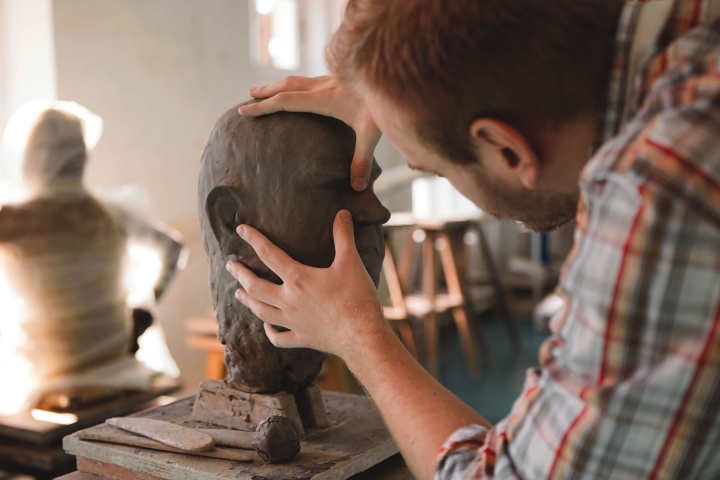
A sculpture forming a human head out of clay.“Many believe that life on earth arose by chance, with human beings as merely more-evolved apes. But the evidence in our makeup says otherwise—pointing to human beings as a special creation.

Nastasic/E+

“In the absence of any other proof, the thumb alone would convince me of God’s existence.” —Sir Isaac Newton

King David once described his own human body as being “fearfully and wonderfully made” (Psalm 139:14). Although it’s now common for biology textbooks to consider people as simply animals, many features make the human body unique.

Let’s look at five of these singular differences.

The astounding geometric proportions of the human body

Consider, for instance, the geometric symmetry of the human body. Leonardo da Vinci, the great artist, inventor and mathematician, made a famous drawing of it.

It’s called the “Vitruvian Man”, in which Leonardo drew a man’s figure with arms and legs extended. He found it fit perfectly into both a square and a circle, the span of the arms being approximately the same as the man’s height.

In addition, when the legs were measured, they were approximately half the man’s height, and his navel was located at the center of the circle. Could all of this precise symmetry have been a result of chance? Or doesn’t it show how truly carefully designed and proportioned the human body was made?

As David went on to say, “You even formed every bone in my body when you created me in the secret place, carefully, skillfully shaping me from nothing to something” (Psalm 139:15, The Passion Translation, emphasis added).

The erectness of the human skeleton

We tend to take for granted how easily we can stand straight and walk erectly on two legs. Yet there is a uniqueness to how the human body can effortlessly balance itself while walking or running.

Some believe apes and human beings have similar gaits, but they don’t. People are designed to walk upright, while apes were created to live mainly in and among trees, being able to grasp branches with all four limbs. That’s why humans are classified as bipeds (walking on two feet), while apes and monkeys are classified as quadrupeds (walking on four limbs). Apes and monkeys also are ungainly when they walk on two feet, while human beings can gracefully walk erect or speedily run long distances.

Why is there such a difference? Human beings have several anatomical components that are unique. Three of these are the backbone, with its three curves to reduce the load level of the body, the upright knee and the hip joint. Also, the neck and skull joints allow people to carry their heads erect and to face forward without great effort. Lastly, the human foot has a special arch that’s not found in other creatures. It allows one to push either from the front or the back of the foot, giving it tremendous power and balance to lift, jump, twist or run.

Again we have the testimony of Leonardo da Vinci, who knew human anatomy so well. He wrote in his notebooks, “The human foot is a masterpiece of engineering and a work of art.”

Stuart Burgess, who taught engineering design at leading United Kingdom universities, states: “Creationists believe that the upright human skeleton could not have evolved step by step from a four-limbed creature because many features are required simultaneously. If an ape-like creature had only some of the features required for an upright stature, it would not be able to move properly on either two or four limbs” (In God’s Image: The Divine Origins of Humans, 2008, p. 7).

The skillful abilities of the human hand

In contrast to an ape’s hand, the human hand has a long and fully opposable thumb, where each finger can make direct contact with the tip of the thumb. This allows for carefully grasping objects, like holding a pen for writing, having a delicate touch for typing, playing the piano or performing surgery. Apes don’t have these abilities since their fingers are curved for gripping tree branches.

Furthermore, human fingers have a wider range of motion and can swivel in many angles, allowing them to sculpt fine works of art and participate in many types of sports where balls can be thrown, caught or hit with great precision.

It was another genius like Da Vinci, Sir Isaac Newton, who is quoted as saying, “In the absence of any other proof, the thumb alone would convince me of God’s existence” (Charles Dickens’ literary magazine All the Year Round, 1864, Vol. 10, p. 346).

Remarkable human speech and language

There are numerous features of human anatomy that permit people to speak, laugh and sing that apes and monkeys don’t have.

First, human beings have long and deep throats that are essential for producing varied speech and act like a wind instrument. Apes and monkeys, on the other hand, have shallow throats that hinder precise articulation. Our vocal cords are also unique, with some 100 muscles involved overall in the fine-tuning of the voice.

Next are human lips and tongues, which are likewise unique. The lips have the ability to tighten or loosen their muscles to enunciate short or long syllables and act like an adjustable valve of a trumpet. The versatile tongue can fine-tune the articulation of sounds by varying the amount of air coming from the lungs. It does it so rapidly that it can produce up to 90 words per minute!

As Professor Burgess brings out: “Humans have the unique ability to communicate through intricate language. There are approximately 5,000 different languages currently used around the world. Each of these languages involves intricate sounds, sophisticated grammar and a large number of words . . . The ability to speak and sing is just what would be expected if humans had been created, but is not what would be expected if humans had evolved from an ape-like creature” (p. 13).

God, in fact, once stated in regard to speaking, “Who has made man’s mouth? . . . Have not I, the Lord?” (Exodus 4:11).

Our supercomputer brain

“The human brain,” Burgess further notes, “is the most intricately designed structure known to man. The capacity of the human brain is astounding. The brain receives millions of pieces of information every second from sensors around the body” (p. 19).

How does the brain do it?

Inside our heads we have, on average, 86 billion neuronsup to three times more neurons than those of apes. Each neuron can have up to 10,000 signal-connecting gaps called synapses, meaning the brain has some 860 trillion neural connections. It needs all these connections to manage the multiple tasks the human body needs to operate and remain healthy.

We are also endowed with consciousness or sentience, the capacity for abstract thinking, self-awareness and human emotions. The Bible reveals we have a spiritual component to our existence that imparts our marvelous ability to reason to our brains. As Job 32:8 says, “There is a spirit in man, and the breath of the Almighty gives him understanding” (compare 1 Corinthians 2:11).

The human spirit and brain together form the human mind. This gift from God has enabled people to, for example, compose music, build architectural masterpieces, write books and explore the moon. No other physical creature has the capacity to do any of these things.

Created for a higher purpose

Our human mind shows we were created for a purpose beyond just surviving here on earth. We were made to communicate with not only our fellow man, but also with our Creator God. This comes through the spiritual element in our existence, although many seek to deny it.

As is stated in Genesis 1, God created the various animals each “according to its kind” (verse 25). But then He said: “Let Us make man in our image, according to our likeness; let them have dominion over the fish of the sea, over the birds of the air, and over the cattle, over all the earth and over every creeping thing that creeps on the earth. So God created man in His own image; in the image of God He created him; male and female He created them” (verses 26-27, emphasis added).

Here is the reason for the uniqueness of humanity. We are not made in accordance with the various animal kinds, but according to the “God” kind—that is, in His image, although initially created at a physical and much lower level (Hebrews 2:6-8).

Mindful of all this, may we all join with David in concluding with the words of Psalm 100:3: “Know that the Lord, He is God; it is He who has made us, and not we ourselves; we are His people and the sheep of His pasture.” From: https://www.ucg.org/beyond-today/beyond-today-magazine/the-uniqueness-of-the-human-body

________

Don’t Copy Pagan Ways of Worship

Deuteronomy 12:29-32

“When the LORD your God cuts off from before you the nations which you go to dispossess, and you displace them and dwell in their land, take heed to yourself that you are not ensnared to follow them, after they are destroyed from before you, and that you do not inquire after their gods, saying, ‘How did these nations serve their gods? I also will do likewise.’ You shall not worship the LORD your God in that way; for every abomination to the LORD which He hates they have done to their gods; for they burn even their sons and daughters in the fire to their gods. Whatever I command you, be careful to observe it; you shall not add to it nor take away from it.”

God knew the traps that Satan lays with alluring ways of worship. He warned His people not to neglect His clear instructions about how He wants to be worshipped. He tells us to never assume that He would like to be worshipped in the way those who worship other gods worship them.

Yet Israel continually fell into this trap, creating a syncretistic religion that combined some elements of biblical commands with the religious customs of the people around them.

Looking at the history of Christianity, it becomes evident that a similar process took place, as pre-Christian customs and celebrations were accepted by much of Christianity, though rejected by those who remained faithful to the teachings of the apostles and prophets.”

For more about how pagan holidays began to eclipse God’s true and meaningful holy days, see From Holidays to Holy Days: God’s Plan for You.”  From: https://lifehopeandtruth.com/bible/blog/dont-copy-pagan-ways-of-worship/?

_________

Heart Disease Starts in Childhood

Transcript of video at: https://nutritionfacts.org/video/heart-disease-starts-in-childhood/

Below is an approximation of this video’s audio content. To see any graphs, charts, graphics, images, and quotes to which Dr. Greger may be referring, watch the above video.

“By age 10, nearly all kids have fatty streaks in their arteries. This is the first sign of atherosclerosis, the leading cause of death in the United States. So the question for most of us is not whether we should eat healthy to prevent heart disease, but whether we want to reverse the heart disease we may already have.

It was this landmark article, published in 1953, that radically changed our view about the development of heart disease forever. A series of 300 autopsies performed on U.S. battle casualties of the Korean War, average age 22. 22 years old, but 77% of their hearts had “gross evidence”—meaning visible-to-the-eye evidence—of coronary atherosclerosis, hardening of their arteries. Some of them had vessels that were clogged off 90% or more.

As an editorial in the Journal of the American Medical Association concluded, “This widely cited publication dramatically showed that atherosclerotic changes appear in the coronary arteries years and decades before the age at which coronary heart disease…becomes a clinically recognized problem”—before symptoms arise. Follow-up studies on the hearts of thousands more soldiers over the subsequent years confirmed their results.

How young does it go? Fatty streaks, the first stage of atherosclerosis [were] found in the arteries of 100% of kids by age ten. What’s accounting for this buildup of plaque, even in childhood? In the 80s, we got our first clue, with the now-famous Bogalusa heart study, looking at autopsies of those dying between the ages of 3 years old to age 26, and the #1 risk factor was cholesterol.

You could see the stepwise increase in the amount of their arteries covered in fatty streaks as the level of bad cholesterol in the blood increased. As powerful as this was, this was only looking at 30 kids. So, they decided to study three thousand—3,000 accidental death victims, ages 15 through 34.

After thousands of autopsies, there were able to produce a scoring system, able to predict advanced atherosclerotic lesions in the coronary arteries of young people. The higher your score, the higher the likelihood you have these lesions growing in your heart.

So, if you’re in your teens, twenties, early thirties, and you smoke, your risk goes up a point. If you have high blood pressure at such a young age, that’s four points. If you’re an obese male; six points. But, high cholesterol was the worst. If your non-HDL cholesterol (meaning your total cholesterol minus your good cholesterol) is above, like, 220, that’s like eight times worse than smoking.

So, let’s say you’re a young woman with relatively high cholesterol, but you don’t smoke, you’re not overweight, your blood pressure and blood sugars are fine. At your sweet sixteen, there’s just a few percent chance you already have an advanced atherosclerotic lesion in your heart. But, if you don’t improve your diet, by your 30th birthday, there may be like a one in five chance you have some serious heart disease. And, if you have really high cholesterol, it could be closer to one in three.

Bringing your cholesterol down to even just that of a lacto-ovo vegetarian, and you’re down to here. And, if you exercise to boost your HDL, you can extrapolate down a little further. So, what this shows us is that: “Even in 15- to 19-year-olds, atherosclerosis has begun in a substantial number of individuals, and this observation suggests beginning primary prevention at least by the late teenage years, to ameliorate every stage of atherosclerosis and to prevent or retard progression to more advanced lesions.”

You start kids out on a low-saturated fat diet, and you may see a significant improvement in their arterial function by 11 years old. “Exposure to high serum cholesterol concentration [even] in childhood may accelerate the development of atherosclerosis. Consequently, the long-term prevention of atherosclerosis might be most effective when initiated early in life”—as in seven months of age.

“Atherosclerosis [hardening of the arteries] begins in childhood…” Remember, by age 10, nearly all kids have fatty streaks, the first stage of the disease. Then, the plaques start forming in our 20s, get worse in our 30s, and then can start killing us off. In our hearts, it’s a heart attack. In our brains, it’s a stroke. In our extremities, it can mean gangrene. In our aorta, an aneurism.

If there is anyone watching this video that is older than ten years of age, the choice likely isn’t whether or not to eat healthy to prevent heart disease; it’s whether or not you want to reverse the heart disease you already have.

Ornish and Esselstyn proved you can reverse heart disease with a plant-based diet. But we don’t have to wait until our first heart attack to reverse the clogging of our arteries. We can start reversing our heart disease right now. We can start reversing heart disease in our kids, tonight.”  From: https://nutritionfacts.org/video/heart-disease-starts-in-childhood/

________

Sunday, May 28, 2023

Why is Shavuot Important? Pentecost For Kids. How Much Cancer Does Lunch Meat Cause?

.

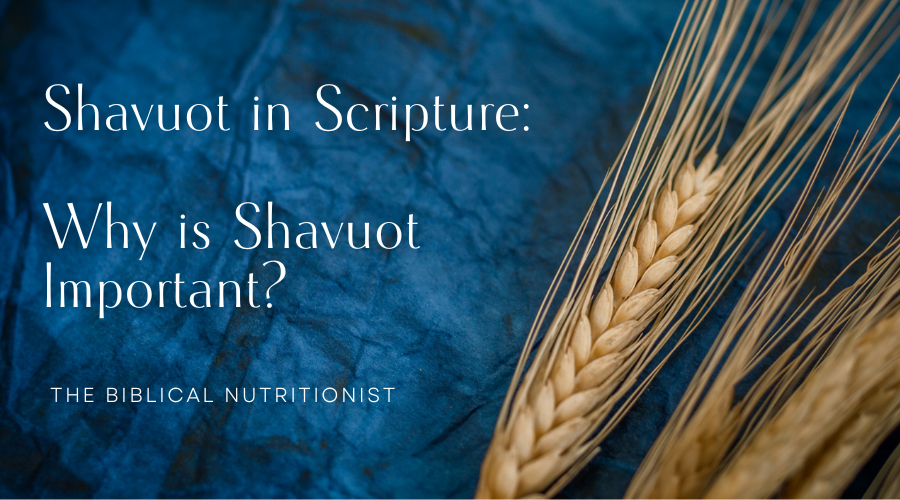
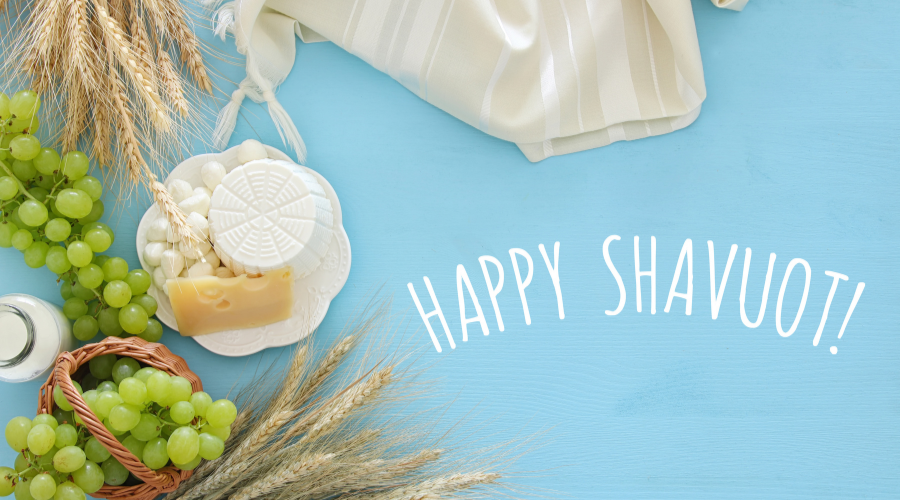
Shavuot in Scripture: Why is Shavuot Important?shavuot

Pentecost is today, Sunday, 28 June, 2023.

“Most Christians today don’t celebrate or are knowledgeable about Jewish (Old Testament) holy days. Yet, there is great benefit to believers in digging into and experiencing the culture and meaning behind the various festivals. Today, we’re looking at why Christians should celebrate Shavuot.

Perhaps you desire to know more or want to connect the Old Testament and New Testament in a way that will help your kids remember it.

Celebrating the Feasts of our Lord is the best teaching tool we as parents and grandparents can use to instill God’s Word, story, and truths in the hearts of our children.

If you have a longing to teach them all that God is and why it matters, this is a great addition to family traditions. I still remember stories that were told to me when I was very young. In fact, in grade school our music teacher was also the music leader at his church. So our musical in 4th grade school was Daniel in the Lion’s Den. I ‘ll never forget those songs or stories.

The same is true today. As we teach God’s Word to our kids – let them sing the stories, read the stories, enact the stories, and celebrate the stories – they too will never forget. I hope you agree that these are great reasons as to why Christians should celebrate Shavuot.

Shavuot In Scripture

Let’s turn to the Bible for a moment. In Scripture, Shavuot is known as “the Feast of Weeks.” Later, in the New Testament, it becomes Pentecost. The following Bible verses show us what the Bible says about this special feast.

Exodus 34:22  You shall celebrate the Feast of Weeks, that is, the first fruits of the wheat harvest, and the Feast of Ingathering at the turn of the year.

Numbers 28:26 ‘Also on the day of the first fruits, when you present a new grain offering to the Lord in your Feast of Weeks, you shall have a holy convocation; you shall do no laborious work.

Deuteronomy 16:10 Then you shall celebrate the Feast of Weeks to the Lord your God with a tribute of a freewill offering of your hand, which you shall give just as the Lord your God blesses you;

Acts 2:1-4 When the day of Pentecost had come, they were all together in one place. And suddenly there came from heaven a noise like a violent rushing wind, and it filled the whole house where they were sitting. And there appeared to them tongues as of fire distributing themselves, and they rested on each one of them.

Now let’s talk about why Shavuot (or Pentecost) matters.

Why Is Shavuot So Important?

Shavuot is one of those favorite stories to relive. God has something important to convey in it and that’s why He set it aside as one of the Feasts of our Lord.

In fact, it was so important that God commanded the Jewish people to come to Jerusalem each year to celebrate Shavuot, also known as the Feast of Weeks.

But why is the festival of Shavuot so important to us today?  Glad you asked.

This is my personal take on Shavuot and why we as Christians should celebrate this Jewish tradition every year.

1. God's Holy Law

god's holy lawShavuot is a reminder of God’s laws (the ten commandments) written on the tablets of stone. It helps to always be reminded of how God delivered the laws on Mt Sinai and read as a family the verses where the experience was recorded.
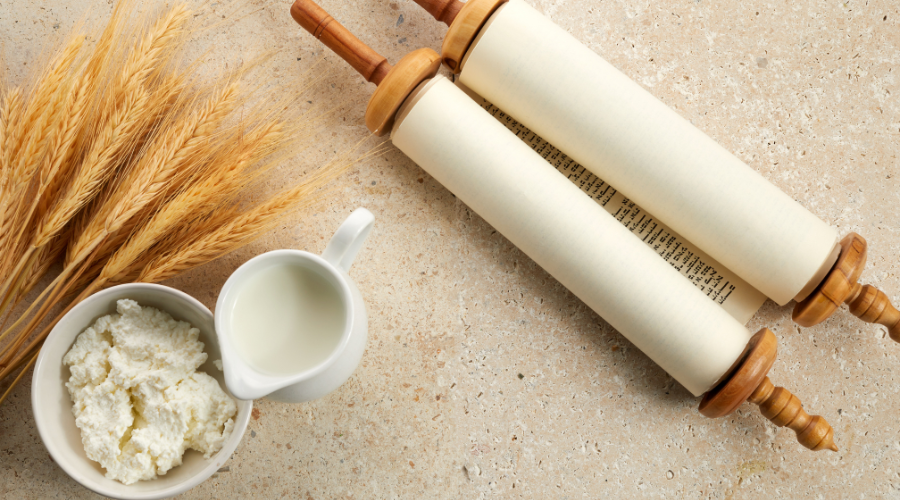
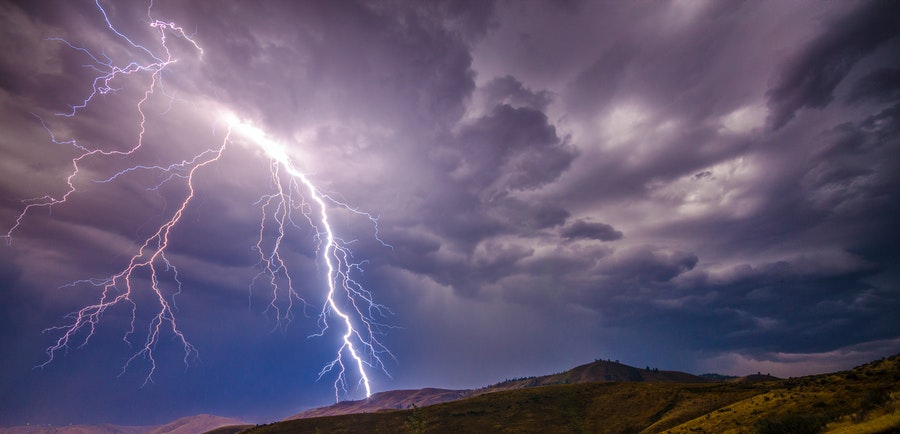
And all the people were watching and hearing the thunder and the lightning flashes, and the sound of the trumpet, and the mountain smoking; and when the people saw it all, they trembled and stood at a distance. Exodus 20:18   Lightning, flashes, thunder, smoke (fire). Things we can all relate to.

Jewish teachings relay that Moses received the Law on the 50th day after Passover. (Exodus 19:1)

We can also note that when Moses came down from the mountain 40 days later, there was a golden calf waiting for him. The people had rebelled against the God who rescued them out of slavery and sustained them day-to-day and created their own god.

The Lord was understandably angry. On that day around 3,000 Israelites were killed.

God is very serious about His Words and His promises!

2. Promise Delivered

We see Shavuot celebrated in the book of Acts as the disciples, who were Jews, plus many more people gathered together.

When the day of Pentecost had come, they were all together in one place. And suddenly a noise like a violent rushing wind came from heaven, and it filled the whole house where they were sitting. And tongues that looked like fire appeared to them, distributing themselves, and a tongue rested on each one of them. And they were all filled with the Holy Spirit and began to speak with different tongues, as the Spirit was giving them the ability to speak out. Acts 2:1-4

This experience told to us by Luke is an example of God delivering on His promise from the book of John.

…but an hour is coming and now is when true worshipers shall worship the Father in spirit and truth for such people the Father seeks to be His worshippers. God is spirit and those who worship him must worship in spirit and truth. John 4:23-4

But the Helper, the Holy Spirit who the father will send in my name he will teach you all things and bring to your remembrance all that I said to you! John 14:26

That is reason enough to celebrate the Feast of Weeks – Shavuot!

We need reminders of what God has given us. We need the Holy Spirit to bring to remembrance all that God’s Word teaches us.

Jesus the Messiah delivered on His promise! And He is still delivering on His promises today.

Shavuot is about deliverance from bondage and also deliverance from the evils of this world. These are amazing promises of the Lord!

The Feast of Weeks is celebrating God’s faithfulness in maintaining His covenant and fulfilling His promises. There’s a distinct connection between fulfilled promises of the Lord and Pentecost, when Shavuot begins, in the early church.

This particular Pentecost, or Shavuot, is when God gave the law written in the hearts of the people through the Holy Spirit.

3. Languages

languagesIn my upbringing, we rarely talked about the early disciples’ Pentecost experience because it brought up the hard-to-answer question about ‘tongues’.
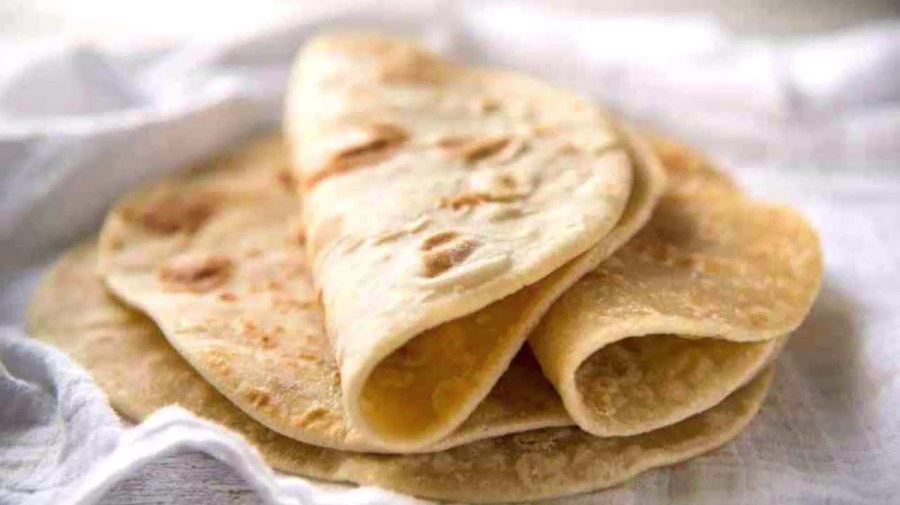
This is not hard to explain when it’s learned in the context and original language of the time.

When God delivered the tablets of stone – the laws – in Exodus 20:18,  it says “the people perceived the thunder and lightning flashes and the sound of the trumpet and the mountain smoking and when the people saw it they trembled and stood at a distance.”

This thundering is each person hearing God’s voice.  The Israelites on the mountain were hearing God speak.

The tongues in Acts are the languages to spread the Gospel to all peoples.  The people outside the room where the disciples were being given the gift of the Holy Spirit heard the Gospel for the first time in their own language.  People traveled from miles around, there would have been people in Jerusalem from all over. Some authorities say there could have been a million people in Jerusalem that day.  The sound coming from the room to the outside was the Gospel and those hearing it were being saved in their own language.  Around 3,000 were saved that day.

It was never about confusion. That’s a misinterpretation. Tongues mean languages. It was and always is about the Gospel. And the people who needed to hear it. Heard it in their language. Today we have the power of the Holy Spirit to share the Gospel with all people. God will supply the words. We are not to let nationalities or languages cause us to hesitate our call.

4. Thanksgiving

Shavuot is a feast of thanksgiving. Thanking God for the harvest, historically wheat and barley. People bring gifts as a sacrifice, gifts from their produce.  We too need to celebrate with a feast of thanksgiving.  Thanking God for the complete assurance of salvation by grace through faith in Christ Jesus.  Gratitude for the gift of the Holy Spirit, who is our helper. Celebrating Shavuot helps us teach our kids about the Holy Spirit and how He guides us on a daily basis.

Are you interested in learning more about the feasts of the Lord and how we can celebrate them?

For free celebration guides, devotionals, decor ideas, activities for kids, and quick, easy teachings on each feast (including Shavuot), click here.

5. Leaven

unleavened bread in the bibleAt Passover, we removed all the leaven from the home. (Leaven represents sin in our lives.)  During Shavuot, we’re given new leaven.  Leaven also means teachings.

Yeshua (Jesus) explained that leaven represents teachings and we are not to learn from the Pharisees, who focus on traditions and doctrines. Instead, we’re to learn from God’s Word. In the first chapter of the Treasures of Healthy Living Bible Study, we discuss how there’s as much to unlearn as there is to learn. As we study scriptures for ourselves and teach our kids to do the same, the Holy Spirit guides us. There are many gifted and blessed teachers we can learn from. Yet the Word is always the final authority.

Celebrate Shavuot

celebrate shavuotAs we celebrate Shavuot, it doesn’t have to be in the traditional Jewish nature.  We celebrate with music, singing, sharing praises, enjoying a feast, fellowship, and reading the story of Ruth with some fun antics added in.  Then we pray for our nation and for Israel.  Consider Acts 2:42-43: They were continually devoting themselves to the apostles teaching and to fellowship to breaking of bread and to prayer. Everyone kept feeling a sense of awe and many wonders and signs were taking place through the apostles.


Later, in chapter 3, a man was healed. And leaping up, he stood and began to walk; and he entered the temple with them, walking and leaping and praising God. And all the people saw him walking and praising God. Acts 3:8-9  This is why we celebrate the Feasts of Our Lord. We are to live in such a way that people say, “Times are hard. Why are you walking and leaping and praising God?”

Our world can be chaotic and worrisome. Just in the most recent times our gas was shut down, we have COVID fear, and bombs are going off in Israel. There are always a host of hard, painful, and tragic things occurring in this broken, fallen world. Yes, I know these things. I don’t ignore them, but I know the God who knows all and loves me beyond all measure. That He is still good and He is still in control.

Therefore, I’m going to walk and leap and praise God. The Bible isn’t just great stories. It’s Jesus in real time. And because of Him, we rejoice in His Word, His revelation, His redemption, and so much more.

Shavuot is another great opportunity to take a break from our normal routines and set aside special time to remember and celebrate God’s faithfulness.

Are you ready to celebrate Shavuot with your family? I hope and pray so!”  From: https://thebiblicalnutritionist.com/why-christians-celebrate-shavuot/

________

See also: https://lifehopeandtruth.com/life/plan-of-salvation/pentecost/from-pentecost-to-pentecostalism/

________

EEI-Logo-600-3

eei-pentecost-header

“Almost 2,000 years ago, on the Day of Pentecost, God gave His Church a powerful gift: His very Spirit.

We may not have visible tongues of fire on our heads today, but

with God’s Spirit we can miraculously transform our hearts and

minds daily and take on God’s character.”

eei-view-lesson

eei-pentecost1

“Learn about the significance of the wave sheaf offering

and its connection to the festival of Pentecost.”

eei-pentecost2

“Refresh your understanding on what it means to be

a “firstfruit” and on what the character of a firstfruit

looks like.”

eei-pentecost3

“Discover the power that can guide and direct us daily,

enabling us to have the mind of Christ.”

eei-view-lesson

“Have a refreshing and joyous Feast of Pentecost!”

Join other parents, grandparents and guardians to discuss how they are using the EEI Parenting Manual to teach their children in our Facebook Group.

From: https://lifehopeandtruth.com/learning-center/youth-development/the-word-of-god/feast-of-pentecost/?

_______

How Much Cancer Does Lunch Meat Cause?

“Why does the leading cancer and diet authority recommend we avoid bacon, ham, hot dogs, sausage, and all other processed meats—including chicken and turkey?

How many years of life are lost to potentially preventable cancers? Every year, more than five million expected years of life are lost to lung cancer, breast cancer, and colorectal cancer alone. Therefore, identifying and improving strategies for prevention of cancer remains a priority, especially since not more than 2% of all human cancer is attributable to purely genetic factors. The rest involve external factors such as our diet.

The most comprehensive summary of evidence on diet and cancer ever compiled recommends we should eat mostly foods of plant origin to help prevent cancer. This means centering one’s diet around plant foods. Not just whole grains and beans every day, but every meal.

And, when it came to foods that may increase cancer risk, they were similarly bold. Unlike many other dietary guidelines that wimp out, and just advise people to “moderate” their intake of bad foods, like eat less candy. The cancer guidelines didn’t mince words when it came to the worst of the worst. For example, don’t just minimize soda intake, avoid it. Don’t just cut back on bacon, ham, hot dogs, sausage, and lunch meats, but avoid processed meats, period, because data do not show any level of intake that can confidently be shown not to be associated with risk.

Processed meat cannot only be thought of as a powerful multi-organ carcinogen, but may increase the risk of heart disease and diabetes. Red meat was bad, but processed meat was worse, and that included white meat, like chicken and turkey slices. So, with more heart disease, cancer, and diabetes, it’s no surprise processed meat consumption has been associated with increased risk of death.

In Europe, they calculated that reduction of processed meat consumption to less than 1/4 a hot dog a day [sic – – should be half a hot dog] would prevent more than 3% of all deaths.

This was the second largest prospective study ever done on diet and cancer, a study of more than 400,000 people. The largest ever, 600,000, was done here in the US, the AARP study. They found the preventable fraction to be much higher, suggesting, for example, that 20% of heart disease deaths among women could be averted if the highest consumers cut down to like less than a half strip of bacon a day.

To see any graphs, charts, graphics, images, and quotes to which Dr. Greger may be referring, watch the above video. This is just an approximation of the audio contributed by Katie Schloer.

DOCTOR'S NOTE

“The World Health Organization recently published a report that puts chicken nuggets, deli turkey slices, bacon and other processed meats in the same category as cigarettes and asbestos: known carcinogens. According to independent research cited by the WHO, the deaths of 34,000 people from cancer every year are attributable to diets high in processed meat, in addition to the 800,000 additional deaths due to cases of diabetes and heart disease. That’s a meat-borne epidemic every year.”  From: https://nutritionfacts.org/video/how-much-cancer-does-lunch-meat-cause/

________

More on processed meat can be found in videos such as:

But cancer risk has been associated with unprocessed meat as well via a variety of potential mechanisms:

_____