Showing posts with label Rescue. Show all posts

Sunday, February 12, 2023

Turkey and Syria: Making Sense of the Tragedy. How Does God Want to be Worshipped? Is Cheese Really Good for Our Health?

.

Powerful Earthquakes Hit Turkey and Syria: Making Sense of the Tragedy
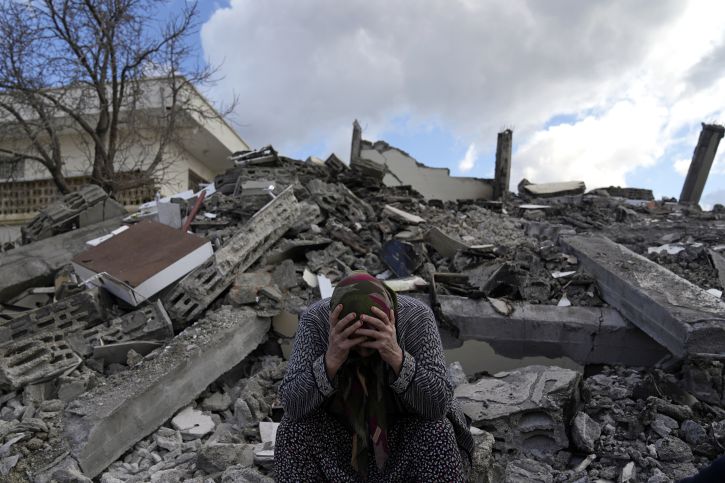
Powerful Earthquakes Hit Turkey and Syria: Making Sense of the TragedyA distraught woman sits on rubble of a building in southern Turkey that was destroyed by the earthquakes of Feb. 6, 2023 (AP Photo/Khalil Hamra). 

“Thousands have died in the recent earthquakes in Turkey and Syria. Life in this region will be impacted for years to come. Why do such tragedies occur?

Thousands of lives were suddenly wiped out when a magnitude 7.8 earthquake and then a magnitude 7.5 earthquake struck southern Turkey and northern Syria on Feb. 6, 2023. As of this writing, the death toll is over 6,000.

With the more than 300 aftershocks and frigid temperatures, this number will undoubtedly rise as more bodies are recovered from the rubble. In an instant, a shaking earth destroyed buildings and roads and buried thousands of unsuspecting people. Over 13,000 people were injured, and tens of thousands were without food, shelter and hope.

Both Turkey and Syria were grossly unprepared for this tragedy. Their buildings were not designed to withstand an earthquake of this magnitude. On top of that, they lack the resources to handle the aftermath of these deadly earthquakes.

Syria is still embroiled in a seemingly unending civil war. The city of Aleppo, home of many displaced refugees, was first ravaged by missiles and is now even more decimated by this natural disaster.

Our thoughts and prayers go out to the families affected by this tragedy. Tragedies like this should remind us how precious life is and how quickly life can be turned upside down. It’s at times like these that we should turn to the Bible. The Bible gives a unique perspective on tragedies, including difficult lessons we should learn.

To learn more about the biblical perspective on tragedies, read “Why Does God Allow Evil and Suffering?

Lessons from the tragedy in Turkey and Syria

Consider these three lessons:

1. This is not God’s world.

Many see tragedies like this as proof that there is no God. They reason that an all-powerful, all-loving God would not allow tragedies like this. But the Bible shows a different way we should look at it. Tragedies don’t occur because God doesn’t care. Ultimately, they are a result of humanity’s rejection of God. Essentially, this is not God’s world!

The suffering and anguish in Turkey and Syria and everywhere else are a result of living in a world cut off from God. When God created Adam and Eve, He placed them in a beautiful garden and interacted directly with them (Genesis 2:8; Genesis 3:8). There were no earthquakes or other natural disasters in this garden. God was there and provided perfect protection and order. All God required of our first parents was that they live by His instructions. If they did, they would live in complete safety and happiness. They would not need to worry about natural disasters.

But when Satan appeared in the form of a serpent, he convinced them to reject God’s instructions and authority over their lives (Genesis 3:1-5). Because of this rejection, dire consequences would follow for them and their descendants. God removed them from the Garden of Eden and let them live in a world without His protection and influence (Genesis 3:23).

All human beings have been given the same free will to choose their own way of living. God warned that rejecting His law would bring suffering and death (Genesis 2:17; Deuteronomy 30:15-20). Satan’s influence currently prevails over this world because man follows his own way over God’s way (2 Corinthians 4:4). The suffering and anguish in Turkey and Syria and everywhere else are a result of living in a world cut off from God.

2. Unless we change, we will all perish.

Jesus Christ commented on two tragedies that occurred in His time on earth. One was the execution of several people by Pontius Pilate (Luke 13:1). Another was the accidental death of 18 people crushed to death by a falling tower (verse 4).
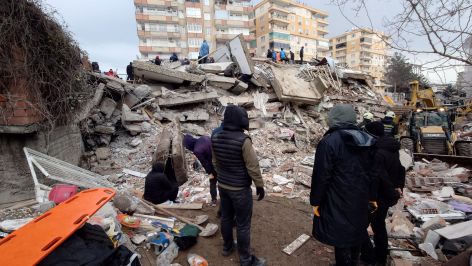
Earthquake damage in Turkey

Turkish citizens searching for survivors in the ruins of a collapsed building in Diyarbakir, Turkey, Feb. 6, 2023 (Voice of America).

Christ used these tragedies to stress an important point. He said that those who died were in the wrong place at the wrong time. God hadn’t singled them out for punishment. The point He drew from these incidents was this: “Unless you repent you will all likewise perish” (verses 3 and 5).

Those who died in the recent disaster did not bring these earthquakes on themselves. The people living in this region weren’t necessarily more guilty of sin than any other people. They were simply in the wrong place at the wrong time.

The point we must take to heart is that we will die eternally if we do not repent of our sins. That is the death we should be most worried about! Those who die in tragedies may have lost their temporary physical lives (which God says He will restore in a resurrection), but if we don’t repent and change, we will perish forever (Romans 6:23).

3. Earthquakes are prophesied to increase and intensify during the last days.

Why are earthquakes (and other natural disasters) continually increasing around the world?

In the Olivet Prophecy, Jesus Christ prophesied that in the last days there would be “earthquakes in various places” (Matthew 24:7). As that time approaches, earthquakes will increase both in intensity and in frequency. Read more in our article “Earthquakes in Bible Prophecy.”

Since the start of the 21st century, not including this recent disaster, there have been 22 major earthquakes (greater than a magnitude 6) causing some 834,000 deaths! Some of the deadliest earthquakes since 1900 have occurred in recent years. These include:

  • The growing number of earthquakes is a sign that the return of Jesus Christ is drawing near. Haiti (Jan. 12, 2010). Magnitude 7; 316,000 people killed. This was the deadliest earthquake of this century.
  • Indonesia (Dec. 26, 2004). Magnitude 9.1; 228,000 people killed in the earthquake and subsequent tsunami. This was the third- largest earthquake since 1900.
  • China (May 12, 2008). Magnitude 7.9; 90,000 people killed or missing and presumed dead.
  • Pakistan (Oct. 8, 2005). Magnitude 7.6; over 86,000 people killed.
  • Iran (Dec. 26, 2003). Magnitude 6.6; 41,000 people killed.

(Since casualty reports in these disasters often vary, the above casualty numbers should be considered approximate.)

As the weeks turn into months, the death toll from the recent earthquakes in Turkey and Syria will undoubtedly rise and possibly cause them to rank among the worst earthquakes in recent times.

The growing number of earthquakes is a sign that the return of Jesus Christ is drawing near. This should motivate us, more than ever, to heed Christ’s warning from point two: repent!

What will you do now?

Why Does God Allow Evil and Suffering?The Bible and history prove this simple statement: A world without God leads to suffering, tragedy and death.

As you see the resulting suffering of this tragedy, ask yourself this question: Do I want to continue to be a part of the suffering that comes from a life cut off from God? Or do I want to have a relationship with Him and live a life that is blessed and happy (Psalm 1) and help prepare for the peaceful world Jesus Christ will bring at His return?”  From: https://lifehopeandtruth.com/prophecy/blog/powerful-earthquakes-hit-turkey-and-syria-making-sense-of-the-tragedy/

To learn more about the future time when natural disasters will end, download our free booklet The World to Come: What It Will Be Like.

  __________

How Does God Want to be Worshipped?

A sunset over a field.Jack Le Roux/Unsplash

“Christ commanded us to worship God in spirit and truth (John 4:24). But how do we worship God? Can we know what pleases Him?

Christ kept the Sabbath Holy all His life, and He was an example for us. 

Yes, in God’s Word we can learn how He wants to be worshipped. Christ Himself said, “If you love Me, keep My commandments” (John 14:15). Those timeless commandments God gave to mankind are key to happiness, peace, abundance and harmony. Just read through any of them and imagine how life would be if all mankind strictly observed just one of those ten!

But, how do we worship God? The first four of the Ten Commandments all have to do with how we respect and honor God. He tells us how to live if we truly love Him and want to “hallow His name.” Those first four are:

1. Have no other gods besides Me.

2. Make unto yourself no graven image of anything in heaven or earth or the water under the earth; you shall not bow down to them nor serve them.

3. You shall not take the name of the Lord your God in vain; and

4. Remember the Sabbath day to keep it holy.

If you believe in Christ, you probably agree with the first three of the Commandments, but do you keep the fourth?

The Sabbath day

On the seventh day of creation God created the Sabbath day for mankind (Genesis 2:2-3). Jesus Christ said the “Sabbath was made for man and not man for the Sabbath” (Mark 2:27) and that He was “Lord of the Sabbath” (Matthew 12:8). Christ kept the Sabbath holy all His life, and He was an example for us. His apostles kept the Sabbath day all their lives—even after Christ died, was resurrected and then ascended into heaven—as did the New Testament Church of God.

God designed the Sabbath to be “Holy time”— a 24-hour period we should remember and set aside to do God’s will. In Leviticus 23, God says that each Sabbath is a “Holy convocation”—a time for His people to assemble before Him (Leviticus 23:1-34).

If we say we worship God and want to please Him, we must do as He says. If we do, He says He will make His home with us. If we don’t, Christ says, “Depart from Me, you who practice lawlessness” (Matthew 7:23).

Do you worship God the way He wants to be worshipped? Living God’s way is a “24-7” life. The Sabbath day is Holy and we must honor Him on that day.

Do you want to worship God as He wants to be worshipped each Sabbath? Then please join us for Sabbath services, even if it is virtually at first, at one of our many locations around the world. If you’d like to talk to someone or want more information, contact us and we will get right back with you.  We encourage you to read our vital booklet on this subject, “Sunset to Sunset: God’s Sabbath Rest.”     From: https://www.ucg.org/bible-study-tools/bible-questions-and-answers/how-does-god-want-to-be-worshipped

________

Is Cheese Really Good for Our Health?

“What is the real story behind the recent studies that show cheese has neutral or positive health effects?

In my series of videos on saturated fat, I talked about a major campaign launched by the global dairy industry to “neutralize the negative image of milk-fat among regulators and health professionals as related to heart disease.” As you can see in my video “Is Cheese Really Bad for You?”, (Is Cheese Really Bad for You? | NutritionFacts.org) that campaign continues to this day with the publication of a meta-analysis demonstrating “neutral [non-harmful] associations between dairy products and cardiovascular and all-cause mortality,” that is, death.

How do we know the dairy industry had anything to do with this study? Well, it was published in a journal that requires authors to disclose financial conflicts of interest. So, what ties were divulged? As you can see at 0:47 in my video: Dairy, dairy, dairy, dairy, dairy, dairy, the fourth largest dairy company in the world, dairy, dairy, milk, beer, soda, McDonald’s, dairy, dairy, dairy, dairy, and more dairy. Oh, and the study itself was “partly funded by…the Global Dairy Platform, Dairy Research Institute and Dairy Australia.” So, there we have it.  More at: https://nutritionfacts.org/2023/01/26/is-cheese-really-good-for-our-health/?

Key Takeaways
  • The dairy industry’s campaign to “neutralize the negative image of milk fat among regulators and health professionals as related to heart disease” continues, and the industry still funds studies like the meta-analysis that purportedly showed that dairy products have non-harmful associations with “cardiovascular and all-cause mortality.”
  • Researchers affiliated with the largest dairy producer in China, thereby one of the largest dairy companies in the world, suggested eating cheese each day isn’t only neutral (non-harmful), but beneficial for our health.
  • Many studies were from Europe where greater cheese consumption is associated with a “higher socioeconomic status” since it is generally more expensive. Higher socioeconomic groups also consume more fruits and vegetables, and have higher education levels and higher paying jobs, all of which are associated with better health outcomes.
  • Higher socioeconomic groups also tend to consume more candies. The candy industry and the U.S. Department of Agriculture have claimed that candy consumers have lower inflammation levels and a 14 percent lower risk of elevated blood pressure.
  • U.S. taxpayer dollars prop up the sugar industry with a billion dollars annually. Similarly, the U.S. government uses tax dollars to buy tens of millions of dollars’ worth of surplus cheese.
  • The U.S. government has been found to collude with the dairy industry to promote their products. “These [checkoff] funds are used to promote junk foods, which contribute to the very diseases our federal government is allegedly trying to prevent. Does it make sense to tell Americans to avoid foods high in salt, sugar, and saturated fat, while engaging in the promotion of those same foods?”  From: https://nutritionfacts.org/2023/01/26/is-cheese-really-good-for-our-health/?

_______

Sunday, January 29, 2023

Five Ways Parents Damage Their Kids Without Even Realizing It. Wisdom And The Genie In A Bottle. The #1 Most Dangerous Food in the World.

.

Five Ways Parents Damage Their Kids Without Even Realizing It

A family walking in the rain holding umbrellas. “Obviously, there’s no end to the types of mistakes parents might make. However, certain parenting blunders are especially common today. Here are five big ones to avoid.
james x/Unsplash

Parents can be teaching their children the wrong lessons or missing out on teaching them the right lessons, without even realizing it.

One of the primary reasons God instituted marriage is so married couples could produce and nurture Godly offspring (Malachi 2:15)—that is, children trained in the ways of God. Christian parents are to diligently teach their children about God’s truths (Deuteronomy 6:6-7), discipline them in a loving manner (Proverbs 13:24) and provide for their needs (1 Timothy 5:8). God wants parents to take these responsibilities seriously.

But life gets busy. We might have stressful jobs and not have much energy left at the end of the day to deal with “kid problems.” Maybe we just go “on autopilot” when we’re home so we don’t even think about what we’re doing or saying, or how we might be coming across to other family members. Perhaps we just go along with what all the other parents are doing, or do what “feels right” at the moment, without stopping to think about what effect these actions might have on our children. The trouble is, when we get into these kind of mindsets, we can end up making some serious parenting blunders.

Probably most parents reading this can relate. No matter how conscientious and loving we may be, we all fall short at times. Very often our mistakes are unintentional. But even unintended slip-ups, if done repeatedly, can negatively impact a child’s emotional and moral development. Parents can be teaching their children the wrong lessons or missing out on teaching them the right lessons, without even realizing it.

On a positive note, most parenting mistakes can be prevented. The basic solution is to be aware of what the potential pitfalls are, so we can make the right adjustments before any problems develop. Obviously, there’s no end to the types of mistakes parents might make. However, certain parenting blunders are especially common today. Here are five big ones to avoid:

1. Skimping on quality time.

The first big mistake was alluded to in the introduction. Families today are pressed for time. Both Mom and Dad usually have jobs outside of the home, in addition to having household and childcare responsibilities. When time runs short, it’s usually the kids who suffer. Numerous studies have confirmed this trend. A 2019 survey commissioned by Crayola Experience found that 55 percent of American parents think they are “too busy” with other commitments to spend quality time with their kids.

One mom of two preteens admitted: “Most of the ‘interacting’ I do with my kids is when I’m rushing to them to school or sporting events, or when they’re doing their homework at the kitchen table and I’m trying to get them to focus on that while I hurry to get dinner made. There’s very little time to just sit down together and talk.”

Your children need to know they’re important to you. You’re not going to have strong bonds with them if you hardly give them any attention. Make sure you have some focused quality time with them each day (even just 15 minutes), to talk or do something enjoyable together, where you’re not only physically present with them, but emotionally connected as well. If you don’t think your schedule will allow this, take an honest assessment of your priorities and see what can be cut out.

2. Giving them what they should earn.

Every child likes presents, and it’s certainly nice to be able to give them. But too often parents overindulge their kids, showering them with all the toys, electronic gadgets and designer clothes they could ever want. Many times these are “guilty gifts”—given to kids by busy parents to try to make up for not spending time with them. Another common scenario occurs when a parent and her children are out shopping, and when the kids start begging for something, she caves in and puts the item in the cart to appease them.

These are huge mistakes. Studies have shown that giving children everything they want can foster an entitlement mentality and train them to be materialistic and expect immediate gratification. Moreover, if everything’s just handed to them, they won’t see the point in working hard to achieve goals.

While it’s certainly fine to give gifts with “no strings attached,” you shouldn’t finance all your children’s desires (even if you can afford to do so). Require them to make an effort to obtain at least some of these nonessential items on their own, rather than buying it all for them. They could save up allowance money to purchase items they want, or you could have them do some extra household chores to “earn” them. Teach them that working for the things we need and want is a biblical principle (Proverbs 12:11, Proverbs 12:27; Proverbs 13:4, Proverbs 14:23; and 2 Thessalonians 3:10-12).

3. Not enforcing limits.

Kids need to understand what behaviors are and aren’t acceptable, and the consequences for noncompliance. They should know what the expectations are for chores, electronics usage, schoolwork, curfews, bedtimes, mealtimes and so on. When they’re aware of what’s required, it reduces confusion and uncertainty, which in turn decreases anxiety. Children feel safe and secure when they have clear boundaries and rules, because that tells them their parents are managing the household.

But truthfully, it’s not always fun being an authority figure. We can start worrying that our kids aren’t going to “like us” if we make too many rules. And frankly, it’s a lot easier to be permissive—to let the kids do as they please—rather than confront them about their behavior. If that’s been your thinking, remind yourself that everyone has to abide by rules. Kids need to get used to that. You’re not doing your kids any favors by letting them decide for themselves how they should live.

You need to establish and enforce limits for your kids not only because it helps your household run smoothly, it’s also an important life lesson. Ultimately, children who grow up with family rules learn that it’s normal and necessary to submit to authorities (Hebrews 13:17), whether that’s their parents, teachers, bosses, police officers, or most importantly, God.

4. Fixing their problems for them.

Some parents try to protect their children from all forms of hardship. A friend told me how when she was a teenager, whenever she faced any kind of difficulty or disappointment, her mother would step in and try to remedy the situation for her. “If I was excluded by the ‘in’ crowd, she’d go talk to the parents of those kids and insist I be included. If I didn’t make the cut for the cheerleading squad, she’d talk to the coach to see if I could get another chance at trying out,” my friend related. “I know my mom was trying to help. But what she really taught me was that I didn’t need to try to solve my own problems or take responsibility for my actions.”

Unless your kids are facing a difficulty that’s too big to manage on their own or could cause serious harm, you should resist the urge to “rescue” them. Definitely be there to offer support—to listen to their concerns and share your perspectives, but don’t take over and solve the problem for your children. Let them handle the situation for themselves. Remind yourself that someday they’re going to be on their own. Afflictions and struggles are part of life (1 Peter 4:12), and they need to learn to be ready for them.

5. Misusing praise.

Praise can be an effective tool to encourage kids and motivate them to “stay on the right path.” But it can also be misused. For instance, you might extend “inflated praise” (e.g., exclaiming “You’re the best swimmer I’ve ever seen!” or “What an incredibly beautiful painting!”) or overuse positive affirmations (e.g., blurting out “Great job!” or “You’re the best!” every time a child finishes a routine task). While you may be trying to make your kids feel good, these kinds of platitudes can come off as insincere or manipulative. Most kids can see through the exaggeration. They know that don’t deserve that kind of flattery and might conclude that you don’t really mean what you say.

Another mistake is to focus your praise on your children’s innate abilities or attributes (such as beauty, intelligence or natural talents), which they have no control over. Remarks like “You’ve got a photographic memory!” and “You’re brilliant!” send the message to your kids that their accomplishments are due to their inborn abilities, and therefore effort and hard work are not necessary.

To be an effective form of encouragement, praise should be directed at your children’s character (hard work, effort, perseverance, good moral choices, obedience, right attitudes, etc.), which is what is in their control. So rather than tell them “You’re a natural at math,” it’s more helpful to say, “I can tell you’ve been practicing those story problems!” When you point out what they’ve done right, they will start to see the connection between hard work and success, which will motivate them to continue putting out effort.

Granted, no parent handles every situation perfectly—especially when they’re stressed, tired or preoccupied with life’s challenges. It goes without saying that you should ask God daily for His help and guidance in rearing your children. If you do that—along with being aware of what the potential parenting pitfalls are and have a plan for dealing with them—you’ll likely make far fewer mistakes than if you just went on autopilot.”   From: https://www.ucg.org/beyond-today/blogs/five-ways-parents-damage-their-kids-without-even-realizing-it

________

Wisdom and the genie in a bottle

“A common fairy tale theme in children’s stories is of someone finding a genie in a bottle. When the finder rubs the bottle to release the genie inside, the genie is so grateful that he grants the finder his greatest wish, or three wishes, depending on the story. Have you ever stopped to consider what you would wish for if the offer was made to you?

I have, and my answers are no doubt quite a bit different today than they would have been if you had asked me when I was, say, eight years old! We know, of course, there is no such things as genies, and no ancient bottles harboring one just waiting to be released.  But we do know and have access to the God of all creation (much more powerful than any mythical genie).  So what would you ask for if He offered to grant you a wish?  Believe it or not, this is exactly what happened some 3,000 years ago!

Very early on in his reign as king, Solomon had a most unusual experience.  “At Gibeon the LORD appeared to Solomon in a dream by night; and God said, ‘Ask! What shall I give you?’” (1 Kings 3:5).  Can you imagine it?  Far better than any fable about a genie in a bottle, the Creator offered to give Solomon virtually anything he would ask for!

You may already know what his answer was, but if you can, imagine for a moment what you would have asked for! Solomon expressed his awe for God, acknowledging that he was greatly humbled by being given such a huge job. Then he prayed, “I am a little child; I do not know how to go out or come in. And Your servant is in the midst of Your people who You have chosen, a great people too numerous to be numbered or counted. Therefore give to Your servant an understanding heart to judge Your people, that I may discern between good and evil” (verses 7-8). Solomon’s request pleased God, who responded, “Behold, I have done according to your words; see, I have given you a wise and understanding heart” (verse 12).

That proved to be a powerful gift! The Hebrew word for wise is chakam, and one of the meanings is skillful. It would be used of a craftsman who was skillful in his trade. Spiritually it would be someone who skilled in knowing the Word of God, and skilled in using it in his or her life. While there are people who are more naturally gifted in some areas–such as mechanics, music or athletics–in order to truly excel they must work to hone that natural talent. A tradesman who is wise, skillful in his trade, has had to work to develop his knowledge and ability. 

And so it is with us spiritually. Wisdom or skill with the Word of God doesn’t just happen. God opens our minds to understand His Word, which you might liken to us having been given a natural talent. But we then have to spend time and effort to build and develop that skill, honing it to a fine and valuable point! A skilled mechanic doesn’t get that way by sleeping on a stack of manuals, and we can’t become skilled in God’s Word by sleeping on a Bible!

We have to dig in and learn! Are you wise in the Word of God? Let me suggest three simple ways to grow in these things:

1. Do the same thing Solomon did, and ask God for the wisdom and understanding you need.  God hasn’t come to each of us and asked us what we’d like Him to give us, but there is no reason why we can’t go to Him like children often do, and ask for the things we really need and want. How should you ask? Learn how to pray.

2. Seek biblical wisdom/skill through a constant and daily application of Bible study, prayer and meditation.  Many years after God asked Solomon that momentous question, Solomon counseled all who would listen to him to seek wisdom (Proverbs 4:7; 19:20; Ecclesiastes 7:12).  Take his counsel and spend time studying the Scriptures, seeking to learn from them. How do you study the Bible? Here are some practical tips on how to start studying.

3. Put what you learn into practice in your life. “Book knowledge” is not the same as experiential knowledge. I don’t want someone operating on me who has studied a lot about taking out an appendix but has never done it!  If I had to have an appendectomy, I want it done by someone who has not only studied, but also has a lot of experience successfully removing appendixes!  That is exactly what you and I need to be doing with the truth of God. If you'd like to start practicing what we learn in the Bible, read our article “How to Please God.”

In order to become wise—skillful in handling the Word of God—we need to ask for wisdom, seek to gain it through our own study, and then practice what we learn. The results of a life lived like this will be far greater than the results of being granted three wishes by a genie in a bottle—even if there was such a thing!

Here are some additional resources on wisdom from our website:

Kind regards, and have a great week, Tom Clark, for Life, Hope and Truth

_______

The #1 Most Dangerous Food in the World

“Today, we're going to talk about the most dangerous food you can eat and what makes it so dangerous. Factors that make this the worst food in the world for your health:

1. It combines starch and fat under high heat • This creates advanced glycation end products, which affect your eyes, brain, heart, and kidneys.

2. Hydrogenated oils • This contains trans fats, which affect your cells, harden your arteries, and may increase your risk for cancer.

3. Acrylamide • This is a neurotoxin that has been linked to Alzheimer's.

4. Sugar • Sugar can lead to many different health problems. This food may contain sugar, beet sugar, dextrose, or maltodextrin. All of these types of sugars are very dangerous.

5. Glyphosate • I believe glyphosate can potentially alter a person's microbiome and may lead to negative health effects.

6. Seed oils • These oils are very inflammatory.

7. Ketchup • Ketchup contains high fructose corn syrup, which can lead to fatty liver and insulin resistance. It also has corn syrup, modified corn starch (MSG), and soy oil.

You probably guessed it—the most dangerous food in the world for your health is French fries.”  From:  Dr. Eric Berg DC  (235) The #1 Most Dangerous Food in the World - YouTube

________

Saturday, September 18, 2021

America’s Uncertain Future. Prophesied War in the Middle East. HOW NOT TO DIE.

.

America’s Uncertain Future

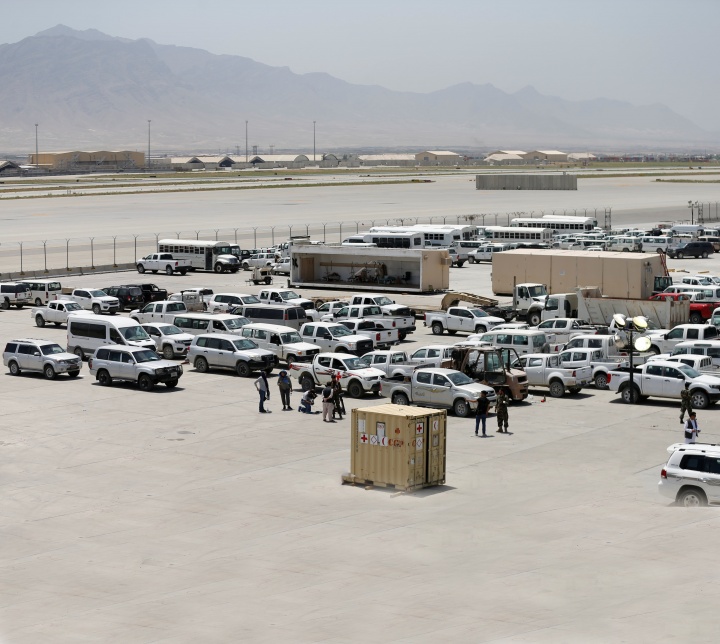
Afghan soldiers inspect some of the thousands of U.S. vehicles abandoned in the American pullout from Bagram Air Base, Afghanistan, in July 2021.“Our world is changing before our eyes, and in ways that are highly dangerous for the current world order and the United States in particular. You need to understand why.

Mohammad Ismail/Reuters/Newscom

Afghan soldiers inspect some of the thousands of U.S. vehicles abandoned in the American pullout from Bagram Air Base, Afghanistan, in July 2021.

As this issue of Beyond Today was going to press, the last U.S. combat troops were being withdrawn from Afghanistan. Only a token force of several hundred will be left to guard the U.S. embassy compound in Kabul, the Afghan capital.

Perhaps nothing encapsulated the moment more poignantly than the U.S. withdrawal from the sprawling 30-square-mile Bagram Air Base, epicenter of America’s war against the Taliban and al-Qaeda for the last 20 years. The base was in reality a sizable city, built from the ground up on a large plain about an hour’s drive from Kabul.

It boasted American pizza and fast-food chain restaurants, air-conditioned fitness centers, a library, post office, a 50-bed hospital and a two-mile-long runway capable of handling dozens of U.S. fighter jets, reconnaissance aircraft and huge transport planes ferrying troops, weapons and supplies. At one time it was home for some 100,000 U.S. personnel.

In ironic timing, just before the July 4 Independence Day holiday, the last American occupants of the base shut off the electricity and slipped away into the night. Nearby looters arrived before Afghan soldiers and helped themselves to anything that wasn’t nailed down. Among items left behind were thousands of civilian trucks and vans and hundreds of armored vehicles, plus weapons and ammunition the Afghan soldiers would need to fight off the Taliban in battles sure to come.

Strategically, Bagram Air Base was a crucial military asset, located 500 miles from Iran and 400 miles from China, with runways that could handle any U.S. military aircraft of any size. But as is the case with so many critical American strategic assets in recent decades, it is no longer in U.S. hands—and will likely soon be in the hands of America’s enemies.

It’s the sad end of a 20-year saga that began with a highly coordinated terrorist assault on the United States on Sept. 11, 2001. In righteous indignation America, with a coalition of allies, went to war against terror-supporting governments in Afghanistan and Iraq.

But after 20 years, more than 60,000 U.S. casualties, and a fortune of almost $6.5 trillion in borrowed money squandered, American forces quietly withdrew, the nation no longer having the will to fight.

If you pay close attention to the news, you may have heard that America is said to now be facing more threatening and dangerous enemies. On June 9 U.S. President Joe Biden declared that global warming is “the greatest threat facing America.” Ironically, he said this as he arrived in Europe seeking support from allies against Russian hacking attacks that have devastated U.S. businesses and to combat Chinese secrecy over the origins of Covid-19, which has plagued the entire world.

Meanwhile, America’s true geopolitical opponents such as China, Russia, Iran and North Korea grow ever more dangerous. They’re not focused on teaching their military a rewritten “woke” version of their nations’ histories; they’re training their soldiers, sailors and pilots how to destroy and kill their enemies—with the United States at the top of the list.

The uncomfortable truth is, America has lost another war, and appears to not be any wiser. The last significant war America truly won was World War II, more than 75 years ago. In Korea the United States fought to a draw and agreed to a truce, leaving tens of thousands of troops there for two-thirds of a century now. Vietnam was an ugly defeat at the cost of nearly 60,000 American lives, and after the U.S. withdrawal communists in Vietnam and Cambodia murdered some 1.5 million of their own people. America and its allies did defeat Iraq in the first Gulf War after Iraq invaded Kuwait, but Saddam Hussein was left in power, leading to the second Iraq war and another slow, painful retreat for U.S. forces, to be completed by the end of this year. Folly reigns in the halls of power.

These wars collectively cost trillions of dollars and more than 100,000 American lives, and what do we have to show for it?

Our world is changing before our eyes, and in ways that are highly dangerous for the current world order and the United States in particular. You need to understand why."

From: https://www.ucg.org/beyond-today/beyond-today-magazine/americas-uncertain-future

________

Prophesied War in the Middle East

Daniel 11:40

““At the time of the end the king of the South shall attack him; and the king of the North shall come against him like a whirlwind, with chariots, horsemen, and with many ships; and he shall enter the countries, overwhelm them, and pass through.”

Bible prophecy describes a key end-time conflict between a “king of the South” and a “king of the North” that is part of a chain of events leading to the second coming of Jesus Christ. Here is some of the background to this verse from our post “End-Time Prophecy Jigsaw: The Pieces Are Falling Into Place!”

The book of Daniel tells us that in the last days there will be an influential person ruling in the south, that is, in the Mediterranean area and generally south of Jerusalem (Daniel 11).

Historically, this king of the South was the dynastic leader of the Ptolemies, or the Egyptian branch of the Greek Empire. The king of the South battled it out for over a century, as the Egypt-based Ptolemies struggled for supremacy against the Syria-based Seleucids, another branch of the Greek Empire. This took place in the third and second centuries B.C., after the death of Alexander the Great in 323 B.C. (Daniel 11:3-4).

Yet this same prophecy suddenly takes a huge leap to ‘the time of the end,’ when we find a latter-day king of the South provoking and fighting against the king of the North (Daniel 11:40). …

Daniel’s prophecy tells us that once this end-time king of the South has provoked the king of the North, the latter will swoop down on him with massive military force, and invade and conquer much of the Middle East (Daniel 11:40-43).

Elsewhere in Bible prophecy, the king of the North is referred to as ‘the beast,’ the name assigned him by the apostle John in the book of Revelation (Revelation 13:1-10; 17:3-17). We know from history that the heart of this massive end-time power will be in central Europe. In fact, much of the history of the Middle Ages reflects the struggle for dominance between Catholic Europe and the Muslim world, a struggle destined to reappear just before the second coming of Christ.”

For more details about this prophecy, see the articles “The King of the South” and “The King of the North.””      From: https://lifehopeandtruth.com/bible/blog/prophesied-war-in-the-middle-east/?

_______

HOW NOT TO DIE – The Role of Diet in Preventing, Arresting, & Reversing Our Top 15 Killers

“In this “best-of” compilation of his last prior four year-in-review presentations, Dr. Greger explains what we can do about the #1 cause of death and disability: our diet.

Excerpts from transcript of YouTube: https://youtu.be/P_fBTiqCnNI

Below is an approximation of this video’s audio content. To see any graphs, charts, graphics, images, and quotes to which Dr. Greger may be referring, watch the above video.

“Allow me to begin on a personal note. This is a picture of me, right around the time that my grandma was diagnosed with end-stage heart disease and sent home to die. She had already had so many bypass operations, basically ran out of plumbing at some point, confined to a wheelchair, and there was nothing more they could do.  Her life was over at age 65. But then, she heard about this guy, Nathan Pritikin, one of our early lifestyle medicine pioneers.

And what happened next is chronicled in Pritikin’s biography. My grandma was one of the “death’s door” people. Frances Greger arrived in a wheelchair. “Mrs. Greger had heart disease, angina, and claudication; her condition was so bad she could no longer walk without great pain in her chest and legs.  Within three weeks, though she was not only out of her wheelchair but was walking ten miles a day.”

This is my grandma at her grandson’s wedding 15 years after she was given her medical death sentence, and thanks to a healthy diet, she was able to live another 31 years on this earth—until 96—to enjoy her six grandkids, including me.

That is why I went into medicine.

When Dr. Ornish published his Lifestyle Heart Trial years later, proving with quantitative angiography that coronary artery disease could indeed be reversed in the majority of patients without drugs or surgery—just a plant-based diet and other healthy lifestyle changes, I assumed that it was going to be a game-changer. My family had seen it with their own eyes, but finally here it was in black and white, published in one of the world’s most prestigious medical journals on the planet.

But, nothing happened— leaving me to wonder if, effectively, the cure to our #1 killer could get lost down some rabbit hole and ignored, then, what else might be in the medical literature that can help my patients? I made it my life’s mission to find out.” 

“(Last year, Dr. Kim Williams became President of the American College of Cardiology. He was asked why he follows his own advice that he gives to patients, to eat a plant-based diet. “I don’t mind dying,” Dr. Williams replied. “I just don’t want it to be my own fault.””)

Lots more to see in the video or read the transcript at: https://nutritionfacts.org/video/flashback-friday-how-not-to-die-the-role-of-diet-in-preventing-arresting-reversing-our-top-15-killers/?

________

Monday, March 9, 2020

Coronavirus Prayer. CDC. Where Is Lent in the Bible? What Are Ash Wednesday and Lent? Update.

Coronavirus Prayer

“A controversial photo provides us an important reminder.

VP Mike Pence praying with coronavirus task forceVP Pence ridiculed for praying with coronavirus task force

Transcript of YouTube: https://youtu.be/eiphnCKLhbk

[Darris McNeely] We’re all still watching news about the coronavirus as it continues to spread among the nations. More than 80,000 people have been infected by it, more than 3,000 people have died as of the last news report that I had on this subject. And we are still very much fearful of where it will go and what will happen even as nations such as the United States take the necessary precautions to shield its citizens and to work toward a vaccine to ward this off. We’re not out of the woods yet, but there is hope and there is reason to expect that we will see better days on this.

An interesting picture came up on the internet recently. In the United States, President Trump has appointed Vice President Pence to head up the team, the task force that is dealing with the coronavirus. In a meeting in the offices of the vice president, before they began, they did something that you see on that picture there. They all bound their heads and they asked a prayer. Pretty good thing, to ask prayer for something like the coronavirus or any other type of a pandemic or serious national crisis and emergency. It’s unbelievable, the criticism that came as a result of this picture when it got posted on the internet and what people thought. Critics, people of different ideas about God, Bible, religion, criticizing leaders praying for wisdom and for God’s hand and his intervention in this world crisis that is developing this pandemic of coronavirus. It brought to mind a scripture.

In 2 Chronicles 7:14, it says from God to the people of Israel what to do at a time of crisis. It says, “If my people, who are called by my name, will humble themselves and pray and seek my face and turn from their wicked ways, then I will hear from heaven and will forgive their sin and heal their land.” Those were God’s words to His people. Those were God’s words to any people, and they are words that we should listen to today.

I have no problem with the vice president leading a group prayer as they try to tackle this problem, and seek a solution, and come to a point for it. We should applaud that, and we all should go to God and ask God to give us wisdom and to heal our land. There may be a bigger crisis that will hit this land that will teach us this very same lesson, to call out to God, and to ask for his mercy, and ask for his help.”  From: https://www.ucg.org/beyond-today/beyond-today-daily/coronavirus-prayer

________

Don’t be alarmed by the media’s reports on Coronavirus, just check with the CDC: https://www.cdc.gov/coronavirus/2019-ncov/index.html

________

Where Is Lent in the Bible?

“The Bible shows the truth behind popular customs like Lent.

Transcript of YouTube: https://youtu.be/ZsLnzmTEegY

[Steve Myers] Christianity has now entered the Lenten season. Mardi Gras is passed, Fat Tuesday into Ash Wednesday, and now the Lenten season is recognized by much of the Christian world. But when you check out what your Bible has to say about Lent, you’re not gonna find anything. It’s a man-made tradition, and when you recognize what God thinks about counterfeiting his way, it’s a very serious thing.

There is a powerful passage in the book of Colossians, Colossians 3:23. This is what God inspired Paul to write. “These things indeed have an appearance of wisdom in self-imposed religion, false humility, and neglect of the body, but are of no value against the indulgence of the flesh.”  You see the problem with false Christianity, made up Christianity, false traditions, they do a disservice to God and dishonor him. And when you really check out the basis for these practices, you’ll find them rooted in false beliefs, paganism.

I hope you’ll take some time to check it out. If you’ll search on our website, just type in the words “Lent,” and you’ll find a number of articles where you can get into the details of how Lent is an imposter, how it is fake, how is it a counterfeit to what the true God wants us to observe. So check it out, I think you’ll be surprised by what you find.” From: https://www.ucg.org/beyond-today/beyond-today-daily/where-is-lent-in-the-bible

_______

What Are Ash Wednesday and Lent? Does the Bible Tell Us to Celebrate

These Days?

“After Mardi Gras comes Ash Wednesday and 40 days of Lent. Did the early New Testament Church observe these days?

A block letter sign that spells out the word "Lent".Enterline Design Services LLC/iStock/Thinkstock

The Bible does teach the importance of fasting and self-examination, but it does not teach a 40-day period called Lent or an Ash Wednesday of putting ashes on the forehead.

The Bible does not mention Ash Wednesday or Lent, and the early New Testament Church did not observe these days. Here is how the BBC Religion page describes Ash Wednesday and Lent:

“Ash Wednesday is the beginning of Lent for Western Christian churches. It’s a day of penitence to clean the soul before the Lent fast.

“Roman Catholic, Anglican, and some other churches hold special services at which worshippers are marked with ashes as a symbol of death and sorrow for sin…

“The Christian churches that observe Lent in the 21st century (and not all do significantly) use it as a time for prayer and penance. Only a small number of people today fast for the whole of Lent, although some maintain the practice on Ash Wednesday and Good Friday. It is more common these days for believers to surrender a particular vice such as favourite foods or smoking” (BBC).

Lent is counted differently by those of the Western Catholic tradition and those of the Eastern Orthodox tradition. “The western church excludes Sundays (which is celebrated as the day of Christ’s resurrection) whereas the eastern church includes them. The churches also start Lent on different days. Western churches start Lent on the 7th Wednesday before Easter Day (called Ash Wednesday). Eastern churches start Lent on the Monday of the 7th week before Easter and end it on the Friday 9 days before Easter. Eastern churches call this period the ‘Great Lent’” (BBC).

Various biblical events and customs are referred to by those who celebrate these days. The Bible mentions people mourning in sackcloth and ashes. The Bible also talks about repentance and fasting, and the number 40 is prominent in various biblical events.

“The justification for the Lenten 40-day preparation for Easter is traditionally based on Jesus’ 40-day wilderness fast before His temptation by Satan (Harper’s Bible Dictionary, ‘Lent’; Matthew 4:1-2; Mark 1:13). The problem with this explanation is that this incident is not connected in any way with Jesus’ supposed observance of Easter. The 40-day pre-Easter practice of fasting and penance did not originate in the Bible” (The Good Friday—Easter Sunday Question).

Some have suggested that Lent may be connected to earlier, pagan holidays. In Ezekiel 8:14, the prophet in vision saw women weeping for the pagan god Tammuz. “It has been suggested by some scholars that the practice of ‘weeping for Tammuz’ was the actual origin of Lent, the Roman Catholic 40-day period of abstinence prior to Easter (starting after Mardi Gras, ‘Fat Tuesday,’ on Ash Wednesday). Consider that the name Easter itself is derived from Ishtar, the ancient Babylonian fertility goddess and Tammuz’s mother”. (See the Bible commentary on Ezekiel 8 for details.)

The Bible does teach the importance of fasting and self-examination, but it does not teach a 40-day period called Lent or an Ash Wednesday of putting ashes on the forehead. These customs appear to have pagan origins.  We seek to follow the customs and practices of the early New Testament Church as described in the Bible. For more on the biblical religious festivals, such as the Passover and the Feast of Unleavened Bread in the spring, see God’s Holy Day Plan: The Promise of Hope for All Mankind.”  From: https://www.ucg.org/bible-study-tools/bible-questions-and-answers/what-are-ash-wednesday-and-lent-does-the-bible-tell-us-to-celebrate-these-days

_______

Update.

Apart from the bible studies here and going grocery shopping in College Station, there hasn’t been much to report.  My medical situation changed so I had to confer with the agent to get a different policy with United Care.  She was very thorough and helpful so now I will have a DO instead of an MD for my doctor.  Most MDs, all they know is how to write prescriptions.  DOs have a different kind of training, I hope this one is like that!

The most notable thing this last week was that my little abused, rescued dog, Foxie, finally got the message that it was OK to pee, and no one was going to punish her for peeing again.  She used to be so afraid when she wet her blankie and would tremble and try to hide it she was so afraid of being punished.  With lots of praise every time she peed outside, she got the message that it was OK and then she would smile, like an American Eskimo can.  Now she will wait until she is taken outside and doesn’t pee on her blankie any more.  But she is still terrified of strangers and will tremble when she sees them.  Now she has gone to an SPCA friend of mine who has a fenced yard, who will train her some more, and get her spayed.  I miss Foxie, but she needed a place to run, play with other dogs, and not be on a leash all the time. 

For the church potluck I made a pot full of organic veggies.  They don’t serve meat there at that church. The sermon was “Why Keep The Sabbath” and why it is a Sabbath made for man to rest on the seventh day.

Sunday, January 7, 2018

Jerusalem: A Paradox of Biblical Proportions. Why Three Major Religions Claim It. U.S. Embassy Move to Jerusalem. Update.

For “Scripture Sunday”;

Jerusalem: A Paradox of Biblical Proportions

“Jerusalem is ground zero for Bible history, end-time prophecy and a beautiful, peaceful future to come. Here’s what you need to know about the Holy City.

The “ticking time bomb”

Many of the 800-plus references to Jerusalem in the Bible show how it figures prominently in the events that usher in the coming return of Jesus Christ and His millennial rule. Among them are some incredible prophecies recorded more than five centuries before Jesus’ birth that God gave to His servant Zechariah.

Jerusalem: A Paradox of Biblical Proportions

LISTEN TO THIS ARTICLE

DOWNLOAD

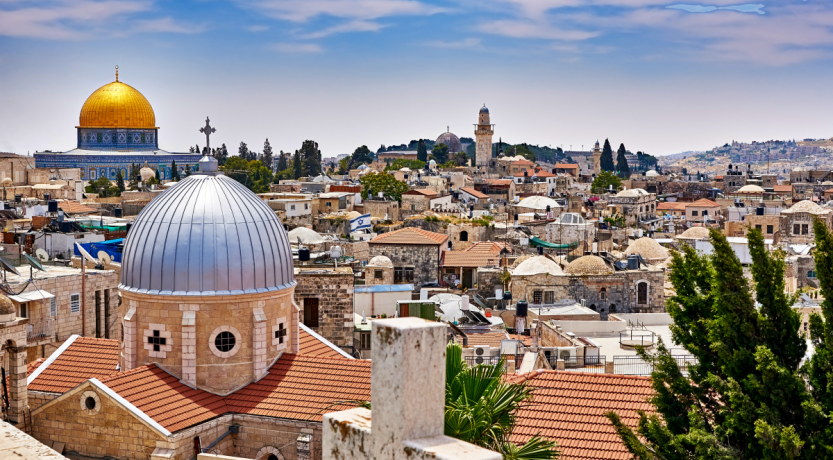
From my balcony perch one Friday evening just before sunset, I gazed down on the hundreds of Jews gathering at the Western Wall of the Temple Mount in Jerusalem to usher in the Sabbath.

The camera I was holding silently told the story and explained the problem. Slowly tilting up, then panning to the left, the scenes shifted dramatically. First, the Jewish worshippers at their revered wall, then up to the Muslims’ golden Dome of the Rock mosque, then to the silhouetted domes and crosses of Christian churches only a stone’s throw away.

At first, I had simply wanted to capture a nice panoramic shot. But then I realized the camera was catching the essence of the paradox—and the problem—that is Jerusalem.

In this tiny one-square-kilometer portion of land known as the Old City, those iconic religious images stand symbolic of the deepest religious, cultural, political, social, historical and ethnic conflicts facing humanity today.

Just what is Jerusalem?

Jerusalem is arguably the greatest paradox on earth!

If any city evokes images of disunity and division, as well as unity and peace, it’s Jerusalem.

If any city evokes images of disunity and division, as well as unity and peace, it’s Jerusalem.If any city pictures historical suffering, it’s Jerusalem. If any city portrays future healing, it’s Jerusalem.

More than anywhere else, Jerusalem embodies at once the human capacity for hatred and the godly capacity for love.

Even the Bible characterizes it in extremes as both sacred—“the holy city” (Isaiah 52:1)—and the epitome of sin—“Sodom and Egypt” (Revelation 11:8).” 

Continued at:  https://lifehopeandtruth.com/prophecy/middle-east/jerusalem-a-paradox-of-biblical-proportions/

_________

Jerusalem: Why Three Major Religions Claim It

“Judaism, Christianity and Islam all claim Jerusalem as holy to their faith. Why do they hold it in high regard? What are the differences that separate them?

Jerusalem: Why Three Major Religions Claim It

The city of Jerusalem has a long and extensive history of being the center of religious conflict. More than 50 wars have been fought in and around Jerusalem in the past 4,000-plus years, and most have been religiously motivated.

To understand why three major religions claim Jerusalem today, we have to look at the history of these religions.

A brief history of Judaism

Judaism is the oldest surviving monotheistic religion, arising in the Eastern Mediterranean in the second millennium B.C. Abraham is traditionally considered to be the first “Jew” and to have made a covenant with God (Genesis 17). He was actually a “Hebrew” (a descendant of Eber, Genesis 11:15-27; Genesis 14:13). Abraham worshipped and sacrificed to God in Salem (Jerusalem, Genesis 14:18; 22:2; 2 Chronicles 3:1).

Because Judaism, Christianity and Islam all recognize Abraham as a prophet, they are called the “Abrahamic religions”; and all of them claim Jerusalem as a center of worship.

After Jerusalem became the capital of ancient Israel and Judah, King David moved the tabernacle to this location (2 Samuel 6). King Solomon built the first temple here (2 Chronicles 6). After the division of Israel, the nation of Judah (the Jews) continued to worship in this temple.

In 586 B.C. the nation of Judah fell, and the temple was destroyed. It was rebuilt by the Jews during the time of Ezra and Nehemiah (Nehemiah 12:27; Ezra 9:9). Later, because of extensive renovations by Herod (John 2:20), this second temple became known as Herod’s temple.”

Continued at: https://lifehopeandtruth.com/prophecy/middle-east/jerusalem/

_________

U.S. Embassy Move to Jerusalem

”The recent announcement to move the the U.S. Embassy from Tel Aviv to Jerusalem is a big decision and it has met a great deal of controversy. What does this mean and what should we understand about this as we look at the situation of Jerusalem, Israel, Bible prophecy and what it means for the world today?

YouTube: https://youtu.be/2Va-diCrflI

Transcript

[Darris McNeely] “U.S. President Donald Trump recently announced his decision to move the U.S. Embassy from Tel Aviv to Jerusalem. This is a big decision and it has met a great deal of controversy because of concern about appending any peace process and also what will happen with riots and unrest within Israel in the Middle East as a result of this. Many leaders have opposed it, but the president pledged that he would do it during his campaign and he has done this. Now, what does this mean and what should we understand about this as we look at the situation of Jerusalem, Israel, the Bible prophecy and what it means for the world of today? Let’s understand a few points.

First of all, this decision to move the embassy from Tel Aviv to Jerusalem is a long-standing decision that has been put off by many past presidents of the United States. It is actually a law that was enacted by the U.S. Congress to move the U.S. Embassy to Jerusalem. And virtually every president of the past 30 years has said they would do it as part of their campaign or in other comments but when they held the power, they didn’t do it. President Trump has decided to do that. So, it is a matter of U.S. law that is being fulfilled here and enacted by the president.

From a biblical perspective, Jerusalem was an important and it is an important…but from the historical biblical perspective, Jerusalem is extremely important to the nation of Israel. It was chosen by King David and became the capital of the united monarchy of the nation of Israel in the Bible story, in the Old Testament. The original name of Jerusalem was Salem. It was a fortress, a small fortress, a Jebusite fortress. King David overcame that, planted his capital there, and it was the capital of the united monarchy. And until the fall of Jerusalem, it was the capital of the kingdom of Judah. So it’s very important to the history of Israel, and in fact, the modern state of Israel does have a connection to that. And that’s the third point that I want us all to understand regarding this.

Today’s state of Israel, existing since 1948, represents the remnant of the holy people of the Bible, the covenant people, the nation of Israel. And the Bible tells us in many different areas that God still has unfinished business with Israel, the people that He claimed as His own and upon which His name was placed during that time.

There are many prophecies that show that in the events and days leading up to the second coming of Jesus Christ, that time ahead of us, Jerusalem and the presence of that remnant people in that land are critical to those prophecies. And so, when it comes to prophecy and understanding this, Israel’s claim is bona fide and it connects in with a lot of what we understand about prophecy.

So, this is important from a number of areas. I doubt that the present decision is going to erupt in some major conflagration and another war there. There’s already been enough unrest and my guess is that it is going to settle down. I don’t think it’s going to undermine any present peace process because, at the present, there is no credible peace process that is taking place. What we need to understand, we need to be appreciative of the history, the biblical connection and the geopolitical importance of Jerusalem today. Jerusalem is the bull’s-eye of Bible prophecy, and we need to understand and pay attention to anything that takes place connected with Jerusalem.”  From: https://www.ucg.org/beyond-today/beyond-today-daily/us-embassy-move-to-jerusalem

_________

Update.

Well, another trip to a different chiropractor still didn’t get my back properly aligned.  Yes, they pretend to work on it, but don’t fix it, and it still hurts.  I am tired of these doctors “milking the system”! 

I have another cat, she is a rescue, a young, really pretty and sweet Lilac-point Siamese, with crossed eyes and all!  She will find a forever home very quickly, I am sure.  She has had to stay in my dog room since cat-hating cat “Flower” is back in the house now.  Every now and then, I lock Flower in my bedroom and let the new one in the living room.  She is so cute and loving, and she walks with her tail straight up like a lemur!

Each morning I have been going to a local fitness center 5 miles away, trying to get ready for my stress test.  I stick to the treadmill, and it is going OK. It tells you how far you have walked and how many calories you have burned.  If I walk on it for 15 minutes, I only use 60 calories so I’ll never lose weight that way, but I am trying to step up my stamina.

Thusday, I cooked a jimaca.  It takes a long time to cook, so I cut it up and put it in a crockpot overnight, and “mashed” it with cream and butter in the food processor the next day.  Standing cooking in the kitchen burns 74 calories an hour, and on Friday afternoons, “Preparation Day”, I cook food for the Saturday Sabbath church potluck.  I cooked a whole head of cabbage with bell peppers, spices and onions, and also made Chicken Taco Pie with Bisquick. (Still trying to get all that chicken out of my freezer).  Everything was enjoyed and I came home with clean crockpots and dishes, with no left-overs.  I didn’t even have any food to give Zach, my neighbor, like I usually do.  The pastor’s wife was better and she took over the kitchen.

The Bible readings were Gen. 47:28-50:26, 1 King 2:1-12 and 1Pet. 1-12.  The Teaching was about “First Things First”, and even in Isa 9:6 is the prophecy of our Christ’s coming.

The sun was shining, it had warmed up, and as usual it was a very enjoyable day.

Sunday, May 21, 2017

Building Strong Families. Leaving a Legacy for Your Grandchildren. Update.

For "Scripture Sunday":   More about families.

Building Strong Families


"In 1979 the Pittsburgh Pirates professional baseball team surprised many by winning the World Series. It was a close-knit team and, to reflect this, they adopted the popular Sister Sledge song “We Are Family” to describe their strength and unity. The phrase The Family was stenciled on the dugout roof and on signs, bumper stickers and T-shirts everywhere. Family became the team identity.
Similarly, the traditional family can also be described as a team—hopefully a unified, supportive team. However, we all know that some teams are not very good when it comes to working together during difficult times, and it is not unheard of for players to blame each other for ongoing problems.
Sadly, the same can often be said of individual families. What must we do to strengthen and sustain our families?

Marriage and family under attack

Dramatic shifts in the culture and in the definitions of marriage and family have impacted many people today. It wasn’t that long ago that marriage was widely appreciated as an institution uniting a man and a woman as a team to share the task of raising children. Bringing children into the world and teaching, protecting and providing for them was seen as the primary tasks of parents.
But dramatic societal shifts have changed the composition of many families. Commenting on the results of the 2010 U.S. Census, The New York Times reported that “married couples represented just 48 percent of American households in 2010. … This was slightly less than in 2000, but far below the 78 percent of households occupied by married couples in 1950. What is more, just a fifth of households were traditional families—married couples with children—down from about a quarter a decade ago, and from 43 percent in 1950.”
The impact on children is equally dramatic. The New York Times article continued, “W. Bradford Wilcox, the director of the National Marriage Project at the University of Virginia, argues that the retreat from marriage is bad for society because it means less security for children. ‘It’s troubling because those kids are much more likely to be exposed to instability, complex family relations and poverty,’ he said” (“Married Couples Are No Longer a Majority, Census Finds,” May 26, 2011).
Because of the frequency of divorce and the various “alternative” family structures, the concept of a strong marriage and family may seem unrealistic or unattainable to many children today. The State of Our Unions, an annual report on marriage and family in the United States by the National Marriage Project, reveals disturbing and profound changes in this dramatic cultural shift and its impact on children. The U.S. statistics reported in the National Marriage Project’s 2012 “Social Indicators of Marital Health and Well-Being” are shocking:
  • Today 40 percent of all children and 72 percent of African-American children are born out of wedlock.
  • The number of cohabiting couples who live with children today is more than 15 times what it was in 1960. And today, 40 percent of all children will spend some time in a cohabiting household while growing up.
  • Roughly 1 million children each year experience parental divorce and its aftermath.
The shift away from nuclear families corresponds directly with attitudes among young adults, less than half of whom today believe it is wrong to have a child outside of marriage.
According to Stephanie J. Ventura of the National Center for Health Statistics, about 1.7 million babies were born to unmarried women in 2007, a 26 percent increase from 1.4 million in 2002 and more than double the number in 1980. Unmarried women accounted for 39.7 percent of all U.S. births in 2007—up from 34 percent in 2002 and more than double the percentage in 1980.
So what does it take to build strong, intact families today?
_______

Leaving a Legacy for Your Grandchildren


"My grandparents didn’t leave me much of an inheritance; they didn’t have much to give. But every now and then I open a small plastic bag from a box in my office and examine a few rare coins—old silver dollars Grandpa used to give me, one every birthday.
The 1922 Peace Dollar, I found out recently, might be worth as much as $25 … but I’ll never sell it. The memories that coin evokes are worth far more than that—they are priceless. It’s amazing how many warm remembrances of a grandfather’s influence a little round piece of metal can evoke more than 50 years later.
All of my grandparents have been gone for decades, and they died without many physical goods to leave to their children and grandchildren. But they all left an inheritance of better things, possessions that I hope to pass on to my grandchildren.

The greatest inheritances

“A good man leaves an inheritance to his children’s children,” Solomon told his son (Proverbs 13:22). Interestingly, grandparenting is one of the few stations in life where the playing field is level. That is, the poor and prosperous alike can pass on the greatest inheritances of all—wisdom, love, encouragement, memories and lessons learned.
“Grandparents should play the same role in the family as an elder statesman can in the government of a country,” is the way British author Erin Pizzey describes it. “They have the experience and knowledge that comes from surviving a great many years of life’s battles and the wisdom, hopefully, to recognize how their grandchildren can benefit from this” (Geoff Dench, ed., Grandmothers: The Changing Culture,p. 6).

A grandparent’s influence

Grandparents are in a stage of life that a child’s parents have not yet experienced, and it enables them to contribute in unique ways to a child’s development. Life usually slows down a little more for grandparents, and they’ve had more time to process life itself. God intended it to be that way and instructs grandparents to fill a special role in influencing the young ones.
Moses talked to the Israelites about this: “Take heed to yourself, and diligently keep yourself, lest you forget the things your eyes have seen, and lest they depart from your heart all the days of your life. And teach them to your children and your grandchildren” (Deuteronomy 4:9).
While the primary influence on a child is to be the parents, this first- and third-generation relationship offers a different level of teaching that can greatly supplement—without supplanting—the parents’ responsibilities.

A beautiful picture   

_______

Update:

This week we cut the holes out for the sink and the stove in the kitchen of the mini-house (guest house).  It looks a lot better with them in place.  We also installed some more of the upper cabinets.
On Tuesday I saw an Ear,Nose and Throat doctor about my sinuses.  I have had trouble with them for years.  I have a prescription that may not even start to make them feel better for a month.  We will see.

Early Wednesday morning, while it was still dark, I could see emergency flashing lights in the road behind my house.  I walked to the back yard and the road was blocked both ways with firetrucks, ambulances, and lots of police cars.  There were news choppers overhead, too.  A dark colored truck was in the ditch, a damaged police car and a damaged F250 in the road.  I got dressed, and the phone rang.  It was Roy, my helper, telling me that was his friend, Ronald, who had been in the dark colored truck. He was coming to pick up Roy so that they could go down to our boat ramp and do a little fishing before work.  Because a police car was involved there was a very thorough investigation with surveyors and camera, so it was quite a while before we were allowed to pick up all the fishing tackle, ice chests, folding chairs and other items that had bounced out of  Ronald's truck. The policeman had facial lacerations and was released from the hospital. Ronald has two broken legs, both kidneys and his spleen lacerated, and all his ribs broken.  It was mid-morning by the time we got that done and Jody was too shaken by it all, so we didn't work that day.

 Here is what it said on Montgomery Country Police Reporter.


6:45 a.m.
Around 5:30 a.m. Wednesday, a DPS Trooper and a civilian were struck on Calvary Road near Amblewood in the Willis area. The Trooper was attempting to assist the civilian in pushing his disabled vehicle off of the roadway when they were struck by a third driver. The trooper and the civilian, an older man, were transported by ambulance to Conroe Regional medical center. The civilian has serious but non-life-threatening injuries. The Trooper was also injured but not as seriously as the civilian.
It is unknown at this time whether the driver of the vehicle that struck the pair was injured.
Calvary Road is CLOSED in both directions in the area of the crash as it remains under investigation.
-------
One day we had an Internet outage, and my computer got a wild hair.  Suddenly I couldn't load AOL or go to a lot of my favorite sites, and a message would pop up saying that the sites wouldn't load correctly. Well, I have to be able to get to my mail to see messages from potential customers, so I had to go through Internet Explorer. It made me login in everywhere.   That is when I began to appreciate AOL and the many short cuts that it offers. The Carousel and the Little Red Heart, if you have had AOL you know what I mean.  ( I also get free Lifelok,  Legal Assistance and well as other things that come with the $11 a month fee.)  It is the only mail service that I have found that has a 'search' within the mail folders, and I use that a lot. I know most don't like AOL, but I do.  So I have had to switch to my other computer which won't load Open Live Writer.   That's why the blog looks different this time.

Thursday and Friday we got a bit more work done around here, and then I took Roy and his other fishing buddy to see Ronald in CCU.  He was conscious, and seemed to be in OK spirits, only hurting a lot.   But at the same time, my friend from church, Ann, was in ICU, and she wasn't conscious.  She had been taken to the hospital the night before because she suddenly came down with a lot of seizures, so they were keeping her sedated.  Please keep these two in your prayers.  Thank you.
Every day we should be thankful for our health and strength.  I know I am.

I have a lot of chicken in my freezer, but I am just not crazy about chicken because I was forced to eat it when I was young.  I don't buy it, it is given to me, so I often make it into dishes for the church potluck.  This time I made Chicken Breasts with Farro and Veggies.  I also took some Sweet Multi-grain Mountain Rolls, they are always well received, as they are so soft and easy to eat.  I arrived early so that I could help the pastor's wife as her knee is still hurting.

The Bible readings were Lev. 19:1-20:27, Eze. 20:2-26 and Matt. 5:38-48. and the Teaching was about the Temptations and Tests In The Life of A Believer.

I was supposed to stop and get a few things from the hardware store on the way home, but the van had finally cooled down, and there was no way that I wanted to park it again on such a warm day.