Showing posts with label Halloween. Show all posts

Tuesday, October 29, 2024

It’s All Pagan Tradition. Acrylamide in Table Olives

.

· ·May be an image of text

“Don’t dabble in it. Don’t do it for the kids. Don’t keep one and get rid of the others. It’s all pagan tradition. Who cares where it comes from? Who cares if it’s different than it once was? Who cares if it’s not as bad as something else?

It’s pagan. If you are trying to be pagan then carry on…If not then walk away. All the way.

YHWH (Our Lord) has given you many great things to celebrate. Things that actually honor Him and give Him due glory and praise. Why would you want to choose pagan things over His things? And yes it is choosing theirs over His. You can’t have both.

Either own the holidays as pagan and yourself as pagan too or else surrender them all to Yeshua and follow Him in celebrating the Holidays of YHWH.”

Question Everything”

templecrier.com/paganism

_______

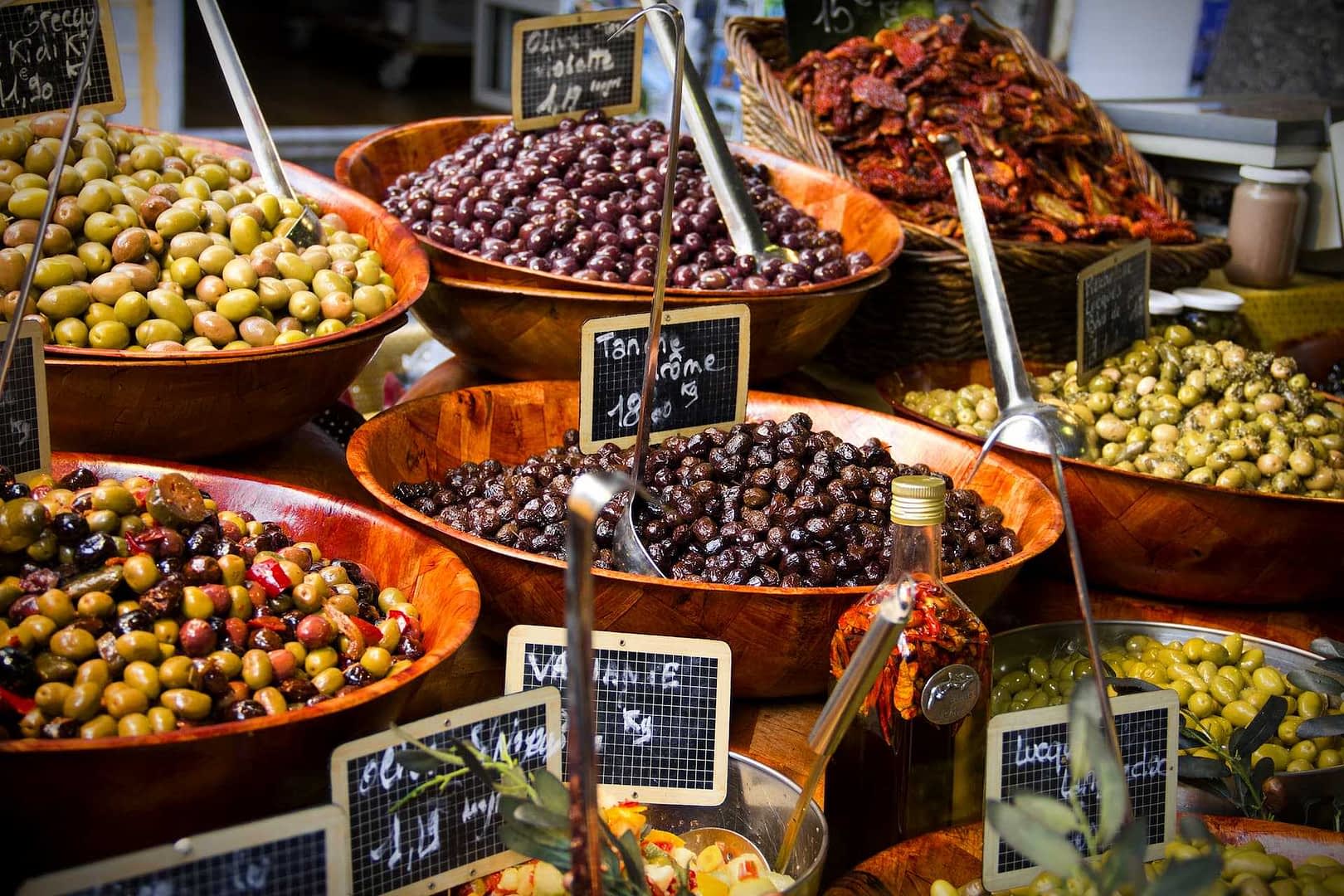
Researchers Find Ways to Reduce Acrylamide in Table Olives

“A recent study conducted by Extremadura’s provincial government in Spain has identified some strategies to mitigate the presence of acrylamide during the industrial processing of black olives.

Acrylamide is a compound found in carbohydrate-rich foods after being heated. The International Agency for Research on Cancer considers the compound carcinogenic.

The study provides different strategies that, without imposing any additional cost in its manufacture, upgrade the processing of Californian-style black ripe olives by removing acrylamide from the final product.- Daniel Martín-Vertedor and Antonio Fernández, researchers, Junta de Extremadura

According to the researchers, acrylamide generation in table olives is evident in larger quantities in Californian-style black ripe olives. The compound develops as a result of oxidation after thermal sterilization occurs during the table olive production process.

The amount of acrylamide in table olives is dependent on many factors such as how olives are processed, thermal sterilization conditions, packaging methods that may or may not involve the use of brine and cooking.

The researchers conducted their study using Hojiblanca olives, a common Spanish variety with an intermediary level of acrylamide content.

By changing different phases of the production process – olive maturation stage, length of storage period and type of washing treatment – the researchers were able to lower levels of acrylamide and thus improve the quality of the table olives.

“Applying these mitigation measures at industrial scale, black table olives consumers will intake a significatively minor quantity of this toxic compound,” Daniel Martín-Vertedor and Antonio Fernández, the two lead researchers on the project, told Olive Oil Times.

“Therefore, this type of table olive elaboration can be more present in the human diet, taking advantage of the benefits of table olives,” they added.

The researchers used olives harvested at two different points of maturation: the green and yellow-green stages. Olives harvested at the yellow-green maturation stage – when they are one step closer to veraison – had higher levels of acrylamides.

Furthermore, green olives stored for 21 months presented the lowest acrylamide levels. Acrylamide levels also lowered by 18 percent when the olives were sprayed with water before rinsing. Washing the olives with water heated to 25 ºC for 40 minutes also led to a 36-percent reduction in the chemical.

However, following treatment with lye, which is commonly used to remove the compound responsible for the bitter taste of table olives, acrylamide levels increased. Pitted olives retained the lowest levels of the chemical, followed by unpitted olives and sliced olives.

The researchers further found that table olives canned in brine with higher concentrations of salt after the production process also increased the acrylamide content. However, this was not observed in olives stored in other liquids.”  More at: https://www.oliveoiltimes.com/health-news/researchers-find-ways-to-reduce-acrylamide-in-table-olives/97968

Also see: The major food sources of acrylamide are French fries and potato chips; crackers, bread, and cookies; breakfast cereals; canned black olives; prune juice; and coffee.  From: https://www.cancer.gov/about-cancer/causes-prevention/risk/diet/acrylamide-fact-sheet

__________

Sunday, October 29, 2023

Should Christians Celebrate Halloween? Is That True? Not A Palestinian State. Hospitals Profit on Junk Food.

.

Should Christians Celebrate Halloween?

Halloween is a major holiday in the Western world for people of various backgrounds. Can Halloween celebrations be reconciled with a Christian worldview and lifestyle? The Bible holds the answer.

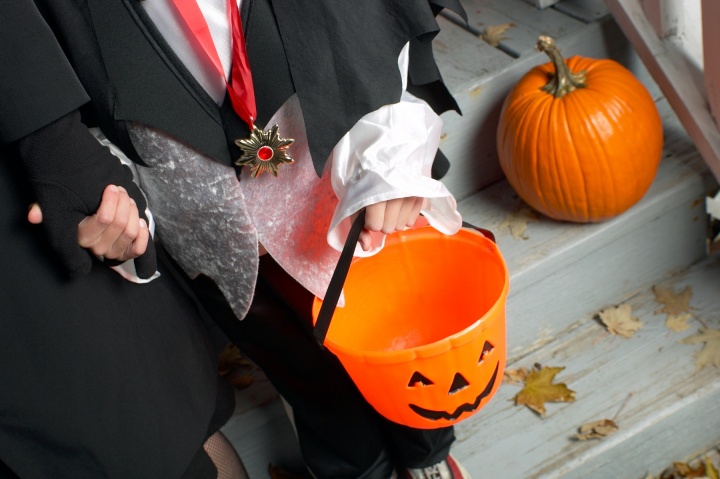
A little boy trick or treating with his mother.

Photos.com

Does Halloween serves a positive Christian purpose?

Tuesday night millions of children around the nation will be donning costumes, ringing doorbells and uttering the traditional "trick or treat" Halloween greeting. Most people consider this a harmless, fun activity for children. Others condemn the entire occasion because of the pagan origin of the day and connect it with demonism and the occult.

An article from a prominent Christian magazine suggested that "Christians should embrace the 'devilish' holiday with gusto—and laughter." The author suggests that Halloween presents us with an opportunity to "mock" and "laugh at" Satan and "the forces of evil."

A local pastor, writing wistfully of his past childhood Halloween celebration, said, "I enjoyed being a devil." He asserted that "a child doesn’t think of a red devil as an enemy of God or the apostle of hate and destruction." He went on to defend wearing costumes as merely superficial, and suggested that opposition to celebrating Halloween stems from lack of confidence in Christian beliefs.

Really only harmless fun?

Wait a minute! Is it unchristian for parents not to want their children to dress up as the Devil? Or does Satan the Devil even exist? According to a recent Barna survey, nearly 50 percent of professing Christians do not believe that Satan is a living being. For these folks, the whole question must be a moot point. But perhaps the rest of us ought to reconsider our perspective regarding Halloween.

Would anyone dare to suggest applying this reasoning to Hitler? Would wearing Hitler masks and swastikas and dressing like the skeletal remains of his victims be an appropriate way to "laugh at" Hitler and "mock" the diabolical evils of Nazism?

Is Satan a laughing matter? Does God want our children to associate fun and treats with the forces of evil?

I am not implying that a child who puts on a Halloween mask is dabbling in the occult or is in danger of demon possession. I am simply questioning the suggestion that Halloween serves a positive Christian purpose.

According to Deuteronomy 12:31-32 God does not approve of recycling, reconstituting and relabeling pagan customs to celebrate Christian events.

Carnal holidays trumped by God's Holy Days

My wife and I just finished celebrating eight fun-filled days of the Feast of Tabernacles with more than 700 men, women and children here in Central Oregon. I so much wish all of Christianity could share the joy of this meaningful occasion. Here is a God-ordained festival that was observed by Jesus, Paul and the apostolic Church and is still celebrated today by many Christians. It is one of seven annual Holy Days that foreshadow future events in God's plan (Colossians 2:16-17) rather than focusing on the powers of darkness that form the legacy of Halloween.

Anyone who dares express objections to Halloween has two strikes against him: 1. It is fun for the kids, and 2. It is a long-standing, firmly entrenched custom in our culture.

But the Feast of Tabernacles has Halloween beat in both categories: 1. It is fun for kids and the whole family and is eight days long, and 2. It was established thousands of years ago by God Himself. And most importantly, it and all of Holy Days of the Bible teach valuable lessons about the plan of God.”  From: https://www.ucg.org/beyond-today/blogs/should-christians-celebrate-halloween

_________

Is That True?

“Occasionally in life you come across something that goes so contrary to your beliefs that you exclaim, “Is that true?!”

Growing up, I became familiar with the concept of “pagan” or “paganism.” These were pejorative terms that were used to describe practices which were steeped in the worship of a different god and in opposition to Christianity.

Even as a child, when I first learned that Easter and Christmas had their origins in pagan customs, I avoided celebrating these days. Anything “pagan” was clearly something to be avoided; but as I quickly learned, not everyone agreed with that idea.

Over the years, the term “pagan” has increasingly taken on a more benign meaning. Take, for example, Halloween, which comes up in a couple of days. If you do even a cursory search on the Internet, you will find that Halloween is a celebration praised by those who profess witchcraft as their religious preference.

There is actually a church for witches that provides a list of ways to celebrate Easter, Halloween and Christmas as primary days of worship for pagans. They refer to them as Ostara, goddess of the spring and the beginning of life; the Festival of the Dead, which we call Halloween; and the Yule festival, which we call Christmas. These three festivals have “pagan” stamped all over them, so how is it that more than a billion people professing Christianity also celebrate them each year?

According to its pagan origins, the evening of Oct. 31 is when the veil between the world of the living and the world of the dead is at its thinnest level. Nov. 1 is the first day of the Celtic new year and the day set aside for all saints in the Catholic religion.

Oct. 31, Halloween, is a celebration of this crossover between the world of the dead and the world of the living. It is celebrated by people dressing up in costume to commemorate those who are called the living dead—goblins, ghosts and ghouls. Some try to Christianize the celebration by using the term “hallowed” or holy evening. But it is a vain attempt to add Christianity to something that is clearly pagan.

Isn’t it time we looked at our lives and asked some basic questions about what we are doing? Whenever you see a celebration that isn’t found in the Bible, yet is proclaimed to be Christian, shouldn’t you ask, “Is that true?” After all, isn’t Christianity supposed to be based on truth?

The truth of the matter is that Easter, Christmas and Halloween are not found in the Bible. They originate in pagan celebrations. They were adopted and integrated into mainstream Christianity centuries ago.  

Can you really be a Christian and embrace pagan rituals? Isn’t this in conflict with the first two of the 10 Commandments, which are against worshipping other gods—the goddess of spring, the sun god and, oh yes, let’s not forget the god of the underworld, who is being honored this week on Halloween?

We live in a world of lies and distortions of fact. Don’t just follow customs that are attractive! Ask questions; and whenever you’re presented with a celebration that is called Christian, never forget to ask, “Is that true?”  From: https://lifehopeandtruth.com/speaking-of/is-that-true/

_________

I'm sure you all have friends who are asking questions, you can send them this :

1)Before the modern state of Israel there was the British mandate, Not a Palestinian state .

2) Before the British mandate there was the ottoman empire, Not a Palestinian state .

3) Before the ottoman empire there was the Islamic mamluk sultanate of Egypt, Not a Palestinian state .

4) Before the Islamic mamluk sultanate of Egypt there was the ayyubid dynasty, Not a Palestinian state . Godfrey of bouillon conquered it in 1099.

5) Before the ayyubid dynasty there was the Christian kingdom of Jerusalem, Not a Palestinian state .

6) Before the Christian kingdom of Jerusalem there was the Fatimid caliphate, Not a Palestinian state .

7) Before the Fatimid caliphate there was the byzantine empire, Not a Palestinian state .

8) Before the byzantine empire there was the Roman empire, Not a Palestinian state .

9) Before the Roman empire there was the hasmonean dynasty, Not a Palestinian state .

10)Before the hasmonean dynasty there was the Seleucid empire,Not a Palestinian state .

11) Before the Seleucid empire there was the empire of Alexander the 3rd of Macedon, Not a Palestinian state .

12) Before the empire of Alexander the 3rd of Macedon there was the Persian empire, Not a Palestinian state .

13) Before the Persian empire there was the Babylonian empire, Not a Palestinian state .

14) Before the Babylonian empire there was the kingdoms of Israel and Judea, Not a Palestinian state .

15) Before the kingdoms of Israel and Judea there was the kingdom of Israel, Not a Palestinian state .

16) Before the kingdom of Israel there was the theocracy of the 12 tribes of Israel, Not a Palestinian state .

17) Before the theocracy of the 12 tribes of Israel there was the individual state of Canaan, Not a Palestinian state .

In fact in this corner of the earth there was everything but a Palestinian state!

Origins @voiceofisrael

_________

Hospitals Profit on Junk Food

Transcript of video at: https://nutritionfacts.org/video/hospitals-profit-on-junk-food/

Below is an approximation of this video’s audio content. To see any graphs, charts, graphics, images, and quotes to which Dr. Greger may be referring, watch the above video.

“Why is hospital food so unhealthy?

Put in stark terms, cardiovascular disease claims one American life every 39 seconds”; and for most heart attack deaths, you just keel over. “Sudden cardiac death is the first manifestation of coronary heart disease for the majority of individuals, particularly among women.”  So, for many of these sudden death victims, their first indication of the presence of heart disease was their demise. They didn’t even know they had heart disease! That’s why an ounce of prevention is worth way more than a pound of cure, because there is no cure for dead.

But that’s why the prevention of sudden cardiac death remains such a major public health challenge, because most people don’t even know they’re at risk. But we’ve known for over a half century, when we first started autopsying young servicemen who died in the Korean war, that coronary artery disease begins in our youth even among young children. So, business as usual is simply “not going to yield the improvements necessary to radically improve the cardiovascular health of the United States.”

But the good news is “a low-risk lifestyle (not smoking, exercising regularly, having a prudent diet, and maintaining a healthy weight)” may be able to wipe out the vast majority of risk for sudden cardiac death. So, “the time is now long overdue to start aggressive preventive cardiovascular disease programs in our schools, our homes, and our worksites.” How about starting in our hospitals?

A significant percentage of hospitals surveyed had fast food restaurants inside them, with Krispy Kreme topping the list. Brilliant marketing, given that families surveyed in hospitals with McDonald’s were twice as likely to think McDonald’s was healthy—after all, they let it in a hospital. But what about food served in hospital cafeterias themselves? Are they much better? 384 entrees were analyzed at 14 children’s hospitals in California, and only 7 percent could be classified as healthy. And just in case someone accidentally picked the rare healthy option, 81 percent of eating venues in children’s hospitals made sure to have junky impulse buys like ice cream, cookies, and candy near the checkout register. And 38 percent had signs that explicitly encouraged unhealthy eating. Why would they do that?

If you ask hospital cafeteria managers that exact question: “Why they don’t tend to follow nutrition standards?” “Why nutrition is not a top priority?”  It’s the same answer why unhealthy food is sold anywhere else—the pressure to generate profit. “Increased emphasis [is being] placed on running a hospital foodservice department as a profit center,” a bigger and bigger profit center. It’s such a metaphor for our sickness-care system in general, where healthy treat-the-cause approaches are eclipsed by the pills and procedures that bring in the most money.

Well, what do you expect from the private sector? But public hospitals don’t seem much better. A 2019 analysis of veterans’ hospitals found that “all VA hospitals contain vending machines providing a majority of soda, candy, and junk foods that directly conflict with” our government’s own healthy food choice recommendations such that, ironically, “hospital visits could theoretically promote worse health.” This raises the question why any soda or candy machines are available at our VA hospitals? “Are we trading the health of our veterans for profits?”

Maybe it’s time to ban junk food on hospital premises. “On daily rounds it is appalling to see patients…gorging on [potato chips, candy, and soda]—the very food[s] that may have contributed to their admission in the first place”—obscene to see fast food franchises on site, legitimizing “the acceptability and consumption of such foods in the daily diet.” “The obesity epidemic represents a public health crisis, but it is a public health scandal that by legitimizing junk food, hospitals have themselves become a risk factor for diet-related disease.” Maybe “it’s time to stop selling sickness in the hospital….” What message do residents receive when they are fed pizza and soda pop at grand rounds on obesity? We need a healthcare system with “more Hippocrates and less hypocrisy.”  From: https://nutritionfacts.org/video/hospitals-profit-on-junk-food/

_________

Monday, October 31, 2022

How the Early Catholic Church Christianized Halloween. Is That True? What Does God Say About Witches and the Occult?

.

How the Early Catholic Church Christianized Halloween

How the Early Catholic Church Christianized Halloween

“After the Romans conquered ancient Celtic realms, pagan traditions were adopted into a holiday honoring Catholic saints.

  • Jan Sochor/Latincontent/Getty Images

  • Halloween may be a secular affair today, dominated by candy, costumes and trick-or-treating, but the holiday is rooted in an annual Celtic pagan festival called Samhain (pronounced "SAH- wane") that was then appropriated by the early Catholic Church some 1,200 years ago.

The ancient Celts were an assortment of tribes and small kingdoms once scattered across western and Central Europe with distinctive languages and culture, explains Frederick Suppe, a historian specializing in Celtic and medieval history at Ball State University in Indiana.

Even after the Romans conquered their realm, Celts continued to survive and thrive in places such as Brittany, Cornwall, Ireland, the Isle of Man, Scotland, and Wales.”      From: https://www.history.com/news/halloween-samhain-celts-catholic-church

________

Is That True?

“Occasionally in life you come across something that goes so contrary to your beliefs that you exclaim, “Is that true?!”

Growing up, I became familiar with the concept of “pagan” or “paganism.” These were pejorative terms that were used to describe practices which were steeped in the worship of a different god and in opposition to Christianity.

Even as a child, when I first learned that Easter and Christmas had their origins in pagan customs, I avoided celebrating these days. Anything “pagan” was clearly something to be avoided; but as I quickly learned, not everyone agreed with that idea.

Over the years, the term “pagan” has increasingly taken on a more benign meaning. Take, for example, Halloween. If you do even a cursory search on the Internet, you will find that Halloween is a celebration praised by those who profess witchcraft as their religious preference.

There is actually a church for witches that provides a list of ways to celebrate Easter, Halloween and Christmas as primary days of worship for pagans. They refer to them as Ostara, goddess of the spring and the beginning of life; the Festival of the Dead, which we call Halloween; and the Yule festival, which we call Christmas. These three festivals have “pagan” stamped all over them, so how is it that more than a billion people professing Christianity also celebrate them each year?

According to its pagan origins, the evening of Oct. 31 is when the veil between the world of the living and the world of the dead is at its thinnest level. Nov. 1 is the first day of the Celtic new year and the day set aside for all saints in the Catholic religion.

Oct. 31, Halloween, is a celebration of this crossover between the world of the dead and the world of the living. It is celebrated by people dressing up in costume to commemorate those who are called the living dead—goblins, ghosts and ghouls. Some try to Christianize the celebration by using the term “hallowed” or holy evening. But it is a vain attempt to add Christianity to something that is clearly pagan.

Isn’t it time we looked at our lives and asked some basic questions about what we are doing? Whenever you see a celebration that isn’t found in the Bible, yet is proclaimed to be Christian, shouldn’t you ask, “Is that true?” After all, isn’t Christianity supposed to be based on truth?

The truth of the matter is that Easter, Christmas and Halloween are not found in the Bible. They originate in pagan celebrations. They were adopted and integrated into mainstream Christianity centuries ago.  

Can you really be a Christian and embrace pagan rituals? Isn’t this in conflict with the first two of the 10 Commandments, which are against worshipping other gods—the goddess of spring, the sun god and, oh yes, let’s not forget the god of the underworld, who is being honored this week on Halloween?

We live in a world of lies and distortions of fact. Don’t just follow customs that are attractive! Ask questions; and whenever you’re presented with a celebration that is called Christian, never forget to ask, “Is that true?”  From: https://lifehopeandtruth.com/speaking-of/is-that-true/

_______

What Does God Say About Witches and the Occult?

by Mike Bennett

Deuteronomy 18:10-12

“There shall not be found among you anyone who makes his son or his daughter pass through the fire, or one who practices witchcraft, or a soothsayer, or one who interprets omens, or a sorcerer, or one who conjures spells, or a medium, or a spiritist, or one who calls up the dead. For all who do these things are an abomination to the LORD, and because of these abominations the LORD your God drives them out from before you.”

God outlawed witchcraft and other pagan practices that appealed to the evil spirit realm for their power. To God, it was an abomination for His people to seek help from Satan and his demons. Still, the Israelites were enticed by these practices again and again.

This was not just an Old Testament concern. The new converts to Christianity also took the subject of magic seriously ( Acts 19:19 ). The apostle John also warns that those who practice witchcraft must repent or they will end up in the lake of fire—the second death ( Revelation 9:21 ; 21:8 ).

How did Western, so-called Christian nations get caught up in a holiday like Halloween that dabbles in the darkness of evil spirits, witchcraft and the occult? See our article “Halloween: Should Christians Celebrate It?” See also our article “Wicca: Is It Wrong for Christians?”               From: https://lifehopeandtruth.com/bible/blog/what-does-god-say-about-witches-and-the-occult/?

_______

Sunday, October 23, 2022

The Origin of the Jack-o’-Lantern. Our Dark Side. How to Cook Rice to Lower Arsenic Levels.

.

The Origin of the Jack-o’-Lantern

The Origin of the Jack-o’-Lantern“The jack-o’-lantern is now associated with the holiday of Halloween. Where did this mysterious symbol come from? What should we do with that knowledge?

Where did the jack-o’-lantern come from?

The childhood of many a person has been haunted by a dark, headless figure on a horse holding a flaming jack-o’-lantern. Washington Irving’s classic horror story “The Legend of Sleepy Hollow” has intrigued and terrified millions for over 200 years.

Interestingly, Washington Irving never mentioned his dark rider bearing a jack-o’-lantern. The author only referred to a shattered pumpkin found the morning after the main character’s disappearance. Adaptations of Irving’s story since then have made the famous pumpkin into the glowing jack-o’-lantern that we all imagine today. Since that fateful connection, the pumpkin with a sinister grin has become an integral part of Halloween.

But where exactly did the jack-o’-lantern come from, and what made it fit in so well with this haunting story and the holiday of Halloween?

Why carve up pumpkins?

The origin of the jack-o’-lantern goes back several centuries, starting with pagan customs that predated even the term jack-o’-lantern. In the dark woods of Ireland, England and Scotland, the Celts ruled. In their religion, the shortening days of autumn indicated the merging of the spirit world with our physical world. This merging was believed to fully happen on their holiday of Samhain (pronounced sah-win) on the night of Oct. 31.

Because of this terrifying belief, the Celts prepared for this time when they believed the spirits of the dead wandered the earth. They imagined that some of the spirits just wandered around, while others were vengeful spirits.

People were mostly defenseless against these dreaded spirits, except for the use of costumes and root vegetables such as turnips with carved faces. To add to the effect, they were “then illuminated by coal, wooden embers, or candles as a way to ward off evil spirits” (Merriam-Webster.com, “The History of ‘Jack-O’-Lantern’”). Displaying these ghastly vegetables was said to keep the spirits from visiting a person’s property.

English historian Ronald Hutton states that root vegetables were “hollowed out to act as lanterns and often carved with grotesque faces,” in association with Samhain, later known as Halloween, in the Celtic part of the world (The Stations of the Sun, 1996).

Eventually, the Roman Empire took over and “christianized” this pagan festival of Samhain, creating All Saints’ Day Nov. 1, with All Hallows Eve (Halloween) the night before. As Irish celebrants eventually moved to the United States, some of the ancient practices came with them. In the United States, the pumpkin was abundant and quickly became the vegetable of choice for carving.

But why call it a “jack-o’-lantern”?

There are various ideas about where the name “jack-o’-lantern” comes from. Britannica in its article “Why Do We Carve Pumpkins at Halloween?” states that it started with the Irish tale of Stingy Jack, who tricked the devil. When he died, the story goes, the deceitful Jack was not allowed to go to heaven due to the life that he had lived. The devil, however, wouldn’t allow him to enter his domain either.

Jack-o’-lanterns may appear fun now, but they have a very dark past that involved pagan worship and an attempt to keep roaming spirits away. To God, anything associated with any of those pagan customs cannot be tolerated in any way, shape or form. Destined to restlessly roam the earth forever, the spirit of Jack was given a burning ember by Satan. Placing that ember in a carved-out turnip, Jack wandered the countryside with his ghastly lantern. The superstitious Celts believed that mysterious swamp fires, called ignis fatuus, that actually occurred when decaying matter combusted, were evidence Jack’s spirit was roaming nearby. Over time, “Jack of the Lantern” became shortened to “jack-o’-lantern.”

Carved turnips and other vegetables were placed in the window at night to ward off Jack and other unwanted spirits. Naturally, the ghostly tale of Jack of the Lantern came to be associated with Halloween and added to the allure of the dark holiday.

According to History.com, when the Scots and Irish migrated to the United States, they used the abundant pumpkins to ward off evil spirits and celebrate Halloween (“How Jack O’Lanterns Originated in Irish Myth”).

What does God think of jack-o’-lanterns?

Many today think that jack-o’-lanterns are cute or fun symbols of a holiday celebrated by many Christians, Halloween. (For more about the origin of Halloween, read “Halloween: Should Christians Celebrate It?”) The symbolism in the minds of some has even changed from one of horror and wandering spirits to one of community, according to National Geographic.

Admittedly, very few will set out jack-o’-lanterns this year hoping to scare off evil spirits. Probably no one will do it in honor of Stingy Jack. Does that mean the symbol has been cleaned up and is okay to use?

Some pagan religions, including Wicca, do still use jack-o’-lanterns for their originally intended purpose.

However, the ultimate question is, What does God think of people using jack-o’-lanterns?

God warns us to avoid spirits or anything associated with them (Leviticus 19:31, and Jeremiah 10). He abhors witchcraft and pagan religions, as well as any of the dark arts that delve into an evil spirit world. 

God also has strong words to say about mixing His true religion with false and pagan practices: “Take heed to yourself that you are not ensnared to follow them, after they are destroyed from before you, and that you do not inquire after their gods, saying, ‘How did these nations serve their gods? I also will do likewise.’ You shall not worship the LORD your God in that way; for every abomination to the LORD which He hates they have done to their gods; for they burn even their sons and daughters in the fire to their gods” (Deuteronomy 12:30-31).

Jack-o’-lanterns may appear fun now, but they have a very dark past that involved pagan worship and an attempt to keep roaming spirits away. To God, anything associated with any of those pagan customs cannot be tolerated in any way, shape or form.

God knows the origin of the jack-o’-lantern and will not have anything to do with it. What will you do now that you know the origin of the jack-o’-lantern?”       From: https://lifehopeandtruth.com/life/plan-of-salvation/holy-days-vs-holidays/halloween/origin-jack-o-lantern/

Jeremiah 10

Idols and the True God

10 Hear the word which the Lord speaks to you, O house of Israel.

2 Thus says the Lord:

“Do not learn the way of the Gentiles; Do not be dismayed at the signs of heaven,
For the Gentiles are dismayed at them.
3 For the customs of the peoples are [a]futile; For one cuts a tree from the forest, The work of the hands of the workman, with the ax.
4 They decorate it with silver and gold; They fasten it with nails and hammers, So that it will not topple.
5 They are upright, like a palm tree, And they cannot speak; They must be carried, Because they cannot go by themselves. Do not be afraid of them, For they cannot do evil, Nor can they do any good.”

_______

Our Dark Side


“Marketing experts know there's something strangely appealing about the dark side of human nature—and they are capitalizing on it.

"Get in touch with your dark side," urges Toyota in an ad for the Matrix VCAM.

"Go ahead, indulge your dark side," Nestle says of its dark chocolate caramel Treasures.

Marketing experts know there's something strangely appealing about the dark side of human nature—and they are capitalizing on it.

Goth and Halloween

One example of this strategy is the successful promotion of Goth characters such as Emily the Strange that are rapidly gaining popularity with preteens. As Karyn M. Peterson of Playthings magazine reports, "Fuzzy zombie teddy bears wielding weapons, cuddly-yet-creepy skeletal pets, designer dolls with ghostly death-mask faces—toys and collectibles like these that embrace dark (and even macabre) themes...are increasingly finding younger and younger fans."

Another example is the annual marketing blitz surrounding Halloween. According to Businessweek, "Halloween is the second-biggest holiday behind Christmas in home-decorating sales, and the sixth-biggest retail holiday for overall sales." Between all the parties, TV shows and special events that accompany this holiday, themes of fear and death have now become normalized as entertaining traditions.

Desensitizing games

Does popularizing evil desensitize us to the true nature of the human heart?

A 2007 Iowa State University study of video game players found that even brief exposure to violent media has a measurably desensitizing effect. The authors of this study expressed the following concerns regarding the way popular media is presented to the public over our lifespan:

"Children receive high doses of media violence. It initially is packaged in ways that are not too threatening, with cute cartoon-like characters, a total absence of blood and gore, and other features that make the overall experience a pleasant one, arousing positive emotional reactions that are incongruent with normal negative reactions to violence. Older children consume increasingly threatening and realistic violence, but the increases are gradual and always in a way that is fun. In short, the modern entertainment media landscape could accurately be described as an effective systematic violence desensitization tool."

Desensitization often starts when we are very young, whether through the surrounding culture and related media or via family experiences. This may lead to a decreased appreciation—or even subtle acceptance—of the evil and all too typical violence that permeates the world such as:

  • The attack that occurred in Beijing just after the opening ceremony of the Olympics.
  • The practice of slavery—still a problem all over the globe.
  • Terrorist plots to overthrow entire national or religious cultures.
Cure for a sick heart

How dangerous is our world to us? The common thread among these and other evils we see today is a sick heart—and we're all vulnerable to infection.

"Who can understand the human heart? There is nothing else so deceitful; it is too sick to be healed" (Jeremiah 17:9, Good News Bible).

God says we all have the capacity to deceive ourselves into thinking good is evil, and evil is good. That's a frightening revelation. Given the right circumstances, we have the ability to commit evil and justify doing so. If we desensitize to the point that we can no longer recognize evil, is it possible that we, too, could become agents of evil instead of just spectators?

Our Creator warns us to carefully guard the thoughts and motives of our heart to avoid falling prey to self-deception. With His help and careful vigilance as to what we allow into our minds, we can prevent the dark side of the human heart from controlling our destiny.

To find out more about how to overcome your dark side, read "The Battle for Your Mind."  From: https://www.ucg.org/vertical-thought/our-dark-side

________

How to Cook Rice to Lower Arsenic Levels

Boiling rice like pasta reduces arsenic levels, but how much nutrition is lost?

See video at: https://nutritionfacts.org/video/how-to-cook-rice-to-lower-arsenic-levels/

Below is an approximation of this video’s audio content. To see any graphs, charts, graphics, images, and quotes to which Dr. Greger may be referring, watch the above video.

“Cooking rice in a high water to rice ratio reduces [toxic] arsenic content”—meaning if you boil rice like pasta, and then drain off the water at the end, you can drop arsenic levels in half. 50 to 60 percent of the arsenic gets poured down the drain, whereas the typical way we make rice, boiling the water off like in a rice cooker or pot, doesn’t help. Or, may even make things worse, if the water you’re using to cook the rice has arsenic in it too—a problem that exists for about three million Americans, as about 8% of public water supplies exceed the current legal arsenic limits.

But “cooking rice in excess water [and then discarding] efficiently reduces the amount of [toxic arsenic] in the cooked rice.” Yeah, but how much nutrition are you pouring down the drain when you do that? We didn’t know, until now.

“Unpolished brown rice naturally contains [nutrients] that are lost when the bran layer and germ are removed to make white rice. To compensate, since the 1940s,” white rice has had vitamins and minerals sprayed on it to quote-unquote “enrich it.” That’s why cooking instructions for white rice specifically say don’t rinse it, and cook it “in a minimal amount of water.” In other words, “the opposite” of what you’d do to get rid of some of the arsenic. But brown rice has the nutrients inside, not just sprayed on.

For example, “rinsing [white] rice [—like putting it in a colander under running water—] removes much of the enriched vitamins sprayed onto the [white] rice…surface during manufacture,” removing most of the B vitamins, but has “almost no effect on vitamins in whole-grain brown rice,” because it’s got the nutrition inside. Same thing with iron: rinsing white rice reduces iron levels by like three-fourths, but the iron in brown rice is actually in it; and so, rinsing only reduces the iron concentration in brown rice by like 10%. But rinsing didn’t seem to affect the arsenic levels; so, why bother?

Now, if you really wash the rice, like agitate the uncooked rice in water for three minutes, and then rinse and repeat, you may be able to remove about 10% of the arsenic. And so, this research team recommends washing, as well as boiling in excess water. But I don’t know if the 10% is worth the extra wash time. But, boiling like pasta and then draining the excess water does really cut way down on the arsenic, and while that also takes a whack on the nutrition in white rice, the nutrient loss in brown rice is “significantly less,” as it is not so much enriched as it is rich in nutrition in the first place.

“Cooking brown rice in large amounts of excess water reduces the [toxic arsenic] by almost 60% and only reduces the [iron] content by 5%,” but does reduce “the vitamin content of brown rice by about half.” Here it is graphically. A quick rinse of brown rice before you cook it doesn’t lower arsenic levels, but boiling it instead of cooking to dry, and draining off the excess water drops arsenic levels 40%. That was using like six parts water to one part rice. What if you use even more water, boiling at 10:1 water to rice? A 60% drop in arsenic levels.

With white rice, you can rinse off a little arsenic, but after cooking, you end up with similar final drops in arsenic content. But the iron gets wiped out in white rice by rinsing and cooking, whereas the iron in brown rice stays strong. Similar decrements in the B vitamins with cooking for brown and unrinsed white, but once you rinse white rice, they’re mostly gone before they make it into the pot.

What about percolating rice? We know regular rice cooking doesn’t help, but boiling like pasta and draining does. Steaming doesn’t do much. What about percolating rice as a radical rethink to “optimize [arsenic] removal”? So, they tried like some mad scientist lab set-up, but also just a regular “off-the-shelf coffee percolator.” But instead of putting coffee, they put rice, percolating 20 minutes for white, 30 for brown, and got about a 60% drop in arsenic levels using a 12-to-1 water-to-rice ratio. Here’s where the arsenic levels started and ended up. The squares are the brown rice; circles are the white.

So, raw brown may start out double that of raw white, but after cooking with enough excess water and draining, they end up much closer. Though, 60%, percolating at a 12-to-1 ratio, was about what we got boiling at just 10-to-1; So, I see no reason to buy a percolator.

But, even with that 60%, what does that mean? By boiling and draining a daily serving of rice, we could cut excess cancer risk more than half, from like 165 times the acceptable cancer risk, to only like 66 times the acceptable risk.”  From: https://nutritionfacts.org/video/how-to-cook-rice-to-lower-arsenic-levels/

_________