Showing posts with label nature. Show all posts

Friday, June 30, 2023

Three Lessons From the Titan Tragedy. Was the United States of America Blessed in Its Geography? Preventing Wrinkles with Diet.

.

three-lessons-from-the-titan-tragedyThree Lessons From the Titan Tragedy

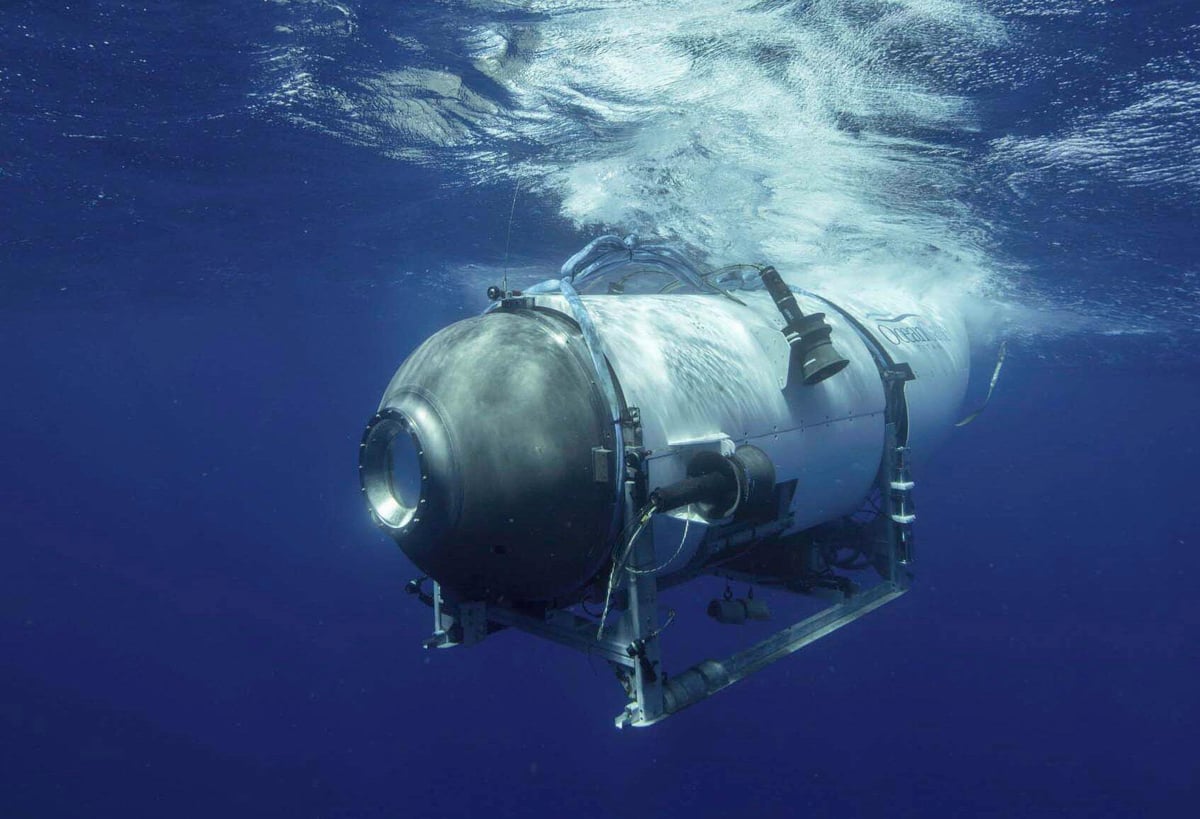
“The loss of the Titan submersible holds many lessons for Christians today. It is a vivid reminder of where our priorities in life need to be.

On June 18, what started as a routine exploration of the infamous Titanic shipwreck turned deadly. During its dive to the bottom of the North Atlantic, the submersible Titan lost communication and went missing.

Rescuers arrived as quickly as possible to assist in locating the submersible some 12,000 feet below the ocean’s surface.
For four days, the world held its breath and hoped for a miraculous rescue.”   Continue Reading 

From: https://lifehopeandtruth.com/prophecy/blog/three-lessons-from-the-titan-tragedy/?

_________

Was the United States of America Blessed in Its Geography?
Was the United States of America Blessed in Its Geography?“Geography can appear a bit simplistic on the surface. But what happens when we look a little deeper? Was God involved?

On July 4, the United States of America—the world’s most dominant economic and military power—celebrates its Independence Day. This marks the historic date in 1776 when the Declaration of Independence was approved by its Continental Congress.

Although U.S. leadership is being challenged on many fronts, this nation remains one of the leading countries where migrants wish to settle. It is respected as the premier land of personal freedoms and economic opportunity.

But it also evokes hatred among some for the way it has used its power. And also envy, especially from large nations, such as Russia and China, that aspire to global dominance themselves.

The largest nations according to land mass

When one considers the basic geographical features of the U.S. compared to other nations, the facts are pretty basic. In terms of size, Worldometers.info lists the U.S. as the fourth-largest country in the world—just over half the total area of Russia, which is by far the largest country. Canada, the second-largest, and China, the third-largest, have just slightly more territory than the U.S.

If all geography were equal, the nation with the most real estate should lead the world in pretty much everything, and the other nations should fall in line according to their size. But as we will see, not all geography is equal.

The largest nations by population

Before proceeding, we should note that some might wonder if population matters when it comes to determining a nation’s prominence. Worldometers.info lists China as the most populous nation, with a population of more than 1.4 billion, representing 18.5 percent of the world’s population. However, the United Nations predicts that this year India will pass China to become the world’s most populous nation.

Russia, which has the most land, has only the ninth-largest population.

The U.S. is the third-most-populous country, with 331 million people, a pittance in comparison to China and India, and accounts for just over 4 percent of the world’s population. Population clearly isn’t the primary driver of a nation’s prominence.

Geography, on the other hand, makes a huge difference.

Blessed with navigable waterways

To understand how geography helped America become an economic powerhouse, we need to drop back a couple of centuries to note the effect navigable waterways had on agriculture and transportation.

God did not give the people of the United States of America all these blessings so they could simply enjoy their wealth, while forgetting God and exploiting others. God will hold Americans accountable for their sins and for not being a godly example to others. Prior to the industrial age and globalization, the high cost of transportation limited trade and the growth of cities. Unless a commodity had high value, low bulk and was nonperishable, there was little incentive to move it very far. Transporting a relatively inexpensive item long distances could cost more than the product itself. Most trade was generally local, and cities were limited in size when all the food had to be procured nearby.

But costs plummeted when goods were transported via water. Transporting goods on water has been estimated to use 12 times less energy than doing so on land.

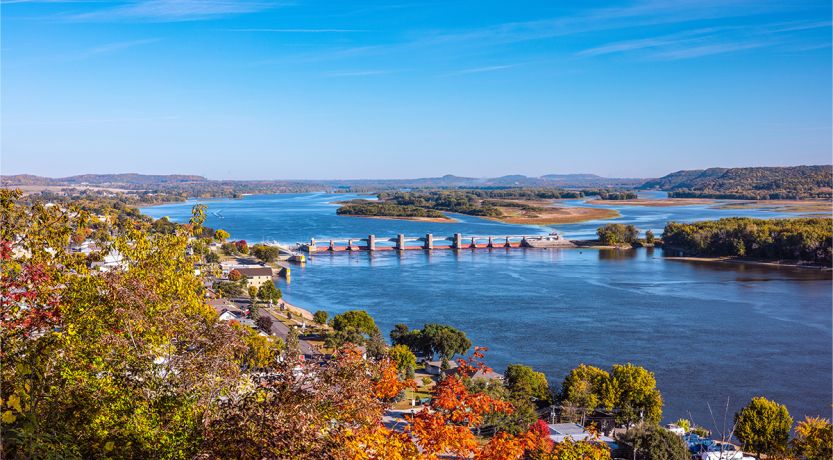
The U.S. is immensely blessed with an abundance of navigable inland waterways. Foreign affairs analyst Tim Marshall in his book Prisoners of Geography explains it like this: “The greater Mississippi basin [in the U.S.] has more miles of navigable river than the rest of the world put together. Nowhere else are there so many rivers whose source is not in highland and whose waters run smoothly all the way to the ocean across vast distances.

“The Mississippi, fed by much of the basin river system, begins near Minneapolis and ends 1,800 miles south in the Gulf of Mexico. So the rivers were the natural conduit for ever-increasing trade, leading to a great port and all using waterborne craft that was, and is, many times cheaper than road travel” (pp. 68-69).

And having a river nearby to irrigate crops is also of tremendous benefit when rain is scarce.

Blessed with abundant farmland

When it comes to raising crops, not all land is equally productive. Russia and Canada, for example, have much land in frigid climates that is not as productive as land in temperate climates. Compared to the other larger countries in the world, the U.S. has the bulk of its agricultural real estate in latitudes that are optimal for growing food.

“The United States has more high-quality, temperate-zone, arable farmland than any other country and its entire agricultural supply chain is contained within North America. This makes the United States the world’s largest agricultural producer and exporter” (The End of the World Is Just the Beginning, Peter Zeihan, p. 89).

Blessed with abundant energy

With its abundant natural resources, the U.S. is capable of energy independence. The shale revolution allowed the U.S. to become the world’s largest oil producer. It easily has the potential to supply all of its own needs and export the excess. Using fossil fuels, natural gas and coal, the U.S. has “the lowest unsubsidized electricity costs in the world” (p. 90).

The U.S. is the second-largest solar energy producer in the world. As well, “the positioning of its mountains compared to its coasts gives it more wind power potential than any other country” (p. 90).

Blessed with natural security boundaries

In regard to security, the fewer nations a country has on its borders, the easier it can be to remain at peace. Geography can be of great help as well. The U.S. has great oceans to its east and to its west that would make it difficult for hostile nations to mount a successful invasion.

This unprecedented degree of security has given the U.S. room to maneuver and even a margin for error in international relations and allowed the country to blossom economically.

Challenging weather because of geography

As a negative, the U.S. experiences some of the worst weather catastrophes in the world because of its geography. Science writer Seth Borenstein says, “Blame geography for the U.S. getting hit by stronger, costlier, more varied and frequent extreme weather than anywhere on the planet . . .

“Two oceans, the Gulf of Mexico, the Rocky Mountains, jutting peninsulas like Florida, clashing storm fronts and the jet stream combine to naturally brew the nastiest of weather” (“Why the U.S. Is Leading the World in Extreme Weather Catastrophes,” April 2, 2023).

God determines the boundaries of nations

Nasty weather aside, some would say the U.S. won the lottery in terms of its geography. But it wasn’t luck that gave the U.S. such choice real estate. The Bible reveals that God determines the boundaries of nations.

In addressing first-century intellectuals in Athens, Paul explained who the God of the Bible is. Among other key facts, Paul noted that God “has made from one blood every nation of men to dwell on all the face of the earth, and has determined their preappointed times and the boundaries of their dwellings” (Acts 17:26).

Occasionally the boundaries of nations change, but God remains the sovereign power. Changes are subject to His will and the actions of the people involved (Deuteronomy 28:1; 2 Chronicles 20:6; Daniel 4:35).

So why did God give the U.S. so many geographical blessings?

Blessings to Abraham

Those of us producing Discern magazine believe the reason the U.S. has so many blessings, including those of geography, goes back to promises God made to Abraham almost 4,000 years ago. We believe the territory of the United States was given to descendants of this ancient patriarch.

While space in this article doesn’t permit a thorough explanation, consider just a few of the things the Bible tells us about the descendants of Abraham.

  • God said Abraham’s descendants would grow into a great multitude of people (Genesis 15:5).
  • In the end time some of these peoples would become “a multitude of nations” and others a single great nation (Genesis 48:19).
  • These peoples who would become a multitude of nations and a great single nation were also promised economic prosperity and military strength (Genesis 49:22-26).
  • Moses prophesied the descendants of Joseph would be given immense agricultural blessings that would include “the precious things of heaven, with the dew, and the deep lying beneath . . . with the precious things of the earth and its fullness” (Deuteronomy 33:13, 16).
  • God expected Abraham’s descendants to be a godly example and said that He would bless them for obedience to His law and punish them for disobedience (Deuteronomy 28:1, 15).
  • Eventually, God will bless all peoples and nations through these people (Genesis 12:1-3).

It’s important to note, however, that God did not give the people of the United States of America all these blessings so they could simply enjoy their wealth, while forgetting God and exploiting others. God will hold Americans accountable for their sins and for not being a godly example to others.”  From: https://lifehopeandtruth.com/prophecy/america-in-prophecy/united-states-blessed-in-geography/?

_______

Preventing Wrinkles with Diet

What dietary intervention may significantly protect against wrinkles in the crow’s foot area around the eyes?

Transcript of video at: https://nutritionfacts.org/video/preventing-wrinkles-with-diet/

Below is an approximation of this video’s audio content. To see any graphs, charts, graphics, images, and quotes to which Dr. Greger may be referring, watch the above video.

“Eating healthier can produce healthier skin. But people don’t care about microscopic changes. What about overt, visible-to-the-naked-eye changes?

The extent of facial wrinkles in the crow’s foot area was determined by observation, using the Daniell scale, in 716 women. This is the scoring system they’re talking about; it’s a scale of one through six; six being the worst. So, what seemed to help the most? “In the present study, a higher intake of green and yellow vegetables was associated with decreased facial wrinkling. Those eating less than a serving of green and yellow vegetables averaged a score of three; those eating two or more servings a day, averaged a two.”

What really excited the researchers was the potential for these studies to promote a healthy diet. I mean, eating fruits and vegetables to prevent cancer and heart disease—who cares? But, wrinkles on the other hand…””  From: https://nutritionfacts.org/video/preventing-wrinkles-with-diet/

______

Hi Folks,

I did not have time to post last week, I was very busy moving back to Conroe, TX.  Home again!!

______

Sunday, November 29, 2020

Gratitude. A Wrathful Man Stirs Up Strife. Can a Nation Turn Back to God? Update.

Gratitude.

“We live at the time in man's history where we understand as never before the wonders of life.

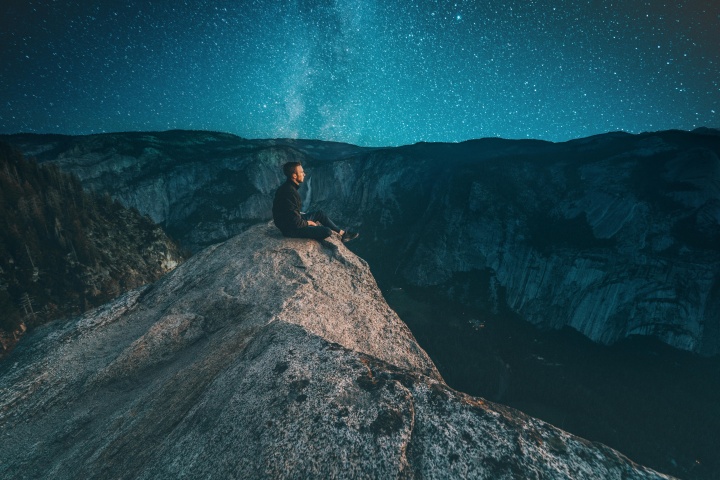
A young man sitting on a rock looking at the night sky.Cristofer Jeschke/Unsplash

Without gratitude to God and others in our lives, we are dark and dismal with no inner light. Turn on your light and be thankful.

Plants, animals, birds, fish and mankind—all are wonderfully made. The more we study and learn about how life continues, the more amazed we ought to be. Our hearts beat without our interference, our food digests while we do not even think about it, our blood carried oxygen and food to each cell and removes waste without stopping for a "thank you."

But we have a mind that can appreciate that every breath we breathe, every electric impulse that is our brain, every beat of our heart and all we are have been given to us from our Creator. God does not stand by and seek our appreciation, but we are blind, deaf and dumb indeed if our hearts do not burst with thanksgiving and gratitude.

Gratitude is a natural flower that grows within the person who considers who and what he is and where he is going. David wrote of being thankful in Psalm 100 and Paul simply said, "Be ye thankful" (Colossians 3:15). Without gratitude to God and others in our lives, we are dark and dismal with no inner light. Turn on your light and be thankful.” From: https://www.ucg.org/beyond-today/blogs/this-is-the-way/gratitude

_______    

A Wrathful Man Stirs Up Strife

Proverbs 15:18

“A wrathful man stirs up strife, but he who is slow to anger allays contention.

Once again, wise King Solomon points out the dangers of anger and contention. Being slow to anger can prevent a multitude of problems. This is demonstrated in many ways, but can be especially seen in our words (see Proverbs 15:1, for example).

For more about dealing with anger, see “A Biblical Look at Anger Management.” For more about being a peacemaker, see “Blessed Are the Peacemakers.”

For more about wise communication, see the helpful article in our section on “Communication.” From: https://lifehopeandtruth.com/bible/blog/a-wrathful-man-stirs-up-strife/?

________

Can a Nation Turn Back to God?

“God makes His standards of behavior—and the consequences for violating those standards—crystal clear in the pages of the Bible. God demonstrates time and again that His standards of behavior—summarized in the Ten Commandments (Exodus 20) and what Jesus Christ described as the two “great commandments” (see Mark 12:29-31)—exist for the good of humanity. When practiced, they lead to a far higher quality of life, both now and in the life to come.

God allows free will, the capacity for men and women to make choices. God invites, even commands, people to choose life and the pathway that leads to life. But He allows people to make wrong choices—and suffer the consequences, even through succeeding generations.

Much of the Bible represents a call to action to turn to His way of life, both on a national scale and individually.

Happily, the Bible records several instances where people—both collectively as a nation and personally—heeded this divine call to action. People chose to give up their old way of living and began to “think differently”—the Greek word translated “repent” actually meaning to change one’s mind. When they changed the way they were thinking, surrendered to God and reformed their behavior, amazing things happened.

But is this limited to God’s chosen nation of Israel? What about other nations or peoples?

God’s standards are omnipresent. His way of life is a living way. And the Bible records God’s intervention and pronouncements involving empires and countries large and small. Moreover, God has preserved a specific and important example of another nation humbling itself before Him.

This example is that of a major economic and societal power of biblical times—ancient Nineveh. Nineveh represents one of the oldest and greatest cities of the ancient world. It served as the capital of the Assyrian Empire, reaching its zenith around 700 B.C.

But during that time, in the face of the cruel actions of the city and its inhabitants, God sent a prophet to declare the depravity of the city’s transgressions and announce coming divine judgment. His instructions to the prophet are preserved for us: “Arise, go to Nineveh, that great city, and call out against it, for their evil has come up before me” (Jonah 1:2, English Standard Version).

God sent the prophet Jonah, whose mission and existence was validated by none other than Jesus Christ Himself (Matthew 12:39-42). Jonah came to that great ancient city and declared its soon-coming demise: “Yet forty days, and Nineveh shall be overthrown” (Jonah 3:4, ESV, emphasis added throughout).

Then something amazing happened: “The people of Nineveh believed God” (verse 6). Alarmed at the prospect of suffering vast destruction, the entire city—“from the greatest of them to the least”—took part in a citywide fast. The people were committed to showing God they were willing to change. The king even issued a proclamation commanding the city’s inhabitants to “call out mightily to God” (verse 8). His directive? “Let everyone turn from his evil way and from the violence that is in his hands.”

Even though Nineveh’s doom had been declared, the king hoped: “Who knows? God may turn and relent and turn from his fierce anger, so that we may not perish” (verse 9).

The result? “When God saw what they did, how they turned from their evil way, God relented of the disaster that he had said he would do to them, and he did not do it” (verse 10). The people of the great city of Nineveh presented themselves before God in a repentant attitude and were spared!

As Jesus Himself confirmed, “The men of Nineveh … repented [changed their mind and behavior] at the preaching of Jonah” (Matthew 12:41, ESV). Jesus does not refer to the “fairy tale of Jonah.” He confirms that everything in the book of Jonah is real history—it really happened!

The same is true today! Any nation or peoples—whether in the Americas, Europe, Asia or Africa—can save themselves by turning to God. “I have no pleasure in the death of anyone, declares the Lord God; so turn, and live” (Ezekiel 18:32, ESV).

Even though the Bible prophesies economic calamity and widespread destruction before the return of Jesus Christ, God provides a way out or through. While these words were specifically given to Israel, they apply to all of mankind: “If my people who are called by my name humble themselves, and pray and seek my face and turn from their wicked ways, then I will hear from heaven and will forgive their sin and heal their land” (2 Chronicles 7:14, ESV).

What about you? Don’t wait for others in your nation to turn and seek God. As the apostle Peter urges you and everyone in Acts 2:40 (ESV), “Save yourselves from this crooked generation!””

_______

Update

On Tuesday I went on the bus to College Station to my ophthalmologist appointment. My daughter is able to drive short distances now since her accident, so she met me there, but she wasn’t feeling very well so we only had a short visit before the bus came to take me home again.   I have to have more surgery on my eyes in January.

We three Sabbath keepers had our usual Bible study on Friday morning. Sherry and I had intended to go to my old church in Willis on the Sabbath morning, but bad storms were forecast, and the pastor decided that it would be safer if everyone stayed home. Many of that congregation travel quite a way to attend. That was a shame because I was looking forward to seeing them all again and had prepared several dishes for the potluck. Organic chicken salad, lentil bread, honeydew melon, yellow squash and cucumber salad.  All foods which did not require spending time in the church’s kitchen.  The pastor’s wife doesn’t go anymore, she is not well.

So Sherry and I went to the Sabbath School Bible study at the church around the corner for the Sabbath day.

Wednesday, January 15, 2014

Harlequin Duck. Bird Nests. New Wings. Kirtland's Warbler. Hooded Mergansers. Spoon-billed Sandpiper. Emptying the Skies. BirdNote: Blackbird, by Paul McCartney. First Super Bowl.


For "Winged Wednesday":

Cold-weather Clown: Harlequin Duck

http://org2.salsalabs.com/dia/track.jsp?v=2&c=OOYyUZW6j8riYk+HQnN9p4Obc5QQNFeLhttp://org2.salsalabs.com/dia/track.jsp?v=2&c=hzcTsMN5b7qbG3JjNv+u0IObc5QQNFeL-

"The Harlequin Duck borrows its name from the Italian comedic character, the harlequin, who wears brightly colored clothes. "Lords and Ladies" is another nickname, again because of the vivid coloration of the males. These ducks gives distinctly unduck-like squeaks when interacting, the source of yet another local name: Sea Mouse.
Although the male’s coloration is stunning, females and immature birds are more subdued, or cryptically colored, for protection against predators.
George Wallace, ABC’s Vice President of Oceans and Islands, remembers: “I saw these birds every day when I was a salmon fishing guide in Alaska. I was always amazed at the ability of these birds to literally outrun a skiff up a river running eight miles per hour. It’s really a lovely sight to see a female with a string of tiny fluff-ball chicks sprinting over the surface of water and then diving for cover under a fallen log.”

The eastern North American population was in decline but is slowly recovering. It is listed as threatened in Maine and is considered a species of special concern in Canada and the western United States."
How do Harlequin Ducks resemble colorful corks? Read more>>

_______

17 bizarre and beautiful bird nests

"From tiny hummingbird nests to massive weaver nests that encompass entire treetops, take a photographic tour of these birds' impressive creations.

Bird nests come in a variety of shapes and sizes, from burrows in the ground to tiny cups perched high in tree branches. We've rounded up photos of some of the most fascinating nests on the planet, as well as a few unusual places for a bird to build a home."

black-capped social weaver nests in an acacia tree

Black-capped social weaver nests hang from an acacia tree.  (Photo: Wild Horizon/Getty Images)

More at:  http://www.mnn.com/earth-matters/wilderness-resources/stories/17-bizarre-and-beautiful-bird-nests

_______

Hawk receives new wings at Raptor Center

ST. PAUL, Minn. - "A young red-tailed hawk flew into a window near downtown St. Paul and suffered trauma to the head and damage to her left wing.  Lori Arent, clinic manager said, "She ended up breaking the tips off many of these outer feathers which really now inhibits her ability to fly." 

Arent clipped the damaged feathers and grafted the healthy new ones using bamboo sticks and epoxy glue. Arent expects the bird to be healthy enough for release as early as next week. "If we weren't able to do this process for this bird it would be here probably until next August or September," Arent said."  More in video:

And more: http://www.kare11.com/news/article/1044329/391/Hawk-receives-new-wings-at-Raptor-Center

______

Kirtland's Warbler: Mississippi Flyway Stand-out Species

image"Over the last three weeks, BirdNote has highlighted special birds in each of the North American flyways: Wood Thrush in the Atlantic, Whooping Crane in the Central, and Calliope Hummingbird in the Pacific Flyway.

Which special bird did BirdNote select for our fourth, and final, installment?

The Mississippi Flyway Standout Species: Kirtland's Warbler

KIWA_male_Laura_Gooch_610px

Kirtland's Warbler © Laura Gooch

The Kirtland's Warbler is one of the rarest birds in North America.  The reason? Its breeding range is limited to a few locations in the Mississippi flyway, in very specific habitat, in Michigan, Wisconsin, and Ontario.

Kirtland's Warblers are picky about their nest sites. They require locations under jack pines that are more than five years old – but not more than 15 years old. And the sites must be in well-drained, sandy soil. Consequently, the Kirtland's Warbler has one of the smallest breeding ranges of any bird in North America.

Historically, forest fires benefited Kirtland's Warblers by clearing out older trees, causing cones to release seeds, and enriching the soil for young jack pines to grow.  But fire suppression and an influx of Brown-headed Cowbirds, which lay their eggs in the nests of other songbirds, nearly drove the Kirtland's Warbler to extinction. Only 167 singing males were found during a survey in 1987.

Fortunately, conservation efforts that began in the 1950's are paying off. Today, people come from all over the world to see Kirtland's Warblers in their native habitat in Michigan. Thankfully, as of 2012, there are over 2,000 singing males to welcome them!"

image

Listen to BirdNote shows about the Kirtland's Warbler:

Counting Kirtland's Warblers
Birds and Climate Change -  Places for Birds to Go   Kingdom of Rarities - With Eric Dinerstein

________

Hooded Mergansers - Getting Frisky

"It's winter, but many species of ducks are already preparing for spring.

Nearly all ducks are seasonally monogamous, forming pair bonds with new partners every imageyear. Go to your local pond, lake, or beach during the winter, and you may be lucky enough to see male mergansers, goldeneyes, or Buffleheads, displaying to attract the attention of females. If a female likes what she sees, the two will remain together until they mate the following spring. For migratory species, this requires flying together for hundreds -- or even thousands -- of miles back to their breeding grounds."  More and many pictures at: http://birdnote.org/blog/2014/01/hooded-mergansers-getting-frisky

_______

Spoon-billed Sandpiper: Hatch.

image "...The first moments of life at a windswept Spoon-billed Sandpiper nest. Video includes commentary by the Cornell Lab’s Gerrit Vyn. Filmed July 7, 2011, near Meinypilgyno, Chukotka, Russia."

Watch the first ever footage of this critically endangered species nesting:

From me: I didn't realize how endangered and special these birds are.  The chicks wander around feeding themselves as soon as they come out of the egg.

________

Emptying the Skies: Important Film about Songbirds in the Mediterranean

“Emptying the Skies,” a film inspired by a New Yorker article penned by award-winning novelist and ABC Board member Jonathan Franzen. The film follows an intrepid group of bird-lovers who risk life and limb to disrupt the poaching of millions of songbirds trapped to be served as illegal delicacies at restaurants. The bird-lovers free as many birds as possible."

Video about this at: http://bcove.me/f5ef835w

Much more at: http://www.abcbirds.org/newsandreports/emptyingtheskies.html

________

image

BirdNote: Blackbird, by Paul McCartney


Upcoming Shows

http://cts.vresp.com/c/?BirdNote/886931d15b/b0eaa8d8cc/781ab150bb

Great Gray Owl SUNDAY Photographing The Great Gray Owl Featuring Paul Bannick LISTEN NOW ►

http://cts.vresp.com/c/?BirdNote/886931d15b/b0eaa8d8cc/e2005d8461

Donald and Daisy MONDAY Donald Duck - The Duck in the Sailor Suit by Bob Sundstrom  LISTEN NOW

http://cts.vresp.com/c/?BirdNote/886931d15b/b0eaa8d8cc/0f83d881e1

Northern Beardless Tyrannulet TUESDAY Winter Sounds Of the Lower Rio Grande by Bob Sundstrom   LISTEN NOW ►

http://cts.vresp.com/c/?BirdNote/886931d15b/b0eaa8d8cc/19ad9b4150

Eurasian Blackbird WEDNESDAY Paul McCartney's Blackbird  Written by Ellen Blackstone LISTEN NOW ►

http://cts.vresp.com/c/?BirdNote/886931d15b/b0eaa8d8cc/ca0674ecfc

Cerulean Warbler THURSDAY Recording Cerulean Warblers Featuring Charlotte Goedsche, Audubon North Carolina LISTEN NOW

http://cts.vresp.com/c/?BirdNote/886931d15b/b0eaa8d8cc/400d51cf96

Spoon-billed Sandpiper FRIDAY Photographing Spoon-billed Sandpipers in South Korea Featuring Adam Sedgley and Gerrit Vyn, Cornell Lab of Ornithology LISTEN NOW ►

http://cts.vresp.com/c/?BirdNote/886931d15b/b0eaa8d8cc/a62062777c

Feathers of a Brown Pelican SATURDAY How Feathers Insulate by Frances Wood LISTEN NOW

______

On This Day:

Packers face Chiefs in first Super Bowl, Jan 15, 1967:

"On this day in 1967, at the Los Angeles Coliseum, the Green Bay Packers beat the Kansas City Chiefs in the first-ever world championship game of American football.

image In that historic first game--played before a non-sell-out crowd of 61,946 people--Green Bay scored three touchdowns in the second half to defeat Kansas City 35-10. Led by MVP quarterback Bart Starr, the Packers benefited from Max McGee's stellar receiving and a key interception by safety Willie Wood. For their win, each member of the Packers collected $15,000: the largest single-game share in the history of team sports.

Super Bowl Sunday has become an unofficial American holiday, complete with parties, betting pools and excessive consumption of food and drink. On average, 80 to 90 million people are tuned into the game on TV at any given moment, while some 130-140 million watch at least some part of the game. The commercials shown during the game have become an attraction in themselves, with TV networks charging as much as $2.5 million for a 30-second spot and companies making more expensive, high-concept ads each year."

_______

Yesterday:

Ray came over and we watered all my aloe vera plants.  The shut-off for the outside faucets had to be turned on to do that, and then turned off again as it supposed to freeze again on Friday night.  It takes two people to hold the two large patio doors, which are the temporary green house, that are leaning horizontally against the storeroom wall. It is working a lot better than expected.

Then while Ray washed my van, I weeded and raked the front flower bed.  Some of the bushes had frozen and looked scruffy, so I cut them back.  They will grow again in the Spring.

One of our SPCA foster moms sent a pleading email for me to take some of her foster kittens off her hands, as she had too many.  Our fosters parents aren't supposed to foster more than 12 animals.  Even that many is difficult to take care of properly. Please spay and neuter your pets! 

As I agreed to take some, she offered to send me pictures so that I could choose.  I said, 'I don't care what they look like, it's the personality that counts, just like people!'  They should be arriving in the next few days.

Tuesday, January 7, 2014

Glen Rose, TX. Dinosaurs to Indian Country. First U.S. Presidential Election. Clinton Impeachment Trial. C O L D !


For "Travel Tuesday", let's visit the Glen Rose area again, it is in the Texas Prairies and Lakes region.

#Region.R_Description#"The Texas Prairies and Lakes Region offers a wide variety of destinations & attractions, from the fast-paced cosmopolitan excitement of the Dallas/Fort Worth Metroplex with the best in shopping, dining & entertainment, to the beautiful lakes & laid-back country lifestyles found throughout the region. Discover the Excitement of the Texas Prairies & Lakes."

Glen Rose Top Ten Fun Things To See & Do

image" Glen Rose is a fun and quaint town that was established as a trading post in 1849. The city is located at a picturesque spot on the Paluxy River, just above its meeting with the Brazos River.

We love Glen Rose and have spent a number of weekends there in our RV - to learn about one of the trips, read this Thank God For Weekends article.

Here is our list of favorite things to see and do in Glen Rose.Squaw Valley Golf Course

  • Golf - Squaw Valley Golf Course is located at the north eastern edge of town and they have 18 holes of very good golf. 17 miles to the north is another great golf course in Granbury - Harbor Lakes which is ranked in our Top Twenty Favorite Texas Courses. You can read a review of each of these golf course on our Golf Course Reviews Page.
  • Spend the Night - if you really want to enjoy Glen Rose and all it has to offer, you need to spend a couple days exploring. You have a number of excellent choices for for overnight lodging:
  • Visit a Nuclear Power Plant - Comanche Peak has a very informative information center with an exhibit of a nuclear power plant control room, a film, and more.
  • Enjoy a Special Event - plan your trip around one of the special events at Texas Amphitheater (The Promise, a musical drama of the reenactment of the life of Jesus in the open air amphitheater, is excellent) or horse shows and more at the Expo Center .
  • Hike, Bike, and Explore - Dinosaur Valley imageState Park is a great place to spend some time: hiking or biking the trails; leaning about dinosaurs and checking out their tracks or visiting the exhibits; playing in the Paluxy River; or just enjoying a picnic.
  • image Visit the Museums - Somervell Country Historical Museum depicts local history, fossils, and relics; Creation Evidences Museum includes artifacts and fossil displays, dinosaur footprints and bones, and more; and Barnard Mill and Art Museum is in one of the first structures built in the 1860's and houses art, primitive artifacts, and bronzes.
  • image Tube the Brazos or Play in the Rivers - a few miles north east of Glen Rose on 67 there are canoe and tube outfitters (Rhodes Rentals 254-897-4214) for riding the Brazos (not the most thrilling ride but a fun way to spend a few hours) or fish,   swim, or relax in theimage water.

The kids will enjoy the water and rocks at Big Rocks Park which is close to downtown. image

  • Listen to Some Good Music - Glen Rose is known as the Blue Grass Capital of Texas and throughout the year TresRios and Oakdale Park have bluegrass concerts with some excellent bands and musicians.

    Glen Rose Big Rocks Park

  • Stroll the Downtown Area - Glen Rose has a quaint downtown square featuring shops,restaurants, a museum, and the historic Somervell County Courthouse or go play in the Paluxy River at the park.
  • Feed the Exotic Animals - Fossil Rim Wildlife Center features some of the worlds most endangered animals like white rhino, image cheetah, and Grevy's zebra plus over 60 species that roam on the 2700 acres. You can drive your vehicle through the park and view the animals, some of which will stick their head in the window; stop at the top of the mountain for food, souvenirs, the museum, nature trail, picnic area, and petting zoo; or enjoy the park on one of their special bike safaris."

From: http://www.texasoutside.com/topten/glenrosetopten.html

______

Travels with Grandma...

Preserving the stories, legends & history of Texas for generations to come...

From Dinosaurs to Indian Country and beyond...

"Come & sit a spell, grab a glass of lemonade & some cookies. I want to tell you a story before we take off today. So, sit back and get comfortable…

This story begins over 100 million years ago. It’s a story about dinosaurs wandering wild and free, clomping down the river in a land untouched by man. All that remains are the tracks the three types – acroncanthosarus, pleurocoelus and an unidentified one, left behind. They must have been huge! The tracks range from 12-36” long and 9-24” wide. There are seven sites at Dinosaur Valley State Park where you can see them, and a museum in downtown Glen Rose that tells their history. We’ll stop by the park & take a look, maybe even take our shoes off and go wading in the river and walk in the tracks.

In the time before the white settlers started moving in around the mid 1800’s these lands belonged to the Indians. Like the dinosaurs, they roamed free, hunted buffalo, fished in the Brazos and Paluxy rivers, raised their families and celebrated life and death as free men. The Caddo and the Tonkawa, and sometimes the Apaches and Comanche called this area home.

Then, in 1849, that’s more than 150 years ago, a man named Charles Barnard and his brother George showed up. Charles built the first Indian trading post, a Torrey house, near Comanche Peak. George settled the area nearby. You may have seen the signs on the way to Cleburne - George’s Creek. The Torrey houses and trading activities were an important part of settling this area and an important part of Sam Houston’s peace policy. They did a fair trade business and it is said they also recovered stolen horses and captives from the Indians.

The post was located at Fort Spunky, built near a spring and tribe of peaceful Indians. It was near well traveled Indian highways and a one day ride from Comanche Peak. The Indians used Comanche Peak for a rallying place, campground and lookout. By the 1850’s the Indians had been moved to Fort Belknap and an agricultural center with a cotton gin, gristmill, general store, blacksmith shop and feed store remained. Fort Spunky, was given its name because of the fistfights that broke out, is gone now, but we’ll drive out and see where it was. Quite possibly the roads we’ll be following were the old Indian highways leading the Indians and settlers who traded there to Comanche Peak and Glen Rose.

Charles Barnard moved his trading post to Fort Belknap and returned to the Fort Spunky area in 1859 and built the first store in Glen Rose. A year later he started building a flour and grist mill and called the town Barnard’s Mill. The mill was a busy place. It served as a meeting hall, a dance hall, hospital and gathering spot for the settlers. It is in the process of restoration now and the hospital now hosts an art collection and some beautiful antiques. Barnard sold his mill in 1871 and the wife of TC Jordan wanted to name the town Rose Glen, but in 1872 the residents agreed to call it Glen Rose at a town meeting.

It grew slowly, but a few interesting stories from the times before Fossil Rim, Dinosaur Valley and the nuclear power plant are:

There were abundant mineral spring that brought doctors and healers and soon Glen Rose was known as a health and recreation center. In a letter written in 1902 JH Haney wrote “Our town in county seat of Somervell County and a health resort, i.e. a great number of flowing wells, and the people are coming in swarms from all about and filling our several parks along the Paluxy…” The springs can’t be seen now, but stop at Big Rock Park and look back towards town, and it’s not hard to see why they came.

Another story that I like is about the moonshiners. The laws changed and by the end of the 1800’s the moonshiners moved in, building stills, cooking and selling moonshine. During the Depression (1929-1940) the cedar brakes became known as the “whiskey woods capital of the state” and during the 1920’s it was reputed to be the “Moonshine Capital of Central Texas”. In 1923 the sheriff and county attorney, along with 38 other men, were arrested when the Texas Rangers decided to clean out the moonshiners.

These days Glen Rose has a bustling town square and “modern” development along Hwy 67. We’ll take time to visit the square and see the shops, and historical museum. It is home to the Warm Country Heart Theatre.

Well, that’s enough rambling for now; I’ll tell you more along the way. Put your shoes on and we’ll go exploring. We’re going to head west on Hwy 377 to Tolar, then take a left onto Hwy 56 on our way to Glen Rose. So let’s pack a picnic, load up the kids, fill up the gas tank, buckle up and we’ll be off…

Just as you get to Tolar take a left and go south on FM56. Tolar was settled in the 1890’s and a trade center for local farmers by the turn of the century. We are going up the winding hills towards the back of Comanche Peak – Indian country. Look on your right and you will see all that remains of an old family homestead…a chimney, leaning a little with age.. Stop and look out across the countryside and think about the times when the settlers first came and settled all alone out here, far from friends and family in this strange land with Indians all around.

The Panther Branch Post Office that is in downtown Granbury was found in an old frame house near here in 1968. It was known as the “eight mile stage stop” because the stagecoach made regular stops with both mail and passengers. Can you imagine riding across these rough hills in a bouncy stage coach on rutted paths and no paved roads, no air conditioning?

We’re continuing down Panther Branch Road another few miles and taking a right on to Hwy 51. Look to the right and you will see a barn. On the left you will see the remains of an old family homestead. It once stood proud on its hill – house and barns and outbuildings. Now you can see the sky coming through the buildings, but it still stands as a reminder of times gone by.

At the fork in the road we’re staying to the left, back on to FM 56 towards Glen Rose. Another old homestead is on the right a few miles down…with its windmill standing tall, remains of the piping that once led to the cisterns just to the south of the house. They’re overgrown now, but stop & listen you just might hear the laughter of children skinny-dipping the summer heat away in them.

Watch out the right side as you go up the hills. At the tops of the peaks you will begin to see Seven Knobs – count them. There are seven cone shaped, cedar covered knobs about 2 miles south of Glen Rose. They distinctly rise above the tops of the distant hills.

Take a right at Hwy 67 and a right on Park Road 59 into the land of Dinosaurs and the tracks they left behind - Dinosaur Valley State Park. The girls had a great time wading in the river and discovering the 113 million year old tracks.

Too soon we headed back down the road on Hwy51, crossing Hwy67 to Bernard St. Stop off at one of the best kept secrets in Glen Rose – The Barnard Mill Museum. The old hospital section of Barnard’s Mill is home of the private art collection of Richard H. Moore, Jr. It is a great place for little ones. The girls were fascinated by the drawings, paintings, bronze sculptures and Indian artifacts.

Take time to wander the Mill grounds, wander under the huge old trees and look up top and see the rifle slits that were used to protect the settlers from Indian raids. The mill used to be a busy place and was the gathering place for local settlers. If you find the mill open you can go inside and see the furnishings of the time period.

Leaving the mill, turn right and stop at the Glen Rose square. It’s a bustling place full of unique shops and antique stores, but that isn’t what the girls enjoyed the most; it was the Somervell County Historical museum, and the farmers on the square.

The museum is full of antiques from early Somervell County history and fossils and dinosaur history. It’s a “must see” on any trip to Glen Rose. The staff is warm and friendly and loves to answer questions.

You can’t leave the square without stopping to buy from the farmer’s trucks. The best watermelons, peaches and homegrown tomatoes can be found there. Not to mention a story or two. Mr. Murray (sorry I don’t remember his last name!) comes all the way from Eulogy and has been for over twenty years, carrying on a tradition that has brought farmers and their wares for decades.

Going south on FM56, take a left on FM202 to Rock Creek Cemetery. It is the first on our “old cemetery stops” today. My grandchildren love to explore them and are quick to point out the signs and it’s a challenge to see who can find the oldest marker and figure out how old it is (Ahhhh- math in the summer time and they don’t even know it!) The oldest one we found dated back to 1839. The cemetery and church are some of the few remains of a community established prior to 1880.

Back on FM56 go south through Eulogy, left on CR 1175. When you’re on Hwy56 just outside of Eulogy be sure to keep an eye out for the deer grazing under the trees. There are new babies that are fun to pull off the road and watch a while.

CR1175 crosses the Brazos River on the “new bridge”, but make the turn around at the end and get out, stretch your legs and explore the old iron bridge. It really is a work of art and you can’t catch the views or feel the wind blowing from the car. I’ve heard that this was once a ferry crossing. Do you know what a ferry is? It is a flat boat that people loaded themselves and their belongings on, and then the owner pulled everything across the river by a rope strung between the two sides.

Heading straight off the bridge, back on CR1175, will take us winding through the countryside (it turns into CR1119) and dead-ends into FM200. We’ll drive north a while and stop at the Nemo post office and take in the view. All that remains now are a few churches and a post office, but it was a thriving community around 1858 when it was settled. When the people gathered to name it, they wanted to name it Johnson Station, after Jimmie Johnson who found the area, but someone from the post office suggested a shorter name. One man stood up and said “Nemo” the Latin word for “no one” because if Jimmie Johnson’s name wasn’t good enough no one’s was.

We’ll turn around here and go back to FM 199, take a left and, if you haven’t had enough of the countryside, cross Hwy 67 and head into Fort Spunky country. If you want to see it, you better go soon; like a lot of the countryside around here it is quickly disappearing. The fort was located approximately at the intersection of FM 199 and FM 2174. To view the land as it used to be and have a beautiful view of the Brazos valley, turn right on FM 2174 and follow it all the way to the end. Keep going when it turns to a gravel road (CR 326). Once a simple one lane road, it’s wider now and the gas trucks are beating a path to the well at the end of the road. For us, it was worth the trip to stand at the end of the road and look out across the valley and take a few minutes to talk about what life would have been like if you lived when this was Indian country and the settlers were moving in, and what it would have been like to live as far away from anyone as the barn roof top in the distance.

After you’ve taken in the view (or if you didn’t make the trip), go west on HWY67 to FM200, take a right and cut through Rainbow on your way back to Hwy144 and home. By the 1890’s a community had developed here. Rumor has it the day the community gathered together to choose a name, a thunderstorm blew through and the residents were so struck by the rainbow that followed they named the town after it.

Till next time…Love, Grandma."   From: http://www.texasoutside.com/twg/2.html

------

I hope you enjoyed our second visit to Glen Rose, here is the first: http://pennys-tuppence.blogspot.com/2012/06/glen-rose-and-granbury-tx-dinosaur.html .  PS: Binkie was picked up by a relative of her owner and found a better home.

______

On This Day:

First U.S. presidential election, Jan 7, 1789:

"On this day in 1789, America's first presidential election is held. Voters cast ballots to choose state electors; only white men who owned property were allowed to vote. As expected, George Washington won the election and was sworn into office on April 30, 1789.

As it did in 1789, the United States still uses the Electoral College system, established by the U.S. Constitution, which today gives all American citizens over the age of 18 the right to vote for electors, who in turn vote for the president. The president and vice president are the only elected federal officials chosen by the Electoral College instead of by direct popular vote.

Today political parties usually nominate their slate of electors at their state conventions or by a vote of the party's central state committee, with party loyalists often being picked for the job. Members of the U.S. Congress, though, can’t be electors. Each state is allowed to choose as many electors as it has senators and representatives in Congress. The District of Columbia has 3 electors. During a presidential election year, on Election Day (the first Tuesday after the first Monday in November), the electors from the party that gets the most popular votes are elected in a winner-take-all-system, with the exception of Maine and Nebraska, which allocate electors proportionally. In order to win the presidency, a candidate needs a majority of 270 electoral votes out of a possible 538.

On the first Monday after the second Wednesday in December of a presidential election year, each state's electors meet, usually in their state capitol, and simultaneously cast their ballots nationwide. This is largely ceremonial: Because electors nearly always vote with their party, presidential election are essentially decided on Election Day. Although electors aren't constitutionally mandated to vote for the winner of the popular vote in their state, it is demanded by tradition and required by law in 26 states and the District of Columbia (in some states, violating this rule is punishable by $1,000 fine). Historically, over 99 percent of all electors have cast their ballots in line with the voters. On January 6, as a formality, the electoral votes are counted before Congress and on January 20, the commander in chief is sworn into office.

Critics of the Electoral College argue that the winner-take-all system makes it possible for a candidate to be elected president even if he gets fewer popular votes than his opponent. This happened in the elections of 1876, 1888 and 2000. However, supporters contend that if the Electoral College were done away with, heavily populated states such as California and Texas might decide every election and issues important to voters in smaller states would be ignored."

______

Clinton impeachment trial begins, Jan 7, 1999:

"On January 7, 1999, the impeachment trial of President Bill Clinton, formally charged with lying under oath and obstructing justice, begins in the Senate. As instructed in Article 1 of the U.S. Constitution, Supreme Court Chief Justice William Rehnquist was sworn in to preside, and the senators were sworn in as jurors. Congress had only attempted to remove a president on one other occasion: the 1868 impeachment trial of President Andrew Johnson, who incurred the Republican Party's wrath after he proposed a conservative Reconstruction plan.

In four hours of closed-door testimony, conducted in the Map Room of the White House, Clinton spoke live via closed-circuit television to a grand jury in a nearby federal courthouse. He was the first sitting president ever to testify before a grand jury investigating his conduct. That evening, President Clinton also gave a four-minute televised address to the nation in which he admitted he had an inappropriate relationship with Lewinsky. In the brief speech, which was wrought with legalisms, the word "sex" was never spoken, and the word "regret" was used only in reference to his admission that he misled the public and his family.

Clinton, the second president in American history to be impeached, vowed to finish his term. On January 7, 1999, the impeachment trial began. Five weeks later, on February 12, the Senate voted on whether to remove Clinton from office. Clinton was acquitted on both articles of impeachment. The prosecution needed a two-thirds majority to convict but failed to achieve even a bare majority. Rejecting the first charge of perjury, 45 Democrats and 10 Republicans voted "not guilty," and on the charge of obstruction of justice the Senate was split 50-50. After the trial concluded, President Clinton said he was "profoundly sorry" for the burden he imposed on Congress and the American people."

______

Yesterday:

It took until about 10.00am for the power to stop blinking, but even though it was inconvenient having to restart the computer every few minutes, at least we weren't without heat for all those hours.  As cold as it was here, that would have been awful.

There wasn't much anyone wanted to do outside, and I just stayed pretty close to this computer researching different things. 

Misty didn't protest when she had to wear her coat when we went out.  Each time I checked to see if the wind had blown the covers off my thousands of aloe plants. I clipped some hair off Misty as her face was getting shaggy, but I didn't cut her hair short, or bathe her, not with the temperature in the 20's most of the day. 

Saturday, November 30, 2013

Turkey Gumbo. FBI’s Shopping Tips. Heart Attack Symptoms. Coal Plant Retirement. "Ghost Fishing". Toys R Us Got It Wrong! Unsafe At Any Speed. Brady Bill.


For "Summary Saturday":  News, some new, some old:

How to make Turkey Gumbo

"Yield:  4 servings

Measure
Ingredient

2 tablespoons
Butter or coconut oil

Okra is a main ingredient in all gumbos, and with good reason, its a natural soup thickener.½ pounds
Fresh or frozen okra 1" pcs.

2 cups
Chopped celery

1 medium
Onion, chopped

1 small
Sweet green, yellow or red pepper, chopped


Garlic cloves, minced

8 ounces
Can tomato paste


Ripe tomatoes peeled OR

16 oz can peeled tomatoes

2 cups
Water

2 cups
Chopped cooked turkey

¾ teaspoon
Gumbo file powder

Cooked rice, preferably brown.

----

Melt the butter or coconut oil in a large skillet. Add the okra. Sauté until the okra loses its shiny appearance, about 5 minutes. Remove the okra pieces to a bowl. Add the celery, onion, green pepper, and garlic to the skillet.
Cook over medium heat until the onion is transparent. Add the tomato paste, tomatoes, water, okra mixture, and turkey. Cook over low heat 10 minutes or until turkey is hot. Add the file powder. Stir to blend. Spoon over the rice in soup bowls. Or put rice on top with an ice cream scoop."


¼ recipe = 255 calories, 3 lean meat, 1 bread, 1 vegetable 19 grams carbohydrate, 25 grams protein, 10 grams fat, 176 mg sodium, 1102 mg potassium, 54 mg cholesterol.

From Me:  As I don't eat pork, this recipe doesn't have any sausage in it.  You can add some as you see fit.
_______

FBI’s Online Holiday Shopping Tips

"The FBI reminds holiday shoppers to beware of cyber criminals who are out to steal money and personal information. Scammers use many techniques to defraud consumers, from phishing e-mails offering too good to be true deals on brand-name merchandise to offering quick cash to victims who will re-ship packages to additional destinations. Previously reported scams are still being executed today.

Bank transactions and correspondence from financial institutions should also be closely reviewed. Bank accounts can often serve as a target for criminals to initiate account takeovers or commit identity theft by creating new accounts in the victims’ name. Consumers should never click on a link embedded in an e-mail from their bank, but rather open a new webpage and manually enter the URL (web address), because phishing scams often start with phony e-mails that feature the bank’s name and logo."  More at: http://montgomerycountypolicereporter.com/fbis-online-holiday-shopping-tips/

______

If a Heart Attack Strikes, Will You Recognize the Symptoms?

"Do you know the symptoms of a heart attack? Would you call 9-1-1 if you or someone you were with was experiencing the warning signs?

Many people who suffer a heart attack either don’t recognize the signs or dismiss them. Although “It can’t be happening to me!” is a natural reaction, it’s in your best interest to play it safe and get checked out. To improve the odds of survival and of preserving heart muscle function, it is crucial to –

Recognize the symptoms, which are most typically described as a pressure or squeezing central chest discomfort; however, heart attack patients have also described pain in the upper arm, across the back, up into the neck and jaw. Others have described it as heartburn, nausea, vomiting, or abdominal pain.

image Women’s symptoms may be different, and could include sudden onset of weakness; shortness of breath; nausea or vomiting; indigestion; fatigue; and an overall feeling of illness; mild discomfort in the back, chest, arm, neck, or jaw; or sleep disturbance. Don’t forget - not all patients who have a heart attack experience chest pain.

Call 9-1-1 so emergency responders can run an ECG before arriving at the hospital. The ambulance can send the results to the hospital. Based on the findings, they may alert an interventional cardiologist to be standing by. Can you do that driving in your car?"  More at: http://www.scai.org/SecondsCount/Resources/Detail.aspx?cid=a000350e-07d4-4f90-b957-bfa7e075a7ec

-------

If You're Stricken, Minutes Matter, Yet Many Ignore Signs, Delay Treatment

"Ron Winslow on Lunch Break looks at how to prevent a heart attack, and Melinda Beck discusses symptoms to look out for and what to do while waiting for paramedics. Photo: Getty Images.

The advice sounds very simple. The best way to survive a heart attack is:

1. Recognize the symptoms.

2. Call 911.

3. Chew an aspirin while waiting for emergency personnel to arrive.

But every year, 133,000 Americans die of heart attacks, and another 300,000 die of sudden cardiac arrest—largely because they didn't get help in time.

Of all the efforts to combat cardiovascular disease in the U.S., "this is our Achilles' heel, and it's the area where we've made the least progress," says Ralph Brindis, a past president of the American College of Cardiology.

Heart-attack sufferers fare best when they get to the hospital within one hour after symptoms start. But on average, it takes two to four hours for patients to arrive, and some wait days before seeking medical care. Reasons range from confusion to denial to fear of looking silly if they aren't having a health crisis after all."  More and stories at: http://online.wsj.com/news/articles/SB10001424052702304432704577347723157872672

______

Tennessee Valley Authority Makes Major Coal Plant Retirement Announcement

image "At a board meeting in Oxford, Mississippi the Tennessee Valley Authority (TVA) Board of Directors voted to retire units at three of its coal plants. This will affect coal-burning units at the Colbert and Widows Creek plants in Alabama and the Paradise plant in Kentucky. Today’s announcement by TVA made clear that, as one of the largest utilities in the country, it is ready to back away even further from the use of dirty, outdated coal for electricity.

TVA’s commitment to retire units at three coal plants will protect customers from rising energy bills as coal prices increase, and protect families from the health threats posed by coal pollution. According to the Clean Air Task Force, pollution from the Colbert coal plant in Alabama alone contributed to 940 asthma attacks, 83 heart attacks, and 57 deaths per year."  More at:  http://www.tnsolarenergy.org/tennessee-valley-authority-makes-major-coal-plant-retirement-announcement

_______

Most People Have Never Heard About The Dangers of "Ghost Fishing"

image "“Ghost fishing” is a term that describes what happens when lost or abandoned fishing nets and other gear are left behind in the ocean. The nets trap fish, kill marine mammals, smother habitat and pose navigation hazards.

According to the NOAA’s National Ocean Service, this derelict fishing gear is one of the primary types of debris impacting our marine environment today.

image Fortunately, a global network of volunteer divers has taken on the challenge of trying to clean up the mess left behind by abandoned fishing nets and other gear. The work is extremely difficult, often frustrating, and always dangerous, and should be attempted by only the most highly skilled divers.

imageOne group of volunteers from the Los Angeles area is pushing for a state law that would require fishing boats to report lost nets immediately. The sooner abandoned nets are recovered, the less impact they have on the ocean environment and its inhabitants.

Each of us can do our part to help preserve marine ecosystems by learning about the issues facing the ocean and its inhabitants, and by being conscious consumers and responsible advocates."  More at: http://healthypets.mercola.com/sites/healthypets/archive/2013/11/20/ghost-fishing.aspx

______

Batteries Not Included: Why Toys R Us Got It Wrong

"Play is the work of childhood. It’s so vital and fulfilling an activity that the United Nations High Commission for Human Rights has recognized the right of every child to play—it’s that essential to the healthy development of young people everywhere.

One other thing about play: For all but the most recent sliver of human history, play was an unstructured activity that took place outdoors. Nature, in a very real sense, was the playground that informed our development—mind, body, and spirit.

To many of us, this might seem like good old-fashioned common sense. Yet, in the United States, we have been witnessing the slow, steady migration of our children to the indoors, where green time has been replaced by screen time, and where the epidemic of childhood obesity has grown for decades.

All of which is why I take issue with the recent ad campaign from retailer Toys R Us, which depicts a group of school children, ostensibly being taken on a field trip to the forest by a ranger-like figure, suddenly becoming frenzied with delight when they learn that their field trip is actually going to the store where they each will receive the toy of their choosing. It is, the ad informs us, where you can “make all their wishes come true.”

It’s tempting to suggest that one might wish for more than a wonderland of plastic and licensed characters, but I have no complaint with toys themselves. What child wouldn’t enjoy playing with them for a while? Rather, I object to the trite, ham-handed, and erroneous characterization of nature as boring to children. It might work well within that fantasy world of marketing, but it’s simply not borne out by the facts of the real world.

Children who climb trees, make mud pies, explore streams, stare at clouds, collect leaves, make swords of sticks, wish on dandelions, build forts and fairy houses—these children are exercising their bodies as they exercise their imaginations, with no batteries required, and are immeasurably the richer for it."  More at: http://www.parkadvocate.org/batteries-not-included-why-toys-r-us-got-it-wrong/

______

On This Day:

Unsafe at Any Speed hits bookstores, Nov 30, 1965:

"On this day in 1965, 32-year-old lawyer Ralph Nader publishes the muckraking book Unsafe at Any Speed: The Designed-In Dangers of the American Automobile. The book became a best-seller right away. It also prompted the passage of the National Traffic and Motor Vehicle Safety Act of 1966, seat-belt laws in 49 states (all but New Hampshire) and a number of other road-safety initiatives.

Today, seat belts, air bags, anti-lock brakes and other innovations are standard features in almost every new car."

______

Brady Bill signed into law, Nov 30, 1993:

"During a White House ceremony attended by James S. Brady, President Bill Clinton signs the Brady handgun-control bill into law. The law requires a prospective handgun buyer to wait five business days while the authorities check on his or her background, during which time the sale is approved or prohibited based on an established set of criteria.

In 1981, James Brady, who served as press secretary for President Ronald Reagan, was shot in the head by John Hinckley, Jr., during an attempt on President Reagan's life outside a hotel in Washington, D.C. Reagan himself was shot in his left lung but recovered and returned to the White House within two weeks. Brady, the most seriously injured in the attack, was momentarily pronounced dead at the hospital but survived and began an impressive recovery from his debilitating brain injury.

During the 1980s, Brady became a leading proponent of gun-control legislation and in 1987 succeeded in getting a bill introduced into Congress. The Brady Bill, as it became known, was staunchly opposed by many congressmen, who, in reference to the Second Amendment to the U.S. Constitution, questioned the constitutionality of regulating the ownership of arms. In 1993, with the support of President Bill Clinton, an advocate of gun control, the Brady Bill became law."

______

Yesterday:

DSCF0016 A quiet day at home, tending to some chores, and trying to figure out how to get a bird out of my screen porch.   I put out some food and water for it, and eventually it found it's own way out.  As soon as it warms up we will get the two top triangles screened in.

This new LG heat/air conditioner is so stupid, the fan doesn't go off when the desired heat temperature is reached.  It was blowing cold air on me most of the time, and I could even feel it all the way in the kitchen.  Furnaces don't work like that, so why would the manufacturer make it that way?  So I searched for alternative brands.  I know my old Whirlpool Heat/Air had an 'Energy Saver' setting for Heat and Air, and the fan would go off until it was needed again.  Alas, Whirlpool doesn't made them anymore.  

It did warm up to the sunny 60's, but the damage was done, that cold air blowing on me really affected me, and I started coughing and sniffling.  I had to shut the heat/air off and use space heaters.  I felt like I was chilled to the marrow in my bones, and couldn't get warm all day.