Showing posts with label Museum. Show all posts

Monday, September 26, 2016

Cause and Effect in Prophecy. James Smithson.


For “Scripture Sunday”:.  Late again as it is Monday.

Cause and Effect in Prophecy

Deuteronomy 28:1, 15

“Now it shall come to pass, if you diligently obey the voice of the LORD your God, to observe carefully all His commandments which I command you today, that the LORD your God will set you high above all nations of the earth. …

“But it shall come to pass, if you do not obey the voice of the LORD your God, to observe carefully all His commandments and His statutes which I command you today, that all these curses will come upon you and overtake you. …”

Bible prophecy, and the Bible as a whole, teaches us the principle of cause and effect. Obeying God’s good and beneficial laws ultimately leads to wonderful blessings. Disobeying—sinning—ultimately leads to the horrible curses described in Deuteronomy 28.

This is a sure and certain principle—there are predictable consequences to our actions, physically and spiritually.

So why does humanity so easily forget this inevitable truth? Because under the sway of Satan, we have learned to postpone some of the bad consequences, and Satan has used his enormous powers of deception to make the bad look good and the good, bad. He tricks us into thinking there are shortcuts—that we can escape the consequences.

But God wants us to take the long view—to see through the deception to the ultimate reality. He gives us His laws and Bible prophecy so we can see what will cause suffering and what will cause real joy and happiness. Choose life!

For more about the purposes of Bible prophecy, see “Purpose of Prophecy.”

From: http://lifehopeandtruth.com/bible/blog/cause-and-effect-in-prophecy/

______

Purpose of Prophecy

“Two of the Minor Prophets provide major lessons about why God gives us predictions of the future. What is the purpose of prophecy?

Purpose of Prophecy

Part of the mission God gives His people involves getting His message out to this world. That message is a message of warning, a call for repentance and a message of hope and good news. Prophecy has always been a part of that message.

But why? Why does God give prophecies? Consider the following insights from two of the Minor Prophetsthat reveal three reasons for prophecy.

Two tales of one city

Jonah and Nahum were both prophets who were given messages from God about Nineveh—a great city that represented the Assyrian Empire. The Assyrians were a brutal and greatly feared enemy of Israel. Both Jonah and Nahum were given prophecies about Nineveh’s destruction. But the books turn out much differently.

Jonah, who prophesied about 100 to 150 years before Nahum, would have been quite happy to see the vivid destruction that Nahum prophesied come to pass. But the story of Jonah adds additional depth to our understanding of what God is doing—and why.

Let’s look at what these two prophecies about Nineveh show us about three of God’s purposes of prophecy.

The events in the book of Jonah happened perhaps 50 years before Assyria took Israel captive. Even then, Assyria was a dreaded and cruel enemy. In Jonah 1:2 God told Jonah: “Arise, go to Nineveh, that great city, and cry out against it; for their wickedness has come up before Me.”

God hates wickedness, and He wants us to hate it too. And that leads us to a first purpose:

1. Prophecy shows God’s justice, and this is intended to lead us to repentance.

What wicked things had Assyria done? Jonah doesn’t give details, but Nahum later gives a list of some of the terrible things that Nineveh had long been known for.

  • They conspired against God (Nahum 1:9).
  • They were famous for crushing and harshly oppressing their enemies (Nahum 1:13; Nahum 2:12).
  • They were known for violence and lies (Nahum 3:1).
  • Nineveh “taught them all to worship her false gods” (Nahum 3:4, New Living Translation). Verse 19 says, “Where can anyone be found who has not suffered from your cruelty?” (NLT).
  • God is righteous and holy and just. He never minimizes sin or says it’s not so bad. His justice requires that He decry evil and point out that sin leads to suffering, destruction and death. He doesn’t want the humans He created to sin or die. God is “not willing that any should perish but that all should come to repentance” (2 Peter 3:9). We’ll come back to this aspect of God’s nature a little later.

    2. Prophecy shows God’s power—He always wins! This gives us encouragement.

    Nahum prophesied 60 to 100 years after Israel had been cruelly taken captive by Assyria. This was 100 to 150 years after Jonah. In Nahum 1:3 it says: “The LORD is slow to anger and great in power, and will not at all acquit the wicked. The LORD has His way in the whirlwind and in the storm, and the clouds are the dust of His feet.”

    God is patient—slow to anger. But in the end His power always wins. Even though people of that time worshipped the “god of storms”—who was called Baal by the Canaanites—God is the one really in control of the whirlwinds and storms. Not only could Jesus control the storms and walk on water, this seems to portray God as walking on the clouds!

    In the end, God wins. The people of Nahum’s time needed this encouragement. The people facing the end-time “beast” power will need that encouragement. Understanding God’s power and that He always wins is important for us to understand more about God.

    3. Prophecy shows God’s love.   
    More at: http://lifehopeandtruth.com/prophecy/prophets/purpose-of-prophecy/

    ______

    James Smithson

    An Amazing Fact: “Distinguished scientist and chemist James Macie was born in France in 1765, the illegitimate son of a British duke. With Jim’s father out of the picture, the boy’s devoted mother, also a woman of wealth, returned to England with him to fight for her son’s official acceptance. Because of the laws of 18th-century England, she barely managed to have Jim declared a British citizen. Because of his illegitimacy, James Macie’s other basic rights were restricted at every turn. Perhaps what hurt Jim most was that he could never hold the title of his real father, the 1st Duke of Northumberland.


    Knowing these restrictions as he grew up, Jim Macie determined to excel in other ways. In 1786, Jim graduated from Pembroke College with honors, and shortly thereafter launched himself upon a glowing scientific career. Many sophisticated experiments and published results later, Jim became a respected scientist. While his scientific colleagues, with less talent, would be knighted for their accomplishments, Jim was denied that honor simply because he was born illegitimate. It is no wonder that James Macie was hurt. He vowed never to marry, realizing that the stigma of a tarnished heritage would be passed to his children.

    So, James Macie conceived of a plan that would serve as a final rejection of the country that had rejected him. When Jim passed away in 1829 he died a very wealthy man, with no heirs who could claim his vast fortune. In his will he sought revenge on England by leaving all of his money to a newly formed country that England called illegitimate— the United States of America. Jim had never even visited the United States. Yet by willing his fortune to us he disinherited England as it had disinherited him.

    In his will he specified that his money was to be used for the foundation of an institute that would increase and diffuse knowledge among men and that would perpetuate his true family name that was denied him at birth—the name Smithson. And thus, the gift James Smithson gave us, which represents the torment of illegitimacy, is today our country’s most magnificent storehouse of culture and scientific accomplishment. I expect you have heard of the Smithsonian Institution.
    Did you know the United States is also mentioned in prophecy? “Then I saw another beast coming up out of the earth, and he had two horns like a lamb and spoke like a dragon” (Revelation 13:11).”
    KEY BIBLE TEXTS
    Wherefore she said unto Abraham, Cast out this bondwoman and her son: for the son of this bondwoman shall not be heir with my son, even with Isaac.
    Genesis 21:10

    ________

    Update:

    Yes, I have been very amiss and not updating.  Nothing going on with the repairs to the guest house as my helper had his hernia surgery, then it came undone, so he had to back into the hospital.  I have been very busy trying to get caught up sorting stuff out for sale.

    Several young men have said that they would pressure wash the algae off the house, but they didn’t show up.  I just can’t understand people who say they are going to call, or do something, and then they don’t!

    0812151518My two foster cats have been staying in the SPCA Cat Habitat at Petco for a month to get some public exposure.  Nala who I have fostered for three years was adopted. That made me glad that she will now have a good home when I am gone, but I miss her very much.  Her new ‘Mom’ was surprised that I let Nala sleep on my bed, so I don’t think she will let Nala do that.  Nala also has to get used to two big dogs and another female cat, so that adoption might not “take”, then Nala would come back here.

    DSCF1203My other cat, Midi was also adopted, and they just adore him.  I knew they would, and I am so happy that he, an 11 year old black cat, finally has a real “furever’ home.  Before he came here he had been at a foster home where there were a lot of cats and he didn’t get very much individual attention, so he loved it here.  I miss him too, he used to sleep on the other side of my bed from Nala, and I was in the middle, like person in a cat sandwich.

    The third of the four cats in the Habitat was adopted and if the fourth one doesn’t get a new home, I am going to foster her.  She is a ‘tortie” (tortoiseshell), black with little mottled orange splotches, named Flower.

    Things at the church have been fine, we are now back to starting to read the Bible from Genesis again.  As I had to help get things ready in the dining room I couldn’t hear the Teaching very well.  We are getting ready for The Feast of Trumpets and then The Feast of Tabernacles the following week.  One time I made a beet/carrot dish in my crockpot, and a sweet potato/apple dish the next time, and it was all eaten up.

    Even though the weather is cooler than it was, is still warm and muggy as there has been a shower nearly every day.

    Saturday, January 18, 2014

    GM Truck Recall. Star Spangled Banner by McGuire. Betty White. Humans Thrown Away. Kids Disrupting 911. Friending Fresh Air. 4-H And Monsanto. Recall Health Products. 50 Human Mysteries. GM Sells Historic Cars. Fosters Arrive.


    For "Summary Saturday" or News, some new some old:

    GM Recalling 370,000 Trucks For Fire Risk

    The 2014 Silverado is one of two truck models under recall (GM).

    DETROIT (AP) - "General Motors is recalling 370,000 Chevrolet Silverado and GMC Sierra pickups from the 2014 model year to fix software that could cause the exhaust components to overheat and start a fire.
    The recall includes 303,000 trucks in the U.S. and 67,000 in Canada and Mexico. All of the trucks involved have 4.3-liter or 5.3-liter engines.
    GM said eight fires have been reported, but no injuries. One garage was damaged, the company said. All of the incidents occurred in cold weather.
    The company is asking customers not to leave their trucks idling unattended."  More at: http://autos.aol.com/article/gmc-sierra-chevy-silverado-recall/

    _______

    Jesse McGuire blows the roof off stadium with national anthem performance

    image "Who was that trumpet player giving fans goosebumps at Bank of America Stadium on Sunday before the Carolina Panthers faced the San Francisco 49ers? Jesse McGuire

    McGuire is from Ann Arbor, Mich., and began playing trumpet when he was 9 years old, according to his biography.

    He is an author and jazz and gospel music expert. He has toured and recorded with Tower of Power, Wynton Marsalis, James Brown, Stevie Wonder, James Taylor, Elton John, Seal and numerous other musicians and singers.

    Here’s a clip of Sunday’s performance of the Star Spangled Banner by McGuire, in case you missed it or want to hear it again."

    From: http://www.charlotteobserver.com/2014/01/13/4608392/jesse-mcguire-blows-the-roof-off.html

    ______

    Many happy returns of the day, Betty!

    image "Happy birthday, Betty White! Our favorite TV funny lady turned 92 yesterday and she's showing no signs of slowing down!    She loves animals.  Here's a title we bet you didn't know Betty had. She's been made an honorary park ranger by the U.S. Forest Service and has worked tirelessly for animal rights." More at:  10 Things We Love About Betty White On Her 92nd Birthday

    ______

    Pope says abortion evidence of 'throwaway culture'

    image

    VATICAN CITY (AP) - Pope Francis has criticized abortion as evidence of a "throwaway culture" that wastes people as well as food.

    In the annual speech on world crises, Francis cited abortion and said: "Unfortunately what is thrown away is not only food and dispensable objects but often human beings themselves, who are discarded as unnecessary."  More at: http://abcnews.go.com/Health/wireStory/pope-abortion-evidence-throwaway-culture-21510890

    _______

    Kids + Old Cell Phones = Problem

    "Old Cell Phones Disrupting 911 Services

    It has become common for parents to pass down their old cell phones that are no longer in service to their children for recreational use. Often smart phones are used by kids to play games/listen to music and parents don’t mind because the phone is no longer valid.

    The Cleveland Police Department wants parents to know that even though these phones do not have service, they are still able to contact 911 as long as the phone has power."  More at: http://montgomerycountypolicereporter.com/kids-oldnon-working-cell-phones-problem-for-policefireems/

    ______

    Connecting Kids to Nature in the Digital Age

    NWF Report: Friending Fresh Air:  Bridge the Indoor/Outdoor Gap with Tech

    Father and Son Playing Ipad

    "So how do parents balance the role of technology in their kids’ lives with the simple pleasures and lasting benefits of outdoor play? Better yet, how do they use technology to get kids moving, exploring and interacting with the outdoor world around them?

    Be Out There takes an in-depth look at how to balance screen time with green time in the report, Friending Fresh Air: Connecting Kids to Nature in the Digital Age. Here, we offer insight on how to use technology you already love and still connect your kids to nature."  More at: http://www.nwf.org/Be-Out-There/Why-Be-Out-There/Balancing-Technology.aspx

    _____

    Is Monsanto Using 4-H to Brainwash Your Children About GMOs?

    "Monsanto is boasting its partnership with 4-H Youth Development Organization, the country’s largest and most influential youth organization with more than 6.8 million members in 80 countries worldwide.

    According to the annual reports, 4-H is receiving funding from Monsanto, Bill & Melinda Gates Foundation, Cargill, DuPont, United Soybean Board, Coca-Cola, and Pfizer.

    Monsanto has been hijacking society at every turn, including government institutions, colleges and universities, media agencies, and so-called representatives of “science”.

    Monsanto recently attempted to brainwash young children with a 16-page book called “Biotechnology Basics Activity Book” full of colorful pages and cartoon characters touting the “benefits” of GMOs.

    If your child is involved with 4-H, please monitor the messages he or she is getting, rather than making assumptions that they are based in truth."  Complete article and video at: http://articles.mercola.com/sites/articles/archive/2013/12/31/monsanto-4-h-programs.aspx

    ______

    Recall: A number of natural health products potentially contaminated with chloramphenicol may pose serious health risks to consumers in Canada.

    image "The only products Health Canada is currently aware of potentially being contaminated are products used as digestive and menopausal aids. Health Canada is working with Specialty Enzymes & image Biotechnologies and its Canadians customers to confirm affected products and will continue to provide updates to Canadians as warranted."  More at: http://healthycanadians.gc.ca/recall-alert-rappel-avis/hc-sc/2013/36355a-eng.php

    ______

    50 Human Mysteries

    image "The Human Body is a treasure trove of mysteries, one that still confounds doctors and scientists about the details of its working. It's not an overstatement to say that every part of your body is a miracle.  Here are fifty facts about your body, some of which will leave you stunned...or..." Read about all 50 at: http://themishmoshblog.blogspot.com/2013/05/50-human-body-mysteries.html

    _______

    On This Day:

    GM auctions off historic cars, Jan 18, 2009:

    "January 18, 2009, marks the final day of a weeklong auction in which auto giant General Motors (GM) sells off historic cars from its Heritage Collection. GM sold around 200 vehicles at the Scottsdale, Arizona, auction, including a 1996 Buick Blackhawk concept car for $522,500, a 1969 Chevrolet Camaro ZL-1 COPO Coupe for $319,000 and a 1959 Chevrolet Corvette convertible for $220,000. Other items included a 1998 Cadillac Brougham, which was built for the pope. (That vehicle was blessed by the pope but never used because of safety issues; it sold for more than $57,000.) Most were preproduction, development, concept or prototype cars.

    Rumors spread that the financially troubled GM was selling off its entire fleet of historic vehicles, but that was not the case. As The New York Times reported shortly after the January auction: "Much has been made of the timing of the sale coinciding with G.M.'s current situation, but G.M. is simply doing the same thing that many large-scale collectors and museums regularly do in culling certain pieces from their collections. This was hardly a wholesale dumping of G.M.'s heritage.""

    _______

    Yesterday:

    After a lot of emails, and being 'on hold' to talk to a rep at Amana Corp., I finally bit the bullet and ordered one 220v. window heat/AC unit.   When we have tried that one out, to make sure that the fan goes off when the desired temperature has been reached in Heat mode, I will order the second one for the guest house.

    This means that I have a big credit at Home Depot, so as Jay is not in the mood to work right now, I might use it for a green house.

    Then a lot more emails with pictures, to determine which kittens I would foster for the foster mom who is overloaded right now.  She is just not feeling well, so at least I can help by keeping four in my grooming room, as I have the facilities. 

    image For the church potluck, I steamed some yellow cauliflower, zucchini, carrots, celery, garlic and Roseval potatoes.  But I decided not to include the Roseval potatoes as they have red streaks in them, and the diners might think that there is something wrong with them.

    Our SPCA boss, Kenya, went over to the kitten's house to examine, and vaccinate them, so they could be here in the same house as my other fosters who are all ready to be adopted.  Even though they will be kept apart from my other foster cats.  I have to say cats, plural, as Peekers might come back from the Habitat at the end of the month.  She did switch out one, and so I have a silver instead of a tabby named "Charlotte", who has something wrong with one eye. 

    So I have "Tulip", and "Pansy" who are fluffy calicos, "Estelle" is white with a black back and head, and "Silverbelle" is, well.. a silver.

    I was already bathed and dressed for bed when she called to say that they were on their way.  So it was a mad scramble to get dressed again, turn up the heat in the Grooming Room, and fill up their water bowls and litter boxes. I am so glad that Ray and I got everything else ready the other day.

    Tuesday, January 14, 2014

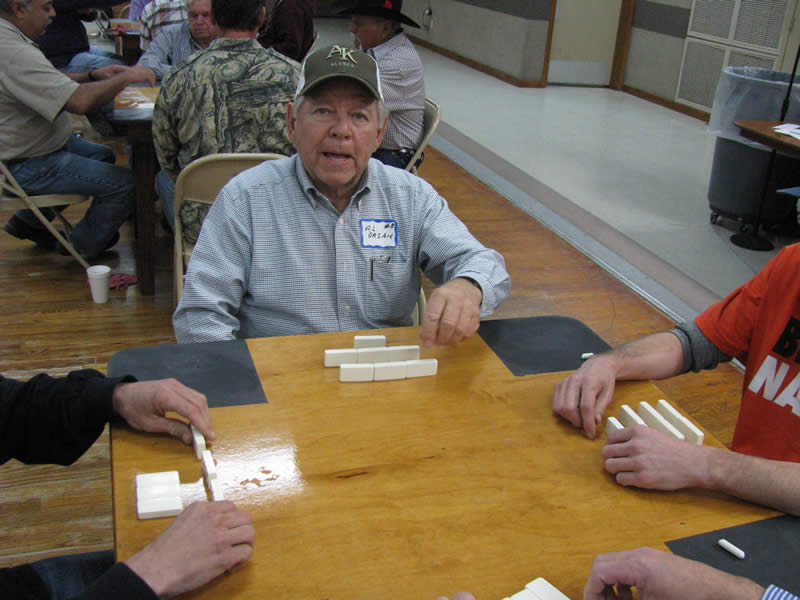
    Hallettsville, TX. "13 City". Domino Tournament Jan. 26th. Albert Schweitzer.


    For "Travel Tuesday", Lets visit Hallettsville in the Texas Prairies and Lakes Region

    #Region.R_Description#"The Texas Prairies and Lakes Region offers a wide variety of destinations & attractions, from the fast-paced cosmopolitan excitement of the Dallas/Fort Worth Metroplex with the best in shopping, dining & entertainment, to the beautiful lakes & laid-back country lifestyles found throughout the region. Discover the Excitement of the Texas Prairies & Lakes."

    Welcome to Hallettsville,  City of Hospitality.

    image "Hallettsville is a city in Lavaca County, Texas, United States. The population was 2,550 at the 2010 census. It is the county seat of Lavaca County. It is the only place called Hallettsville in the world. Hallettsville is named for an early founding family that colonized this area. John Hallett had received a land grant from Stephen F. Austin in 1831 and after his death in 1836 his wife, Margaret Hallett, donated the land for the town's location.

    This woman's life reads better than a novel.
    Married to a seafaring man against her family's wishes, the newlywed Halletts traveled west with a wagon whose tongue was cut from a ship's mast and the sails serving as the wagon cover. He even brought his anchor.

    A Veteran of San Jacinto along with one of his three sons, Mr. Hallett died, as did all the males in the family, leaving Mrs. Hallett alone with her only daughter. Fluent in Spanish and able to defend herself in two Indian dialects, she left Goliad where they had been living and returned to the original grant in Lavaca, opening a trading post and making friends with nearly everyone. She once cudgeled an Indian who was making a nuisance of himself. The Chief paid her a visit and she explained the injury should be regarded as "a knowledge knot". The Chief laughed. Upon her death in 1863, local Indians decorated her grave. Her grave is in the Founder's cemetery, a short distance from the Town Square.

    Lavaca County is also the home of "The Archives War" in which the citizens of Hallettsville rode into Petersburg to liberate the county records, which had been removed in a disputed election over the official county seat. The Hallettsville "committee" rode into Petersburg where the Petersburgans were celebrating their "victory" with a barbecue. They not only reclaimed the records, but also ate the barbecue for their trouble. Petersburg never recovered from this, the greatest Texan humiliation, and faded into oblivion."

    More Hallettsville Stories: http://www.texasescapes.com/TOWNS/Hallettsville/Hallettsville.htm

    Lavaca County Courthouse, Hallettsville

    "Hallettsville is the home of the Lavaca Historical Museum (open weekends 2-5) at 413 N. Main.  The Texas Championship Domino Hall of Fame(tournament held every January) shares space with The Texas Fiddler's Hall of Fame (Fiddler’s Frolic held fourth week of April) at the Knights of Columbus Hall, Hwy 77 South. Both are open Mon - Fri 9am to 11am."

    Best little whorehouse in texasposter.jpg"Although the actual town involved in the real story of the "Chicken Ranch" is located a few miles north of Hallettsville on Highway 77, film makers chose the town's historic Lavaca County Courthouse square to serve as backdrop for the city scenes in The Best Little Whorehouse in Texas, the 1982 musical starring Burt Reynolds and Dolly Parton.

    image Hallettsville is also the featured location in the 2009 horror film titled Hallettsville, which stars Gary Busey and Derek Lee Nixon.

    The town is mentioned in the Robert Earl Keen song "Armadillo Jackel" as the place where they pay $2.50 for dead armadillos.

    Ripley's Believe It or Not! once called Hallettsville the "13 City" because in 1913 it had 13 letters in the name, a population of 1300, 13 churches, 13 newspapers, and even 13 saloons."

    image "In 1887 the San Antonio and Aransas Pass Railway built through the town, and Hallettsville became the principal trading center and shipping point for area farmers and ranchers. By 1892 the town owned an electricity plant and had established a waterworks supplied by artesian wells."

    Ancestries: German (32.2%), Czech (20.6%), Irish (8.5%), English (3.9%), United States (2.7%), Scotch-Irish (1.5%).

    page82.jpg (1120×824)


     image

    image


    --------

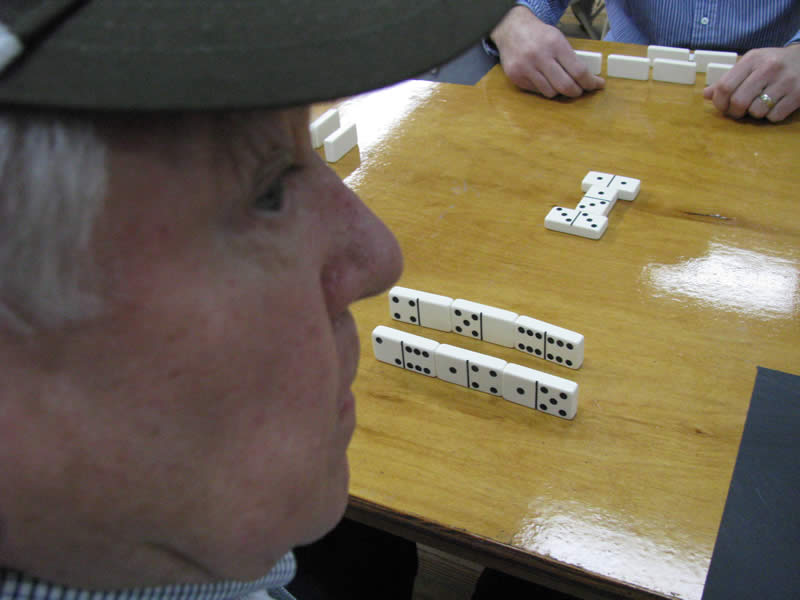
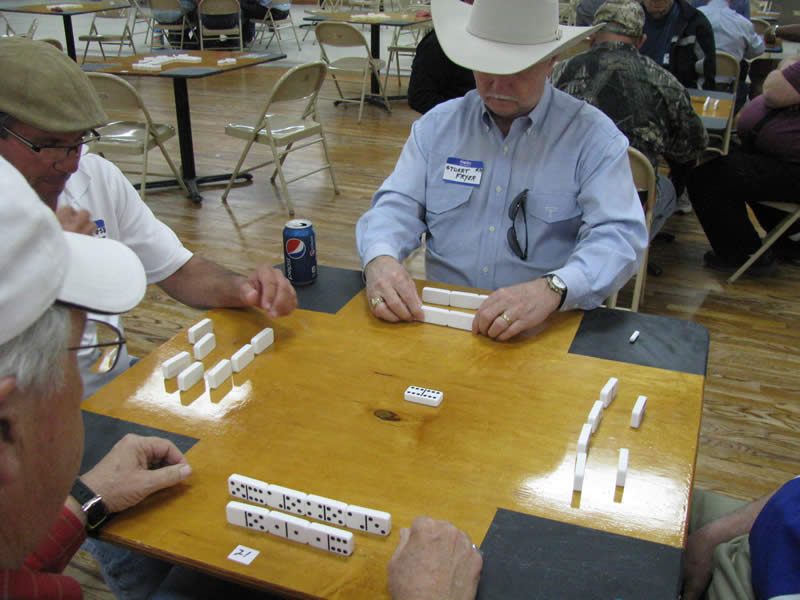
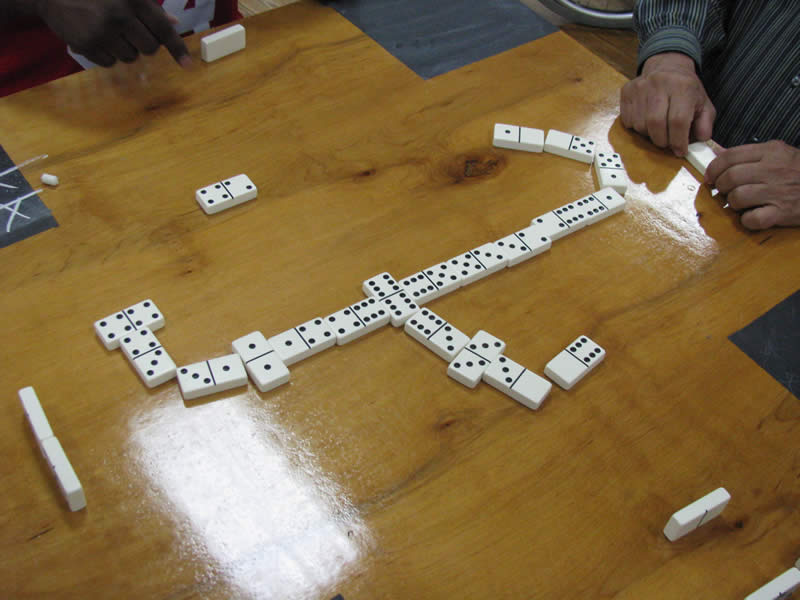
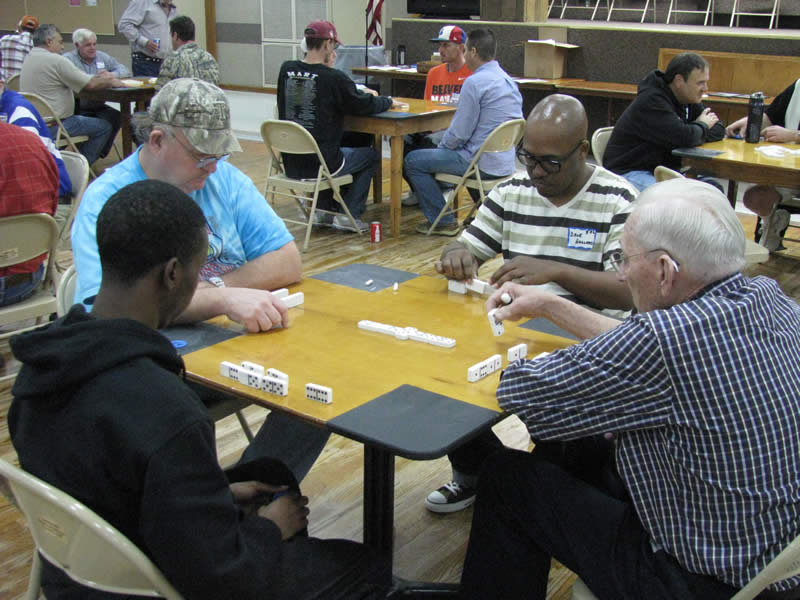
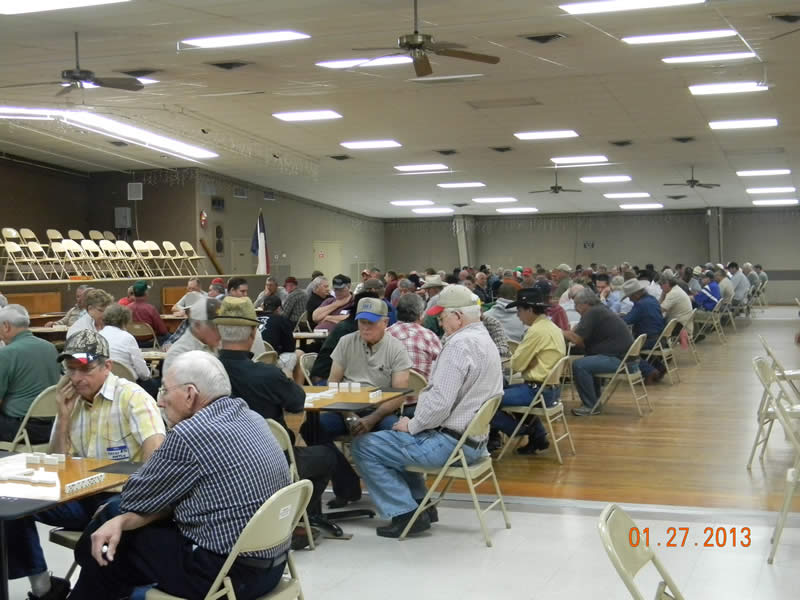
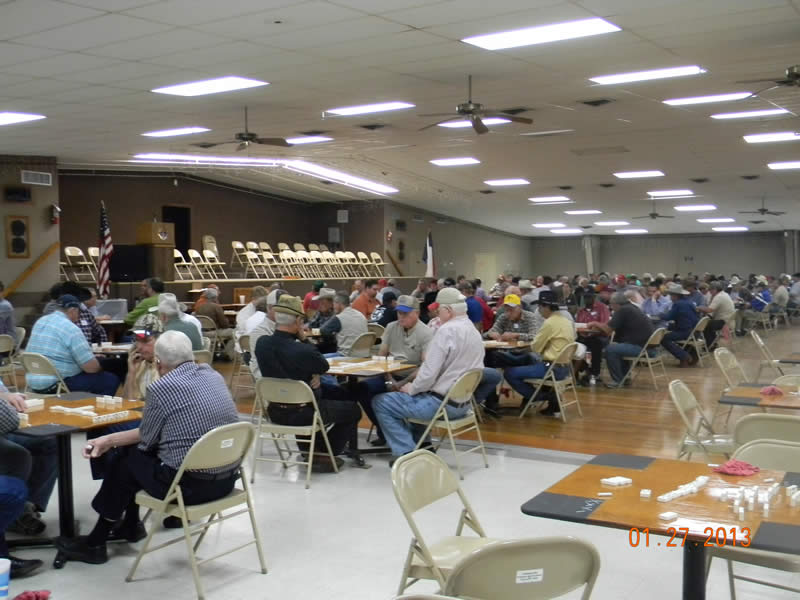
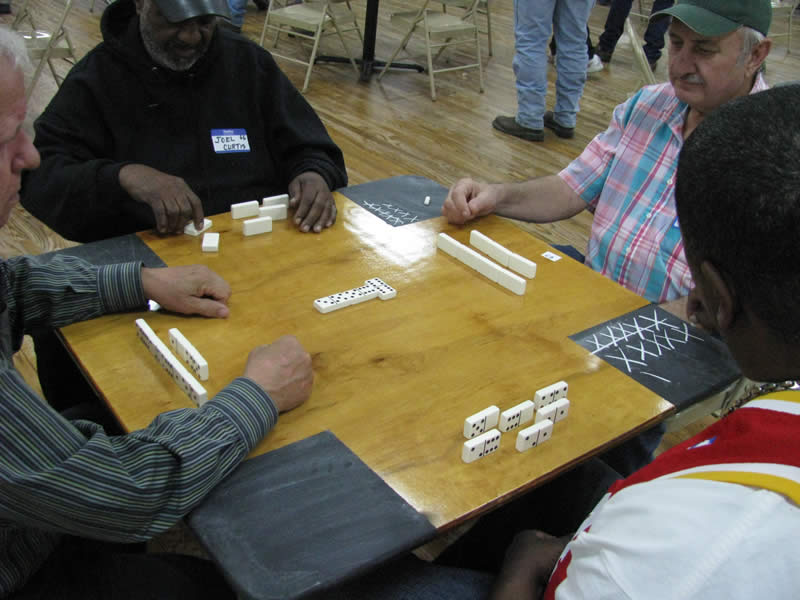
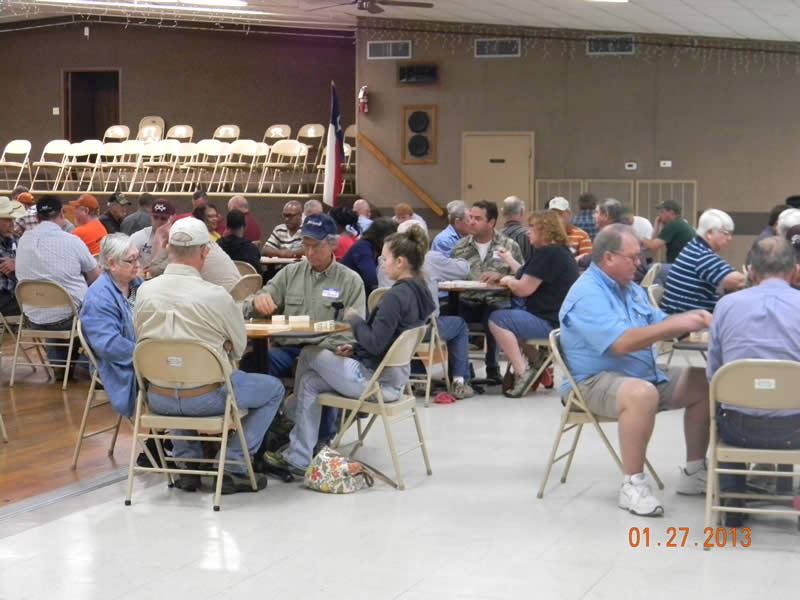
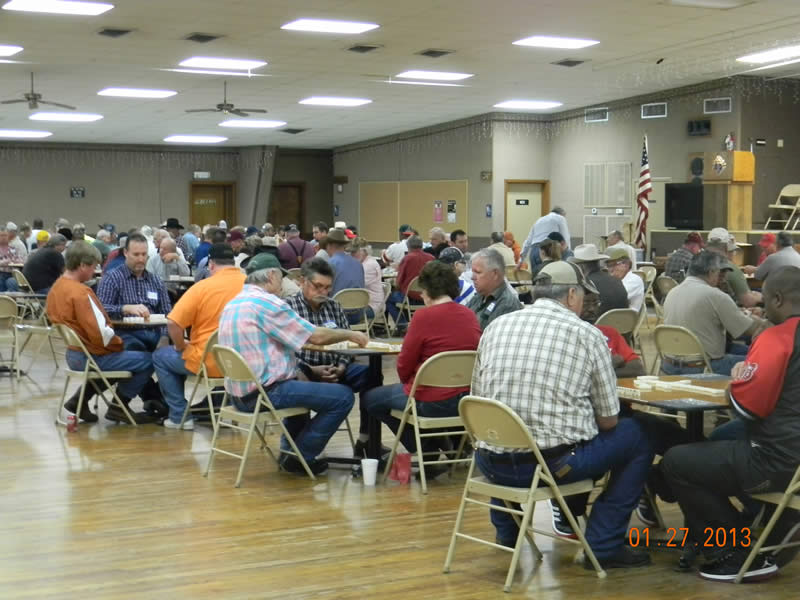
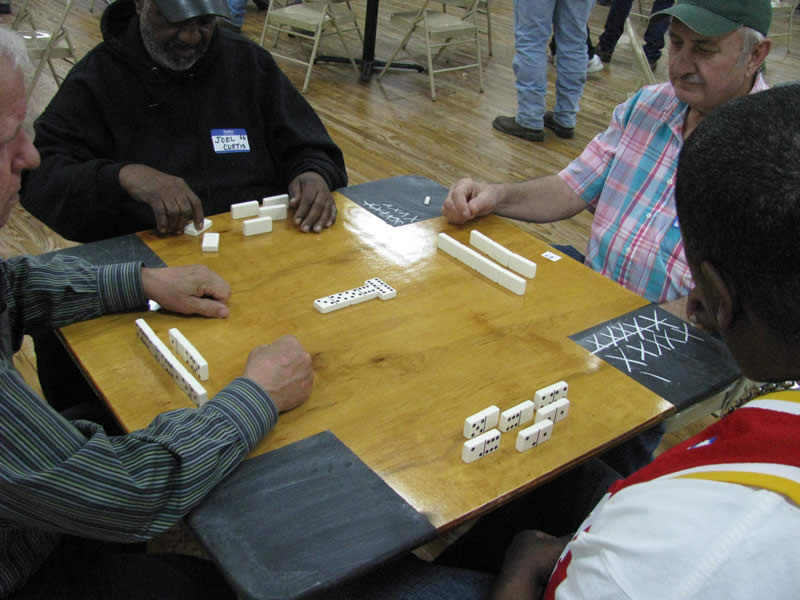
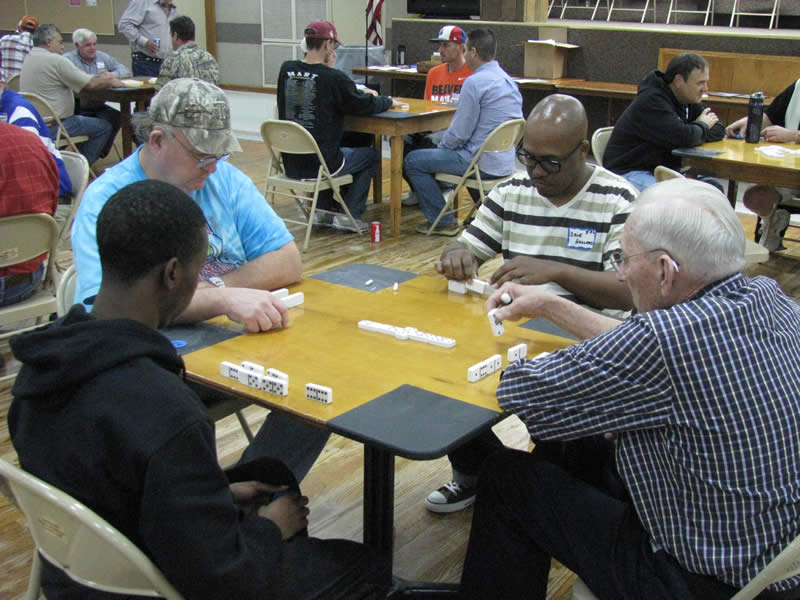
    TEXAS STATE CHAMPIONSHIP STRAIGHT DOMINO TOURNAMENT

    "The annual domino tournament is to determine the State Champion of Texas. From its humble beginning, this tournament has grown to be recognized as the finest competition of straight dominoes nationwide and is held in Hallettsville at the Knights of Columbus Hall.


    Historically dominoes played a key role in the lives of people of all walks of life living in Central Texas. Domino halls and taverns had tables located in every nook and cranny to accommodate the legions of faithful players. In 1952 a group of men joined together to formulate a plan to determine the best domino players at straight dominos. The initial tournament, held at the American Legion Hall in Hallettsville, drew 30 teams that engaged in fierce competition.

    Today the tournament held in January draws approximately 200 participants from all parts of the country.

    Sunday January 26, 2014

    Straight Domino’s

    Double Elimination Partner Play

    _______

    On This Day:

    Albert Schweitzer born, Jan 14, 1875:

    "The theologian, musician, philosopher and Nobel Prize-winning physician Albert Schweitzer is born on this day in 1875 in Upper-Alsace, Germany (now Haut-Rhin, France).

    The son and grandson of ministers, Schweitzer studied theology and philosophy at the universities of Strasbourg, Paris and Berlin. After working as a pastor, he entered medical school in 1905 with the dream of becoming a missionary in Africa. Schweitzer was also an acclaimed concert organist who played professional engagements to earn money for his education. By the time he received his M.D. in 1913, the overachieving Schweitzer had published several books, including the influential The Quest for the Historical Jesus and a book on the composer Johann Sebastian Bach.

    Medical degree in hand, Schweitzer and his wife, Helene Bresslau, moved to French Equatorial Africa where he founded a hospital at Lambarene (modern-day Gabon). When World War I broke out, the German-born Schweitzers were sent to a French internment camp as prisoners of war. Released in 1918, they returned to Lambarene in 1924. Over the next three decades, Schweitzer made frequent visits to Europe to lecture on culture and ethics. His philosophy revolved around the concept of what he called "reverence for life"--the idea that all life must be respected and loved, and that humans should enter into a personal, spiritual relationship with the universe and all its creations. This reverence for life, according to Schweitzer, would naturally lead humans to live a life of service to others.

    Schweitzer won widespread praise for putting his uplifting theory into practice at his hospital in Africa, where he treated many patients with leprosy and the dreaded African sleeping sickness. Awarded the Nobel Peace Prize for 1952, Schweitzer used his $33,000 award to start a leprosarium at Lambarene. From the early 1950s until his death in 1965, Schweitzer spoke and wrote tirelessly about his opposition to nuclear tests and nuclear weapons, adding his voice to those of fellow Nobelists Albert Einstein and Bertrand Russell."

    _______

    Yesterday:

    Just catching up on more stuff around here.  I am overwhelmed with how am I going to get rid of all these parts, lumber and tools that I have accumulated over the years.  It seems that there is always something to fix, and they are needed.  There are still some carpentry jobs to be done, but I don't know when Jay will be here to complete them.

    A lot of time was spent 'on hold', trying to make an appointment to see an ENT doctor. They don't have one at the clinic, so it seems I have to wait 2 weeks to see my doctor, just to get a referral.  My sinuses are my only health problem, so I should be grateful, especially at my age.

    With the great weather, the cats spent some time out on the screen porch. They like to watch the birds at the feeder.  They still won't go near each other, but they will share that space.  The windows and doors were open most of the day.

    Tuesday, January 7, 2014

    Glen Rose, TX. Dinosaurs to Indian Country. First U.S. Presidential Election. Clinton Impeachment Trial. C O L D !


    For "Travel Tuesday", let's visit the Glen Rose area again, it is in the Texas Prairies and Lakes region.

    #Region.R_Description#"The Texas Prairies and Lakes Region offers a wide variety of destinations & attractions, from the fast-paced cosmopolitan excitement of the Dallas/Fort Worth Metroplex with the best in shopping, dining & entertainment, to the beautiful lakes & laid-back country lifestyles found throughout the region. Discover the Excitement of the Texas Prairies & Lakes."

    Glen Rose Top Ten Fun Things To See & Do

    image" Glen Rose is a fun and quaint town that was established as a trading post in 1849. The city is located at a picturesque spot on the Paluxy River, just above its meeting with the Brazos River.

    We love Glen Rose and have spent a number of weekends there in our RV - to learn about one of the trips, read this Thank God For Weekends article.

    Here is our list of favorite things to see and do in Glen Rose.Squaw Valley Golf Course

    • Golf - Squaw Valley Golf Course is located at the north eastern edge of town and they have 18 holes of very good golf. 17 miles to the north is another great golf course in Granbury - Harbor Lakes which is ranked in our Top Twenty Favorite Texas Courses. You can read a review of each of these golf course on our Golf Course Reviews Page.
    • Spend the Night - if you really want to enjoy Glen Rose and all it has to offer, you need to spend a couple days exploring. You have a number of excellent choices for for overnight lodging:
    • Visit a Nuclear Power Plant - Comanche Peak has a very informative information center with an exhibit of a nuclear power plant control room, a film, and more.
    • Enjoy a Special Event - plan your trip around one of the special events at Texas Amphitheater (The Promise, a musical drama of the reenactment of the life of Jesus in the open air amphitheater, is excellent) or horse shows and more at the Expo Center .
    • Hike, Bike, and Explore - Dinosaur Valley imageState Park is a great place to spend some time: hiking or biking the trails; leaning about dinosaurs and checking out their tracks or visiting the exhibits; playing in the Paluxy River; or just enjoying a picnic.
    • image Visit the Museums - Somervell Country Historical Museum depicts local history, fossils, and relics; Creation Evidences Museum includes artifacts and fossil displays, dinosaur footprints and bones, and more; and Barnard Mill and Art Museum is in one of the first structures built in the 1860's and houses art, primitive artifacts, and bronzes.
    • image Tube the Brazos or Play in the Rivers - a few miles north east of Glen Rose on 67 there are canoe and tube outfitters (Rhodes Rentals 254-897-4214) for riding the Brazos (not the most thrilling ride but a fun way to spend a few hours) or fish,   swim, or relax in theimage water.

    The kids will enjoy the water and rocks at Big Rocks Park which is close to downtown. image

    • Listen to Some Good Music - Glen Rose is known as the Blue Grass Capital of Texas and throughout the year TresRios and Oakdale Park have bluegrass concerts with some excellent bands and musicians.

      Glen Rose Big Rocks Park

    • Stroll the Downtown Area - Glen Rose has a quaint downtown square featuring shops,restaurants, a museum, and the historic Somervell County Courthouse or go play in the Paluxy River at the park.
    • Feed the Exotic Animals - Fossil Rim Wildlife Center features some of the worlds most endangered animals like white rhino, image cheetah, and Grevy's zebra plus over 60 species that roam on the 2700 acres. You can drive your vehicle through the park and view the animals, some of which will stick their head in the window; stop at the top of the mountain for food, souvenirs, the museum, nature trail, picnic area, and petting zoo; or enjoy the park on one of their special bike safaris."

    From: http://www.texasoutside.com/topten/glenrosetopten.html

    ______

    Travels with Grandma...

    Preserving the stories, legends & history of Texas for generations to come...

    From Dinosaurs to Indian Country and beyond...

    "Come & sit a spell, grab a glass of lemonade & some cookies. I want to tell you a story before we take off today. So, sit back and get comfortable…

    This story begins over 100 million years ago. It’s a story about dinosaurs wandering wild and free, clomping down the river in a land untouched by man. All that remains are the tracks the three types – acroncanthosarus, pleurocoelus and an unidentified one, left behind. They must have been huge! The tracks range from 12-36” long and 9-24” wide. There are seven sites at Dinosaur Valley State Park where you can see them, and a museum in downtown Glen Rose that tells their history. We’ll stop by the park & take a look, maybe even take our shoes off and go wading in the river and walk in the tracks.

    In the time before the white settlers started moving in around the mid 1800’s these lands belonged to the Indians. Like the dinosaurs, they roamed free, hunted buffalo, fished in the Brazos and Paluxy rivers, raised their families and celebrated life and death as free men. The Caddo and the Tonkawa, and sometimes the Apaches and Comanche called this area home.

    Then, in 1849, that’s more than 150 years ago, a man named Charles Barnard and his brother George showed up. Charles built the first Indian trading post, a Torrey house, near Comanche Peak. George settled the area nearby. You may have seen the signs on the way to Cleburne - George’s Creek. The Torrey houses and trading activities were an important part of settling this area and an important part of Sam Houston’s peace policy. They did a fair trade business and it is said they also recovered stolen horses and captives from the Indians.

    The post was located at Fort Spunky, built near a spring and tribe of peaceful Indians. It was near well traveled Indian highways and a one day ride from Comanche Peak. The Indians used Comanche Peak for a rallying place, campground and lookout. By the 1850’s the Indians had been moved to Fort Belknap and an agricultural center with a cotton gin, gristmill, general store, blacksmith shop and feed store remained. Fort Spunky, was given its name because of the fistfights that broke out, is gone now, but we’ll drive out and see where it was. Quite possibly the roads we’ll be following were the old Indian highways leading the Indians and settlers who traded there to Comanche Peak and Glen Rose.

    Charles Barnard moved his trading post to Fort Belknap and returned to the Fort Spunky area in 1859 and built the first store in Glen Rose. A year later he started building a flour and grist mill and called the town Barnard’s Mill. The mill was a busy place. It served as a meeting hall, a dance hall, hospital and gathering spot for the settlers. It is in the process of restoration now and the hospital now hosts an art collection and some beautiful antiques. Barnard sold his mill in 1871 and the wife of TC Jordan wanted to name the town Rose Glen, but in 1872 the residents agreed to call it Glen Rose at a town meeting.

    It grew slowly, but a few interesting stories from the times before Fossil Rim, Dinosaur Valley and the nuclear power plant are:

    There were abundant mineral spring that brought doctors and healers and soon Glen Rose was known as a health and recreation center. In a letter written in 1902 JH Haney wrote “Our town in county seat of Somervell County and a health resort, i.e. a great number of flowing wells, and the people are coming in swarms from all about and filling our several parks along the Paluxy…” The springs can’t be seen now, but stop at Big Rock Park and look back towards town, and it’s not hard to see why they came.

    Another story that I like is about the moonshiners. The laws changed and by the end of the 1800’s the moonshiners moved in, building stills, cooking and selling moonshine. During the Depression (1929-1940) the cedar brakes became known as the “whiskey woods capital of the state” and during the 1920’s it was reputed to be the “Moonshine Capital of Central Texas”. In 1923 the sheriff and county attorney, along with 38 other men, were arrested when the Texas Rangers decided to clean out the moonshiners.

    These days Glen Rose has a bustling town square and “modern” development along Hwy 67. We’ll take time to visit the square and see the shops, and historical museum. It is home to the Warm Country Heart Theatre.

    Well, that’s enough rambling for now; I’ll tell you more along the way. Put your shoes on and we’ll go exploring. We’re going to head west on Hwy 377 to Tolar, then take a left onto Hwy 56 on our way to Glen Rose. So let’s pack a picnic, load up the kids, fill up the gas tank, buckle up and we’ll be off…

    Just as you get to Tolar take a left and go south on FM56. Tolar was settled in the 1890’s and a trade center for local farmers by the turn of the century. We are going up the winding hills towards the back of Comanche Peak – Indian country. Look on your right and you will see all that remains of an old family homestead…a chimney, leaning a little with age.. Stop and look out across the countryside and think about the times when the settlers first came and settled all alone out here, far from friends and family in this strange land with Indians all around.

    The Panther Branch Post Office that is in downtown Granbury was found in an old frame house near here in 1968. It was known as the “eight mile stage stop” because the stagecoach made regular stops with both mail and passengers. Can you imagine riding across these rough hills in a bouncy stage coach on rutted paths and no paved roads, no air conditioning?

    We’re continuing down Panther Branch Road another few miles and taking a right on to Hwy 51. Look to the right and you will see a barn. On the left you will see the remains of an old family homestead. It once stood proud on its hill – house and barns and outbuildings. Now you can see the sky coming through the buildings, but it still stands as a reminder of times gone by.

    At the fork in the road we’re staying to the left, back on to FM 56 towards Glen Rose. Another old homestead is on the right a few miles down…with its windmill standing tall, remains of the piping that once led to the cisterns just to the south of the house. They’re overgrown now, but stop & listen you just might hear the laughter of children skinny-dipping the summer heat away in them.

    Watch out the right side as you go up the hills. At the tops of the peaks you will begin to see Seven Knobs – count them. There are seven cone shaped, cedar covered knobs about 2 miles south of Glen Rose. They distinctly rise above the tops of the distant hills.

    Take a right at Hwy 67 and a right on Park Road 59 into the land of Dinosaurs and the tracks they left behind - Dinosaur Valley State Park. The girls had a great time wading in the river and discovering the 113 million year old tracks.

    Too soon we headed back down the road on Hwy51, crossing Hwy67 to Bernard St. Stop off at one of the best kept secrets in Glen Rose – The Barnard Mill Museum. The old hospital section of Barnard’s Mill is home of the private art collection of Richard H. Moore, Jr. It is a great place for little ones. The girls were fascinated by the drawings, paintings, bronze sculptures and Indian artifacts.

    Take time to wander the Mill grounds, wander under the huge old trees and look up top and see the rifle slits that were used to protect the settlers from Indian raids. The mill used to be a busy place and was the gathering place for local settlers. If you find the mill open you can go inside and see the furnishings of the time period.

    Leaving the mill, turn right and stop at the Glen Rose square. It’s a bustling place full of unique shops and antique stores, but that isn’t what the girls enjoyed the most; it was the Somervell County Historical museum, and the farmers on the square.

    The museum is full of antiques from early Somervell County history and fossils and dinosaur history. It’s a “must see” on any trip to Glen Rose. The staff is warm and friendly and loves to answer questions.

    You can’t leave the square without stopping to buy from the farmer’s trucks. The best watermelons, peaches and homegrown tomatoes can be found there. Not to mention a story or two. Mr. Murray (sorry I don’t remember his last name!) comes all the way from Eulogy and has been for over twenty years, carrying on a tradition that has brought farmers and their wares for decades.

    Going south on FM56, take a left on FM202 to Rock Creek Cemetery. It is the first on our “old cemetery stops” today. My grandchildren love to explore them and are quick to point out the signs and it’s a challenge to see who can find the oldest marker and figure out how old it is (Ahhhh- math in the summer time and they don’t even know it!) The oldest one we found dated back to 1839. The cemetery and church are some of the few remains of a community established prior to 1880.

    Back on FM56 go south through Eulogy, left on CR 1175. When you’re on Hwy56 just outside of Eulogy be sure to keep an eye out for the deer grazing under the trees. There are new babies that are fun to pull off the road and watch a while.

    CR1175 crosses the Brazos River on the “new bridge”, but make the turn around at the end and get out, stretch your legs and explore the old iron bridge. It really is a work of art and you can’t catch the views or feel the wind blowing from the car. I’ve heard that this was once a ferry crossing. Do you know what a ferry is? It is a flat boat that people loaded themselves and their belongings on, and then the owner pulled everything across the river by a rope strung between the two sides.

    Heading straight off the bridge, back on CR1175, will take us winding through the countryside (it turns into CR1119) and dead-ends into FM200. We’ll drive north a while and stop at the Nemo post office and take in the view. All that remains now are a few churches and a post office, but it was a thriving community around 1858 when it was settled. When the people gathered to name it, they wanted to name it Johnson Station, after Jimmie Johnson who found the area, but someone from the post office suggested a shorter name. One man stood up and said “Nemo” the Latin word for “no one” because if Jimmie Johnson’s name wasn’t good enough no one’s was.

    We’ll turn around here and go back to FM 199, take a left and, if you haven’t had enough of the countryside, cross Hwy 67 and head into Fort Spunky country. If you want to see it, you better go soon; like a lot of the countryside around here it is quickly disappearing. The fort was located approximately at the intersection of FM 199 and FM 2174. To view the land as it used to be and have a beautiful view of the Brazos valley, turn right on FM 2174 and follow it all the way to the end. Keep going when it turns to a gravel road (CR 326). Once a simple one lane road, it’s wider now and the gas trucks are beating a path to the well at the end of the road. For us, it was worth the trip to stand at the end of the road and look out across the valley and take a few minutes to talk about what life would have been like if you lived when this was Indian country and the settlers were moving in, and what it would have been like to live as far away from anyone as the barn roof top in the distance.

    After you’ve taken in the view (or if you didn’t make the trip), go west on HWY67 to FM200, take a right and cut through Rainbow on your way back to Hwy144 and home. By the 1890’s a community had developed here. Rumor has it the day the community gathered together to choose a name, a thunderstorm blew through and the residents were so struck by the rainbow that followed they named the town after it.

    Till next time…Love, Grandma."   From: http://www.texasoutside.com/twg/2.html

    ------

    I hope you enjoyed our second visit to Glen Rose, here is the first: http://pennys-tuppence.blogspot.com/2012/06/glen-rose-and-granbury-tx-dinosaur.html .  PS: Binkie was picked up by a relative of her owner and found a better home.

    ______

    On This Day:

    First U.S. presidential election, Jan 7, 1789:

    "On this day in 1789, America's first presidential election is held. Voters cast ballots to choose state electors; only white men who owned property were allowed to vote. As expected, George Washington won the election and was sworn into office on April 30, 1789.

    As it did in 1789, the United States still uses the Electoral College system, established by the U.S. Constitution, which today gives all American citizens over the age of 18 the right to vote for electors, who in turn vote for the president. The president and vice president are the only elected federal officials chosen by the Electoral College instead of by direct popular vote.

    Today political parties usually nominate their slate of electors at their state conventions or by a vote of the party's central state committee, with party loyalists often being picked for the job. Members of the U.S. Congress, though, can’t be electors. Each state is allowed to choose as many electors as it has senators and representatives in Congress. The District of Columbia has 3 electors. During a presidential election year, on Election Day (the first Tuesday after the first Monday in November), the electors from the party that gets the most popular votes are elected in a winner-take-all-system, with the exception of Maine and Nebraska, which allocate electors proportionally. In order to win the presidency, a candidate needs a majority of 270 electoral votes out of a possible 538.

    On the first Monday after the second Wednesday in December of a presidential election year, each state's electors meet, usually in their state capitol, and simultaneously cast their ballots nationwide. This is largely ceremonial: Because electors nearly always vote with their party, presidential election are essentially decided on Election Day. Although electors aren't constitutionally mandated to vote for the winner of the popular vote in their state, it is demanded by tradition and required by law in 26 states and the District of Columbia (in some states, violating this rule is punishable by $1,000 fine). Historically, over 99 percent of all electors have cast their ballots in line with the voters. On January 6, as a formality, the electoral votes are counted before Congress and on January 20, the commander in chief is sworn into office.

    Critics of the Electoral College argue that the winner-take-all system makes it possible for a candidate to be elected president even if he gets fewer popular votes than his opponent. This happened in the elections of 1876, 1888 and 2000. However, supporters contend that if the Electoral College were done away with, heavily populated states such as California and Texas might decide every election and issues important to voters in smaller states would be ignored."

    ______

    Clinton impeachment trial begins, Jan 7, 1999:

    "On January 7, 1999, the impeachment trial of President Bill Clinton, formally charged with lying under oath and obstructing justice, begins in the Senate. As instructed in Article 1 of the U.S. Constitution, Supreme Court Chief Justice William Rehnquist was sworn in to preside, and the senators were sworn in as jurors. Congress had only attempted to remove a president on one other occasion: the 1868 impeachment trial of President Andrew Johnson, who incurred the Republican Party's wrath after he proposed a conservative Reconstruction plan.

    In four hours of closed-door testimony, conducted in the Map Room of the White House, Clinton spoke live via closed-circuit television to a grand jury in a nearby federal courthouse. He was the first sitting president ever to testify before a grand jury investigating his conduct. That evening, President Clinton also gave a four-minute televised address to the nation in which he admitted he had an inappropriate relationship with Lewinsky. In the brief speech, which was wrought with legalisms, the word "sex" was never spoken, and the word "regret" was used only in reference to his admission that he misled the public and his family.

    Clinton, the second president in American history to be impeached, vowed to finish his term. On January 7, 1999, the impeachment trial began. Five weeks later, on February 12, the Senate voted on whether to remove Clinton from office. Clinton was acquitted on both articles of impeachment. The prosecution needed a two-thirds majority to convict but failed to achieve even a bare majority. Rejecting the first charge of perjury, 45 Democrats and 10 Republicans voted "not guilty," and on the charge of obstruction of justice the Senate was split 50-50. After the trial concluded, President Clinton said he was "profoundly sorry" for the burden he imposed on Congress and the American people."

    ______

    Yesterday:

    It took until about 10.00am for the power to stop blinking, but even though it was inconvenient having to restart the computer every few minutes, at least we weren't without heat for all those hours.  As cold as it was here, that would have been awful.

    There wasn't much anyone wanted to do outside, and I just stayed pretty close to this computer researching different things. 

    Misty didn't protest when she had to wear her coat when we went out.  Each time I checked to see if the wind had blown the covers off my thousands of aloe plants. I clipped some hair off Misty as her face was getting shaggy, but I didn't cut her hair short, or bathe her, not with the temperature in the 20's most of the day.