Monday, October 16, 2023

The Israeli-Palestinian Conflict. Meditate on These Things. The Best Diet for Colon Cancer Prevention.

.

The Israeli-Palestinian Conflict: Will Peace Ever Come?
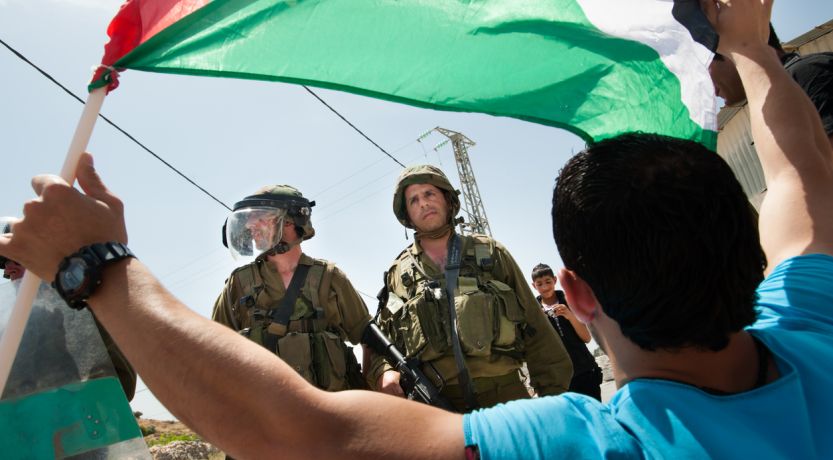
The Israeli-Palestinian Conflict: Will Peace Ever Come?“The conflict between the Israelis and the Palestinians appears to be unending. Will real, lasting peace between these two peoples ever be achieved?

Horrific violence broke out yet again Oct. 7, 2023, when Hamas terrorists attacked Israeli civilians at a music festival and in communities near Gaza. In the early days of this latest war, more than a thousand Israelis and a thousand Palestinians died. Hamas also took about 150 hostages into Gaza.

EU chief Ursula von der Leyen told the European Commission: “Hamas terrorists killed women and children in their homes. They hunted hundreds of young men and women who were celebrating life and music . . .

“These innocents were killed for one single reason: For being Jewish and living in the State of Israel. It is an ancient evil, which reminds us of the darkest past and shocks all of us to the core” (The Times of Israel).

The latest in a long history of conflict

Historically, the Middle East has been a hotbed of contention. Over the centuries the area now known as the nation of Israel and the Palestinian territories has been fought over again and again.

What is the importance of the Israeli-Palestinian conflict to world peace and the future of mankind?

What brought about the Israeli-Palestinian conflict?

The recent history of the Israeli-Palestinian conflict goes back at least 100 years (BBC.com).

The Ottoman Empire had ruled the area for hundreds of years, but after the Ottomans were defeated in World War I, Britain took control of the land. At the time, the population of Arabs was larger than the population of Jews in the area.

The number of Jews in the area increased between the 1920s and 1940s, especially after World War II and the Holocaust, as European Jews were fleeing persecution and seeking a homeland.

The newly formed United Nations (UN) in 1947 voted for the land to be split into two states—a Jewish state and an Arab state. Jerusalem was to become an international city. This plan was accepted by Jewish leaders, but rejected by the Arab leaders.

Within 12 months, Britain withdrew from the region leaving the Israeli-Palestinian conflict unsolved.

Jewish leaders immediately established the nation of Israel on May 14, 1948. The Palestinians objected, leading to a war between the state of Israel and the Palestinians and neighboring Arab countries. This war produced hundreds of thousands of Palestinian and Jewish refugees.

When fighting ended in 1949, Israel controlled the most land, including West Jerusalem, while Jordan controlled the West Bank (of the Jordan River) and East Jerusalem. Gaza was taken by Egypt.

Israel absorbed the Jewish refugees, but the Palestinians were not absorbed by the Arab nations, and many continue living in increasingly crowded refugee camps to this day.

Israeli-Palestinian conflicts and peace efforts

Since there was no peace agreement ending this war, the conflict continues to this day. Within the ongoing conflict, specific times of increased levels of fighting include:

  • The 1956 Suez Crisis.
  • The 1967 Six-Day War.
  • The 1973 Yom Kippur War.
  • The 1987 beginning of the First Intifada.
  • The 2000 beginning of the Second Intifada.

Many other conflicts erupted between these and have continued ever since.

Many American presidents and others have attempted to negotiate peace deals in the Israeli-Palestinian conflict, with some successes and many frustrating failures. Some notable peace efforts include:

  • The 1978 Camp David Accords, and subsequent 1979 peace treaty between Israel and Egypt.
  • The 1993 and 1995 Oslo Accords.
  • The 1994 peace treaty between Israel and Jordan.
  • The 2020 Abraham Accords between Israel and various Arab nations.

Though these peace efforts are laudable, the overall process of negotiation between Israelis and Palestinians has stalled, and the Palestinian leadership has not been pleased that Arab nations have been making agreements with Israel.

At the heart of the Israeli-Palestinian conflict remains the desire of the Palestinians for autonomy and repossession of some or all of the land occupied by the Israelis versus the Israelis’ claim to their ancestral land as well as their desire for security.

At this point in history, neither side seems willing to compromise enough to obtain lasting peace—or to believe peace is really possible.

A land of conflict throughout history

This land has been embattled for thousands of years.

The biblical history of the land begins with Abraham, the progenitor of both the Israelis and Palestinians. Beginning with Genesis, the books in the Old Testament of the Bible cover this history. What follows is a brief synopsis.

Abraham was told by God to leave his home and go to the land of Canaan, which God was going to give to him and his offspring (Genesis 12:1-7; 13:14-18).

Abraham, his son Isaac, his grandson Jacob and their families were then nomads in the land of Canaan until a famine forced Jacob (also known as Israel), his sons and their families to move to Egypt. While in Egypt, the families of the 12 sons of Jacob grew substantially, and their sheer numbers caused Egypt to feel threatened.

Realizing they had a free workforce and not wanting the tribes of Israel to turn against them, the Egyptians enslaved the Israelites for many years.

Under the leadership of Moses, God eventually freed the tribes of Israel from Egyptian slavery and led them back to the land of Canaan. In fulfillment of God’s promise to Abraham, over a period of time the fledgling nation of Israel took possession of the Promised Land.

During the time of the judges, the nation of Israel slipped into a tragic cycle of disobeying God, which led to the occupation of ancient Israel by some of its neighbors. Upon their repentance, God would rescue the Israelites from their captors. This cycle of occupation and deliverance lasted nearly 400 years.

Throughout the reigns of the kings of ancient Israel, there were many conflicts involving the surrounding nations. After the death of Solomon, the nation of Israel split into the 10 northern tribes of Israel and the southern kingdom of Judah.

Israel continued to disobey God during the reigns of the kings of Israel and Judah. God allowed the 10 northern tribes of Israel to fall to Assyria around 721 B.C. The Assyrians removed the conquered Israelites from the Holy Land and replaced them with captives from other lands. In 586 B.C. the disobedient tribe of Judah was completely conquered, and many of the people in the southern portion of the land were displaced by the Babylonians.

The 10 northern tribes of Israel did not return to the Promised Land; however, 70 years after their captivity, a number of Jews were given permission by Cyrus, king of Persia, to return to Jerusalem to rebuild the temple.

The descendants of the Jews endured many additional occupations of the Holy Land, including ones by the Greeks, Romans, Byzantines, Muslims and the Crusaders.

Also, over the centuries, many descendants of Esau (Edomites) and Ishmael (Arabs) moved into the area. These peoples were also descendants of Abraham, but the Bible describes longstanding jealousies and hatreds between them and the descendants of Israel (Psalm 83:4-6; Ezekiel 35:5).

Will peace be achieved between the nation of Israel and the Palestinians?

The seemingly endless cycle of conflict between the Israelis and the Palestinians does not bode well for a peaceful solution.

The chances of a human solution to the Israeli-Palestinian conflict are slim.

With the Holy Land at the crossroads of the world—and at the intersection of Christianity, Judaism and Islam—the resulting conflict is predicted to be the catalyst for future events that will change this world forever.

Biblical prophecy foretells a future time when the Holy Land will be occupied again by a world superpower—the king of the North (Daniel 11:41). The Bible says that leading up to this event, the king of the South will attack the king of the North (verse 40), and the king of the North could very well enter the Holy Land in an attempt to bring peace to the region.

Instead, however, it will usher in an unprecedented time of trouble labeled the Great Tribulation (Matthew 24:21). It will be so horrendous a time for the world that, we’re told, there has never been a time like it in the past and there will never be a time like it in the future (Daniel 12:1).

Unless God intervened at this time, the earth would become lifeless (Matthew 24:22). Thankfully, God is going to intervene and send His Son Jesus Christ to establish the Kingdom of God (Matthew 24:29-31).

In the battle culminating during the end time, the armies of the world will gather at Armageddon in what is northern Israel today to fight the returning Christ and His saints (Revelation 16:16). Man’s armies will be completely defeated. Christ will conquer the nations and become the King of Kings and the Lord of Lords of a righteous, just and peaceful world government (Revelation 19:19-21).

Peace at last for the Israelis and the Palestinians

At the beginning of the millennial rule of Christ, the earth will be rebuilt. Instruments of war will be turned into instruments of agriculture. Humans will not learn war anymore (Isaiah 2:4). The way of peace will be taught and enforced.

In this new world, even the nature of predatory animals will be changed (Isaiah 11:6-9). What is more important—and the key to peace throughout this new world—the nature of man will begin to be changed, as individuals choose repentance and conversion (Jeremiah 31:31-34; Hebrews 10:16).

Once they are converted and given the Holy Spirit, people will no longer be the belligerent beings they were in their former world. This dramatic change will be brought about by their new nature and the lack of Satan’s influence in their lives (Revelation 20:1-3).

God will ensure there will be peace for all of mankind. Children will be able to play in the streets of cities while their grandparents watch them (Zechariah 8:4-5).

The transformations that will occur on this earth will be astonishing. People will become healthier, as the sick are healed, the crippled walk, the blind see, and the deaf hear (Isaiah 35:4-6).

The deserts will bloom, and the land will become so productive that those planting will overtake those harvesting (Amos 9:13).

God, at this time, will restore not only the nation of Judah, but also the other tribes of Israel to the Promised Land (verses 14-15).

Does this mean the Palestinians will be without a homeland? No!

God will provide the Palestinians and all peoples of the world with their own lands flowing with milk and honey. Everyone will sit under his or her fig tree, so to speak, and enjoy the prosperity of this wonderful world tomorrow (Micah 4:4-5).

There will be peace at last, as man, under the rulership of Jesus Christ, progresses toward the time when there will be no more tears, sorrow, pain, crying and death (Revelation 21:4).

Will you be there to see the transition from a world of bigotry and hate to a world of true outgoing concern and peace?

Learn more in our enlightening free booklet The World to Come: What It Will Be Like.  From: https://lifehopeandtruth.com/prophecy/prophecy-in-the-news/israeli-palestinian-conflict/?

________

Meditate on These Things

Philippians 4:8

“Finally, brethren, whatever things are true, whatever things are noble, whatever things are just, whatever things are pure, whatever things are lovely, whatever things are of good report, if there is any virtue and if there is anything praiseworthy—meditate on these things.

What do we normally focus our minds on? Bad news, scandals and problems fill our media and our minds. The apostle Paul encourages us to focus instead on the things of God, the things that are truly pure and praiseworthy, and that ultimately lead to the best news that can be reported—the coming Kingdom of God.

We can’t hide our heads in the sand to the bad news of today. Jesus Christ told us to watch world events and to be aware of the signs of the times (Luke 21:36; Matthew 16:3). But we don’t have to look for the juicy details of the latest scandal. We can focus instead on the words of God and the just and virtuous things that are the hallmarks of His coming Kingdom.

We are to meditate or “think on” (King James Version) these things for a purpose. “Think on—have a continual regard to, so as to ‘do’ these things (vs. 9)” (Jamieson, Fausset and Brown Commentary on Philippians 4:8). Our thoughts should guide our actions. Christians are called to not only meditate, but to do.

For more about Philippians 4:8, see our blog series beginning with “Meditate on These Things: ‘Whatever Things Are True.’”   For more about meditation, see our article “What Is Meditation?” See also “Reading the Mind of God.”  From: https://lifehopeandtruth.com/bible/blog/meditate-on-these-things/?

_________

The Best Diet for Colon Cancer Prevention

What would happen within just two weeks if you swapped the diets of Americans with that of healthier eaters?

Transcript of video at: https://nutritionfacts.org/video/the-best-diet-for-colon-cancer-prevention/

Below is an approximation of this video’s audio content. To see any graphs, charts, graphics, images, and quotes to which Dr. Greger may be referring, watch the above video.

“Colon cancer is our second leading cancer killer, but some places, like rural Africa, have more than 10 times lower rates than we do. The reason we know it’s not genetic is that “[m]igrant studies, such as those in Japanese Hawaiians, have demonstrated that it only takes one generation for the immigrant population to assume the colon cancer incidence of the host Western population.” Now, “the change in diet is [considered] most probably responsible for this.” But there are all sorts of changes when you move from one culture to another—like smoking rates, different exposures to chemicals, infections, antibiotics. You don’t know if it’s the diet…until you put it to the test.

It’s rare I do a whole video on a single study, but I think you’ll agree this one is worth it. This international group of researchers were trying to find out why colon cancer rates were an order of magnitude higher here—in African-Americans and Caucasians—than in rural Africa. If you look at American colons, they’re a mess: polyps, diverticulosis—not to mention hemorrhoids— whereas the African colons were “remarkably pristine.” And more importantly, sevenfold lower colonic epithelial proliferation rates, a characteristic of precancerous conditions. They measured everything they were eating, and concluded that the higher colorectal cancer risk and proliferation rates were most closely “associated with higher dietary intakes of animal products,” which may have led to “higher colonic populations of these potentially toxic [acid] and bile-salt-producing bacteria.” But you don’t know… until you put it to the test. “The higher rates are associated with higher animal protein and animal fat, and lower fibre consumption,” more of those bad bile acids, less of those good short chain fatty acids like butyrate, and that “higher mucosal proliferation. But how do we know it’s the diet that’s mucking things up? You don’t know…until you perform an interventional study.

How about we just swap their diets? Feed the Americans a high-fiber African-style diet, and the poor Africans get the SAD, Standard American Diet—like sausage and white flour pancakes for breakfast, a burger and fries for lunch, and some meatloaf and white rice for supper. That was day one for the rural Africans in the experiment, whereas the Americans were forced to eat fruits and vegetables, corn and beans. To help with compliance, they threw in more familiar foods like veggie dogs, though note it was not a vegan diet, just generally plant-based.

And the food exchanges weren’t for years, but just two weeks. Could they see changes that fast? The dietary changes “resulted in remarkable reciprocal changes” in the lining of their colons in terms of cancer risk and their microbiome. Switching to plant-based boosted the fiber fermentation and “suppressed the [carcinogenic] bile acid synthesis.” Let’s look at some before-and-after pictures. They took biopsies, and this is the colon lining of an African-American under a microscope. Those brown dots mark dividing cells; their colon lining was in overdrive, the cells rapidly dividing, a sign of premalignancy, a risk factor for cancer. But just two weeks eating a healthier diet, and their colons calmed right down.

The African-Africans started out with some proliferation, but it got worse on the American diet. This is a different marker measuring inflammation. Each of the brown dots here represents an inflammatory cell; so, rife inflammation before calmed way down after just two weeks, and the opposite in those eating worse.

We know that when our friendly flora ferment fiber, they produce beneficial compounds like butyrate, which is anti-inflammatory and anti-cancer. Impressively, “Africanization” of the diet more than doubled butyrate production, whereas “westernization” cut it in half. And in terms of toxic metabolites, a significant drop on the healthier diet, whereas the meatloafy diet increased the levels of these carcinogens by 400 percent within just two weeks. So, bottom line (no pun intended): what they were able to show is that just by changing the food, you can remarkably change your risk. In fact, that’s how the lead investigator put it: “change your diet, change your cancer risk!”  It may be “never too late to start” eating healthier.

Based on these kind of data, “adopting a whole-food vegan or [even just] near-vegan diet rich in fruits and vegetables,” along with other healthy lifestyle decisions, “could have a stunningly positive impact on the cancer risks not only of black Americans, but of all peoples.” “While it [might] be unrealistic to expect rapid and profound lifestyle changes in the general population, [hey]…at least we have sound, effective advice to offer to those who [make the choice] to take the steps needed to optimize their healthful longevity.”  From:  https://nutritionfacts.org/video/the-best-diet-for-colon-cancer-prevention/

__________

Sunday, October 8, 2023

Why Has God Killed People? God's Plan for Mankind. How Much Lead Is in Organic Chicken Soup (Bone Broth)?

.

Why Has God Killed People?

A stone path through a forest Elke Karin Lugert/Unsplash

“If God loves human kind, why did He order the death of some people in the Old Testament?

God has revealed that His plan includes resurrecting humans. He will bring them back to life later to teach them the right way to live.

God is the one who created human life as part of His great plan to show love to us. As Creator, He retains control over His creation, including the right to decide when to end someone's life. In Deuteronomy 32:39 God says He is the only true God and has the right to kill or to make alive.

God has also revealed that His plan includes resurrecting humans—bringing them back to life (something we humans cannot do). So even when God decides to kill a whole nation because of their gross sins and the misery they were bringing on themselves (as He did to allow Israel to inherit the land He had promised to Abraham), that is not the end of those people. He will bring them back to life later to teach them the right way to live.

The Ten Commandments booklet addresses this issue in the chapter about the Sixth Commandment.

"Taking another person's life is not our right to decide. That judgment is reserved for God alone. That is the thrust of this commandment. God does not allow us to choose to willfully, deliberately take another person's life. The Sixth Commandment reminds us that God is the giver of life, and He alone has the authority to take it or grant humans permission to take it."

All of these points support God's right to take human life, including using the Lake of Fire to destroy those who refuse His offer of eternal life. Though it might seem strange at first, even when God kills someone, it can be a demonstration of His love.”  From: https://www.ucg.org/bible-study-tools/bible-questions-and-answers/why-has-god-killed-people

_________

The Eighth Day, God's Plan for Mankind

Transcript of video at: https://www.ucg.org/beyond-today/beyond-today-daily/the-eighth-day-gods-plan-for-mankind          (Eighth Day was yesterday.)

“God has a merciful and loving plan for ALL of mankind; the Eighth Day is a beautiful representation of this plan.  

[Steve Myers] “The final commanded festival of God is the Eighth Day. Leviticus 23 talks about this special festival with a unique name. Sometimes it's called the Last Great Day. And it shows some amazing things about how merciful our loving God is. There's a section in the Book of Revelation, in Revelation 20 that talks about God's love. And as you look at Revelation 20, this section beginning in verse 11, points to that very fact that it talks about a great white throne, and how all those who ever lived and died and never knew God will be resurrected. It says there, "The small and the great were standing before God," and it points to that time. And it says, "The books were opened. And another book was opened, which is the book of life." And what this is pointing to is this deep spiritual understanding that God has a plan and a purpose for everyone.

Just because you never knew God, or never understood God, doesn't mean you will be condemned forever. God has a plan. God is love. And just because you may grown to know God, and those in some foreign remote area in the world didn't, it doesn't mean that they're lost forever. What this points to is the fact God is love, and everyone will have an opportunity. When it says, "The books were opened," the books are the Biblia is the word there. The Bible will be opened to all those who ever lived. They'll have an opportunity to understand the love of God. They'll be able to understand that there is a sacrifice for sin. They'll be able to understand that God is merciful, and then they can choose to follow God and live His way.

And so, that's the amazing thing about God and His plan and His purpose. It is there throughout Scripture, and this is a New Testament Christian observance, keeping the Last Great Day, the Eighth Day, recognizing the fact that God doesn't want any to perish, but He wants all to come to repentance. That's exactly what 2 Peter 3:9 says. And that is what God is all about. God has a plan, and it's shown throughout His Holy Day plan and His purpose. So read Leviticus 23, and recognize the great spiritual significance of God's Holy Days. You'll find it to be absolutely amazing.”  From: https://www.ucg.org/beyond-today/beyond-today-daily/the-eighth-day-gods-plan-for-mankind

_________

How Much Lead Is in Organic Chicken Soup (Bone Broth)?

Let’s review lead from occupational exposures, shooting ranges, eggs, and bone broth.

Transcript of video at: https://nutritionfacts.org/video/friday-favorites-how-much-lead-is-in-organic-chicken-soup-bone-broth/?

Below is an approximation of this video’s audio content. To see any graphs, charts, graphics, images, and quotes to which Dr. Greger may be referring, watch the above video.

“Lead poisoning still occurs the United States despite extensive prevention efforts and strict regulations.” Ayurvedic supplements, for example, specifically marketed to pregnant women, exceeded safety levels by up to 4 million percent, making “Ayurvedic medicine use and lead poisoning…a continued concern in the United States.” “[H]eavy metals are intentionally added” to the supplements. But, don’t worry, Ayurvedic practitioners claim, the lead has been detoxified with cow pee!

“Calcium supplements [can be] an additional source of lead contamination”—something we’ve known about for half a century now. Calcium supplements made from bone may have the highest lead levels. But just regular calcium supplements were found contaminated too, including a number of big national brands.

Diet-wise, the greatest contribution to the lead intake of children and their parents may be dairy, but the most concentrated source may be wild game shot with lead-containing ammunition. Concerns have been raised by hunters, though, that lead-free bullets wouldn’t have the same “wounding capacity.” But, CT scans of kills show just as much damage is inflicted—demonstrating that lead-free bullets have equivalent “killing effectiveness” even against “ballistic soap,” which evidently has a similar density to vital organs.

Workers in battery plants can be exposed to a lot of lead, but the #1 “non occupational lead exposure” is shooting firearms. Not eating lead-laden meat, just taking target practice in indoor firing ranges; 75% of target shooters have elevated lead levels in their blood. Even outside, airborne lead released by the friction of the bullet against the barrel, or lead-containing primers, can lead to substantial lead exposure both in people and in local wildlife—as well as the soil, with lead levels higher than those found next to an industrial lead factory. Most lead in urban soil, though, is from the decades of leaded paint and gasoline, raising concerns about urban gardens. Most of the lead doesn’t get taken up by the plants, though, but can stick to the leaves and roots. This is bad news in that even crops from raised beds using clean soil may get contaminated in an urban environment, but the good news is that the lead can presumably just be washed off. The health benefits of gardening and fresh produce would “likely…more than…compensate for the risk at most sites.”

Eggs from backyard chickens, however, should be tested for lead, since the lead gets inside the eggs; and so, it can’t be washed off. Most of the lead ends up in the birds’ skeletons, which raises the question: What happens when you try to make chicken soup? There may be an upswing in people boiling bones due to encouragement from paleo diet advocates. The problem is that lead is a neurotoxin, and, not just a neurotoxin. It also adversely affects the bone marrow, and digestive tract, and kidneys, and circulatory system, and hormones, and reproduction. Symptoms of too much lead exposure include impaired cognition, anemia, abdominal pain, kidney problems, high blood pressure, miscarriages, memory problems, constipation, impotence, depression,  poor concentration, etcetera.

And, we know from human studies that lead is sequestered in the bones. When there’s a lot of “bone turnover,” like at menopause or during pregnancy, lead levels in the blood can go up. This bump can be minimized during pregnancy by getting enough calcium and lowering sodium intake. When astronauts lose bone in space, the lead is released into their bloodstream. But, ironically, since they’re no longer exposed to all the lead on Earth, their overall lead levels may go down. Bones are so good at sucking up lead, they can be sprinkled on firing ranges to prevent lead from leeching further into the environment.

These researchers were concerned that the boiling of farm animals’ bones might release lead into the broth. So, they made three types of organic chicken broth—one with the bones, one with just the meat, and one with the skin and cartilage. All the soups exceeded the maximum allowable dose level for lead, even the boneless. Surprisingly, the skin and cartilage was the worst, exceeding the safety level per one cup serving by like 475%.”    From: https://nutritionfacts.org/video/friday-favorites-how-much-lead-is-in-organic-chicken-soup-bone-broth/

__________

Tuesday, October 3, 2023

Is Karma in the Bible? Feast of Tabernacles? An Attitude of Gratitude. Bacon & Botulism

.

Is Karma in the Bible?

“In recent years, the Eastern concept of karma has become popular in Western culture. Can the idea of karma be harmonized with the Bible? Is karma biblical?” 

Is Karma in the Bible?

“Cause and effect is not karma

However, the Bible does teach the principle of cause and effect, which some incorrectly confuse with karma. There are two basic kinds of cause and effect:

1. Cause and effect by God’s blessings or punishment. The Bible is clear that God has the power to bless and punish. God told Israel He’d bless them if they obeyed and curse them if they rebelled (Leviticus 26; Deuteronomy 28). He exercised that authority with ancient Israel and will punish the nations in the end time for their wickedness and refusal to repent (Revelation 16:8-9).

God also promises to bless those who seek and obey Him (Psalm 1:1-2; Proverbs 10:6; James 1:25). But those blessings aren’t always immediately visible. Many seemingly innocent people have suffered hard lives throughout history (John 16:33; Hebrews 11; James 1:2-3). But the Bible promises that ultimately “all things work together for good” for God’s faithful people (Romans 8:28).

The Bible also shows that God is extremely merciful and is not constantly doling out physical punishment based on what we deserve (Matthew 5:45; Hebrews 2:1-4). In fact, considering the state of our world’s morality, we should be immensely thankful God doesn’t operate through karma.

2. Cause and effect through natural consequences. Both the Bible and common sense show that cause and effect operate naturally in our lives. The Bible expresses it this way: “Whatever a man sows, that he will also reap” (Galatians 6:7). In simple terms, decisions and actions often have natural consequences.

No amount of good deeds can offset our sins and save us from the death penalty. Forgiveness of sin can only occur through repentance and the blood of Jesus Christ. Much of the book of Proverbs is about cause and effect. For example, the natural consequence of being lazy is poverty, while diligence and hard work lead to financial stability (Proverbs 6:9-11; 10:4; 13:4; 20:13; 24:30-34).

These natural consequences aren’t determined by mysterious karmic energies, but by simple cause and effect. Practicing biblical principles positions a person for success because God’s ways work. However, in a world guided by Satan and human nature, sometimes the righteous suffer because of the sins of others (John 16:33; Romans 8:18; 1 Peter 3:17).

The Bible also shows that in this life sometimes the wicked do prosper for a time (Psalm 73:3; Jeremiah 12:1-3).

Though the Bible clearly teaches the principle of cause and effect, it is not a biblical equivalent to karma.

Why is the idea of karma dangerous?

Karma is clearly a man-made belief foreign to the Bible. Consider three reasons the idea of karma is spiritually dangerous and deceptive:

1. Karma replaces the all-powerful God with the universe. The power behind karma is usually described as the universe. Chopra.com describes it this way: “The Universe will bring back whatever acts you committed or feeling you caused in another person.” This worldview credits the physical creation as the ultimate arbiter of morality and reward and punishment.

But the Bible shows God created the universe (Genesis 1:1; Isaiah 42:5). God, not the universe or energy, is the “rewarder of those who diligently seek Him” (Hebrews 11:6). Jesus Christ, not the universe or karma, will ultimately “judge the world in righteousness” (Acts 17:31).

Karma is another way mankind has deceptively credited the creation with power that belongs only to God (Romans 1:25).

2. Karma contradicts biblical repentance. Many believe that “bad karma” can be erased only by outweighing it with “good karma.” This idea contradicts the biblical teaching on sin.

The Bible teaches that the ultimate penalty of sin is death—not physical curses (Romans 6:23). No amount of good deeds can offset our sins and save us from the death penalty. Forgiveness of sin can only occur through repentance and the blood of Jesus Christ (Acts 3:19; 1 John 1:7). A Christian must absolutely strive to obey God, but not as an attempt to outweigh the bad on the scales of karma.

Some sins do have ongoing physical consequences, but thankfully, after God forgives us, we no longer have to worry about the ultimate consequences of our sins.

3. Karma distorts the proper motivation for doing good. Karma is just one of many man-made attempts to encourage people to live morally. It plays on human nature by incentivizing doing good to avoid bad things coming back upon us later.

At its core, the concept of karma is driven by selfishness.

The Bible, on the other hand, teaches that morality is defined by God and should be driven by selflessness. Jesus taught that our ultimate motivation should be love—for God first and then for other human beings (Matthew 22:36-39). Paul described the proper motivation for everything we do this way: “The purpose of the commandment is love from a pure heart, from a good conscience, and from sincere faith” (1 Timothy 1:5).

Christians shouldn’t do good to avoid bad things coming on them. Christians should do good out of genuine love because it’s the right thing to do—regardless of the consequences.

So, is karma in the Bible? No. Karma is unbiblical and contradicts God’s Word in multiple ways.”      This is the last part of article at:  https://lifehopeandtruth.com/change/the-church/world-religions/karma-in-bible/?

______

Why Would You Observe the Feast of Tabernacles?

This year, Sukkot starts on the evening of Friday, 29 Sept and ends on Friday, 6 Oct 2023.

“The Feast of Tabernacles (Sukkot) represents the peace, prosperity and righteousness of the coming Kingdom of God, but how is it relevant to the Christians today?”

Transcript of video at: https://www.ucg.org/beyond-today/beyond-today-daily/why-would-you-observe-the-feast-of-tabernacles

[Steve Myers] Someone asked me the other day, "Why would you observe the Feast of Tabernacles? Is that a Christian thing?" Absolutely, it is. We follow the example of the New Testament Church. The church in the 1st Century kept and observed, celebrated, the Feast of Tabernacles. So, what is this feast? Well, it's definitely listed in Scripture as one of the feasts of the Lord. (Lev. 23:1-44) I don't know if you've ever checked that out, but it's the feast that God has established. It's one of His Holy Days. And so, for a period of time, we celebrate the Feast of Tabernacles for seven days. A complete festival. 

Seven is often a number of completeness because it represents that time, in God's plan, that has a deep spiritual meaning. Jesus Christ will return to this earth, 1 Thessalonians 4 spells that out completely, 1 Corinthians 15 as well. And so, the Feast of Tabernacles is representing that time when Christ will return as King of kings and Lord of lords. I know you've probably heard those classic choral selections that sing about that. He's King of kings and Lord of lords and He is returning. Well, the Feast of Tabernacles points to that time that Christ will literally come back to earth.

We can read about that in Revelation 5. Revelation 5, in fact, beginning in verse 10, it tells us, "He has made us kings and priests to our God, and we shall reign on earth." Christ will return and annihilate the kingdoms of man. Mankind will no longer be in charge. There will no longer be chaos and confusion in this world. Jesus Christ will establish righteous godly government. And for a thousand years, He will reign on this earth.

Perhaps you've even prayed about this symbolic meaning of the Feast of Tabernacles. You know, that model prayer, sometimes call the Lord's Prayer that Christ taught the disciples to pray. Perhaps you've said that prayer or parts of that prayer. It has that part that says, "Thy kingdom come, thy will be done." Christ will come back and establish His kingdom. It will come. And, of course, the rest of that prayer says, "On earth as it is in heaven." So the Feast of Tabernacles pictures that amazing time of peace and prosperity and righteous government that Christ Himself will come and establish right on this earth.

Check out The Feast of Tabernacles, find out the deep spiritual meaning behind God's purpose and His plan, and this vital step in His plan for salvation for all mankind.” From: https://www.ucg.org/beyond-today/beyond-today-daily/why-would-you-observe-the-feast-of-tabernacles

________

An Attitude of Gratitude: Sukkot for Christians

“In a festival similar to Thanksgiving, the Biblical feast of Sukkot (pronounced sue-COAT) gives us a chance to focus on our blessings from God and His desire to be with His people. Also called the Feast of Booths, Tabernacles, or Ingathering, it’s one of the seven commanded feasts in Leviticus 23.”  More at: https://hebrewrootsmom.com/an-attitude-of-gratitude-sukkot-for-christians/

_________

Bacon & Botulism

Transcript of video at: https://nutritionfacts.org/video/bacon-and-botulism/

“The nitrite preservatives in processed meats such as bologna, bacon, ham, and hot dogs form carcinogenic nitrosamines, but also reduce the growth of botulism bacteria—forcing regulators to strike a balance between consumers risking cancer, or a deadly form of food poisoning.

There are literally hundreds of studies on the link between cancer and cured meats like bologna, bacon, ham, and hot dogs. But just for a taste, just over the last year or so, processed meat consumption was significantly associated with bladder cancer, endometrial cancer, prostate cancer, thyroid cancer, and then all the way down the digestive tract: throat cancer, esophageal cancer, more esophageal cancer, more esophageal cancer and stomach cancer, colon cancer, and rectal cancer. And then, for a ten-for-one deal, processed meat was significantly related to the risk of stomach, colon, rectal, pancreatic, lung, prostate, testicular, kidney, more bladder cancer—and leukemia, as well. That’s why the official recommendation is to try to “avoid processed meats” entirely.

With concern over the potential danger of nitrosamines growing, consumer groups, such as the Center for Science in the Public Interest, a wonderful group, petitioned the USDA as far back as 1972 to ban, or at least greatly reduce, the nitrite in cured meats. The USDA denied the petition, citing nitrite’s role in the prevention of botulism bacteria that can grow inside vacuum-packed meats. They had to weigh the risk of cancer with the risk of consumers getting a deadly food poisoning bacteria from lunchmeat.

You know, in 2011, the National Pork Board officially changed their quarter-century old slogan from “Pork: the other white meat” to “Pork: Be Inspired.” Maybe for bacon, they should have considered the tagline: “Cancer or Botulism, take your pick.” From: https://nutritionfacts.org/video/bacon-and-botulism/

To see any graphs, charts, graphics, images, and quotes to which Dr. Greger may be referring, watch the above video. This is just an approximation of the audio contributed by MaryAnn Allison.

__________