Sunday, April 29, 2018

Passover Bread and Wine. The Passover and Divine Healing. Update.


For “Scripture Sunday”:

The Passover Bread and Wine

“The Meaning of the Passover Symbols,

The significance of the bread and wine commanded by Jesus Christ.

A glass of wine beside flat unleavened bread.Zoonar RF/Zoonar/Thinkstock

When we partake of the bread and wine, are we merely following a tradition? Does this ceremony have meaning for us in our era?

Jesus Christ, at His last meal with His disciples, commanded His friends and followers to remember Him in a specific way. Although He had earlier warned them of His approaching death (John 12:32-33), they found that certainty hard to accept.

But less than 24 hours later Jesus would be dead, His body hastily entombed and His disciples shocked, confused and scattered.

At that last meal, Jesus Christ told His disciples to eat bread and drink wine as symbols of His body and blood.

“…When He had given thanks, He broke [the bread] and said, ‘Take, eat; this is My body which is broken for you; do this in remembrance of Me.’ In the same manner He also took the cup [of wine] after supper, saying, ‘This cup is the new covenant in My blood. This do, as often as you drink it, in remembrance of Me’ ” (1 Corinthians 11:24-25).

The New Testament Passover is one of the most widely celebrated observances of the Christian faith.

When we partake of the bread and wine, are we merely following a tradition? Does this ceremony have meaning for us in our era? How important is it that we understand the meaning of the Christian Passover?

Lack of comprehension

The first-century congregation of Corinth did not understand the significance of the Passover. They observed it “in an unworthy manner,” not “discerning the Lord’s body” (1 Corinthians 11:27-29); they did not comprehend its real meaning.

Because of their lack of understanding, Paul warned the Corinthians they could be “guilty of the body and blood of the Lord,” and if they failed to properly judge themselves they would be “eat[ing] and drink[ing] judgment” to themselves (verses 27, 29).

Paul took the Passover ceremony seriously. His warning makes it clear that Christians should not only observe what Christ commanded, but should understand the meaning of eating the bread and drinking the wine at the Passover service. It is vital that we understand the intent behind Jesus Christ’s commands concerning the Passover. Christ said that unless we (symbolically) eat His flesh and drink His blood, we have no life in us (John 6:53). It is that important.

Once each year, on the anniversary of the night on which one of Jesus’ own disciples betrayed Him, Christians should recall and contemplate the meaning of Christ’s death through the observance of the Passover service (1 Corinthians 11:26). Paul told the Corinthian members that “Christ, our Passover, was sacrificed for us” (1 Corinthians 5:7).

The Passover service commemorates the death of Jesus Christ. By participating in the service, we personally proclaim the death of our Savior (1 Corinthians 11:26). We acknowledge that His dying paid the death penalty for us (Ephesians 5:2).

While the “blood” and “body” of Christ refer to the same sacrifice, Jesus Christ shows there is a clear distinction in the meaning attached to each of the two words.

Representing that differentiation are the two specific symbols: bread and wine. Let’s examine the special significance of Christ’s body and blood as represented by the two simple, unadorned aspects of the observance.

Jesus Christ’s body a sacrifice

Let’s first understand the meaning of the bread. “…As they were eating, Jesus took bread, blessed and broke it, and gave it to the disciples and said,Take, eat; this is My body’ ” (Matthew 26:26).”  Continued at: https://www.ucg.org/the-good-news/the-passover-bread-and-wine-the-meaning-of-the-passover-symbols

_______

The Passover and Divine Healing

“Christ’s Role as Healer as Well as Savior.

At the Passover and throughout the year, we must “discern the Lord’s body” and remember that God’s offer of divine healing is a critically important part of God’s plan.

Trusting God for healing strengthens our faith, fosters a more intimate relationship with God and helps us to grow spiritually.

Beyond God’s love for everyone, He is joyfully committed to generously caring for the needs of His spiritual children! Ju On/Unsplash

Beyond God’s love for everyone, He is joyfully committed to generously caring for the needs of His spiritual children!

God’s gift of divine healing is a dramatic demonstration of His love, grace, compassion and generosity toward all humanity. God is especially devoted to offering healing to those He has called to be part of His Church and the children in their care—plus others whom God heals when they call upon Him in humble submission and faith.

Consider that healing was a fundamental, dramatic and inspiring part of Christ’s earthly ministry and also the ministry of His disciples (Matthew 4:23-24; 8:16; 9:35; 10:1, 6-8; 12:15, 22; 14:14; 15:30; 21:14; Luke 4:40; 5:15; 6:17-19; 9:1-6, 11). And when Jesus was stating His commission to the apostles, He said one of the “signs” of the true Church would be that “they will lay hands on the sick, and they will recover” (Mark16:17-18).

Healing and the Passover

The Passover is a service of rededication. For Christians who dedicated their lives to God and Jesus Christ at their baptism, the Passover service should be a deep, sincere rededication to that commitment. That is part of the reason that the service is so significant and serious.

The most obvious reason for Christ’s sacrifice was to pay the penalty for our sins so we can receive God’s grace, forgiveness and spiritual healing. However, His sacrifice is also fundamental in God’s plan for offering miraculous healing of physical health problems. The annual Passover service is a sobering and inspiring reminder of Christ’s sacrifice and the many benefits of God’s amazing grace.

Trusting God for healing strengthens our faith, fosters a more intimate relationship with God and helps us to grow spiritually.

The Bible makes an important parallel between forgiveness and healing (see Mark2:1-12 and Psalms 103:3). Every consequence has a cause (Proverbs 26:2). When God forgives, He removes the consequence of sin, which is the death penalty. When God heals, He removes the health problem, regardless of who or what caused it. (Health problems are often the combined consequence of multiple causes.) An added blessing is that if certain sins caused a sickness and God heals the sickness, He also forgives those sins (James 5:14-15).

This article is follow-up to the article “Divine Healing: God’s Loving Gift of Miraculous Healing” that was published in the Sept.-Oct. 2017 issue of United News. In that article is this paragraph about Matthew8:16-17: “Matthew is quoting Isaiah 53:4 which proves that one of the purposes for Christ’s excruciating suffering was to take our infirmities and sicknesses upon Himself so they can be removed from us! He ‘suffered for us!’ (1 Peter 2:21). Further evidence of this is seen in 1 Corinthians 11:29-30.”

Now let’s clearly understand the meaning of 1 Corinthians 11:29-30. The Modern King James Version says: “For he who eats and drinks unworthily eats and drinks condemnation to himself, not discerning the Lord’s body. For this cause many among you are weak and sickly, and many sleep.” “Many sleep” means many have died.

What is the connection between partaking of the Passover “unworthily” and staying sick or dying?

First Corinthians 11:17-34 contains Paul’s instructions about the Passover service—the proper procedure, the spiritual understanding of it and the required reverent attitudes. To accurately understand any one verse in this section, it’s important to understand the whole context.”  Continued at: https://www.ucg.org/members/united-news/the-passover-and-divine-healing-christs-role-as-healer-as-well-as-savior

________

Update.

As I said last week, our church and many other churches around the world are starting to celebrate Passover tonight.  It has something to do with the way one calculates from the Spring Equinox, and the next new moon.  Some churches do it one way and some do it another. 

The only thing that happened in the renovating of the mini-house is that Zack painted some of the kitchen and bathroom cabinet doors.  The other helper struggled with trying to figure out how to connect the kitchen drain into the main sewer line, gave up and didn’t come back.  As the road was finally re-paved, Zack washed my van so that it would be all clean for Passover.

We went through my kitchen cupboards and moved anything that might have leavening in it and took it over to the vacant mini-house.  The frozen food was put in the freezer part of that refrigerator, the one we cleaned and got ready last week.  The leavening didn’t need to be out of the house until Monday sundown, but why wait until the last minute.

Because our pastor likes it so much I made a couple of Gefilte Fish loaves, with jars of gefilte fish, chopped up onions, carrots and parsley for the Holy Day, the Feast of Unleavened Bread on Tuesday, and froze them.  I worried that I might get busy and not have time to bake them later on.  People turn up their noses at the gefilte fish in a jar, but this recipe makes it taste good.

For our regular Sabbath potluck I made ground Bison and gluten-free penne with a tad of taco seasoning.  Also a Zucchini and Tomato dish.  We haven’t had penne for ages, but another person also brought penne pasta, too, great minds think alike!  All the dishes were great and we had a super meal, as usual, with lots of fellowship and laughter.

The Bible readings were Lev. 14-15:33, about clean and unclean things,  2 King 7:3-7:20, and Matt. 8:1-17.  The Teaching was about “Climbing up The Spritual Mountain”, which was about the 8 attributes in The Beatitudes.  Matt. 5:3-11.

Anything with leavening in it in the church kitchen was given for me to store in the mini-house until the week of The Feast of Unleavened Bread is over. 

Tonight, Sunday, we will be going to church to do what Jeusu did when he was at the last supper, washing each other’s feet and going over the symbols of the bread and wine.  “Do this in remembrance of me” .  Tomorrow evening we will be doing what Jessus would have done if he hadn’t been crucified, celebrating the start of the Passover, a Holy Day.

Wednesday, April 25, 2018

Jesus and the New Testament Passover For Kids. Is the Passover Christian? Update.

For “Scripture Sunday”:

Jesus and the New Testament Passover

“Every year members of the Church of God, and the Messianic churches, observe the Passover in a particular way. Here is why, and the Bible story behind it.

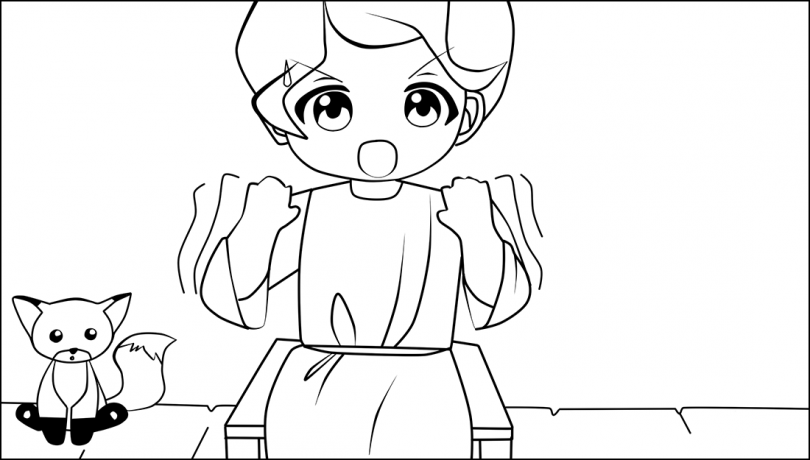
Jesus and the New Testament Passover coloring page Peter did not want Jesus to wash his feet

At first Peter did not want Jesus to wash his feet.

PDF to print for family reading with coloring page

Jesus and His family had always kept the Passover, as well as all of God’s annual festivals. But the last Passover Jesus kept was quite different.

First, He shocked His disciples by performing an act of humble service. Then He introduced symbols to remind them of the meaning behind His coming sacrifice.

Three new things

Here are three new things that He did:

He washed their feet. Jesus and the disciples gathered together in a special room at the beginning of the 14th of Abib at twilight. Jesus knew that He would soon be killed, and He said to them, “I have really wanted to eat this Passover with you before I die. I won’t eat it again until it is fulfilled in the Kingdom of God.”

After they had finished eating, Jesus got up and took a towel. He poured water into a basin and began to wash and wipe dry the disciples’ feet. Peter stopped Him and said, “You will never wash my feet.”

Peter was upset because foot washing was a job for the lowest of servants—not for Jesus, the great Teacher. Jesus replied, “If I don’t wash your feet, then you are not a part of Me or the work I am doing.”

Peter loved Jesus and didn’t want to displease Him, so he said, “Then wash my hands and head too!”

Jesus loved Peter too, and He patiently explained, “If I wash your feet, you are clean all over.”

Jesus continued until He had washed each disciple’s feet—even the feet of Judas, the man who would betray Him. Then He said, “I have given you an example. Now you are to do just as I have done.”

He had just introduced the first change of the Passover service. He had shown them that they were to serve one another. (You can read this in John 13:1-20.)

He introduced the symbolic reminders of bread and wine

Then Jesus took some bread. He said a prayer over it and broke it into small pieces. “This is My body which is broken for you. Take a piece, and when you eat it, remember Me.”

After each disciple had eaten his piece of the bread, Jesus took a cup of wine. He prayed over it and offered it to each man. “All of you must drink of this, because this is My blood, which will soon be shed for you. It’s My blood that will let you be forgiven of your sins.”

Just as the Passover lamb’s blood saved the children of Israel from the destroyer (Exodus 12:23), now the blood of the Lamb of God was going to save people from the second death that comes from breaking God’s commandments without being forgiven. (The full account is found in Luke 22:14-23.)

Some of Jesus’ last words:
Continued at: https://lifehopeandtruth.com/bible/bible-study/bible-stories/jesus-and-the-new-testament-passover/

________

Is the Passover Christian?

a-christian-passover-all1YouTube: https://youtu.be/oanySV6OVbQ

“The Passover is a Christian ceremony that Christians today should be observing.

Transcript

[Steve Myers] “Is the Passover Christian? Absolutely it is, and scripture bears that out. There’s an interesting passage that is in 1 Corinthians 5. I’ll write that one down. 1 Corinthians 5:7, and it makes this reference, and it’s not just a casual, you know, afterthought that the Apostle Paul writes about. He says, “Christ, our Passover, was sacrificed for us.” Now, when you read that you could just say, “Okay, well, I have a savior in Jesus Christ. He died on my behalf.” But he’s really getting to a much deeper thought, because a couple of chapters later he writes about the Passover ceremony itself, that the Passover is a Christian ceremony that Christians today should be observing.

So in chapter 11 of 1 Corinthians, 1 Corinthians 11:23, Paul begins to rehearse how to observe the Christian Passover, and he says, “I received from the Lord that which I also delivered to you.” That the Lord Jesus on the same night in which He was betrayed took bread, and when He’d given thanks, He broke it and said, “Take, eat, this is my body which is broken for you. Do this in remembrance of me.” And then he talks about the cup, and he says, “This cup is the new covenant in my blood. This do as often as you drink it in remembrance of me.”

And so He’s not keeping Jewish Passover. He’s not eating a meal. He’s showing that New Testament Christians should take the symbols of His body and blood representing His complete sacrifice on our behalf. And He says to do it in remembrance. Do it as a memorial. Do it as an anniversary.

So we find that Christians observe the Passover. They don’t observe Communion. They don’t observe the Eucharist. They don’t observe any other ceremony. They don’t do it every month, or every few weeks, or every time they get together to worship. Here, Paul says, “I receive this from Christ.” This came directly from Jesus Christ.

And He said do it as a remembrance, as a memorial. So we do it once a year. So Christians today do keep the Christian Passover, and they do it once a year on that very same night that Jesus was betrayed.”

_________

Update:

This week we have got a bit more painting done, and cleaned up the side of the house from the roadwork’s dust.  My van is filthy and needs hosing down every day.  I will be so glad when they have finished resurfacing the road right there behind my house.

One morning, as I was taking my neighbor to the doctor in Conroe, we loaded my van with a bunch of scrap metal that I had collected and took it over the scales.  It didn’t bring much money, but it helped the environment.

As Passover is coming up, we cleaned the vacant mini-house fridge.  The church stores a lot of their leavened food in that fridge over Passover.  Much better than throwing it away.  All the leavened food will be out of my house and the church kitchen by Saturday, 29th. April.

I had a lot of veggies, so I peeled and sliced them into various shapes. Potatoes cut like french fries, carrots into large matchsticks, turnips into rounds, and beets into wedges. It took quite a while to cook them all in several batches in an airfryer.  I was going to take them to the church potluck until I realized that it would dry them out if they were reheated in the oven, and it would take too long if I took the airfryer with me.  So I have had lots of veggies to eat this week.

A big package of chicken quarters was taking up space in my deep-freeze, so I cooked them in my big electric chef’s kettle with some seasonings, and took them to the church in a crockpot.  Also, I took some toasted sliced mini croissants.  We also had chicken enchilada casserole, green bean casserole, beef stew, BBQ on buns, salads, cookies and pies, etc. 

The Bible readings were Lev. 12:1-13:59, about leprosy, 2 Kin. 4:12-5:19, John 6:1-13, and Mat. 8:1-4, and the Teaching was about ‘The 70th Anniversary of the Re-instatement of Israel’ which is on May 14th. 2018.  The numbers 7 and 70 have special meanings in the Bible. 

As usual, everyone had a very happy Sabbath day.


Sunday, April 15, 2018

Unleavened Bread. How Much Sin? DNA Born Again! Update.

For “Scripture Sunday”:

Unleavened Bread

unleavened-bread-header“Should a Christian observe the Feast of Unleavened Bread? Is that something that we should be doing today?

https://youtu.be/yFERqhonAmc

Transcript

[Steve Myers] “There is an interesting feast that falls right after the Christian Passover that’s called Unleavened Bread. You can read about that particular feast time in Leviticus 23. There is an outline of God’s festivals in Leviticus 23.

Now the question comes up. All right, we’re in the book of Leviticus, that’s Old Testament. And didn’t the sacrifice of Christ do away with all of those festivals that are mentioned in Leviticus 23? Well there is evidence in the New Testament that says without a doubt, no. Not at all. Should a Christian observe the Festival of Unleavened Bread? Is that something that we should be doing today?

Well, the Apostle Paul spoke to that very question in the book of 1 Corinthians. So at 1 Corinthians 5. He gives very direct instructions to the church in Corinth and he says this. He says, “You’re glorying is not good.” This is in verse 6. “Your glorying is not good. Don’t you know a little leaven leavens the whole lump?” So he begins to talk about leavening, and leavening goes in the dough and makes it rise. Then he says, “Purge out the old leaven since you are truly unleavened.” Then in verse 8, he goes on and says, “ Therefore, let us keep the feast, not with old leaven, nor with leaven of malice and wickedness, but with the unleavened bread of sincerity and truth.” (1 Corinthians 5:6-8)

So Paul says a couple of interesting things here. First of all, there is an object lesson. By removing physical breads and leavening out of our home, getting rid of yeast, the things that make bread rise, there is a lesson to be learned from that. And so he uses that object lesson to say there is a spiritual thing that’s involved here. The spiritual lesson is get rid of wickedness, get rid of sin, get rid of malice and now put on the new man in Christ. Be sincere. The man of sincerity and truth.

So through this physical observance of the Days of Unleavened Bread and getting rid of that leavening out of our homes, we are recognizing that we should be a new creation in Christ. And so what does he say? He says, “Let us keep the feast.” Because of these things, because we understand the spiritual significance, we keep the feast. Some translations say, “Observe the feast.” Some say, “Celebrate the feast.” Some even say, “Continue the feast.” Not in a Jewish sense but in a Christian sense.

So should a Christian observe the Feast of Unleavened Bread? The answer the Apostle Paul gives for the New Testament church for us today, yes. Absolutely. And 1 Corinthians 5 bears that out.  From: https://www.ucg.org/beyond-today/beyond-today-daily/unleavened-bread 

________

How much sin do you accept in your life?

YouTube: https://youtu.be/7RN298JMQ7k

Transcript

[Steve Myers] “How much sin do you accept in your life? The Apostle Paul, in a sense, posed that same question to the church in Corinth. In 1 Corinthians 5 and in verse 6 he says this to them. He says, “Your glorying is not good. Do you not know that a little leaven leavens the whole lump?” So the Apostle Paul is comparing leavening to sin, because when you put that leavening in the dough it causes that dough to rise and it, in a sense, infects that whole loaf.

So Paul says even the littlest amount spreads and grows. And in fact the church of Corinth had become so tolerant and so merciful that they accepted sin both in the congregation and in their own personal lives, and so God says no, we can’t do that.

The Apostle Paul was inspired to write, “Therefore, purge out the old leaven that you may be a new lump.” And then he connects that to Jesus Christ. He says, “You’re truly unleavened, for indeed Christ, our Passover, was sacrificed for us.” (1 Corinthians 5:6-7)

So Paul’s saying look at yourself. How much sin is acceptable in your life? Paul says do everything you can to rely on Jesus Christ. Have him live his life in you and through you so that we choose to be truly unleavened.”  From: https://www.ucg.org/beyond-today/beyond-today-daily/how-much-sin

________

Born Again! 

An Amazing Fact: “Tucked inside the microscopic nucleus of every cell in our bodies is a six-foot long strand of protein molecules, called DNA. The information contained within makes it possible for each parent to contribute one-and-a-half billion bits of genetic information to each of their offspring!

The DNA itself resembles a long, narrow, spiral ladder of pliable material. Before a cell is able to divide, the DNA must be “duplicated” so that each cell will have an original copy of the genetic code. As replication begins, an enzyme unwinds the spiral DNA ladder. Next, a protein molecule holds the two strands apart while another enzyme rapidly “transcribes” genetic code to RNA molecules. The code is then “proofread” and instantly corrected if an error is found. All of this happens in a matter of seconds! Finally, the RNA molecules exit the nucleus to begin communicating the genetic code to new cells.  

As the RNA molecule takes critical information from the DNA and communicates it to the body, so Christ took the message of His Father’s love from the “nucleus” of heaven and communicated it to our planet. “For I have given to them the words which You have given Me; and they have received them, and have known surely that I came forth from You; and they have believed that You sent Me” (John 17:8).
And now it is Christ’s desire that we do the work of the RNA! “As You sent Me into the world, I also have sent them into the world” (John 17:18).  

While we cannot help what genetic heritage we have been given from our parents, we can accept God’s offer to be our Father and choose to be “born again.” Let us bring joy to the Father’s heart today, replicating the peace of heaven, by letting Christ transcribe the genetic code of heaven into our hearts!
KEY BIBLE TEXTS
O righteous Father, the world hath not known thee: but I have known thee, and these have known that thou hast sent me. John 17:25 And I have declared unto them thy name, and will declare it: that the love wherewith thou hast loved me may be in them, and I in them. John 17:26”

________

Update,

So why am I writing about the Passover when most people have already celebrated it?  Well, the church that I attend, and quite a few other churches around the world, believe that it has to be celebrated after a certain new moon, and that it won’t be Passover until Sunday, April 29th this year.  Then there will be the Feast of Unleavened Bread for 7 days after that.

Zack and I have already pulled out my fridge and cleaned any crumbs out that might have been under it, getting ready to have all the leavening out of the house.

On Monday, it was Jay’s mom, Claudia’s funeral.  There were a few of her family there, even though they live in Houston.  All three of her grandsons said a few words and both her daughters.  Jay was there, her only surviving son, but he isn’t very good at public speaking, so he stayed seated.  Leon, her neighbor, and I, were her only friends there. They placed her urn in a box and put it in the ground under a great big oak tree. It was a graveside service, the wind was really blowing, then sometimes it would rain on the big canopy over us.  Most of us were cold because we didn’t know it was going to be an outside service, and hadn’t dressed accordingly. 

The two lots with the ramshackle cabin on it that I worked on cleaning up last year have been sold to a man who has torn it all down, so that undesirables can’t stay there any more.   He had to go past there several times a day to get to his lovely waterfront home and wanted to get it cleared off and leveled. That is a big eyesore eliminated.  I had asked for any of the wooden T1-11 siding, as I have a use for it, and they brought it here on a truck.  Zack and I cleaned up that lumber, pulled all the nails and screws, and stacked it in the greenhouse until we are ready to use it.

It took two mornings just to get all the dust from the road work cleaned up on my front screen porch, my “catio”, which is at the other side of the house from the road resurfacing. Another morning we spent cleaning the front door porch.   The dust and dirt travelled that far.

My new foster-cat is a little gray honey called “Gracie”.  She is one of the survivors when her home caught fire and was saved with just smoke inhalation. She played hide-and-seek with me for the first three days. After a couple of hours she would utter a little meow and I would go find her.  When she found out that I knew all the hiding places, she gave up and now sleeps on my bed.  She is so gentle, and the wounds on my hands and legs from the other cat have all healed.  I am now bandaid free for the first time since January.

For the church potluck I cooked some course ground bison, added chili beans, onions, green peppers. seasonings and called it Bison Chili.  They loved it. I just took the one dish this time and it seemed so much easier to load and unload the van. We also had lasagne, a beef and veggie dish, and lots of veggies and salads.  There was a very sticky, gooey, chocolate pie thing with copious amounts of white coolwhip stuff on the top, and they ate two of them.  How can anyone eat such sweet stuff ?

The Bible readings were Lev. 9:1-11:47, that is about the clean and unclean foods, then Sam. 6:1-7:17, and Heb. 7:1-19 and 8:1-6.  The Teaching was about the Resurrection.  We have been having some colder weather, and the church was cold as they never have enough heat in there for me, and it was a very cold day.