Showing posts with label loans. Show all posts

Sunday, February 24, 2019

Slave to the Lender. Six Biblical Personal Finance Principles. Update.

For “Scripture Sunday”:

Slave to the Lender

“Credit is an easy way to buy what you want now. Used wisely, credit can be an effective tool; but without restraint, it can make you a slave to the lender.
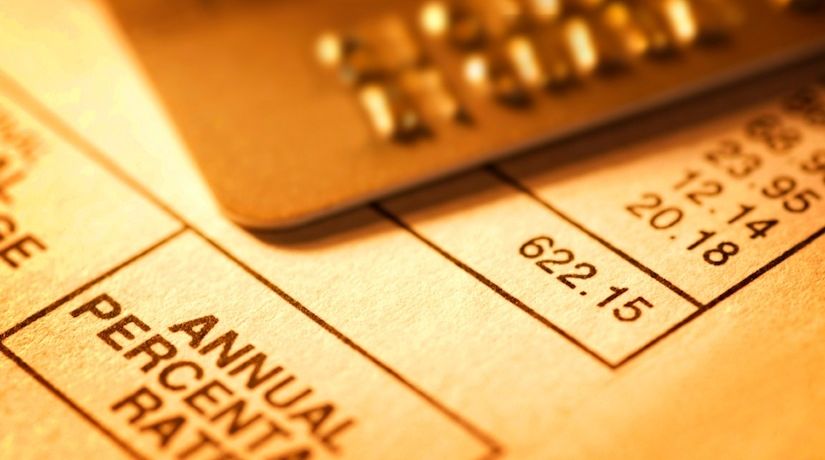
The borrower is slave to the lender

Don't become a slave to the lender.

The importance and usefulness of credit in our modern life is evident. The value of a good credit rating is emphasized by the prevalence of credit reporting and credit protection products and companies. A poor credit rating can be a rude awakening for someone trying to buy a house—or even applying for a job!

A culture of credit

For the average family, a major purchase such as a new automobile or a home would not be possible without the ability to borrow money on credit and pay it back over time. Many businesses must also occasionally borrow money to upgrade facilities or purchase equipment. Without sufficient capital on hand, credit becomes an important means to keeping a business growing and profitable.

These are important uses of credit in our society today. And used wisely, it allows a family or a company to take advantage of opportunities that would otherwise be lost. Gains in business and equity for a family are all positive outcomes of credit used wisely.

Not all credit is created equal       
Continued at: https://lifehopeandtruth.com/relationships/finances/slave-to-the-lender/

_________

Six Biblical Personal Finance Principles

“Money affects every aspect of our lives, and God’s financial principles can help us gain control and find peace of mind.
Six Biblical Personal Finance Principles

The other day it seemed that just about every conversation I was part of or overheard related to money.

At lunch, a friend told me she needed to take a second job to pay for her son’s college tuition. Another friend called me, discouraged about her upside-down car loan. A radio talk show host discussed consumer debt levels with his listeners. The couple behind me in line at the supermarket argued about whether they could afford certain items in their shopping cart. After receiving our latest utility bill, my husband and I had a long chat about how we could cut back on energy usage.

Truthfully, that day probably wasn’t much of an aberration—for me or for the people I was in contact with. The fact is, our personal finances influence much of what we think about, talk about and do day in and day out.

Often we’re worrying about whether we’ll have enough money to make ends meet, pay for an unexpected expense or retire. Some people become obsessed about amassing their fortunes and turn into workaholics. I’ve known people whose mood changed, depending on what the stock market was doing or how many bills were outstanding.

Our finances affect where we live, our work schedules, what we do with our free time and on and on.

So it’s not surprising that the Bible—the owner’s manual for living—has a great deal to say about money.

What follows are six biblical personal finance principles, along with some elaboration from professional financial consultants.

1. Follow a budget

The Bible doesn’t use the term budgeting, yet it offers clear direction on the importance of such planning. Simply put, a budget is a written plan to track and control income and expenses.

Proverbs 27:23 says, “Be diligent to know the state of your flocks, and attend to your herds.” Put in modern terms, we need to be aware of how we’re using our income, so we can know whether we need to make adjustments in our spending.

“Budgeting helps us avoid impulsive and unnecessary spending, live within our means, and prepare for future needs,” explains Bill Gustafson, senior director of the Center for Financial Responsibility at Texas Tech University. “If we don’t carefully plan our finances and direct them where to go, we will one day find ourselves broke.”

To set up your household budget, figure out how much you spend each month for different categories (such as housing, food, transportation, entertainment, clothing, medical, etc.), and compare that to your monthly income. If your expenses are more than your income, you will need to cut out unnecessary purchases.

Once you’ve established your budget, use either a ledger or a budgeting program on the computer to start tracking your monthly expenses. “If you get to the point where there’s no more money left for the month in a particular category, stop spending,” Dr. Gustafson says. “It’s going to take some determination to do this, but it’s a necessary step if you’re going to get your finances under control.”

For more on budgeting, see our online article “The Bible, Budgeting and You.” It includes a downloadable sample outline budget.

2. Tithe faithfully

The top priority on our income, before we do anything else with it, should be God’s tithes. God says in Malachi 3:10, “Bring all the tithes into the storehouse, that there may be food in My house.”

A tithe is 10 percent of a person’s “increase” (Deuteronomy 14:22), which is given to support the ministry and work of the Church. When we tithe, we show God that we are putting Him first in our lives.

Certainly God doesn’t need our money. Everything we have ultimately belongs to Him (Exodus 19:5). The real beneficiaries of tithing are those of us writing the checks. In the last part of Malachi 3:10 God makes the promise that when we faithfully tithe, He will “open … the windows of heaven, and pour out … such blessing that there will not be room enough to receive it.”

The blessings can be physical or spiritual. Financial expert Dave Ramsey explains in his blog that tithing teaches us to be good stewards of what God has given us and to live unselfishly. This can lead to improved household finances and can help us become better spouses, friends, relatives, employees and employers.

Tithing can also help us learn to trust God more fully and build a closer relationship with Him. Often people who tithe can think back on times when—at least on paper—it didn’t look like they could afford to tithe. Yet they did and had enough—sometimes even more than enough—for their physical needs.

One friend put it this way: “Tithing has helped me to stay more focused on God, to not just look at the ‘facts’ from a human perspective, and to remember we can always count on God in all situations.”

3. Avoid unnecessary borrowing

The Bible warns against the use of debt. Proverbs 22:7 states, “The rich rules over the poor, and the borrower is servant to the lender.” If you become burdened with a heavy load of debt, in essence you’ve become a slave to your creditors. You no longer have the freedom to decide how to spend your paycheck because you’re obligated to meet those debts.

The way to keep debt in check is to be careful about buying on credit. “Only borrow for purchases that will increase or hold their value, such as home or college tuition,” advises Erica Sandberg, a San Francisco–based money management consultant. “Don’t take out high-interest loans for nonessential items that are likely to depreciate quickly, such as new automobiles, clothing, furniture, appliances or jewelry.”

According to a 2018 report from Creditcards.com, the average credit card interest rate in the United States is around 17 percent. This means you’ll pay $170 in interest annually on every $1,000 of debt.According to a 2018 report from Creditcards.com, the average credit card interest rate in the United States is around 17 percent. This means you’ll pay $170 in interest annually on every $1,000 of debt. If you let the balance carry over month after month, you can quickly end up owing far more than the original price of your purchases.

Erica Sandberg recommends only using credit cards if you are able to pay the full balance on the statement each month, so you don’t have to pay any interest. If you have a lot of outstanding revolving debt, this should be paid off as quickly as possible, starting with the credit card that has the highest interest rate.

4. Save up before spending

Financial planners generally suggest saving at least 10 percent of your income every month. Have three different accounts: a short-term savings for major purchases (such as new household furnishings or vehicle repairs), a long-term savings (for your retirement or children’s college tuition), and an emergency fund (in case of a job layoff or large unexpected expense).

“Saving up money before making a purchase is one of the smartest ways to keep out of financial trouble,” says Dr. Gustafson. “By having money set aside for ‘big ticket’ items, you won’t be tempted to use credit cards to pay for them.”

This is another biblically based financial principle. Proverbs 21:20 says, “Be sensible and store up precious treasures—don’t waste them like a fool” (Contemporary English Version). Proverbs 6:6-8 describes the ant, who saves during a time of plenty for a time when there will be need. We, too, should save now for future expenses.

5. Give to others

Everything we have—our money, physical assets, jobs and even the ability to earn money—comes from God (Ecclesiastes 5:18-19). After meeting our own needs, He wants us to share some of what we’ve been given with others.

In Acts 20:35 Paul quotes Jesus as saying, “It is more blessed to give than to receive.” We should give unconditionally—even when the recipients cannot repay us (Luke 14:12-14). That could mean donating to charity, buying someone a gift, having people over to dinner or buying food for a homeless person.

While we need to exercise wisdom in how much to give, we shouldn’t be so tight with our money that we’re reluctant to part with any of it. As with tithing, God blesses us when we’re generous (Luke 6:38; 2 Corinthians 9:6).

There have been times when I’ve given and afterward seen a disconcerting emptiness in my pocketbook. But then seemingly out of nowhere I received some unexpected cash or other financial blessing that filled that gap.

When we have the desire to share, God gives us the means to do so.

Of course, not everyone has the same financial means. We may genuinely be struggling monetarily. But even then, we can still give of the time, talents or other nonfinancial assets that God has provided for us. The point is, God wants us to use what He has blessed us with so we can be a blessing to others, not just so we can fulfill our own needs and desires.

6. Put your confidence in God, not in your finances

When it comes to finances, people often go from one extreme to another. If our bank accounts, retirement portfolios and home values are increasing, we might start trusting in them. When we’re facing a job layoff, stock market losses or unplanned expenses, we may worry anxiously. Neither extreme is the biblical approach.

The Bible makes it clear that true security can only be found in God (1 Timothy 6:17) and that trusting in riches will destroy us (Proverbs 11:28). Our wealth and possessions are temporary and can easily be wiped out in an instant, perhaps through theft, accidents or natural disasters.

If we’re struggling with our finances, we must remember that God is our refuge, and that He cares for those who trust in Him (Nahum 1:7). We shouldn’t be anxious about money problems (Philippians 4:6). We must do our part—to not overspend, but to save and invest our money in what has eternal value. The rest is in God’s hands. If we’re seeking God’s Kingdom first and foremost, we can be assured that God will provide for our physical needs (Matthew 6:25-34).

By committing to these financial principles, we will benefit from improved finances and financial peace of mind. There may be less tension about money at home and a better connection among family members as well.

Most important, we will learn to trust God more fully, develop a deeper appreciation for His purpose for us and build a closer relationship with Him.”  From: https://lifehopeandtruth.com/relationships/finances/six-biblical-personal-finance-principles/?

---------

Update.

One reason that I chose these topics is because when I left England it was the rule that you had to put a third down on something you wanted to get on credit, “on tick”, they called it.  I think that stopped a lot of unecessary debt, which is too prevalent these days.  So I hope that folks will go by these good principles when borrowing.

Just regular maintenance around here this week.  Raking and burning and trying to keep abreast of the leaves and pine needles, and we also had to burn some old termite-eaten lumber.  One morning I took Zack to the local food pantry operated by the local churches, to get his ration of free food.  

On Wednesday, I took a day off and looked in various thrift shops. in Conroe. One find was “The Bible from 26 Translations” and I also bought one of those old glass electric hot plates, but this one is about 3 feet long.  It will keep a lot of the church potluck food at serving temperature.  My daughter called my cell while I was at Walmart ordering my new eye glasses, she was in Conroe so we met and I saw her new German Shepherd pup, “Ruckus” for the first time. He is big.  I tried to take a picture, but he wouldn’t hold still.

On Thursday, the usual Yoga and Senior exercises at the “Y” and they put on a lunch there this time.  Friday, a visit to the doctor, just routine stuff, and  then because it was “Preparation Day”, according to the Bible, I got my church clothes ready, cooked for the church potluck, and set my hair.  A quick brush through and it might look decent.

For the Sabbath potluck I took Turkey Spaghetti Bolognese, Whole Grain crackers and White Cheese dip.  I also took the rest of that enormous cookie that had been taking up room in my deep freeze.  But the favourite dessert there was a cheescake, and that went fast!

The Bible readings were Gen. 49:1-27, Zech. 14:1-11, Luke 23:13-34 and all of Matt. 7.  The teaching was the second part of “Messiah, Our Advocate”.

The computer guy was at church this time and now I have my desktop back, hurray!  Even though I found out how to use my regular monitor instead of hunching over the table-height laptop screen, it just didn’t do right for me.  It has Windows 8 and I am used to Windows 7.  I hope I never have to get used to Windows 10!  The keyboard is a little different, too, so that made me make mistakes, 

Still crazy weather around here, you can’t get bored.  Really cold, and then just to surprise us, a warm day. 

Sunday, September 22, 2013

Be Strong and... How to Live Longer. Small Holes. Dangerous Promises. Deep Devotion. Noah’s Faith. Is This the End Time? Jack Dempsey’s Controversial Long Count. First "Four-level".


For “Scripture Sunday”:

Be Strong and...

“When God says he'll provide strength does he ask for anything else?”

“The other day I was reading through the beginning of the book of Joshua. Something caught my attention when God told Joshua, "Be strong and of good courage" (Joshua 1:6). Now that's something we all want to be strong and courageous, especially when it comes to what we believe. And then God says something interesting a verse later in Joshua. Joshua 1:7  He says, "Be strong and very courageous that you may observe to do according to all the law, which Moses my servant commanded you."

So I began to think: Is there a connection to being strong in the faith, courageous to accomplish God's will, and obedience? Many times people would look to something like this and say: "Oh, well that's Old Testament. That doesn't mean much today, and it's not really applicable." But you know when you look over to the book of Ephesians, the book of Ephesians says something pretty interesting in chapter 6. There's a connection in Ephesians 6:10 Finally, my brethren, be strong in the Lord, and in the power of his might. See All....   See if this sounds familiar. The Apostle Paul says: "Finally my brethren be strong in the Lord and the power of His might."

So once again we have this connection to being strong and courageous in the faith. And yet is there still a connection to obeying? Yes, there is. We find this connection over in the book of Hebrews. Most likely the same author, Paul, in chapter 5 verse 9. Notice what he says. He says: "Having been perfected He became the author of eternal salvation to all who obey Him" (Hebrews 5:9). So there is a connection even in the New Covenant, under the New Covenant.

We are shown very clearly that there is a connection between our faith being strong and courageous and obeying what God tells us to do. So don't ever forget: be strong, be courageous, and be sure that we're doing it in obedience to God.”

From: http://www.ucg.org/beyond-today-daily/christian-living/be-strong-and     Video at: http://youtu.be/fmrXqBk3-lY

_______

How to Live Longer

“Can something so simple extend your life?” 

“Do you want to live longer? Go to church. Really? Can going to church really extend your life? You may not realize it but there are actually dozens of scientific studies that show that there is a connection between going to church and living longer. So Google it, check me out and you'll find there are many studies that actually bear that out.” 

More at:  http://www.ucg.org/beyond-today-daily/christian-living/how-live-longer     Video at: http://youtu.be/FICN_f_dawQ

_______

Small Holes

“Why not ignore the little things. Does it matter?

There's an old Gaelic Proverb that says, "Small holes sink big ships."”

Transcript at: http://www.ucg.org/beyond-today-daily/christian-living/small-holes

_______

Dangerous Promises

“My son, if you become surety for your friend, if you have shaken hands in pledge for a stranger, you are snared by the words of your mouth; you are taken by the words of your mouth. So do this, my son, and deliver yourself; for you have come into the hand of your friend: Go and humble yourself; plead with your friend. - Proverbs 6:1-3

The Bible teaches very high standards for our words, promises and pledges. Solomon here warns of the dangers of promising something unwisely. If you have committed to pay a loan if your friend can’t pay it, be prepared to pay it. Never assume that your pledge will not be called on. Sometimes others can wheedle us into promising to help by assuring us our help won’t be needed. Beware! If you can’t afford to keep your promise in the worst-case scenario, Solomon urges you to do everything you honestly can do to get out of the trap you have got yourself in.”

Read more about God’s standards of honesty in “The Ninth Commandment: You Shall Not Bear False Witness.

______

Deep Devotion

“French angelfish are completely devoted to their partners and mate for life. They are found in the warm tropical parts of the Atlantic Ocean and spend all of their time together—traveling, hunting, sleeping, and protecting their territory. Mature French angelfish are rarely seen alone. If they are, their mate has likely died. They do not “remarry.”

Swans are another species that will keep their mates for life. There have been occasional reports of swans “separating,” but only when there has been a nesting failure or loss of young. Perhaps their strong commitment to each other is why pictures of swans conjure up images of romance. On the other hand, the black vulture might not seem like a romantic bird, but it is one of the most faithful animals in the entire animal kingdom. They are so intolerant of “infidelity” that they have been observed attacking other vultures that were unfaithful to their partners!

The PDSA organization (UK) gives certificates to animals for bravery and devotion. Toby, a black Labrador Retriever, was stabbed four times in the chest and legs by an armed burglar in April 2009 in Lancashire. He successfully chased the burglar off the property. Wicker, a pet German Shepherd, aided his owner’s son by fetching help when the boy had an epileptic seizure. Dotty, a donkey, helped her stable mate (a sheep) when it was attacked by a dog. And Piper, a Labrador Retriever guide dog, defended his blind owner who was attacked and then safely walked his injured owner home. What devotion!

The Bible says, “A friend loves at all times, and a brother is born for adversity” (Proverbs 17:17). We can learn much from our animal friends, but our greatest example is found in Jesus Christ, who was made “like His brethren” and declared, “For whoever does the will of God is My brother and My sister and mother” (Hebrews 2:17; Mark 3:35).

Jesus, the divine Son of God, was truly a friend who sticks closer than a brother when He gave His very life on Calvary for you. When you face the enemy today, know that there is a Friend who stands beside you and will never leave you alone.”
KEY BIBLE TEXTS: A man that hath friends must shew himself friendly: and there is a friend that sticketh closer than a brother. - Proverbs 18:24

_______

Hebrews 11 - Noah's Faith

“How does Noah's example of faith speak to us today?”

Transcript at: http://www.ucg.org/beyond-today-daily/christian-living/hebrews-11-noahs-faith

______

The program on WGN TV this morning:

Is This the End Time?

“Jesus said that the time of His second coming would be like the days of Noah. What did He mean? How could you be affected?”

Transcript at: http://www.ucg.org/beyond-today-program/news-and-prophecy/end-time

_______

On This Day:

Dempsey loses on long count, Sep 22, 1927:

“Jack Dempsey, the "Manassa Mauler," misses an opportunity to regain the heavyweight boxing title when he fails to return to a neutral corner after knocking down champ Gene Tunney in a title match in Chicago. Dempsey waited five precious seconds before heading to the neutral corner, at which point the referee began the 10-count as the rules dictated. As the referee reached nine seconds, Tunney got back up to his feet.

As the match got underway, Tunney took charge of the fight, racking up points and keeping Dempsey at bay.  It was the seventh round that made the match go down as one of the most memorable and controversial in boxing history. As Tunney attempted to keep Dempsey at arm’s length, Dempsey, in a low crouch, hit him in the chin with a left hook, followed by his famous right hook, again to Tunney’s jaw. Another left hook then sent Tunney to the canvas. Dempsey failed to return to a neutral corner as the rules dictate, and the referee turned to remind him of his mistake before beginning the standard nine count. Although Tunney made it to his feet before the ref completed the count, and was thus allowed to continue the fight, taped footage later showed that Tunney had actually stayed down for 14 seconds, which should have given Dempsey the knockout. Instead, the fight continued and Tunney, having won the last three rounds on the judges’ scorecards, was awarded the victory.”

_______

The famous "four-level" opens in Los Angeles, Sep 22, 1953:

“On September 22, 1953, the first four-level (or "stack") interchange in the world opens in Los Angeles, California, at the intersection of the Harbor, Hollywood, Pasadena, and Santa Ana freeways. It was, as The Saturday Evening Post wrote, "a mad motorist's dream": 32 lanes of traffic weaving in eight directions at once. Today, although the four-level is justly celebrated as a civil engineering landmark, the interchange is complicated, frequently congested, and sometimes downright terrifying. (As its detractors are fond of pointing out, it's probably no coincidence that this highway octopus straddles not only a fetid sulfur spring but also the former site of the town gallows.)

Before the L.A. four-level was built, American highway interchanges typically took the form of a cloverleaf, with four circular ramps designed to let motorists merge from one road to another without braking. But cloverleafs were dangerous, because people merging onto the highway and people merging off of the highway had to jockey for space in the same lane. Four-level interchanges, by contrast, eliminate this looping cross-traffic by stacking long arcs and straightaways on top of one another. As a result, each of their merges only goes in one direction--which means, at least in theory, that they are safer and more efficient.

When the iconic Hollywood-Harbor-Pasadena-Santa Ana four-level was born, it was the most expensive half-mile of highway in the world, costing $5.5 million to build. (Today, highway engineers estimate, $5.5 million would pay for just 250 feet of urban freeway.) Roadbuilders disemboweled an entire neighborhood--4,000 people lost their homes--and excavated most of the hill it stood on, dumping the rubble in the nearby Chavez Ravine, where Dodger Stadium stands today.

Though its design has inspired dozens of freeway interchanges across the United States, many Angelenos dread their encounters with the four-level: It's as crowded (500,000 drivers use it every day), stressful and treacherous as the cloverleafs of yesteryear. Still, it's an indispensable part of the fabric and the mythology of Los Angeles.”

_______

Yesterday:

After Wendy and I had our usual Saturday morning phone call, I got ready for church.  I had plenty of time as I was going to the afternoon service at the other church south of Willis because Nala, my foster cat was being picked up here at noon for Adoption Day.  Jay wasn’t going with me because his mother and neighbor were having a birthday party for him.

As I had plenty of time, I procrastinated and watched several religious videos on the computer, but still arrived early for the 12.30pm Bible Study, “The Expansion of The Church”.  It was about the texts Luke 7:57-60 and 8:1-8, where the message was spread from Jerusalem and Judea, expanded into Samaria and beyond.  This was because the apostles were scattered after the persecution that arose after Stephen’s death.

The sermon was given by the pastor about “ My Citizenship in this World Is a Catch 22.” (Or in “Trek” Kobayashi Maru) It was mostly about how we need a better comprehension of what is a tangible exchange of money, and that is ‘labor hours.’  If you look at a thing before you purchase it, and think of it in the ‘labor hours’ that it will take to posses it, very often isn’t that valuable or desirable.  As it says in the Bible, Do not be a slave to a creditor

Another thing was brought out was that God didn’t have the Israelites wandering around in the wilderness for 40 years for no avail.  It was also to give them time to get rid of all the pagan ideas that they had brought with them from Egypt, and to tell them to keep His commandments, not the ideas of the pagans. But as soon as Moses back was turned, they tried to go back to them, anyway.

Even though I prefer to go to the morning church, it was good to see the good folks at that congregation again, but I didn’t stay for the potluck.

The foster mom brought Nala back home, and said that she doesn’t think that the strenuous Adoption Days bring as many results as the people who look on www.Petfinder.com   Going there upsets timid Nala, and I don’t know if I will be sending her to another Adoption Day.

Saturday, December 18, 2010

What Credit Card Companies Don't Want You to Know. Adoption Day Again.

Here are a few things that may save you money on your credit card bills:

"If you have a balance closer to $7,000, like many households, making only the minimum payments mean it'll take you 50 years to be debt free.

But it's unlikely that you have taken the time to figure out how long that payoff will take. If you make minimum payments on a $2,500 balance at 18 percent interest, it'll take you 34 years to pay it off. By then, you'll have paid out $6,431 in interest on top of the original $2,500 bill.

If, instead of paying $200 a month on credit cards for 25 years, you invest that money at 12 percent interest, you could retire in 25 years with $1.3 million.

Minimum payments are forever.
Making only minimum payments can affect your finances for the rest of your life. The bottom line: Pay off your debts as soon as possible.

Most credit card companies set minimum payments at 2 percent to 2.5 percent of the balance, or a minimum of $10. That means the minimum payment might be as much as $140 on a $7,000 bill, but it shrinks slowly as you chip away at the debt, stretching out the time to completion.

How much difference does it make to pay a little extra beyond the minimum? It's amazing. In the earlier $2,500 example that would take 34 years to pay off, the minimum payment would start at $50 and gradually drop. But if you continued paying that same $50 a month instead of the shrinking minimum, the payoff would take you about eight years instead of 34.

And if you paid $75 a month? It would take less than four years. $100 a month? Only 2 1/2 years (in all cases, assuming you made no more purchases on the card). "
More at: http://www.repaircreditamerica.com/0309creditcards.html
_________________________

"Do I know how to use a credit card?

"What a silly question! Of course I do. You just hand it to the clerk whenever you want to buy something and sign the receipt. Make the minimum payment and you can get lots of free credit. And don't worry if you max out your card. The company will probably raise your limit, and you are likely to get more offers through the mail for more cards than you can possibly use."

Does this sound familiar? It should. It's the approach millions have taken when using those little plastic cards that make purchasing items so simple and easy.

However, this common financial practice costs many families dearly. According to a recent report, the average American consumer now owes $7,000 of credit card debt—an amount sometimes referred to as "revolving credit" because many consumers typically pay only the interest and a bare-minimum amount of principal and thus never fully repay the entire sum.

How to use a credit card

After you've paid off all your credit-card debt, it's time to consider how such cards can be properly used. They are extremely convenient tools—attested to by the fact that people charged more on credit cards last year than they spent in cash—but the wise use of credit cards is important. How do credit-card-savvy consumers use their cards?

The most important step in responsible credit-card use is to completely pay off the bill every month.
Think of the credit card as using cash that is reserved each month for the items charged. This way no interest accrues, and credit cards become legitimate and helpful financial tools.

They become our servants instead of the other way around.

Most people don't realize that God has much to say about how we use our money. As our Creator, He is the One who gives us the power to earn money and enjoy what it can buy (Ecclesiastes 5:18-19). In a parable of the coming Kingdom of God, Jesus Christ described Himself as giving His servants money (talents) to manage. How His servants managed those funds determined their reward in the Kingdom (Matthew 25:14-30).
What's the lesson of this parable?
The way we manage our money reveals to God much about our character.

Biblical guidelines for financial stability

Since God created us, He understands how we think and operate.
When it comes to finances, God reveals in His Word a simple but profound truth: "The rich rules over the poor, and the borrower is servant to the lender" (Proverbs 22:7)."
More at: http://www.gnmagazine.org/issues/gn35/creditcard.htm

___________________

Today:

The sun came out, but it was chilly sweater weather.

Side-finished Ray installed the water tank filler, so that side is done.

After getting some of the running light wires up out of the way, Jay measured and cut the next sheet of paneling.
This second sheet was easier as it has just one outlet in it.
But we haven't install it yet.  Other interruptions stymied that.

Another SPCA foster mom, Chris, who lives near me, picked up Paco and Patches for Adoption Day.  Patches darted  in to her hidey hole as soon as she saw the carriers. 
As Chris was going to bring the foster critters back here, I didn't send Patches as she gets very stressed, and afraid of strangers.  When she is here at home, she is a little extrovert.

Then I realized that I was supposed to meet my SPCA boss, Kenya, as she was going to get some pictures of my foster animals out of my camera and in to her USB stick.   But we couldn't do it, as she had forgotten her UBS stick, but we found a way around that.  When Kenya sends pictures of our adoptable pets to the local newspaper, the pictures have to be enormous, and the paper resizes them.     Sorry, I don't know all the proper lingo. 

Jay wanted to go into the next town with me, so we went to Lowes for parts, Krogers for a few groceries, and picked up Paco and Prime.  The traffic was terrible, and I don't want to go back to Conroe until after the holiday!

Maybe, this old great grandma will get the hang of all this computer and digital camera stuff one day!

Friday, April 30, 2010

Top Museums. Pay Day Loans.

Room_of_the_Louvre_museum (Small)"The Louvre in Paris topped the art museum attendance numbers for 2009, with 8.5 million visitors.
Home to nearly 35,000 objects -- and a McDonalds -- the museum houses three of the most sought after art pieces: the "Mona Lisa," the "Venus de Milo," and the "Winged Victory of Samothrace." 
                      
More about Louvre: http://www.goparoo.com/europe/france/ile-de-france/paris/attractions/louvre-museum/
and http://en.wikipedia.org/wiki/Louvre

"The British Museum in London came in second with around 5.6 million visitors, and the Metropolitan Museum of Art had  4.9 million guests walk through its doors. "
British_Museum_from_NE (Small)


800px-British_Museum_Reading_Room_Panorama_Feb_2006
More about the British Museum: http://british-museum.visit-london-england.com/
and : http://en.wikipedia.org/wiki/British_Museum
Most Visited Art Museums in 2009
Louvre, Paris 8.5 million
British Museum, London 5.6 million
Metropolitan Museum of Art, New York 4.9 million
National Gallery, London 4.8 million
Tate Modern, London 4.7 million
National Gallery of Art, Washington DC 4.6 million
Centre Pompidou, Paris 3.5 million
Musee d'Orsay, Paris 3 million
Museo Nacional del Prado, Madrid 2.8 million
National Museum of Korea, Seoul 2.7 million
Source: The Art Newspaper
The numbers were released by the Art Newspaper, a British publication who has surveyed art museum attendance figures for 15 years.
The most visited exhibitions were also surveyed, with Japan claiming the top four slots.
Tokyo National Museum's "Ashura" exhibition attracted 15,960 people per day, just ahead of Nara National Museum's "61st Annual Exhibition of Shoso-in Treasures," with 14,965 attendees per day."
More at: http://www.bloomberg.com/apps/news?sid=aB0KREQwXkQ0&pid=20601088
_________________

This was a cloudy goofing off day!  I took Jay to cash his check, and pay off a big bill he had in the next town.  He had borrowed from one of those rip off places that charge you $50 per month for a $200 loan!  You are expected to pay it off with your next check.  If you can't pay it off, they charge you $50 to refinance it, each month!  We are in the wrong business! 

I didn't see the paperwork, so I hope he paid it off.  I'll let his mother check on that.  I was wandering around the Kroger store next door.  I got a great deal on some salmon, so I was glad that I keep the little 12v. fridge in the van.

Then we went to five thrift shops, and the Habitat for PICT0005-1 (Small)Humanity store.  It was raining off and on, but obliged us by stopping every time we had to get out of the van or a store.

Jay bought something at each of them, but I just came home with this 50 cent cute cat scratching mat which hangs on a door knob.

PICT0001-1 (Small) It has a little pocket at the back for putting catnip, and after it was Lysol-ed, Prime took charge of it.


Patches just got to sniff at it. 
PICT0002-1 (Small)


I sure got my walking in today.