Saturday, August 15, 2020

Will There Be Another World War? Peace on Earth? VE and VJ Days. Update.

.

Will There Be Another World War?

“In the 75 years since World War II, have we learned how to avoid another world war? Or are we headed toward a worse one? Will there be a World War 3?

Will There Be Another World War? (photo of Shigemitsu signing surrender to end World War II)

On Sept. 2, 1945, on the USS Missouri, Japan signed an unconditional surrender, formally ending World War II.

This concluded the greatest cataclysm the world has ever seen, with estimates as high as 100 million dead.

As bad as World War II was, are we now forgetting the horrors and the lessons of history? Will there be another world war?

History is the story of war, and though each war has unique roots and causes, they all are evidence of man’s inability to govern himself. And history gives no assurance that another war—an even more destructive one—will not come.

Remembering World War II

In Europe World War II began on Sept. 1, 1939, when the German army invaded Poland. The war in Asia began two years earlier, on July 7, 1937, when Japan invaded China.

In both Europe and Asia, the aggressor nations were driven by a desire to expand their territory and control or eliminate peoples they considered to be weak or inferior.

Roots of war in Europe

In Europe Adolf Hitler’s brand of grievance politics and charisma was the driving force for his push for more lebensraum or living space. Hitler applied the Darwinian concept of survival of the fittest to the different races. He believed that the Germanic or Aryan race was superior to all others. Therefore, he believed they should dominate and needed more space.

In particular, Hitler coveted Russia, with its vast territory and natural resources.”  Continued at: https://lifehopeandtruth.com/prophecy/prophecy-in-the-news/will-there-be-another-world-war/?

________

Peace on Earth?

“A World War II vet considers how the days of infamy and victory remind us of this world's crying need for peace.

“A few years back I called several newspapers on December 7, and asked if they knew what day it was. The reporters didn’t know it was Pearl Harbor Day. Of course, even fewer remember Victory in Europe (VE) Day or VJ Day or other days of remembrance.

How contradictory that the world seeks peace by waging war. The horrors of war were made painfully clear with World War I and World War II. But the world continues to seek peace through conflicts and armed battles. Aren’t we all looking for the day when the whole world will have a truly peaceful environment in which to live a happy, enjoyable life?

Rather than relying on peace treaties, what if all the world followed the Golden Rule? It certainly appears there would be a much, much more peaceful world if all the “war lords” would use the Golden Rule as a daily guide and settle their differences in more peaceful ways.

General Douglas MacArthur understood the answers to these questions at the end of World War II when he spoke aboard the USS Missouri September 2, 1945: “Let us pray that peace be now restored to the world and that God will preserve it always.”

He declared: “We have had our last chance. If we will not devise some greater and more equitable system, our Armageddon will be at our door. The problem basically is theological and involves a spiritual recrudescence, an improvement of human character that will synchronize with our almost matchless advances in science, art, literature and all material and cultural developments of the past two thousand years. It must be of the spirit if we are to save the flesh.”

In all, we need to honor God on these days of remembrance—Pearl Harbor Day, VE Day, VJ Day, Memorial Day, Veteran’s Day and Armistice Day—because of His giving us victory. We also honor the tremendous sacrifices Americans have made to try to bring about peace and keep America and the rest of the world free. Each time we remember these days of war and victory, we can remember the words of General MacArthur and the fact that war doesn’t really make a peaceful world. More than that, we can look to the Book that teaches the Golden Rule and the true way to peace.”      

From: https://www.ucg.org/beyond-today/peace-on-earth   Written by Dean Rammelsberg who served aboard the USS Goshen in the Pacific from December 13, 1944, until the end of the war.

________

Update.

I remember VE and VJ Days. 

“VJ Day, or Victory over Japan day, comes three months after Nazi Germany surrendered in Europe, and generally receives less attention than Victory in Europe, or VE Day, on May 8.

But more than 30 million soldiers and civilians were killed in the Pacific theater during the war, compared with the 15 million to 20 million who died in Europe.

Japan surrendered on Aug. 15, 1945, after the U.S. dropped atomic bombs on Hiroshima and Nagasaki, killing 100,000 to 200,000 people.”

I was only a kid, but I knew that we rejoicing something big, so I put ribbon streamers on my bicycle handlebars.  I didn’t know anything other than wartime, rationing and the bombings there in London.  Each morning going to school and finding out which of my friends had been killed by the bombs during the night, was normal for me.  I was very fortunate, I just had a crushed foot.

We all went to bed in our “Siren Suits” , I guess you would call them romper suits, because we would have to go down into the bomb shelters when the siren went off, and when the “All Clear” siren sounded we could go outside to see what had been damaged.  (During World War II, Churchill became well known for his 'siren suits', or, as he preferred to call them, 'romper suits'.)  But we made it, and I can still hear Winston Churchill's voice on the radio telling us that it was all over.   P E A C E was just a word that didn’t have any meaning for me until I was older. 

Well, this week has been busy but has mostly been studying, and trying to find homes for 5 pretty little calico kittens and their mom.  Now I am taking care of a very sweet, spayed, declawed, 9 year old cat. Her person died and the people who took her in couldn’t keep her in a ‘No-Pets’ apartment.  Still trying to get her medical records or she will have to be re-vaccinated and re-tested for FIV and FeLu all over again.  That could be hard on her.

One doctor’s office visit has spawned more doctor visits at specialists for this and that.  The first specialist that I saw said he didn’t know why they had sent me there, because I am fine.  I told him I wondered too.  I guess it’s all about the money !!

Our church was distributing fruits and veggies at a nearby apartment complex, so I went to help them.  There was so much food that I was able to bring some back for me and my neighbor Sherry.  I am steaming potatoes, apples and carrots as I write. We each got a watermelon and I cut mine up into finger food sticks, where there is just a little bit of rind on the end to use as a handle. https://lifehacker.com/cut-a-watermelon-into-sticks-perfect-for-kids-and-part-1603562078    .

On Friday, we, Sherry and I, had our usual Bible study from the church’s study book, but because of the heat wave, we knew that we wouldn’t be going there for the Sabbath, today.

Saturday, August 8, 2020

A Time to Listen. NO HUNTING ON SUNDAY. Such a Time as This. Update.

.

A Time to Listen

“In today’s world it seems everyone is quick to share an opinion. With the current turmoil over race relations, should we be doing more sharing or more listening?

A Time to Listen Few times in U.S. history have we witnessed such an explosion of turmoil, anger and division. A nation that has proudly presented itself to the world as the “land of the free” finds itself reeling in shock at the nightly displays of mayhem, rioting, looting and wanton destruction.

There are virtually no voices trying to justify or minimize the brutality of George Floyd’s murder. There are many voices supporting peaceful demonstrations while decrying the rioting and senseless violence (which so often erupts amid attempts at constructive protest).

There are voices calling for an end to racism, for peace, for greater accountability and better training of police, and for criminal justice reform. And sadly, there are even voices hurling blame at one group or another, voices fanning the flames of anger and voices screaming at anyone who disagrees.

If there is anything America never seems to lack, it’s voices.

Social media has given massive platforms to anyone with an opinion, regardless of its validity or how it’s expressed. If you can think it, write it or say it, you will have no limitation on sharing it with the entire Internet universe.

To be fair, this blog is not that different, so why should you pay any attention to it?

For one reason, because I’m not seeking to tell you what you should think. I’m just asking a question.

But to understand the question, we need a little background from a source most people aren’t considering right now. It is the biblical book of Job, one of the oldest stories in written literature. The book tells Job’s story and offers many thought-provoking lessons.

The tragic experience of Job

As the story unfolds, Job, a very prosperous man, suffers a series of sudden and tragic personal catastrophes. In one day he loses all his children and possessions, and is left with virtually nothing. As if that weren’t enough, in short order he is stricken with a painful and debilitating skin disease that leaves him sitting in a pile of soft ashes for relief.

His wife, who has obviously lost everything too (except her health), is so distraught at her husband’s suffering that she tells him he would be better off dead.

But most important of all in Job’s story is that he was described as a righteous man whose life pleased God (Job 1:8). Not only were all of his physical blessings stripped from him, but he also felt like he had lost the most important relationship in his life. How could God allow this to happen after Job had worked so hard to live his life the right way? (Job asked questions of God, but never cursed or rejected Him, Job 2:9-10.)

At this point, Job is visited by three of his friends. We should probably put quotation marks around “friends”—but that’s getting ahead of the story.

"...let every man be swift to hear, slow to speak, slow to wrath..." - James 1:19  Job’s friends are so shocked by his appearance that they are speechless for a while. But after hearing Job’s lamentation about his condition (Job 3), they each shared with him their opinion and advice. They were convinced that God would not allow this to happen to Job unless he was guilty of some major hidden sin. They accused him of everything they could imagine, and each time Job showed he was innocent.

But the “facts” didn’t shut them up. They were so convinced that they were correct, so totally convinced of the rightness of their own arguments, that they just kept bludgeoning the suffering man with useless advice.

Finally, in frustration, Job said to them: “Miserable comforters are you all!” (Job 16:2).

They were all so eager to share their opinion that no one seemed to listen to Job, or to really seek God’s perspective.

Could we be guilty of the same thing?

Do we listen?

I’m a white man. My parents tried to teach me that racial prejudice was wrong. But my parents were products of the 1930s and ’40s, and their ideas of racial equality were far from what we would accept today.

How much do I really understand about the experience of men and women of color in today’s America? Am I quick to give my voice—my opinion, my perspective—without first listening?

Let me repeat that—really listening. Listening to understand. 

When I was in my late 20s, I had a black friend who was a few years older than me. One day as we were talking, he began to share some of his experiences as a young black man growing up in the 1950s on the border of Arkansas and Mississippi. I had no idea such things happened in this country. After all, they didn’t happen in “my world,” where all policemen were my friends, neighborhoods were safe, and life was generally lived without much fear.

Through the years, other men and women have shared their stories with me, not out of anger, but to help me understand. I will be forever grateful to all of them for trusting me with their experiences and helping to open my eyes.

I now find myself a little slower to offer good-sounding platitudes until I take the time to listen and try to understand first.

Have you ever sat with someone who feels abused, marginalized, frustrated, angry, hopeless and just listened to understand? Really listened, without (or at least before) offering your perspective, solutions or experiences? For that matter, how many of us have spent time with a police officer and asked him or her what it is like to be a first responder on the front lines every day?

Instead of being “miserable comforters,” like’s Job’s so-called friends, maybe it’s time to do a little more listening and a little less sharing of our “humble” opinions.

We just might learn something.”  From: https://lifehopeandtruth.com/life/blog/a-time-to-listen/?

_________

NO HUNTING ON

“As a sportsman, I was disappointed when, upon moving to North Carolina, I encountered the "Sunday law."  No deer hunting on Sunday.  Period.  As a Sabbath-keeper, this has brought me no little consternation!  I will not hunt on Saturday, and according to the laws of the State, I may not hunt on Sunday.  That leaves Monday through Friday – not ideal for getting in quality hunting time.

But far beyond my own personal pain, this brings up a bigger question: "Why rest on Sunday at all?" Most Christians believe that "Sunday rest" originated in the Bible. What honest truth-seekers are shocked to find is there is absolutely no biblical command to rest on Sunday. None. So, why do some rest on Sunday if the Bible doesn't command it?

Good question.

The answer is right in front of our faces. In fact, the newspaper in our hometown recently ran a story, "Pray or play?" with the answer. On page 8E of the article, the editors reproduced the widely recognized edict by the Roman emperor Constantine in 321AD. It reads thus:

On the venerable day of the Sun let the magistrates and people residing in cities rest, and let all workshops be closed. In the country, however, persons engaged in agriculture may freely and lawfully continue their pursuits because it often happens that another day is not suitable for grain-sowing or vine planting; lest by neglecting the proper moment for such operations the bounty of heaven should be lost (The Charlotte Observer, January 10, 2009).

So, where did "rest on Sunday" come from? A Roman emperor? Certainly not the Bible. In fact, if we honestly look at Scripture, the only day ever spoken of as a rest day is the seventh. Take a look at a few examples:

"Work shall be done for six days, but the seventh is the Sabbath of rest" (Exodus 31:15).

"The seventh day is a Sabbath of solemn rest, a holy convocation. You shall do no work on it" (Leviticus 23:3).

"The seventh day is the Sabbath of the Lord your God. In it you shall do no work" (Deuteronomy 5:14).

Interestingly, resting on the seventh day of the week was commanded as a way of following God's example. He rested on day seven after the six days of Creation. Christians who observe the weekly Sabbath – by worshipping and resting – are acknowledging the Creation many millennia ago!

"Six days you shall labor and do all your work, but the seventh day is the Sabbath of the Lord your God … For in six days the Lord made the heavens and the earth, the sea, and all that is in them, and rested the seventh day. Therefore the Lord blessed the Sabbath day and hallowed it" (Exodus 20:9-11).

So, which day do you rest on? We challenge you to ask yourself "Why?" Is it because of tradition, traced back to the edict of an unconverted Roman Emperor? Or do you obey what you find written in your Bible? (For additional help in your study, be sure to read our free booklet, Which Day is the Christian Sabbath?)

Sabbath-keeping is actually the wave of the future! The book of Isaiah foretells a coming day when all nations will observe God's Holy Days, including the weekly Sabbath. That prophecy is found in Isaiah:

"'And it shall come to pass that from one New Moon to another, and from one Sabbath to another, all flesh shall come to worship before Me,' says the Lord" (Isaiah 66:23).

I'm looking forward to that day, when people everywhere will worship – and enjoy the revitalizing rest of the Sabbath – together in harmony and unity.

Until then, you may find me hunting on Monday, Tuesday, Wednesday, Thursday or Friday – but not on Saturday.

And – at least in North Carolina – never on Sunday.” From: https://www.tomorrowsworld.org/commentary/no-hunting-on-sunday

_________

Such a Time as This

“God called you during a unique time in mankind’s history, and He will help us accomplish our roles.

Transcript of YouTube: https://youtu.be/ne7jWuRf2PI

[Steve Myers] We certainly live in challenging times. There are tumultuous things going on all around us. But it’s not unique. These types of occurrences happen throughout history. Biblically speaking, I think of the example of Queen Esther. You probably know the story, the Jews had been taken into captivity. The Persian king ruled the world, the empire at that day.

Well, Queen Esther was a Jew. Her Uncle Mordecai encouraged her at a critical point when an evil advisor, Haman, wanted to kill all the Jews. He convinced the king to make an edict, that it was okay if they did that. Who was going to stand up and defend the truth, defend the Jews, save the Jews? What could Queen Esther do? You couldn’t even approach the king without an invitation.

Well, Mordecai confronted Esther and told her this was her time to stand up, to stand strong, to exhibit her faith. And in the book of Esther, here’s what Mordecai says to her, “If you remain completely silent at this time, relief and deliverance will arise for the Jews from another place. But you and your father’s house will perish. Yet who knows whether you have come to the kingdom for such a time as this, for such a time as this.”

For such a time as this, well, Esther certainly stood up, she heeded Mordecai’s advice. And ultimately, the Jews were saved, for such a time as this. Well, we live in such a time. We live in a time where we must stand for the truth. We must not accept the things that are against God. We must stand for the truth of the Word of God. And that’s gonna take courage.

That’s gonna take a faith, and we may feel maybe a little like Esther did it first, that we can’t do it. How can I stand up against the odds? How can I maintain my faith in God? How can I have the resolve, the commitment to stand up, no matter what, no matter what challenges I face, to stand for the truth, to stand for righteousness, to stand for the faith that God has given me?

We’ve gotta put God to the test and put our faith in Him, because there’s no doubt we all will face times like this. And we need to turn to God and look to Him for His guidance, for His confidence. He lives in us, and we can draw on the power of God’s Holy Spirit to do what’s right, no matter what. We’ve been called for such a time as this, to be that shining light to this world, that no matter what any qualities are going out there, we stand for what’s right.

We do what’s right. We live what’s right. We strive to think what’s right, no matter what. And so God gives us the means to be able to do that because we have not been given a spirit of fear, but we’ve been given the Holy Spirit, a spirit of power and love, and right-thinking, sound thinking, wholesome thinking. And so we can be that shining light in this dark world, and we don’t have to fear. We don’t have to fear the Hamans that are out there in this world.

Yes, they stand against us, but with the power of God behind us, we can stand true. There’s a great passage over in Isaiah 41:10, it says this, “Fear not, I am with you.” That’s God telling us that. “Be not dismayed for I am your God, I will strengthen you. Yes, I will help you. I will uphold you with my righteous right hand.” Now, we know we can’t do it on our own. We have to put our full trust in God. So let’s do just that because we live in difficult times, but perhaps we’ve been called for such a time as this.”    From: https://www.ucg.org/beyond-today/beyond-today-daily/such-a-time-as-this

________

Update.

We are really not too hampered by the Covid 19 rules here. We must be muzzled when in buildings, and no gatherings of a lot of people, but going to the stores as usual, though definitely distancing in the stores.

My injured daughter was moved out of the hospital to rehab, and we hope and pray that she will continue to improve.  I can’t visit her because of the Covid thing though.

The masked beautician trimmed my hair and it seems to be business as usual there.

Animal Control trapped 4 of the stray cats, so that just leaves 3, but they are not trapping here any more because they don’t have room for them. One of the remaining ones, “Sox”, a tabby with white feet, we are going to try to socialize and have him fixed and vaccinated, so he can be our official apartment mouser.

At my check-up at the doctor’s office, we distanced and wore our masks. He is going to research some things and see me again in a couple of weeks.

As usual, Sherry and I prepared for the Sabbath School Bible study on Friday morning, and as we missed the fellowship of the good folks at church we asked if we could be there for it. There weren’t many there, and we all “distanced”, but it was great to be around them today.

Sunday, August 2, 2020

75 Years After Hiroshima. Repentance: What Does Repent Mean? Update.

.

75 Years After Hiroshima, Real Peril, Real Hope

Seventy-five years ago, the United States waged the world’s first nuclear war. Since then, eight nations have detonated 2,056 nuclear weapons, a shocking number. As one analyst warns, nations seem “willfully blind to the peril.” Will humanity survive?   
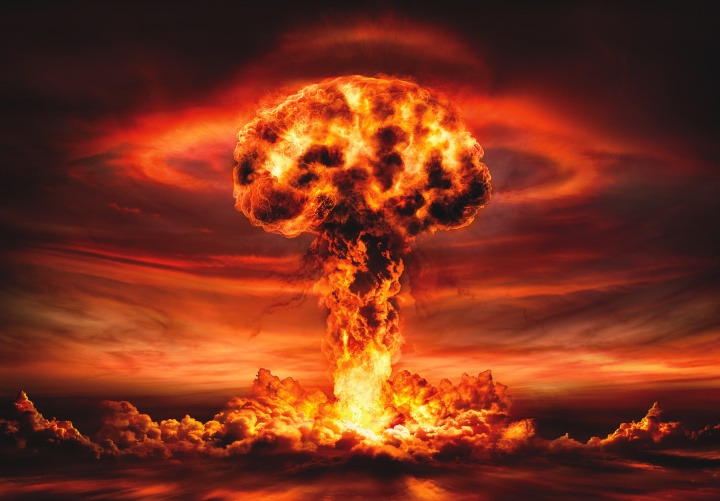
Atomic explosionRomoloTavani/iStock/Getty Images Plus

Jesus foretold a time of great upheaval that only the use of nuclear weapons could bring about—a time shortly before He returns!

As the world marks the 75th anniversary of the ending of World War II with the dropping of an atomic bomb on Hiroshima and then Nagasaki, what have we learned?

Consider this disturbing account concerning a nuclear test explosion nine years after Hiroshima. On the open Pacific Ocean, it resembled a mystical apparition arising opposite the morning sun. Roused from sleep, the Japanese crew of the Daigo Fukuryu Maru tuna boat crowded on deck to witness a bizarre fireball expanding over the western horizon. A short time later, as the radiant cloud billowed higher into the morning sky, a puzzling fine chalky material began raining all over the ship and the crewmen. The baffling precipitation lasted three hours, sticking to human skin and piling up on deck.

The fine dust, known later as shi no hai (“ashes of death”), was highly radioactive coral debris, which had been pulverized and blasted into the atmosphere by the then-secret 15-megaton Castle Bravo test (America’s largest thermonuclear weapon at the time).

Covered with the deadly ash, the entire crew fell ill with radiation sickness. Seven months later, the ship’s chief radio operator, Aikichi Kuboyama, died of complications from the radiation, becoming the first victim of a next-generation hydrogen bomb. Nine years after Hiroshima, a Japanese citizen was again the victim of atomic weapons.

Since the first test explosion in July 1945, an astonishing 2,056 nuclear devices have been detonated by nine nations. What has this produced?

The Castle Bravo nuclear detonation described above caused the worst radiological disaster in U.S. history—worse even than the former Soviet Union’s Chernobyl accident—raining radio-active debris nearby and in lower levels over much of the world.

In 1961, Soviet military nuclear scientists exploded the largest device in history—the incomprehensible 50-megaton “Tsar Bomba”—chilling even the hardiest of people at the height of the Cold War. Test after nuclear test has blasted massive earthen cavities and heaved multiple tons of radioactive debris into the atmosphere.

Today some 15,000 nuclear weapons exist, with about 9,400 in military arsenals (the remainder are retired or technologically obsolete, awaiting dismantling). Russia holds the most at 4,300, with the United States not far behind at about 4,000.

And what about other nations with operational nuclear weaponry? Besides Russia and America, publicly known nuclear weapons are held (or capable of being produced) by the United Kingdom, China, France, Israel, Pakistan, India, North Korea and possibly Iran.

All this raises the specter of the unthinkable happening—a worldwide nuclear holocaust. Experts estimate that between 100 million and 270 million people would horrifically die within the first hours of a full-scale mutual thermonuclear exchange between Russia and the United States—to be followed by the complete extinction of humanity within a few years.

This leads us to consider: How in the world did we get here? And, more importantly, where do we go from here? Do we face the future with despair or with hope?

Technology arms race—75 years ago

Here’s a short history.

The sailors who caught a glimpse of the enigmatic metal box being welded to the deck of the U.S.S. Indianapolis on July 16, 1945—the same day an atomic bomb was first successfully tested 1,100 miles away in New Mexico—had no idea what its mysterious contents held. As they sailed out of San Francisco Bay, few knew that onboard was a high-tech weapon that would instantly incinerate some 70,000 people in Hiroshima 20 days later.

The weapon was the result of an unprecedented technological, industrial and manufacturing leap. Six years earlier, a letter written by Hungarian physicist Leo Szilard and signed by Albert Einstein changed the course of human history. In early 1939, German scientists had formally confirmed the discovery of nuclear fission. By literally “splitting the atom” in a sub-atomic chain reaction, enormous energy could be released.

Alarmed, several European and American physicists and other scientists were deeply concerned. After a delay caused by the German invasion of Poland, the now-famous Einstein letter finally made its way into the hands of President Franklin Roosevelt on Oct. 11, 1939.

Roosevelt understood the gravity of the situation immediately. The Nazis could not be the first to develop an atomic weapon.

The president promptly set in motion what became known as the “Manhattan Project,” eventually employing more than 120,000 people, to build the first operational nuclear weapon.

Nearly six years later, the New Mexico test with a dense sphere of 13.6 pounds of plutonium-239 heralded in the nuclear age. On July 16, 1945, the “Gadget,” as the test device was called, produced a destructive 22-kiloton blast that shattered windows more than 100 miles away in America’s sparsely populated Southwest.

20th-century nuclear war

The first use of an atomic weapon in warfare commenced a few weeks later on August 6. A modified B-29 Superfortress bomber dropped the first such bomb (named “Little Boy”) on Hiroshima, a Japanese city of some 340,000 people with industrial and military significance.

At 8:15 a.m., 141 lbs. of uranium-235 explosively slammed together, blazed supercritical and detonated at 1,900 feet above the city. Around 30 percent of the populace, 70,000 people, were instantly killed by the blast and radioactive fire. About 70 percent of the city’s buildings were annihilated, even though only a fraction of the uranium (1.7 percent) actually reached critical mass. Thousands more later died painfully of radiation poisoning, burns and related injuries.

The next day President Harry Truman confirmed both America’s new nuclear capacity and the bombing. In a radio broadcast, the president said: “The world will note that the first atomic bomb was dropped on Hiroshima … We knew that our enemies were on the search for it. We know now how close they were to finding it. And we knew the disaster which would come to this nation, and to all peace-loving nations, to all civilization, if they had found it first … We won the race of discovery against the Germans.”

“The danger of total destruction”

Yet, even then, the American president recognized the deadly threat such weapons posed to all of human civilization. He warned: “The atomic bomb is too dangerous to be loose in a lawless world. That is why Great Britain, Canada and the United States, who have the secret of its production, do not intend to reveal that secret until means have been found to control the bomb so as to protect ourselves and the rest of the world from the danger of total destruction” (emphasis added throughout).

Two days later, loaded with the plutonium-fueled “Fat Man” bomb, a second B-29 flew over the Japanese city of Nagasaki. The 11 lbs. of plutonium went supercritical at 1,650 feet. At least 35,000 Japanese civilians died instantly in blazing radioactive horror.

Japan formally surrendered a few days later. In his broadcast of capitulation, Emperor Hirohito recognized the new nuclear threat’s potential of the “total extinction of human civilization.”

The Soviet Union then quickly accelerated its nuclear research program, aided in part by Soviet spies who had infiltrated U.S. top secret research facilities. Four years later, the world reeled in shock on Aug. 29, 1949, at the first successful Soviet nuclear test. Three years after that, the United Kingdom, as a joint participant in the American Manhattan Project, independently detonated its first nuclear weapon in a remote area of Australia.

The deadly nuclear arms race was on.

Importantly, ominous words from the Bible now powerfully came to life. Jesus Christ had foretold a “time of calamity” so destructive that, if not stopped, “not a single person will survive” (Matthew 24:21-22, New Living Translation). The potential expressed in these ancient words had now become reality!

What now?

In the late 1950s and early 1960s, many were gripped by anxiety over the threat of nuclear devastation. Millions of school children practiced survival drills. Public “Fallout Shelters” were stocked and openly marked. Families built bomb shelters. Soviet Premier Nikita Khrushchev almost daily threatened potential atomic war. The United States and Soviet Union faced down each other in a war of words and of nuclear deployment. Missile sites with operational nuclear weapons were established in Turkey by America, then in Cuba by the Russians. Nerves were frayed. Live nuclear exchanges were barely avoided.

Today, the perceived threat of nuclear war has faded. Even the fabled Doomsday Clock of the Bulletin of the Atomic Scientists has been shifted in some of its focus to the threat of climate change.

Even though many express grave concern about the potential threats of nuclear terrorism and atomic saber-rattling by small nations like North Korea, others seem more worried by pandemics like the coronavirus or economic recovery. As Foreign Affairs magazine recently declared, people seem “willfully blind to the peril” of nuclear-fueled extinction.

But the threat certainly remains. The international Union of Concerned Scientists issued a new call for peace for the 75th anniversary of Hiroshima. It formally reads in part: “Nuclear weapons are the ‘weapons of the devil.’ They could wipe out the human race and all other creatures. They could destroy the environment and turn the globe into a dead planet.”

The short-term threat is real

Nearly 2,000 years ago, Jesus was teaching His disciples from the Mount of Olives overlooking the Kidron Valley and the magnificent Jerusalem temple. As He presented His longest recorded prophecy (Matthew 24), He had much to say about our present age.

He outlined a critical sequence of events that would lead to global disruption and cataclysmic upheaval, as noted earlier. But it certainly wasn’t all bad news. This coming traumatic time, rendered in some English translations as “the great tribulation,” would be resolved by the spectacular establishment of the long-awaited Kingdom of God.

Indeed, this Kingdom, the ultimate hope of all humanity, will be ushered in with the open triumphal return of Jesus—then as King of Kings and Lord of Lords—to the very mountaintop from which He was then speaking.

The events Jesus described, as well as many other dramatic statements throughout the Bible, tell of tumultuous and massive upheaval, even the death of billions of people. Only the use of nuclear weapons matches the horrific scope of what is often described.

Why is this important? These times are ahead of us. If trends continue and nations and people continue to move away from the revealed truth of God, life will grow very difficult—even to the point of literal human extinction. But you and whole communities, even whole nations, can seek to turn their lives around, focused on what God has revealed. (See “Can a Nation Turn Back to God?” on page 26.)

Difficult times lie ahead. But there is real hope—hope beyond a nuclear doomsday. May God speed His coming Kingdom!”  From: https://www.ucg.org/beyond-today/beyond-today-magazine/75-years-after-hiroshima-real-peril-real-hope

________

Repentance: What Does Repent Mean?

“A major message of the Bible is a call to repent and change. This isn’t popular, but it’s vitally necessary. What is repentance? Why does God require it?

According to the apostle Paul, God “now commands all men everywhere to repent” (Acts 17:30 ).

Repentance is not a popular subject in most of the religious community. Seldom is a modern-day religious audience exhorted to repent.

Yet Jesus’ cousin, John the Baptist, vigorously preached, “Repent, for the kingdom of heaven is at hand,” and told his audience to “bear fruits worthy of repentance” (Matthew 3:2, 8). Soon after John’s martyrdom, Jesus Christ continued the same theme by preaching, “Repent, for the kingdom of heaven is at hand” (Matthew 4:17).

Within weeks following Jesus’ crucifixion, the New Testament Church was founded. Peter’s inspired words to an audience of thousands of devout Jews were, “Repent, and let every one of you be baptized in the name of Jesus Christ for the remission of sins; and you shall receive the gift of the Holy Spirit” (Acts 2:38).

What does repentance mean? Is it required for salvation? How important is this subject to you? Read more about what the Bible says about repentance in the related articles.”  More at: https://lifehopeandtruth.com/change/repentance/

________

Update.

We are still like the Lone Ranger, or bank robbers, with our masks on when out in public.  The lady who lived in the apartment across from me was taken to hospice.  It is such a shame when folks take chemotherapy (chemicals) for cancer when there are better ways with more quality of life. It’s all abut the money.

My health insurance nurse came for her annual visit and declared me fit as a fiddle, and wished all her patients my age (85 this month) were as healthy. 

On Tuesday the apartment manager designated me Official Cat Wrangler and I have their trap.  All the tenants are now faced with eviction if we feed these stray cats. Some of the adult cats were born here and they are not about to leave home.  I have permission to feed them so that they can be trapped, and I caught a silver grey cat that first night.   But Navasota Animal Control wouldn’t take it, they said to take it to a vet and have it PTS at my expense, or dump it in the country.

Neither option sounded right to me, so I found that one a home as a barn cat.  I also have my own trap here, but I don’t dare set the traps because what to do with the cats?  The next few days were taken up with the usual chores and writing to every local rescue and shelter that I could think of.   Finally, I think I have found places for all the cats, so I will start trapping again next week.

The real skinny white one won’t need to be trapped as he will come to me, and I managed to get some Revolution (for fleas, ticks, ear mites, mange mites, heartworm, etc), on him.  I hope that it will make him more comfortable.  I think he must have been someone's pet at one time, such a shame.

On Friday my church neighbor, Cherry, and I studied this week’s Bible study as usual, even though we will not be going to the church for the Bible study on the Sabbath.  I have also been studying with the TV program “Through The Bible” each weekday morning for the last 10 years.  Never can have too much studying, and my main interests are the Bible and nutrition.  “You are what you eat, and what it ate” and  “Let Food be Your Medicine.”

Then I got a phone call from my granddaughter saying that my daughter, Wendy, was in an accident and had been thrown off her golf cart. Because of this Covid thing, no one can go see her in the hospital.  She is basically OK, cuts, bruises and sore head, no concussion, but will have surgery on her mouth today.