Showing posts with label train. Show all posts

Sunday, November 22, 2015

When Was Jesus Born? Part 2. Cause and Effect. Beyond Ruts. Update


For "Scripture Sunday": 

When Was Jesus Born? Part 2

"Luke 2:1 And it came to pass in those days that a decree went out from Caesar Augustus that all the world should be registered.

image The vast Roman Empire was a structured and expensive government, and this census was “organized to facilitate the collection of taxes” (NKJV Study Bible). In an agrarian society, both tithes and taxes were collected shortly after the fall harvest when the farmer would have sold his crop. Collecting taxes in the winter or any other time is not very effective.

Also, since such a census required people like Joseph to travel back to their ancestral home, it is unlikely the census would have been conducted in the winter time when travel was difficult. This is but one more hint in the text that Jesus Christ’s birth did not occur on Dec. 25. Though the Bible does not give an exact date for His birth, it seems clear that it could not have been in the winter.

For more about why Jesus Christ’s birth could not have been Dec. 25 and how it came to be celebrated that day, see our article “Christmas: Should Christians Celebrate It?”" by Mike Bennett

_______

Cause and Effect in Prophecy

"Deuteronomy 28:1, 15

“Now it shall come to pass, if you diligently obey the voice of the LORD your God, to observe carefully all His commandments which I command you today, that the LORD your God will set you high above all nations of the earth. …

“But it shall come to pass, if you do not obey the voice of the LORD your God, to observe carefully all His commandments and His statutes which I command you today, that all these curses will come upon you and overtake you. …”

Bible prophecy, and the Bible as a whole, teaches us the principle of cause and effect. Obeying God’s good and beneficial laws ultimately leads to wonderful blessings. Disobeying—sinning—ultimately leads to the horrible curses described in Deuteronomy 28.

This is a sure and certain principle—there are predictable consequences to our actions, physically and spiritually.

So why does humanity so easily forget this inevitable truth? Because under the sway of Satan, we have learned to postpone some of the bad consequences, and Satan has used his enormous powers of deception to make the bad look good and the good, bad. He tricks us into thinking there are shortcuts—that we can escape the consequences.

But God wants us to take the long view—to see through the deception to the ultimate reality. He gives us His laws and Bible prophecy so we can see what will cause suffering and what will cause real joy and happiness. Choose life!

For more about the purposes of Bible prophecy, see “Purpose of Prophecy.”"

_______

Beyond Ruts

An Amazing Fact: The distance between train-track rails, better known as the U.S. railroad gauge, is an odd 4 feet, 8.5 inches. Why? Because that’s the way they built them in England, and English expatriates built the U.S. railroads.

But why did the English build them that size? Well, the first rail lines were built by those who built horse-drawn tramways, and they simply used the same gauge. And they used that gauge because the people who built the tramways used the same jigs and tools used for building wagons—which use that wheel spacing.

But why did the wagons use that odd wheel spacing? If they tried to use any other spacing, the wagons wheels would break because they did not fit in the old road ruts. So who built these old rutted roads? The first long-distance roads in Europe were built by Imperial Rome for the benefit of their legions. And the ruts? They were first made for Roman war chariots—and they used the 4 feet, 8.5 inches measurement. They were all alike in the matter of wheel spacing.

But why that width? They were made to be just wide enough to accommodate the back-ends of two warhorses. Alas, the influence of old ruts tends to live on forever. The writer of Hebrews warns us about the perils of not moving forward in our Christian lives. “Therefore, leaving the discussion of the elementary principles of Christ, let us go on to perfection” (Hebrews 6:1). The word “perfection” can mean “fullness” or “maturity.”

As we choose to walk with Jesus every day, we will grow and develop. We will not follow old paths without making sure we know and understand those ways. Practicing a tradition might seem right, but if it does not square with the Bible, we might be doing something only because “that’s the way we’ve always done it before.” That’s how train track rails were once laid. So ask yourself, “Am I going down the right track?”
KEY BIBLE TEXTS
And beside this, giving all diligence, add to your faith virtue; and to virtue knowledge; 2 Peter 1:5"

_______

Update:

Well, it's back to just Jay and me working on the guest house.  Mostly we have been concentrating on digging and sinking barriers to keep the rain from getting under one end of the guest house.   The water could not dry out very quickly as the Property Owners Assoc. haven't been cutting their hedge and that might have contributed to the floor rotting.  The guest house is on the corner, so the hedge is theirs.  Since they let that hedge grow as tall as the house there has been no sun to dry anything out. 

We bought 12 ft' long Hardie planks (cement boards), which just fit in my van, dug trenches right outside my fence, then also right up against the house and inserted the Hardie planks, on edge, for barriers.  Some places we installed 8" wide and others 12" wide.  To test if we were getting anywhere we put little scraps of used sheetrock under that side of the house in different places to see if they would get damp.  That's one advantage of not having screwed the new floor down yet, we can see what is going on under it.  We had a real gulley-whomper that even flooded the road below me, but our first completed section didn't show any signs of damp.  More thunderstorms are expected later this week, so we hope to get it all done before then, so we can test it.  When we are satisfied, we will put down the sub barrier and screw down the floor.

Jay went to church with me.  Then as we were giving a ride to another lady we had to re-install one more seat in my van.  Usually we only have the two front seats so that we can carry plywood and sheetrock.  Jeff, our guitarist was away on a filming job, so there were tapes for the music.  We were having  Thanksgiving dinner for the potluck.  

imageUsually there is cornbread stuffing, but I don't eat corn of any kind because most of it is genetically modified with Round-Up and sprayed with other chemicals.  There are others in the congregation who I knew wouldn't eat it either.   http://www.nongmoproject.org/learn-more/sweetcorn/ and http://gmo-awareness.com/resources/glyphosate/.  So I made some stuffing for the very first time, but with Ezekiel Sesame Bread, (no flour, made from sprouted seeds and grains) and homemade chicken bone broth, onion, celery, raisins, etc).  Everyone said that it was good.  I also made a custard with some Mexican cinnamon cookies embedded in it.  I was given the carcass of the organic turkey to make bone broth.

The Bible readings were Psalms 92 and 100, Gen. 28:10-32:3, Hos. 12:13-14:9, and John 1:43-51.  The teaching was about The Image of God.

It was cold with a chilly wind, so I was glad that I had taken an extra sweater to wear and a jacket to loan out to another cold soul.  There weren't very many there, but we all had a happy, joyful and blessed time, fellowship and a great day.

Thursday, January 1, 2015

2014: A Year of Resurgence. Organic Foods: More Antioxidants, Fewer Toxic Heavy Metals.


For New Year's Day:

I wish everyone a very healthy, wealthy and wise new year.

2014: A Year of Resurgence

"The whirlwind of 2014’s tumultuous events deserves a comprehensive examination—but its true importance only becomes clear when placed into the context of history.

Continuing scourges: A Doctors Without Borders health worker wearing protective clothing holds a child suspected of having Ebola at a treatment center in Paynesville, Liberia (Oct. 5, 2014). Source: John Moore/Getty Images

The year 2014 was one of anniversaries. On day 1 following the calendar switch, Europeans celebrated the 15th anniversary of the debut of their national currency, the euro. Two months later on March 11, Spain memorialized the 10th anniversary of the al-Qaida-perpetrated Madrid train bombings that killed 191 people.

Rwanda remembers: Thousands of people march in Kigali, Rwanda, to commemorate the 1994 Rwandan genocide (April 11, 2014). Source: Ahmad Al-Rubaye/AFP/Getty Images

April brought the 20th anniversary since the start of the Rwandan genocide and the end of apartheid in South Africa while June brought the 25th anniversary of the Tiananmen Square massacre and what marked perhaps the largest commemoration of all: 100 years since the shooting of Archduke Franz Ferdinand of Austria-Hungary. This event is credited with igniting World War I.

The rest of the year included three other important commemorations: the 75th anniversary of the start of World War II, the 25th anniversary of the Berlin Wall falling, and the 10th anniversary of the tsunami off Thailand’s coast that killed 250,000 from 14 countries.    Complete article at: http://realtruth.org/articles/141125-002.html

_______

Organic Foods: More Antioxidants, Fewer Toxic Heavy Metals

Source: Thinkstock

"Organic food has 60 percent more key antioxidants than conventional food, according to a study released by Newcastle University in the United Kingdom.

Eating food grown organically provides “additional antioxidants equivalent to eating between 1-2 extra portions of fruit and vegetables a day,” the report stated.

“This study demonstrates that choosing food produced according to organic standards can lead to increased intake of nutritionally desirable antioxidants and reduced exposure to toxic heavy metals,” Newcastle University professor Carlo Leifert, who authored the study, said in a statement on the university’s website.

Compared to conventional crops, organic ones evidence lower levels of toxic heavy metals.

Researchers “detected significantly lower concentrations of the toxic metal [cadmium] and total [nitrogen] in organic crops…[cadmium] is a highly toxic metal and one of the only three toxic metal contaminants (the other two being [lead] and [mercury]) for which the European Commission has set maximum residue levels…in foods,” a report published by the British Journal of Nutrition stated.

In addition to toxic heavy metals, conventionally grown food also contains more pesticides: “…pesticide residues were four times more likely to be found in conventional crops than organic ones,” university researchers found.

According to researchers, the study was the “most extensive analysis of the nutrient content in organic vs conventionally-produced foods ever undertaken” and conclusively proves the value of organic produce.

“The organic vs non-organic debate has rumbled on for decades now but the evidence from this study is overwhelming—that organic food is high in antioxidants and lower in toxic metals and pesticides,” Mr. Leifert stated."  From: http://realtruth.org/news/141125-007.html

_______

Update:

Things have been cold and quiet around here.  Too wet and nasty to do anything outside.  On Wednesday, I borrowed Jay's mother's truck and we took the broken dryer from the guest house, and a washer that Jay had brought back from his sister's house to the appliance repair man.  I have to drive as Jay still doesn't have a license, he lost it years ago because of his drinking.  Then we went to a couple of thrift shops and bought a few items.  Jay bought several large stuffed dogs for his granddaughters.

Today, we all ate at Jay's mother's and had a great day.

Tuesday, January 14, 2014

Hallettsville, TX. "13 City". Domino Tournament Jan. 26th. Albert Schweitzer.


For "Travel Tuesday", Lets visit Hallettsville in the Texas Prairies and Lakes Region

#Region.R_Description#"The Texas Prairies and Lakes Region offers a wide variety of destinations & attractions, from the fast-paced cosmopolitan excitement of the Dallas/Fort Worth Metroplex with the best in shopping, dining & entertainment, to the beautiful lakes & laid-back country lifestyles found throughout the region. Discover the Excitement of the Texas Prairies & Lakes."

Welcome to Hallettsville,  City of Hospitality.

image "Hallettsville is a city in Lavaca County, Texas, United States. The population was 2,550 at the 2010 census. It is the county seat of Lavaca County. It is the only place called Hallettsville in the world. Hallettsville is named for an early founding family that colonized this area. John Hallett had received a land grant from Stephen F. Austin in 1831 and after his death in 1836 his wife, Margaret Hallett, donated the land for the town's location.

This woman's life reads better than a novel.
Married to a seafaring man against her family's wishes, the newlywed Halletts traveled west with a wagon whose tongue was cut from a ship's mast and the sails serving as the wagon cover. He even brought his anchor.

A Veteran of San Jacinto along with one of his three sons, Mr. Hallett died, as did all the males in the family, leaving Mrs. Hallett alone with her only daughter. Fluent in Spanish and able to defend herself in two Indian dialects, she left Goliad where they had been living and returned to the original grant in Lavaca, opening a trading post and making friends with nearly everyone. She once cudgeled an Indian who was making a nuisance of himself. The Chief paid her a visit and she explained the injury should be regarded as "a knowledge knot". The Chief laughed. Upon her death in 1863, local Indians decorated her grave. Her grave is in the Founder's cemetery, a short distance from the Town Square.

Lavaca County is also the home of "The Archives War" in which the citizens of Hallettsville rode into Petersburg to liberate the county records, which had been removed in a disputed election over the official county seat. The Hallettsville "committee" rode into Petersburg where the Petersburgans were celebrating their "victory" with a barbecue. They not only reclaimed the records, but also ate the barbecue for their trouble. Petersburg never recovered from this, the greatest Texan humiliation, and faded into oblivion."

More Hallettsville Stories: http://www.texasescapes.com/TOWNS/Hallettsville/Hallettsville.htm

Lavaca County Courthouse, Hallettsville

"Hallettsville is the home of the Lavaca Historical Museum (open weekends 2-5) at 413 N. Main.  The Texas Championship Domino Hall of Fame(tournament held every January) shares space with The Texas Fiddler's Hall of Fame (Fiddler’s Frolic held fourth week of April) at the Knights of Columbus Hall, Hwy 77 South. Both are open Mon - Fri 9am to 11am."

Best little whorehouse in texasposter.jpg"Although the actual town involved in the real story of the "Chicken Ranch" is located a few miles north of Hallettsville on Highway 77, film makers chose the town's historic Lavaca County Courthouse square to serve as backdrop for the city scenes in The Best Little Whorehouse in Texas, the 1982 musical starring Burt Reynolds and Dolly Parton.

image Hallettsville is also the featured location in the 2009 horror film titled Hallettsville, which stars Gary Busey and Derek Lee Nixon.

The town is mentioned in the Robert Earl Keen song "Armadillo Jackel" as the place where they pay $2.50 for dead armadillos.

Ripley's Believe It or Not! once called Hallettsville the "13 City" because in 1913 it had 13 letters in the name, a population of 1300, 13 churches, 13 newspapers, and even 13 saloons."

image "In 1887 the San Antonio and Aransas Pass Railway built through the town, and Hallettsville became the principal trading center and shipping point for area farmers and ranchers. By 1892 the town owned an electricity plant and had established a waterworks supplied by artesian wells."

Ancestries: German (32.2%), Czech (20.6%), Irish (8.5%), English (3.9%), United States (2.7%), Scotch-Irish (1.5%).

page82.jpg (1120×824)


 image

image


--------

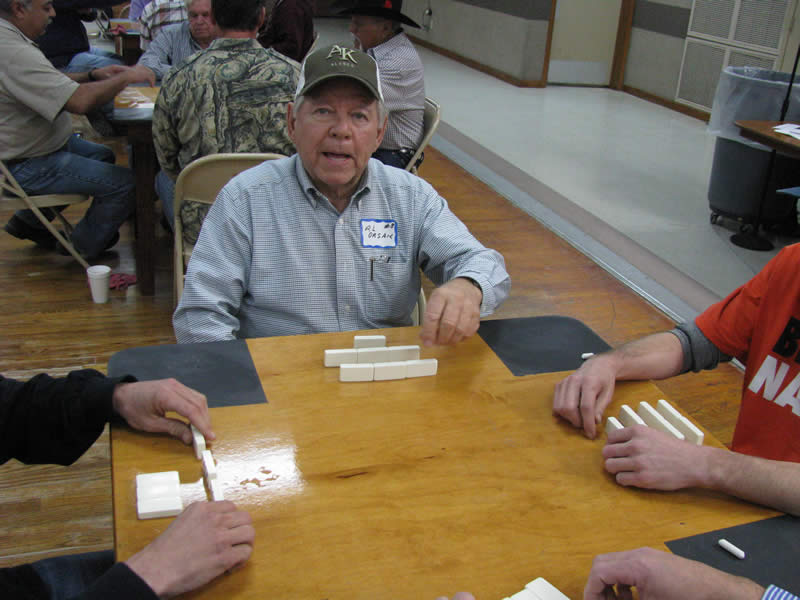
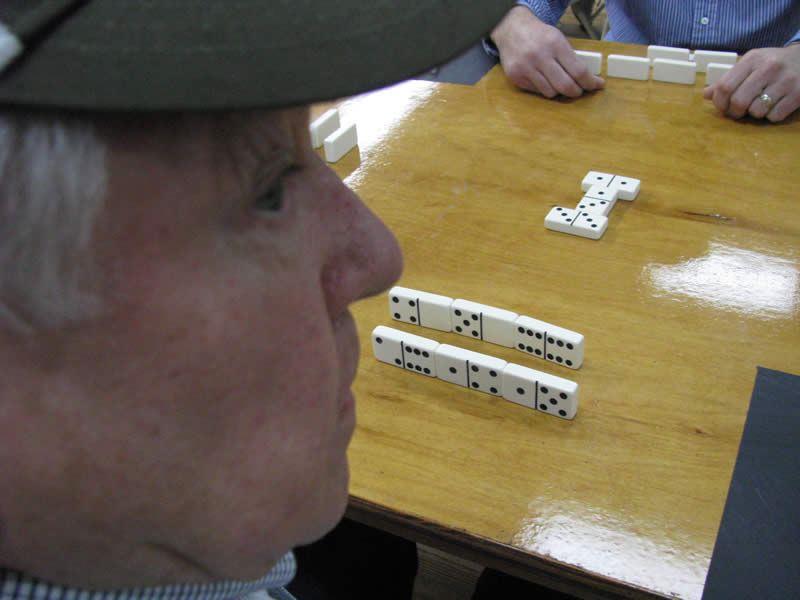
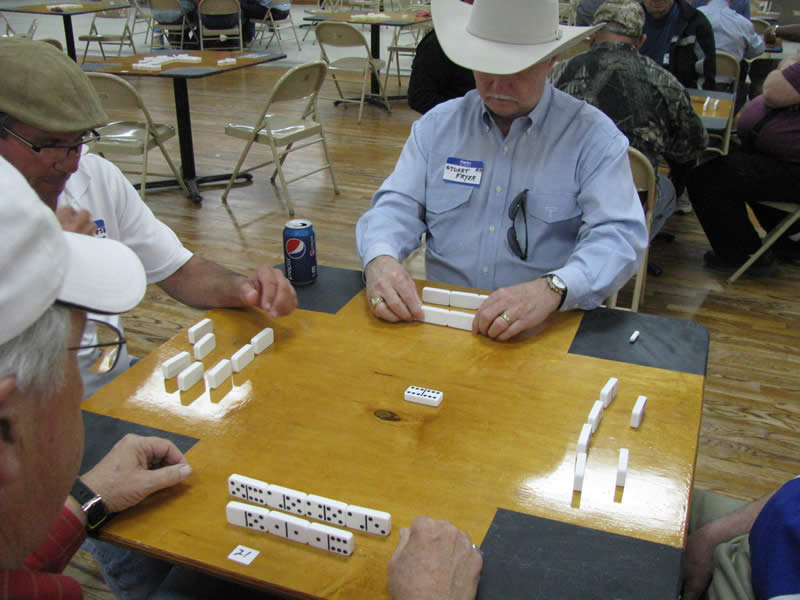
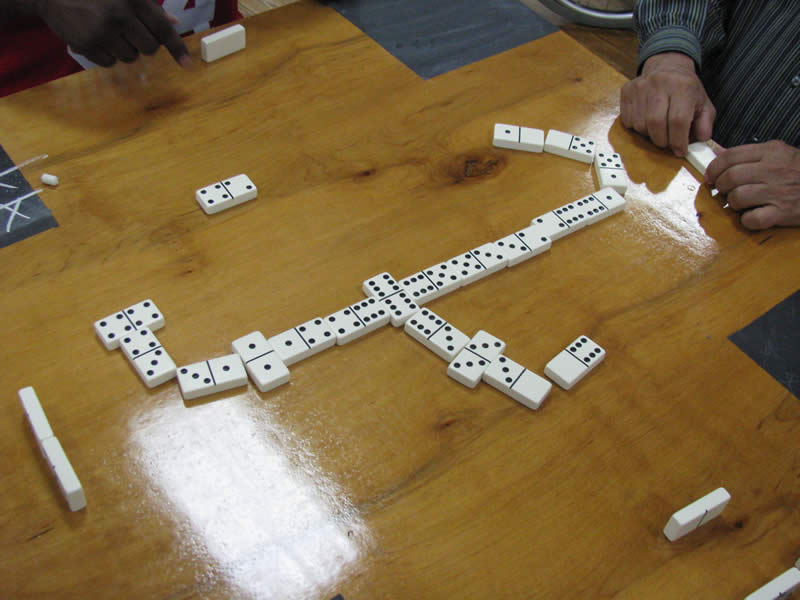
TEXAS STATE CHAMPIONSHIP STRAIGHT DOMINO TOURNAMENT

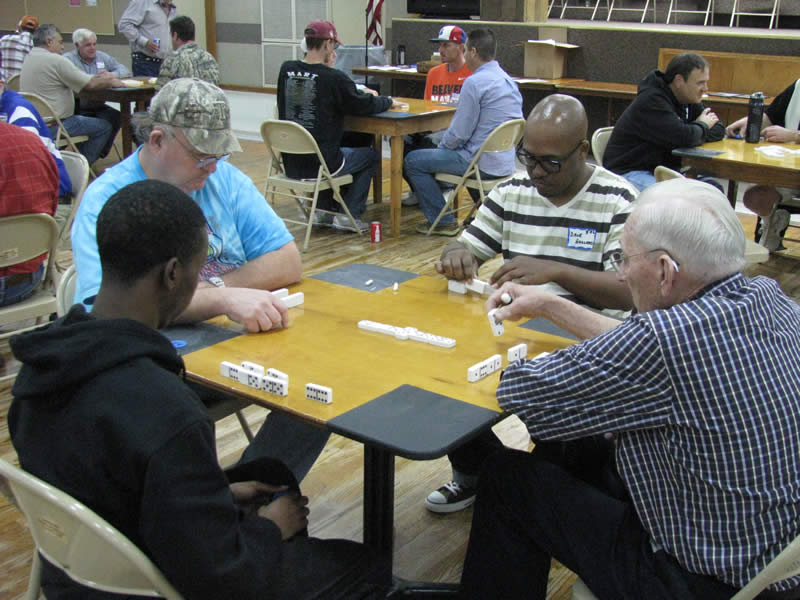
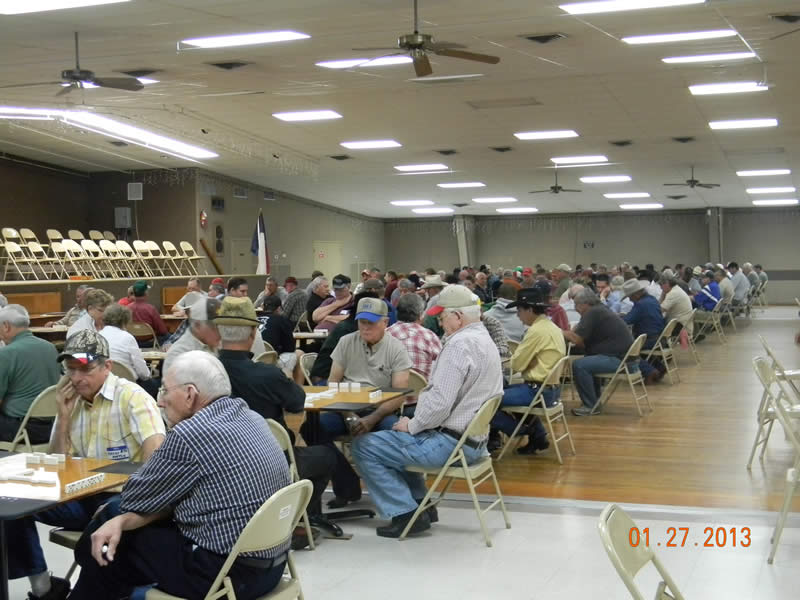
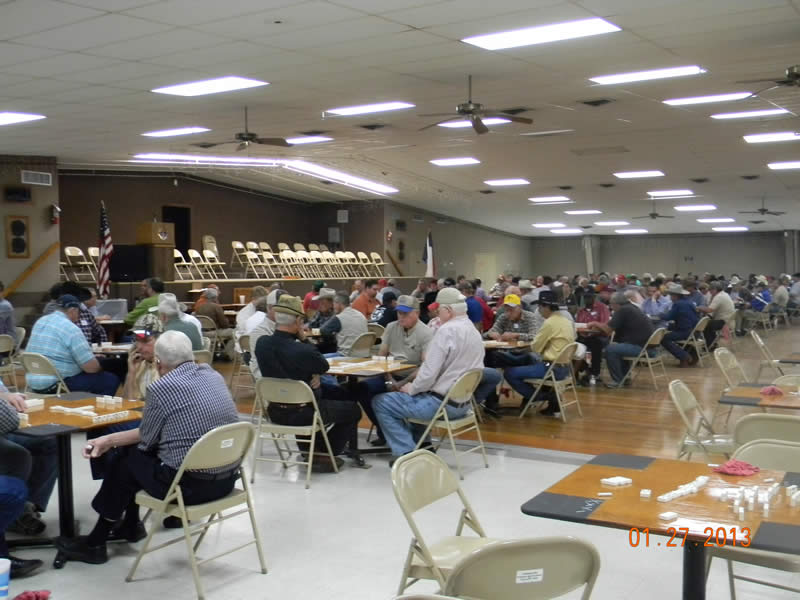
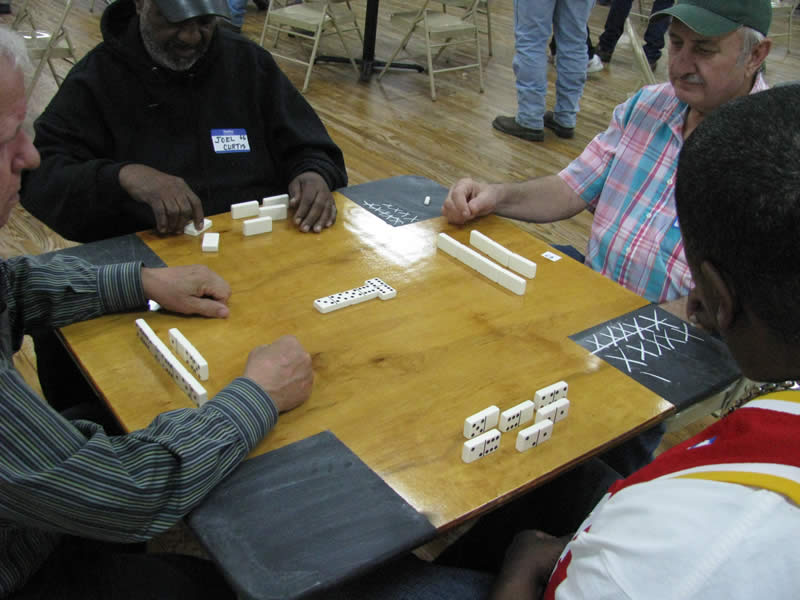
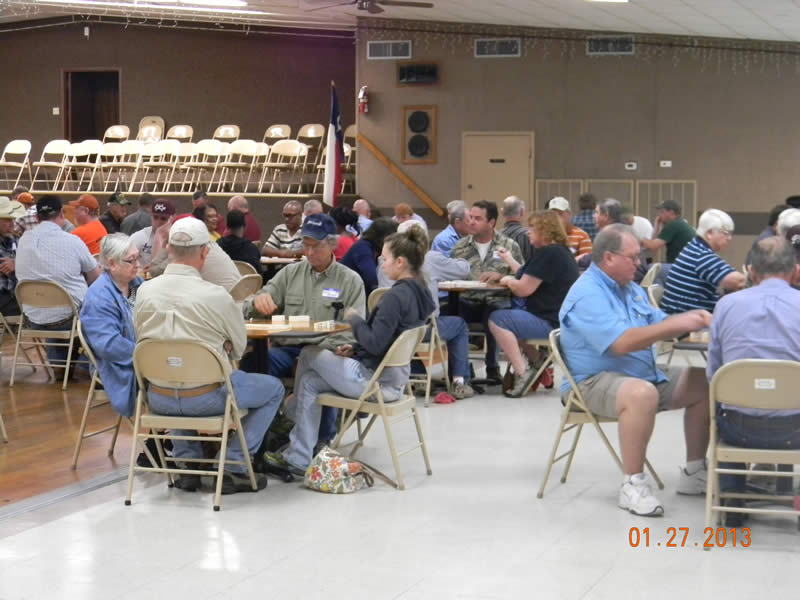
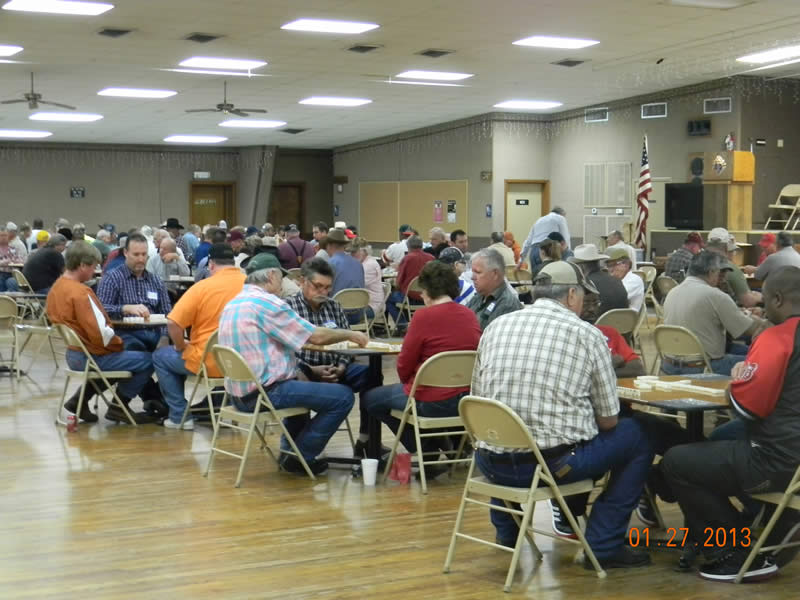
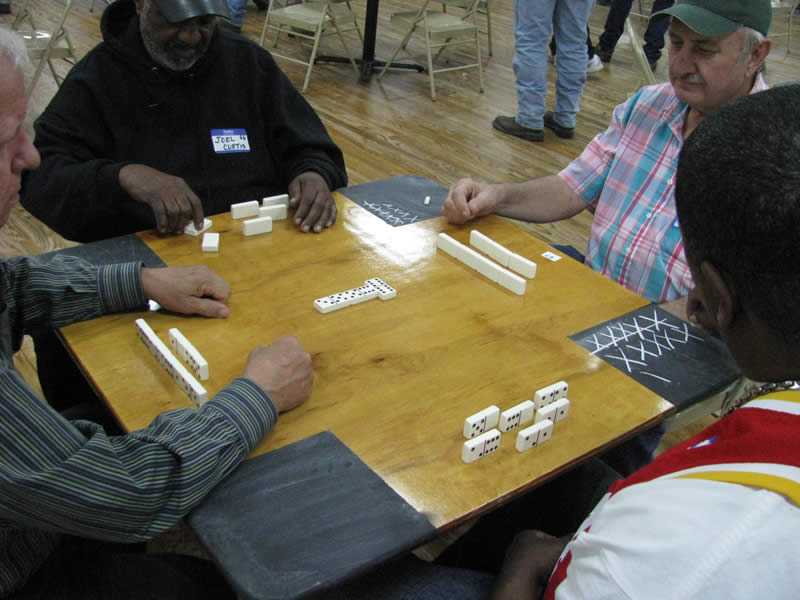
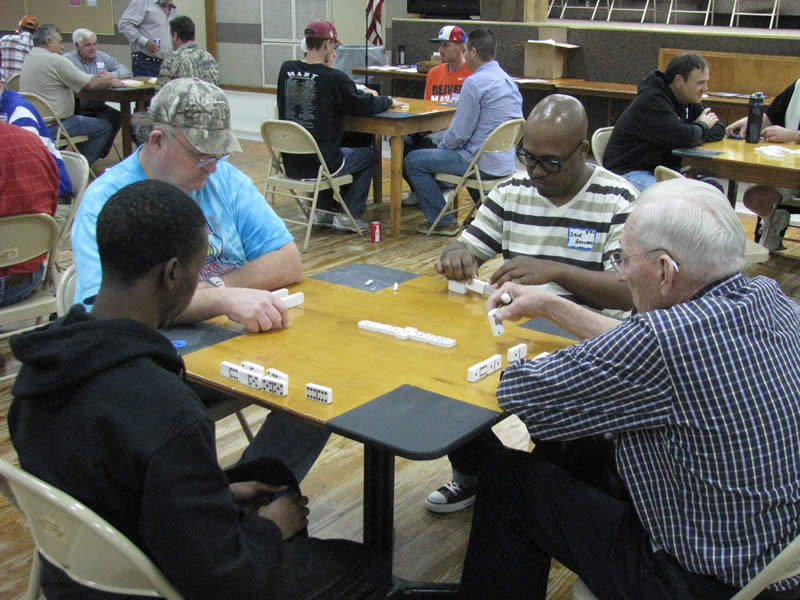
"The annual domino tournament is to determine the State Champion of Texas. From its humble beginning, this tournament has grown to be recognized as the finest competition of straight dominoes nationwide and is held in Hallettsville at the Knights of Columbus Hall.


Historically dominoes played a key role in the lives of people of all walks of life living in Central Texas. Domino halls and taverns had tables located in every nook and cranny to accommodate the legions of faithful players. In 1952 a group of men joined together to formulate a plan to determine the best domino players at straight dominos. The initial tournament, held at the American Legion Hall in Hallettsville, drew 30 teams that engaged in fierce competition.

Today the tournament held in January draws approximately 200 participants from all parts of the country.

Sunday January 26, 2014

Straight Domino’s

Double Elimination Partner Play

_______

On This Day:

Albert Schweitzer born, Jan 14, 1875:

"The theologian, musician, philosopher and Nobel Prize-winning physician Albert Schweitzer is born on this day in 1875 in Upper-Alsace, Germany (now Haut-Rhin, France).

The son and grandson of ministers, Schweitzer studied theology and philosophy at the universities of Strasbourg, Paris and Berlin. After working as a pastor, he entered medical school in 1905 with the dream of becoming a missionary in Africa. Schweitzer was also an acclaimed concert organist who played professional engagements to earn money for his education. By the time he received his M.D. in 1913, the overachieving Schweitzer had published several books, including the influential The Quest for the Historical Jesus and a book on the composer Johann Sebastian Bach.

Medical degree in hand, Schweitzer and his wife, Helene Bresslau, moved to French Equatorial Africa where he founded a hospital at Lambarene (modern-day Gabon). When World War I broke out, the German-born Schweitzers were sent to a French internment camp as prisoners of war. Released in 1918, they returned to Lambarene in 1924. Over the next three decades, Schweitzer made frequent visits to Europe to lecture on culture and ethics. His philosophy revolved around the concept of what he called "reverence for life"--the idea that all life must be respected and loved, and that humans should enter into a personal, spiritual relationship with the universe and all its creations. This reverence for life, according to Schweitzer, would naturally lead humans to live a life of service to others.

Schweitzer won widespread praise for putting his uplifting theory into practice at his hospital in Africa, where he treated many patients with leprosy and the dreaded African sleeping sickness. Awarded the Nobel Peace Prize for 1952, Schweitzer used his $33,000 award to start a leprosarium at Lambarene. From the early 1950s until his death in 1965, Schweitzer spoke and wrote tirelessly about his opposition to nuclear tests and nuclear weapons, adding his voice to those of fellow Nobelists Albert Einstein and Bertrand Russell."

_______

Yesterday:

Just catching up on more stuff around here.  I am overwhelmed with how am I going to get rid of all these parts, lumber and tools that I have accumulated over the years.  It seems that there is always something to fix, and they are needed.  There are still some carpentry jobs to be done, but I don't know when Jay will be here to complete them.

A lot of time was spent 'on hold', trying to make an appointment to see an ENT doctor. They don't have one at the clinic, so it seems I have to wait 2 weeks to see my doctor, just to get a referral.  My sinuses are my only health problem, so I should be grateful, especially at my age.

With the great weather, the cats spent some time out on the screen porch. They like to watch the birds at the feeder.  They still won't go near each other, but they will share that space.  The windows and doors were open most of the day.

Friday, October 25, 2013

5 Essential Vitamins. Fake Food Ingredients. Fake Blueberries. Cool Whip. Diet Food. Transcontinental Railroad. Invasion Of Granada. "Der Mensch ist, was er ißt."


For "Foodie Friday":

5 Essential Vitamins and the Foods Where You’ll Get Them

"Are you getting all the nutrients you need? A study published in the Journal of Food Composition and Analysis found that about 30% of the calories that Americans consume daily come from sweets, desserts, sodas, alcohol, and salty snacks – foods that are not on the longevity checklist, and actually lead to illness down the road.

Keep reading to find out which foods can give you the nutrients required to keep your health in top shape!:  More at: http://blog.doctoroz.com/oz-experts/5-essential-vitamins-and-the-foods-youll-get-them-from 

_______

Group Finds More Fake Ingredients in Popular Foods

"The U.S. Pharmacopeial Convention (USP), discovered rising numbers of fake ingredients in products from olive oil to spices to fruit juice."

_______

Counterfeit Food -- Food Fraud in America

"People wondering how safe their food really is. A BILLION DOLLAR underground industry is more deceptive then many people realize. Whether it's from a grocery store or farmers market, you might be a victim of food fraud."

______

The Blueberry Deception: Fake blueberries made from chemicals and petroleum byproducts.

"The blueberries found in blueberry bagels, cereals, breads and muffins are REAL blueberries right? Wrong! Award-winning investigative journalist Mike Adams, the Health Ranger, exposes the deceptive chemical ingredients and dishonest marketing of "blueberry" products from big-name food and cereal companies. The blueberries, it turns out, are made from artificial colors, hydrogenated oils and liquid sugars."

_______

Cool Whip

image "More stuff that 'they' want you to buy and eat:  A delicious blend of sugar, wax, and condom lube. Cool Whip!

Water.   It's the main ingredient. But like any whipped product, Cool Whip contains a high percentage of air. At 41 cents per ounce, you're buying mostly water and air for just over twice what it would cost to whip real cream yourself.

Natural and Artificial Flavorings
Cool Whip doesn't really taste like much, but Kraft's recipe for blandness is a trade secret. That means the company doesn't have to disclose the specific flavorings.

Corn Syrup and High-Fructose Corn Syrup
Sugar by other names. Corn syrup is mostly glucose. High-fructose corn syrup is corn syrup treated with amylase and other enzymes, which together help convert glucose into fructose. A diet high in fructose is known to make lab mice fatter than other diets, so keep your research animals away from Cool Whip.

Hydrogenated Coconut and Palm Kernel Oil
Cool Whip needs to feel like whipped cream in the mouth without actually being, you know, made with cream. One cheap, reliable way to replicate the texture is by using semi- solidified plant oils. The best method of solidifying plant oils: Bubble high- pressure hydrogen through them. Of course, if not done completely, the result is trans fat. These days, Kraft avoids that.

Polysorbate 60
Polysorbates are made by polymerizing ethylene oxide (a precursor to antifreeze) with a sugar alcohol derivative. The result can be a detergent, an emulsifier, or, in the case of polysorbate 60, a major ingredient in some sexual lubricants.

Sodium Caseinate
Also common in powdered non-dairy creamer, this protein derived from cow milk helps oil and water mix.

Sorbitan Monostearate
Chemists call this stuff synthetic wax, and it's sometimes used as a hemorrhoid cream. It's one of the magical substances that keep Cool Whip from turning to liquid over time in the fridge.

Xanthan and Guar Gums
These are natural thickeners, and together they provide more viscosity than either does alone. Guar also helps retard the formation of ice crystals, another key to preserving fluffiness." From: http://www.wired.com/wired/archive/15.05/st_coolwhip.html

_______

 Diet Foods Are Full Of Chemicals

"Many diets support the use of non-nutritional, highly chemicalized foods like fake fats and fake sugars. These chemicalized foods negatively affect body chemistry, cause low-level under-nourishment, and often encourage overeating when the dieter gets the signal that s/he is not getting nourishment. 

Our bodies are not really designed to eat food made up mainly of chemicals. When we are able to connect with the wisdom of our bodies, we know what our bodies really crave—whole foods full of nutrients, vitamins and minerals (with the occasional piece of cake, of course!) Diet programs diminish our ability to make appropriate, real food choices.

This week, start looking at the lite, low-cal, low-fat, fat-free, etc. foods that you may have around and recognizing the ingredients that you may be ingesting."  From: http://www.moreofmetolove.com/blogs/entry/diet-foods-are-full-of-chemicals-excerpted-from-stop-dieting-now/

______

On This Day:

Indians attack transcontinental railroad survey crew in Utah, Oct 25, 1853:

"On this day in 1853, Paiute Indians attack U.S. Army Captain John W. Gunnison and his party of 37 soldiers and railroad surveyors near Sevier Lake, Utah. Gunnison and seven other men were killed, but the survey party continued with its work and eventually reported its findings to the United States Congress.

Following Gunnison's death at the hands of the Paiute, his lieutenant, E.G. Beckwith, assumed command. Beckwith eventually found a potential railroad route through Weber Canyon in the Unita Mountains and discovered two feasible passes over the northern Sierra Nevada. The survey also provided valuable information on the geology, flora, and fauna of the West and set a high standard for subsequent explorers to follow. However, the results of neither the Gunnison/Beckwith survey nor any of the others succeeded in breaking the deadlock in Congress. Since no clearly superior route emerged from the volumes of maps and data gathered, the decision remained a political rather than scientific one. The issue would only be settled after the southern states seceded from the Union, leaving the matter in the hands of northern politicians."

______

United States invades Grenada, Oct 25, 1983:

"President Ronald Reagan, citing the threat posed to American nationals on the Caribbean nation of Grenada by that nation's Marxist regime, orders the Marines to invade and secure their safety. There were nearly 1,000 Americans in Grenada at the time, many of them students at the island's medical school. In little more than a week, Grenada's government was overthrown.

A number of Americans were skeptical of Reagan's defense of the invasion, noting that it took place just days after a disastrous explosion in a U.S. military installation in Lebanon killed over 240 U.S. troops, calling into question the use of military force to achieve U.S. goals. Nevertheless, the Reagan administration claimed a great victory, calling it the first "rollback" of communist influence since the beginning of the Cold War.

______

Yesterday:

Misty and I took our walk around here, but she doesn't like that so much.  We don't have the trails and scents of the animals from around the lake, like there are down at Jay's.  Ducks come up on the lots, and sometimes we see armadillos, possum, nutria, and other wildlife scampering around down there.  Poodles are hunting dogs, so she likes to track them.  I am just glad that she still has an interest in those activities at her age.  She is 18½ now.

Ray followed me to Pete's, the mechanic shop in Conroe. It was time for my van to have it's new upper ball joints installed. Then Ray brought me home.

His wife, Shay is now out of the hospital, but it still sick and very weak from her stomach virus, so he has had to play nursemaid with a bedpan, and wanted to get away from her for a while. Twice, he said he wished that she would forget his name, as she was calling out for him day and night.  She is fortunate to have him there to wait on her.  She has put a lot of things in her body that she didn't oughta, and now it is catching up with her.  I know that she eats a lot of processed food by the amount of trash she has to be put out at the curb.

My last sick day in bed (not vehicle accidents, childbirth or surgeries) was at 3 years old, when I got my only childhood disease, measles, so it is difficult for me to relate to being sick all the time.   "Der Mensch ist, was er ißt."  That translates into English as 'man is what he eats'.  When you see what junk some folks put in their shopping carts, and look at their pasty faces, you know that they aren't healthy.

It is still great weather here in the great state of Texas, one of the best months of the year.  Another 'windows-and-doors-open' day.

Wednesday, October 2, 2013

White-breasted Thrasher. 7,500 Songbirds Killed. Monarch Butterfly Migration. BirdNote: What's a Surfbird? Battle of Gonzales. Watkins Glen.


For "Winged Wednesday":

White-breasted Thrasher

White-breasted Thrasher by Mikka Pyhala

"The White-breasted Thrasher—more closely related to the Gray Catbird than any thrasher species—is a rare bird, found only on St. Lucia and Martinique. On St. Lucia, it is known by the local name Gorge Blanc, which refers to the bird’s white throat. This inquisitive, talkative species often droops or twitches its wings when excited or curious.

The birds typically forage on the ground, tossing leaves aside as they hunt for invertebrates, small frogs, and lizards. Breeding seems to coincide with the start of the rainy season. This thrasher sometimes breeds cooperatively, and approximately one-third of nests have “helpers,” which are male or female offspring from previous years. Chicks leave the nest before they are completely independent, and continue to be fed on the ground by adults. Unfortunately, the chicks are noisy and often fall victim to the many introduced predators on the island, which include cats, rats, and Indian mongooses.

The main threat to this species is habitat loss—specifically tourism development. On St. Lucia, installation of a major resort has already resulted in large swaths of forest clearing. The White-breasted Thrasher could be driven to extinction on the island if developers fail to consider the bird’s conservation needs.

To learn more, read “The Art of Waiting,” an ABC blog post by Villanova University student Kate Freeman. Kate studied White-breasted Thrasher breeding biology on St. Lucia, with support from ABC, as part of her graduate studies."

Help ABC conserve this and other birds and their habitats!  Range Map by ABC

______

7,500 songbirds killed at Canaport gas plant in Saint John

"Migrating birds, some possible endangered species, flew into gas flare.
It appears the migrating birds flew into the gas flare at Canaport LNG between Friday night and Saturday morning.

The birds were drawn to the flame like moths, an extremely unusual event, according to Don McAlpine, the head of zoology at the New Brunswick Museum.

Red-eyed vireo

A large number of red-eyed vireos were among the estimated 7,500 migrating songbirds killed by the flare. (Courtesy of the Migration Research Foundation)

"They would circle in around that and of course with a large flame like that and high temperatures, they wouldn't need to get terribly close to become singed or burned."

The weather conditions were foggy and overcast at the time, which may have contributed to the incident."  More at: http://www.cbc.ca/news/canada/new-brunswick/7-500-songbirds-killed-at-canaport-gas-plant-in-saint-john-1.1857615

______

MONARCH BUTTERFLY - WONDERS OF LIFE

"Each year, millions of Monarch butterflies migrate south each fall to spend their winters in the warmer climates of Mexico. Remarkably, these magnificent creatures manage to return to the same grove each year through a complex navigating system. 

By monitoring the position of the sun, and compensating for its location in the sky using their internal timekeeping mechanism, these remarkable butterflies are able to find their way home each year, even when it's cloudy.

Click the video to learn more about the magnificent Monarch butterfly."

From: http://therainforestsite.greatergood.com/clickToGive/trs/article/Monarch-Butterfly-Wonders

Another video about the:

Monarch butterfly migration

http://youtu.be/dpDFU10gkpw

______

image

Upcoming Shows

BirdNote: What's a Surfbird? Find out!


http://cts.vresp.com/c/?BirdNote/6cd25a507a/b0eaa8d8cc/9f06baf77d

Pine Siskin  SUNDAY Responsible Birdfeeding by Ellen Blackstone   LISTEN NOW

http://cts.vresp.com/c/?BirdNote/6cd25a507a/b0eaa8d8cc/28d791f9e8

300 East Randolph, Chicago MONDAY A Building Manager Shows the Way Featuring Geoff Credi, facilities manager in downtown Chicago   LISTEN NOW

http://cts.vresp.com/c/?BirdNote/6cd25a507a/b0eaa8d8cc/fb78e97302

Killdeer TUESDAY Sentinel Birds by Dennis Paulson  LISTEN NOW ►

http://cts.vresp.com/c/?BirdNote/6cd25a507a/b0eaa8d8cc/01bd3ce04e

Herring Gull WEDNESDAY The Little Red Spot On a Gull's Bill by Bob Sundstrom  LISTEN NOW

http://cts.vresp.com/c/?BirdNote/6cd25a507a/b0eaa8d8cc/537efea0da

Surfbird THURSDAY Surfin' Bird Meets Surfbird by Bob Sundstrom  LISTEN NOW

http://cts.vresp.com/c/?BirdNote/6cd25a507a/b0eaa8d8cc/9b6a790748

Tony Angell's  OverWater Kingfisher  FRIDAY Reflections on Nature Featuring Tony Angell, sculptor and author  LISTEN NOW ►

http://cts.vresp.com/c/?BirdNote/6cd25a507a/b0eaa8d8cc/ef2ef3f23d

Cedar Waxwing SATURDAY Landscaping for Wildlife I Featuring Russell Link, wildlife biologist with the Washington Dep't Of Fish and Wildlife  LISTEN NOW

______

On This Day:

First shots of the Texas Revolution fired in the Battle of Gonzales, Oct 2, 1835:

"On this day in 1835, the growing tensions between Mexico and Texas erupt into violence when Mexican soldiers attempt to disarm the people of Gonzales, sparking the Texan war for independence.

Texas--or Tejas as the Mexicans called it--had technically been a part of the Spanish empire since the 17th century. However, even as late as the 1820s, there were only about 3,000 Spanish-Mexican settlers in Texas, and Mexico City's hold on the territory was tenuous at best. After winning its own independence from Spain in 1821, Mexico welcomed large numbers of Anglo-American immigrants into Texas in the hopes they would become loyal Mexican citizens and keep the territory from falling into the hands of the United States. During the next decade men like Stephen Austin brought more than 25,000 people to Texas, most of them Americans. But while these emigrants legally became Mexican citizens, they continued to speak English, formed their own schools, and had closer trading ties to the United States than to Mexico.

In 1835, the president of Mexico, Antonio Lopez de Santa Anna, overthrew the constitution and appointed himself dictator. Recognizing that the "American" Texans were likely to use his rise to power as an excuse to secede, Santa Anna ordered the Mexican military to begin disarming the Texans whenever possible. This proved more difficult than expected, and on October 2, 1835, Mexican soldiers attempting to take a small cannon from the village of Gonzales encountered stiff resistance from a hastily assembled militia of Texans. After a brief fight, the Mexicans retreated and the Texans kept their cannon.

The determined Texans would continue to battle Santa Ana and his army for another year and a half before winning their independence and establishing the Republic of Texas."

______


Checkered flag waves at first postwar U.S. road race in Watkins Glen, New York, Oct 2, 1948:

"On this day in 1948, the first American road race since World War II takes place in Watkins Glen, a tiny town near the Finger Lakes in New York. In 1961, the Watkins Glen event was added to the Formula One Grand Prix schedule and for the next 20 years it was a destination for the world's best drivers. Compared to Monte Carlo and other sophisticated stops on the Formula One circuit, Watkins Glen was scarcely even on the map (Sports Illustrated poked fun at its "courage and cornpone, sophistication with straw in its teeth"), but the race was named the best Grand Prix of the season more than once.

Road racing--that is, racing sleek sports cars on real roads instead of custom-built tracks--had fizzled out in the United States during World War II, but was revived in Watkins Glen by an enterprising young law student named Cameron Argetsinger. Argetsinger was a fan of European road racing in particular and fast driving in general and he was convinced that the village's twisting, scenic lanes and byways would be perfect for a Grand-Prix–style event. (He was motivated by more than civic boosterism, however: as he once explained to a reporter, "I had an MG-TC and didn't have a place to race it.")  Argetsinger spent months planning the race--he plotted its course by arranging and rearranging magazines on his living room floor--and finally settled on a 6.6-mile, mostly paved route around the town's perimeter.

Before the race could happen, Argetsinger needed to get permission from nine different state agencies and the New York Central railroad, which agreed to suspend train service through Watkins Glen for the afternoon so that the drivers could cross the tracks safely. (As a result, some people refer to October 2 as "the day the trains stopped.")  Twenty-three cars participated in that first race; Argetsinger and his MG finished ninth.

By the end of the decade, the event was drawing 100,000 spectators each year and in 1956, after a couple of race-day accidents on the public roads, the town built a brand-new course especially for its Grand Prix. In 1961, the Watkins Glen race became the only American stop on the Formula One tour ("A biscuit," one reporter wrote, "reincarnated as a brioche").

In 1981, citing financial difficulties, Formula One dropped the race from its schedule. Since then, there have been U.S. Grand Prix races in cities from coast to coast--in Long Beach, Las Vegas, Detroit, Dallas, Phoenix and Indianapolis--but none as successful or celebrated as the ones at Watkins Glen."

______

Yesterday:

Ray had to take Shay into town so he couldn't help me get the van back to Pete's mechanic shop.  So I called and cancelled the appointment.  Jim, the mechanic down the street, is going to check the fuel pump and all that first.

That gave me the morning to get the e-machine set up with what I need, and take care of some emails. I had been putting that off, as previously some pages took so long to load.  This is a lot faster than any other computer that I have ever had, and the Malwarebytes and AVG that the computer guy put on it keep blocking undesirable worms and germs, so that keeps it fast.

In the afternoon, I heard that awful thump, such as when vehicles collide.  I went to my back window, and saw that three vehicles had been in a collision on the corner. The driver of the BMW was treated in an ambulance and then let go.   There is a 45 mph speed limit on that road behind me, but some of the fancy folk from the ritzy subdivisions farther west, seem to think that they are too good for that, and speed along it. This intersection is just below the top of a hill, so you can't see who is coming from the west. You have to slow down to turn south into the subdivision, and hope that you will see the roof of a car coming up the other side of the hill, before it is too late.   If they are speeding, you can hardly see them before they get to the intersection. That's what had happened here.  The BMW was speeding, and the old boy in a black pick-up was trying to turn, and got whomped.  That in turn threw him into an SUV. Fortunately there were no serious casualties, even though there were several women, two with babies, and four men. 

It is a narrow two-lane country road, with no paved edges.  When turning into the subdivision, I am always worried that I will get rear-ended by someone else traveling east if I have to stop when I see someone coming from the west.  The county said that they would put in a turn-lane years ago, but it hasn't happened yet. There were 3 cop cars, two big blue fire trucks, the little blue fire pick-up truck, and two ambulances, so it took a while for the entrance to the subdivision to be sorted out yesterday.

Saturday, September 28, 2013

Rabbit Day. CO Rescue Dogs. Bike Train. Garlic #1. "Most Dangerous Woman In Europe". Technology for Country Folk. William the Conqueror.


For "Summary Saturday" or News, some new, some old, that you may not have seen:

International Rabbit Day

Two white baby rabbits"International Rabbit Day is observed on September 28, 2013. It promotes the protection and care of rabbits both domestic and wild. International Rabbit Day is held each year on the fourth Saturday in September. Rabbit habitats include meadows, woods, forests, grasslands, deserts and wetlands. Rabbits live in groups, and the best known species, the European rabbit, lives in underground burrows, or rabbit holes.

More than half the world's rabbit population resides in North America.
Domestic rabbits can be kept as pets in a back yard hutch or indoors in a cage or house trained to have free roam. Rabbits kept indoors are often referred to as house rabbits. House rabbits typically have an indoor pen or cage and a rabbit-safe place to run and exercise, such as an exercise pen, living room or family room. Rabbits can be trained to use a litter box and some can learn to come when called. Domestic rabbits that do not live indoors can also serve as companions for their owners, typically living in a protected hutch outdoors." 

More at: http://www.smallanimalchannel.com/critter-news/2013/09/23/celebrating-rabbits-on-international-rabbit-day.aspx

A GIF of two rabbits - kangla-nawab via Tumblr

The Humane Society of the United States - Animal Testing Campaign

https://www.facebook.com/photo.php?fbid=516182671796741&set=a.473457172735958.1073741827.306972089384468&type=1&ref=nf

International Rabbit Day is today! Join The Mentalist's Owain Yeoman and musical icon Leona Lewis and sign the #BeCrueltyFree pledge to end cosmetics testing on rabbits and other animals » http://on.fb.me/13LM52P

_______

Rescue dogs help save lives in Colorado flood zone  

18 Sept.2013: "The families of nearly 200 people are anxiously waiting for word from their loved ones who remain unaccounted for after the deadly floods in Colorado.

7NEWS - Search teams scour 21-mile area along the Big ThompsonThose raging waters have already taken the lives of six people and left more than 450 stranded for nearly a week with little food and water.

But help is on the way with one of the nation's largest air operations in nearly a decade.

Ana Cabrera is OutFront in Boulder, where teams of unbelievable dogs are now digging through the rubble and mud to save lives."  CNN video at: http://outfront.blogs.cnn.com/category/colorado-flooding/

_______

How One Parent Made Biking a Priority

"When Jeff Anderson requested bike racks at his children’s school in the fall of 2008, he had no idea this simple request would lead to him playing a key role in supporting the Safe Routes to Schools initiative in Fairfax County Public Schools (Virginia).

In the spring of 2009 he coordinated a bike to school day that ran in conjunction with National Bike to Work Day. When 40 students turned out for the event Jeff realized that he was on to something.

Bike Train

Students locking up their bikes. Image courtesy of Nike

Since 2009 Jeff has worked with staff at Wolftrap Elementary to establish what is called a bike train. Once a month kids meet at Jeff’s house and bike 1.8 miles to school along a predefined route. They pick up additional riders along the way and use back roads to avoid congestion. The bike train has been going strong for four years, with students biking to school on cold January days when it is 18 degrees and snowy, and on hot June days when it is 85 degrees.

Recently Jeff has started working to expand the bike train program to other schools in the district. This past May he coordinated a Bike and Walk to School Challenge (now in its fifth year), encouraging schools to compete against each other by recruiting students to bike to school every day for a week."  More at:  http://blog.nwf.org/2013/03/how-one-parent-made-biking-a-priority-for-fairfax-county-public-schools/

_______

Garlic Beats Best-Selling Blood Pressure Drug In New Study

garlic

"A groundbreaking new study published in Pakistan Journal of Pharmaceutical Sciences has revealed that garlic is at least as effective as the blockbuster blood pressure lowering drug atenolol in reducing systolic and diastolic blood pressure in patients diagnosed with essential hypertension, a condition linked to the #1 cause of death in developed countries.

Hypertension is called a ‘silent killer,’ as it often goes completely unnoticed, along with the decades long subclinical march of atherosclerosis that is largely the cause of elevated blood pressure, often culminating suddenly in a deadly cardiovascular event such as a heart attack or stroke."  More at: http://www.greenmedinfo.com/blog/garlic-beats-best-selling-blood-pressure-drug-new-study

and: http://www.dailymail.co.uk/health/article-4954/Is-garlic-cure-all.html

_______

Bomb Damage at Buckingham Palace.

"The Queen Mother Elizabeth, King George and Winston Churchill inspect bomb damage at Buckingham Palace. Because of her effect on British morale, Adolf Hitler is said to have called her "the most dangerous woman in Europe".

The Most Dangerous Woman In Europe
"Queen Elizabeth speaks to the women of the British Empire 1942.  Queen Elizabeth, consort to King George VI rarely spoke on film.  Here, her soft well bred English manner of speaking is different to the more pronounced manner of that of her daughter Queen Elizabeth ll." 

Video at: http://youtu.be/CQEZPwLOzTo

More at: http://en.wikipedia.org/wiki/Queen_Elizabeth_The_Queen_Mother

________

Technology for Country Folk

Log On:
Making a wood stove hotter.
Log Off:
Don’t add no more wood.
Monitor:
Keeping an eye on the wood stove.
Download:
Gettin’ the farwood off the truk.
Mega Hertz:
When yer not keerful gettin’ the farwood.
Floppy Disc:
Whutcha git from tryin’ ta carry too much farwood.
Ram:
That thar thing whut splits the farwood.
Hard Drive:
Gettin’ home in the winter time.
Prompt:
Whut the mail ain’t in the winter time.
Windows:
Whut to shut when it’s cold outside.
Sscreen:
Whut to shut when it’s blak fly season.
Byte:
Whut dem dang flys do.
Chip:
Munchies fer the TV.
Micro Chip:
Whut’s in the munchie bag.
Modem:
Whacha did to the hay fields.
Dot Matrix:
Old Dan Matrix’s wife.
Lap top:
Whar the kitty sleeps.
Keyboard:
Whar ya hang the keys.
Software:
Them dang plastic forks and knifes.
Mouse:
Whut eats the grain in the barn.
Main Frame:
Holds up the barn ruf.
Port:
Fancy Flatlander wine.
Enter:
Northerner talk fer “C’mon in y’all”.
Random Access Memory:
When ya can’t ‘member whut ya paid fer the rifle when yer wife asks.
Mouse pad:
That hippie talk fer the rat hole.

_______

On This Day:

William the Conqueror invades England, Sep 28, 1066:

"Claiming his right to the English throne, William, duke of Normandy, invades England at Pevensey on Britain's southeast coast. His subsequent defeat of King Harold II at the Battle of Hastings marked the beginning of a new era in British history.

William was the illegitimate son of Robert I, duke of Normandy, by his concubine Arlette, a tanner's daughter from the town of Falaise. The duke, who had no other sons, designated William his heir, and with his death in 1035 William became duke of Normandy at age seven. Rebellions were epidemic during the early years of his reign, and on several occasions the young duke narrowly escaped death. Many of his advisers did not. By the time he was 20, William had become an able ruler and was backed by King Henry I of France. Henry later turned against him, but William survived the opposition and in 1063 expanded the borders of his duchy.

With approximately 7,000 troops and cavalry, William seized Pevensey and marched to Hastings, where he paused to organize his forces. On October 13, Harold arrived near Hastings with his army, and the next day William led his forces out to give battle. At the end of a bloody, all-day battle, King Harold II was killed--shot in the eye with an arrow, according to legend--and his forces were defeated.

William then marched on London and received the city's submission. On Christmas Day, 1066, William the Conqueror was crowned the first Norman king of England, in Westminster Abbey, and the Anglo-Saxon phase of English history came to an end. French became the language of the king's court and gradually blended with the Anglo-Saxon tongue to give birth to modern English. William I proved an effective king of England, and the "Domesday Book," a great census of the lands and people of England, was among his notable achievements. Upon the death of William I in 1087, his son, William Rufus, became William II, the second Norman king of England."

--------

From me:  In the USA one just has to remember all the Presidents.  In British schools, they are supposed to be able to remember all the monarchs from 1066!

_______

Yesterday:

Rich, the computer man, called early to tell me that he thought that I would be happier going back to Windows XP Pro, and so he asked me to bring in the e-machine.  There are so many things that I do that Windows 7 just doesn't do the same. It has changed some programs so that they are not user friendly any more.  Jay wanted to go with me as he likes to get out of the subdivision, and he's handy for toting big computers, so I took him!

Ray and I took my Dell outside and gently blew it out with the compressor.  Rich was going to double the RAM.  Ray and I looked at the capacitors after what I had gone through with the HP small form computer, and none of them were swollen.  Then Ray went back to painting my screen porch.

It didn't take Rich long to open up the Dell and put the memory sticks in there.  He didn't charge me much, as I had given him my old Sony Vaio the day before. It had some good parts that he could use, like a new mother board, processor and memory sticks.

Rich said this Dell is a good old workhorse computer, and that I should keep it.  Certainly is heavy though.  It has never given me any trouble.  I bought it from Gary, an old computer guy in Montgomery, TX, and he had rebuilt it.  Gary knew what he was doing.  I don't know why I thought that I had to buy that HP with more RAM, when I could have had more put in this one.  It works like a champ now.  But we had to leave the e-machine with Rich, so I will pick it up later.

Many years ago, my daughter who works with stocks and bonds accounts, found out that she couldn't use Windows 7 on several of her customer's sites, so she had to look for a laptop  with XP Pro.  She still uses it today, so I am not the only one who prefers it.  If it works, don't fix it.

Yesterday, Ray filled in for someone at the Cat Habitat.   He enjoys that, playing with them, and taking care of them.  Then he comes over here and tells me about our SPCA cats there.  Very often they are adopted before their time to leave the Habitat is up, and that makes us all happy.  The adoptable dogs have to rely on our Adoption Days, or www.Petfinder.com to find their 'furever' homes. 

Please spay or neuter your pet, we have trouble finding good homes for them all.  People give away their puppies and kittens, but if the new 'parents' don't get them neutered, then they have even more babies.  Every Litter Bit Hurts!   Foster parents have to feed and care for the animals out of their own pockets, and give them the love and time that the animals often have never had.   Sometimes it takes a long time to get them adopted into responsible homes.  I am getting a new foster kitten who was dumped, next week.  Someone just left her to die. I am doing it for Nala, to keep her company.  I think Nala misses her litter brother who was adopted.

In the afternoon, who should come rolling up in a big truck, but my granddaughter Michelle's older half-brother, Jimmy.  Even though we are not related, he said "Hi Grandma, I came for the things for the yard sale for my mother".  Michelle had told me that they were having a benefit yard sale for their mother Becky, who has cancer, but she didn't tell me it was now!  Most of my yard sale stuff is packed away.  I didn't have anything ready, so I gave him a couple of TV's, a computer monitor, some knick-knacks and clothes. Jimmy said that clothes are selling well, that's unusual.  Michelle's boyfriend was helping him, so I met him too.  Seems like a nice enough chap.

So I got a few more things out of here yesterday!

Monday, September 16, 2013

How Beavers Build a Lodge. Moose's Best Friend. Pit Bulls. Horse's Ass. Mole Rat. Seal Pups. Mayflower. Cherokee Strip.


For “Mammal Monday”:

How Beavers Build a Lodge

“One of nature's master architects, the beaver is able to create impressive edifices from nothing more that the materials offered by their habitat. Their dams and lodges are not only engineering marvels, but also are able to redefine and shape the creek or river where they choose to take up residence.

Sir David Attenborough narrates this fascinating animal video recording the way in which beavers build a lodge in just 20 days. They'll use their lodge throughout the winter to eat, raise young, and sleep in safety.  Includes cute footage of baby beavers. Interesting wildlife video from BBC show 'Beavers: The Master Builder'.”

Read more at http://therainforestsite.greatergood.com/clickToGive/trs/article/How-Beavers-Build-a-Lodge440#tdVR7rvjAmyyFfU4.99

--------

The Beaver - A Moose's Best Friend

“Watch this clip from BBC documentary 'A Moose Name Madeline' to see the strange relationship between the moose and the beaver. Living side by side, these two diverse species have learnt to co-operate and give nature a helping hand along the way.”

________

37 Pictures That Will Restore Your Faith In Pit Bulls

“The Obama administration just came out against specific breed legislation, which is a triumph to many dogs and their loving owners. Here are some pictures that will make you think differently about pit bulls. Remember: “Judge the deed, not the breed!”"

“The AKC sites the breed standard as having “affection for its friends, and children in particular…off-duty quietness and trustworthy stability.” More than that, the ASPCA speaks to their roots as family dogs, given the nickname “nurse’s maid” because of their sweetness with children.”

Which makes them great family dogs. 

More at: http://www.buzzfeed.com/chelseamarshall/37-pictures-that-will-restore-your-faith-in-pit-bulls

_______

The Space Shuttle and the Horse's Rear End

“Say friend, did you know that the US Standard railroad gauge (distance between the rails) is 4 feet, 8 1/2 inches.
That's an exceedingly odd number. Why was that gauge used?
Because that's the way they built them in England, and the US railroads were built by English expatriates.
I see, but why did the English build them like that?
Because the first railway lines were built by the same people who built the pre-railroad tramways, and that's the gauge they used.
Well, why did they use that gauge in England?
Because the people who built the tramways used the same jigs and tools that they used for building wagons, which used that wheel spacing.
Okay! Why did their wagons use that odd wheel spacing?
Because, if they tried to use any other spacing the wagon wheels would break on some of the old, long distance roads. Because that's the spacing of the old wheel ruts.
So who built these old rutted roads?
The first long distance roads in Europe were built by Imperial Rome for the benefit of their legions. The Roman roads have been used ever since.
And the ruts?
The original ruts, which everyone else had to match for fear of destroying their wagons, were first made by the wheels of Roman war chariots. Since the chariots were made for or by Imperial Rome they were all alike in the matter of wheel spacing.
Thus, we have the answer to the original question. The United States standard railroad gauge of 4 feet, 8 1/2 inches derives from the original specification for an Imperial Roman army war chariot.
And the motto of the story is Specifications and bureaucracies live forever.
images[4] So, the next time you are handed a specification and wonder what horse's ass came up with it, you may be exactly right. Because the Imperial Roman chariots were made to be just wide enough to accommodate the back-ends of two war-horses.
So, just what does this have to do with the exploration of space?
Well, there's an interesting extension of the story about railroad gauge and horses' behinds. When we see a Space Shuttle sitting on the launch pad, there are two big booster rockets attached to the sides of the main fuel tank. These are the solid rocket boosters, or SRBs. The SRBs are made by Thiokol at a factory in Utah. The engineers who designed the SRBs might have preferred to make them a bit fatter, but the SRBs had to be shipped by train from the factory to the launch site.
The railroad from the factory runs through a tunnel in the mountains. The SRBs had to fit through that tunnel. The tunnel is slightly wider than a railroad track, and the railroad track is about as wide as two horses' behinds.
So a major design feature of what is arguably the world's most advanced transportation system was originally determined by the width of a horse's ass.”  From: http://www.astrodigital.org/space/stshorse.html

A corrected version: http://www.snopes.com/history/american/gauge.asp

_______

Naked Mole Rat May Hold the Key to Dodging Cancer

Naked Mole Rat“The naked mole rat is a tiny burrowing rodent native to parts of Africa. These little guys are only about four inches long and, as you might guess, hairless.
Naked mole rats come equipped with a highly unique set of physical characteristics. These include a lack of pain sensors in the skin, an ability to endure incredibly high levels of carbon dioxide in underground tunnels, a talent for running backwards as fast as they run forwards, an extraordinarily long lifespan, and unlike other mammals … they never get cancer.

Scientists believe it is the “gloop” mole rats produce – a sugar-based natural polymer – that prevents tumors from growing. The gloop, which is actually high-molecular-mass hyaluronan (HMM-HA), is a chemical scientists hope may one day be produced in human tissues.”   More at: http://healthypets.mercola.com/sites/healthypets/archive/2013/09/04/naked-mole-rat.aspx     and: http://www.nature.com/nature/journal/v499/n7458/full/nature12234.html

_______

Beachgoers to Blame for Seal Pup’s Death

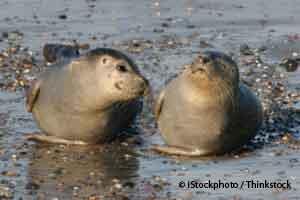
Seal Pup“Two recent incidents on Rye, New Hampshire beaches have New England Aquarium officials reinforcing warnings to the public about the importance of keeping at least 150 feet away from seals encountered on land.


imagesCAMXWSBL In one case, a week-old baby seal was stolen from its mother. In a second sad incident, a days-old seal pup that appeared very healthy on a Friday, died on Sunday, likely due to stress caused by people getting too close.

Marine mammal conservation efforts have been very successful in increasing seal populations, which is why more seals are being sighted on U.S. beaches. It’s important for the safety and health of seals and humans alike that people learn how to behave around seals and abide by the 150-foot rule set forth in the Marine Mammal Protection Act.”  More at: http://healthypets.mercola.com/sites/healthypets/archive/2013/09/02/seal-pup-death.aspx

_______

On This Day:

Mayflower departs England, Sep 16, 1620:

“The Mayflower sails from Plymouth, England, bound for the New World with 102 passengers. The ship was headed for Virginia, where the colonists--half religious dissenters and half entrepreneurs--had been authorized to settle by the British crown. However, stormy weather and navigational errors forced the Mayflower off course, and on November 21 the "Pilgrims" reached Massachusetts, where they founded the first permanent European settlement in New England in late December.

Ten years earlier, English persecution had led a group of Separatists to flee to Holland in search of religious freedom. However, many were dissatisfied with economic opportunities in the Netherlands, and under the direction of William Bradford they decided to immigrate to Virginia, where an English colony had been founded at Jamestown in 1607.  Some 100 English colonists, dispatched from England by the London Company, had sailed across the Atlantic aboard the Susan Constant, Godspeed, and Discovery.

In a difficult Atlantic crossing, the 90-foot Mayflower encountered rough seas and storms and was blown more than 500 miles off course. Along the way, the settlers formulated and signed the Mayflower Compact, an agreement that bound the signatories into a "civil body politic." Because it established constitutional law and the rule of the majority, the compact is regarded as an important precursor to American democracy. After a 66-day voyage, the ship landed on November 21 on the tip of Cape Cod at what is now Provincetown, Massachusetts.

After coming to anchor in Provincetown harbor, a party of armed men under the command of Captain Myles Standish was sent out to explore the area and find a location suitable for settlement. While they were gone, Susanna White gave birth to a son, Peregrine, aboard the Mayflower. He was the first English child born in New England. In mid-December, the explorers went ashore at a location across Cape Cod Bay where they found cleared fields and plentiful running water and named the site Plymouth.”

______

Settlers race to claim land, Sep 16, 1893:

“On this day in 1893, the largest land run in history begins with more than 100,000 people pouring into the Cherokee Strip of Oklahoma to claim valuable land that had once belonged to Native Americans. With a single shot from a pistol the mad dash began, and land-hungry pioneers on horseback and in carriages raced forward to stake their claims to the best acres.

Ironically, not many years before that same land had once been considered worthless desert. Early explorers of Oklahoma believed that the territory was too arid and treeless for white settlement, but several suggested it might be the perfect place to resettle Indians, whose rich and fertile lands in the southeast were increasingly coveted by Americans. The U.S. government later took this advice and began removing eastern Indian tribes like the Cherokee and Choctaw to Oklahoma Territory in 1817. No more eager than the whites to leave their green and well-watered lands for the arid plains, some Indians resisted and had to be removed by force-most tragically, the 4,000 Cherokee who died during the brutal overland march known appropriately as the "Trail of Tears."

By 1885, a diverse mixture of Native American tribes had been pushed onto reservations in eastern Oklahoma and promised that the land would be theirs "as long as the grass grows and the water runs." Yet even this seemingly marginal land did not long escape the attention of land-hungry Americans. By the late nineteenth century, farmers had developed new methods that suddenly made the formerly reviled Plains hugely valuable. Pressure steadily increased to open the Indian lands to settlement, and in 1889, President Benjamin Harrison succumbed and threw open large areas of unoccupied Indian lands to white settlement. The giant Cherokee Strip rush was only the largest of a series of massive "land runs" that began in the 1890s, with thousands of immigrants stampeding into Oklahoma Territory and establishing towns like Norman and Oklahoma City almost overnight.”

_______

Yesterday:

Jay brought Maddie, the little Yorkie, here for me to groom.  So while I was doing that, Ray went around the screen porch posts with a caulking gun filling in different cracks and holes, so it would look better when the porch had it’s final coat of paint.

A local rescue group has saved a sweet, abused pit-bull dog from the Houston pound, and asked if I would foster one of their dogs so they could make room for it. 

When they found imagesCA9M9JC3out that I will only take care of older dogs, they came up with an inseparable trio that was brought here to TX from FL, when their aged ‘mom’ was put in a nursing home.  An orange male cat, an old blind Chinese Crested female, and her ‘seeing eye’ dog, an old female black lab.  The cat and the Chinese Crested are no problem, but a big, old black lab, that’s a different story. So that meant a lot of emails, and things to think about yesterday!