Showing posts with label Census. Show all posts

Monday, December 11, 2023

When Was Jesus Born? Part 1, 2 & 3. Why You Should Never Eat Pork.

.

When Was Jesus Born? Part 1

Luke 1:5

There was in the days of Herod, the king of Judea, a certain priest named Zacharias, of the division of Abijah. His wife was of the daughters of Aaron, and her name was Elizabeth.

“The Bible does not tell us exactly when Jesus Christ was born. The closest hint, found in this verse, seems to point to Christ’s birth in the fall of the year.

What’s the connection? Verse 36 shows that Jesus Christ was born about six months after John the Baptist was born. And John the Baptist would have been conceived nine months earlier (15 months before Christ’s birth), shortly after his father Zacharias had received a message from an angel while serving at the temple.

When did Zacharias serve at the temple? One source says he probably served one-week stints around mid-May and mid-November. (E.W. Bullinger uses the dates June 13-19.) King David had divided the priests into 24 courses, of which the division of Abijah was the eighth (1 Chronicles 24:10). These divisions each served a week at a time, so that each division served two weeks at the temple each year according to the sacred calendar, in addition to the festivals.

A number of commentators lean toward a May or June date for Zacharias’ meeting with Gabriel. Adding 15 months to that would put Jesus Christ’s birth in perhaps August or September. (If Zacharias met Gabriel around November or December, Christ’s birth would have been in perhaps February or March.)

Either way would not support a Dec. 25 birth date.”

From: https://lifehopeandtruth.com/bible/blog/when-was-jesus-born-part-1/

_______

When Was Jesus Born? Part 2

Luke 2:1 

And it came to pass in those days that a decree went out from Caesar Augustus that all the world should be registered.

“The vast Roman Empire was a structured and expensive government, and this census was “organized to facilitate the collection of taxes” (NKJV Study Bible). In an agrarian society, both tithes and taxes were collected shortly after the fall harvest when the farmer would have sold his crop. Collecting taxes in the winter or any other time is not very effective.

Also, since such a census required people like Joseph to travel back to their ancestral home, it is unlikely the census would have been conducted in the winter time when travel was difficult. This is but one more hint in the text that Jesus Christ’s birth did not occur on Dec. 25. Though the Bible does not give an exact date for His birth, it seems clear that it could not have been in the winter.”

From: https://lifehopeandtruth.com/bible/blog/when-was-jesus-born-part-2/

__________

When Was Jesus Born? Part 3

Luke 2:8 

Now there were in the same country shepherds living out in the fields, keeping watch over their flock by night.

“One commentary states, “As these shepherds had not yet brought home their flocks, it is a presumptive argument that October had not yet commenced, and that, consequently, our Lord was not born on the 25th of December, when no flocks were out in the fields. On this very ground the nativity in December should be given up” (Adam Clarke’s Commentary, note on Luke 2:8).

The Interpreter’s One-Volume Commentary agrees: “These humble pastoral folk are out in the field at night with their flock—a feature of the story which would argue against the birth (of Christ) occurring on Dec. 25 since the weather would not have permitted it” (1971, note on Luke 2:4-7).

For more about why Jesus Christ’s birth could not have been Dec. 25 and how it came to be celebrated that day, see our article “Christmas: Should Christians Celebrate It?”” From: https://lifehopeandtruth.com/bible/blog/when-was-jesus-born-part-3/

_________

Why You Should Never Eat Pork

Why you should never eat pork9 reasons why you shouldn’t eat pork

“Sausages, bacon, and ham are all popular pork products. And with good reason: they’re delicious! There’s nothing quite like starting your day with a juicy bacon sandwich or enjoying a delicious plate of ham and eggs.

But as with most things that taste great, there’s a downside to eating pork. Pork is, in fact, one of the unhealthiest meats you can eat. In this article, we’re going to discuss why you should seriously consider cutting pork out of your diet altogether.

1. Pork contains parasites

One of the main reasons why you shouldn’t eat pork is because it contains parasites. These parasites can cause disease and even death in humans.

Some of the most common parasites found in pork include roundworms, tapeworms, and trichinosis. Trichinosis is a worm infection that can be passed on to humans from pigs. This infection can cause fever, diarrhea, vomiting, and muscle pain. In severe cases, it can also lead to death.

While cooking pork may kill some of the parasites, it won’t remove all of them.

2. Pork may cause cancer

Another reason to avoid eating pork is that it may contribute to cancer. Pork products contain heterocyclic amines (HCAs) and polycyclic aromatic hydrocarbons (PAHs).

These are both carcinogenic (cancer-causing) compounds that have been linked to an increased risk of various types of cancer, including stomach, colon, and pancreatic cancer.

3. Eating pork can lead to allergies

Some people are allergic to the protein found in pigs. These proteins include pork insulin and pork trypsinogen.

Pork insulin is similar to human insulin and can cause an allergic reaction in some people. Pork trypsinogen is a protein that helps the pig digest its food. This protein has also been known to cause allergic reactions in humans.

4. Pig farming is harmful to the environment

Pig farming is one of the most damaging types of farming to the environment. Pigs produce large amounts of manure, which contains nitrogen and phosphorus.

These substances can pollute the air, water, and soil. In addition, pig farms often use large amounts of antibiotics, which can lead to the development of antibiotic-resistant bacteria. These antibiotics tend to leach into the environment and can contaminate water sources and the earth.

5. Pigs are generally left in unsanitary conditions

Pigs are intelligent animals that can feel pain and suffering. Unfortunately, they’re often kept in unsanitary conditions on factory farms.

These farms confine pigs to small metal cages or pens. The floors of these pens are often slatted, so the waste falls through into a pit below. The pigs are cramped and have no room to move around or exercise.

The conditions on these farms are so bad that pigs often develop sores and ulcers. They also, believe it or not, suffer from anxiety, boredom, and depression.

6. Pigs eat other animals

There’s a somewhat unspoken rule that humans should avoid eating animals that eat other animals. Pigs are one of the few exceptions to this rule.

Pigs are omnivores, which means they’ll eat just about anything. This includes dead animals, feces, and even their own young. As a result, pigs can harbor all sorts of diseases and parasites.

Thus, whatever they eat, you end up eating too.”        From: https://whyyoushouldnever.com/why-you-should-never-eat-pork/

_______

Just like the saying:      You are what you eat, AND WHAT IT ATE!!

_______

What diseases do pigs carry?

“The diseases associated with swine include ringworm, erysipelas, leptospirosis, streptococcosis, campylobacterosis, salmonellosis, cryptosporidiosis, giardiasis, balantidiasis, influenza, infection with pathogenic E. coli, and brucellosis.

Do pigs poop out of their hooves?

In addition to adapted digestive systems that support opportunistic scavenging, pigs can excrete excess toxins through their hooves. So, in the event that they do eat too much garbage, their bodies still have a back-up plan to rid the poison.

Can pig poop make you sick?

It is important to thoroughly wash hands after contact with pigs or their fecal material to avoid infection with diseases that can be spread via fecal-oral contact. Campylobacteriosis is an infection of the intestines caused by a bacterium called Campylobacter.

What happens if a pig bites you?

Pig bites are often severe with a high incidence of infection that is often polymicrobial with organisms including Staphylococcus and Streptococcus spp. (including Streptococcus suis), Haemophilus influenzae, Pasteurella, Actinobacillus and Flavobacterium species.

Why do pigs eat faeces?

Coprophagia is the term for an animal eating excrement—both their own and that of others. Most of them eat feces because it contains some undigested food—and thus vital nutrients—that would otherwise go to waste.  (Rabbits do this, too, that is why they are also an “unclean” meat.)

Do pigs have STDS?

They are responsible for a broad range of diseases in animals and humans. In pigs, Chlamydia suis, Chlamydia abortus, Chlamydia pecorum and Chlamydia psittaci have been isolated.”  From: https://yourwiseadvices.com/how-do-pigs-excrete-toxins/

_______

Monday, December 23, 2019

Christmas a Pagan Holiday? Update.

For “Scripture Sunday”:

Christmas a Pagan Holiday?

“Christmas is celebrated by Christians around the world. But did it come from the Bible or ancient paganism? If it is pagan, should you still celebrate it?

Is Christmas a Pagan Holiday? The ancient world was full of paganism. Pagan is a term describing belief and worship of multiple gods. Ancient pagans worshipped gods that were associated with nature, typically using statues and images.

Nearly every non-Israelite culture practiced a form of paganism. But the God of the Bible demanded something different. He claimed to be the one Almighty God and strictly commanded people not to worship Him with images or statues.

He claimed to be the Creator of everything—including nature and the physical order. Worshipping His creation was an abomination to Him.

Though paganism and polytheism aren’t as common today in the Western world, many of their elements still remain with us in various traditions, some of which are associated with Christianity.

One of those traditions is the Christmas holiday—which has deep roots in paganism. Let’s consider some of the pagan elements incorporated in this popular holiday.

The pagan history of Christmas

Timing: The biblical celebrations ordained by God are celebrated in three seasons of the year: spring, summer and fall in the northern hemisphere (Exodus 23:14-16; Leviticus 23). None of the commanded festivals of the Bible were celebrated in the winter. (The Feast of Dedication mentioned in John 10:22 was not a commanded festival, but was a national celebration of the Jewish people.)

The ancient people of Europe, especially in northern parts, hated winter not just because it was cold, but also because of the dark days with only a few hours of sunlight. Many pagan civilizations celebrated the winter solstice because it marked the time when the days would begin getting longer. They saw this as a day when the sun (worshipped as a god) began conquering the darkness of winter.

In A.D. 274 the Roman Emperor Aurelian elevated the sun god as the chief Roman god by dedicating a new temple to him on Dec. 25. Some of the pagan festivals surrounding the winter solstice were Yule (the Nordics), Koliada (eastern Europe) and Saturnalia (Rome).

In A.D. 274 the Roman Emperor Aurelian elevated the sun god as the chief Roman god by dedicating a new temple to him on Dec. 25. (Sol Invictus was the Roman version of the Persian sun god, Mithra.)

It is a widely known fact that in the fourth century the Catholic Church adopted the pagan celebration of the winter solstice and modified it. They decided to use it to worship the birth of the Son of God, instead of the sun god. “The winter solstice or Brumalia, by now the feast of Mithras and the Unconquered Sun, had been associated with the birth of Jesus in 354 by Bishop Liberius of Rome” (Prudence Jones and Nigel Pennick, A History of Pagan Europe, 1995, p. 76).

Reverence for nature: During the cold and dark winter months, the fir tree remains green. Pagans, in their worship of nature, revered evergreen trees as sacred because the cold and darkness could not prevail against them.

The pagans would cut the trees and bring them into their houses as a good omen and symbol of fertility. In addition, they would decorate their houses with greenery and flowering plants, such as holly, ivy and mistletoe. 

(Jer 10:2  Thus saith the LORD, Learn not the way of the heathen, and be not dismayed at the signs of heaven; for the heathen are dismayed at them.
Jer 10:3  For the customs of the people are vain: for one cutteth a tree out of the forest, the work of the hands of the workman, with the axe.
Jer 10:4  They deck it with silver and with gold; they fasten it with nails and with hammers, that it move not.
Jer 10:5  They are upright as the palm tree, but speak not: they must needs be borne, because they cannot go. Be not afraid of them; for they cannot do evil, neither also is it in them to do good.
Jer 10:6
Forasmuch as there is none like unto thee, O LORD; thou art great, and thy name is great in might. )

These traditions continue today with the practice of decorating the iconic symbol of Christmas, the Christmas tree, and their homes with tinsel, garlands and wreaths. "The name of Saturnalia died out, but its celebrations, such as decking houses with evergreens, giving presents and feasting, were attached to Christmas” (ibid.).

Santa Claus: Santa Claus, too, has become an iconic symbol of Christmas. But the modern-day Santa is far tamer than his ancient counterpart.

Krampus, whose name means “claw,” was a half-goat/half-demon creature who was believed to visit children on Krampus Night and whip them into shape, taking away the very naughty ones to the underworld in his sack. Adults would dress up in hideous-looking costumes and frighten children. Some of these traditions are still practiced today in their raw form in Germany, Austria, Hungary and the Czech Republic.

When these traditions were appropriated into Christmas, Krampus was associated with Saint Nicholas. For a while, the two worked together as “good cop, bad cop,” with Krampus punishing the naughty children and Santa rewarding the good. But eventually the two were combined and merged into the modern-day Santa Claus.

These are just three examples of pagan traditions that were blended into the Christmas holiday. It is not hard to Google this topic or explore it in an encyclopedia to learn more. Yet despite the pagan roots of Christmas being so obvious and easy to study, millions of people around the world still celebrate it as a “Christian” holiday.

Does the Bible support doing this?

Christmas is a lie

When Jesus and the Samaritan woman struck up a conversation at the well, she asked Him about the differences between her Samaritan beliefs and the Jews’ beliefs. The Samaritans worshipped God on Mount Gerizim (they still do), while the Jews believed that worship must be centered on Jerusalem (John 4:20).

Jesus then told her that what God is most concerned about is how He is worshipped. Jesus said God demands to be worshipped “in spirit and truth” (John 4:23-24).

Christians should base their worship of God and Jesus Christ on what the Bible reveals—not the pagan traditions of ancient cultures. This is the key. Worship is not considered legitimate to God just because it’s done with sincerity and passion—it also must be based on truth. Christians should base their worship of God and Jesus Christ on what the Bible reveals—not the pagan traditions of ancient cultures.

Jesus taught that God’s words are truth, and we should live by every word of God (John 17:17; Matthew 4:4). Years after Jesus’ resurrection, the apostle John wrote that no lies should be mixed with the truth that comes from God (1 John 2:21).

But Christmas is literally riddled with lies. Consider the following:

  • Nowhere in the Bible is the date of Jesus’ birth identified—though it does contain clues that His birth was almost certainly not in the wintertime.
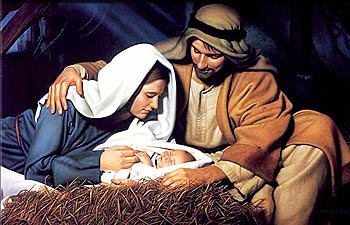
  • Nativity scenes often depict three wise men bearing gifts, yet a close reading of the biblical description shows that no wise men were present on the night of Jesus’ birth.
  • Many Christians lie to their children about the existence of Santa, a direct violation of God’s commandment to not lie (Exodus 20:16).

To learn more about lies associated with Christmas, read our article “The Birth of Jesus: Myths and Misperceptions.”

The danger of religious syncretism

Christmas and its traditions are not the only example of paganism being mixed with worship of the true God. The Old Testament records that religious syncretism (the blending of different religious traditions together) was a constant problem ancient Israel had throughout its history.

God warned in His law that His people are not to worship Him using the practices of other pagan nations (Deuteronomy 12:30-31). Instead He tells us to carefully observe what He has commanded (verse 32).

The prophet Elijah had to confront Israel about integrating Baal worship (a Canaanite god) with the worship of the true God. Here is how Elijah addressed this: “How long will you falter between two opinions? If the LORD is God, follow Him; but if Baal, follow him” (1 Kings 18:21).

New Call-to-action

In other words, don’t blend the worship of Baal with worship of the true God. Worship one or the other—but not both!

Yet the people didn’t know how to answer. Why? Because after years of false practices passed from generation to generation, the people themselves did not know what was true anymore.

Today it is no different. In order to learn what truth is and practice pure worship, we have to abandon Christmas and its lies.

God’s Word does give us instruction on how to worship Him. Though most Christians ignore them, He ordained seven festivals that help us understand what is true according to God. Thousands of Christians around the world don’t celebrate Christmas because they have learned that it is a pagan holiday. They take the Bible seriously and strive to worship God “in spirit and truth.”

You can’t do that with Christmas—because it is a pagan holiday and always will be.”  From: https://lifehopeandtruth.com/life/blog/is-christmas-a-pagan-holiday/?

________

Update.

I know, I know, I go on about the pagan roots of Christmas too much, but hopefully you are all aware just what you’re celebrating.  We who don’t celebrate it, don’t miss out on anything, we all have a great time for 8 day festival of The Feast of Tabernacles which is in the season when Jesus was born.

There was a potluck lunch given by the management of the apartments and I took another one of my crustless Impossible Bisquick pies, this time blueberries, and some mashed sweet potatoes.

For the first time in many months, and the first time since I moved to Navasota, I saw a medical person, a nurse practitioner.  I had had some trouble with my ear and so she saw me before my initial appointment with my new doctor.   All she said was we will see how it goes, and left it for the doctor to see at my main appointment in January.

Cherry, my friend from the apartments and church, and I went all the way to TGF in Walmart in Montgomery, (TX, that is) so that she could get a perm, everybody else was booked up. I had my hair cut, too, but I don’t like it, it turned out spikey, not wavy.   I suppose I will have to go back to the nice Filipina lady at TGF in Conroe next time I need it trimmed. 

On the Sabbath, Cherry, Travis (her dog) and I just watched sermons on my laptop.  We had no desire to drive anywhere that day.

Monday, December 9, 2019

WHEN WAS JESUS BORN? Was it really on December 25th?

For “Scripture Sunday”:

WHEN WAS JESUS BORN? Was it really on December 25th?

The Nativity

“According to Luke 1:24-26, Mary conceived Jesus in the sixth month of Elizabeth’s pregnancy with John the Baptist. This means that Jesus was born 15 months after the angel Gabriel appeared to Elizabeth’s husband, Zacharias, and informed him that his wife would bear a child.

According to Luke 1:5, Zacharias was a priest of the division of Abijah. Luke 1:8 says that Gabriel appeared to Zacharias while he was serving as a priest in the Temple.

We know from the Talmud and other sources that the division of Abijah served as priests during the second half of the fourth month of the Jewish religious calendar — which would have put it in late June (the Jewish religious calendar begins in March with Passover).

Fifteen months later would place the birth of Jesus in the seventh month of the Jewish calendar. That would be in the fall of the year, in either late September or early October. His conception, not His birth, would have occurred in December of the previous year.

The seventh month of the Jewish calendar is the month of the Feast of Tabernacles. John 1:14, speaking of Jesus as the Word, says: “And the Word became flesh and dwelt among us, full of grace and truth.” The word “dwelt” that is used here is the Greek word “skenoo” which literally means “to tabernacle”!

So, when God came to earth to tabernacle among Men it appears that He timed His arrival in the Bethlehem manger to coincide with the Feast of Tabernacles. That was only appropriate, for the Feast of Tabernacles is the most joyous of all the Jewish feasts. It is, in fact, their feast of thanksgiving.

The total meaning of that feast will not be fulfilled until the Lord returns again to tabernacle among Men for a thousand years while He reigns over the earth from Mt. Zion in Jerusalem. Isn’t the Word of God marvelous?

God created time “In the beginning…” and placed humans into this temporal world to separate the sheep from the goats in preparation for the eternal world where we sheep will live in His presence. So the title of my article “It’s about Time” has a double meaning: I want to write about topics related to questions of time, and the expression “it’s about time” reminds us that our Lord and Savior will soon return to conclude this phase of world history and to establish His Millennial Kingdom on earth.

The Christmas Tradition

We celebrate the birth of Messiah (Christ) on Christmas (from Old English, meaning “coming of Christ”), the 25th day of December. This date was first observed in 336 AD, some 24 years after the Roman emperor Constantine established Christianity as the state religion. Apparently, Pope Julius I chose to replace the pagan winter solstice feast in honor of Mithra, the “Unconquered Sun,” that had been officially recognized by the emperor Aurelian in 274 AD. From Rome, the new feast celebrating the birthday of the “Sun of Righteousness” (Malachi 4:2) spread to all other churches (except the Armenian church) over the following century.

As many Christians are aware, the modern Christmas celebration combines many strands of tradition including the ancient Roman pagan festival of Saturnalia (merrymaking, exchange of presents), the old Germanic midwinter customs (Yule log, decorating evergreen trees), the tradition of Francis of Assisi (displaying the crib, or crèche of Jesus), the medieval feast of St. Nicholas (Sinterklaas in Dutch, hence “Santa Claus”), and the British sending of greeting cards (1840s). The Puritan pilgrims did not celebrate Christmas because of its many unbiblical associations. The holiday was officially recognized in the United States in 1870.

The Dutch Sinterklaas (Saint Nicholas) is the origin of the North American Santa Claus. According to legend, Sinterklaas makes his rounds on December 5, Saint Nicholas’s Eve. Dressed in a catholic bishop’s robes, Sinterklaas rides through the streets distributing sweets to the children. According to some versions of the popular legend, another figure accompanies him named Black Peter, who carries a whip with which to chastise naughty children.

The Historical Evidence

I think it is fair and not overly critical for us to admit that the date chosen by Constantine and Pope Julius I to celebrate the birth of Jesus was not based on good historical or biblical evidence. Let’s look for that overlooked evidence in the historical account of the birth of Jesus recorded by Dr. Luke.

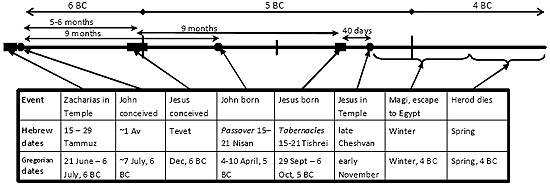
Chart Jesus' Birth

1) Our first clue is found in Luke 1:5. Here is how it reads in the Complete Jewish Bible:1 “In the days of Herod, King of Y’hudah (Judea), there was a cohen (Jewish priest) named Z’kharyah (Zacharias) who belonged to the Aviyah (Abijah) division.” The service of the Abijah division of priests was scheduled for the last two weeks of the fourth month of the Jewish religious calendar (15-29 Tammuz, June-July), according to the Talmud (rabbinic commentaries) and Qumran sources.2

Dr. Luke tells us that Zacharias was serving in the 2nd Jewish Temple in Jerusalem when he was chosen to enter the holy place to burn incense outside the Holy of Holies. The archangel Gavri’el (Gabriel) appeared to Zacharias and revealed that he and his barren wife Elisheva (Elizabeth) would have a son named Yochanan (John) who would precede and prepare the way for the Messiah. He returned home after his two-week service, then his wife conceived, as Gabriel had prophesied. The earliest date for John’s conception would be the 1st of Av (July).

2) In the 6th month (Kislev-Tevet, December) of Elizabeth’s pregnancy, Gabriel visited Miryam (Mary) in Nazareth to announce: “You will become pregnant, you will give birth to a son, and you are to name Him Yeshua (Jesus, meaning “God’s salvation”)” (Luke 1:31, CJB). Gabriel also revealed to Mary that her relative, Elizabeth, was six-months pregnant. Elizabeth’s sixth month included the celebration of the Jewish feast of Hanukkah, the “Feast of the Dedication” (John 10:22) connected with the rededication of the temple after the Maccabean revolt. Without delay, Mary hurried to visit Elizabeth (Luke 1:39), about a week’s journey on foot from Nazareth.

3) When Mary arrived, Elizabeth greeted her: “How blessed is the child in your womb!” (Luke 1:42). From this, we conclude that there was no delay between the time of Gabriel’s announcement to Mary and the conception of Jesus by the Holy Spirit. We can infer that the same was true for the conception of John. At most, only a few days passed between the announcement and the fulfillment of each of these two angelic prophecies.

4) Mary stayed with Elizabeth for three months, until John was born (probably during Pesach or Passover, 15-21 Nisan, April), circumcised on the eighth day, and given his prophesied name (Luke 1:57-80). One of the long-held Jewish traditions is that the prophet Elijah will return at Passover (Malachi 3:1; 4:5-6). Gabriel had prophesied to Zacharias that John would come “in the spirit and power of Eliyahu (Elijah)” (Luke 1:17, CJB).

5) Mary returned to Nazareth, where an angel (probably Gabriel again) reassured her betrothed husband: “Yosef (Joseph), son of David, do not be afraid to take Miryam (Mary) home with you as your wife; for what has been conceived in her is from the Ruach HaKodesh (Holy Spirit). She will give birth to a son, and you are to name Him Yeshua [which means ADONAI (God) saves], because He will save His people from their sins” (Matthew 1:20-21, CJB). Emperor Augustus ordered a census that required Joseph to take Mary to Beit-Lechem (Bethlehem) where she gave birth to Jesus (probably during Sukkot, the Feast of Tabernacles, 15-21 Tishrei, September-October).“The Word [Jesus] became a human being and lived [tabernacled] with us”(John 1:14).

6) The night of the birth of Jesus, an angel (probably the archangel Michael) appeared with the angelic armies of heaven to announce the birth to the shepherds of Bethlehem (Luke 2:1-15). Perhaps there is a long forgotten connection with Michaelmas (“coming of Michael”) Day, the feast of Michael the Archangel, which is celebrated in some traditions (particularly in the United Kingdom) on the 29th of September. Michael is the leader of the angelic armies who hurls Lucifer (Satan, the Devil) down from heaven because of his treachery (Revelation 12:7).

7) Joseph and Mary presented Jesus at the Jewish Temple on the 40th day after His birth (probably late Cheshvan, early November) for the ceremony of Pidyon HaBen (redemption of the firstborn son). There He received the blessings of Shim’on (Simeon) and Hannah, two righteous Jewish prophets (Luke 2:22-38).

8) Magi from the east came (probably in Winter) to inquire of King Herod about the birth of Jesus. The head cohanim (Jewish priests) admitted that Messiah must be born in Bethlehem, so the Magi went there (three miles from Jerusalem) and found Joseph, Mary, and Jesus living in a house. They worshipped Him and gave Him gifts, then obeyed an angelic warning (probably Gabriel) to avoid revealing to King Herod the location of Jesus (Matthew 2:1-12).

9) After the Magi departed Bethlehem, an angel (probably Gabriel) warned Joseph to take Mary and Jesus to Egypt to escape King Herod’s attempt to murder Jesus. They left that same night (Matthew 2:13-15). King Herod ordered the slaughter of all boys in Bethlehem up to age two, but Joseph escaped with his family to Egypt (possibly the Sinai peninsula), where they remained until Herod’s death (Matthew 2:16-18). I assume that Herod included a margin of error in calculating how old the newborn Messiah, King of the Jews, would be when he ordered the murder of all Bethlehem boys less than two years old.

10) After King Herod’s death, an angel (probably Gabriel) appeared to Joseph to tell him it was safe to return home to Nazareth (Matthew 2:19-23). The Jewish historian Flavius Josephus recorded the death of the evil King Herod in the spring of 4 BC.3 I assume that Herod did not live long after the slaughter of the innocent boys of Bethlehem, and thus that the family of Jesus did not stay long in Egypt. Therefore, we can place the birth of Jesus on a fairly well constrained timeline.

Determining the Date

If Jesus was born during Sukkot, the Feast of Tabernacles, (which began the 29th of September) in 5 BC, as we deduced from the evidence above, then His conception was probably during Hanukkah, possibly as late as the 25th of December in 6 BC. It is also possible that the Magi visited Bethlehem around the 25th of December in 5 BC, when Jesus would have been almost 3 months old.

‘Anno Domini’ (AD) dating was adopted in Western Europe during the 8th century. In 525 AD when the monk Dionysius Exiguus (Dennis the Little, meaning humble) calculated the year of Jesus’ birth, he missed by about 3 years. We now have evidence that Herod died in 4 BC, probably less than a year after Jesus was born.

The Significance

Does it really matter when Jesus was born?  In some ways, no, it doesn’t matter — after all, if it was critically important to know precisely when Jesus was born, rather let us celebrate that God’s Son became fully human and lived a perfect life so that He could become our perfect sacrifice and conquer sin and death in our place.

But, in another way, it IS important to consider the evidence God gave us and to place it in a proper Jewish context so that we can better understand the foundation of our faith. For example, the information I have presented in this article makes it clear that an important prophecy about the Messiah was fulfilled in the life of Jesus. That prophecy is found in Genesis 49:10“The scepter will not pass from Judah, nor the ruler’s staff from between his legs, until Shiloh [Messiah] comes, and it is He whom the peoples will obey.” Second Temple rabbis understood this as a Messianic prophecy.

In about 7 AD, the Romans abolished the power of the Jewish Sanhedrin Council in Judah to pronounce the death penalty.4 Furthermore, Herod was the first king of Israel who was not a descendent of the tribe of Judah. However, Jesus had already been born in 5 BC, before the scepter and staff (power) departed from Judah.

There is a deeper meaning and real significance to the conclusion that Jesus was probably born during the Feast of Tabernacles, thus bringing partial fulfillment to the prophetic type of that important feast established by God. Tabernacles (booths) are temporary, insecure dwellings and emphasize our reliance on God’s grace. So also the temporary human body in which the Son of God dwelled among us demonstrated what total reliance on God can accomplish.

The ultimate fulfillment of the prophetic significance of the Feast of Tabernacles will occur when Jesus returns in glory and majesty to tabernacle among us as King of kings and Lord of lords. Maranatha!”

Notes
  1. Dr. David H. Stern, Complete Jewish Bible, 1998, available from Lederer/Messianic Jewish Communications, 6120 Day Long Lane, Clarksville, MD 21029, 1-800-410-7367, www.MessianicJewish.net.
  2. Shmuel Safrai, “A Priest of the Division of Abijah,”www.jerusalemperspective.org/%5Cdefault.aspx?tabid=27&ArticleID=1847.
  3. Flavius Josephus, Antiquities of the Jews, Book 17, Chapter 8, www.sacred-texts.com/jud/josephus/ant-17.htm.
  4. George A. Barton, “On the Trial of Jesus before the Sanhedrin,” Journal of Biblical Literature, Vol. 41, No. 3/4 (1922), pp. 205-211, www.jstor.org/pss/3260096.

_______

Update.

Well, it was cold on the Sunday, but I went to the flea market anyway.  I sold several large items cheap just to get them gone, like a folding camping cot, a big plastic dollhouse, a new shower bench and things like that.  The sooner I can get everything sold out of the large storage unit, the better it will be.

Both Bible studies were interesting, the one on Sunday and on Friday.  One day, my helper Joe and I changed the fridge and freezer doors to open the other way.  That is a two “man” job, because someone has to hold up the door.  It is a lot more convenient than the way it was, opening to a wall.  Now I can get things out and put them on the counter next to it.

Other than phone calls and a visit to a government agency, it was a quiet week.  I wonder if they will ever get my Social Security and Medicare straightened out?  Even my HMO’s left hand doesn’t know what their right hand is doing, or exactly who is my doctor. 

For the church potluck, I made a Crustless Pomegranate Craisin Impossible Pie, and a big dish of Cheesy French Toast.  I had a lot of eggs, cheese and French bread to use up. The dish was so big that I had to use the oven in the stove for the first time.  Fortunately, I have an oven thermometer and found out about it’s temperature idiosyncrasies just in time.  Hopefully, I can just put it back to it’s former use as storage, because now I know that I prefer to use my convection/toaster oven which cooks more evenly and even turns itself off if I forget about it. 

The church’s Sermon was about “Picking Up Stones, or People.”  Because Jesus neither condemns nor condones people (sinners).

John 8:4-11 New International Version (NIV)

4 and said to Jesus, “Teacher, this woman was caught in the act of adultery. 5 In the Law Moses commanded us to stone such women. Now what do you say?”6 They were using this question as a trap, in order to have a basis for accusing him.  But Jesus bent down and started to write on the ground with his finger. 7 When they kept on questioning him, he straightened up and said to them, “Let any one of you who is without sin be the first to throw a stone at her.” 8 Again he stooped down and wrote on the ground. 9 At this, those who heard began to go away one at a time, the older ones first, until only Jesus was left, with the woman still standing there. 10 Jesus straightened up and asked her, “Woman, where are they? Has no one condemned you?” 11 “No one, sir,” she said.  “Then neither do I condemn you,” Jesus declared. “Go now and leave your life of sin.”

Well, we are using the AC again, but it is going to be cold and rainy tomorrow, and that's about it for today.


Sunday, December 30, 2018

Jesus’ Childhood. Patterns of Behavior. Update.

For “Scripture Sunday”:

Jesus’ Childhood

“There is only one biblical reference to Jesus’ childhood—a curious record of family trauma when Jesus was 12. What does this story tell us about Jesus?

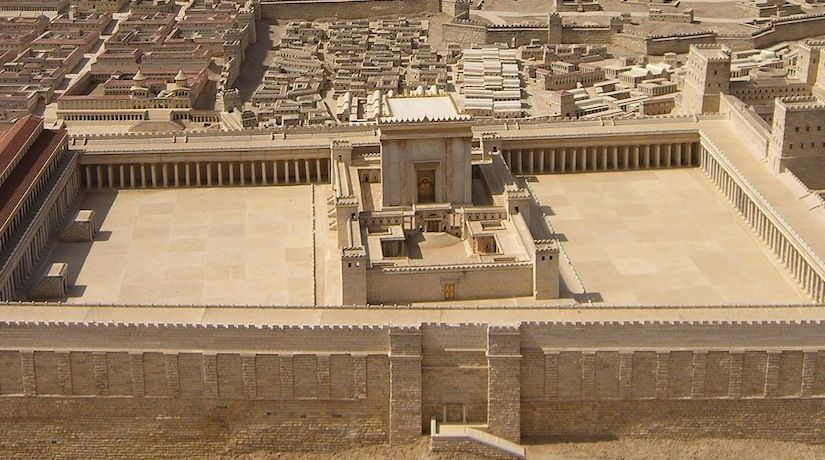
The only story in the Bible of Jesus childhood is the time He stayed behind at the temple (temple model photo by David Treybig).

The only story in the Bible of Jesus' childhood is the time He stayed behind at the temple.

John 21:25 tells us that there were so many remarkable incidents in the life of Jesus Christ, that if they were all written down, the number of volumes would be beyond measure. What He accomplished in the 3½ years of His ministry is astounding. Thankfully, we have four Gospel writers who record a great deal of what took place, including specific details surrounding His birth.

Interestingly, Luke’s account of Jesus’ life tells of something that took place when Jesus was 12 years of age. No other Gospel writer includes this story or mentions anything about Jesus’ childhood. There is much we can learn from this fascinating story.

An exceptional Child

Luke 2:40 gives a summary statement describing Jesus’ development from infancy to age 12: “And the Child grew and became strong in spirit, filled with wisdom; and the grace of God was upon Him.”

Jesus experienced a natural maturing process similar to any growing boy, but He was especially endowed with God’s Spirit and grace from birth so that He was far advanced beyond other 12-year-olds when it came to grasping the Word of God and spiritual principles.

We also see that Jesus was reared in a devoutly religious home, as shown in the next two verses. His family faithfully followed God’s instruction concerning the annual religious festivals. The story we are exploring involves a family pilgrimage to Jerusalem for the annual feast of Passoverand Days of Unleavened Bread and what took place shortly after.

Interestingly, social scientists today have confirmed the benefits for children growing up in a religious environment. Dr. Pat Fagan is the director of the Center for Research on Marriage and Religion and senior fellow at the Marriage and Religion Research Institute in Washington, D.C. After compiling the findings of over 100 independent social scientists over the last two decades on the effect that church attendance has on the lives of kids, he said, “When policymakers consider America’s grave social problems, including violent crime and rising illegitimacy, substance abuse, and welfare dependency, they should heed the findings in the professional literature of the social sciences on the positive consequences that flow” from faithful church attendance (Rob Kerby, “Church Kids Less Likely to Divorce or Live in Poverty,” www.beliefnet.com).

Jesus’ family life

Learning at an early age that there is a God and that each person is made in His image provides a healthy atmosphere for well-adjusted children. Joseph and Mary furnished a home centered on God’s love, His commandments and His way of life, which is undoubtedly one reason God selected them to provide His Son’s early childhood development.

Luke 2:43-44 begins to give some interesting insight into the dynamics of this special family. After the festivals, as the family caravan was a day’s journey from Jerusalem on their way toward home, it was discovered that Jesus was not with the group. How could they have gone so far without realizing this?

First of all, Jesus must have been a boy who had earned His parents’ confidence and trust. Joseph and Mary were obviously relying on Jesus to act in a responsible manner during the trip home from Jerusalem. They had learned by this time that their oldest child was a very reliable, capable and dependable youth. Had He been unpredictable or immature, then they would have felt the need to oversee His whereabouts more closely. But apparently they had no reason to expect anything out of the ordinary.

Joseph and Mary assumed He was traveling with another family or relatives and didn’t inquire as to His whereabouts until later that day. This was understandable behavior on their part since there was no way they could have envisioned anything other than reliable conduct from their Son and a normal trip home to Nazareth after the Passover festival.

They were startled to find that He was not with the caravan; and then, filled with concern, they spent the next day traveling back to Jerusalem amid great consternation hoping to find Him safe.

Found in the temple

It appears it was on the third day after the festival that they found Him in the temple area. He was not playing with other boys, lost or even scared to be on His own. He was instead involved in serious discussions with some of the learned teachers of the law in Jerusalem, “both listening to them and asking them questions” (Luke 2:46).

Rather than being annoyed by one so youthful, these intelligent men were astounded by Jesus’ questions and responses and, most importantly, by His grasp of deep theological topics. Luke’s account says, “All who heard Him were astonished at His understanding and answers” (verse 47). Truly they were in the presence of a very divinely gifted young man.

Once He was located, Joseph and Mary were relieved to find Jesus safe. Yet at the same time they were bewildered by their Son’s surprising behavior and seeming lack of appreciation for the anxiousness He had caused.

Mary took the lead in asking what it all meant. It seems Joseph remained quiet for the moment and allowed her to speak for them both. Perhaps it is because Jesus was conceived in her womb or, being a woman, she was the one more emotionally distraught after the days of searching, but Mary now sought an answer from her Son.

Jesus’ mother showed wisdom and self-control in that she first inquired about her Son’s intent. She asked in verse 48, “Son, why have You done this to us? Look, Your father and I have sought You anxiously.”

Many parents would automatically allow their frustration or anger to dictate their action and might lash out at their child for causing such distress, but she apparently knew her Son had never been irresponsible or rebellious and so she sought an honest understanding of what He was doing.

Jesus responded to His mother’s inquiry by saying, “Why did you seek Me? Did you not know that I must be about My Father’s business?” (verse 49). Jesus did not give prior warning that He intended to remain in Jerusalem. Perhaps He hoped, that Joseph and Mary would conclude that He had important work to accomplish and that they would not worry when He turned up missing.

Spiritual understanding

Jesus must have had some very profound conversations with His parents growing up. His mother would have related the story of His birth and what Gabriel said when he appeared to her nine months prior to His birth. Jesus also had His Father’s Spirit without measure (John 3:34). He had a strong grasp of His own purpose for being on the earth. The zeal to please His Heavenly Father and do the work of God would have burned strongly in Him even at this time in His young life.

So, perhaps Jesus felt His parents, on this occasion, would consider all this and that it would allay any anxiety concerning His whereabouts. Of course, parental concern for their 12-year-old was so strong that they were not fully able to understand what He said to them (Luke 2:50).

Now that His parents had returned for Him, Jesus knew He would later launch into His life’s work and undertake His Father’s business. But for now Jesus determined to return to Nazareth and continue to be subject to Joseph and Mary (verse 51).

Jesus’ Heavenly Father did not intend His Son to begin His great public ministry for another 18 years. By then He would be ready to face the greatest challenge any man could ever face.

Why did Luke record this event?

There is a reason God inspired Luke to record this amazing account in Jesus’ childhood. We see from this circumstance that this extraordinary family went through life experiences as any normal family does, with real feelings, emotions, cares and sometimes confusion felt by family members, including Jesus’ brothers and sisters (see John 7:3-4).

All three of the key players in this account showed godly responses to the circumstances they faced and ended up maturing as individuals. Joseph and Mary had much to ponder concerning their Son and His special gifts, and Jesus grew in understanding of His role as a son and emerged with a greater grasp of God’s will for Him. Yet, through it all, no one sinned and the parent-child relationship was strengthened not damaged.

What guided these three individuals are the principles found in God’s Word, the Bible. They were also helped by the Holy Spirit that came from our Heavenly Father.

If you would like to learn more about God’s purpose for your life and how that Spirit and truth can guide your life, then continue to explore the information found on this website. We hope you do.”

From: https://lifehopeandtruth.com/god/who-is-jesus/jesus-childhood/?

_______

 Patterns of Behavior

“In this rapid-pace society, it is difficult to build strong, lasting business or personal relationships.

A young woman sitting on a boulder.     Katie Drazdauskaite/Unsplash

It takes courage to love others, but the dividends are huge. We tend to avoid being hurt by others and often wear our protective coat. Pain also develops character in us, so do not even be afraid to show godly love.

Here is something gleaned from a book on marriage by Dr. Ed Wheat that can be applied to every-day behavior. Strive to be your BEST:

B—Be a blessing to others; be a help where possible.

E—Edify. Build up others rather than tear down.

S—Share yourself with others; be vulnerable (it can be risky, but it deepens and bonds real relationships).

T—Touch others; don’t be afraid to give a warm handshake, a pat on the back or a hug when appropriate.

It takes courage to love others, but the dividends are huge. We tend to avoid being hurt by others and often wear our protective coat. Pain also develops character in us, so do not even be afraid to show godly love. Love suffers long, is kind, does not envy, does not parade itself and is not puffed up. It bears all things, hopes all things and endures all things (1 Corinthians 13:4-7).

We can make the BEST a part of our daily lives. One danger we face is expecting a reward or sign of appreciation. Do the right thing and walk on by without seeking payment. It takes courage and wisdom, but the greatest action we can take is love.” From:    https://www.ucg.org/beyond-today/blogs/this-is-the-way/patterns-of-behavior

_______

Update.

Same old thing, using any spare moments listing stuff for sale and trying to get people to come and look at it.  The weather hasn’t co-operated at all. 

Jay did come and work one day, and we replaced some old treated boards on the bridge over the ditch.  Then we tackled a big dent in the driveway which kept on collecting rain, which made it worse.  Jay dug some of it out to make a rectangle, made a form, and we mixed up three bags of cement and smoothed it out.  I didn’t drive on it for several days, so it is great now.

The next day was Christmas, and even though I don’t celebrrate it, I did go to Luby’s with some friends. When I returned home I had two separate visits.  First, Michelle, one of my granddaughters, and then her father, my son, Kevin and his fianceé Dora.  That was so great of them to remember this old lady. 

About then, my eye that had the cataract surgery, felt different, I don’t know if that is normal, it feels like there is constantly something in my eye.  But doctor’s offices aren’t open during the holidays.

The loveseat, ottoman and rug which my friend had stored for me smelled of dog …she has seven of them.  So Zack, my neighbor and I got my carpet shampooer out, and got to work.  As that furniture is in the mini-house we turned on one of the water heaters, the little one under the kitchen sink, but we couldn’t get any hot water for the shampooer.  OK!  Now what!  Found out that the water lines to the faucet were crossed under the sink.  We will have to fix that. The rug was cleaned, but there was something wrong with the upholstery part of the shampooer, and so we knew we would have to fix that, too. Things go in threes, so then the clothes dryer wasn’t drying properly.  Oh! “The Joys of Ownership”.

A friend came by and we tried out the new Panda Express Chinese restaurant in town, Willis, TX, that is. 

The next day, my van had been loaded with boxes and boxes of stuff from the storage place that my friend is emptying out, we took it all to the Women’s Center in Conroe. Then stopped at a Mexican restaurant on the way back.  Truly Mexican, and I don’t speak Spanish, but I ate a good meal there, even though the waitress didn’t bring me exactly what I wanted. 

So I ate out three times in one week, that must be a record for me. As usual, I was not impressed with eating factory farmed food and veggies with Round-Up,  I prefer to cook and eat my own organic food.  When I got home I cooked grass-fed ground beef, with a lot of organic potatoes, carrots, onions, with a bit of organic brown rice and seaonngs, for the church potluck.  That went over very well, and there was none left.  The pastor and his wife were there, nearly over their colds, but the elder who plays the guitar was out of town visiting his folks, so we had taped music.  

The Bible readings were Gen. 34:1-35-11, Nah. 1:12-2:10, Mat. 5:38-48. The Teaching was about “The Christian Calling.”  1 John 2:12.

There weren’t many at church maybe because it was a cold, dreary, rainy day, but for those who attended it was a happy day.

Sunday, October 28, 2018

Celebrating the Feast of Tabernacles in Today’s World. Update.

For “Scripture Sunday”:

Celebrating the Feast of Tabernacles in Today’s World

image“This seven-day biblical festival gives you a preview of the coming wonderful age beyond today.

Celebrating the Feast gives us a glimpse of the world beyond today—an incredible preview of the age to come. Take time to learn more about it.

Have you ever heard of the Feast of Tabernacles? Did you know that Jesus Christ celebrated it in the first century? Did you know that, even today, thousands of Christians follow His example by observing it every year?

There is great significance to the Feast of Tabernacles for Christians today. We’ll take a look at what this festival means and why it’s so important to God that you observe it too.

A family holding hands looking at the ocean waves and the sun setting.God tells us that we have a special appointment with Him at the Feast of Tabernacles—a unique invitation to a personal meeting with Him!

We’ll examine why thousands of Christians the world over take time off of work and away from school to gather together, staying in temporary dwellings, to worship God and Jesus Christ. We’ll see how this biblical festival holds incredible meaning for all of mankind!

A vision of God’s Kingdom

Three of Jesus’ disciples were part of a life-changing event that’s recorded in the Gospels. You might be familiar with what happened, but most people don’t realize that it actually has everything to do with the Feast of Tabernacles.

Let’s notice the details of the event commonly called the Transfiguration. One day Jesus was talking to His disciples and said something incredible: “Assuredly, I say to you that there are some standing here who will not taste death till they see the kingdom of God present with power” (Mark 9:1).

No doubt they didn’t know how soon Jesus’ words would come true! “Now after six days Jesus took Peter, James, and John, and led them up on a high mountain … and He was transfigured before them. His clothes became shining, exceedingly white … And Elijah appeared to them with Moses, and they were talking with Jesus. Then Peter answered and said to Jesus, ‘Rabbi, it is good for us to be here; and let us make three tabernacles’ (Mark 9:1-5, emphasis added throughout).

What an amazing event! In a vision, these disciples were suddenly whisked into the future to see Jesus Christ in His glory in His Kingdom!

Don’t miss Peter’s reaction. What did Peter associate with this vision? He said that they should make tabernacles.

What does that have to do with anything? Peter clearly related the Feast of Tabernacles to the idea of a tabernacle or a temporary dwelling. Why does this matter to Christians today? To answer that question, let’s look at a bit of background information.

A commanded celebration

In giving His laws to Moses, God said: “Speak to the children of Israel, saying: ‘The fifteenth day of this seventh month shall be the Feast of Tabernacles for seven days to the Lord. On the first day there shall be a holy convocation …’” (Leviticus 23:34-35).

You may be thinking that this is just an Old Testament thing for the Jews. It’s not. It’s a Christian thing! Do you realize that your Savior, Jesus Christ, set the example of observing this feast?

The book of John records this about Jesus and His brothers going to Jerusalem for the Feast of Tabernacles: “But when His brothers had gone up, then He also went up to the feast, not openly, but as it were in secret. Then the Jews sought Him at the feast, and said, ‘Where is He?’ … Now about the middle of the feast Jesus went up into the temple and taught” (John 7:10-11; John 7:14).

Did you notice that everyone expected Jesus to be at the Feast of Tabernacles? Why? Because it was His lifelong practice to celebrate God’s festivals as required in God’s laws. Even when His life was threatened, He went to celebrate the Feast of Tabernacles!

You see, Christ knew that this was a commanded yearly celebration, and it wasn’t intended just for the Jews. Leviticus 23 rightly calls the occasions listed here “the feasts of the Lord” (Leviticus 23:2). They weren’t just feasts for Israel or celebrations just for the Jews. Jesus set the example by showing they were for everyone and that they continue to be God’s festivals.

The early Church continued in Jesus’ example of celebrating the feasts. He celebrated the Feast of Tabernacles every year and taught about its great significance. Scripture instructs us that, as His followers, we are to walk as He walked—to live as He lived (Isaiah 25:6-7).

When God says we are to celebrate the feasts, He uses a Hebrew word that means “appointed times” or “appointments.” Do you realize that God has set up a number of appointments with you to keep? These are also called “holy convocations” or “sacred assemblies.” Jesus knew that we can learn valuable lessons by meeting, fellowshipping and observing the Feast together.

God tells us that we have a special appointment with Him at the Feast of Tabernacles. Now imagine that! God has given us all a unique invitation to a personal meeting with Him!” Continued at: https://www.ucg.org/beyond-today/beyond-today-magazine/celebrating-the-feast-of-tabernacles-in-todays-world

_______

Feast of Tabernacles

“The Feast of Tabernacles lasts for seven days and is a time of joy and excitement for Christians around the world.

The Feast of Tabernacles is also known as the Feast of Ingathering. It pictures the future 1,000-year rule of Jesus Christ on earth with His saints. After His return, Jesus will set up the Kingdom of God and Isaiah describes this future period as a time of peace when all people will be taught to know, love and obey God. The nature of animals will change, the earth will become highly fertile, and, most importantly, “The earth shall be full of the knowledge of the Lord as the waters cover the sea.” With Satan’s evil influence removed, all of humanity will at last learn God’s ways.

During the seven days of the Feast of Tabernacles, the United Church of God organizes sites all over the world where members gather to enjoy fellowship, worship God and study His Word each day of the festival. The first day is a special annual Sabbath. Find more about this year’s Feast of Tabernacles at http://feast.ucg.org .

(See: Leviticus 23:34; Exodus 23:16; Revelation 20:4-6; Isaiah 2:2-4; Isaiah 11:6; Isaiah 11:9; Isaiah 35:1; Isaiah65:25)”

________

Update.

I had hoped that the van’s alternator could be removed, repaired at the alternator repair shop, and then re-installed, but the mechanic who had sorted out the grounding problem could not be contacted again.   So Chris, my neighbor, follwed me to a very expensive, but good, mechanic shop in Willis, and I left it there.  I didn’t dare go any further with it, as it still running on battery only.  When that battery dies you are “dead in the water!”.

As I have explained before, some churches celebrate The Feasts at different times because of the way they calculate from a New Moon.  Ours is celebrating The Feast of Tabernacles this week.  Lauri picked me up for the Holy Day, Wednesday, the first day of The Feast of Tabernacles.  For that church potluck, I baked two salmon dishes, one spicy and one regular, and served it sliced on pretty cut-glass plates with savory crackers.  Not many came so we had lots of dishes left over, which we froze for another day.   

The Bible readings were Lev.22:2-23:44, Zech. 141-21, and John 1:1-14 where it says He pitched his tent among us. Considering that Jesus was born during the Feast of Tabernacles that year, it seems very fitting. 

Haven’t you noticed how nativity scenes looks very much like the scenes of The Feast of Tabernacles? This explains: https://marbiesblog.wordpress.com/2012/10/02/america-israel-christopher-columbus-and-the-feast-of-tabernacles/ and this: http://christianitybeliefs.org/end-times-deceptions/messiah-was-born-on-the-feast-of-tabernacles-as-elohim-came-to-dwell-with-us/

My van was being worked on near the church, so I picked it up on the way home.  It now has a new alternator, $$ Ouch!!  I know Lauri is glad to have me mobile again, not relying on her, and others, to get me around.

On Thursday, my daughter, Wendy, came to visit me, and we went to lunch at a marina nearby with a view of Lake Conroe.  Wendy likes to choose restaurants where she can look at the water.  We had a great visit.  We started out on the covered terrace, but it was cold and windy so we had to go inside and look at the lake through the windows. I had Nachos Supreme and took a lot of the tortillas home, and made them into Tortilla Soup with chicken broth, non-GMO corn, tomatoes, onions, and celery, etc, for the church potluck.

I also made some dried plums into plum puree, and then didn’t know what to do with it, other than putting it on cereal, so I made Plum Puree Muffins for the church’s Sabbath potluck which I was able to go to in my van, under my own steam, for the first time in two weeks.

The Bible readings were Psa. 100, Deut. 33:1-34:12, Josh. 1:1-18, Rev. 22:1-5 and the Teaching was about The Feast Days and the Messiah is our Passover.  Lev. 23 tells us to observe the Holy Days.

Monday, April 5, 2010

Census. Are People Taller? Hives.

Census11 (Small) Sled dogs and mushers run a trail in the remote Inupiat Eskimo village Noorvik, Alaska, as practice for the arrival of U.S. Census workers.

What to do you if you have not received a census form:
Wait until April 12 to allow time for it to arrive.
Millions of census forms are on their way to households across the country.
If you have not received your form by April 12, you may call a toll-free U.S. Census Bureau help line:  English: (866) 872-6868        Spanish: (866) 935-2010
You can also complete a “Be Counted” questionnaire if you have not received your form. The questionnaires — similar to the mailed forms but without an address — are available at public locations such as libraries and city halls through April 19. A full list of the locations is posted at http://www.2010census.gov/.
_________________

PICT0002-1 (Small) After I washed the plain beige top sheet to match my ‘Lighthouse and Shells’ fitted sheet, I put them on my full size bed, and the fitted sheet was too long.
Then, when I tried the pretty blue ‘butterfly pattern’ fitted sheet that I just bought, and it was also too long.  I already had a plain blue top sheet that would go with it.
I like my sheets to be nice and taut, but these just wiggled all over the place.

So I looked at: http://interiordec.about.com/od/beds/a/bedsizes.htm  and found this: Mattress Sizes
  • Twin--39 x 75 inches (or 99 x 190 cm)
  • X-Long Twin--39 x 80 inches (99 x 203 cm)
  • Full--54 x 75 inches (137 x 190 cm)
  • Queen--60 x 80 inches (or 153 x 203 cm)
  • King--76 x 80 inches (or 198 x 203 cm)
  • California King--72 x 84 inches (or 182 x 213 cm)
My bed is only 6’ (72”) long, so I thought all full size beds were.   When did they start making them longer?  Has the new generation grown taller?   Then I saw this:

“Currently in the United States there are over 1.5 million women whose height is over 5 feet and 9 inches. Compare this to Japan where the average male is only 5 feet tall flat!
There is a direct correlation between the height of nation and it’s nutritional health. Each generation has tended to average in a little taller than the last and some will argue that this is also due to the increased awareness of good nutrition.
Poor health in past years attributed to poor diets and lack of fresh foods has meant that people did not grow as tall as they did today. Height statistics show this to be a trend set to continue.” 
From: http://growingtallerguide.com/index.php/39/the-top-7-interesting-height-statistics/
____________________

But people are also getting wider!!   Years ago a double bed was 48", now called a 3/4 size.

I am only 5’, so the new length bed would be superfluous, and just take up more floor space. 
I already had the bed when I made my own Tempurpedic style mattress with dense foam and memory foam.
Then I found out that sofa bed sheets are only 72” long.  So that is what I will have to buy in the future. It is a good thing a carry a tape measure with me!
___________________

This morning I saw the Allergist.  After the nurse put the sphygmomanometer on my arm to check my blood pressure, it left a welt on my arm.  Now, other times when I have had anything tight on me, that part would itch like crazy, but not today.  When the doctor saw that, she put an X on my arm with her nail, and a red swollen X came up on my arm. So she assumed that the only thing wrong with me is Dermatographic urticaria, (also known as dermographism, dermatographism or "skin writing").

But I know better,  because she hasn’t seen me when I come up in full blown hives, which I haven’t done for over a week.  But, also, due to unusual circumstances, I haven’t eaten any beef for a week.

Just to try out my theory, I am cooking beef today.